Teamtailor vs Pinpoint: Welches ATS mit reinen Angebotspreisen passt 2026 zu Ihrem Hiring-Team?
Turn this article into takeaways for your work.


Each assistant summarizes the article only for you and suggests best practices for your work.
Aktualisiert im September 2026
Wenn Sie als Head of Talent, VP People oder Gründer mit operativer Verantwortung Teamtailor und Pinpoint vergleichen, sind Sie wahrscheinlich schon zweimal an dieselbe Wand gestoßen: Keiner der beiden verrät, was er kostet. Teamtailors Preisseite ist ein Formular mit der Überschrift „Lassen Sie uns Ihnen ein Angebot machen.“ Pinpoints alte Preis-URL liefert einen 404-Fehler; die aktuelle trägt die Überschrift „Preise anfragen“ und verlangt Ihre Angaben, bevor sie auch nur eine einzige Zahl zeigt. Auf keiner der beiden Seiten stehen Tarifnamen. Keine Dollarzeichen. Keine Preisliste, die Sie als Screenshot an Ihren CFO weiterleiten könnten.
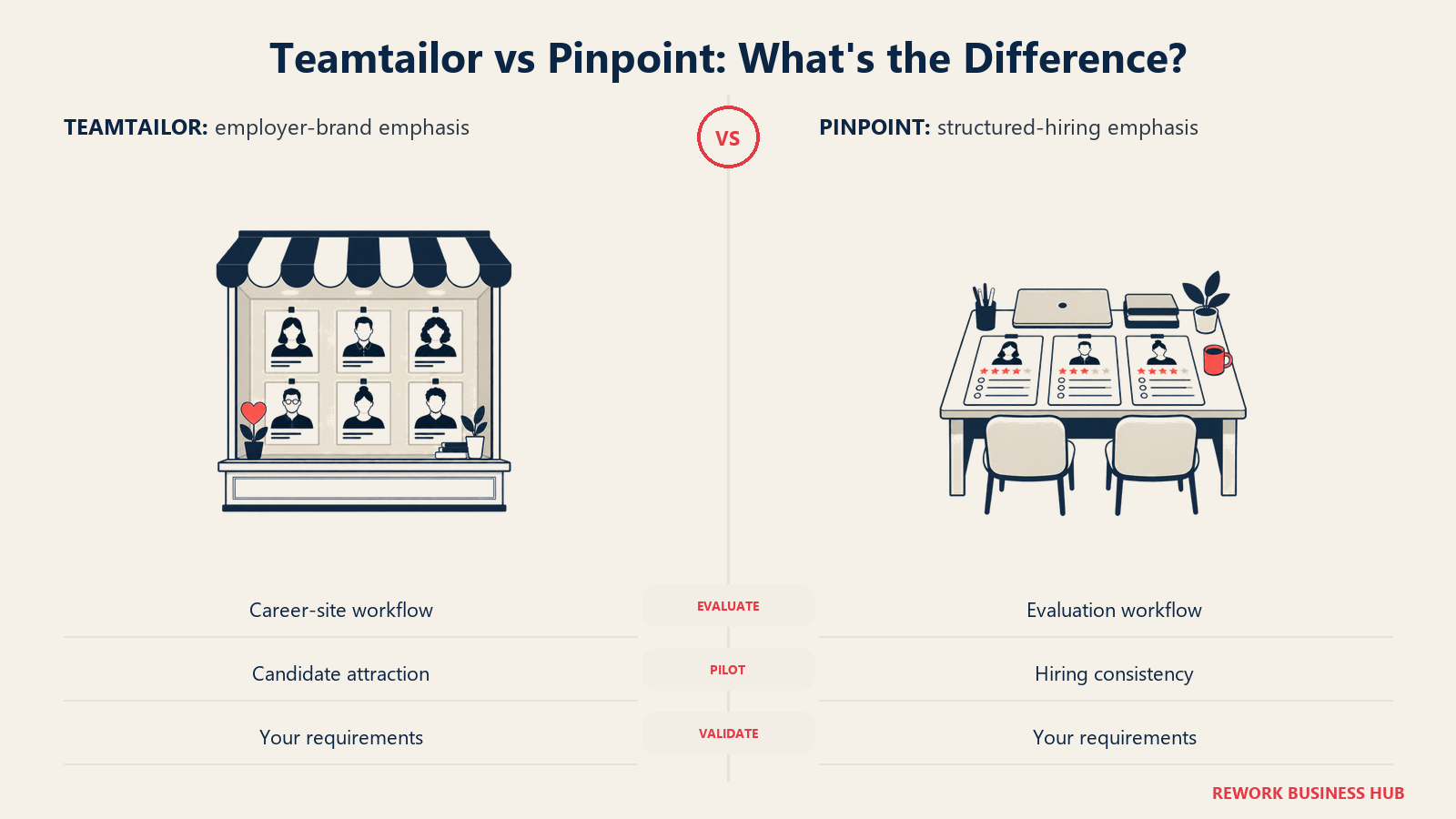
Das ist eine bewusste Entscheidung beider Anbieter, und sie verändert, worum es in diesem Vergleich gehen muss. Sie können diese beiden nicht anhand einer Preisliste vergleichen, sodass sich die eigentliche Entscheidung auf Hiring-Modell, Preisstruktur und darauf reduziert, wofür jede Plattform tatsächlich gebaut wurde. Teamtailor ist auf Employer Branding und die Karriereseite ausgerichtet und nach einem Job-Slot-Modell bepreist, das ein gleichmäßiges Hiring-Tempo belohnt und teurer wird, sobald Sie einen Schwung neuer Stellen ausschreiben. Pinpoint ist auf Candidate Experience und strukturiertes Hiring ausgerichtet und pauschal nach Unternehmensgröße bepreist, sodass zusätzliche Hiring Manager kein neues Preisgespräch auslösen. Beide sind wirklich gute Produkte, die für unterschiedliche Hiring-Philosophien gebaut wurden; in diesem Artikel geht es darum, diese Philosophie auf Ihr Team abzustimmen, nicht darum, Zahlen zu vergleichen, die keines der Unternehmen bestätigt.
TL;DR
| Teamtailor | Pinpoint | |
|---|---|---|
| Grundphilosophie | Auf Employer Branding und Karriereseite ausgerichtet, bepreist nach offenen Job-Slots | Auf Candidate Experience und strukturiertes bzw. DEI-Reporting ausgerichtet, pauschal nach Unternehmensgröße bepreist |
| Ideal für | Teams, die eine designorientierte, markenstarke Karriereseite und ein gleichmäßiges Hiring-Tempo wünschen | Teams, die strukturiertes, belastbares Hiring ohne Preisgespräch pro Seat wünschen |
| Preismodell | Job-Slot-basiert (mehr offene Stellen, höherer Tarif) | Pauschal nach Unternehmensgröße (Tarife Growth und Enterprise) |
| Veröffentlichter Preis | Keiner; nur Angebotsformular | Keiner; nur Angebotsformular |
| Stellenanzeigen | Unbegrenzt, laut Teamtailors eigener Preisseite | Nicht nach Job-Slots bepreist, die Frage stellt sich also nicht auf dieselbe Weise |
| Seats und Nutzer | Unbegrenzt, laut Teamtailors eigener Preisseite | Vielfach als unbegrenzt berichtet; auf den heute geprüften Anbieterseiten nicht bestätigt |
| Angegebene Funktionstiefe | Über 250 Funktionen, laut Teamtailors eigener Preisseite | Keine genannte Funktionsanzahl; die Positionierung stützt sich stattdessen auf Struktur und DEI-Reporting |
| Berichteter Einstiegspreis | Etwa 300 bis 400 $/Monat für ein kleines Team, laut Vendr | Etwa 345 $/Monat bei jährlicher Abrechnung (Growth), laut SelectSoftware Reviews |
Für wen die beiden Plattformen tatsächlich gebaut sind
Teamtailors Produkt beginnt bei der Karriereseite und geht von dort nach außen. Die Plattform ist um eine anpassbare, markenstarke Karriereseite herum gebaut, und die eigene Preisseite wirbt mit „unbegrenzten Stellenanzeigen und unbegrenzten Nutzern“ neben dem Anspruch von mehr als 250 Funktionen. Das verrät, wen das Unternehmen anspricht: Unternehmen, die einen ansprechenden, zur Marke passenden Eingang zum Hiring wollen und beim Aufbau nicht über Seat-Zahlen nachdenken möchten.
Pinpoint beginnt am anderen Ende des Funnels. Die Preisseite sagt klar, dass das Unternehmen mit Organisationen „jeder Größe“ arbeitet und dass „die Unternehmensgröße nicht immer mit der Hiring-Komplexität zusammenhängt“, ein Signal für ein Produkt, das auf Prozesskonsistenz statt auf Markenglanz setzt. Das Angebot stützt sich auf strukturiertes Hiring, eine Candidate Experience schon im Bewerbungsprozess selbst und Reporting, das einer DEI- oder Compliance-Prüfung standhält, und deutet auf ein Team hin, das bereits entschieden hat, dass die Bewertung über alle Hiring Manager hinweg standardisiert werden muss.
| Teamtailor | Pinpoint | |
|---|---|---|
| Ideales Team | HR- oder Talent-Team mit Gespür für Employer Branding, das eine Karriereseite als Recruiting-Asset aufbaut | Talent-Acquisition-Funktion, die strukturiertes, belastbares Hiring im großen Maßstab standardisiert |
| Reifegrad des Teams | Möchte schnell eine designorientierte Karriere-Präsenz live schalten | Hat sich bereits auf strukturierte Interviews und Reporting auf DEI-Niveau festgelegt |
| Hauptanwendungsfall | Kandidaten über eine Karriereseite mit eigener Marke anziehen und konvertieren, dann die Pipeline verwalten | Einen konsistenten, prüfbaren Hiring-Prozess über alle offenen Stellen und Hiring Manager hinweg betreiben |
| Kaufauslöser | Eine generische Karriereseite, die die Arbeitgebermarke unter Wert verkauft, reicht nicht mehr | Ein informeller oder uneinheitlicher Interviewprozess, der einer Prüfung nicht standhält, reicht nicht mehr |
| Organisationsform | Jede Größe; die Bepreisung erfolgt nach Job-Slots, die Kosten folgen also dem Hiring-Volumen, nicht der Mitarbeiterzahl | Jede Größe; die Bepreisung erfolgt pauschal nach Unternehmensgröße, die Kosten folgen also nicht direkt dem Hiring-Volumen |
Keine der beiden Sichtweisen ist ein Seitenhieb auf die andere. Teamtailor geht davon aus, dass Ihre Karriereseite ein Marketing-Asset ist, in das sich zu investieren lohnt; Pinpoint geht davon aus, dass es wichtiger ist, wie Sie Kandidaten bewerten, als wie die Karriereseite aussieht. Die meisten Teams neigen mehr zur einen als zur anderen Priorität, und diese Neigung ist ein besserer erster Filter als jede Funktionscheckliste.
Wichtige Fakten
Wichtige Fakten: Candidate Experience, Karriereseiten und Hiring-Tempo
- 71 % der Kandidaten recherchieren ein Unternehmen, bevor sie sich bewerben, meist über dessen Karriereseite und LinkedIn-Präsenz. (LinkedIn Talent Solutions, 2021, Zahl wird auf LinkedIns aktueller Seite weiterhin genannt)
- Die mittlere Time-to-Fill für Stellen ohne Führungsverantwortung liegt laut der jüngsten Benchmarking-Studie von SHRM zum Recruiting bei 39 Kalendertagen. (SHRM 2026 Recruiting Executives Benchmarking, 2026)
- 58 % der Hiring Manager sagen, dass es inzwischen vier Wochen oder länger dauert, eine unbefristete Stelle zu besetzen, und die meisten beschreiben den Prozess als langsamer als vor zwei Jahren. (Robert Half, 2026)
- Der weltweite Markt für Recruiting-Software hat 2026 einen Wert von 3,74 Mrd. \(und soll bis 2034 auf 7,48 Mrd.\) wachsen, eine CAGR von 8,95 %. (Fortune Business Insights, 2026)
Bei der ersten Zahl lohnt es sich zu verweilen. Wenn sieben von zehn Kandidaten Ihr Unternehmen recherchieren, bevor sie auf „Bewerben“ klicken, ist die Karriereseite keine kosmetische Schicht über dem ATS, sondern Teil des Funnels, und das ist Teamtailors gesamte These. Pinpoints Wette betrifft die andere Hälfte desselben Problems: Ist der Prozess nach der Bewerbung konsistent genug, um einem schwachen Arbeitsmarkt und einem Compliance-Audit standzuhalten?
Zwei Anbieter, null veröffentlichte Preise: Der Kernunterschied
Wer heute nach „Teamtailor pricing“ sucht, landet auf einer Seite mit der Überschrift „Lassen Sie uns Ihnen ein Angebot machen.“ Keine Tarifnamen, keine Monatsbeträge, nur ein Formular und das Versprechen, dass Teamtailor Ihnen „unbegrenzte Stellenanzeigen und unbegrenzte Nutzer“ plus mehr als 250 Funktionen bietet, zum Zeitpunkt dieses Textes auf der Seite des Anbieters bestätigt. Wer nach „Pinpoint pricing“ sucht, bei dem liefert die klassische URL pinpointhq.com/pricing einen 404-Fehler. Die aktuelle Seite liegt unter einer anderen Adresse, trägt die Überschrift „Preise anfragen“, die Unterzeile „Produkt ansehen und Preise erhalten“, und sie enthält null Tarifnamen und null Beträge, genau wie bei Teamtailor.

Beide Anbieter haben exakt dieselbe strategische Wette gemacht: über ein Gespräch zu verkaufen, nicht über eine Preisliste. Doch wie jeder von ihnen das bepreist, was er schließlich anbietet, ist grundverschieden, und das ist der nützlichere Vergleich.
Teamtailor bepreist nach Job-Slots, Ihr Tarif hängt also davon ab, wie viele Stellen Sie gleichzeitig offen haben, nicht von der Mitarbeiterzahl. Vendrs Marktplatzdaten beschreiben einen Starter-Tarif von etwa 300 bis 400 $/Monat für 5 bis 10 offene Slots, einen Growth-Tarif von 600 bis 1.200 $/Monat für 10 bis 30 Slots und einen Enterprise-Tarif über 1.500 $/Monat für mehr als 30 offene Stellen, eine berichtete Spanne und kein bestätigtes Angebot, aber eine, die sich sauber auf die Job-Slot-Struktur abbilden lässt, die das Unternehmen selbst beschreibt.
Pinpoint bepreist stattdessen pauschal nach Unternehmensgröße. SelectSoftware Reviews berichtet von einem Growth-Tarif ab etwa 345 $/Monat bei jährlicher Abrechnung und einem Enterprise-Tarif bei rund 1.200 $/Monat und mehr, wobei die eigene Website des Anbieters die Struktur mit zwei Tarifen bestätigt, auch wenn sie keinem der beiden Zahlen zuordnet. Mehrere Drittquellen beschreiben diesen Tarif als inklusive unbegrenzter Teammitglieder und Stellenanzeigen, was bedeutet, dass ein Team mit 10 Recruitern und ein Team mit 3 Recruitern im selben Tarif zum selben Preis landen würden. Diese Formulierung „unbegrenzte Seats“ konnten wir zum Zeitpunkt dieses Textes nicht direkt auf Pinpoints eigenen Seiten finden. Betrachten Sie sie daher als weit verbreitete Charakterisierung durch Dritte, bis sie in Ihrem eigenen Angebot auftaucht.
| Funktion | Teamtailor | Pinpoint |
|---|---|---|
| Preismodell | Job-Slot-basiert; der Tarif folgt der Zahl offener Stellen | Pauschal nach Unternehmensgröße; der Tarif folgt dem Größenband der Mitarbeiterzahl |
| Veröffentlichte Dollarbeträge | Keine | Keine |
| Stellenanzeigen | Unbegrenzt, laut Teamtailors eigener Website | Nicht nach Stellenzahl bepreist |
| Seats und Nutzer | Unbegrenzt, laut Teamtailors eigener Website | Von mehreren Drittquellen als unbegrenzt berichtet; auf den geprüften Anbieterseiten nicht bestätigt |
| Was das Angebot bestimmt | Zahl der gleichzeitig offenen Stellen | Unternehmensgröße und, laut Eigendarstellung des Anbieters, Hiring-Komplexität |
| Kostenlose Testphase | Nicht veröffentlicht | Nicht veröffentlicht |
Preisstruktur und die tatsächlichen Gesamtbetriebskosten
Da keiner der Anbieter eine Zahl nennt, besteht der ehrliche Kostenvergleich darin, zu vergleichen, was die Rechnung steigen lässt, statt so zu tun, als könnten Sie eines der Unternehmen vor dem Vertriebsgespräch auf eine bestimmte Zahl festlegen.
Teamtailors Job-Slot-Modell belohnt ein gleichmäßiges Tempo und bestraft einen Schub: Ein Unternehmen mit zwei oder drei gleichzeitig offenen Stellen bleibt im niedrigsten Tarif, doch dasselbe Unternehmen, das fünfzehn Stellen auf einmal öffnet, kann über Nacht den Tarif wechseln, selbst bei unveränderter Mitarbeiterzahl.
Pinpoints Modell mit Pauschale nach Größe funktioniert umgekehrt. Ist ein Tarif einmal angeboten, verändern zusätzliche Hiring Manager, Recruiter oder Interviewer die Rechnung nicht, da Seats darin als unbegrenzt berichtet werden. Das ist besser planbar, wenn das Hiring-Volumen unvorhersehbar schwankt. Der Kompromiss: Ein schlankes Team mit nur wenigen Stellen zahlt denselben Satz nach Unternehmensgröße wie ein gleich großes Unternehmen, das weitaus aggressiver einstellt.
| Preisfaktor | Teamtailor | Pinpoint |
|---|---|---|
| Was Ihren Tarif erhöht | Mehr gleichzeitig offene Stellenanzeigen | Wachsende Mitarbeiterzahl |
| Was Ihren Tarif NICHT erhöht | Zusätzliche Nutzer oder Hiring Manager (unbegrenzt, laut Anbieter) | Zusätzliche offene Stellen oder höheres Hiring-Volumen, da Seats als unbegrenzt berichtet werden |
| Beste Kostenpassung | Gleichmäßiges, geplantes Hiring in vorhersehbarem Tempo | Hiring-Volumen, das von Monat zu Monat unvorhersehbar schwankt |
| Schlechteste Kostenpassung | Ein plötzlicher Hiring-Schub über viele Stellen gleichzeitig | Ein schlankes Team mit sehr wenigen offenen Stellen, das trotzdem einen Satz nach Unternehmensgröße zahlt |
| Berichtete Einstiegsspanne | ca. 300 bis 400 $/Monat, kleines Team (Vendr) | ca. 345 $/Monat, Tarif Growth, jährliche Abrechnung (SelectSoftware Reviews) |
| Berichtete Spanne am oberen Ende | 1.500 $/Monat und mehr, größere Organisationen (Vendr) | ca. 1.200 $/Monat und mehr, Tarif Enterprise (SelectSoftware Reviews) |
| Onboarding | Auf der öffentlichen Preisseite nicht näher beschrieben | Vielfach als im angebotenen Vertrag enthalten berichtet statt als separate Implementierungsgebühr verkauft, wobei wir hierzu widersprüchliche Berichte von Dritten fanden; bestätigen Sie es ausdrücklich in Ihrem Angebot |
Keine der berichteten Spannen gehört ohne schriftliches Angebot in eine Budgetposition. Planen können Sie mit der Form der Kosten, nicht mit der Zahl: Fragen Sie Teamtailor, was mit Ihrem Tarif passiert, wenn Sie ein Quartal lang zehn Stellen öffnen, und fragen Sie Pinpoint, ob ein Wachstum der Mitarbeiterzahl während der Laufzeit ein neu berechnetes Angebot auslöst. Diese beiden Fragen verraten Ihnen mehr als die Marketingseite jedes Anbieters.
Karriereseite und Employer Brand
Das ist Teamtailors stärkstes Terrain, und es zeigt sich darin, wie das Produkt gebaut ist, nicht aufgesetzt. Die Karriereseite ist eine erstklassige, stark anpassbare Fläche: eigene Domains, Video, Mitarbeitergeschichten und gestalterische Flexibilität, damit die Seite wie eine echte Verlängerung des Marketings des Unternehmens wirkt und nicht wie eine generische Stellenliste mit ausgetauschtem Logo.
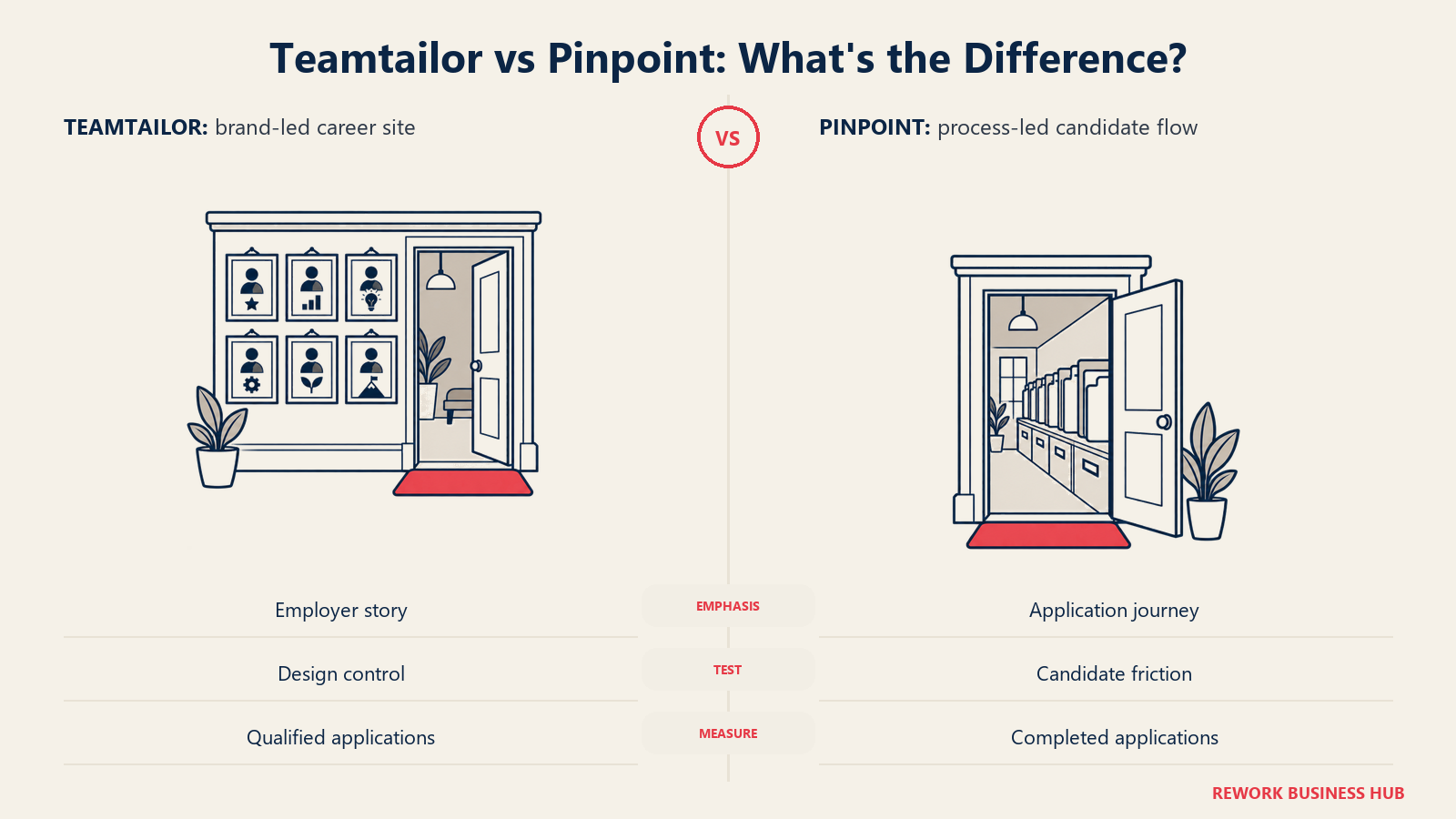
Auch Pinpoint liefert eine Karriereseite, und sie ist ein echter, funktionaler Teil des Produkts, doch die eigene Positionierung des Unternehmens stellt Gestaltungstiefe nicht so in den Vordergrund wie Teamtailor. Sie unterstützt den nachgelagerten, strukturierten, auf Candidate Experience ausgerichteten Prozess und soll nicht das Hauptschaufenster der Employer Brand sein. Wenn Ihr Recruiting-Marketing-Team die Karriereseite ohnehin als Designprojekt behandelt, ist Teamtailors Werkzeug genau dafür gebaut; Pinpoints Werkzeug ist dafür gebaut, funktional zu sein und nicht im Weg zu stehen.
| Funktion | Teamtailor | Pinpoint |
|---|---|---|
| Tiefe der Anpassung der Karriereseite | Tief; designorientiert, markengetrieben, das Herzstück des Produkts | Funktional; unterstützt den Hiring-Prozess, statt das Angebot anzuführen |
| Unterstützung eigener Domains | Ja | Ja |
| Video und Rich Media auf Stellenseiten | Ja, prominent hervorgehoben | Verfügbar |
| Employer Brand als primäre Positionierung | Ja, ausdrücklich | Nein; stattdessen führen strukturiertes Hiring und DEI-Reporting |
| Beste Passung | Teams, die die Karriereseite als Marketing-Asset behandeln | Teams, die eine funktionale Karriereseite ohne dedizierte Design-Investition wünschen |
Wenn Employer Branding und das Design der Karriereseite wirklich Ihre oberste Priorität sind, lohnt es sich, die Suche über diese beiden hinaus auszuweiten. Unsere Übersicht der besten Software für Karriereseiten und unsere Übersicht der besten Recruiting-Marketing-Software behandeln Tools, die speziell auf diese Aufgabe ausgelegt sind, einige davon mit mehr Tiefe beim Markendesign als eine der beiden Plattformen hier.
Candidate Experience und Bewerbungsablauf
Pinpoints Positionierung stützt sich am stärksten auf die Candidate Experience als bewusste Designentscheidung: eine kurze Bewerbung, häufige Kommunikation und ein Prozess, der in jeder Phase transparent bleibt. Das ist eine direkte Antwort auf ein gut dokumentiertes Problem. Robert Half stellte fest, dass 58 % der Hiring Manager sagen, es dauere inzwischen vier Wochen oder länger, eine unbefristete Stelle zu besetzen, und jede zusätzliche Woche Funkstille ist eine Woche, in der ein starker Kandidat ein konkurrierendes Angebot annehmen kann.
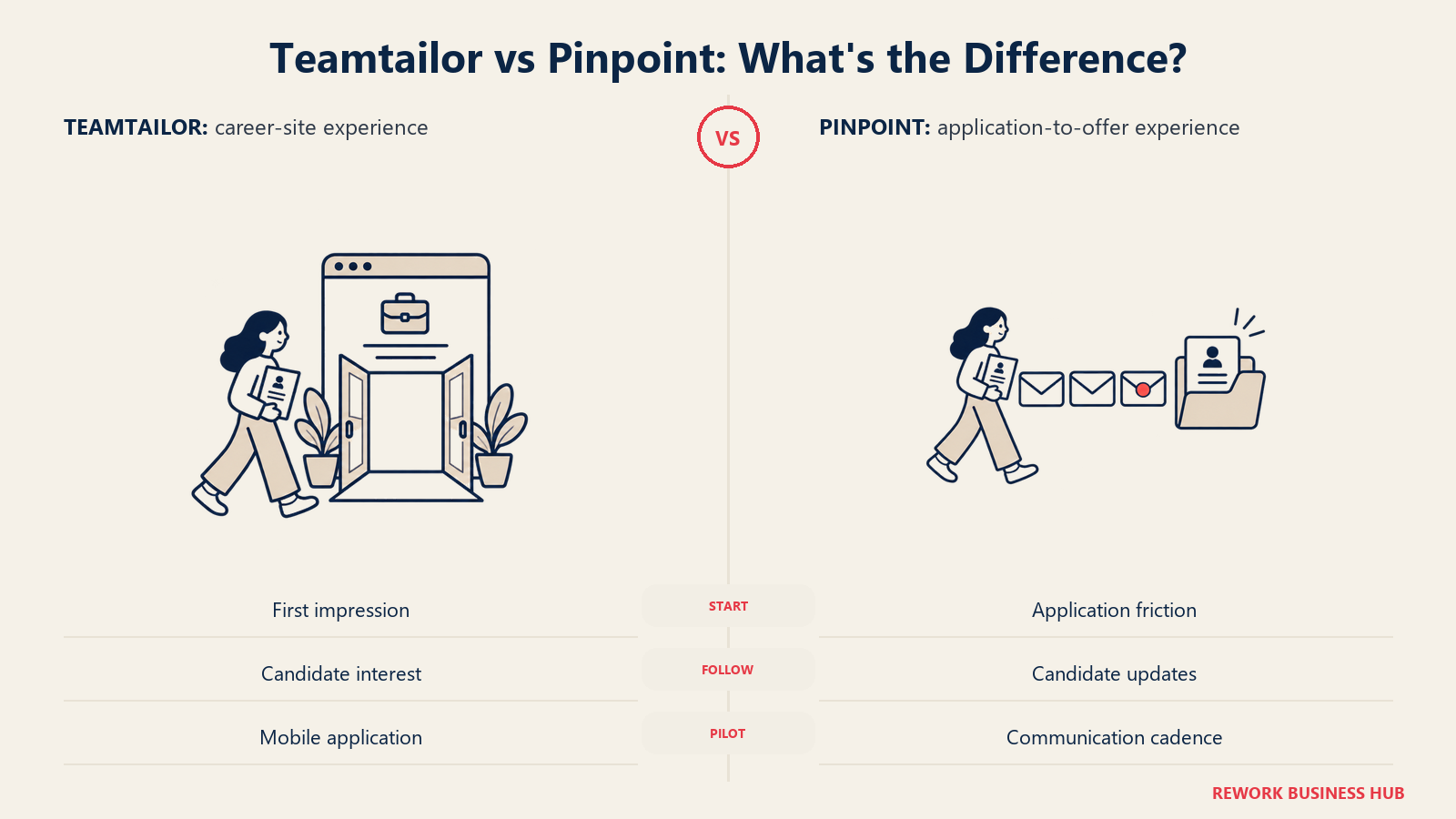
Auch Teamtailor unterstützt einen reibungslosen Bewerbungsablauf, und der mobilfreundliche Prozess ist eine echte Stärke, doch die Gestaltungsenergie fließt sichtbar eher in die Karriereseite und den ersten Eindruck als in die Prozessdisziplin danach. Teamtailor will zuerst die Aufmerksamkeit des Kandidaten gewinnen; Pinpoint will ihn bei der Stange halten, sobald er bereits in der Pipeline ist.
| Funktion | Teamtailor | Pinpoint |
|---|---|---|
| Mobile Bewerbungserfahrung | Stark; Karriereseite und Bewerbung sind für Mobilgeräte optimiert | Stark; darauf ausgelegt, Reibung und Abbrüche zu minimieren |
| Rhythmus der Kandidatenkommunikation | Verfügbar, übliche ATS-Nachrichtenfunktionen | Zentral für die Designphilosophie des Produkts |
| Länge und Reibung der Bewerbung | Standard | Ausdrücklich als Designpriorität minimiert |
| Wo sich der Designaufwand konzentriert | Karriereseite und erster Eindruck | Prozess von der Bewerbung bis zum Angebot und Updates an Kandidaten |
Strukturiertes Hiring und DEI-Reporting
Hier gehen die beiden Plattformen am deutlichsten auseinander, was sich lohnt genau zu lesen, wenn Compliance, DEI-Reporting oder Bewertungskonsistenz irgendeinen Anteil an Ihrer Suche haben.
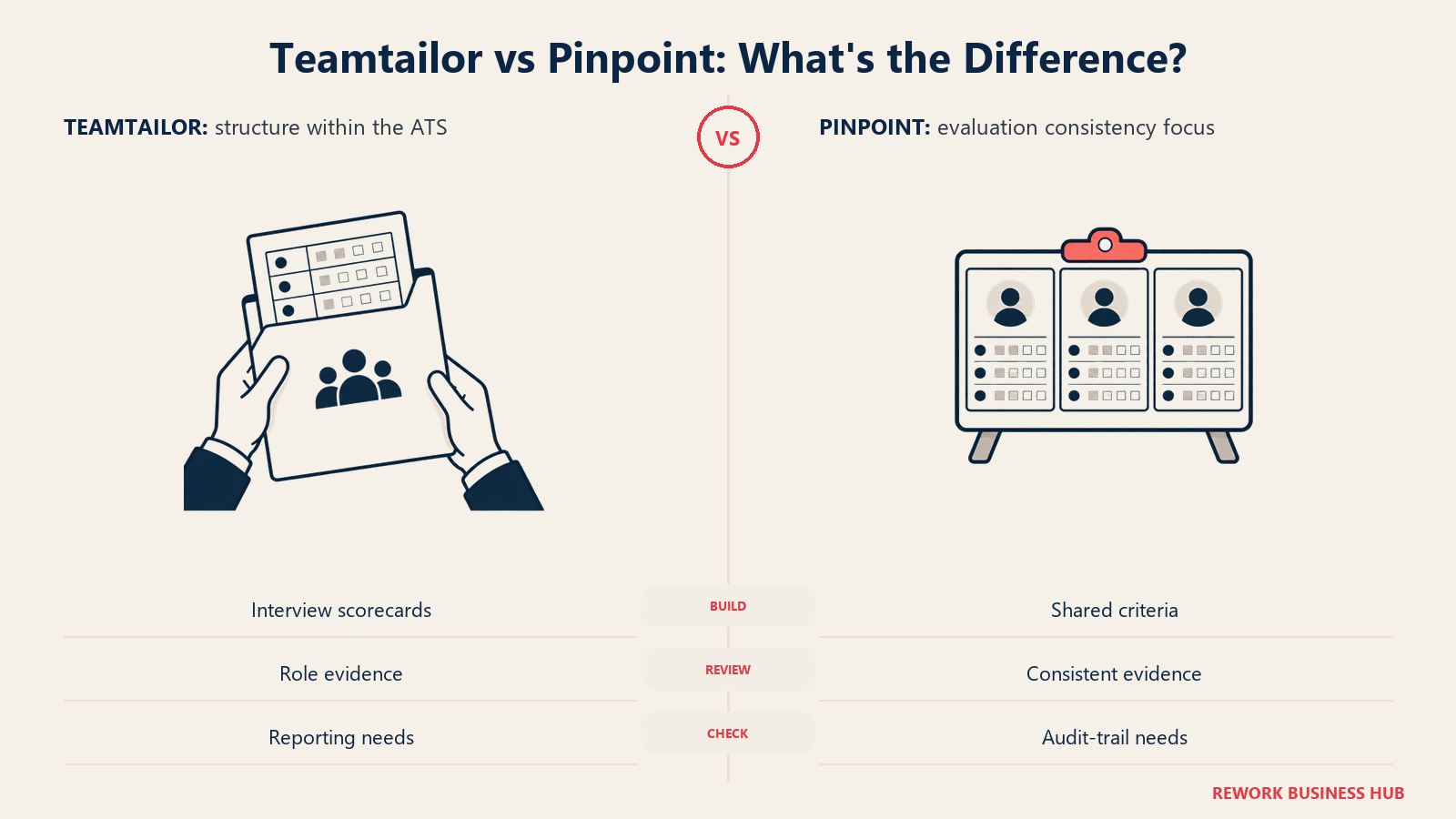
Pinpoints Produkt ist um strukturiertes, standardisiertes Hiring herum gebaut: Scorecards, definierte Bewertungskriterien und Reporting, das einer Prüfung standhalten soll, sei es ein internes Audit, ein DEI-Bericht an die Führung oder eine externe Compliance-Prüfung, passend für eine Talent-Acquisition-Funktion, die bereits entschieden hat, dass konsistente Bewertung wichtiger ist als ein schneller, informeller Prozess.
Auch Teamtailor unterstützt strukturierte Interviews und Scorecards, und das Werkzeug ist wirklich brauchbar, doch es ist eine Funktion innerhalb eines breiteren, auf Employer Branding ausgerichteten Produkts und nicht das Organisationsprinzip wie bei Pinpoint. Ein Team, das etwas Struktur ohne vollständige DEI-Reporting-Praxis wünscht, findet, was es braucht; ein Team, das einen auditfähigen Nachweis über alle Hiring Manager hinweg braucht, findet in Pinpoints Werkzeug eines, das genau dafür gebaut ist, derselbe Grund, aus dem Plattformen, die zuerst auf strukturiertes Hiring setzen, direkt gegeneinander antreten; in unserem Vergleich Greenhouse vs Ashby sehen Sie die Tiefe der Scorecards über diese beiden hinaus.
| Funktion | Teamtailor | Pinpoint |
|---|---|---|
| Interview-Scorecards | Als Funktion verfügbar | Kern des Produktdesigns |
| Strukturierte Bewertungskriterien | Unterstützt | Primäres Organisationsprinzip |
| DEI- und Compliance-Reporting | Einfaches Reporting verfügbar | Als benannte Stärke aufgebaut, ausdrücklich darauf positioniert |
| Auditfähiger Bewertungsnachweis | Mit Einrichtung möglich | Von Anfang an eingebaut |
| Beste Passung | Etwas Struktur ohne aufwendigen Prozessaufbau | Standardisierung der Bewertung über alle Hiring Manager und Rollen hinweg |
Reporting und Analysen
| Reporting | Teamtailor | Pinpoint |
|---|---|---|
| Standard-Pipeline-Reporting | Integriert | Integriert |
| Analysen zu Sourcing und Funnel der Karriereseite | Stark; direkt an die Marketingrolle der Karriereseite gekoppelt | Verfügbar, nachrangig gegenüber dem Reporting zu strukturiertem Hiring |
| DEI- und Interviewer-Konsistenz-Reporting | Einfach | Eine benannte Stärke, an Scorecards gekoppelt |
| Ideal für | Verstehen, wo Traffic der Karriereseite konvertiert | Analyse von Bewertungskonsistenz und Compliance-Bereitschaft |
Integrationen
Keiner der beiden Anbieter nennt auf den heute geprüften Seiten eine konkrete Partnerzahl, was erwähnenswert ist, da mehrere Wettbewerber dieser Kategorie mit der Zahl ihres Integrationsmarktplatzes als Verkaufsargument werben. Beide bieten über ihre jeweiligen Marktplätze Standardanbindungen an Jobbörsen, Kalender-Tools, Anbieter für Hintergrundprüfungen und HRIS-Systeme sowie eine API für individuelle Anbindungen. Wenn die Breite der Integrationen ein entscheidender Faktor ist, prüfen Sie die aktuelle Partnerliste direkt mit dem Vertriebsteam des jeweiligen Anbieters, statt sich auf eine Zahl auf der Startseite zu verlassen, da zum Zeitpunkt dieses Textes keiner eine anzeigte.

| Integrationsbereich | Teamtailor | Pinpoint |
|---|---|---|
| Veröffentlichung auf Jobbörsen | Ja, übliche Verteilung auf mehrere Jobbörsen | Ja, übliche Verteilung auf mehrere Jobbörsen |
| Kalender und Terminplanung | Ja | Ja |
| Hintergrundprüfungen | Über den Integrationsmarktplatz | Über den Integrationsmarktplatz |
| HRIS-Anbindung | Über den Integrationsmarktplatz | Über den Integrationsmarktplatz |
| Offene API | Ja | Ja |
| Veröffentlichte Partnerzahl | Auf den geprüften Seiten nicht genannt | Auf den geprüften Seiten nicht genannt |
Implementierung und Zeit bis zum Go-live
| Teamtailor | Pinpoint | |
|---|---|---|
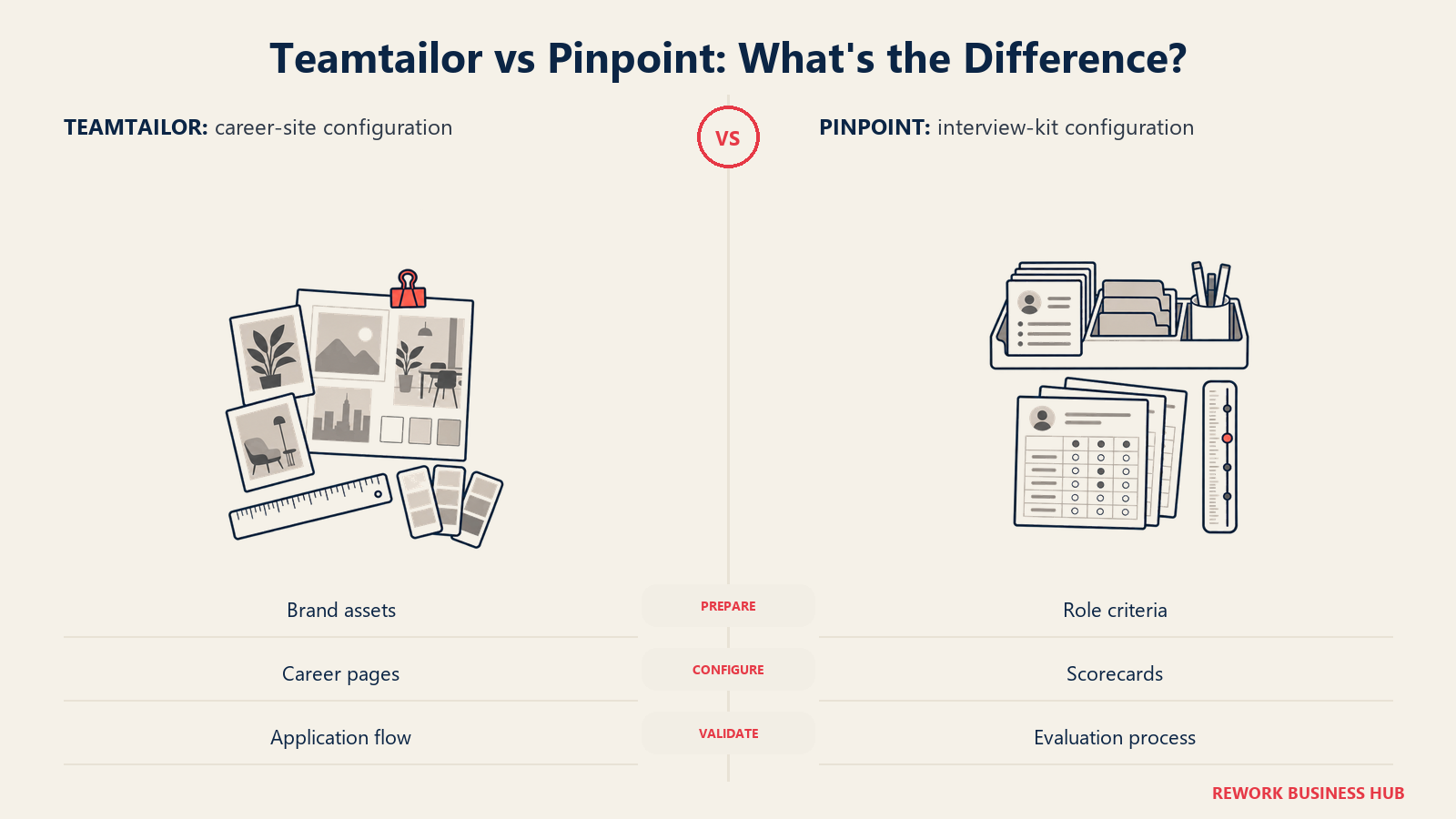
| Einrichtungsaufwand | Mittel; Design und Branding der Karriereseite brauchen echte Zeit, um gut konfiguriert zu werden | Mittel; Interview-Kits und Scorecards müssen je Rolle definiert werden, bevor strukturiertes Hiring funktioniert |
| Wer den Rollout typischerweise leitet | HR, Talent Acquisition oder ein Employer-Brand-Verantwortlicher aus dem Marketing-Umfeld | Talent-Acquisition-Funktion, oft mit Implementierungsunterstützung des Anbieters |
| Onboarding | Auf der öffentlichen Preisseite nicht näher beschrieben | Vielfach als im ersten Vertrag enthalten berichtet; bestätigen Sie das ausdrücklich, statt es anzunehmen |
| Schulungsaufwand | Gering bis mittel für den Alltag; höher, wenn Sie das Design der Karriereseite selbst aufbauen | Mittel; Scorecard- und Interview-Kit-Design ist die eigentliche Einrichtungsarbeit |
Das ehrliche Fazit zu beiden: Keines ist eine Einrichtung am selben Tag im Self-Service, wie es manche schlankeren ATS-Plattformen sind. Teamtailors Einrichtungszeit hängt vor allem davon ab, wie viel Designarbeit an der Karriereseite Sie vor dem Start erledigt haben wollen; Pinpoints hängt davon ab, für wie viele Rollenfamilien ein eigenes Interview-Kit und eine eigene Scorecard nötig sind, bevor strukturiertes Hiring tatsächlich funktioniert. Planen Sie bei beiden echte Wochen ein, nicht Tage.
Skalierung über 200 Mitarbeiter hinaus
Die beiden Preismodelle gehen in der Praxis ab dieser Größe am stärksten auseinander, und es lohnt sich, das vor einem mehrjährigen Vertrag durchzurechnen. Ein Unternehmen mit 250 Personen und schlankem, gleichmäßigem Hiring-Tempo kann unabhängig von der Mitarbeiterzahl dauerhaft in einem niedrigen Teamtailor-Tarif bleiben, doch dasselbe Unternehmen, das für eine Expansion einen großen Schwung Stellen öffnet, kann schnell den Tarif wechseln, ohne dass ein einziger Mitarbeiter zum ATS hinzukommt. Pinpoints Satz bleibt stattdessen an die Unternehmensgröße gekoppelt und bleibt laut der berichteten Struktur mit unbegrenzten Seats stabil, egal wie viele Stellen in einem Quartal offen sind, was aber auch bedeutet, dass eine ruhigere Hiring-Phase nicht belohnt wird.
Keine der beiden Strukturen ist hier objektiv besser. Es kommt darauf an, ob das Wachstum von gleichmäßigem, vorhersehbarem Hiring oder von stoßweisen, kampagnenartigen Vorstößen getrieben wird. Fragen Sie deshalb das Vertriebsteam jedes Anbieters direkt, wie ein konkreter Hiring-Plan für die nächsten 12 Monate Ihre Verlängerungszahl verändern würde, bevor Sie irgendetwas mehrjährig unterschreiben.
Wann Teamtailor die richtige Wahl ist
- Ihre Karriereseite ist in einem umkämpften Talentmarkt ein echter Wettbewerbsvorteil, und Sie wünschen dazu passende Gestaltungstiefe
- Ihr Hiring ist gleichmäßig und vorhersehbar statt stoßweise, sodass ein Job-Slot-Preismodell Ihre realen Kosten fair abbildet
- Sie möchten unbegrenzte Nutzer im Account, ohne bei wachsendem Team ein Preisgespräch pro Seat zu führen
- Employer Branding liegt bei einer HR-Funktion im Marketing-Umfeld, die echte gestalterische Kontrolle über die Karriereseite wünscht
- Sie kaufen gern über einen Angebotsprozess und brauchen keine veröffentlichte Preisliste, um mit der Evaluierung zu beginnen
Wann Pinpoint die richtige Wahl ist
- Sie brauchen einen strukturierten, belastbaren Hiring-Prozess mit Scorecards und Reporting auf DEI-Niveau als erstklassige Fähigkeit, nicht als Add-on
- Ihr Hiring-Volumen schwankt unvorhersehbar, und ein Pauschalsatz nach Unternehmensgröße schützt Sie bei einem Hiring-Schub vor Tarifsprüngen
- Sie möchten Implementierung und Onboarding im ersten Vertrag enthalten statt als separate Position verhandelt
- Zusätzliche Hiring Manager oder Interviewer im Account sollen kein Preisereignis sein
- Ihr Team hat bereits entschieden, dass Bewertungskonsistenz wichtiger ist als die Gestaltungstiefe der Karriereseite
Wenn keines von beiden passt: Wenn Hiring direkt an HR angebunden sein muss
Ehrlich gesagt: Wenn Sie eine Karriereseite wollen, an die man sich erinnert, und einen strukturierten Prozess, dem man vertraut, landen Sie womöglich mit beiden, Teamtailor und Pinpoint, auf der Shortlist, da sie wirklich unterschiedliche Hälften desselben Funnels lösen. Es gibt aber eine dritte Lücke, die keiner von beiden schließt, da beide zuerst Hiring-Produkte sind: was in dem Moment passiert, in dem ein Angebot angenommen wird.
Reworks Module E-Hiring, Interview und Career laufen auf derselben People-Plattform wie HRIS, Zeit und Anwesenheit sowie Timesheets, sodass aus einem Kandidatendatensatz bei der Annahme des Angebots ein Mitarbeiterdatensatz wird, mit bereits verbundener Anwesenheitserfassung und Timesheet-Einrichtung, statt Wochen später an ein zweites System übergeben zu werden. Das ist ein spürbar anderer Ausgangspunkt als bei den beiden Anbietern hier, die beide beim Hiring glänzen und dort aufhören. Es ist ehrlich gesagt nicht die richtige Wahl, wenn Sie ein designorientiertes Employer-Branding-Studio brauchen, das Teamtailors Karriereseiten-Builder Konkurrenz macht, ein Tool für Agenturen mit hohem Volumen oder ein tiefes, Sourcing-getriebenes Talent CRM. Einen Blick wert ist es, wenn Sie Hiring als verbundenen Baustein einer umfassenderen People-Operations-Plattform wünschen, statt ein ATS nachträglich an HR anzubinden. Die Preise gibt es auf Anfrage, genau wie bei beiden Anbietern hier; aktuelle Details finden Sie unter rework.com/pricing.
Entscheidungsrahmen
| Wenn Sie... | Wählen Sie |
|---|---|
| eine designorientierte, markenstarke Karriereseite priorisieren | Teamtailor |
| strukturiertes Hiring mit Reporting auf DEI-Niveau standardisieren | Pinpoint |
| ein gleichmäßiges, vorhersehbares Hiring-Volumen haben | Teamtailor (Job-Slot-Preise belohnen das) |
| ein unvorhersehbares, stoßweises Hiring-Volumen haben | Pinpoint (Pauschale nach Größe fängt das ab) |
| unbegrenzte Nutzer ohne Preisgespräch pro Seat wünschen | Teamtailor |
| eine Implementierung wünschen, die berichtet im ersten Vertrag enthalten ist | Pinpoint |
| Hiring direkt mit HRIS, Anwesenheit und Timesheets verbinden möchten | Rework (siehe rework.com/pricing) |
| alle Optionen der Kategorie vergleichen möchten, nicht nur diese beiden | Siehe unsere Übersicht der besten Bewerbermanagementsysteme |
Nächste Schritte
- Holen Sie beide Angebote schriftlich ein, bevor Sie irgendetwas anderes vergleichen. Keiner der Anbieter veröffentlicht einen Preis, eine mündliche Größenordnung ist also nichts, worauf Sie eines der Unternehmen später festlegen könnten; fragen Sie nach der Zahl, die an Ihre tatsächliche Stellenzahl und Mitarbeiterzahl gekoppelt ist.
- Rechnen Sie Ihre nächsten 12 Monate Hiring gegen jede Preisstruktur durch, nicht nur die aktuelle Mitarbeiterzahl, denn das bewegt bei beiden Modellen tatsächlich die Rechnung.
- Bestätigen Sie die Aussagen zu „unbegrenzten Seats“ und „unbegrenzten Stellenanzeigen“ in Ihrem eigenen Angebot schriftlich. Die Formulierung „unbegrenzte Stellenanzeigen und unbegrenzte Nutzer“ konnten wir nur direkt auf Teamtailors eigener Preisseite bestätigen; Pinpoints Variante tauchte durchgängig in Rezensionen Dritter auf, nicht aber auf den heute geprüften Anbieterseiten.
- Entscheiden Sie, welche Hälfte des Funnels gerade wichtiger ist: die Karriereseite und der erste Eindruck oder der strukturierte Prozess, nachdem die Bewerbung eingegangen ist. Diese eine Priorität trennt die beiden stärker als jede Funktionsliste.
- Wenn Ihre eigentliche Lücke speziell das Design der Karriereseite ist, gehen unsere Übersicht der besten Software für Karriereseiten und unsere Übersicht der besten Recruiting-Marketing-Software tiefer als jeder der beiden Anbieter hier.
- Bauen Sie noch an Ihrer Shortlist? Lesen Sie unseren Leitfaden zu Teamtailor-Alternativen, unseren Vergleich Workable vs Greenhouse für die Seite mit veröffentlichten Preisen in dieser Kategorie und unseren Leitfaden zur Auswahl von Recruiting-Software für den vollständigen Evaluierungsrahmen. Bei unter 50 Mitarbeitern lesen Sie unsere Übersicht der besten Recruiting-Software für kleine Unternehmen; wenn Sie stattdessen Sourcing-getriebene Plattformen abwägen, lesen Sie unsere Leitfäden zu Beamery- und Phenom-Alternativen.
Häufig gestellte Fragen zu Teamtailor vs Pinpoint
Veröffentlichen Teamtailor oder Pinpoint Preise?
Nein. Beide Preisseiten leiten jeden Besucher auf ein Angebotsformular ohne Tarifnamen und ohne Dollarbeträge. Teamtailors Seite trägt die Überschrift „Lassen Sie uns Ihnen ein Angebot machen“, und Pinpoints aktuelle Preisseite (die alte URL pinpointhq.com/pricing liefert inzwischen einen 404-Fehler) trägt die Überschrift „Preise anfragen.“ Berichtete Zahlen von Dritten gibt es für beide, doch keine ist ein bestätigter Anbieterpreis.
Wie funktioniert Teamtailors Preisgestaltung tatsächlich, wenn es keine Preisliste gibt?
Über Job-Slots: Ihr Tarif hängt davon ab, wie viele Stellen Sie gleichzeitig offen haben, nicht von der Mitarbeiterzahl. Vendrs Marktplatzdaten beschreiben eine berichtete Spanne von etwa 300 bis 400 $/Monat für ein kleines Team bis hin zu 1.500 $/Monat und mehr für größere Organisationen, betrachten Sie das aber als berichtet und nicht als bestätigtes Angebot.
Wie funktioniert Pinpoints Preisgestaltung tatsächlich, wenn es keine Preisliste gibt?
Pauschal nach Unternehmensgröße, mit zwei Tarifen, Growth und Enterprise. SelectSoftware Reviews berichtet von Growth ab etwa 345 $/Monat bei jährlicher Abrechnung und Enterprise bei rund 1.200 $/Monat und mehr, wobei es sich um Zahlen von Dritten und nicht um vom Anbieter bestätigte Preise handelt.
Sind Teamtailors Stellenanzeigen und Nutzer wirklich unbegrenzt?
Ja, laut Teamtailors eigener Preisseite, die „unbegrenzte Stellenanzeigen und unbegrenzte Nutzer“ direkt nennt. Diese Aussage ist vom Anbieter bestätigt und nicht nur eine Charakterisierung durch Dritte.
Bietet Pinpoint wirklich unbegrenzte Seats?
Das wird auf Rezensionsseiten Dritter vielfach so berichtet, und das Preismodell mit Pauschale nach Unternehmensgröße passt dazu. Diese konkrete Formulierung konnten wir zum Zeitpunkt dieses Textes nicht direkt auf Pinpoints eigenen Preis- oder Produktseiten finden. Bestätigen Sie es daher ausdrücklich in Ihrem eigenen Angebot, statt es aus Quellen aus zweiter Hand anzunehmen.
Welche Plattform ist besser für Employer Branding und das Design der Karriereseite?
Teamtailor, mit deutlichem Abstand. Die Karriereseite ist das Herzstück des Produkts, gebaut für eigene Domains, Video und gestalterische Flexibilität. Pinpoints Karriereseite ist funktional und unterstützt den Hiring-Prozess, doch Gestaltungstiefe ist nicht der organisierende Schwerpunkt wie bei Teamtailor.
Welche Plattform ist besser für strukturiertes Hiring und DEI-Reporting?
Pinpoint, von der Konzeption her. Strukturierte Bewertung, Scorecards und Reporting auf DEI-Niveau sind als primäre Stärke positioniert, nicht als Add-on. Auch Teamtailor unterstützt Scorecards, aber als Funktion innerhalb eines breiteren, auf Employer Branding ausgerichteten Produkts.
Decken eine dieser Plattformen HR, Zeiterfassung oder Gehaltsabrechnung ab?
Nein. Beide sind Bewerbermanagementsysteme, die sich auf den Hiring-Funnel von der Stellenanzeige bis zum Angebot konzentrieren. Wenn Sie Hiring direkt mit HRIS, Anwesenheit oder Gehaltsabrechnung verbinden möchten, statt es nachträglich anzubinden, ist das eine andere Plattformkategorie, die Sie separat evaluieren sollten.

On this page
- TL;DR
- Für wen die beiden Plattformen tatsächlich gebaut sind
- Wichtige Fakten
- Zwei Anbieter, null veröffentlichte Preise: Der Kernunterschied
- Preisstruktur und die tatsächlichen Gesamtbetriebskosten
- Karriereseite und Employer Brand
- Candidate Experience und Bewerbungsablauf
- Strukturiertes Hiring und DEI-Reporting
- Reporting und Analysen
- Integrationen
- Implementierung und Zeit bis zum Go-live
- Skalierung über 200 Mitarbeiter hinaus
- Wann Teamtailor die richtige Wahl ist
- Wann Pinpoint die richtige Wahl ist
- Wenn keines von beiden passt: Wenn Hiring direkt an HR angebunden sein muss
- Entscheidungsrahmen
- Nächste Schritte