Best Phenom Alternatives in 2026: 12 Talent Experience and Recruitment Marketing Platforms
Turn this article into takeaways for your work.


Each assistant summarizes the article only for you and suggests best practices for your work.
Phenom sells an idea worth taking seriously: candidates and employees are both "talent," and every touchpoint, from a first visit to a career site through an internal transfer years later, should run through the same AI layer. That vision is genuinely differentiated, and for a global enterprise running career sites, a talent CRM, hiring manager tools, internal mobility, and a chatbot as one connected experience, Phenom is a real contender. The catch shows up before the first demo even ends. Phenom's pricing page exists, linked in the site's own nav as "Phenom Pricing & RFP Requests," and it shows exactly zero figures: fill out a form and "the right Phenom expert" calls you back. This list evaluates 12 alternatives on published pricing where it exists, talent-experience depth, and honest fit by size.
Three reasons TA and HR leaders actually go looking for a Phenom alternative. First, the module math: career site, CRM, hiring manager tools, internal mobility, and the AI chatbot are priced and sold as separate pieces of one bundled contract, so a deal that starts as "just the career site" tends to grow once another department wants matching or mobility too. Second, enterprise implementation weight: standing up an AI-driven talent experience platform across every hiring workflow in a large org is a real project, not a weekend config. Third, plenty of buyers only want one capability, a better career site, stronger sourcing, or a recruiting CRM, and don't need the full suite Phenom is built to sell.
Key Facts
Key Facts: Talent Experience, Candidate Engagement, and High-Volume Hiring
- A dismal 17% of applicants even made it to the interview stage in 2024. (Josh Bersin)
- One in four candidates have turned down a job because of a poor recruiting process. (Josh Bersin)
- Almost 60% of recruiters now use AI for sourcing, screening, or nurturing candidates. (Josh Bersin, 2026)
- The average US cost per hire reached $5,475 for non-executive roles in 2025. (SHRM, 2025)
- Enterprise SaaS price inflation hit 16.4% in June 2026, the highest monthly rate on record. (Vertice, 2026)
Quick Comparison Table
This list runs from Phenom's closest talent-experience peers toward more focused, budget-transparent tools. Rework sits at #6, winning on consolidating hiring with HR rather than out-AI-ing Phenom. For the full ATS shortlist, see Best Applicant Tracking Systems in 2026.
| Tool | Best For | Starting Price | Key Strength | Key Limitation |
|---|---|---|---|---|
| Beamery | Enterprise CRM-first talent lifecycle management | Custom quote, no published figures | Deep AI sourcing and internal talent marketplace | Zero pricing transparency, not even a "starting at" figure |
| Eightfold | AI-first talent intelligence and skills matching | Custom quote, no published figures | Strongest AI matching engine on this list | No pricing page or pricing link anywhere on the site |
| SmartRecruiters | Recruitment marketing at scale | From $14,995/yr (Essential, published) | AI sourcing, now backed by SAP's roadmap | Higher tiers are quote-only |
| iCIMS | Broad enterprise Talent Cloud | Custom quote (reported avg. ~$20,781/yr, per Vendr) | Deep configurability and integration marketplace | Requisition-first, not experience-first like Phenom |
| Avature | Configurable enterprise CRM plus ATS | Custom quote (reported avg. contract ~$465,000/yr) | Deepest configurability, strong professional services | Long, services-heavy implementation |
| Rework | Hiring unified with HR and timesheets | Quote on request (rework.com/pricing) | E-Hiring, Interview, Career on the HRIS platform | Not a talent-experience or AI-matching replacement |
| Paradox | Conversational AI for high-volume, hourly hiring | Custom quote, no published figures | Text-to-apply and automated scheduling at scale | Not built for salaried, experience-led hiring |
| Gem | Recruiting CRM and sourcing on top of your ATS | From $130/mo (Startup Program, 1-10 FTE, published) | Best-in-class outbound sourcing and nurture campaigns | Not a career site or candidate-facing experience layer |
| hireEZ | AI-powered outbound sourcing | $494/mo (Solo Recruiter, published) | Sources across many platforms, fast candidate discovery | Recruiter tool only, no candidate-facing experience |
| SeekOut | Sourcing and talent intelligence | $149/mo annual, $1,788/yr (Recruit Core, published) | Strong technical and DEI-focused sourcing | Limited candidate-facing career site tooling |
| Teamtailor | Career site and employer branding first | Custom quote, no published figures | Best career site builder on this list | No AI matching or internal mobility depth |
| Workable | Transparent-priced mid-market ATS | $299/mo, $3,588/yr annual (Standard) | Published pricing at every tier | Far less AI-matching and mobility depth than Phenom |
Pricing note: Most talent-experience platforms here, Phenom included, publish nothing. Figures marked "custom quote" or "reported" come from vendor research current as of September 2026; confirm numbers with the vendor before you budget.
What changed in 2026: SAP kept integrating SmartRecruiters with SuccessFactors after completing its acquisition in September 2025. AI matching moved from a Phenom and Eightfold differentiator to a checkbox feature across nearly every tool here, including budget-priced ones like Workable. And renewal inflation on enterprise SaaS contracts hit a new high in June 2026, making the itemized-quote habit more important than ever.
1. Beamery: Enterprise CRM-First Talent Lifecycle Management
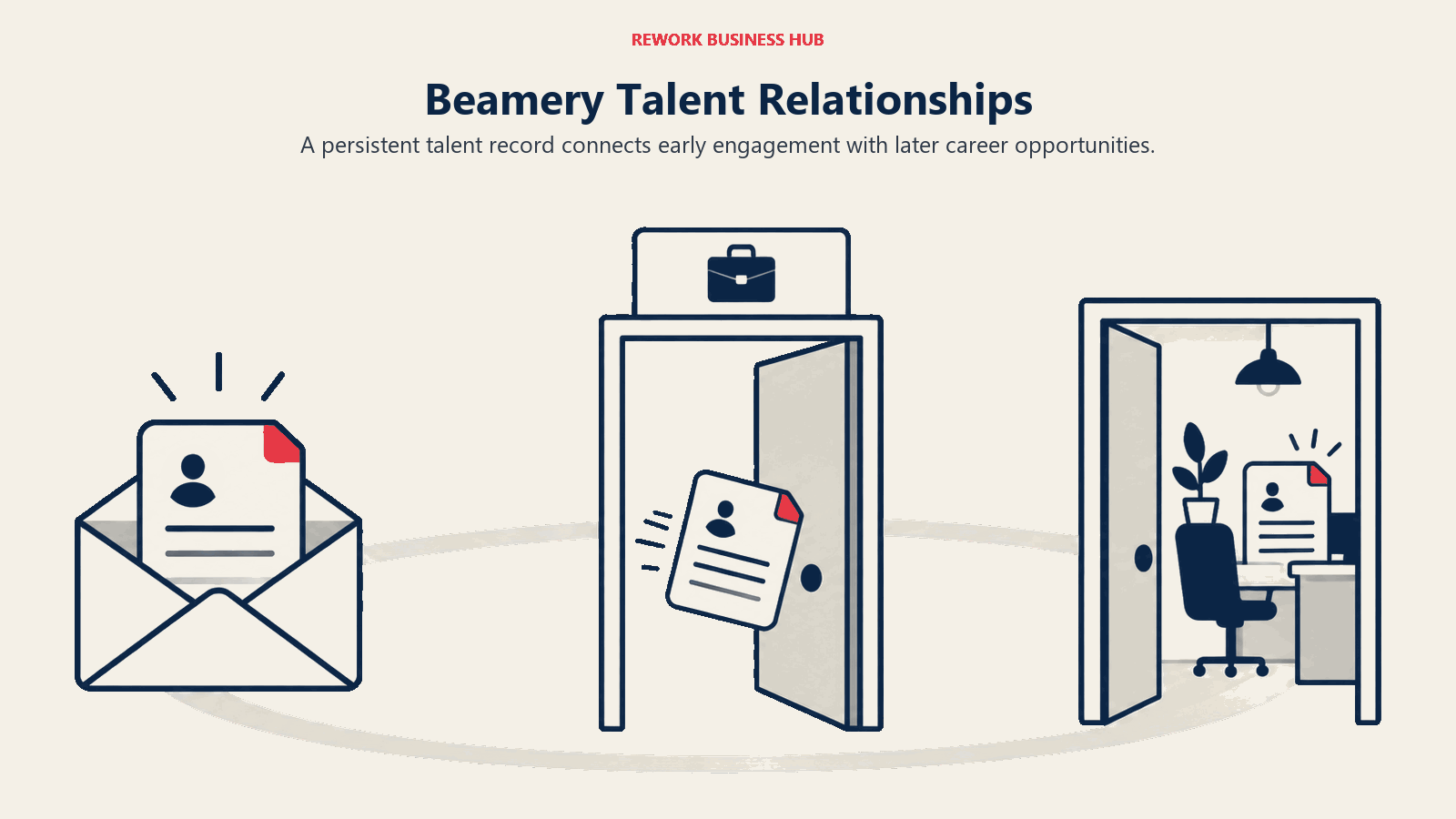
Beamery calls its category "Talent Lifecycle Management," and the pitch tracks closely with Phenom's own: one CRM-style record that follows a person from first candidate touch through internal mobility years into their employee tenure, powered by an AI layer doing sourcing, matching, and skills inference underneath. Where Phenom leans hard into the candidate-facing career site and chatbot experience, Beamery leans hard into the CRM and workforce-planning side, sourcing, nurture campaigns, and internal talent marketplace data that recruiters and HR business partners both touch.
Pricing is nowhere to be found. Beamery has no public pricing page, and there is no pricing link anywhere in the site's nav or footer, every path leads to "Book a demo" or "Sign in." That's a notch more opaque than Phenom, which at least publishes a named pricing page, even if it's a lead form. Expect a sales-led process priced against FTE count, module mix, and contract term, the same shape as Phenom's own modular bundling.
| What you get | What you don't |
|---|---|
| CRM-first talent lifecycle management with deep AI sourcing | Any published pricing, even a "starting at" figure |
| Internal talent marketplace and workforce-planning data | A pricing page at all; beamery.com/pricing 404s |
| Skills inference and matching across candidates and employees | A fast, self-serve buying process |
| Strong fit for enterprises already thinking CRM-first | A career-site builder as polished as Phenom's or Teamtailor's |
Pricing: Custom quote only; no pricing page exists, no figures published anywhere.
Best for: Enterprises wanting a CRM-first talent lifecycle platform with deep AI sourcing and internal mobility data, evaluated against Phenom on vision and ambition rather than price. Not ideal for: Any buyer who wants a number, even a range, before the first call. See the best Beamery alternatives if the opacity itself is the dealbreaker.
2. Eightfold: AI Talent Intelligence Platform
Eightfold's pitch is narrower, and in one specific way more ambitious, than Phenom's: build the deepest possible AI matching engine, then apply it across recruiting, internal mobility, and workforce planning. Its models score fit on skills and potential rather than keyword match, and the platform doubles as an internal talent marketplace, surfacing employees for open roles before a company posts externally.

Pricing is even harder to find than Beamery's. There is no pricing page and no pricing link in either the site nav or the footer; the only calls to action are "Request demo." Third-party estimates exist but vary too widely across sources to print a single figure responsibly, so treat any number you see elsewhere as unconfirmed until a quote is in hand.
| What you get | What you don't |
|---|---|
| Arguably the deepest AI-matching engine on this list | Any published pricing figures, or even a pricing page |
| Skills-based matching across recruiting and internal mobility | A career site builder as the primary product focus |
| Strong internal talent marketplace for large workforces | A fast or self-serve buying process |
| Deep learning models built specifically for talent matching | Transparency comparable to even Phenom's lead-form page |
Pricing: Custom quote only; no pricing page exists anywhere on the site.
Best for: Enterprises prioritizing AI-matching depth and internal mobility across a large, complex workforce. Not ideal for: Buyers who need candidate-facing career site polish; that's a smaller piece of Eightfold's story than it is of Phenom's.
3. SmartRecruiters: Recruitment Marketing, Now Backed by SAP
SmartRecruiters built its position on recruitment marketing: AI-generated job ads, a consumer-grade candidate experience, and CRM-style talent pools, arguably the closest thing on this list to Phenom's own marketing-forward instincts, just built ATS-first rather than experience-first. SAP completed its acquisition on September 11, 2025, and keeps integrating the product with SuccessFactors while it continues operating standalone.
Essential is the one published price here, "Starting at $14,995," with no billing term stated on the page. Professional, High Volume, and Complete are all quote-only, and the sales process assumes a real TA org behind it. For a buyer comparing against Phenom mainly on recruitment-marketing chops, backed by an enterprise roadmap, SmartRecruiters is a natural next call. See the best recruitment marketing software for more options in this specific lane.
| What you get | What you don't |
|---|---|
| A published starting price, unlike Phenom or most peers here | A billing term stated next to that starting price |
| AI-powered sourcing and recruitment marketing tools | A candidate and employee talent-experience story as broad as Phenom's |
| Native path into SAP SuccessFactors | A budget option under a few hundred employees |
| Backing and roadmap stability from SAP | Internal mobility depth to match Eightfold or Phenom |
Pricing: From $14,995/yr (Essential, published, billing term unstated); Professional, High Volume, and Complete are custom quote.
Best for: Enterprises wanting recruitment marketing depth with a published entry price and an existing or planned SAP footprint. See the best SmartRecruiters alternatives if it overshoots your needs. Not ideal for: Teams under roughly 200 employees, or anyone whose primary need is internal mobility rather than external recruitment marketing.
4. iCIMS: The Broader Enterprise Talent Cloud
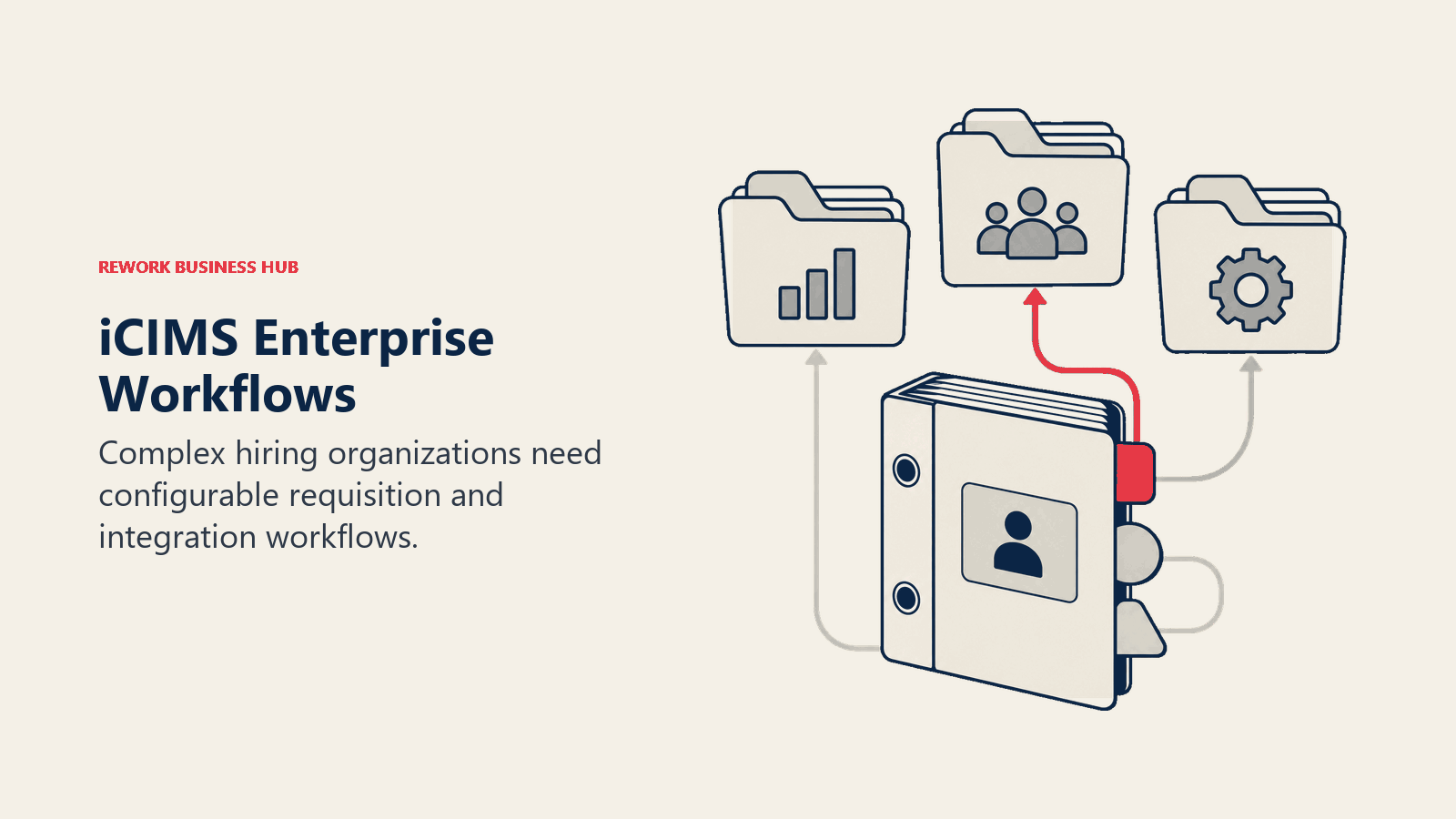
iCIMS solves an adjacent problem to Phenom: instead of leading with candidate and employee experience, it leads with configurable, requisition-first hiring at scale, a Talent Cloud built for enterprises running many workflows across business units. More than 4,400 companies across 200 countries, including a quarter of the Fortune 500, trust iCIMS to hire, per iCIMS's own announcement (March 2026).
iCIMS has no published pricing figures anywhere. Vendr’s buyer data reports an average annual contract of $20,781, ranging from $14,500 to $635,000 as headcount and modules scale (Vendr, reported), a band a mid-scale Phenom contract lands in too once a few modules are bundled.
| What you get | What you don't |
|---|---|
| Broad, configurable ATS depth across many business units | Phenom's candidate and employee experience-first design |
| A large third-party integration marketplace | Any published pricing figures |
| Strong analytics and reporting at enterprise scale | AI matching or internal mobility depth to match Eightfold |
| A proven enterprise track record | A fast, low-overhead implementation |
Pricing: Custom quote only. Vendr’s buyer data reports an average annual contract of $20,781, ranging from $14,500 to $635,000 (Vendr, reported).
Best for: Enterprises wanting broad, configurable ATS depth across many business units, prioritizing requisition management and integrations over Phenom's experience-first design. See best iCIMS alternatives if you're evaluating iCIMS on its own terms. Not ideal for: Teams whose actual complaint about Phenom is the AI or experience layer, not the ATS; iCIMS solves a different problem, not a cheaper version of the same one.
5. Avature: Configurable Enterprise CRM Plus ATS
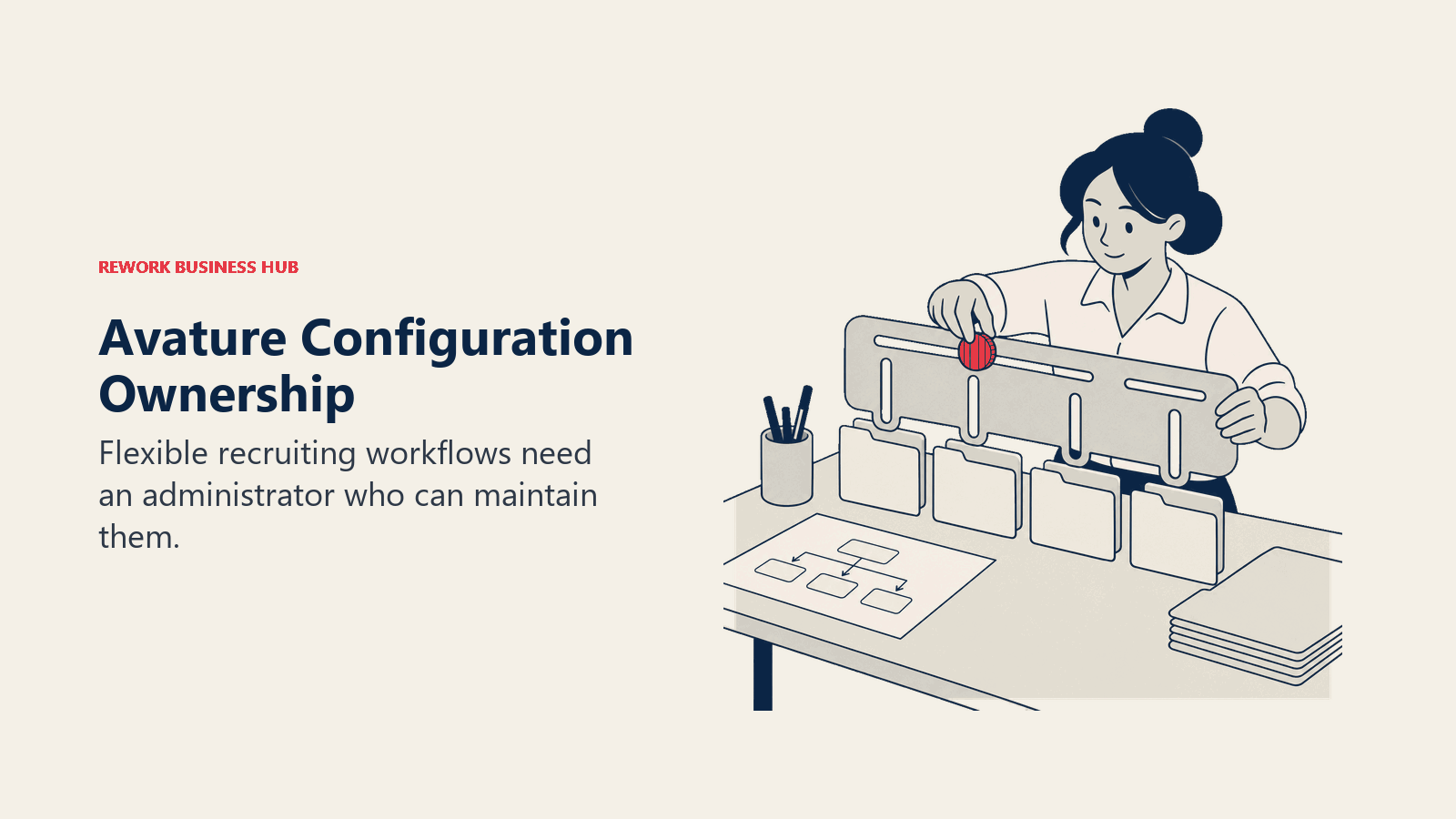
Avature approaches hiring from the CRM side rather than the pipeline side, similar in spirit to Beamery, popular with global enterprises, especially in Europe, running recruiting, sourcing, and workforce marketing campaigns as ongoing programs. Where Phenom packages its AI layer as one branded experience, Avature ships a highly configurable toolkit and expects an internal admin or implementation partner to build the specific workflow.
No pricing appears anywhere on avature.net; the homepage routes every visitor to a contact form. Third-party procurement research from Vendr puts the average Avature contract around $465,000 a year, reflecting its enterprise-only, heavily configured deployments, in the same range enterprises budget for a bundled, multi-module Phenom contract.
| What you get | What you don't |
|---|---|
| Near-total configurability across recruiting and CRM workflows | Any published pricing figures |
| Strong fit for RPO providers and multi-brand employers | A fast implementation timeline |
| CRM-style sourcing built alongside the ATS | Phenom's consumer-grade candidate experience polish |
| Deep professional services support | Predictability on total cost before a quote |
Pricing: Custom quote only; reported avg. contract ~$465,000/yr (Vendr, reported).
Best for: Complex, multi-brand enterprises or RPO providers that need the workflow to bend to them rather than adopting an opinionated experience layer. Not ideal for: Mid-market teams without budget for a services-heavy implementation.
6. Rework: Hiring Unified With HR, Not a Talent-Intelligence Suite
Rework is the one name on this list that isn't trying to out-AI Phenom. Its E-Hiring, Interview, and Career modules run inside the same Rework People platform as HRIS, time and attendance, and timesheets, so the person a recruiter just hired becomes an employee record, an attendance profile, and a timesheet owner automatically, no export and re-import into a second system.
That's a genuinely different problem than the one most Phenom evaluations are solving, worth being honest about upfront. Phenom sells AI-driven talent experience: matching, internal mobility, a chatbot, a career site that feels consumer-grade. Rework doesn't compete on any of that depth. What it offers instead is consolidation: a mid-size company that looked at Phenom's modular bundle, realized it would be buying talent-intelligence depth it would rarely use, and wants hiring, HR, and time tracking on one platform instead.
| What you get | What you don't |
|---|---|
| E-Hiring, Interview, and Career on the same platform as HRIS and timesheets | Phenom's AI matching, internal mobility, or chatbot layer |
| New hires flow into HR and attendance records without manual re-entry | A consumer-grade, design-led career site experience |
| One vendor relationship for hiring, HR, and time tracking | Deep sourcing, CRM-style nurture, or talent-marketplace tooling |
| Packages, not per-user licenses, across the People line | A published, self-serve price |
Pricing: Quoted per organization, not published as a flat rate. See rework.com/pricing.
Best for: Mid-size companies (roughly 10-200 employees) whose real cost of a Phenom-style contract isn't the AI, it's paying for talent-intelligence depth they will rarely use while hiring, HR, and time tracking stay three separate systems. Not ideal for: Enterprises that genuinely need Phenom's AI matching, internal mobility, or talent-marketplace depth. Rework is not a substitute for that layer, and treating it as one would waste your evaluation time.
7. Paradox: Conversational AI for High-Volume, Hourly Hiring
Paradox starts from a different volume problem than Phenom. Its conversational AI assistant handles text-based applications, screening questions, and interview scheduling for frontline and hourly roles at a scale where a career site and a chatbot alone won't keep up: retail, healthcare, logistics, hospitality.
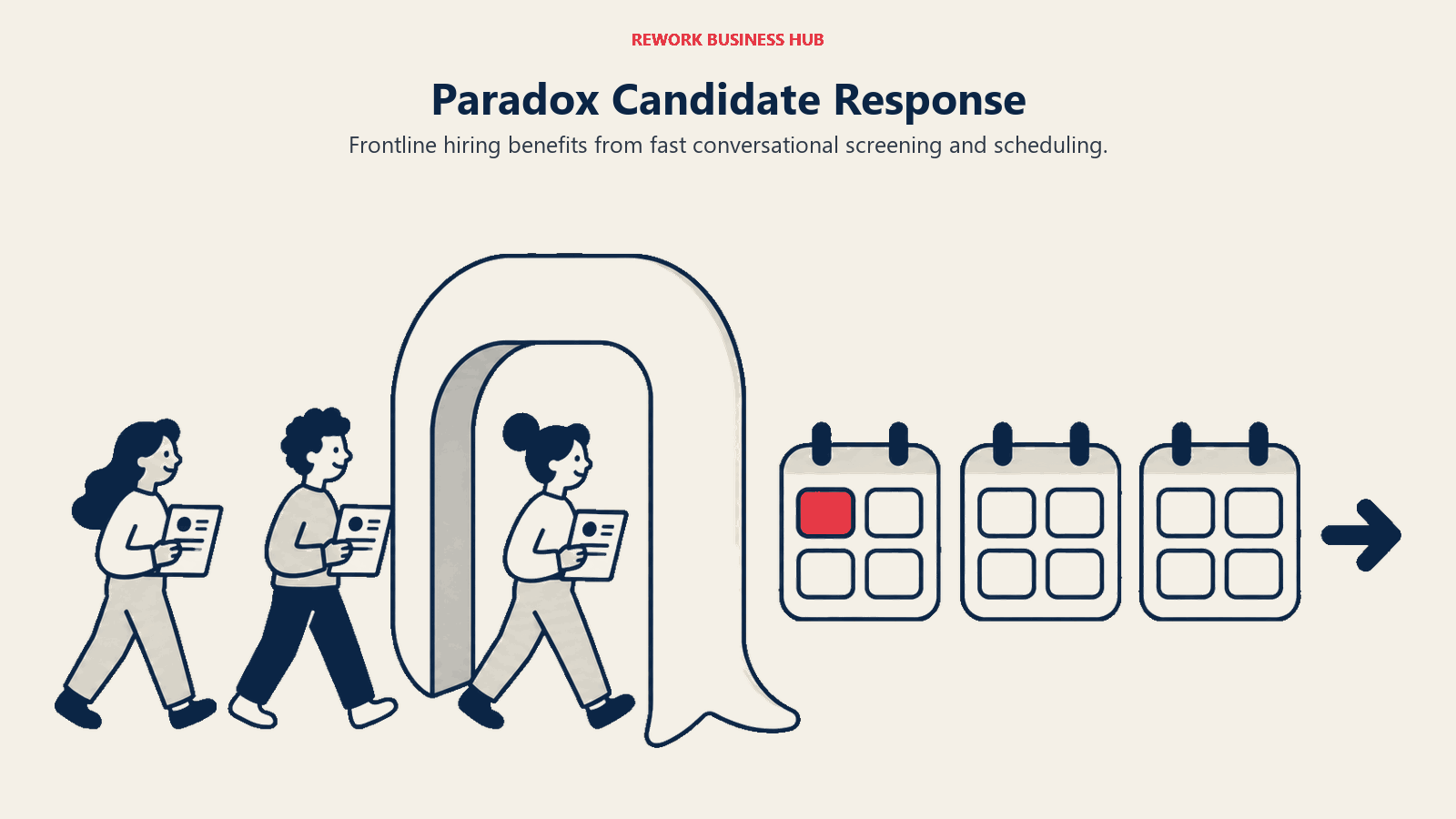
Pricing isn't published anywhere on Paradox's site; every path leads to a demo request rather than a rate card, the same opacity as Phenom and most enterprise-scale peers here.
| What you get | What you don't |
|---|---|
| Conversational, SMS-first applications built for high-volume roles | A career site or talent-marketplace experience like Phenom's |
| Automated scheduling that removes recruiter coordination overhead | Any published pricing figures |
| Purpose-built for hourly and frontline hiring at scale | Internal mobility or skills-based matching depth |
| Fast candidate response times via text rather than email | A fit for salaried, low-volume structured hiring |
Pricing: Custom quote only; no published figures at any tier.
Best for: High-volume, hourly, and frontline hiring where speed to first contact matters more than a career-site experience. Not ideal for: Salaried, low-volume structured hiring, or teams wanting Phenom's internal mobility and talent-marketplace features.
8. Gem: Recruiting CRM and Sourcing on Top of Your ATS
Gem solves a narrower, recruiter-facing problem than Phenom: sourcing, nurture campaigns, and pipeline analytics that sit on top of whatever ATS a team already runs, rather than replacing the candidate-facing experience layer. It's the tool a recruiting team reaches for when the complaint isn't "our career site is weak," it's "we can't see or nurture our own sourced pipeline."
Gem publishes real numbers for small teams. Its Startup Program (1-10 FTE) lists $270 struck through, $130 a month, labeled "Yearly (10% off)"; companies under 30 employees get six months free then 50% off, and 30-100 employee companies get reduced rates. "Gem + Your ATS" and "Gem All-in-One" scale past that on a custom, FTE-based quote.
| What you get | What you don't |
|---|---|
| Published, transparent starting pricing for small teams | A career site or candidate-facing experience layer |
| Strong outbound sourcing and nurture-campaign tooling | An ATS; Gem sits on top of one you already own |
| Pipeline analytics recruiters actually use | Internal mobility or talent-marketplace features |
| Simple FTE-based pricing that scales down for small teams | A single-platform answer the way Phenom positions itself |
Pricing: From $130/mo (Startup Program, 1-10 FTE, published, 10% off annual); custom quote for larger teams.
Best for: Recruiting teams wanting a CRM and sourcing layer bolted onto an existing ATS, not a full talent-experience suite. Not ideal for: Buyers whose primary need is a candidate-facing career site or chatbot; Gem doesn't compete there.
9. hireEZ: AI-Powered Outbound Sourcing
hireEZ answers a single question well: how do you find and reach candidates who aren't in your ATS yet. Its AI sourcing engine pulls from a wide range of public profiles and platforms, and outreach sequencing runs inside the same tool, a recruiter-facing sourcing product, not a candidate-facing experience platform like Phenom.

Solo Recruiter runs $494 a month with a 7-day free trial, the one clearly published figure. Enterprise pricing is seat-based but configured against whatever sourcing stack a team is replacing, quoted rather than listed.
| What you get | What you don't |
|---|---|
| AI-powered sourcing across a wide range of platforms | A candidate-facing career site or chatbot |
| Published starting price for individual recruiters | Internal mobility or talent-marketplace tooling |
| Outreach sequencing built into the sourcing workflow | An ATS or CRM; hireEZ is a sourcing layer |
| A 7-day free trial to test before committing | Enterprise pricing transparency; that tier is quote-only |
Pricing: $494/mo (Solo Recruiter, published, 7-day free trial); Enterprise is custom quote, seat-based.
Best for: Recruiters and small teams whose main bottleneck is finding candidates outside the ATS, not building a talent-experience platform. Not ideal for: Buyers evaluating Phenom for its candidate-facing experience or internal mobility depth; hireEZ doesn't compete there.
10. SeekOut: Sourcing and Talent Intelligence
SeekOut leans into technical and diversity-focused sourcing, searching across a wide talent graph most other tools don't index as deeply, and increasingly doubles as an internal talent-search tool over a company's own HR data, a narrower echo of Phenom's talent-intelligence ambitions, built for recruiters rather than candidates.
Pricing is published and comparatively affordable at the entry tier. Recruit Core runs $149 a month paid annually ($1,788 a year) or $179 a month billed monthly, with a 14-day free trial. Sourcing, Sourcing + Integration, and Full Recruiting Funnel tiers are all custom, billed annually.
| What you get | What you don't |
|---|---|
| Published entry pricing with a 14-day free trial | A candidate-facing career site or chatbot |
| Deep technical and DEI-focused sourcing reach | Internal mobility workflows as built out as Phenom's |
| Internal talent search over existing HR data | An ATS; SeekOut is a sourcing and intelligence layer |
| Clear entry-tier pricing before a sales conversation | Transparency at the higher, custom-quoted tiers |
Pricing: $149/mo annual ($1,788/yr) or $179/mo monthly (Recruit Core, published, 14-day trial); higher tiers custom, billed annually.
Best for: Sourcing-led teams doing technical or diversity-focused hiring, or early internal talent search over existing HR data. Not ideal for: Buyers wanting a candidate-facing career site or a full talent-experience suite; SeekOut is a sourcing tool first.
11. Teamtailor: Career Site and Employer Branding First
Teamtailor leads with the one piece of Phenom's suite most companies notice first: the career site. Its builder produces pages that look hand-designed rather than templated, which matters most where inbound applications, not active AI sourcing, drive most hiring. See the best career page software for more options built around that same job.

Pricing is entirely custom, no figures published anywhere, not even a starting number, headed by a form titled "Let us give you a quote." The site does confirm unlimited job postings and unlimited users at every plan, and "over 250 features," pricing on a job-slot model rather than per seat.
| What you get | What you don't |
|---|---|
| Best-in-class career site and employer branding tools | Any published pricing, even a starting figure |
| Unlimited users, job-slot-based pricing | AI matching or internal mobility depth like Phenom's |
| Strong fit for inbound-application-heavy hiring | A chatbot or AI-driven candidate engagement layer |
| Clean ATS workflow underneath the branding layer | Predictable costs during seasonal hiring spikes |
Pricing: Custom quote only; no published figures at any tier. Reported ~$300-400/mo entry for a small team, climbing toward $1,500-plus/mo for larger orgs, per Vendr (reported).
Best for: Companies where the career site and employer brand are the primary hiring lever, and inbound applications matter more than AI sourcing. Not ideal for: Enterprises wanting AI matching, internal mobility, or a chatbot layer; Teamtailor doesn't build for that depth. See the best Teamtailor alternatives if the career site alone isn't enough.
12. Workable: The Transparent-Priced Bookend
Workable closes this list the way it closes most: as the answer for a team that wants real structure and a growing set of AI features without a Phenom-scale sales process. It prices by employee band and puts the number on the page: Standard runs $299/mo or $3,588/yr, Premier $599/mo or $7,188/yr, Enterprise $719/mo or $8,628/yr, toggled between "MONTHLY" and "ANNUALLY, save 20%."
The catch is real add-on creep, video interviews and SMS carry their own fees, and AI matching and sourcing features, while present, don't approach Phenom's depth. But for a buyer whose actual need is a modern ATS with some AI assistance, not a full talent-experience platform, Workable is the transparent, fast-to-buy option on this list.
| What you get | What you don't |
|---|---|
| Published pricing, no sales call required | Phenom-level AI matching or internal mobility depth |
| AI-assisted sourcing and candidate matching | Video interviews and SMS included by default |
| Fast implementation, minimal setup time | A career site as customizable as Teamtailor's |
| Free trial available | Enterprise-scale talent marketplace features |
Pricing: $299/mo, $3,588/yr annual (Standard); $599/mo, $7,188/yr (Premier); $719/mo, $8,628/yr (Enterprise).
Best for: Growing mid-market teams wanting a published, structured-hiring option with some AI assistance, without an enterprise sales process. See the best Workable alternatives if it misses the mark. Not ideal for: Enterprises needing Phenom-level AI matching, internal mobility, or talent-marketplace depth.
Why Talent Teams Shop for Phenom Alternatives
Most companies evaluating Phenom alternatives aren't rejecting the platform's vision. They're rejecting what a modular, AI-driven talent-experience contract costs to grow into, in dollars, sales cycles, and internal capacity to run it.
Zero published pricing, on a contract built to grow. Phenom's own pricing page, linked in its nav as "Phenom Pricing & RFP Requests," collects contact details and routes you to "the right Phenom expert," zero figures anywhere. Career site, CRM, hiring manager tools, internal mobility, the AI chatbot, and AI matching are sold as separate modules bundled into one contract, so a deal that starts with two modules tends to grow once other stakeholders want in.
Renewal increases that outpace inflation. Phenom isn't unusual here, it's the market. Enterprise SaaS renewal inflation hit 16.4% in June 2026, the highest monthly reading on record, and 79% of IT leaders hit a price increase at their last renewal, per Zylo's 2026 SaaS Management Index. A multi-year, multi-module contract without a renewal cap bets that trend reverses.
Implementation weight sized for a global rollout. Standing up an AI-driven talent experience platform across every business unit's career site, hiring manager workflows, and internal mobility program is a real project. For a company that only needed one or two of those pieces, the implementation lift outweighs the win.
Buyers who want one capability, not the whole suite. A team that just wants a better career site (Teamtailor), stronger outbound sourcing (Gem, hireEZ, SeekOut), or high-volume conversational hiring (Paradox) is often better served buying that one thing well than buying Phenom's full, bundled vision.
How to Evaluate a Modular Talent-Experience Contract
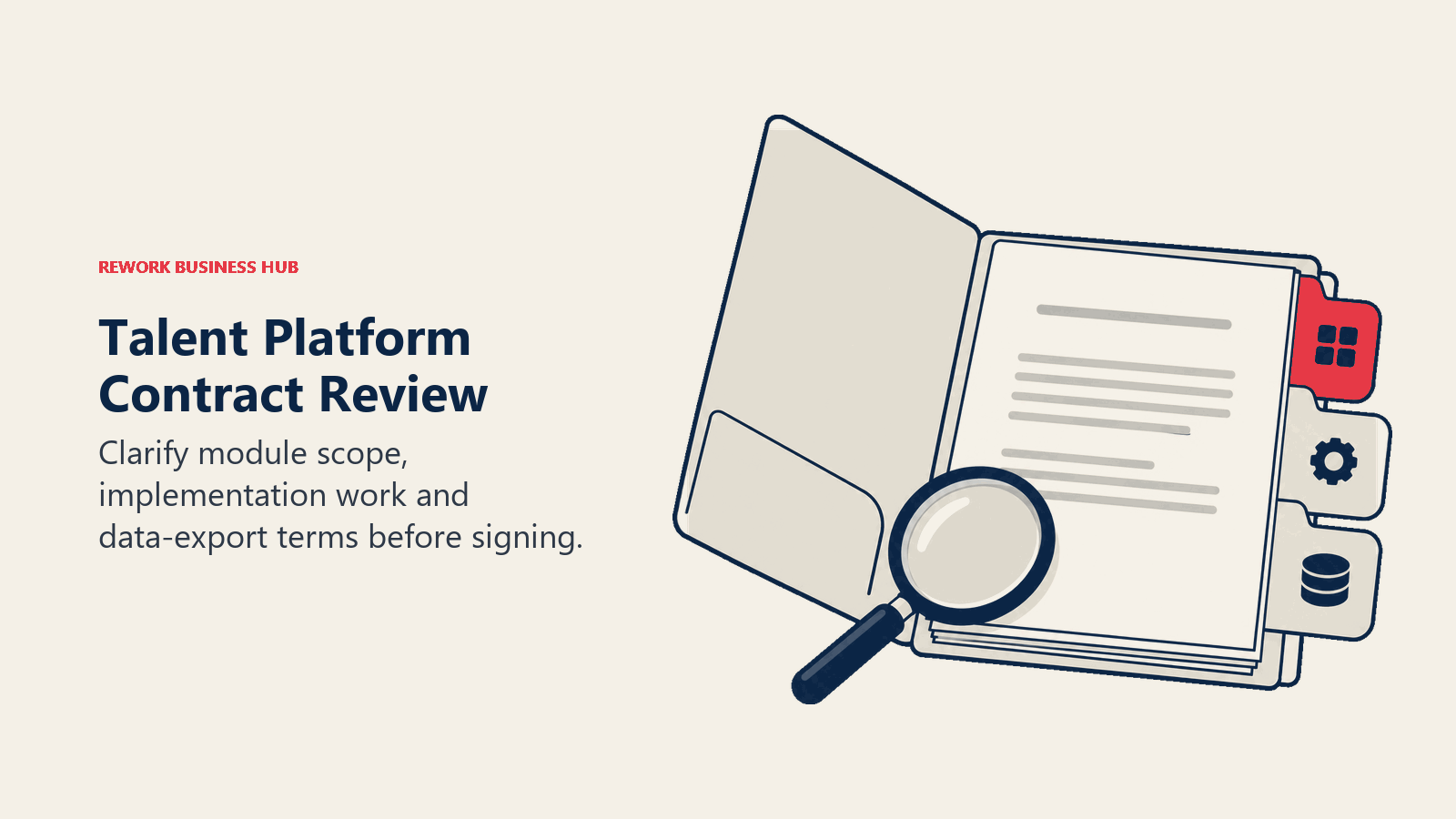
Because Phenom, Beamery, and Eightfold all publish nothing, the real evaluation work happens after the demo, in the contract itself. One in four candidates have already turned down a job over a poor recruiting process, per Josh Bersin, so a platform's promised experience gains are worth pressure-testing against what you're actually signing. Six line items separate a fair quote from a surprise.
| What to ask for | Why it matters |
|---|---|
| Per-module pricing, itemized | Career site, CRM, hiring manager tools, internal mobility, and the chatbot are sold separately; get each line |
| What triggers a module upsell | A modular contract is designed to grow; know what usage or headcount threshold adds a new line |
| Implementation fee, as a separate line | An enterprise talent-experience rollout commonly runs well past the base license cost in year one |
| Renewal increase cap, in writing | Without a cap, a double-digit renewal bump (now the market norm) is the vendor's default |
| Term length and early-exit terms | Multi-year discounts trade away your ability to renegotiate if adoption lags |
| Data portability and exit clause | Confirm you can export full candidate and talent-marketplace history before you sign, not after you decide to leave |
Push for a monthly-vs-annual comparison in writing too, where any of these vendors publish one at all. An annual commitment is essentially always cheaper than month to month; if a vendor's numbers say otherwise, that's usually a quoting error.
Stage Fit Matrix
Match the tool to your hiring volume and organizational complexity before comparing AI-matching depth.
| Company stage | Best-fit pick | Why |
|---|---|---|
| Seed to Series A startup | Workable or Gem | Published, low-commitment pricing, no enterprise sales process |
| Series B to growth-stage tech | SeekOut, hireEZ, or Gem | Sourcing and CRM tooling built for a lean, fast-scaling recruiting team |
| Mid-market (50-500 employees) | Workable, Teamtailor, or Rework | Structured hiring, a strong career site, or HR consolidation without enterprise overhead |
| Upper mid-market (500-2,000) | SmartRecruiters or iCIMS | Enterprise-grade features, still a lighter sales process than a full talent-experience suite |
| High-volume, hourly, or frontline | Paradox | Purpose-built conversational AI for scale hiring, not salaried structured roles |
| Global enterprise, experience-first | Phenom, Beamery, or Eightfold | AI matching, internal mobility, and a unified candidate and employee experience genuinely earn the price here |
| Global enterprise, CRM and configurability-first | Avature | Purpose-built for RPO, multi-brand, and heavily configured recruiting programs |
Sizing and Persona Guide
| Headcount | Typical persona | Recommended tools |
|---|---|---|
| Under 50 | Founder or generalist HR, hiring occasionally | Workable, Gem, SeekOut |
| 50-200 | Dedicated recruiter or small TA team | Workable, Teamtailor, Rework |
| 200-1,000 | TA function with process owners | SmartRecruiters, iCIMS, hireEZ, Rework |
| 1,000-2,000 | TA ops team, dedicated system admin | SmartRecruiters, iCIMS, Teamtailor |
| 2,000-5,000 | Multi-business-unit TA org | Phenom, Eightfold, Avature |
| 5,000+ | Global enterprise, dedicated TA ops function | Phenom, Beamery, Eightfold, Avature |
How to Choose: Decision Framework
| If your team needs... | Best pick |
|---|---|
| CRM-first talent lifecycle management with deep AI sourcing | Beamery |
| The deepest AI-matching engine for skills-based hiring | Eightfold |
| Recruitment marketing with a published entry price and SAP backing | SmartRecruiters |
| Broad, configurable ATS depth across many business units | iCIMS |
| Maximum configurability for complex, multi-brand recruiting | Avature |
| Hiring unified with HR and timesheets | Rework |
| Conversational AI for high-volume, hourly hiring | Paradox |
| A recruiting CRM and sourcing layer on top of an existing ATS | Gem |
| AI-powered outbound sourcing for individual recruiters | hireEZ |
| Technical or diversity-focused sourcing with published entry pricing | SeekOut |
| Best-in-class career site and employer branding | Teamtailor |
| Published pricing at every tier | Workable |
Frequently Asked Questions about Phenom Alternatives
Why doesn't Phenom publish pricing?
Like most enterprise talent-experience platforms, Phenom sells a modular, custom-configured contract, career site, CRM, hiring manager tools, internal mobility, and AI matching priced and bundled per deal. Its pricing page, linked in the site nav as "Phenom Pricing & RFP Requests," is a lead form, not a rate card, and routes every visitor into a sales conversation.
What's the closest alternative to Phenom on pure AI-matching depth?
Eightfold, whose deep-learning models score fit on skills and potential across recruiting and internal mobility, is generally considered the closest peer on matching depth. Beamery is the closer peer on CRM-first talent lifecycle management.
Which Phenom alternative has the most transparent pricing?
Workable, with published employee-band pricing from $299/mo (Standard, $3,588/yr annual). Gem, hireEZ, and SeekOut also publish real entry-tier prices, though none of them compete with Phenom's candidate-experience or internal mobility depth.
Is Rework a real substitute for Phenom?
Not for a company that needs Phenom's AI matching, internal mobility, or talent-marketplace depth. Rework's E-Hiring, Interview, and Career modules fit a 10 to 200-employee company whose real problem is that hiring, HR, and time tracking live in three disconnected systems, a consolidation argument, not a talent-intelligence one.
What's the difference between Phenom and a sourcing tool like Gem, hireEZ, or SeekOut?
Phenom is candidate and employee-facing: a career site, chatbot, and AI matching layer built for the person applying or moving internally. Gem, hireEZ, and SeekOut are recruiter-facing sourcing and CRM tools that sit on top of an existing ATS. A team can genuinely need both, or neither, depending on whether the gap is candidate experience or recruiter sourcing capacity.
When does it make sense to stay on Phenom instead of switching?
For a global enterprise running career sites, hiring manager workflows, and internal mobility across many business units as one connected experience, Phenom's breadth and AI depth are usually worth the price and the opacity. Below that scale, the same breadth tends to become modules nobody fully uses.
What to Do Next
Pick two or three tools from the framework above, matched to the specific gap you have, AI matching, a career site, sourcing capacity, or platform consolidation, not the two most familiar names, and request an itemized quote from each: per-module pricing, implementation fee, and renewal terms as separate lines. For a structured evaluation process, see how to choose recruiting software. And if your actual problem is that hiring, HR, and time tracking live in three disconnected systems rather than a missing AI layer, see rework.com/pricing before signing another enterprise talent-experience contract.

On this page
- Key Facts
- Quick Comparison Table
- 1. Beamery: Enterprise CRM-First Talent Lifecycle Management
- 2. Eightfold: AI Talent Intelligence Platform
- 3. SmartRecruiters: Recruitment Marketing, Now Backed by SAP
- 4. iCIMS: The Broader Enterprise Talent Cloud
- 5. Avature: Configurable Enterprise CRM Plus ATS
- 6. Rework: Hiring Unified With HR, Not a Talent-Intelligence Suite
- 7. Paradox: Conversational AI for High-Volume, Hourly Hiring
- 8. Gem: Recruiting CRM and Sourcing on Top of Your ATS
- 9. hireEZ: AI-Powered Outbound Sourcing
- 10. SeekOut: Sourcing and Talent Intelligence
- 11. Teamtailor: Career Site and Employer Branding First
- 12. Workable: The Transparent-Priced Bookend
- Why Talent Teams Shop for Phenom Alternatives
- How to Evaluate a Modular Talent-Experience Contract
- Stage Fit Matrix
- Sizing and Persona Guide
- How to Choose: Decision Framework
- What to Do Next