Die besten Beamery-Alternativen 2026: 12 Talent-CRM- und Recruiting-Marketing-Plattformen
Turn this article into takeaways for your work.


Each assistant summarizes the article only for you and suggests best practices for your work.
Aktualisiert im September 2026
Beamery hat seine Kategorieposition als Talent CRM aufgebaut, bevor die meisten Bewerbermanagementsysteme (ATS) überhaupt wussten, was das bedeutet: tiefes Sourcing, dauerhafte Kandidatenpflege, personalisierte Karriereseiten und interne Mobilität, alles an einen Talentdatensatz auf Enterprise-Niveau gekoppelt. Trotzdem treiben drei Dinge Käufer dazu, sich anderswo umzusehen. Beamery veröffentlicht überhaupt keine Preise, nicht eine einzige Zahl, keinen Tarifnamen und keine „Ab“-Zeile auf beamery.com; die Preis-URL selbst liefert einen 404-Fehler, es gibt keinen „Pricing“-Link in der Navigation oder im Footer, und jeder Pfad endet bei „Book a demo“. Die Implementierung ist wirklich Enterprise-Maßstab, oft ein Rollout über mehrere Quartale mit Datenmigration, Workflow-Konfiguration und einem dedizierten Success-Team. Und Beamerys eigene Website setzt inzwischen auf die Botschaften „Agentic AI Consultant“ und „Workforce Intelligence Suite“ statt auf schlichtes Talent CRM, ein schwereres und teureres Angebot, als es ein Käufer erwartet hat, der nur Kandidaten-Sourcing und -Pflege wollte. Wenn einer dieser Punkte Ihr Auslöser ist, sind die stärksten Ersatzkandidaten Phenom oder Eightfold für eine ähnliche KI-gestützte Talent-Intelligence-Suite, Avature oder iCIMS, wenn ein konfigurierbares Enterprise-CRM oder eine vollständige Talent Cloud der eigentliche Wunsch ist, SmartRecruiters für eine schlankere Kombination aus ATS und Recruiting-Marketing mit mindestens einer veröffentlichten Zahl, Gem, hireEZ oder SeekOut, wenn Sourcing und Outreach die eigentliche Aufgabe sind und nicht die komplette Suite für den gesamten Talent-Lebenszyklus, und Rework, wenn das Hiring auf derselben Plattform wie HR und Zeiterfassung liegen soll statt in einem eigenständigen Sourcing-Tool.
Diese Liste bewertet 12 Alternativen nach Preisen (im September 2026 auf der jeweiligen Anbieterseite geprüft oder, wo es keine gibt, eindeutig als Schätzung von Drittanbietern gekennzeichnet), nach Eignung für Teamgröße und Hiring-Modell sowie danach, was jedes Tool aus Beamerys Stack tatsächlich ersetzt: Sourcing, Nurture, Karriereseiten oder interne Mobilität. Die Abdeckung reicht von Phenom und Eightfold im oberen Segment über Avature, iCIMS und SmartRecruiters für Hiring in Konzernen und im gehobenen Mittelstand bis zu Gem, hireEZ und SeekOut für Teams, die gezielt die Sourcing-und-CRM-Ebene wollen, sowie Teamtailor, Workable und Paradox für schlankere oder volumenspezifische Anforderungen.
Wichtige Fakten
Wichtige Fakten: Talent CRM, Sourcing und Kandidatenpflege 2026
- Recruiter bearbeiten 93 % mehr Bewerbungen als 2021 und betreuen gleichzeitig 13,4 offene Stellen, laut Gems eigenem Recruiting Benchmarks Report 2026, der auf mehr als 165 Millionen Bewerbungen und 1,2 Millionen Einstellungen beruht. (Gem, 2026)
- 46 % der per Sourcing gewonnenen Einstellungen 2025 stammten von Kandidaten, die bereits im CRM oder ATS eines Unternehmens lagen, also wiederentdeckt statt neu gefunden wurden, fast doppelt so viele wie die 26 % von 2021, laut demselben Gem-Bericht. (Gem, 2026)
- Die Zahl der Bewerber pro Stellenanzeige hat sich fast verdoppelt, von etwa 46 im Jahr 2021 auf 95 im Jahr 2025, auf Basis von mehr als 72 Millionen Bewerbungen und 1 Million Stellenanzeigen auf einer HR-Plattform. (BambooHR, 2026)
- 84 % der Talent-Verantwortlichen planen, 2026 KI in ihrem Recruiting-Workflow einzusetzen, basierend auf einer globalen Umfrage unter mehr als 1.670 externen Talent-Verantwortlichen. (Korn Ferry, 2026)
- Die mediane Time-to-Fill für nicht leitende Positionen sank 2026 auf 39 Kalendertage, basierend auf Daten von mehr als 4.600 Organisationen. (SHRM, 2026)
Schnellvergleich
Diese Liste wird an Beamerys eigener Kernaufgabe gemessen: Sourcing, Kandidatenpflege, Karriereseiten und interne Mobilität in einem Talentdatensatz. Rework ist die Ausnahme; es punktet damit, E-Hiring, Interview und Career auf derselben Plattform wie HRIS, Zeiterfassung und Timesheets zu vereinen, nicht mit Sourcing-Tiefe. Die vollständige Shortlist finden Sie unter Die besten Bewerbermanagementsysteme 2026.
| Tool | Am besten geeignet für | Einstiegspreis | Wichtigste Stärke | Wichtigste Einschränkung |
|---|---|---|---|---|
| Phenom | KI-gestützte Talent Experience für Kandidaten, Mitarbeiter und Manager | Individuelles Angebot, keine veröffentlichten Beträge | Karriereseiten-Personalisierung, CRM und Conversational AI in einer Suite | Keine öffentlichen Preise; Enterprise-Vertrieb im RFP-Stil |
| Eightfold | Skills-basiertes KI-Matching für Sourcing und interne Mobilität | Individuelles Angebot, keine veröffentlichten Beträge | Deep-Learning-Fit-Scores für externe und interne Talente | Keine öffentlichen Preise; größter Einrichtungsaufwand für gute Konfiguration |
| Avature | Konfigurierbares, CRM-zentriertes Hiring im globalen Enterprise-Maßstab | Individuelles Angebot (berichteter Durchschnittsvertrag ca. 465.000 $/Jahr) | Extreme Konfigurierbarkeit, starke Sourcing- und Kampagnen-Werkzeuge | Keine veröffentlichten Preise; lange, technische Implementierung |
| iCIMS | Vollständige Enterprise Talent Cloud: ATS, CRM und Onboarding zusammen | Individuelles Angebot (berichtet Durchschnitt ca. 20.781 $/Jahr, laut Vendr) | Breiteste Abdeckung in einer einzigen Enterprise-Suite | Keine öffentliche Preisliste; Kosten im ersten Jahr oft das 1,5- bis 2-Fache der Basis |
| SmartRecruiters | ATS vom gehobenen Mittelstand bis zum Konzern mit Tiefe im Recruiting-Marketing | „Ab 14.995 $“ (Essential; Abrechnungszeitraum nicht angegeben) | Mindestens eine veröffentlichte Zahl; starkes KI-gestütztes Sourcing | Jede Stufe über Essential ist nur auf Angebotsbasis |
| Rework | Hiring vereint mit HR-Datensätzen und Zeiterfassung | Preis auf Anfrage (rework.com/pricing) | E-Hiring, Interview und Career auf derselben Plattform wie HRIS und Timesheets | Nicht für tiefes Sourcing oder Nurture im Talent-CRM-Maßstab gebaut |
| Gem | Sourcing, Outreach und Wiederentdeckung auf einem bestehenden ATS | 130 $/Monat (Startup Program, 1-10 Mitarbeiter, jährlich abgerechnet) | Talent-Wiederentdeckung plus Outreach-Automatisierung auf einem großen Profilindex | Startup-Preise sind eng gefasst; breitere Tarife sind individuelle Angebote |
| hireEZ | Schnelles, praxisnahes KI-Sourcing und Multichannel-Outreach | 494 $/Monat (Solo Recruiter, 7 Tage Testphase) | Agentisches KI-Sourcing plus integrierter E-Mail-, InMail- und SMS-Outreach | Enterprise-Stufe ist lizenzbasiert und wird auf Ihren Stack abgestimmt |
| SeekOut | Sourcing mit Fokus auf Diversität und Compliance | 149 $/Monat bei jährlicher Abrechnung, 1.788 $/Jahr (Recruit Core) | Starke Tiefe beim Diversity- und Spezialisten-Sourcing | Höhere Stufen sind individuelle Angebote, nur jährliche Abrechnung |
| Teamtailor | Karriereseiten und Employer Branding zuerst | Individuelles Angebot, keine Beträge veröffentlicht | Bester Karriereseiten-Builder in dieser Liste | Keine öffentlichen Preise; schwächeres Sourcing als CRM-zentrierte Tools |
| Workable | Transparente Self-Service-Preise für wachsende Teams | 299 $/Monat, 3.588 $/Jahr (Standard) | Veröffentlichte Preise in jeder Stufe | Begrenzte CRM-artige Kandidatenpflege oder Talent-Intelligence-Tiefe |
| Paradox | Conversational AI für stundenweises Hiring mit hohem Volumen | Individuelles Angebot, keine veröffentlichten Beträge | Text-to-Apply und automatisierte Terminplanung im großen Maßstab | Nicht für Hiring von Angestellten, Sourcing-getriebenes oder nurture-lastiges Hiring gebaut |
Was sich 2026 geändert hat: Beamerys eigene Navigation hat den Schwerpunkt von schlichtem Talent CRM hin zu einem „Agentic AI Consultant“ und einer „Workforce Intelligence Suite“ verschoben, mit eigenen Bereichen für Skills-Lücken, Umbesetzung von Personal und die Anbindung von HR-Ökosystemdaten. Das ist für Käufer, die es wollen, eine echte Funktionserweiterung und für alle, die nur Sourcing und Kandidatenpflege suchten, ein schwereres und teureres Angebot. Wie Sie diese Entscheidung vor einem Verkaufsgespräch eingrenzen, lesen Sie im Käuferleitfaden zur Auswahl von Recruiting-Software.
Warum Teams über Beamery hinausblicken
Die meisten Teams, die Beamery-Alternativen prüfen, lehnen die Talent-CRM-Idee nicht ab. Sie wägen ab, ob Beamerys spezifische Tiefe und sein spezifischer Kaufprozess zu dem passen, was sie tatsächlich lösen müssen.
Eine Preisseite, die es nicht gibt. Die meiste Enterprise-Software veröffentlicht wenigstens den Namen einer „Kontakt zum Vertrieb“-Stufe oder einen Ab-Betrag. Beamery hat keines von beidem: beamery.com/pricing liefert einen 404-Fehler, und weder in der Navigation noch im Footer der Website gibt es einen Preislink. Ein Käufer bekommt vor dem ersten Gespräch nicht einmal eine ungefähre Größenordnung, was Beamery für Teams schnell ausschließt, die früh im Prozess eine Zahl für die Finanzabteilung brauchen.
Implementierung für eine große TA-Organisation dimensioniert. Beamerys eigene Lösungsseiten sind getrennt nach Führungskräften, HR-Verantwortlichen, Recruitern und Kandidatenansprache gegliedert, was widerspiegelt, wie viel Konfiguration ein vollständiger Rollout tatsächlich erfordert: Datenmigration aus einem bestehenden ATS und CRM, Workflow-Einrichtung über mehrere Stakeholder-Gruppen hinweg und Integrationsarbeit mit HRIS-Plattformen wie Workday und SAP SuccessFactors. Für eine große, dedizierte Talent-Acquisition-Funktion ist das die richtige Investition. Für ein Team, das vor allem eine warme Kandidaten-Pipeline erhalten will, ist es sehr viel Plattform.
An Module gebundene Verträge. Beamery verkauft Sourcing, Nurture, Karriereseiten und interne Mobilität nicht als trennbare Positionen mit eigenen Preisen; es verkauft eine Plattform, die als Ganzes angeboten wird. Teams, die nur ein oder zwei dieser Bausteine brauchen, etwa Wiederentdeckung und Outreach, zahlen oft am Ende für eine Workforce-Intelligence-Suite (Skills-Daten, agentische KI, Werkzeuge zur Umbesetzung), die sie nur am Rande nutzen. Mit Gem, hireEZ und SeekOut kann ein Team jeweils näher an der reinen Sourcing-und-Nurture-Ebene einkaufen.
Käufer, die ein Talent CRM ohne vollständige Suite für den Talent-Lebenszyklus wollen. Manche Teams lesen „Beamery“ und wollen eigentlich etwas Schmaleres: eine Möglichkeit, starke Kandidaten nicht in dem Moment zu verlieren, in dem eine Stelle geschlossen wird, und Outreach-Kampagnen zu fahren, ohne jedes Quartal eine Tabelle neu aufzubauen. Das ist eine reale, kleinere Aufgabe, und deshalb passt ein geschichtetes Tool, das auf einem bestehenden ATS aufsetzt und nicht den gesamten Stack ersetzt, oft besser als eine weitere vollständige Enterprise-Suite.
Eignung nach Phase auf einen Blick
| Tool | Passende Phase | Sourcing-/Nurture-Muster |
|---|---|---|
| Phenom | Enterprise, Employer-Brand-getrieben | Sehr hohes Volumen, Candidate und Employee Experience kombiniert |
| Eightfold | Großunternehmen, Skills-first | Sourcing und interne Mobilität in einem Datenmodell |
| Avature | Enterprise, komplexe Organisationsstrukturen | Variabel, CRM-getriebenes Sourcing und Kampagnen |
| iCIMS | Großunternehmen | Hohes Volumen, mehrere Marken, global |
| SmartRecruiters | Gehobener Mittelstand bis Konzern | Geeignet für hohes Volumen und stundenweises Hiring |
| Rework | Mittelgroße Unternehmen, auf HR-Konsolidierung ausgerichtet | Moderat, Hiring von Angestellten |
| Gem | Wachstumsstarke Tech-Unternehmen mit bestehendem ATS | Moderates bis hohes Volumen, Wiederentdeckung im Mittelpunkt |
| hireEZ | Jede Größe, Sourcing-getriebenes Team | Schnelles Outbound-Sourcing im hohen Tempo |
| SeekOut | Gehobener Mittelstand bis Konzern, Compliance-getrieben | Diversity-, sicherheitsüberprüftes und spezialisiertes Sourcing |
| Teamtailor | Mittelstand, Marken-getrieben | Viele Initiativbewerbungen |
| Workable | SMB bis Mittelstand | Moderates, gleichmäßiges Volumen |
| Paradox | Jede Größe, stundenweise oder Frontline | Sehr hohes Volumen, schnelle Time-to-Fill |
Welche Teamgröße zu welchem Tool passt
| Tool | Mitarbeiterspanne | Typischer Käufer |
|---|---|---|
| Phenom | 1.000-20.000+ | VP Talent Acquisition, Employer-Brand-Verantwortlicher |
| Eightfold | 1.000-50.000+ | CHRO, VP Talent Acquisition |
| Avature | 2.000-50.000+ | Global Head of Talent Acquisition |
| iCIMS | 1.000-10.000+ | VP Talent Acquisition, CHRO |
| SmartRecruiters | 200-5.000+ | VP Talent Acquisition, Director of Recruiting Ops |
| Rework | 10-200 | Director of People, COO |
| Gem | 10-2.000 | Head of Recruiting, TA Ops Lead |
| hireEZ | 1-500+ | Recruiter, Sourcing Lead, VP Talent Acquisition |
| SeekOut | 50-5.000+ | Sourcing Lead, DEI-orientierter TA-Leiter |
| Teamtailor | 50-400 | Employer Brand Lead, HR Director |
| Workable | 20-300 | HR Director, Head of Talent |
| Paradox | 500-50.000+ | VP Talent Acquisition, Head of Frontline Hiring |
1. Phenom: KI-gestützte Talent Experience im Enterprise-Maßstab
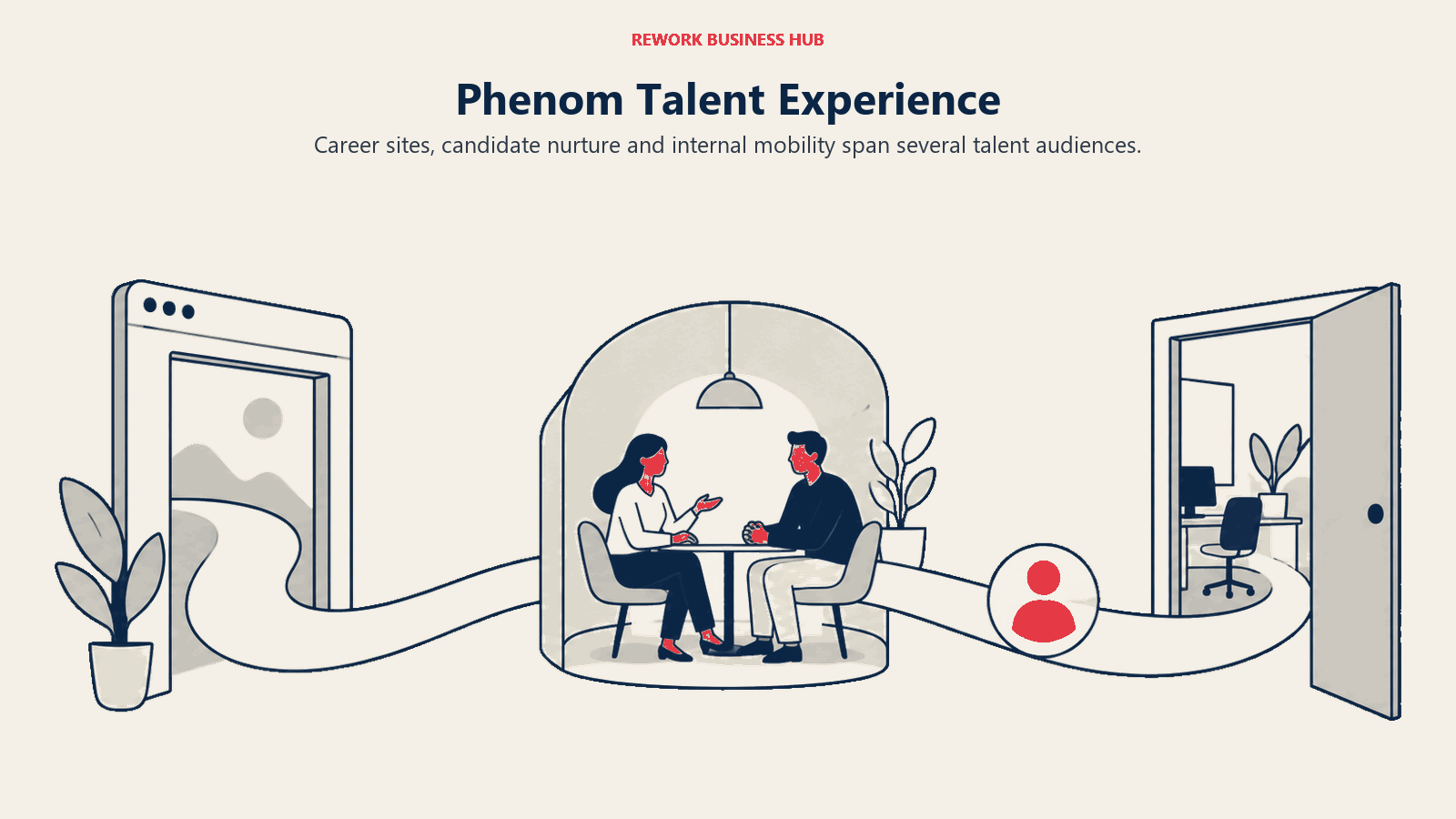
Phenom kommt Beamerys eigenem Angebot in dieser Liste am nächsten. Es baut auf der Idee einer „Talent Experience“ auf, die vier Zielgruppen von einer Plattform aus bedient: Kandidaten erhalten eine personalisierte Karriereseite und einen Conversational-AI-Assistenten, Mitarbeiter bekommen Werkzeuge für interne Mobilität und Karriereentwicklung, Recruiter ein CRM mit automatisierten Nurture-Kampagnen und Manager Interview-Leitfäden sowie Headcount-Analysen. Ein Softwareentwickler und eine Marketing-Managerin, die dieselbe Karriereseite besuchen, sehen unterschiedliche hervorgehobene Stellen, gesteuert durch abgeleitete Skills und Verhalten statt durch eine statische Jobbörse.
Preise sind auf Phenoms Website nirgendwo veröffentlicht. Die Preisseite ist ausdrücklich ein RFP-Anfrageformular und keine Preisliste, passend zu einem Käuferprofil, das formale Beschaffungsprozesse durchläuft, statt nach Listenpreis einzukaufen.
| Was Sie bekommen | Was Sie nicht bekommen |
|---|---|
| Karriereseiten-Personalisierung, CRM und Conversational AI in einer Suite | Irgendwelche veröffentlichten Preise |
| Starke Werkzeuge für interne Mobilität und Employee Experience | Einen schlanken Kaufprozess für kleinere Teams |
| Analysen zu Sourcing, Diversität und Time-to-Fill | Eine Budgetoption für Unternehmen unter 1.000 Mitarbeitern |
| Bewährte Eignung für Hiring mit sehr hohem Volumen und Traffic | Einen schnellen Implementierungszeitplan |
Preise: Individuelles Angebot im RFP-Verfahren; in keiner Stufe sind Beträge veröffentlicht.
Am besten geeignet für: Große Unternehmen (1.000+ Mitarbeiter), die Erfahrungen für Kandidaten, Mitarbeiter, Recruiter und Manager in einer KI-gestützten Plattform vereinen möchten.
Nicht ideal für: Teams, die nur die Sourcing-und-Nurture-Ebene wollen, ohne zugleich Karriereseiten-Personalisierung und Manager-Werkzeuge einzukaufen, die sie nicht voll nutzen werden.
2. Eightfold: Skills-basiertes KI-Matching für Sourcing und interne Mobilität
Eightfold greift Beamerys Angebot, Talentdaten zu verbinden, auf und treibt es weiter in Richtung Skills. Seine Deep-Learning-Modelle analysieren Kandidatenprofile und Mitarbeiter-Skills im Abgleich mit Stellenanforderungen und erzeugen Fit-Scores, die verwandte Fähigkeiten und Karriereverläufe berücksichtigen und nicht nur Schlüsselwörter abgleichen. Dieselbe Matching-Engine wird dann sowohl für externes Sourcing als auch für interne Mobilität eingesetzt. Berichten zufolge ist ein Drittel der Kunden Fortune-500-Unternehmen, und Eightfold vermarktet Diversitätsanalysen und Profilmaskierung als Mittel, um Verzerrungen (Bias) in diesem Matching zu verringern.

Eightfold hat keine Preisseite und nirgendwo in Navigation oder Footer einen Preislink; jeder Call-to-Action führt zu „Request demo“.
| Was Sie bekommen | Was Sie nicht bekommen |
|---|---|
| Skills-basiertes KI-Matching für externes Hiring und interne Umbesetzung | Irgendwelche veröffentlichten Preise |
| Deep-Learning-Fit-Scores jenseits des Abgleichs von Lebenslauf-Schlüsselwörtern | Einen schlanken oder Self-Service-Kaufprozess |
| Analysen zu Personalplanung und Skills-Lücken | Eine Budgetoption unterhalb des Enterprise-Maßstabs |
| Werkzeuge zur Bias-Reduzierung: Profilmaskierung, Diversitätsanalysen | Eine schnelle Implementierung mit geringem Aufwand |
Preise: Individuelles Angebot; keine veröffentlichten Beträge, überhaupt keine Preisseite.
Am besten geeignet für: Unternehmen (1.000+ Mitarbeiter), die eine KI-Matching-Engine wollen, die sowohl externes Sourcing als auch interne Mobilität steuert, mit Skills als gemeinsamer Datenebene.
Nicht ideal für: Kleinere Teams ohne die Daten- und HRIS-Integrationsarbeit, die nötig ist, damit sich Skills-basiertes Matching auszahlt, oder Teams, die vor allem Outreach-Automatisierung statt Matching brauchen.
3. Avature: Konfigurierbares, CRM-zentriertes Hiring im Enterprise-Maßstab
Avature geht das Hiring wie Beamery von der CRM-Seite an und nicht von der Pipeline-Seite. Es ist beliebt bei globalen Konzernen, besonders in Europa, die Sourcing- und Workforce-Marketing-Kampagnen als laufende Programme betreiben statt als einzelne Stellenanforderung nach der anderen. Wo Beamery und Phenom meinungsstärkere Workflows direkt ab Werk liefern, liefert Avature ein Toolkit: hochgradig konfigurierbare Objekte, Formulare und Automatisierungen, die ein interner Administrator oder ein Implementierungspartner passend zur Organisation zusammensetzt.
Auf Avatures eigener Website erscheinen nirgendwo Preise; die Startseite leitet jeden Besucher zu einem Kontaktformular. Beschaffungsrecherchen von Drittanbietern beziffern den durchschnittlichen Vertragswert auf rund 465.000 $ pro Jahr, was die reinen Enterprise-Implementierungen mit starker Konfiguration widerspiegelt.
| Was Sie bekommen | Was Sie nicht bekommen |
|---|---|
| Extreme Konfigurierbarkeit für komplexe Organisationsstrukturen | Irgendwelche veröffentlichten Preise |
| Starkes CRM-artiges Sourcing und Talent-Pool-Management | Eine schnelle oder Self-Service-Implementierung |
| Bewährte Eignung für große globale und EMEA-lastige Konzerne | Eine Budgetoption unterhalb des Enterprise-Maßstabs |
| Workforce-Marketing- und Kampagnen-Werkzeuge über eine einzelne Stelle hinaus | Einen Workflow ab Werk; rechnen Sie mit echter Konfigurationsarbeit |
Preise: Individuelles Angebot (berichteter durchschnittlicher Vertragswert ca. 465.000 $ pro Jahr, laut Vendr).
Am besten geeignet für: Globale Konzerne (2.000+ Mitarbeiter), besonders EMEA-lastige, mit den Implementierungsressourcen, um eine hochflexible, CRM-zentrierte Plattform zu konfigurieren.
Nicht ideal für: Teams, die einen Workflow wollen, der ab Werk gut funktioniert, oder alle ohne Budget und Personal für ein echtes Konfigurationsprojekt.
4. iCIMS: Eine vollständige Enterprise Talent Cloud
iCIMS konkurriert um dieselben großen Kunden wie Beamery, aber aus einem anderen Blickwinkel: Es bündelt ATS, CRM, Onboarding und prädiktive Analysen in einer Talent Cloud, statt allein mit CRM-Tiefe voranzugehen. Für Organisationen, die Dutzende Arten von Stellenanforderungen über mehrere Geschäftsbereiche und Regionen hinweg betreiben, zählt diese Breite, also Bewerberverfolgung und Kandidatenbeziehungsmanagement in einem führenden System, mehr als erstklassige Nurture-Werkzeuge.
iCIMS veröffentlicht überhaupt keine Preise. Verträge im gehobenen Mittelstand (200-1.000 Mitarbeiter) liegen typischerweise bei 30.000 bis 60.000 \(pro Jahr, Enterprise-Kunden (1.000+ Mitarbeiter) bei 60.000 bis 120.000+\), wobei Implementierung, SMS und Support die Gesamtkosten im ersten Jahr üblicherweise auf das 1,5- bis 2-Fache der angebotenen Basislizenz treiben.
| Was Sie bekommen | Was Sie nicht bekommen |
|---|---|
| ATS, CRM und Onboarding in einer Enterprise Talent Cloud | Irgendwelche veröffentlichten Preise, in keiner Stufe |
| Konfigurationstiefe für große Organisationen mit mehreren Geschäftsbereichen | CRM-Nurture- und Kampagnentiefe auf Beamery-Niveau als Hauptfokus |
| Starkes Reporting zu Time-to-Fill und Quelleneffektivität | Einen budgetfreundlichen Einstiegspunkt |
| Etablierte Marktposition im Enterprise-Segment | Planbare Kosten im ersten Jahr oder bei der Vertragsverlängerung |
Preise: Individuelles Angebot; es gibt keine Self-Service-Stufe. Vendrs Käuferdaten nennen einen durchschnittlichen Jahresvertrag von 20.781 $, in einer Spanne von 14.500 bis 635.000 $ (Vendr, berichtet). Siehe die besten iCIMS-Alternativen, falls iCIMS selbst das Tool ist, von dem Sie wegvergleichen.
Am besten geeignet für: Große Unternehmen (1.000+ Mitarbeiter), die ATS, CRM und Onboarding in einer Talent Cloud wollen statt eines reinen CRM-Enterprise-Tools.
Nicht ideal für: Teams, deren Hauptkritik an Beamery gezielt die Nurture-Tiefe ist; iCIMS' CRM-Modul ist ein Baustein einer breiteren Suite und nicht wie bei Beamery, Phenom oder Avature von Anfang an auf Sourcing ausgelegt.
5. SmartRecruiters: Recruiting-Marketing mit einer veröffentlichten Zahl
SmartRecruiters teilt Beamerys Instinkte im Recruiting-Marketing, KI-generierte Stellenanzeigen und eine Candidate Experience auf Verbraucherniveau, verpackt sie aber in ein klassisches Bewerbermanagementsystem statt in ein eigenständiges Talent CRM. Damit ist es die Wahl für ein Team, das Sourcing- und Marketing-Schlagkraft will, ohne neben dem bestehenden ATS ein zweites System einzuführen.
Der Essential-Tarif wird als „ab 14.995 $“ veröffentlicht, ohne angegebenen Abrechnungszeitraum auf der Seite. Verstehen Sie das also als Untergrenze und nicht als Jahresbetrag. Professional, High Volume und Complete sind darüber ausschließlich auf Angebotsbasis. SAP schloss die Übernahme von SmartRecruiters am 11. September 2025 ab, und das Produkt läuft weiterhin als eigenständige Recruiting-Plattform.
| Was Sie bekommen | Was Sie nicht bekommen |
|---|---|
| Mindestens einen veröffentlichten Einstiegsbetrag | Dedizierte CRM-Nurture- und Kampagnentiefe auf Beamery-Niveau |
| KI-gestütztes Sourcing und Recruiting-Marketing | Unabhängigkeit von SAPs übergreifender HCM-Roadmap |
| ATS und Recruiting-Marketing in einem System | Eine Budgetoption für Teams mit weniger als ein paar Hundert Mitarbeitern |
| Starke Eignung für Hiring mit hohem Volumen und stundenweises Hiring | Veröffentlichte Preise oberhalb der Essential-Untergrenze |
Preise: „Ab 14.995 $“ (Essential, Abrechnungszeitraum nicht angegeben); Professional, High Volume und Complete sind individuelle Angebote. Siehe die besten SmartRecruiters-Alternativen, falls Sie SmartRecruiters selbst abwägen.
Am besten geeignet für: Hiring-Teams vom gehobenen Mittelstand bis zum Konzern (200-5.000+ Mitarbeiter), die KI-gestütztes Sourcing und Recruiting-Marketing mit mindestens einer Zahl wollen, an der sie ihr Budget ausrichten können.
Nicht ideal für: Teams, die gezielt tiefe Talent-CRM-Nurture und interne Mobilität wollen, so wie Beamery, Phenom oder Eightfold sie als Kernprodukt bieten.
6. Rework: Hiring vereint mit HR-Datensätzen und Zeiterfassung
Rework versucht nicht, Beamery im Sourcing oder in der Kandidatenpflege zu übertreffen, und sollte auch nicht so gelesen werden. Das Modul E-Hiring (das ATS) läuft mit Interview und Career live innerhalb von Reworks People-Linie, neben HRIS, Zeit- und Anwesenheitserfassung und Timesheets. Das Angebot ist nicht tiefere Kandidatenintelligenz oder eine größere Nurture-Engine; es ist, dass die Person, die ein Team gerade über E-Hiring eingestellt hat, bei der Angebotsannahme automatisch zu einem HR-Datensatz, einem Anwesenheitsprofil und einem Timesheet-Inhaber wird, ohne dass jemand Namen, Starttermin und Vergütung in einem zweiten System neu erfasst.
Das löst ein anderes Problem als das, mit dem sich die meisten Beamery-Evaluierungen tatsächlich beschäftigen. Wenn die eigentliche Kritik Sourcing-Tiefe, Größe der Kandidatendatenbank oder Workforce-Intelligence-Werkzeuge betrifft, passen Phenom, Eightfold oder Avature besser. Rework ist der richtige Blick, wenn die Reibung nach dem Angebot entsteht: ein Kandidatendatensatz, der in dem Moment in einer Sackgasse endet, in dem jemand annimmt, und eine zweite, manuelle Einrichtung in einem separaten HR-System erzwingt.
| Was Sie bekommen | Was Sie nicht bekommen |
|---|---|
| E-Hiring, Interview und Career auf derselben Plattform wie HRIS, Zeiterfassung und Timesheets | Sourcing, Nurture-Kampagnen oder Talentdatenbank-Tiefe auf Beamery-Niveau |
| Neue Mitarbeiter fließen ohne erneute Eingabe direkt in HR-Datensätze | Workforce-Intelligence- oder Skills-Matching-Werkzeuge |
| Eine Anbieterbeziehung für Hiring, HR und Zeiterfassung | Einen großen Talent-CRM-Funktionsumfang oder Karriereseiten-Personalisierung |
| Pakete statt Lizenzen pro Nutzer in der gesamten People-Linie | Einen veröffentlichten Self-Service-Preis |
Preise: Rework People, einschließlich E-Hiring, Interview und Career, wird pro Organisation angeboten und weder als Pauschale veröffentlicht noch einem bestimmten Rework-Paket zugeordnet. Siehe rework.com/pricing.
Am besten geeignet für: Mittelgroße Unternehmen (etwa 10-200 Mitarbeiter), die Hiring auf derselben Plattform wie HR, Zeiterfassung und Timesheets wollen statt in einem eigenständigen, Sourcing-getriebenen Talent CRM.
Nicht ideal für: Sourcing im Enterprise-Maßstab, tiefe Kampagnen zur Kandidatenpflege oder Workforce- und Skills-Intelligence auf Beamerys Niveau. Rework versucht nicht, das zu ersetzen, und sollte nicht so bewertet werden, als täte es das.
7. Gem: Sourcing, Outreach und Wiederentdeckung auf Ihrem ATS
Gem ist die direkte Antwort auf den Teil von Beamerys Aufgabe, den die meisten Teams nach dem Wechsel tatsächlich vermissen: bereits in der Datenbank vorhandene Kandidaten wiederzuentdecken und erneut anzusprechen, statt jede Suche bei null zu beginnen. Es ist eine KI-first-Plattform für Sourcing und CRM, die sich auf ein bestehendes ATS aufsetzt und Sourcing, Outreach-Automatisierung, Terminplanung und Analysen sowie Zugang zu einem großen Profilindex mitbringt, ohne dass ein Team sein führendes System ersetzen muss.

Gems Startup Program (1-10 Mitarbeiter) führt 270 \(im Monat durchgestrichen zugunsten von 130\) im Monat bei jährlicher Abrechnung auf, ausgewiesen als 10 % Rabatt; Teams mit weniger als 30 Mitarbeitern erhalten sechs Monate kostenlos und danach 50 % Rabatt, und Teams mit 30-100 Mitarbeitern bekommen reduzierte Preise. Jenseits dieser Startup-Stufe sind „Gem + Your ATS“ und Gems eigene kombinierte ATS-plus-CRM-Option beide individuell nach Mitarbeiterzahl bepreist.
| Was Sie bekommen | Was Sie nicht bekommen |
|---|---|
| Talent-Wiederentdeckung und Outreach-Automatisierung auf einem großen Kandidatenindex | Beamerys Karriereseiten-Personalisierung oder Werkzeuge für interne Mobilität |
| Arbeitet neben einem bestehenden ATS statt es zu ersetzen | Veröffentlichte Preise jenseits der Startup-Stufe für kleine Teams |
| Starke Analysen zu Sourcing-Kanälen und Recruiter-Leistung | Workforce-Intelligence-Funktionen im Enterprise-Maßstab |
| Ein echter veröffentlichter Einstiegspreis für kleine Teams | Den vollen Umfang des Talent-Lebenszyklus in einem Kauf |
Preise: 270 $/Monat durchgestrichen, 130 $/Monat bei jährlicher Abrechnung (Startup Program, 1-10 Mitarbeiter); „Gem + Your ATS“ und Gems kombinierte ATS-+-CRM-Option sind individuelle Angebote nach Mitarbeiterzahl.
Am besten geeignet für: Technikaffine Recruiting-Teams (10-2.000 Mitarbeiter), die Sourcing, Outreach und CRM-artige Wiederentdeckung wollen, ohne ihr bestehendes ATS zu ersetzen.
Nicht ideal für: Teams, die eine Enterprise-Plattform wollen, die auch Karriereseiten und interne Mobilität betreibt; Gems Kernaufgabe ist die Ebene für Sourcing und Wiederentdeckung.
8. hireEZ: Schnelles, praxisnahes KI-Sourcing und Multichannel-Outreach
hireEZ (früher Hiretual) ist auf Geschwindigkeit gebaut: Agentisches KI-Sourcing erschien im März 2025, und im November 2025 folgte ResumeSense, eine Funktion für Lebenslauf-Parsing und Matching. Der integrierte Outreach per E-Mail, InMail und SMS ist gegenüber langsameren Wettbewerbern eine echte Stärke und macht es zum praxisnäheren täglichen Sourcing-Tool für Recruiter, die Kandidaten schnell finden und kontaktieren müssen, statt eine vollständige Plattform für den Talent-Lebenszyklus im Hintergrund zu brauchen.
Die Preise beginnen veröffentlicht: Solo Recruiter kostet 494 $ im Monat mit 7 Tagen kostenloser Testphase. Die Enterprise-Preise sind lizenzbasiert, werden aber auf den konkreten Stack abgestimmt, den sie ersetzen, und daher angeboten statt aufgelistet.
| Was Sie bekommen | Was Sie nicht bekommen |
|---|---|
| Agentisches KI-Sourcing plus integrierter Outreach per E-Mail, InMail und SMS | Karriereseiten oder interne Mobilität auf Beamery-Niveau |
| Einen veröffentlichten Einstiegspreis für einzelne Recruiter | Tiefe bei Compliance oder der Suche nach sicherheitsüberprüften Kandidaten |
| Einen schnellen täglichen Sourcing-Workflow | Skills-basiertes Matching in der Tiefe von Eightfold |
| Eine Enterprise-Stufe, die darauf abgestimmt ist, einen bestehenden Sourcing-Stack zu ersetzen | Einen pauschalen, veröffentlichten Enterprise-Tarif |
Preise: 494 $/Monat (Solo Recruiter, 7 Tage kostenlose Testphase); Enterprise ist lizenzbasiert und individuell konfiguriert.
Am besten geeignet für: Recruiting-Teams und einzelne Sourcer, die schnelles, praxisnahes KI-Sourcing und Multichannel-Outreach ohne Beamerys vollen Umfang für den Talent-Lebenszyklus wollen.
Nicht ideal für: Teams, die tiefe Compliance oder eine Suche nach spezialisierten Talenten brauchen, oder eine einzige Plattform, die neben Sourcing auch Karriereseiten und interne Mobilität abdeckt.
9. SeekOut: Sourcing mit Fokus auf Diversität und Compliance
SeekOut ist das Sourcing-Tool für Teams, deren Frust mit Beamery nicht die Geschwindigkeit ist, sondern die Tiefe bei einer bestimmten Art der Suche: Diversity-Sourcing, sicherheitsüberprüfte und spezialisierte Talente sowie recherchelastige Kandidatenprofile, die eine generische Schlüsselwortsuche verfehlt. Es tauscht einen Teil von hireEZs Outreach-Geschwindigkeit gegen gründlichere Kandidatendaten und Filter.
SeekOut Recruit Core wird mit 149 \(im Monat bei jährlicher Abrechnung (1.788\) im Jahr) oder 179 $ im Monat bei monatlicher Abrechnung veröffentlicht, mit 14 Tagen kostenloser Testphase. Die Stufen Sourcing, Sourcing Plus Integration und Full Recruiting Funnel sind alle individuell und nur jährlich abgerechnet.
| Was Sie bekommen | Was Sie nicht bekommen |
|---|---|
| Starke Tiefe beim Diversity-Sourcing und bei spezialisierten oder sicherheitsüberprüften Talenten | Karriereseiten-Personalisierung oder Werkzeuge für interne Mobilität |
| Einen veröffentlichten Einstiegspreis mit monatlicher und jährlicher Option | Monatliche Abrechnung oberhalb der Stufe Recruit Core |
| 14 Tage kostenlose Testphase vor der Entscheidung | Kampagnen-Automatisierung auf Beamery-Niveau |
| Tiefe Kandidatenrecherche und Filterung | Die schnellste reine Outreach-Geschwindigkeit in dieser Liste |
Preise: 149 $/Monat bei jährlicher Abrechnung (1.788 $/Jahr) oder 179 $/Monat bei monatlicher Abrechnung (Recruit Core); höhere Stufen sind individuell, nur jährlich.
Am besten geeignet für: Sourcing-getriebene Teams (50-5.000+ Mitarbeiter), die Diversität, Compliance oder die Tiefe bei der Suche nach spezialisierten Talenten über die Breite einer Komplettsuite stellen.
Nicht ideal für: Teams, die monatliche Abrechnung in jeder Stufe wollen, oder eine Plattform, die auch Karriereseiten, interne Mobilität und Kampagnen-Automatisierung abdeckt.
10. Teamtailor: Karriereseiten und Employer Branding zuerst
Teamtailor stellt die Karriereseite in den Vordergrund, nicht die Kandidatendatenbank. Sein Builder erzeugt Karriereseiten, die handgestaltet statt vorlagenbasiert wirken, und für Unternehmen, bei denen eingehende Bewerbungen und nicht proaktives Sourcing den Großteil der Pipeline füllen, ist diese Tiefe beim Employer Branding eine echte Alternative zu Beamerys Sourcing-first-Ansatz.
Die Preise sind individuelle Angebote, die mit der Unternehmensgröße skalieren, auf Basis eines Stellenslot-Modells statt einer Abrechnung pro Lizenz. Auf Teamtailors eigener Preisseite erscheinen nirgendwo Beträge, nicht einmal Platzhalter für Tarifnamen; Schätzungen von Drittanbietern beziffern den Einstieg für kleine Teams auf etwa 300 bis 400 \(im Monat, bei größeren Organisationen steigend auf 1.500+\) im Monat.
| Was Sie bekommen | Was Sie nicht bekommen |
|---|---|
| Erstklassige Karriereseiten- und Employer-Branding-Werkzeuge | Proaktives Sourcing oder CRM-Nurture-Tiefe auf Beamery-Niveau |
| Unbegrenzte Nutzer, Preise nach Stellenslots | Irgendwelche veröffentlichten Preise |
| Starke Eignung für Hiring mit vielen Initiativbewerbungen | Planbare Kosten bei saisonalen Einstellungsspitzen |
| Sauberer ATS-Workflow unter der Branding-Ebene | Werkzeuge für interne Mobilität oder Workforce Intelligence |
Preise: Individuelles Angebot (berichtet ca. 300 bis 400 $/Monat im Einstieg bis 1.500+ $/Monat im großen Maßstab, laut Vendr). Siehe die besten Teamtailor-Alternativen, falls Teamtailor selbst nicht ganz passt.
Am besten geeignet für: Unternehmen (50-400 Mitarbeiter), bei denen Karriereseite und Employer Brand, nicht proaktives Sourcing, der wichtigste Hiring-Hebel sind.
Nicht ideal für: Teams, die mit aktivem Sourcing statt mit Initiativbewerbungen arbeiten oder Kandidatendatenbank- und Nurture-Tiefe auf Beamery-Niveau brauchen.
11. Workable: Transparente Preise für wachsende Teams
Workable ist die mit Abstand transparenteste Self-Service-Option in dieser Liste. Es richtet seine Preise nach der Unternehmensgröße, in Stufen von 1-20 Mitarbeitern bis 1.000+, und veröffentlicht jeden Betrag, statt Käufer durch ein Verkaufsgespräch zu schicken, das Gegenteil der Erfahrung bei der Evaluierung von Beamery. Standard kostet 299 \(im Monat oder 3.588\) im Jahr, und pro Tarif sind Tausende kostenloser KI-Credits für KI-gestütztes Sourcing und Kandidaten-Matching enthalten, auch wenn es Beamerys CRM-Tiefe oder Karriereseiten-Personalisierung nicht erreicht.
| Was Sie bekommen | Was Sie nicht bekommen |
|---|---|
| Veröffentlichte Preise in jeder Stufe, kein Verkaufsgespräch nötig | Talent-CRM-artige Nurture-Kampagnen oder Wiederentdeckung in der Kandidatendatenbank |
| KI-gestütztes Sourcing und Kandidaten-Matching | Karriereseiten-Personalisierung oder interne Mobilität |
| Schnelle Implementierung, minimale Einrichtungszeit | Kandidatenintelligenz auf Beamery-Niveau |
| Kostenlose Testphase verfügbar | Eine garantierte pauschale Verlängerungsrate im großen Maßstab |
Preise: 299 $/Monat Standard (3.588 $/Jahr); die Stufen Premier und Enterprise steigen von dort an. Siehe die besten Workable-Alternativen, falls Workable selbst nicht genügt.
Am besten geeignet für: Wachsende Teams (20-300 Mitarbeiter), die ein transparentes Self-Service-ATS wollen statt eines Enterprise-Talent-CRM mit undurchsichtigem Vertriebsprozess.
Nicht ideal für: Teams, die gezielt CRM-artige Nurture, Karriereseiten-Personalisierung oder die Sourcing-Tiefe brauchen, die Beamery und seine engeren Wettbewerber bieten.
12. Paradox: Conversational AI für stundenweises Hiring mit hohem Volumen
Paradox verdient gerade deshalb Erwähnung, weil es ein anderes Problem löst als Beamery. Sein Conversational-AI-Assistent Olivia übernimmt Text-to-Apply, Screening und Interviewplanung per SMS für stundenweise und Frontline-Rollen im Einzelhandel, Gesundheitswesen, Gastgewerbe und in der Logistik und senkt die Reibung bei der Terminplanung, die beim Hiring mit hohem Volumen einen großen Teil der Kandidatenabbrüche verursacht. Das ist überhaupt keine Aufgabe für Sourcing und Nurture, sondern für Tempo und Volumen.
Preise sind auf Paradoxs Website nirgendwo veröffentlicht; jeder Pfad führt zu einer Demo-Anfrage statt zu einer Preisliste, passend zu seinem Käuferprofil im Enterprise- und Hochvolumen-Segment.
| Was Sie bekommen | Was Sie nicht bekommen |
|---|---|
| Dialogbasierte, SMS-gestützte Bewerbung und Terminplanung im großen Maßstab | Irgendwelche veröffentlichten Preise |
| Speziell für stundenweises und Frontline-Hiring mit hohem Volumen gebaut | Eignung für Hiring von Angestellten, Sourcing-getriebenes oder nurture-lastiges Hiring |
| Schnelle Antwortzeiten für Kandidaten bei hohem Bewerberaufkommen | Talent-CRM-Tiefe, Karriereseiten-Personalisierung oder interne Mobilität |
| Verringert Kandidatenabbrüche in der Terminplanungsphase | Einen Self-Service- oder SMB-freundlichen Kaufprozess |
Preise: Individuelles Angebot; keine veröffentlichten Beträge.
Am besten geeignet für: Arbeitgeber jeder Größe mit tatsächlich stundenweisem Hiring oder Hiring mit hohem Volumen, bei denen der Engpass die Geschwindigkeit der Terminplanung ist und nicht Kandidaten-Sourcing oder -Pflege.
Nicht ideal für: Hiring von Angestellten mit niedrigem Volumen und Sourcing-Fokus, also die eigentliche Aufgabe, für die die meisten Beamery-Evaluierungen laufen; Paradox ist nur dann die richtige Wahl, wenn stundenweises Volumen der eigentliche Auslöser ist.
Entscheidungsrahmen: So wählen Sie
Wählen Sie nach dem konkreten Teil von Beamerys Aufgabe, den Sie ersetzen, nicht nach Markenbekanntheit. Ein Team, das wegen Preistransparenz wechselt, sollte nicht dieselbe Wahl treffen wie eines, das zu einem schlankeren reinen Sourcing-Tool oder zu einer HR-Konsolidierung wechselt.
| Wenn Ihr Team ... braucht | Beste Wahl |
|---|---|
| KI-gestützte Talent Experience für Kandidaten, Mitarbeiter und Manager | Phenom |
| Skills-basiertes KI-Matching für Sourcing und interne Mobilität | Eightfold |
| Eine konfigurierbare, CRM-zentrierte Plattform für komplexe globale Organisationen | Avature |
| Eine vollständige Enterprise Talent Cloud mit CRM und Onboarding | iCIMS |
| Recruiting-Marketing und Sourcing mit mindestens einem veröffentlichten Preis | SmartRecruiters |
| Hiring vereint mit HR, Zeiterfassung und Timesheets | Rework |
| Sourcing, Outreach und Wiederentdeckung auf einem bestehenden ATS | Gem |
| Schnelles, praxisnahes KI-Sourcing und Multichannel-Outreach | hireEZ |
| Tiefe bei Diversity-, Compliance- oder Sourcing sicherheitsüberprüfter Talente | SeekOut |
| Erstklassige Karriereseite und Employer Branding | Teamtailor |
| Transparente Self-Service-Preise in jeder Stufe | Workable |
| Conversational AI für stundenweises Hiring mit hohem Volumen | Paradox |
Was Sie als Nächstes tun sollten
Wählen Sie zwei oder drei Tools aus dem obigen Rahmen, nicht nach Markenbekanntheit, und lassen Sie jedes einen echten Sourcing- oder Nurture-Workflow durchlaufen statt einer Sandbox-Demo. Laden Sie einen echten Kandidatenpool, fahren Sie eine tatsächliche Outreach-Sequenz oder eine Rediscovery-Suche und messen Sie, wie lange es dauert, von „Kandidat identifiziert“ zu „Kandidat angesprochen“ zu kommen. Die meisten Tools hier bieten eine Testphase, eine Demo oder einen Pilot, es gibt also keinen Grund, anhand einer Folienpräsentation einen mehrjährigen Vertrag zu unterschreiben.
Wenn Beamerys undurchsichtige Preisgestaltung und sein Enterprise-Vertriebsprozess Sie zur Suche nach Alternativen treiben, beginnen Sie mit Workable, Gem oder SeekOut, die alle zumindest einen Einstiegsbetrag veröffentlichen. Wenn der eigentliche Wunsch Sourcing und Workforce Intelligence auf Beamery-Niveau ist, aber mit einem Namen am Preis, beginnen Sie mit SmartRecruiters oder bewerten Sie Phenom und Eightfold zu ihren eigenen Bedingungen; die beste Recruiting-Marketing-Software bildet die gesamte Kategorie ab, falls Sie noch eingrenzen. Wenn die Reibung nach dem Angebot entsteht, wenn ein neuer Mitarbeiter in einem zweiten, getrennten HR-System verschwindet, beginnen Sie stattdessen mit Rework. Unter rework.com/pricing erhalten Sie ein Angebot.

On this page
- Wichtige Fakten
- Schnellvergleich
- Warum Teams über Beamery hinausblicken
- Eignung nach Phase auf einen Blick
- Welche Teamgröße zu welchem Tool passt
- 1. Phenom: KI-gestützte Talent Experience im Enterprise-Maßstab
- 2. Eightfold: Skills-basiertes KI-Matching für Sourcing und interne Mobilität
- 3. Avature: Konfigurierbares, CRM-zentriertes Hiring im Enterprise-Maßstab
- 4. iCIMS: Eine vollständige Enterprise Talent Cloud
- 5. SmartRecruiters: Recruiting-Marketing mit einer veröffentlichten Zahl
- 6. Rework: Hiring vereint mit HR-Datensätzen und Zeiterfassung
- 7. Gem: Sourcing, Outreach und Wiederentdeckung auf Ihrem ATS
- 8. hireEZ: Schnelles, praxisnahes KI-Sourcing und Multichannel-Outreach
- 9. SeekOut: Sourcing mit Fokus auf Diversität und Compliance
- 10. Teamtailor: Karriereseiten und Employer Branding zuerst
- 11. Workable: Transparente Preise für wachsende Teams
- 12. Paradox: Conversational AI für stundenweises Hiring mit hohem Volumen
- Entscheidungsrahmen: So wählen Sie
- Was Sie als Nächstes tun sollten