Greenhouse vs. Ashby: Welches Bewerbermanagementsystem passt 2026 zu Ihrem Hiring-Modell?
Turn this article into takeaways for your work.


Each assistant summarizes the article only for you and suggests best practices for your work.
Aktualisiert im September 2026
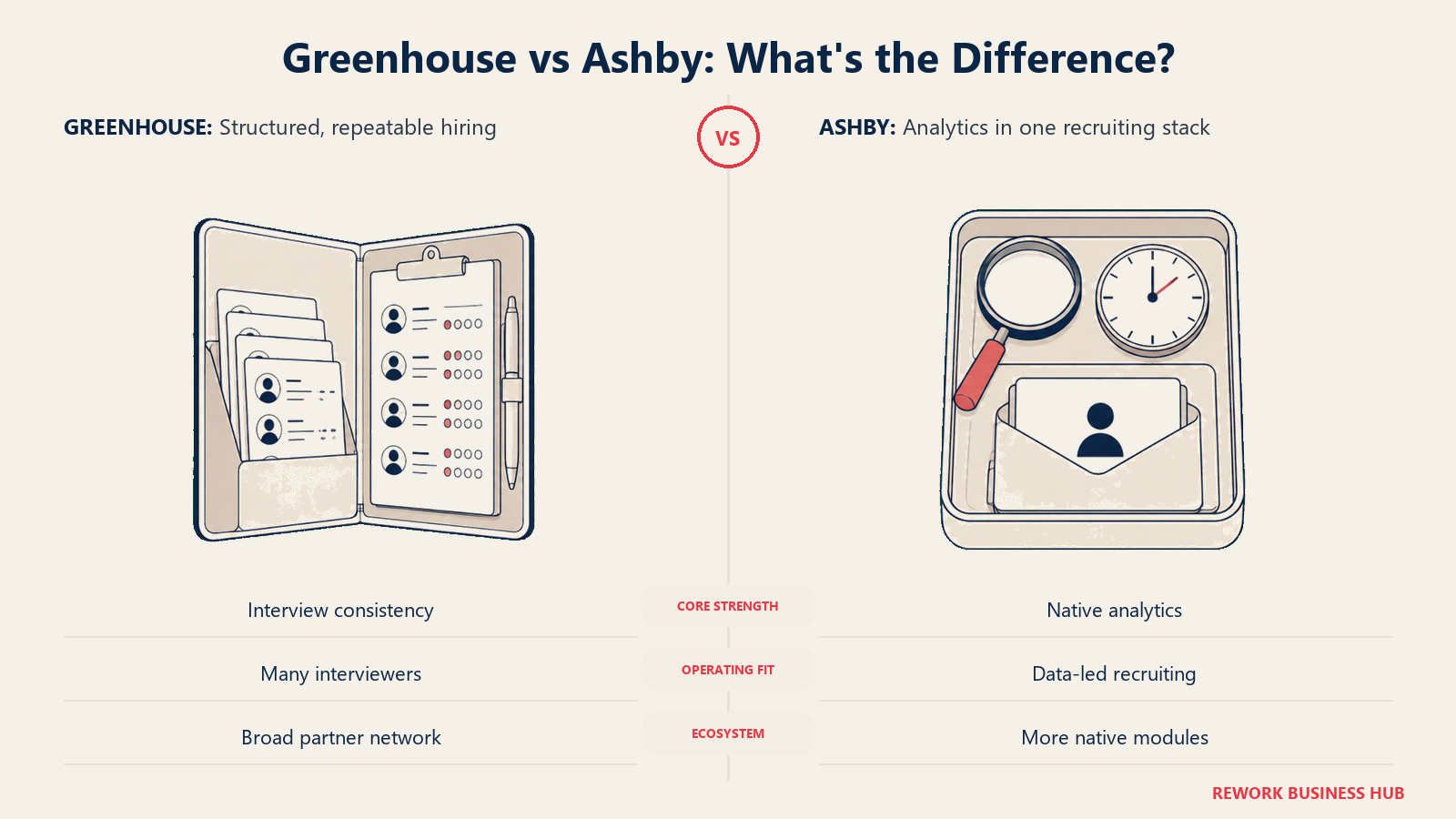
Wenn Sie 2026 Bewerbermanagementsysteme bewerten, tauchen Greenhouse und Ashby aus einem bestimmten Grund auf derselben Shortlist auf: Beide werden als das „erwachsene“ ATS empfohlen, zu dem ein Unternehmen greift, sobald eine Tabelle und ein kostenloser Eintrag auf einer Jobbörse nicht mehr ausreichen. Darüber hinaus gehen sie stark auseinander. Greenhouse ist die etablierte, in Konzernen bewährte Wahl, gebaut um strukturiertes Hiring: Interview-Kits, Scorecards und ein Prozess, der die Bewertung konsistent macht, egal wer im Raum sitzt. Ashby ist die neuere, analysezentrierte Plattform für finanzierte Startups und Scale-ups, bei der ATS, CRM, Terminplanung und Reporting als ein Produkt gebündelt sind statt als ein Kernwerkzeug plus drei Add-ons.
Keine der beiden Philosophien ist falsch, aber sie stoßen je nach Größe und Zuschnitt Ihres Hiring-Teams an unterschiedliche Grenzen. Ein Series-B-Startup mit 40 Personen, das Funnel-Daten nach Quelle und Recruiter aufgeschlüsselt haben will, ohne etwas zu exportieren, trifft Ashbys Sweet Spot. Ein Unternehmen mit 400 Personen, das die Bewertung über ein Dutzend Hiring Manager hinweg standardisiert und einen großen Integrations-Stack betreibt, landet meist bei Greenhouse. So schneiden die beiden tatsächlich im Vergleich ab, und hier zeigt sich bei jedem die Belastungsgrenze.
Das Wichtigste in Kürze
| Greenhouse | Ashby | |
|---|---|---|
| Grundphilosophie | Strukturiertes Hiring: Interview-Kits, Scorecards, konsistente Bewertung im großen Maßstab | Analysen zuerst, alles in einem: ATS, CRM, Terminplanung und Reporting von Anfang an gemeinsam gebaut |
| Am besten geeignet für | Unternehmen, die die Bewertung über viele Interviewer und Abteilungen hinweg standardisieren | Finanzierte Startups und Scale-ups, die Hiring-Daten im ATS beantwortet haben wollen, nicht in einem BI-Export |
| Passung zur Unternehmensphase | Mittelstand bis Konzern; keine veröffentlichte Obergrenze bei der Mitarbeiterzahl | Explizite Stufen: Foundations bis 100 Mitarbeiter, Plus 101 bis 1.000, Enterprise 1.000+ |
| Preismodell | Drei Stufen (Core, Plus, Pro), nur auf Angebot, keine Dollarbeträge veröffentlicht | Foundations veröffentlicht 400 $/Monat; Plus und Enterprise nur auf Angebot |
| Berichtete typische Kosten | Von Vendr berichteter Median-ACV um 26.587 $/Jahr, Spanne 10.152 bis 75.188 \((berichtet) | Der Listenpreis von Foundations ergibt etwa 4.800\)/Jahr vor dem Jahresrabatt; Plus und Enterprise sind öffentlich nicht verglichen | |
| Capterra-Bewertung | 4,5 von 5 (765 Bewertungen) | 4,4 von 5 (15 Bewertungen, eine viel kleinere Stichprobe) |
| Native Analysen | In Core enthalten; tiefere BI erfordert den Business Intelligence Connector der Plus-Stufe | In jeder Stufe enthalten; ein separates, nutzungsbasiert bepreistes Add-on Ashby Analytics existiert für Teams mit einem anderen ATS |
| Integrationsmarktplatz | Mehr als 250 verschiedene Integrationspartner | Kleinere veröffentlichte Partnerliste; das Produkt ersetzt Verbindungen zu Drittanbietern durch native Breite |
Für wen jede Plattform tatsächlich gebaut ist
Greenhouses eigene Preisseite ordnet die drei Stufen nach Komplexität und nicht nur nach Mitarbeiterzahl: Core wird als Struktur für das Hiring angepriesen, Plus als Optimierung des Betriebs und Pro als Steuerung von Hiring-Komplexität im großen Maßstab. Diese Einordnung sagt, für wen es gedacht ist: ein Unternehmen, das entschieden hat, dass die Bewertung standardisiert werden muss, meist weil es in mehreren Abteilungen einstellt und jeden Interviewer Kandidaten nach denselben Kriterien bewerten lassen will.
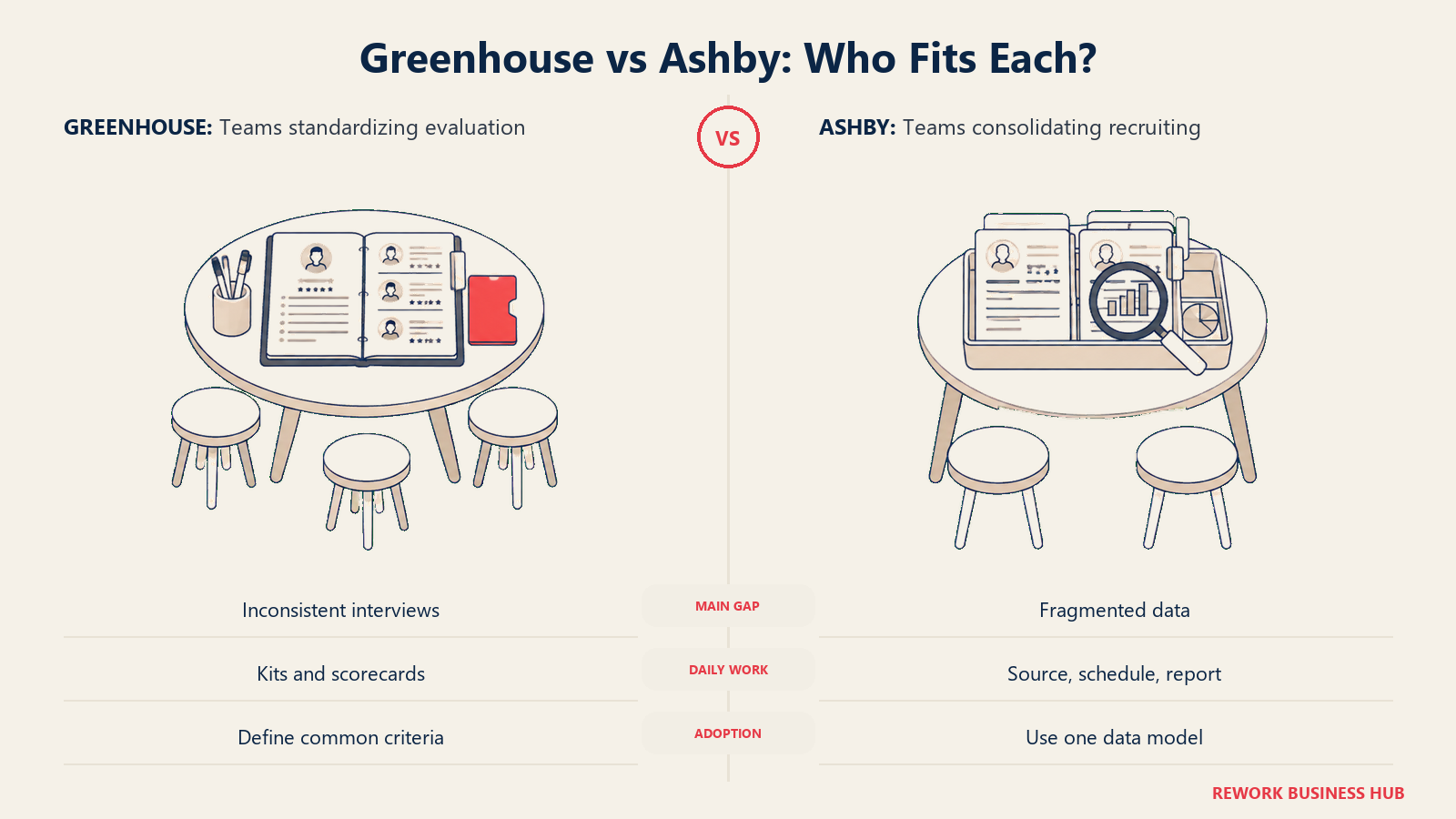
Ashbys eigene Startseite macht ein anderes Angebot: eine Plattform, die alles in einem bietet und „robust enough to handle your entire recruiting workflow“ ist, mit ATS, CRM und Sourcing, Terminplanung und Analysen, sodass ein Team das Produkt nie verlassen muss, um eine Frage zum Hiring-Funnel zu beantworten. Die Kundenlogos neigen zu bekannten, gut finanzierten Technologieunternehmen, und die eigenen Preisstufen sind ausdrücklich nach Unternehmensgröße gestaffelt: Startups (1 bis 100 Mitarbeiter), Growth (101 bis 1.000) und Enterprise (1.000+). Das Angebot richtet sich an ein Recruiting-Team, das von Anfang an modernes Reporting und ein eingebautes CRM will, nicht nachträglich angeflanscht.
| Greenhouse | Ashby | |
|---|---|---|
| Sweet-Spot-Team | Talent-Acquisition-Teams, die den Prozess über mehrere Hiring Manager hinweg standardisieren | Recruiting-Teams in finanzierten Startups und Scale-ups, die Reporting ohne BI-Export wollen |
| Passung zur Unternehmensgröße | Mittelstand bis Konzern; Greenhouse veröffentlicht keine Stufen nach Mitarbeiterzahl | Explizite Stufen direkt auf der Preisseite: 1 bis 100, 101 bis 1.000, 1.000+ |
| Kaufauslöser | Einem unstrukturierten oder informellen Interviewprozess entwachsen | Tabellen-Dashboards und einem Flickenteppich aus Einzeltools entwachsen |
| Hauptanwendungsfall | Konsistente, verzerrungsarme Bewertung bei hohem Hiring-Volumen | Sourcing, Terminplanung und Reporting auf einem Datenmodell ohne separates Analyse-Tool |
| Greenhouse | Ashby | |
|---|---|---|
| Reife des Teams | Hat bereits entschieden, dass strukturierte Interviews zählen; bereit, Scorecards aufzubauen | Fühlt sich wohl dabei, Sourcing und Terminplanung im ATS statt in einem separaten CRM zu betreiben |
| Typischer Kaufablauf | Demo-gesteuert, Verkaufszyklus passend zu Hiring-Volumen und organisatorischer Komplexität | Self-Service bei Foundations; vertriebsgesteuert, sobald Sie mit mehr als 100 Mitarbeitern in Plus wechseln |
| Einschätzung des Versprechens „alles in einem“ | Sourcing und CRM sind in Core enthalten, aber automatisiertes Sourcing und tiefe BI stecken in höheren Stufen | ATS, CRM, Terminplanung und Kernanalysen sind in jeder Stufe gemeinsam enthalten, auch in Foundations |
Keine der beiden Haltungen ist falsch. Es ist der Unterschied zwischen einem Tool, das Bewertung im großen Maßstab fair und wiederholbar machen soll, und einem Tool, das so gebaut ist, dass ein Recruiting-Team sein ATS nie an ein separates Reporting-Produkt anschließen muss, nur um zu sehen, wo Kandidaten abspringen.
Wichtige Fakten
Wichtige Fakten: ATS-Kosten, Tool-Wildwuchs und Hiring-Analysen
- Der weltweite Markt für Bewerbermanagementsysteme soll von 2,96 Mrd. \(im Jahr 2025 auf 3,17 Mrd.\) im Jahr 2026 wachsen, eine CAGR von 7,1 %. (Research and Markets, 2026)
- Die durchschnittlichen Kosten pro Einstellung in den USA erreichten 2025 bei Positionen unterhalb der Führungsebene 5.475 $, während Einstellungen auf Führungsebene mit 35.879 $ fast siebenmal höher lagen. (SHRM, 2025)
- 89 % der Talent-Acquisition-Fachleute sagen, dass die Messung der Einstellungsqualität zunehmend wichtiger wird, aber nur 25 % sind sehr zuversichtlich, dass ihr Unternehmen das heute tatsächlich leisten kann. (LinkedIn Talent Solutions)
- Rund 61 % der Recruiting-Teams setzen neben ihrem primären ATS bereits drei oder mehr Tools ein, was Integrationskomplexität und Datenfragmentierung erhöht, sobald das Reporting woanders liegt. (HR Tech Institute)
Strukturiertes Hiring vs. Analysen in einer Plattform: Der Kernunterschied
Beide Plattformen sind vollwertige Bewerbermanagementsysteme: Stellenanzeigen, Pipelines, Kandidatenprofile, Angebots-Workflows und Reporting sind in jeder enthalten. Was sie tatsächlich trennt, ist, was jedes Unternehmen zuerst gebaut hat und womit es weiterhin führt.
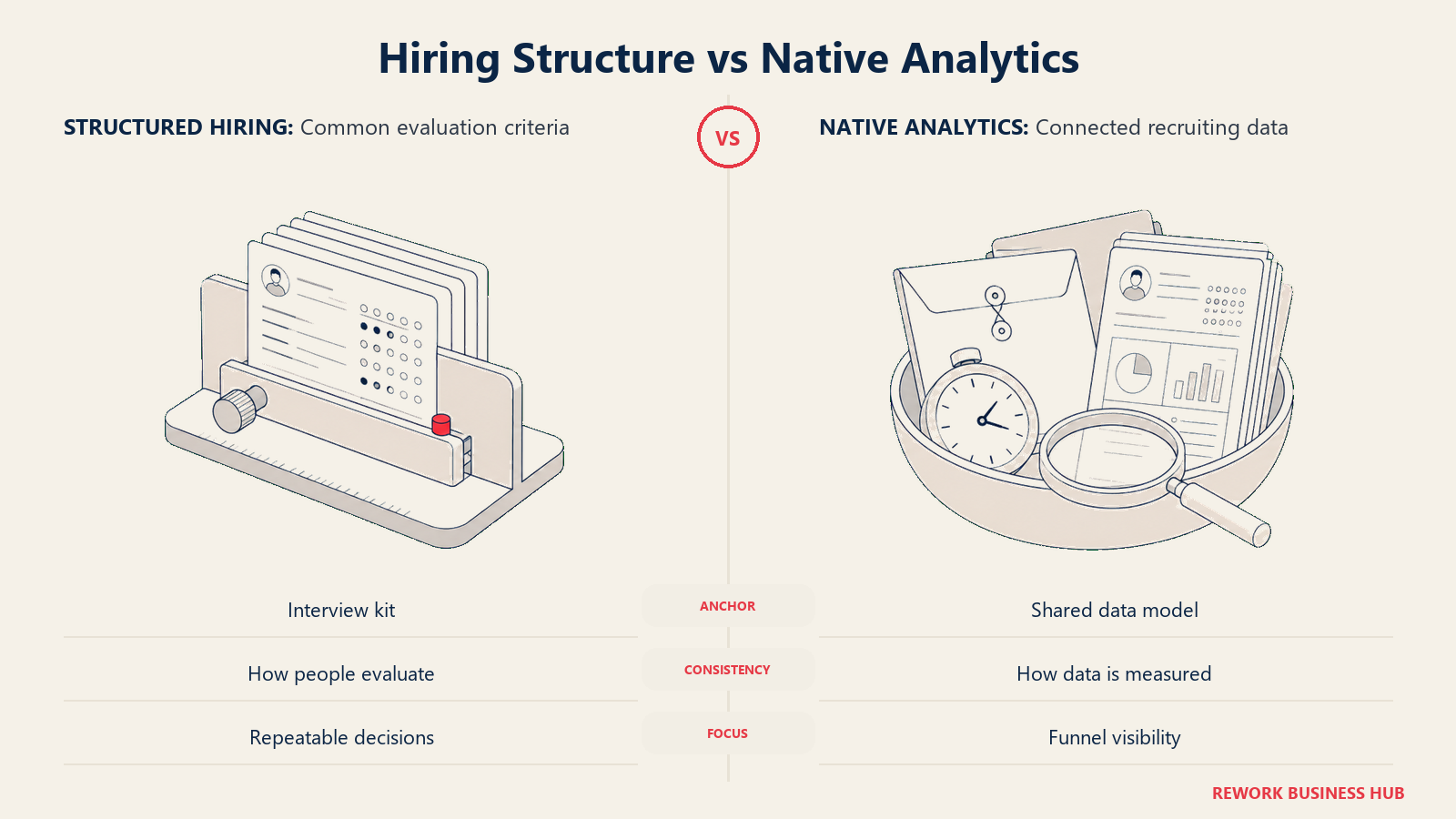
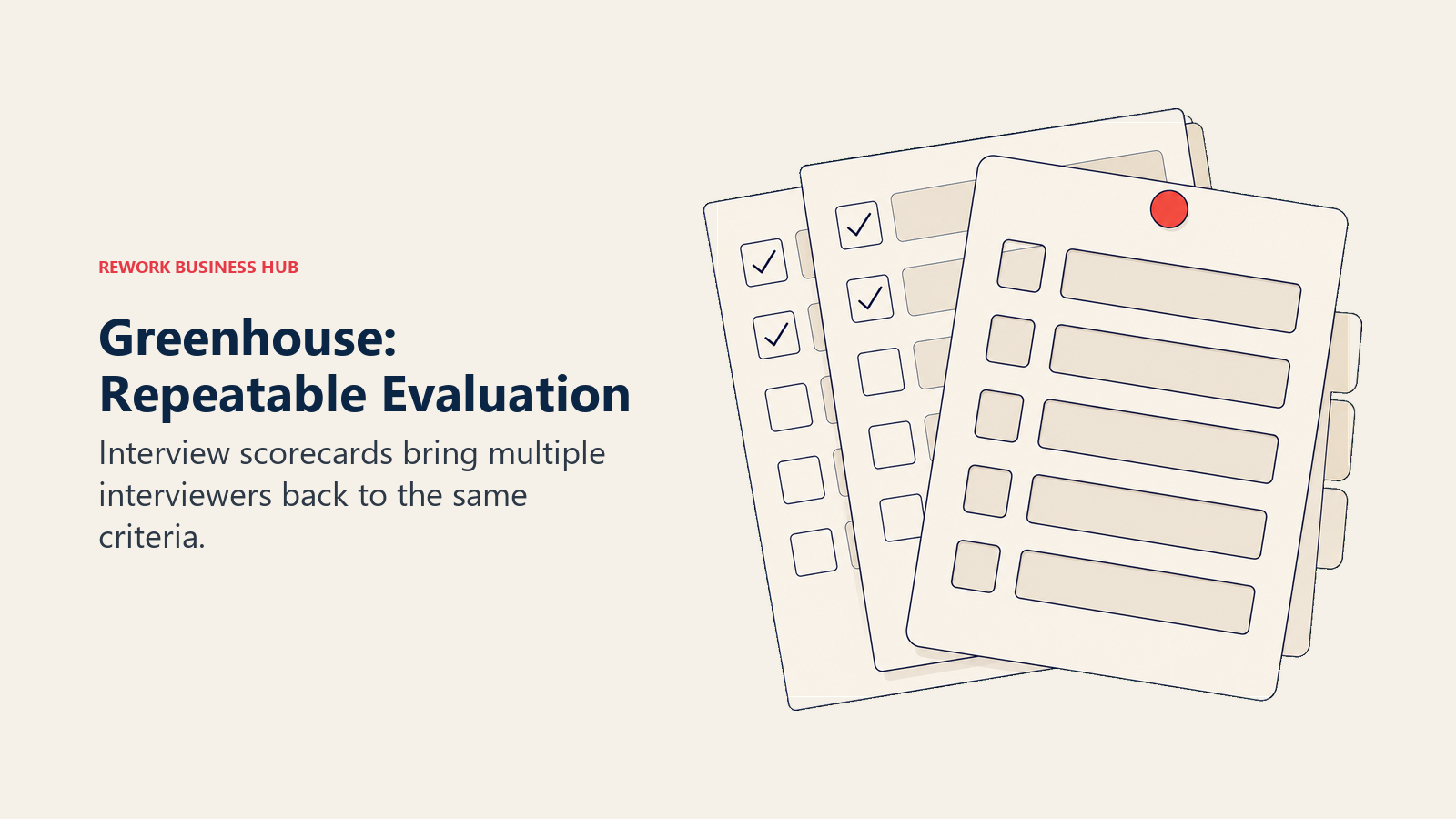
Greenhouses Modell des strukturierten Hirings dreht sich um das Interview-Kit, das Interviewfragen, den Lebenslauf des Kandidaten und eine Scorecard in einem Dokument bündelt, mit dem jeder Interviewer arbeitet, sodass ein Hiring-Team nach denselben Kriterien bewertet statt nach fünf verschiedenen Bauchgefühlen. Das ist der Mechanismus hinter dem Versprechen der Plattform, Verzerrungen zu verringern, und er gehört zu jeder Stufe, auch zu Core.
Ashbys Modell dreht sich darum, Sie nicht zwischen Plattformtiefe und einem separaten Analyse-Tool wählen zu lassen. Sourcing, Terminplanung und ein ATS sind nativ enthalten, ebenso das Reporting, vom Tarif Foundations für 400 $ im Monat bis hinauf zu Enterprise. Recruiter erstellen individuelle Berichte auf Live-Hiring-Daten im selben Produkt, in dem sie Interviews planen, statt für eine Antwort in eine Tabelle oder ein BI-Tool zu exportieren.
| Fähigkeit | Greenhouse | Ashby |
|---|---|---|
| Interview-Kits und Scorecards | Kern des Produkts, in jeder Stufe enthalten | Verfügbar, aber nicht das Organisationsprinzip |
| Natives CRM und Sourcing | In Core enthalten; automatisierte Sourcing Automation ist ein Add-on der Plus-Stufe | In jeder Stufe enthalten als eine der vier nativen Säulen |
| Native Terminplanung | Enthalten | Enthalten, eine der vier nativen Säulen |
| Natives Reporting und Analysen | In Core enthalten; der Business Intelligence Connector für tiefere BI ist ab Plus verfügbar | In jeder Stufe enthalten, auch in Foundations |
| Tiefere Analysen als separates Produkt | Kein separates Analyse-SKU | Ashby Analytics: ein eigenständiges, nutzungsbasiert bepreistes Add-on für Unternehmen ab 100 Mitarbeitern, auch solche mit einem anderen ATS |
| KI-Funktionen | AI Notetaker, Real-Talent-Matching und Betrugserkennung | KI-gestütztes Sourcing, Terminplanung und Scorecard-Werkzeuge im gesamten Kernprodukt |
| Tiefe der strukturierten Bewertung | Die tiefste dieser Liste; Scorecards und Kits sind der Daseinsgrund des Produkts | Solide, aber nicht die zentrale Wette der Plattform |
Dieser Unterschied zeigt sich auch bei DEI- und Compliance-Workflows, obwohl beide Plattformen sie unterstützen. Greenhouse koppelt die Verringerung von Verzerrungen direkt an die Scorecard: Standardisierte Kriterien sind der Mechanismus, und der Audit-Trail, den ein belastbarer Prozess braucht, entsteht dadurch, dass jeder Interviewer nach denselben Attributen bewertet. Ashbys Ansatz ist ein anderer: Weil Sourcing, Terminplanung und Reporting bereits in einem Datenmodell liegen, kann ein Recruiting-Team Durchlaufquoten nach Phase, Quelle oder Recruiter aufschlüsseln, ohne auf ein zweites Tool oder einen Datenexport zu warten, um zu prüfen, ob ein Prozess in der Praxis tatsächlich fair ist.
Ashbys Hebel: Native Analysen und der Stack aus einer Hand
Wenn Ihr Problem ist, dass niemand den Zahlen zum Hiring-Funnel traut, weil sie in drei nicht verbundenen Exporten liegen, verdient sich Ashby hier seinen Ruf. Reporting ist keine Premium-Funktion, die nachträglich an das ATS angeflanscht wurde, sondern eine von vier Säulen, um die das Produkt von Anfang an gebaut wurde, neben dem ATS selbst, CRM und Sourcing sowie Terminplanung. Ein Recruiter kann einen individuellen Bericht zur Konversion von Quelle bis Angebot erstellen, nach Recruiter oder Team filtern und ihn weitergeben, ohne ein zweites Tool anzufassen.
Eine Nuance sollte man genau benennen, denn hier kann ein Ruf dem aktuellen Produkt vorauseilen. Ashbys eigene Preisseite führt ein separates, nutzungsbasiert bepreistes Angebot namens Ashby Analytics auf, beschränkt auf Unternehmen mit 100 oder mehr Mitarbeitern. Das ist nicht Ashby, das sein eigenes natives Reporting für die eigenen ATS-Kunden hinter eine Bezahlschranke stellt. Es ist ein eigenständiges Produkt für Unternehmen, die ein anderes ATS betreiben und Analysen auf Ashby-Niveau obendrauf wollen, ohne die Plattform zu wechseln. Für ein Unternehmen, das sein Hiring tatsächlich auf Ashby betreibt, ist das Reporting in Foundations, Plus und Enterprise gleichermaßen enthalten, ohne separaten Kauf.
Der Zielkonflikt zeigt sich, sobald Sie die Grenze von 100 Mitarbeitern überschreiten, bei der der Tarif Foundations endet. Plus und Enterprise gibt es beide nur auf Angebot, und Ashbys eigener Integrationsmarktplatz ist kleiner als der von Greenhouse, sodass Teams, die sich auf viele Einzeltools von Drittanbietern stützen, weniger native Konnektoren vorfinden könnten. Wenn Ashbys Obergrenze genau das Problem ist, auf das Sie stoßen, zeigt der Überblick die besten Ashby-Alternativen, wo Teams als Nächstes landen.
Greenhouses Hebel: Strukturiertes Hiring und der Integrationsmarktplatz
Wenn Ihr Problem uneinheitliche Bewertung ist und nicht fehlendes Reporting, ist Greenhouses Ansatz des strukturierten Hirings die direktere Lösung. Die Scorecard zwingt jeden Interviewer, Kandidaten anhand derselben definierten Attribute zu bewerten, statt ein unstrukturiertes „strong yes“ oder „pass“ abzugeben, und genau diesen Mechanismus nennen viele TA-Teams, wenn sie davon sprechen, Abweichungen zwischen Interviewern zu verringern.
Greenhouse gewinnt außerdem bei der schieren Breite der Integrationen. Das Unternehmen gibt an, das größte Integrations-Ökosystem verschiedener Partner in der Kategorie Talent Acquisition aufgebaut zu haben, mit mehr als 250 verschiedenen Integrationspartnern nach der jüngsten Zählung. Für ein Unternehmen, das bereits ein bestimmtes HRIS, einen Anbieter für Hintergrundprüfungen oder ein Assessment-Tool betreibt, bedeutet dieser Marktplatz meist, dass bereits ein nativer Konnektor existiert, statt eines Eigenbaus.
Der Zielkonflikt: Die Tiefe, die Greenhouse im großen Maßstab stark macht, nämlich Datenkonfiguration auf Enterprise-Niveau, Audit-Protokolle und eine Entwickler-Sandbox in der Stufe Pro, ist mehr Struktur, als ein kleines, schnelles Team typischerweise braucht, und Reporting-Tiefe jenseits der Basis von Core (die KI-gestützten Filter, der Business Intelligence Connector) steckt hinter Plus. Teams, die Greenhouse gegen einen leichteren, sourcing-orientierten Wettbewerber abwägen, sollten außerdem Greenhouse vs. Lever lesen, und Teams, denen Greenhouse selbst für ihre Größe zu viel Prozess ist, können mit die besten Greenhouse-Alternativen beginnen.
Preise und die wahren Gesamtkosten
Keines der beiden Unternehmen macht es einfach, aber aus unterschiedlichen Gründen. Greenhouse veröffentlicht überhaupt nichts: Die Preisseite sagt unmissverständlich, die Kosten würden „influenced by the plan you choose (Core, Plus or Pro), your hiring volume and organizational complexity, and the features and capabilities required“, und jeder Weg führt zu einer Demo-Anfrage. Ashby veröffentlicht genau eine Zahl, Foundations mit 400 $ im Monat, und geht dann auf reine Angebotspreise über, sobald Sie 100 Mitarbeiter überschreiten.
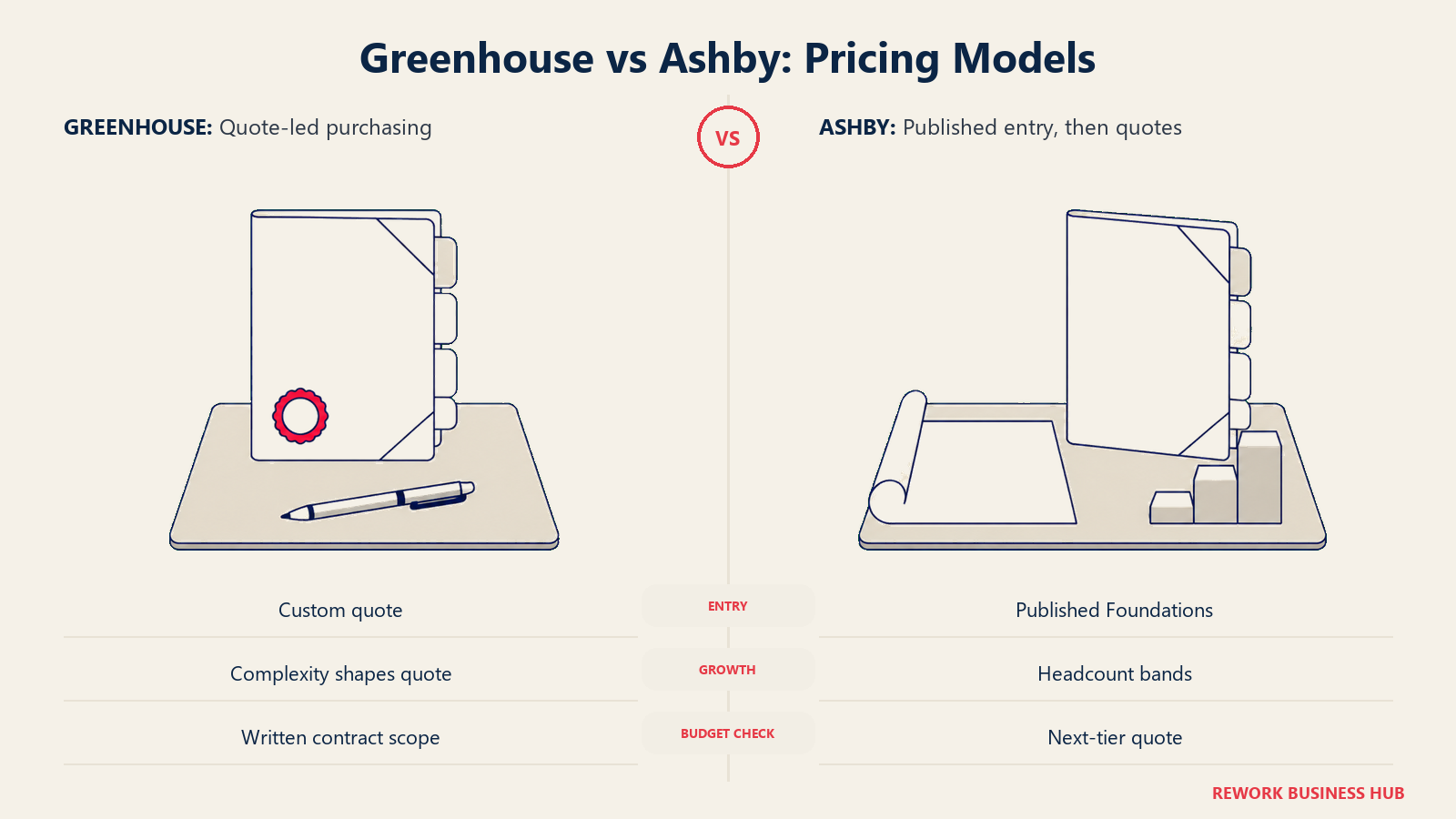
| Tarif oder Datenpunkt | Greenhouse | Ashby |
|---|---|---|
| Veröffentlichte Preise | Nein; die Stufen sind Core, Plus, Pro | Teilweise; nur die Stufe Foundations ist veröffentlicht |
| Einstiegsstufe | Nicht veröffentlicht | Foundations: 400 $/Monat, bis 100 Mitarbeiter |
| Jahresabrechnung | Auf der Preisseite nicht angegeben | 10 % Rabatt bei jährlicher Bindung; ergibt etwa 4.320 $/Jahr gegenüber 4.800 $ bei monatlicher Zahlung über 12 Monate |
| Mittlere Stufe | Nicht veröffentlicht | Plus: nur auf Angebot, beschrieben als „best for 101 to 1,000 employees“ |
| Enterprise-Stufe | Nicht veröffentlicht | Enterprise: nur auf Angebot, für „1,000+ employees“ |
| Was laut Anbieter die Kosten bestimmt | Tarifstufe, Hiring-Volumen und organisatorische Komplexität | Unternehmensgröße, Nutzung und Bindung |
| Berichtete Daten von Käufern | Vendr: Median-ACV um 26.587 $/Jahr, Spanne 10.152 bis 75.188 $ (berichtet) | Öffentlich in dieser Granularität nicht verglichen |
| Add-on für tiefere Analysen | Business Intelligence Connector, ab Plus | Ashby Analytics, separates nutzungsbasiert bepreistes SKU, ab 100 Mitarbeitern |
| Rework, wenn das eigentliche Problem ist, dass Hiring getrennt von HR liegt | Preis auf Anfrage (rework.com/pricing) | Preis auf Anfrage (rework.com/pricing) |
Das ehrliche Fazit: Ashby gibt Ihnen vor Plus eine echte, vom Anbieter veröffentlichte Zahl, an der sich ein Budgetgespräch verankern lässt. Greenhouse gibt Ihnen in keiner Stufe eine, auch wenn von Käufern berichtete Daten nahelegen, dass reale Verträge für wachsende Unternehmen häufig im fünfstelligen Bereich landen. Holen Sie sich beide Zahlen schriftlich, bevor Sie annehmen, dass eines zu Ihrem Budget passt, und verstehen Sie jede oben „berichtete“ Zahl als Planungsspanne, nicht als Angebot, zu dem eines der Unternehmen steht.
Tiefe bei Reporting und Analysen
Der praktische Test ist nicht, ob eine Plattform einen Reiter für Berichte hat, sondern ob eine Recruiting-Koordinatorin eine Frage wie „wo springen Kandidaten aus unserem Empfehlungsprogramm im Vergleich zu Direktbewerbern ab“ beantworten kann, ohne ein Ticket bei einem Datenteam zu eröffnen. Bei Ashby ist das ein nativer Bericht im selben Produkt, mit dem auch geplant wird, ab Foundations verfügbar. Bei Greenhouse ist grundlegendes Reporting zu Funnel und Phasen ebenfalls in Core enthalten, aber die fortgeschrittenere, filterbare, in BI exportierbare Variante dieser Frage steckt hinter Plus und seinem Business Intelligence Connector.
| Reporting | Greenhouse | Ashby |
|---|---|---|
| Grundlegendes Reporting enthalten | Ja, in Core | Ja, in Foundations |
| Builder für individuelle Berichte | KI-gestützte Filter, ab Plus | Nativ in allen Stufen enthalten |
| Tiefere BI-Anbindung | Business Intelligence Connector, ab Plus | Eigenständiges Produkt Ashby Analytics, nutzungsbasiert bepreist, ab 100 Mitarbeitern |
| Wofür es gebaut ist | Analyse von Funnel und Interviewer-Konsistenz im großen Maßstab | Analyse nach Quelle, Recruiter und Phase, ohne das ATS zu verlassen |
| Als separater Kauf verkauft | Nur der BI Connector und die KI-Filter, beide ab Plus | Nur Ashby Analytics, und vor allem für Kunden mit einem anderen ATS als Ashby |
Integrationen und Ökosystem
Das ist der klarste Zielkonflikt zwischen den beiden Unternehmen. Greenhouse hat über Jahre Partnerbeziehungen bei Hintergrundprüfungen, Assessments, HRIS-Plattformen und Jobbörsen aufgebaut und setzt in seinem eigenen Marketing auf diesen Marktplatz als Verkaufsargument. Ashby hat eine andere Wette abgeschlossen: Statt diese Partnerzahl Integration für Integration einzuholen, hat es Sourcing, Terminplanung und Reporting nativ gebaut, sodass ein Team von vornherein weniger Tools von Drittanbietern braucht. Keiner der Ansätze ist ein Fehler, aber sie zielen auf unterschiedliche Käufer. Ein Unternehmen mit einem festen HRIS, einem ATS-nahen Assessment-Anbieter und einem Anbieter für Hintergrundprüfungen, die es nicht aufgibt, neigt zu Greenhouses Marktplatz. Ein Unternehmen, das seinen Stack von Grund auf baut, vermisst die Integrationen vielleicht nicht, die es nie brauchte.
| Integration | Greenhouse | Ashby |
|---|---|---|
| Größe des Partner-Ökosystems | Mehr als 250 verschiedene Integrationspartner, laut Greenhouses eigener Zählung | Kleineres veröffentlichtes Partnerverzeichnis; native Module decken im Produkt mehr ab |
| HRIS-Sync | Breite Abdeckung über den Marktplatz | Native Integrationen mit gängigen HR- und Payroll-Tools |
| Veröffentlichung auf Jobbörsen | Umfangreiches, strukturiertes Netzwerk von Jobbörsen | Natives Veröffentlichen plus Werkzeuge als Sourcing-Erweiterung |
| Offener API-Zugang | Ja | Ja |
| Beste Passung | Teams mit einem bestehenden Tool-Stack, für den sie vorgefertigte Konnektoren wollen | Teams, die Sourcing, Terminplanung und Reporting gern in insgesamt weniger Tools konsolidieren |
Implementierung und Zeit bis zum Livegang
Foundations ist wirklich schnell aufgesetzt. Weil Sourcing, Terminplanung und Reporting bereits in einem Produkt mit einem Datenmodell liegen, kann ein kleines Team innerhalb von Tagen Stellen veröffentlichen und Kandidaten verfolgen, wobei sich die Konfiguration meist auf Pipelines und einige Scorecards beschränkt. Greenhouses Stufe Core ist für ein ähnlich kleines Team nicht dramatisch langsamer, aber die Lücke wächst schnell, sobald Interview-Kits, individuelle Scorecards pro Rollenfamilie und Datenkonfiguration für Plus oder Pro ins Spiel kommen. Das ist der Preis der Tiefe: Greenhouses Struktur muss aufgebaut sein, bevor sie sich auszahlt, während Ashbys native Module meist direkt ab Werk funktionieren.
| Greenhouse | Ashby | |
|---|---|---|
| Typische Zeit bis zum Livegang | Mehrere Wochen, länger bei Rollouts von Plus und Pro mit individuellen Scorecards und Datenkonfiguration | Tage bis wenige Wochen bei Foundations; länger bei Plus und Enterprise mit individuellen Reporting-Builds |
| Aufwand für Change Management | Spürbar: Interview-Kits und Scorecards müssen vorab für jede Rollenfamilie definiert werden | Geringer bei Sourcing und Terminplanung; höher, wenn Sie zusätzlich individuelle Analyse-Dashboards bauen |
| Berichtete Lernkurve | Steil für Admins, besonders bei der Konfiguration des Reportings | Als schnell für den täglichen Gebrauch durch Recruiter beschrieben; steiler beim Bau fortgeschrittener individueller Berichte |
Skalierung nach Mitarbeiterzahl: Wo jede Plattform beim Wachstum passt
| Stufe nach Mitarbeiterzahl | Greenhouse-Eignung | Ashby-Eignung |
|---|---|---|
| Unter 100 Mitarbeitern | Verfügbar, aber Cores Struktur ist für ein kleines Team oft mehr Prozess, als es braucht | Sweet Spot: Foundations zu einem pauschalen, veröffentlichten Preis von 400 $/Monat |
| 100 bis 1.000 Mitarbeiter | Plus und Pro skalieren hier; Preise und Add-ons wachsen mit der Komplexität | Stufe Plus, ausdrücklich gestaffelt „101 to 1,000 employees“, nur auf Angebot |
| 1.000+ Mitarbeiter | Pros Datenkonfiguration auf Enterprise-Niveau, Audit-Protokolle und Sandbox sind für diese Größe gebaut | Stufe Enterprise; weiterhin nur auf Angebot, weiterhin alles in einem, konkurriert aber mit tieferen Enterprise Talent Clouds |
| Jenseits der Obergrenze beider Plattformen | Siehe die besten iCIMS-Alternativen für Optionen der Enterprise Talent Cloud | Dasselbe; Ashbys eigener Marktplatz und seine Konfigurierbarkeit werden im echten Enterprise-Maßstab dünner |
Wann Greenhouse die richtige Wahl ist
- Sie standardisieren einen Hiring-Prozess über mehrere Abteilungen und brauchen jeden Interviewer, der Kandidaten nach denselben Kriterien bewertet
- Das Verringern von Verzerrungen bei Interviewern und ein belastbarer, prüffähiger Bewertungsnachweis sind für Compliance oder DEI-Reporting wichtig
- Sie betreiben bereits ein bestimmtes HRIS, Assessment-Tool oder einen Anbieter für Hintergrundprüfungen und wollen einen vorgefertigten Konnektor statt einer individuellen Integration
- Sie brauchen Datenkonfiguration auf Enterprise-Niveau, Audit-Protokolle und eine Entwickler-Sandbox, für die Pro gebaut ist
- Sie verhandeln lieber ein individuelles Angebot, als eine harte Obergrenze von 100 Mitarbeitern bei veröffentlichten Preisen zu akzeptieren
Wann Ashby die richtige Wahl ist
- Sie sind ein finanziertes Startup oder Scale-up mit grob unter 1.000 Mitarbeitern und wollen Sourcing, Terminplanung und Reporting in einem Produkt
- Ihr Team ist es leid, Hiring-Daten in eine Tabelle oder ein separates BI-Tool zu exportieren, nur um eine Funnel-Frage zu beantworten
- Sie wollen einen pauschalen, veröffentlichten Einstiegspreis (400 $/Monat), gegen den Sie vor einem Verkaufsgespräch budgetieren können
- Sie akzeptieren einen kleineren Integrationsmarktplatz von Drittanbietern im Austausch gegen tiefere native Funktionalität
- Sie führen lieber jetzt ein vernetztes System ein, als später ein CRM, ein Terminplanungs-Tool und ein Analyse-Dashboard an ein leichteres ATS anzuflanschen
Wenn keines passt: Hiring auf derselben Plattform wie HR und Zeiterfassung
Ehrlich gesagt sollte man benennen: Sowohl Greenhouse als auch Ashby sind speziell gebaute Bewerbermanagementsysteme, und keines versucht, Ihr führendes System für HR, Zeiterfassung oder Lohnabrechnung zu sein. Wenn Ihr eigentlicher Reibungspunkt darin liegt, dass Hiring, Onboarding und die Zeiterfassung der Mitarbeiter in getrennten Systemen ohne gemeinsamen Mitarbeiterdatensatz liegen, ist das eine andere Art von Problem, als sie eines der beiden Tools löst.
Reworks People-Linie umfasst die Module E-Hiring, Interview und Career, die auf derselben Plattform wie HRIS, Zeiterfassung und Timesheets laufen, sodass ein Kandidat ohne Übergabe zwischen getrennten Systemen zum Mitarbeiterdatensatz wird. Es ist weder ein Ersatz für Greenhouses Tiefe beim strukturierten Hiring noch für Ashbys native Analysen, wenn Sie tatsächlich eine dedizierte Talent-Acquisition-Funktion brauchen; es ist auch nicht für Agentur-Recruiting mit hohem Volumen oder tiefes Talent-CRM mit Sourcing im Vordergrund gebaut. Es lohnt sich, wenn Hiring ein Baustein einer breiteren People-Operations-Plattform ist, die Sie lieber an einem Ort betreiben, und Sie bereit sind, etwas ATS-spezifische Tiefe gegen diese Konsolidierung einzutauschen. Rework wird pro Organisation angeboten statt zu einem veröffentlichten Preis verkauft; aktuelle Details finden Sie unter rework.com/pricing, und den Überblick die beste HR-Software, wenn die HR-Seite der Teil ist, den Sie tatsächlich lösen wollen.
Entscheidungsrahmen
| Wenn Sie... | Wählen Sie |
|---|---|
| Die Bewertung über viele Interviewer und Hiring Manager hinweg standardisieren | Greenhouse |
| Ein finanziertes Startup oder Scale-up sind, das Analysen und Sourcing nativ im ATS will | Ashby |
| Den größten Integrationsmarktplatz der Kategorie priorisieren | Greenhouse |
| Unter 100 Mitarbeitern sind und einen pauschalen, veröffentlichten Preis vor einem Verkaufsgespräch wollen | Ashby |
| Über 1.000 Mitarbeitern liegen und tiefere Konfigurierbarkeit einer Enterprise Talent Cloud brauchen | Siehe die besten iCIMS-Alternativen |
| Jede Option der Kategorie vergleichen, nicht nur diese beiden | Siehe die besten Bewerbermanagementsysteme |
| Hiring als einen Teil einer breiteren HR- und Workforce-Plattform suchen | Rework (siehe rework.com/pricing) |
Was Sie als Nächstes tun sollten
- Benennen Sie Ihre tatsächliche Lücke, bevor Sie eine Demo ansehen. Wenn Ihre Kritik uneinheitliche Bewertung durch Interviewer ist, ist das ein Greenhouse-Problem. Wenn es Hiring-Daten sind, die in Exporten feststecken, ist das ein Ashby-Problem. Lassen Sie nicht eine Funktionsliste für Sie entscheiden.
- Holen Sie sich Greenhouses echte Zahl schriftlich. In keiner Stufe ist etwas veröffentlicht, und von Käufern berichtete Daten legen nahe, dass die Verträge je nach Hiring-Volumen und organisatorischer Komplexität stark variieren.
- Prüfen Sie, wo Ihre Mitarbeiterzahl tatsächlich gegenüber Ashbys Stufen liegt. Foundations endet bei 100 Mitarbeitern; wer diese Grenze überschreitet, führt ein Gespräch über ein Angebot, keinen veröffentlichten Preis.
- Vergleichen Sie Greenhouse auch mit einer leichteren Option mit transparenten Preisen? Unsere Analyse Workable vs. Greenhouse behandelt genau diesen Zielkonflikt, und unser Leitfaden zu Interview-Scorecards und Bewertungsrastern lohnt sich zu lesen, bevor Sie in einem der beiden Tools Ihren ersten strukturierten Prozess aufbauen.
- Nicht sicher, ob ein ATS allein Ihr Reporting-Problem löst? Unser Leitfaden zu Recruiter-Kennzahlen und unser Leitfaden zur Auswahl von Recruiting-Software führen beide durch die Bewertungskriterien, bevor Sie ein einziges Verkaufsgespräch absitzen.
Weiterführende Ressourcen:

On this page
- Das Wichtigste in Kürze
- Für wen jede Plattform tatsächlich gebaut ist
- Wichtige Fakten
- Strukturiertes Hiring vs. Analysen in einer Plattform: Der Kernunterschied
- Ashbys Hebel: Native Analysen und der Stack aus einer Hand
- Greenhouses Hebel: Strukturiertes Hiring und der Integrationsmarktplatz
- Preise und die wahren Gesamtkosten
- Tiefe bei Reporting und Analysen
- Integrationen und Ökosystem
- Implementierung und Zeit bis zum Livegang
- Skalierung nach Mitarbeiterzahl: Wo jede Plattform beim Wachstum passt
- Wann Greenhouse die richtige Wahl ist
- Wann Ashby die richtige Wahl ist
- Wenn keines passt: Hiring auf derselben Plattform wie HR und Zeiterfassung
- Entscheidungsrahmen
- Was Sie als Nächstes tun sollten