Dale Carnegies Führungsstil: Warum 30 Millionen Menschen noch heute einem Playbook von 1936 folgen
Turn this article into takeaways for your work.


Each assistant summarizes the article only for you and suggests best practices for your work.
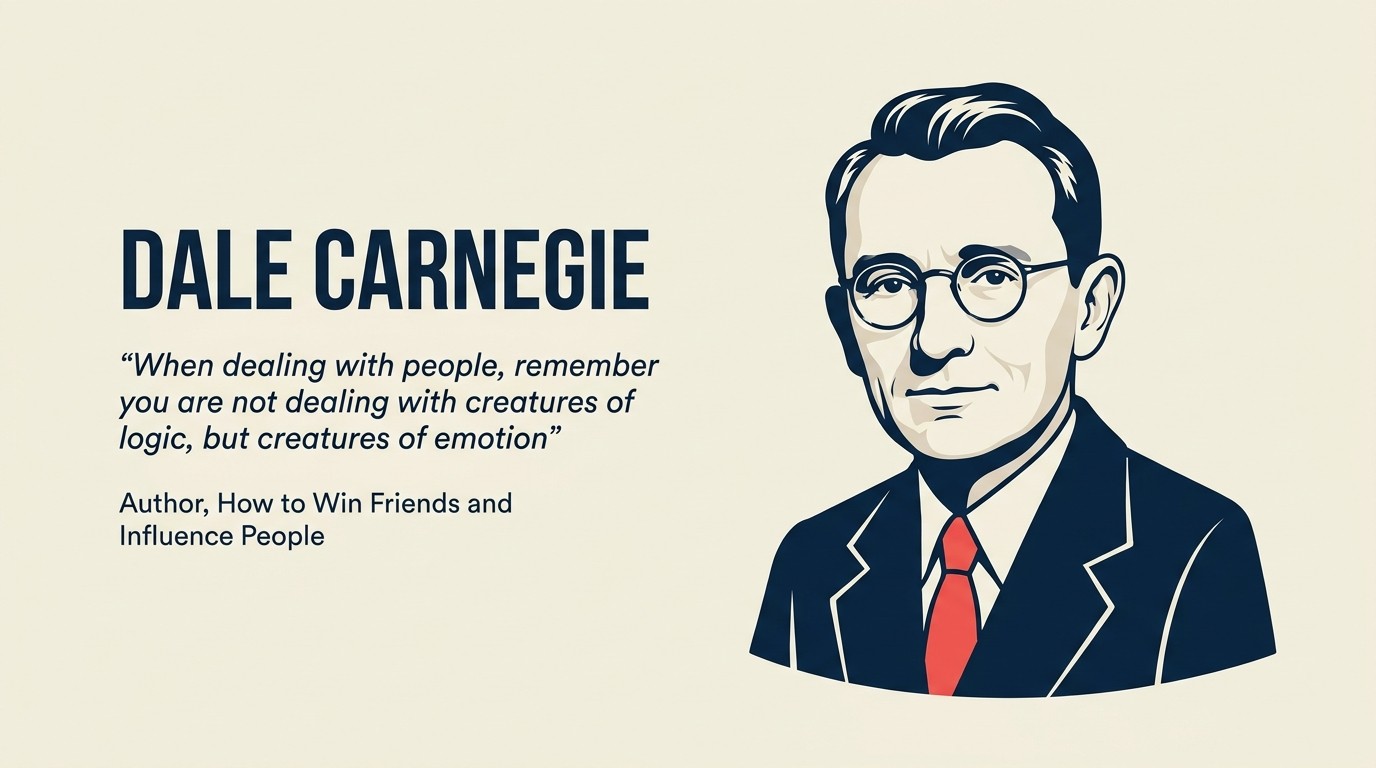
Steckbrief: Dale Carnegie (1888–1955) war ein amerikanischer Schriftsteller, Redner und Pionier der modernen Rhetorik und Schulung zwischenmenschlicher Fähigkeiten. Sein 1936 erschienenes Buch Wie man Freunde gewinnt hat weltweit mehr als 30 Millionen Exemplare verkauft und war nie vergriffen. Er gründete Dale Carnegie Training im Jahr 1912 als Rhetorikkurs im YMCA in Manhattan; das Programm ist heute in 86 Ländern vertreten. Warren Buffett hängt sein Dale Carnegie-Kurszeugnis als einziges Diplom an seiner Bürowand und schreibt dem Kurs zu, seine Fähigkeiten zu sprechen und zu führen grundlegend verändert zu haben.
Die Lehre vom Einfluss ohne Autorität (Die Carnegie-Prinzipien)
Die Carnegie-Prinzipien besagen, dass dauerhafter Einfluss verdient, nicht eingefordert wird — Führungskräfte verändern das Verhalten anderer, indem sie sie aufrichtig verstanden, wertgeschätzt und als wichtig empfinden lassen, anstatt Position oder Argumentation einzusetzen. Die Lehre beruht auf einer einzigen operativen These: aufrichtige Aufmerksamkeit nach außen kumuliert zu Vertrauen, und Vertrauen ist der einzige zuverlässige Hebel zur Änderung von Meinungen. Es ist Einfluss ohne Autorität, weil er in jede Richtung eines Organigramms funktioniert.
Dale Carnegie wuchs auf einer Farm in Missouri auf, scheiterte als Schauspieler in New York und verbrachte Jahre damit, kaum die Miete aufzutreiben. Im Jahr 1912, mittellos und auf Jobsuche, überzeugte er ein YMCA in Manhattan, ihn einen Rhetorikkurs abhalten zu lassen. Er berechnete 2 Dollar pro Einheit. Innerhalb weniger Monate war der Kurs überbucht. Er hatte herausgefunden, was er wirklich gut konnte: anderen beibringen, wie man mit Menschen in Kontakt tritt.
Wie man Freunde gewinnt und Menschen beeinflusst erschien 1936. In den ersten drei Monaten wurden 250.000 Exemplare verkauft. Bis heute wurden 30 Millionen Exemplare in 36 Sprachen verkauft, und das Buch war nie vergriffen. Dale Carnegie Training ist derzeit in 86 Ländern aktiv.
Die naheliegende Frage ist: Warum? Das Buch wurde vor dem Fernsehen geschrieben, bevor professionelles Verkaufen als Disziplin existierte, bevor Organisationspsychologie als Wissenschaftsfeld bestand. Doch die Kernerkenntnis hat nicht gealtert: Menschen treffen Entscheidungen basierend auf ihren Gefühlen, und ihre Gefühle werden maßgeblich davon bestimmt, wie man sie sich selbst gegenüber fühlen lässt. Das gilt im Unternehmensverkaufsgespräch von 2026 genauso wie im Boardroom von 1936. Es ist auch das, was Carnegie von späteren Praktikern des Einflusses unterscheidet — etwa Zig Ziglar, der Carnegies menschen-zuerst-Doktrin speziell für den Vertrieb weiterentwickelte, oder Chris Voss, der dieselben Prinzipien Jahrzehnte später für Hocheinsatz-Verhandlungen aktualisierte.
Analyse des Führungsstils
| Stil | Gewichtung | Wie er sich zeigte |
|---|---|---|
| Coach | 65% | Carnegie lehrte keine Inhalte — er lehrte, wie man sich selbst unterrichtet. Seine Kurse basierten auf Übung, Feedback und Wiederholung. Er glaubte, zwischenmenschliche Fähigkeiten seien erlernbar, nicht angeboren, was jeden Kursteilnehmer zu einem coachbaren Subjekt machte. Seine eigene Rolle war die des Moderators, nicht des Experten. Er modellierte die Neugier und Aufmerksamkeit, die er in anderen zu verankern versuchte. |
| Dienender Führungsstil | 35% | Carnegies persönliche Philosophie war aufrichtig auf andere ausgerichtet. Seine sechs Prinzipien, andere zu mögen, sind keine Manipulationstaktiken — es sind Anleitungen, echte Aufmerksamkeit für die Perspektive anderer aufzubringen. Er glaubte, Führungskräfte, die sich auf die Bedürfnisse anderer konzentrieren, würden Führungskräfte übertreffen, die sich auf eigene Wünsche konzentrieren. Ob das Idealismus oder Pragmatismus ist, ist eine Frage der Deutung; operativ führt beides zum selben Verhalten. |
Die 65/35-Aufteilung spiegelt wider, wie Carnegie tatsächlich arbeitete. Er war vor allem Lehrer, kein Visionär. Sein Beitrag war kein neues Geschäftsmodell oder eine Technologiewette. Es war eine Methodik zur Veränderung der Kommunikation von Einzelpersonen, wiederholt über Millionen von Menschen in neun Jahrzehnten. Die dienende Dimension ist nicht zweitrangig. Sie ist der Grund, weshalb das Coaching funktioniert. Wenn man nicht aufrichtig glaubt, dass der andere Mensch wichtig ist, zerfallen die Techniken.
Wichtigste Führungseigenschaften
| Eigenschaft | Bewertung | Bedeutung in der Praxis |
|---|---|---|
| Prinzipienbasierter Einfluss | Sehr hoch | Carnegies wichtigste Erkenntnis war die Unterscheidung zwischen Prinzipien und Taktiken. Taktiken sind situationsbedingt — sie funktionieren, bis der Käufer sie durchschaut. Prinzipien sind strukturell — sie funktionieren, weil sie mit der Funktionsweise menschlicher Psychologie übereinstimmen. Seine sechs Wege, andere zu mögen (echtes Interesse an ihnen zeigen, lächeln, Namen merken, zuhören, über ihre Interessen sprechen, sie sich wichtig fühlen lassen), funktionieren nicht, weil sie klug sind. Sie funktionieren, weil sie zutreffend sind. Menschen wollen aufrichtig gesehen werden, und wenn jemand das gut macht, ist die Reaktion Vertrauen. |
| Zwischenmenschliche Psychologie | Sehr hoch | Carnegie verstand 1936 etwas, das die Verhaltensökonomie 50 Jahre später bestätigte: Menschen rationalisieren Entscheidungen emotional und begründen sie logisch. Er verwendete diese Sprache nicht, aber seine Frameworks operieren von dieser Prämisse aus. „Menschen für die eigene Denkweise gewinnen" ist kein Argument — es geht darum, Bedingungen zu schaffen, unter denen sich der andere verstanden fühlt, bevor man ihn bittet, seine Meinung zu ändern. Das ist keine Manipulation; so funktioniert Überzeugung tatsächlich. |
| Lehrarchitektur | Hoch | Der Dale Carnegie-Kurs ist eines der am längsten laufenden Berufsbildungsprogramme der Geschichte. Das ist kein Zufall. Carnegie konzipierte ihn als ein System zur Verhaltensänderung: Man hörte nicht nur Vorträge, man übte öffentlich, erhielt Feedback und wiederholte. Die Architektur erzeugt andere Ergebnisse als passives Lernen. Wer sich je gefragt hat, warum die meisten Unternehmensschulungen das Verhalten nicht verändern, sollte das passive Format mit dem vergleichen, was Carnegie aufgebaut hat. |
| Beharren auf Authentizität | Stark | Carnegie war explizit: Man kann Aufrichtigkeit nicht vortäuschen. Wenn man seine Prinzipien als Skript anwendet, scheitern sie. Käufer und Kollegen erkennen die Vorstellung. Sein Framework funktioniert nur, wenn es eine echte Haltung ist, keine Technik. Das ist eine härtere Anforderung als die meisten Führungs-Frameworks stellen, und es ist auch der Grund, weshalb der Ansatz keine Massenware wird — man kann die Worte kopieren, aber nicht die Absicht. |
Die 3 Frameworks, die Dale Carnegie prägten
1. Die sechs Wege, andere zu mögen
Carnegies sechs Prinzipien zur Sympathie sind keine sozialen Ratschläge. Sie sind eine operative Checkliste zum schnellen Aufbau von Vertrauen.
Die sechs: aufrichtiges Interesse an anderen Menschen zeigen; lächeln; sich merken, dass der Name einer Person für diese Person der süßeste und wichtigste Klang in jeder Sprache ist; ein guter Zuhörer sein und andere dazu ermutigen, über sich selbst zu sprechen; in den Interessenbereichen des anderen sprechen; den anderen sich wichtig fühlen lassen und das aufrichtig meinen.
Das Wort „aufrichtig" im sechsten Prinzip ist entscheidend. Carnegie verstand, dass die Liste als Manipulationsanleitung gelesen werden könnte, und war explizit, dass sie nur funktioniert, wenn das Interesse echt ist. Man kann diese Prinzipien nicht im Stapelbetrieb anwenden. Man kann sie nicht zerstreut anwenden. Sie erfordern echte Aufmerksamkeit, genau deshalb sind sie in der Praxis selten.
Für Führungskräfte ist die Liste direkt übertragbar. Im Verkaufsgespräch: Redet man mehr, als man zuhört? Im Mitarbeitergespräch: Spricht man über die erklärten Ziele des Mitarbeiters oder über die eigene Beurteilung seiner Leistung? Im Board-Meeting: Stellt man Fragen, um zu verstehen, oder um zu zeigen, dass man die Antworten bereits kennt? Carnegies Framework ist eine Diagnose dafür, wie viel der eigenen professionellen Aufmerksamkeit wirklich nach außen gerichtet ist.
Der geschäftliche Nutzen ist nicht gering. Führungskräfte, die dies konsequent praktizieren, bauen eine stärkere Bindung auf, erhalten bessere Informationen von ihren Teams und schließen Deals schneller ab. Nicht weil sie sympathisch sind, sondern weil Menschen ihnen genug vertrauen, um ehrlich mit ihnen zu sein. Harvard Business Reviews Forschung zur Führungskommunikation zeigt konsistent, dass Führungskräfte, die Feedback suchen und andere das Gefühl haben lassen, gehört zu werden, deutlich höhere Vertrauenswerte von ihren Teams erhalten.
2. Menschen für die eigene Denkweise gewinnen (ohne Argumentation)
Carnegies Abschnitt darüber, wie man die Meinung von Menschen ändert, wird oft als Anleitung zum Nachgiebigen missverstanden. Es ist tatsächlich ein Framework für Effektivität.
Sein Kernargument: Man gewinnt nie einen Streit. Selbst wenn man jemanden logisch besiegt, hat man das Ego des anderen beschädigt, und ein beschädigtes Ego macht den anderen noch überzeugter von seiner ursprünglichen Position, nicht weniger. Das Ziel ist es nicht, Recht zu haben. Es geht darum, Verhalten zu ändern — und das ist nicht dasselbe.
Das Framework hat vier operative Schritte. Erstens, den Streit wenn möglich ganz vermeiden; den anderen seine eigene Entdeckung machen lassen. Zweitens, aufrichtigen Respekt für die Sichtweise des anderen zeigen, bevor man die eigene darlegt. Drittens, die Teile ihrer Argumentation finden, denen man tatsächlich zustimmt, und sie laut aussprechen. Viertens, den eigenen Widerspruch als Frage formulieren, nicht als Aussage.
Das klingt passiv. Es ist es nicht. Es ist eigentlich eine anspruchsvollere Technik als zu debattieren, weil man den anderen wirklich verstehen muss, bevor man versucht, ihn zu ändern. Die meisten Führungskräfte überspringen diesen Schritt, weil er langsamer ist. Carnegies Punkt ist, dass das Überspringen langfristig mehr Zeit kostet. Man verbringt Monate damit, Widerstand von Menschen zu managen, deren Einwände man nie wirklich gehört hat.
Für CROs: Dieses Framework ist der Unterschied zwischen einer Verhandlung, die in drei Gesprächen abgeschlossen wird, und einer, die sich sechs Monate durch rechtliche Prüfungen zieht. Käufer, die stocken, sind nicht verwirrt. Sie fühlen sich nicht gehört.
3. Das Prinzip, andere sich wichtig fühlen zu lassen
Dies ist der am häufigsten missverstandene Teil von Carnegies Vermächtnis.
„Den anderen sich wichtig fühlen lassen und das aufrichtig meinen" klingt wie eine Plattitüde. Aber Carnegies Argument war schärfer als es erscheint. Er glaubte, dass das tiefste menschliche Verlangen der Wunsch nach Wertschätzung ist (nicht nur Anerkennung, sondern aufrichtige Wertschätzung). Er führte die meisten zwischenmenschlichen Misserfolge auf die systematische Nichterfüllung dieses Verlangens in organisatorischen Umgebungen zurück.
Man denke an das letzte Mal, als jemand in einer Führungsposition einem das Gefühl gab, wirklich wichtig zu sein. Nicht für ein Ergebnis gelobt zu haben, sondern das Gefühl vermittelt zu haben, dass die eigene Perspektive, Erfahrung und das eigene Urteil zählen. Es ist selten. Das ist der Punkt. Die Seltenheit ist die Chance.
Für Führungskräfte besteht die Anwendung nicht darin, leere Komplimente zu verteilen. Es geht darum, die organisatorischen Bedingungen zu schaffen, unter denen Menschen glauben, dass ihre Beiträge gesehen werden. Das bedeutet spezifisches Feedback (nicht „gute Arbeit", sondern „die Art, wie Sie diese Kundenpräsentation aufgebaut haben, hat verändert, wie diese den ROI verstanden haben, und hier ist, warum mir das aufgefallen ist"), es bedeutet, vor Entscheidungen um Input zu bitten, und es bedeutet, Ideen öffentlich denjenigen zuzuschreiben, die sie hatten.
Unternehmen, die ihre besten Talente am längsten halten, sind tendenziell die, in denen Senior-Führungskräfte dies konsequent praktizieren. Es ist kein Vergütungsproblem. Es ist ein Würdeproblem, und Carnegie verstand das 1936. Laut McKinseys Forschung zur Mitarbeitererfahrung ist das Gefühl, von Vorgesetzten wertgeschätzt zu werden, einer der drei Hauptgründe, warum Mitarbeiter bleiben oder gehen — und übertrifft in vielen Segmenten die Vergütung.
Was Dale Carnegie in Ihrer Rolle täte
Als CEO würde Carnegie empfehlen, zu überprüfen, wie viel Zeit in Führungsteam-Meetings auf das Reden im Vergleich zum Zuhören entfällt. Die meisten CEOs reden zu viel, nicht weil sie arrogant sind, sondern weil sie die Person mit dem meisten Kontext sind und sich verpflichtet fühlen, ihn zu teilen. Der Preis: Man erhört keine ehrlichen Beiträge mehr von den Menschen, die der Arbeit am nächsten sind. Carnegies Verschreibung: 30 Tage lang mehr Fragen stellen als beantworten und aufschreiben, was man lernt, das man noch nicht wusste.
Als COO, der funktionsübergreifende Ausführung leitet, ist Carnegies Einfluss-Framework direkt auf das Erlangen von Alignment ohne Autorität anwendbar. Man bittet oft darum, dass Menschen ihr Verhalten ändern, einen Prozess übernehmen oder etwas priorisieren, das mit bestehenden Verpflichtungen konkurriert. Der übliche Ansatz ist, den Business Case darzulegen. Carnegies Ansatz ist, damit zu beginnen, zu verstehen, was dem anderen wirklich wichtig ist, und zu zeigen, wie die Anfrage damit zusammenhängt. Das dauert im Gespräch länger und führt schneller zum Ergebnis.
In der Produktentwicklung entspricht Carnegies „in den Interessenbereichen des anderen sprechen" direkt der Kundenforschung. Der häufige Fehler in Kundeninterviews ist, mit der eigenen Hypothese anzukommen und Fragen zu stellen, die darauf ausgelegt sind, sie zu bestätigen. Carnegies Framework fordert, aufrichtig neugierig auf die Perspektive des Kunden zu sein, was bedeutet, nach seinen Problemen zu fragen, bevor man die eigene Lösung erwähnt. Man lernt andere Dinge. Meistens nützlichere.
Im Vertrieb oder Marketing ist Carnegies Unterscheidung zwischen Prinzipien und Taktiken das Wertvollste in diesem Profil. Taktiken degradieren. Was 2019 in Cold-E-Mails funktionierte, funktioniert 2026 nicht mehr. Prinzipien degradieren nicht. Echtes Interesse am Problem des Käufers, aufrichtiges Zuhören, Sprechen in den Geschäftsergebnissen des anderen statt in eigenen Produktfeatures: Das funktioniert in jedem Kanal, in jeder Ära, bei jedem Käufertyp. Wenn man das Team auf Prinzipien statt auf Playbooks aufbaut, muss man es seltener umschulen und verliert weniger Deals an „der Käufer hat sich für jemand anderen entschieden."
Carnegies Playbook im modernen B2B Revenue Stack
Carnegies Menschen-zuerst-Doktrin passt nahtlos dazu, wie moderne B2B-Teams gewinnen. Käufer begegnen heute in einer Woche mehr automatisierter Ansprache als ein Prospect von 1936 in einem Leben — was bedeutet, dass sich die Knappheit umgekehrt hat: Taktiken sind billig, Beziehungskapital ist selten. Teams, die jede Interaktion als Einzahlung auf ein langfristiges Vertrauenskonto behandeln — Namen merken, frühere Gespräche referenzieren, auf Dinge eingehen, die der Käufer beiläufig erwähnte — übertreffen Teams mit höherem Volumen aber unpersönlicheren Motionen. Das Problem ist Erinnerung im Maßstab. Kein Vertriebsmitarbeiter kann den Kontext von 200 aktiven Beziehungen im Kopf behalten.
Hier wird Reworks CRM zu einem Carnegie-Instrument. Das Verfolgen nicht nur des Deal-Stadiums, sondern der menschlichen Details — die erklärten Ziele des Kunden, seine internen Champions, die Kommentare beim letzten Gespräch — lässt Vertriebsmitarbeiter beim nächsten Kontakt bereits verstehen, was dem Käufer wichtig ist. In Kombination mit geteilten Notizen über AEs, CSMs und Support hinweg verwandelt es „den anderen sich wichtig fühlen lassen und das aufrichtig meinen" von einer persönlichen Tugend in eine Fähigkeit auf Team-Ebene. Prinzipien bleiben menschlich; Systeme tragen die Erinnerung.
Wichtige Zitate und Lektionen jenseits des Boardrooms
„Man kann in zwei Monaten mehr Freunde gewinnen, indem man sich aufrichtig für andere Menschen interessiert, als in zwei Jahren, indem man versucht, andere dazu zu bringen, sich für einen zu interessieren."
Dieses Zitat wird manchmal zitiert, um Carnegie naiv erscheinen zu lassen. Aber man lese es sorgfältig. Er sagt nicht, sympathisch zu sein. Er sagt, dass die Richtung des Interesses zählt. Nach außen gerichtetes Interesse kumuliert. Nach innen gerichtetes nicht. Die praktische Version: Die besten Netzwerker sind nicht die charismatischsten Menschen im Raum. Sie sind die, die andere das Gefühl haben lassen, verstanden zu werden.
„Kritik ist sinnlos, weil sie einen Menschen in die Defensive drängt und ihn in der Regel dazu bringt, sich zu rechtfertigen."
Dieses sollte in jeder Schulung zum Performance-Management vertreten sein. Carnegies Punkt ist, dass Kritik, als Urteil formuliert, Abwehrhaltung statt Veränderung erzeugt. Die Alternative ist nicht Schweigen. Es ist, die gleiche Beobachtung als Frage, Entdeckung oder Einladung zu formulieren. „Ich habe bemerkt, dass das Angebot ohne den Preisbereich verschickt wurde — wie ist das passiert?" führt zu einem anderen Gespräch als „Sie haben wieder den Preis vergessen."
„Denken Sie daran, dass der Name einer Person für diese Person der süßeste und wichtigste Klang in jeder Sprache ist."
Das klingt trivial. Es ist es nicht. Den Namen jemandes richtig zu haben — und ihn bewusst zu verwenden — signalisiert, dass man sich die Mühe gemacht hat, aufzumerken. In Hocheinsatz-Kontexten (ein erstes Kundengespräch, ein Einstellungsgespräch, ein schwieriges Gespräch) zählt dieses Signal mehr, als die meisten Führungskräfte denken.
Carnegies persönliche Geschichte trägt ebenfalls eine Lektion. Er scheiterte als Bauer, scheiterte als Schauspieler und brach das Studium ab. Brian Tracy baute später eine ganze Zielsetzungs-Methodik auf demselben Grundgedanken auf — dass disziplinierte Selbstentwicklung, nicht natürliches Talent, die Ergebnisse bestimmt. Und Peter Drucker, der in derselben Management-Ära tätig war, kam zu ergänzenden Schlussfolgerungen über die Pflicht der Führungskraft, Menschen zu entwickeln, statt sie nur zu lenken. Sein Erfolg beruhte nicht auf Qualifikationen oder Vorteilen. Er beruhte darauf, etwas Spezifisches darüber zu bemerken, wie Menschen auf Aufmerksamkeit reagieren, dann eine Methodik um diese Beobachtung aufzubauen und sie ein Leben lang anderen beizubringen. Die Lektion ist nicht „Scheitern ist in Ordnung". Sie lautet, dass spezifische Beobachtung plus systematisches Lehren dauerhaften Einfluss schafft.
Wo dieser Stil versagt
Carnegies Framework wurde in den 1930er-Jahren entwickelt und trägt die Annahmen jener Ära, hauptsächlich in Bezug auf Klasse, Geschlecht und den Kontext der amerikanischen Berufskultur. Teile der Sprache wirken nach heutigen Maßstäben veraltet oder herablassend.
Doch die operativere Einschränkung ist die Skalierung. Carnegies Prinzipien erfordern echte Aufmerksamkeit, und echte Aufmerksamkeit lässt sich nicht stapelweise verarbeiten. Eine Führungskraft, die ein Team von 8 leitet, kann Carnegies Framework mit echter Treue praktizieren. Ein CEO, der ein Unternehmen mit 8.000 Mitarbeitern führt, braucht strukturelle Substitute (Managementsysteme, Feedback-Prozesse, Anerkennungsprogramme), die den zugrundeliegenden Effekt liefern, ohne persönliche Kapazität zu erfordern. Die Prinzipien bleiben gültig; der Übermittlungsmechanismus muss sich ändern.
Es gibt auch eine berechtigte Kritik, dass manche Praktiker Carnegies Framework als Manipulationsanleitung missbrauchen und die Techniken ohne die Aufrichtigkeit anwenden, die er explizit forderte. Wenn das passiert, scheitert der Ansatz und verdient den Zynismus, den er erhält. Carnegie hatte Recht, dass man Aufrichtigkeit nicht im Großmaßstab vortäuschen kann. Aber Menschen versuchen es trotzdem.
Mehr erfahren
- Neil Rackham Führungsstil: Wie das SPIN Selling Framework B2B-Vertrieb für immer veränderte
- Jeb Blount Führungsstil: Die Fanatical Prospecting Mentalität, die Sales Gravy aufbaute
- Daniel Pink Führungsstil: Drive, Überzeugung und die Wissenschaft menschlicher Motivation
- Chris Voss Führungsstil: Verhandlungstaktiken eines ehemaligen FBI-Geiselverhandlers
- David Ogilvy Führungsstil: Wie der Vater der Werbung eine 2-Milliarden-Dollar-Agentur auf Handwerk aufbaute

On this page
- Die Lehre vom Einfluss ohne Autorität (Die Carnegie-Prinzipien)
- Analyse des Führungsstils
- Wichtigste Führungseigenschaften
- Die 3 Frameworks, die Dale Carnegie prägten
- 1. Die sechs Wege, andere zu mögen
- 2. Menschen für die eigene Denkweise gewinnen (ohne Argumentation)
- 3. Das Prinzip, andere sich wichtig fühlen zu lassen
- Was Dale Carnegie in Ihrer Rolle täte
- Carnegies Playbook im modernen B2B Revenue Stack
- Wichtige Zitate und Lektionen jenseits des Boardrooms
- Wo dieser Stil versagt
- Mehr erfahren