Fei-Fei Li Führungsstil: KI aufbauen, die der Menschheit dient
Turn this article into takeaways for your work.


Each assistant summarizes the article only for you and suggests best practices for your work.
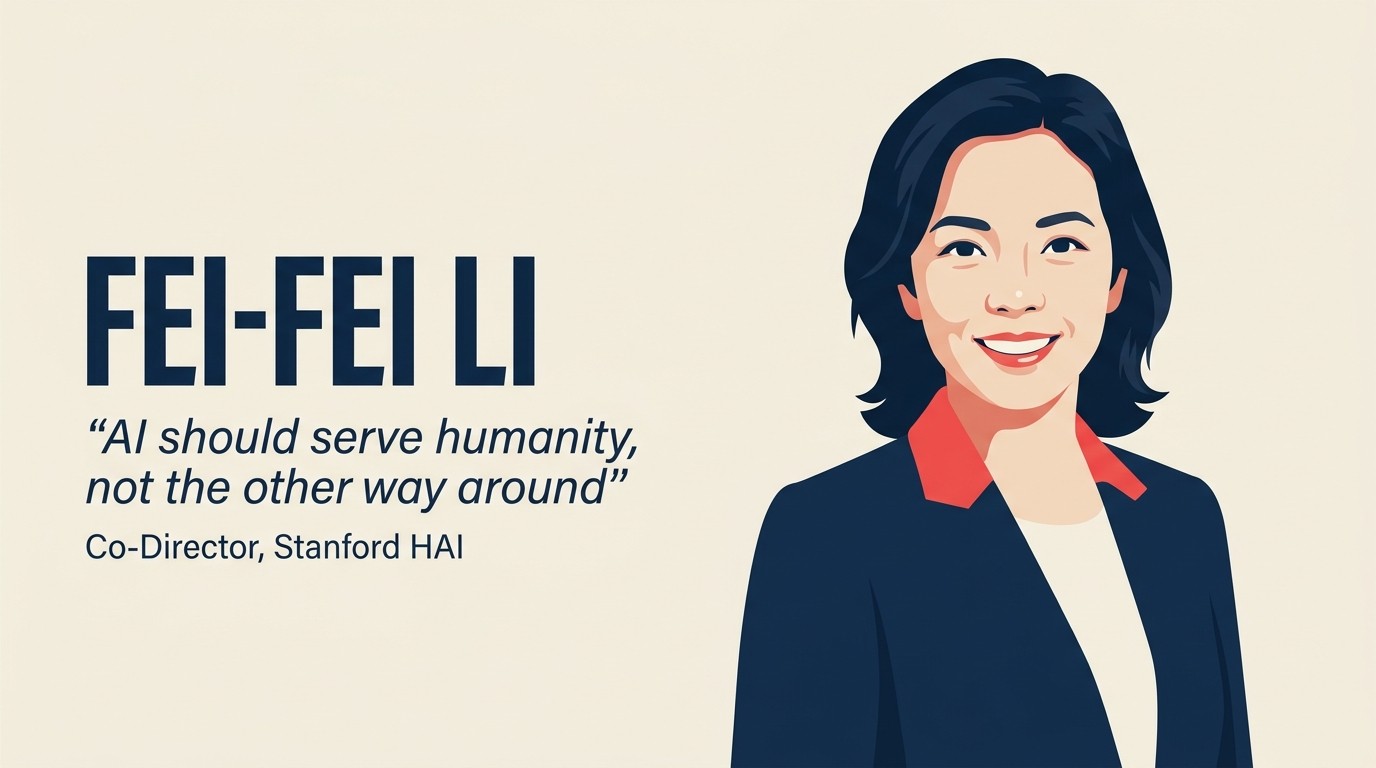
Steckbrief: Fei-Fei Li (geb. 1976) ist eine Informatik-Professorin an der Stanford University, die ImageNet 2009 schuf — den beschrifteten Bilddatensatz, der die Deep-Learning-Revolution auslöste. Sie ist Gründungs-Co-Direktorin des Stanford Institute for Human-Centered AI (HAI) und war von 2017 bis 2018 Chief Scientist für AI/ML bei Google Cloud. Ihre 2023 erschienene Memoiren „The Worlds I See" erzählen ihren Weg von einem Trockenreinigungsgeschäft in New Jersey bis zur Leitung der KI-Forschung. Sie ist auch Gründerin von AI4ALL, einer gemeinnützigen Organisation, die KI-Zugang für unterrepräsentierte Studierende erweitert, und startete 2024 World Labs, ein Spatial-Intelligence-Startup.
Die Human-Centered-AI-Doktrin (Das ImageNet-Katalysator-Modell)
Die Human-Centered-AI-Doktrin besagt, dass KI-Forschung an menschlichem Wohlbefinden, Würde und sozialer Gerechtigkeit gemessen werden muss — im selben Atemzug wie die Benchmark-Genauigkeit, nicht in einer späteren Phase. Ihr operativer Ausdruck ist das ImageNet-Katalysator-Modell: die strukturelle Lücke identifizieren, die das eigene Feld nicht überwinden kann, die offene Infrastruktur aufbauen, die es dazu zwingt, und sie frei veröffentlichen, damit das Ökosystem — nicht der Erfinder — den Nutzen erhält. Interdisziplinäre Teams und politisches Engagement werden als wissenschaftliche Kernarbeit behandelt, nicht als Nebenprojekte.
2006 war Fei-Fei Li eine Assistenz-Professorin an der UIUC, die keine Finanzierung für ein Projekt bekam, das ihre Kollegen für unpraktisch hielten. Das Projekt war ImageNet: ein Datensatz beschrifteter Bilder, so groß, dass er Forscher zwingen würde, neuronale Netze zu entwickeln, die zu echtem visuellem Verstehen fähig wären, statt zur Mustererkennung auf Spielzeug-Datensätzen.
Der Vorschlag wurde von jedem Förderausschuss abgelehnt, bei dem sie ihn einreichte. Die Gutachter fanden den Umfang absurd. Sie fand ein kleines Stipendium, stellte studentische Mitarbeiter ein, nutzte Amazon Mechanical Turk für die Crowdsourcing-Beschriftung und verbrachte drei Jahre damit, einen Datensatz von 14 Millionen Bildern in 20.000 Kategorien mit einem knappen Budget aufzubauen.
2012 gewann ein neuronales Netz namens AlexNet, das auf ImageNet trainiert wurde, die ImageNet Large Scale Visual Recognition Challenge mit einer Fehlerrate von 15,3% — gegenüber 26,2% des zweitplazierten Eintrags. Diese Lücke von 11 Prozentpunkten war der Startschuss für die Deep-Learning-Revolution. Jeder wichtige KI-Fortschritt seitdem — Computer Vision, große Sprachmodelle, generative KI — lässt sich auf die Methoden und die Infrastruktur zurückverfolgen, die AlexNet auf ImageNet bewies.
Li baute die Infrastruktur, die all das ermöglichte — ohne institutionelle Unterstützung, ohne großes Budget und gegen erhebliche Skepsis. Das ist ein spezifisches Führungsprofil, und eines, das die meisten Betreiber nicht sorgfältig genug studiert haben.
Führungsstil-Analyse
| Stil | Gewichtung | Wie er sich zeigte |
|---|---|---|
| Missionsorientierte Wissenschaftlerin | 60% | Lis Kernüberzeugung ist über 20 Jahre konsistent: KI sollte gebaut werden, um dem menschlichen Wohlbefinden zu dienen, nicht nur um kommerzielle Metriken oder Benchmark-Leistung zu optimieren. Das ist kein Slogan. Es trieb die Entscheidung an, ImageNet kostenlos und offen zu machen, die Entscheidung, Google zu verlassen und HAI zu gründen statt in der Industrie zu bleiben, und die Rahmung ihrer 2023er Memoiren „The Worlds I See". Die 60% ist in jeder wichtigen Karriereentscheidung sichtbar: Sie wählt konsequent den Weg, der die wissenschaftliche und humanitäre Mission vorantreibt, über den Weg, der ihren persönlichen kommerziellen Gewinn maximiert. |
| Institutionenaufbauerin | 40% | Li macht nicht nur Forschung. Sie baut die Infrastruktur, die Forschung möglich und gerecht macht. ImageNet war Infrastruktur. Stanford HAI ist Infrastruktur. AI4All ist Infrastruktur. Das 40%-Institutionenaufbauer-Gewicht ist das, was sie von Forschern trennt, die wichtige Arbeit produzieren und dann warten, dass andere darauf reagieren. Sie identifiziert die strukturellen Lücken — bei Trainingsdaten, bei Forschungsnormen, bei Talent-Pipelines — und baut die Dinge, die sie füllen. |
Die 60/40-Aufteilung ist wichtig, weil keines allein ihre Wirkung hätte produzieren können. Eine reine Wissenschaftlerin ohne den Institutionenaufbau-Impuls hätte das ImageNet-Paper veröffentlicht und wäre weitergegangen. Eine reine Institutionenaufbauerin ohne die wissenschaftliche Glaubwürdigkeit wäre nicht in der Lage gewesen, die Feldveränderungen zu katalysieren, die folgten. Die Kombination ist das Ungewöhnliche.
Wesentliche Führungseigenschaften
| Eigenschaft | Bewertung | Was das in der Praxis bedeutet |
|---|---|---|
| Überzeugung unter Skepsis | Sehr hoch | Li führte das ImageNet-Projekt drei Jahre lang durch, während das Feld ihr sagte, es sei Zeitverschwendung. Sie war eine Juniorprofessorin ohne Tenure. Die Förderausschüsse waren nicht nur unhilfreich — sie entmutigten aktiv. Eine Forschungsrichtung so lange gegen den Expertenkonsens zu halten, ohne externe Bestätigung, erfordert eine spezifische Art von Überzeugung, die sich von Kontrariismus unterscheidet. Sie hatte Belege — vorläufige Ergebnisse, einen theoretischen Rahmen, eine Einschätzung, wo Computer Vision feststeckte —, denen sie mehr glaubte als dem Konsens. |
| Koalitionsaufbau | Sehr hoch | HAI wurde mit John Etchemendy (ehemaliger Stanford-Provost) co-gegründet, was ihm institutionelle Legitimität vom ersten Tag an gab. Lis Ansatz zum Aufbau von Organisationen umfasst konsequent die Rekrutierung von Menschen, die Türen öffnen können, die sie allein nicht öffnen kann — nicht um ihre Glaubwürdigkeit zu leihen, sondern weil sie genuinely glaubt, dass die Probleme, an denen sie arbeitet, interdisziplinäre Koalitionen erfordern. Ihre Aussage vor dem Kongress, ihre KI-Policy-Arbeit und der HAI-Beirat spiegeln alle dasselbe Muster wider: Menschen mit verschiedenen, aber komplementären Autoritätsformen einbringen. |
| Interdisziplinäres Denken | Hoch | Li studierte Physik in Princeton, promovierte in Elektrotechnik am Caltech und hat ihre Karriere an der Schnittstelle von Computer Vision, Kognitionswissenschaft und KI-Ethik verbracht. Ihr Buch „The Worlds I See" argumentiert, dass das Verständnis menschlicher Wahrnehmung untrennbar vom Aufbau von Maschinen ist, die gut sehen. Diese domänenübergreifende Kompetenz — Neurowissenschaften der Vision als direkt relevant für Computer-Vision-Engineering zu behandeln — ist ein konsistentes Merkmal ihrer besten Arbeit. Sie teilt diese Haltung mit Zeitgenossen wie Andrew Ng, dessen Stanford-Labor sich mit ihrem überschnitt, und Yann LeCun, dessen CNN-Forschung zur visuellen Erkennung parallel zum ImageNet-Projekt lief. |
| Langfristige Glaubwürdigkeit über kurzfristige Gewinne | Hoch | Li verbrachte zwei Jahre bei Google Cloud als Chief Scientist für AI/ML (2017-2018), kehrte dann zur Wissenschaft zurück und gründete statt in der Industrie zu bleiben ein gemeinnütziges Forschungsinstitut. Das ist eine freiwillige Gehaltskürzung von erheblicher Größenordnung im Austausch gegen die Möglichkeit, an Problemen zu arbeiten, die sie für wichtiger hielt. Die meisten Menschen, die so nah an das kommerzielle Gravitationszentrum im Silicon Valley kommen, gehen nicht freiwillig. Sie tat es, zweimal. |
Die 3 Entscheidungen, die Li prägten
1. ImageNet ohne institutionelle Unterstützung aufbauen (2006–2009)
Die ImageNet-Geschichte ist es wert, im Detail zu verstehen, weil sie das klarste Beispiel für Lis Führungsmodell ist: eine strukturelle Lücke im Feld identifizieren, die Infrastruktur aufbauen, um sie zu füllen, sie öffentlich zugänglich machen und akzeptieren, dass die Auszahlung Jahre dauern wird.
Die Lücke, die sie identifizierte, war unkompliziert: Computer-Vision-Forscher trainierten und testeten Modelle auf kleinen, kuratierten Datensätzen, die die Komplexität der visuellen Erkennung in der realen Welt nicht widerspiegelten. Die Modelle, die Wettbewerbe auf diesen Datensätzen gewannen, scheiterten oft sofort, wenn sie auf reale Bilder angewendet wurden. Der Grund waren die Datensätze, nicht die Algorithmen.
Lis These war, dass man, wenn man einen Datensatz groß und vielfältig genug aufbaute, um die visuelle Komplexität der realen Welt widerzuspiegeln, das Feld zwingen würde, bessere Algorithmen zu entwickeln, um damit zu konkurrieren. Sie hatte Recht, aber die These erforderte, den Datensatz zuerst aufzubauen, bevor die besseren Algorithmen existierten — auf die Wette hin, dass sie kommen würden.
Sie crowdsourcte die Beschriftungsarbeit mit Amazon Mechanical Turk — ein Ansatz, der in der akademischen Forschung zu dieser Zeit neu war und Fragen über Datenqualität und Arbeitnehmervergütung aufwarf, die es noch immer wert sind gestellt zu werden. Aber das praktische Ergebnis war, dass sie 14 Millionen beschriftete Bilder für einen Bruchteil der Kosten einer traditionellen Annotationspipeline zusammenstellte — was der einzige Weg war, es mit einem akademischen Budget zu tun.
Die kostenlose und offene Veröffentlichung war eine bewusste Wahl. ImageNet hätte kommerzialisiert werden können. Li entschied sich für eine offene Veröffentlichung, weil ihr Ziel war, das Feld voranzutreiben, nicht den Wert des Datensatzes für sich selbst oder ihre Institution zu erfassen. Diese Entscheidung ist der Grund, warum ImageNet zum Standard-Benchmark wurde — und warum die darauf folgende Deep-Learning-Revolution in akademischen Labors und offener Forschung stattfand, nicht hinter proprietären Mauern.
2. Stanford HAI gründen (2019)
Als Li 2018 von Google zurückkehrte, hatte sie eine spezifische Diagnose dessen, was in der KI-Forschung und -Politik fehlte: eine Institution, die technische Strenge mit echtem Engagement für Ethik, Politik und menschliches Wohlbefinden kombinierte — und die die akademische Glaubwürdigkeit hatte, beides zu beeinflussen.
Das Stanford Human-Centered AI Institute war die Antwort. Mit John Etchemendy co-gegründet, brachte es Informatiker, Sozialwissenschaftler, Ethiker, Policy-Forscher und Praktiker unter einem gemeinsamen Rahmen zusammen: KI-Forschung sollte nicht nur nach technischer Leistung, sondern auch nach ihrer Wirkung auf den Menschen bewertet werden.
Das war Institutionenaufbau im wörtlichsten Sinne. Li musste Gelder einwerben, Fakultäten aus verschiedenen Disziplinen rekrutieren, die normalerweise nicht zusammenarbeiteten, Forschungsnormen für interdisziplinäre KI-Arbeit etablieren und Policy-Engagement-Infrastruktur von Grund auf aufbauen. Nichts davon ist glamouröse Arbeit. Aber HAI wurde innerhalb seiner ersten Jahre zu einem der einflussreichsten Zentren für KI-Politik und -Ethikforschung weltweit.
Das Führungsmodell ist hier studierenswert: Li identifizierte, dass keine bestehende Institution in der Position war zu tun, was sie für notwendig hielt, und baute die Institution, anstatt darauf zu warten, dass eine entsteht. Das ist ein anderer Schritt als die Veröffentlichung eines einflussreichen Papers oder das Beitreten zu einer bestehenden Organisation. Es ist die Art von Entscheidung, die Jahre braucht, um sich auszuzahlen, und die erfordert, Konsens unter Stakeholdern aufzubauen, die von Natur aus nicht einer Meinung wären.
3. Die Google-Cloud-Rolle und was sie zurück in die Wissenschaft nahm
Das 2017–2018 bei Google Cloud als Chief Scientist für AI/ML war die kommerziell prominenteste Periode von Lis Karriere. Sie war verantwortlich dafür, Googles Cloud-KI-Produkte für Unternehmen zugänglich zu machen — Gesundheitswesen, Einzelhandel, Fertigung — und die Strategie dafür aufzubauen, wie Google mit AWS und Azure auf KI-Infrastruktur konkurrieren würde.
Sie übernahm die Rolle teilweise, weil sie verstehen wollte, wie KI in der realen Welt im Maßstab eingesetzt wurde. Was sie sah, prägte die Human-Centered-AI-Arbeit, die folgte: KI-Deployment in Unternehmen geschah oft schneller als die Fähigkeit der Organisationen, seine Auswirkungen zu bewerten; die Teams, die Systeme bauten und einsetzten, waren nicht divers; und die Feedback-Schleifen zwischen technischer Fähigkeit und sozialer Wirkung waren schwach oder nicht vorhanden.
Sie verließ Google nach zwei Jahren. Die Standarderzählung ist, dass sie zur Wissenschaft zurückkehrte. Aber das genauere Framing ist, dass sie, was sie bei Google gelernt hatte — spezifisch die Lücke zwischen KI-Fähigkeit und KI-Governance — nahm und nutzte, um eine Institution explizit aufzubauen, die darauf ausgelegt war, diese Lücke zu füllen. Die Google-Erfahrung war keine Ablenkung von ihrer Mission. Sie war Feldforschung.
Für Betreiber ist die Lektion, hochrangige institutionelle Rollen als Lernmöglichkeiten zu nutzen statt als Selbstzweck. Li war Googles Cloud Chief Scientist für KI. Das ist ein bedeutender Titel mit bedeutenden Ressourcen. Sie verließ ihn, um etwas zu tun, was sie für wichtiger hielt. Die Bereitschaft, die Plattform aufzugeben, wenn sie aufhört, das beste Werkzeug für das eigentliche Ziel zu sein, ist ungewöhnlich und erwähnenswert.
Was Li in Ihrer Rolle tun würde
Als CEO ist die institutionelle Lückendiagnose die übertragbarste Lektion. Li sucht konsequent nach Dingen, die existieren sollten, aber nicht existieren, und baut sie. Die meisten CEOs optimieren bestehende Institutionen, anstatt neue aufzubauen. Aber es gibt eine Kategorie strategischer Investitionen — in Forschung, in Talent-Pipelines, in Brancheninfrastruktur —, wo das Hebel-stärkste, was man tun kann, ist, das zu bauen, was die gesamte Branche braucht, es zu open-sourcen und das Feld darauf aufbauen zu lassen. Das schafft eine andere Art von Wettbewerbsposition als Produktfeatures.
Als COO ist Lis Koalitionsaufbau-Modell operativ spezifisch. Sie rekrutiert Co-Gründer und Co-Direktoren, die institutionelle Türen öffnen können, die sie allein nicht öffnen kann — Etchemendy für Stanford HAI gab dem Institut akademische Legitimität vom ersten Tag an, die es sonst Jahre gedauert hätte zu verdienen. Wenn Sie interne Koalitionen für große Initiativen aufbauen, denken Sie darüber nach, wer die institutionelle Glaubwürdigkeit hat, die Ihr Projekt in den Stakeholder-Gruppen benötigt, die Sie überzeugen müssen. Rekrutieren Sie sie früh, nicht nachdem Sie bereits auf Widerstand gestoßen sind.
Im Produktbereich ist das ImageNet-Veröffentlichungsmodell für jedes Produkt mit signifikanten Netzwerkeffekten relevant. Li veröffentlichte ImageNet kostenlos, was die Übernahme maximierte, es als Standard-Benchmark etablierte und Jahrzehnte nachgelagerter Forschungszitate generierte. Wenn Sie ein Datenprodukt, ein Entwicklerwerkzeug oder eine Forschungsplattform bauen, ist die Frage, ob Wert durch Zugriffsgebühren oder durch Ökosystemposition erfasst werden soll, es wert, explizit modelliert zu werden. ImageNets kostenlose Veröffentlichung ist das, was es zum Standard statt zu einem von mehreren konkurrierenden Datensätzen machte.
Im Vertrieb oder Marketing ist Lis Glaubwürdigkeitsmodell studierenswert. Sie verkauft nicht. Sie demonstriert. ImageNet sprach für sich selbst, als AlexNet den CASP-Wettbewerb gewann. HAIs Einfluss auf die KI-Politik kommt von Forschungsqualität und echter interdisziplinärer Autorität, nicht von Advocacy-Kampagnen. Wenn Sie ein technisches Produkt in Märkten verkaufen, wo Glaubwürdigkeit mehr zählt als Marketing, fragen Sie, was Ihr Äquivalent zu ImageNet ist — das Ding, das Sie bauen, offen veröffentlichen und die These für Sie demonstrieren lassen können.
Wie Rework Human-Centered AI anwendet
Lis Doktrin prägt, wie Rework KI-Features in seinem Work-Management-Stack ausliefert. Reworks KI ist kein aufgepfropfter Zusammenfasser, der einem Trend hinterherjagt — sie ist auf spezifische Betreiber-Workflows (Deal-Scoring, Pipeline-Triage, Meeting-Follow-ups) beschränkt, wo der Output des Modells vom Menschen in der Schleife überprüft und überschrieben werden kann. Das ist das HAI-Modell auf Produkte angewendet: KI unterstützt den Betreiber, sie ersetzt kein Urteilsvermögen. Lis Betonung inklusiver Entwicklung informiert auch, wie Rework Deployment handhabt. Die Plattform startet KI-Features mit denselben rollengeprüften Berechtigungen wie der Rest des Stacks, damit ein Vertriebsdirektor sehen kann, was das Modell ihren Vertriebsmitarbeitern vorschlug und warum. CRM und Sales Ops beginnen bei 12 $/Nutzer/Monat und Work Ops bei 6 $/Nutzer/Monat (Preisgestaltung), einschließlich der KI-Features — weil eine Doktrin, die KI als Werkzeug für menschliches Wohlbefinden behandelt, den Zugang nicht hinter einer Enterprise-SKU verstecken sollte.
Bemerkenswerte Zitate & Lektionen jenseits des Boardrooms
In ihren 2023er Memoiren The Worlds I See schreibt Li über ihre Ankunft in den USA mit 16 Jahren, die Arbeit im Trockenreinigungsgeschäft der Familie in New Jersey, während sie für ihren Physikabschluss studierte, und schließlich das Caltech für ihre Promotion. Sie war in Interviews direkt darüber, wie ihr Hintergrund ihre Sicht auf KI geprägt hat: Sie kam aus einem Kontext, in dem die Lücke zwischen technologischem Versprechen und tatsächlichem menschlichem Nutzen greifbar war, und diese Perspektive durchzieht alles, was sie aufgebaut hat.
Sie hat auch in Zeugenaussagen vor dem Kongress und öffentlichen Vorträgen gesagt: „KI dreht sich nicht um Maschinen. Es dreht sich um Menschen." Dieses Framing ist wichtig, weil es das HAI-Modell erklärt. Li argumentiert nicht, dass technische KI-Forschung aufhören oder verlangsamen sollte. Sie argumentiert, dass technische Leistung und menschliche Wirkung gemeinsam gemessen werden müssen, nicht sequenziell.
Die Führungslektion handelt davon, komplexe Technologieentscheidungen in Begriffen zu rahmen, auf die Ihre Stakeholder handeln können. „KI dreht sich nicht um Maschinen" ist kein Slogan. Es ist eine Aussage über Forschungspriorität, die ihrem Team, ihren Studierenden, ihren Fördergebern und ihren Policy-Gegenübern sagt, welches Problem sie für das wichtigste hält. Klares Framing auf dieser Abstraktionsebene ist eine Führungskompetenz, in die die meisten technischen Gründer zu wenig investieren.
Wo dieser Stil scheitert
Lis Modell hängt von institutioneller Geduld ab, die die meisten Organisationen nicht haben. Die drei Jahre zum Aufbau von ImageNet, die mehrjährige Zeitlinie zum Aufbau von HAIs Einfluss, die Bereitschaft, eine Google-Plattformrolle zu verlassen, um zur Wissenschaft zurückzukehren — das sind Entscheidungen, die die Fähigkeit erfordern, auf einer Zeitskala zu optimieren, die die meisten Unternehmen und Karrieren nicht erlauben. Für Führungskräfte, die fragen, wie man die organisatorische Bereitschaft für KI in ähnlichem Maßstab aufbaut, erfasst die KI-Belegschaftstransformationsforschung, was branchenübergreifend passiert, wenn Lis grundlegende Arbeit in realen Unternehmen eingesetzt wird. Demis Hassabis stand einer Version derselben Spannung innerhalb von Google DeepMind gegenüber — einer Forschungs-first-Kultur, die auf Produktzyklus-Anforderungen stieß.
Die „KI für das Gute"-Positionierung kann zwar genuinen Charakter haben, kann aber kommerzielle Spannungen unterschätzen. KI aufzubauen, die der Menschheit dient, und KI aufzubauen, die Einnahmen generiert, sind nicht immer dasselbe Projekt, und das HAI-Modell zur Navigation dieser Spannung ist akademisch statt kommerziell. Es funktioniert in einem Forschungsinstituts-Kontext. Es ist schwieriger, es direkt auf ein Startup oder eine Unternehmens-Produktorganisation zu übertragen.
Und World Labs, ihr 2024er Spatial-Intelligence-Startup, ist noch unbewiesen. Die akademische Glaubwürdigkeit, die ImageNet und HAI aufbaute, überträgt sich nicht automatisch auf die Produktgeschwindigkeitsanforderungen eines Venture-backed-Unternehmens, das im Computer-Vision-Bereich gegen Google und Meta konkurriert.
Mehr erfahren

On this page
- Die Human-Centered-AI-Doktrin (Das ImageNet-Katalysator-Modell)
- Führungsstil-Analyse
- Wesentliche Führungseigenschaften
- Die 3 Entscheidungen, die Li prägten
- 1. ImageNet ohne institutionelle Unterstützung aufbauen (2006–2009)
- 2. Stanford HAI gründen (2019)
- 3. Die Google-Cloud-Rolle und was sie zurück in die Wissenschaft nahm
- Was Li in Ihrer Rolle tun würde
- Wie Rework Human-Centered AI anwendet
- Bemerkenswerte Zitate & Lektionen jenseits des Boardrooms
- Wo dieser Stil scheitert
- Mehr erfahren