Warum die meisten KI-Transformationen scheitern
 Ein mittelständischer Produktions-CEO genehmigte vor achtzehn Monaten 400.000 Euro an KI-Ausgaben. Drei Piloten. Ein neuer Data-Engineering-Vertrag. Vendor-Lizenzen für zwei Enterprise-KI-Plattformen. Der Aufsichtsrat genehmigte es in zwanzig Minuten.
Turn this article into takeaways for your work.


Each assistant summarizes the article only for you and suggests best practices for your work.
Achtzehn Monate später: Alle drei Piloten laufen noch. Kein Produktionseinsatz. Der CFO fragt, was das Unternehmen vorzuweisen hat. Der IT-Leiter erstellt eine Präsentation, die erklärt, warum „die Daten nicht bereit waren". Der CEO fragt sich im Stillen, ob er auf die falschen Anbieter gesetzt hat.
Das ist keine ungewöhnliche Geschichte. Es ist die Geschichte.
McKinsey schätzt, dass rund 80 % der KI-Projekte nicht vom Pilot zum Produktionseinsatz gelangen. Gartner stellte fest, dass mindestens 50 % der generativen KI-Projekte nach dem Proof-of-Concept abgebrochen wurden, aufgrund mangelhafter Datenqualität, eskalierender Kosten oder unklaren Geschäftswerts. Die Erfolgsbilanz der Technologiebranche beim KI-Einsatz ist statistisch gesehen eine Versagensbilanz. Nicht das Scheitern, interessante Anwendungsfälle zu finden. Das Scheitern, diese Anwendungsfälle in Produktionssysteme umzuwandeln, die die Arbeitsweise des Unternehmens verändern.
Die Gründe sind fast nie technischer Natur. Die Modelle funktionieren. Die APIs laufen. Die Anbieter haben geliefert, was sie versprochen haben. Das Scheitern ist immer organisatorisch, strategisch oder strukturell. Und es folgt einem vorhersehbaren Muster.
Die 5 KI-Transformations-Versagensmuster
Ein Diagnose-Framework zur Kategorisierung, warum Enterprise-KI-Initiativen vor dem Produktionseinsatz ins Stocken geraten. Die fünf Muster sind: Strategielücke (Tools gekauft, bevor Probleme definiert wurden), Datenunvorbereitetheit (die zugrundeliegenden Daten unterstützen den Anwendungsfall nicht), Governance-Fehlen (Shadow AI, Richtlinienvakuum und Incident-Risiko), Änderungswiderstand (Adoption durch Workflow-Design-Fehler blockiert) und ROI-Unklarheit (keine Baseline gemessen, daher kann kein Ergebnis bewiesen werden). Jedes Muster hat eine eindeutige Grundursache und eine spezifische Lösung. Unternehmen, die ihr Versagensmuster korrekt diagnostizieren, können den Kurs korrigieren. Diejenigen, die jedes Scheitern als „die KI ist noch nicht gut genug" behandeln, durchlaufen Anbieter ohne Fortschritt.
Versagensmuster 1: Die Strategielücke
Wichtige Fakten: KI-Transformationsversagen
- 80 % der KI-Projekte gelangen nie vom Pilot in die Produktion; BCGs globale Studie 2025 von 1.250 Unternehmen ergab, dass nur 5 % bei der Skalierung wesentlichen Wert schaffen, während 60 % trotz bedeutender KI-Ausgaben keinen materiellen Wert erzeugen (BCG, 2025)
- 56 % der KI-Projekte verlieren innerhalb von sechs Monaten nach dem Start die aktive C-Suite-Unterstützung, was die Erfolgsraten von 68 % auf 11 % senkt (McKinsey, 2025)
- 43 % der Unternehmen nennen Datenqualität und -bereitschaft als größtes Hindernis für den KI-Erfolg; gescheiterte Projekte entdecken Datenprobleme durchschnittlich 5,2 Monate nach Beginn, wobei die Sanierungskosten dann durchschnittlich 2,8-mal das ursprüngliche Projektbudget betragen (Informatica, 2025)
Die häufigste Art, wie KI-Transformation scheitert, ist die am besten vermeidbare: Die Technologiebeschaffung fand statt, bevor das Geschäftsproblem definiert wurde.
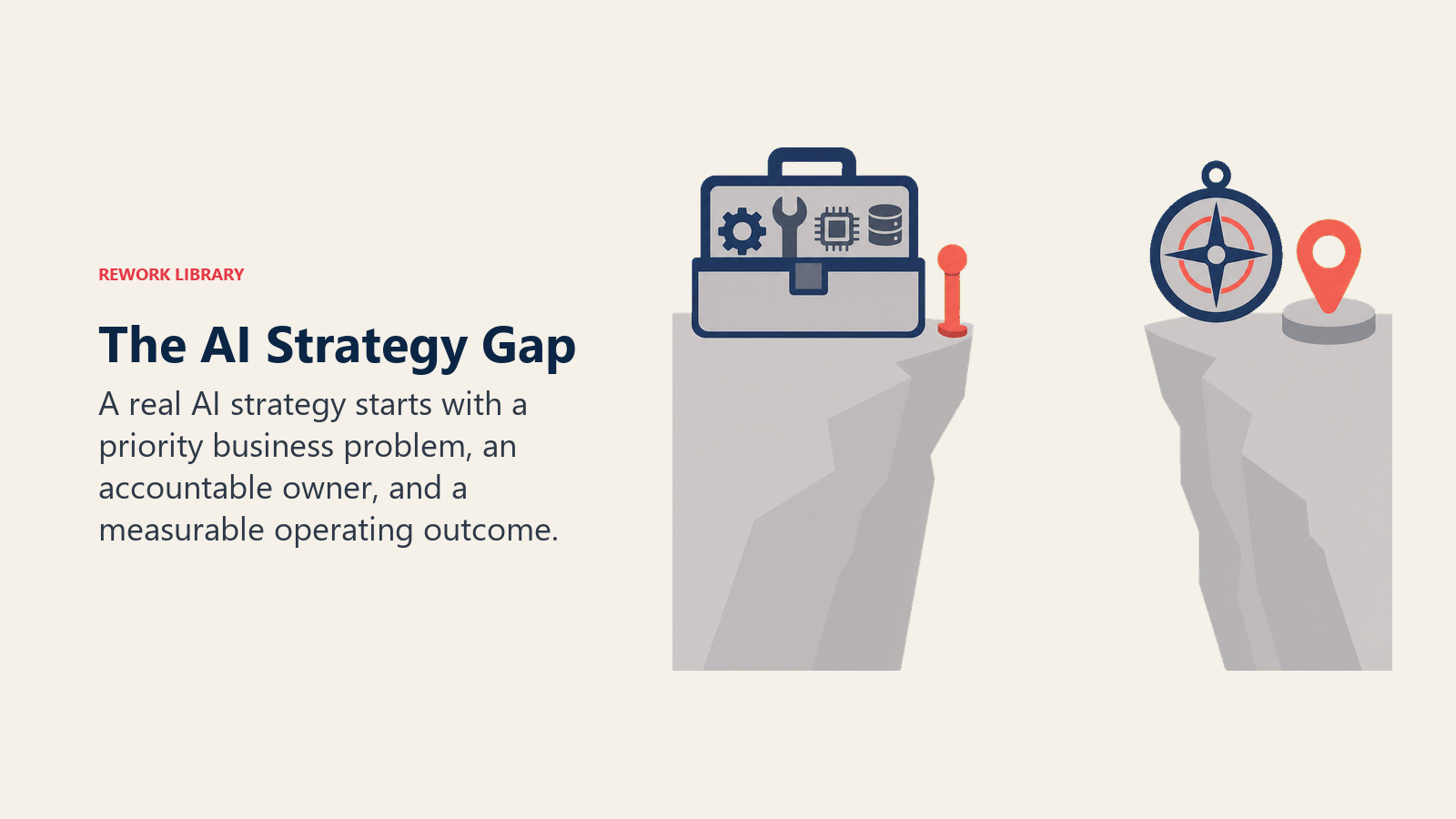
Die Abfolge ist so: Eine Aufsichtsratsdiskussion oder die Ankündigung eines Wettbewerbers erzeugt Dringlichkeit. Der CEO weist den CIO an, „uns beim Thema KI voranzubringen". Der CIO evaluiert Anbieter. Lizenzen werden erworben. Ein Pilotteam wird zusammengestellt. Dann fragt jemand: Wofür lösen wir das eigentlich?
„S&P Globals Studie 2025 ergab, dass 42 % der Unternehmen die meisten ihrer KI-Initiativen in jenem Jahr abbrachen, gegenüber nur 17 % im Vorjahr. Die am häufigsten genannten Ursachen: Business Case nicht mehr tragfähig (29 %) und Datenqualitätsprobleme zu teuer, um sie zu beheben (38 %). Beides sind Planungsversagen, keine Technologieversagen."
Tools zu kaufen und dann nach Anwendungsfällen zu suchen, ist das Unternehmensäquivalent des Kaufs einer Fitnessstudio-Mitgliedschaft in der Hoffnung, fit zu werden. Das Fitnessstudio ist in Ordnung. Die Tools funktionieren. Das Problem ist, dass es ohne ein spezifisches Geschäftsproblem mit messbaren Konsequenzen keine Möglichkeit gibt zu wissen, ob das Tool das richtige ist, ob es am richtigen Ort eingesetzt wird, oder ob es funktioniert.
Erfolgreiche KI-Transformationen beginnen anders. Sie beginnen mit einem Geschäftsproblem mit einem Preisschild. „Wir verlieren 18 % der Verlängerungen, die in den 90 Tagen vor der Verlängerung kein Quarterly Business Review erhalten, und unser Team kann das QBR-Vorbereitung nicht über 30 Accounts pro Mitarbeiter hinaus skalieren." Das ist ein Problem. Es hat Kosten. Es hat eine messbare Baseline. Es hat eine Einschränkung (Kapazität des Mitarbeiters), die KI möglicherweise beseitigen kann. Jetzt können Sie Tools evaluieren. Jetzt können Sie einen Pilot mit Erfolgskriterien entwerfen. Jetzt wissen Sie, wie ein Produktionseinsatz aussieht.
Ohne diese Spezifität laufen Piloten unbegrenzt, weil niemand die Frage beantworten kann: „Funktioniert das?"
Versagensmuster 2: Datenunvorbereitetheit
Das zweite Versagensmuster ist nicht glamourös, tötet aber mehr KI-Initiativen als jede andere einzelne Ursache. Die Daten sind nicht bereit.
KI-Systeme benötigen saubere, strukturierte, zugängliche Daten. Nicht perfekte Daten. Aber Daten, die konsistent formatiert, in Systemen gespeichert sind, die das KI-Tool erreichen kann, für den Anwendungsfall ausreichend vollständig sind und nicht so veraltet, dass Muster darin bedeutungslos sind.
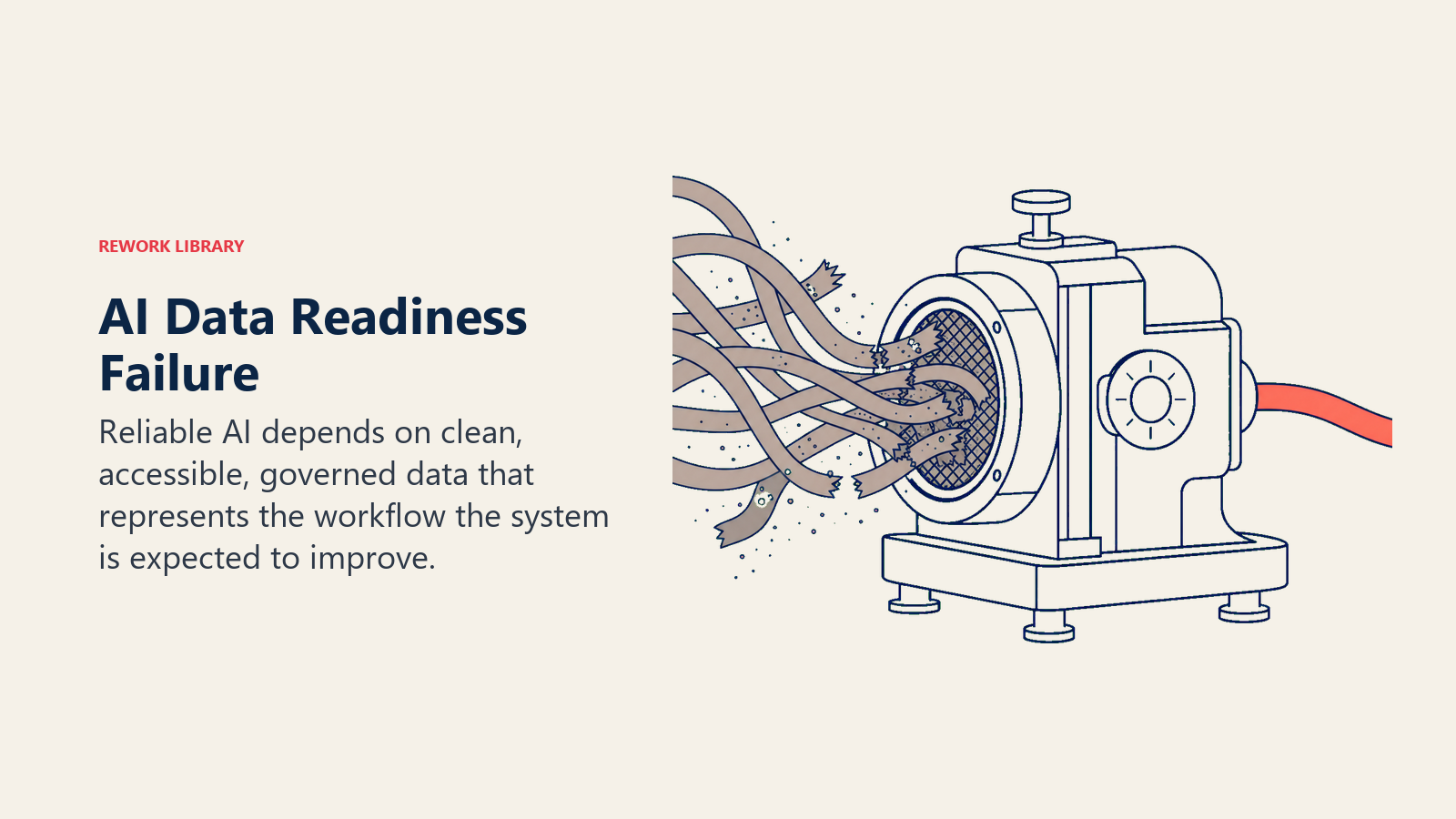
Die meisten Unternehmen entdecken ihre Datenprobleme, wenn sie versuchen, ein KI-Tool mit ihren Systemen zu verbinden. CRM-Daten sind ein Durcheinander aus doppelten Einträgen, inkonsistenten Namenskonventionen und fehlenden Feldern. Finanzdaten liegen in fünf verschiedenen Systemen ohne einheitliche Kennung vor. Kundendaten sind auf Salesforce, die Support-Plattform, das Abrechnungssystem und drei Tabellenkalkulationen verteilt, die das Operations-Team unterhält.
Das Unternehmen auf Stufe 0, das versucht, zu Stufe 3 zu springen, stößt konstant gegen diese Wand. Die Ingest- und Analyze-Fähigkeiten des ACE Framework erfordern, dass Daten aufgenommen werden können und etwas Kohärentes zur Analyse vorhanden ist. Wenn die zugrundeliegenden Daten fragmentiert sind, wird auch der KI-Output fragmentiert sein.
Das ist kein Technologieproblem. Es ist ein Organisationsproblem. Dateninfrastruktur ist unattraktiv. Sie wurde in den meisten mittelständischen Unternehmen ein Jahrzehnt lang unterfinanziert, weil es keinen Handlungszwang gab, sie aufzuräumen. KI ist dieser Handlungszwang. Aber der CIO, der sagt: „Wir brauchen sechs Monate, um die Datenschicht zu bereinigen, bevor wir ernsthaft pilotieren können", hat Recht und wird in der Regel überstimmt.
Unternehmen, die erfolgreich sind, behandeln Datenbereitschaft als Voraussetzung, nicht als Abhängigkeit, die es zu umgehen gilt. Sie budgetieren dafür vor den KI-Budgetpositionen.
„68 % der gescheiterten KI-Projekte investieren zu wenig in Datenfundamente und entdecken Qualitätsprobleme durchschnittlich 5,2 Monate nach Beginn der Entwicklung. Zu diesem Zeitpunkt betragen die Sanierungskosten durchschnittlich das 2,8-fache des ursprünglichen Projektbudgets, was einen geplanten Effizienzgewinn in einen Nettoverlust verwandelt, bevor das Tool überhaupt live geht." (Informatica, 2025)
Versagensmuster 3: Keine Governance
Das dritte Versagensmuster hat einen Namen, der harmlos klingt: Shadow AI.
Shadow AI ist das, was passiert, wenn Mitarbeiter KI-Tools individuell ohne organisatorische Aufsicht, Richtlinie oder Verantwortlichkeit einsetzen. Eine Marketing-Managerin beginnt, ein KI-Schreibtool zu verwenden und fügt Kundendaten in Prompts ein. Der Finanzanalyst nutzt einen öffentlichen KI-Assistenten, um Szenarien mit proprietären Umsatzdaten zu modellieren. Support-Mitarbeiter generieren Antworten mit einem Consumer-Chatbot, und niemand weiß, ob diese Antworten korrekt sind.
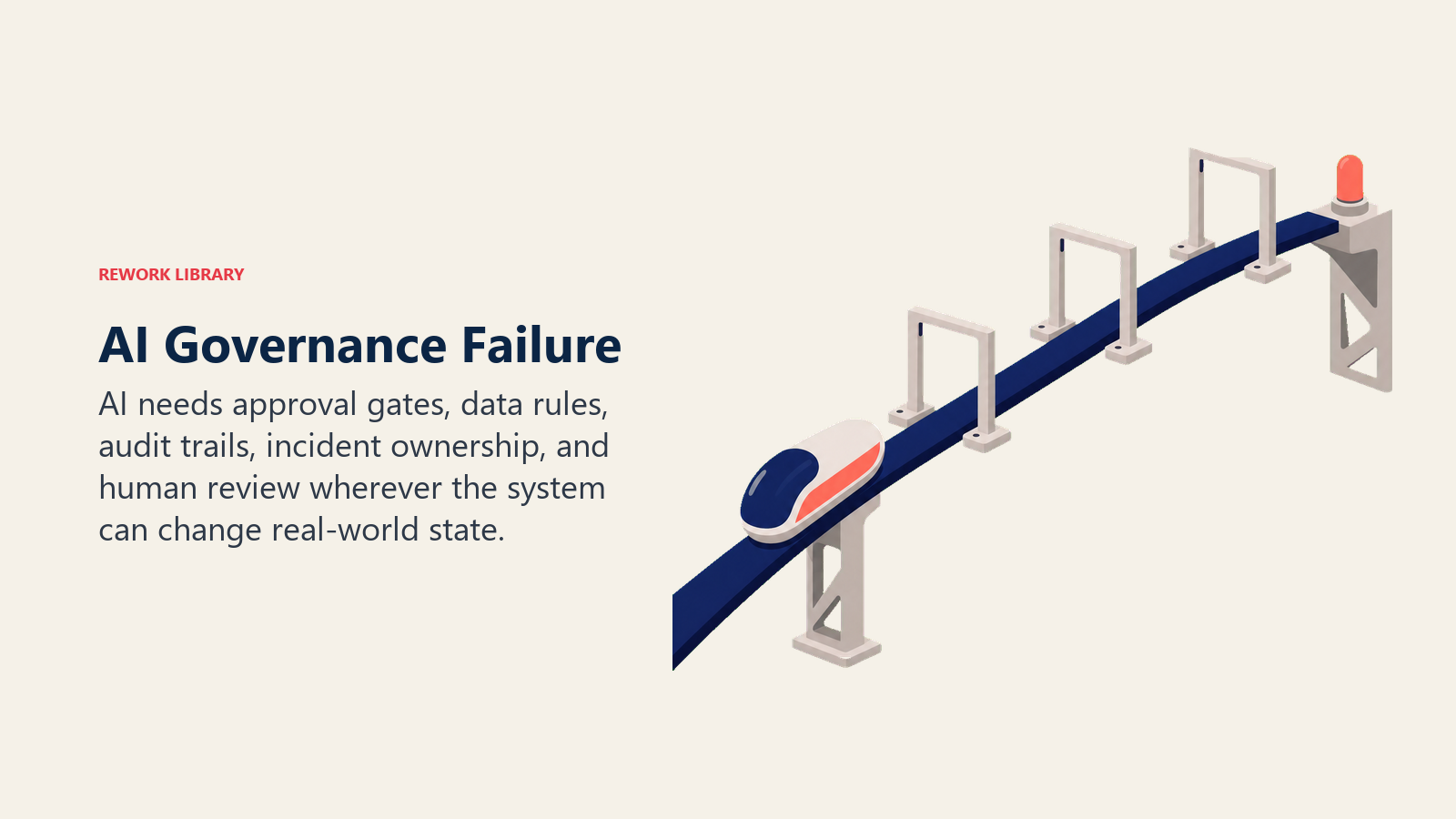
Das ist nicht hypothetisch. Es ist Routine. Eine Microsoft-Studie aus 2024 ergab, dass 78 % der KI-Nutzer bei der Arbeit persönliche KI-Tools ohne ausdrückliche Genehmigung des Arbeitgebers verwenden. Die Forscher des MIT Sloan Management Review bestätigen das Muster: Die meisten ins Stocken geratenen KI-Initiativen scheitern nicht wegen der Algorithmen, sondern weil Governance-Strukturen und Kultur nicht für KI-gestützte Arbeit vorbereitet sind. Die Tools, die Mitarbeiter selbst einbringen, sind oft gute Tools, die echte Arbeit leisten. Das Problem ist, dass niemand auf C-Level-Ebene weiß, dass sie verwendet werden, welche Daten sie berühren, oder welche Risiken sie schaffen.
Governance-Versagen tauchen nicht als Projektversagen auf. Sie tauchen als Incidents auf: ein Datenleck, das auf ein KI-Tool zurückzuführen ist, das Zugriff auf Kundendaten hatte, weil niemand es eingeschränkt hat. Eine von KI generierte öffentliche Stellungnahme, die sich als sachlich falsch herausstellte. Eine HR-Entscheidung, die mit KI-Scoring getroffen wurde und regulatorisches Risiko hat.
Die Execute-Fähigkeit des ACE Framework ist der Punkt, an dem Governance-Versagen gefährlich werden. Wenn KI Aktionen mit realen Konsequenzen ausführt, wird die Frage dringend, wer diese Aktion genehmigt hat und welche Guardrails vorhanden waren. Ohne Governance hat diese Frage keine Antwort. Die Generate vs. Execute-Grenze ist eine der wichtigsten Unterscheidungen, die jede Governance-Richtlinie treffen muss.
Erfolgreiche Transformationen implementieren Governance, bevor sie skalieren. Keine bürokratische, innovationshemmende Aufsicht. Praktische Richtlinien: Auf welche Datenkategorien können KI-Tools zugreifen, welcher Genehmigungsprozess existiert für neue Tools, was passiert, wenn ein KI-System einen falschen Output produziert, und wer ist verantwortlich.
Versagensmuster 4: Änderungswiderstand
Das vierte Versagensmuster ist das menschlichste: Die Menschen, die die KI nutzen sollen, tun es nicht.
IT-geführte Einsätze, die nie das Buy-in der Linienmanager erlangten, scheitern bei der Adoption. Das Muster: Der CIO setzt ein KI-Tool mit einer technisch hervorragenden Implementierung ein. Das Tool ist integriert. Die Schulungsmaterialien sind bereit. Die Launch-E-Mail wird verschickt. Die Adoption liegt nach 90 Tagen bei 8 %.
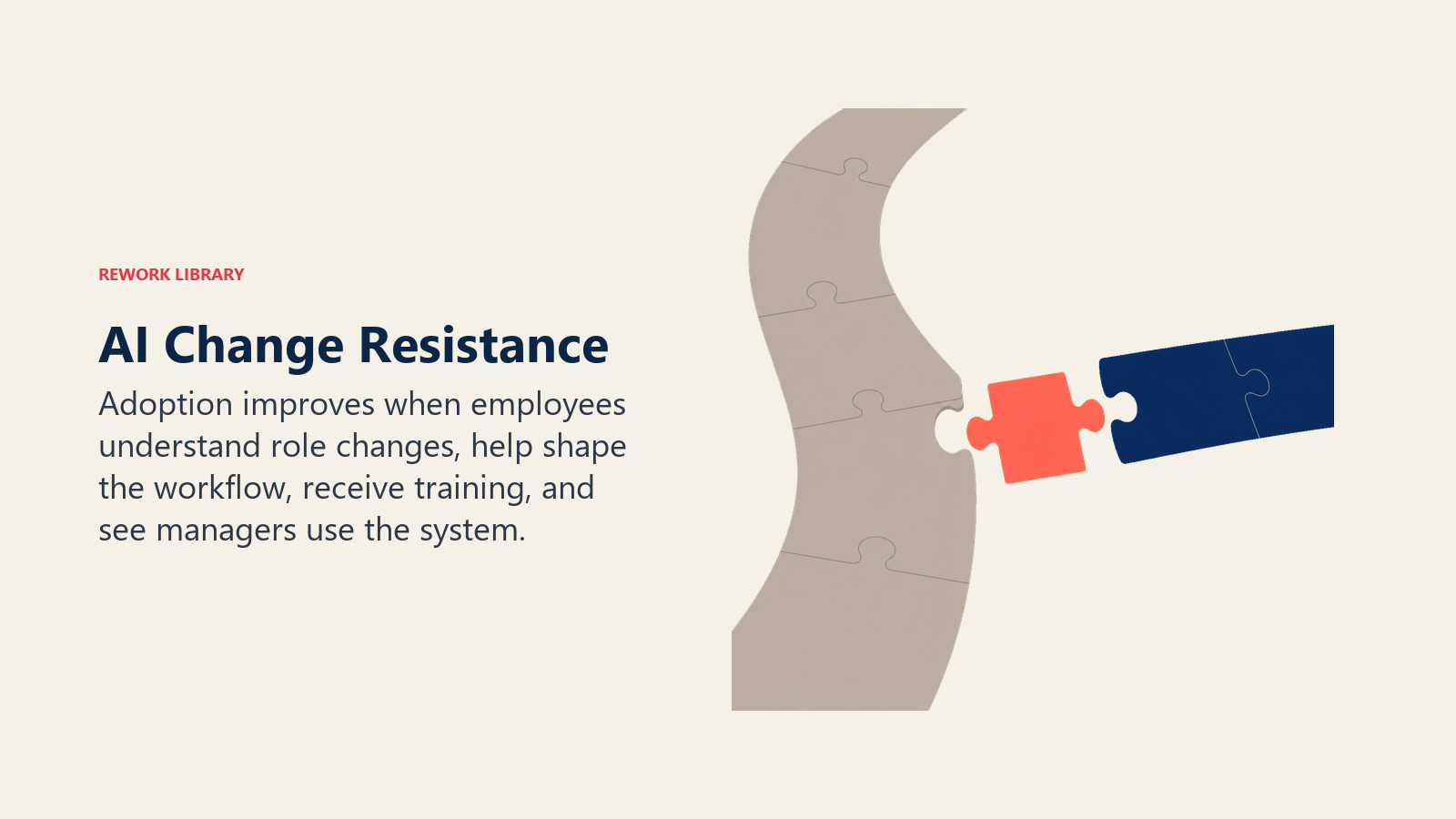
Warum? Weil die Vertriebsmanager, die den KI-Pipeline-Zusammenfasser nutzen sollten, nie gefragt wurden, ob sie das wollen. Weil das Tool ihren Workflow auf eine Weise verändert, der sie nicht zugestimmt haben. Weil sie dem KI-Output nicht trauen, ob er präzise genug ist, um darauf zu handeln. Weil ihre Leistungskennzahlen immer noch die manuellen Prozesse belohnen, die die KI ersetzen sollte.
Änderungswiderstand bei der KI-Adoption unterscheidet sich vom allgemeinen Technologiewiderstand. Er ist oft rational. Ein Vertriebsmitarbeiter, der seinen Verkaufsprozess rund um manuelle CRM-Updates aufgebaut hat, hat berechtigte Gründe, einem KI-System zu misstrauen, das Anrufe zusammenfasst und automatisch protokolliert. Was, wenn es die Deal-Phase falsch macht? Was, wenn der Manager eine KI-generierte Notiz sieht und davon ausgeht, dass sie widerspiegelt, was der Mitarbeiter tatsächlich gesagt hat? Das sind legitime Bedenken, die legitime Antworten verdienen, kein Abtun.
Die Aufgabe des COO bei der KI-Transformation ist es, Workflows neu zu gestalten, nicht nur Tools einzusetzen. Das bedeutet, Linienmanager zu fragen, welche Probleme sie tatsächlich haben, bevor Lösungen eingesetzt werden. Es bedeutet, die Messsysteme so aufzusetzen, dass KI-Adoption in Leistungsdaten sichtbar wird, nicht als zusätzliche Arbeit. Es bedeutet, die Angst vor dem Ersatz direkt anzusprechen, anstatt zu hoffen, dass Mitarbeiter nicht bemerken, dass KI in ihre Workflows eingeführt wird.
Transformationen, die erfolgreich sind, behandeln Adoption als Designproblem, nicht als Kommunikationsproblem. Die Antwort auf geringe Adoption ist keine bessere E-Mail. Es ist ein neu gestalteter Workflow.
Versagensmuster 5: ROI-Unklarheit
Das fünfte Versagensmuster ist dasjenige, das die nächste Initiative abtötet, selbst wenn die aktuelle irgendwie funktioniert hat: Niemand hat die Baseline gemessen.
Ein KI-Pilot lief. Er wurde qualitativ als nützlich wahrgenommen. Die Leute sagten, er spare ihnen Zeit. Aber vor dem Pilot hat niemand gemessen, wie lange der manuelle Prozess dauerte. Niemand dokumentierte die Fehlerquote des alten Systems. Niemand erfasste die Conversion Rate oder Kosten pro Transaktion, die die KI verbessern sollte.
Jetzt fragt der CFO: Was war der ROI? Die ehrliche Antwort ist: Wir wissen es nicht. Wir glauben, es hat geholfen. Die Leute mochten es. Aber wir können es nicht quantifizieren.
Ohne eine quantifizierte Baseline und ein quantifiziertes Ergebnis gibt es keinen ROI-Fall. Ohne einen ROI-Fall fragt der CFO zu Recht, warum das Unternehmen die KI-Ausgaben im nächsten Budgetzyklus erhöhen sollte. Die Transformation kommt nicht zum Stillstand, weil sie gescheitert ist, sondern weil sie nicht beweisen kann, dass sie funktioniert hat.
Dieses Scheitern ist vollständig vermeidbar. Vor jedem KI-Pilot sollten drei Dinge dokumentiert werden: der aktuelle Prozess mit messbaren Outputs (Zeit, Kosten, Fehlerquote, Conversion Rate, was auch immer die relevante Kennzahl ist), die Hypothese, wie KI diese Kennzahl verändert und um wie viel, und die Messmethode zur Erfassung tatsächlicher Ergebnisse während des Pilots. Das dauert vor dem Pilotstart einen halben Tag. Es ist der Unterschied zwischen einer Erfolgsgeschichte und einer Präsentation, die sagt: „Die Ergebnisse waren qualitativ positiv." Warum AI ROI schwer zu beweisen ist behandelt die Messfallen im Detail.
Was erfolgreiche Transformationen gemein haben
Das Muster bei Unternehmen, die vom Pilot zur Produktion und zur echten Transformation gelangen, ist konsistent. Nicht, dass sie bessere Technologie hatten. Sondern dass sie die organisatorische Seite richtig gemacht haben.
CEO-Eigentümerschaft des Business Case. Nicht der CIO, der eine Technologieinitiative verantwortet. Der CEO, der explizit die Frage besitzt, welches Geschäftsproblem KI löst und wie Erfolg aussieht. Wenn der CEO das Mandat mit Spezifität setzt, richtet sich der Rest der Organisation darauf aus. Wenn dem CIO gesagt wird, er solle „KI managen", behandelt der Rest der Organisation es als IT-Projekt.
Ein phasenweiser Reifeansatz. Erfolgreiche Transformationen versuchen nicht, von Stufe 1 zu Stufe 4 zu springen. Sie bauen das Fundament korrekt auf: Datenbereitschaft, Governance-Richtlinie und eine kleine Anzahl von Piloten mit klaren Erfolgskriterien, bevor irgendwas skaliert wird. Gartner warnt, dass Unternehmen 60 % der KI-Projekte abbrechen werden, die bis 2026 nicht durch KI-bereite Daten unterstützt werden, weshalb das 5-Stufen-KI-Reifemodell existiert. Nicht weil Stufe 2 schwierig ist. Sondern weil Stufe-1-Unternehmen oft nicht über die Dateninfrastruktur oder Governance verfügen, um einen Stufe-2-Pilot korrekt durchzuführen.
Governance von Tag eins an. Nicht als Blocker. Als Enabler. Unternehmen, die grundlegende Governance vor der Skalierung des KI-Einsatzes implementieren, vermeiden den Shadow-AI-Incident, der Vertrauen zerstört und zu einem Executive-Review führt, das alles um ein Jahr zurückwirft.
Eine explizite ROI-Hypothese pro Initiative. Vor jedem Pilot schreibt das Team auf: Wir glauben, diese Initiative wird die Kennzahl X von Y auf Z verändern, und so werden wir sie messen. Wenn sich die Kennzahl nicht bewegt, ist die Initiative gescheitert, und sie wird eingestellt. Wenn sie sich bewegt, haben sie einen Fall für die Skalierung. Das klingt offensichtlich. Es wird von einer kleinen Minderheit der Unternehmen, die KI-Piloten durchführen, praktiziert.
Die 5 Versagensmuster: Häufigkeit und Lösungsübersicht
Nutzen Sie diese Zusammenfassung, um die Frühwarnzeichen und Lösungen zu vergleichen, bevor Sie die Tabelle Zeile für Zeile durchgehen.
| Versagensmuster | Wie oft ist es die Grundursache | Frühwarnzeichen | Lösung |
|---|---|---|---|
| Strategielücke | Am häufigsten | Piloten laufen 12+ Monate ohne Produktionstermin | Messbares Geschäftsproblem vor der Tool-Beschaffung definieren |
| Datenunvorbereitetheit | Am schädlichsten (Kosten) | Datenprobleme werden 5+ Monate nach Beginn entdeckt | Datenbereitschaftsaudit vor dem Pilot-Kickoff durchführen |
| Governance-Fehlen | Höchstes Risiko | Shadow-AI-Tools werden teamübergreifend eingesetzt | KI-Nutzungsrichtlinie veröffentlichen, bevor mehr als 2 Piloten skaliert werden |
| Änderungswiderstand | Tötet die Adoption | Unter 20 % Adoption nach 90-tägigem Rollout | Linienmanager von Tag eins an in die Workflow-Neugestaltung einbeziehen |
| ROI-Unklarheit | Tötet den nächsten Budgetzyklus | „Qualitativ nützlich" als einzige Ergebnisbeschreibung | Baseline-Kennzahl und Messplan vor dem Pilotstart dokumentieren |
Rework-Analyse: Die 5 Versagensmuster treten selten isoliert auf. Das häufigste Muster ist eine Strategielücke, die Datenunvorbereitetheit auslöst (Tools werden gewählt, bevor Datenanforderungen bekannt sind), die dann ROI-Unklarheit auslöst (keine Baseline wurde festgelegt, weil das Problem nicht abgegrenzt wurde). Unternehmen, die nur ein Muster beheben, ohne die anderen zu diagnostizieren, wiederholen typischerweise den Zyklus mit dem nächsten Anbieter. Die Diagnose in diesem Artikel ist darauf ausgelegt, alle fünf gleichzeitig zu beleuchten, bevor die nächste Initiative finanziert wird.
Die Diagnose: Wo scheitern Sie?
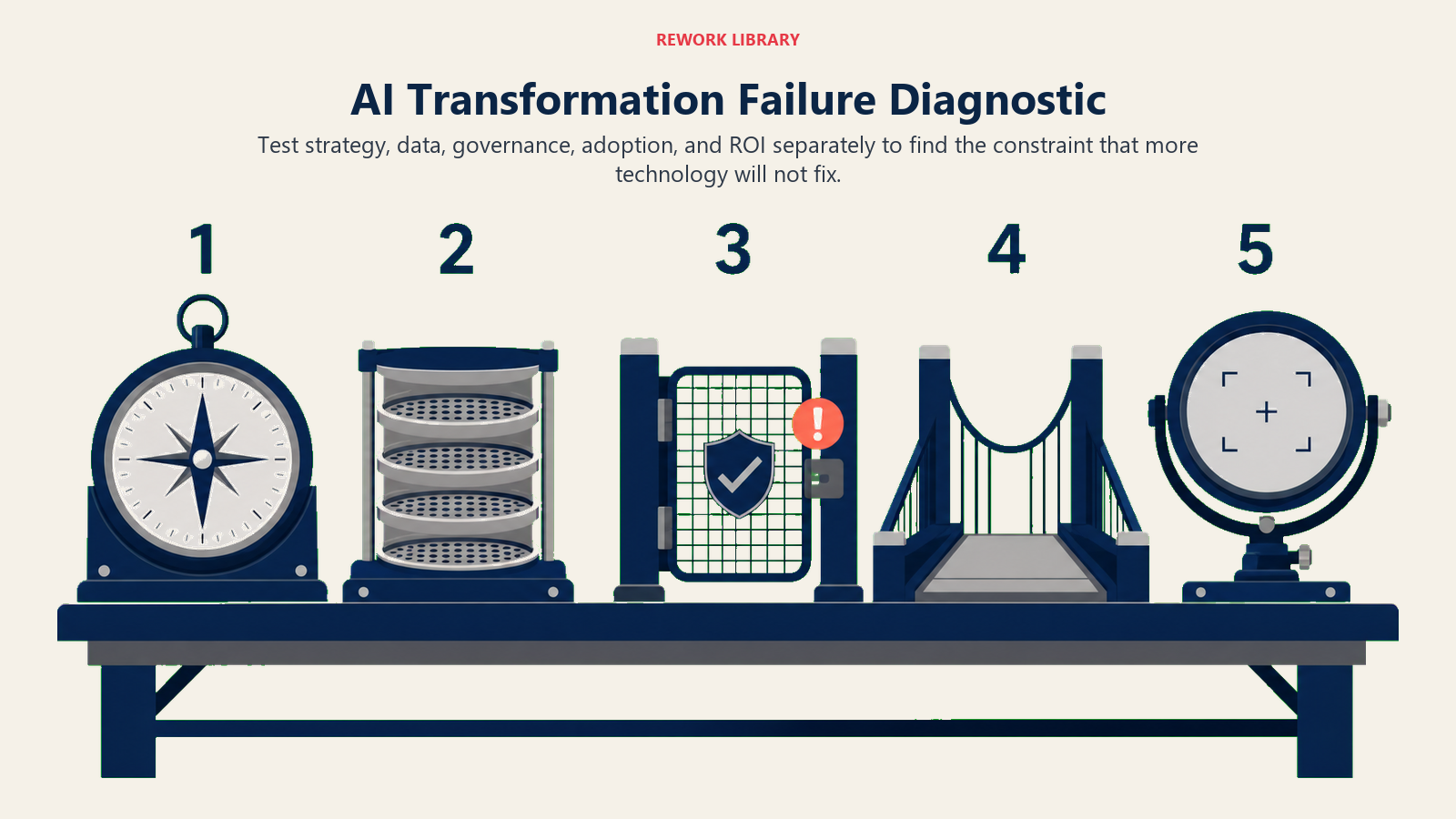
Gehen Sie diese fünf Fragen mit Ihrem Führungsteam durch:
Für jede aktuell laufende KI-Initiative: Was ist das spezifische Geschäftsproblem, und wie sieht Erfolg in messbaren Begriffen aus? (Strategielücken-Test)
Für jede KI-Initiative: Kann die benötigten Daten heute sauber und vollständig abgerufen werden? Wenn nicht, was ist der Plan und Zeitplan dafür? (Datenbereitschafts-Test)
Hat die Organisation eine schriftliche KI-Nutzungsrichtlinie, von der die Mitarbeiter wissen? Was passiert, wenn jemand ein neues KI-Tool ohne Genehmigung einführt? (Governance-Test)
Für jede KI-Initiative: Welche Linienmanager haben den Wandel vorangetrieben? Was war ihre Beteiligung an der Gestaltung des neuen Workflows? (Änderungswiderstand-Test)
Für jede KI-Initiative: Was war die Baseline-Kennzahl vor Projektbeginn, und wie wird die Veränderung gemessen? (ROI-Test)
Wenn eine dieser Fragen in Ihrem Team eine vage oder unsichere Antwort produziert, ist diese Initiative gefährdet. Nicht weil die Technologie falsch ist. Weil die organisatorischen Voraussetzungen für den Erfolg noch nicht vorhanden sind.
Die Behebung beginnt mit derselben Arbeit, mit der erfolgreiche Transformationen beginnen: zu verstehen, welche Art von Geschäftsproblem KI lösen sollte, und die Bedingungen für diese Lösung aufzubauen. Für die definitorische Grundlage ist Was KI-Transformation auf C-Level-Ebene bedeutet der richtige Ausgangspunkt. Für die quartalsweise Roadmap, um die Voraussetzungen richtig zu schaffen, behandelt Die 18-Monats-CEO-KI-Agenda die Sequenzierung ausführlich.
Häufig gestellte Fragen
Warum scheitern die meisten KI-Transformationen?
Die meisten KI-Transformationen scheitern aus organisatorischen und strategischen Gründen, nicht aus technischen. Die fünf häufigsten Versagensmuster sind: Strategielücke (Tools gekauft, bevor Geschäftsprobleme definiert wurden), Datenunvorbereitetheit, Governance-Fehlen, Änderungswiderstand durch Mitarbeiter und ROI-Unklarheit, weil keine Baseline-Kennzahl vor dem Pilot erfasst wurde. BCGs Forschung 2025 ergab, dass nur 5 % der Unternehmen bei der Skalierung wesentlichen Wert aus KI schaffen, während 60 % trotz bedeutender Investitionen keinen materiellen Wert erzeugen.
Wie hoch ist der Anteil der scheiternden KI-Projekte?
Die Schätzungen variieren je nach Quelle und wie „Scheitern" definiert wird, aber der Bereich ist konsistent: McKinsey schätzt, dass rund 80 % der KI-Projekte nie vom Pilot zur Produktion gelangen. Gartner fand, dass mindestens 30-50 % der generativen KI-Proofs-of-Concept in 2025 abgebrochen wurden. BCG fand, dass 60 % keinen materiellen Geschäftswert erzeugen. S&P Global fand, dass 42 % der Unternehmen die meisten ihrer KI-Initiativen in 2025 abbrachen, gegenüber 17 % im Vorjahr.
Was ist die häufigste Ursache dafür, dass KI-Piloten nie in die Produktion gelangen?
Die häufigste Ursache ist die Strategielücke: Die Organisation beschaffte KI-Tools, bevor sie das spezifische Geschäftsproblem, die Erfolgskriterien und den Messansatz definiert hatte. Ohne ein messbares Problem und eine klare Definition von „abgeschlossen" laufen Piloten unbegrenzt ohne Kriterien für den Schritt zur Produktion. Die Lösung besteht darin, das Geschäftsproblem mit einem Preisschild zu definieren, bevor irgendeine Anbieterevaluation beginnt.
Wie tötet schlechte Datenqualität KI-Projekte?
KI-Systeme benötigen saubere, strukturierte und zugängliche Daten, um zuverlässig zu funktionieren. Die meisten Unternehmen entdecken ihre Datenprobleme erst, wenn sie ein KI-Tool mit ihren Systemen verbinden. Informaticas Forschung 2025 ergab, dass 68 % der gescheiterten Projekte zu wenig in Datenfundamente investieren und Qualitätsprobleme typischerweise 5,2 Monate nach Beginn entdecken. Zu diesem Zeitpunkt betragen die Sanierungskosten durchschnittlich das 2,8-fache des ursprünglichen Projektbudgets. Gartner warnt, dass Unternehmen bis 2026 60 % der KI-Projekte abbrechen werden, die nicht durch KI-bereite Daten unterstützt werden.
Warum ist die Executive-Unterstützung für den KI-Transformationserfolg so entscheidend?
McKinseys Forschung 2025 ergab, dass KI-Transformationsprojekte mit dauerhafter CEO-Beteiligung eine Erfolgsrate von 68 % gegenüber 11 % für Projekte erzielen, bei denen die aktive C-Suite-Unterstützung innerhalb von sechs Monaten nach dem Start verloren geht. Wenn der CEO das Mandat mit Spezifität setzt, behandelt der Rest der Organisation KI als Geschäftspriorität. Wenn dem CIO gesagt wird, er solle „KI managen", behandelt der Rest der Organisation es als IT-Projekt, das deprioritisiert wird, wenn es mit operativen Quartalsziele kollidiert.
Was ist das 5-Versagensmuster-Framework?
Die 5 KI-Transformations-Versagensmuster ist ein Diagnose-Framework zur Kategorisierung, warum Enterprise-KI-Initiativen vor dem Produktionseinsatz ins Stocken geraten. Die fünf Muster sind: Strategielücke, Datenunvorbereitetheit, Governance-Fehlen, Änderungswiderstand und ROI-Unklarheit. Jedes Muster hat eine eindeutige Grundursache, ein Frühwarnzeichen und eine spezifische Lösung. Das Framework ist darauf ausgelegt, als Diagnose mit dem Führungsteam durchgeführt zu werden, bevor eine größere KI-Initiative finanziert oder skaliert wird.
Siehe auch:
- Die ehrlichen Kosten der KI-Transformation: Was das Budget wirklich enthalten muss, bevor der Pilot beginnt
- Ihre KI-Nutzungsrichtlinie aufbauen: Governance vor der Skalierung
- SaaS KI-Versagensmuster: Was schiefläuft: Wie dieselben Grundursachen in SaaS-spezifischen Kontexten wirken

Co-Founder, Rework.com
On this page
- Die 5 KI-Transformations-Versagensmuster
- Versagensmuster 1: Die Strategielücke
- Versagensmuster 2: Datenunvorbereitetheit
- Versagensmuster 3: Keine Governance
- Versagensmuster 4: Änderungswiderstand
- Versagensmuster 5: ROI-Unklarheit
- Was erfolgreiche Transformationen gemein haben
- Die 5 Versagensmuster: Häufigkeit und Lösungsübersicht
- Die Diagnose: Wo scheitern Sie?