AI-Rollenentwicklung: Was sich für wen verändert

Turn this article into takeaways for your work.


Each assistant summarizes the article only for you and suggests best practices for your work.
"Wird AI meinen Job ersetzen?" ist die falsche Frage. Es ist die Frage, die Ihre Mitarbeiter untereinander in der Pause und nach Meetings stellen -- und sie lässt sich nicht mit Ja oder Nein beantworten, weil sie sehr verschiedene Dinge vermischt: Aufgaben, Rollen und Kopfzahlen.
Die richtigen Fragen sind spezifisch: Welche Aufgaben in meiner Rolle werden automatisiert, welche erweitert, und welche neuen Verantwortlichkeiten entstehen durch AI? Und wann treten diese Veränderungen für welche Funktionen in welchem Reifegrad ein?
Dieser Artikel gibt Chief Operating Officers (COOs) und Chief Human Resources Officers (CHROs) eine funktionsweise Antwort. Keine Beruhigungskampagne. Eine ehrliche Übersicht.
Die drei Arten der Rollenveränderung
Key Facts: AI-Rollenentwicklung
- Das World Economic Forum (WEF) prognostiziert, dass AI bis 2030 170 Millionen neue Rollen schaffen wird, während 92 Millionen wegfallen -- ein Nettozuwachs von 78 Millionen Arbeitsplätzen, wobei 86 % der Arbeitgeber erwarten, dass AI ihr Geschäft transformieren wird. (WEF Future of Jobs 2025)
- 39 % der bestehenden Fähigkeiten werden zwischen 2025 und 2030 voraussichtlich veralten, wobei AI, Big Data und digitale Kompetenz als am schnellsten wachsende Anforderungen gelten. (WEF)
- 41 % der Arbeitgeber planen, die Belegschaft dort zu reduzieren, wo AI Routineaufgaben automatisiert, während 79 % die Prozessautomatisierung in den nächsten fünf Jahren beschleunigen wollen. (WEF Future of Jobs 2025)
Bevor wir funktionsweise vorgehen, sollten die drei Mechanismen klar benannt werden. Jede AI-bedingte Rollenveränderung ist eine davon.
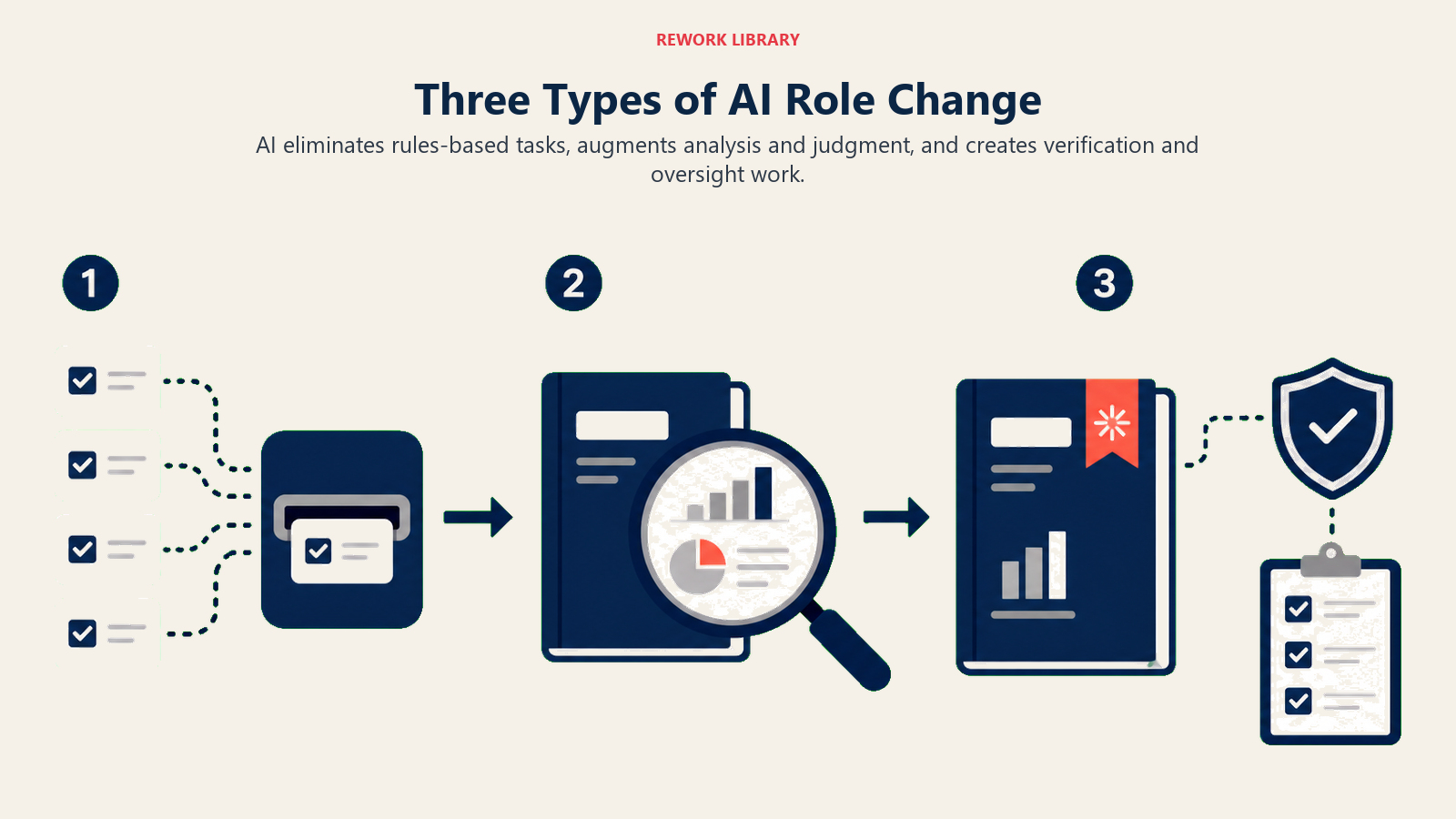
Wegfallende Aufgaben: Volumenreiche, regelbasierte Dateneingabearbeit. Wenn AI diese günstiger, schneller und mit gleicher oder höherer Genauigkeit erledigen kann als ein Mensch, und die Aufgabe kein Urteilsvermögen oder Beziehungskontext erfordert, verschwindet sie aus dem menschlichen Aufgabenbereich. Nicht immer die gesamte Rolle, aber dieser Teil davon. Dateneingabe, manuelle Berichtserstellung, einfache Triage, vorlagenbasierte Dokumentenerstellung.
Erweiterte Aufgaben: Recherche, Analyse, Entwurf, Überprüfung. Der Mensch erledigt die Arbeit weiterhin, aber AI komprimiert die Zeit oder verbessert das Ergebnis. Ein Analyst, der früher 4 Stunden damit verbrachte, eine Wettbewerbsanalyse zu erstellen, verbringt jetzt 45 Minuten damit, eine AI-Synthese zu überprüfen und sein Urteilsvermögen hinzuzufügen. Der Analyst ist nicht verschwunden. Aber 3 Stunden seines Arbeitstages haben sich geöffnet. Was die Organisation mit dieser Zeit macht, ist eine Frage des Organisationsdesigns.
Neu entstehende Aufgaben: Diese Kategorie wird in der Personalplanung übersehen. Die AI-Einführung schafft neue Arbeit, die es zuvor nicht gab. Output-Verifizierung, Prompt-Design und -Verfeinerung, Modellaufsicht, Behandlung von Ausnahmen bei AI-Fehlern, AI-gestütztes Workflow-Design, Human-in-the-Loop-Entscheidungsmanagement. Das sind echte Aufgaben, die Kompetenz, Urteilsvermögen und Training erfordern. Sie ersetzen die wegfallenden Aufgaben nicht automatisch, repräsentieren aber genuine neue Verantwortung.
Die ehrliche Zusammenfassung: Die meisten Rollen erleben eine Mischung aller drei. Das Verhältnis variiert je nach Funktion erheblich. Und der Zeitplan variiert je nachdem, wie schnell Ihre Organisation die 5 Stufen des AI-Reifegrads durchläuft. Der Future of Jobs Report 2025 des World Economic Forum prognostiziert, dass AI und Informationsverarbeitung bis 2030 86 % der Unternehmen betreffen werden, wobei 22 % der heutigen Rollen voraussichtlich vollständig wegfallen oder wesentlich überarbeitet werden, während 170 Millionen neue Rollen entstehen. Das ACE Framework bildet die Aufgabentypen direkt ab: Ingest- und Execute-Fähigkeiten eliminieren die meisten Aufgaben, während Analyze und Generate sie erweitern.
Vertriebsrollen
Am stärksten veränderte Aufgaben: CRM-Dateneingabe ist die klassische wegfallende Aufgabe für Vertriebsmitarbeiter. Nachbearbeitung von Anrufen, Aktualisierung von Kontaktdatensätzen, Fortschreiben von Opportunitätsphasen, Aktivitätsprotokollierung. AI Meeting Intelligence und CRM-Automatisierung übernehmen das meiste davon in Stage-2-3-Deployments. Ein Mitarbeiter, der täglich 90 Minuten mit CRM-Administration verbrachte, bekommt diese Zeit zurück, sobald Meeting Intelligence in sein CRM integriert ist.
Manuelles Research bei der ausgehenden Akquise entfällt ebenfalls weitgehend. Unternehmenskontext nachschlagen, relevante aktuelle Neuigkeiten finden, eine Kontaktliste für ein Zielkonto aufbauen -- das dauerte 30 bis 60 Minuten pro neuem Account. AI-generative Research-Tools komprimieren dies auf 5 bis 10 Minuten Überprüfung.
Was bleibt: Beziehungsarbeit ist der Kern dessen, was sich nicht verändert. Ein erfahrener Enterprise-Mitarbeiter, der vertrauensvolle Beziehungen zu drei Mitgliedern des Buying Committee eines Zielkontos hat, besitzt etwas, das kein AI-Modell kurzfristig ersetzen kann. Die Urteilsarbeit, die Stimmung im Raum zu lesen, sich in der internen Politik zu bewegen und zu wissen, wann man drängen und wann man abwarten sollte, erfordert weiterhin den Menschen.
Was neu ist: Mitarbeiter müssen wissen, wie sie AI-generierte Pipeline-Insights qualifizieren. Wenn ein Lead-Scoring-Modell sagt, dass dieses Konto mit 78 % Wahrscheinlichkeit in diesem Quartal konvertiert, muss der Mitarbeiter wissen, wann er diesem Score vertrauen, wann er ihn überschreiben und welche zugrunde liegenden Signale ihn getrieben haben soll. Das ist eine neue Kompetenz. Der Artikel Failure Modes When AI Sales Ops Backfires dokumentiert, was passiert, wenn Mitarbeiter sich zu stark auf AI-Scoring verlassen, ohne dieses Override-Urteil zu entwickeln.
Risiko zu beobachten: Überabhängigkeit von AI-Scoring. Ein Mitarbeiter, der aufhört, sein eigenes Urteil über Lead-Qualität aufzubauen, weil das Modell ihm sagt, was er priorisieren soll, macht seine eigenen Fähigkeiten fragil. Coaching sollte das AI-gestützte Urteil stärken, nicht das eigene Signallesen des Mitarbeiters ersetzen.
Zu erwerbende Kompetenzen: Prompt-Design für die Personalisierung von Outreach, Interpretation von AI-Scores, Ausnahmebehandlung bei fehlerhaften AI-Insights. Zu deprioritierende Kompetenzen: Manuelle CRM-Administration, manuelle Territory-Recherche, Formatierung von Pipeline-Präsentationen.
Customer-Success-Rollen
Das Bureau of Labor Statistics (BLS) bezeichnet in seinen Analysen zu AI-Auswirkungen auf die Beschäftigungsprognosen Kundenbetreuer ausdrücklich als rückläufigen Beruf (prognostiziertes -5 % bis 2034), da AI-Automatisierung Self-Service-Systeme in die Lage versetzt, einen wachsenden Anteil routinemäßiger Kundeninteraktionen zu übernehmen.
Am stärksten veränderte Aufgaben: Statusberichte und die Vorbereitung von Quarterly Business Reviews (QBRs) sind die klarsten wegfallenden Aufgaben. Ein Customer Success Manager (CSM), der früher 4 bis 6 Stunden damit verbrachte, Nutzungsdaten zu sammeln, Folien zu formatieren und die Narrative zu schreiben. AI-Tools, die mit Produkttelemetrie und CRM-Daten integriert sind, erzeugen diesen Erstentwurf in Minuten. Der CSM überprüft, passt an und personalisiert, aber die Produktionszeit sinkt um 70 bis 80 %.
Churn-Prognose-Monitoring verändert sich ebenfalls. Statt wöchentlich manuell das gesamte Kundenbuch auf Gesundheitssignale zu überprüfen, hebt AI-Health-Scoring die Konten hervor, die Aufmerksamkeit benötigen. Die Aufmerksamkeit des CSM verlagert sich von "Welche Konten sollte ich mir heute ansehen?" zu "Was sollte ich bei den Konten tun, die das Modell markiert hat?"
Was bleibt: Beziehungstiefe ist der Wettbewerbsvorteil für Customer Success in einer AI-ergänzten Welt. Ein CSM, der echtes Vertrauen zu einem Executive Sponsor aufgebaut hat und schwierige Gespräche über Adoptionslücken führen kann, ohne die Beziehung zu gefährden, der die internen Zusammenhänge des Kunden kennt und sich darin zurechtfindet: Diese Arbeit verändert sich nicht. Sie wird wichtiger.
Was neu ist: AI-Health-Scores mit Kontext interpretieren, den das Modell nicht hat. Ein CSM, der weiß, dass der Champion eines Kontos gerade den Job gewechselt hat, wird einen AI-Health-Score, der noch grün anzeigt, korrekt überschreiben. Diese Urteilsschicht über dem Modell-Output ist eine neue und wichtige Verantwortung.
Zu erwerbende Kompetenzen: Interpretation von AI-Health-Scores, Feedback zur Kalibrierung von Churn-Prognosemodellen, AI-gestützter QBR-Produktionsworkflow. Zu deprioritierende Kompetenzen: Manuelle Datenextraktion für Reports, Anwesenheit bei internen Statusmeetings, die durch asynchrone AI-Zusammenfassungen ersetzt werden können.
SDR und Outbound-Rollen
Dies ist die am stärksten durch AI disrupted Funktion im Vertrieb, und Ehrlichkeit erfordert, das direkt zu sagen.
Am stärksten veränderte Aufgaben: Manuelles Outbound-Prospecting in großem Maßstab ist stark automatisiert. Zielkonten identifizieren, Kontaktlisten aufbauen, erste Outreach-Entwürfe schreiben, A/B-Tests für Betreffzeilen, Sequence-Management und Follow-up-Kadenz sind alle mit AI-Tooling adressierbar. Eine vollständig automatisierte AI-SDR-Plattform kann Outbound-Sequenzen in einem Maßstab durchführen, der früher Teams von Menschen erforderte.
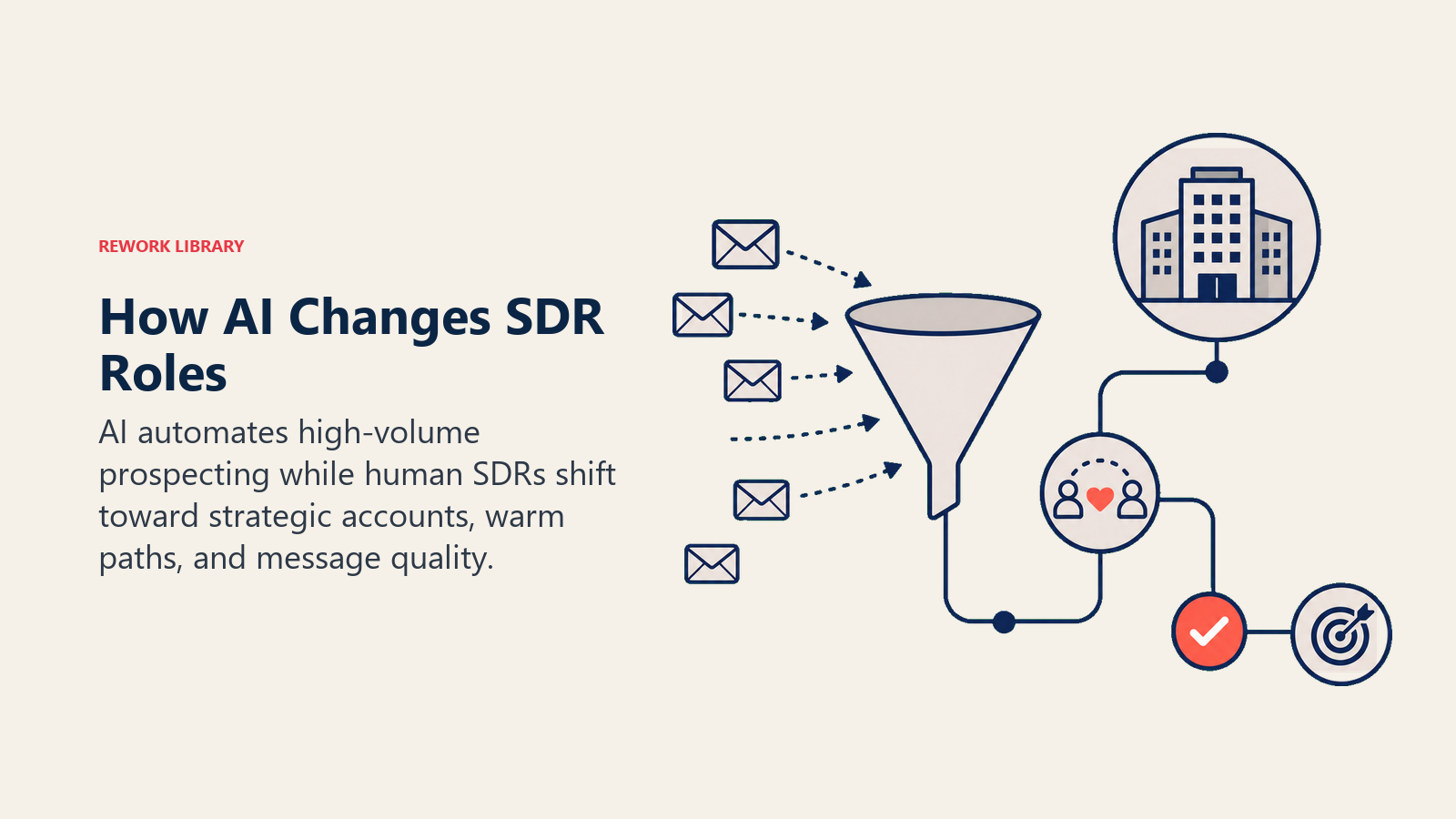
Was bleibt: Komplexe Orchestrierung für hochwertige Enterprise-Ziele. Wenn es darum geht, Zugang zu einem CFO eines 5.000-Mitarbeiter-Unternehmens zu erhalten, das noch nie mit Ihrer Marke interagiert hat, ist das menschliche Urteil über den richtigen Ansatz, den Weg über warme Einführungen und das richtige Timing nicht automatisierbar. Das gilt auch für das Telefonat, das konvertiert.
Die ehrliche Implikation für die Belegschaft: SDR-Headcount wird in den meisten Organisationen voraussichtlich schrumpfen, wenn AI-Outbound-Tooling reift. Unternehmen, die schnell genug wachsen, um eine Umschichtung aufzufangen, verlagern SDR-Kapazität hin zu strategischer Account-Orchestrierung und weg von routinemäßigem Outreach in hohem Volumen. Unternehmen, die nicht wachsen, brauchen nicht so viele SDRs. Hier ist ehrliche Führung gefragt, keine Platitüden über Augmentierung. Der WEF Future of Jobs Report vermerkt, dass 41 % der Arbeitgeber planen, ihre Belegschaft dort zu reduzieren, wo AI Routineaufgaben automatisiert -- genau das beschreibt AI-gestütztes Outbound-Tooling für SDR-Funktionen.
Neue Verantwortlichkeiten: Management der AI-Output-Qualität, Überprüfung der Nachrichtenqualität (denn AI-generierter Massen-Outreach in niedriger Qualität ist schlimmer als gar kein Outreach) und strategische Account-Koordination für hochwertige Ziele.
Finanz- und Betriebsrollen
Am stärksten veränderte Aufgaben: Manuelle Abstimmung und Ausnahme-Flagging in Accounts Payable und Receivable (AP/AR). Rechnungsabgleich, Ausgabenkategorisierung, routinemäßige Finanzabschlüsse. Diese sind Vision-Extract- und Anomaly-Agent-Anwendungsfälle, und sie sind volumenreich und regelbasiert genug, dass AI-Genauigkeit von 95 %+ bedeutet, dass Menschen vom Erledigen der Arbeit zum Überprüfen der Ausnahmen wechseln.
Berichtserstellung und Abweichungskommentar. Ein Finanzanalyst, der jeden Montagmorgen damit verbrachte, Ist-Zahlen zu sammeln, die Abweichungstabelle zu erstellen und die Narrative zu schreiben, hat jetzt innerhalb von Sekunden einen AI-Erstentwurf. Die Zeit des Analysten verlagert sich auf die Urteilsarbeit: Warum ist die Abweichung entstanden, und was bedeutet sie?
Was bleibt: Strategische Analyse und Ermessensentscheidungen. Ein CFO, der eine ungünstige Abweichung von 2 Millionen Euro bei Enterprise-Softwarekosten betrachtet, möchte einen Analysten, der diese durch Beschaffungsentscheidungen, Nachverhandlungen mit Lieferanten und Headcount-Veränderungen zurückverfolgen kann, nicht nur feststellt, dass sie eingetreten ist. Die interpretative Ebene bleibt menschlich.
Was neu ist: Überprüfung AI-generierter Prognosen. Wenn Ihr Planungsmodell eine Umsatzprognose generiert, muss jemand die Annahmen einem Stresstest unterziehen, feststellen, wo die Trainingsdaten des Modells die aktuellen Bedingungen möglicherweise nicht widerspiegeln, und die Fälle markieren, wo sich die Marktdynamik über das hinaus verändert hat, was das Modell kennt. Das ist eine neue und wirklich anspruchsvolle Aufgabe.
Zu erwerbende Kompetenzen: AI-Prognose-Verifizierung, Design von Ausnahmebehandlungs-Workflows, Prompt Engineering für Finanzanalyse. Zu deprioritierende Kompetenzen: Manuelle Berichtserstellung, routinemäßige Abstimmungsaufgaben, Copy-Paste-Datenformatierung.
HR-Rollen
Am stärksten veränderte Aufgaben: Erstscreening von Bewerbungen für hochvolumige Stellen. AI-Scoring von Bewerbungen gegen die Stellenbeschreibung mit konsistenten Kriterien entfernt den ersten Durchgang von menschlichen Prüfern. Für Stellen mit 500+ Bewerbungen sind dies erhebliche Zeitersparnisse bei verbesserter Konsistenz.
Beantwortung von Richtlinienfragen und Unterstützung bei Onboarding-Dokumentation. Ein HR-Generalist, der Mitarbeiterfragen zu Elternzeit, Leistungsauswahl und bezahlten Urlaubsrichtlinien (PTO) beantwortet hat, hat jetzt einen AI-Assistenten, der die Routinefragen übernimmt. Ihre Zeit verlagert sich auf komplexe Situationen, die die AI an sie weiterleitet.
Was bleibt: Kandidatenbewertung, die Urteilsvermögen erfordert. Das Vorstellungsgespräch, das Referenzgespräch, die Gehaltsverhandlung, die interne Mobilitätsentscheidung -- diese erfordern menschliches Urteilsvermögen, zwischenmenschliche Kompetenz und Verantwortlichkeit.
Was neu ist: AI-Fairness- und Bias-Monitoring in Einstellungstools. Dies ist eine echte und wichtige neue HR-Verantwortlichkeit. AI-Screening-Modelle können historische Einstellungsverzerrungen kodieren, wenn die Trainingsdaten voreingenommene frühere Einstellungen widerspiegeln. HR braucht jemanden, der diese Modelle prüfen, die demografische Verteilung der AI-Screening-Entscheidungen überprüfen und markieren kann, wenn die Ergebnisse des Modells systematisch falsch aussehen. Das ist eine neue Berufskompetenz, über die die meisten HR-Teams derzeit nicht verfügen.
Zu erwerbende Kompetenzen: AI-Tool-Bias-Prüfung, Screening-Modellaufsicht, Richtlinie für den Fall, dass AI-Einstellungsentscheidungen eine menschliche Überprüfung erfordern. Zu deprioritierende Kompetenzen: Erstdurchgang beim Lebenslauf-Screening, routinemäßige Beantwortung von Richtlinienfragen, manuelle Vorbereitung von Onboarding-Dokumenten.
Neue Rollen, die AI schafft
Neue Rollen entstehen, wenn AI-Arbeit so operativ wird, dass die Verantwortung nicht mehr informell von bestehenden Teams aufgefangen werden kann.
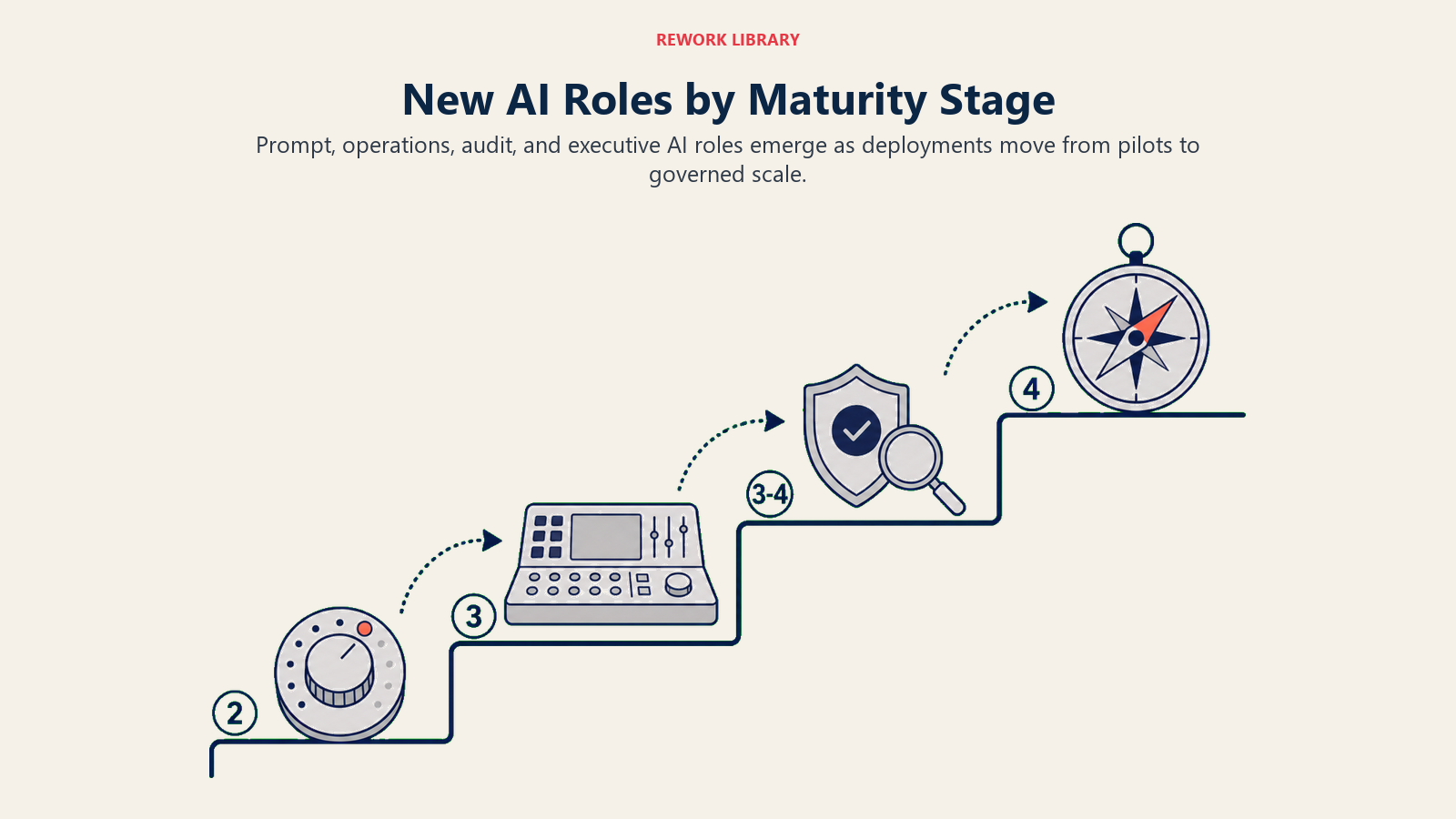
In allen Funktionen schafft die AI-Einführung spezifische neue Rollentypen. Diese sind realistisch für verschiedene Unternehmensgrößen und Reifegradstufen, kein vollständiger Katalog möglicher Titel.
Chief AI Officer (CAIO): Ab Stage 3-4 stellen ausreichend große Organisationen einen dedizierten Executive ein, der AI-Strategie, Governance und Deployment-Priorisierung verantwortet. Unterhalb von 100 Mio. EUR ARR liegt diese Verantwortung normalerweise beim CTO oder COO.
AI Operations Manager: Stage 3. Die Person, die den AI-Tool-Stack, Lieferantenbeziehungen, die Gesundheit der Datenpipeline und die funktionsübergreifende Deployment-Koordination verwaltet. Anders als ein CAIO (operativer, weniger strategisch) und realistisch im Mid-Market.
AI Auditor: Stage 3-4, besonders in regulierten Branchen. Überwacht AI-Entscheidungsqualität, verwaltet Model-Drift-Erkennung, übernimmt Audit-Dokumentation und dient als interne Accountability-Funktion für AI-Governance.
Prompt Engineer: Stage 2-3. Ein Spezialist für das Design, Testen und Pflegen von Prompts für hochwertige Generate-Anwendungsfälle. Diese Rolle entsteht oft organisch aus jemandem im Marketing, Content oder Betrieb, der besonders versiert in der Qualität von AI-Output ist und als AI-Kommunikationsspezialist des Teams formalisiert wird.
AI Ethics Officer: Stage 4, große Organisationen. Dedizierte Verantwortung für Bias-Monitoring, Fairness-Audits, Stakeholder-Kommunikation über den AI-Einsatz und regulatorische Compliance. Kleine bis mittelgroße Unternehmen legen diese Verantwortung bei Legal oder HR an.
Diese Rollen entstehen nicht automatisch. Sie müssen geplant werden. Wenn Sie AI in Stage 2-3 einführen, ohne einen klaren Verantwortlichen für AI-Betrieb und Governance, schaffen Sie Arbeit, ohne die Rolle zu schaffen, die sie verwaltet. Der Artikel AI CoE vs. Embedded-Modell zeigt, wo jede dieser neuen Rollen je nach gewählter Organisationsstruktur natürlich angesiedelt ist.
Die Role Evolution Matrix
Die Role Evolution Matrix bildet jede Geschäftsfunktion gegen drei Veränderungsvektoren ab: wegfallende Aufgaben (aus der menschlichen Rolle automatisiert), erweiterte Aufgaben (AI-unterstützt, aber weiterhin human-geführt) und neu entstehende Aufgaben (Arbeit, die entsteht, weil AI eingesetzt wird). Jede Zelle der Matrix trägt eine Kompetenz-Adjacency-Empfehlung: den natürlichsten Umschulungspfad von der wegfallenden zur neuen Aufgabe für einen Mitarbeiter, der bereit ist, sich zu verändern.

Quotable: "Der WEF Future of Jobs Report 2025 prognostiziert, dass 41 % der Arbeitgeber ihre Belegschaft dort reduzieren wollen, wo AI Routineaufgaben automatisiert. Das ist keine ferne Prognose. Es beschreibt, was AI-gestützte Outbound-Tools bereits mit SDR-Headcount in schnell einführenden Organisationen machen."
Quotable: "Ein CSM, der weiß, dass der Champion eines Kontos gerade den Job gewechselt hat, wird einen AI-Health-Score, der noch grün anzeigt, korrekt überschreiben. Diese Urteilsschicht über dem Modell-Output ist eine neue und wichtige Kompetenz, für die kein Anbieter Ihr Team trainieren wird."
Quotable: "Undefinierte freigesetzte Zeit verteilt sich auf Slack, Admin und Meeting-Überload -- nicht auf die strategische Arbeit, die Sie beabsichtigt haben. Wenn AI 25 % der Zeit eines Vertriebsteams freisetzt, ist 'für höherwertige Aktivitäten' nur dann wahr, wenn Sie identifiziert haben, was diese Aktivitäten sind und den Mitarbeitern die Kompetenzen dafür gegeben haben."
| Funktion | Wegfallende Aufgaben | Erweiterte Aufgaben | Neu entstehende Aufgaben | Kompetenz-Adjacency |
|---|---|---|---|---|
| Vertriebsmitarbeiter | CRM-Dateneingabe, Account-Recherche | Outreach-Personalisierung, Pipeline-Review | AI-Score-Interpretation, Override-Urteil | Instinkt-plus-Daten-Reasoning |
| CS-Manager | QBR-Vorbereitung, Statusberichte | Health-Score-Monitoring, Renewal-Vorbereitung | AI-Health-Score-Kalibrierung, Erkennung von Champion-Wechseln | Kontextuelles Modell-Override |
| SDRs | Hochvolumige Outbound-Sequenzen | Strategische Account-Orchestrierung | AI-Output-Qualitätsmanagement, Nachrichtenüberprüfung | Urteilsbasiertes Targeting |
| Finanzanalysten | Berichtserstellung, Abweichungsformatierung | Szenariomodellierung, Prognosekommentar | AI-Prognose-Prüfung, Annahmen-Stresstest | Interpretative Analyse |
| HR-Generalisten | Erstscreening von Lebensläufen, Richtlinien-Q&A | Kandidatenbewertungsunterstützung, Angebotsvorbereitung | AI-Bias-Prüfung, Screening-Modellaufsicht | Fairness- und Gerechtigkeitsüberprüfung |
Rework-Analyse: Basierend auf Personalplanungsmustern bei Mid-Market-AI-Deployments gestalten Organisationen, die Rollen vor dem Deployment neu gestalten und Performance-Metriken von Aktivitäten, die AI nun aufbläst, wegbewegen, das Mitarbeiterengagement durch den Übergang deutlich besser aufrecht als jene, die Belegschaftsveränderungen nach der Einführung der Technologie nachrüsten.
Was der COO vor dem Deployment tun muss
Rollenentwicklung ohne Planung wird zur Krise. Mit Planung ist sie handhabbar. Der Unterschied liegt darin, ob die Arbeit vor dem AI-Deployment erledigt wird oder erst danach aufgeholt werden muss.
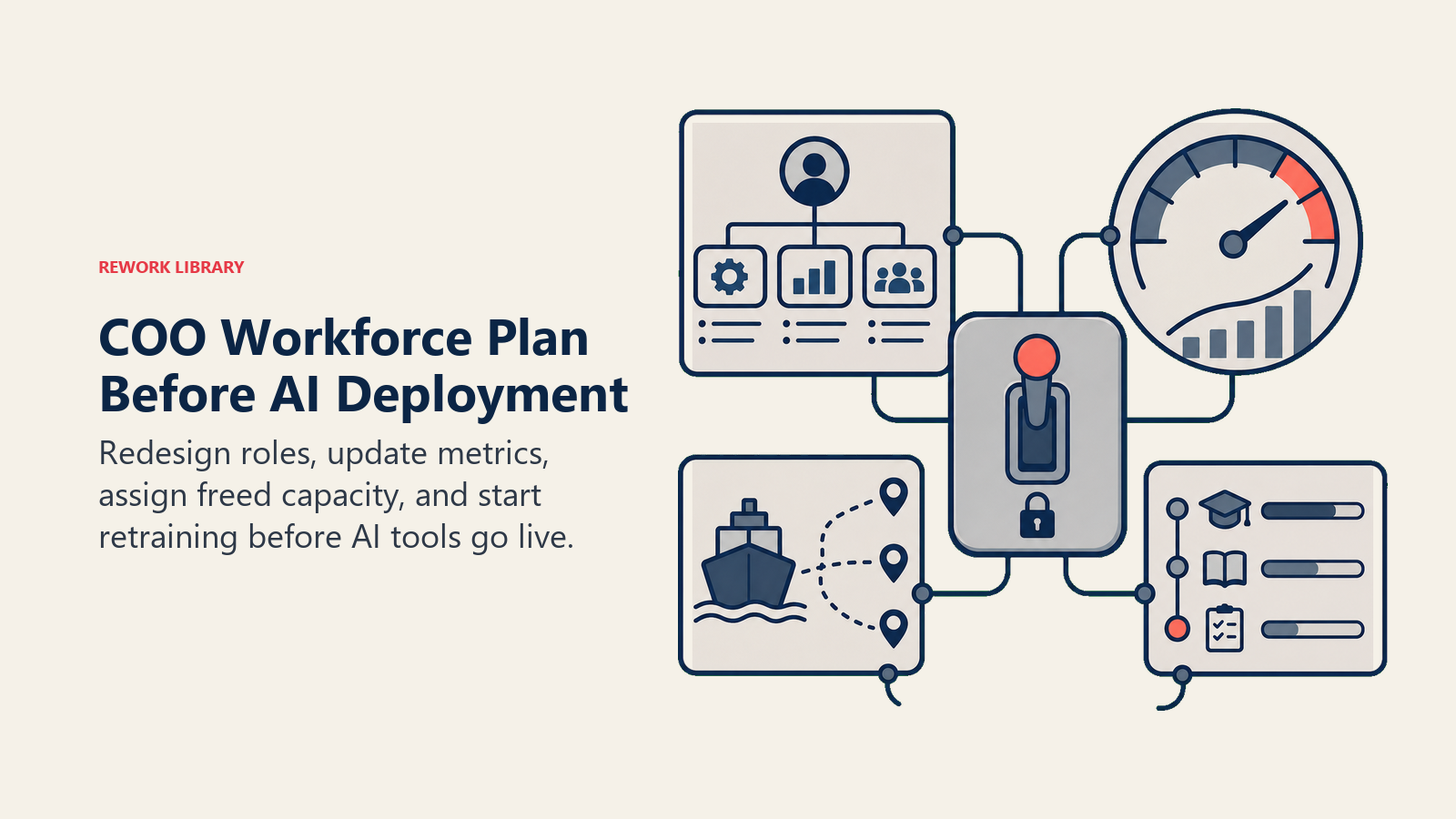
Rollen vor dem Deployment neu gestalten, nicht danach. Den aktuellen Workflow für jede Zielfunktion abbilden, die Aufgaben identifizieren, die eliminiert oder erweitert werden, und die zukünftige Rolle entwerfen, bevor die Technologie live ist. Wenn die neue Rolle andere Kompetenzen erfordert, muss das Umschulungsprogramm beginnen, bevor das Tool startet.
Performance-Metriken aktualisieren. Ein CSM, dessen KPIs noch "Anzahl der pro Quartal vorbereiteten QBR-Decks" umfassen, hat nach der AI-Übernahme der QBR-Vorbereitung die falsche Anreizstruktur. Metriken sollten sich auf Ergebnisse (Expansion-Revenue, Net Retention) und Indikatoren der Beziehungstiefe verlagern, nicht auf Aktivitätsvolumen, das AI nun aufbläst.
Für die erweiterte Kapazität planen. Wenn AI 25 % der Zeit eines Vertriebsteams freisetzt, wohin geht diese Zeit? Die Antwort "auf höherwertige Aktivitäten" gilt nur, wenn Sie identifiziert haben, was diese Aktivitäten sind, wie sie gemessen werden und ob die Mitarbeiter die Kompetenzen dafür haben. Undefinierte freigesetzte Zeit verteilt sich auf Slack, Admin und Meeting-Überlast, nicht auf die strategische Arbeit, die Sie beabsichtigt haben.
Umschulungsinfrastruktur früh aufbauen. Die Kompetenz-Adjacency-Analyse ist eine einfache, aber wichtige Übung: Für jede eliminierte oder veränderte Aufgabe: Welche angrenzende Kompetenz kann die Person entwickeln? Ein auf Dateneingabe fokussierter Admin kann zum Prüfer von AI-Output werden. Ein Finanzanalyst mit Routineberichten kann sich zur Abweichungsinterpretation und Prognoseprüfung weiterentwickeln. Der Weg ist ohne gezielte Kartierung nicht immer offensichtlich. Der Artikel How AI Reshapes the SaaS Operating Model zeigt, wie sich die operative Ebene verändert, wenn AI eingebettet ist, was direkt bestimmt, welche Kompetenzen in jeder Funktion wertvoll werden.
Lesen Sie AI-Kompetenz: Die neue Arbeitsplatz-Skill für die Trainingsstruktur. Und Angst vor dem Ersatz: Das unbequeme Thema für den Kommunikationsrahmen, denn das Gespräch über die organisationale Bereitschaft und das Gespräch über das Rollendesign finden gleichzeitig statt, ob Sie es planen oder nicht.
Der Artikel AI Center-of-Excellence vs. Embedded-Modell behandelt, wo in der Organisationsstruktur die AI-Expertise angesiedelt sein sollte. Diese strukturelle Entscheidung bestimmt, wer die Arbeit am Rollendesign verantwortet und wie schnell sie vorankommt.
Rollenentwicklung ist handhabbar. Die Organisationen, die damit gut umgehen, tun eine Sache anders: Sie behandeln die Belegschaftsveränderung als primären Workstream im AI-Deployment, nicht als Nachgedanken zur Technologieimplementierung. Die Überraschung verursacht den Schaden, nicht die Veränderung.
Häufig gestellte Fragen
Wird AI meinen Job ersetzen?
AI ersetzt Arbeitsplätze nicht gleichmäßig. Sie eliminiert spezifische Aufgaben innerhalb von Rollen, erweitert andere Aufgaben und schafft neue Verantwortlichkeiten. Für die meisten Rollen finden alle drei Veränderungen gleichzeitig statt. Die lohnende Frage ist, welche Aufgaben in Ihrer spezifischen Rolle sich verändern, in welche Richtung und bis wann. Das WEF prognostiziert, dass bis 2030 170 Millionen neue Rollen entstehen und 92 Millionen wegfallen -- ein Nettozzuwachs, aber die Gewinne und Verluste sind nicht gleichmäßig über Funktionen verteilt.
Welche Rollen werden am stärksten durch AI disrupted?
SDR- und Outbound-Vertriebsrollen sind kurzfristig am stärksten betroffen, weil hochvolumiges Outbound-Prospecting, Sequence-Management und Listenaufbau mit aktuellem AI-Tooling adressierbar sind. Kundensupportrollen folgen, wobei BLS-Prognosen einen Rückgang von -5 % bis 2034 zeigen. Finanzanalysten, die routinemäßige Berichtserstellung und Abstimmungen durchführen, sehen erhebliche Aufgabeneliminierung, wobei die interpretative und strategische Ebene menschlich bleibt.
Welche neuen Rollen schafft AI?
AI-Deployment schafft spezifische neue Rollentypen in verschiedenen Reifegradstufen: AI Operations Manager (Stage 3), AI Auditor (Stage 3-4, besonders in regulierten Branchen), Prompt Engineer (Stage 2-3) und Chief AI Officer (Stage 4+). Diese Rollen müssen geplant werden, nicht erst entdeckt werden, nachdem das Deployment den Bedarf geschaffen hat.
Wie sollten Organisationen Rollen vor dem AI-Deployment neu gestalten?
Den aktuellen Workflow für jede Zielfunktion kartieren, bevor die Technologie live ist. Identifizieren, welche Aufgaben eliminiert oder erweitert werden. Die Zukunftsrolle entwerfen, einschließlich der erforderlichen Kompetenzen. Wenn die neue Rolle andere Fähigkeiten erfordert, das Umschulungsprogramm vor dem Deployment beginnen. Dann Performance-Metriken aktualisieren, um Ergebnisse statt Aktivitäten zu reflektieren, die AI nun aufbläst.
Was passiert mit der freigesetzten Zeit, wenn AI die Admin-Arbeit reduziert?
Freigesetzte Zeit wandelt sich nicht automatisch in höherwertige Arbeit um. Organisationen, die von AI-freigesetzter Kapazität profitieren, identifizieren das spezifische Ziel für diese Kapazität vor dem Deployment: mehr Verkaufsgespräche, mehr strategische Kundeninteraktionen, mehr analytische Tiefe. Ohne ein benanntes Ziel und einen Messplan driftet freigesetzte Zeit in Slack, Meetings über Meetings und Vorbereitung für bestehende Arbeit.
Wie verändert sich die SDR-Rolle durch AI?
Hochvolumiges routinemäßiges Outbound-Prospecting, Listenaufbau, Sequence-Management und Follow-up-Kadenz sind mit aktuellem AI-Tooling stark automatisierbar. SDR-Headcount wird in den meisten Organisationen schrumpfen, wenn dieses Tooling reift. Wachsende Organisationen werden SDR-Kapazität zur strategischen Account-Orchestrierung für hochwertige Enterprise-Ziele umschichten. Die verbleibende menschliche SDR-Arbeit erfordert Urteilsvermögen, Warm-Introduction-Strategie und Telefon-Kompetenzen, kein Volumen.
