Best Pre-Employment Assessment Tools in 2026: 14 Platforms for Skills, Cognitive, and Personality Testing
Turn this article into takeaways for your work.


Each assistant summarizes the article only for you and suggests best practices for your work.
The best pre-employment assessment tool in 2026 depends on which type of test you actually need, not which platform has the biggest overall library: TestGorilla wins for generalist teams that want cognitive, personality, and skills tests under one login, SHL and Wonderlic win where decades of validation evidence matter most, HackerRank and CodeSignal win for technical hiring, and Vervoe and Harver win when a work-sample simulation predicts performance better than a multiple-choice score.
This guide ranks 14 assessment platforms for Heads of Talent Acquisition, HR Directors, and hiring managers building or replacing a pre-employment testing stack, spanning cognitive ability, personality and behavioral testing, job-specific skills, job simulations, and technical or coding assessment. Selection method: which assessment type each tool actually covers, the validation evidence behind it (or the lack of any), and published pricing.
Key Facts
Key Facts: Pre-Employment Testing, Validity, and Adverse Impact
- 56% of employers use pre-employment assessments to evaluate applicants' knowledge, skills, and abilities, and 78% of those that do report improved quality of hire. (SHRM, 2025)
- The EEOC's Uniform Guidelines on Employee Selection Procedures use a four-fifths rule as an initial adverse-impact screen: a selection rate for any group below 80% of the highest-scoring group's rate can signal a problem requiring further review. (eCFR, 29 CFR Part 1607, adopted 1978, still in force)
- The long-quoted validity ranking for hiring tests was revised in 2022. Correcting for systematic overcorrection of range restriction, cognitive ability tests drop to an operational validity of about .31, and structured interviews rise to about .42, making the structured interview the strongest single predictor of job performance rather than the test. (Sackett, Zhang, Berry and Lievens, Journal of Applied Psychology, 2022, summarized by SIOP)
- Cognitive ability tests tend to produce larger average score differences between racial groups than personality or integrity measures do, even though the actual job-performance gap between those groups is much smaller. (U.S. Office of Personnel Management)
- Shortening a pre-hire assessment by 15 minutes improves completion rates by only 1 to 2%, and roughly 10% of candidates opt out in the first couple of pages regardless of length, per research spanning hundreds of thousands of assessments. (Forbes Human Resources Council, 2021)
Which Assessment Type Do You Actually Need?
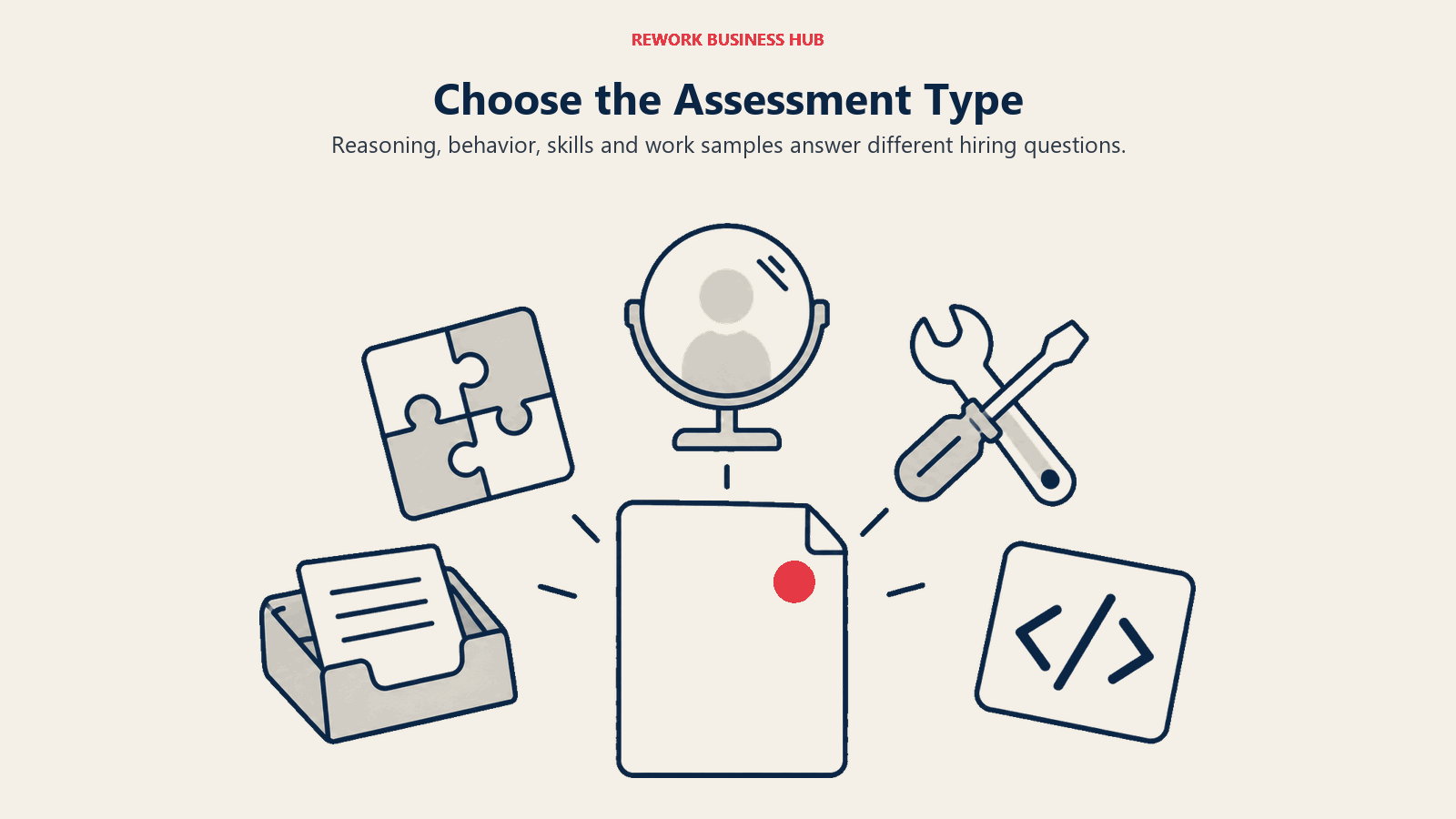
"Pre-employment assessment" covers five genuinely different products, and the wrong one wastes candidate time without predicting anything useful. Use this table to narrow down which category, and which tools in this guide, are even worth a look before you read 14 full write-ups.
| Assessment Type | What It Measures | Tools in This Guide | When to Use It |
|---|---|---|---|
| Cognitive ability | General reasoning and problem-solving speed | Wonderlic, SHL, Criteria Corp, The Predictive Index | Roles where fast, structured problem-solving predicts performance |
| Personality / behavioral | Work style, motivation, and culture fit | The Predictive Index, Criteria Corp, SHL, Bryq, TestGorilla | Team fit, management-style matching, retention risk |
| Skills / knowledge | A specific, job-relevant skill or software knowledge | TestGorilla, Alooba, iMocha, Hire Success, TestDome | Verifying a candidate can actually do the stated skill |
| Job simulation | Realistic, work-sample tasks graded by AI | Vervoe, Harver | Predicting on-the-job performance directly, not just aptitude |
| Technical / coding | Auto-graded code and live or AI-run technical interviews | HackerRank, CodeSignal, TestDome | Engineering, data, and other coding-heavy roles |
Quick Comparison Table
| Tool | Best For | Starting Price | Key Strength | Key Limitation |
|---|---|---|---|---|
| TestGorilla | Generalist hiring across many role types | Free (10 credits/mo); Core $142/mo billed annually ($1,704/yr) | 350+ test library, one login | Core capped at 2 seats, no AI interviews or ATS integrations |
| Criteria Corp | Validated psychometrics plus video interviewing | Custom quote, not published | Scientifically validated assessment suite | No pricing signal anywhere on the site |
| The Predictive Index | One behavioral assessment across hiring and management | $10,000/yr (Talent, annual only) | Same assessment reused for hiring, teams, and coaching | No monthly option, high entry floor |
| SHL | Global enterprise, multi-country validation | Custom quote | Deepest validation research bench in the category | Enterprise-only sales process |
| Wonderlic | Long-validated cognitive ability testing | Custom quote, not published | Decades of I/O psychology research behind it | Zero pricing signal published anywhere |
| HackerRank | Deep technical and coding hiring | $199/mo month-to-month, or $1,990/yr billed annually (~$165/mo effective) | Auto-graded coding tests plus live interviews | 1 seat and 120 attempts a year on Starter |
| CodeSignal | AI-graded technical and go-to-market interviews | $79/mo billed annually, or $99/mo billed monthly (Build) | AI Interviewer across multiple functions | Grow tier jumps to $479 to $599/mo |
| Vervoe | Skills-first job simulations | Custom quote, Enterprise-only | AI-graded, work-sample-style assessments | No published self-serve tier |
| iMocha | Skills intelligence inside an existing ATS | Custom quote, not published | Deep ATS-embedded workflow | No self-serve pricing |
| Alooba | Technical and data-role screening | $250/mo billed monthly (Lite, 35,000 monthly credits) | 500+ skills, published pricing | Thinner coverage outside technical and data roles |
| Harver | High-volume frontline hiring | Custom quote, not published | Gamified assessments built for throughput | Not built for low-volume hiring |
| Bryq | Budget AI matching with published pricing | $69/mo on a 1-year commitment ($828/yr), or $168/mo month-to-month | Transparent price, unlimited invitations | Validated-hiring option gated to Enterprise |
| Hire Success | Small business, pay-as-you-go testing | Custom quote, volume-based, not published | No long-term contract required | No published starting price |
| TestDome | Pay-per-candidate technical and skills testing | $20/candidate (Starter, 5 for $100), from $7 at 600-pack volume | No subscription, packs never expire | Narrower library than full psychometric suites |
What changed in 2026: AI-run interviews moved from differentiator to standard feature. CodeSignal's AI Interviewer and TestGorilla's own AI interviews on its Plus tier both now ship as core functionality rather than an add-on. Vervoe quietly retired its published self-serve pricing tiers in favor of an Enterprise-only, quote-based model, and Criteria Corp now sells three separate bundles (Assess, Interview, Hire) instead of one flagship HireSelect product.
Where Assessment Fits in Your Hiring Stack
Assessment tools solve one stage of hiring: scoring a candidate's cognitive ability, personality, or skills before a human reviews the file. They don't replace your system of record and they don't run the interview loop that comes after. If you're also shopping for the platform that tracks candidates through the whole pipeline, see Best Applicant Tracking Systems in 2026. And once a candidate clears assessment, most teams move to a video or live interview round next, covered separately in Best Video Interview Software in 2026, Best VidCruiter Alternatives in 2026, and Best HireVue Alternatives in 2026.
1. TestGorilla: The Broadest Library, One Login for Generalist Hiring
TestGorilla's core pitch is breadth: a single platform with a test library beyond 350 assessments spanning cognitive ability, personality, culture fit, and dozens of role-specific skills, aimed at a team that doesn't want a separate vendor contract for every assessment type. That breadth makes it the natural starting point for the "which tool do I even need" question this guide opens with, since a generalist HR team hiring across marketing, support, and operations can run every candidate through one login instead of stitching together specialist platforms.
Pricing (confirmed on testgorilla.com/pricing): Free costs $0/month, includes 10 free credits every month, and comes with 1 full-access seat. Core costs $142/month on an annual commitment ($1,704 billed annually) and includes 2 full-access seats plus the full test library. Plus starts from $400/month on an annual commitment ($4,800 billed annually) and includes unlimited full-access seats. Enterprise is a custom quote. Seats scale by tier: Free gets 1, Core gets 2, Plus is unlimited, worth flagging because Core's 2-seat cap is easy to mistake for unlimited. Credits run 1 per candidate for skill tests, video questions, ID verification, or a talent-pool invite, and 2 per candidate for AI interviews.
| What you get | What you don't |
|---|---|
| A 350+ test library covering cognitive, personality, and role-specific skills | AI interviews, ATS integrations, or API access below the Plus tier |
| A genuinely free entry tier with 10 monthly credits | Deep, specialist depth in any single assessment type |
| Unlimited seats once you reach Plus | A flat price; Plus is built to scale with hiring volume |
Best for: Generalist HR and recruiting teams hiring across many role types who want cognitive, personality, and skills testing under one login. Not ideal for: Teams that need decades of validation research behind a single test (see SHL or Wonderlic below) or deep technical-only depth (see HackerRank or CodeSignal). If TestGorilla itself is the platform you're evaluating alternatives to, see Best TestGorilla Alternatives in 2026.
2. Criteria Corp: Validated Psychometrics Bundled With Video Interviewing
Criteria Corp built its name on validated cognitive, personality, emotional intelligence, and risk assessments under its HireSelect brand, then added structured video interviewing on top. It now sells three bundles: Criteria Assess (testing only), Criteria Interview (video only), and Criteria Hire (both combined), each with an optional AI layer for proctoring analysis or interview insights.
Pricing: Criteria Corp publishes no prices anywhere on its own site (criteriacorp.com). Every tier and bundle routes to a "Request Pricing" form, there is no self-serve signup or published number at any level.
| What you get | What you don't |
|---|---|
| Scientifically validated cognitive, personality, and skills assessments | Any published price on the site |
| Assessments and structured video interviewing from one vendor | A self-serve signup flow |
| Three focused bundles instead of one do-everything product | Flat, predictable pricing you can compare without a sales call |
Best for: Teams that want scientifically validated assessments and structured video interviewing bundled from a single vendor. Not ideal for: Buyers who want a number before talking to sales; Criteria Corp has none published at any tier.
3. The Predictive Index: One Behavioral Assessment for Hiring and Management
The Predictive Index built its reputation on a single, well-validated behavioral assessment (the PI Behavioral Assessment) paired with a cognitive assessment, then wrapped both inside a broader "talent optimization" suite covering hiring, team design, and management coaching, a wider scope than a hiring-only tool.
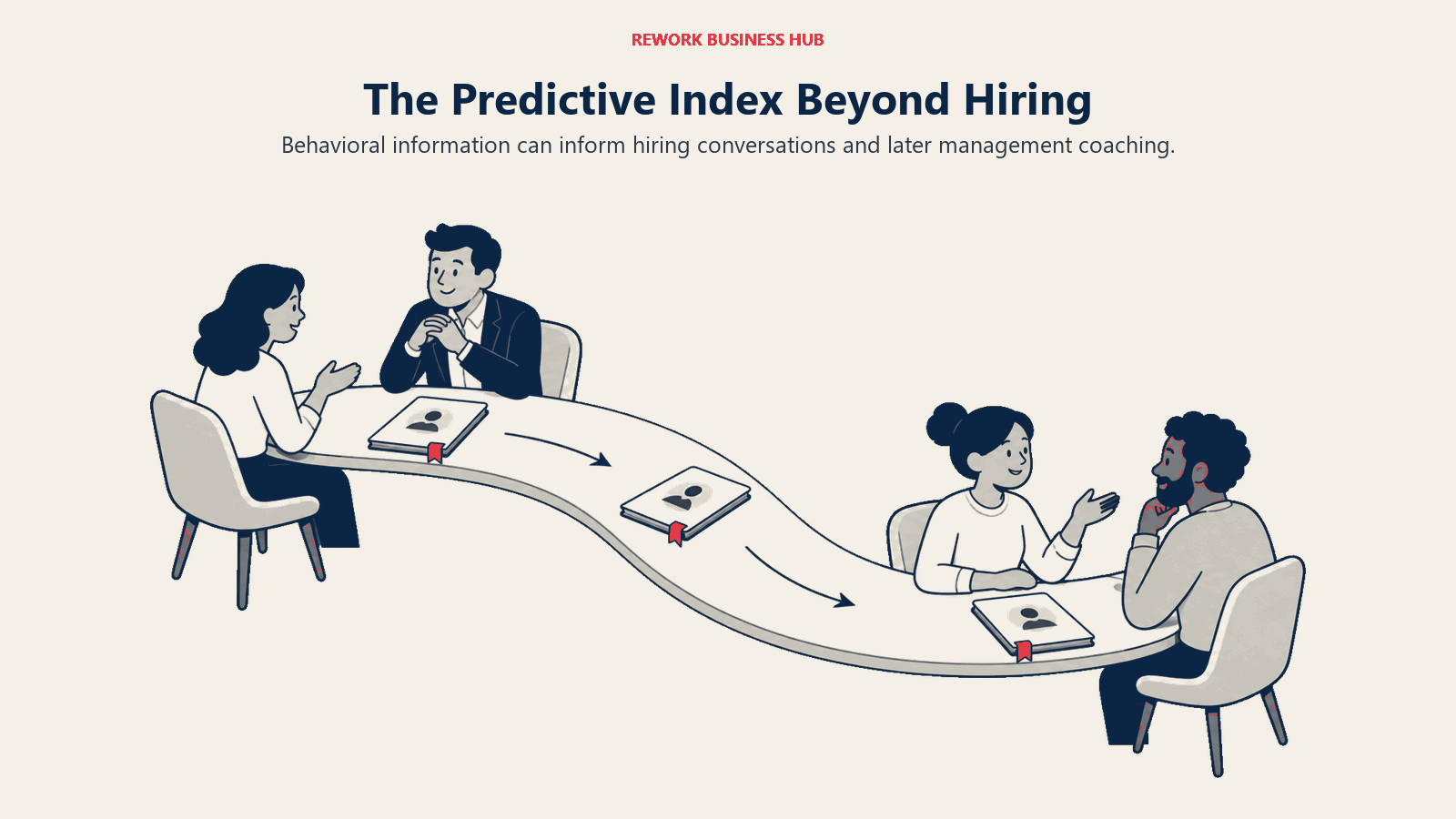
Pricing (confirmed on predictiveindex.com/pricing): Talent starts at $10,000 a year, an annual subscription that scales with headcount, and includes unlimited assessments, candidate-to-job matching, interview guides, and manager coaching. Performance and Engagement are separate, custom-quoted tiers layering in team-strengths analysis and engagement surveys. There's no monthly billing option and no per-seat fee; PI sells annual subscriptions only, with free trials available on request.
| What you get | What you don't |
|---|---|
| Unlimited assessments and users on every tier | A monthly billing option |
| One assessment reused across hiring, team design, and management | A free tier or low-commitment entry point |
| A long track record in workplace behavioral science | Deep technical or coding-specific testing |
Best for: Companies that want one behavioral and cognitive assessment used across hiring, team-building, and management, not just a pre-hire filter. Not ideal for: Small teams; $10,000 a year is a real floor well above most generalist platforms' entry tiers.
4. SHL: The Enterprise Standard for Global, Validated Assessment
SHL is the name most enterprise TA and I/O psychology teams already know, with a catalog spanning cognitive ability, personality, situational judgment, and role-specific simulations validated across dozens of countries and languages. It reads less like a single software product and more like an assessment-science company that happens to sell software.

Pricing: Entirely quote-based, per shl.com. The public site carries no pricing at all, only a demo request and a "Buy Online" portal for individual assessment purchases; enterprise contracts are negotiated directly with SHL's sales team.
| What you get | What you don't |
|---|---|
| Assessments validated across dozens of countries and languages | Any published pricing |
| The deepest validation research bench in this category | A lightweight buying process for small teams |
| Global enterprise credibility and support infrastructure | A budget option below enterprise scale |
Best for: Global enterprises that need localized, deeply validated assessments across many countries and roles. Not ideal for: SMB or mid-market teams; SHL's sales process and depth are built for enterprise-scale, multi-country hiring.
5. Wonderlic: The Cognitive Ability Test With the Longest Track Record
Wonderlic's cognitive ability test predates most of this list by decades (it's the test the NFL famously uses on draft prospects), and Wonderlic Select now packages it with personality and motivation assessments for general hiring. That history matters for validity: it's one of the most-studied cognitive instruments in industrial-organizational psychology.
Pricing: Wonderlic publishes no pricing anywhere on its site (wonderlic.com). Its own materials state cost depends on the package chosen, based on organization size and employee count, with support, implementation, and training bundled into every tier. No verified third-party figure exists for this one, so none is repeated here.
| What you get | What you don't |
|---|---|
| One of the most-researched cognitive ability tests available | Any published pricing signal |
| Bundled implementation, training, and support | A self-serve trial or signup |
| A well-known, candidate-recognized test brand | A flat, predictable entry price |
Best for: Teams that want a long-validated, extensively researched cognitive ability test as the core of their assessment strategy. Not ideal for: Buyers who want any pricing signal before a sales conversation.
6. HackerRank: Deep Technical Screening and Live Interviews
HackerRank is built specifically for engineering hiring, not general pre-employment testing. It combines automated coding challenges auto-graded against real test cases, take-home projects, and live technical interviews with a shared code editor in one product, depth a generalist platform's coding-test category doesn't match.
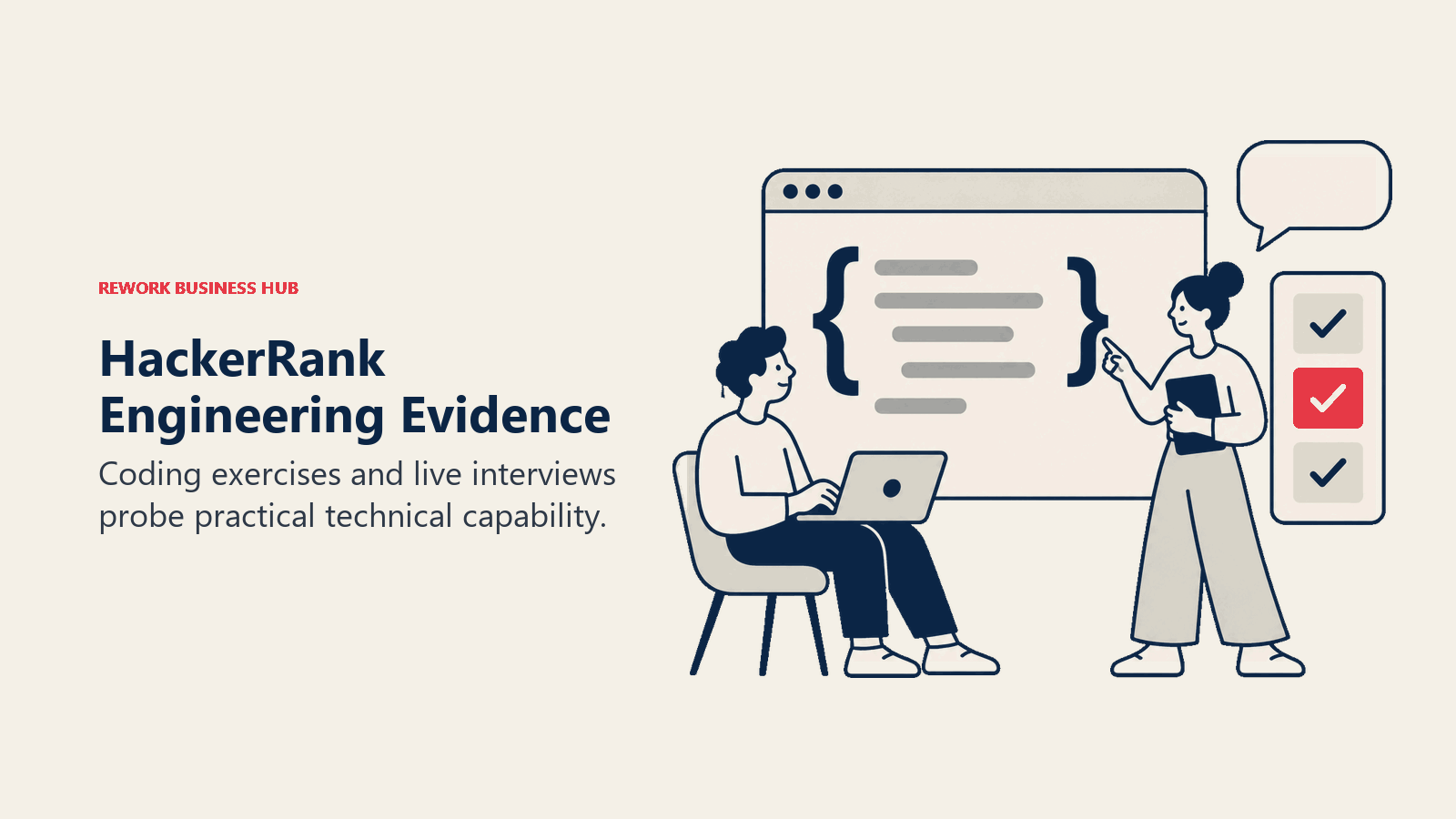
Pricing: HackerRank publishes its Starter tier on its own site: $199/month month-to-month, or $1,990/year billed annually (about $165/month effective). Starter includes 1 user seat and 120 candidate attempts a year, with additional attempts at $20 each, plus full access to Screen and Interview, advanced plagiarism detection, and question-leak protection. For the Pro and Enterprise tiers, confirm current pricing with HackerRank.
| What you get | What you don't |
|---|---|
| Deep, auto-graded coding challenges across 40+ languages | A general psychometric or personality-testing library |
| Live technical interview tooling with a shared code editor | Published pricing above the Starter tier |
| ATS integrations on paid tiers | Coverage for cognitive ability or soft-skills testing |
Best for: Engineering-heavy teams that need auto-graded coding tests and live technical interviews in one tool. Not ideal for: Teams hiring mostly non-technical roles. If HackerRank itself is what you're replacing, see Best HackerRank Alternatives in 2026 or the direct HackerRank vs CodeSignal comparison.
7. CodeSignal: AI-Graded Technical and Go-To-Market Interviews
CodeSignal's Hire product pairs automated coding assessments with AI-run interviewers across engineering, product, design, sales, and go-to-market roles, a wider net than a pure coding-test tool. Its AI Interviewer runs a structured, timed conversation and produces a scored writeup, the feature most reviewers cite as the reason to switch from a static test to something closer to a real interview.
Pricing (confirmed on codesignal.com/pricing): Build starts at $79/month billed annually (60 annual credits), or $99/month billed monthly (5 monthly credits). Grow starts at $479/month billed annually (420 annual credits), or $599/month billed monthly (35 monthly credits). Pro is custom quoted. On-demand credits beyond the included allocation cost $20 each, and a credit is consumed only when a candidate starts an assessment or interview, not when they're invited.
| What you get | What you don't |
|---|---|
| AI-run interviews across both technical and go-to-market roles | A free tier for the Hire product |
| Vendor-confirmed, published pricing at every non-custom tier | A budget entry point below $79/month |
| Advanced fraud prevention and ID verification | Flat pricing regardless of assessment volume |
Best for: Teams that want AI-run interviews, not just static tests, across both technical and go-to-market roles. See how it stacks up directly against HackerRank in HackerRank vs CodeSignal, or browse Best CodeSignal Alternatives in 2026 if CodeSignal is the platform you're replacing. Not ideal for: Budget-first buyers; Grow's $479 to $599 monthly range is a step up from most generalist platforms' entry tiers.
8. Vervoe: Skills-First Job Simulations With AI Grading
Vervoe replaces the traditional multiple-choice test with job simulations, work-sample tasks candidates complete that its AI then grades against the actual skill the role needs, a direct bet that watching someone do the job predicts performance better than a personality inventory does.
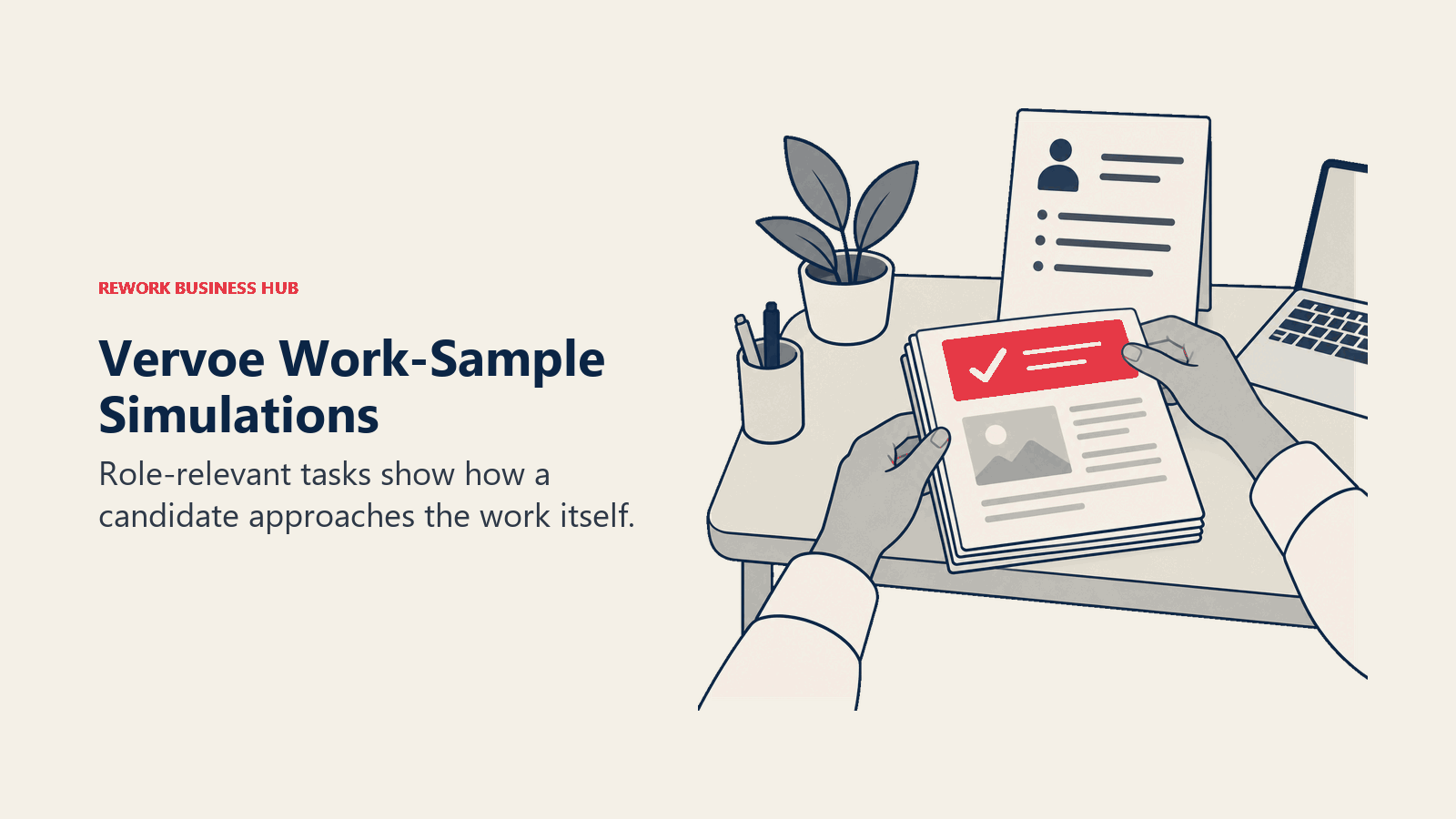
Pricing: Vervoe's pricing page names only an "Enterprise" tier, described as being for large teams and high-volume, skills-first hiring, with no dollar figures anywhere; every visitor is routed to a demo request. Earlier self-serve tiers around $79 and $399 a month have since been removed from the page; treat those numbers as retired if you see them referenced elsewhere, not current.
| What you get | What you don't |
|---|---|
| Work-sample job simulations instead of generic multiple-choice tests | Any published price |
| AI grading built around the actual skill being tested | A self-serve signup or trial pricing page |
| Advanced generative-AI cheating detection | Transparency before a sales conversation |
Best for: Teams that want work-sample simulations over generic multiple-choice tests and can live with a quote-only sales process. Not ideal for: Buyers who want a self-serve, published price to start.
9. iMocha: Skills Intelligence Built for ATS-Embedded Workflows
iMocha frames itself around "skills intelligence" more than a standalone test library: AI-generated custom tests, skill-gap analysis, and reporting meant to plug into an existing ATS rather than replace the workflow around it.
Pricing: No pricing tiers appear anywhere on iMocha's site (imocha.io). The only path to a number is a demo request or a call to its sales line.
| What you get | What you don't |
|---|---|
| Deep ATS-embedded assessment workflows | Any published pricing |
| AI-generated custom test creation | A self-serve trial or transparent tiers |
| Broad role and skill coverage | A budget-tier option for small teams |
Best for: Teams that want assessment data flowing into an existing ATS rather than a separate portal. Not ideal for: Buyers wanting transparent, self-serve pricing.
10. Alooba: Published Pricing for Technical and Data-Role Screening
Alooba covers more than 500 skills across 400-plus role-specific tests, with particular strength in data, analytics, and technical screening. Unlike most of this list, it puts real numbers on its pricing page instead of routing every visitor to sales.
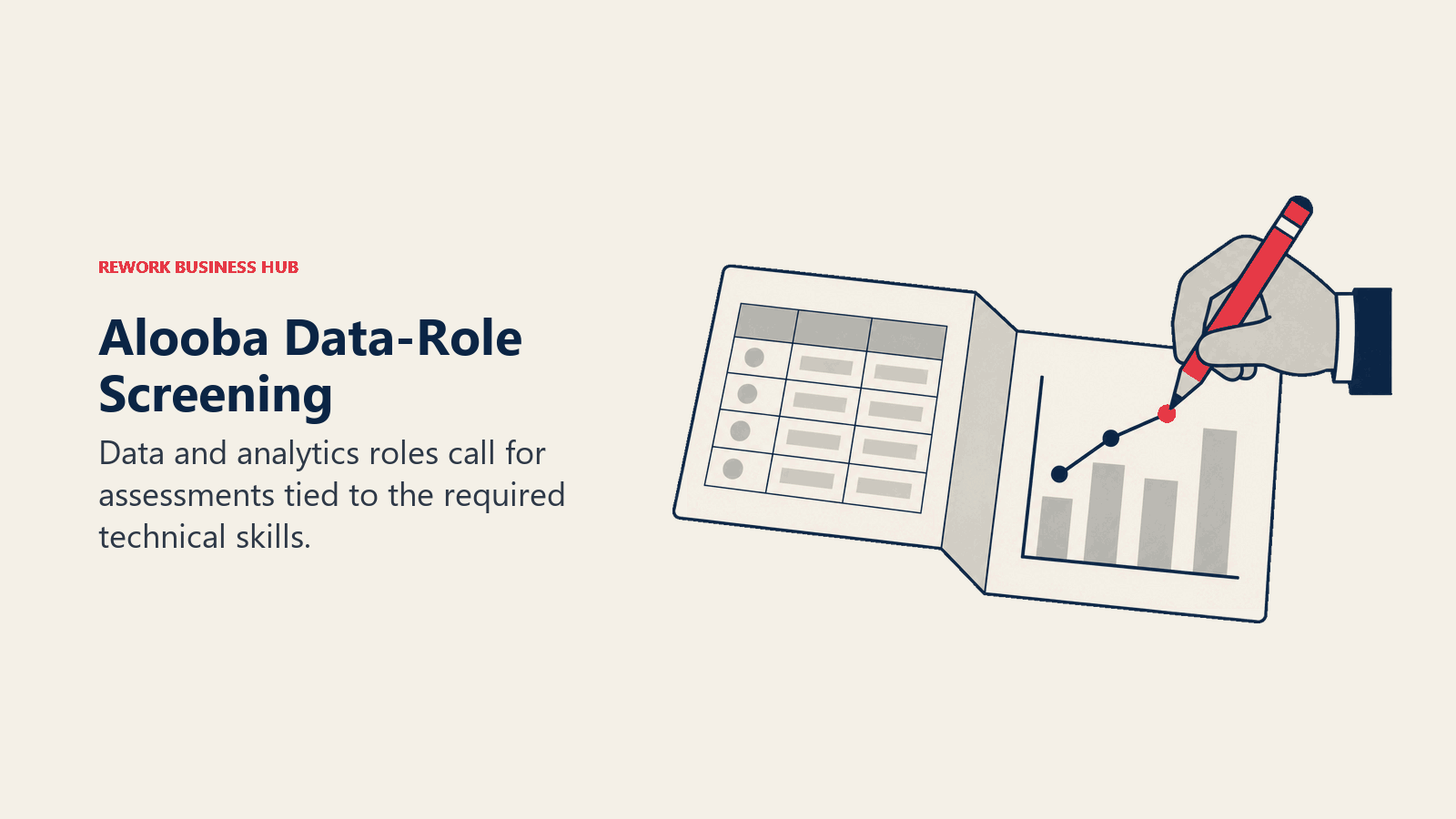
Pricing (confirmed on alooba.com/pricing): Lite starts from $250/month billed monthly (35,000 monthly credits), covering 400-plus role screening tests and customizable multi-test assessments. Professional starts from $575/month billed monthly (100,000 monthly credits) and adds proctoring, ATS integrations, video answers, and coding tests. Enterprise starts from $20,000/year, billed annually with a one-year minimum, and adds custom credit allocation plus SSO and MFA. Annual billing on Lite and Professional includes two months free.
| What you get | What you don't |
|---|---|
| Real, published prices at every non-enterprise tier | Deep coverage outside technical and data roles |
| 500+ skills and 20,000+ questions | A free tier |
| A credit model that scales with candidate volume | A flat monthly rate regardless of usage |
Best for: Technical and data-role screening teams that want published pricing instead of a sales-gated quote. Not ideal for: Teams outside technical or data hiring, where Alooba's library thins out.
11. Harver: High-Volume, Gamified Screening for Frontline Hiring
Harver is built for volume: gamified assessments, video interviewing, and scheduling automation aimed at high-turnover, high-applicant-count hiring (retail, contact centers, hospitality) where throughput and candidate experience matter more than library breadth.
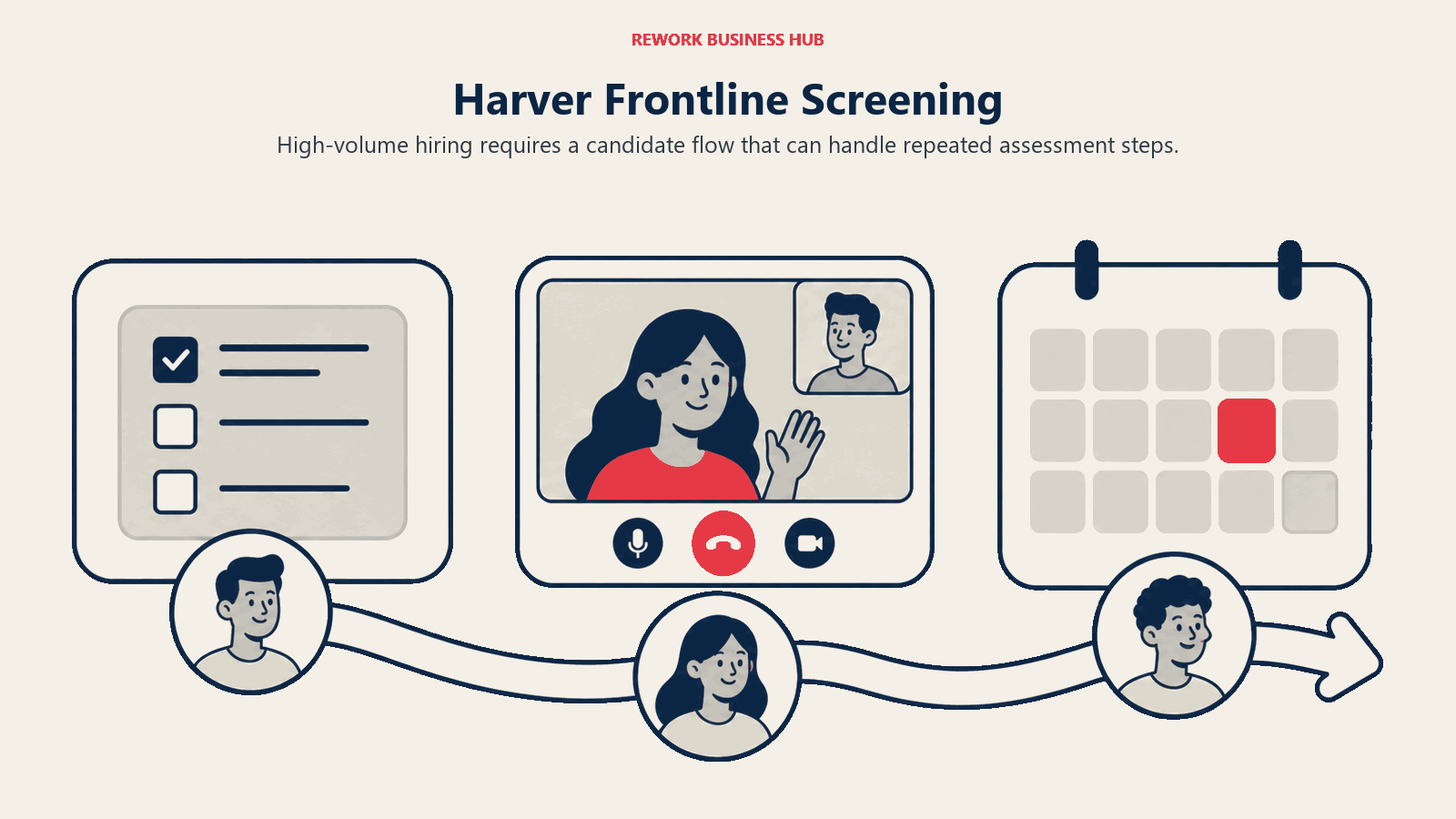
Pricing: Entirely quote-based, per harver.com. There's no public pricing page, only a demo request; the actual number depends on hiring volume and which modules you need.
| What you get | What you don't |
|---|---|
| Purpose-built tooling for high-volume, frontline hiring | Any published pricing |
| Gamified assessments designed for candidate experience at scale | A self-serve trial |
| Video interviewing bundled into the same platform | A fit for low-volume, specialist hiring |
Best for: High-volume, frontline hiring where candidate experience and throughput matter more than test-library breadth. Not ideal for: Low-volume hiring teams; Harver's sales process and depth are built for scale.
12. Bryq: Budget-Friendly AI Matching With Published Pricing
Bryq combines skills and culture-fit assessments with AI-driven job matching, and like Alooba, it publishes an actual number instead of gating everything behind a demo, a genuine draw for small teams comparing options without five sales calls.
Pricing (confirmed on bryq.com/pricing): Pro costs $69/month on a 1-year annual commitment ($828 total per year), or $168/month if you pay month-to-month instead. It includes self-service ATS integration, all assessment types, unlimited invitations, an AI job builder, and a culture-fit option. Enterprise is custom quoted and adds guided integrations, expanded candidate results, a validated-hiring option, onboarding support, and a dedicated I/O psychologist. Fair-use terms cap Pro to internal or direct recruitment; staffing agencies need separate pricing.
| What you get | What you don't |
|---|---|
| A published, low-cost monthly price | The validated-hiring option (Enterprise only) |
| Unlimited invitations and all assessment types on Pro | A dedicated I/O psychologist below Enterprise |
| Self-service ATS integration included | A large, established brand track record |
Best for: Small teams (roughly 1 to 15 employees) that want published, low-cost pricing and AI matching without an enterprise sales process. Not ideal for: Recruiting agencies, or teams that need the validated-hiring option, which sits on Enterprise only.
13. Hire Success: Pay-As-You-Go Testing for Small Hiring Teams
Hire Success skips tiered plans entirely. Pricing is set by hiring volume over a chosen period, with a choice between an unlimited-testing subscription or pay-as-you-go credits that never expire, aimed at small businesses that don't want an annual contract.
Pricing: Not published on hiresuccess.com. Hire Success requires a quote based on hiring volume after a short sales call. The vendor states there are no long-term contracts, plans can be upgraded, downgraded, or canceled anytime, and support, training, and implementation are free at every level.
| What you get | What you don't |
|---|---|
| No long-term contract; cancel or change plans anytime | A published starting price |
| Credits that never expire under the pay-as-you-go option | A self-serve signup without a sales call |
| A single unified credit across personality, integrity, and aptitude tests | Enterprise-scale multi-country deployment |
Best for: Small businesses that hire in bursts and want pay-as-you-go credits over a fixed subscription. Not ideal for: Teams that want a published number to compare against other platforms before talking to sales.
14. TestDome: Prepaid, Per-Candidate Testing With No Subscription
TestDome skips the subscription model completely. You buy a pack of candidate credits upfront for technical and general skills tests and pay only when you actually test or interview someone, a structure built for teams that hire unevenly through the year and don't want a recurring bill sitting idle between hiring pushes.
Pricing (confirmed on testdome.com/pricing): Prepaid packs, no subscription. Starter costs $20 per candidate (5 candidates for $100). Small drops to $16 per candidate (25 for $400). Medium runs $10 per candidate (100 for $1,000). Large runs $8 per candidate (300 for $2,400). Extra Large runs $7 per candidate (600 for $4,200). Packs never expire, unused invites are refundable if a candidate doesn't test within 6 days, packs can be combined, and the account automatically tops up once the balance drops to 90% depletion.
| What you get | What you don't |
|---|---|
| A prepaid, per-candidate price with zero subscription commitment | A broad personality or validated-psychometric library |
| Packs that never expire and can be combined | Job-simulation or AI-interviewer functionality |
| Automatic top-up so testing never stalls mid-hire | The lowest per-candidate rate below 600-candidate volume |
Best for: Teams with uneven hiring volume that want to pay only for candidates actually tested, with no idle monthly bill. Not ideal for: Teams that need broad personality or validated-psychometric coverage; TestDome's strength is skills and technical testing, not the full battery.
Sizing and Persona Fit
| Company Size | Best Fit | Why |
|---|---|---|
| 1 to 15 employees | Bryq, TestDome, TestGorilla Free or Core | Published, low-cost entry pricing without a sales call |
| 15 to 50 employees | TestGorilla, Alooba, CodeSignal Build | Room to grow into a paid tier without hitting enterprise pricing |
| 50 to 200 employees | HackerRank, Alooba Professional, The Predictive Index | Volume-ready technical or behavioral testing with room to add seats |
| 200+ employees / enterprise | SHL, Criteria Corp, The Predictive Index (Performance/Engagement), Harver | Multi-country validation, throughput at scale, dedicated support |
| High-volume frontline hiring | Harver, TestGorilla Plus | Built for hundreds of candidates a month, not dozens |
Stage Fit: Where Each Tool Belongs in the Funnel
| Hiring Stage | Best Tool(s) | Why |
|---|---|---|
| Early resume screen / high-volume top-of-funnel | Harver, TestGorilla, Hire Success | Fast, low-friction first filter before a human ever looks |
| Mid-funnel skills verification | Alooba, iMocha, TestDome | Confirms a specific skill claim before scheduling an interview |
| Technical / onsite-equivalent round | HackerRank, CodeSignal | Auto-graded coding plus live or AI-run technical interviews |
| Final-round validated decision support | SHL, Criteria Corp, The Predictive Index, Wonderlic | Deepest validation evidence, used to inform, not replace, the hiring decision |
| Post-simulation work-sample review | Vervoe, Bryq | AI-graded, job-simulation style tasks reviewed before an offer |
If Neither Fits: When Assessment Isn't the Real Gap
Worth naming honestly: every tool on this list is built to solve one job, scoring candidates against cognitive, personality, skills, or simulation-based tests before they reach a human interviewer. Rework doesn't build or sell an assessment or testing product, and nothing here should be read as a testing-capability claim.
But testing is usually one stage in a longer hiring process, and for some teams the real friction shows up after the test: assessment results, structured interview notes, and the eventual employee record all live in systems that don't talk to each other. Rework's Interview module gives hiring teams structured interview kits and scorecards on the same platform as its People line (HRIS, time and attendance, timesheets), so a candidate who passes an assessment elsewhere doesn't disappear into a disconnected HR system after interview. It's not automated code evaluation, not a psychometric test library, and not a specialist simulation platform, and it's worth a look only if that handoff, not the test itself, is the gap you're closing. Pricing is quoted per organization; see rework.com/pricing for details.
How to Choose: Decision Framework
Pick by the specific gap you're closing, not by brand familiarity. A team choosing an assessment for engineering hiring shouldn't make the same choice as one choosing for validated psychometric credibility or published, self-serve pricing.
| If your team needs... | Best pick |
|---|---|
| One broad platform covering cognitive, personality, and skills from a single login | TestGorilla |
| Scientifically validated psychometrics bundled with video interviewing | Criteria Corp |
| One behavioral assessment reused across hiring, teams, and management coaching | The Predictive Index |
| The deepest, multi-country validation research bench available | SHL |
| The single most-researched cognitive ability test on the market | Wonderlic |
| Deep, auto-graded coding tests and live technical interviews | HackerRank |
| AI-run interviews across both technical and go-to-market roles | CodeSignal |
| Work-sample job simulations instead of multiple-choice tests | Vervoe |
| Skills intelligence embedded directly into your existing ATS | iMocha |
| Published, self-serve pricing for technical and data-role screening | Alooba |
| High-volume, gamified screening built for frontline hiring | Harver |
| A transparent, budget-friendly price with AI-driven matching | Bryq |
| Pay-as-you-go testing with no long-term contract | Hire Success |
| A prepaid, per-candidate price with zero subscription commitment | TestDome |
| Interview records and the employee record kept apart from assessment results | Rework (see note above) |
Frequently Asked Questions about Pre-Employment Assessment Tools
Which type of pre-employment assessment do I actually need?
It depends on what you're trying to predict. Cognitive ability tests (Wonderlic, SHL, Criteria Corp) predict general problem-solving speed. Personality and behavioral assessments (The Predictive Index, Bryq) predict work style and team fit. Skills tests (TestGorilla, Alooba, TestDome) verify a specific, job-relevant skill. Job simulations (Vervoe, Harver) predict on-the-job performance directly through work-sample tasks. Technical platforms (HackerRank, CodeSignal) auto-grade code and run live or AI interviews for engineering roles. Most hiring processes end up using two or three types together, not just one.
Is pre-employment testing legally risky under EEOC rules?
Any selection procedure, including a test, can create legal exposure if it produces adverse impact against a protected group. The EEOC's Uniform Guidelines use a four-fifths rule as an initial screen (a selection rate for one group below 80% of the highest group's rate can signal adverse impact), and employers are generally expected to show a test is job-related and validated if that happens. This applies to every vendor in this guide, not one tool's flaw.
Do cognitive ability tests carry more adverse-impact risk than personality tests?
Published research generally finds cognitive ability tests produce larger average score differences between racial groups than personality or integrity measures do, even though the actual job-performance gap is much smaller. That's not a reason to avoid cognitive testing outright, a cognitive test combined with a structured interview predicts performance better than either alone, but it's a reason to ask any vendor for its validation evidence before assuming a popular test is automatically defensible.
Which assessment tool has the most published, self-serve pricing?
CodeSignal, Alooba, Bryq, and TestDome all publish real numbers on their pricing pages without a sales call. Most validated-psychometric vendors in this category, Criteria Corp, Wonderlic, SHL, and The Predictive Index above its entry tier, are quote-only.
Should I use a generalist platform like TestGorilla or a specialist tool for each assessment type?
It depends on hiring volume and role mix. A generalist platform makes sense for a small team hiring across many different roles from one login. Once a single role type, engineering, senior leadership, or high-volume frontline hiring, makes up most of your requisitions, a specialist tool built for that exact job (HackerRank for coding, The Predictive Index for behavioral fit, Harver for volume) usually goes deeper than a shared category inside a broader library.
Does a shorter assessment really reduce candidate drop-off?
Less than most buyers assume. Research spanning hundreds of thousands of pre-hire assessments found that shortening one by 15 minutes improved completion rates by only 1 to 2%, and roughly 10% of candidates opt out in the first couple of pages regardless of length. How many separate steps the hiring process has appears to matter more than assessment length alone.
What changed in pre-employment assessment for 2026?
AI-run interviews moved from differentiator to standard feature. CodeSignal's AI Interviewer and TestGorilla's own AI interviews on its Plus tier both now ship as core functionality rather than an add-on. Vervoe quietly retired its published self-serve pricing tiers in favor of an Enterprise-only, quote-based model, and Criteria Corp now sells three separate bundles (Assess, Interview, Hire) instead of one flagship product.
What to Do Next
Pick two or three tools mapped to the assessment type you actually need, not the platform with the biggest overall library, and run each through a real requisition instead of a sandbox demo. Send an open role through each platform's assessment flow, have a hiring manager review the results against candidates you've already hired successfully, and ask every vendor for the validation evidence behind whichever tests you plan to use.
If technical depth is the gap, start with HackerRank or CodeSignal. If validated psychometric credibility matters most, start with SHL, Wonderlic, or Criteria Corp. If a published price without a sales call is the priority, start with Alooba, Bryq, or TestDome. For structured interview follow-through once a candidate clears assessment, see Interview Scorecards vs Rubrics, and if AI is already reshaping how your recruiters screen and interview, see AI in the Recruiter Workflow. And if the gap that's actually costing you time sits after the test, in how assessment results, interview notes, and the employee record hand off to each other, see the note on Rework's Interview module above.
Related Resources:
- Best TestGorilla Alternatives in 2026
- Best HackerRank Alternatives in 2026
- Best CodeSignal Alternatives in 2026
- HackerRank vs CodeSignal
- Best Applicant Tracking Systems in 2026
- Best Video Interview Software in 2026
- Best VidCruiter Alternatives in 2026
- Best HireVue Alternatives in 2026
- AI in the Recruiter Workflow
- Interview Scorecards vs Rubrics

Principal Product Marketing Strategist
On this page
- Key Facts
- Which Assessment Type Do You Actually Need?
- Quick Comparison Table
- Where Assessment Fits in Your Hiring Stack
- 1. TestGorilla: The Broadest Library, One Login for Generalist Hiring
- 2. Criteria Corp: Validated Psychometrics Bundled With Video Interviewing
- 3. The Predictive Index: One Behavioral Assessment for Hiring and Management
- 4. SHL: The Enterprise Standard for Global, Validated Assessment
- 5. Wonderlic: The Cognitive Ability Test With the Longest Track Record
- 6. HackerRank: Deep Technical Screening and Live Interviews
- 7. CodeSignal: AI-Graded Technical and Go-To-Market Interviews
- 8. Vervoe: Skills-First Job Simulations With AI Grading
- 9. iMocha: Skills Intelligence Built for ATS-Embedded Workflows
- 10. Alooba: Published Pricing for Technical and Data-Role Screening
- 11. Harver: High-Volume, Gamified Screening for Frontline Hiring
- 12. Bryq: Budget-Friendly AI Matching With Published Pricing
- 13. Hire Success: Pay-As-You-Go Testing for Small Hiring Teams
- 14. TestDome: Prepaid, Per-Candidate Testing With No Subscription
- Sizing and Persona Fit
- Stage Fit: Where Each Tool Belongs in the Funnel
- If Neither Fits: When Assessment Isn't the Real Gap
- How to Choose: Decision Framework
- What to Do Next