Best CodeSignal Alternatives in 2026: 14 Technical Assessment Tools for Engineering Hiring
Turn this article into takeaways for your work.


Each assistant summarizes the article only for you and suggests best practices for your work.
If you're staring down a CodeSignal renewal and the credit math no longer adds up, the strongest swaps are HackerRank and Codility for a close, like-for-like replacement, TestDome or Coderbyte if you want to stop tracking credits entirely, and Karat if the real problem is that no software test can outrun AI-assisted cheating. This list evaluates 14 alternatives on pricing, credit-model transparency, and real-world signal.
Give CodeSignal credit first. Build, its entry tier, runs $79 a month billed annually and bundles AI interviewers for engineering, product, and design roles with AI proctoring and ID verification on every paid plan, genuinely competitive for what it includes. The trouble shows up once volume swings: a credit burns the moment a candidate starts an assessment, not when they're invited, on-demand overage runs $20 a credit, and the jump to Grow for broader go-to-market interview coverage is roughly a six-fold price increase. That's where the tools below matter.
Key Facts
Key Facts: Technical Hiring and AI Interview Cheating
- 38.5% of candidates were flagged for AI-assisted cheating across 19,368 live technical interviews tracked between July 2025 and January 2026, rising to roughly 48% in software engineering roles versus 12% in sales. (Fabric, 2026)
- 61% of candidates flagged for AI-assisted cheating still scored above the passing bar and would have advanced undetected. (Fabric, 2026)
- More than 1 in 5 job seekers (22%) say they've already used AI in real time during a live interview, per a 2026 survey of 1,000 active US job seekers. (Resume Genius, 2026)
- An analysis of technical-interview data found no correlation between a candidate's LeetCode contest rating and their actual interview percentile. (interviewing.io)
- The average US cost per hire reached $5,475 for non-executive roles in 2025. (SHRM, 2025)
Quick Comparison Table
This list is evaluated against CodeSignal's own core job: coding assessments and AI-driven technical interviews. For the full ATS shortlist beyond assessment tools, see Best Applicant Tracking Systems in 2026.
| Tool | Best For | Starting Price | Key Strength | Key Limitation |
|---|---|---|---|---|
| HackerRank | The closest household-name swap | $199/mo (Starter, monthly) or $1,990/yr annual | Huge, established question library; 4.6/5 on G2 | Pro/Enterprise pricing unpublished, steep jump reported |
| Codility | Task-leakage protection | $1,200/yr (Starter, annual only) | Agentic AI Copilot with a reviewable activity log | Starter caps at 1 user, 120 invites/yr |
| TestDome | Pay per candidate, no credits | $20/candidate (Starter pack) | Prepaid packs that never expire | Costlier at high, steady volume |
| Coderbyte | Flat pricing, no credit math | $500 per 50 invites (pay as you go) | Locked pricing while you auto-renew | Subscription tiers aren't publicly priced |
| CoderPad | Live pairing over solo puzzles | $80/mo (Starter, annual) | Real-time collaborative IDE, unlimited users | No free plan any more |
| Karat | A live human interviewer | Quote on request | Trained interview engineers, hardest to fake | Enterprise scale, not self-serve |
| TestGorilla | Cross-functional testing | Free; $142/mo (Core, annual) | 350+ tests spanning every function | Core caps at 2 full-access seats |
| HackerEarth | Hackathon-driven sourcing | Free; ~$209/mo (reported) | Built-in hackathons and developer sourcing | Dollar pricing above free isn't published |
| Qualified.io (Andela) | Real repos, not puzzles | Quote on request | Unit-test-graded, real-world tasks | No published pricing; annual only |
| CodeSubmit | Real Git-repo take-homes | $49/mo (Solo) | Real commits, automated AI review | SSO is a $3,000/year add-on |
| iMocha | Enterprise skills intelligence | Quote on request | 10,000+ evaluations, many skill types | Heavier than most single teams need |
| Vervoe | Auditable AI grading | Quote on request | Independently audited, bias reporting | No published pricing; enterprise-only |
| Woven | Paying mostly on hires | $249/mo + $4,000/hire | Cost tied to actual hiring outcomes | Per-hire fee adds up at volume |
| SkillPanel (formerly DevSkiller) | Skills data beyond one hire | From $1/employee/mo | Scales with headcount, not hiring volume | Less of a pure hiring tool now |
Pricing note: Several tools here, including CodeSignal's own Pro tier, don't publish full pricing above the entry point. Figures marked "(reported)" come from third-party research current as of September 2026; confirm with the vendor before you budget.
What changed in 2026: DevSkiller rebranded to SkillPanel on September 29, 2025, and now publishes a per-employee-per-month rate instead of quoting every deal, a sign of how far its pitch has shifted from single-purpose hiring tool toward workforce-wide skills data (SkillPanel). AI-assisted interview cheating also kept escalating: a Columbia student project called Interview Coder rebranded as Cluely and raised a $15 million Series A led by Andreessen Horowitz in June 2025, two months after a $5.3 million seed round (TechCrunch). See where AI helps versus creates risk in recruiting.
Why Teams Leave CodeSignal
CodeSignal earns its renewal for a lot of teams. Build costs $79 a month on annual billing (or $99 month to month) and bundles AI interviewers for engineering, product, and design roles, AI proctoring, and ID verification into one product, genuinely cheap for what it covers next to buying a separate proctoring tool and a separate interview platform. The complaints that push teams to look elsewhere aren't about the base price. They're about what happens once real hiring volume hits the model underneath it.
A credit burns on start, not on invite, which hides the real cost until it lands. CodeSignal's own pricing page is explicit: a credit is consumed when a candidate begins an assessment or interview, and once you've used your included allocation, on-demand credits cost $20 each (CodeSignal). That sounds minor until you run the arithmetic at real volumes.
The math on outgrowing Build. Build's $948 annual list price includes 60 credits. Every candidate who starts past that costs $20 more. Grow, by comparison, runs $479/month annual, or $5,748/year, for up to 420 credits. Here's where each plan is actually cheaper, depending on how many candidates start an assessment in a year:
| Candidates started per year | Build effective annual cost | Grow annual cost (fixed) | Cheaper plan |
|---|---|---|---|
| 60 (included in Build) | $948 | $5,748 | Build |
| 150 | $2,748 | $5,748 | Build |
| 200 | $3,748 | $5,748 | Build |
| 300 | $5,748 | $5,748 | Tie |
| 420 (Grow's cap) | $8,148 | $5,748 | Grow |
Below roughly 300 starts a year, staying on Build and paying the $20 overage is cheaper than upgrading. Above that, Grow wins on pure cost, but only if you also need Grow's expanded interview coverage. If your hiring is purely engineering, the extra $4,800 a year buys AI interviewers for sales, CS, and marketing roles you may never use, credits you're paying for on top of the ones you actually need.
The Build-to-Grow jump is priced like a package upgrade, not a volume upgrade. Grow isn't "more Build credits at the same rate." It's a six-fold jump in the sticker monthly price that happens to include a persona expansion (sales, CS, marketing interviewers) most engineering-only teams didn't ask for. A team that outgrows 60 credits purely on hiring volume, not on role coverage, ends up choosing between paying overage indefinitely or buying capability it won't use.
Pro tier opacity mirrors the exact problem buyers already have with HackerRank. CodeSignal's Pro tier is custom quoted with custom credit allocations, no published number. That's the same shape of problem as HackerRank's own unpublished Pro and Enterprise tiers: the entry price is clear, and the tier serious hiring volume actually needs isn't. Any team auditing its recruiter tech stack should budget for that opacity before committing.
AI-assisted cheating is a shared problem, not a CodeSignal-specific one. To be fair, CodeSignal's AI proctoring and ID verification ship on every paid tier, ahead of several tools on this list. But the underlying pressure is category-wide: an analysis of 19,368 live technical interviews found 38.5% of candidates flagged for AI-assisted cheating, hitting 48% in software engineering roles (Fabric). Every serious alternative below now sells some combination of proctoring, ID verification, or a live human, because none of them can claim to have solved it outright.
1. HackerRank: The Established Player You Already Know
HackerRank is the closest thing to a household name in this category, rated 4.6 out of 5 across more than 545 G2 reviews (G2). Starter runs $199/month month-to-month, or $1,990/year billed annually (about $165/month effective), for one user and 120 candidate attempts a year, with $20 per additional attempt beyond that, a per-attempt overage that runs the same as CodeSignal's per-credit overage (HackerRank).
Pro and Enterprise aren't published. Buyer-reported purchase data from 185 tracked purchases puts the median contract around $13,099/year, ranging from roughly $4,508 to $45,861 (Vendr, reported).
| What you get | What you don't |
|---|---|
| A large, established question library and G2 track record | A published Pro or Enterprise price |
| Advanced plagiarism detection and question-leak protection | AI interviewer breadth across GTM roles like CodeSignal's Grow |
| A single, familiar switch for teams already used to the format | Escape from a per-unit overage charge past the included allotment |
| An annual-billing discount versus month-to-month | Predictable cost at high, swinging candidate volume |
Pricing: $199/month or $1,990/year (Starter); Pro and Enterprise are quote only. (HackerRank)
Best for: Teams that want the most established name in the category and don't mind a similar per-unit overage model. Not ideal for: Teams specifically leaving CodeSignal because they're tired of credit math; HackerRank's $20 per-attempt overage is structurally the same problem.
2. Codility: Task-Leakage Protection and Your Own Codebase
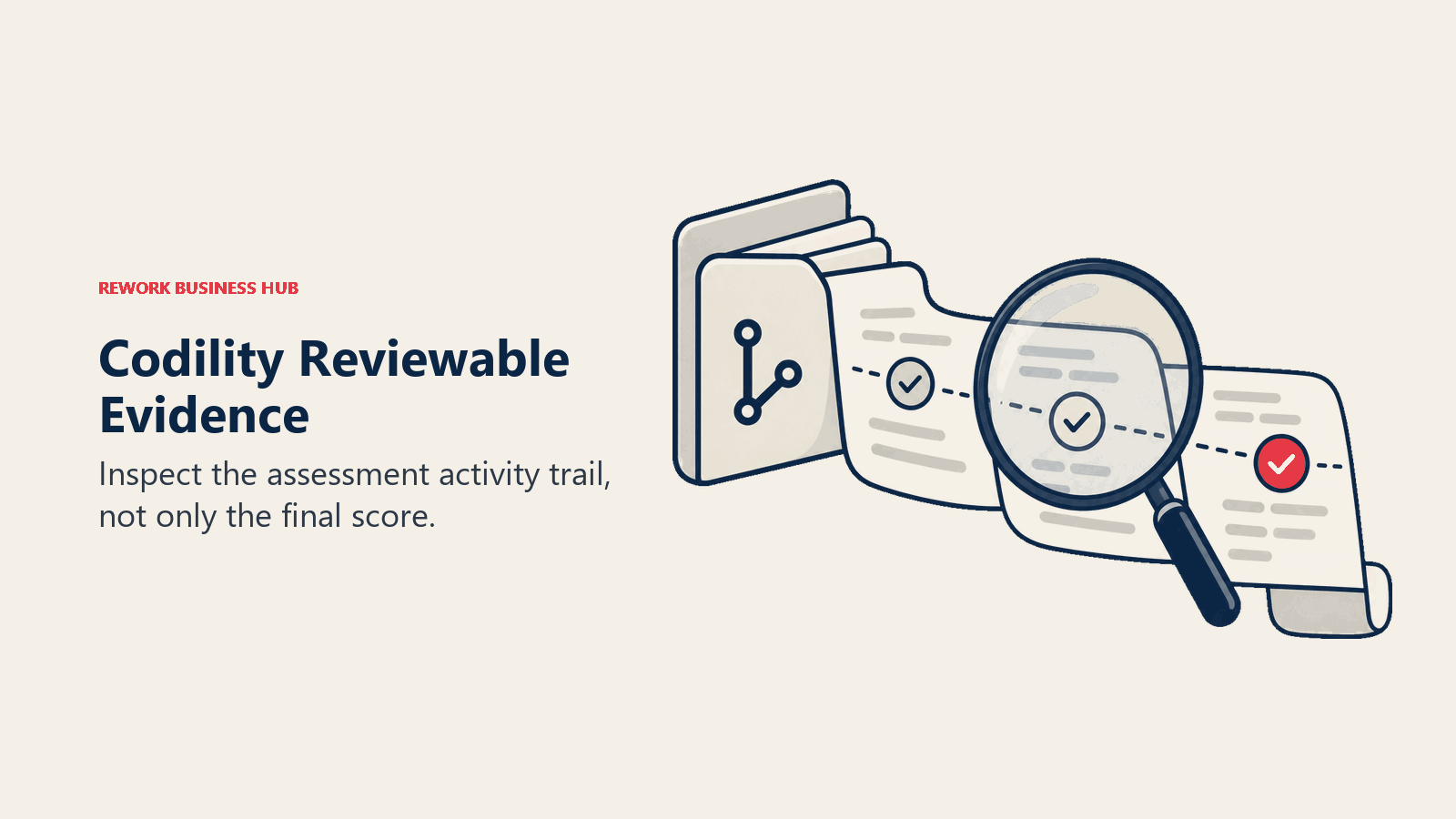
Codility's pitch centers on integrity rather than credit flexibility: task-leakage protection ships on every tier, and its Agentic AI Copilot keeps a reviewable activity log instead of a black-box AI score. Starter costs $1,200/year, annual only, for one user and up to 120 invite credits a year.
Scale runs $6,000/year on annual billing, roughly $500/month equivalent, covering three users and up to 300 invite credits capped at 25 a month, with custom task building from your own codebase through MCP. Paying month-to-month instead of annually on Scale costs roughly 17% more. Custom unlocks Skills Intelligence, premium video proctoring, and integrations with Greenhouse, Lever, Ashby, Workday, and SAP (Codility).
| What you get | What you don't |
|---|---|
| Task-leakage protection and a reviewable AI Copilot activity log | A published Custom-tier price |
| Custom task building from your own codebase via MCP | Starter access for more than one user |
| A roughly 17% annual-billing discount on Scale | Monthly invites past 25 without upgrading |
| A large engineering, AI, and system-design task library | A free tier |
Pricing: $1,200/year (Starter, 1 user); $6,000/year (Scale, annual, 3 users); Custom is quote only. (Codility)
Best for: Engineering orgs that want integrity tooling and tasks built from their own real codebase. Not ideal for: Single-user teams that outgrow 120 invites fast; the jump to Scale is a real price step.
3. TestDome: Prepaid Packs, No Subscription to Manage
TestDome skips subscriptions and credit tiers entirely: prepaid, per-candidate packs that never expire. Starter costs $20/candidate (5 for $100), Small $16 (25 for $400), Medium $10 (100 for $1,000), Large $8 (300 for $2,400), Extra Large $7 (600 for $4,200). Unused invites are refundable if a candidate doesn't test within 6 days, packs can be combined, and an automatic top-up kicks in once a balance hits 90% depleted (TestDome).
Every tier includes the same feature set: AI-driven proctoring, 2,000-plus questions, video interviews, ATS integrations, and API access, screening more than 100 skills, not just coding. Customers include the NHS, Adobe, EY, and Indeed.
| What you get | What you don't |
|---|---|
| No credits and no expiration; pay only when you test someone | A per-seat plan cheaper at very high, steady volume |
| Identical features at every pack size, including AI proctoring | Custom task-building tools like Codility's |
| Packs that never expire, unlike credits that reset annually | Live pairing as a format option |
| Screening across 100+ skills, not just coding | A published custom-volume rate without sales |
Pricing: $7-$20/candidate depending on pack size, prepaid, no subscription. (TestDome)
Best for: Teams that hire in bursts and don't want to track a credit balance between pushes. Not ideal for: High, steady-volume hiring, where a subscription usually costs less per candidate.
4. Coderbyte: One Flat Rate, No Credit Math At All
Coderbyte's pitch is the direct opposite of CodeSignal's model: it advertises what it calls the only unlimited-usage plan with pricing locked for as long as you keep auto-renewing, no credit consumption to track. Its published, fetchable pricing is a pay-as-you-go rate of $500 per 50 invites, with invites expiring after 365 days (Coderbyte).
Coderbyte's subscription tiers (Pro, Pro+, Bundle) sell unlimited usage, but the company doesn't publish a dollar figure for them on any page we could fetch; get a quote before assuming a number you've seen elsewhere is current.
| What you get | What you don't |
|---|---|
| A published pay-as-you-go rate with no credit math | A published subscription price for unlimited usage |
| Invites that don't expire for a full year | AI-interviewer depth like CodeSignal or Codility |
| A flat-usage philosophy that's the opposite of a credit model | Skills-intelligence features for workforce planning |
| A broad question library across languages and formats | A free tier |
Pricing: $500 per 50 invites (pay as you go, published); Pro/Pro+/Bundle subscription tiers are not publicly priced. (Coderbyte)
Best for: Budget-conscious teams that want to buy invites once and stop thinking about credits. Not ideal for: Teams that need a firm subscription number before they can budget; get that number from sales first.
5. CoderPad: Live Pairing, Unlimited Users on Every Plan
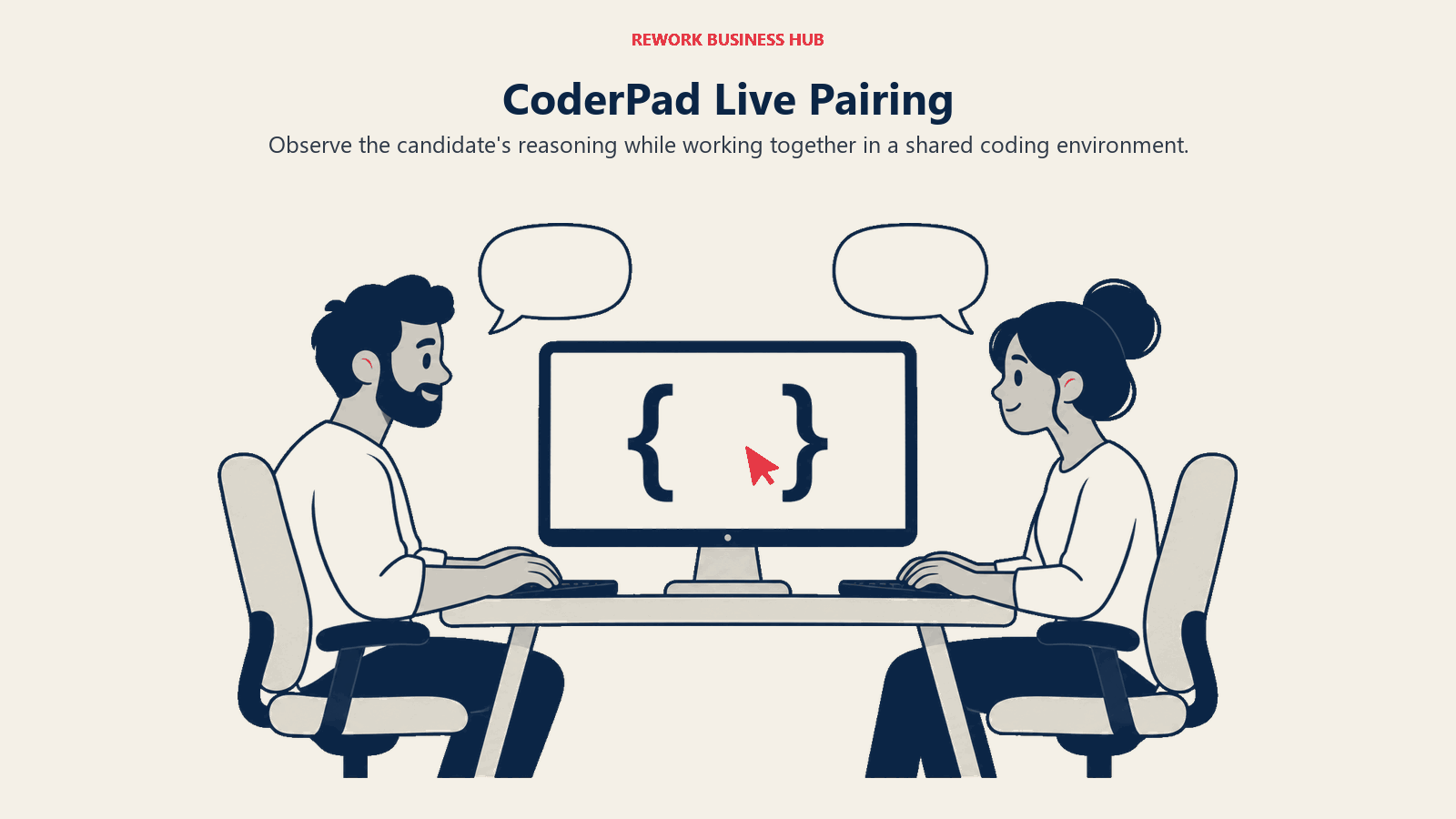
CoderPad starts from a different premise than CodeSignal: instead of an AI interviewer or a solo timed test, its core product is a real-time, collaborative IDE built for live pairing, so an interviewer watches the reasoning happen instead of grading a transcript afterward.
Starter runs $80/month billed annually (60 interviews/year) or $120/month billed monthly (5 interviews/month). Team costs $400/month annually (360 interviews/year) or $500/month monthly (30 interviews/month). Unlimited users are included on every plan, and AI Assist ships standard with no add-on billing. There is no free plan any more, only a 2-week trial on Starter and Team; older listings that quote a free tier are stale (CoderPad).
| What you get | What you don't |
|---|---|
| A live, collaborative coding environment built for pairing | A free tier (retired; 2-week trial only now) |
| Unlimited users on every tier, including Starter | Advanced anti-cheating and webcam proctoring below Enterprise |
| 400+ to 4,000+ questions depending on tier | A credit-free flat rate; interviews still count against a cap |
| Annual billing that's meaningfully cheaper than monthly | Async take-homes as the primary format |
Pricing: $80-$120/month (Starter); $400-$500/month (Team); Enterprise is custom, volume-based. (CoderPad)
Best for: Teams whose real complaint is that CodeSignal's AI interview doesn't show how a candidate actually thinks. Not ideal for: Teams that want async take-home screening as the primary format.
6. Karat: A Live Interview Engineer Instead of Software
Karat takes the most direct escape route from any credit or software-scoring model: instead of selling assessment software, it sells the technical interview itself as a service, conducted live by a trained third-party interviewer it calls an Interview Engineer, backed by more than 600,000 interviews conducted to date. Karat also runs "live AI-native scenarios" evaluating how a candidate actually works alongside AI tools, a direct answer to the same cheating problem CodeSignal's proctoring is trying to solve from the software side.

Karat publishes no pricing anywhere on its own site; every path routes to a sales conversation (Karat).
| What you get | What you don't |
|---|---|
| A trained human interviewer running every session live | Self-serve pricing or quick signup |
| A consistent technical bar across geographies | A budget option for small teams |
| Built-in evaluation of how candidates work alongside AI | Software you operate yourself, or credits to track |
| Deep benchmarking data from 600,000+ interviews | A quick implementation; enterprise sales cycle |
Pricing: Quote on request, enterprise sales cycle. (Karat)
Best for: Enterprises that want interviewing itself outsourced and standardized, no scoring model to audit. Not ideal for: Small teams or budget-conscious hiring.
7. TestGorilla: Coding Is One Test Among 350, Not the Whole Product
TestGorilla fits once hiring has grown past pure engineering screening. Coding is one category inside a library of 350-plus tests spanning cognitive ability, personality, software skills, and role-specific work samples, so one platform screens an engineer, a support hire, and a sales rep alike.
Free covers $0/month, 10 credits a month, and 1 full-access seat. Core runs $142/month on an annual commitment ($1,704/year) and includes 2 full-access seats, not unlimited, with the complete test library, video questions, and a 2-million-plus candidate database. Plus starts at $400/month on an annual commitment ($4,800/year) and moves to unlimited full-access seats, adding AI interviews, job simulations, and custom coding challenges. Credits run 1 per candidate for a skill test, video question, or ID verification, and 2 per candidate for an AI interview (TestGorilla).
| What you get | What you don't |
|---|---|
| 350+ tests spanning every function, not just engineering | Coding depth as deep as a coding-only platform |
| A genuinely usable free tier | Unlimited seats below Plus (Core caps at 2) |
| A large built-in candidate-sourcing database | A single flat price for unlimited hiring volume |
| Job simulations and custom coding challenges on Plus | A credit-free plan; AI interviews still cost 2 credits each |
Pricing: Free to $142/month (Core, annual, 2 seats); from $400/month (Plus, annual, unlimited seats); Enterprise custom. (TestGorilla)
Best for: Hiring teams that need to evaluate engineers alongside every other function on one platform. Not ideal for: Engineering-only teams wanting language-specific coding depth as the primary product.
8. HackerEarth: Hackathons and Sourcing Bundled In
HackerEarth matters if sourcing, not just screening, is part of the problem. Alongside coding assessments and interviews, it runs public and private hackathons and maintains a developer community that doubles as a sourcing channel.
Free covers 5 test invites and 3 interview invites a month for up to 2 admins. Startup names 20 test invites and 5 interview invites monthly for up to 5 admins; Enterprise names 50 test invites and 15 interview invites monthly for up to 10 admins, both with a 14-day trial. HackerEarth's own blog names those invite counts but doesn't publish dollar figures for either paid tier (HackerEarth); third-party research puts Startup around $209/month and Enterprise around $419/month, treat those as estimates until confirmed with sales (Truffle, reported).
| What you get | What you don't |
|---|---|
| Hackathons and developer-community sourcing built in | A vendor-published dollar rate above the free tier |
| A usable free tier for occasional hiring | Price certainty without a sales call |
| Clearly named invite counts per tier | API access below Enterprise |
| Broad language and skill coverage | The AI-interviewer depth of CodeSignal or Codility |
Pricing: Free (5 tests/3 interviews per month); paid tiers reported around $209-$419/month. (HackerEarth; reported via Truffle)
Best for: Teams that want hackathon-driven sourcing bundled with assessment. Not ideal for: Teams that want a published dollar price before talking to sales.
9. Qualified.io: Real Repositories Instead of Algorithm Puzzles
Qualified.io, built by the team behind coding-practice site Codewars and now sold under Andela's ownership as Andela Qualified.io, leans into a specific critique that applies to CodeSignal's question bank too: algorithm puzzles don't look like the job. Candidates work in a real dev environment with integrated testing frameworks (Mocha, RSpec, PHPUnit, JUnit), solving practical tasks graded by unit tests, with code playback and plagiarism detection built in.
Pricing isn't published; the site directs prospects to a consultation or a 14-day free trial that includes up to 5 free assessment results, billed annually once you're a paying customer (Qualified.io).
| What you get | What you don't |
|---|---|
| Real-world, unit-test-graded tasks instead of puzzles | Published, self-serve pricing |
| A developer-friendly IDE with real testing frameworks | Monthly billing; plans are annual |
| Code playback and pair-programming support | A large public question bank the size of CodeSignal's |
| Built by the team behind Codewars | Independent branding; now under Andela |
Pricing: Quote on request, billed annually; 14-day free trial. (Qualified.io)
Best for: Teams whose complaint is that timed puzzles don't resemble the actual engineering work. Not ideal for: Teams that want a published rate before a sales conversation.
10. CodeSubmit: Real Git Commits, Not a Sandbox
CodeSubmit's take-home assignments run against real repositories, candidates submitting actual Git commits rather than pasting code into a sandbox, plus automated AI review flagging repo structure, testing gaps, and follow-up ideas. Solo runs $49/month for 3 candidate credits and 1 active assignment. Startup jumps to $199/month for 15 credits and unlimited active assignments, though SSO is a separate $3,000/year add-on even here.
Scaleup, the most popular plan, costs $299/month for 30 credits with advanced permissions. Business runs $499/month for 60 credits. Enterprise starts at $12,000/year for 120 candidates monthly with SSO included. Overage candidates cost $20 each on any paid tier, and annual billing saves 20% (CodeSubmit).
| What you get | What you don't |
|---|---|
| Real Git-repo take-homes with automated AI review | SSO included below Enterprise (it's a $3,000/year add-on) |
| Unlimited active assignments from Startup up | A free tier |
| ATS-style permissions that scale with plan tier | A credit-free model; overage still runs $20/candidate |
| 20% savings on annual billing | Published Enterprise pricing beyond the starting figure |
Pricing: $49-$499/month (Solo to Business); Enterprise from $12,000/year. (CodeSubmit)
Best for: Teams that want candidates to submit real Git commits instead of a text box. Not ideal for: Small teams needing SSO without an add-on fee.
11. iMocha: Skills Intelligence for the Whole Workforce
iMocha reads less like a CodeSignal swap and more like a "Skills Intelligence Platform" extending past hiring: more than 10,000 real-world evaluations spanning technical, cognitive, soft-skill, and entry-level assessments. More than 300 enterprise customers, including L'Oreal, Capgemini, and EY, use it for internal mobility and succession planning as much as hiring, connecting skills demand, supply, and insight into one view rather than treating an assessment as a one-time hiring gate. Pricing isn't published anywhere on the site; every path routes to a demo request (iMocha).
| What you get | What you don't |
|---|---|
| Assessment coverage spanning technical, cognitive, and soft skills | Published, self-serve pricing |
| Use beyond hiring: internal mobility, succession planning | A lightweight setup for a single hiring team |
| Deep enterprise customer base and validation | A quick pilot without an enterprise sales process |
| Multiple signal types beyond a single test score | A budget option for small or mid-size teams |
Pricing: Quote on request. (iMocha)
Best for: Enterprises wanting one skills layer across hiring, mobility, and workforce planning. Not ideal for: A single hiring team that just wants a straightforward coding-test replacement.
12. Vervoe: Auditable AI Grading Across Role Types
Vervoe positions itself as skills-based hiring, not coding-specific: coding challenges sit alongside spreadsheet tasks, presentations, video responses, job simulations, and conversational AI screening, auto-graded with every score traceable back to the candidate's response. Its AI grading has been independently audited for bias by Holistic AI, with results publicly reported. Customers span high-volume, enterprise hiring, including Tennis Australia and Australia Post. Vervoe's pricing page names only an Enterprise tier with no dollar figures; earlier self-serve pricing has been retired from the page (Vervoe).
| What you get | What you don't |
|---|---|
| Auditable AI grading with publicly reported bias testing | A published price or self-serve signup |
| Assessment types spanning technical and non-technical roles | A free trial |
| Traceability from score back to the candidate's response | Coding-only depth for pure engineering hiring |
| Proven use in high-volume, enterprise hiring | A budget option for smaller teams |
Pricing: Quote on request, enterprise-only positioning. (Vervoe)
Best for: High-volume hiring across technical and non-technical roles wanting auditable AI scoring. Not ideal for: Teams wanting a published price, or a coding-only tool.
13. Woven: Paying Mostly on Successful Hires
Woven flips CodeSignal's model on its head: instead of buying credits ahead of hiring, Monthly Pay-As-You-Go costs $249/month plus $4,000 per successful hire, with unlimited candidate assessments (capped at 2 unique job roles), async video-proctored tasks, unlimited recruiter and hiring-manager seats, Slack and ATS integrations, and a dedicated CSM, backed by a 60-day money-back guarantee and a 365-day success guarantee. Annual plans require a demo consultation, remove the role cap, and unlock volume discounts, changing the math against every flat-subscription or credit-based tool on this list (Woven).
| What you get | What you don't |
|---|---|
| Cost weighted toward actual hiring outcomes, not credits | A flat, predictable bill at any volume |
| Unlimited seats and unlimited assessments on the entry plan | Unlimited unique roles below the annual plan |
| Async, human-graded, video-proctored assessments | A published annual price |
| Money-back and success guarantees | A low-cost option for high-volume hiring |
Pricing: $249/month + $4,000 per successful hire (monthly); annual is quote only. (Woven)
Best for: Teams that want cost tied to actual hiring outcomes rather than a credit balance. Not ideal for: High-volume hiring, where a $4,000-per-hire fee adds up fast.
14. SkillPanel (Formerly DevSkiller): Per-Employee Pricing for a Bigger Platform
DevSkiller rebranded to SkillPanel on September 29, 2025, after more than a decade under its original name. Existing workflows, data, and its coding test catalog carried over unchanged, but the pitch shifted from candidate assessment toward a broader workforce AI-adoption and skills-intelligence platform connecting role mapping, verified skills data, and usage signals for HR and L&D teams.
Where several sibling articles list SkillPanel as quote-only, its current pricing page states "starting from $1 per employee per month," a single published rate that scales with total headcount rather than hiring volume or candidate credits, plus a 3-month money-back guarantee (SkillPanel). Coding assessment is still in there, but it's now one module inside a per-employee workforce platform, not a standalone hiring price.
| What you get | What you don't |
|---|---|
| A published starting rate, unlike its old quote-only model | A per-hire or per-credit price aimed at a single hiring team |
| Coding assessment capability carried over from DevSkiller | A lightweight setup for a single recruiting team |
| Skills data that connects to internal mobility programs | The DevSkiller name going forward |
| A platform built for HR and L&D, not only talent acquisition | Pricing that shrinks if you only need occasional hiring tests |
Pricing: From $1/employee/month, published; modules and implementation are quoted separately. (SkillPanel)
Best for: Enterprises wanting hiring-stage skills data to feed mobility and reskilling programs. Not ideal for: A team wanting a straightforward, hiring-only coding-test replacement.
Sizing and Persona Fit
| Tool | Ideal Team Size | Primary Buyer | Coverage |
|---|---|---|---|
| HackerRank | 10-500+ | Head of Talent Acquisition | Engineering-focused |
| Codility | 10-500+ | VP Engineering | Engineering-focused |
| TestDome | 1-50, bursty hiring | Hiring Manager / Recruiter | Cross-functional (100+ skills) |
| Coderbyte | 5-200 | Head of TA / Eng Manager | Engineering-focused |
| CoderPad | 5-300 | Engineering Manager | Engineering-focused |
| Karat | 200+ | VP Engineering / CHRO | Engineering-focused |
| TestGorilla | 5-500 | HR Director | Cross-functional |
| HackerEarth | 10-300 | Head of TA / Eng Manager | Engineering + sourcing |
| Qualified.io | 20-500 | Engineering Manager | Engineering-focused |
| CodeSubmit | 5-200 | Engineering Manager | Engineering-focused |
| iMocha | 200+ | VP People / CHRO | Cross-functional |
| Vervoe | 100+, high-volume | Head of Talent Acquisition | Cross-functional |
| Woven | 5-100 | Founder / Head of TA | Engineering-focused |
| SkillPanel | 200+ | VP People / CHRO | Cross-functional (workforce) |
Stage Fit
| Tool | Best Interview Stage | Format | Integrity Feature |
|---|---|---|---|
| HackerRank | Initial screen and technical round | Async and live | Plagiarism detection, question-leak protection |
| Codility | Initial screen and take-home | Async | Task-leakage protection, reviewable AI Copilot log |
| TestDome | Initial screen | Async | AI-driven proctoring |
| Coderbyte | Initial screen through onsite | Async and live IDE | Standard plagiarism checks |
| CoderPad | Live technical round | Live pairing | Human-observed reasoning |
| Karat | Any stage, fully outsourced | Live | Human interviewer judgment |
| TestGorilla | Initial cross-functional screen | Async | ID verification (Plus and above) |
| HackerEarth | Sourcing and initial screen | Async and hackathon | Standard plagiarism checks |
| Qualified.io | Take-home or technical round | Async | Plagiarism detection, code playback |
| CodeSubmit | Take-home | Async | Automated AI review of real commits |
| iMocha | Initial screen through internal mobility | Async | Enterprise-grade proctoring |
| Vervoe | Initial screen, high-volume | Async | Independently audited AI grading |
| Woven | Take-home or technical round | Async | Video-proctored |
| SkillPanel | Ongoing workforce assessment | Async | Standard proctoring |
If Neither Fits: When the Gap Is What Happens After the Assessment
Worth naming honestly: none of the 14 tools above are trying to be your ATS, your HR system of record, or your structured-interview process. They're purpose-built for one job, evaluating whether a candidate can do the technical work, and the strongest ones here do that well.
If your actual friction isn't the coding assessment at all, it's that interview records live in one system and the person you hire becomes an employee record in a completely different one, with someone re-keying start date and comp a second time, that's a different problem. Rework's Interview module runs structured interviews and scorecards, not automated code evaluation, on the same platform as HRIS, time and attendance, and timesheets, so a hire doesn't need a manual handoff into a separate HR system afterward. Pair it with whichever coding-assessment tool above fits your engineering team, don't replace it. See our guide on structured interview scorecards either way.
Pricing: Quote on request, quoted per organization. (rework.com/pricing)
How to Choose: Decision Framework
Pick by the specific gap you're closing, not brand familiarity. A team leaving CodeSignal over credit math shouldn't land on another credit-based tool, and a team leaving over cheating concerns needs a fundamentally different format, not just a cheaper one.
| If your team needs... | Best pick |
|---|---|
| A close, familiar coding-assessment swap without a credit ceiling to track | HackerRank or Codility |
| Zero credit math, paying only for candidates you actually test | TestDome or Coderbyte |
| Live pairing where an interviewer watches the reasoning happen | CoderPad |
| The hardest-to-fake format: a live human running the interview | Karat |
| Cross-functional testing once hiring outgrows pure engineering | TestGorilla or iMocha |
| Real-repo or real-commit signal instead of algorithm puzzles | Qualified.io or CodeSubmit |
| Hackathon-driven sourcing bundled with assessment | HackerEarth |
| Interview records and the eventual employee record living in one place, not deeper code evaluation | Rework, paired with any pick above |
Frequently Asked Questions about CodeSignal Alternatives
What's the biggest reason teams look for a CodeSignal alternative in 2026?
The credit model. A credit burns when a candidate starts an assessment, not when they're invited, on-demand overage costs $20 a credit, and the jump from Build to Grow is roughly six times the monthly price for AI interviewer coverage many engineering-only teams don't need.
How does CodeSignal's credit system actually work?
Build includes 60 annual credits for $79/month billed annually, and Grow includes 420 for $479/month. A credit is consumed the moment a candidate starts, not when invited, and any use beyond your included allocation costs $20 per credit on demand.
Is upgrading from Build to Grow worth it?
It depends on volume and role coverage. At roughly 300 candidate starts a year, Build's overage cost and Grow's flat price break even; below that, staying on Build and paying overage is cheaper. Above it, Grow wins on cost, but only if you also need its added sales, CS, and marketing interview coverage.
Which alternative gets you off credit-based pricing entirely?
TestDome (prepaid packs that never expire) and Coderbyte (a flat pay-as-you-go rate, or an unlimited-usage subscription with pricing locked while you auto-renew) both drop the credit mechanic completely.
Which alternative best resists AI-assisted cheating?
Karat, structurally, since a human Interview Engineer runs the interview live and asks follow-up questions a scripted AI answer can't anticipate. Among software-graded tools, Codility's Agentic AI Copilot and CodeSignal's own AI proctoring and ID verification come closest.
Can any of these tools assess non-engineering roles too?
Yes. TestGorilla, iMocha, and Vervoe all test far beyond coding, spanning cognitive ability, soft skills, spreadsheets, and role-specific work samples, useful once hiring outgrows pure engineering screening.
What happened to DevSkiller?
It rebranded to SkillPanel on September 29, 2025. Its pitch shifted toward a wider workforce skills-intelligence platform, and its pricing model changed too: it now publishes a starting rate of $1 per employee per month rather than quoting every deal.
Which CodeSignal alternative is cheapest?
TestDome starts at $20/candidate with no subscription, and CodeSubmit's Solo plan runs $49/month for 3 credits. Coderbyte's $500-per-50-invites pay-as-you-go rate is the cheapest published option with no credit expiration.
What to Do Next
Pick two or three tools from the framework above based on the gap you're actually closing, not brand recognition, and run the math on your real annual candidate volume against CodeSignal's Build and Grow tiers before you renew. If the credit model is the problem, start with TestDome or Coderbyte. If cheating resistance is the problem, start with Karat or CoderPad. Most vendors here offer a free trial or a short pilot. If an assessment tool alone doesn't solve the underlying friction, our guide to choosing recruiting software walks through the evaluation criteria first, and our breakdown of where AI helps versus creates risk in a recruiter's workflow is worth a read before you standardize on any single vendor's AI interviewer.
Related Resources:

Principal Product Marketing Strategist
On this page
- Key Facts
- Quick Comparison Table
- Why Teams Leave CodeSignal
- 1. HackerRank: The Established Player You Already Know
- 2. Codility: Task-Leakage Protection and Your Own Codebase
- 3. TestDome: Prepaid Packs, No Subscription to Manage
- 4. Coderbyte: One Flat Rate, No Credit Math At All
- 5. CoderPad: Live Pairing, Unlimited Users on Every Plan
- 6. Karat: A Live Interview Engineer Instead of Software
- 7. TestGorilla: Coding Is One Test Among 350, Not the Whole Product
- 8. HackerEarth: Hackathons and Sourcing Bundled In
- 9. Qualified.io: Real Repositories Instead of Algorithm Puzzles
- 10. CodeSubmit: Real Git Commits, Not a Sandbox
- 11. iMocha: Skills Intelligence for the Whole Workforce
- 12. Vervoe: Auditable AI Grading Across Role Types
- 13. Woven: Paying Mostly on Successful Hires
- 14. SkillPanel (Formerly DevSkiller): Per-Employee Pricing for a Bigger Platform
- Sizing and Persona Fit
- Stage Fit
- If Neither Fits: When the Gap Is What Happens After the Assessment
- How to Choose: Decision Framework
- What to Do Next