Best Papaya Global Alternatives in 2026: 14 Global Employment Platforms Compared

Turn this article into takeaways for your work.


Each assistant summarizes the article only for you and suggests best practices for your work.
Papaya Global does something unusual in the global employment category: it publishes its floors. Employer of Record starts at $499 per employee per month, Contractor of Record starts at $199 per contractor per month, its lighter contractor-payments product starts at $5 per contractor per month, and Payroll Plus, its global payroll product for companies that already own the local entity, starts at $29 per employee per month. Most of this category hides behind a "get a quote" button. Papaya doesn't, and it backs that transparency with a genuinely strong payroll analytics and cost-intelligence layer built on top of the compliance work, treating payroll as a data problem as much as a legal one.
The reason you're reading an alternatives page anyway is that "starting from" isn't the same as "the price you'll pay," and Papaya's own floor sits in the middle of a published-price range that's shifted a lot in 2026: two platforms below it now publish EOR rates under $400, three established names cluster at $599, and the two platforms priced above Papaya sit at $699. The other genuine question hiding in Papaya's own price list is the one most roundups skip entirely: EOR, at $499, and Payroll Plus, at $29, are different purchases for different situations, not two tiers of the same thing, and picking the wrong one wastes real money every month. The 14 platforms below cover both sides of that split, evaluated on published pricing where it exists, country and entity coverage, and fit by hiring pattern.
Key Facts
- The global Employer of Record market is valued at USD 7.45 billion in 2026 and is projected to reach USD 15.89 billion by 2035, a CAGR of 9.24%, per Custom Market Insights.
- Establishing a local subsidiary of a foreign company takes a foreign business an average of 13 additional days and 2 more procedures than a domestic enterprise in the same economy, per World Bank Group research.
- The US Department of Labor's Wage and Hour Division recovered more than $259 million in back wages for 176,957 workers in fiscal year 2025, an average of $1,465 per worker, per the Department of Labor.
- Deel's own analysis of more than one million worker contracts across 37,000-plus companies found that cross-border hiring among startups with $100 million or more in funding concentrates in wealthy countries like the UK, Canada, and Germany, per Deel's State of Global Hiring Report 2026.
Quick Comparison Table
| Tool | Best For | Starting Price | Key Strength | Key Limitation |
|---|---|---|---|---|
| Deel | Teams wanting the widest module set of any platform here | EOR from $599/employee/mo | Broadest module set: EOR, PEO, HR, immigration, equity, ATS | Global Payroll and Deel HR need separate quotes |
| Playroll | Cost-conscious teams wanting the lowest published EOR rate | EOR from $399/employee/mo | Lowest published per-seat EOR rate in this list, no minimum | Global Payroll pricing is quote-only, not published |
| Pebl (formerly Velocity Global) | Teams wanting a newly low published rate from an established EOR brand | EOR $399/employee/mo | Deep benefits and equity administration built on an older platform | 2025 rebrand still confuses searches for the old name |
| Multiplier | Teams wanting a real annual discount on a mid-priced EOR | EOR Core $459/employee/mo annual, $499 monthly | Two-tier EOR with a genuine annual discount | Narrower country coverage than Deel or Remote |
| Skuad | Startups wanting the lowest advertised floor across EOR, contractor, and payments | EOR from $199/employee/mo | Cheapest advertised entry point of any platform here | Advertised floor, not a guaranteed all-in quote |
| Remote | Teams wanting 100% owned-entity purity | EOR $699/employee/mo | No local-partner handoffs, HR Core bundled free | Most expensive published EOR rate here alongside Oyster |
| Oyster HR | Teams wanting Remote's model with a lighter platform | EOR $699/employee/mo | No headcount minimum, transparent published pricing | Same $699 rate as Remote, no price edge |
| G-P (Globalization Partners) | Enterprises wanting the deepest owned-entity network, now published | EOR from $599/employee/mo | Newly published rate, widest enterprise track record | Rate only recently became public; still quote-heavy for bundles |
| Atlas HXM | Mid-market teams wanting a flat platform fee that doesn't rise with a raise | EOR platform fee from $599/employee/mo | Flat fee stays flat even when an employee's salary changes | Confirm current pricing with Atlas HXM |
| Rippling (Global/EOR) | Teams already on Rippling for HR and IT | Quote only | One employee record drives IT, payroll, and EOR together | No published rate for the EOR or global payroll modules |
| Safeguard Global | Enterprises wanting an owned in-country network with no self-serve rate | Quote only (interactive calculator, no headline rate) | Long-standing in-country payroll and EOR infrastructure | Pricing page is a calculator with zero preset figures |
| CloudPay | Multinationals that already own entities and just need payroll run | Quote only | Managed global payroll plus earned wage access, not EOR | Not an EOR product, and no published per-employee rate |
| ADP GlobalView | Large enterprises standardizing payroll on an established HCM brand | Quote only | Deep ADP compliance bench across 40-plus countries | Not an EOR product, priced entirely through sales |
| Omnipresent | Nobody, as a new signup, acquired by Deel in October 2025 | N/A, no longer sells independently | Its book of business now sits inside Deel | omnipresent.com is offline, customers already migrated |
Where Papaya's Published Floors Actually Sit
Papaya's willingness to print a number is the exception in this category, not the rule, and lining every platform's entry EOR rate up in one place shows exactly where that $499 floor lands: below three established names that cluster at $599, well below the two platforms charging $699, and above a newer wave of platforms now publishing under $400.
| Rank | Platform | Entry EOR Rate | Billing Note |
|---|---|---|---|
| 1 | Skuad | From $199/employee/mo | Advertised floor, per vendor's own pricing page |
| 2 | Playroll | From $399/employee/mo | Monthly, no headcount minimum |
| 2 | Pebl (formerly Velocity Global) | $399/employee/mo | Standard rate per vendor's own pricing page |
| 4 | Multiplier (Core) | $459/employee/mo | Billed annually; $499/mo if billed monthly |
| 5 | Papaya Global | From $499/employee/mo | Published floor, final rate confirmed at quote |
| 6 | Deel | From $599/employee/mo | Monthly |
| 6 | G-P (Globalization Partners) | From $599/employee/mo | Monthly, volume discounts available |
| 6 | Atlas HXM | From $599/employee/mo | Platform fee only, benefits/FX billed separately |
| 9 | Remote | $699/employee/mo | Monthly |
| 9 | Oyster HR | $699/employee/mo | Monthly or annual |
Rippling, Safeguard Global, CloudPay, and ADP GlobalView don't appear on this ladder because none of the four publishes a standalone per-employee EOR rate, and CloudPay and ADP GlobalView don't sell EOR at all, they sell managed global payroll for companies that already own the entity. The pattern worth noticing: G-P used to be the reported outlier at the top of this category, priced well above everyone else with nothing published. That changed this year. It now prints the same $599 floor as Deel and Atlas HXM, which means the real spread in 2026 isn't between "cheap platforms" and "one expensive enterprise platform," it's a smooth $199 to $699 ladder with Papaya sitting just above the middle.
Why Buyers Actually Shop Papaya Global Alternatives
| Pain Point | Who Feels It Most | How Often It's the Trigger |
|---|---|---|
| Every published rate is a floor, final price confirmed only at quote | Finance leads who want a number before a sales call | Very common |
| Newer platforms now publish EOR rates $100 to $300 below Papaya's floor | Founders comparing a first handful of international hires | Common |
| Analytics and cost-intelligence layer is the differentiator, not the cheapest seat | Buyers whose real need is just the lowest per-seat price | Common |
| Contractor of Record's $199 floor still needs a quote to confirm | Legal teams pricing out misclassification protection | Moderate |
| Less brand recognition among startups than Deel or Remote | HR leads worried about vendor risk at a smaller company | Moderate |
| Payroll Plus and EOR look like two tiers of one product on a pricing page | Anyone comparing vendors without reading the fine print | Very common |
The Split Most Papaya Shoppers Get Wrong: EOR, Global Payroll, or Contractor Management
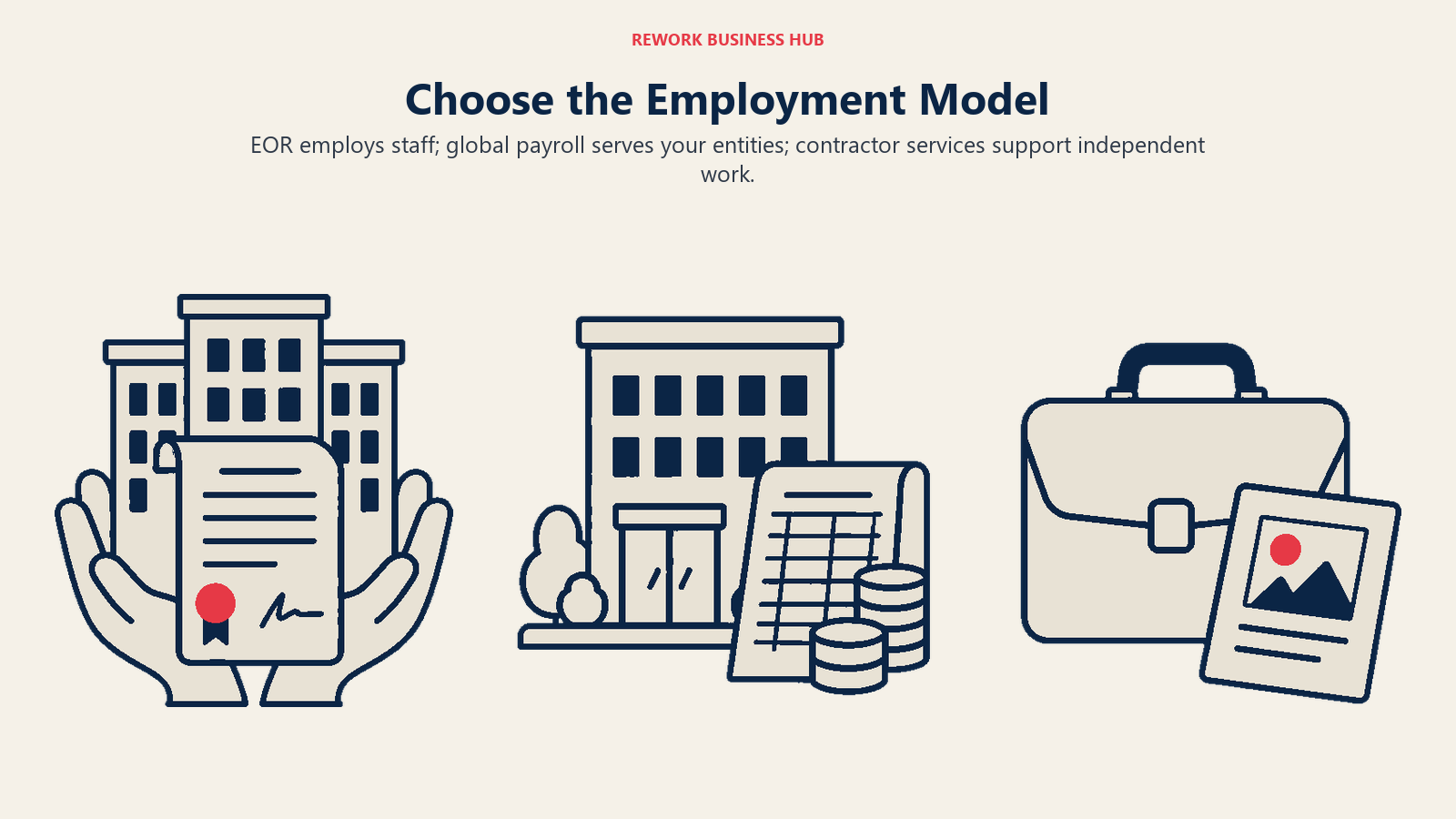
Before comparing a single vendor, get this decision right, because it determines which half of this article even applies to you. Papaya's own price list makes the split concrete: Employer of Record runs $499 per employee per month, Payroll Plus runs $29 per employee per month, and Contractor of Record runs $199 per contractor per month. Those aren't three tiers of the same purchase. They're three different legal relationships, and the price gap between the two payroll options, $499 versus $29, is close to 17 times.
| Product | What It Actually Is | When You Need It | Papaya's Own Price |
|---|---|---|---|
| Employer of Record (EOR) | The platform becomes the worker's legal employer where you have no entity | You want to hire a full-time employee in a country where your company isn't registered | From $499/employee/mo |
| Payroll Plus (Global Payroll) | You own the local entity; the platform runs payroll against local tax and labor law | You already have an entity in that country and need compliant payroll processing | From $29/employee/mo |
| Contractor of Record (COR) | The worker isn't your employee; the platform manages the contract and misclassification risk | The relationship is genuinely project-based, with real independence, not full-time direction and control | From $199/contractor/mo |
| Contractor solution | Lighter payments and paperwork for straightforward contractor relationships | You're paying an established contractor with low misclassification risk | From $5/contractor/mo |
The expensive mistake: paying EOR rates for a country where you already hold an entity, when Global Payroll would run the same headcount for a fraction of the cost. The reverse mistake is quieter but riskier: treating a full-time, direction-and-control relationship as a $5-a-month contractor arrangement because it's cheaper on paper. That's a misclassification-shaped relationship no matter what the invoice says, and it's how a small monthly savings turns into a five- or six-figure penalty later. Our guide to choosing global payroll software walks through this decision before you compare a single vendor on price alone.
1. Deel: The Widest Module Set on the List
Deel expanded fast from its contractor-payments roots into EOR, US PEO, HRIS, immigration, equity, and an ATS, mostly sold as separate line items. A buyer who'll eventually need several of those modules gets one vendor instead of five, and Deel's EOR floor undercuts Papaya's by $100 a seat before any module math starts.

Target audience: Companies of any size building international headcount that want EOR, contractor payments, US PEO, HR, and immigration under one vendor.
| Pros | Cons |
|---|---|
| $100/employee/month cheaper published EOR floor than Papaya | Global Payroll and Deel HR need separate quotes |
| Widest module set: HR, immigration, equity, ATS, one login | Costs stack fast once modules go beyond EOR alone |
| Dedicated Contractor of Record tier for misclassification risk | Six vendors on this list now publish a lower EOR floor |
| Publishes pricing across most of its core products | No published country-by-country entity breakdown |
Pricing: Contractor Management from $49/contractor/mo. Contractor of Record $325/contractor/mo. US PEO from $125/employee/mo. EOR from $599/employee/mo. Talent (ATS) from $14/worker/mo. Global Payroll and Deel HR are quote-based. Per Deel's own pricing page.
Best for: A buyer whose real complaint about Papaya is thinner module coverage rather than price, comfortable paying $100 more per seat for immigration, equity, and an ATS under one login. See our best Remote.com alternatives and Deel vs Remote comparison if Remote's owned-entity model is also on your list, or best Deel alternatives if Deel itself is the one you're comparing away from.
2. Playroll: The Lowest Published EOR Rate Here
Playroll's whole pitch is price and simplicity: its published EOR rate beats Papaya's by $100 a seat, skips onboarding and offboarding fees most competitors bury in the contract, and carries no minimum headcount. Global Payroll, however, is no longer a published number on Playroll's own site; it now routes through two custom-quote tiers rather than a self-serve rate.

Target audience: Cost-conscious startups and SMBs making their first international hires who want the lowest transparent EOR rate without giving up published pricing on that product.
| Pros | Cons |
|---|---|
| Lowest published per-employee EOR rate in this comparison | Global Payroll pricing is now quote-only, not published |
| No minimum employee commitment, no onboarding or offboarding fees | Smaller brand with less enterprise-account depth than Deel |
| Hires across 180-plus countries on the EOR product | Refundable security deposit equal to one month's salary |
| Dedicated Customer Success and Employee Success managers included | Newer entrant with less long-term track record |
Pricing: EOR from $399/employee/mo, no minimum employee commitment, plus a refundable security deposit equal to one month's salary at onboarding. Global Payroll (GP Analytics and GP Manager tiers) is custom-quoted, not published. Per Playroll's own EOR pricing page.
Best for: A price-sensitive first international hire or two, where Papaya's $499 floor feels like more than the actual headcount justifies.
3. Pebl (formerly Velocity Global): An Established Platform's New Low Rate
If you remember this vendor as Velocity Global, that's still the right company under a new name: it rebranded to Pebl on September 9, 2025, and velocityglobal.com now redirects to hellopebl.com. What's changed since is the price. Pebl's own EOR pricing page now shows a single standard rate well below where the older Velocity Global brand used to sit, alongside a wider suite of benefits, pension, and equity administration built up over a decade in the category.

Target audience: Mid-market companies that want EOR paired with real benefits and pension administration in each country, now at a lower published entry point.
| Pros | Cons |
|---|---|
| Published EOR rate matches Playroll's for the lowest in this list | Country-specific pricing still requires a custom quote |
| Deep benefits, pension, and equity administration alongside EOR | The 2025 rebrand still confuses searches for the old name |
| Broad country coverage built over a decade as Velocity Global | Less self-serve detail than Deel or Playroll on the site |
| AI-assisted guidance (Alfie) built into the platform | No published contractor-only product on the same page |
Pricing: EOR $399/employee/mo, described on the page as the standard rate with no setup or offboarding fees called out separately. Country-specific pricing requires a custom quote. Per Pebl's own EOR pricing page.
Best for: A buyer who remembers Velocity Global's benefits depth and assumed it still carried a premium price. It doesn't anymore, at least not on the headline EOR rate.
4. Multiplier: A Genuine Annual Discount on a Mid-Priced EOR
Multiplier prices EOR in two tiers, Core and Growth, each with a real gap between annual and monthly billing rather than just a billing-frequency preference. It splits contractor work by risk too: a standard Contractors product for straightforward payments, and Contractor of Record for relationships that need misclassification protection.

Target audience: Startups and SMBs comfortable committing annually who want a published mid-priced EOR rate with real tiered features.
| Pros | Cons |
|---|---|
| Real annual discount, not just a billing-frequency label | Two tiers (Core/Growth) to compare, not one flat number |
| Global Payroll starts from a published $20/employee/mo | Narrower country coverage than Deel, Remote, or G-P |
| Contractor of Record option for higher-risk relationships | Enterprise tier is quote-only |
| No setup fees, no headcount minimum on EOR | Sits $40 to $60 above the cheapest platforms on this list |
Pricing: EOR Core $459/employee/mo annual, $499/mo monthly. EOR Growth $519/employee/mo annual, $559/mo monthly. Global Payroll from $20/employee/mo, billed annually. Contractor of Record $400/contractor/mo, billed annually. Contractors (standard) $40/contractor/mo, billed annually. Per Multiplier's own pricing page.
Best for: A team ready to commit to a platform for the year and wants a published Global Payroll rate alongside EOR, something several platforms on this list don't offer.
5. Skuad: The Lowest Advertised Floor Across the Full Stack
Skuad publishes a rate for every product in the stack, EOR, contractor-of-record equivalent, and lighter contractor management, and every one of them undercuts the equivalent Papaya product on paper. That makes it the cheapest advertised entry point in this comparison across the board, not just on one line item.
Target audience: Early-stage startups making their first few international hires who want the lowest advertised number on every product line, not just EOR.
| Pros | Cons |
|---|---|
| Lowest advertised EOR floor of any platform in this comparison | Advertised floor, not a guaranteed all-in quote |
| Every product tier published: EOR, AOR, contractor management | Smaller brand with a thinner enterprise track record |
| Payroll runs across 70-plus currencies | "Unlock bigger discounts" language suggests the floor isn't universal |
| Dedicated account managers on every published tier | Less name recognition among mid-market buyers than Deel |
Pricing: EOR starting from $199/employee/mo. Agent of Record (contractor-of-record equivalent) starting from $99/contractor/mo. Contractor Management System starting from $19/contractor/mo. Per Skuad's own pricing page.
Best for: A founder comparing every platform's cheapest published number side by side, where Skuad's full-stack floor is hard to beat on paper.
6. Remote: Owned-Entity Purity at the Top of the Ladder
Remote's promise is simple: it owns 100% of the legal entities it employs through, no local-partner handoffs, and it backs that with unlimited indemnity on its Contractor of Record product plus a free HR Core module bundled into every paid plan. That purity costs $200 a seat more than Papaya's floor.
Target audience: Legal and compliance-first teams that want one consistent, wholly-owned answer for who employs a worker in a given country.
| Pros | Cons |
|---|---|
| 100% owned entities, no local-partner handoffs | $200/employee/month above Papaya's EOR floor |
| HR Core bundled free with any paid employment plan | Most expensive published EOR rate here alongside Oyster |
| Global Payroll published at $29/employee/mo for owned entities | Contractor Management Plus adds cost for capped indemnity |
| Uncapped indemnity on Contractor of Record | Owned-entity coverage tops out around 90 countries |
Pricing: EOR $699/employee/mo. Global Payroll $29/employee/mo. Contractor Management $29/contractor/mo standard, $99/contractor/mo Plus tier with enhanced indemnity. Per Remote's own pricing page.
Best for: A team whose legal or finance function specifically wants owned-entity purity and is willing to pay for it. See our full best Remote.com alternatives roundup for the deeper comparison against Remote specifically.
7. Oyster HR: Remote's Price, a Lighter Platform
Oyster occupies a similar niche to Remote: platform-first EOR with published pricing and no headcount minimum, at the identical $699 rate. Its pitch isn't a cheaper number, it's a simpler, lighter platform without Remote's HR Core ambitions.
Target audience: Startups and scale-ups making their first 1 to 25 international hires who want a straightforward platform at Remote's price point.
| Pros | Cons |
|---|---|
| No headcount minimum to start | Same $699 rate as Remote, no savings there |
| Transparent, published pricing with annual discounts available | Smaller module set than Deel for HR or immigration |
| Global Contractors free for 30 days, then $29/contractor/mo | No onboarding fees, but a refundable deposit is required |
| Compliant employment claimed across 120-plus countries | Less enterprise infrastructure than G-P or Atlas HXM |
Pricing: EOR $699/employee/mo, monthly or annual with annual discounts available, refundable deposit at onboarding. Global Contractors free for 30 days, then $29/contractor/mo. People Partner advisory $300/hour. Per Oyster HR's own pricing page.
Best for: A team that wants Remote's simplicity and price without the bundled HR Core module, or a second quote at the identical rate.
8. G-P (Globalization Partners): Now a Published Enterprise Rate
G-P has the longest track record on this list and built its enterprise reputation before "EOR" was a common search term. For years its rate was quote-only and widely reported as the most expensive in the category. That changed in 2026: G-P's own pricing page now lists a published EOR rate that lands exactly where Deel and Atlas HXM sit, with volume discounts available at scale.
Target audience: Enterprises with existing global operations that want the deepest coverage and, now, a published starting number to anchor procurement conversations.
| Pros | Cons |
|---|---|
| Published EOR rate now matches Deel and Atlas HXM at $599 | Bundle and multi-product pricing still requires a custom quote |
| Widest enterprise-grade country coverage claimed: 180-plus | Newer to published pricing than Deel or Papaya |
| Contractor product starts published at $39/contractor/mo | Long, sales-led process for anything past the base rate |
| Volume discounts available at real enterprise scale | Overkill for a first 1 to 10 international hires |
Pricing: G-P EOR starting at $599/employee/mo, with volume discounts available. G-P Contractor starting at $39/contractor/mo, with negotiated rates for larger contractor pools. G-P Gia (its AI hiring assistant) starting at $500/seat/mo. Per G-P's own pricing page.
Best for: An enterprise buyer who assumed G-P was the expensive, quote-only option and hasn't checked its pricing page recently. It publishes a number now, and that number is competitive with Deel's.
9. Atlas HXM: A Flat Platform Fee That Doesn't Rise With a Raise
Atlas HXM's structure is straightforward: a flat platform fee per employee, separate from benefits, foreign exchange, and local employer services, on entities it owns rather than leases through a partner. The pitch is predictability. A company hiring ten people knows its platform-fee spend to the dollar, and that fee doesn't climb just because someone gets a raise.

Target audience: Mid-market to enterprise companies that want the predictability of a flat platform fee and don't mind itemizing benefits and FX separately.
| Pros | Cons |
|---|---|
| Flat platform fee doesn't scale up when an employee gets a raise | Same $599 starting point as Deel and G-P, no price advantage |
| Volume pricing available at larger headcounts | Total cost is harder to estimate upfront than an all-in number |
| Owned-entity model, no third-party partner handoffs | Confirm current pricing with Atlas HXM |
| You only pay the platform fee for active employees | Benefits, FX, and Local Employer Services billed separately |
Pricing: EOR platform fee from $599/employee/mo, with volume pricing available for larger, multi-country teams. Local Employer Services, FX, and benefits are billed separately. Per Atlas HXM's own pricing content.
Best for: A mid-market or enterprise buyer who wants a flat, predictable platform fee on owned entities and is comfortable itemizing the rest.
10. Rippling (Global/EOR): One Employee Record for Payroll, IT, and HR
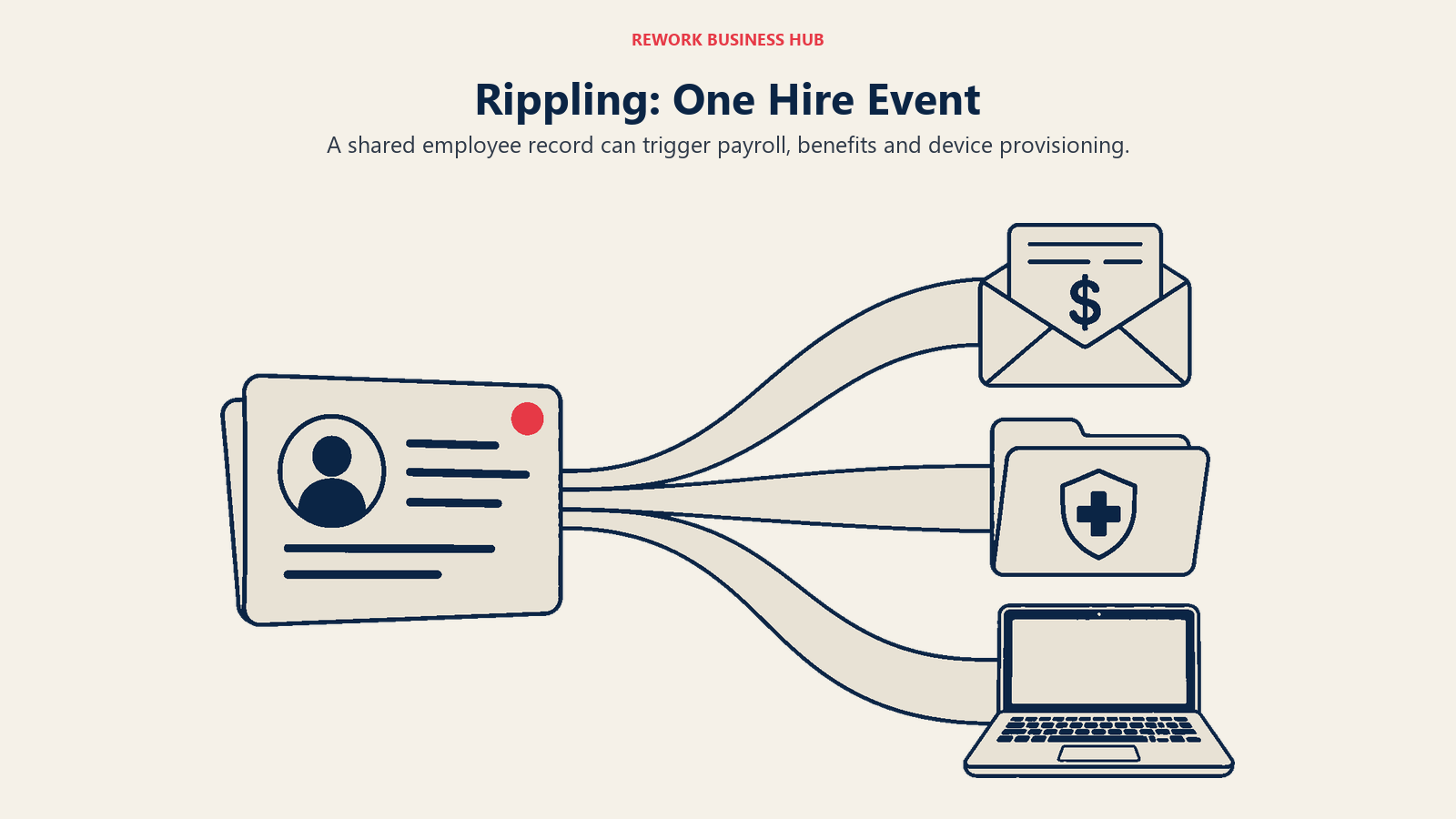
Rippling's bet is that the employee record should drive more than payroll: onboard someone and it can provision their laptop, enroll benefits, and route them through EOR from the same hire event. It sells a core platform plus modules, so global hiring becomes one more automation trigger inside a system that also runs US payroll, IT, and HR.
Target audience: Tech-forward companies with a real IT footprint that want global hiring unified with domestic HR and device management.
| Pros | Cons |
|---|---|
| One employee record drives payroll, IT, HR, and EOR together | No published rate for the core platform or any module |
| Strong automation across the full employee lifecycle | A sales call is required to price EOR or global payroll |
| Global payroll and EOR available without leaving the platform | Module costs stack on top of the core platform price |
| Deep reporting spanning HR, IT, and finance | Easy to overbuy modules during a sales-led process |
Pricing: Quote only across the core platform, global payroll, and EOR modules. No dollar figures appear on Rippling's own pricing page. See best Rippling alternatives if Rippling itself, rather than its EOR module, is what you're evaluating away from.
Best for: A company already frustrated by stitching Papaya's EOR to a separate IT provisioning process, and willing to trade published pricing for that unification.
11. Safeguard Global: An Enterprise Network Behind a Calculator, Not a Price List
Safeguard Global has built out an in-country entity and payroll network for enterprise buyers, but it doesn't publish a headline rate anywhere on its site. Its pricing page redirects straight into an interactive EOR-versus-entity cost calculator that asks for a country, an average salary, and a headcount, with no sample figures or presets shown until you enter your own numbers.
Target audience: Enterprises comparing the true cost of EOR against opening their own entity, who want a modeling tool more than a published per-seat rate.
| Pros | Cons |
|---|---|
| Purpose-built calculator compares EOR cost against opening an entity | Zero published dollar figures anywhere on the pricing page |
| Long-standing in-country payroll and compliance infrastructure | No self-serve starting rate to anchor a first conversation |
| Useful for the exact build-versus-buy question this article opens with | Third-party figures for this vendor vary widely and aren't confirmed here |
| Positioned for complex, multi-country enterprise rollouts | Slower, more sales-led process than the self-serve platforms |
Pricing: Quote only. The pricing page is a JavaScript-driven "EOR vs Entity Cost Calculator" with no preset or sample figures; a real rate only appears after you enter a country, salary, and headcount.
Best for: An enterprise buyer who wants to model the entity-versus-EOR decision itself before ever getting a vendor on the phone, exactly the split this article opens with.
12. CloudPay: Global Payroll, Not EOR, for Companies That Already Own the Entity
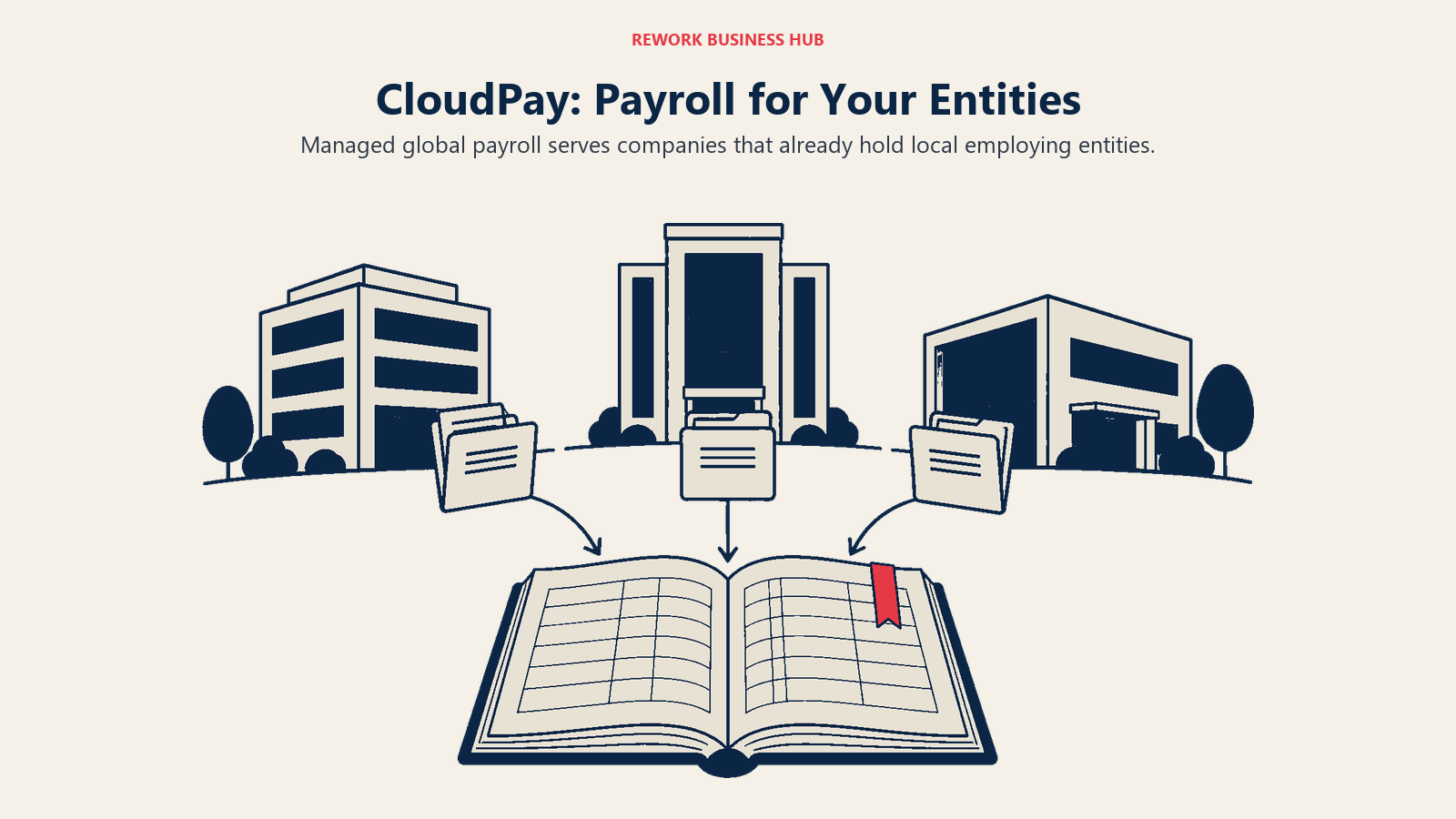
CloudPay isn't a Papaya EOR competitor at all, it's a competitor to Payroll Plus, Papaya's $29-a-seat global payroll product for companies that already hold the local entity. CloudPay runs managed payroll and payments for multinationals on a unified cloud platform, with an employee app and earned wage access layered on top of the core payroll run.
Target audience: Multinationals that already own entities in most of their hiring countries and want a single managed payroll partner rather than an EOR relationship.
| Pros | Cons |
|---|---|
| Managed global payroll across multiple owned-entity countries | Not an EOR product, no fit if you lack a local entity |
| Earned wage access and an employee-facing app included | No published per-employee rate anywhere on its own site |
| Positioned for complex, high-volume multinational payroll runs | Confirm current pricing with CloudPay |
| Fits directly against Papaya's Payroll Plus, not its EOR product | Quote-only process suited to larger deployments, not a first hire |
Pricing: Quote only. Confirm current pricing with CloudPay directly.
Best for: A finance team that already owns entities in most target countries and is comparing managed payroll vendors against Papaya's Payroll Plus, not its EOR product. Our guide to choosing global payroll software is the better starting point for this specific comparison.
13. ADP GlobalView: Enterprise Payroll Standardization, Not EOR
ADP GlobalView is the other half of the "we already own the entity" camp: a global payroll product built on ADP's decades of domestic and multinational payroll compliance work, aimed at large enterprises standardizing payroll across dozens of countries rather than companies hiring their first international employee without an entity.
Target audience: Large enterprises that already run ADP for part of their workforce and want to extend that compliance bench to global entities.
| Pros | Cons |
|---|---|
| Deep payroll compliance bench built over decades at ADP | Not an EOR product, no fit for entity-less hiring |
| Single system of record option across many owned-entity countries | Entirely quote-only, "Get Pricing" leads to a sales conversation |
| Backed by ADP's broader HCM and support infrastructure | Slower, more enterprise-sales-led process than self-serve platforms |
| Familiar brand for finance teams already on other ADP products | No published starting rate to compare against Papaya's $29 floor |
Pricing: Quote only. ADP's own product page routes every visitor to "Request a Demo," "Get Pricing," or a sales phone line, with no dollar figures published anywhere on it.
Best for: An enterprise already standardized on ADP elsewhere that wants global payroll from the same vendor relationship, not an EOR product at all.
14. Omnipresent: Acquired by Deel, No Longer a Standalone Option
If Omnipresent is on your shortlist from an old bookmark, here's what changed: Deel acquired Omnipresent in October 2025, and by the end of that month omnipresent.com had gone offline, with existing customers, employees, and contractors migrated onto the Deel platform. It no longer exists as a company you can sign a new contract with in 2026.
Target audience: Nobody evaluating this as a new purchase. Existing Omnipresent customers were transitioned automatically and don't need to shop for a replacement.
| Pros | Cons |
|---|---|
| Its former customer base and entities strengthened Deel's platform | No new signups possible, the company doesn't operate independently |
| Migrated customers gained access to Deel's wider module set | omnipresent.com is fully offline as of late October 2025 |
| n/a | Any pricing you find for "Omnipresent" online is stale |
| n/a | If you were mid-evaluation, you're now evaluating Deel |
Pricing: Not applicable, no longer sold. If you were comparing Omnipresent's older published rates, evaluate Deel directly instead, since that's where its platform and customer base now live. See entry #1 above.
Best for: This entry exists to redirect you, not to recommend a purchase. If you landed here comparing Omnipresent, the honest next step is comparing Deel.
What a 25-Employee EOR Rollout Actually Costs
Sticker prices per seat don't tell you what a real rollout costs until you run the same headcount against every platform that actually sells EOR. Here's 25 employees, all hired through EOR with no local entity yet, priced at each platform's published or best-available rate. This is platform fee only: wages, employer payroll taxes, and benefits premiums are separate and vary by country.
| Platform | EOR Rate/Employee/Mo | Cost at 25 Employees/mo | Cost at 25 Employees/yr | Basis |
|---|---|---|---|---|
| Skuad | From $199 | From $4,975 | From $59,700 | Vendor-published, advertised floor |
| Playroll | $399 | $9,975 | $119,700 | Vendor-published |
| Pebl (formerly Velocity Global) | $399 | $9,975 | $119,700 | Vendor-published |
| Multiplier (Core, annual) | $459 | $11,475 | $137,700 | Vendor-published |
| Papaya Global | From $499 | From $12,475 | From $149,700 | Vendor-published floor |
| Deel | $599 | $14,975 | $179,700 | Vendor-published |
| G-P | $599 | $14,975 | $179,700 | Vendor-published |
| Atlas HXM | $599 | $14,975 | $179,700 | Vendor content, no self-serve page |
| Remote | $699 | $17,475 | $209,700 | Vendor-published |
| Oyster HR | $699 | $17,475 | $209,700 | Vendor-published |
| Rippling (Global/EOR) | Quote only | Not modelable | Not modelable | No published standalone rate |
| Safeguard Global | Quote only | Not modelable | Not modelable | Calculator-only, no preset figures |
CloudPay, ADP GlobalView, and Omnipresent don't appear on this table because they either don't sell EOR at all, or, in Omnipresent's case, don't sell anything as a standalone company anymore. The spread that matters most: Skuad's advertised floor to Oyster's and Remote's $699 is a $500-a-seat range on identical headcount, and Papaya's own $499 floor sits almost exactly in the middle of it, not at either edge.
Stage Fit Matrix
| Tool | First Hires (1-10) | Scaling (10-50) | Multi-Country (50-200) | Enterprise (200+) |
|---|---|---|---|---|
| Deel | Excellent | Excellent | Strong | Strong |
| Playroll | Excellent | Strong | Moderate | Limited |
| Pebl | Moderate | Strong | Strong | Excellent |
| Multiplier | Excellent | Good | Moderate | Limited |
| Skuad | Excellent | Good | Limited | Limited |
| Remote | Excellent | Excellent | Strong | Good |
| Oyster HR | Excellent | Strong | Moderate | Limited |
| G-P | Limited | Moderate | Strong | Excellent |
| Atlas HXM | Moderate | Strong | Excellent | Strong |
| Rippling (Global/EOR) | Moderate | Strong | Strong | Good |
| Safeguard Global | Limited | Moderate | Strong | Excellent |
| CloudPay | Not suitable | Limited | Strong | Excellent |
| ADP GlobalView | Not suitable | Limited | Moderate | Excellent |
| Papaya Global (for reference) | Moderate | Strong | Excellent | Strong |
Sizing and Persona Table
| Tool | Country Coverage | Primary Buyer | Secondary Buyer |
|---|---|---|---|
| Deel | Wide, EOR plus contractor and HR modules | Head of People | COO / Legal |
| Playroll | 180+ countries claimed | Founder | Finance lead |
| Pebl | Broad, benefits-heavy markets | Head of Total Rewards | Legal / Compliance |
| Multiplier | Narrower, common markets | Founder | Finance lead |
| Skuad | Payroll in 70+ currencies | Founder | Finance lead |
| Remote | 90+ owned-entity countries | Head of People / Legal | CFO |
| Oyster HR | Compliant employment claimed in 120+ countries | Founder / HR lead | People Ops |
| G-P | 180+ countries claimed | VP HR / CHRO | Procurement |
| Atlas HXM | Wide, owned-entity focus | VP Finance | Head of People |
| Rippling (Global/EOR) | Moderate, growing | VP IT / Engineering | Head of People |
| Safeguard Global | Wide, in-country entity network | VP HR / Procurement | Finance lead |
| CloudPay | Wide, owned-entity multinational focus | VP Finance | Payroll Director |
| ADP GlobalView | 40+ countries claimed | CFO | VP HR |
| Papaya Global (for reference) | Wide, EOR plus payroll analytics | VP Finance | Head of People |
How to Choose: Decision Framework
| If you need... | Choose |
|---|---|
| The widest module set at a rate above Papaya's floor | Deel |
| The lowest published EOR rate in this entire comparison | Playroll or Pebl, both at $399/employee/mo |
| A real annual discount and a published Global Payroll rate | Multiplier |
| The lowest advertised floor across EOR, contractor, and payments | Skuad |
| 100% owned-entity purity, price aside | Remote |
| Remote's exact price with a lighter platform | Oyster HR |
| Deep enterprise coverage at a newly published rate | G-P |
| A flat, predictable platform fee that doesn't rise with a raise | Atlas HXM |
| Global hiring unified with HR, IT, and device management | Rippling |
| To model EOR against opening your own entity first | Safeguard Global |
| You already own the entity and just need payroll run correctly | CloudPay or ADP GlobalView, see our guide to choosing global payroll software |
| EOR bundled with genuinely strong payroll cost analytics | Stay with Papaya Global |
What Papaya Still Does Best
Papaya isn't the right fit for every reader of this page, or you wouldn't be comparing it. But it earns these strengths honestly, and they're the real reasons some finance-led buying processes land here anyway.
| Papaya Strength | Who It Matters For |
|---|---|
| Published floors across EOR, COR, contractor payments, and Payroll Plus | Buyers who want a number before a sales call, in a category that mostly hides pricing |
| Payroll cost analytics and workforce intelligence layered on top of compliance | Finance teams that would otherwise buy a separate BI tool for headcount cost |
| Same vendor covers both EOR (no entity) and Payroll Plus (entity owned) | Companies with a mixed footprint who don't want to manage two vendor relationships |
| Automated payroll validation aimed at cutting manual error-checking | Payroll teams tired of reconciling multi-country runs by hand |
| Wide country coverage across both EOR and global payroll products | Teams whose hiring plan spans both entity-owned and entity-less countries |
If the analytics layer and having one vendor cover both EOR and owned-entity payroll outweigh a $100 to $300 gap against the cheapest platforms on this list, staying with Papaya is a defensible call. If price is the only variable that matters and your hiring plan is a handful of straightforward EOR hires, Playroll, Pebl, and Skuad are worth a serious look first.
What to Do Next
Map your actual hiring plan before requesting a single quote: true EOR hires with no local entity, genuine contractors, and any country where you already own an entity, since that last group should never touch EOR pricing at all. Then run the top two or three candidates through a real trial hire, not just a demo. Chasing the lowest published rate? Start with Playroll or Pebl, both at $399 per employee per month. Want the widest module set and are fine paying $100 more than Papaya? Compare Deel. Already own an entity in most of your target countries? Skip EOR pricing entirely and compare Papaya's Payroll Plus against CloudPay and ADP GlobalView, our guide to choosing global payroll software walks through exactly how. And if your international hiring is a small side project next to a bigger domestic payroll or HR decision, our best payroll software, best PEO services, and best HR software roundups are more direct next stops than any global EOR platform on this page.
Camellia writes about HR and payroll tooling for B2B teams. Last updated September 2026.

Principal Product Marketing Strategist
On this page
- Key Facts
- Quick Comparison Table
- Where Papaya's Published Floors Actually Sit
- Why Buyers Actually Shop Papaya Global Alternatives
- The Split Most Papaya Shoppers Get Wrong: EOR, Global Payroll, or Contractor Management
- 1. Deel: The Widest Module Set on the List
- 2. Playroll: The Lowest Published EOR Rate Here
- 3. Pebl (formerly Velocity Global): An Established Platform's New Low Rate
- 4. Multiplier: A Genuine Annual Discount on a Mid-Priced EOR
- 5. Skuad: The Lowest Advertised Floor Across the Full Stack
- 6. Remote: Owned-Entity Purity at the Top of the Ladder
- 7. Oyster HR: Remote's Price, a Lighter Platform
- 8. G-P (Globalization Partners): Now a Published Enterprise Rate
- 9. Atlas HXM: A Flat Platform Fee That Doesn't Rise With a Raise
- 10. Rippling (Global/EOR): One Employee Record for Payroll, IT, and HR
- 11. Safeguard Global: An Enterprise Network Behind a Calculator, Not a Price List
- 12. CloudPay: Global Payroll, Not EOR, for Companies That Already Own the Entity
- 13. ADP GlobalView: Enterprise Payroll Standardization, Not EOR
- 14. Omnipresent: Acquired by Deel, No Longer a Standalone Option
- What a 25-Employee EOR Rollout Actually Costs
- Stage Fit Matrix
- Sizing and Persona Table
- How to Choose: Decision Framework
- What Papaya Still Does Best
- What to Do Next