Best Bynder Alternatives in 2026: 12 DAM Platforms for Every Team Size and Budget
Turn this article into takeaways for your work.


Each assistant summarizes the article only for you and suggests best practices for your work.
The best Bynder alternatives in 2026 split into three honest bands: enterprise peers like Brandfolder, Acquia DAM, and Aprimo that trade one quote wall for another, published-price mid-market tools like Air, Dash, and Filecamp where you can see a number before you talk to sales, and Pimcore if you have the engineering capacity to run open source. Which band you should shop in depends entirely on why you're leaving Bynder in the first place.
Bynder is not a bad product. It's a genuinely strong enterprise DAM, and The Forrester Wave: Digital Asset Management Systems, Q1 2026 named it a Leader with the top score in the Strategy category. Teams don't leave Bynder because it's weak. They leave because the specific configuration they need, a shared library that's searchable and on-brand, costs an enterprise sales cycle to price out, and because the platform sells modules a smaller team never touches. This guide covers 12 alternatives across those three bands so you can match the fix to the actual complaint, not just swap one enterprise vendor for another.
If your team is comparing DAM against a broader category, our best digital asset management software roundup covers the full field rather than just Bynder's direct competitors. And if you're not actually managing brand and creative media but contracts, policies, and records, you want document management software instead, a different job that a surprising number of "DAM" searches are actually looking for. There's also a genuine naming collision worth flagging: if you searched "digital asset management" hoping to track laptops and equipment rather than logos and photos, you want IT and physical asset management software, not this list.
Key Facts
- 66% of marketers who regularly use more than 11 marketing channels say maintaining content consistency across them is a challenge, per Bynder's 2023 State of Content Report (1,200+ marketing and creative professionals surveyed).
- 85% of marketers worldwide said they planned to invest in a digital asset management platform, per the same Bynder State of Content Report.
- The Forrester Wave: Digital Asset Management Systems, Q1 2026 named Bynder a Leader and gave it the top score in the Strategy category, calling out its overall value and ROI for customers, per Bynder's summary of the report.
- MediaValet's own pricing page states its customers see ROI in an average of 10 months, a vendor-reported figure rather than independent research, per MediaValet's pricing page.
- Bynder's own pricing page claims more than 4,000 brands use the platform, a vendor-stated figure worth weighing against how much of that scale your team actually needs, per Bynder's pricing page.
Quick Comparison Table
| Tool | Best For | Starting Price | Key Strength | Key Limitation |
|---|---|---|---|---|
| Brandfolder by Smartsheet | Mid-market and enterprise teams wanting AI tagging and brand portals | Custom quote (Premium or Enterprise) | Video AI auto-tagging and OCR document search | No self-serve price, sales cycle required |
| Acquia DAM (Widen) | Enterprise teams that want DAM inside a broader digital experience platform | Custom quote | Deep metadata and taxonomy engine | Best value tied to buying into the wider Acquia DXP |
| Canto | Teams wanting the most established, fastest-to-learn enterprise DAM | Custom quote (4 named packages) | Fast onboarding, simple interface | No published price despite the simplest UI here |
| Frontify | Brand teams that live in guidelines and design systems | Custom quote, billed by monthly active users | Brand guidelines and asset library in one workspace | No self-serve entry plan published anymore |
| Aprimo | Regulated enterprises needing DAM plus marketing resource management | Custom quote, by users and modules | Content supply chain and approval workflow depth | Heaviest implementation on this list |
| Adobe Experience Manager Assets | Enterprises already standardized on Adobe Experience Cloud | Quote only, through Adobe sales | Native Creative Cloud and Firefly integration | Requires Adobe implementation expertise |
| MediaValet | Microsoft 365 shops wanting a DAM built natively on Azure | Custom quote | Unlimited users on every plan, Azure-native security | No published price to weigh against Bynder |
| Cloudinary | Dev-led teams that need an image and video API more than a brand library | Programmable Media Plus $99/mo, $89/mo billed annually; Assets DAM is custom quote | Deep transformation API, published API pricing | The DAM product itself has no published price either |
| Air | Creative teams wanting DAM plus proofing and review in one tool | Business $900/month billed annually, unlimited seats | Visual review and approval built into the library | Steep flat entry price for a small team |
| Dash | Growing ecommerce and consumer brands | Start up £79/mo, £853/yr billed annually | Published pricing, unlimited users on every plan | Priced in GBP, download caps on lower tiers |
| Filecamp | Budget-conscious teams needing proofing and a brand portal, not enterprise governance | Basic $29/mo, $348/yr | Published flat pricing, unlimited users, no annual discount needed | Lighter feature depth than any enterprise DAM here |
| Pimcore | Engineering-capable teams wanting DAM and PIM on one open-source platform | Community Edition free (self-hosted); Professional $9,900/yr | Open source, DAM and product information management combined | Needs in-house development capacity to run well |
Why Teams Leave Bynder
Bynder earns its reputation. It's the reasons teams leave that are worth naming plainly, because they point to different fixes.
Cost and the quote wall. Bynder publishes no price anywhere on its site. Its own pricing page says subscription plans are "structured based on what you use, influenced by the number of users, storage, usage within your MarTech ecosystem, the products included as part of your solution, and the desired level of support," and that "every Bynder customer has a custom-made package tailored to their business needs and, therefore, a unique price point." A team that just wants a shared, searchable, on-brand asset library still has to run a full sales cycle to learn what that costs.
Module sprawl. Bynder's site lists Digital Asset Management, AI Agents, AI Search Experience, CX User Community, CX Omnichannel, Asset Workflow, Content Workflow, Analytics, and Studio as separate products. Buyers who came for a library routinely end up quoted a platform, because the sales conversation naturally surfaces adjacent modules once you're already on the call.
Time to value. An enterprise DAM rollout is a taxonomy project before it's a software rollout: metadata schemas, permission structures, migration mapping, and stakeholder sign-off across departments. That's the right investment for a 4,000-brand enterprise (Bynder's own claimed customer count). It stalls a 40-person marketing team that needed a working library last quarter, not a six-month implementation.
Overkill for the actual asset volume. Below a certain library size, governance features like multi-brand permission hierarchies, custom workflow builders, and enterprise analytics are cost without benefit. If your whole team can name every campaign folder from memory, you don't need the module that manages 50 independent sub-brands.
What You Give Up When You Leave Bynder
None of this means Bynder is overpriced for what it does. It means the fit has to match the buyer. Before you swap it out, be honest about what you're trading away.
Bynder's breadth is real. The product line covers not just storage and search but AI-assisted tagging, a partner-facing CX Omnichannel module for pushing approved assets straight to retail and syndication partners, and a Content Workflow product for the creation side, not just the storage side. Forrester's Q1 2026 Wave gave Bynder the highest possible score in 13 evaluation criteria, including AI capabilities, search, asset delivery, partner ecosystem, and pricing flexibility, and called out "overall value and ROI" by name. Integration depth is another real advantage: Bynder connects into major MarTech stacks (the vendor's own framing of "usage within your MarTech ecosystem" as a pricing input is itself evidence of how many systems it's built to sit inside). And enterprise governance, the multi-brand permissions, approval chains, and audit trails that feel like overkill at 40 people, is exactly what a 2,000-person, 12-brand organization needs and would have to rebuild manually in a lighter tool.
If your organization genuinely operates at that scale, an alternative that answers your cost complaint but can't match Bynder's workflow and governance depth just moves the pain, it doesn't remove it.
The Quote Wall: Which Alternatives Publish a Price
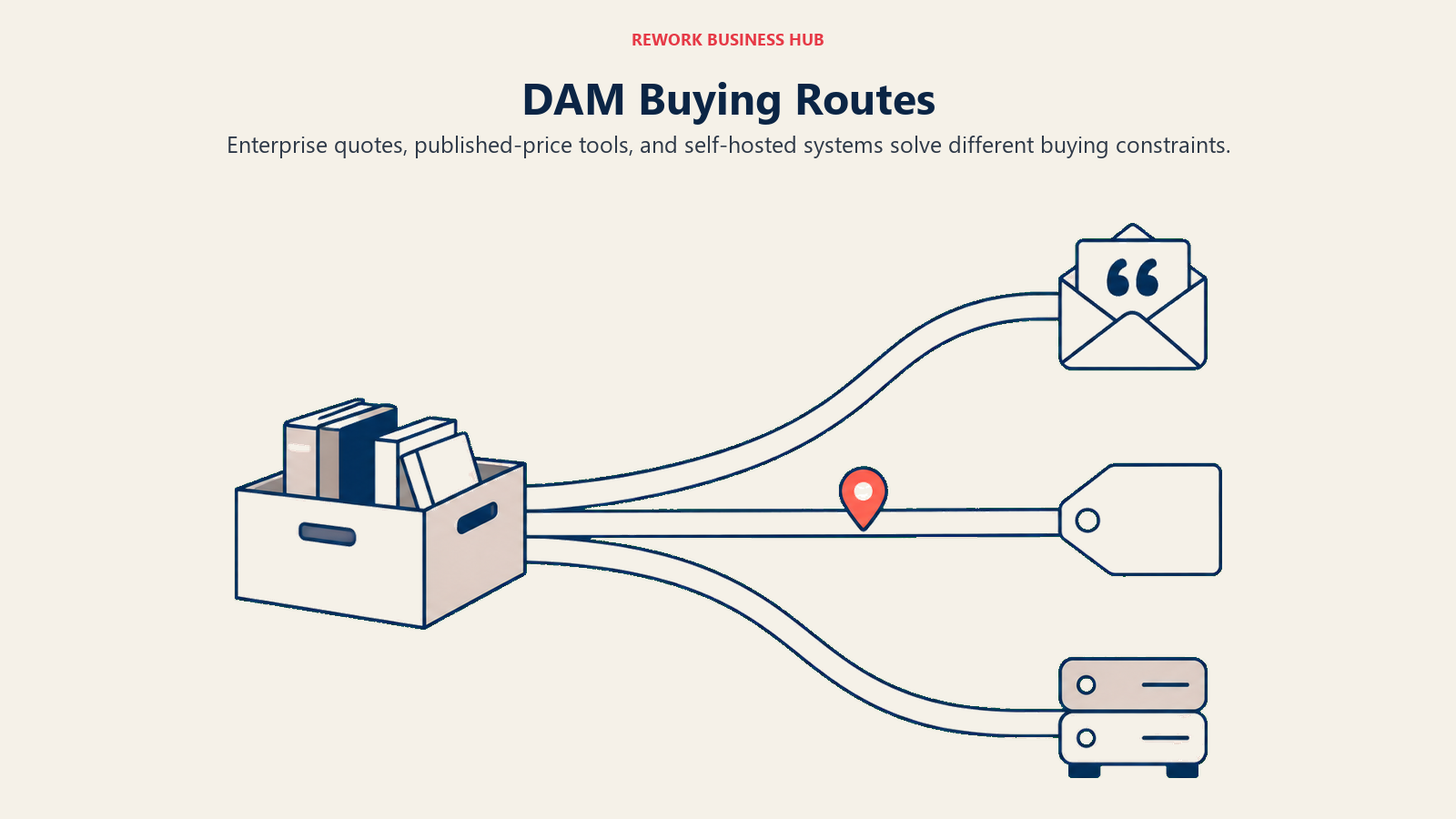
A reader leaving Bynder over the quote wall is not helped by six more vendors that also refuse to publish one. This table is blunt about which of the 12 actually answers each complaint.
| Alternative | Publishes a Price? | Which Bynder Complaint It Actually Answers |
|---|---|---|
| Brandfolder by Smartsheet | No, quote only | Simplifies module sprawl slightly (two tiers instead of Bynder's many products); does nothing for the cost complaint |
| Acquia DAM (Widen) | No, quote only | Bundles into one DXP rather than a la carte modules; similar sales cycle, similar time to value |
| Canto | No, quote only | Fastest time to value on this list; does not solve cost or the quote wall |
| Frontify | No, quote only, billed by monthly active users | Answers overkill for volume with a simpler brand-first model; MAU billing can penalize a larger team, not solve cost |
| Aprimo | No, quote only | Answers none of the four; adds marketing resource management most buyers didn't ask for |
| Adobe Experience Manager Assets | No, quote only | Answers workflow fit only if you're already deep in Adobe Creative Cloud; not cost |
| MediaValet | No, quote only | Removes seat-count as a pricing variable (unlimited users on every plan); still no number until you call |
| Cloudinary | Partial, Programmable Media API prices are published, the Assets DAM product is not | Answers cost transparency for developers building on the API, not for a brand-library replacement |
| Air | Yes, $900/month published | Answers cost and module sprawl for review-heavy creative teams; the floor is still high for a 5-person team |
| Dash | Yes, published in GBP | Answers cost and time to value directly for growing consumer brands |
| Filecamp | Yes, published | The most direct answer to all four complaints if your library doesn't need enterprise governance |
| Pimcore | Partial, Community Edition is free, paid tiers are published | Answers cost if you have engineering capacity; combining DAM with PIM can reintroduce module sprawl if you only needed the DAM half |
1. Brandfolder by Smartsheet: The Closest Enterprise Peer to Bynder
Brandfolder, owned by Smartsheet since a 2020 acquisition, is the alternative most likely to feel like a lateral move rather than a downgrade. It covers the same core ground as Bynder: a searchable central library, brand portals for external partners, and AI-assisted organization. Where it differs is in the shape of its pricing menu. Bynder segments by users, storage, MarTech usage, modules, and support tier. Brandfolder publishes exactly two named tiers, Premium and Enterprise, both still quote-only, but the buyer at least knows there are two doors rather than an open-ended configuration.
Premium adds asset analytics, OCR-based document intelligence, bulk admin controls, SSO and SAML, and Video AI for auto-tagging and scene detection. Enterprise adds custom automation, finer-grained asset permissions, support for multiple independent brands or teams, deeper creative tooling, a BI data connector, and vanity URLs. If you're specifically comparing these two head to head, our Bynder vs Brandfolder comparison goes deeper on where each one wins. For a fuller list of Brandfolder-specific alternatives, see best Brandfolder alternatives.
| What You Get | What You Don't |
|---|---|
| AI tagging, OCR search, and Video AI on Premium and up | A published starting price |
| Smartsheet-family integration for teams already on Smartsheet | A tier below Premium for smaller budgets |
| Strong brand-portal experience for external partners | Faster time to quote than Bynder |
Best for: Teams that want Bynder's category of platform without Bynder's specific module list, and are prepared to still run a sales conversation to get a price.
2. Acquia DAM (Widen): DAM Inside a Digital Experience Platform
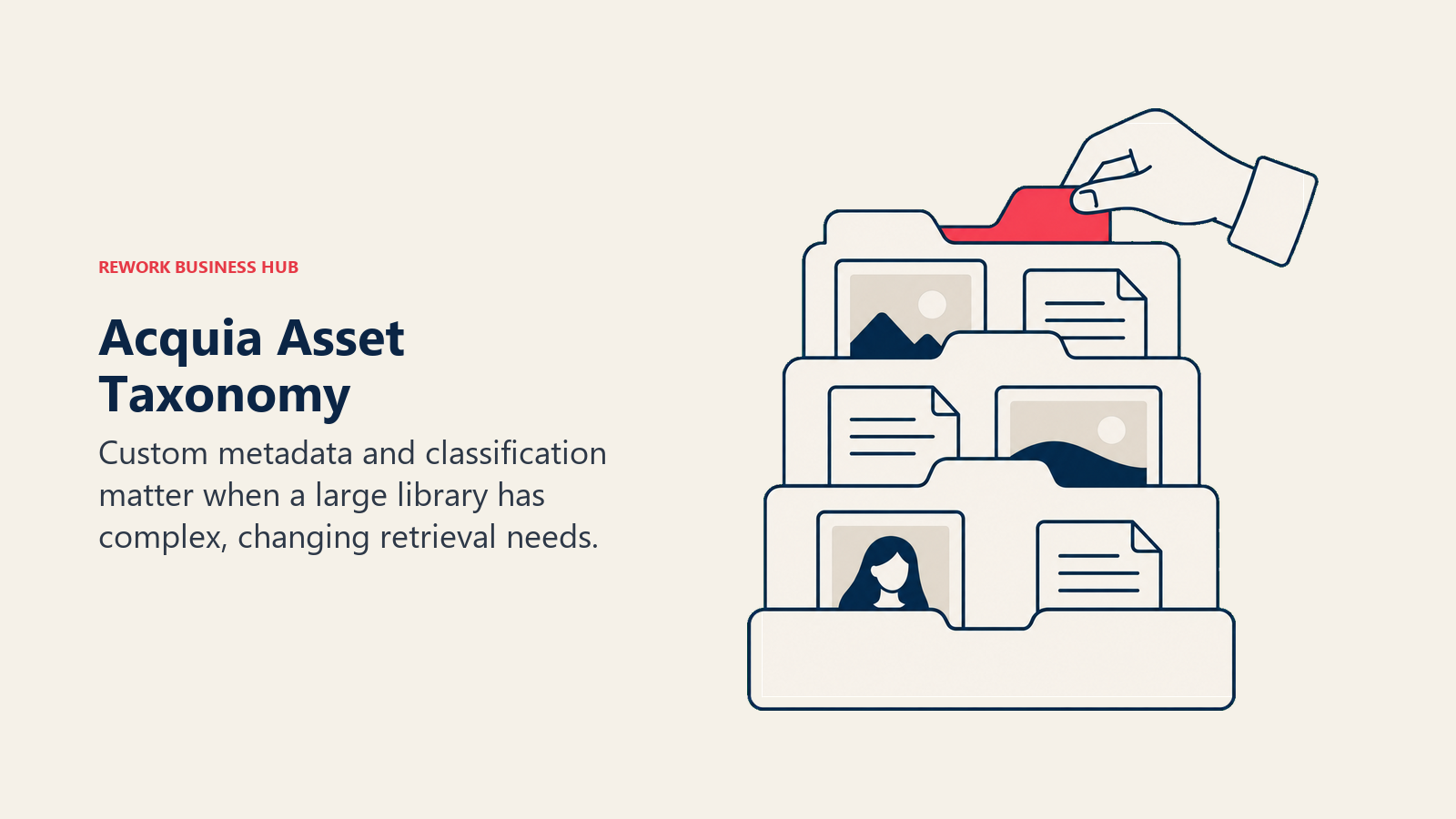
Acquia DAM, still widely known by its pre-acquisition name Widen, became part of Acquia's Digital Experience Platform after Acquia's 2021 acquisition. The product's long-standing strength predates the acquisition: a metadata and taxonomy engine that power users describe as some of the most flexible in the category, letting large organizations build genuinely custom classification schemes rather than fitting assets into a vendor's fixed folder logic. Acquia's own customer story features the University of Georgia managing roughly one million assets on the platform, a scale test few DAM vendors get to claim.
The catch is where the value concentrates. Acquia DAM works fine as a standalone purchase and works with non-Drupal stacks, but the platform's full pitch assumes you're also interested in Acquia's CMS and personalization tools. A buyer who only wants the asset library is paying for (and negotiating around) a bigger platform story.
| What You Get | What You Don't |
|---|---|
| One of the most flexible metadata and taxonomy engines available | A DAM-only pricing conversation, in practice |
| Proven at very large asset volumes | Compatibility requirement with a specific CMS |
| Works with non-Drupal stacks despite Acquia's Drupal roots | A published number at any tier |
Best for: Enterprises with complex, evolving taxonomy needs who are open to a DAM purchase that sits inside a larger digital experience platform conversation.
3. Canto: The Fastest Time to Value Among Enterprise Peers
Canto has been in this category since 1990, which shows up less in its interface (it doesn't feel dated) than in how little friction there is to get a team using it. Canto's own pricing page states plainly that "all packages shown are illustrative" and that purchases are customized to team size and storage needs, but the four named packages, Core Essentials, Enhanced Collaboration, Omni Brand Solution, and Advanced, give a shopper a clearer mental model of what they're buying than a single undifferentiated "Bynder platform" quote does.
Canto's AI-assisted Smart Tags and portal-based external sharing cover the same core jobs as Bynder and Brandfolder. What sets it apart in practice is onboarding speed: teams moving off spreadsheets and shared drives tend to be productively searching within days, not weeks. That's a real answer to the time-to-value complaint, even though it does nothing for the quote-wall complaint. For the full list of Canto-specific alternatives, see best Canto alternatives.
| What You Get | What You Don't |
|---|---|
| Four named package tiers instead of one open-ended quote | A published dollar figure at any of them |
| Fast onboarding and a genuinely simple interface | The deepest workflow tooling on this list |
| AI-assisted tagging and portal sharing | Aprimo or Adobe-level marketing-ops depth |
Best for: Teams that want the fastest ramp-up of any enterprise-grade option and are willing to accept that "illustrative" packages still end in a sales call.
4. Frontify: Brand Guidelines and Assets in One Workspace
Frontify's pitch is that a brand's guidelines and its assets shouldn't live in two different tools. The platform pairs a DAM with a brand-guideline builder and design-system tooling, so the rule ("use this blue, not that blue") sits next to the asset itself rather than in a separate PDF nobody reads. Frontify also now owns TwicPics, an image CDN, which is a genuinely useful fact if your Bynder-adjacent frustration extends into image delivery performance.
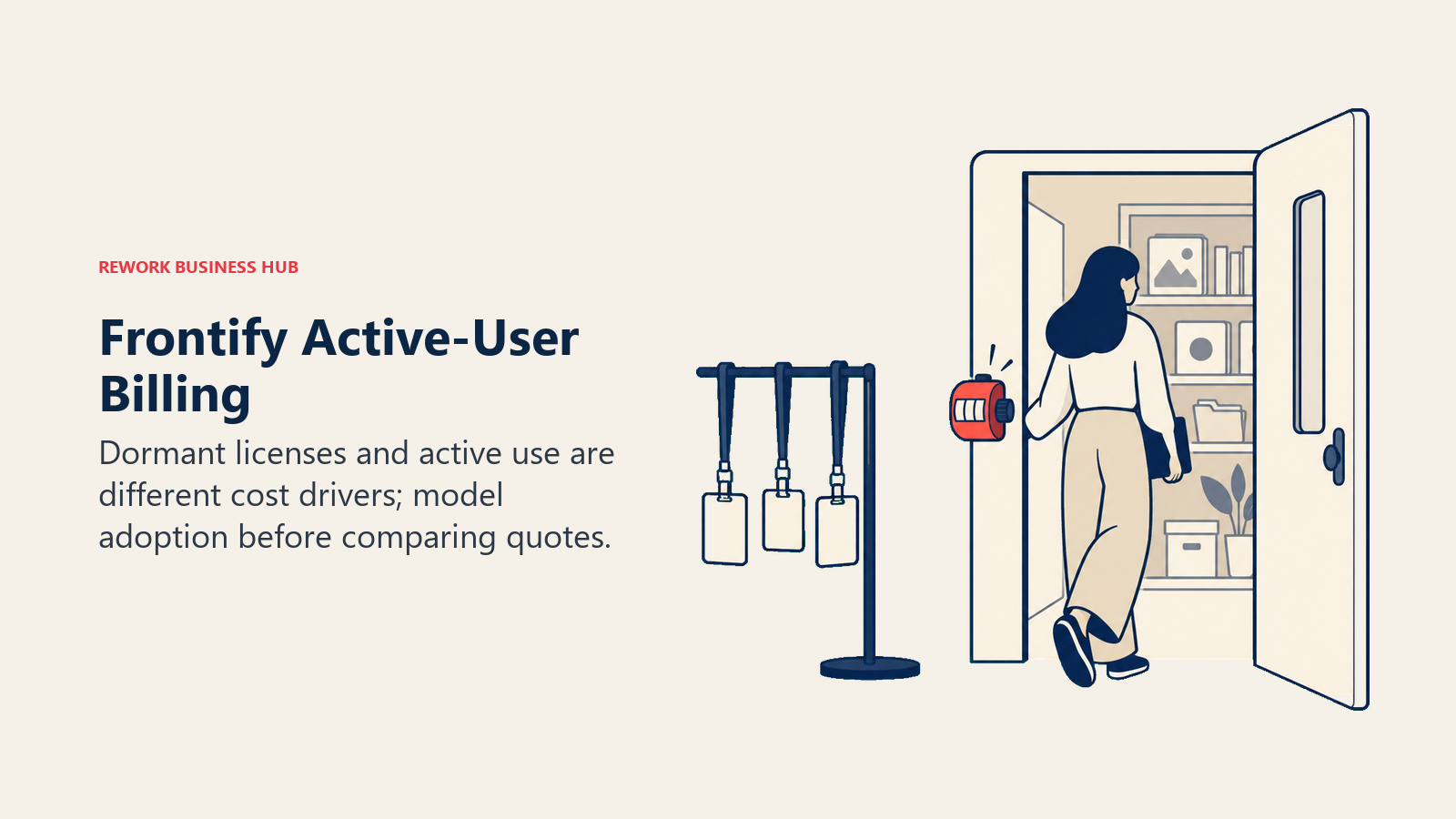
Frontify's FAQ answers its own "why doesn't Frontify display fixed pricing" question directly: it engages buyers individually to propose a tailored package. The billing model itself is unusual and worth understanding before you assume it solves your cost problem: Frontify bills by monthly active users, not licensed seats, calculated from usage patterns and reevaluated yearly using six-month averages so short spikes don't move the bill. That protects against paying for dormant seats, but it also means a growing team's bill grows with actual usage, not a negotiated seat cap. Frontify used to publish a self-serve Starter plan; that plan is gone, so there is no entry price to quote at any tier. If Frontify is your leading candidate, Bynder vs Frontify works through the two cost curves side by side, and best Frontify alternatives covers the wider field.
| What You Get | What You Don't |
|---|---|
| Brand guidelines and DAM genuinely unified, not bolted together | A published price at any tier |
| MAU billing that avoids paying for dormant seats | Predictable costs during high-usage months |
| TwicPics image CDN in the same company | A self-serve entry plan (retired) |
Best for: Brand-first teams where guideline enforcement matters as much as storage, and who are comfortable with usage-based billing they can't see in advance.
5. Aprimo: DAM Plus Marketing Resource Management
Aprimo sells itself less as a DAM and more as marketing operations infrastructure that happens to include one. Its own FAQ states plainly that "Aprimo pricing is based on chosen product(s) and the number of users," with packages "based on users and modules," the same modular pattern as Bynder, just with a different center of gravity: Aprimo's strength is workflow and approval depth across the full content lifecycle, planning, budgeting, production, and distribution, not just storage and retrieval.
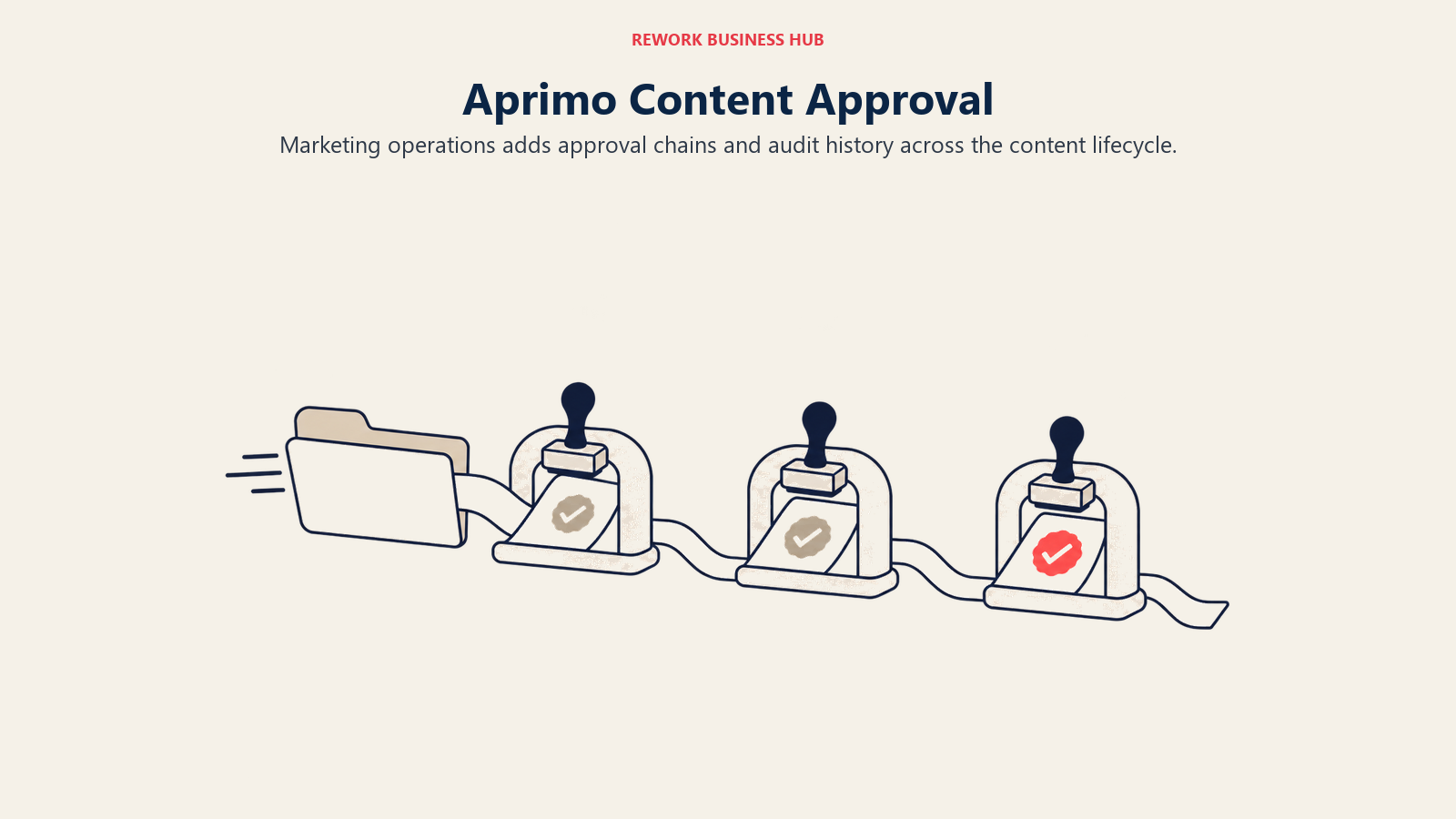
That depth is exactly why regulated industries (financial services, pharma, insurance) gravitate toward Aprimo: audit trails and approval chains that satisfy compliance requirements are a first-class feature, not an add-on. It's also why smaller teams should be cautious. If your actual need is "a place to put approved logos that everyone can search," Aprimo's marketing resource management layer is overhead you'll pay for and rarely touch.
| What You Get | What You Don't |
|---|---|
| Deep content-lifecycle and approval-chain tooling | A lighter-weight, DAM-only buying path |
| Strong fit for regulated-industry compliance needs | A quick, low-friction rollout |
| Modular pricing that scales with actual usage | Any published number to plan against |
Best for: Regulated enterprises where marketing resource management and DAM genuinely need to be one system, not teams that just need a searchable library.
6. Adobe Experience Manager Assets: For Teams Already Living in Creative Cloud
Adobe Experience Manager Assets is quote-based through Adobe sales, sold as part of the broader Adobe Experience Cloud rather than as a standalone product. That framing matters more here than with any other alternative on this list: the case for AEM Assets isn't really about the DAM in isolation, it's about how tightly it connects to Photoshop, Illustrator, and Premiere on the creation side and to Adobe's AI tooling (Firefly, Sensei) for tagging and generation on the management side. A design team already living in Creative Cloud gets a genuinely seamless handoff from file creation to asset governance.
The tradeoff is implementation weight. AEM Assets is a serious enterprise platform with a corresponding learning curve and typically requires implementation partners or dedicated internal expertise to configure well. It's not a tool a five-person marketing team stands up on a weekend, and unlike some peers on this list, it doesn't try to be.
| What You Get | What You Don't |
|---|---|
| Native Creative Cloud and Firefly integration | A lightweight or fast setup |
| Enterprise-grade governance inside the Adobe ecosystem | Any published price to compare |
| A natural fit if Adobe already runs your creative pipeline | A reason to switch if you're not on Adobe already |
Best for: Enterprises where Adobe Creative Cloud is already the design team's default toolkit and DAM needs to plug directly into it.
7. MediaValet: Azure-Native DAM for Microsoft Shops
MediaValet's whole architecture is built exclusively on Microsoft Azure, and its pitch leans into that directly: teams already standardized on Microsoft 365, Teams, and SharePoint get a DAM that fits the same security, compliance, and identity model rather than a separate silo. MediaValet's pricing page is titled, without much subtlety, "Get Your Custom DAM Pricing," and the vendor's own framing is that most enterprise DAM platforms use custom pricing because organizational needs vary too much for a fixed menu to work.
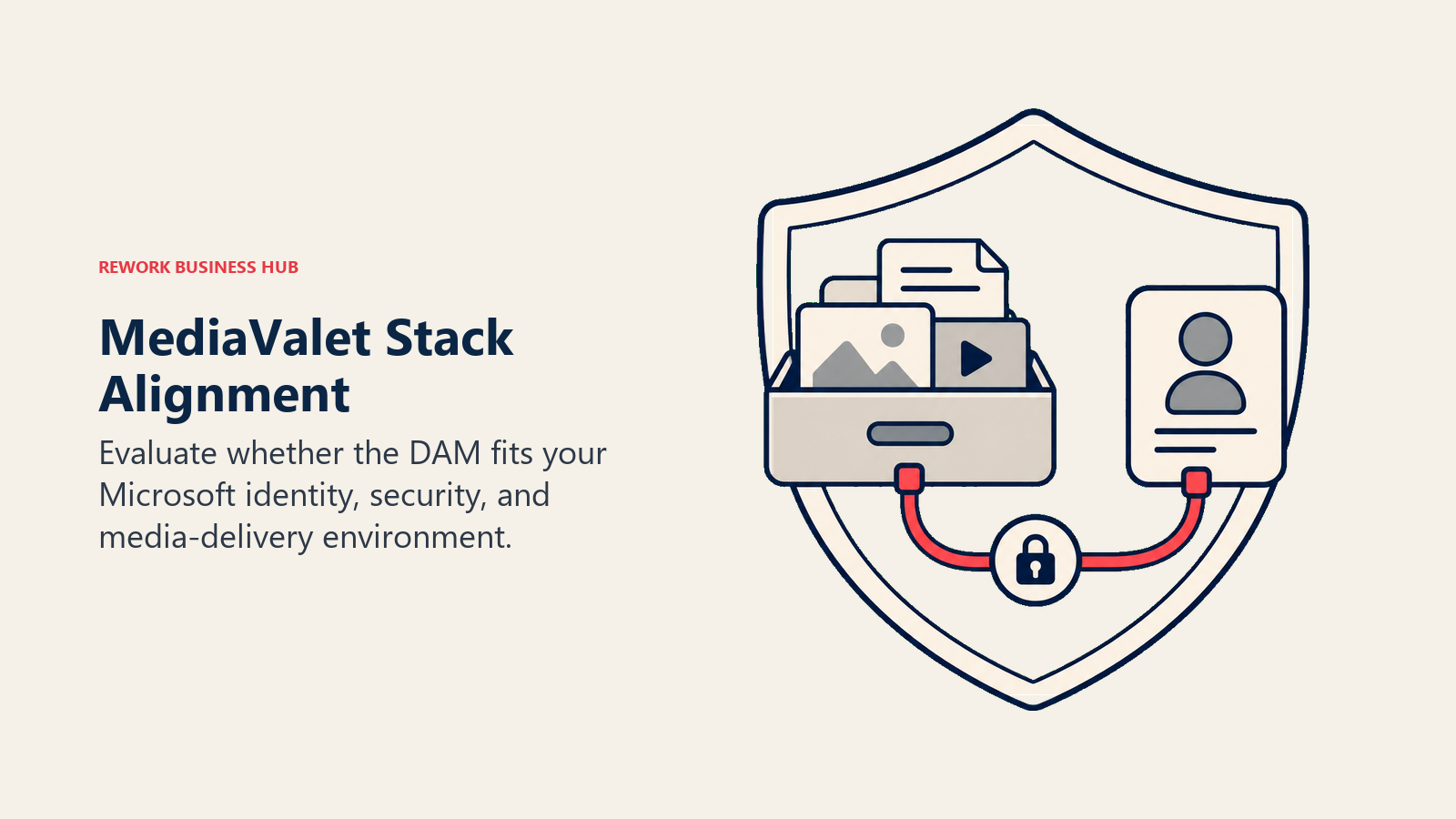
One thing MediaValet does remove from the pricing conversation: unlimited users on every plan. You're not negotiating a seat count, which simplifies at least one variable in a category where seat sprawl is a common complaint. Feature-wise, expect AI-assisted search, face recognition, custom portals, proofing tools, and global CDN delivery with auto-transcoding for video. MediaValet's own pricing page also states that customers see ROI in an average of 10 months, a vendor claim rather than independent research.
| What You Get | What You Don't |
|---|---|
| Unlimited users on every plan, no seat negotiation | A published price at any tier |
| Native Azure security and compliance posture | Independence from a Microsoft-centric stack preference |
| AI search, face recognition, and video CDN delivery | The fastest quote-to-close cycle on this list |
Best for: Microsoft 365 organizations that want their DAM's security model to match the rest of their stack, and don't mind unlimited users being the only pricing variable they can see in advance.
8. Cloudinary: The API-First Option, Read the Fine Print
Cloudinary sells two different things on one pricing page, and mixing them up is the single easiest mistake to make when researching it as an alternative.
Programmable Media, the image and video transformation API, has fully published pricing: Free at $0 (3 users, 25 monthly credits), Plus at $99/month ($89/month billed yearly, 225 monthly credits), Advanced at $249/month ($224/month billed yearly, 600 monthly credits), and a custom Enterprise tier. One credit covers 1,000 transformations, 1 GB of managed storage, or 1 GB of image bandwidth, interchangeably up to the plan's cap.
Cloudinary Assets, the actual DAM product with a brand-library interface, is a different story: no published price, Enterprise/custom only, with a free 30-day trial (3 users, 25 GB storage). If your Bynder frustration is "I need a shared brand library my whole marketing team can search," you're evaluating Cloudinary Assets, which hits the same quote wall as Bynder. If your frustration is closer to "we need an API to transform and deliver images and video at scale," Cloudinary's published Programmable Media pricing is a real answer. For more image/video API-specific alternatives, see best Cloudinary alternatives.
| What You Get | What You Don't |
|---|---|
| Fully published pricing for the Programmable Media API | A published price for the Cloudinary Assets DAM product |
| Best-in-class transformation and delivery infrastructure | A brand-portal experience built for non-technical marketers |
| Credit model that flexes across storage, bandwidth, and transforms | A single number that covers both products |
Best for: Engineering-led teams whose real need is an image and video API, not marketers who need a brand library, since only one of Cloudinary's two products has a public price.
9. Air: DAM With Review and Approval Built In
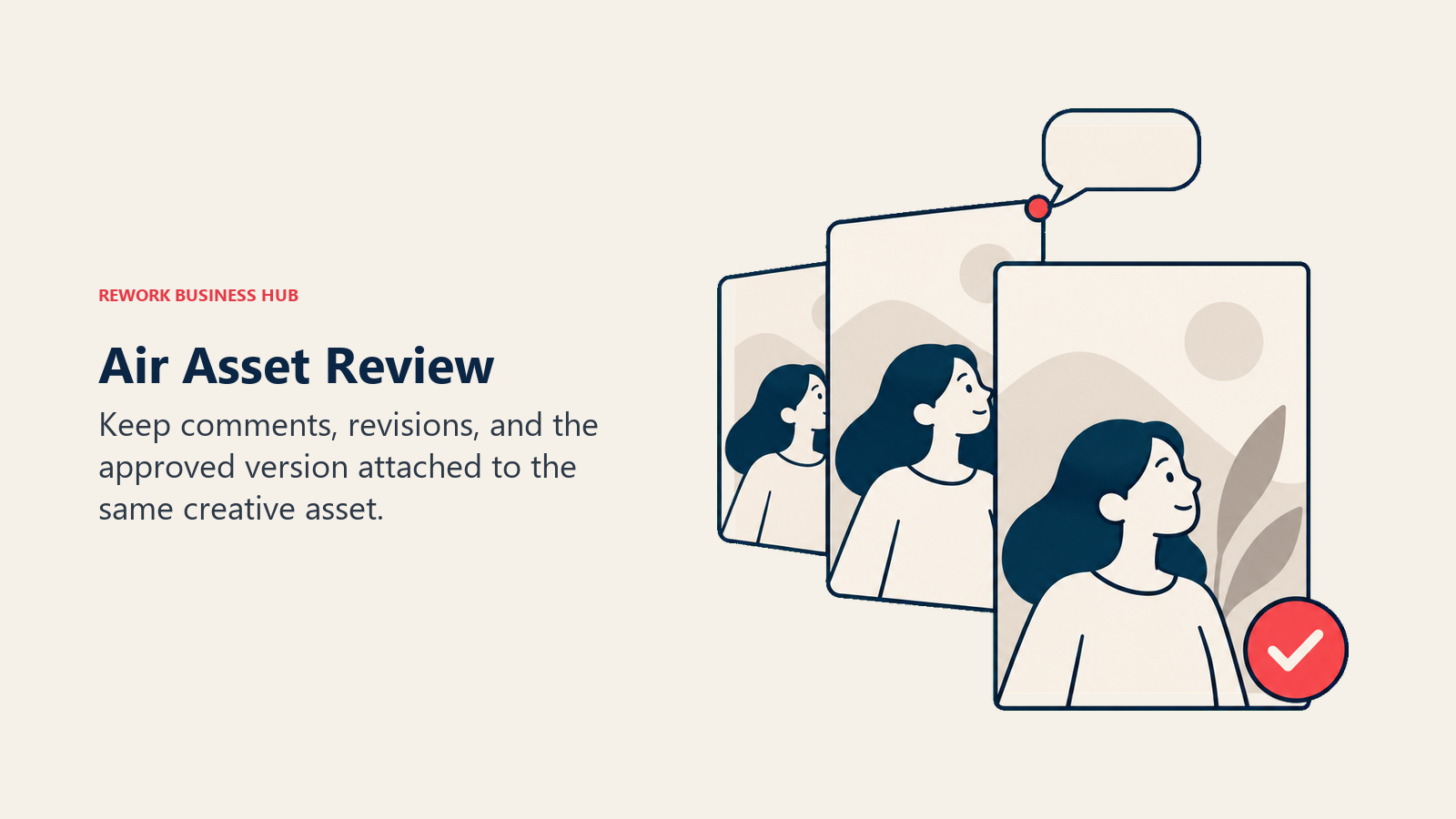
Air's product philosophy is that storage and review shouldn't be two separate tools. Pin a comment directly on a frame of a video or a region of an image, resolve the thread, and the decision stays attached to the file instead of scattered across email or Slack. Version stacking groups every iteration of an asset together so the currently approved file is obvious at a glance, which is a genuine time-saver for creative teams drowning in "final_v3_ACTUALFINAL" file names.
Here's the part worth being blunt about: Air used to be known for accessible per-seat pricing, and that reputation is stale. Air is now credit-based with unlimited seats, and the Business plan starts at $900 per month billed annually, with 30,000 credits per month. The Free plan (120 credits per month, no credit card, no time limit) is real and usable as a small permanent workspace, but the jump from Free to a paid team plan is steep and immediate, not a gradual per-seat climb. Enterprise adds SSO, custom roles, and dedicated onboarding on top.
| What You Get | What You Don't |
|---|---|
| Visual proofing and approval built into the asset library | A gradual, per-seat pricing ramp |
| Unlimited seats at any paid tier | An entry price under four figures a month |
| A genuinely usable free tier with no time limit | Credit rollover between billing cycles |
Best for: Creative and marketing teams whose actual bottleneck is review and approval speed, not just storage, and who can absorb a $900/month floor.
10. Dash: Published Pricing for Growing Brands
Dash, built by Bright, targets a specific gap: startups, growing consumer brands, and ecommerce teams that have outgrown shared drives but aren't ready for an enterprise sales cycle. Content creators upload assets for approval, reviewers comment directly on the file, and only approved assets become visible to the rest of the team, a workflow similar in spirit to Air's but built for a different buyer.
The pricing is genuinely published, though quoted in GBP by default: Start up at £79/month (£853/year annual), Small team at £179/month, Growing brand at £299/month, and Established brand at £449/month, each with unlimited users but capped monthly downloads (250 up to 1,000, or unlimited on the top tier) and rising storage allowances. Annual billing saves 10% across the board. If you're budgeting in dollars, convert the GBP figure yourself; Dash's page shows other currencies via a switcher, but the GBP price is what displays by default.
| What You Get | What You Don't |
|---|---|
| Fully published pricing with no sales call required | USD pricing by default (GBP is the base currency) |
| Unlimited users on every tier | Unlimited downloads below the top tier |
| Built-in upload, review, and approval workflow | Enterprise-scale governance features |
Best for: Growing consumer and ecommerce brands that want transparent pricing and a straightforward approval workflow without an enterprise sales process.
11. Filecamp: The Most Direct Answer to the Cost Complaint
If your specific frustration is the quote wall and nothing else, Filecamp is the most direct answer on this list.
Pricing is fully published and simple: Basic at $29/month ($348/year), Advanced at $59/month ($708/year), and Professional at $89/month ($1,068/year), each scaled by storage (20 GB, 50 GB, and 100 GB respectively) rather than by user count. Every plan includes unlimited users and free bandwidth, and notably, annual billing is exactly 12 times the monthly price, so there's no annual discount to factor in, an unusual but transparent choice worth knowing before you budget.
Filecamp covers the core DAM job well: metadata search, tagging, image and video previews, online proofing with comments and annotations, and unlimited white-labeled brand portals built with a WYSIWYG editor. What it doesn't do is enterprise governance: no AI-powered tagging at Bynder's depth, no complex multi-brand permission hierarchies, no marketing-resource-management layer. That's the point. For a team whose asset volume doesn't require that governance, paying for it elsewhere is the actual overkill problem this list opened with.
| What You Get | What You Don't |
|---|---|
| Fully published, storage-based pricing | AI-powered tagging or Bynder-level automation |
| Unlimited users on every plan | Multi-brand governance or complex permission trees |
| Proofing, approval, and brand portals included | Deep MarTech ecosystem integrations |
Best for: Small and mid-sized teams that want a searchable, on-brand library with proofing, without paying for enterprise features they'll never use.
12. Pimcore: Open Source DAM Plus Product Information Management
Pimcore is the one genuine open-source option on this list, and it solves a different shape of problem than the other 11. The Community Edition is free and self-hosted, pulled straight from GitHub, with no seat limits imposed by a vendor because there's no vendor billing per seat. Paid tiers exist for teams that want commercial support and additional capability: Professional at $9,900 per year and Enterprise at $29,900 per year, with a further custom-quoted Enterprise Edition PaaS for teams that want it hosted rather than self-managed.
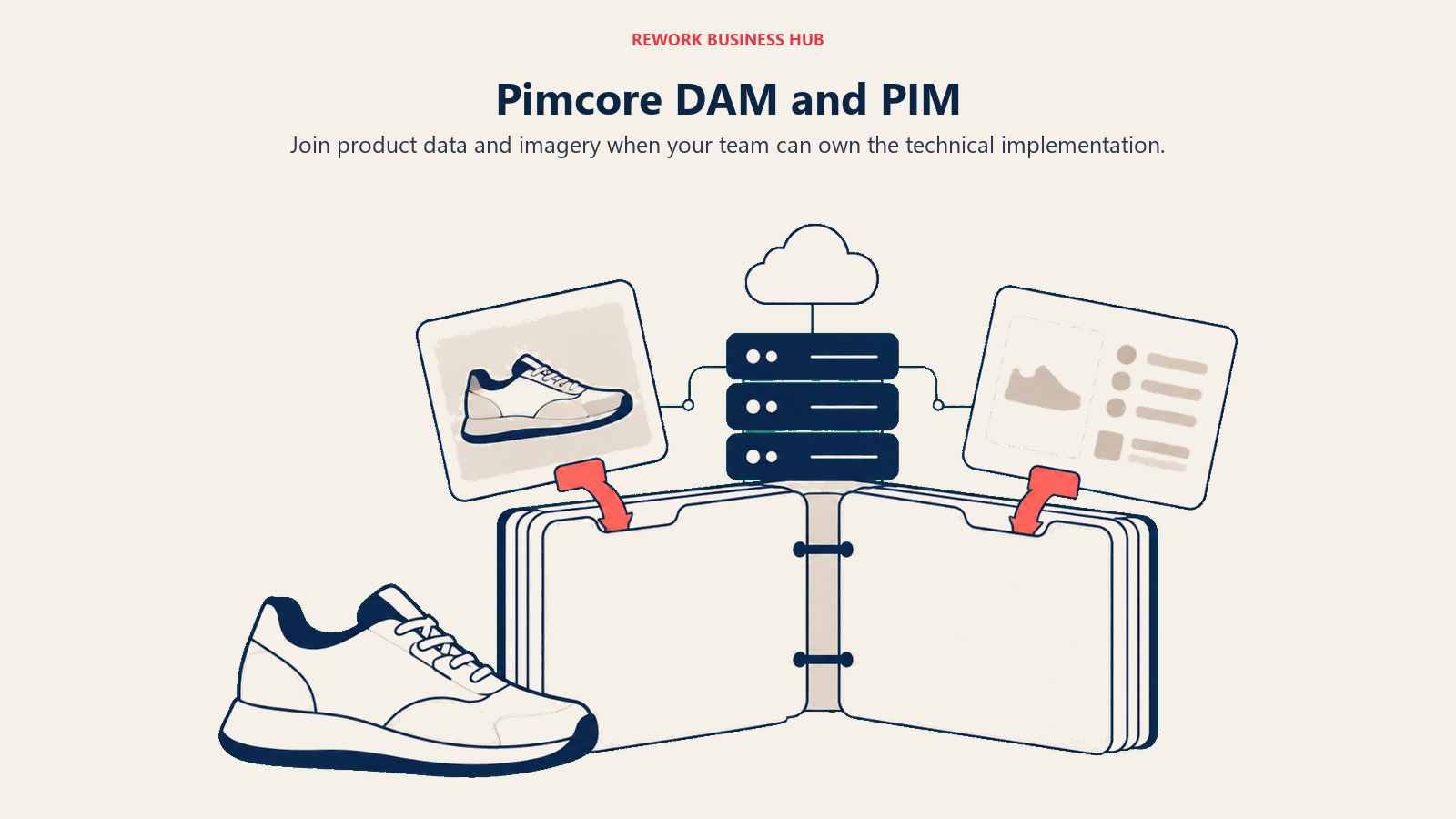
What makes Pimcore structurally different is that it bundles DAM with PIM (product information management) in one platform, deployable on-premise or in a private cloud. For an ecommerce or product-heavy organization that needs product data and product imagery to stay in sync, that's a genuine advantage no other tool on this list offers. For a team that only wanted the DAM half, it can reintroduce the module-sprawl complaint from a different direction: now you're running (or paying for) a PIM system you didn't ask for.
| What You Get | What You Don't |
|---|---|
| Free, self-hosted Community Edition with source access | A managed SaaS experience out of the box |
| DAM and PIM unified for product-heavy catalogs | A quick setup without engineering involvement |
| Published Professional and Enterprise pricing | Vendor support on the free Community tier |
Best for: Teams with in-house engineering capacity who want DAM and product information management on one open-source platform, or who specifically want to avoid vendor lock-in and per-seat billing entirely.
Sizing and Persona Table
| Tool | Ideal Team Size | Primary Buyer | Secondary Users |
|---|---|---|---|
| Brandfolder by Smartsheet | 50-2,000+ | Brand or marketing operations director | Creative teams, external partners via portals |
| Acquia DAM (Widen) | 200+ | IT director, digital experience lead | Marketing ops, content teams |
| Canto | 20-500 | Marketing director, brand manager | Creative teams, sales enablement |
| Frontify | 20-500 | Brand manager, design lead | Marketing, product design |
| Aprimo | 200-5,000+ | CMO, marketing operations VP | Compliance, legal, regional marketing teams |
| Adobe Experience Manager Assets | 200+ | Creative operations director, IT | Design teams already in Creative Cloud |
| MediaValet | 50-2,000+ | IT director, marketing operations | Any Microsoft 365 user |
| Cloudinary | 5-500+ (developer-led) | Engineering lead, technical marketing | Product teams, front-end developers |
| Air | 5-100 | Creative director, brand manager | Freelancers, external reviewers |
| Dash | 5-100 | Brand manager, ecommerce marketing lead | Content creators, designers |
| Filecamp | 3-100 | Marketing manager, small agency owner | Clients via branded portals |
| Pimcore | 10-500 (engineering-capable) | CTO, ecommerce platform owner | Product and content teams |
Stage Fit Matrix
| Tool | Startup (1-20) | Growth (20-100) | Mid-Market (100-500) | Enterprise (500+) |
|---|---|---|---|---|
| Brandfolder by Smartsheet | Weak | Moderate | Best fit | Strong |
| Acquia DAM (Widen) | Weak | Weak | Moderate | Best fit |
| Canto | Moderate | Good | Best fit | Good |
| Frontify | Moderate | Good | Best fit | Good |
| Aprimo | Weak | Weak | Moderate | Best fit |
| Adobe Experience Manager Assets | Weak | Weak | Moderate | Best fit |
| MediaValet | Weak | Moderate | Good | Best fit |
| Cloudinary | Good | Good | Best fit | Strong |
| Air | Weak | Best fit | Good | Weak |
| Dash | Good | Best fit | Moderate | Weak |
| Filecamp | Best fit | Good | Moderate | Weak |
| Pimcore | Weak | Moderate | Best fit | Good (with dev resources) |
How to Choose: Decision Framework
| If You Need... | Pick This |
|---|---|
| The closest enterprise peer to Bynder, same category of platform | Brandfolder by Smartsheet |
| DAM inside a broader digital experience or CMS platform | Acquia DAM (Widen) |
| The fastest time to value among enterprise-grade options | Canto |
| Brand guidelines and DAM unified in one workspace | Frontify |
| DAM plus marketing resource management for a regulated industry | Aprimo |
| Native Creative Cloud and Firefly integration | Adobe Experience Manager Assets |
| A DAM built natively on Microsoft Azure with unlimited users | MediaValet |
| A published-price image and video transformation API | Cloudinary (Programmable Media) |
| Visual proofing and approval built into the asset library | Air |
| Transparent published pricing for a growing ecommerce brand | Dash |
| The most direct fix for cost and module sprawl, small library | Filecamp |
| Open source DAM combined with product information management | Pimcore |
What to Do Next
Start by naming your actual complaint, not a feature checklist. If it's the quote wall, shortlist Air, Dash, and Filecamp and get real numbers in an afternoon instead of a sales cycle. If it's module sprawl, look at Filecamp or Canto, both of which sell (or illustrate) a narrower, more legible package than Bynder's product list. If your team has genuinely outgrown a lighter tool and needs Bynder-level governance, Brandfolder is the closest lateral move, and it's worth reading the direct Bynder vs Brandfolder comparison before you commit to a sales conversation with either one.
Whichever direction you go, run a real pilot with your actual asset library, not a demo environment, before signing anything multi-year. A tool that looks identical in a sales demo can behave very differently once it's holding 50,000 of your real files with your real folder structure and your real team's search habits. If your evaluation also touches how assets get created in the first place rather than just stored, our best Canva alternatives roundup covers the design-tool side of that same workflow, and if distribution to social channels is part of the bottleneck, best social media management software is worth a look alongside your DAM shortlist.
Frequently Asked Questions about Bynder Alternatives
What's the best Bynder alternative for a small team on a tight budget?
Filecamp is the most direct fit. Its published pricing starts at $29 a month with unlimited users and covers search, tagging, proofing, and branded portals without the enterprise governance layer a small team doesn't need.
What's the best Bynder alternative for a creative team that needs review and approval, not just storage?
Air is built around exactly that workflow, with comments pinned directly to frames and version stacking that keeps the approved file obvious. The tradeoff is a $900 per month entry price for the Business plan, so it fits teams past a certain size better than very small ones.
Is there a genuinely free, open-source alternative to Bynder?
Pimcore's Community Edition is free and self-hosted, pulled from the open-source project on GitHub. It requires in-house engineering capacity to deploy and maintain, and it bundles DAM with product information management, which is a bonus for ecommerce catalogs and unnecessary overhead if you only need a brand library.
Which Bynder alternatives actually publish a price instead of requiring a quote?
Air, Dash, and Filecamp all publish real numbers on their pricing pages. Cloudinary publishes pricing for its Programmable Media API but not for its Cloudinary Assets DAM product, and Pimcore publishes its paid tiers alongside a free Community Edition. Every other alternative on this list, Brandfolder, Acquia DAM, Canto, Frontify, Aprimo, Adobe Experience Manager Assets, and MediaValet, is quote-only, same as Bynder.
What's the difference between Cloudinary's two products?
Programmable Media is an image and video transformation API with fully published, credit-based pricing starting at $99 a month. Cloudinary Assets is the actual DAM product, a searchable brand library, and it has no published price at all, Enterprise and custom quotes only. Mixing the two up is the most common pricing mistake people make when researching Cloudinary as a DAM.
Why do teams leave Bynder if it's rated so highly by analysts?
Forrester's Q1 2026 Wave named Bynder a Leader, so the product quality isn't the issue. Teams leave over the buying experience and fit: no published price, a long list of separate modules that can turn a library purchase into a platform sales conversation, an implementation timeline built for enterprise scale, and governance features that don't pay off below a certain asset volume.
If I'm leaving Bynder specifically over cost, is Frontify a good landing spot?
Not really. Frontify has no published pricing either, and its monthly-active-user billing model means a growing team's cost grows with usage rather than staying fixed. It solves overkill-for-volume better than it solves cost. If cost is the real driver, look at Air, Dash, or Filecamp instead.
Which alternative comes closest to matching Bynder's enterprise depth?
Aprimo, Adobe Experience Manager Assets, and Acquia DAM (Widen) are the closest matches for organizations that need deep workflow, compliance, or platform integration alongside the asset library itself. Brandfolder is the closest match in day-to-day DAM functionality specifically, without Aprimo's added marketing-resource-management layer.
How long does migrating off Bynder typically take?
It depends far more on your asset volume and metadata complexity than on which tool you pick. A library in the low thousands of assets with simple tagging can move in a few weeks. A multi-brand enterprise library with custom taxonomies and integration dependencies is a multi-month project regardless of destination, which is exactly the kind of project the "time to value" complaint is really about in the first place.

Principal Product Marketing Strategist
On this page
- Key Facts
- Quick Comparison Table
- Why Teams Leave Bynder
- What You Give Up When You Leave Bynder
- The Quote Wall: Which Alternatives Publish a Price
- 1. Brandfolder by Smartsheet: The Closest Enterprise Peer to Bynder
- 2. Acquia DAM (Widen): DAM Inside a Digital Experience Platform
- 3. Canto: The Fastest Time to Value Among Enterprise Peers
- 4. Frontify: Brand Guidelines and Assets in One Workspace
- 5. Aprimo: DAM Plus Marketing Resource Management
- 6. Adobe Experience Manager Assets: For Teams Already Living in Creative Cloud
- 7. MediaValet: Azure-Native DAM for Microsoft Shops
- 8. Cloudinary: The API-First Option, Read the Fine Print
- 9. Air: DAM With Review and Approval Built In
- 10. Dash: Published Pricing for Growing Brands
- 11. Filecamp: The Most Direct Answer to the Cost Complaint
- 12. Pimcore: Open Source DAM Plus Product Information Management
- Sizing and Persona Table
- Stage Fit Matrix
- How to Choose: Decision Framework
- What to Do Next