Best AI Tools for Transportation and Logistics in 2026: 13 Tools Ranked by Use Case
Turn this article into takeaways for your work.


Each assistant summarizes the article only for you and suggests best practices for your work.
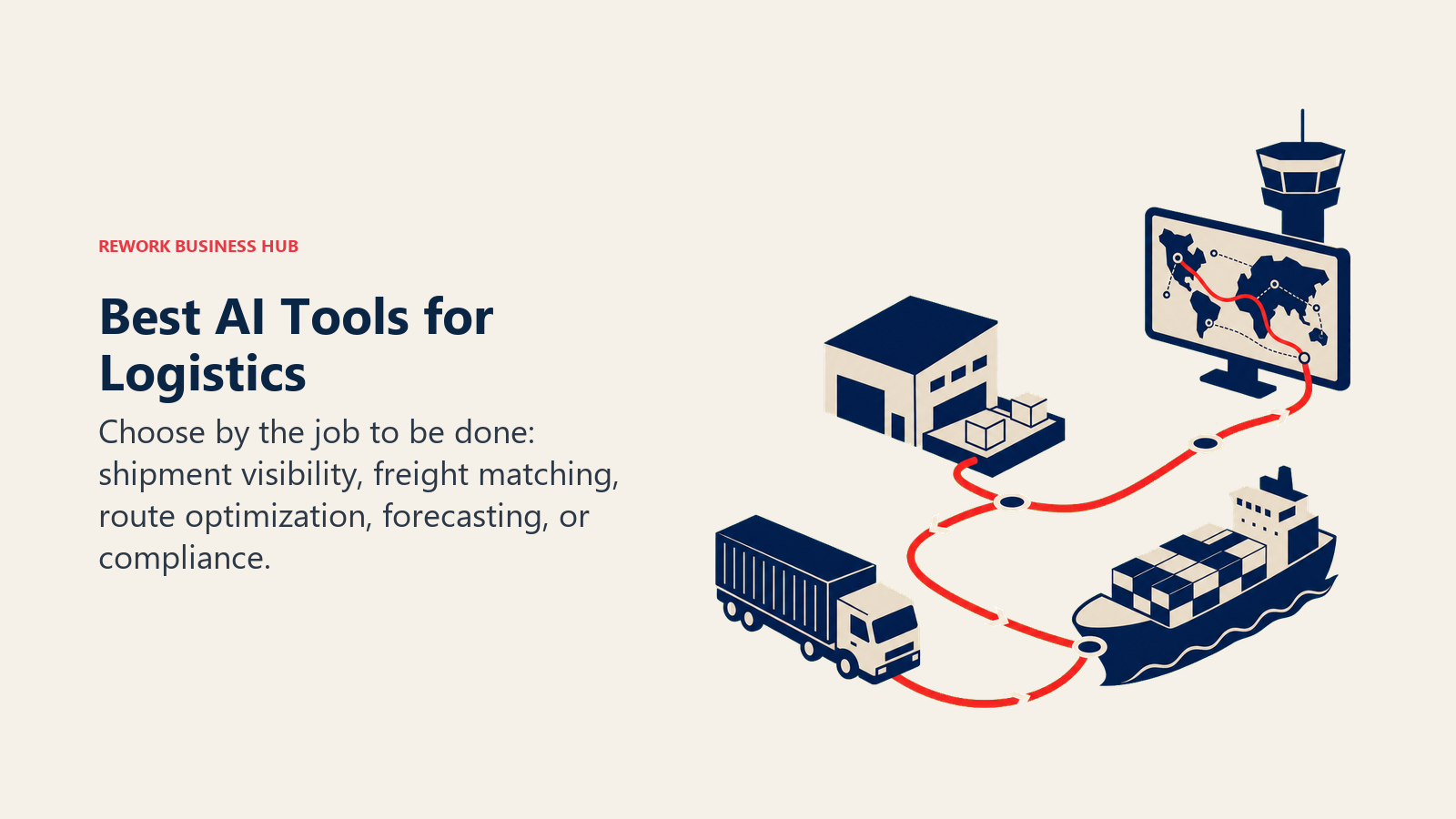
If you're building an AI-assisted logistics stack in 2026, project44 and FourKites lead real-time shipment visibility, Uber Freight and Flexport pair AI-driven freight matching with brokerage and forwarding, Optimal Dynamics and Locus handle route optimization and dispatch for fleets, Samsara covers AI-powered telematics and safety, o9 Solutions and Blue Yonder run enterprise demand forecasting and network planning, Verusen and e2open manage parts intelligence and trade compliance, and DAT One and Freightos handle freight matching, rate benchmarking, and digital booking. This guide ranks 13 tools by the logistics job they actually do, not by how many AI features fit on a vendor's homepage.
Most "AI in logistics" roundups mix a freight-matching load board with an enterprise planning suite and call it one category. That's not useful when the real question is narrower: does this tool solve visibility, dispatch, forecasting, procurement, or compliance, and does it fit a shipper, a carrier, a 3PL, or an asset-intensive manufacturer? Each tool below is evaluated on what it does, who it's built for, and what it costs.
What Changed in 2026
- Optimal Dynamics launched Scale on March 12, 2026, an agentic freight procurement layer that searches, negotiates, and bids on loads across load boards, direct shipper channels, email, and EDI. It's in an exclusive rollout with existing customers, with wider availability expected the following quarter.
- DAT acquired the Convoy Platform's automated freight-matching technology, folding automated load-carrier matching into DAT One's existing Standard through Office tiers.
- Freightos completed the rebrand of WebCargo to Freightos for Forwarders and expanded its Rate & Quote tool from air into ocean freight, unifying multimodal rate management on one digital platform.
- Uber Freight's Insights AI added voice-based rate negotiation agents, cutting driver hold times during load booking calls by as much as 98% while keeping a human in the loop for verification.
- Gartner raised its five-year forecast for agentic AI in supply chain software, now projecting spend will grow from under $2 billion in 2025 to $53 billion by 2030 as more vendors ship autonomous decisioning features.
Key Facts
- 41% of supply chain companies are currently using AI, up from 30% a year earlier, according to MHI's 2026 Annual Industry Report.
- 56% of supply chain leaders are increasing technology and automation investment this year, and 52% plan to spend over $1 million on it, per the same MHI Annual Industry Report.
- Gartner forecasts spend on supply chain management software with agentic AI will grow from less than $2 billion in 2025 to $53 billion by 2030, per Gartner's supply chain technology coverage.
- 60% of enterprises using supply chain management software are expected to adopt agentic AI features by 2030, up from just 5% in 2025, per the same Gartner forecast.
- AI-enabled distribution operations see a 5-20% reduction in logistics cost and a 20-30% reduction in inventory, according to McKinsey's research on gen AI in supply chains.
- 55% of supply chain leaders expect agentic AI to reduce their need to hire for entry-level roles, per a Gartner survey.
Quick Comparison Table
| Tool | Best For | Starting Price | Key Strength | Key Limitation |
|---|---|---|---|---|
| project44 | Real-time multimodal shipment visibility for enterprise shippers | Custom enterprise pricing, contact sales | Predictive ETAs across ocean, air, rail, truckload, LTL, and parcel | No published tiers, deployment usually requires a sales cycle |
| FourKites | High-volume retail and CPG shipment tracking | Enterprise pricing reported to start near $75,000/year | AI processes 150+ factors for arrival prediction, tracks 2M+ shipments daily | Priced for large enterprise volume, not a fit for small fleets |
| Uber Freight | AI-matched freight brokerage with market insights | Contact sales, brokerage/managed transportation pricing | Insights AI answers natural-language questions on 20+ years of freight data | No self-serve subscription, pricing tied to freight volume and lanes |
| Flexport | Global freight forwarding with an AI pricing and insights layer | Custom, freight rates quoted per shipment | Real-time multimodal pricing engine cuts quote time from hours to seconds | Strongest for international ocean/air forwarding, not domestic trucking |
| Optimal Dynamics | AI dispatch and freight procurement for enterprise trucking fleets | Custom enterprise pricing, contact sales | Scale agent searches, negotiates, and bids on freight across channels | New Scale product still in limited rollout as of mid-2026 |
| Locus | Agentic route optimization and dispatch for high-volume delivery fleets | Reported to start around $20,000/year | DispatchIQ replans 100,000+ daily orders across 250+ constraints in minutes | Enterprise-volume pricing, not built for small local fleets |
| Samsara | AI-powered fleet telematics, dashcams, and safety monitoring | Roughly $27-33/vehicle/month for telematics, more with AI dashcams | Real-time driver safety scoring plus asset and fuel tracking in one platform | Pricing not published; typically requires a 36-month contract |
| Verusen | AI-driven MRO and indirect materials inventory intelligence | Custom, contact sales | Deduplicates and standardizes parts data across ERP, CMMS, and P2P systems | Purpose-built for asset-intensive manufacturers, not general freight |
| o9 Solutions | Enterprise AI demand planning and network digital twin | Custom, enterprise-only | Multi-model AI (statistical, gradient-boosted, deep learning) drives forecast accuracy | Built exclusively for large multinational enterprises |
| Blue Yonder | End-to-end AI supply chain planning, warehouse, and transportation | Reported to start around $100,000/year, scales with SKU count | Broadest single-platform coverage of planning, warehouse, and TMS | Pricing scales fast; AI demand sensing carries a 20-35% premium |
| e2open | Supply chain network visibility and global trade compliance | Carrier connectivity from $549/year; API access from $18,000/year | Connects a large multi-enterprise trading network with built-in trade compliance | Full Enterprise Suite pricing is custom and undisclosed |
| DAT One | AI-assisted freight matching and market rate data for carriers/brokers | Standard tier starts around $49/month | Largest truckload freight-matching network, now with automated matching | Higher tiers (Pro, Select, Office) needed for AI rate suggestions |
| Freightos | AI-powered freight rate management, quoting, and booking for forwarders | Booking free to search/compare; data subscriptions from $119/month | Cuts freight quote times by roughly 75% for early adopters | Strongest for air and ocean forwarding, not domestic trucking |
Framework: By Job to Be Done
| Job | What Matters Most | Best Fits |
|---|---|---|
| Real-time shipment visibility and predictive ETAs | Multimodal coverage, data normalization across carriers | project44, FourKites |
| Freight matching and brokerage | Access to carrier capacity, AI-assisted rate negotiation | Uber Freight, DAT One |
| Global freight forwarding and booking | Multimodal rate quoting, customs and compliance handling | Flexport, Freightos |
| Route optimization and last-mile dispatch | Constraint-aware planning, continuous re-optimization | Locus, Optimal Dynamics |
| Fleet safety and telematics | Real-time driver and asset monitoring | Samsara |
| Demand forecasting and network planning | Enterprise-scale digital twin, multi-model accuracy | o9 Solutions, Blue Yonder |
| MRO and indirect materials inventory | Parts data cleanup, predictive stocking | Verusen |
| Trade compliance and multi-enterprise visibility | Trading-partner network breadth, regulatory coverage | e2open |
Framework: By Company Size and Role
| Profile | What You Need | Best Fits |
|---|---|---|
| Small carrier or owner-operator (1-10 trucks) | Low-cost freight matching, no long contracts | DAT One, Samsara (small-fleet tiers) |
| Mid-size carrier or fleet (10-200 trucks) | Dispatch automation, safety telematics, freight procurement | Optimal Dynamics, Samsara, Locus |
| Mid-size shipper (10-200 shipments/week) | Freight matching and brokerage without a captive logistics team | Uber Freight, Freightos, DAT One |
| Large shipper or retailer | Real-time visibility across carriers and modes | project44, FourKites |
| Freight forwarder (air/ocean) | Digital rate quoting, booking, and multimodal pricing | Freightos, Flexport |
| Asset-intensive manufacturer | MRO parts intelligence, indirect materials optimization | Verusen |
| Global enterprise with multi-tier trading partners | Trade compliance, network-wide visibility | e2open |
| Enterprise retailer or CPG (network-scale planning) | Demand forecasting, warehouse and transportation planning in one suite | o9 Solutions, Blue Yonder |
1. project44: Real-Time Multimodal Visibility for Enterprise Shippers
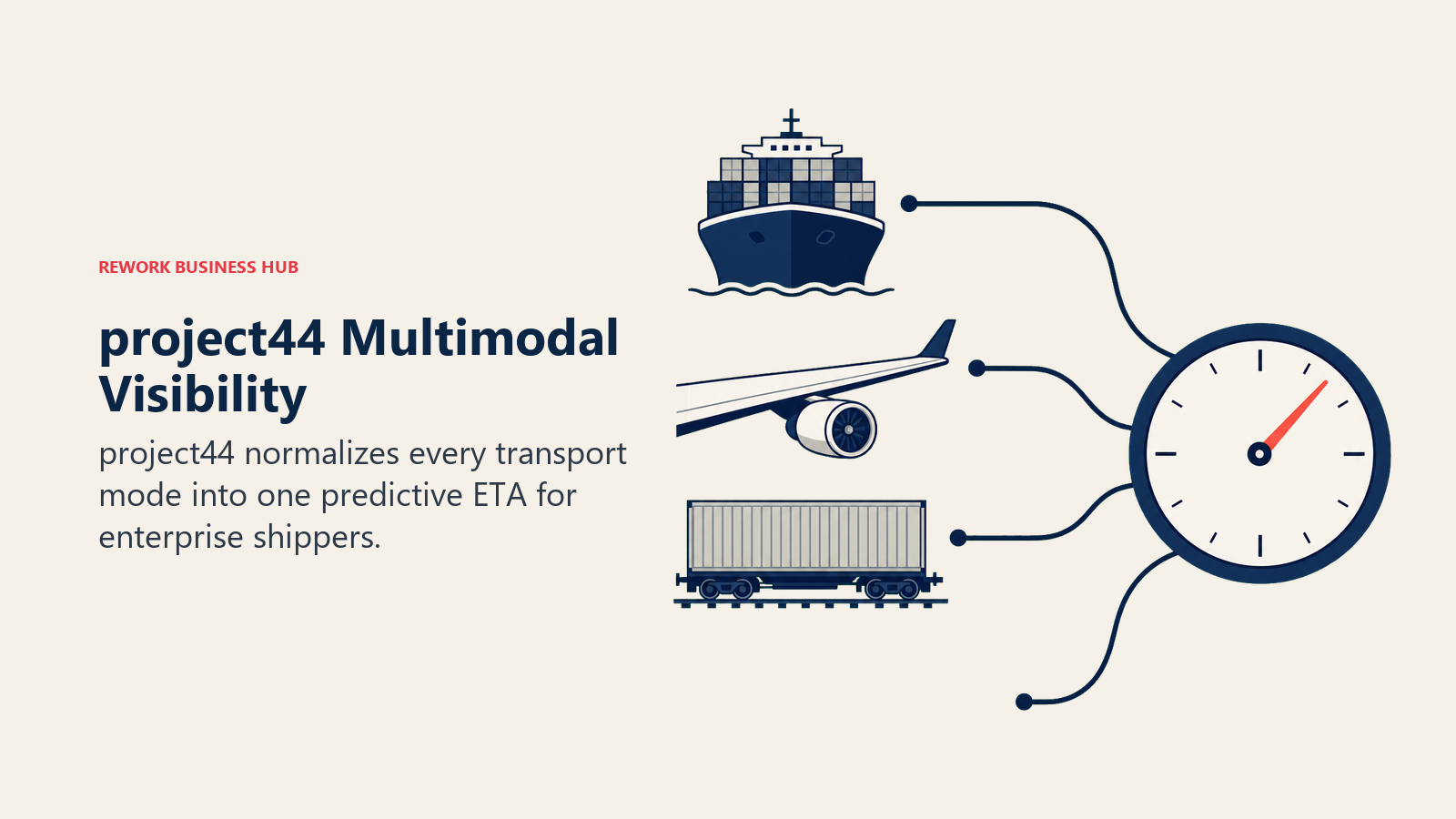
project44's pitch is a unified data layer: it normalizes tracking data from carriers, telematics providers, and TMS/ERP systems (SAP, Oracle, and others) into one real-time view across ocean, air, rail, truckload, LTL, and parcel. Its AI-driven predictive ETA engine is the centerpiece, giving shippers and 3PLs a single number they can trust instead of reconciling conflicting carrier updates.
The tradeoff is scope and cost. project44 is built for large enterprises and logistics providers managing complex, multimodal networks, not for a single-mode carrier or a shipper running a handful of lanes.
| What you get | What you don't |
|---|---|
| Multimodal tracking normalized across carriers into one data layer | No published pricing, deployment requires a sales conversation |
| Predictive ETAs using AI trained on historical carrier performance | Overkill for single-mode or low-volume shippers |
| Yard management and eCommerce logistics modules beyond core visibility | Best value requires deep ERP/TMS integration work upfront |
Pricing: Custom enterprise pricing, not published. Contact sales for a quote.
Best for: Large enterprise shippers and 3PLs running multimodal networks who need one predictive ETA number instead of stitching together carrier-by-carrier tracking.
2. FourKites: AI Visibility Built for Retail and CPG Volume
FourKites built its name tracking freight for household retail and CPG names, and its scale shows: the platform tracks more than two million shipments a day. Its patented AI processes over 150 factors, including weather, traffic, and historical carrier performance, to predict arrival times and flag delays before they become a customer-facing problem.
Enterprise pricing reflects that scale. Reported entry pricing starts near $75,000 a year, which puts FourKites out of reach for smaller shippers who don't have the shipment volume to justify it.
| What you get | What you don't |
|---|---|
| AI arrival prediction using 150+ real-time factors | Enterprise pricing starting near $75,000/year |
| Proven at scale with 2M+ shipments tracked daily | Not cost-effective for low-volume or single-lane shippers |
| Automated delay alerts and workflow triggers | Custom pricing model makes budgeting hard without a sales call |
Pricing: Subscription-based, scaled to shipment volume and integration needs. Enterprise pricing reportedly starts around $75,000/year. Contact sales for a quote.
Best for: High-volume retail, CPG, and pharma shippers who need proven, enterprise-scale predictive visibility rather than basic tracking.
3. Uber Freight: AI-Matched Brokerage With Market Intelligence
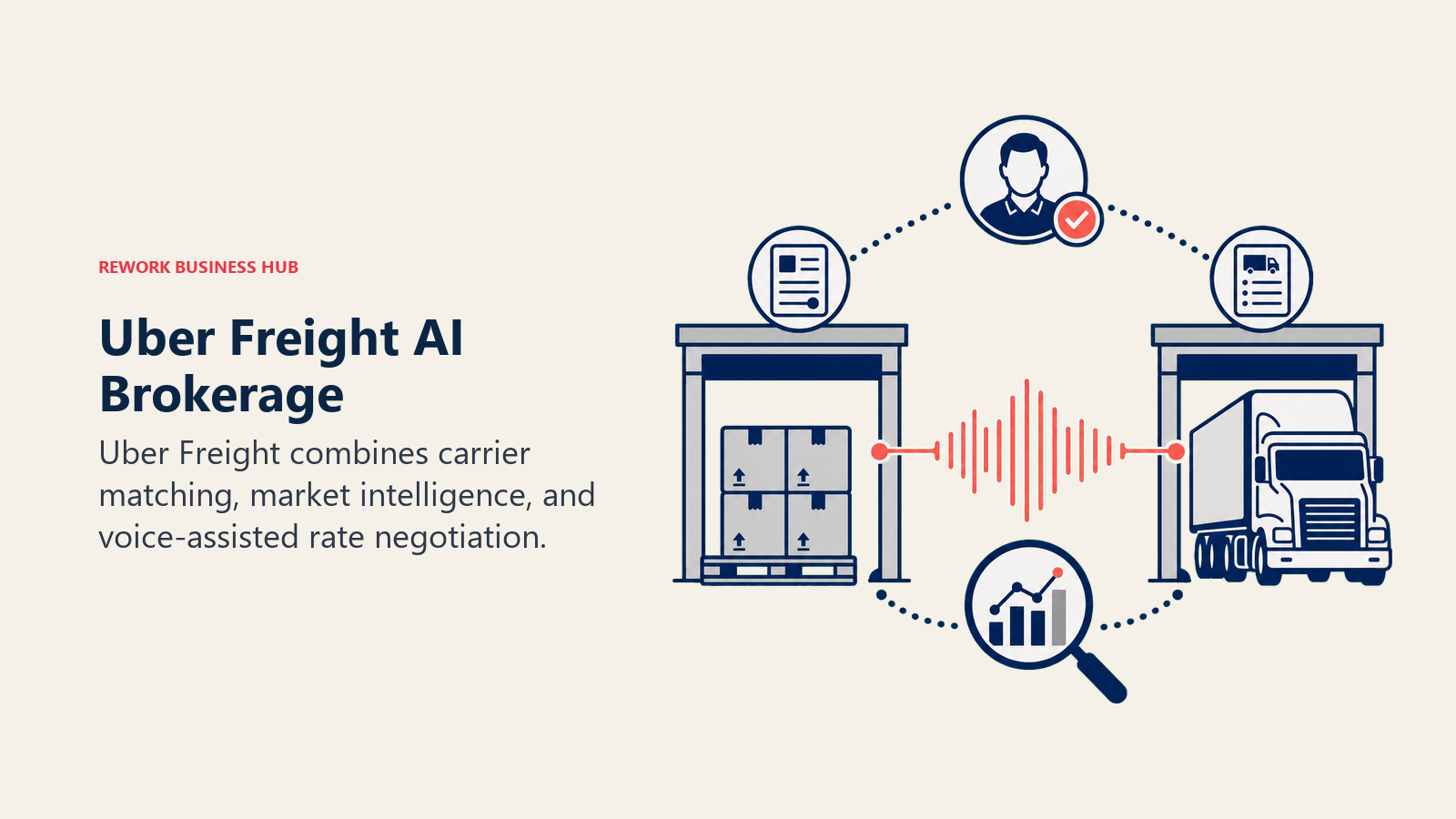
Uber Freight's edge is data plus marketplace reach: Insights AI draws on more than 20 years of logistics metadata, letting a shipper or carrier ask a plain-language question like "which lanes are underperforming this quarter" and get a direct answer instead of building a report from scratch. Its newer voice-based AI agents handle rate negotiation calls, cutting driver hold times by as much as 98% while keeping a human in the loop for verification.
There's no self-serve subscription here. Uber Freight operates as a managed brokerage and freight marketplace, so pricing is tied to the freight you actually move, not a flat software fee.
| What you get | What you don't |
|---|---|
| Insights AI answers natural-language questions on 20+ years of freight data | No published subscription tiers, pricing is freight-volume dependent |
| Voice AI agents cut rate-negotiation hold times dramatically | Best value for shippers already moving meaningful freight volume |
| Access to Uber Freight's carrier network for matching | Less useful as a pure software tool if you're not also using the brokerage |
Pricing: Contact sales. Pricing is tied to brokerage/managed transportation services and freight volume rather than a published software subscription.
Best for: Shippers who want AI-assisted freight matching and market intelligence bundled with an actual brokerage relationship, not a standalone visibility tool.
4. Flexport: AI-Powered Global Freight Forwarding
Flexport's bet is that freight forwarding should feel like software, not paperwork. Its real-time pricing engine lets shippers search, compare, and book ocean and air freight in seconds instead of waiting hours for a forwarder's manual quote, and its AI optimization engine evaluates live FCL, LCL, and consolidation data to improve container utilization, claiming up to 10% in freight cost savings. Newer AI agents extend into customs and compliance risk management.
Flexport's strength is international, multimodal forwarding. Domestic trucking-only shippers will find more depth in a dedicated dispatch or route-optimization tool.
| What you get | What you don't |
|---|---|
| Instant multimodal freight pricing and booking | Strongest for international ocean/air, not domestic-only trucking |
| AI container-utilization optimization aimed at cost savings | No published flat pricing, quotes are shipment-specific |
| AI agents extending into customs and compliance risk | Newer AI agent features still rolling out through 2026 |
Pricing: Freight rates quoted per shipment through the platform; software/platform fees are custom. Contact sales for enterprise deployments.
Best for: Shippers and forwarders moving international ocean and air freight who want instant digital quoting instead of manual forwarder back-and-forth.
5. Optimal Dynamics: AI Dispatch and Freight Procurement for Fleets
Optimal Dynamics' Transportation Decision System targets a specific enterprise trucking problem: making thousands of small dispatch and bidding decisions a day better than a human planner can manage manually. Its dispatch automation matches drivers to loads across the whole network rather than lane by lane, and its March 2026 Scale launch adds an agentic layer that searches, negotiates, and bids on freight across load boards, direct shipper channels, email, and EDI.
Scale is genuinely new. As of mid-2026 it's in an exclusive rollout with existing customers, so buyers evaluating it today are buying into a roadmap as much as a finished product.
| What you get | What you don't |
|---|---|
| Network-wide dispatch automation, not lane-by-lane matching | No published pricing, enterprise sales cycle required |
| Scale agent automates freight search, negotiation, and bidding | Scale still in limited rollout, general availability pending |
| Strategic planning tools for fleet sizing and domicile location | Built for enterprise carriers, not owner-operators |
Pricing: Custom enterprise pricing, not published. Contact sales for a quote.
Best for: Enterprise trucking fleets that want AI making network-wide dispatch and procurement decisions instead of planners working lane by lane.
6. Locus: Agentic Route Optimization and Dispatch at Scale
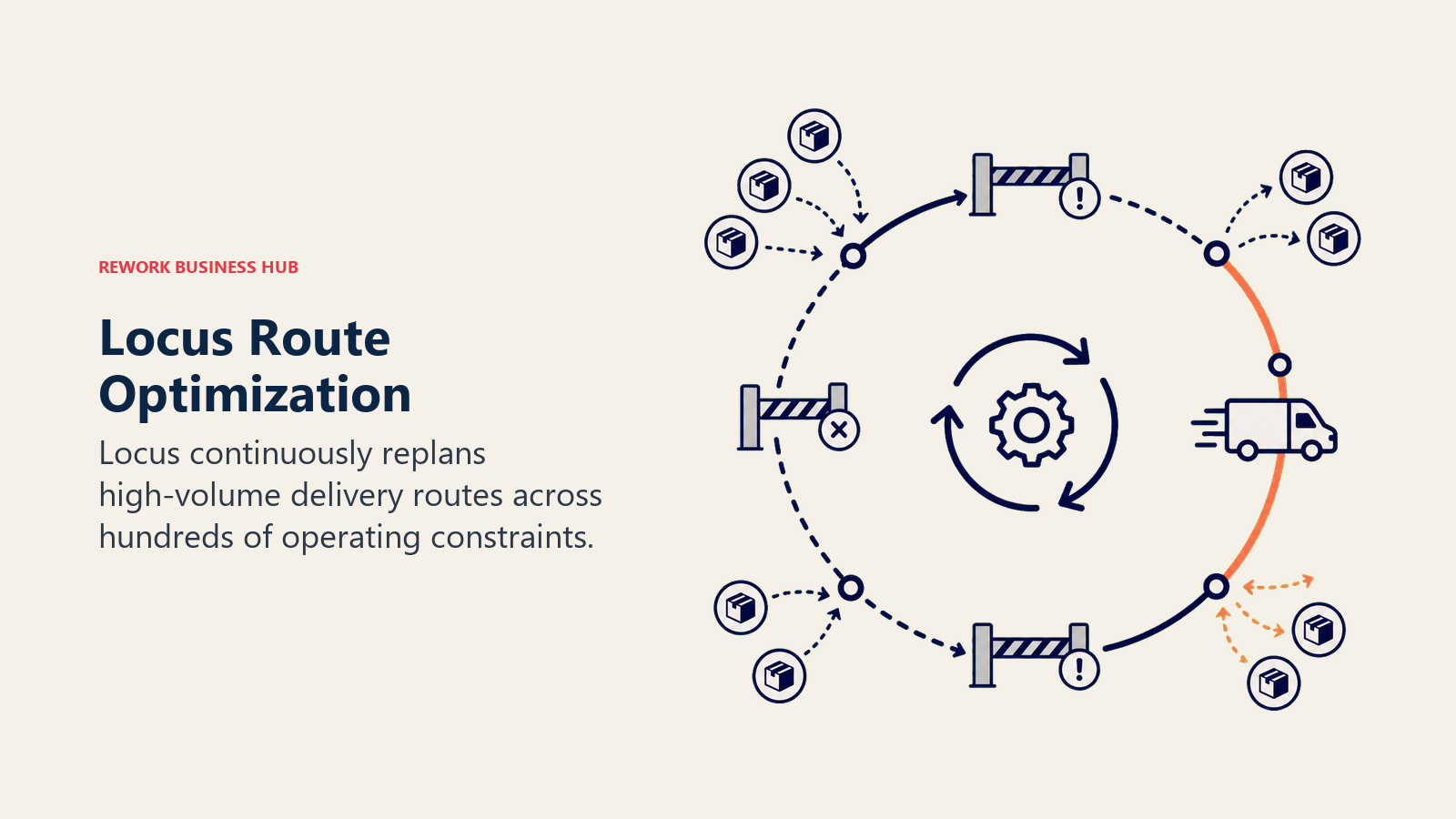
Locus positions itself as a decision-intelligent, agentic TMS rather than a static routing tool. Its DispatchIQ engine processes more than 100,000 daily orders through machine learning models trained on billions of delivery data points, generating updated fleet-wide plans in under five minutes even at enterprise volume. The underlying Fireworks routing engine evaluates 250+ constraints per dispatch decision and continues re-optimizing mid-execution as conditions change, not just once at the start of the day.
The pricing and complexity are built for real scale. Locus reports $320 million-plus in aggregate customer cost savings and a 99.5% on-time SLA rate across its enterprise base, numbers that matter most to fleets already running thousands of daily deliveries.
| What you get | What you don't |
|---|---|
| DispatchIQ replans 100,000+ orders across 250+ constraints in minutes | Reported pricing starts around $20,000/year, not for small fleets |
| Continuous mid-execution re-optimization, not just start-of-day planning | Complexity may exceed what a low-volume operation needs |
| Multi-depot, hub-and-spoke, and multi-SLA order support | Enterprise deployment and integration effort required |
Pricing: Custom, volume-based pricing tied to shipment volume and feature requirements. Reportedly starts around $20,000/year. Contact sales for a quote.
Best for: High-volume delivery and logistics operations (last-mile, distribution, or multi-depot fleets) that need continuous, constraint-aware re-optimization rather than a one-time daily route plan.
7. Samsara: AI Fleet Telematics and Safety Monitoring
Samsara's product is the connected fleet: GPS tracking, AI dashcams, fuel and asset monitoring, and driver safety scoring in one platform. Its AI reviews dashcam footage in real time to flag risky driving events (harsh braking, distraction, following too close) and surfaces coaching opportunities before they become accidents or insurance claims, which is the strongest argument for fleets carrying real safety and liability exposure.
Samsara doesn't publish pricing, and reported real-world costs run higher than a headline number would suggest once hardware and installation are factored in, plus a long minimum contract term.
| What you get | What you don't |
|---|---|
| Real-time AI dashcam safety scoring and coaching alerts | Pricing not published, requires a sales conversation |
| Unified GPS, fuel, and asset tracking in one dashboard | Hardware and installation costs add to the per-vehicle price |
| Widely adopted, strong ecosystem of fleet integrations | Typically requires a 36-month minimum contract |
Pricing: Not publicly listed. Industry-reported ranges run roughly $27-33/vehicle/month for GPS telematics and $40-60+/vehicle/month with AI dashcams, plus $99-148 in hardware per vehicle and installation fees. Contact sales for a quote.
Best for: Fleets of any size that prioritize AI-driven driver safety monitoring and asset visibility alongside standard telematics.
8. Verusen: AI-Driven MRO and Indirect Materials Intelligence
Verusen solves a specific and expensive problem for asset-intensive manufacturers: MRO (maintenance, repair, and operations) inventory that's duplicated, mislabeled, and scattered across ERP, CMMS, procurement, and warehouse systems nobody fully trusts. Its AI uses natural language processing and machine learning to identify duplicate parts, standardize nomenclature into one materials master, and score part criticality so planners know what actually needs to be stocked.
This isn't freight or transportation software, it's inventory intelligence for the parts that keep plants and fleets running. Manufacturing, utilities, oil and gas, mining, and transportation companies managing large MRO inventories across multiple sites are the clearest fit.
| What you get | What you don't |
|---|---|
| AI deduplication and standardization of messy parts data | Not a transportation or freight visibility tool |
| Predictive stocking and cross-site demand signals | Contact-only pricing, no published tiers |
| Connects to existing ERP/EAM/P2P systems, insights in weeks | Best ROI accrues over 6-12 months, not immediately |
Pricing: Custom, not published. Contact sales for a quote.
Best for: Asset-intensive manufacturers and operators managing MRO and indirect materials inventory across multiple sites who need AI to clean up and optimize parts data.
9. o9 Solutions: Enterprise AI Demand Planning and Digital Twin
o9's Enterprise Knowledge Graph builds a digital twin of a company's entire planning surface, from demand signals to supply constraints, and applies multiple AI model types together (statistical, gradient-boosted trees, and deep learning) rather than relying on one forecasting method. That ensemble approach is aimed at explainability as much as accuracy, letting planners see why a forecast moved, not just that it did.
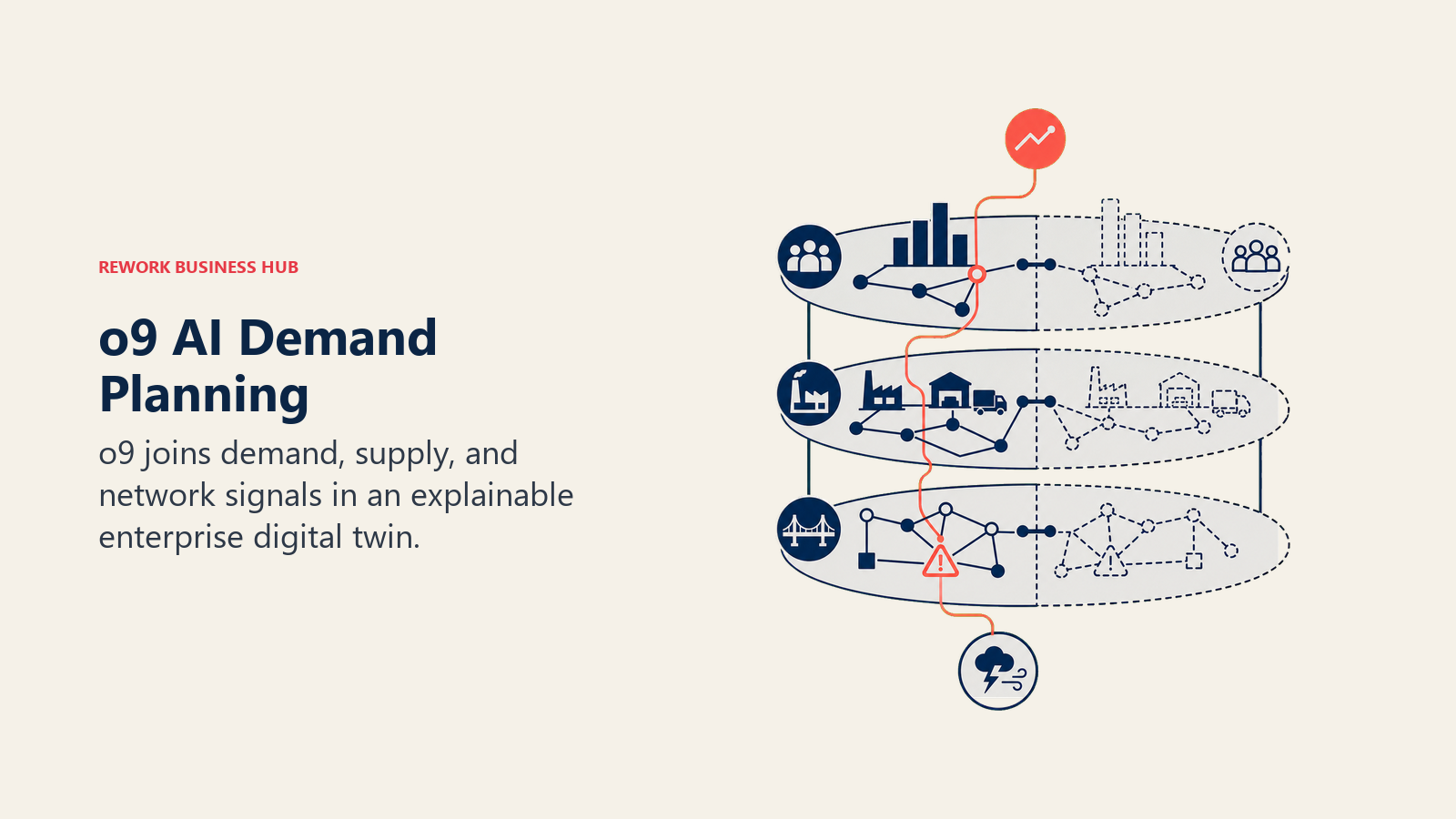
o9 serves large multinational enterprises exclusively. Every public customer example is a household multibillion-dollar name, which tells you the pricing and implementation scope are built for that tier and nowhere smaller.
| What you get | What you don't |
|---|---|
| Multi-model AI ensemble forecasting with explainability | Built exclusively for large multinational enterprises |
| Enterprise Knowledge Graph unifies demand, supply, and network planning | No published pricing, long enterprise implementation cycles |
| Named a Leader in Gartner's 2026 Magic Quadrants for Supply Chain Planning | Not a fit for mid-market or single-site operations |
Pricing: Custom, not published. Enterprise-only. Contact sales for a quote.
Best for: Large multinational enterprises that need a unified, explainable AI planning layer across demand, supply, and network decisions.
10. Blue Yonder: End-to-End AI Supply Chain Planning
Blue Yonder covers more ground on one platform than most competitors: demand and supply planning, warehouse management, and transportation management under one AI layer. Its AI demand sensing capability adjusts forecasts closer to real time using signals beyond historical sales, which matters most for retailers and distributors managing volatile demand across many SKUs and locations.
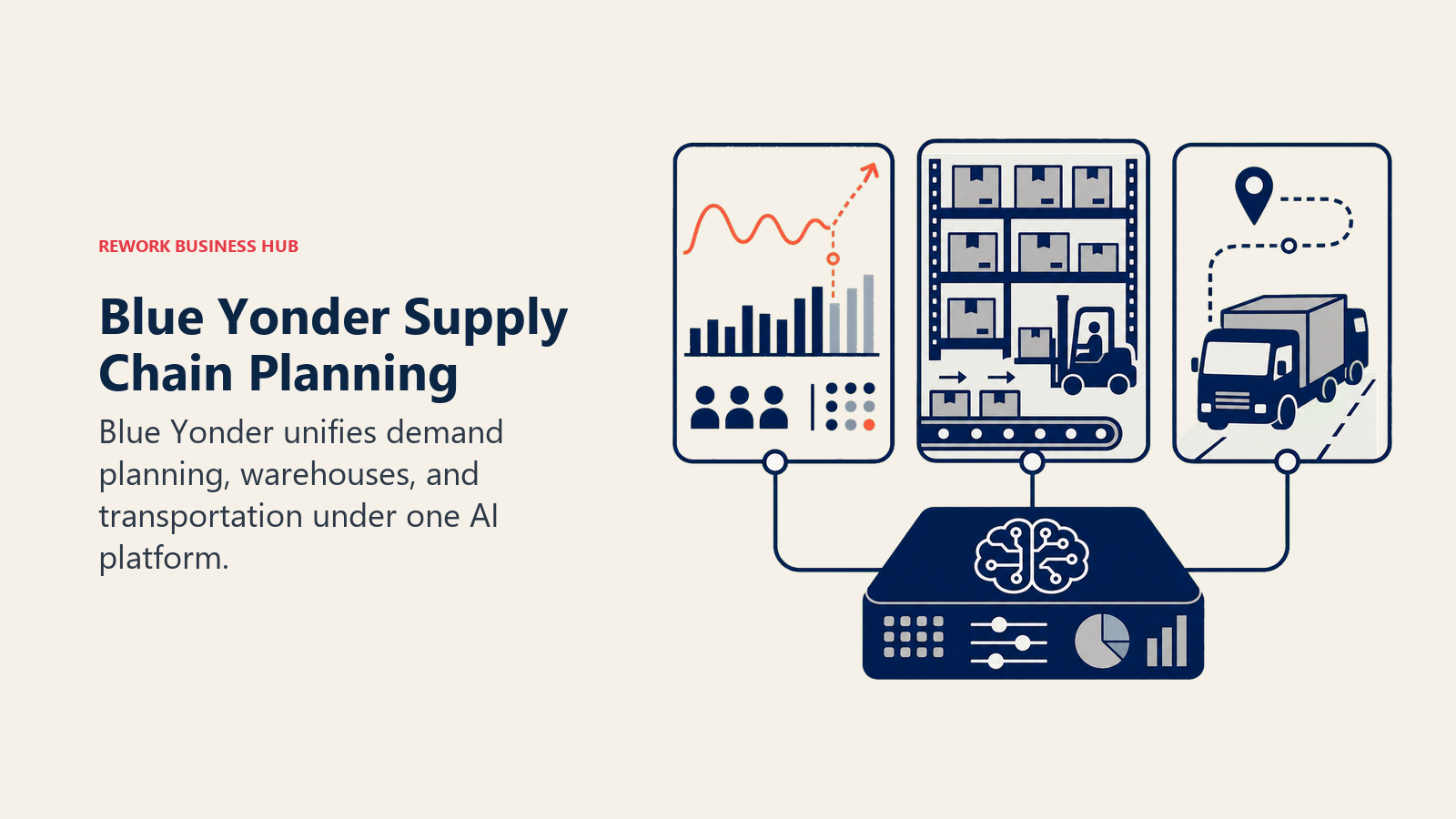
The pricing structure scales directly with SKU count and location count, and the AI add-ons carry a real premium on top of the base planning subscription, so cost grows fast as deployment scope grows.
| What you get | What you don't |
|---|---|
| Single platform spanning planning, warehouse, and transportation | Pricing reportedly starts around $100,000/year and scales with SKUs |
| AI demand sensing beyond historical sales data | Demand sensing carries a reported 20-35% premium over base pricing |
| Broad enterprise retail and CPG deployment track record | No public pricing, budgeting requires a sales conversation |
Pricing: Custom enterprise pricing based on SKU count, locations, and modules. Reportedly starts around $100,000/year, with enterprises managing 100,000 SKUs across two to three business units often paying $150,000-$300,000/year for demand planning alone. Contact sales for a quote.
Best for: Enterprise retailers, manufacturers, and distributors that want planning, warehouse, and transportation management unified on one AI platform rather than three separate systems.
11. e2open: Supply Chain Network Visibility and Trade Compliance
e2open's differentiator is network breadth: it connects a large web of trading partners, suppliers, and carriers on one platform, with AI applied to demand planning, global trade management, and transportation coordination across that network. For companies managing multi-tier supplier relationships and cross-border compliance, that network effect is the appeal over a single-company visibility tool.
Pricing has two very different tracks. The entry-level Carrier Connectivity product starts cheap, but the full Enterprise Suite (demand planning, global trade management, transportation management together) is custom and undisclosed, and partner onboarding adds its own per-partner cost.
| What you get | What you don't |
|---|---|
| Multi-enterprise trading network with AI demand planning | Enterprise Suite pricing is fully custom and undisclosed |
| Global trade management and compliance built in | Partner onboarding runs $1,500-$12,000 per partner |
| Entry Carrier Connectivity product starts at $549/year | API access alone starts at $18,000/year and scales with volume |
Pricing: Carrier Connectivity starts at $549/year; API access starts at $18,000/year. The full Enterprise Suite is custom, contact sales for a quote.
Best for: Companies managing complex, multi-tier trading partner networks who need AI-assisted demand planning and trade compliance in one connected platform.
12. DAT One: AI-Assisted Freight Matching for Carriers and Brokers
DAT One is the load board most carriers and brokers already know, and its 2026 acquisition of Convoy's automated freight-matching technology pushed AI further into the core product: more accurate market rate data, dynamic pricing suggestions, and automated load-carrier matching layered on top of the classic search-and-post workflow. Higher tiers add TriHaul route optimization for round-trip freight and DAT iQ's RateView analytics for lane-level rate benchmarking.
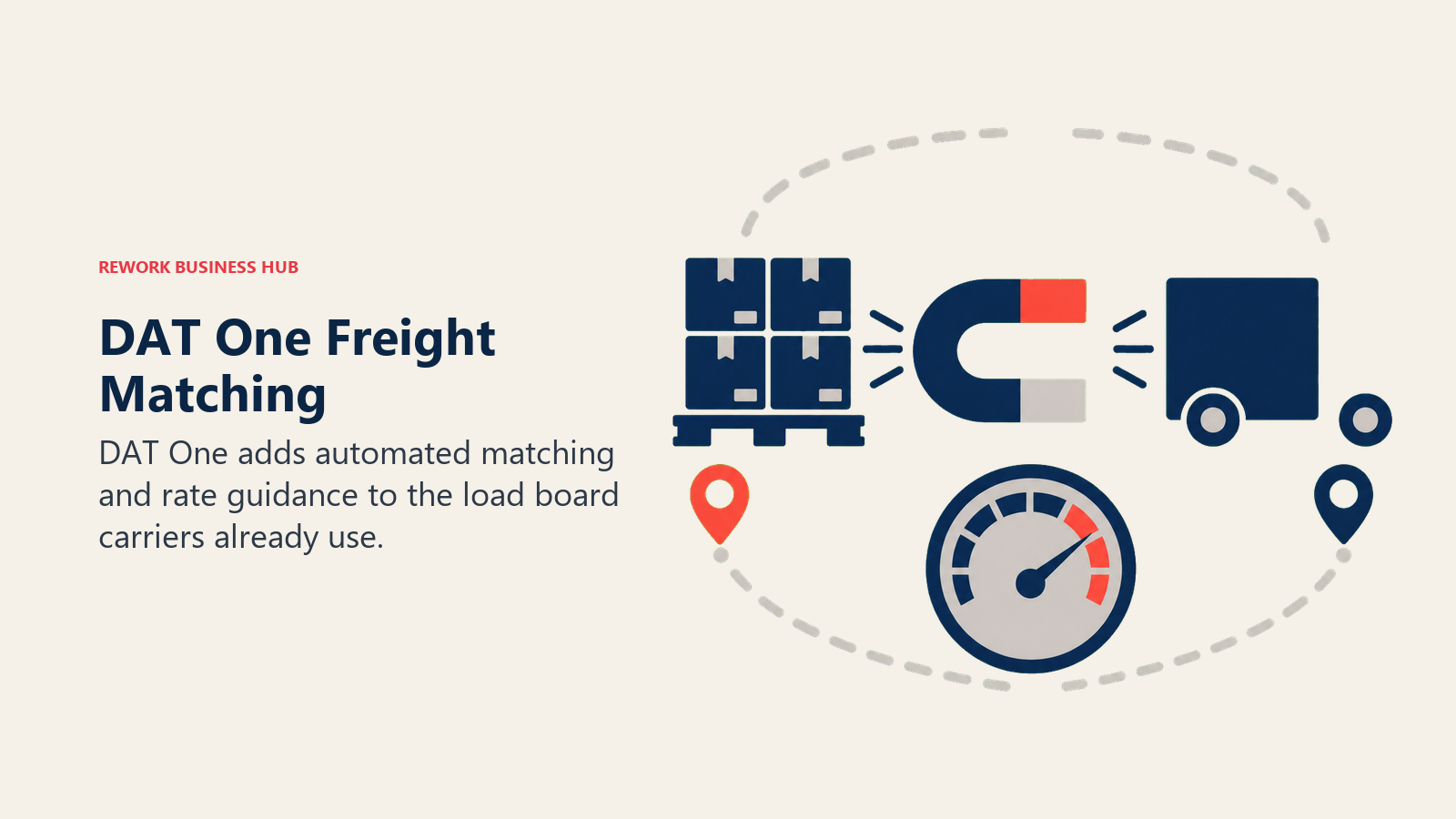
Pricing is tiered and relatively accessible at the entry level, which is unusual in this list. The AI-forward features (automated matching, rate suggestions) live in the higher Pro, Select, and Office tiers, not the Standard plan.
| What you get | What you don't |
|---|---|
| Largest truckload freight-matching network with real usage | AI rate suggestions and automated matching require Pro tier or above |
| Entry pricing starts around $49/month, accessible for small carriers | RateView lane analytics is a separate DAT iQ add-on |
| TriHaul optimizes round-trip freight to reduce empty miles | Not a route-optimization or dispatch platform beyond freight matching |
Pricing: Tiered from Standard through Office, starting around $49/month. Higher tiers with AI-assisted rate suggestions and automated matching cost more; contact DAT for current tier pricing.
Best for: Owner-operators, small carriers, and brokers who need AI-assisted freight matching and market rate data without an enterprise TMS contract.
13. Freightos: AI-Powered Freight Booking for Forwarders
Freightos (formerly WebCargo, now rebranded Freightos for Forwarders) digitizes the freight forwarder's quoting and booking workflow. Its Rate & Quote tool, expanded from air into ocean freight in 2026, lets forwarders manage rates, generate quotes, and book freight across 75+ carriers on one digital platform instead of emailing carrier reps for every shipment. Early adopters report quote times roughly 75% faster than the manual process it replaces.
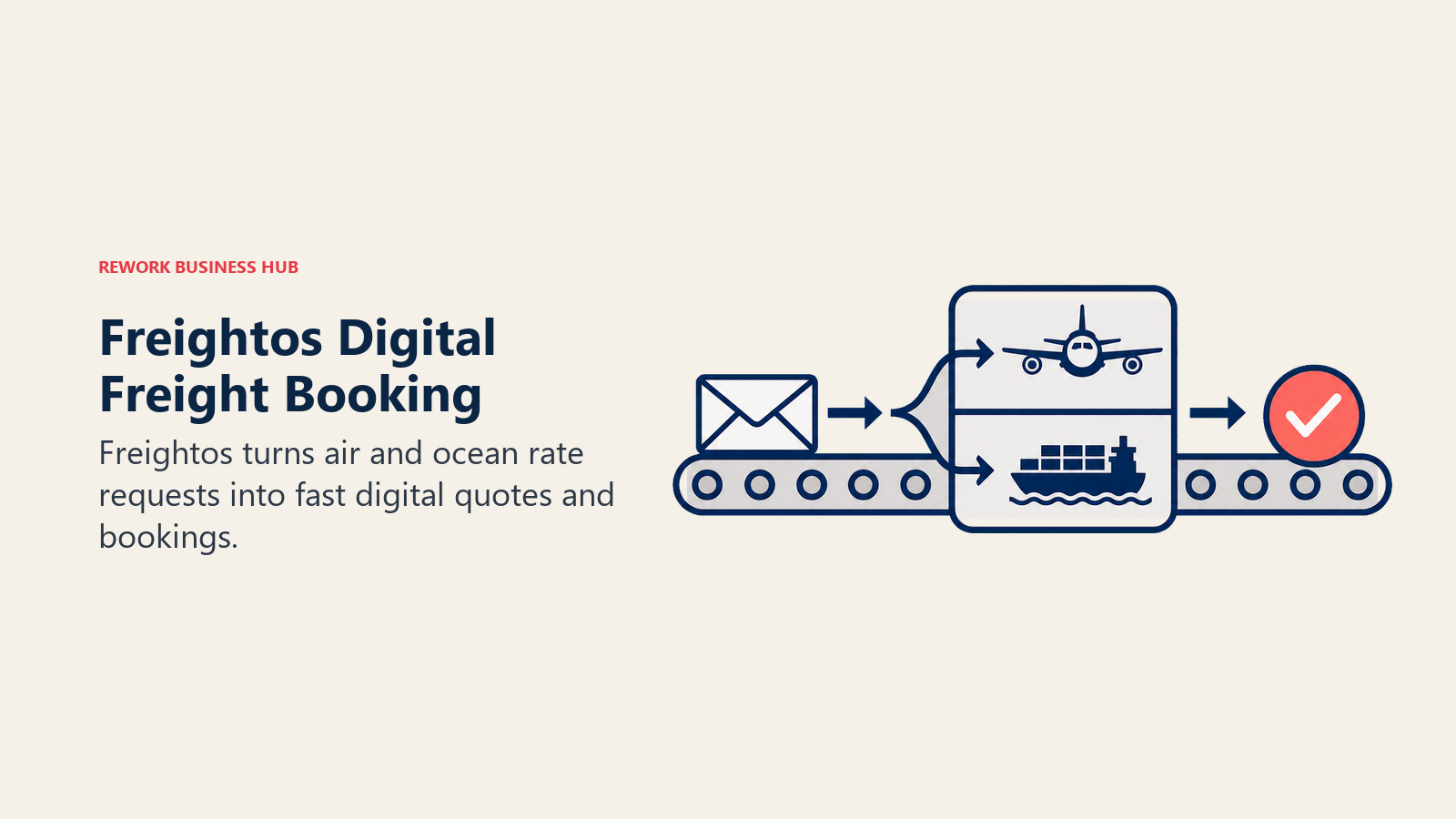
Core booking is free for forwarders to search, compare, and book air cargo, with paid modules for rate management, customer self-service portals, and API integrations layered on top.
| What you get | What you don't |
|---|---|
| Free core booking across 75+ air carriers | Advanced rate management and API access are paid add-ons |
| Rate & Quote now spans both air and ocean freight | Strongest for international forwarding, not domestic trucking |
| Reported 75% faster quote times for early adopters | Enterprise procurement and forwarder subscription pricing is custom |
Pricing: Free to search, compare, and book air cargo. Paid modules for rate management, portals, and API access are custom. Public data subscriptions start at $119/month (Ocean Index) and $239/month (Air Index). Contact sales for platform pricing.
Best for: Freight forwarders who want to replace manual, email-based quoting with a digital, AI-assisted rate and booking platform across air and ocean freight.
Pricing at a Glance
| Tool | Entry Price | Pricing Model | Free Tier or Trial? |
|---|---|---|---|
| project44 | Custom, contact sales | Enterprise subscription | No |
| FourKites | ~$75,000/year | Enterprise subscription by volume | No |
| Uber Freight | Contact sales | Brokerage/managed transportation, volume-based | No |
| Flexport | Custom, per-shipment quotes | Freight rates + custom platform fees | No (instant quotes, no free platform tier) |
| Optimal Dynamics | Custom, contact sales | Enterprise subscription | No |
| Locus | ~$20,000/year | Custom, volume-based | No |
| Samsara | ~$27-33/vehicle/month | Per-vehicle subscription + hardware | No |
| Verusen | Custom, contact sales | Enterprise subscription | No |
| o9 Solutions | Custom, enterprise-only | Enterprise subscription | No |
| Blue Yonder | ~$100,000/year | Enterprise subscription by SKU/location | No |
| e2open | $549/year (Carrier Connectivity) | Tiered + custom Enterprise Suite | No |
| DAT One | ~$49/month (Standard) | Tiered subscription | No (paid tiers only) |
| Freightos | Free (core air booking) | Freemium booking + paid modules/data subscriptions | Yes (booking only) |
How to Choose: Decision Framework
| If you need... | Pick... | Why |
|---|---|---|
| One predictive ETA across every mode and carrier | project44 | Normalizes multimodal tracking data into a single AI-driven prediction |
| Proven visibility at high retail/CPG shipment volume | FourKites | AI trained on 150+ factors, already tracking 2M+ shipments daily |
| AI-matched brokerage plus market intelligence | Uber Freight | Insights AI plus a real carrier network, not just software |
| Instant digital quoting for international ocean/air freight | Flexport | Real-time pricing engine cuts quote time from hours to seconds |
| Network-wide dispatch and freight procurement automation | Optimal Dynamics | Scale agent negotiates and bids on freight, not just matches loads |
| Continuous, constraint-aware route re-optimization at scale | Locus | DispatchIQ replans 100,000+ orders across 250+ constraints in minutes |
| AI-driven fleet safety and telematics | Samsara | Real-time dashcam AI flags risky driving before it becomes a claim |
| Cleanup and optimization of MRO/parts inventory data | Verusen | Purpose-built AI deduplication and predictive stocking for MRO |
| Enterprise-scale demand forecasting with explainable AI | o9 Solutions | Multi-model ensemble AI plus a full planning digital twin |
| One platform for planning, warehouse, and transportation | Blue Yonder | Broadest single-platform AI coverage across the supply chain |
| Trade compliance across a multi-tier trading network | e2open | Network-wide visibility with built-in global trade management |
| Low-cost AI-assisted freight matching for small carriers | DAT One | Entry pricing around $49/month with automated load matching |
| Digital rate quoting and booking for freight forwarders | Freightos | Free core booking, 75% faster quotes for early adopters |
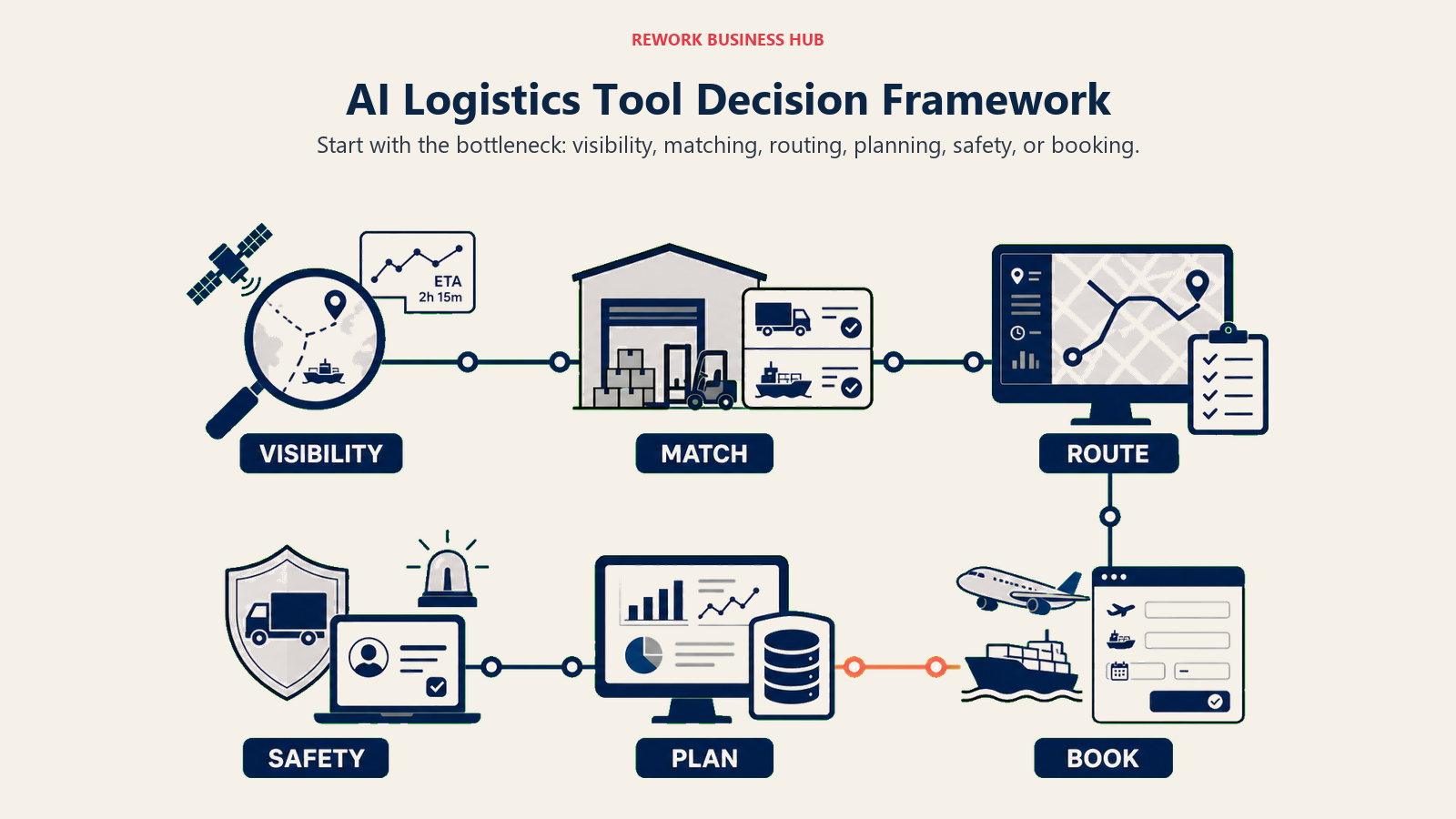
Grouped by category, this list breaks down into visibility (project44, FourKites), freight matching and brokerage (Uber Freight, DAT One), global forwarding (Flexport, Freightos), route optimization and dispatch (Locus, Optimal Dynamics), fleet telematics (Samsara), demand forecasting and network planning (o9 Solutions, Blue Yonder), MRO and indirect materials (Verusen), and trade compliance (e2open). Most logistics teams need at least two of these categories working together, not one tool covering everything.
If you're evaluating the broader automation layer that connects these tools to the rest of your stack, best AI automation tools and best AI agents cover the general-purpose AI agent platforms that logistics teams often pair with a dedicated visibility or dispatch tool. And if freight audit and invoice reconciliation is the real bottleneck rather than visibility or dispatch, an ERP-side automation tool like the ones covered in best Odoo alternatives or a general workflow connector like best n8n alternatives is often what closes the gap between a logistics platform and your finance system.
Before you shop any of these tools, it helps to have a shared definition of the problem. Rework's supply chain glossary entry and its leadership perspective on supply chain as a competitive advantage are useful starting points, and if you're building out the team to run this stack, the supply chain manager job description template is a practical reference for scoping the role.
Frequently Asked Questions about AI Tools for Logistics
What are the best AI tools for transportation and logistics in 2026?
There's no single best tool because "logistics" spans several distinct jobs. project44 and FourKites lead real-time shipment visibility, Uber Freight and DAT One lead AI-assisted freight matching, Flexport and Freightos lead digital freight forwarding, Optimal Dynamics and Locus lead route optimization and dispatch, and o9 Solutions and Blue Yonder lead enterprise demand forecasting. Match the tool to the bottleneck you actually have.
What's the difference between a freight visibility platform and a TMS?
A visibility platform like project44 or FourKites tracks shipments in transit and predicts arrival times but generally doesn't plan routes or execute dispatch. A transportation management system (TMS) like Locus or Optimal Dynamics plans routes, assigns loads to drivers, and manages execution. Many enterprise shippers run both: a TMS to plan and dispatch, a visibility platform to track what's already moving.
How much do AI logistics tools cost in 2026?
It varies enormously by category. Freight matching tools like DAT One start around $49/month. Fleet telematics like Samsara runs roughly $27-33 per vehicle per month. Enterprise visibility, planning, and TMS platforms (project44, FourKites, Blue Yonder, Locus) are priced custom and typically start in the tens to low hundreds of thousands of dollars per year, scaled to shipment volume, SKU count, or fleet size.
What AI tool is best for a small trucking fleet or owner-operator?
DAT One's Standard tier, starting around $49/month, gives small carriers AI-assisted freight matching and market rate data without an enterprise contract. Samsara offers per-vehicle telematics and safety pricing that scales down to small fleets, though it typically requires a multi-year contract.
Can AI actually reduce logistics costs, or is it mostly hype?
The data backs real gains in specific use cases. McKinsey reports AI-enabled distribution operations see 5-20% lower logistics costs and 20-30% lower inventory levels, and one McKinsey-documented case saw a last-mile fleet operator save $30-35 million from virtual dispatcher agents on a $2 million investment. The gains are real but concentrated in operations that already have clean data feeding the AI, not a universal outcome from just turning a feature on.
What's the difference between AI freight matching and AI route optimization?
Freight matching (DAT One, Uber Freight) connects a load that needs to move with a carrier that has capacity, usually before the shipment starts. Route optimization and dispatch (Locus, Optimal Dynamics) plans the most efficient path and sequence for loads already assigned to your fleet, often re-planning continuously as conditions change during execution.
Is agentic AI actually being used in logistics yet, or is it still a 2026 buzzword?
It's live in specific products today, not just a roadmap item. Optimal Dynamics' Scale agent negotiates and bids on freight autonomously, and Uber Freight's voice AI agents handle rate-negotiation calls with drivers. Gartner still forecasts most of the growth is ahead: agentic AI adoption among enterprises using supply chain software is expected to climb from about 5% in 2025 to 60% by 2030.
What to Do Next
Don't evaluate all 13 of these at once. Name the single logistics bottleneck costing you the most right now, whether that's shipment visibility you don't trust, dispatch decisions a planner can't make fast enough, or a freight rate you can't verify, and pilot one tool against it with a real lane or fleet segment for a few weeks before you sign an annual contract. If the bottleneck is real-time visibility across carriers and modes, start with project44 or FourKites. If it's dispatch and freight procurement for your own fleet, start with Locus or Optimal Dynamics.

Principal Product Marketing Strategist
On this page
- What Changed in 2026
- Key Facts
- Quick Comparison Table
- Framework: By Job to Be Done
- Framework: By Company Size and Role
- 1. project44: Real-Time Multimodal Visibility for Enterprise Shippers
- 2. FourKites: AI Visibility Built for Retail and CPG Volume
- 3. Uber Freight: AI-Matched Brokerage With Market Intelligence
- 4. Flexport: AI-Powered Global Freight Forwarding
- 5. Optimal Dynamics: AI Dispatch and Freight Procurement for Fleets
- 6. Locus: Agentic Route Optimization and Dispatch at Scale
- 7. Samsara: AI Fleet Telematics and Safety Monitoring
- 8. Verusen: AI-Driven MRO and Indirect Materials Intelligence
- 9. o9 Solutions: Enterprise AI Demand Planning and Digital Twin
- 10. Blue Yonder: End-to-End AI Supply Chain Planning
- 11. e2open: Supply Chain Network Visibility and Trade Compliance
- 12. DAT One: AI-Assisted Freight Matching for Carriers and Brokers
- 13. Freightos: AI-Powered Freight Booking for Forwarders
- Pricing at a Glance
- How to Choose: Decision Framework
- What to Do Next