Vapi vs Retell vs Bland: Which Voice AI Agent Platform Fits Your Team in 2026?
Turn this article into takeaways for your work.


Each assistant summarizes the article only for you and suggests best practices for your work.
If you're comparing these three, you already know you want an AI agent that answers or places phone calls, and you've narrowed the field to the platforms developers talk about most. Vapi, Retell and Bland all sell the same headline outcome: a voice agent that holds a live conversation, calls your systems and hands off to a human when it should. They split on almost everything behind the headline. How the per-minute price is built, who is expected to build the agent, how much of the stack you choose yourself, and what you get before you talk to a salesperson all differ.
That's why a simple rate comparison misleads. A figure of five cents on one page and twelve cents on another don't describe the same thing. One is a hosting fee with the language model, transcription, voice and carrier billed separately. Another is a bundle that already contains the model. This guide lines up what each rate covers, how each platform is built and run, where concurrency and compliance differ, and which team each one suits. It doesn't add up any total that a vendor doesn't print itself.
It's written for the person who has to defend the choice: a head of engineering, a product lead, or a contact center director choosing a platform for a mid-size to large operation. If you want the wider market, best AI voice agents in 2026 ranks the whole category.
TL;DR
| Vapi | Retell | Bland | |
|---|---|---|---|
| Positioning | "Voice agents for builders" | "AI Voice Agent Platform for Automating PHONE Calls" | "An enterprise voice AI platform" |
| Headline price | $0.05 per minute hosting fee | $0.07 to $0.31 per minute, itemized | $0.14 per minute on Start, $0.12 on Build |
| What the headline covers | Vapi hosting only; models and transport at provider cost | Voice infrastructure, LLM, voice and telephony as you select them | LLM, speech-to-text and premium voices; telephony billed separately |
| Build style | Code-first: assistants, squads, tools, API and CLI | Visual flow canvas plus single-prompt agents, with API and SDKs | Visual pathways in the dashboard, with a forward-deployed engineer team at enterprise level |
| Provider choice | You pick transcriber, model and voice | You pick LLM and voice from a listed menu | Runs on Bland's own models |
| Free start | $5 in free credits on the entry package | $10 in free credits, 20 free concurrent calls | No card required on Start |
| Self-host option | Not stated on its pricing page | Enterprise on-prem listed in its feature set | Self-hosted and on-premises available |
| Weakest fit | Teams that want one flat number | Teams that want one flat number | Teams that want to pick every model themselves |
Key Facts
- Vapi lists a $0.05 per minute hosting fee, with transcriber, model and voice costs passed through at provider cost and telephony priced by the transport you choose. Its own 1,000-minute example totals $82 to $129 per month on the entry package.
- Retell lists voice agents at $0.07 to $0.31 per minute, made up of $0.055 voice infrastructure, text-to-speech from $0.015, LLM from $0.0016 and telephony at $0.015 for listed countries.
- Bland's Start plan is $0.14 per minute and Build is $299 per month at $0.12 per minute, with the LLM, real-time speech-to-text and premium voices included and telephony billed separately.
- Vapi raised a $50 million Series B led by Peak XV, bringing total funding to $72 million, per SiliconANGLE.
- Bland announced a $40 million Series B led by Emergence Capital in February 2025, bringing total funding to $65 million, and a $50 million Series C led by Dell Technologies Capital on June 16, 2026, per Raising.fi.
- Vapi's docs say Workflows retire on August 18, 2026 and name Squads as the replacement, so a tutorial that builds on Workflows is out of date.
What Each Platform Is Actually Built For
The three names get lumped together because they're the platforms engineering teams meet first when they search for a voice agent API. They're not interchangeable once you look at who they're designed around.
Vapi is a toolkit for builders. Its homepage headline is "Voice agents for builders," and its docs describe assistants as the main primitive, each with a single system prompt, tools and structured outputs, plus squads that orchestrate several assistants with context-preserving transfers. You pick the transcriber, the model and the voice. That's a strength if you have developers who want control and a weakness if you wanted one invoice line.
Retell sits in the middle. It sells a drag-and-drop flow builder and also lets you define a whole agent with one prompt. It publishes an itemized rate card, a testing and simulation suite, and a QA layer that can score calls. It's pitched at teams that want developer APIs but also want someone on the operations side to be able to see and edit a call flow.
Bland is the most vertically integrated. It says it runs speech-to-text, the language model and text-to-speech entirely on its own models, and its enterprise tier comes with forward-deployed engineers who design pathways with your ops team. It's built for regulated, high-volume phone work where the buyer wants a managed outcome more than a parts bin.
| Vapi | Retell | Bland | |
|---|---|---|---|
| Sweet-spot buyer | Engineering team building voice into a product or a custom workflow | Product or ops team moving from prototype to production | Enterprise phone operation wanting a vendor-built, vendor-run stack |
| Who builds the agent | Your developers | Developers, with ops able to work in the canvas | Your ops team with Bland's engineers at enterprise level |
| Primary trigger to choose | Maximum flexibility over every component | Public rate card plus a visual builder | One per-minute rate that includes the model |
| Biggest risk | Bill assembled from several vendors | Final rate depends on many selectors | Less freedom to choose models and voices |
For a view that sorts the field by phone use cases rather than vendors, see best AI phone agents in 2026.
Pricing: What Each Rate Actually Includes
Voice pricing is where most evaluations go wrong, because every vendor quotes a different slice. Here's each one's own statement of the unit it bills and what's inside it.
Vapi bills a hosting fee of $0.05 per minute on its entry package, called No Success Package. The pricing page says models are passed through at cost with no markup. Core is $29 per month, prepaid and auto-renewing. Pro is priced as 10% of the hosting fee with a $999 per month minimum. Premier is custom through direct sales. The page notes no minimum minutes are required.
Retell bills pay as you go from $0.07 to $0.31 per minute for voice agents and from $0.002 per message for chat agents. The range comes from component choices: voice infrastructure at $0.055 per minute, text-to-speech at $0.015 for Retell, Minimax, Fish, Cartesia, OpenAI and Inworld voices, ElevenLabs voices from $0.040 to $0.10, and LLM costs from $0.0016 per minute for GPT 5 nano to $0.16 per minute for GPT 5.5 on the standard tier. Telephony is $0.015 per minute for listed countries, and custom telephony and SIP trunking carry no charge.
Bland bills two self-serve plans. Start has a $0 platform fee and $0.14 per minute of talk time. Build is $299 per month at $0.12 per minute. The page says the rate includes the LLM ("No token charges"), real-time speech-to-text and premium text-to-speech voices. Telephony is billed separately, through your own carrier or Bland's built-in Twilio at pass-through cost. Enterprise is contracted to your volume.
| Vapi | Retell | Bland | |
|---|---|---|---|
| Billing unit | Per minute hosting plus provider costs | Per minute, itemized by component | Per minute of talk time |
| Published platform rate | $0.05 hosting | $0.055 voice infrastructure | $0.14 Start, $0.12 Build |
| Language model | Billed at provider cost, no markup | Billed per minute by model | Included |
| Speech-to-text | Billed at provider cost | Included in the voice stack | Included |
| Text-to-speech | Billed at provider cost | Billed per minute by voice | Premium voices included |
| Telephony | Free via Vapi SIP or WebSockets; Twilio $0.008 inbound and $0.014 outbound | $0.015 per minute for listed countries; custom SIP free | Billed separately at pass-through |
| Monthly fee | $0 to start, $29 Core, $999 minimum Pro | None for pay as you go | $0 Start, $299 Build |
| Enterprise pricing | Premier: custom | Custom with volume pricing | Custom, contracted to volume |
Notice what that table does not contain: a bottom-line figure. Only Vapi and Retell print worked examples, and those examples are the vendor's own picks, so treat them as best cases.
The Printed Worked Examples
Vapi's page prices 1,000 minutes on its entry package at a hosting fee of $50, a Deepgram transcriber at $10, an OpenAI model at $8 to $45, an ElevenLabs voice at $15 to $24 and transport at $0 on Vapi telephony, for an estimated $82 to $129 per month. Retell's estimator default uses a GPT 5.5 example with LLM at $0.04, infrastructure at $0.055, text-to-speech at $0.015 and telephony at $0.00, for $0.11 per minute. The page notes the zero telephony figure reflects a custom-telephony setup, not the $0.015 rate listed elsewhere.
Bland doesn't print a comparable all-in example for its own plans. Its pricing page does estimate competitors, saying typical all-in stacks run about $0.13 to $0.30 per minute on Vapi and $0.11 to $0.25 per minute on Retell depending on model and voice choices. That's Bland's own estimate of rival costs, so read it as a sales position rather than a benchmark.
| Vendor | Printed figure | Whose figure and what it covers |
|---|---|---|
| Vapi | $82 to $129 per 1,000 minutes | Vapi's own example: hosting, Deepgram, OpenAI and ElevenLabs, with free transport |
| Retell | $0.11 per minute | Retell's estimator default with custom telephony at $0.00 |
| Bland | $0.14 or $0.12 per minute | Bland's plan rates, with telephony extra |
| Bland on rivals | $0.13 to $0.30 (Vapi), $0.11 to $0.25 (Retell) | Bland's own estimate of competitor all-in cost |
The honest takeaway is that the three can land in the same band once you make equivalent choices. Which one is cheaper for you depends on your model, voice, carrier and average call length, and only an invoice from a pilot will tell you.
Hidden Cost Lines to Ask About
Beyond the per-minute rate, each platform has secondary charges that change the total for particular designs.
| Charge | Vapi | Retell | Bland |
|---|---|---|---|
| Extra concurrency | $10 per line per month | $8 per concurrent call per month after 20 free | Build is capped at 50; higher is custom |
| Phone numbers | 1 included on entry, 5 on Core, 10 on Pro | Retell numbers $2.00 per month; custom numbers free | Start includes an inbound number ($15 per month value) |
| HIPAA | $2,000 per month add-on, includes BAA and DPA | HIPAA and BAA listed; tier placement not clear from the page | HIPAA compliant listed; BAA is on the Enterprise feature list |
| Knowledge base | Not itemized on the pricing page | +$0.005 per minute and $8 per month each, first 10 free | 10 on Start, 50 on Build, unlimited on Enterprise |
| PII removal, denoising, guardrails | Guardrails listed under enterprise features | +$0.01 per minute PII removal; +$0.005 each for denoising and guardrails | Guardrails are an Enterprise feature |
| Call QA | Monitoring and simulation included on every plan | AI quality assurance: first 100 minutes free, then $0.10 per minute | Not itemized on the pricing page |
| Transfers | Provider and transport costs apply | AI fee stops after transfer; telephony continues | $0.05 per minute on Start, $0.04 on Build |
Two of these deserve a note. Retell bills silence and hold time because speech-to-text stays active, and it doesn't bill failed calls. Bland's pricing page is silent on failed-call charges, billing cycles and overage handling, so ask for those in writing.
Concurrency, Caps and Plan Limits
Concurrent calls decide whether an outbound campaign finishes in an hour or a day, and each platform handles the ceiling differently.
| Vapi | Retell | Bland | |
|---|---|---|---|
| Entry plan concurrency | 4 on No Success Package | 20 free on pay as you go | 10 on Start |
| Mid plan concurrency | 10 on Core | Buy more at $8 per call per month | 50 on Build |
| Upper plan concurrency | 30 on Pro | Custom, starting at 50+ per its FAQ | Custom on Enterprise |
| Daily call cap | Not stated on pricing page | Not stated on pricing page | 100 on Start, 2,000 on Build, unlimited on Enterprise |
| Hourly call cap | Not stated on pricing page | Not stated on pricing page | 100 on Start, 1,000 on Build, unlimited on Enterprise |
| Uptime SLA | 99% on Pro, 99.9% on Premier | Not stated on the pricing page | 99.9% on all three listed plans |
Bland's call caps are the easiest to miss. A Start-plan account is limited to 100 calls per day and 100 per hour, which suits a pilot but not a dialing campaign. Retell's free 20 concurrent calls is the most generous entry ceiling of the three, while Vapi's entry package at four concurrent calls is the tightest. Vapi's Pro plan has 30 concurrent calls, though extra lines are available at $10 each.
How You Build the Agent
The platform you choose decides who ends up owning the agent after launch, so build style matters as much as price.
Vapi. Every assistant combines speech-to-text, a language model and text-to-speech, and you pick each. Tools connect the agent to your own APIs and systems. Squads handle multi-assistant setups with context-preserving transfers. The docs describe a path of Build, Publish, Test and Monitor, with versions you can restore and Simulations you run before customers call. There's a CLI that mirrors the dashboard, and config-as-code through an open-source GitOps repository. Vapi's visual Workflows feature is being retired on August 18, 2026, per its docs, and Squads are the recommended path.
Retell. It offers a Single Prompt Agent, where one prompt defines the agent, and a Conversation Flow Agent that splits the task into nodes for tighter control, which its docs recommend for calls that must follow a fixed order such as a compliance script. The drag-and-drop canvas covers functions, call transfers, DTMF and SMS. Developer tools include Node.js and Python libraries, an API, an MCP server and webhooks. Testing includes a Playground, simulation with graded test cases, and A/B testing across live traffic.
Bland. Conversation flows are built as pathways, a node-and-edge structure stored in versions. The docs list six node types: Default, Webhook, Knowledge Base, End Call, Transfer Call and Wait for Response, and say edits to a draft don't affect live calls until published. The homepage says its Forward Deployed Engineer team designs pathways with your ops team. The API can create and manage pathways programmatically.
| Vapi | Retell | Bland | |
|---|---|---|---|
| Core construct | Assistants and squads | Single prompt or conversation flow agents | Pathways |
| Visual builder | Workflows retiring August 18, 2026; squads are configuration-based | Drag-and-drop flow canvas | Dashboard visual editor for pathways |
| Developer surface | API, SDKs, CLI, GitOps repository | Node.js and Python libraries, API, MCP server, webhooks | API, SDKs, MCP |
| Pre-launch testing | Simulations | Simulation testing, Playground, A/B testing | Evaluations (linked from its docs) |
| Versioning | Publish creates restorable versions | Not detailed here | Versions with draft and production |
| Who owns the improvement loop | Your team | Your team, with ops able to edit flows | Shared with Bland at enterprise level |
If your ops lead rather than an engineer will own the agent day to day, compare this table against best no-code AI agent builders. If your team is writing the pipeline in code, best AI agent frameworks for developers is the relevant list.
Voice Stack and Provider Choice
This is the clearest philosophical split among the three.
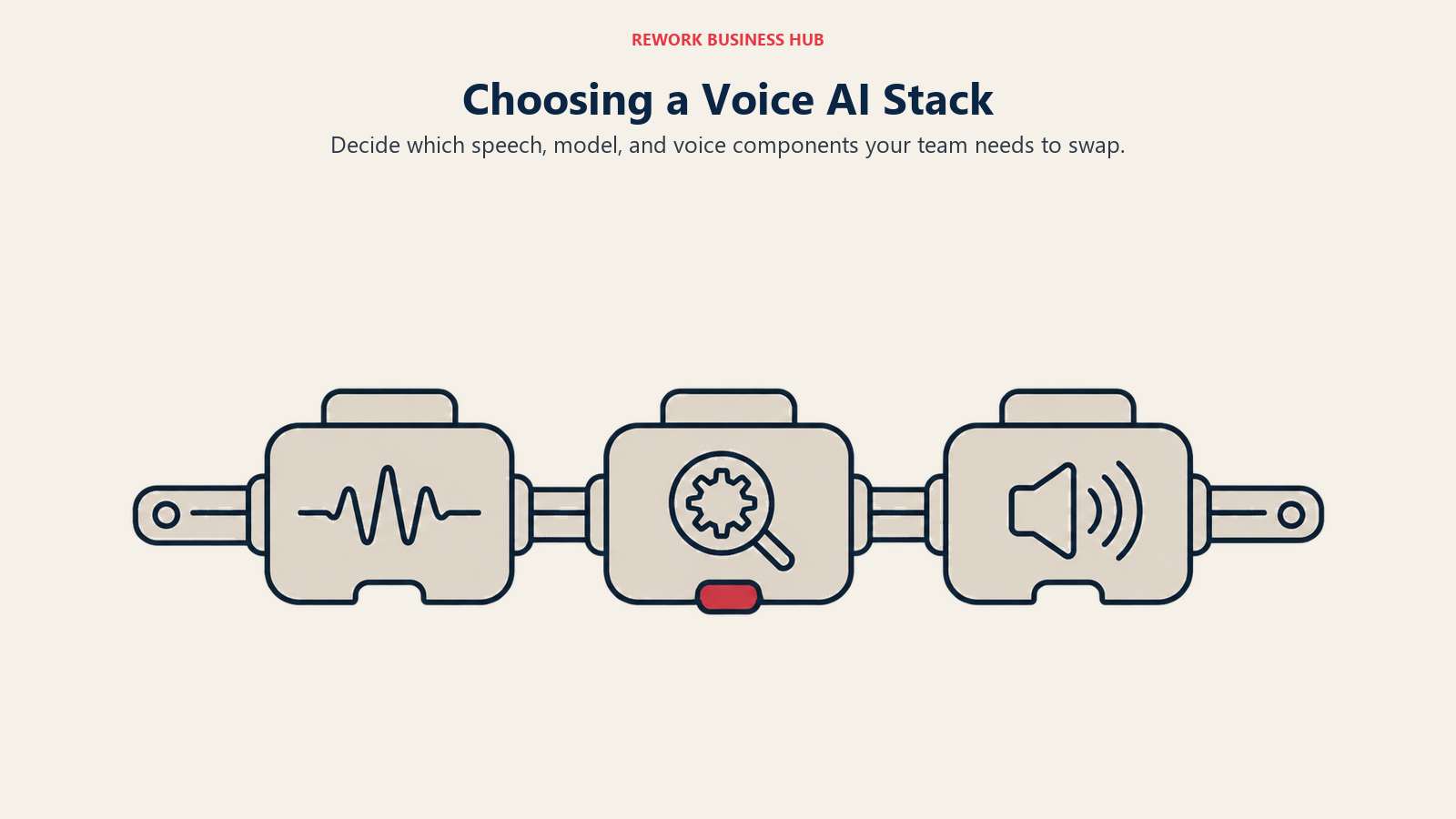
Vapi is provider-agnostic. Its homepage lists integrations including OpenAI, Anthropic, ElevenLabs, Deepgram, Cartesia, AssemblyAI, PlayHT, Azure, Gemini, Groq, Perplexity and Gladia for models and voice, and Twilio, Five9, Genesys, Avaya and Telnyx for telephony. If a better model ships next month, you change one setting. The cost of that freedom is that you contract with, or at least configure, several vendors.
Retell is curated. Its pricing page lists a menu of LLMs, including GPT, Claude, Gemini models and speech-to-speech options, and several text-to-speech engines. You select from the menu, and Retell bills the combination. You get choice without managing every provider relationship.
Bland is closed by design. It says it's the only voice AI that runs entirely on its own models. The upside is one team accountable for speech recognition, language and voice, and no token pass-through. The downside is that you can't swap in a different model because one benchmarks better on your use case.
| Vapi | Retell | Bland | |
|---|---|---|---|
| Choice of LLM | Open: any listed provider | Menu of models priced per minute | Bland's own model |
| Choice of voice | Any listed provider | Menu of engines | Bland voices; custom voice clones per language |
| Choice of transcriber | Open | Retell stack | Bland's own |
| Bring your own carrier | Yes, several carriers listed | Yes, via SIP trunking | Yes, bring your own telephony |
| Speech-to-speech models | Not stated on pricing page | Listed on the rate card | Not stated |
| Languages | Not stated on the pages reviewed | "Multiple languages" without a list | 40+ languages natively, with real-time translation on 23 |
If language coverage is a hard requirement, ask each vendor for the specific list in your markets and test on native speakers. Bland publishes the clearest number, and the other two don't name languages on the pages that matter for a buying decision.
Telephony and Deployment
A voice agent that can't reach your phone numbers is a demo. Here's how each handles the carrier side.
Vapi lists its own SIP and WebSocket transport as free on its pricing page and also supports Twilio at $0.008 per minute inbound and $0.014 outbound, Vonage at $0.00814 and Telnyx at $0.0055. Premier adds a dedicated SIP option. The homepage lists enterprise telephony vendors such as Five9, Genesys and Avaya as integrations, which matters if you're layering an agent onto an existing contact center.
Retell offers purchased US or Canada numbers with no provider account required, bring-your-own telephony over SIP trunking, a website voice widget and web calls. It adds batch outbound campaigns, IVR navigation, branded call ID at $0.10 per outbound call and verified phone numbers.
Bland routes through its built-in Twilio at pass-through cost or your own carrier, and the pricing page says customers who bring their own telephony do not pay transfer fees. Phone, SMS and web are listed channels, and SMS, web chat and iMessage are on the Enterprise feature list.
| Vapi | Retell | Bland | |
|---|---|---|---|
| Phone numbers from the vendor | Yes; 1 to 10 included depending on plan | Yes; $2.00 per month each | Inbound number included on Start |
| Bring your own carrier | Yes | Yes, via SIP trunking | Yes |
| Outbound campaigns | Via API | Batch call: +$0.005 per dial | Via API; custom dialing is an Enterprise feature |
| Web and widget calls | Web SDK | Web call and voice widget | Web listed as a channel |
| SMS | Not stated on pricing page | $0.01 per message | Enterprise feature |
| Contact center integrations | Five9, Genesys, Avaya listed | Not stated | Not stated |
If the main use case is a call center rather than a developer feature, read best AI agents for call centers in 2026 alongside this comparison.
Compliance and Trust Signals
These are each vendor's own statements, so request the actual report and the business associate agreement before routing regulated data.
Vapi's homepage says it's "SOC 2, HIPAA, and PCI compliant." The pricing page treats HIPAA as a $2,000 per month add-on that includes HIPAA-eligible data handling, a standard DPA and a BAA. Zero data retention is included on Core, and on Pro with RBAC. Premier adds custom RBAC and SSO.
Retell lists HIPAA, SOC 2 Type II, GDPR and ISO 27001 on its homepage, plus SSO, personal information redaction, custom role-based control and on-prem deployment for enterprise. Its pricing page lists a custom MSA, DPA and BAA under Enterprise, but the tier-by-tier placement of each control isn't clear from the page, so confirm which plan includes what.
Bland lists SOC 2 Type I and Type II, HIPAA compliance, PCI DSS (self-attested), and BAAs and DPAs for healthcare and EU customers. On the pricing page, BAA, SSO, data residency and on-prem or VPC deployment appear under Enterprise.
| Vapi | Retell | Bland | |
|---|---|---|---|
| SOC 2 | Listed | Type II listed | Type I and Type II listed |
| HIPAA | Listed; $2,000 per month add-on | Listed | Listed |
| PCI | Listed | Not listed | PCI DSS, self-attested |
| GDPR | Not listed on homepage | Listed | DPAs for EU customers |
| ISO 27001 | Not listed | Listed | Not listed |
| Where regulated controls sit | Add-on or Premier | Enterprise terms, confirm tiers | Enterprise tier |
| Self-host or on-prem | Not stated | Enterprise on-prem | Self-hosted and on-prem available |
A practical note: because HIPAA is priced separately on Vapi, a healthcare team should add the $2,000 per month line to its Vapi plan before comparing against the others. On Retell and Bland, HIPAA is listed without a separate price, but that doesn't mean every tier includes a BAA. Get it in writing.
Reliability and Performance Claims
Each vendor publishes performance figures, and none of them are comparable.
| Claim | Vapi | Retell | Bland |
|---|---|---|---|
| Latency | Under 500ms average (vendor claim) | About 600ms (vendor claim) | Not stated on the pages reviewed |
| Scale claim | 1 billion calls supported, 2.5M+ agents launched, 1M+ developers | "Millions of calls" reliably | 230+ regulated companies |
| Accuracy or realism claim | None stated | 95.7% workflow accuracy on 414 calls, highest of six platforms in a Cekura benchmark Retell links | Audio Realism Bench score of 0.91 for Bland versus 0.99 for human speech |
| Uptime | 99.9% for enterprise clients | Not stated | 99.9% SLA |
Every number there is self-reported or linked from the vendor's own site. A latency figure measured on a short, quiet test call tells you little about a noisy call at your peak concurrency, and a benchmark Retell links tells you about the benchmark's workflows, not yours. Customer outcomes follow the same rule. Bland's homepage cites a $750K annual saving from retiring an IVR at Idaho Housing and Finance Association and a 92% cost reduction at Needle. Retell's cites a 38% increase in scheduling NPS at Pine Park Health and support costs cut by over 50% at SWTCH. Vapi names Amazon Ring, Intuit, ServiceTitan, New York Life, Kavak, GoHealth and Instawork as customers. Those are testimonials from the vendors' own sites. Use them to find reference customers to call, not to forecast your result.
Company Stage and Vendor Risk
Voice AI is a fast-moving market, so the financial footing of the vendor matters when you're building a phone channel on it.
| Vapi | Retell | Bland | |
|---|---|---|---|
| Latest reported round | $50 million Series B, Peak XV | No round confirmed on the pages reviewed | $50 million Series C, Dell Technologies Capital, June 16, 2026 |
| Prior round | Total funding of $72 million after Series B | Not confirmed | $40 million Series B, Emergence Capital, February 2025; $65 million total at that point |
| Customer posture | Developers first, enterprise tiers | Developers and ops teams | Regulated enterprises |
The Vapi and Bland rounds come from SiliconANGLE, Bland's own announcement and Raising.fi. Retell's homepage carries a "Retell Hits $100M!" banner without saying what the $100M measures, so it isn't used as a fact here. If vendor stability matters to your procurement team, ask each for its customer count, its uptime history and its contract terms for price changes.
When Vapi Is the Right Call
- Your developers want to choose and swap the transcriber, model and voice without asking the vendor.
- You're building voice into a product or a bespoke workflow, not rolling out a standard call-center agent.
- You like configuration-as-code, a CLI and a GitOps repository for versioning agents.
- You'll use Squads to split a complex flow across specialized assistants.
- You need contact center integrations such as Five9, Genesys or Avaya.
- You can live with a bill built from a hosting fee plus provider charges, and you'll model it per call design.
When Retell Is the Right Call
- You want a public, itemized rate card and the ability to choose from a menu of models and voices.
- Someone on the ops side needs to see and edit the call flow in a visual canvas.
- You want testing built in: simulation, regression tests from production calls, A/B testing and call QA.
- You need a generous free concurrency ceiling on day one, with 20 free concurrent calls.
- Your campaigns need batch outbound calling, IVR navigation or branded call ID.
- You want HIPAA, SOC 2 Type II, GDPR and ISO 27001 listed on one page.
When Bland Is the Right Call
- You want one per-minute rate that already contains the language model, transcription and voice.
- You're a regulated enterprise that wants self-hosted or on-prem deployment, a BAA and data residency.
- You want forward-deployed engineers to design the conversation flows with you.
- You prefer one accountable vendor for the whole speech stack instead of coordinating providers.
- Your languages are covered in the 40+ it lists natively.
- You don't need to swap models, and you're comfortable with Bland's.
Where Each One Falls Short
| Vapi | Retell | Bland | |
|---|---|---|---|
| Biggest gap | No single all-in rate; assembling the stack is your job | Rate depends on many selectors and add-ons that stack | Telephony billed separately and models aren't swappable |
| Gap on the entry plan | 4 concurrent calls; HIPAA is a $2,000 per month add-on | Per-country telephony pricing | 100 calls per day and per hour on Start |
| Gap in visual building | Workflows retiring; squads are configuration-based | Visual builder, but complex logic still needs developers | Pathways built with Bland's team at enterprise level |
| Gap in documentation | Languages not stated on the pages reviewed | Language list not named | Failed-call and overage terms not stated |
Who It Fits by Team Size and Stage
The vendors don't publish a recommended company size, so treat this as judgment based on how each one's plans and sales motion are structured, not vendor data.
| Vapi | Retell | Bland | |
|---|---|---|---|
| Solo developer or small team prototyping | Strong: $5 free credits, pay as you go | Strong: $10 free credits, 20 free concurrent calls | Workable: Start plan with no card required |
| Growth-stage team in production | Strong, if engineers own it; Core or Pro | Strong; pay as you go or Enterprise | Workable; Build at $299 per month |
| Large enterprise contact center | Possible on Premier | Possible on Enterprise | Core target: Enterprise with dedicated server and forward-deployed engineers |
| Regulated healthcare or finance | HIPAA add-on, plus Premier for SSO | Enterprise BAA and DPA | Enterprise BAA, SSO, data residency, on-prem |
Decision Framework
| If you are... | Pick |
|---|---|
| Engineering-led and wanting to swap providers freely | Vapi |
| Building voice into your own product with code-based versioning | Vapi |
| Wanting a public itemized rate card with a visual flow builder | Retell |
| Needing built-in simulation, regression testing and call QA | Retell |
| Wanting the highest free concurrency to start | Retell |
| Wanting the language model included in one per-minute rate | Bland |
| Needing self-hosted or on-prem deployment with a vendor-built flow | Bland |
| A regulated enterprise wanting dedicated engineers | Bland |
| Unsure and wanting the wider field | See best AI voice agents in 2026 |
If you're leaning toward moving off one of these, the two vendor-specific lists are best Vapi alternatives and best Retell AI alternatives.
How to Run a Fair Pilot
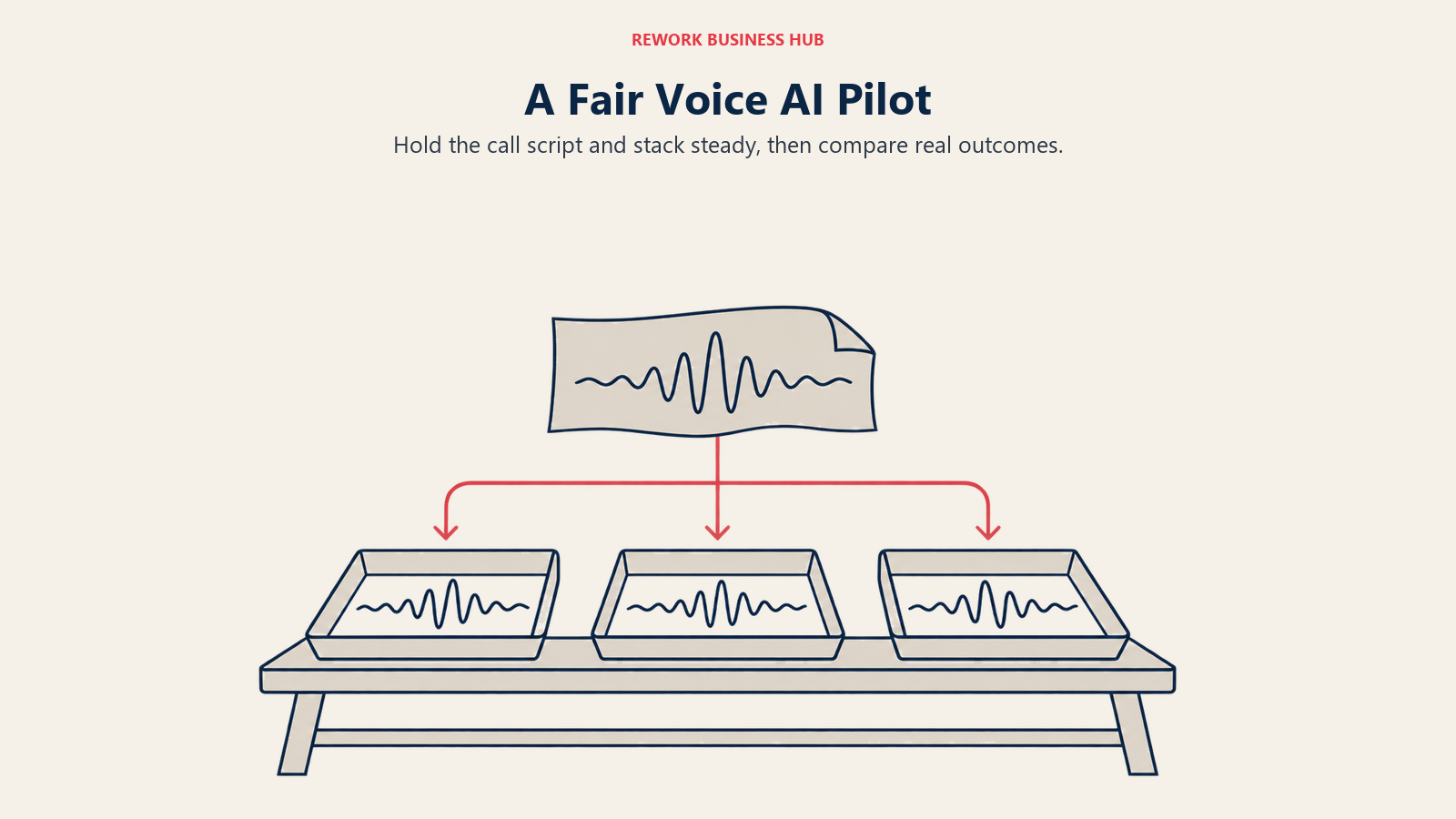
Pull a representative set of calls and design one agent. Hold the model, voice, carrier and script as steady as each platform allows, then run it on all three for two to four weeks on one call type.
| Test | What to measure | Red flag |
|---|---|---|
| Full-cost invoice | Real cost per minute with your model, voice, carrier and average call length | A headline rate that covers only one layer |
| Latency at peak | Time to first word at your real concurrency | Delays that grow as concurrent calls climb |
| Interruption handling | Does the agent recover when callers talk over it? | Repeated or overlapping speech |
| Same call set | Identical scripts and test callers on each platform | Vendor picks the sample |
| Handoff quality | Context passed to a human or a system | Callers repeating themselves |
| Compliance paperwork | BAA, DPA and SOC 2 report in hand | "Available on request" with nothing delivered |
| Operating load | Hours per week your team spends tuning the agent | A cheap rate with an expensive improvement loop |
Pick the calls you most want to automate, not the easy ones, since easy calls flatter every platform. Have a person listen to a random sample of completed calls and grade them against your own success definition. And name an owner for the agent after launch, because an unowned voice agent drifts on any platform. For a monitoring layer that sits beside any of these, see best AI agent observability tools, and if the goal is support rather than sales calls, best AI agents for customer service in 2026 covers the helpdesk-native options.
What to Do Next
- Write one call design. Fix the model class, voice, carrier, language and average call length so every platform prices the same thing.
- Ask each vendor to price that design in writing, including telephony, concurrency, compliance add-ons and what happens on failed calls.
- Run the same real calls through two or three platforms for two to four weeks and compare the invoice, call quality and tuning hours.
- Get the paperwork before you scale: BAA, DPA, SOC 2 report and the exact tier each control sits on.
- Negotiate with the data in hand. A pilot invoice from each platform is the strongest lever for a volume rate.
Related Resources:

Co-Founder, Rework.com
On this page
- TL;DR
- Key Facts
- What Each Platform Is Actually Built For
- Pricing: What Each Rate Actually Includes
- The Printed Worked Examples
- Hidden Cost Lines to Ask About
- Concurrency, Caps and Plan Limits
- How You Build the Agent
- Voice Stack and Provider Choice
- Telephony and Deployment
- Compliance and Trust Signals
- Reliability and Performance Claims
- Company Stage and Vendor Risk
- When Vapi Is the Right Call
- When Retell Is the Right Call
- When Bland Is the Right Call
- Where Each One Falls Short
- Who It Fits by Team Size and Stage
- Decision Framework
- How to Run a Fair Pilot
- What to Do Next