Best Sierra Alternatives in 2026: 12 AI Customer Service Agents Compared
Turn this article into takeaways for your work.


Each assistant summarizes the article only for you and suggests best practices for your work.
The best Sierra alternatives depend on what you're trying to fix. Decagon is the closest peer if you want another enterprise-grade agent platform, Fin if you want a published per-outcome price, Zendesk AI Agents or Agentforce if the agent should live inside the helpdesk or CRM you already pay for, and Parloa or Cresta if the phone line is the real problem. This guide compares twelve options on how they charge, which channels they cover, who they're built for, and where each one falls short.
Sierra is a serious product with serious customers, and plenty of teams should stay on it. This list is for the other case: you want a rate card before a sales call, you want more of the build in your own team's hands, or your support stack already includes an agent from a vendor you pay. We judged every vendor on the same four questions: how it bills, which channels it covers, what a buyer of your size should expect, and the honest "not ideal for."
Key Facts
- Sierra reached $100 million in annual revenue run rate in 21 months, according to TechCrunch.
- Sierra raised $950 million at a valuation above $15 billion in May 2026, led by Tiger Global and GV, per Trending Topics.
- Salesforce says Fin's AI agent has an average resolution rate of 76% across more than 30,000 companies, in its September 10, 2026 acquisition-close release. That is a vendor figure.
- Zendesk bills AI agent usage per automated resolution: $1.50 on a committed volume or $2.00 pay-as-you-go, per Zendesk's pricing page.
- Fin lists $0.99 per outcome, and an outcome covers more than a resolution: procedure handoffs, disqualifications and self-serve routings count too, per Fin's pricing page.
Why Teams Look Beyond Sierra
Nobody swaps a live AI support agent for fun. It has workflows, QA habits and a reporting trail behind it, and moving means a pilot, a rebuild and weeks of parallel running. So when buyers start searching for Sierra alternatives, there's usually one of five reasons behind it.
- No public rate card. Sierra prices on outcomes and publishes no rates, so a finance team that needs a budget line before approving a pilot hits a wall at step one. Fin, Zendesk, Gorgias and Freshworks all publish theirs, which is why they show up in the first round of comparisons.
- The outcome definition needs negotiating. Sierra says outcomes are judged against criteria agreed with the customer up front. That's flexible, but it also means the contract language matters more than the pricing page. Some buyers would rather start from a published unit.
- The helpdesk or CRM already sells an agent. If your tickets live in Zendesk, Freshdesk, Intercom or Salesforce, the vendor's own agent has native access to ticket and customer data and is one fewer vendor to manage.
- One channel matters most. A contact center with most of its volume on the phone evaluates voice-first platforms differently from a store that gets order-status chats.
- Build ownership. Some teams want the vendor to carry the build and tuning. Others want their own people writing and testing procedures. Be honest about which camp you're in before you read the vendor sections, because it will decide more than any feature table.
What Changed in 2026
Two shifts matter if you're re-running a shortlist this year. First, the market consolidated. Salesforce completed its acquisition of Fin on September 10, 2026, and says Fin will operate within Salesforce AI Labs and complement Agentforce (Salesforce). Zendesk's AI agents page now presents Forethought-based agents as part of its offering. If you shortlisted these vendors a year ago, re-read their current positioning.
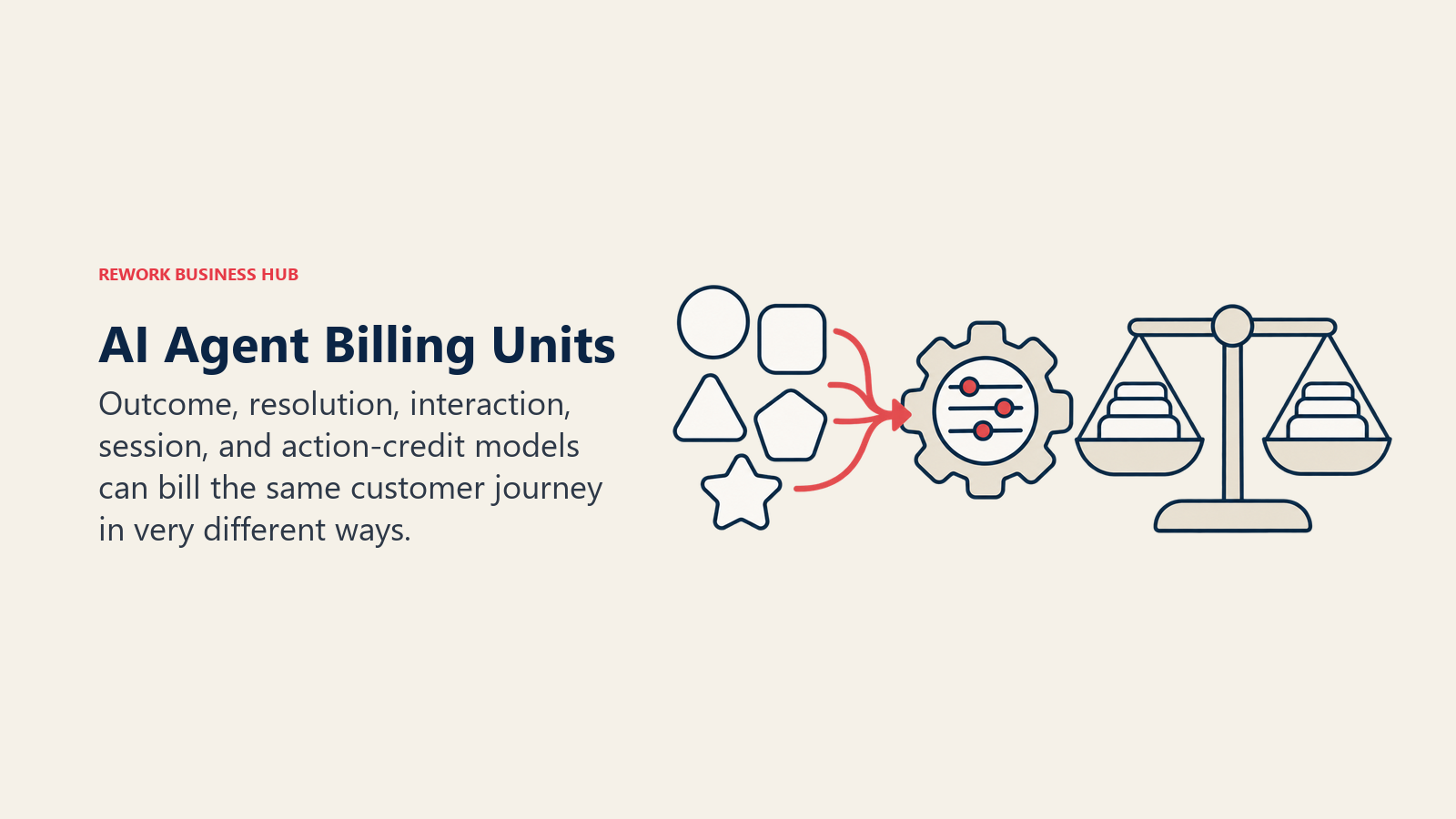
Second, usage-based pricing spread. Fin charges per outcome, Zendesk per automated resolution, Gorgias per automated interaction, Freshworks per session pack, and Sierra and Parloa describe outcome-based options. The units aren't interchangeable, which is why the pilot section near the end tells you to compare invoices, not rate cards. Sierra itself moved too: on July 16, 2026 it announced Horizon, agents that pursue long-term goals over days, weeks or months, and says customers pay for business results rather than token usage (Sierra).
Where Sierra Stands Today
Sierra, founded by Bret Taylor and Clay Bavor, sells one agent that can run across chat, SMS, WhatsApp, email, voice and ChatGPT (sierra.ai). Its building blocks are Ghostwriter (builds agents from SOPs, transcripts, recordings or a plain-English goal), Agent Studio, Insights (conversation analysis, monitors, experiments and observability) and Horizon. Customers shown on its site include Rocket Mortgage, Gap Inc., Hyatt, Uber, Vanguard, Santander, SiriusXM, Wayfair and ADT. Security badges listed include SOC 2, ISO 27001, ISO 42001, HIPAA, GDPR, FedRAMP and PCI DSS.
On price, Sierra's outcome-based pricing post says you pay when the agent achieves a valuable result such as a resolved conversation, a saved cancellation or an upsell. Unresolved conversations and escalations usually aren't charged, and routing or greeter-style interactions may use a blended per-conversation approach. No rates are published.
| Dimension | What Sierra offers | What to ask in a switch decision |
|---|---|---|
| Channels | Chat, SMS, WhatsApp, email, voice, ChatGPT | Which channel carries most of your volume? |
| Pricing model | Outcome-based, quote-only | What exactly is a billable outcome, and what is the rate at your volume? |
| Build approach | Ghostwriter builds from SOPs or goals, with Agent Studio and Insights | How much can your own team change after launch? |
| Self-serve | None listed | How fast do you need a live pilot? |
| Proof | Vendor-published customer logos and testimonials | Can you get a reference to share raw numbers? |
Quick Comparison Table
| Tool | Best For | Starting Price | Key Strength | Key Limitation |
|---|---|---|---|---|
| Decagon | Enterprises wanting a like-for-like peer | Pricing on request (per conversation or per resolution) | Chat, voice and email in one agent with testing tools | Quote-only, like Sierra |
| Fin | Teams wanting a published per-outcome price | $0.99 per outcome | Runs on Intercom or another helpdesk | Outcomes include more than resolutions |
| Zendesk AI Agents | Zendesk shops adding agentic resolution | $1.50 per automated resolution (committed) | Included in Suite and Support plans | Value depends on staying on Zendesk |
| Salesforce Agentforce | Salesforce CRM and service orgs | $500 per 100,000 Flex Credits | Native access to CRM data and actions | Credit math is hard to forecast |
| Ada | Omnichannel enterprise service | Pricing on request | Voice, messaging and email with a published safety posture | Vendor-reported results only |
| Parloa | Voice-heavy contact centers | Pricing on request (per minute, per interaction) | Voice-first, EU-born, broad compliance badges | Quote-only, built for large volume |
| Cresta | Contact centers wanting AI plus agent tooling | Pricing on request | Voice, chat, email and SMS agent | No public pricing |
| Kore.ai | Enterprises wanting service, work and process agents | Pricing on request | Broad platform with analyst recognition | Wider than a pure support buy |
| Maven AGI | Teams on Zendesk or Salesforce wanting a new agent layer | Pricing on request | Works with existing help desk, CRM and telephony | No public pricing |
| Crescendo | Teams replacing a BPO-style stack | Pricing on request | One platform for agent, QA and insights | Vendor-reported claims only |
| Gorgias AI Agent | Ecommerce brands on Gorgias | $0.90 per automated interaction (annual) | Priced per interaction on a store-first helpdesk | Built for ecommerce, not enterprise service |
| Freshworks Freddy AI Agent | Mid-market teams on Freshdesk | 500 sessions included, then $49 per 100 | Low entry cost inside Freshdesk | Less depth for complex multi-step cases |
How the Alternatives Charge
Pricing model is the most common reason a Sierra buyer shops around, so here is the unit each vendor bills on, taken from each vendor's own pages.
| Tool | Billing unit | Published rate? |
|---|---|---|
| Sierra | Outcome-based | No |
| Decagon | Per conversation or per resolution | No |
| Fin | Per outcome | Yes, $0.99 |
| Zendesk AI Agents | Per automated resolution | Yes, $1.50 committed or $2.00 pay-as-you-go |
| Agentforce | Flex Credits, 20 per standard action | Yes, $500 per 100,000 credits |
| Ada | Not published | No |
| Parloa | Per minute for voice, per interaction for chat | No |
| Cresta | Not published | No |
| Kore.ai | Not published | No |
| Maven AGI | Not published | No |
| Crescendo | Not published | No |
| Gorgias AI Agent | Per automated interaction | Yes, $0.90 annual or $1.00 monthly |
| Freshworks Freddy | Per session, in packs of 100 | Yes, $49 per 100 sessions |
Don't compare these rates directly. A Fin outcome, a Zendesk automated resolution, an Agentforce action and a Freddy session are different units, and a conversation that costs one unit on one platform can cost several on another. Run the same 500 real conversations through your top two and compare invoices.
Reading the Numbers Vendors Publish
Every vendor in this guide publishes a headline number: Fin's 76% average resolution rate, Ada's 84% automated resolution rate, Zendesk's "up to 80%," Cresta's containment figures, Parloa's 70% lower cost per contact. They're all self-reported, and they measure different things. Resolution means the customer's issue was solved. Containment means the customer didn't reach a human, which can include people who gave up. Deflection means a question never became a ticket. A vendor can honestly report a high number on any of the three and still deliver a very different result in your queue.
Three questions cut through most of it. What is the numerator, and who decides an interaction counted? What is the denominator: all conversations, or only the ones the agent attempted? And does the customer behind the number look like you in channel mix, language and issue type? If a vendor can't answer all three in writing, treat the number as marketing and lean on your own pilot.
Channel and Fit Matrix
| Tool | Chat / messaging | Voice | Typical buyer | |
|---|---|---|---|---|
| Decagon | Yes | Yes | Yes | Mid-market to enterprise |
| Fin | Yes | Yes | Yes (custom pricing) | Mid-market to enterprise |
| Zendesk AI Agents | Yes | Yes | Yes | Zendesk customers of any size |
| Agentforce | Yes | Confirm with the vendor | Yes (30 credits per action) | Salesforce customers |
| Ada | Yes | Yes | Yes | Large enterprise |
| Parloa | Yes | Not a stated focus | Primary | Voice-led contact centers |
| Cresta | Yes | Yes | Yes | Contact centers |
| Kore.ai | Digital agents | Confirm with the vendor | Yes | Enterprise |
| Maven AGI | Yes | Yes | Yes (Maven Voice) | Teams with existing help desk or CRM |
| Crescendo | Yes | Yes | Yes | Mid-market to enterprise |
| Gorgias AI Agent | Yes | Through the helpdesk | Not a focus | Ecommerce brands |
| Freshworks Freddy | Yes | Through the helpdesk | Confirm with the vendor | Mid-market |
Sizing and Stage Fit
| Tool | Team size sweet spot | Technical skill needed | Deployment style |
|---|---|---|---|
| Decagon | 200+ employees | Low to medium | Platform with natural-language procedures |
| Fin | 10-5,000+ support staff | Low to medium | Self-configured, runs on your helpdesk |
| Zendesk AI Agents | 20-5,000+ | Low to medium | Configured inside Zendesk |
| Agentforce | 100-10,000+ | Medium to high | Built on Salesforce |
| Ada | 500+ employees | Medium | Platform with playbooks |
| Parloa | 500+ employees | Medium | Platform plus implementation |
| Cresta | 200+ agents | Medium | Platform plus coaching tools |
| Kore.ai | 1,000+ employees | Medium to high | Enterprise platform |
| Maven AGI | 200+ employees | Low to medium | No-code designer on existing systems |
| Crescendo | 200+ employees | Low to medium | Vendor-run platform |
| Gorgias AI Agent | 5-200 | Low | Inside the helpdesk |
| Freshworks Freddy | 10-500 | Low | Inside Freshdesk |
These size bands are our judgment from each vendor's positioning and published customers, not vendor requirements.
1. Decagon: The Closest Like-for-Like Peer
Decagon is the alternative most Sierra shoppers compare against, because it sells the same shape of product to the same kind of buyer. Its site calls it "the AI concierge for every customer," with voice, chat and email, plus Agent Operating Procedures (AOPs) that define workflows in natural language, Experiments for live A/B tests, Testing and QA simulations, Watchtower for always-on quality checks and Duet for building agents (decagon.ai). Customers shown include Chime, Duolingo, Rippling, Notion, Delta and Hunter Douglas.
Pricing is quote-only, so don't expect it to solve a rate-card complaint. Its pricing post describes per-conversation pricing ("a fixed rate for every incoming conversation") and per-resolution pricing ("a higher fixed rate for each fully resolved conversation, with no charge for escalations"), and says the vast majority of customers choose per-conversation. That's the company's own claim. For a deeper look, read our best Decagon alternatives guide.
| What you get | What you don't |
|---|---|
| Chat, voice and email in one agent | No published rates |
| Natural-language procedures plus testing and A/B tooling | Sales-led process, no self-serve |
| Per-conversation or per-resolution quote options | You'll need to compare two billing models |
Pricing: Pricing on request. Source: decagon.ai.
Best for: Enterprises that want a Sierra-class platform with hands-on procedure tooling. Not ideal for: buyers who need a public price.
2. Fin: A Published Price Instead of a Sales Call
Fin, formerly Intercom's AI agent, answers the pricing question in one line. Its pricing page lists $0.99 per outcome, with a 14-day free trial and no credit card. On a helpdesk other than Intercom there are no seat fees, but there's a minimum of 50 outcomes a month. Salesforce completed its acquisition of Fin on September 10, 2026, and says Fin continues to serve customers as part of Salesforce AI Labs (Salesforce). Fin works natively with Intercom and with Salesforce, Zendesk, HubSpot, Freshdesk and other helpdesks (fin.ai). For a fuller look at Fin and who else competes with it, see Fin AI Agent alternatives.
Read the unit carefully. One outcome is billed per conversation, and it can be a resolution, a procedure handoff, a disqualification or a self-serve routing, plus a $9.99 qualification. You aren't charged when a conversation passes to your team without an outcome. If you're on Intercom's own helpdesk, seats are extra: Intercom's pricing shows Essential at $29 per seat per month, or $19 for new customers. Copilot, the assistant for human agents, is a separate $35 per user per month add-on.
| What you get | What you don't |
|---|---|
| Per-outcome price you can model before talking to sales | Outcomes include handoffs and routings, not just resolutions |
| Runs on Intercom or another helpdesk | 50-outcome monthly minimum on a non-Intercom helpdesk |
| Voice available | Fin Voice pricing is custom |
Pricing: $0.99 per outcome. Source: fin.ai/pricing.
Best for: Teams that want to start small, see a bill, and scale. Not ideal for: buyers who want a vendor to build and tune the agent for them. For the helpdesk side of this decision, see best Intercom alternatives.
3. Zendesk AI Agents: Agentic Resolution Inside the Helpdesk
If your agents already live in Zendesk, the cheapest switch is the one with no migration. Zendesk's AI agents page says its agents handle messaging, email and voice, take action in connected systems, support 80 languages and are included in every Suite and Support plan. It promises that they resolve "up to 80%" of customer interactions, and customer stories there range from Babbel's 50%-plus resolution rate to TeamSystem's 80% automation rate. All of that is vendor-reported.
Zendesk also pitches Forethought-based standalone agents that run on Zendesk or other service platforms. Billing is per automated resolution: on Zendesk's pricing page, committed resolutions cost $1.50 and pay-as-you-go resolutions cost $2.00, the same across plans.
| Plan | Monthly billing | Annual billing | Included resolutions per agent per month |
|---|---|---|---|
| Support Team | $25 | $19 | 5 |
| Suite Team | $69 | $55 | 5 |
| Suite Professional | $149 | $115 | 10 |
All prices are per agent per month.
| What you get | What you don't |
|---|---|
| Agent included in Suite and Support plans | Per-resolution fees apply past the allowance |
| Messaging, email and voice | Best value only if you stay on Zendesk |
| Forethought-based option for other platforms | Confirm what counts as a billable resolution |
Pricing: $1.50 per automated resolution committed, $2.00 pay-as-you-go. Source: zendesk.com/pricing.
Best for: Zendesk customers who want agentic resolution without replatforming. Not ideal for: teams on another helpdesk. See best Zendesk alternatives if the helpdesk itself is the problem.
4. Salesforce Agentforce: The CRM-Native Option
Agentforce makes sense when the answer to "where does the customer record live?" is Salesforce. The agent acts on CRM data directly, and Salesforce now owns Fin as well, which it says complements Agentforce. Pricing, per Salesforce's Agentforce pricing page, runs on Flex Credits at $500 per 100,000, where a standard action uses 20 credits (about $0.10) and a voice action uses 30. Per-user options exist too: Agentforce add-ons at $125 per user per month (Industries add-ons $150), and an Agentforce User License at $5 per user per month that requires Flex Credits.
The page says its pricing is for information only and subject to change, so treat it as a starting point for a quote.
| What you get | What you don't |
|---|---|
| Native access to Salesforce records and actions | Needs a Salesforce footprint to make sense |
| Credit pricing that scales with usage | Credit-per-action math is hard to forecast |
| Voice actions supported | Separate per-user and credit models to untangle |
Pricing: $500 per 100,000 Flex Credits; 20 credits per standard action. Source: salesforce.com/agentforce/pricing.
Best for: Salesforce-centered service orgs. Not ideal for: teams without Salesforce. See best Agentforce alternatives and best enterprise AI agent platforms.
5. Ada: Omnichannel Service With a Safety Pitch
Ada calls itself "the agentic customer experience platform," organized around Ada Computer, Playbooks, Integrations and Trust and Safety, and covering voice, messaging and email (ada.cx). It displays SOC 2, HIPAA, GDPR, PCI DSS and AIUC-1 badges and says it has zero data retention policies with LLM providers.
Its headline numbers are vendor-reported, with no methodology on the page: an 84% automated resolution rate, 357% ROI and 162% CSAT growth, plus case studies such as monday.com's 42% lower average handle time. The site states no pricing model or rates, so expect a demo and an ROI model built on your volume.
| What you get | What you don't |
|---|---|
| Voice, messaging and email | No pricing information on the site |
| Detailed security and data-handling statements | Headline results lack stated methodology |
| Playbooks for structured workflows | Sales-led process |
Pricing: Pricing on request. Source: ada.cx.
Best for: Enterprises that want a mature, security-forward omnichannel agent. Not ideal for: buyers who need a public price.
6. Parloa: When the Real Problem Is Voice
Parloa describes itself as an enterprise platform for building and running AI agents that handle customer service conversations. Its pricing page says it bills "per minute for voice and per interaction for chat," with rates that reflect the complexity of each use case and a volume package you select up front. Outcome-based pricing is supported "when it makes sense." No dollar rates are published.
The homepage lists customers such as Booking.com, Zalando and SAP, claims 70% lower cost per contact and 3X faster time to resolution, and shows ISO 27001, SOC 2 Type II, HIPAA, PCI DSS, DORA and EU AI Act badges. It also calls itself "Born in the EU," which can matter for data-residency conversations. The numbers are vendor claims.
| What you get | What you don't |
|---|---|
| Voice-first design with per-minute pricing | No published rates |
| Broad compliance badges, including EU-oriented ones | Quote-only, aimed at large volume |
| One volume package covers multiple use cases | Email is not a stated focus |
Pricing: Pricing on request. Source: parloa.com/pricing.
Best for: Contact centers where most volume is phone calls. Not ideal for: chat-first support teams. If voice decides it, read best AI voice agents and best AI phone agents next.
7. Cresta: Agent Plus Coaching in One Vendor
Cresta's AI Agent is described on cresta.com as an "autonomous voice and digital AI agent that resolves customer conversations end-to-end," across voice, chat, email and SMS, with inbound and outbound conversations. Customer results include Propel Holdings at 58% containment across all AI agents, Windstar containing 70% of chats end to end and Sunbit at 50% of interactions autonomously. Containment isn't the same as resolution, so ask how each customer defines it.
The page has no pricing. For contact centers, the draw is having an autonomous agent and human-agent tooling from one vendor.
| What you get | What you don't |
|---|---|
| Voice, chat, email and SMS | No published pricing |
| Inbound and outbound automation | Customer results are containment figures |
| Fits contact-center operations | Heavier than needed for small support teams |
Pricing: Pricing on request. Source: cresta.com.
Best for: Contact centers running a blended human and AI model. Not ideal for: lean support teams without a contact-center structure. See best AI agents for call centers for more.
8. Kore.ai: A Wider Enterprise Platform
Kore.ai positions itself across AI for service, AI for work, AI for process and the Artemis Platform. Its service line covers voice and digital agents, agent assist, quality management and an AI-native contact center (kore.ai). It says it was named a Leader in Gartner's 2026 Magic Quadrant for Conversational AI Platforms, and it offers industry-specific packages for banking, insurance, healthcare, retail, telco and travel. There's no pricing on the page; the call to action is "Get demo."
This is the one on the list where you're buying a platform, not only a support agent. That's an advantage if you want service, employee and process agents on one stack, and a distraction if you just need to close tickets.
| What you get | What you don't |
|---|---|
| Service, work and process agents in one platform | No published pricing |
| Contact-center tooling alongside the agents | More than a pure support buyer needs |
| Analyst recognition and industry packages | Longer evaluation expected |
Pricing: Pricing on request. Source: kore.ai.
Best for: Large enterprises consolidating several AI use cases. Not ideal for: a single-purpose support rollout.
9. Maven AGI: An Agent Layer on Top of Your Existing Stack
Maven AGI sells an enterprise CX agent platform that works with your existing help desk, CRM and telephony instead of replacing them (mavenagi.com). Its pieces include Agent Designer (a no-code workspace for tuning and testing agent behavior), Maven Voice (voice AI that runs on existing telephony such as Twilio, Genesys and Cisco), and Agent Assist for human reps inside Zendesk and Salesforce. It lists integrations with Zendesk, Salesforce, Freshdesk and Slack.
Customer claims on the page are company-provided: Mastermind at up to 93% autonomous resolution within six weeks and K1X live in one week. The site shows SOC 2 Type 2, ISO 27001, ISO 42001, HIPAA, PCI DSS and GDPR badges and publishes no pricing.
| What you get | What you don't |
|---|---|
| No-code designer with pre-launch testing | No published pricing |
| Sits on top of existing help desk, CRM and telephony | Results are company-provided |
| Voice and agent-assist options | Fewer public references than the incumbents |
Pricing: Pricing on request. Source: mavenagi.com.
Best for: Teams that want to keep Zendesk or Salesforce and add a stronger agent layer. Not ideal for: buyers who want a transparent price list.
10. Crescendo: The Platform-Replacement Pitch
Crescendo calls itself an "AI-native customer experience platform" and positions one product as a replacement for chatbot, CCaaS, ticketing, QA, voice-of-customer, knowledge and workforce tools (crescendo.ai). Its Concierge agent resolves issues across voice, chat, email and text and hands unresolved ones to a person with the full thread. Quality Agent scores all conversations rather than a sample, and Applied Insights clusters failures into patterns.
The site claims go-live in 30 days and 70% resolution from day one, both vendor-reported, and lists SOC 2 Type II, HIPAA, ISO 27001 and GDPR compliance. No pricing is published; the call to action is "Get a demo."
| What you get | What you don't |
|---|---|
| Agent, QA and insights in one platform | No published pricing |
| Full-conversation scoring instead of sampling | "70% from day one" is a vendor claim |
| Voice, chat, email and text | Replacing several tools means a bigger migration |
Pricing: Pricing on request. Source: crescendo.ai.
Best for: Teams that want to consolidate the support stack, not just add an agent. Not ideal for: teams happy with their helpdesk and QA tools.
11. Gorgias AI Agent: Priced Per Interaction for Online Stores
Gorgias is a helpdesk built for ecommerce, and its AI Agent bills per automated interaction: $0.90 on an annual contract or $1.00 on a monthly contract, and $1.50 each above a plan's included allowance, per Gorgias pricing. Helpdesk plans start at $10 a month for Starter (monthly only), $50 a month on Basic billed annually ($60 billed monthly) and $300 a month on Pro billed annually ($360 billed monthly).
It isn't a Sierra peer on complexity. It's the alternative for a store whose volume is order status, returns and product questions.
| What you get | What you don't |
|---|---|
| Published per-interaction price | Built for ecommerce, not enterprise service |
| Helpdesk and agent in one purchase | Voice isn't a focus |
| Low entry cost | Overage is $1.50 per interaction above the allowance |
Pricing: AI Agent $0.90 per automated interaction on an annual contract, $1.00 on a monthly contract. Source: gorgias.com/pricing.
Best for: Shopify-style ecommerce brands. Not ideal for: multi-step, regulated or voice-heavy service. See best Gorgias alternatives.
12. Freshworks Freddy AI Agent: Low-Cost Resolution Inside Freshdesk
Freddy AI Agent comes with Freshdesk. Per Freshworks' pricing page, the first 500 sessions are included on the Growth, Pro and Enterprise plans, and additional sessions cost $49 per 100. Plans are $19, $55 and $89 per agent per month billed annually. A Freddy AI Copilot add-on costs $29 per agent per month on Pro and Enterprise.
The trade is depth. It will handle a lot of routine questions for a mid-market team at a fraction of an enterprise contract, but it isn't built for the long, multi-system cases Sierra targets.
| What you get | What you don't |
|---|---|
| 500 sessions included on every paid plan | Less depth for complex multi-step cases |
| Published session pricing | Best value only on Freshdesk |
| Copilot add-on for human agents | Voice coverage: confirm with the vendor |
Pricing: $19 (Growth), $55 (Pro) and $89 (Enterprise) per agent per month, billed annually; $49 per 100 extra sessions. Source: freshworks.com/freshdesk/pricing.
Best for: Mid-market teams already on Freshdesk. Not ideal for: enterprises with complex, multi-system resolution flows. See best Freshdesk alternatives if the helpdesk is the question.
Who Should Stay on Sierra
Switching has a cost: you rebuild workflows, retrain QA and rerun a pilot. Staying put is the right call when:
| Situation | Why staying makes sense |
|---|---|
| You're live across several channels | One agent already covers the channels the alternatives split up |
| Your outcome definition is working | Renegotiating billable outcomes elsewhere takes weeks |
| Your volume is enterprise-scale and complex | Helpdesk-native agents are lighter than what you need |
| Your concern is only the quote | Ask Sierra how it defines a billable outcome and what escalations cost before leaving |
| Your reference customers show clean resolution data | Vendor claims you've verified beat claims you haven't |
If price is the complaint, ask Sierra for a worked example on your own conversation mix before you start a competing pilot. The pricing post says unresolved and escalated conversations usually aren't charged, which can make the invoice friendlier than the lack of a rate card suggests.
How to Choose: Decision Framework
For the wider market view, see best AI agents for customer service, and best AI agents for live chat if chat is your main channel.
| If you need... | Pick... | Why |
|---|---|---|
| A like-for-like enterprise peer | Decagon | Same buyer, same channels, procedure tooling |
| A published per-outcome price | Fin | $0.99 per outcome, no sales call required |
| No replatforming from Zendesk | Zendesk AI Agents | Included in Suite and Support plans |
| Agents acting on Salesforce data | Agentforce | Native CRM access |
| Voice as the primary channel | Parloa or Cresta | Voice-first platforms |
| A security-forward omnichannel agent | Ada | Published safety and data-retention posture |
| One platform across service, work and process | Kore.ai | Wider scope than a support-only agent |
| An agent layer on your current stack | Maven AGI | Works with existing help desk, CRM and telephony |
| To consolidate several support tools | Crescendo | Agent, QA and insights in one platform |
| An ecommerce helpdesk with built-in AI | Gorgias AI Agent | Per-interaction pricing built for stores |
| Low-cost AI inside a mid-market helpdesk | Freshworks Freddy | 500 sessions included |
What to Test in a Pilot
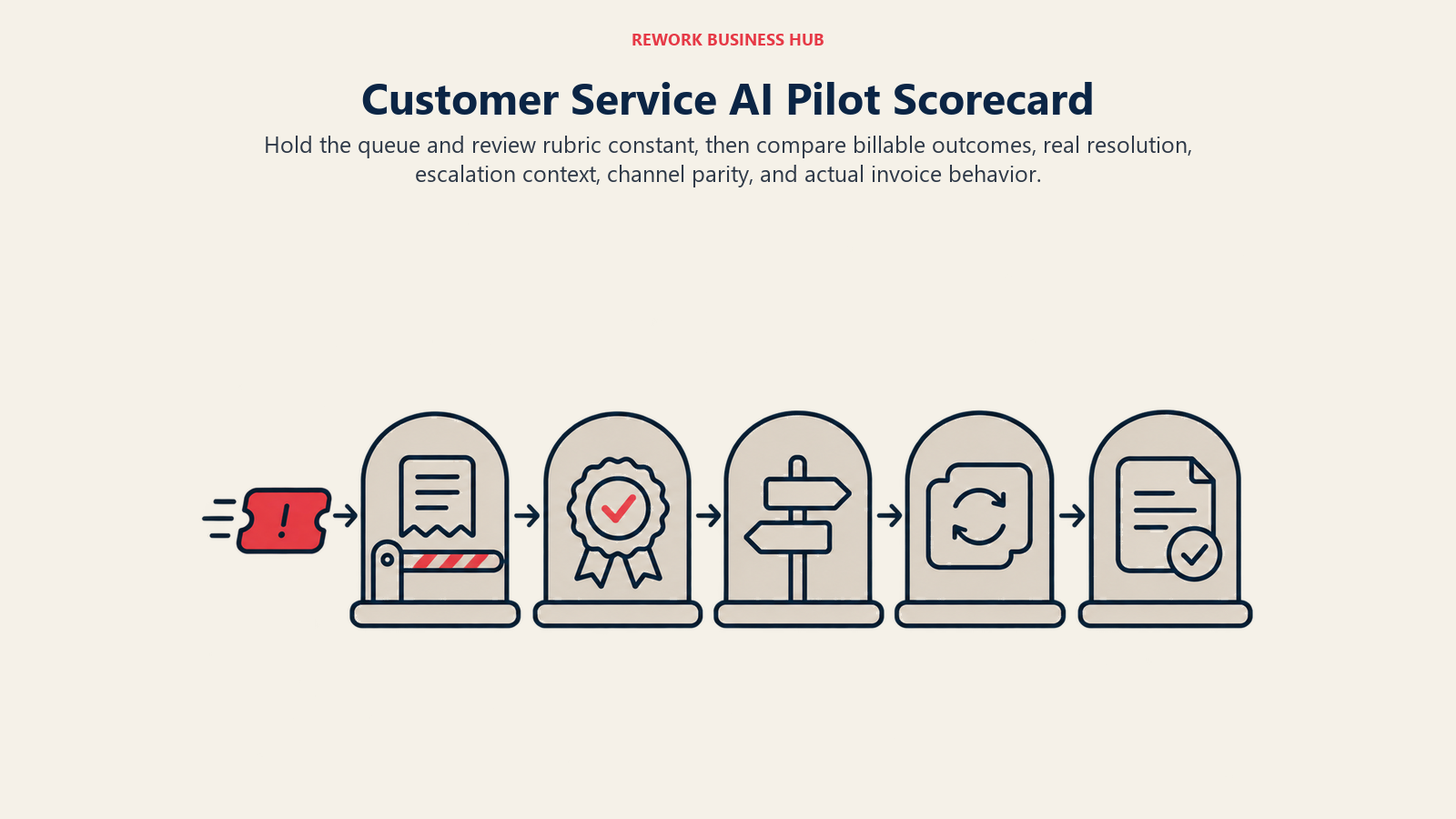
| Test | What to measure | Red flag |
|---|---|---|
| Outcome definition | Does a billed unit equal a closed issue? | Handoffs and routings counted as wins |
| Real conversations | Same 500 conversations through two vendors | Vendor picks the sample |
| Escalation quality | Does context carry over to the human? | Customers repeat themselves |
| Channel parity | Same behavior in chat, email, voice | Voice lags the rest |
| Invoice math | Projected versus actual bill | Units that don't map to your volume |
Run the pilot for at least two weeks on live traffic, with the agent handling a fixed slice of one queue rather than everything at once. Pick the conversation types you most want to automate, not the easiest ones, since easy questions flatter every vendor. Have a human reviewer grade a random sample of the agent's finished conversations against the vendor's own count; a gap between the two tells you more about the product than any dashboard. And write down who owns the agent after launch. An agent without an owner drifts, whichever vendor you pick, and the teams that get lasting results treat procedures and knowledge as a living asset with a named maintainer and a weekly review.
For customer-success teams weighing a second agent, best AI agents for customer success and best AI agents for helpdesk cover the adjacent categories.
What to Do Next
Pick two alternatives that match your reason for leaving, ask each for the same pilot on the same 500 real conversations, and compare the invoice and the resolved-issue count side by side. If neither beats your current Sierra terms on a like-for-like basis, you have your answer, and you'll negotiate from data.

Co-Founder, Rework.com
On this page
- Key Facts
- Why Teams Look Beyond Sierra
- What Changed in 2026
- Where Sierra Stands Today
- Quick Comparison Table
- How the Alternatives Charge
- Reading the Numbers Vendors Publish
- Channel and Fit Matrix
- Sizing and Stage Fit
- 1. Decagon: The Closest Like-for-Like Peer
- 2. Fin: A Published Price Instead of a Sales Call
- 3. Zendesk AI Agents: Agentic Resolution Inside the Helpdesk
- 4. Salesforce Agentforce: The CRM-Native Option
- 5. Ada: Omnichannel Service With a Safety Pitch
- 6. Parloa: When the Real Problem Is Voice
- 7. Cresta: Agent Plus Coaching in One Vendor
- 8. Kore.ai: A Wider Enterprise Platform
- 9. Maven AGI: An Agent Layer on Top of Your Existing Stack
- 10. Crescendo: The Platform-Replacement Pitch
- 11. Gorgias AI Agent: Priced Per Interaction for Online Stores
- 12. Freshworks Freddy AI Agent: Low-Cost Resolution Inside Freshdesk
- Who Should Stay on Sierra
- How to Choose: Decision Framework
- What to Test in a Pilot
- What to Do Next