Best AI Agents for SaaS Companies in 2026: 14 Agents for PLG Signals, Support Economics, and Retention
Turn this article into takeaways for your work.


Each assistant summarizes the article only for you and suggests best practices for your work.
The best AI agents for a SaaS company are built around a fact almost no other business has: your own product generates the sales, support, and retention signal before a human ever raises a hand. Common Room and Unify turn product usage, community activity, and intent data into pipeline instead of waiting on a form fill. Fin and Decagon resolve support at the volume a self-serve user base actually produces, priced in a way that either protects or quietly erodes your gross margin depending on how closely you read the fine print. Gainsight, Vitally, Clari, and Pendo chase the net revenue retention number that moves your valuation more than almost any other metric. This guide ranks 14 real agents against that brief: agents a scaling SaaS company runs across its own GTM and delivery motion, not a generic buyer persona. Selection method: each had to demonstrably act on a signal or execute a multi-step job, not just summarize one, and any price a vendor doesn't publish is clearly labeled a reported estimate.
A SaaS company here means a scaling product business with real usage volume, not a two-person pre-seed team still deciding whether to buy anything, and not a 5,000-person enterprise running a six-month security review before any purchase. If either of those is closer to your stage, best AI agents for startups and best AI agents for enterprise are the better fit. What's genuinely specific to this list is the product-led growth motion: your product is a data source most other buyers don't have, so several of the agents below act on product usage and community signal rather than a lead form, a distinction covered in more depth by PLG vs. sales-led AI stacks. For the plan-act-observe definition every agent below implements some version of, see what is an AI agent; for the fuller platform-layer decision underneath all of it, best AI agent platforms is one level up from this list.
Updated August 2026: What Changed
- Salesforce's pending $3.6 billion acquisition of Fin's parent company hadn't closed, so budget for roadmap uncertainty if you commit to Fin for support.
- Gainsight declared its entire platform agentic in May 2026, folding the Staircase AI acquisition in as a native Insight Agent instead of a separate integration.
- Clari finished merging with Salesloft on December 3, 2025, into a single Predictive Revenue System, worth knowing if you're evaluating Clari for the next few years, not just this quarter.
- Cursor discontinued promo codes and referral discounts in July 2026, leaving list price as the real number to budget from.
- Signal-based pricing keeps moving toward credits and usage instead of flat seats. Unify, Common Room, and Clay all price on some version of consumption now, so your bill tracks how much signal you act on, not how many people have a login.
- Pendo shipped Novus in beta, extending product monitoring toward AI-generated pull requests, an early sign the product-signal and engineering-agent halves of this guide are starting to blend.
Key Facts
- Top-quartile B2B SaaS companies hit 113% or higher net revenue retention and trade at a median 24x EV/Revenue, versus 5x for bottom-quartile peers, per McKinsey's analysis of more than 100 B2B SaaS companies.
- Enterprises buying ready-made AI agents instead of building their own rose from 53% in 2024 to 76% in 2025, per Menlo Ventures' State of Generative AI in the Enterprise.
- Hybrid support programs that resolve routine cases autonomously and escalate the rest report 4.25 CSAT at 71% lower blended cost per resolution than an all-human baseline, per Salesforce's reporting on AI service agents.
- The average enterprise runs 897 applications and only 29% of them are integrated with each other, the data-plumbing gap that decides whether a signal-based agent scores real accounts or scores blind, per MuleSoft's Connectivity Benchmark Report.
- GitHub's Copilot coding agent created more than 1 million pull requests between May and September 2025, evidence that autonomous coding agents are already trusted with real production volume, per GitHub's 2025 Octoverse report.
- Gartner predicts over 40% of agentic AI projects will be canceled by the end of 2027, citing unclear business value as the leading cause, worth weighing before you bet a whole GTM motion on one of the agents below.
Quick Comparison Table
| Tool | Job | Best For | Starting Price | Key Strength | Key Limitation |
|---|---|---|---|---|---|
| Common Room | PLG/community signal | Turning product and community activity into a lead list | $2,500/mo (Essential) | RoomieAI scores 20+ signal sources automatically | No self-serve trial; enterprise sales-led |
| Unify | Signal-triggered outbound | Signal-based outbound without building a workflow | Free; $20/seat/mo (Base) | Plays trigger and draft outreach automatically | CRM write access locked to the custom Business tier |
| Clay | GTM enrichment | Building a custom research and enrichment workflow | Free; $167/mo (Launch) | 150+ providers plus Claygent research agent | Real learning curve; two separate credit systems |
| Fin | Self-serve support | Outcome pricing that scales with resolutions | $0.99/outcome ($49.50/mo floor) | Cost tracks ticket volume, not headcount | Salesforce's pending acquisition adds uncertainty |
| Decagon | Enterprise support | Multi-step resolution at real support volume | Custom (reported $50K-95K/yr base) | Chat, email, and voice in one agent | No self-serve; median contracts near $400K/yr |
| Sierra | Enterprise support | A managed agent for a later stage than most SaaS buyers | Custom (reported $150K-350K+/yr) | Outcome-based, white-glove build | No pricing published anywhere |
| Vitally | Long-tail CS | Digital-led coverage for accounts no CSM touches | Custom (reported $1,500-2,000/mo) | Tier names map directly to touch model | Copilot-style, not fully autonomous |
| Gainsight | Named-account CS | Agentic depth for a real named-account book | Custom (reported $150-300/user/mo) | Horizon AI agents execute, not just recommend | No published pricing anywhere |
| Pendo | Churn prediction | Churn prediction wired to product usage you track | Free tier; Predict is a custom add-on | Risk segments unlock automated in-app guides | Recommends and alerts; doesn't execute the play |
| Gong | Deal/expansion risk | Risk surfaced from real calls, not CRM fields | Custom (reported $1,400-1,600/user/yr) | Grounded in real conversation data | No published pricing; platform fee stacks on top |
| Clari | Forecast accuracy | A renewal forecast number a CRO can defend | Custom (reported $100-125/user/mo) | RevAI cross-checks CRM against real activity | No renewal playbook or QBR template |
| HubSpot Breeze | Budget-conscious pick | Teams already running HubSpot's hubs | $7/seat/mo (Marketing Starter) + credits | Copilot free on every paid seat | Real Agents need Professional-tier hubs |
| Claude Code | Dev productivity | Terminal-native depth for long coding sessions | $20/mo (Pro) | No indexing step; long unattended sessions | No fully async, walk-away cloud mode |
| Cursor | Dev productivity | The most polished supervised agent in an IDE | Free (Hobby); $20/mo (Pro) | Multi-file edits with a diff before anything lands | Means adopting Cursor's own editor fork |
Signal-Based Follow-Up vs. the Form Fill
Every other audience in this collection eventually gets a lead from a form, a cold list, or an inbound call. A SaaS company has a fourth option almost nobody else has: a trial account that just hit a usage ceiling, a free user who invited three teammates this week, or a community post asking how to do something your paid tier already does. That's the real difference this guide is built around, and it's why Common Room, Unify, and Pendo lead this list instead of a generic outbound tool.
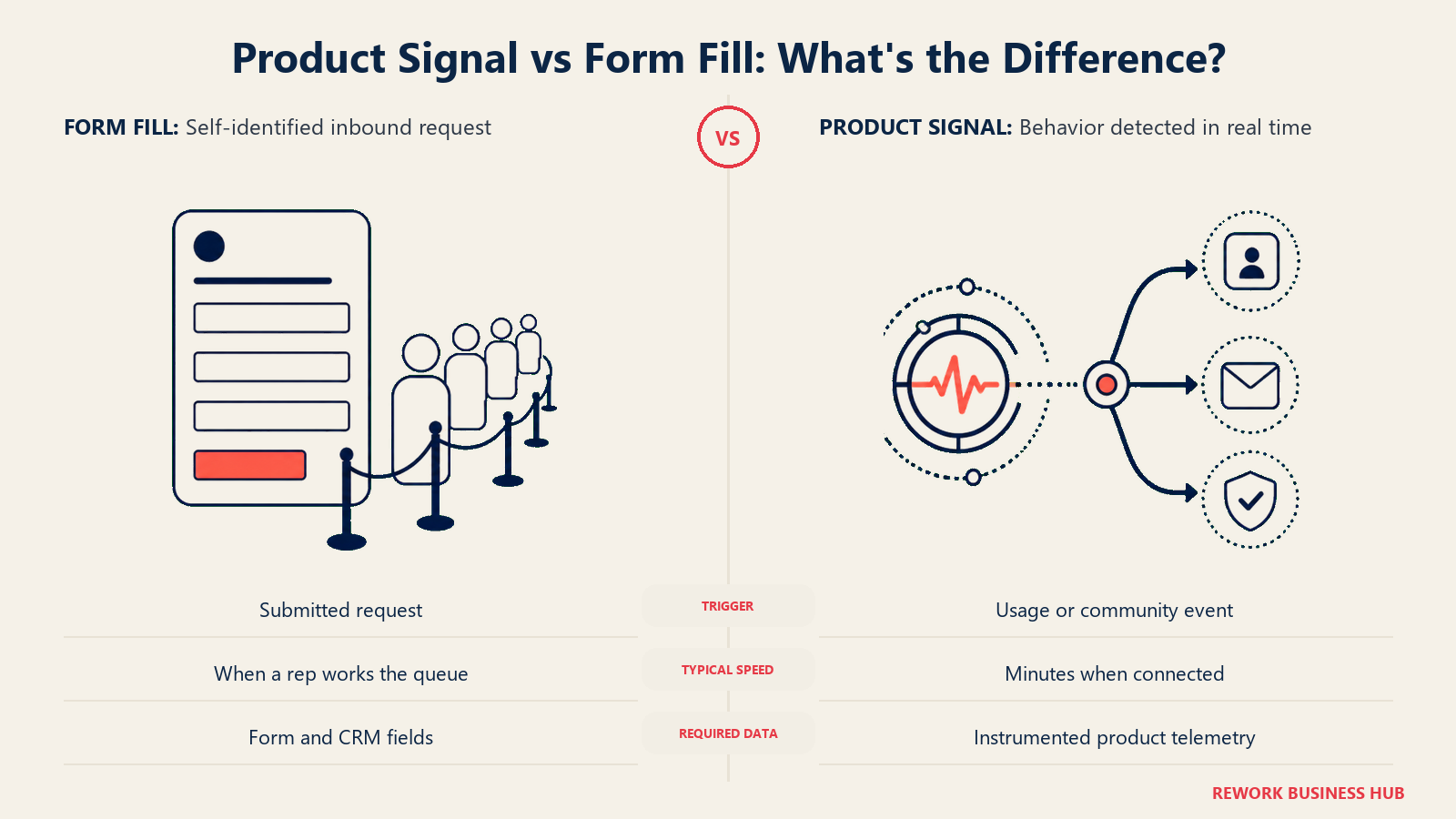
The distinction matters because speed compounds differently. A form fill sits in a queue until a rep works it. A product-usage signal can trigger a play the moment it happens, if the agent is actually wired into your telemetry, which is the part most teams underestimate. PLG vs. sales-led AI stacks covers why this is a data-availability problem before it's a tool problem: an agent built to act on product signal is worthless if your product isn't instrumented to produce one.
It's also worth being precise about where the line between an agent and a tool sits here, since the word gets used loosely. An agent plans a sequence of actions and calls tools to execute them; something that only drafts a message and waits for a person to send it is assistive software, not an agent. Several products in this guide sell both under one brand, so check which SKU you're actually buying before you assume "agent" means autonomous. If what you actually need is the broader assistive software layer instead, best AI tools for B2B covers that adjacent, larger category.
| Signal Source | What Triggers It | Typical Speed to Reach a Human | Agents Here |
|---|---|---|---|
| Form fill or demo request | A prospect self-identifies by filling something out | Whenever a rep works the queue | Not covered here; see best AI agents for lead generation |
| Product usage telemetry | A trial hits a feature, seat, or usage ceiling | Minutes, if the agent is wired to your product data | Pendo, Common Room |
| Community or support activity | A Slack mention, community post, or ticket pattern | Hours | Common Room |
| Firmographic or intent signal | A job change, new hire, or site visit from a target account | Same day | Unify |
The Self-Serve Support Math: When a Per-Resolution Price Hits Your Margin
Support is the clearest place where an agent's pricing model does something to your business a feature comparison won't show you. A per-seat support tool gets cheaper per unit as you add headcount and hits a ceiling nobody plans around. A per-resolution agent does the opposite: it's nearly free during a pilot and scales exactly with usage, which is precisely the shape you want when ticket volume tracks your user count instead of your headcount, the way it does for almost every self-serve SaaS product.
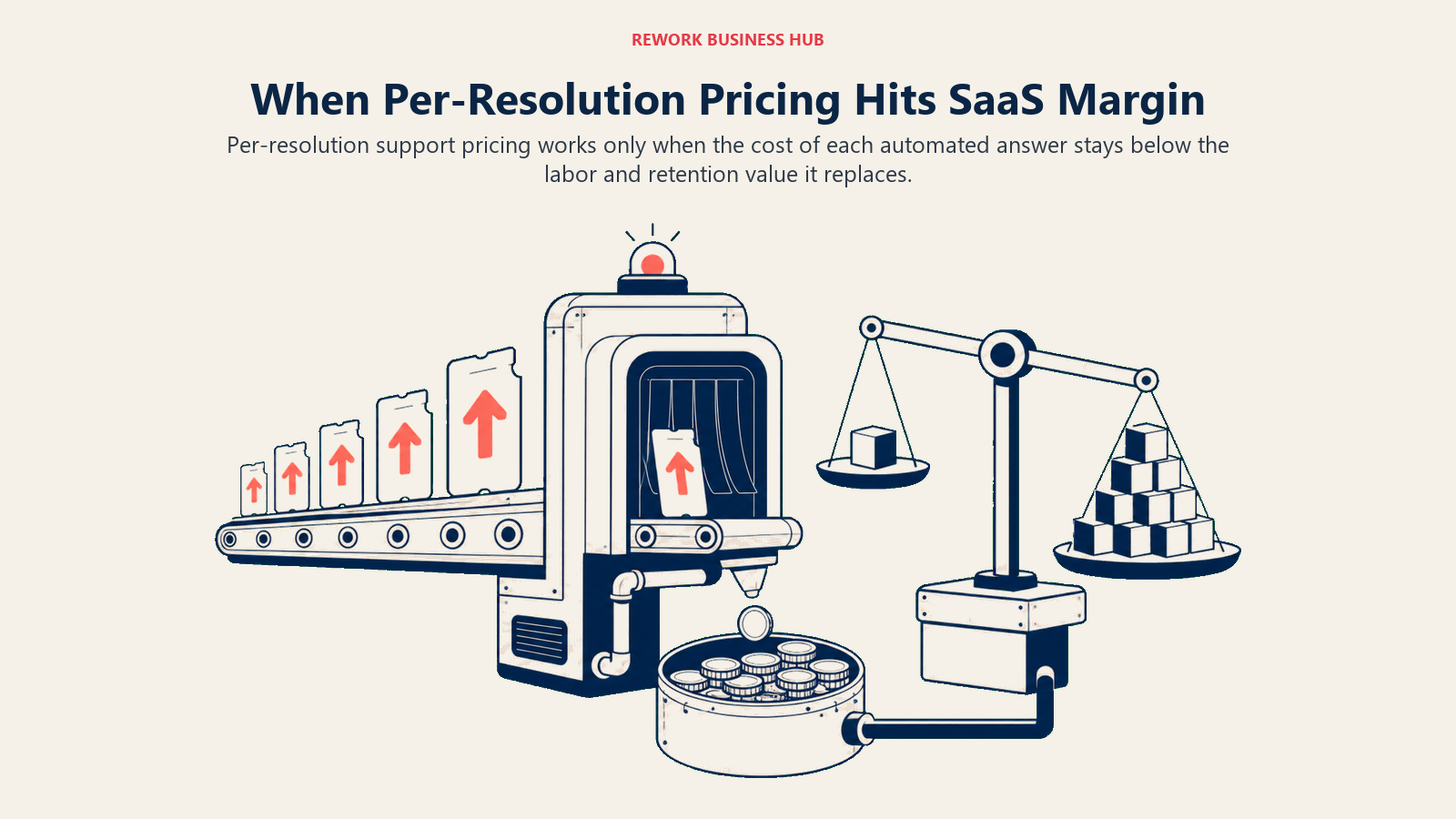
Do the math against your own gross margin before you sign anything. A $50-a-month self-serve plan running at a 70% gross-margin target has roughly $35 a month of margin to spend on everything that account touches, hosting included. At $0.99 a resolution, Fin is genuinely cheap if that account files a ticket once a quarter. It becomes a real cost line if your product creates several tickets a month per account, exactly the scenario a flat seat price would have hidden from you until the invoice arrived. Salesforce's own research backs the general shape of this tradeoff: hybrid programs that resolve routine cases autonomously and escalate the rest report 4.25 CSAT at 71% lower blended cost per resolution than an all-human baseline, per Salesforce's reporting on AI service agents.
The three agents in this guide split cleanly on where they sit on that curve. Fin is priced to be testable at self-serve scale with a $49.50 monthly floor. Decagon drops the seat floor entirely but adds a real minimum contract once you're past a self-serve pilot. Sierra skips the self-serve question altogether and prices for a support operation with enough volume that a managed, white-glove build is worth the premium. Best AI agents for customer service covers 13 agents across this whole spectrum in more depth, including several priced below what a SaaS company's early support volume would justify here.
| Agent | Pricing Unit | What It Costs at Low Volume | What Changes at Scale |
|---|---|---|---|
| Fin | Per outcome | $49.50/month floor (50 outcomes) | Cost tracks resolutions exactly; no seat cushion once volume is real |
| Decagon | Custom platform fee plus a reported per-resolution add-on | No self-serve entry; a discovery call is required | Reported median contract near $400K/year once you're past pilot scale |
| Sierra | Outcome-based, fully managed | Not priced for a pilot at all | Reported $150K-$350K+/year, built for real enterprise volume |
The "We Could Build This Ourselves" Trap
A SaaS company is the one buyer in this whole collection that can genuinely build most of what's on this list. You already employ engineers who could wire an LLM to your CRM, your product database, and a Slack channel by next sprint. That's exactly why the buy-versus-build question deserves an honest answer instead of a reflexive one in either direction.
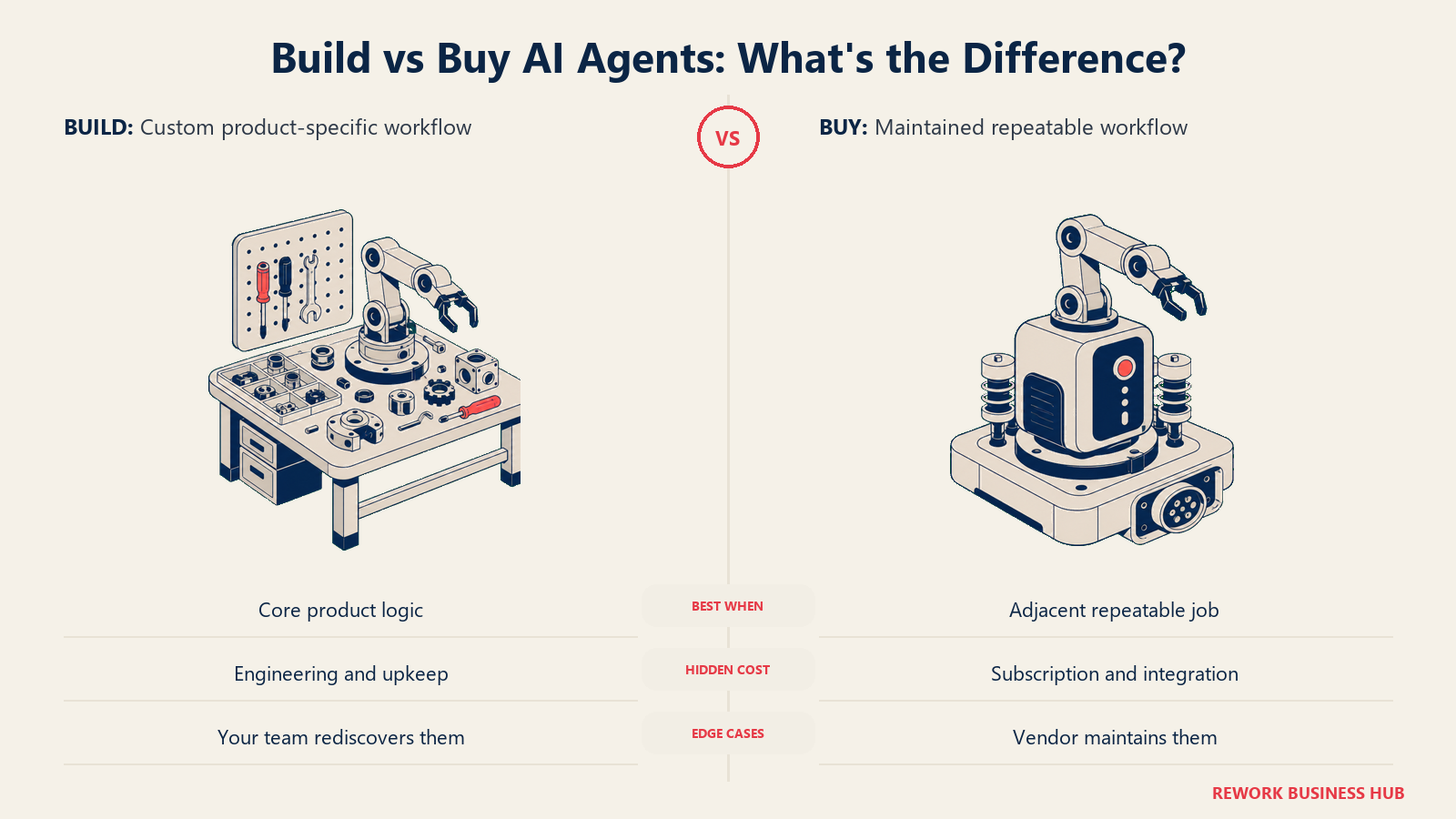
The market's actual answer skews toward buying more than most engineering teams expect: enterprises buying ready-made AI agents instead of building their own rose from 53% in 2024 to 76% in 2025, per Menlo Ventures' State of Generative AI in the Enterprise. The reasoning holds up for most of the jobs in this guide: a vendor like Common Room or Clay has already solved edge cases (deliverability, data-provider reliability, escalation handling) that would eat a real chunk of engineering time to rediscover, time your team isn't then spending on the product itself. Buy vs. build for SaaS AI features walks through a fuller three-way framework (buy, wrap an LLM API yourself, or build custom), a more honest split than the old two-option version of this question.
Building wins in narrower cases than most teams assume: when the workflow is specific enough to your own product that no vendor's grounding fits it, or when a coding agent like Claude Code or Cursor is the tool your own engineers use to build that narrow thing, not a category you'd buy instead. That's the one place this guide's answer flips: don't buy a vendor's version of your own product's core logic, buy everything around it.
| Job | Buy From This List | When Building Actually Wins |
|---|---|---|
| Signal-based lead follow-up | Common Room, Unify | Rarely, until usage cost exceeds an engineer's time at real volume |
| Support deflection | Fin, Decagon | Only if your product is novel enough that no vendor's grounding fits |
| Data enrichment workflows | Clay | Almost never; Clay is usually cheaper than the engineering time to replicate it |
| Churn and expansion signal | Gainsight, Vitally, Pendo | If your product telemetry is unusual enough that a generic health score misses it |
| The product itself | None of the above | Always; Claude Code and Cursor are what your engineers build it with |
Sizing and Persona Table
| Tool | Ideal Company Stage | Primary Buyer |
|---|---|---|
| Common Room | Series B+ SaaS with real product and community data flowing | PLG Growth Lead, Community-Led Growth Manager |
| Unify | Seed to Series C, lean RevOps team | RevOps, Growth Lead, Founder |
| Clay | Seed to Series C, technical GTM hire | RevOps, Growth Marketer, GTM Engineer |
| Fin | Any SaaS company with real self-serve support volume | Head of Support, Founder |
| Decagon | Series C+, high-volume multi-channel support | VP Customer Experience, Head of Support Ops |
| Sierra | Late-stage, enterprise support budget | COO, VP Customer Experience |
| Vitally | Series A to growth stage, tech-touch or PLG CS | Head of Customer Success, founder-led CS |
| Gainsight | Series C+, real named-account book | CCO, VP Customer Success |
| Pendo | Any product-led SaaS company already running product analytics | VP Product, Head of Growth, CS Ops |
| Gong | Series B+, sales-assisted or hybrid motion, 50+ reps | CRO, VP Sales, Head of Enterprise Accounts |
| Clari | Series C+, RevOps-led forecasting | CRO, VP RevOps |
| HubSpot Breeze | Any size already inside HubSpot's ecosystem | RevOps, Marketing Ops, Founder |
| Claude Code | Any SaaS engineering team, terminal-first | Engineering Lead, Staff Engineer |
| Cursor | Any SaaS engineering team, IDE-first | Engineering Lead, individual contributors |
1. Common Room: Product and Community Signal Before a Form Fill Exists
Common Room is built for the exact signal a SaaS company has that a services business doesn't: product usage, community mentions, and Slack activity that show intent long before someone requests a demo. RoomieAI watches more than 20 signal sources and assembles a Person360 profile once an account or contact starts looking like a real fit, which is the practical version of the PLG follow-up problem this guide is built around. The catch is price and motion: there's no self-serve trial, every tier above the $2,500 Essential floor needs a sales call, and Common Room sells as much into account-level ABM as it does into individual lead follow-up, a different job than the one most GTM teams have in mind when they search for this category.
| What you get | What you don't |
|---|---|
| Signal from product usage, community, and 20+ other sources in one profile | $2,500/month floor with no self-serve trial to test first |
| RoomieAI turns activity into a ranked, warm-lead list automatically | Built as much for account-level ABM as individual lead follow-up |
| Unlimited alerts, workflows, and segments even on the entry tier | Research and prospecting credits are shared and can run out mid-month |
Pricing: Essential is $2,500/month billed annually (5 seats, up to 100,000 contacts, 5,000 RoomieAI research and 2,500 Prospector credits/month). Advanced (15 seats, 250,000 contacts) and Enterprise (30 seats, 750,000 contacts) are both custom. See commonroom.io/pricing.
Best for: SaaS companies with real product usage and community data already flowing that need an agent to prioritize it into a warm-lead list, not a company still validating whether that signal exists yet.
2. Unify: Signal-Triggered Outbound Without a Workflow to Build
Unify's pitch is a plainer version of the same signal-based idea: job changes, new hires, and website visits trigger pre-built plays automatically, with AI drafting the outreach for each one, so a lean RevOps team doesn't have to design a Clay-style workflow first. The free and $20-a-seat Base tiers are genuinely usable for testing whether signal-based follow-up beats your current form-based process, but the signals that actually separate Unify from a static database (website intent, the deeper triggers) and the CRM write access needed to act on them automatically both sit behind the custom-quoted Business tier, and Pro's HubSpot and Salesforce sync is read-only until you get there.
| What you get | What you don't |
|---|---|
| Job-change, hiring, and 1.1B+ person records from the free tier up | Website intent and the deeper signals sit behind the custom Business tier |
| Plays trigger and draft outreach automatically, no workflow to design | Pro's CRM sync is read-only; write access needs Business |
| 14-day free trial on Pro, no card required | Credit caps pause workflows hard once exhausted |
Pricing: Free (up to 3 seats, limited credits). Base $20/seat/month (800 credits/seat/month). Pro $60/seat/month (2,400 credits/seat/month, read-only CRM sync). Business custom, billed annually (read-write CRM sync, website intent signals, the more advanced model). See Unify's pricing page.
Best for: A lean RevOps or growth team that wants signal-triggered outbound running in days without building a workflow first, and is prepared to pay for Business once CRM write access matters.
3. Clay: The Enrichment Workflow That Beats Building One In-House
Clay is the honest answer to the build-it-yourself instinct that shows up constantly in this category: instead of a fixed database, it's a workflow canvas that queries 150+ data providers in sequence, then hands whatever's still unresolved to Claygent, its own research agent, for open-ended web work. That's usually a cheaper and faster path to a working enrichment pipeline than a SaaS company's own engineers would build from scratch, exactly the trade the buy-versus-build framing later in this guide is about. The real cost is a genuine learning curve: two separate credit systems to track, and a workflow built wrong burns through both fast.
| What you get | What you don't |
|---|---|
| 150+ data providers in one waterfall, plus Claygent for open research | Two separate credit systems (actions and data) to track |
| Real free tier to test before paying anything | A genuine learning curve, closer to a platform than an app |
| CRM auto-sync from the Growth tier up | Credit top-ups run at a premium over the plan rate |
Pricing: Free (500 actions/month, 100 data credits/month, unlimited seats). Launch $167/month, or $54/month billed annually (15,000 actions and 3,000 data credits/month, expandable). Growth $446/month, or $185/month billed annually (40,000 actions and 6,000 data credits/month, adds CRM auto-sync). Enterprise custom (200,000+ actions/month). See clay.com/pricing.
Best for: A RevOps or growth engineering hire building a custom enrichment or research workflow that would otherwise take real engineering time to replicate.
4. Fin: Outcome Pricing That Scales With Resolutions, Not Headcount
Fin, Intercom's AI agent, renamed alongside the company in 2026, is the cleanest example of pricing tied directly to a SaaS company's own unit economics: you pay $0.99 for a resolution, a procedure handoff with context attached, or a disqualification, not a flat seat that sits idle at 2am when your support volume is actually lowest. That matters more for a self-serve product than almost anywhere else in this guide, because ticket volume scales with your user count, not your headcount, and outcome pricing is the one model built to scale the same way. The number worth watching: Salesforce's pending $3.6 billion acquisition of Fin's parent company hadn't closed, so budget for some roadmap uncertainty.
| What you get | What you don't |
|---|---|
| Pricing that scales with resolutions, matching how self-serve ticket volume actually grows | Salesforce's pending acquisition adds real roadmap uncertainty |
| Works across many helpdesks, not locked to Intercom's own inbox | An "outcome" counts when a customer just doesn't follow up, which can flatter the rate |
| 50-outcome/month minimum keeps the floor low for a smaller support queue | Seats and outcomes are billed separately, so total cost needs both numbers |
Pricing: $0.99 per outcome (resolution, procedure handoff, or disqualification); $9.99 per qualified lead outcome; 50-outcome/month minimum ($49.50 floor). Intercom seats separately: Essential $29/seat/month, Advanced $85/seat/month, Expert $132/seat/month. See Intercom's pricing.
Best for: A SaaS company fielding real support volume from a self-serve user base that wants pricing tied to resolutions, not a seat count that doesn't track usage.
5. Decagon: Multi-Step Resolution at a Self-Serve Base's Real Volume
Decagon is what Fin's pricing model looks like once a SaaS company's support volume outgrows a self-serve tool: no per-seat floor, but no self-serve signup either, every deployment starts with a discovery call scoped to real ticket volume across chat, email, and voice. Its own resolution-rate definition (resolved issues divided by total issues, where resolved means no further follow-up is needed) is more precise than most competitors publish, and it cites 50 to 80% resolution for mature deployments, though that's still Decagon grading its own work. For most SaaS companies below several hundred thousand annual conversations, this is more platform than the job needs; it earns its cost once support is a genuinely large, complex, multi-channel operation.
| What you get | What you don't |
|---|---|
| Agentic resolution across chat, email, and voice in one agent | No public pricing or self-serve signup |
| A published, formula-based resolution-rate definition | Median contracts run roughly $400K/year, well past most self-serve budgets |
| Enterprise-grade evaluation and QA tooling | Overkill below real enterprise ticket volume |
Pricing: Custom, quote-only. Buyer-reported base platform fee $50,000 to $95,000/year; median annual contract roughly $400,000/year; a per-resolution add-on (reported near $0.50) is negotiated, not published.
Best for: A SaaS company with high, complex support volume across chat, email, and voice that has outgrown a self-serve-priced tool like Fin.
6. Sierra: A Managed Agent Priced for a Later Stage Than Most SaaS Buyers
Sierra is worth knowing about mostly so you can rule it out correctly: it's a fully managed, outcome-priced agent built by a team that does much of the conversational design and tuning itself, genuinely valuable, and genuinely priced for a later stage than most SaaS companies reading this guide are at. Sierra doesn't publish pricing anywhere, not even a range, beyond confirming on its own site that it charges for outcomes delivered rather than seats or messages. Reported contracts start around $150,000 a year, and the $950 million Series E it raised in May 2026 at a $15.8 billion valuation tells you which end of the market it's actually built to serve.
| What you get | What you don't |
|---|---|
| Fully managed agent with hands-on tuning from Sierra's own team | No pricing published anywhere, not even a range |
| Outcome-based pricing tied to real results, not seats | Reported contracts start near $150K/year |
| One agent brain now answers both chat and phone | Enterprise-only sales process, a mismatch for most SaaS support queues |
Pricing: Custom, quote-only, outcome-based; Sierra's own site confirms the model but publishes no figures. Reported estimates of $150,000 to $350,000+ annually.
Best for: A later-stage SaaS company with a real enterprise budget that wants a managed agent without building internal AI operations expertise first, not a self-serve support queue still finding its resolution rate.
7. Vitally: The Tech-Touch Tier for the Long Tail No CSM Ever Opens
Vitally names its pricing tiers after the exact problem most SaaS companies actually have: Tech-Touch for one-to-many and PLG accounts, Hybrid-Touch, and High-Touch, each mapping to how much of your book gets digital-only engagement versus a real CSM. Every tier includes unlimited automations and unlimited observer seats, which matters for a SaaS company where product and growth stakeholders want visibility into account health without a per-seat charge for looking. AI Summaries cite the actual note, transcript, or ticket behind every flagged signal, a real answer to the black-box health-score problem. Vitally is honest that it's a copilot, not a fully autonomous agent: AI Actions draft the follow-up or task, and a human still sends it. Best AI agents for customer success covers 11 agents across this whole spectrum, including several that split scoring from execution differently than Vitally does.
| What you get | What you don't |
|---|---|
| Tier names map directly to touch model, built for the PLG long tail specifically | No published pricing; three tiers, all request-only |
| Unlimited automations and observer seats on every tier | Functions as an AI copilot, not a fully autonomous agent, by its own description |
| AI Summaries cite sources directly, fixing the "where did this come from" problem | Less depth for complex, high-touch enterprise accounts than Gainsight |
Pricing: Not published; three tiers (Tech-Touch, Hybrid-Touch, High-Touch), all request-only. Buyer-reported entry pricing lands around $1,500 to $2,000 per month. See vitally.io/pricing.
Best for: A SaaS company whose real customer success gap is the long tail, accounts getting one-to-many digital engagement instead of a named CSM, not another enterprise health score.
8. Gainsight: Agentic Depth for the Named Accounts That Move NRR Most
Gainsight declared its whole platform agentic in May 2026, and for a SaaS company chasing net revenue retention specifically, that means Horizon AI agents that can run a renewal playbook, escalate risk, and prep a QBR largely on their own instead of just recommending the next step. The Insight Agent, built from the Staircase AI acquisition, reads emails, meetings, and support threads for relationship signals a usage-based health score alone misses, and Gainsight PX extends the same platform down to tech-touch onboarding for accounts too small to get a named CSM. Nothing else on this list matches that depth for a named-account book, and nothing else costs as much to configure correctly either.
| What you get | What you don't |
|---|---|
| Horizon AI agents execute renewal, risk, and QBR workflows, not just suggest them | No published pricing anywhere; every deployment is a custom quote |
| Insight Agent mines calls, email, and support for relationship signals | Real depth needs the Enterprise tier and real configuration time |
| Gainsight PX extends the same platform to tech-touch, long-tail accounts | Reported $150-$300/user/month puts it out of reach for an early-stage team |
Pricing: No published pricing. Essentials (10 full users, 100 accounts per user) and Enterprise (20 full users, 200 accounts per user), both request-only. Buyer-reported deployments land around $150 to $300 per user per month. See gainsight.com/pricing.
Best for: A SaaS company with a real named-account book and the budget to configure a platform spanning renewal, risk, and QBR workflows in depth, not a small self-serve base with no named CSMs yet.
9. Pendo: Churn Prediction Wired to the Product Telemetry You Already Have
Pendo is the clearest example in this guide of an agent that touches your own product rather than just your CRM: Predict is a churn-prediction layer built directly on product usage telemetry, and its risk segments unlock the rest of Pendo's platform automatically, in-app guides to at-risk accounts, qualitative signal through Pendo Listen, all without a CSM ever opening the account. For a SaaS company whose long tail of self-serve accounts never sees a human, that's a real answer to a problem Gainsight and Vitally solve differently. The honest limit: Predict recommends and alerts inside Salesforce or HubSpot with a Slack ping when a risk score moves, it doesn't execute the retention play itself.
| What you get | What you don't |
|---|---|
| Free tier to start; Predict sold as a custom-volume add-on to any plan | No published dollar pricing anywhere in the funnel |
| Churn segments unlock in-app guides that reach accounts a CSM never opens | Predict recommends and alerts; it doesn't execute the retention play itself |
| One data model spans product, CS, and marketing signal | Not a dedicated CS platform; no renewal or QBR workflow |
Pricing: Custom, based on Monthly Active Users. Free plan available (500 MAU cap). Predict is priced on custom prediction volume as an add-on to any paid plan. See pendo.io/pricing.
Best for: A product-led SaaS company already running Pendo for analytics that wants churn prediction and automated in-app nudges reaching the accounts a CSM never touches.
10. Gong: Deal and Expansion Risk Surfaced From Real Calls
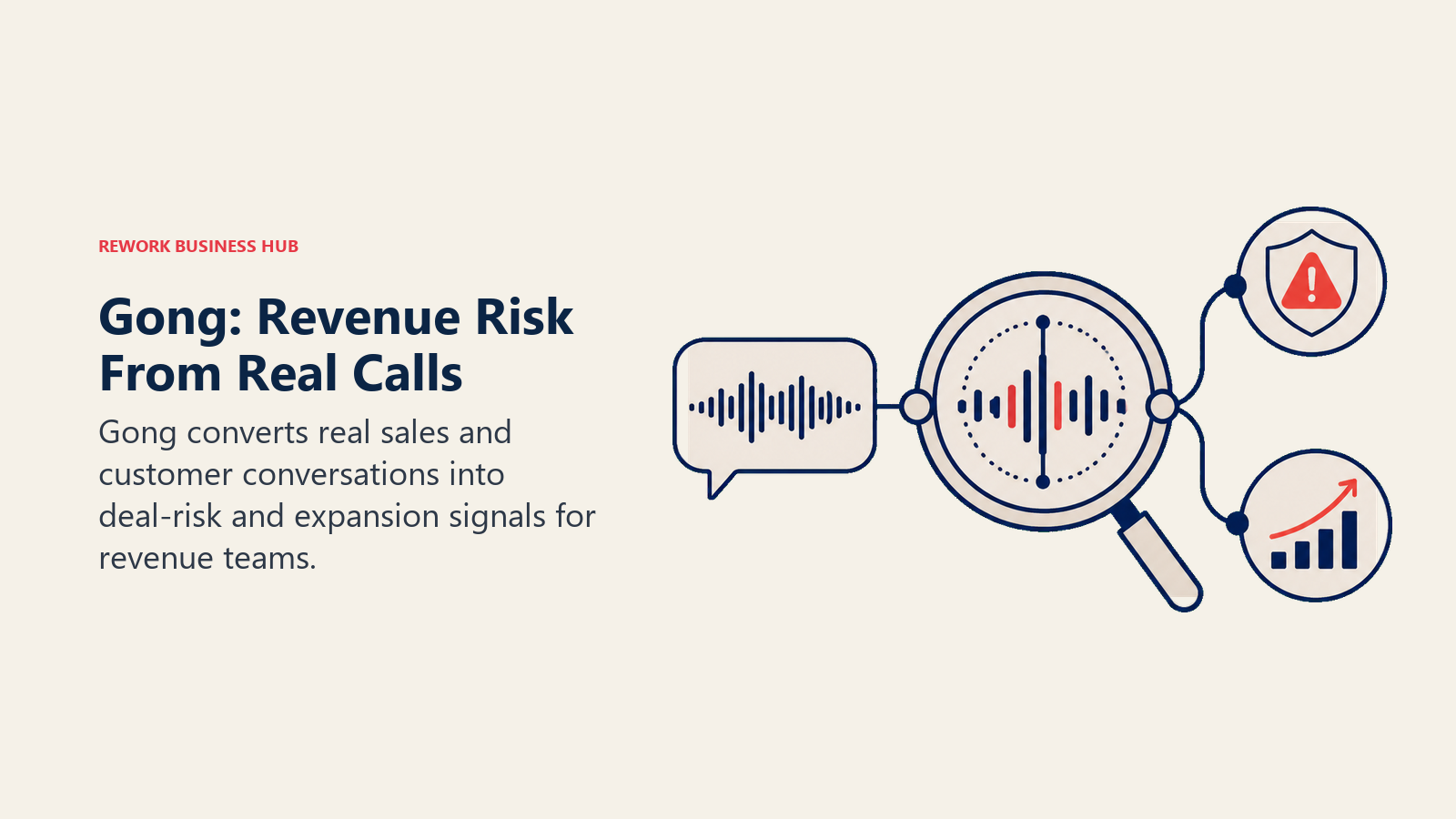
Gong's bet has always been that the truth about a deal, or an account's expansion or churn risk, lives in the actual calls and emails, not just whatever a rep remembered to log in the CRM. For a SaaS company with a sales-assisted or hybrid motion, that call-level visibility extends naturally past new-logo deals into renewal and expansion risk on existing accounts, and its 2026 Revenue Harness expansion added an MCP server that lets Claude, ChatGPT, and other outside tools query Gong's own call and deal data directly. The honest limitation: Gong is priced and built around conversation intelligence first, so a SaaS company whose real gap is a dedicated CS workflow, not call analysis, will likely still need a platform like Gainsight alongside it.
| What you get | What you don't |
|---|---|
| Deal and account risk built on real call and email data, not self-reported fields | No published pricing; per-user cost plus a platform fee, both quoted after team size |
| MCP server opens Gong's data to Claude, ChatGPT, and other outside tools | Conversation intelligence first, dedicated CS workflow second |
| Scales from a single team to enterprise-wide deployment | Best value shows up at real call volume; a small team may overpay for unused depth |
Pricing: Not published. Licenses priced per user plus a platform fee based on team size, quoted after you submit headcount. Buyer-reported data puts pricing near $1,400 to $1,600 per user per year, plus the platform fee. See gong.io/pricing.
Best for: A sales-assisted or hybrid SaaS company that wants deal and expansion risk surfaced from real conversation data, not just CRM fields a rep updates after the fact.
11. Clari: The Forecast Number a CRO Can Defend on a Board Call
Clari's bet is that pipeline data lies unless something cross-checks it against what's actually happening in calls, emails, and CRM activity, and for a SaaS company that means a renewal and expansion forecast number a CRO can defend on a board call instead of a spreadsheet built on hope. RevAI extends that scoring across the whole revenue cycle, not just new-logo pipeline, exactly where most of a SaaS company's actual forecast risk sits once the base gets large enough that renewals matter more than new bookings. Since Clari's late-2025 merger with Salesloft into one Predictive Revenue System, its forecasting core increasingly shares a backbone with Salesloft's execution layer, worth knowing if you're buying for the next few years, not just this one. Best AI agents for revenue operations covers 10 agents across CRM hygiene and forecast accuracy in more depth than this guide's two picks.
| What you get | What you don't |
|---|---|
| AI-driven forecast accuracy applied to renewal and expansion pipeline | No renewal playbook, health-scoring workflow, or QBR template |
| RevAI cross-checks CRM data against actual call and email activity | Quote-only pricing per user, with no published numbers |
| Post-merger Salesloft integration ties forecasting to execution | Some product boundaries between Clari and Salesloft are still settling |
Pricing: Not published, "Get a quote" only. Buyer-reported data puts Clari Core near $100 to $125 per user per month. See clari.com/pricing.
Best for: RevOps and finance leadership at a SaaS company that need a renewal and expansion forecast number defensible at the board level, not a dedicated CS platform.
12. HubSpot Breeze: The Budget Path for a Team Already Inside HubSpot
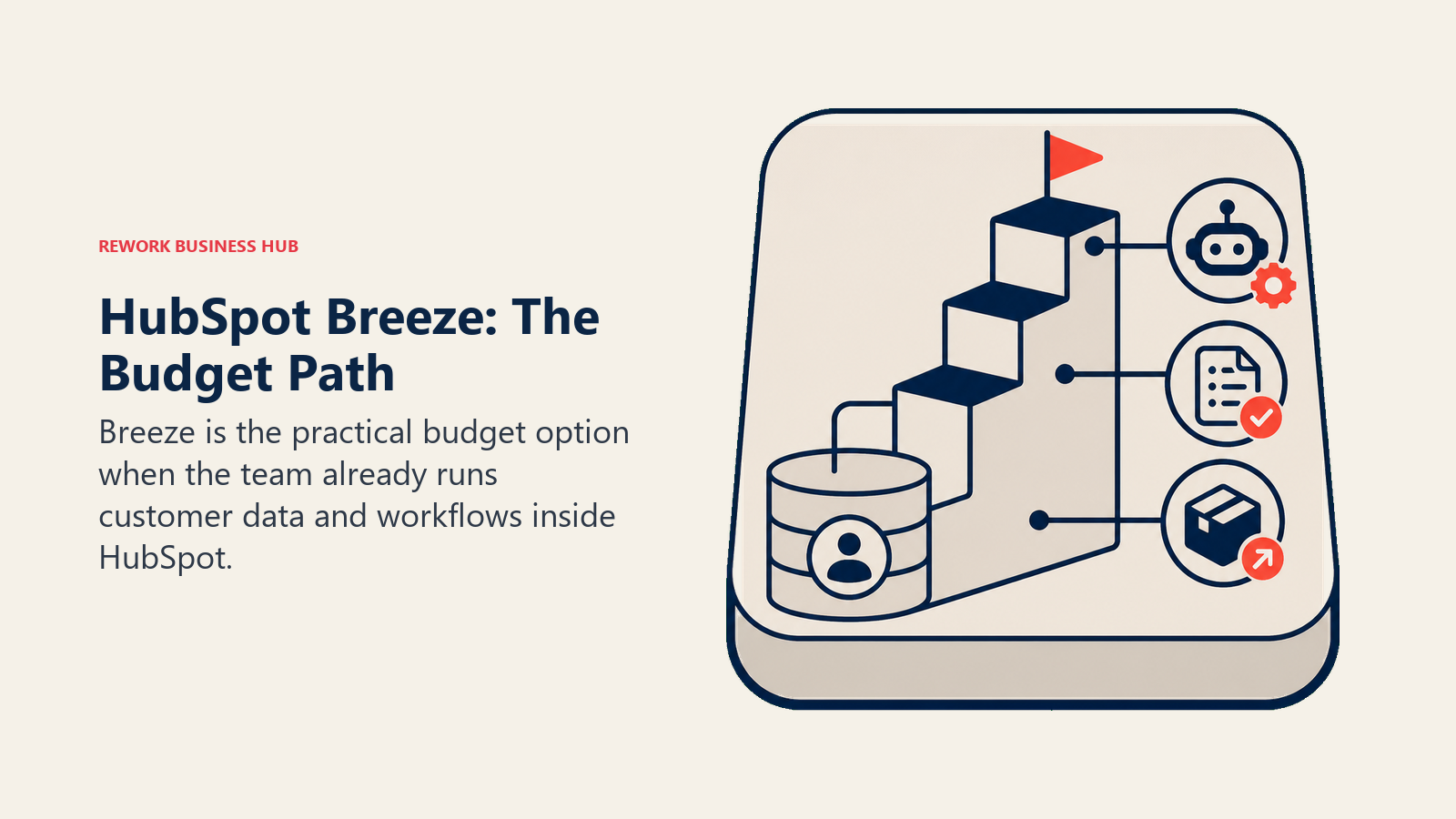
HubSpot Breeze is the budget-conscious pick on this list, but only if you read the fine print on which tier actually turns an agent on. Breeze Copilot ships free across every paid hub seat, and Marketing Hub Starter, as low as $7/seat/month billed monthly, gets you a first taste of Breeze credits and basic enrichment. The genuinely autonomous pieces, the Prospecting Agent, the Customer Agent that resolves support conversations, live behind Professional-tier hubs, roughly $100/seat/month for Sales or Service Hub, or $800/month flat for Marketing Hub. For a SaaS company already inside HubSpot's ecosystem, that's still cheaper than adding a new vendor; for one starting from zero, the real agent capability costs more than the entry price suggests.
| What you get | What you don't |
|---|---|
| Breeze Copilot free on every paid seat; a real low-cost entry tier to test on | Real autonomous Agents require Professional-tier hubs, not the entry tier |
| No new vendor if you already run Sales, Service, or Marketing Hub | Cost adds up fast once you want Prospecting, Customer, and Content Agents together |
| Breeze Intelligence enrichment is genuinely cheap per credit | Multi-hub Breeze pricing is confusing to total up before you commit |
Pricing: Breeze Copilot bundled free on paid hub seats. Marketing Hub Starter $7/seat/month billed monthly, or $20/seat/month on an annual commitment (500 credits, 1,000 contacts included). Breeze Agents (Prospecting, Customer, Content, Social) require Professional-tier hubs, roughly $100/seat/month for Sales or Service Hub, or $800/month flat for Marketing Hub. Breeze Intelligence enrichment credits run about $9 per 1,000 credits on annual billing. See HubSpot's pricing.
Best for: A SaaS company already running HubSpot that wants to add agentic prospecting or support on top of a hub it already pays for, not a team starting its CRM from scratch.
13. Claude Code: Terminal-Native Depth for the Engineers Shipping Your Product
Claude Code reads a codebase through agentic search rather than a pre-built index, which matters for a SaaS company shipping fast enough that yesterday's index would already be stale, and it runs long, mostly unattended sessions: writing code, running tests, fixing what breaks, with plan mode laying out the approach before it touches a file. For the engineering team actually building the product that generates every other signal in this guide, that's the agent doing the most direct work on the product itself, not on the data the product produces. The tradeoff against Cursor is workflow, not capability: Claude Code lives in a terminal, and a team that would rather stay inside an IDE will lean toward Cursor instead.
| What you get | What you don't |
|---|---|
| Deep repo awareness with no indexing step required | No fully async, walk-away cloud mode built in |
| Plan mode and permission prompts keep an engineer in control | Requires comfort with a CLI-first workflow |
| Team and Enterprise tiers scale cleanly with a growing engineering org | Usage shares the same budget as regular Claude chat use on lower tiers |
Pricing: Pro $20/month, or $17/month billed annually. Max plans from $100/month (5x usage), with a 20x tier above. Team: Standard seat $20-25/month depending on billing, Premium seat $100-125/month. Enterprise self-serve from $20/seat plus usage at API rates; sales-assisted Enterprise is custom. See claude.com/pricing.
Best for: An engineering team that lives in the terminal and wants the deepest repo awareness for long, mostly unattended coding sessions.
14. Cursor: The Supervised Agent Most Engineering Teams Adopt First
Cursor's agent mode is still the benchmark other IDE agents get compared against: describe a change in plain language, and it plans across multiple files, edits them, runs terminal commands with approval, and shows a diff before anything lands, all inside an editor most engineers already know. Cloud background agents add a lighter async mode for a task you can kick off and come back to later. For a SaaS engineering team that would rather stay inside a familiar IDE than adopt a terminal-first workflow, that's the practical difference from Claude Code, and it's usually the agent a growing engineering org adopts first specifically because the switching cost from a normal editor is close to zero. Best AI coding agents covers the wider field beyond these two picks.
| What you get | What you don't |
|---|---|
| Most mature supervised multi-file agent experience in an IDE | Every paid tier is a usage pool that can run past budget |
| Cloud background agents add a lighter-weight async mode | Full functionality means adopting Cursor's own editor fork |
| Free Hobby tier to test before paying anything | Promo codes and referral discounts were discontinued in July 2026 |
Pricing: Hobby free (limited Agent requests). Pro $20/month. Pro+ $60/month (3x Pro's Agent limits). Ultra $200/month (20x). Teams Standard $40/user/month, with a Premium tier above at 5x Standard's limits. Enterprise custom. See cursor.com/pricing.
Best for: A SaaS engineering team that wants the most polished supervised coding agent without leaving a familiar editor.
Net Revenue Retention: Which Lever Each Agent Actually Moves
Net revenue retention is the one number that ties more than half of this guide together, because it's the metric where a support cost, a churn signal, and an expansion opportunity all show up as the same line on a board slide. Top-quartile B2B SaaS companies hit 113% or higher NRR and trade at a median 24x EV/Revenue, against 5x for bottom-quartile peers, per McKinsey's analysis of more than 100 B2B SaaS companies, a real enough gap in valuation that it's worth being deliberate about which agent actually moves which lever, instead of buying whichever one had the best demo.
| NRR Lever | What Usually Breaks It | Agents Here That Address It | Metric It Moves |
|---|---|---|---|
| Expansion revenue | Nobody notices a usage-based upsell signal until the renewal call | Gainsight, Pendo | Expansion ARR |
| Gross churn | A health score nobody trusts gets manually overridden | Gainsight, Vitally | Logo retention |
| Cost to serve | Support cost quietly eats the margin an NRR gain was supposed to protect | Fin, Decagon | Gross margin per account |
| Forecast credibility | A CRO can't defend the renewal number in a board meeting | Clari | Forecast accuracy |
| The long tail | Most accounts never see a human, so early churn signal goes uncaught | Vitally, Pendo, Common Room | Logo retention at scale |
Don't buy an agent for NRR in the abstract. Pick the row above that matches whichever number your board actually pushes back on.
SaaS AI Agent Buying Mistakes to Avoid
SaaS companies fall into a specific version of these mistakes because they have the option to build almost anything here, and a real self-serve user base that punishes a wrong pricing-model bet faster than a services business ever would.
| Mistake | What It Looks Like | What to Do Instead |
|---|---|---|
| Buying Decagon or Sierra-level support depth for a small self-serve base | Signing a $150K+/year contract to cover a few thousand tickets a month | Start with Fin's outcome pricing; graduate once volume justifies the platform fee |
| Buying a signal-based agent before your product is instrumented | Common Room or Pendo scoring blind because usage telemetry isn't wired up | Fix product analytics first; an agent can't act on a signal your product doesn't emit |
| Building what a vendor already solved | Spending real engineering time replicating Clay's data-provider waterfall | Buy the commodity work; save engineering time for the product itself |
| Ignoring what a per-resolution price does to gross margin at real volume | Budgeting the sticker price, not cost-per-resolution against your own plan's margin | Model the cost against your lowest-margin plan tier before you sign |
| Buying a named-account CS platform to solve a long-tail problem | Rolling out Gainsight Enterprise to try to cover thousands of small accounts | Pair a named-account platform with a tech-touch tool like Vitally or Pendo for the rest |
| Treating "agent" as a fully autonomous claim from a homepage | Discovering post-purchase that a Breeze Agent or Vitally only drafts and a human still sends | Ask for a live demo of exactly what happens automatically before you buy |
How to Choose: Decision Framework
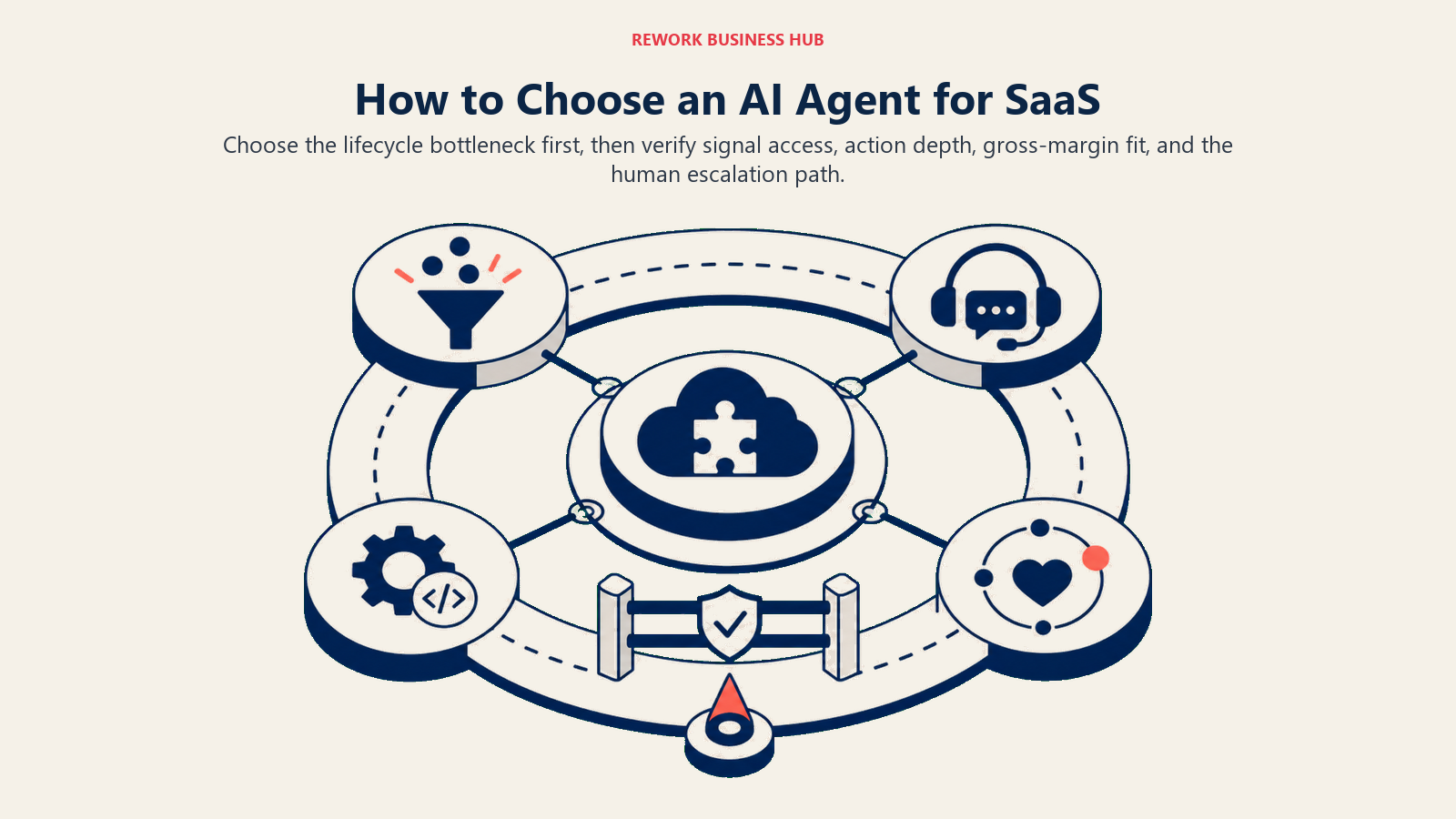
Choose the lifecycle bottleneck first, then verify signal access, action depth, gross-margin fit, and the human escalation path.
| If you need... | Pick... | Why |
|---|---|---|
| Product and community signal turned into a warm-lead list | Common Room | RoomieAI prioritizes 20+ signal sources automatically |
| Signal-triggered outbound without building a workflow | Unify | Plays fire off job-change and intent signals out of the box |
| A custom enrichment workflow cheaper than building one | Clay | 150+ data providers plus Claygent, priced by usage |
| Support pricing that scales with resolutions, not seats | Fin | $0.99/outcome works at self-serve volume with a low floor |
| Multi-step resolution at real enterprise support volume | Decagon | Agentic chat, email, and voice resolution in one agent |
| A fully managed agent for a later-stage support operation | Sierra | Outcome-priced, white-glove build for enterprise volume |
| Digital-led coverage for the long tail no CSM touches | Vitally | Tier names map directly to touch model, built for PLG |
| The deepest agentic platform for a named-account book | Gainsight | Horizon AI agents execute renewal, risk, and QBR workflows |
| Churn prediction wired to product usage you already track | Pendo | Predict's risk segments unlock automated in-app guides |
| Deal and expansion risk from real conversation data | Gong | Grounded in calls and email, not self-reported CRM fields |
| A renewal forecast number a CRO can defend | Clari | RevAI cross-checks CRM data against real activity |
| The cheapest path if you're already on HubSpot | HubSpot Breeze | No new vendor; Copilot is free on every paid seat |
| The deepest terminal-native coding agent | Claude Code | Reads a repo with no indexing step; long unattended sessions |
| The most polished supervised agent inside an IDE | Cursor | Multi-file edits with a diff before anything lands |
What to Do Next
Don't shop this list category by category. Shop it by whichever number is actually stuck. If product signal is going unworked, pilot Common Room or Unify against a defined list of accounts for 30 days before adding anything else. If support cost is climbing faster than headcount, put Fin's outcome pricing against your last quarter of real ticket volume and see what the bill would have actually been. If your board keeps asking about net revenue retention, use the lever table above to find which of Gainsight, Vitally, Pendo, or Clari addresses the specific piece that's actually breaking, not the biggest name in the category. And before any of it, check whether your own engineering team is already the fastest path to the answer: AI agents for SaaS covers 8 build-side use cases across the same lifecycle this guide ranks vendors against, and Claude Code or Cursor are usually how that build actually happens once you've decided it's worth doing.

Principal Product Marketing Strategist
On this page
- Updated August 2026: What Changed
- Key Facts
- Quick Comparison Table
- Signal-Based Follow-Up vs. the Form Fill
- The Self-Serve Support Math: When a Per-Resolution Price Hits Your Margin
- The "We Could Build This Ourselves" Trap
- Sizing and Persona Table
- 1. Common Room: Product and Community Signal Before a Form Fill Exists
- 2. Unify: Signal-Triggered Outbound Without a Workflow to Build
- 3. Clay: The Enrichment Workflow That Beats Building One In-House
- 4. Fin: Outcome Pricing That Scales With Resolutions, Not Headcount
- 5. Decagon: Multi-Step Resolution at a Self-Serve Base's Real Volume
- 6. Sierra: A Managed Agent Priced for a Later Stage Than Most SaaS Buyers
- 7. Vitally: The Tech-Touch Tier for the Long Tail No CSM Ever Opens
- 8. Gainsight: Agentic Depth for the Named Accounts That Move NRR Most
- 9. Pendo: Churn Prediction Wired to the Product Telemetry You Already Have
- 10. Gong: Deal and Expansion Risk Surfaced From Real Calls
- 11. Clari: The Forecast Number a CRO Can Defend on a Board Call
- 12. HubSpot Breeze: The Budget Path for a Team Already Inside HubSpot
- 13. Claude Code: Terminal-Native Depth for the Engineers Shipping Your Product
- 14. Cursor: The Supervised Agent Most Engineering Teams Adopt First
- Net Revenue Retention: Which Lever Each Agent Actually Moves
- SaaS AI Agent Buying Mistakes to Avoid
- How to Choose: Decision Framework
- What to Do Next