8 Sinais de Alerta de que Suas Equipes de Vendas e CS Estão Desalinhadas: O Que Fazer em Cada Caso
Turn this article into takeaways for your work.


Each assistant summarizes the article only for you and suggests best practices for your work.
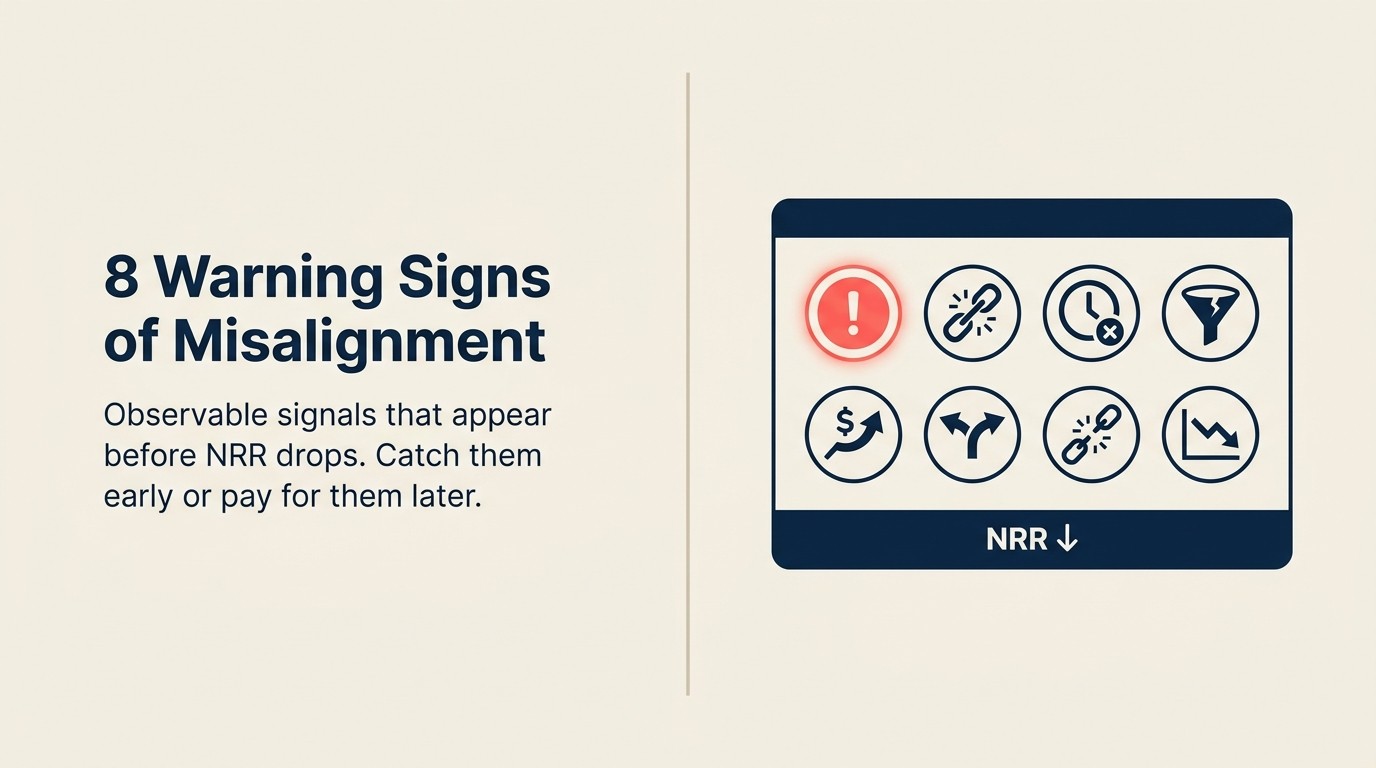
O desalinhamento entre vendas e CS aparece em sintomas operacionais observáveis meses antes de prejudicar o net revenue retention (NRR). O Diagnóstico de Desalinhamento de 8 Sinais é uma ferramenta estruturada de pontuação: avalie cada sinal de 0 a 2 em oito dimensões, e o total mapeia para a gravidade e o ponto de partida. Uma pontuação de 0 a 4 indica problemas localizados; 5 a 8 indica lacunas sistêmicas; 9 a 16 indica um modelo operacional quebrado que exige uma reconstrução em nível de liderança. Use-o para concordar sobre onde vocês realmente estão antes de debater o que corrigir.
O desalinhamento não se anuncia. Aparece silenciosamente: em um e-mail de apresentação que nunca foi enviado, em um CSM que descobriu sobre uma integração prometida na chamada de kickoff, em um AE que parou de responder perguntas sobre a conta na semana após o fechamento. Nenhum desses momentos parece catastrófico isoladamente. Mas cada um é um indicador antecedente, e quando se somam em um problema de NRR, você está olhando para seis a nove meses de danos que eram visíveis nos dados operacionais o tempo todo.
O valor de uma lista de diagnóstico como esta é o timing. Esses oito sinais de alerta aparecem nas operações do dia a dia, nos dados do CRM, nas revisões do CS manager, em comentários casuais durante reuniões de Pipeline, bem antes de a análise de coorte de renovação mostrar o problema. Identificá-los cedo significa corrigir barato. Perdê-los significa corrigir caro.
Esta lista foi criada para VP de Vendas e VP de CS percorrerem juntos. Não como uma atribuição de culpa, mas como um diagnóstico compartilhado: onde realmente estamos perdendo terreno e qual coisa específica corrigimos primeiro? Os 8 sinais de alerta de desalinhamento entre marketing e vendas cobrem a junção anterior do funil com uma estrutura de diagnóstico idêntica. Rode os dois se suspeitar de problemas nos dois handoffs.
Como Usar o Diagnóstico de Desalinhamento de 8 Sinais
Percorra cada sinal de alerta em ordem. Para cada um, pergunte: isso está acontecendo na nossa organização agora? Avalie 0 (não está acontecendo), 1 (acontece ocasionalmente) ou 2 (acontece regularmente ou de forma sistemática). Mantenha um total acumulado.
O scorecard de diagnóstico no final mapeia seu total para um ponto de partida recomendado. Mas mais útil do que o total é quais sinais específicos pontuam mais alto, porque cada um tem uma causa raiz específica e uma correção específica. O objetivo não é corrigir todos os oito simultaneamente. É identificar um ou dois que estão causando o maior dano de receita e corrigi-los primeiro.
Dados-Chave: Sinais Iniciais de Desalinhamento e Suas Consequências
- Pesquisa da Gainsight descobriu que 74% das contas que cancelaram poderiam ter sido salvas se o fornecedor tivesse agido nos sinais de alerta precoce mais cedo. Os sinais eram visíveis meses antes das conversas de renovação. O framework de ciclo de vida do cliente pós-venda da Forrester documenta as fases específicas em que a intervenção muda de forma mais eficaz os resultados de renovação.
- Segundo a TSIA, CSMs (customer success managers) em organizações com práticas ruins de handoff passam em média 23% do tempo em firefighting reativo, problemas que se originaram durante o processo de vendas.
- A pesquisa da Bain & Company descobriu que clientes que recebem mensagens consistentes de vendas e CS têm 2,6x mais chances de renovar pelo valor total do contrato do que clientes que experimentaram uma descontinuidade significativa de mensagem entre as fases de vendas e onboarding.
Sinal de Alerta 1: O CSM Faz no Kickoff Perguntas que Vendas Já Respondeu
O que sinaliza: Nenhum contexto de negócio foi transferido no handoff. O CSM está começando do zero, e o cliente está sendo solicitado a explicar novamente metas, ambiente técnico e expectativas de cronograma que já passou durante o processo de vendas.
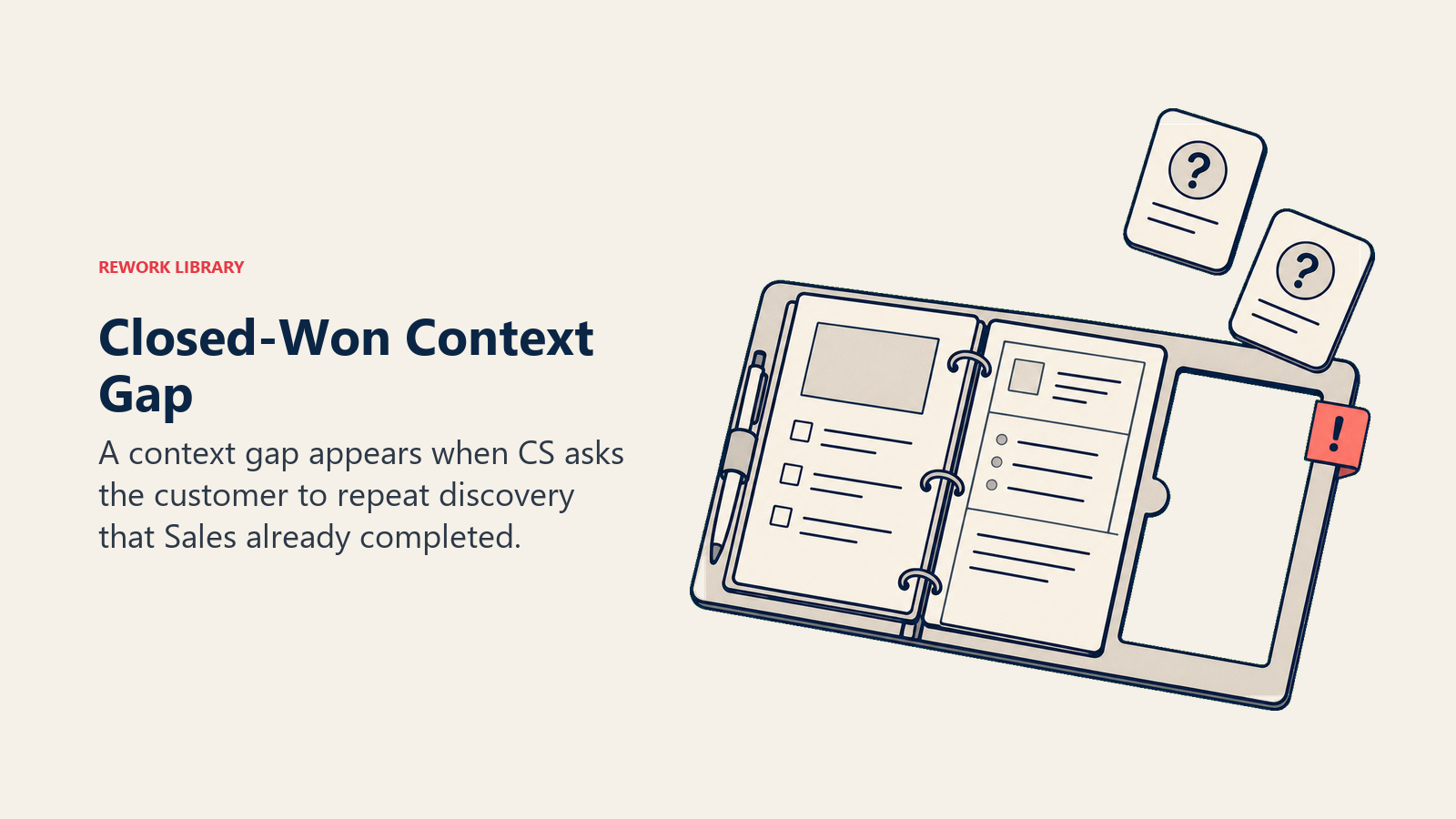
Por que importa: A frustração do cliente na primeira semana define o tom para todo o relacionamento. Um prospect que passou seis semanas construindo confiança com um AE, compartilhando política interna, explicando sua stack técnica, articulando o business case que usou para conseguir aprovação de orçamento, espera que o novo membro da equipe tenha essas informações. Quando não as tem, a leitura do cliente é: essa empresa não se comunica internamente. Essa impressão, formada nas primeiras duas semanas, é duradoura. Contas que começam frustradas têm uma taxa de Churn significativamente maior nos meses seis a doze.
Citável: "Contas que experimentam lacunas de contexto no handoff de closed-won têm 2,3x mais chances de cancelar no primeiro ano. Um CSM fazendo perguntas que vendas já respondeu é o sintoma mais visível dessa lacuna de contexto." (benchmarks de customer success da Gainsight)
O sinal observável: O CS manager revisa as notas da chamada de kickoff e encontra o CSM fazendo perguntas que são perguntas padrão de discovery do AE (meta, cronograma, critérios de decisão, ambiente técnico). Isso não deveria estar acontecendo se o handoff foi completo.
A correção: Briefing de contexto obrigatório pré-kickoff. O AE preenche um documento estruturado (motivações do champion, compromissos técnicos, mapa de stakeholders, concorrentes considerados, preocupações levantadas durante a fase jurídica, expectativas de cronograma do contrato) antes do negócio ser marcado como fechado no CRM. O CSM o revisa antes da chamada de kickoff. Lacunas no briefing são sinalizadas de volta ao AE com um SLA de 24 horas para preenchê-las. Faça disso uma porta, não uma diretriz. O handoff do ciclo de vida de AE para CSM cobre a estrutura completa desse briefing.
Sinal de Alerta 2: O AE Desaparece Após o Fechamento
O que sinaliza: O AE considera o relacionamento totalmente transferido no e-mail de apresentação. Não tem obrigações pós-fechamento, formais ou informais, e a equipe de CS não tem uma apresentação calorosa à rede do champion além do que o AE incluiu no e-mail inicial.
Por que importa: Os relacionamentos de champion construídos durante o ciclo de vendas têm valor genuíno, e esse valor se deprecia quando o AE desaparece. O champion escolheu esse fornecedor em parte por causa do relacionamento com o AE. Quando o AE some, o capital de relacionamento que construiu não se transfere automaticamente para o CSM. O CSM tem que reconstruí-lo do zero. Enquanto isso, se uma questão estratégica surgir (uma pergunta do conselho sobre consolidação de fornecedores, uma conversa orçamentária sobre o escopo da renovação), não há um relacionamento sênior de vendas para acionar.
Citável: "AEs que permanecem engajados pós-fechamento (definido como pelo menos um touchpoint com o cliente nos primeiros 90 dias após o fechamento) produzem taxas de expansão no primeiro ano 34% mais altas do que AEs que se desengajam imediatamente após o e-mail de apresentação." (Sales Benchmark Index)
O sinal observável: O CS manager pergunta aos CSMs: "Você consegue falar com o AE quando precisa dele para essa conta?" Se a resposta for "às vezes" ou "eu desisti de tentar", esse é o sinal.
A correção: Defina as obrigações pós-fechamento do AE por tier de conta. Não "AEs devem permanecer engajados": isso é uma diretriz que ninguém segue. Obrigações específicas e documentadas: para contas estratégicas, um touchpoint do AE com o champion nos primeiros 60 dias; participação no check-in de 90 dias; disponibilidade para escalações executivas com SLA de 24 horas. O artigo sobre a transição do champion do AE para o CSM traz o protocolo específico de handoff para preservar esses relacionamentos de champion sem exigir que o AE permaneça na conta indefinidamente. Para contas core, disponibilidade para escalações de risco e participação em conversas de renovação. Para contas de crescimento, uma mensagem de follow-up nos primeiros 30 dias e disponibilidade para escalações principais. Não são opcionais. Fazem parte do trabalho do AE pós-fechamento e devem aparecer na documentação de onboarding de novos AEs.
Sinal de Alerta 3: CS Descobre Promessas que Vendas Fez Durante a Negociação
O que sinaliza: Vendas fechou com compromissos que não foram documentados e não foram validados contra o que CS realmente consegue entregar. O CSM descobre isso no kickoff quando o cliente diz "nos disseram que a integração com o [sistema X] estaria ativa em 30 dias após o go-live", e o CSM não tem registro desse compromisso e não sabe se é viável.

Por que importa: Isso coloca o CS numa posição de conversa de Churn antes mesmo de o produto ser integrado. O cliente assinou com base em uma expectativa específica. Essa expectativa agora ou vai ser atendida (exigindo que CS se desdobre, convoque suporte de engenharia e queime recursos por uma promessa que não fez) ou não vai ser atendida (exigindo uma conversa desconfortável sobre o que foi realmente vendido). De qualquer forma, a confiança é danificada. No mês um.
Citável: "Clientes que recebem mensagens consistentes de vendas e CS têm 2,6x mais chances de renovar pelo valor total do contrato do que clientes que experimentaram uma descontinuidade significativa de mensagem entre as fases de vendas e onboarding." (Bain & Company)
O sinal observável: O CS manager pergunta aos CSMs: "Qual é o compromisso mais recente que você descobriu que Vendas fez e não estava no documento de handoff?" Se todos os CSMs da equipe conseguem citar um, esse sinal está ativo.
A correção: Um checkpoint de revisão de promessas como parte do processo de handoff. Antes do fechamento do negócio, o CSM ou um CS manager revisa o contrato final e a proposta no CRM em busca de quaisquer compromissos (cronograma, integração, funcionalidades, nível de suporte, escopo de implementação) e sinaliza os que não foram acordados com a equipe de CS. Vendas pode fazer compromissos; CS só precisa saber sobre eles antes de assumir a responsabilidade de entregá-los. O artigo sobre prevenção de overselling em vendas cobre o processo específico para incorporar esse checkpoint ao ciclo de negócios.
Sinal de Alerta 4: Renovações São Sempre uma Surpresa
O que sinaliza: Sem calendário compartilhado de renovações. CS gerencia as renovações inteiramente e chama o AE de última hora, muitas vezes quando o cliente já está com dúvidas, a janela de renovação está comprimida e não há tempo para uma conversa baseada em relacionamento sobre valor e escopo. O AE aparece despreparado. O cliente recebe uma conversa de renovação que parece transacional em vez de estratégica.
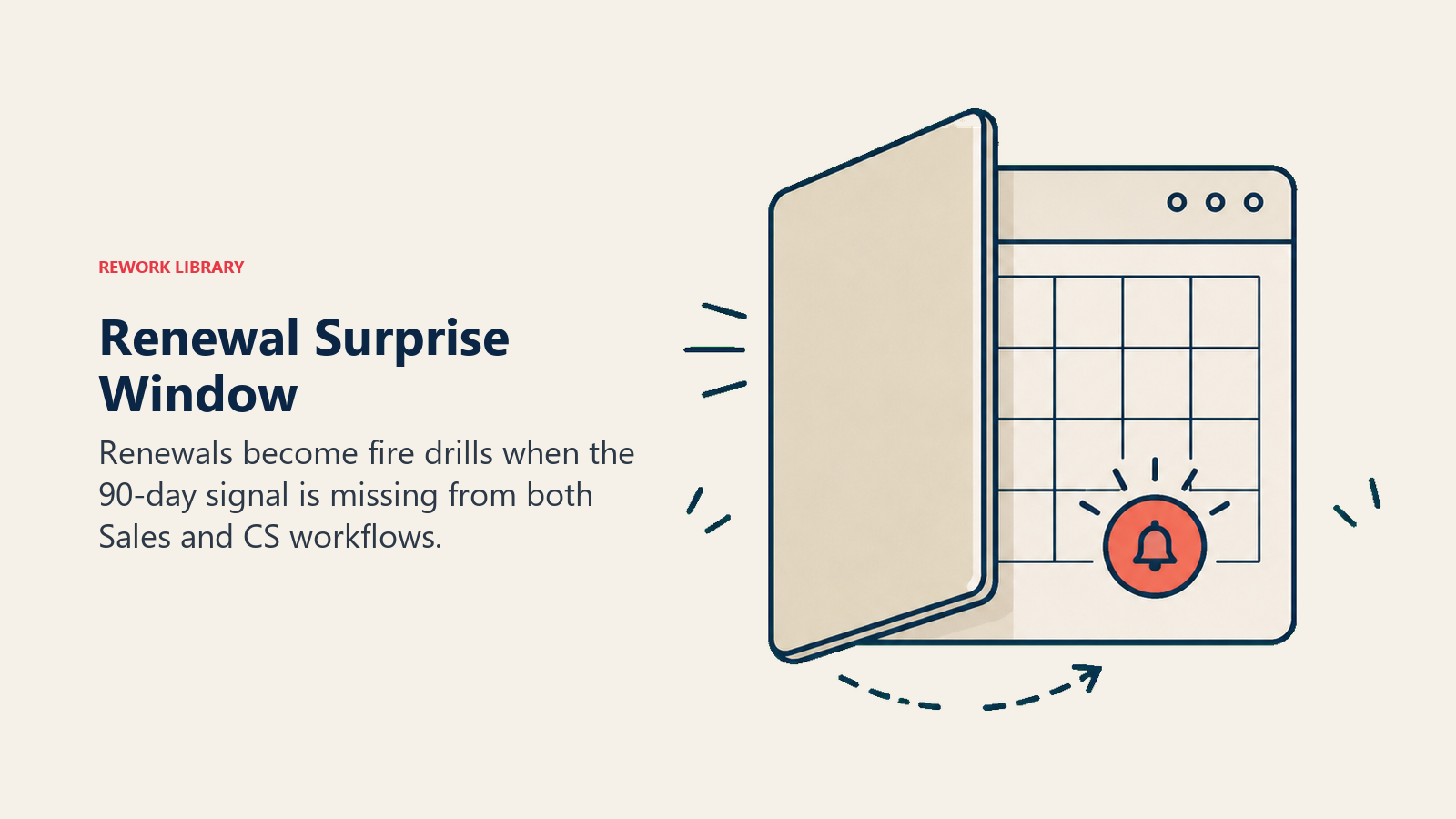
Por que importa: Renovações negociadas sob pressão de tempo são descontadas ou perdidas. Um cliente que estava na linha sobre a renovação, satisfeito, mas sem entusiasmo, aceitará um desconto se um for oferecido durante uma conversa apressada. Ou pedirá redução de escopo porque "precisamos pensar com mais cuidado sobre o ROI." Essa contração é permanente. A conversa de expansão que era possível em um run-up bem preparado de 90 dias não acontece quando a renovação é um incêndio de 14 dias.
O sinal observável: Pergunte ao VP de CS: qual porcentagem das renovações está no Pipeline de 90 dias com 90+ dias antes da data de renovação? Se a resposta estiver abaixo de 70%, as renovações estão sendo identificadas tarde demais.
A correção: Um flag de renovação de 90 dias visível tanto para o AE quanto para o CSM no CRM, acionado automaticamente pela data de término do contrato. Quando uma renovação entra na janela de 90 dias, o AE e o CSM recebem uma notificação e um prompt para confirmar a estratégia de renovação. Para contas estratégicas, essa janela deve ser de 120 dias. A conversa sobre saúde da conta deve acontecer antes da conversa comercial, o que significa que CS precisa ter uma avaliação honesta de saúde pronta antes de o AE iniciar o outreach de renovação. Consulte o artigo sobre ownership de renovação para a matriz de ownership que acompanha esse processo.
Sinal de Alerta 5: CS Não Consegue Escalar Contas de Fit Ruim de Volta para Vendas
O que sinaliza: Nenhum mecanismo formal para CS sinalizar contas que nunca foram um bom fit: contas que estão com dificuldades não por causa da execução de CS, mas porque o produto não resolve realmente o problema delas ou o segmento em que estão não está no ICP. O sinal morre no Slack ou em conversas de corredor e nunca chega à equipe de vendas de forma estruturada.
Por que importa: Duas consequências se acumulam. Primeiro, a conta de fit ruim consome capacidade de CS que poderia ser gasta em contas com potencial genuíno de expansão. Segundo, e mais caro, o sinal de ICP que a conta de fit ruim está gerando nunca chega a vendas. O mesmo erro se repete no próximo trimestre, e no trimestre seguinte. Contas de fit ruim não são apenas um problema de CS; são um problema de drift de ICP que se origina no movimento de vendas.
O sinal observável: Pergunte aos CS managers: nos últimos três meses, quantas contas a equipe de CS sinalizou como provavelmente em Churn por problemas de fit, em vez de problemas de execução? Agora pergunte: dessas, quantas foram formalmente comunicadas a vendas de forma estruturada que produziu uma atualização de ICP? Se o ratio for baixo, esse sinal está ativo.
A correção: Um processo formal de revisão de negócios ganhos e um canal estruturado de feedback de ICP de CS para vendas. Não o Slack. Um processo documentado: mensalmente, CS traz três a cinco contas com preocupações específicas de fit, revisadas em uma reunião fixa com um líder de vendas. O líder de vendas fecha o loop sobre se os critérios de ICP mudarão e como. O artigo sobre loop de refinamento de ICP: feedback de CS para vendas detalha o formato específico da reunião e o protocolo de atualização do ICP.
Sinal de Alerta 6: AE e CSM Têm Versões Diferentes da Saúde do Cliente
O que sinaliza: O AE tem uma versão da saúde da conta, geralmente baseada no calor do relacionamento, sinais de Pipeline de negócios da conta e sua própria leitura do sentimento do champion. O CSM tem uma versão diferente: dados de uso do produto, volume de tickets de suporte, marcos de adoção e seu relacionamento direto com os usuários diários. Nenhuma equipe sincroniza. Contas em risco ficam sem escalação até que ambas as equipes sejam surpreendidas na renovação.
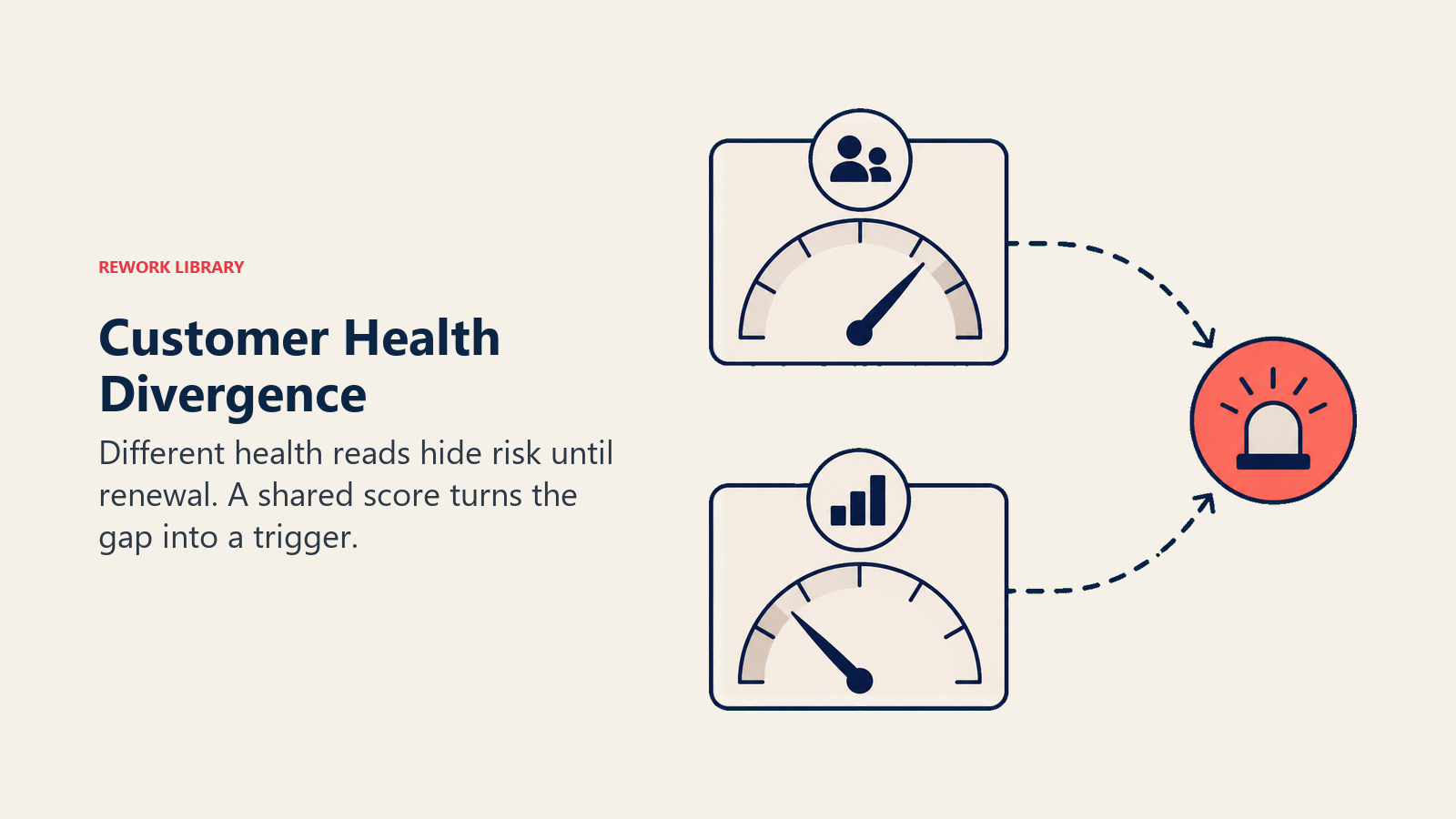
Por que importa: As contas com maior probabilidade de Churn são aquelas onde a percepção de relacionamento do AE é positiva ("o champion e eu temos um ótimo relacionamento") enquanto os dados de adoção do CSM são negativos ("ninguém faz login"). Quando o champion sinaliza insatisfação ao AE, já é tarde no ciclo. O CSM viu a queda de uso meses antes.
O sinal observável: Peça tanto ao AE quanto ao CSM atribuídos à mesma conta que avaliem a saúde da conta em uma escala de 1 a 5, de forma independente, sem consultar um ao outro. Uma diferença de mais de um ponto em mais de 30% das contas significa que esse sinal está ativo.
A correção: Um customer health score unificado visível para ambas as equipes no mesmo sistema. O score combina indicadores de relacionamento (input do AE: engajamento executivo, sentimento do champion) com indicadores de produto (input do CSM: adoção, uso de funcionalidades, tickets de suporte). Ambas as equipes veem o mesmo número. A divergência nos inputs aparece como um gatilho de conversa, não uma surpresa. Consulte o artigo sobre customer health scoring para o modelo específico de pontuação e o threshold de escalação que aciona uma revisão conjunta de conta.
Sinal de Alerta 7: Conversas de Expansão Começam Tarde Demais
O que sinaliza: O CS está identificando sinais de expansão mas não tem um processo definido para trazer o AE, então a oportunidade envelhece ou o CSM tenta a conversa comercial por conta própria e ela estagna. Ou o AE está apresentando expansão sem contexto de saúde da conta do CS, levando a um pitch de expansão em uma conta em risco, o que danifica o relacionamento e acelera o Churn.
Por que importa: Expansão fechada em uma conta não saudável a piora, não a melhora. Um cliente que está com dificuldades de adoção e recebe um pitch de expansão interpreta isso como o fornecedor não prestando atenção. Ele se sente um alvo de receita, não um cliente. Por outro lado, expansão perdida em uma conta saudável e com alto uso deixa ARR na mesa, e esse ARR se compõe. Uma conta que expande de US$ 30K para US$ 40K no ano dois e US$ 55K no ano três vale dramaticamente mais ao longo de uma vida útil de cinco anos do que uma conta que ficou estagnada em US$ 30K.
O sinal observável: Pergunte: qual foi o tempo médio entre o CS identificar um sinal de expansão e o AE iniciar uma conversa de expansão, para as últimas dez expansões? Se a resposta for "não rastreamos isso" ou se a média for mais de 30 dias, esse sinal está ativo.
A correção: Defina critérios de gatilho de expansão e o handoff de ownership. Gatilhos específicos: uso da conta excedendo 80% da capacidade contratada, champion apresentando uma nova equipe como potenciais usuários, conversa de QBR onde um novo caso de uso é mencionado explicitamente. Quando um gatilho dispara, o CSM o registra no CRM com uma nota, e uma notificação vai ao AE automaticamente com um SLA de resposta de 48 horas. O AE inicia a conversa comercial com o contexto de CS em mãos. CS permanece envolvido como inteligência da conta, não como proprietário comercial. Consulte o artigo sobre ownership de expansão para a lista completa de gatilhos e o template de briefing para o AE.
Sinal de Alerta 8: A Remuneração Coloca as Equipes em Confronto
O que sinaliza: O AE é pago inteiramente com base no valor total do contrato no fechamento, sem clawback ou componente de retenção. O CSM é pago pela retenção bruta sem potencial de Upsell. Duas equipes, duas estruturas de incentivo completamente separadas, apontando em direções opostas. O AE maximiza o valor do contrato no fechamento, incluindo negócios que esticam o ICP, porque nenhum risco de retenção recai sobre sua remuneração. O CSM foca em manter contas vivas, sem incentivo para fazê-las crescer, porque expansão é o negócio do AE para fechar.
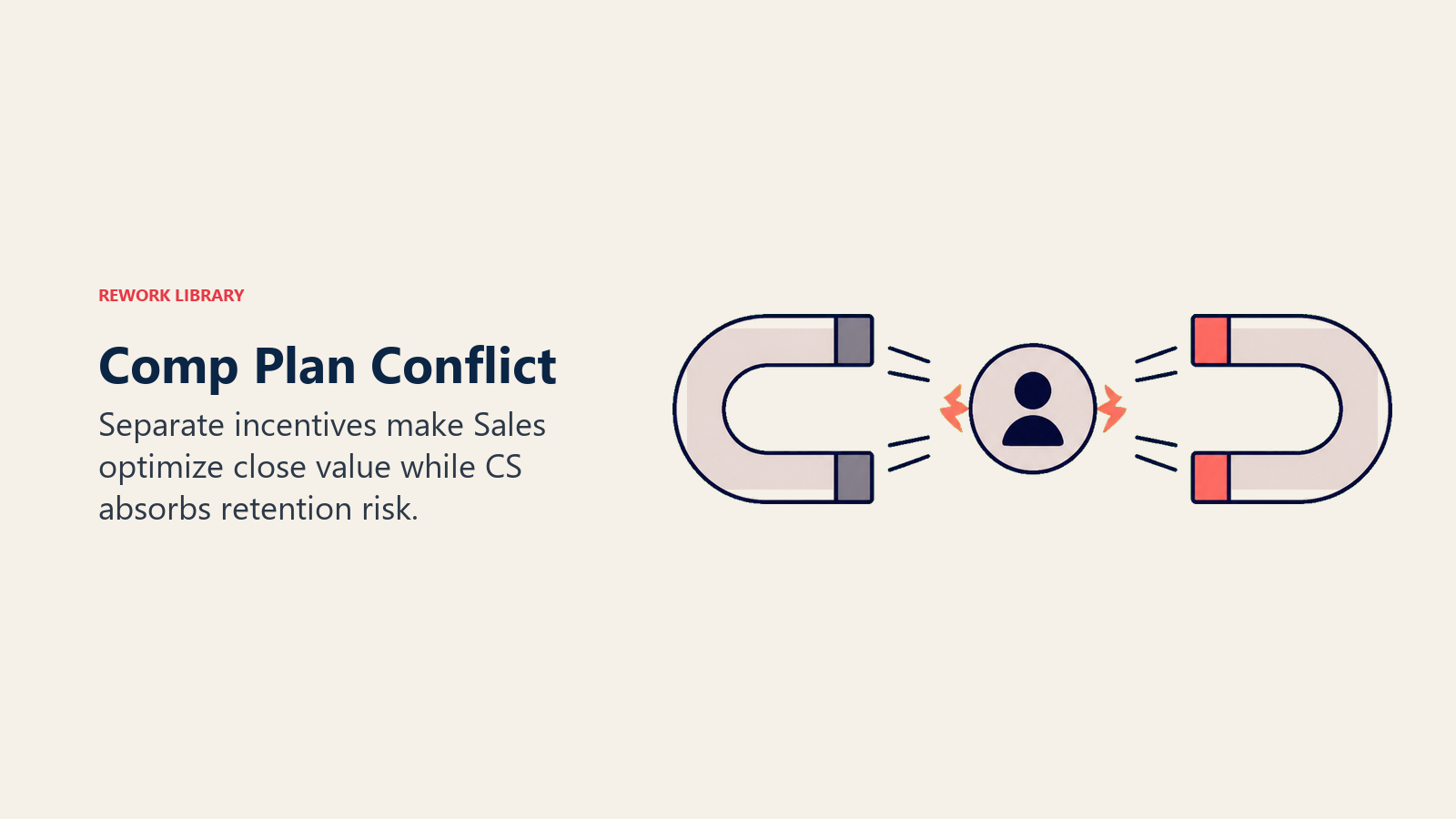
Por que importa: Quando a remuneração está desalinhada, nenhuma melhoria de processo corrige o comportamento. Você pode construir a cadência de revisão conjunta mais elegante do mercado. Pode documentar cada swimlane. Pode implantar um dashboard compartilhado de NRR. Nada disso supera o incentivo econômico que diz a cada pessoa para otimizar sua própria métrica e não se preocupar com os resultados da outra equipe.
O sinal observável: Este não requer uma pergunta de diagnóstico. É visível no plano de remuneração. A remuneração do AE inclui algum componente ligado à retenção ou expansão da conta após o fechamento? A remuneração do CSM inclui algum componente ligado à expansão? Se ambas as respostas forem não, esse sinal está ativo, por design.
A correção: Audite a estrutura de remuneração antes de corrigir qualquer outro processo. A estrutura específica depende do seu estágio, margens e filosofia de remuneração, mas os requisitos mínimos são: clawback do AE em contas que cancelam em até 90 dias do fechamento (previne fechamentos óbvios de fit ruim), e componente de expansão do CSM acima de um threshold de crescimento de uso (incentiva os CSMs a identificar e trazer à tona sinais de expansão). O artigo sobre remuneração alinhada ao NRR apresenta os modelos específicos de remuneração e os tradeoffs em cada estágio de ARR.
O Scorecard de Diagnóstico
Avalie cada sinal de alerta de 0 a 2:
- 0 = não está acontecendo na nossa organização
- 1 = acontece ocasionalmente (algumas contas, alguns AEs)
- 2 = acontece regularmente ou de forma sistemática (maioria das contas, padrão consistente)
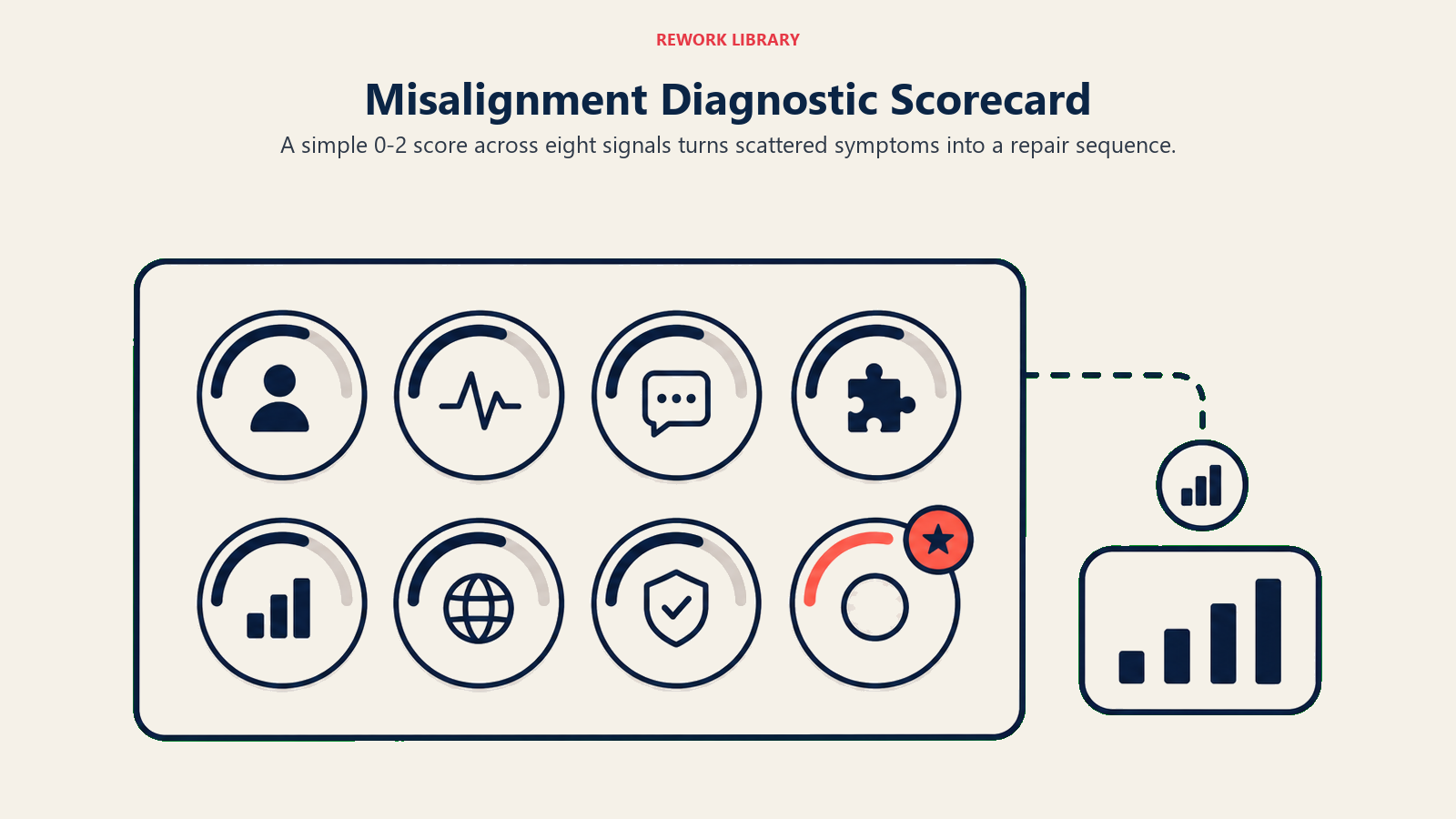
| Sinal de Alerta | Pontuação (0-2) |
|---|---|
| 1. CSM faz no kickoff perguntas que vendas já respondeu | |
| 2. AE desaparece após o fechamento | |
| 3. CS descobre promessas feitas durante a negociação | |
| 4. Renovações são sempre uma surpresa | |
| 5. CS não consegue escalar contas de fit ruim de volta para vendas | |
| 6. AE e CSM têm versões diferentes da saúde do cliente | |
| 7. Conversas de expansão começam tarde demais | |
| 8. A remuneração coloca as equipes em confronto | |
| Total | /16 |
Análise Rework: Ao aplicar o Diagnóstico de Desalinhamento de 8 Sinais em empresas B2B SaaS com US$ 5M a US$ 20M de ARR, o Sinal 8 (desalinhamento de remuneração) e o Sinal 1 (falhas na transferência de contexto no handoff) ocorrem juntos de forma consistente e são o par mais caro. Quando o desalinhamento de remuneração está ativo (pontuação 2 no Sinal 8), as correções de processo para os Sinais 1 a 7 entregam cerca de metade do seu impacto potencial, porque a pressão comportamental da estrutura de incentivos corrói gradualmente a conformidade. A sequência de intervenção mais eficiente é: corrigir o Sinal 8 primeiro (auditoria de remuneração, clawback mínimo + componente de expansão), depois os Sinais 1+3 juntos (porta obrigatória de handoff + checkpoint de revisão de promessas), depois os Sinais 4+7 juntos (flag de renovação de 90 dias + critérios de gatilho de expansão no CRM). Essa sequência normalmente produz melhoria visível no NRR em até duas coortes de renovação.
Pontuação 0 a 4: Problemas localizados. Um ou dois sinais estão ativos; o modelo operacional é em grande parte sólido. Identifique o sinal com pontuação mais alta e corrija-o especificamente.
Pontuação 5 a 8: Lacunas sistêmicas. Múltiplos sinais estão ativos e provavelmente se reforçando mutuamente. Comece com o Sinal 8 (remuneração) se ele pontuou 2: incentivos desalinhados minam todas as outras correções. Em seguida, aborde o sinal de processo com maior pontuação.
Pontuação 9 a 12: O próprio modelo operacional está quebrado. Isso requer uma conversa de alinhamento em nível de liderança usando o modelo de maturidade como framework. Não tente corrigir sinais individuais; reconstrua a base primeiro.
Pontuação 13 a 16: Todos os oito sinais estão ativos. O ponto de partida é uma conversa honesta entre VP de Vendas e VP de CS sobre o que o alinhamento realmente exige (o artigo "o que é o alinhamento Vendas-CS" é a leitura inicial certa) e um compromisso de ambos os líderes de função de construir o modelo operacional a partir do Estágio 1 com responsabilidade compartilhada.
A pontuação indica a gravidade. A próxima seção indica a sequência.
Por Onde Começar: Ordem de Prioridade para Pontuações Altas
Se você pontuou alto em múltiplos sinais de alerta, a tentação é corrigir tudo de uma vez. Não faça isso. Corrigir tudo de uma vez significa esforço diluído e nada se consolida. Aqui está a ordem de prioridade para os padrões de pontuação alta mais comuns.
Se o Sinal 8 pontuou 2 (remuneração desalinhada): Corrija a remuneração primeiro. Nada mais importa até que os incentivos financeiros apontem na mesma direção. Você pode ter o melhor processo de handoff do mercado. Se o AE é pago para maximizar o valor do contrato no fechamento sem risco de downside, ele fechará contas de fit ruim. Se o CSM não tem potencial de Upsell, não priorizará expansão.
Se os Sinais 1 e 3 pontuaram alto (falhas na transferência de contexto): Implemente a porta obrigatória de conclusão do handoff antes de corrigir qualquer outra coisa. Lacunas de contexto no handoff são a causa raiz de múltiplas falhas downstream: expansões tardias, clientes frustrados, contas em risco que queimam capacidade de CS. Corrija o input; os sinais downstream vão melhorar.
Se os Sinais 4 e 7 pontuaram alto (falhas de timing em renovação e expansão): Construa o flag de renovação de 90 dias e os critérios de gatilho de expansão no CRM. Ambas são mudanças de sistema com resistência organizacional relativamente baixa. Não exigem mudanças de remuneração ou mudanças culturais, apenas configuração de sistema e um protocolo de notificação.
Se o Sinal 2 pontuou 2 (AE desaparece): Esse é um problema de gestão tanto quanto de processo. A correção exige que o VP de Vendas defina explicitamente as obrigações pós-fechamento dos AEs e as cumpra. Mudanças de processo sozinhas não funcionarão aqui; requer vontade da liderança.
O artigo sobre o custo do handoff quebrado dá a você o modelo financeiro para fazer o caso do investimento. O modelo de maturidade diz onde você está no geral. E esses oito sinais dizem qual coisa específica corrigir primeiro.
A maioria das organizações consegue eliminar seus dois ou três sinais com maior pontuação em um trimestre, se ambos os líderes de função se comprometerem. Comece por aí. O impacto no NRR será visível antes do fim do trimestre. A pesquisa de crescimento em customer success da McKinsey mostra que empresas com forte retenção crescem significativamente mais rápido do que seus pares, mesmo com taxas equivalentes de aquisição de novos logos.
Perguntas Frequentes sobre 8 Sinais de Alerta de que Suas Equipes de Vendas e CS Estão Desalinhadas e O Que Fazer em Cada Caso
Como sei se minhas equipes de vendas e CS estão desalinhadas?
Oito sintomas observáveis aparecem antes que o NRR se deteriore visivelmente: CSMs fazendo perguntas de kickoff que vendas já respondeu, AEs sumindo após o fechamento, CS descobrindo promessas de vendas não documentadas, renovações como surpresas perpétuas, nenhum canal formal de escalação de CS para vendas, avaliações divergentes de saúde, conversas tardias de expansão e estruturas de remuneração que criam incentivos conflitantes. Avalie cada um de 0 a 2 e use o total para identificar a gravidade.
Qual sinal de desalinhamento é mais caro?
O desalinhamento de remuneração (Sinal 8) é tipicamente o mais caro porque corrompe a estrutura de incentivos da qual todas as outras melhorias de processo dependem. Após a remuneração, as falhas de transferência de contexto (Sinais 1 e 3) tendem a produzir o maior custo direto de Churn porque são o padrão mais comum e o mais diretamente ligado às taxas de Churn do primeiro ano.
Dá para corrigir o desalinhamento sem mudar a remuneração?
Parcialmente. Melhorias de processo (documentos obrigatórios de handoff, cadências de revisão conjuntas, protocolos de escalação) podem melhorar significativamente o alinhamento mesmo sem mudanças de remuneração. Mas não atingirão todo o seu potencial. A remuneração desalinhada cria pressão comportamental persistente que gradualmente corrói a conformidade com os processos. Equipes com remuneração apontando em direções opostas tendem a reverter ao comportamento desalinhado sob pressão de quota, independentemente de quão bom seja o processo.
Quanto tempo leva para ver melhora no NRR depois de corrigir os sinais de alinhamento?
Os indicadores antecedentes melhoram mais rápido do que o NRR. Satisfação no kickoff, time-to-value e pontuações iniciais de saúde de conta tipicamente melhoram dentro de 60 a 90 dias após corrigir os problemas de handoff e transferência de contexto. As melhorias no NRR aparecem na coorte que renova após a correção, o que significa que você tipicamente vê o impacto no NRR 9 a 12 meses após implementar as mudanças, dependendo da concentração de renovações.
Qual é a correção única mais rápida para melhorar o alinhamento quando você pontua alto no diagnóstico?
Se o Sinal 8 (desalinhamento de remuneração) pontua 2, corrigir a estrutura de remuneração é o ponto de maior alavancagem. Não porque seja rápido de implementar, mas porque a remuneração desalinhada mina todas as outras correções. Se o Sinal 8 não está ativo, implementar uma porta obrigatória de conclusão do handoff no CRM costuma ser a mudança de alto impacto mais rápida. Uma porta que impede o fechamento do negócio sem um briefing de contexto completo elimina a causa raiz dos Sinais 1 e 3 simultaneamente, e a maioria das equipes de revenue operations consegue configurá-la em duas semanas.
Saiba Mais
- O Que é Alinhamento Vendas-CS
- O Custo de um Handoff Quebrado de Vendas para CS: O Que Faz ao Seu NRR
- Transferência de Contexto de Negócio para CS
- Prevenindo Overpromising em Vendas
- Loop de Refinamento de ICP: Feedback de CS para Vendas
- Remuneração Alinhada ao NRR
- 8 Sinais de Alerta de Desalinhamento entre Marketing e Vendas
- Handoff do Ciclo de Vida de AE para CSM

Principal Solution Architect
On this page
- Como Usar o Diagnóstico de Desalinhamento de 8 Sinais
- Sinal de Alerta 1: O CSM Faz no Kickoff Perguntas que Vendas Já Respondeu
- Sinal de Alerta 2: O AE Desaparece Após o Fechamento
- Sinal de Alerta 3: CS Descobre Promessas que Vendas Fez Durante a Negociação
- Sinal de Alerta 4: Renovações São Sempre uma Surpresa
- Sinal de Alerta 5: CS Não Consegue Escalar Contas de Fit Ruim de Volta para Vendas
- Sinal de Alerta 6: AE e CSM Têm Versões Diferentes da Saúde do Cliente
- Sinal de Alerta 7: Conversas de Expansão Começam Tarde Demais
- Sinal de Alerta 8: A Remuneração Coloca as Equipes em Confronto
- O Scorecard de Diagnóstico
- Por Onde Começar: Ordem de Prioridade para Pontuações Altas
- Saiba Mais