Construindo um Pipeline de VoC do CS para o Produto: Do Sinal Bruto ao Insumo Acionável
Turn this article into takeaways for your work.


Each assistant summarizes the article only for you and suggests best practices for your work.
Este é um padrão que se repete em quase toda empresa SaaS de médio porte. Um CSM ouve um cliente dizer que exporta dados manualmente para o Excel porque seus relatórios não filtram por região. Outro CSM ouve o mesmo de uma conta diferente duas semanas depois. Um terceiro ouve uma variação de uma terceira conta. Os três registram em algum lugar (ou não) com suas próprias abreviações, com sinais de gravidade diferentes. Seis meses depois, um PM pergunta em uma sessão de planejamento: "Há demanda real para relatórios regionais?" Ninguém consegue responder com confiança. O sinal existia. O pipeline não.
O telefone sem fio não é um problema de motivação. Os CSMs não estão esquecendo de se importar com a qualidade do produto. O problema é de infraestrutura: o CS não tem uma estrutura compartilhada para converter o que os clientes dizem em um formato que o Produto possa usar para decisões. O que a maioria das equipes chama de processo de VoC é na verdade apenas um impulso de captura sem lógica de encaminhamento. O canal no Slack, a pesquisa trimestral, o formulário "nos envie um feedback": nenhum deles é um pipeline. São cemitérios de dados com uma interface ligeiramente melhor. A pesquisa da Forrester sobre maturidade de programas VoC constata que quase metade dos programas de VoC avalia sua própria maturidade como baixa ou muito baixa. A lacuna entre captura e ação é a regra, não a exceção.
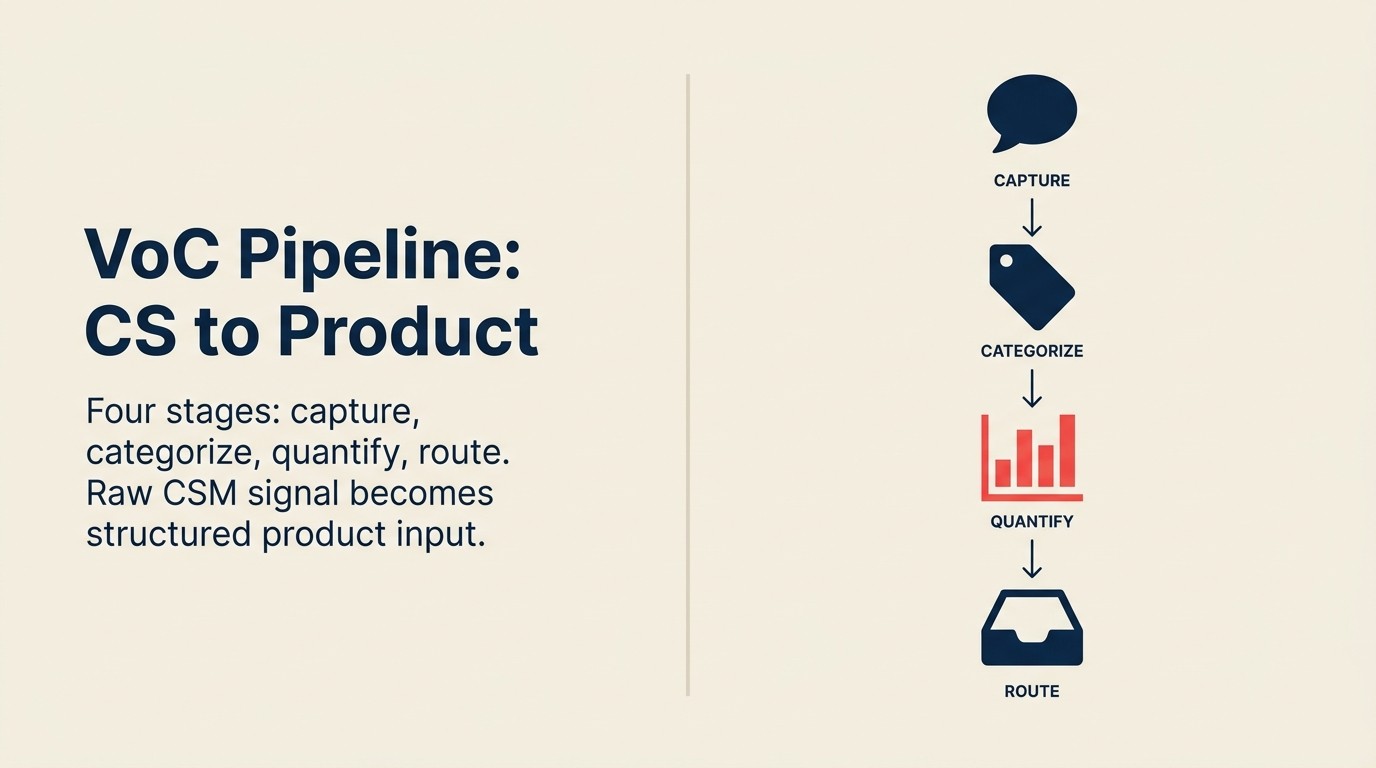
O Pipeline de VoC em 4 Etapas é uma infraestrutura operacional de quatro etapas (captura, categorização, quantificação, encaminhamento) que converte o sinal bruto do cliente em insumo priorizado para o produto em uma cadência definida. Não é um programa de mudança cultural. É um sistema compartilhado criado por CS Ops e liderança de Produto que funciona independentemente do relacionamento pessoal entre CSMs e PMs individuais. O mesmo sinal de voz do cliente que o CS leva ao Produto também molda como as equipes de Vendas fazem o pitch para prospects. Os dois pipelines compartilham uma fonte upstream comum.
O que é um Pipeline de VoC de Verdade
Fatos Relevantes: Captura de Sinal e Decisões de Produto
- 70% das equipes de produto relatam que o feedback do cliente chega "com estrutura inconsistente", dificultando a agregação entre contas, segundo a pesquisa Estado do Gerenciamento de Produto da Productboard.
- Apenas 22% das equipes de CS têm um formato de captura padronizado que alimenta diretamente o processo de planejamento de produto; a maioria ainda depende de mensagens ad hoc no Slack ou resumos trimestrais, de acordo com o relatório de benchmark de CS da Totango.
- Solicitações de funcionalidade que chegam com peso de ARR têm 2,6 vezes mais probabilidade de chegar a uma revisão trimestral de roadmap, em comparação com solicitações registradas sem contexto de receita, segundo benchmark interno compartilhado por múltiplos clientes da Productboard.
A palavra "pipeline" é deliberada. Um pipeline tem etapas, direção de fluxo e saída. Quando um prospect entra no pipeline de vendas, todos entendem o que acontece: ele avança por qualificação, descoberta, proposta e fechamento. Cada etapa tem critérios definidos. Os negócios não ficam "parados" no pipeline indefinidamente. Eles avançam ou saem.
O feedback do cliente deveria funcionar da mesma forma. Um sinal bruto entra no sistema na Etapa 1 e sai como um insumo priorizado para o produto na Etapa 4. Se um sinal não consegue avançar pelo pipeline, deve ser explicitamente recusado ou arquivado, não deixado aberto para sempre.
As quatro etapas:
Etapa 1: Captura. No momento em que um CSM ouve algo relevante de um cliente, o sinal entra no sistema em formato estruturado. Não em texto livre. Não em mensagem no Slack. Um registro estruturado com campos definidos. A disciplina de voz do cliente em gestão de qualidade definiu esse modelo de captura para ação por décadas. O contexto de SaaS B2B simplesmente adiciona ponderação por ARR sobre a estrutura clássica.
Etapa 2: Categorização. Os sinais capturados são etiquetados por tipo (solicitação de funcionalidade, lacuna de fluxo de trabalho, bug, integração ausente) por CS Ops ou um PM liaison. É assim que os sinais se tornam temas que podem ser agregados entre contas.
Etapa 3: Quantificação. Cada tema recebe um peso de receita, não apenas uma contagem de contas. Dez contas SMB solicitando uma funcionalidade não é o mesmo que uma conta enterprise solicitando como condição de renovação. A etapa de quantificação é onde o sinal do CS se torna algo que o Produto pode classificar em relação às prioridades estratégicas.
Etapa 4: Encaminhamento. Temas quantificados vão para o PM certo em uma cadência definida, por um canal definido. A revisão trimestral de feedback é o ritual principal. Sinais urgentes têm um caminho acelerado.
A razão pela qual a maioria dos "programas de VoC" falha é que são apenas Etapa 1. A captura acontece. Nada depois dela acontece. Um canal no Slack para feedback do cliente é a Etapa 1 sem as Etapas 2, 3 ou 4. É um lugar onde o sinal entra e para de se mover. Então, o que é necessário para projetar bem cada etapa?
Etapa 1: Captura
A captura é a etapa mais difícil de projetar bem porque precisa se encaixar no fluxo de trabalho existente do CSM. Se capturar o sinal de produto exige que o CSM abra uma ferramenta separada, preencha um formulário separado ou faça mais de 90 segundos de trabalho extra por ligação, não vai acontecer de forma consistente. A disciplina se degrada em semanas.
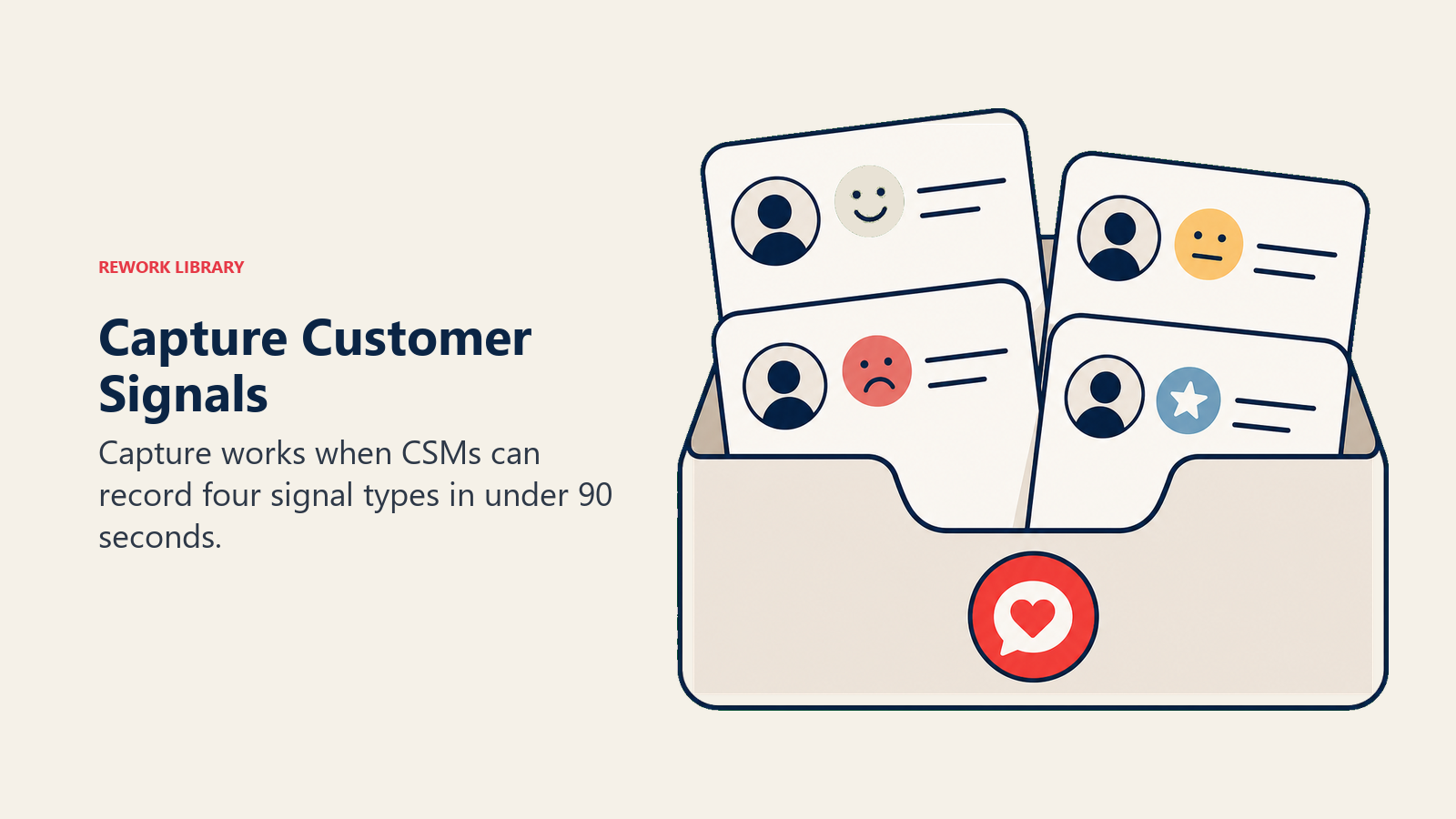
Quatro tipos de sinal justificam a captura:
Solicitações de funcionalidade: um pedido específico por funcionalidade que não existe, muitas vezes com uma solução alternativa que o cliente já está usando. "Adoraríamos poder filtrar o dashboard por região" combinado com "agora exportamos para o Excel e fazemos manualmente" é um sinal completo de solicitação de funcionalidade.
Lacunas de fluxo de trabalho: o cliente descrevendo etapas manuais que está realizando porque o produto não suporta o fluxo de trabalho completo. Elas são frequentemente mais valiosas do que solicitações de funcionalidade porque revelam o problema, não apenas a solução proposta.
Menções a concorrentes: o que o cliente diz que um concorrente faz que seu produto não faz. Chegam em dois sabores: "estamos avaliando [concorrente] porque eles têm X" e "viemos do [concorrente] e sentimos falta de Y". Ambos importam por razões diferentes.
Sinais de risco de rotatividade ligados a lacunas de produto: a categoria do "se você não construir X, vamos ter que reconsiderar a renovação". Esses são os sinais de maior urgência e precisam de um caminho acelerado para o Produto, não apenas da cadência trimestral padrão. CS Ops deve cruzar esses sinais com os sistemas de alerta precoce na camada de saúde da conta. Um sinal de rotatividade por lacuna de produto frequentemente surge junto com a degradação da pontuação de saúde.
O que padronizar: o tipo de sinal, a citação literal e o contexto da conta (nível, ARR, data de renovação). O que deixar flexível: a descrição da solução alternativa, a avaliação de gravidade e qualquer contexto adicional que o CSM considere relevante. O excesso de padronização prejudica a qualidade das citações literais. A falta de padronização torna a agregação impossível.
O local certo para a captura é dentro do CRM ou da plataforma CS que os CSMs já usam todos os dias. Campos personalizados em notas de ligação ou registros de conta, não uma ferramenta separada de feedback de produto. A integração entre a camada de captura e onde o Produto trabalha (Productboard, Jira, etc.) é um problema de sincronização, não de fluxo de trabalho. Resolva a sincronização separadamente. Quando a captura estiver funcionando, o próximo desafio é transformar sinais brutos em temas que o Produto possa executar.
Etapa 2: Categorização
Sinais brutos capturados não são insumos para o produto. São pontos de dados. A categorização é o que transforma pontos de dados em temas, o nível em que o Produto pode de fato tomar decisões.
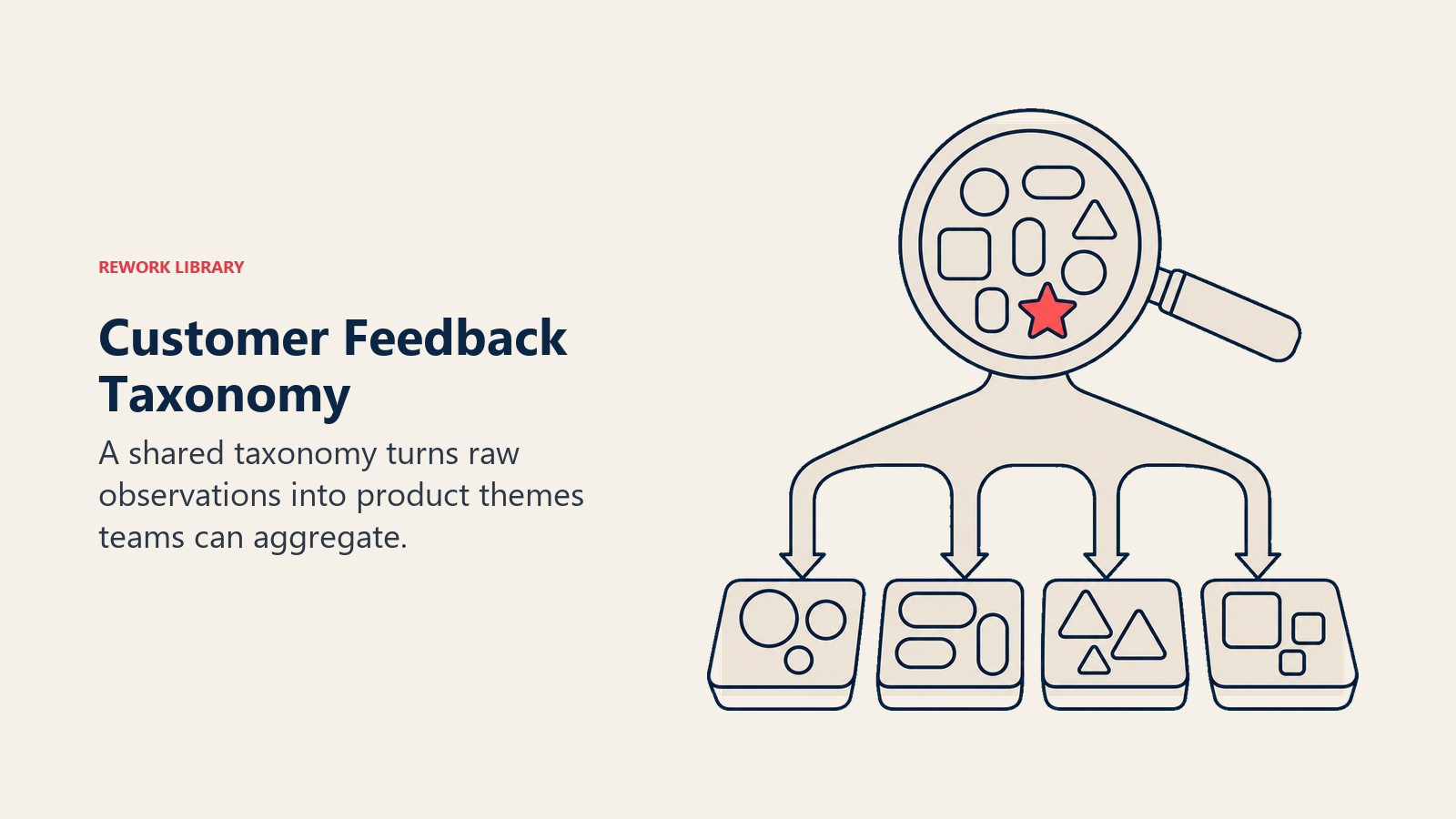
Uma taxonomia de etiquetagem precisa de três coisas para funcionar: precisa ser de responsabilidade conjunta (CS Ops e Produto juntos), precisa ser pequena o suficiente para ser aplicada de forma consistente (menos de dez etiquetas primárias) e precisa mapear para como o Produto pensa sobre as áreas do roadmap. O modelo de maturidade de alinhamento CS-Produto dá às equipes uma referência de onde sua prática atual de etiquetagem está e como é a próxima etapa.
Quatro categorias primárias cobrem a maioria dos feedbacks de SaaS de médio porte:
| Categoria | Tipo de sinal | Exemplo |
|---|---|---|
| Solicitação de funcionalidade | Pedido específico com comportamento definido | "Permitir que usuários filtrem relatórios por intervalo de datas e região simultaneamente" |
| Lacuna de fluxo de trabalho | Etapa manual no processo do cliente | "Exportamos para o Excel e fazemos a tabela dinâmica manualmente toda semana porque a visualização nativa não suporta isso" |
| Bug / confiabilidade | Comportamento que não corresponde ao produto documentado | "A exportação falha para contas com mais de 500 linhas" |
| Integração ausente | Uma conexão de ferramenta de terceiros que não existe | "Não conseguimos usar isso junto com o HubSpot sem sincronizar os dados manualmente" |
Quem faz a categorização? Não o CSM. Os CSMs devem aplicar uma etiqueta primária aproximada no momento da captura ("solicitação de funcionalidade" vs. "lacuna de fluxo de trabalho"). Mas a categorização final, especialmente o alinhamento com os temas do roadmap, deve acontecer no nível de CS Ops ou do PM liaison. Os CSMs não estão posicionados para saber qual PM é responsável por qual área ou a qual tema um pedido se mapeia.
A deriva de categorização (quando a taxonomia é aplicada de forma inconsistente ao longo do tempo) é uma das falhas de pipeline mais comuns. A solução é uma revisão de calibração mensal entre CS Ops e o PM liaison: colete uma amostra de etiquetas recentes e verifique o alinhamento. Se o mesmo tipo de sinal está sendo etiquetado de forma diferente por CSMs diferentes, a definição da categoria precisa de esclarecimento, não de uma conversa com CSMs individuais. Com categorias claras, o próximo passo é o que a maioria das equipes pula: anexar peso de receita a cada tema.
Etapa 3: Quantificação
É aqui que o pipeline diverge de tudo que a maioria das equipes faz atualmente. Contagem de contas não é peso. Quatorze contas solicitando uma funcionalidade é uma contagem bruta. Quatorze contas representando R$340 mil em ARR com três delas renovando nos próximos 90 dias é um sinal ponderado. A diferença determina se um PM trata como ruído de fundo ou como insumo de priorização.
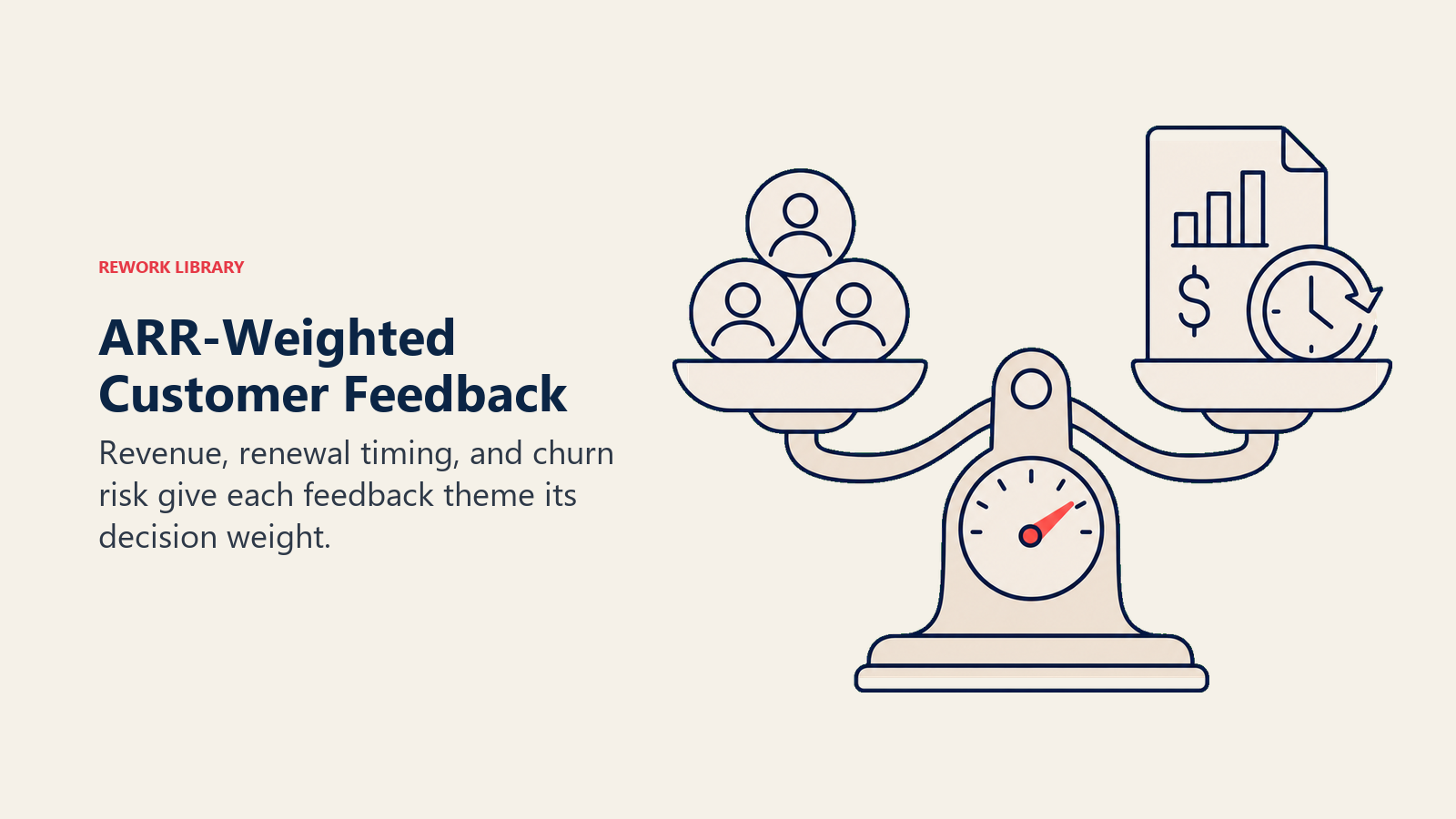
A lógica central de quantificação tem dois componentes:
ARR em risco: o valor do contrato das contas solicitando a funcionalidade, ajustado pela proximidade da renovação e pelo sinal de rotatividade declarado. Uma conta renovando em 60 dias com risco de rotatividade sinalizado pelo CSM vinculado a esta funcionalidade tem peso maior do que uma conta com o mesmo ARR renovando em 18 meses sem urgência expressa.
Potencial de expansão do ARR: a capacidade nas contas onde esta funcionalidade é descrita como um bloqueador para adicionar licenças ou módulos. Uma conta com R$80 mil em ARR, 40 licenças não utilizadas e uma dependência desta funcionalidade para expansão é um peso significativo que não aparecerá em uma contagem de votos.
O artigo de Quantificação de Feedback Ponderado por ARR aborda a fórmula completa com um exemplo trabalhado de três contas. O ponto-chave no nível do pipeline: a quantificação deve acontecer na Etapa 3, não depois. Se os sinais chegam ao Produto sem peso de receita, os PMs recorrem ao que é mensurável, que geralmente é a contagem de chamados. A partir daí, o encaminhamento é o que faz as decisões acontecerem.
Etapa 4: Encaminhamento
O encaminhamento resolve dois problemas: leva os sinais certos às pessoas certas e faz isso em uma cadência que se encaixa nos ciclos de planejamento do produto, não sempre que o CS tem algo urgente.
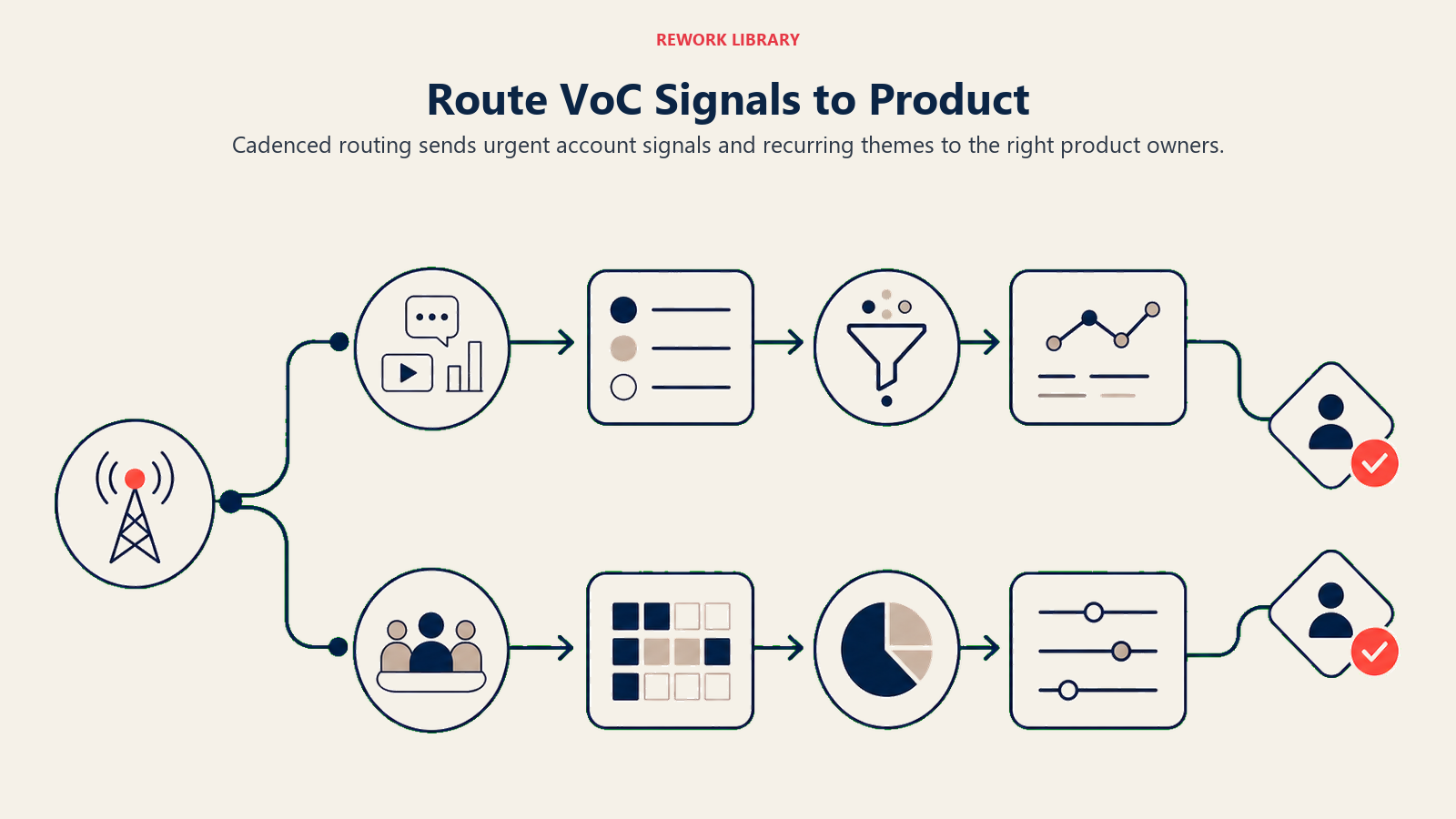
Dois caminhos de encaminhamento:
O caminho em lote: a revisão trimestral de feedback. Este é o ritual principal onde CS Ops apresenta os principais temas ponderados para os líderes de PM, com contexto de conta, citações literais e pesos de ARR anexados. Não é uma reunião de solicitações de funcionalidade; é uma sessão de insumos. Os PMs trazem o contexto do roadmap; o CS traz o sinal ponderado por receita. Juntos produzem uma lista prioritária, não apenas uma lista classificada de tudo que o CS enviou.
O caminho urgente: para sinais de risco de rotatividade ligados a lacunas de produto onde a renovação é iminente. Esses contornam a cadência trimestral e vão diretamente para o PM relevante em até 48 horas da captura. O CSM sinaliza; CS Ops confirma o peso do ARR; vai para o PM como um resumo de uma página. O resumo inclui: nome da conta, ARR, data de renovação, citação literal e a decisão específica que o CS precisa antes da próxima ligação de renovação.
O que quebra o encaminhamento: uma caixa de entrada compartilhada que nenhum PM é responsável. Se o destino do feedback é uma caixa de entrada genérica de produto ou um épico no Jira chamado "Solicitações de Clientes", nada acontece. Cada caminho de encaminhamento precisa de um PM ou líder de PM nomeado do lado receptor. Triagem por comitê falha.
Falhas Comuns do Pipeline e Soluções
Pipeline de captura apenas. A equipe tem um formulário ou campo no CRM para feedback de produto. Os sinais entram. Não há Etapa 2, 3 ou 4. O feedback se acumula em um backlog não lido. Este é o padrão do cemitério de solicitações de funcionalidade em sua forma mais inicial. Solução: construa a Etapa 2 primeiro, antes de adicionar mais instrumentação de captura. Um pipeline com 50% de captura e 100% de categorização é mais útil do que um com 100% de captura e 0% de categorização.
Deriva de categorização. A taxonomia é aplicada de forma inconsistente. "Solicitação de funcionalidade" e "lacuna de fluxo de trabalho" são usadas de forma intercambiável. Os temas não podem ser agregados. Solução: sessão mensal de calibração entre CS Ops e PM liaison, com uma revisão de amostra das etiquetas recentes.
Encaminhamento para ninguém. Temas quantificados são agrupados em um documento e enviados para "Produto". Nenhum PM é responsável pelo documento. Fica sem leitura por três meses. Solução: encaminhe para um PM ou líder de PM nomeado, não para um alias de equipe ou pasta compartilhada.
Revisão de feedback que não resulta em decisões. A sessão trimestral torna-se uma apresentação do CS Ops e uma sessão de escuta do Produto, sem resultado. Solução: a sessão termina com uma lista prioritária e um PM responsável nomeado para cada item. Itens sem responsável não aparecem na lista prioritária. Voltam para a fila.
Análise Rework: Equipes que implementam o Pipeline de VoC em 4 Etapas veem a melhoria mais imediata na transição da Etapa 1 para a Etapa 2, a etapa de categorização. Com base em padrões em equipes de SaaS de médio porte, empresas que investem em uma taxonomia de etiquetagem compartilhada antes de adicionar instrumentação de captura produzem 3 vezes mais sinal acionável por CSM do que aquelas que escalam a captura primeiro. O valor do pipeline não está em quanto feedback entra; está em quanto pouco se perde entre as Etapas 2 e 4. As funcionalidades de alinhamento CS-Produto da Rework são projetadas para incorporar essa disciplina de encaminhamento nas ferramentas que as equipes de CS já usam diariamente.
Notas sobre Ferramentas
Equipes de médio porte geralmente executam uma versão deste pipeline em uma combinação de CRM e planilha antes de investir em ferramentas dedicadas de VoC (Productboard, Aha!, UserVoice). Isso é aceitável. O modelo de pipeline funciona com qualquer ferramenta. O que não funciona sem ela é a disciplina do fluxo de trabalho.
O momento de migrar de planilha para ferramenta dedicada é quando CS Ops está gastando mais de duas horas por semana agregando e encaminhando sinais manualmente. Nesse ponto, o esforço manual começa a criar atraso nas Etapas 3 e 4, e a revisão trimestral chega com dados desatualizados. Tomasz Tunguz sobre receita em risco faz o argumento subjacente de por que o CS precisa de dados estruturados de receita por conta. A mesma infraestrutura de dados que alimenta a ponderação por ARR também habilita a etapa de quantificação do pipeline de VoC.
Mas a seleção de ferramenta importa menos do que o design do fluxo de trabalho. Uma instância do Productboard sem uma taxonomia de etiquetagem definida, um caminho de encaminhamento nomeado e uma cadência de revisão trimestral ainda é um pipeline de Etapa 1 com melhor UX. As quatro etapas não vêm com o software.
Como Auditar Seu Pipeline Atual
Três perguntas de diagnóstico para o VP CS e o Head of Product responderem juntos:
1. Você consegue obter uma lista de todo o feedback de produto enviado pelo CS nos últimos 90 dias, com ARR anexado a cada item? Se a resposta for não, ou se exigir trabalho manual significativo, sua Etapa 3 (quantificação) ainda não existe.
2. Você consegue identificar qual PM é responsável por cada peça de feedback atualmente no seu sistema? Se a maioria dos itens não tem responsável, sua Etapa 4 (encaminhamento) tem uma lacuna estrutural.
3. No último ciclo de planejamento de produto, quantos itens no roadmap podem ser rastreados de volta a um sinal específico de origem do CS com uma conta nomeada e peso de ARR? Se a resposta for zero ou incerta, o pipeline não está alimentando decisões. Está alimentando um banco de dados. Rastrear a estratégia de adoção de funcionalidades pós-lançamento é uma das melhores formas de fechar esse ciclo de auditoria: se funcionalidades de origem do CS chegam com baixa adoção, a categorização da Etapa 2 pode estar resolvendo o problema errado.
Um Plano de Construção em 30 Dias
Para equipes sem nenhum pipeline de VoC estruturado hoje:
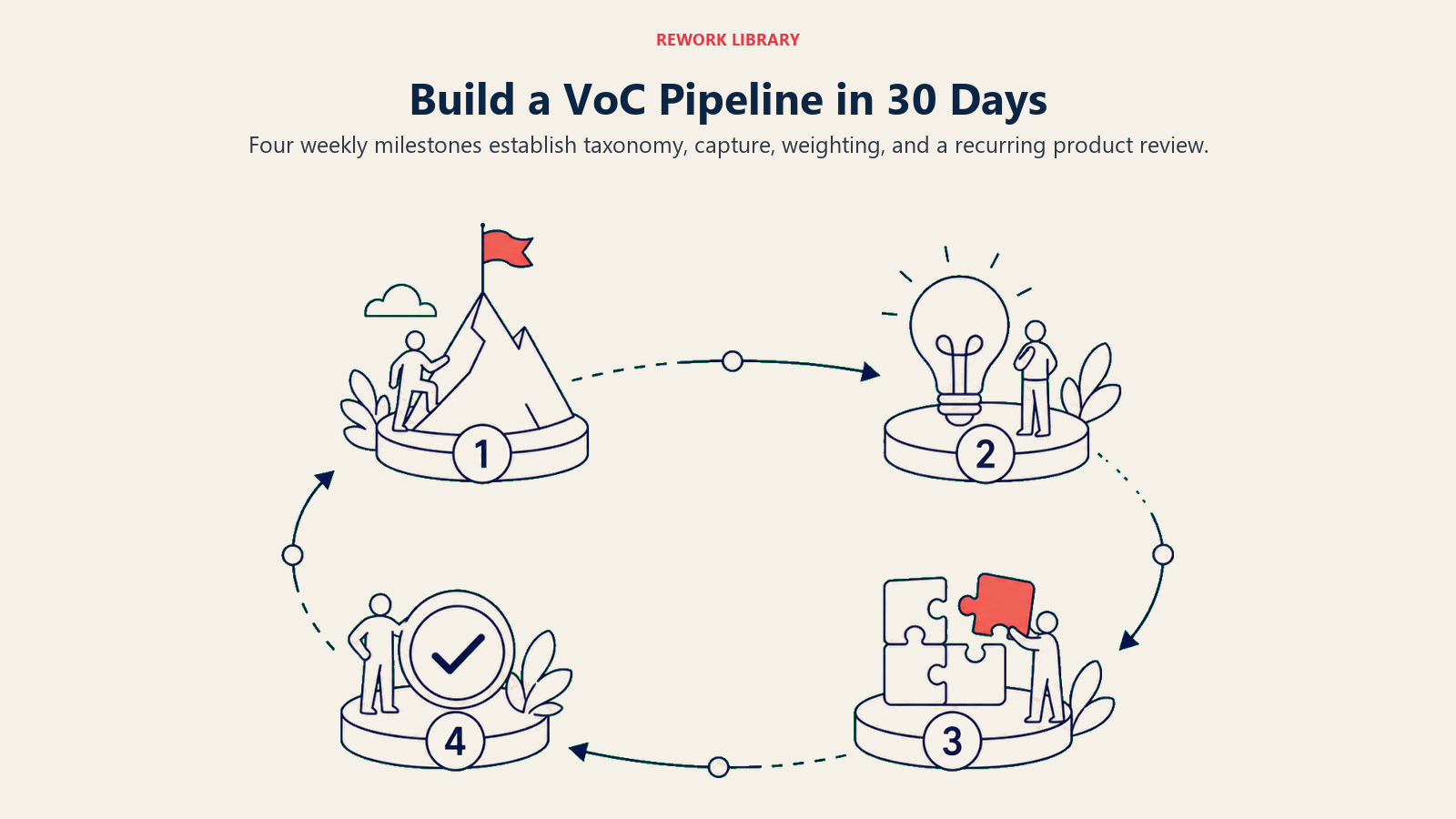
Semana 1: CS Ops e o líder de PM definem conjuntamente a taxonomia de etiquetagem de quatro categorias. Adicione o tipo de sinal como campo no modelo de nota de ligação existente no CRM. Informe os CSMs em cinco minutos na reunião de equipe.
Semana 2: CS Ops extrai todas as notas relevantes de produto dos últimos 90 dias e as categoriza manualmente. Esta é a linha de base. Também mostra quanto sinal já existe no sistema e nunca foi encaminhado.
Semana 3: CS Ops constrói a planilha de mínimo viável: tipo de sinal, citação literal, nome da conta, ARR, data de renovação, indicador de risco de rotatividade atribuído pelo CSM. Compartilhe com o líder de PM. Identifique os cinco principais itens ponderados.
Semana 4: Agende a primeira revisão trimestral de feedback. Reserve 60 minutos. Traga os cinco principais itens ponderados com citações literais. O resultado da sessão: uma lista prioritária com PMs responsáveis nomeados e um status de decisão para cada item (construir / adiar / recusar). A Captura Sistemática de Feedback aborda a camada de captura em detalhes, incluindo formatos de nota estruturados e o princípio da citação literal que torna as decisões dos PMs defensáveis. Use a cadência de 1:1 CS-PM para construir alinhamento contínuo entre ciclos, para que a revisão trimestral não chegue sem preparação.
O pipeline não precisa ser perfeito no lançamento. Precisa produzir uma decisão. Quando os PMs virem que o sinal do CS com peso de ARR muda a conversa em vez de apenas adicionar ruído, o pipeline ganha seu lugar no processo de planejamento.
Perguntas Frequentes sobre a Construção de um Pipeline de VoC de CS para Produto
Qual é a diferença entre um pipeline de VoC e um backlog de solicitações de funcionalidade?
Um backlog é uma lista. Um pipeline é um fluxo com etapas e saídas definidas. Os backlogs se acumulam indefinidamente; os pipelines processam o sinal até uma decisão (construir, adiar, recusar) em uma cadência definida. A maioria dos backlogs de produto são cemitérios de solicitações de funcionalidade com melhor formatação. O modelo de pipeline exige que cada sinal passe por quantificação e encaminhamento antes de se tornar um item de backlog, para que apenas sinais com peso de receita e um PM responsável nomeado cheguem à conversa de roadmap.
Com que frequência a revisão trimestral de feedback deve acontecer?
Trimestral é a cadência padrão para o caminho em lote. Mas o nome é ligeiramente enganoso. Para muitas equipes, "triagem mensal para itens urgentes" mais "revisão estratégica trimestral" é o modelo correto de duas cadências. Sinais urgentes (risco de rotatividade com renovação em 90 dias) não podem esperar três meses pelo caminho em lote. Construa o caminho acelerado primeiro; a sessão trimestral é a estrutura que lida com tudo abaixo do limite de urgência.
Como fazer com que os PMs confiem nos dados de origem do CS?
Adicione peso de receita. Os PMs que são céticos em relação ao feedback do CS geralmente são céticos em relação a anedotas ("três clientes reclamaram") não em relação a dados ("três contas representando R$280 mil em ARR renovando nos próximos 90 dias vincularam isso explicitamente à renovação"). O peso do ARR é a camada de tradução entre a linguagem do CS e a linguagem do PM. Apresente em um formato que os PMs já usam para decisões de roadmap.
O que é o Pipeline de VoC em 4 Etapas?
O Pipeline de VoC em 4 Etapas é um modelo operacional estruturado (captura, categorização, quantificação, encaminhamento) que converte o sinal bruto do cliente do CS em insumo priorizado para o produto em uma cadência definida. Ao contrário de um formulário de feedback ou canal no Slack, cada etapa tem critérios de entrada definidos, responsabilidade do responsável e uma saída que alimenta diretamente a próxima etapa. O pipeline se distingue de um backlog por exigir que cada sinal passe por quantificação de receita antes de chegar ao Produto.
Quais ferramentas você precisa para executar um pipeline de VoC?
O Pipeline de VoC em 4 Etapas funciona com as ferramentas que as equipes de CS já usam: tipicamente um CRM para captura e uma planilha para categorização e quantificação. Ferramentas dedicadas de VoC como Productboard ou Aha! agregam valor quando CS Ops está gastando mais de duas horas por semana agregando sinais manualmente. A disciplina do fluxo de trabalho importa mais do que as ferramentas: uma instância do Productboard sem uma taxonomia de etiquetagem definida e uma cadência de revisão trimestral ainda é um pipeline de Etapa 1 com melhor UX.
Como medir se o pipeline de VoC está funcionando?
Três perguntas de diagnóstico: você consegue obter todo o feedback de origem do CS dos últimos 90 dias com ARR anexado? Você consegue identificar qual PM é responsável por cada peça de feedback? Quantos itens no último roadmap podem ser rastreados de volta a um sinal específico do CS com uma conta nomeada? Se alguma dessas respostas for "não" ou "incerto", o pipeline tem uma lacuna estrutural na Etapa 3 (quantificação) ou Etapa 4 (encaminhamento).
Saiba Mais

Principal Solution Architect