PMs Incentivados por Retenção: Quando Funciona, Quando Falha e Como Estruturar
Turn this article into takeaways for your work.


Each assistant summarizes the article only for you and suggests best practices for your work.
O trabalho do PM termina no GA. A funcionalidade é lançada, o sprint é encerrado e o PM passa para o próximo item do roteiro. Dois meses depois, a adoção da funcionalidade está em 22%. Os clientes no segmento afetado estão mostrando sinais elevados de churn. O CS está conduzindo campanhas de ativação, improvisando explicações para clientes e sinalizando a fricção em cada sync semanal.
O PM, trabalhando na próxima iniciativa, não tem incentivo de remuneração para se importar.
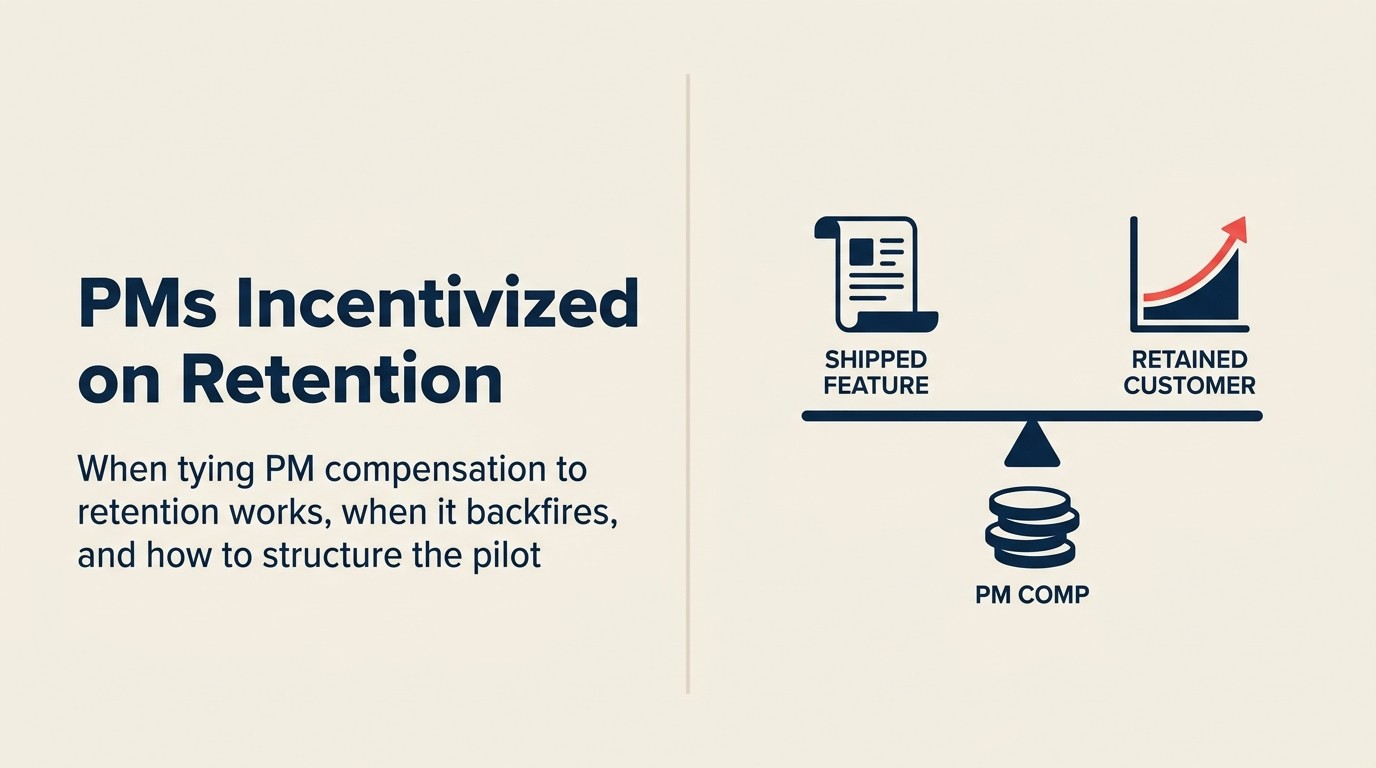
Essa lacuna estrutural é o que a remuneração de PM vinculada à retenção foi projetada para fechar. Não como uma correção de cultura. Não como um exercício de construção de confiança. Como um mecanismo de remuneração que dá aos PMs uma razão financeira para se importar com o que acontece com suas funcionalidades após o GA.
A ideia é direta. A execução não é. Este artigo examina os argumentos a favor e contra, as condições estruturais que devem estar em vigor para que funcione e as três variantes de implementação que as empresas de médio porte realmente usam. O VP CS quer isso. O Head of Product é cético. O CRO precisa decidir. Os três precisam da mesma base para uma conversa real. Para o lado do CS no alinhamento de remuneração, veja como a remuneração de CS e vendas alinhada por NRR estrutura a mesma lógica de responsabilidade em toda a organização de receita.
Apenas 18% dos planos de remuneração variável de PM incluem alguma métrica pós-GA em empresas SaaS de médio porte, o que significa que 82% dos PMs não têm razão financeira para acompanhar o que acontece com suas funcionalidades após o GA, enquanto os CSMs absorvem o custo total de retenção da baixa adoção, segundo os benchmarks de remuneração de PM 2024 da ProductPlan.
Times de produto onde os PMs acompanham a adoção de funcionalidades aos 30 e 90 dias pós-GA lançam 24% menos funcionalidades anualmente, mas alcançam taxas de adoção 37% mais altas por funcionalidade lançada, um trade-off positivo para o NRR mesmo parecendo uma redução de velocidade, segundo o State of Product Leadership 2024 da Pendo.
O Problema Estrutural Que Isso Tenta Resolver
Fatos Relevantes: Incentivos de PM e Responsabilidade Pós-GA
- Apenas 18% dos planos de remuneração variável de PM incluem alguma métrica pós-GA em empresas SaaS de médio porte, segundo benchmarks de remuneração de PM 2024 da ProductPlan.
- CSMs relatam 41% mais satisfação com a colaboração CS-PM em empresas onde os PMs acompanham métricas de adoção, segundo benchmarks anuais de CS da Gainsight.
- 52% das empresas relatam que PMs incentivados por retenção começam a participar de reuniões com clientes com mais frequência no primeiro trimestre, criando confusão de escopo com os CSMs, segundo benchmarks de integração de PM da Gainsight.
Os incentivos dos PMs são voltados para entregas por padrão. Contagem de funcionalidades, entrega dentro do prazo, velocidade de sprint, qualidade do produto no GA. A pesquisa da McKinsey sobre incentivos financeiros mostra que programas de incentivo vinculados diretamente a resultados estratégicos produzem resultados dramaticamente melhores do que planos de desempenho genéricos, e a lógica se aplica igualmente aos times de produto. Essas são métricas razoáveis para uma função cujo trabalho principal é construir coisas. Mas têm um ponto cego específico: terminam no lançamento.
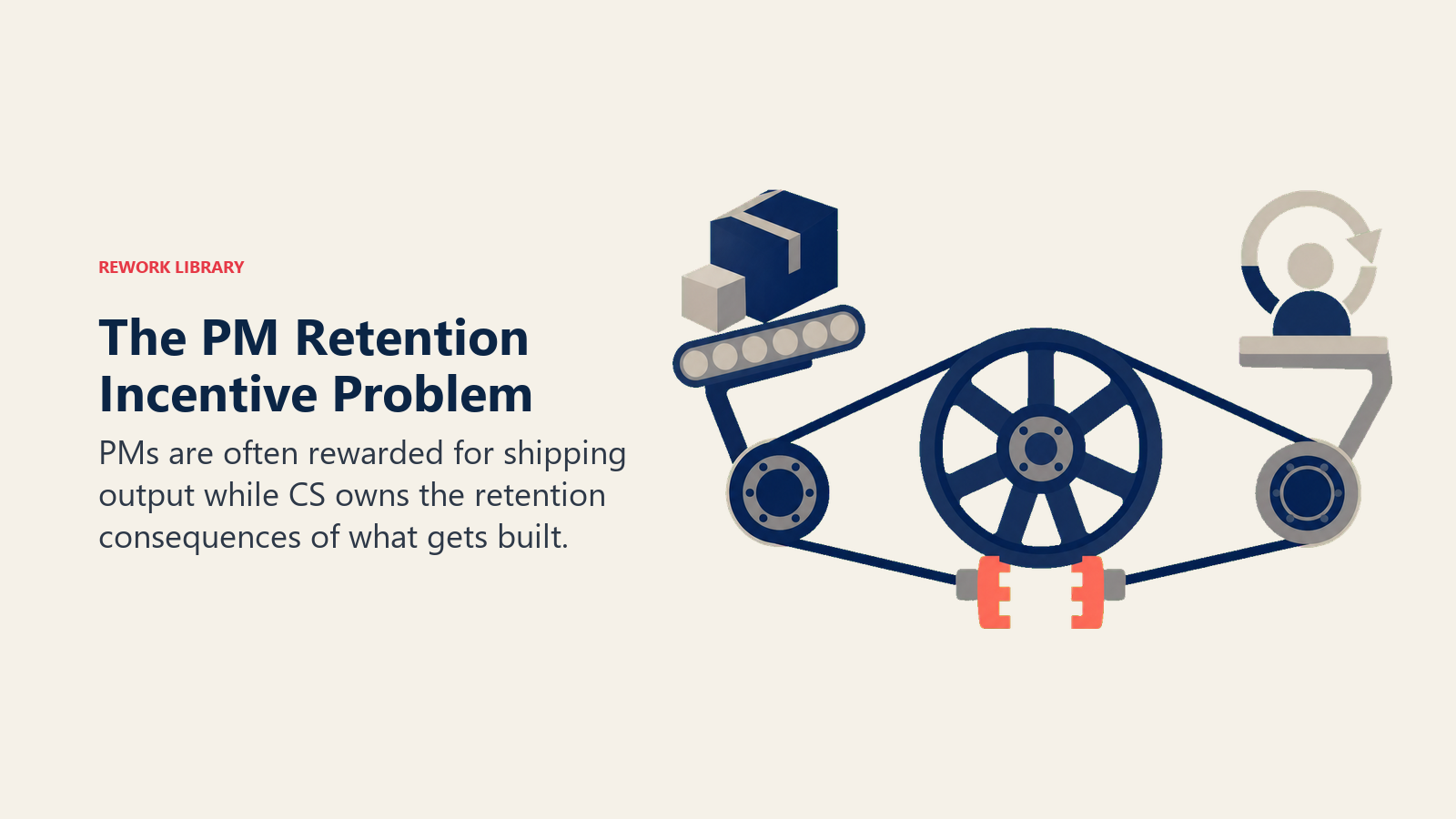
Os incentivos do CS são voltados para retenção por padrão. NRR, distribuição de pontuação de saúde, tempo para integrar, taxa de renovação. Essas métricas se estendem desde o primeiro dia do cliente e o desempenho de um CSM é avaliado em resultados que acontecem seis, doze, dezoito meses no ciclo de vida do cliente.
A lacuna entre essas duas estruturas de incentivo é a fronteira CS-Produto. Um PM pode lançar uma funcionalidade que 80% dos clientes nunca descobrem. Um PM pode lançar uma mudança de UI que quebra um fluxo de trabalho do qual 30% da base de clientes depende. Um PM pode descontinuar uma funcionalidade que um segmento de contas de alto ARR usa como caso de uso principal. Nos três casos, sob o design padrão de remuneração de PM, o PM atingiu suas metas. O CSM paga o preço: declínio da pontuação de saúde, conversas de churn e trabalho de ativação que não deveria ter sido necessário. Esse é o custo do desalinhamento CS-produto quantificado no nível de incentivo individual.
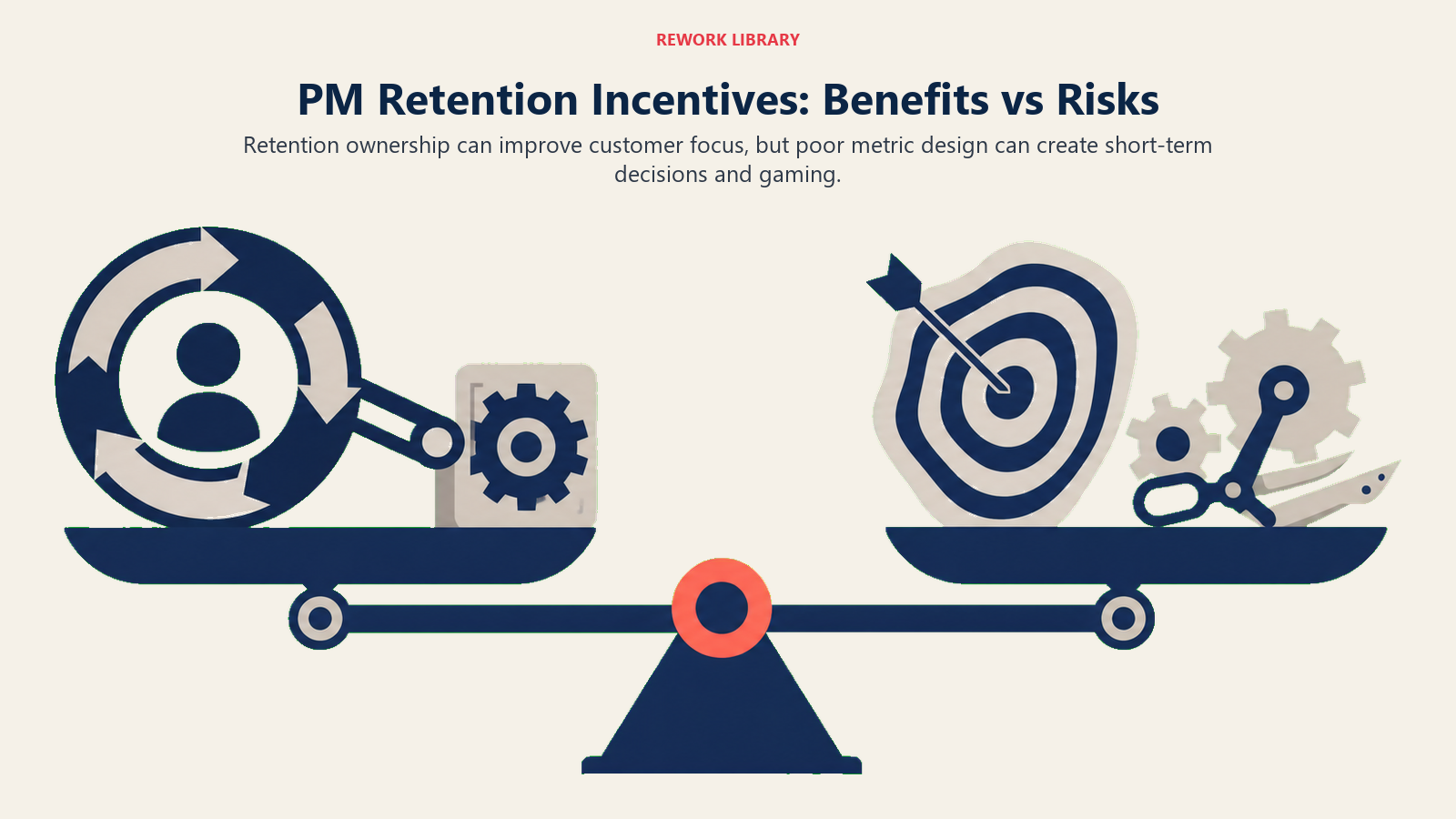
A remuneração de PM vinculada à retenção é uma tentativa estrutural de fechar essa lacuna. Dá aos PMs uma razão financeira para acompanhar a consequência pós-GA de suas decisões. Bem feita, muda o comportamento dos PMs de formas que o alinhamento de processo e os estímulos culturais não fazem.
Mal feita, cria um conjunto diferente de problemas. A seção "argumentos contra" abaixo os nomeia diretamente.
Os Argumentos a Favor: O Que Muda Quando os PMs Têm Interesse na Retenção
Quando os PMs são medidos pelo que acontece após o GA, e não apenas se a funcionalidade foi lançada, várias mudanças comportamentais ocorrem que os times de CS percebem rapidamente.
Os PMs passam a se importar com a adoção pós-GA. A taxa de adoção de funcionalidades e o tempo de adoção passam de métricas do CS que o PM ouve nas revisões trimestrais para métricas do PM que o PM acompanha semanalmente. Essa mudança altera as perguntas que os PMs fazem antes do GA: não apenas "a funcionalidade está pronta para ser lançada?" mas "o CS está pronto para ativar os clientes nessa funcionalidade?"
Os PMs aparecem de forma diferente nas cadências CS-PM. Um PM sem responsabilidade de retenção em seu plano de remuneração aborda os syncs CS-PM como uma obrigação de reporte. Um PM com responsabilidade de adoção os aborda como uma fonte de informação, porque os dados de adoção que ele precisa para atingir sua métrica estão no CS. A conversa muda de atualizações de status para resolução genuína de problemas.
As decisões de descontinuação recebem mais escrutínio. Quando um PM sabe que uma taxa de retenção de descontinuação abaixo do limite vai custar um bônus, ele tem mais probabilidade de investir na migração, na janela de aviso prévio e no suporte do CS para as contas afetadas. A conveniência de engenharia não é mais o único input.
A adoção de funcionalidades se torna uma métrica conjunta. Quando tanto o CS quanto o PM são responsáveis pela adoção (o CS por meio do trabalho de ativação e integração, o PM por meio do design da funcionalidade e orientação in-app) a conversa de ativação se torna um exercício de coordenação, não um pedido do CS ao qual os PMs respondem opcionalmente.
Os Argumentos Contra: O Que Pode Dar Errado
Os modos de falha são previsíveis. Mas também são sérios o suficiente para que os defensores do VP CS sejam honestos sobre o que estão pedindo.
Expansão de escopo do PM para o CS. A falha precoce mais comum: PMs incentivados por retenção começam a participar de reuniões com clientes com mais frequência, questionam as decisões dos CSMs sobre o timing de contato e se inserem em conversas no nível da conta onde não têm o contexto de relacionamento com o cliente. Os CSMs perdem autonomia. Os clientes ficam confusos sobre quem é seu ponto de contato. O relacionamento CS-PM se deteriora em vez de melhorar.
Viés de retenção de curto prazo. PMs com responsabilidade de retenção evitam descontinuar funcionalidades usadas por uma minoria vocal, mesmo quando a funcionalidade atrasa o produto estrategicamente. Uma funcionalidade usada por oito contas se torna politicamente intocável quando o PM sabe que qualquer churn rastreado à descontinuação pode afetar sua remuneração. Essa é uma distorção real que se acumula ao longo de múltiplos ciclos de planejamento.
Jogo de métricas. Os PMs otimizam para as funcionalidades onde a adoção é mais fácil de medir e mais fácil de influenciar, não as funcionalidades que mais importam para a retenção. Se a métrica de adoção é "pelo menos um login no novo dashboard", os PMs investem pesadamente em conscientização enquanto ignoram se os clientes estão alcançando seus objetivos reais de fluxo de trabalho.
Risco de desaceleração. PMs que sabem que lançar algo com baixa adoção vai custar um bônus podem desacelerar em iniciativas com perfis de adoção incertos. Alguma cautela é saudável; cautela excessiva produz o oposto do que a responsabilidade de retenção deveria criar.
Quando Funciona: As Condições Que Devem Estar em Vigor
A diferença entre a remuneração de PM vinculada à retenção que melhora o alinhamento CS-PM e aquela que cria um novo conjunto de problemas é inteiramente uma função de se estas quatro condições estão satisfeitas antes de o modelo entrar em vigor.
PM e CS trabalham com definições compartilhadas. Se o CS define "adoção de funcionalidade" como "qualquer conta que faça login no novo módulo" e o PM define como "qualquer conta que complete o fluxo de trabalho central", a métrica vai produzir disputas em vez de alinhamento. Antes de qualquer métrica de retenção ser vinculada à remuneração do PM, ambos os times devem concordar por escrito sobre o que "ativado", "adotado" e "retido" significam para cada área de funcionalidade principal. O glossário de alinhamento CS-Produto é o documento inicial certo para essa sessão de definição.
O PM tem influência sobre a integração pós-GA. Se um PM é responsável pela adoção mas não pode afetar a orientação in-app, não pode solicitar uma campanha de ativação do CS e não consegue que um briefing antecipado chegue aos CSMs antes do GA, a métrica está medindo um resultado que o PM não pode mover. A responsabilidade de retenção requer autoridade correspondente. O PM deve poder pedir ao CS para executar uma campanha de ativação de 30 dias e ter esse pedido levado a sério.
A métrica de retenção está limitada à área de produto do PM. Vincular um PM ao NRR total da empresa não é acionável. Há muitas variáveis fora do controle de qualquer PM individual. A métrica deve ser limitada: taxa de adoção de funcionalidade nos itens principais do roteiro do PM, ou tendência de pontuação de saúde no segmento de cliente mais afetado pela área de produto do PM. Específica o suficiente para que o PM saiba qual comportamento vai mover o número.
A retenção é um componente da remuneração do PM, não o portão principal. Se a retenção se tornar a métrica dominante do PM, a velocidade do produto sofre. Lançar ainda importa. A pesquisa da HBR sobre pacotes de remuneração confirma que os designs de remuneração variável mais eficazes combinam metas individuais e de equipe em vez de otimizar para uma única métrica. O componente de retenção deve ser ponderado em 10 a 20% da variável, não em 50% ou mais. É um sinal de que o pós-GA importa, não uma declaração de que retenção é agora o trabalho principal do PM.
Design de Métricas: O Que Realmente Medir
As métricas certas dependem da área de produto do PM e dos padrões de uso da base de clientes. Mas três métricas aparecem consistentemente em implementações funcionais.
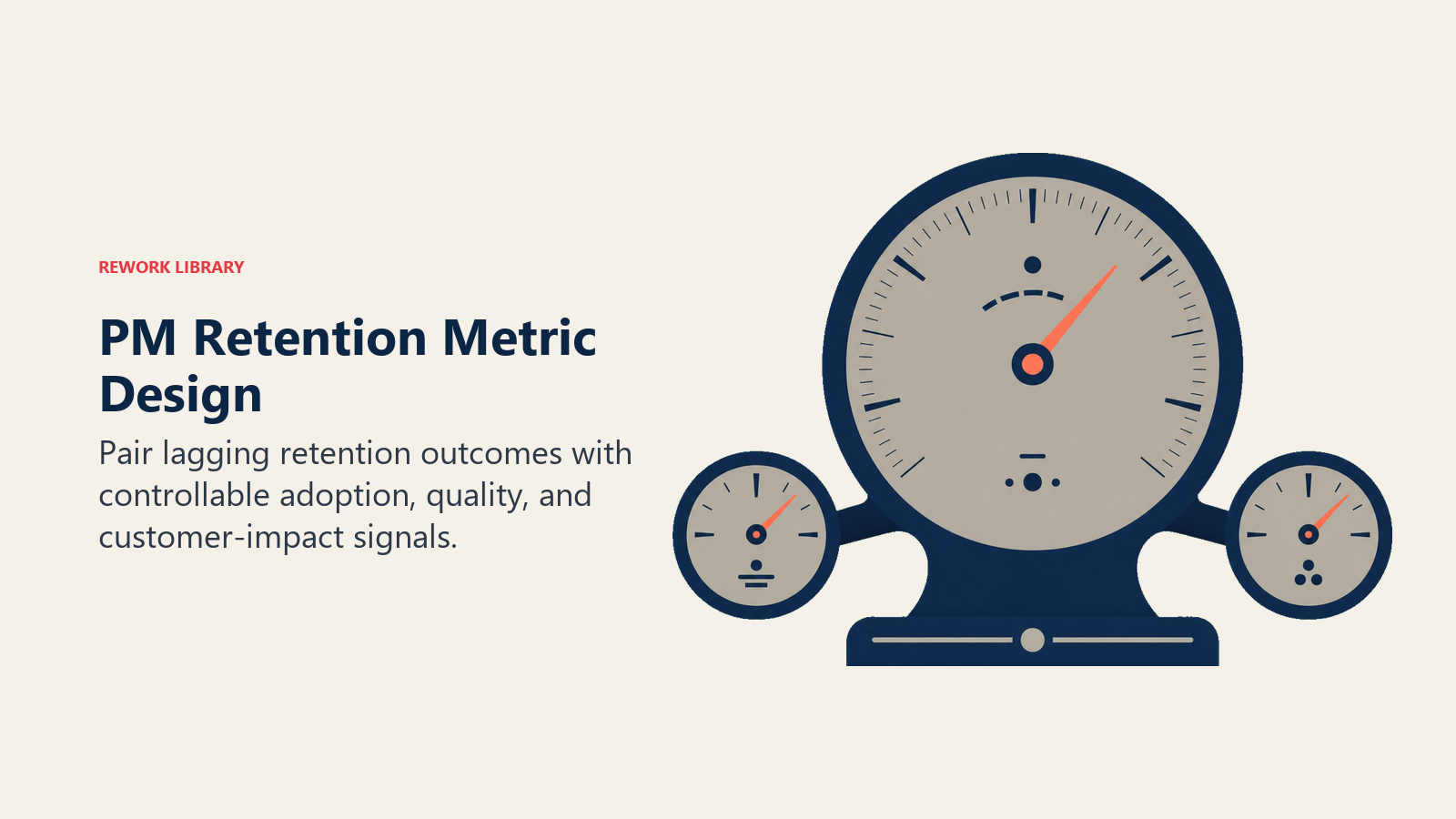
Taxa de adoção de funcionalidade. A porcentagem de contas elegíveis usando ativamente uma funcionalidade dentro de 30, 60 e 90 dias pós-GA. Defina "uso ativo" conjuntamente antes do GA, não depois. Um login não conta. Completar um fluxo de trabalho central dentro da funcionalidade sim. O problema de "construímos, ninguém usa" detalha os padrões de falha de adoção que essa métrica foi projetada para detectar.
Coorte de tempo para adoção. Mediana de dias do GA até o primeiro uso significativo para a coorte de conta. Útil para identificar lacunas de comunicação e ativação. Se o tempo para adoção é longo, o problema geralmente está no briefing antecipado, na orientação in-app ou na campanha de ativação do CSM, não na funcionalidade em si.
Taxa de retenção na descontinuação. A porcentagem de contas que permanecem após uma funcionalidade da qual dependiam ser descontinuada. Uma baixa taxa de retenção na descontinuação sinaliza suporte de migração insuficiente, aviso prévio muito curto ou falha de ativação do CS durante a janela de migração.
O que evitar. Não vincule a remuneração do PM à retenção total de logo. Há muitas variáveis fora do controle de qualquer PM individual, muitas partes em movimento, muito pouco sinal sobre o que qualquer PM individual deve mudar. Como Tomasz Tunguz explica sobre NDR, uma diferença de 20% na retenção de receita líquida se multiplica em uma diferença de 4x no tamanho da empresa ao longo de cinco anos, o que ilustra por que as métricas de retenção precisam ser limitadas e precisas, não amplas. Não use o NPS como métrica de retenção do PM. É muito defasado, muito amplo e muito influenciado por fatores que não têm nada a ver com a área de produto do PM.
O Plano de Remuneração de Retenção em 3 Variantes: Como as Empresas Realmente Implementam
Três padrões de implementação aparecem em empresas SaaS de médio porte. O Plano de Remuneração de Retenção em 3 Variantes mapeia cada um para um perfil de risco distinto e adequação ao design organizacional, para que a escolha entre eles seja explícita em vez de padrão.
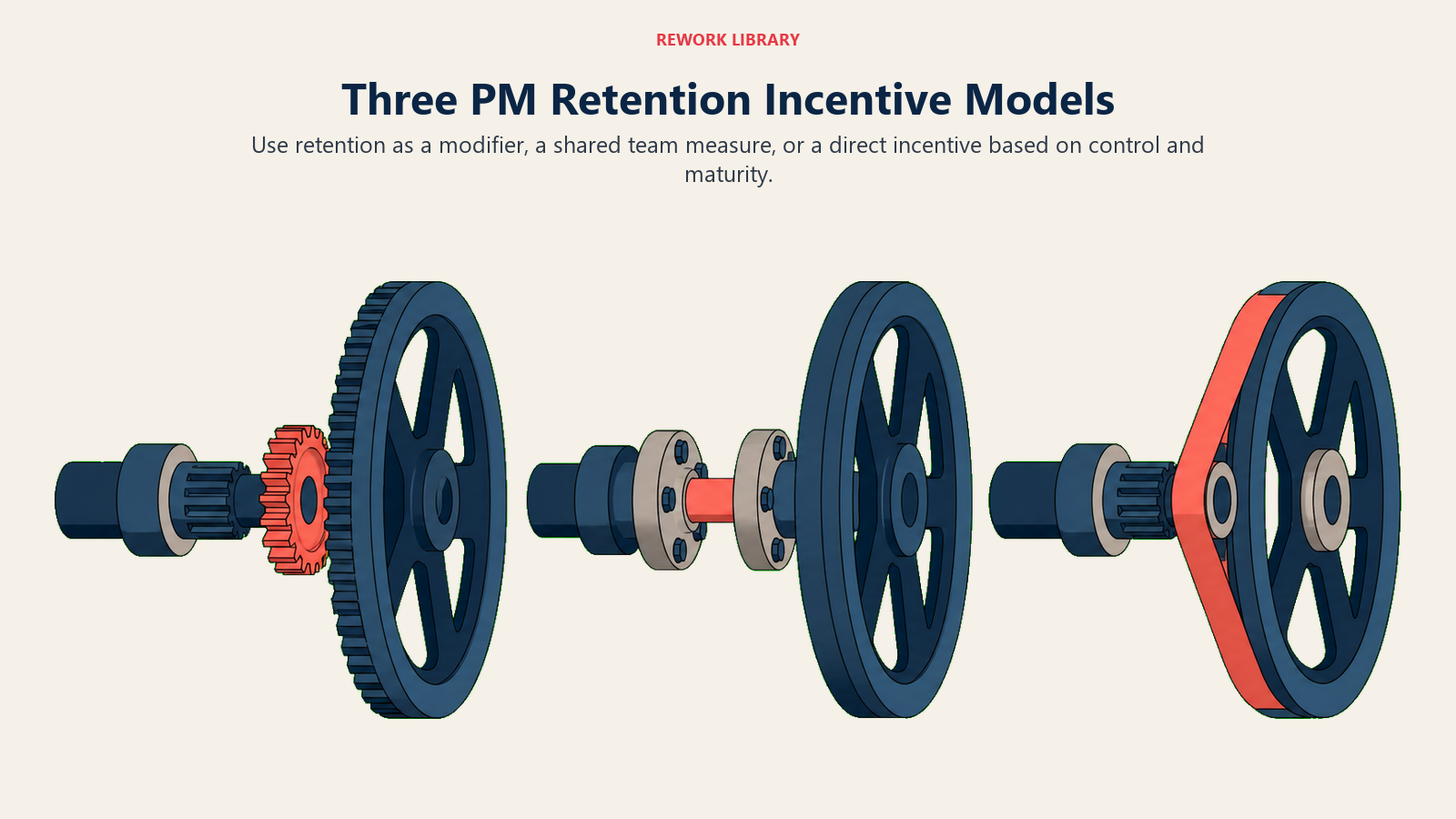
Variante A: Componente de bônus fixo vinculado à adoção de funcionalidade. O PM ganha uma porcentagem de sua variável, normalmente 10 a 15%, se a adoção de funcionalidade para seus principais itens de roteiro atingir um limite definido aos 90 dias pós-GA. Limpo, simples e diretamente vinculado ao trabalho do PM. O risco: os limites de adoção podem ser atingidos investindo pesadamente em campanhas de ativação que inflam a adoção inicial sem construir hábitos de uso duradouros.
Vantagens: fácil de comunicar, fácil de medir, fácil de resolver disputas se os dados forem limpos. Desvantagens: cria um ciclo de otimização de 90 dias que pode subestimar a sustentabilidade de adoção a longo prazo.
Variante B: Pool compartilhado com o CS Ops. PM e CS Ops participam de um pool de variável conjunto financiado pelo cumprimento de uma métrica compartilhada: adoção de funcionalidade mais pontuação de saúde no segmento relevante. Quando ambas as métricas são atingidas, ambas as funções ganham o bônus. Quando uma falha, nenhuma das duas ganha. Esse modelo cria o alinhamento estrutural mais direto entre CS e PM, porque ambos têm uma razão financeira para fazer o outro ter sucesso.
Vantagens: elimina a dinâmica adversarial em que o PM culpa o CS pela baixa ativação e o CS culpa o PM por funcionalidades confusas. Desvantagens: o CS Ops pode resistir à responsabilidade por métricas de adoção que dependem fortemente da qualidade de execução do PM. O modelo funciona melhor quando a confiança entre CS Ops e PM já é forte.
Variante C: Portão de retenção em novos itens de roteiro. A retenção não é um componente de bônus. É um portão. Os PMs devem atingir um patamar mínimo de retenção em funcionalidades anteriores antes de assumir novos itens de roteiro. Funcionalidades com baixa adoção não desaparecem da responsabilidade do PM até que sejam melhoradas ou deliberadamente encerradas.
Vantagens: impede o ciclo de "lançar e esquecer" ao exigir que os PMs resolvam os problemas de adoção antes de seguir em frente. Desvantagens: pode criar um arrasto de velocidade significativo se o portão for definido muito alto, ou se os problemas de adoção forem causados por fatores do CS ou de mercado fora do controle do PM. Requer calibração cuidadosa de qual é o patamar e quais exceções se aplicam.
O Que o CS Precisa Mudar Se os PMs São Incentivados por Retenção
Esse modelo não funciona como um pedido unilateral do CS. Requer mudanças estruturais também do lado do CS.
O CS Ops deve fornecer aos PMs dados de adoção pós-GA em um cronograma definido, semanal ou quinzenal por área de produto. O PM precisa de dados confiáveis para acompanhar sua métrica, e esses dados estão nos sistemas de CS. Se o CS Ops trata isso como um pedido ad hoc, o PM não consegue gerenciar a métrica. O dashboard de uso do produto e saúde do cliente aborda como integrar esses dois fluxos de dados em uma única visão em que ambos os lados confiam.
Os CSMs devem ter um canal claro para sinalizar a fricção pós-lançamento de volta ao PM, não apenas para o CS Ops. O feedback precisa chegar ao PM com rapidez suficiente para ser acionável. Um relatório de fricção que percorre três camadas antes de chegar ao PM não é útil para correção de curso pós-GA.
CS e PM devem concordar antecipadamente sobre o que significa "ativado" para cada funcionalidade principal, antes do GA, não depois. A definição conjunta antes do lançamento da funcionalidade evita as disputas que surgem quando os dados de adoção produzem um número que ambos os times contestam.
O Playbook de Implementação: Um Piloto de Dois Trimestres
Não aplique esse modelo em toda a organização de PM no 1T. Comece com um PM e uma área de produto onde a lacuna de adoção é mais visível e o relacionamento CS-PM já é funcional o suficiente para ter uma conversa honesta sobre dados. A cadência de 1:1 CS-PM é a base certa para construir antes de implementar a responsabilidade de retenção.
Antes do piloto começar: Defina a métrica conjuntamente: o que conta como adotado, qual é o limite, qual é a fonte de dados. CS Ops e PM devem ambos aprovar. Escreva. Coloque no documento do plano de remuneração. A métrica deve ser clara antes do início do primeiro sprint do trimestre do piloto.
Primeiro trimestre: O PM é responsável pela adoção. O CS Ops fornece dados de adoção semanais por área de produto. O líder de CS executa suporte de ativação para os principais lançamentos do PM. Sem alterações na definição da métrica durante o trimestre. Se a definição precisar de ajuste, isso é uma correção para o 2T.
Segundo trimestre: Continue o piloto. Agora adicione a retrospectiva: o comportamento do PM mudou? As campanhas de ativação foram mais colaborativas? O PM entrou proativamente em contato com o CS Ops sobre o sinal pós-GA? A adoção melhorou em relação à linha de base? A qualidade do relacionamento CS-PM mudou, para melhor ou pior?
Decisão de avaliação: Se o piloto funcionou (a adoção melhorou, o comportamento mudou, o relacionamento CS-PM se manteve), expanda para um PM adicional e uma área de produto no 3T. Se não funcionou, especialmente se o PM começou a participar de reuniões com clientes, se a velocidade caiu materialmente ou se CS e PM estão agora disputando dados em vez de trabalhar na adoção, diagnostique qual das quatro condições estruturais estava faltando antes de decidir se continua.
Análise Rework: O Plano de Remuneração de Retenção em 3 Variantes
Com base nos padrões de implementação documentados em empresas SaaS de médio porte, a Variante A (bônus fixo na adoção de funcionalidade) é o ponto de partida certo para a maioria das organizações: é legível, mensurável e limitada a resultados que o PM pode influenciar diretamente sem exigir que o CS Ops compartilhe responsabilidade por uma métrica que não controla totalmente. A Variante B (pool compartilhado com CS Ops) e a Variante C (portão de retenção em novos itens) exigem mais trabalho organizacional: confiança CS-PM existente para a Variante B e calibração cuidadosa do portão para evitar arrasto de velocidade para a Variante C. O design de piloto de dois trimestres existe precisamente para evitar aplicar a variante errada em escala: comece com um PM, uma área de produto e a Variante A.
Quando Encerrar o Piloto
Três sinais indicam que o modelo está criando mais problemas do que está resolvendo.
O PM está gastando mais tempo em reuniões com clientes do que no trabalho de produto. Esse é o modo de falha de expansão de escopo. Quando aparece, geralmente é porque o PM não tem influência suficiente sobre a ativação por meio de canais internos (campanhas do CS, orientação in-app, briefings antecipados) e está compensando indo diretamente aos clientes. A solução geralmente é expandir a autoridade do PM sobre a ativação, não remover a métrica de retenção.
A velocidade de funcionalidades caiu e o time atribui isso à responsabilidade de retenção. Alguma desaceleração é normal. Se for significativa, mais de 20% de redução nas funcionalidades lançadas, o portão ou a ponderação provavelmente está muito alto. Recalibre antes de abandonar.
PM e CS estão agora disputando de quem são os dados corretos em vez de trabalhar no problema. Esse é o modo de falha de definição de métrica. A definição compartilhada de "adotado" não era clara o suficiente, ou as fontes de dados não produzem o mesmo número, ou o CS Ops e o PM estão medindo janelas de tempo diferentes. Corrija a definição. Não abandone o modelo por causa de um problema de qualidade de dados que é solucionável.
Perguntas Frequentes sobre PMs Incentivados por Retenção
O Que Significa Vincular a Remuneração do PM a Métricas de Retenção?
A remuneração de PM vinculada à retenção significa que uma parte do pagamento variável do PM (normalmente 10 a 20%) é contingente a resultados pós-GA em vez de apenas entrega dentro do prazo. As métricas comuns incluem taxa de adoção de funcionalidade aos 90 dias, desempenho de coorte de tempo para adoção e taxa de retenção na descontinuação de funcionalidades removidas. O objetivo é dar aos PMs uma razão financeira para acompanhar o que acontece com suas funcionalidades após o lançamento, fechando a lacuna onde um PM pode atingir todas as suas metas de entrega enquanto os CSMs absorvem o custo total de retenção da baixa adoção.
Qual das Três Variantes Funciona Melhor para uma Primeira Implementação?
A Variante A (componente de bônus fixo vinculado à adoção de funcionalidade) é o ponto de partida mais prático. É clara, mensurável e limitada a resultados que o PM pode influenciar diretamente sem exigir que o CS Ops compartilhe responsabilidade por uma métrica que não controla totalmente. A Variante B (pool compartilhado com CS Ops) e a Variante C (portão de retenção em novos itens) exigem mais trabalho organizacional: confiança CS-PM existente para a Variante B e calibração cuidadosa do portão para evitar arrasto de velocidade para a Variante C. A implementação recomendada é a Variante A com um PM por dois trimestres antes de expandir.
Quais São as Quatro Condições Que Devem Estar em Vigor Antes de a Remuneração de PM Vinculada à Retenção Entrar em Vigor?
As quatro pré-condições: (1) PM e CS trabalham a partir de definições escritas e compartilhadas de "adotado", "ativado" e "retido" para cada funcionalidade principal; (2) o PM tem influência real sobre a integração pós-GA, o que significa que pode solicitar uma campanha de ativação do CS, melhorar a orientação in-app e obter um briefing antecipado para os CSMs antes do GA; (3) a métrica de retenção está limitada à área de produto específica do PM, não ao NRR total da empresa; (4) a retenção está ponderada em 10 a 20% da remuneração variável, não como o portão principal. A ausência de qualquer uma das quatro produz os modos de falha, não a melhoria do alinhamento.
Qual é a Falha Mais Comum Quando os PMs São Incentivados por Retenção?
A falha mais comum é a expansão de escopo do PM para o CS: 52% das empresas relatam que PMs incentivados por retenção começam a participar de reuniões com clientes com mais frequência, criando confusão sobre quem é o contato principal do cliente e minando a autonomia do CSM, segundo benchmarks da Gainsight. Isso normalmente acontece quando o PM tem responsabilidade de retenção, mas nenhuma autoridade sobre as alavancas de ativação (campanhas do CS, orientação in-app, briefings antecipados). Quando os PMs não conseguem mover sua métrica por canais internos, compensam indo diretamente aos clientes. A solução é expandir a autoridade do PM sobre a ativação, não remover a métrica de retenção.
Por Quanto Tempo o Piloto Deve Durar Antes de Decidir Se Expande?
Dois trimestres. O primeiro trimestre estabelece a definição de métrica, o fluxo de dados e a linha de base de comportamento. O segundo trimestre adiciona a retrospectiva: o comportamento do PM mudou, a adoção melhorou em relação à linha de base, a qualidade do relacionamento CS-PM se manteve? Um trimestre não é suficiente para ver o movimento da métrica. É suficiente para ver se as condições estruturais estão funcionando. O impacto da métrica aparece no segundo trimestre. A expansão para um segundo PM e área de produto deve aguardar até que a retrospectiva do segundo trimestre esteja completa.
Por Que o NRR Total da Empresa Não Deve Ser Usado como Métrica de Retenção do PM?
O NRR total da empresa é muito amplo e tem muitas variáveis fora do controle de qualquer PM individual: mudanças de preços, condições de mercado, ciclos de vendas enterprise, capacidade do time de CS e o desempenho de outras áreas de produto afetam o NRR simultaneamente. Um PM que lança uma excelente funcionalidade num trimestre em que a empresa perde várias contas grandes por razões não relacionadas seria penalizado por resultados que não pôde influenciar. A métrica deve ser limitada à área de produto do PM (adoção de funcionalidade em seus itens específicos de roteiro, ou tendência de pontuação de saúde no segmento de cliente mais afetado por seu trabalho) para ser acionável e defensável.
Saiba Mais
- Pods Multifuncionais: PM + CSM + Engenheiro
- Pontuação de Impacto do Cliente para Decisões de Produto
- A Cadência de 1:1 CS-PM
- Glossário de Alinhamento CS-Produto
- Falhas e Correções Comuns de CS-Produto
- Remuneração Alinhada por NRR: como a mesma lógica de responsabilidade de retenção se aplica à remuneração de CS e vendas

Principal Solution Architect
On this page
- O Problema Estrutural Que Isso Tenta Resolver
- Os Argumentos a Favor: O Que Muda Quando os PMs Têm Interesse na Retenção
- Os Argumentos Contra: O Que Pode Dar Errado
- Quando Funciona: As Condições Que Devem Estar em Vigor
- Design de Métricas: O Que Realmente Medir
- O Plano de Remuneração de Retenção em 3 Variantes: Como as Empresas Realmente Implementam
- O Que o CS Precisa Mudar Se os PMs São Incentivados por Retenção
- O Playbook de Implementação: Um Piloto de Dois Trimestres
- Quando Encerrar o Piloto
- Saiba Mais