Center of Influence Strategy for Financial Advisors
Turn this article into takeaways for your work.


Each assistant summarizes the article only for you and suggests best practices for your work.
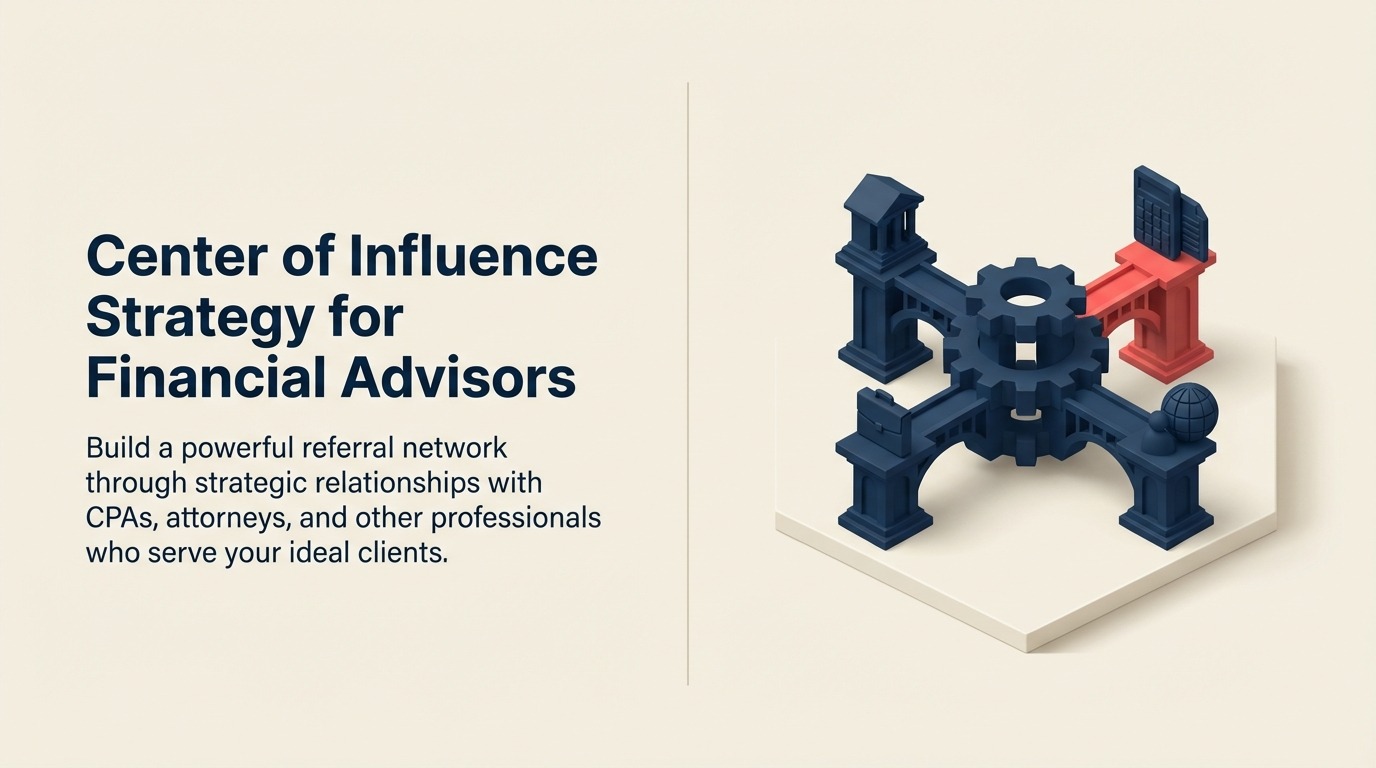
A center of influence (COI) strategy is the systematic cultivation of relationships with professionals like CPAs and attorneys who serve your ideal clients and can refer them to you. Done well, it turns cold prospecting into warm introductions and becomes the primary engine of practice growth, because referred clients arrive already predisposed to trust you.
The most successful financial advisors don't build their practices alone. They cultivate relationships with other professionals who serve the same clients but provide different services. These centers of influence become reliable sources of qualified referrals, turning what might otherwise be cold prospecting into warm introductions to people already predisposed to trust you.
A center of influence (COI) strategy goes beyond casual networking. It's systematic cultivation of mutually beneficial professional relationships. Done well, it becomes the primary engine of practice growth. Done poorly, it wastes time on relationships that never produce results.
Understanding Centers of Influence
A center of influence is any professional who regularly interacts with your ideal clients and can make referrals based on that relationship. The key word is "regularly." A chance encounter doesn't create a COI relationship. Consistent access to your target market does.
Why COI Relationships Work
COI referrals carry built-in credibility. When a client's trusted CPA recommends a financial advisor, that recommendation carries weight. The client already trusts the CPA's judgment. They're predisposed to trust you before you've said a word.
This trust transfer accelerates the sales cycle dramatically. Prospects from COI referrals typically convert faster and at higher rates than prospects from other sources. They also tend to be better clients, having been pre-screened by someone who knows both parties.
The relationship works both ways. You can refer clients to your COI partners, strengthening the relationship and ensuring continued reciprocity. A professional referral exchange creates ongoing value for everyone involved.
Identifying Potential COIs
The best COI partners serve clients at moments when financial advice becomes relevant. Life transitions, business decisions, and legal matters all create opportunities for financial planning conversations.
Accountants and CPAs
CPAs see their clients' complete financial pictures during tax preparation. They notice when clients could benefit from better investment strategies, retirement planning, or tax-efficient wealth management. CPAs are often the first professionals to know about major financial events like business sales, inheritances, or retirement.
The relationship is natural because your services complement rather than compete. You handle investments and planning; they handle tax preparation and compliance. Clients benefit from professionals who communicate and coordinate.
Estate Planning Attorneys
Estate planning attorneys work with clients on wills, trusts, and wealth transfer strategies. These conversations naturally involve assets, investments, and financial planning. An attorney drafting a trust needs to understand what assets will fund it.
Estate planning clients are often ideal financial planning clients. They have accumulated wealth worth protecting. They think long-term. They value professional advice.
Business Attorneys
Business attorneys advise on transactions, contracts, and corporate structures. Business owners need financial planning for their personal wealth and business succession. The attorney relationship often precedes and enables the advisory relationship.
Real Estate Professionals
Real estate transactions involve significant financial decisions. Home buyers need mortgage advice. Home sellers may have proceeds to invest. Real estate investors need complete financial strategies.
Insurance Professionals
Life insurance agents and property-casualty professionals interact with clients around risk management. These conversations overlap with financial planning discussions about protection and wealth transfer.
Business Consultants and Coaches
Professionals who advise business owners on strategy, operations, or growth often identify clients who need financial planning support. A business coach helping a client plan an exit needs a financial advisor to complete the picture.
Building COI Relationships
Identifying potential COIs is easy. Building productive relationships is harder. It requires genuine investment of time and effort before expecting any return.
The Approach
Cold outreach to professionals rarely works. You're asking for trust before establishing any basis for it. Better approaches build relationships organically.
Mutual Connections
The best introductions come through people who know both parties. Ask current clients which professionals they work with. Ask existing COI partners for introductions to their colleagues. Warm introductions convert to relationships far more effectively than cold approaches.
Professional Organizations
Join organizations where your target COIs participate. Estate planning councils, accounting associations, and bar association sections provide natural networking opportunities. Participate actively rather than just attending. Serve on committees. Present at meetings. Become known for adding value.
Educational Events
Host or participate in educational events for other professionals. A seminar on tax-efficient investment strategies for CPAs positions you as a resource, not a salesperson. You're providing value before asking for anything in return.
The First Meeting
When you do connect with a potential COI, the first meeting sets the tone for the relationship. Don't ask for referrals. You haven't earned them yet.
Instead, focus on understanding their practice:
- Who are their ideal clients?
- What problems do they solve?
- What frustrates them about other professionals they work with?
- How do they prefer to collaborate?
Share information about your practice, but listen more than you talk. You're looking for alignment between your respective client bases and identifying how you might work together.
End the meeting with a specific next step. Maybe it's sharing a resource. Maybe it's making an introduction. Something concrete that moves the relationship forward.
Building Trust Over Time
COI relationships develop through consistent positive interactions over extended periods. Quick transactions don't build lasting partnerships.
Add Value Continuously
Look for opportunities to help your COI partners. Send relevant articles. Make introductions to people who could help their practice. Refer clients to them when appropriate. The referral requesting process works best when it's genuinely reciprocal.
Communicate Regularly
Stay in touch without being annoying. Quarterly check-ins work for many relationships. Some warrant monthly contact. Find the cadence that works for each relationship.
Collaborate on Clients
When you share a client, coordinate effectively. Keep the COI informed about relevant planning developments. Seek their input on tax or legal implications of your recommendations. Demonstrate that you're a professional who enhances their client relationships.
Acknowledge Referrals
When you receive a referral, acknowledge it promptly and appropriately. Thank the referring professional. Keep them informed about outcomes (within confidentiality limits). Let them know their referral is being well served.
Navigating Compensation Questions
Referral fees between financial advisors and other professionals raise compliance issues. FINRA rules restrict compensation arrangements. SEC regulations add additional considerations.
The safest approach is reciprocal referrals without cash changing hands. You refer clients to them; they refer clients to you. Value exchanges happen through relationships, not payments.
If compensation arrangements are contemplated, involve your compliance department early. The rules are complex and vary based on the parties involved and services provided.
Managing Multiple COI Relationships
As your COI network grows, management becomes a challenge. You can't maintain deep relationships with unlimited people. Strategic prioritization is essential.
Tiering Your Network
Not all COI relationships are equal. Some partners send multiple qualified referrals yearly. Others never refer anyone. Your time allocation should reflect this reality.
Tier 1: Active Partners
These are your most productive relationships, professionals who regularly send qualified referrals and with whom you collaborate frequently. They deserve your best attention. Schedule regular meetings. Prioritize their calls. Invest heavily in these relationships.
Tier 2: Developing Relationships
These professionals have potential but haven't become consistent referral sources yet. They're worth continued investment, but at a lower intensity than Tier 1. Quarterly touchpoints maintain the relationship while you assess potential.
Tier 3: Network Connections
These are professionals you know but haven't developed deep relationships with. Annual contact maintains awareness. They might become more active relationships if circumstances change.
Tracking and Measurement
Track your COI activities and outcomes. Your CRM should capture:
- Contact history with each COI
- Referrals received (and their outcomes)
- Referrals made
- Joint client relationships
- Notes from conversations
Review this data regularly. Identify which relationships produce results and which don't. Adjust your investment accordingly.
Avoiding Common Mistakes
COI strategies fail for predictable reasons. Avoid these common pitfalls:
Expecting Too Much Too Soon
New relationships don't produce immediate referrals. Trust takes time to build. Advisors who expect quick returns become disappointed and abandon promising relationships prematurely.
One-Way Relationships
Relationships that only flow in one direction eventually end. If you're not sending referrals to your COI partners, you're not a partner, you're a taker. Even if their services aren't needed by your current clients, find ways to add value.
Neglecting Existing Relationships
The pursuit of new COI relationships shouldn't come at the expense of existing ones. It's easier to get more referrals from a strong existing relationship than to build a new relationship from scratch.
Inconsistent Follow-Up
Sporadic contact signals that the relationship isn't important to you. Consistent communication builds trust. Create systems to ensure regular touchpoints with important COIs.
Specialized COI Strategies
Different professional types require somewhat different approaches. What works with CPAs may not work with attorneys.
Working with CPAs
The CPA-attorney network represents the most common COI focus for financial advisors. CPAs have several characteristics that make them ideal partners:
- They see clients annually during tax season
- They understand financial matters
- They value technical competence
- They prefer long-term professional relationships
The American Institute of CPAs (AICPA) provides resources and guidance for CPAs working with financial professionals, including best practices for collaborative client service relationships.
When approaching CPAs, lead with technical competence. Demonstrate that you understand tax implications of investment decisions. Show how your planning integrates with their tax work. CPAs respect professionals who take tax efficiency seriously.
Timing matters with CPAs. They're overwhelmed during tax season (January through April). Initiate relationships during their slower periods. Be understanding of their seasonal unavailability.
Working with Estate Planning Attorneys
Estate planning attorneys focus on long-term wealth transfer and asset protection. They work with clients who have significant assets and care about legacy.
Lead with planning sophistication when approaching estate attorneys. Demonstrate understanding of trust structures, beneficiary designations, and estate tax planning. Show that you can be a knowledgeable partner in complex planning situations. The National Association of Estate Planners & Councils offers networking opportunities and educational resources that can help you connect with estate planning professionals.
Estate attorneys value reliability. When they refer a client, they need confidence that you'll serve that client well. Early referral experiences shape their ongoing referral behavior.
Working with Insurance Professionals
Insurance relationships can be complicated because they sometimes compete with advisory services. Life insurance agents may offer financial planning as part of their practice. Property-casualty professionals may work for firms that also offer investments.
Focus on insurance professionals who recognize the limits of their expertise and value collaboration. The best partners are those who want to serve their clients comprehensively but don't have the investment expertise to do it alone.
Integrating COI Strategy with Overall Marketing
COI development should complement your other marketing efforts through your referral-based growth system, not replace them. The most resilient practices have multiple referral sources.
Balancing Referral Sources
Client referrals remain the most valuable referral type for most practices. Client referral programs should continue alongside COI development through your referral requesting process. Digital marketing, seminar marketing, and other approaches provide diversification.
A practice dependent on a single COI relationship is vulnerable. If that relationship ends for any reason, referrals stop. Diversified referral sources provide stability through professional network development.
Leveraging COIs for Content
COI partnerships can enhance your content marketing efforts. Joint webinars with CPAs on tax planning topics reach both audiences. Co-authored articles demonstrate collaborative expertise. Podcast interviews with professional partners provide valuable content.
Event Collaboration
Seminars and events work better with professional partners. A seminar on "Year-End Tax Strategies" jointly presented with a CPA has more credibility than one you present alone. Both practices contribute attendees, expanding reach.
Measuring COI Strategy Success
How do you know if your COI strategy is working? Track these metrics:
Referrals Received
The most obvious metric. How many referrals came from COI sources? Track by individual COI to identify your most productive relationships.
Referral Conversion Rate
What percentage of COI referrals become clients? Higher conversion rates indicate good alignment between your services and the referred clients' needs.
Revenue from COI Referrals
Track the revenue generated by clients who came through COI referrals. This metric shows the financial impact of your COI investment.
Referrals Made
A healthy COI strategy includes outbound referrals. Track how many referrals you send to partners. If you're receiving but not giving, the relationship is imbalanced.
Relationship Activity
Track your contact frequency with key COIs. Are you maintaining consistent communication? Declining contact often precedes declining referrals.
Pipeline Quality
COI referrals should be higher quality than other sources. Compare close rates, average account sizes, and client retention across referral sources.
Conclusion
A well-executed center of influence strategy transforms practice development. Instead of constantly hunting for new prospects through high-net-worth lead generation, you receive introductions to people who already want to work with you.
Building these relationships takes time and genuine investment. There are no shortcuts to trust. But the payoff, sustainable referral flow from multiple professional partners, makes the investment worthwhile.
Start with a few potential COIs who serve your ideal client profile. Build those relationships before expanding your network. Quality matters more than quantity. A few strong relationships outperform dozens of weak ones.
The advisors who master COI development never worry about where their next client will come from. Their professional network provides a steady stream of opportunities. That confidence shows in everything they do.
Frequently Asked Questions
What is a center of influence (COI) for a financial advisor? A center of influence is any professional who regularly interacts with your ideal clients and can refer them based on that relationship. The most common COIs are CPAs and estate planning attorneys, followed by business attorneys, real estate professionals, and insurance agents who see clients at moments when financial advice becomes relevant.
How do you build relationships with centers of influence? Build them organically rather than through cold outreach. Use warm introductions from current clients or existing partners, participate actively in professional organizations, and host educational events. In early meetings, focus on understanding their practice and adding value first instead of asking for referrals you have not yet earned.
Can financial advisors pay referral fees to CPAs or attorneys? Referral fees raise compliance issues under FINRA and SEC rules, so the safest approach is reciprocal referrals with no cash changing hands. If you do consider a compensation arrangement, involve your compliance department early, because the rules vary by the parties and services involved.
How do you measure if a COI strategy is working? Track referrals received by individual COI, referral conversion rate, revenue from COI referrals, referrals you send back to partners, and contact frequency with key relationships. COI referrals should show higher close rates and account sizes than other sources, confirming the strategy is paying off.
Learn More
- CPA and Attorney Network - Building professional partnerships
- Professional Referral Exchange - Creating reciprocal relationships
- Referral-Based Growth - Building a referral-driven practice

Sales Director
On this page
- Understanding Centers of Influence
- Why COI Relationships Work
- Identifying Potential COIs
- Building COI Relationships
- The Approach
- The First Meeting
- Building Trust Over Time
- Navigating Compensation Questions
- Managing Multiple COI Relationships
- Tiering Your Network
- Tracking and Measurement
- Avoiding Common Mistakes
- Specialized COI Strategies
- Working with CPAs
- Working with Estate Planning Attorneys
- Working with Insurance Professionals
- Integrating COI Strategy with Overall Marketing
- Balancing Referral Sources
- Leveraging COIs for Content
- Event Collaboration
- Measuring COI Strategy Success
- Conclusion
- Frequently Asked Questions
- Learn More