C-レベルにとってのAIトランスフォーメーションとは何か

Turn this article into takeaways for your work.


Each assistant summarizes the article only for you and suggests best practices for your work.
今四半期、取締役会から同じ質問が三度出ています。「わが社のAI戦略は何か?」
これまでに二度回答しました。Copilotの展開状況、サポート用チャットボット、プロダクトチームが秋に実施したパイロット,,その都度、説明を並べましたが、答えはどこか空虚に響きました。自分自身も心のどこかで気づいています。それらは本当の意味での答えではない、と。
それは活動報告に過ぎません。
AI戦略とは、導入ツールのリストではありません。「AIイニシアチブ」という予算行でもありません。CEO書簡に一文添える程度のものでもありません。C-レベルにおける真のAI戦略は、ほとんどのリーダーシップチームがまだ正面から向き合っていない一つの問いから始まります。
AIによって、わが社は何を、いつ、どう変えて産み出せるようになるのか?
具体的な答えが出ないなら、AI戦略はまだありません。あるのはAIへの姿勢(AIポスチャー)だけです。
払拭すべき誤解
本質的な定義に入る前に、AIトランスフォーメーションでないものを整理しておきましょう。
生産性向上ではありません。 AIメールアシスタントで営業担当者が週2時間を節約できるのは確かな価値であり、50人チームで積み上がります。しかしそれはビジネスの性質を変えません。同じビジネスをわずかに安く運営するだけです。これはAI最適化です。取り組む価値はありますが、トランスフォーメーションではありません。
Webサイトのチャットボットでもありません。 Tier 1サポートチケットを受け流す顧客向けチャットボットはコスト削減施策です。これも正当な取り組みですが、ROIの限られた単一ユースケースであり、ビジネスモデルの再構築ではありません。
一度限りの自動化プロジェクトでもありません。 AI光学文字認識による請求書処理の自動化はプロセス改善です。財務部門の工数を削減しますが、財務部門が何を産み出すか、CFOがどんな意思決定を行うかは変わりません。
AIツールの追加購入でもありません。 体系的なアプローチなしにベンダーを増やすと、多くの場合、状況は悪化します。ツールが増え、ログインが増え、統合の負債が積み上がり、AI全体が組織内で何をしているかの可視性が失われます。
こうした誤解を理解することが、なぜほとんどのAIトランスフォーメーションが失敗するかを説明します。リーダーシップチームは、AIで根本的に異なるビジネスを運営できるかを問うべきところを、AIで既存ビジネスを最適化しています。McKinseyのAI Transformation Manifestoはこう断言しています。「おそらくこれまで見てきた中で最大かつ最も複雑なトランスフォーメーションだ。しかしその80%はビジネストランスフォーメーションであり、テクノロジートランスフォーメーションは20%に過ぎない。」
主要データ:エンタープライズレベルのAIトランスフォーメーション
- 組織の88%がAIを定期的に活用していると報告しているが、エンタープライズレベルで測定可能なEBIT(利払い・税引き前利益)への影響を確認しているのはわずか39%(McKinsey, State of AI 2025)
- 有意なエンタープライズ全体の財務的リターンを得ている組織はわずか6%。これらの企業は、AIを既存プロセスに重ねるのではなく、AI中心にワークフローを再設計している可能性が約3倍高い(McKinsey, 2025)
- 2025年末までに、生成AIプロジェクトの30%以上がPoC(Proof of Concept)後に中止されており、ビジネス価値の不明確さが主因として挙げられている(Gartner, 2025)
C-レベル経営幹部のための実用的定義
「88/6のギャップは、ほとんどの組織がAI活動を行っているがAIトランスフォーメーションをしていない最も明確な証拠です。活動は取締役会への報告書を産み出します。トランスフォーメーションは異なるコスト構造と異なるプロダクトを産み出します。」(Rework、McKinsey State of AI 2025をもとに作成)
直属の部下との会議室のホワイトボードに書き留める価値のある定義がこれです。
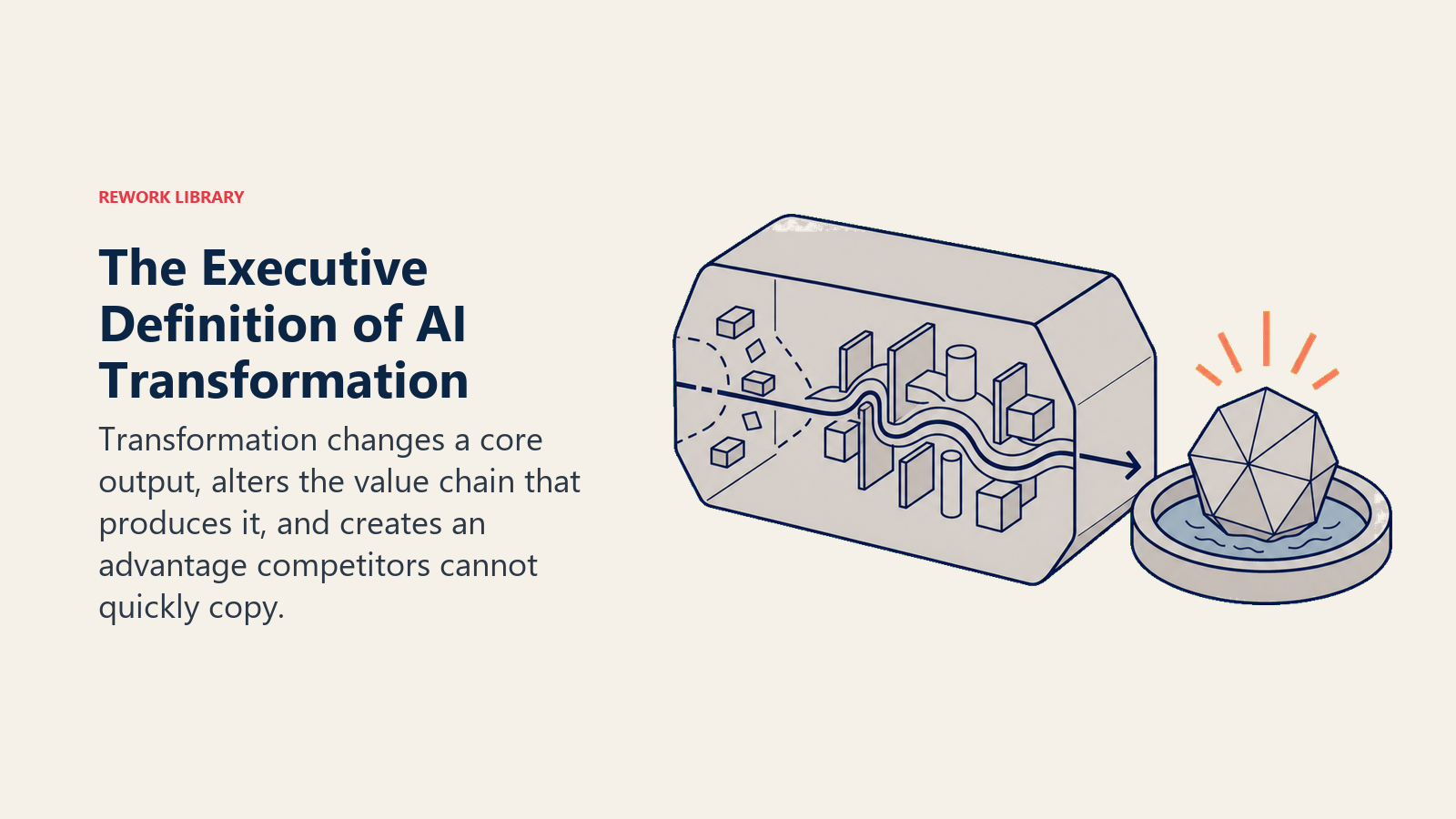
AIトランスフォーメーションとは、組織のコアバリューチェーン全体にAIの能力を体系的に適用し、同じ産出物をより速く生み出すのではなく、異なる産出物を生み出すことです。
ここで最も重要な三つの言葉は「体系的に」「コア」「異なる」です。
体系的にとは構造化されているということです。場当たり的ではなく、「好奇心旺盛な担当者が好きなツールを試す」でもありません。体系的とは、AIがどこで活用されているかを把握し、ポリシーによって管理され、アウトカムに対して測定されているということです。
コアとは周辺領域ではなく、バリューチェーン本体を意味します。経費精算の自動化は誰でもできます。トランスフォーメーションとは、顧客獲得、プロダクト提供、アカウントの維持と拡大といった領域にAIが届いたときに起こります。それらが改善されれば、ビジネスの根幹が変わる領域です。
異なるは最も難しい言葉です。「異なる」とは、以前は提供できなかったものを提供できるようになることです。数日ではなく数分での対応。経済的に不可能だった規模でのパーソナライズ。従来の研究開発サイクルよりも速いプロダクトリリース。「異なる」は「より速い」ではありません。「異なる」はカテゴリー的に新しいものです。
アウトカム変化テスト(Output-Change Test)
C-レベルチームがAIイニシアチブがトランスフォーメーションか最適化かを判断するための実用的な診断ツールです。三つの問いを用います。(1)このイニシアチブはビジネスが産み出すものを変えるか、それとも産み出すスピードだけを変えるか?(2)それはサポート活動ではなく、コアバリューチェーン機能に触れているか?(3)競合他社がそれを模倣するためには、オペレーションを根本的に再設計する必要があるか?三問すべてに「はい」と答えるイニシアチブはアウトカム変化テストに合格し、トランスフォーメーションロードマップに含める資格があります。一つでも「いいえ」があるものは最適化であり、トランスフォーメーションとして位置づけるのではなく、そのROIで評価すべきです。
「AIを既存プロセスに重ねるのではなく、AI中心にコアワークフローを再設計した企業は、有意なエンタープライズ全体の財務インパクトを報告する可能性が約3倍高いです。再設計こそが本質的な作業であり、ツールは単なる手段です。」(Rework、McKinsey 2025をもとに作成)
トランスフォーメーションにACEフレームワークを適用する
ACE Framework(Ingest、Analyze、Predict、Generate、Execute)は、AIがどこで機能するかについて経営幹部が共通の語彙を持つための枠組みです。各能力は、AIがデータを使って何をするかを示します。
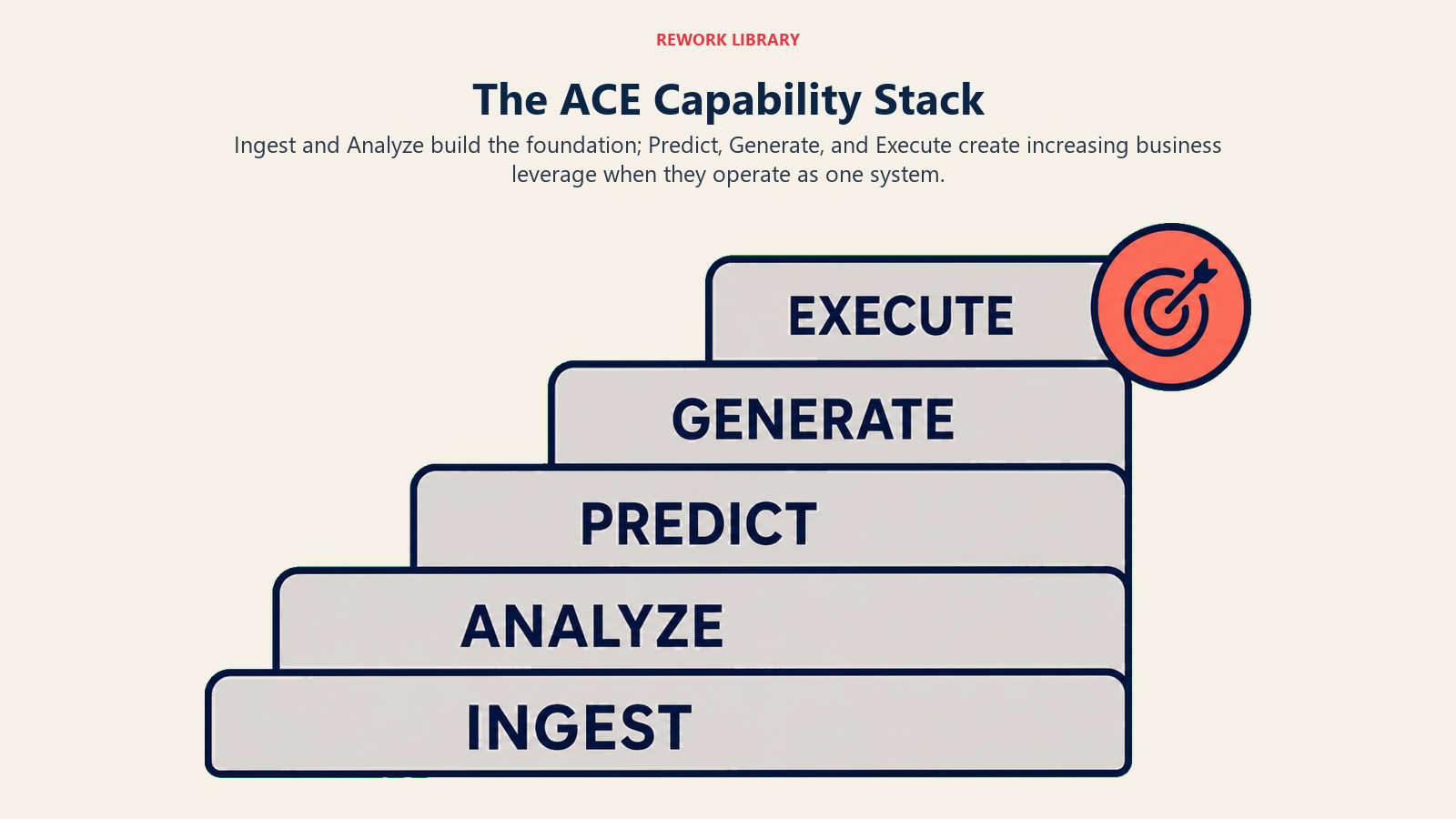
トランスフォーメーションのレベルでは「自社はこれらの能力のうちどれを使っているか?」という問いは適切ではありません。ほとんどの企業はすでに散発的、断片的に少なくとも二、三の能力を活用しています。問うべきは、
どの能力においてAIが今やコアバリューチェーンを体系的に貫いているか?
実例で考えてみましょう。AIをGenerate(メールの下書き、商品説明の作成、レポートの要約)だけに活用している企業は、効率性を達成しています。コンテンツの産出はより速く安くなります。しかしビジネスモデルは変わっていません。顧客獲得、プロダクト提供、アカウント維持のやり方は以前と同じです。
次に、収益を生む全プロセスにわたって五つの能力すべてにAIを組み込んだ企業を考えてみましょう。Ingest: すべての顧客通話、メール、サポートチケットが収集、構造化されています。Analyze: 全アカウントがヘルス、インテント、リスクで分類されています。Predict: 全更新契約がスコアリングされ、アカウントチームが気づく前に拡張機会が表面化されます。Generate: すべてのアウトリーチ、QBRデッキ、更新提案がアカウントデータから下書きされます。Execute: リスクの低いフォローアップアクションは、各ステップで人間の介入なしに自動的に実行されます。
その企業は同じビジネスを速く動かしているのではありません。異なるビジネスを動かしています。アカウントチームは担当者一人あたり三倍の規模のブック・オブ・ビジネスを扱います。リスクが早期に検出されるため、Churnレートが下がります。アカウント管理の雑多な情報の中で機会を見逃さないため、拡張収益が成長します。
これがトランスフォーメーションです。
実際に変わる三つのこと
C-レベルでは、AIトランスフォーメーションは、経済性、意思決定のスピード、そして製品やサービスそのものの接点が変わったときに現実のものになります。
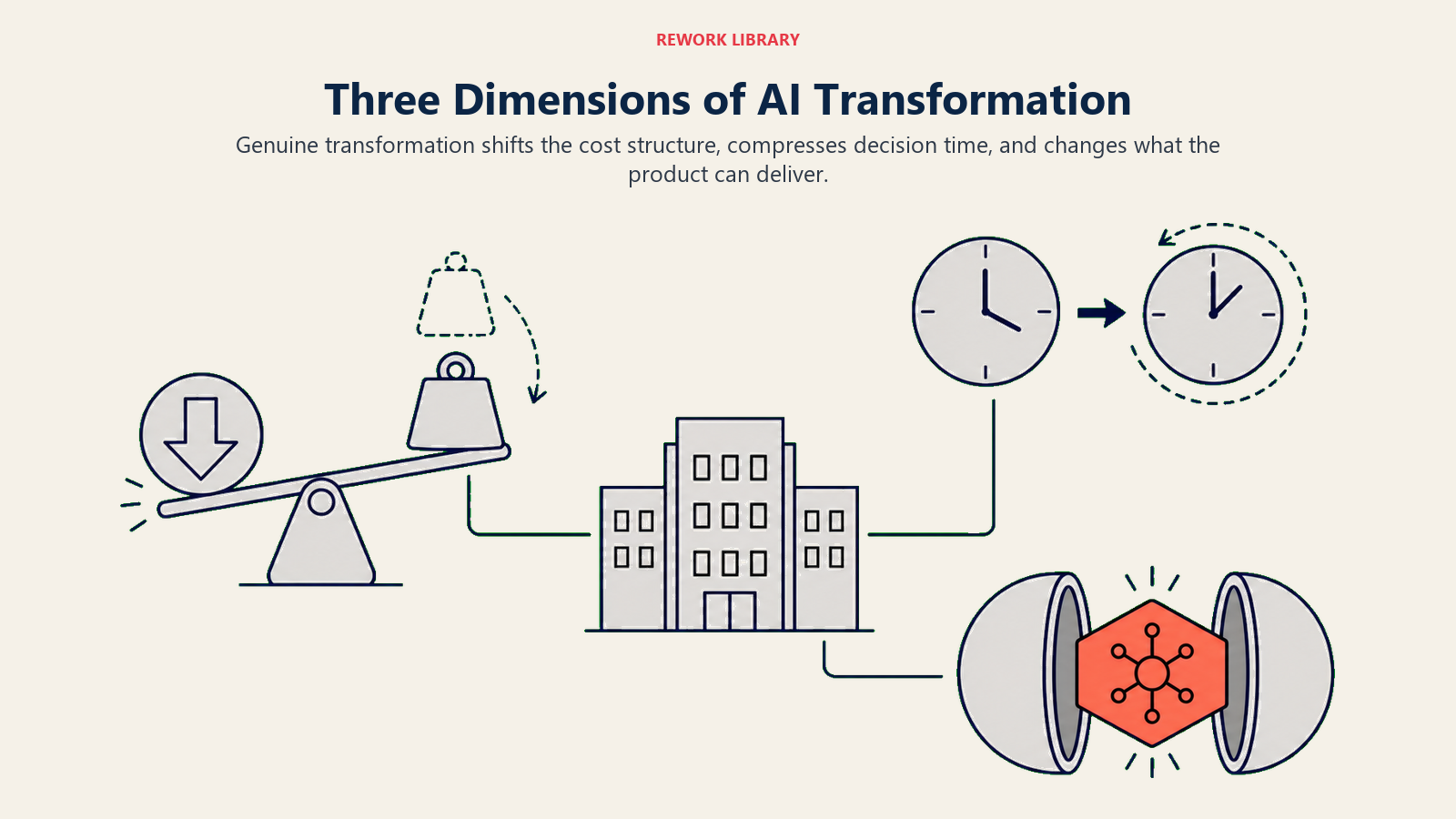
真にAIによってトランスフォーメーションした企業では、三つの変化が起きます。
コスト構造。 人件費と収益の比率が変わります。人員削減ではなく、同じ人数がはるかに多くの産出物を生み出せるようになるためです。KlarnaのAIアシスタントはチャット量の66%を処理し、700人のフルタイム担当者と同等の業務を行いました。これはチケットをさばくチャットボットではありません。カスタマーサービスのユニットエコノミクスの根本的な変化です。
意思決定スピード。 データ収集、構造化、分析、選択肢提示に担当者が必要だったために数日かかっていた意思決定が、今や数分で完了します。2週間かかっていた引受審査。3日間のアナリストスプリントを要していた需要予測。コンサルタントへの委託が必要だった競合分析。意思決定のスピードが桁違いに変わると、以前は不可能だった方法でビジネスを運営できるようになります。
プロダクトの表面積。 これは最も予測が難しく、うまくいったときに最も価値があります。AIが提供できるものを変えると、新たな収益が可能になります。MicrosoftはCopilotをOffice 365に組み込み、新しいプレミアム製品ティアを作りました。SalesforceはEinsteinで同様のことをしました。NotionはAI機能を構築し、コモディティ市場で競争上の差別化を実現しました。プロダクトの表面積拡大は自動的には起きません。しかし最初の二つを正しくやり遂げた企業にとって、それは天井を引き上げる動きになります。
トランスフォーメーションで変わること:ベンチマーク比較
| ビジネス次元 | AIトランスフォーメーション前 | AIトランスフォーメーション後 | 出典 |
|---|---|---|---|
| コスト構造 | 労働コストが産出物に比例してスケール | 同じ人数で2〜5倍の産出物 | McKinsey Global AI Survey 2025 |
| 意思決定スピード | データ重視の意思決定に数日〜数週間 | 数分〜数時間 | Rework分析、業界ベンチマーク |
| プロダクト表面積 | 価格ティアごとに固定された機能セット | AIによるティア差別化 | Microsoft、Salesforce、Notionの事例 |
| カスタマーサービス単位コスト | 担当者別対応モデル | AIが60〜70%の量を処理 | Klarna、2024 |
| AI ROIのタイムライン | リターンが出るまで12〜24ヶ月 | 上位企業は14ヶ月以内に5.8倍のROI | McKinsey、2025 |
現状についての率直な認識
CEOとしてこれを読み、「まだそこに到達していない」と思っているなら、あなたは多数派です。McKinseyのState of AI調査によると、組織の88%がAIを定期的に活用していると報告しているものの、エンタープライズ全体で有意な財務的インパクトを得ているのは6%に過ぎません。2026年時点での大半の企業は、AIマチュリティの5ステージモデルでいうステージ1またはステージ2、つまり戦略なしで個人がAIツールを使っているか、限られたパイロットが走っているかのどちらかです。
これは失敗ではありません。そこから作業が始まるのです。
間違いは、ステージ1をトランスフォーメーションと呼んだり、コアバリューチェーンへのAIの体系的適用という難しい作業をせずにトランスフォーメーションを宣言したりすることです。取締役会の問いには具体的な答えがあります。「現在ステージ2にいる。実施中のパイロットはこれだ。スケールするための基準はこれだ。18ヶ月のロードマップはこれだ。」
その答えは誠実です。信頼を生みます。そして作業を正しく設定します。
誰が何を担うか
オーナーシップは明確にする必要があります。AIトランスフォーメーションは、テクノロジー、オペレーション、財務、人材設計、経営陣の権限にまたがって同時に進むためです。
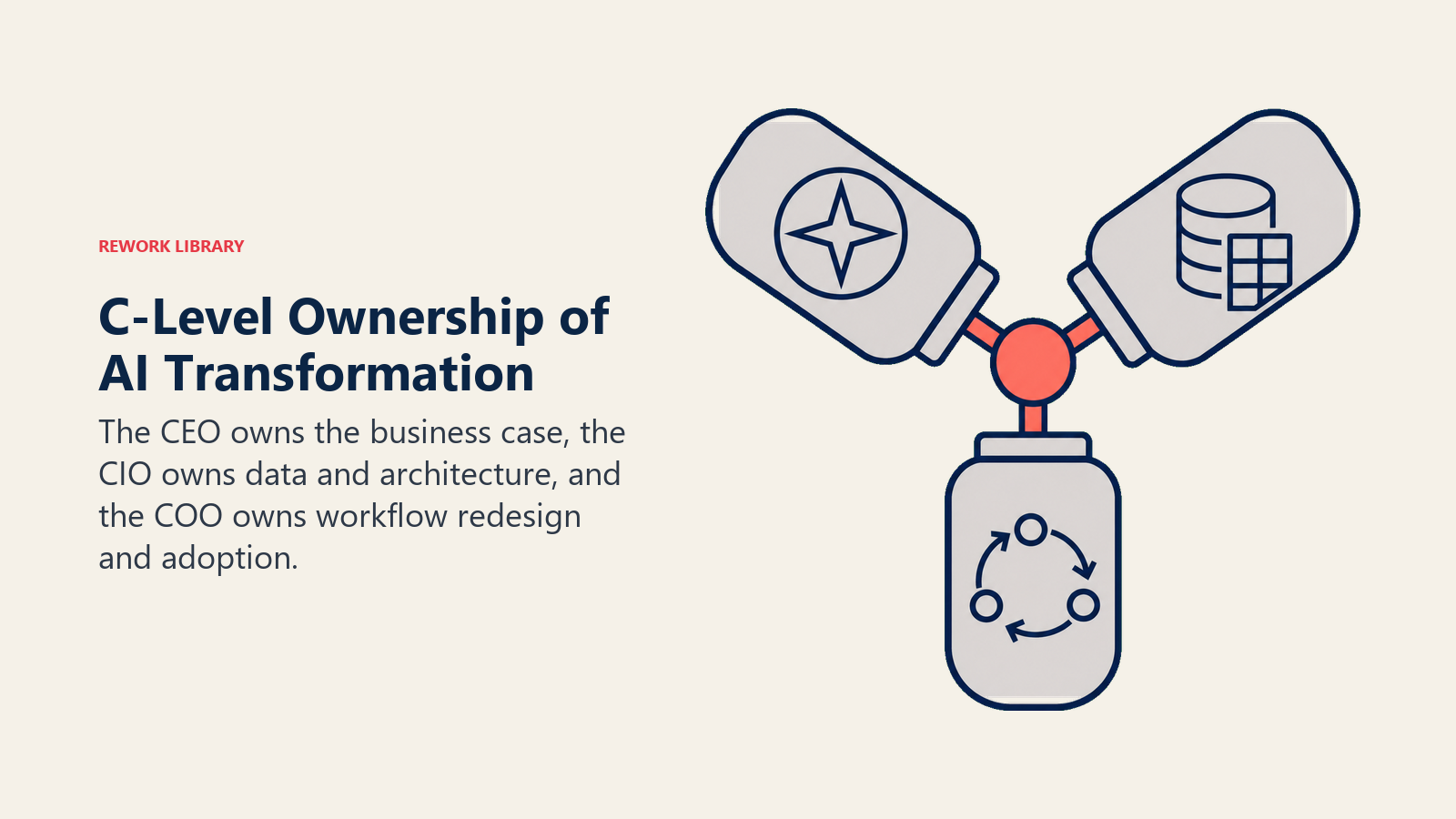
トランスフォーメーションが停滞する最も信頼性の高い予測因子の一つは、C-レベルでのオーナーシップの不明確さです。同じパターンが繰り返し起きます。CIOがツールとインフラを担い、COOが自分の組織でパイロットを実施し、CEOは全社集会でマンデートを設定するが、三者の連携がない。
六ヶ月後には、CIOはCOOのパイロットが使わないデータプラットフォームを導入し、パイロットは間違ったものを測定し、CEOは答えるデータなしに取締役会の問いを受けている。
トランスフォーメーションには三人の連携した担い手が必要です。
CEO はマンデートを設定し、ビジネスケースを担います。テクノロジーのロードマップではありません。ビジネスケースです。AIトランスフォーメーションはなぜ収益、維持率、競争ポジション、コスト構造にとって重要なのか?三年後の成功とはどんな姿か?CEOがこれを真の優先事項として維持しなければ、他のすべての組織は四半期目標と衝突したときにそれを後回しにします。そして衝突は起きます。頻繁に。
CIOまたはCTO はアーキテクチャとデータ基盤を担います。クリーンでアクセスしやすいデータなきAIトランスフォーメーションは見せかけです。CIOの仕事は、組織がその上にAIをスケールする前に、データレイヤー、統合レイヤー、ガバナンスレイヤーが整っていることを確保することです。データインフラが不十分なトランスフォーメーションは、毎回ステージ3で失敗します。
COO はオペレーション変革を担います。プロセス再設計なしに導入されたツールは効率性を生むだけで、トランスフォーメーションにはなりません。COOの仕事は、AIが既存のワークフローに後付けされるのではなく、AIができることを中心にワークフローが再設計されることを確保することです。これは三者の中で最も難しい仕事です。なぜなら、部門責任者たちに、チームのやり方が変わると伝えることを意味するからです。
三者の連携なしにはトランスフォーメーションは停滞します。CIOが構築しているのにCOOがプロセスを再設計していなければ、高価なインフラができても採用されません。COOがパイロットを実施しているのにCIOがデータ基盤を整えていなければ、パイロットはスケール時に失敗します。CEOがマンデートを維持しなければ、CIOもCOOもオペレーションの問題対応に引き戻されます。
Rework分析: 業界調査によると、CEO継続関与のあるAIトランスフォーメーションプロジェクトの成功率は68%、プログラム途中で経営層のサポートを失ったプロジェクトは11%です(McKinsey、2025)。CEOが取れる最も高いレバレッジの行動は、適切なAIツールを選ぶことではありません。ローンチ発表の後も関与し続けることです。
18ヶ月後と3年後の成功の姿
18ヶ月後、AIトランスフォーメーションをうまく実行している企業は次のことを言えるはずです。
コアな機能領域にわたって、パイロットではなく本番で二〜三つのAI対応ワークフローが稼働しており、少なくとも一つはコスト・パー・トランザクション、転換率、対応時間、Churnレートなどのビジネス指標への定量的インパクトが計測されています。それらのワークフローを支えるデータインフラが整備、管理されています。リーダーシップチームはAIができることとできないことについての共通の語彙を持ち、次のステージへの明確な担い手がいます。
これは劇的なことではありません。プレスリリース的な意味でのトランスフォーメーションでもありません。しかしそれは本物であり、ステージ3と4が構築される基盤です。
3年後、会話は変わります。AIが競争上の堀(モート)を変えたかどうかが問われます。コスト構造またはプロダクト表面積が持続的な優位性になるほど変化したかどうか。それが取締役会が本当に問いかけていることです。それは地味な18ヶ月の作業から始まります。
四半期ごとのロードマップについてはCEOのための18ヶ月AI議題をご覧ください。自組織の現状診断はAIマチュリティの5ステージから始めてください。資金と意欲のある企業がなぜここで失敗するかを知りたければ、なぜほとんどのAIトランスフォーメーションが失敗するのかで五つの根本原因を詳しく解説しています。
関連記事:
- AIトランスフォーメーションの実際のコスト:取締役会との会話前に知っておくべき予算の現実
- AIトランスフォーメーション対デジタルトランスフォーメーション:この区別がロードマップにとって重要な理由
- ACE Framework:ビジネスAIの周期表:すべてのC-suiteが必要とする能力の語彙
よくある誤解と真の定義の対比
| よく言われること | 実際に何であるか | トランスフォーメーションに必要なこと |
|---|---|---|
| 「500ユーザーにCopilotを展開した」 | AIツールの採用 | コアバリューチェーン全体にわたる体系的活用 |
| 「サポートを処理するチャットボットがある」 | 単一ユースケースのコスト削減 | サービス提供モデルを再設計するAI |
| 「先四半期にAIパイロットを実施した」 | 実験(ステージ2) | スケールのための基準を検証するパイロット |
| 「プロダクトチームが機能開発にAIを使っている」 | チームレベルの効率性 | 提供できるプロダクトを変えるAI |
| 「AIガバナンスポリシーがある」 | ガバナンス(必要条件だが十分条件ではない) | 意図的な展開戦略と連動したポリシー |
トランスフォーメーションはツールの数でも、予算でも、パイロットでもありません。それはAIがビジネスの産み出すものと競争のあり方を変える時点です。
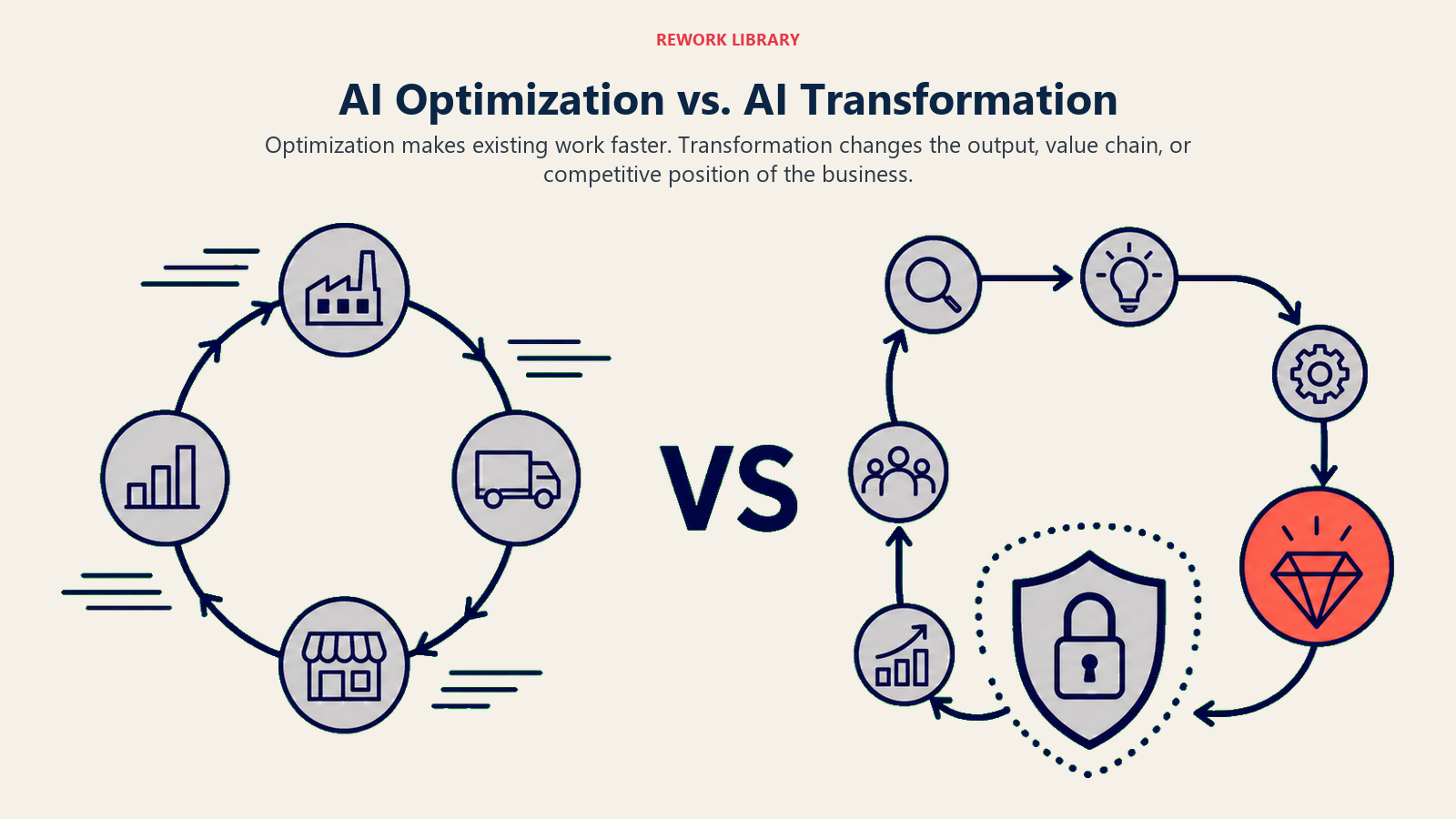
2026年のほとんどのC-suiteはまだその地点に到達していません。今後三年以内にそこに到達する企業は、今この瞬間、自分たちが実際にどこにいるかについて誠実な会話をしている企業です。
よくある質問
C-レベルにおけるAIトランスフォーメーションとは何ですか?
C-レベルにおけるAIトランスフォーメーションとは、組織のコアバリューチェーン全体にAI能力を体系的に適用し、同じ産出物をより速く生み出すのではなく、異なる産出物を生み出すことです。AIの採用(ツールを使うこと)やAI最適化(既存プロセスをより安くすること)とは別物です。トランスフォーメーションはビジネスが提供できるものと競争のあり方を変えます。
AIトランスフォーメーションとデジタルトランスフォーメーションはどう違いますか?
デジタルトランスフォーメーションはプロセスをアナログからデジタルに移行し、手作業を自動化してデータを蓄積しました。AIトランスフォーメーションはそれをさらに進め、そのデータを使って以前はスケールで不可能だった予測、意思決定、行動を実現します。重要な判断基準は、変化がビジネスの産出物と競争ポジションに影響するか、それとも既存オペレーションのコストを削減するだけかです。
なぜほとんどのAIトランスフォーメーションイニシアチブはエンタープライズ全体のインパクトを出せないのですか?
McKinseyの2025年State of AI調査によると、組織の88%がAIを定期的に活用していますが、測定可能なEBITインパクトを確認しているのは39%に過ぎません。失敗の主因は、AIが可能にすることを中心にワークフローを再設計するのではなく、既存ワークフローにAIを重ねることです。コアワークフローを再設計した組織は、有意な財務的リターンを報告する可能性が約3倍高いです。
AIトランスフォーメーションのアウトカム変化テストとは何ですか?
アウトカム変化テストは三つの問いによる診断です。(1)このイニシアチブはビジネスが産み出すものを変えるか、それとも速さだけを変えるか?(2)それはサポート活動ではなく、コアバリューチェーン機能に触れているか?(3)競合他社がそれを模倣するには、オペレーションを根本的に再設計する必要があるか?三問すべてに合格するイニシアチブはトランスフォーメーションロードマップに含まれます。そうでないものは最適化施策であり、トランスフォーメーションとして位置づけるのではなく、そのROIで評価すべきです。
C-レベルでのAIトランスフォーメーションのオーナーシップは誰が持つべきですか?
AIトランスフォーメーションには三人の連携した担い手が必要です。CEOはビジネスケースとマンデートを担い、CIOまたはCTOはデータインフラとアーキテクチャを担い、COOはオペレーション変革とワークフロー再設計を担います。この三者が連携していなければ、インフラは構築されても採用されない、またはパイロットが成功してもデータ基盤が追いつかない、あるいはCEOがマンデートを手放した時点で両方が崩れる、という結果になります。
AIトランスフォーメーションの成果が出るまでどれくらいかかりますか?
18ヶ月後、うまく実行されているAIトランスフォーメーションでは、コア機能に二〜三つのAI対応ワークフローが本番稼働(パイロットではなく)しており、少なくとも一つはコアビジネス指標への定量的インパクトが計測され、それらを支えるデータインフラが整備されているはずです。三年後は競争上の堀の変化が見え始める時期です。コスト構造の変化やプロダクト表面積の新展開として現れます。McKinseyのGlobal AI Survey 2025によると、上位企業は本番導入から14ヶ月以内に平均5.8倍のROIを報告しています。
AIトランスフォーメーションの文脈で「体系的に」はどういう意味ですか?
「体系的に」とは構造化されており、管理され、測定可能であることを意味します。場当たり的なツール実験ではありません。組織はAIがどこで活用されているかを把握し、その使い方を規定するポリシーを持ち、ビジネス目標に対してアウトカムを追跡する指標を持っているということです。「体系的」の反対は断片的です。異なるチームに異なるツールがあり、共有フレームワークがなく、ガバナンスがなく、集合的インパクトを測定できない状態です。
