AIへの置き換え不安:すべてのリーダーが向き合うべき困難な会話

Turn this article into takeaways for your work.


Each assistant summarizes the article only for you and suggests best practices for your work.
従業員はAI Literacyプログラムについて人事部に聞いてはいません。SlackのDMで、ランチの席で、ミーティング後の廊下で、2年後も自分の仕事があるかどうかを互いに聞き合っています。中には静かに履歴書を更新している人もいます。Klarna、Duolingo、IBM、Dropboxのニュースを見て、自分の役割が削減されたポジションと似ているかどうかを計算している人もいます。
これを無視しても問題は消えません。「もちろん全員安全です」と答えることは見下した態度であり、一部の役割については真実ではありません。正直な道はより難しいものですが、問題をさらに悪化させない唯一の道です。
リーダーシップがこのテーマを避ける理由
Key Facts: AIへの置き換え不安
- 現在、労働者の52%がAIがいずれ自分の仕事を置き換えるかもしれないと恐れており、1年前の27%から増加し、12ヶ月間でほぼ2倍の不安増加を示している。(KPMG 2025年11月)
- 従業員の44%が職場でAIがすでに使われていると報告しているが、経営陣がどのように適用されるかを説明したと答えたのは22%のみ。(Gallup)
- 雇用主の77%がAIが役割を変える中でWorkerをUpskillする計画を持っているが、再研修プログラムへの実際の投資は述べた意向を大きく下回っている。(World Economic Forum Future of Jobs 2025)
ほとんどの経営幹部チームがAI人員削減について直接の会話を避けるのは、それぞれが問題を悪化させる3つの正当な理由からです。
パニックを引き起こすことへの恐れ。 「一部の役割は大きく変わる」と言えば、「来四半期に何人かがレイオフされる」と受け取られることを心配します。意図したメッセージと不安が高まった環境で人々が受け取るメッセージは同じではありません。この恐れは妥当です。しかし解決策は沈黙ではなく精確さです。
約束に関する法的懸念。 雇用弁護士は保証できない雇用保障の約束をしないよう助言します。「AIによって誰も仕事を失わない」という発言は法的・評判的に後で問題になる可能性があります。これは実際の制約です。しかし約束をしないことと会話をしないことは別物です。
本当の答えについての真の不確かさ。 ほとんどの組織にとって正直な真実はこうです。どの役割がどのペースでどれほど縮小するか、完全には分かっていません。AI能力はほとんどの組織の計画サイクルよりも速く進歩しています。自分自身が確信を持てないのに確定的なことを言うのは不誠実に感じられます。
3つの理由はすべて理解できます。しかしそのどれも、このテーマに沈黙することを正当化しません。
なぜなら回避のコストは測定可能だからです。恐れているのに対処されていない従業員はPassive Resistanceを示すようになります。AIツールの展開には形式上は従いますが、精神的には従いません。マネージャーが見ているときはツールを使い、見ていないときは以前のワークフローに戻ります。AIアウトプットの問題を報告しません。報告することが「AIをサポートしていない人」というレッテルを貼られることになるかもしれないからです。会社の時間を使って他の仕事を探します。AI営業OpsがBackfireするときの失敗パターンの記事では、このようなPassive Resistanceがダッシュボード上では問題ないように見える採用数を生み出しながら実際の行動がほとんど変わらなかった複数のケースパターンを記録しています。
Passive Resistanceは技術的失敗より測定が難しく、コストが高くつきます。実際の採用率40%と公称採用率40%(公称は「技術的にツールを持っている」を意味する)のAI展開は、利用状況ダッシュボードが何を示していても失敗した展開です。
実際に起きていること
この不安は非合理的ではありません。AI主導の人員削減の実例があり、従業員はそれを知っています。
Klarnaは2024年、AIシステムが700人のカスタマーサービス従業員の仕事を担っていると発表しました。CEOはコストの何分の一かで700人のエージェントの仕事に相当すると説明しました。会社は同時期に全従業員を5,000人から4,000人以下に削減しました。2025年までにFast Companyが報告したところによると、KlarnaはAIカスタマーサービスがエッジケースや感情的に複雑なやり取りで顧客満足度低下を招いた後、人間のエージェントを実質的に再雇用していました。置き換えの道が最初の発表が示唆するほど単純ではないという警告的ケースです。
IBMのCEO Arvind Krishnaは2023年、AIで置き換えられる可能性のある役割への採用を一時停止すると述べ、7,800のバックオフィスとサポートポジションを具体的に挙げました。2024年までにIBMはHRオペレーションや特定のデータ入力機能での人員を削減しました。
Duolingoは2024年初めに請負業者の約10%を削減し、会社はAIによってその業務がより効率的に行えるようになったと明示的に述べました。
Dropboxは2023年に16%の人員削減を発表し、CEO Drew HoustonはAIが会社に必要なスキルの組み合わせを変えたと明示的に述べ、会社は以前とは異なる役割を必要としていると述べました。
これらはエッジケースや異常事例ではありません。継続し加速するパターンの初期事例です。Stanford HAIのAI Index研究は、2022年末から2025年中頃にかけてAIに影響を受ける職種における22〜25歳の雇用が6%減少していることを追跡しており、初期キャリアのソフトウェア開発とカスタマーサポートの役割に集中しています。これはまさに従業員が消えていくのを見ているエントリーレベルの機能に対応しています。問いはAIが自分の組織の労働力に影響するかどうかではありません。どの役割が、どのペースで、そして組織はその中にいる人々にどう対処するか、です。
従業員はこれらのニュースを見ています。そのパターンを自分の状況に当てはめています。リーダーシップが対処しないと、彼らはその沈黙を最悪のシナリオで埋めます。
3つの誠実なCEOの姿勢
唯一の正解はありません。組織はそれぞれ異なる段階にあり、成長軌道とコスト圧力も異なるからです。しかし3つの誠実な姿勢があります。それぞれが特定のコンテキストで適切であり、それぞれが信頼と採用に実際の影響をもたらします。
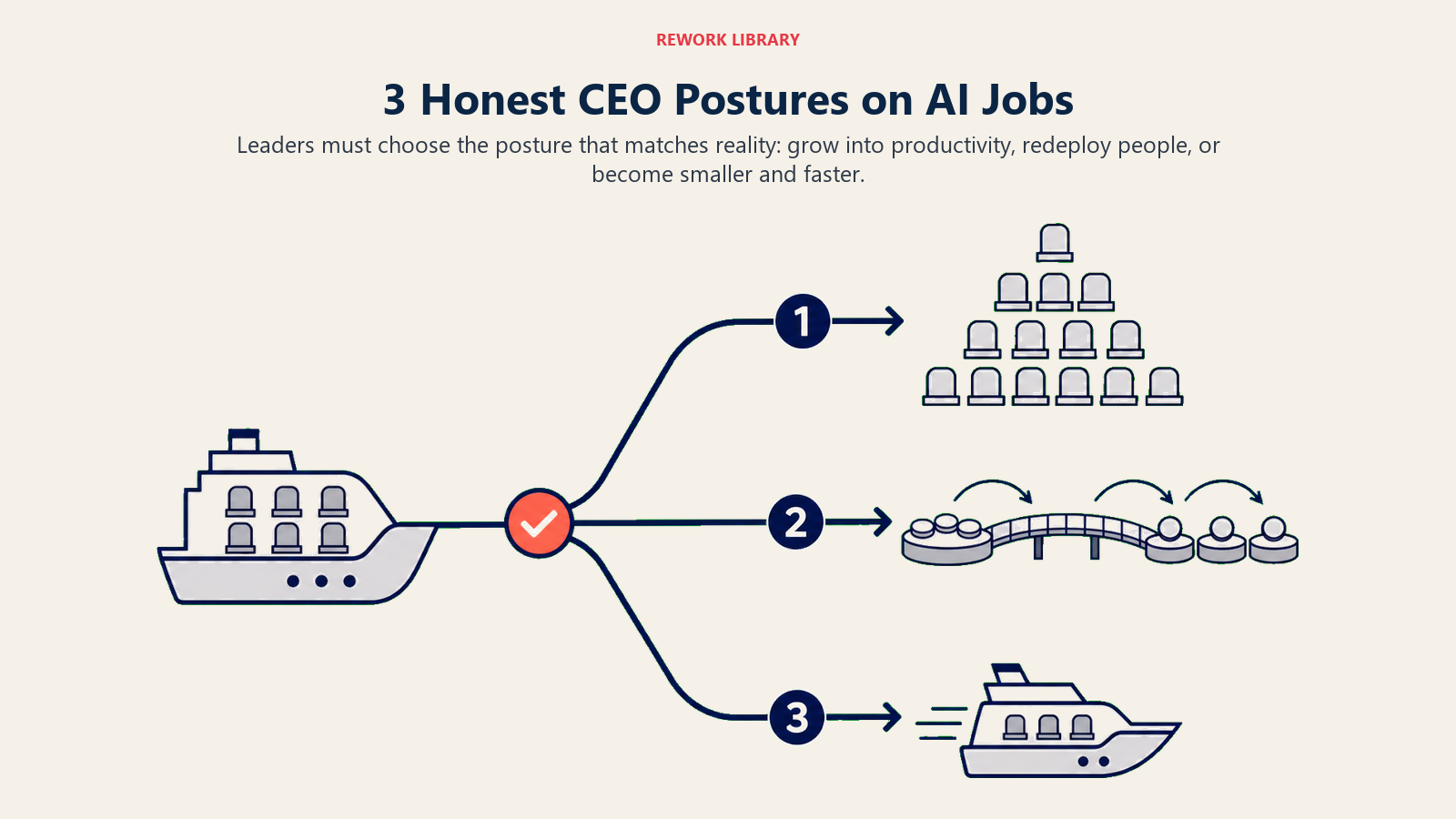
姿勢1:「成長で吸収する」
これはAI主導の生産性向上が縮小ではなく拡大によって吸収される高成長組織への誠実な答えです。年間30%の人員増加を達成している場合、AIの効率向上は既存の人員を削減するのではなく、収益成長に対して追加採用が少なくなることを意味します。
この姿勢は成長軌道が本物の場合にのみ誠実です。「成長で吸収する」と言いながら実際には横ばいまたは縮小市場にある会社は嘘をついています。売上が3四半期横ばいだった後に「成長で吸収する」と聞いた従業員はそれを信じません。そして信じないのが正しいのです。
この姿勢の結果:高成長モードでは定着と採用に効果的です。成長が鈍化した瞬間に信頼問題になります。明示的ではなくても従業員の頭の中では暗示的な約束が実在していたからです。
姿勢2:「再配置する、解雇しない」
これは真のスキル隣接性と再研修投資を特定できる中間サイクルの組織への誠実な答えです。コミットメントは具体的です。AIがタスクXを担うとき、タスクXをしている人々を隣接する役割Yに再研修させ、その研修の内容はこうなります。
この姿勢はスキル隣接性分析と再研修プログラムへの実際の投資を必要とします。単なる意図ではなく。従業員は以前にも実行しなかった会社から「再研修に投資する」と聞いたことがあります。信頼性には具体的なプログラム名、予算、移行がどのようなものかの具体例が必要です。
結果:再研修プログラムが本物で、移行が尊厳を持って処理されれば定着に効果的です。再研修の約束が実現しない場合、または再配置が「スキルに合わない役割に移してから6ヶ月後に解雇した」という意味であった場合、信頼の大惨事になります。
姿勢3:「小さく、速くなる」
これはAIの経済的ロジックが拡大や再配置ではなく人員削減を指し示すIPO後、マージン重視、またはコスト構造に制約のある組織への誠実な答えです。AIトランスフォーメーション後に一部の企業は以前より小規模になります。
これは最も取りにくい姿勢です。一部の仕事がなくなると認めることを必要とするからです。しかしそれが真実である企業には最も誠実な姿勢です。そして異なる種類の信頼の条件を作ります。会社が正直に話していることを知っている従業員は、驚かされるのではなく自分自身で決断を下せます。
結果:移行期間中は採用と定着が難しくなります。自分の機能が縮小していると正直に告げられた人々は他の仕事を探します。会社がそれを必要とする前に去る人もいます。しかし寛大な退職金、十分なリードタイム、真の移行サポートでこの姿勢を誠実に処理する会社は、発表の日まで架空の話を維持した会社よりも、多くの場合多くの組織的信頼を保ちます。
3つのCEO姿勢
3つのCEO姿勢フレームワークは、AI人員削減の会話に向き合うリーダーが取れる3つの誠実な立場を名指しします。「成長で吸収する」(AI主導の生産性向上が縮小ではなく拡大によって吸収される組織)、「再配置する、解雇しない」(真のスキル隣接性と名前のある再研修投資を持つ中間サイクル組織)、「小さく、速くなる」(経済的ロジックが人員削減を指し示すマージン重視またはIPO後の組織)。各姿勢は特定のコンテキストで誠実です。根底にある条件が一致しない組織に適用されると不誠実になります。
Quotable: 「すでにAIを使っている会社の従業員のうち、経営陣がどのように適用されるかを説明したと答えたのは22%のみ。残りの78%はその沈黙を最悪のシナリオで埋めている。」(Gallup)
Quotable: 「AI雇用置き換えへの恐れは1年間でほぼ2倍になった。27%から52%へ。昨年沈黙を選んだ経営幹部チームは問題を解決したのではなく複利で悪化させた。」(KPMG 2025年11月)
Quotable: 「ダッシュボードが示す利用率にかかわらず、実際の採用率40%と公称採用率40%のAI展開は失敗した展開だ。対処されていない置き換えへの不安から生まれるPassive Resistanceは、技術的失敗より測定が難しくコストが高い。」
Quotable: 「人員削減を誠実に、寛大な退職金、十分なリードタイム、真の移行サポートで処理する会社は、発表の日まで架空の話を維持した会社よりも多くの場合多くの組織的信頼を保つ。」
Quotable: 「McKinseyはGenerative AIが従業員の時間の60〜70%を占める業務活動を自動化できると推計しており、データ収集、基本的なデータ処理、予測可能な物理的業務で構成される役割に最も集中している。ほとんどの組織にとっての問いは、これらが縮小するかどうかではなく、どれだけ速く縮小するかだ。」
| CEOの姿勢 | 誠実である場合 | 不誠実になる場合 | 信頼への影響 |
|---|---|---|---|
| 「成長で吸収する」 | 検証済みの30%以上の成長軌道 | 同じメッセージを伝えながら横ばいまたは縮小市場にある | 成長が鈍化したとき信頼が崩れる |
| 「再配置する、解雇しない」 | 具体的な再研修プログラム、実際の予算、具体的な隣接性 | プログラムや予算なしの再研修の意図 | 約束が実現しなければ信頼の大惨事 |
| 「小さく、速くなる」 | 経済的ロジックが本当に人員削減を指し示す | AIトランスフォーメーションに見せかけたレイオフ | 困難なニュースでも誠実な信頼を生む |
Rework分析: エンタープライズAIコミュニケーションのパターンに基づくと、公的な姿勢を実際の経済状況と一致させ、その姿勢を具体的なプログラムの詳細で裏付けている組織は、一般的な安心の言葉を使う組織よりもAIトランスフォーメーション中の従業員エンゲージメントをより高く維持しています。従業員は述べられた姿勢と実際の姿勢のギャップを、ほとんどのリーダーが想定するよりも上手く検知します。
ミドルマネージャー固有の不安
特別な注意を要する従業員のカテゴリがあります。ミドルレベルのマネージャーとナレッジワーカーのジェネラリストです。
これらは多くのAI研究者が構造的に最もリスクが高いと特定した役割です。AIがすべての業務を置き換えるからではなく、AIがコーディネーション層の必要性を減らすからです。AIツールがステータスアップデートを統合し、最初の下書き分析を生成し、エスカレーションのための異常を浮かび上がらせることができるとき、ミドルマネージャーが行うコーディネーションと統合の業務の一部は労働集約度が低くなります。
どの商談を推進し、どの担当者がコーチングを必要とし、どのアカウントがリスクにあるかを知ることが主な価値だった営業マネージャーが、AIダッシュボードがその情報を自動的に浮かび上がらせる今、自分の役割は本当に不確かな形で変わっています。
このグループはしばしば最も静かに不安を感じているにもかかわらず、それを表明することに最も消極的です。ミドルマネージャーはChange Resistorではなく、Change Leaderであるべきだからです。自分のチームへのAI採用を推進することが期待されています。自分自身の不安を認めることは、組織上の役割との利益相反のように感じられます。
ミドルマネージャーに、AIが自分の役割に何を意味するかを議論する別の非公開フォーラムを与えてください。「ツールの使い方はここです」だけでなく、「AI拡張されたワークフローでのマネジメントがどのようなものかを考えており、あなたの価値がどのように進化するかについてお伝えします」という形で。代替案は、表面上は支持しながら密かに抵抗し、支持しているように見えながら採用を弱体化させるマネージャーの層です。AIがSaaSオペレーティングモデルを再形成する方法はオペレーショナルマネージャーにとって何が変わるかを具体的に示しており、多くの場合ミドルマネージャーフォーラムの最も有用な出発点となります。
誠実なコミュニケーションの形
一括りの約束ではありません。何が変わり何が変わらないかについての具体的な機能レベルの会話、そして会社が提供するものについての明確なコミットメントです。
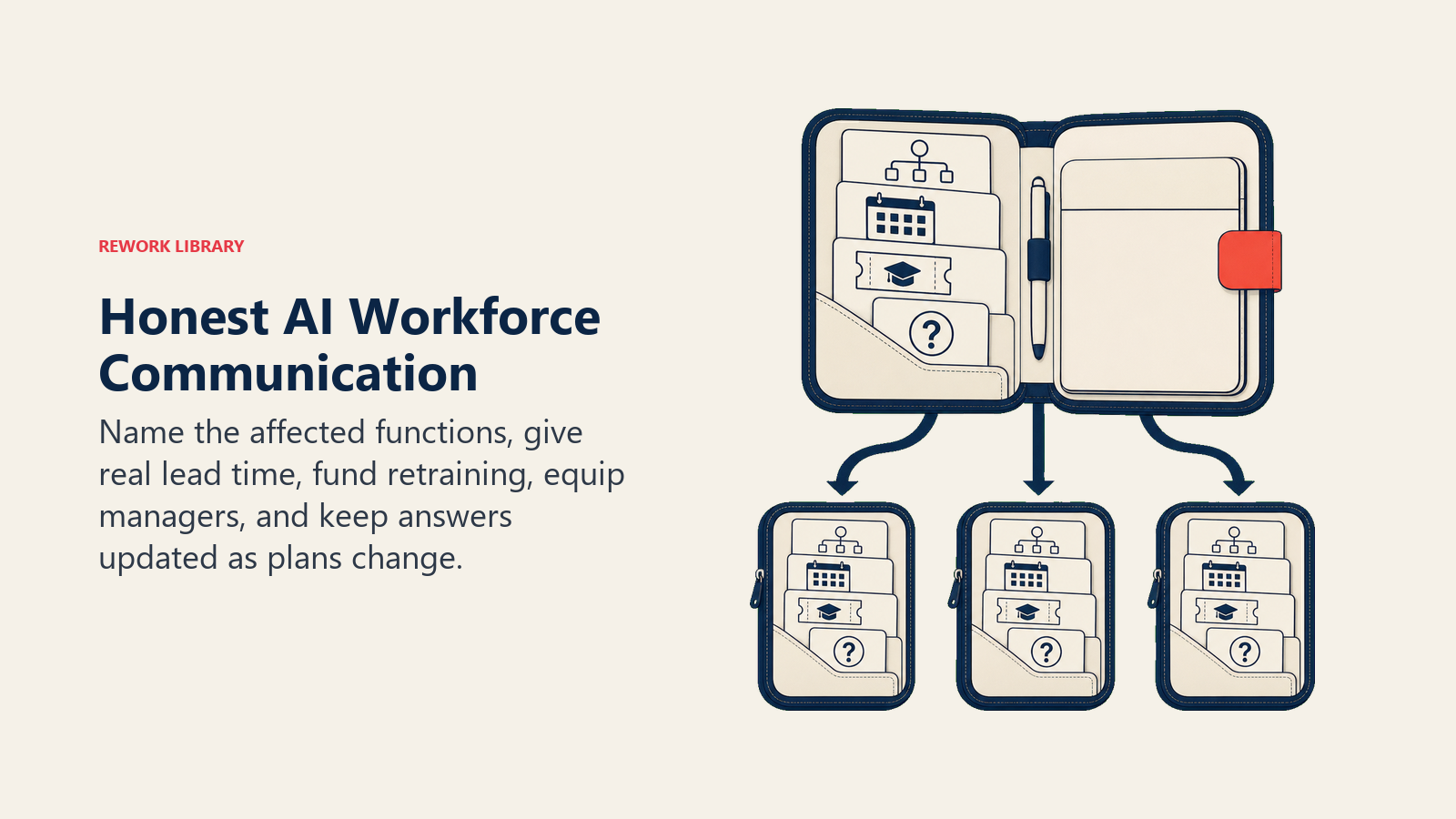
どの機能がどのように変わるかを具体的に示す。 「AIは私たちの仕事のやり方を変えます」は「カスタマーサービスチームの手作業によるチケットルーティング業務がQ3にAIに移行します。そのワークフローの12人に何を意味するかはこうです」とは伝わり方が違います。2番目のバージョンは人々が具体的な質問をし、自分の状況について情報に基づいた決断を下せるようにします。
時間を与える。 AI主導の人材変更の最悪のバージョンはサプライズです。翌月からポジションが廃止されると全体ミーティングで発表すること。突然知らされた人には準備する時間がありません。待ち伏せされたと感じます。怒りは理にかなっています。
これをうまく処理する組織は実際のタイムラインを示します。12〜18ヶ月で役割が大きく変わるなら、11ヶ月目ではなく今告げます。事前通知は倫理的に正しいだけでなく実際的にも賢明です。変化が来ることを知って準備する時間がある人々は、自分の時間が無駄にされたと感じた人々よりも移行期間中エンゲージメントを維持しやすいです。
再研修の言葉だけでなく実際の再研修に投資する。 各機能のスキル隣接性分析、研修のための具体的な予算、移行経路がどのようなものかの具体例。「あなたの成長に投資します」ではなく「その投資の内容はこれです。提供しているのはこれです。登録期限はここです」という形で。
全体ミーティングは重要ですが、それだけでは不十分。 全員への一斉発表はデマの問題を防ぎますが、個々の機能の懸念に対処するには広すぎることが多いです。全体ミーティングの後には、マネージャーがチームに関連した質問に答えられる機能別の会話をフォローアップすべきです。一般的な安心の言葉ではなく。
マネージャーへのスクリプトは過小評価されています。 マネージャーは、あなたが準備しようとしまいと、これらの質問に対応することになります。マネージャーが受ける可能性の高い具体的な質問と、正確な答えを示す30分のブリーフィングは実施する価値があります。代替案は50人のマネージャーが50の異なる答えを返し、一部が矛盾し、その全部を従業員が比較するという状況です。
FAQドキュメントは会話の代替にはなりませんが、役立ちます。 最も一般的な質問(「レイオフはありますか?」などの質問を含む)に誠実に答える明確なFAQを社内ネットに掲載することで、最も不安が高い夜中の2時を含む任意の時間に確認できるリソースを従業員に提供します。FAQは変化に合わせて更新されるべきであり、一度掲載して放置されるべきではありません。
本当に縮小する役割
AIが成熟するにつれて一部の機能は実際に人員削減を見ることになります。そうでないと言うことは誠実ではありません。証拠が示すものをお伝えします。
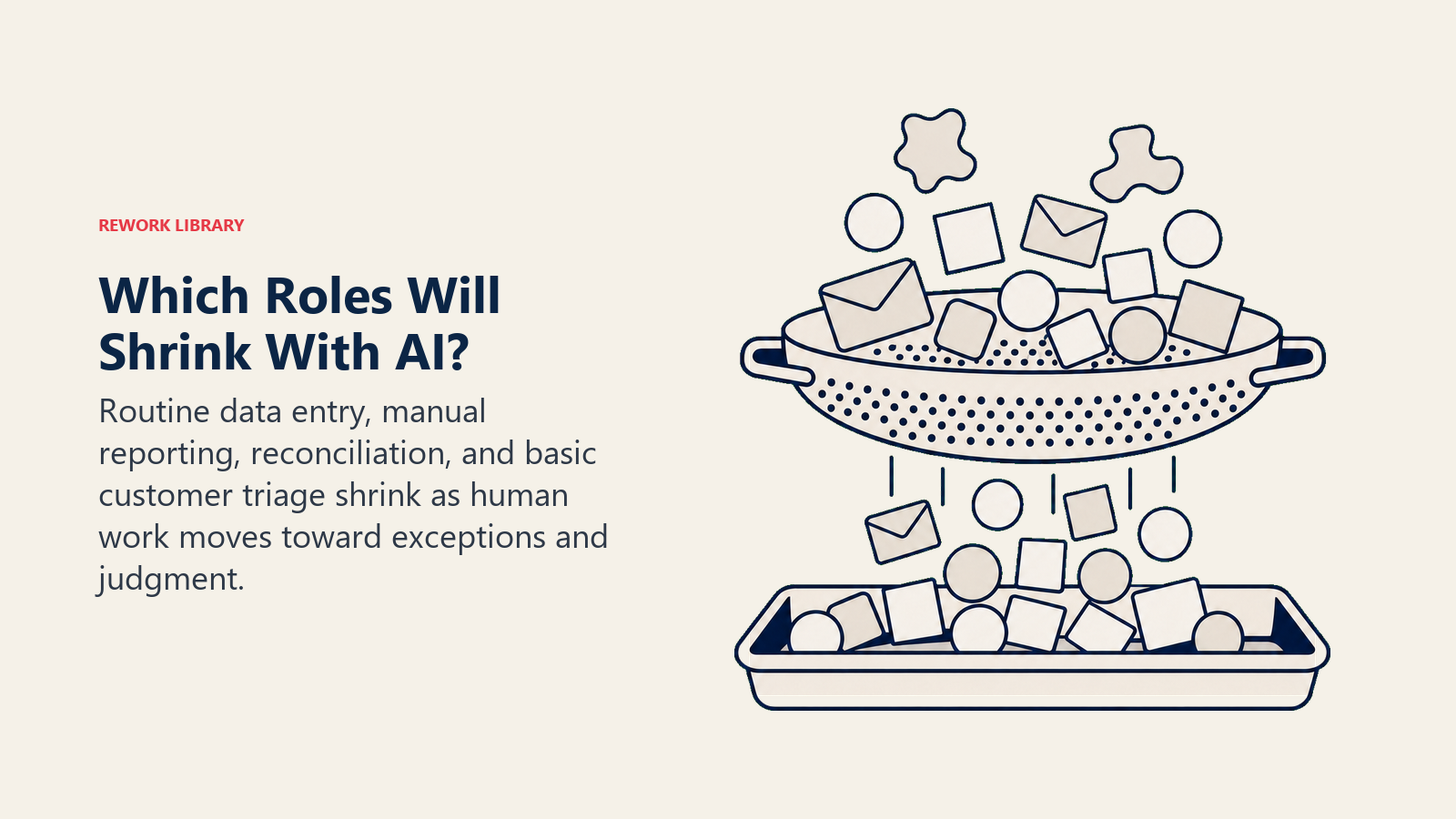
高ボリュームのルールベースのデータ入力。 買掛金(AP)処理、手作業のCRMデータ入力、基本的なデータフォーマット整理とクリーニング。これらはIngestとExecute能力のユースケースであり、AIの精度が95〜99%になると、スケールでの人間の労働がほぼ完全に置き換えられます。McKinseyのGenerative AIとアメリカの仕事の未来研究では、Generative AIが現在従業員の時間の60〜70%を占める業務活動を自動化できると推計しており、データ収集、基本的なデータ処理、予測可能な物理的業務で構成される役割に最も集中しています。ほとんどの組織にとっての問いはこれらが縮小するかどうかではなく、どれだけ速く縮小するかです。
手作業によるレポートと照合。 主に複数のシステムからデータを抽出し、フォーマット整理し、配布することを担う財務の役割。GenerateとAnalyzeの能力がこのワークフローの大半を担います。残る人間の役割は例外調査と解釈的分析ですが、それはレポーティング機能全体よりはるかに少ない人員です。
基本的な顧客トリアージ。 L1サポート、ファーストレスポンスのカスタマーサービス、日常的なクエリへのFAQとヘルプデスクの回答。AIのRAG(Retrieval-Augmented Generation)アシスタントが多くの問い合わせに対して、初期キャリアの人間エージェントと同等の品質で対応します。人間の役割は複雑なエスカレーションと関係管理にシフトします。
これらの変化はそれらの機能が完全に消えることを意味しません。より少ない人員が、AI支援のもとでより高度な判断を要する業務を行うことを意味します。それはゼロではありません。そして主なスキルがAIが今や行っているルーティン業務だった人々にとっては、再研修または移行についての誠実な会話が必要です。
信頼性のある再研修コミットメント
再研修が信頼されるのは、約束の裏にある時間、予算、役割、判断ルールを従業員が目にできるときだけです。
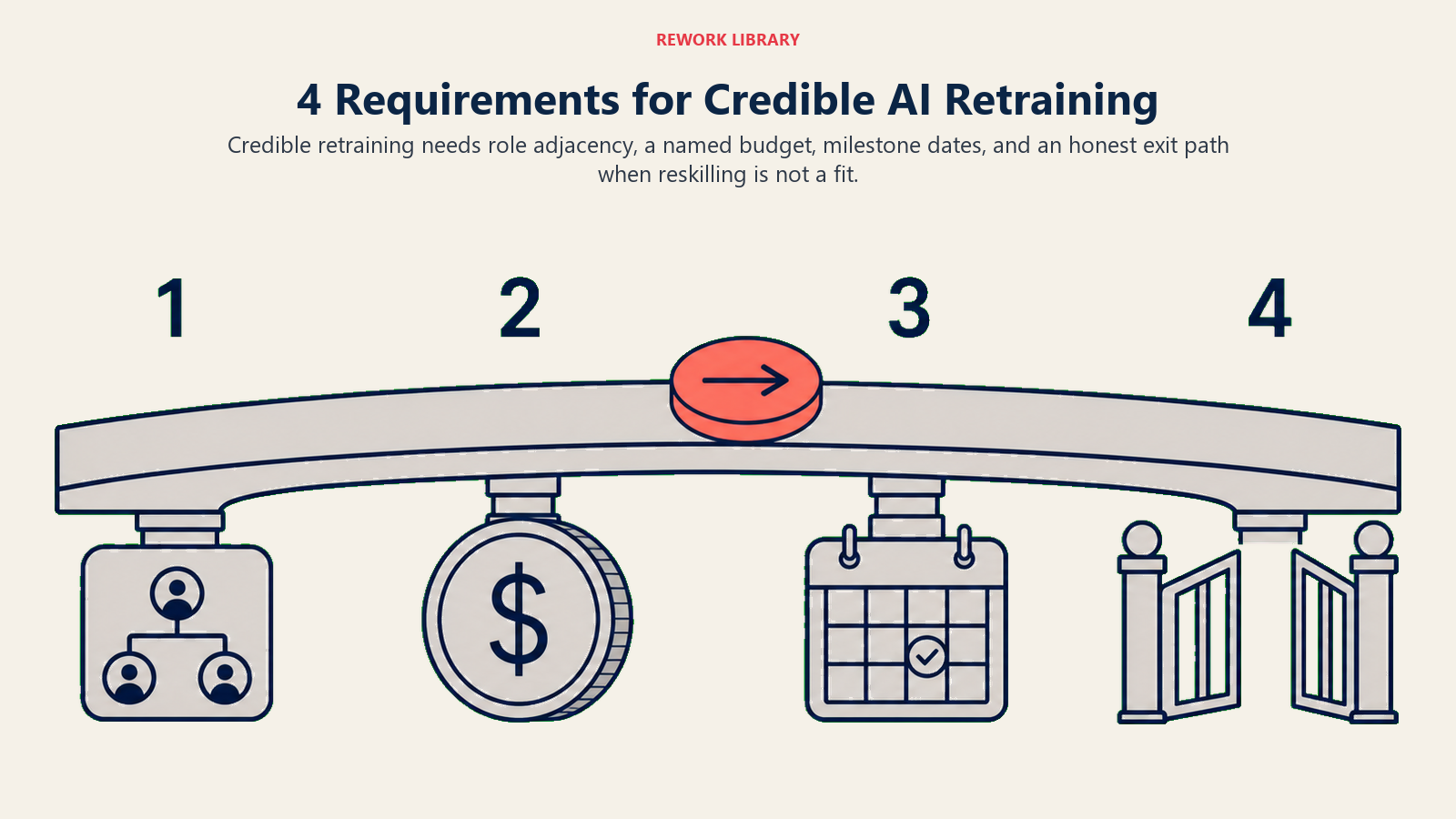
信頼性のある再研修オファーには4つのコンポーネントがあります。4つすべてがなければ、従業員は正しくそれを見せかけと見なします。AI CoEとEmbeddedモデルの決定は再研修リソースがどこに位置するかを形成します。集中型のCenter of Excellence(CoE)は一貫したプログラムを実施できますが、Embeddedモデルでは各ビジネスユニットが投資を所有する必要があります。WEFのFuture of Jobs Report 2025は、雇用主の77%がWorkerをUpskillする計画を持っているが、再研修プログラムへの実際の投資はその述べた意向を大きく下回っていることを発見しており、だからこそポリシーステートメントよりも具体性が重要です。
第1:消滅または削減されたタスクを組織内の隣接役割にマッピングするスキル隣接性分析。汎用的な「転用可能なスキル」の言葉ではなく、定義された移行経路を持つ具体的な役割オプションです。
第2:具体的な予算。「影響を受ける従業員1人あたりX円の外部研修をコミットします」または「以下の研修トラックのためにSection School / Coursera / [特定ベンダー]と提携しています」という形。名前のない予算は信頼性がありません。
第3:マイルストーンを持つタイムライン。プログラムはいつ始まるか?役割の変化はいつ起きるか?会社と従業員が一緒に再研修経路が機能しているかどうかを判断する意思決定ゲートはいつか?
第4:再研修が意味をなさないケースへの誠実な認識。誰もが隣接するAI時代の役割に再研修できるわけでも、したいわけでもありません。去ることを選んだ人への退職金パッケージは、信頼性のあるコミットメントの一部です。安価だからという理由で望まない役割に人々を留め置くことは、間違った種類の定着を生み出します。
ほとんどの企業の正直なベースライン
現在の成熟段階(2026年のほとんどの組織にとってステージ1〜2)では、AIは役割の変え方を変えています。近い将来にスケールで廃止するのではありません。ほとんどの中堅市場の組織にとっての12〜18ヶ月の地平線には、主要なAI主導の人員削減は含まれていません。意味のある役割の進化、ワークフローの変化、スキル開発の要件が含まれています。AIの成熟度の5段階モデルは正直なタイムラインを提供します。ステージ2で変わることとステージ4で変わることは量的にも質的にも異なります。
「近い将来」は定義が必要です。2年後は不確かさが増します。5年後には高ボリュームのルールベース業務が重度に構成された役割は異なる姿になるでしょう。
これが正直な答えです。「何も変わらない」という意味での安心はありません。しかしタイムラインについて具体的であり、方向性について正直であり、従業員が会社の再研修投資のために留まる価値があるかどうかを自分で判断する余地を残しています。
代替案は従業員が最悪のシナリオ解釈、Passive Resistance、静かな転職活動で埋める沈黙です。その代替案はよりコストが高くつきます。
何が具体的に変わるかについての機能レベルの詳細についてはAIによる役割の進化:誰に何が変わるのかをご覧ください。AI Literacy:新しい職場スキルには研修プログラムの構造があります。そしてAIの変更を従業員に伝えるでは実際のコミュニケーションプログラムの機械的な側面を扱っています。
どのタスクが自動化可能でどれが人間の判断を必要とするかを説明する際に使う語彙についてはACE Frameworkをご参照ください。そのフレーミングは抽象的な安心の言葉よりも従業員に対して信頼性があります。本稿が最初に来るのは、コミュニケーションプログラムが機能するのは根底にある姿勢が回避ではない場合だからです。自分の組織にとって実際に何が真実かを決め、それを言える意欲が必要です。
よくある質問
AI雇用置き換えへの不安は従業員の間にどれほど広まっていますか?
KPMGの調査によれば、2025年11月時点で労働者の52%がAIがいずれ自分の仕事を置き換えるかもしれないと恐れており、1年前の27%から増加しています。労働者の約7割が3年以内に自分の会社でAIによるレイオフが起きると考えています。そして43%がすでにAIによって仕事を失った人を知っています。これは端にある不安ではありません。2025年と2026年の支配的な労働力のナラティブです。
なぜリーダーシップはAI人員削減について議論を避けるのですか?
3つの正当な恐れが経営幹部を沈黙させています。最悪の解釈を意図せず確認してパニックを引き起こすことへの恐れ、保証できない雇用保障の約束をすることへの法的懸念、どの役割がどれだけ速く縮小するかについての真の不確かさです。しかしこれらの理由はそれぞれ問題を悪化させます。メッセージを受け取れない従業員はその沈黙を最悪のシナリオの仮定で埋め、AI採用のPassive Resistorになります。
AI人員削減に関する3つの誠実なCEOの姿勢は何ですか?
3つの誠実な姿勢は:(1)「成長で吸収する」。AI主導の生産性向上が縮小ではなく拡大によって吸収される検証済みの高成長軌道を持つ組織向け。(2)「再配置する、解雇しない」。真のスキル隣接性と名前のある再研修投資を持つ中間サイクル組織向け。(3)「小さく、速くなる」。経済的ロジックが本当に人員削減を指し示す組織向け。各姿勢は特定のコンテキストで誠実であり、根底にある条件が一致しない組織に適用されると不誠実になります。
AI展開におけるPassive Resistanceとは何ですか?
Passive Resistanceとは、従業員がAIツールの展開に形式上は従いますが、精神的には従わないことです。マネージャーが見ているときはツールを使い、見ていないときは以前のワークフローに戻ります。AIアウトプットの問題を報告しません。そうすることがAIへの反対シグナルになるからです。静かに履歴書を更新します。ダッシュボードで40%の利用率を示す展開が40%の公称採用率と実際には遙かに低い実採用率を持っている可能性があります。対処されていない置き換えへの不安から生まれるPassive Resistanceは、技術的失敗より測定が難しくコストが高いです。
AIによって本当に縮小する役割はどれですか?
高ボリュームのルールベースのデータ入力(AP処理、CRMデータ入力、基本的なフォーマット整理)、財務における手作業のレポートと照合、L1サポートの基本的な顧客トリアージは、AIが成熟するにつれて実際の人員削減が見込まれる機能です。McKinseyはGenerative AIが従業員の時間の60〜70%を占める業務活動を自動化できると推計しており、データ収集、基本的なデータ処理、予測可能な物理的業務に最も集中しています。ほとんどの組織にとっての問いはこれらの機能が縮小するかどうかではなく、どれだけ速く縮小するかです。
信頼性のある再研修コミットメントとはどのようなものですか?
信頼性のある再研修コミットメントには4つのコンポーネントが必要です。スキル隣接性分析(汎用的な「転用可能なスキル」の言葉ではなく具体的な役割移行経路)、具体的な金額またはベンダーパートナーを伴う名前のある予算、意思決定ゲートのマイルストーンを持つタイムライン、そして再研修が誰にでも合うわけではないという誠実な認識と去ることを選んだ人への真の退職金オファーです。4つすべてがなければ、従業員は正しくそれを見せかけと見なします。
なぜミドルマネージャーはAIについて特に不安を感じるのですか?
ミドルレベルのマネージャーはAIがコーディネーション層の必要性を減らすことから構造的なリスクに直面しています。しかし彼らの不安はしばしば見えません。組織上の役割が公にAI採用を推進することを求めているからです。組織上の管理責任と対立するように見えることなく自分自身の置き換えへの不安を認めることができません。ミドルマネージャーがAIが自分の特定の役割に何を意味するかを、他者を通じてAIの変化を管理する方法だけでなく議論できる非公開フォーラムを作る組織は、マネージャー層から一貫してより高品質の採用を見ます。
AI雇用保障についてリーダーシップはどのようにコミュニケートすべきですか?
どの機能がどのように変わるかを具体的に示し、事前タイムライン(サプライズ発表ではなく12〜18ヶ月のリードタイム)を与え、名前のある予算を伴う実際の再研修に投資し、全体ミーティングの後に機能別の会話でフォローアップし、よくある質問への正確な答えを持つマネージャーのスクリプトを準備し、置き換えの質問(レイオフの質問を含む)に直接対処する明確なFAQを社内ネットに掲載してください。「全員の仕事は安全です」という一般的な安心の言葉が後から誤りだったことが判明すると、変化についての早期の誠実なコミュニケーションよりも持続的な信頼ダメージを生みます。

Co-Founder, Rework.com