CEOのための18ヶ月AI議題

Turn this article into takeaways for your work.


Each assistant summarizes the article only for you and suggests best practices for your work.
ほとんどのAI戦略文書は、三人のコンサルタントが貢献し、五ヶ月の改訂サイクルを経た80枚のスライドで、いかなるマイルストーンにも担当者の名前がありません。トランスフォーメーションが完了した組織がどんな姿かを説明します。月曜日に何をすべきかは示しません。McKinseyが調査した最高のCEOがAIの瞬間をどのように捉えているかは明快です。「待って様子を見るCEOの会社は繁栄しないでしょう。重要性という意味でそれほど二者択一です。」
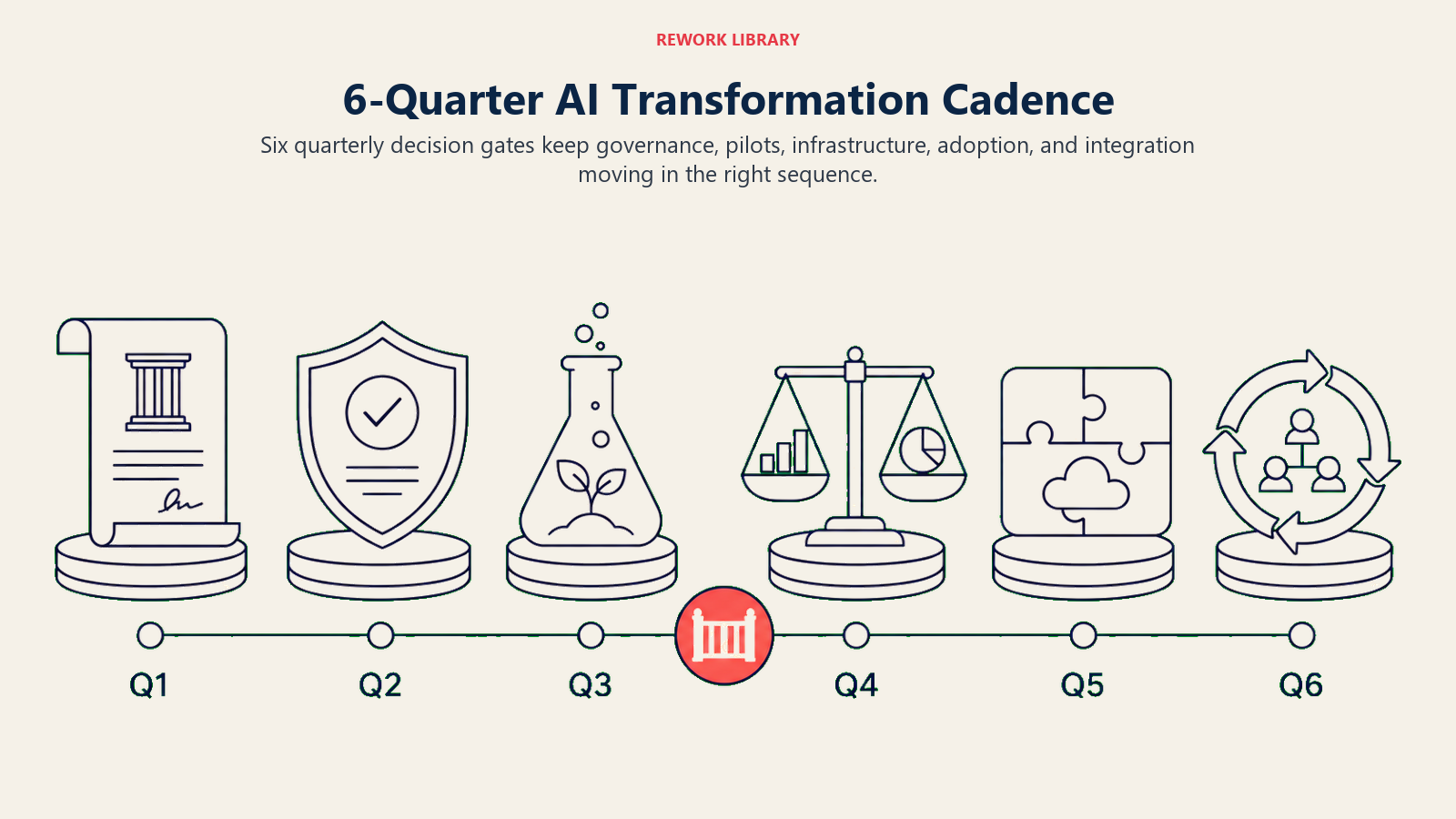
6四半期AIケイデンス(6-Quarter AI Cadence)
六つのカレンダー四半期にわたってAIトランスフォーメーションを順序付けるための構造的フレームワークです。第1四半期:評価とガバナンス(マチュリティ監査、ポリシー、ユースケース選定、AIリード任命)。第2四半期:インフラとリテラシー(優先ユースケースのデータレイヤー、20%のAIリテラシートレーニング、ベースラインを収集したパイロット設計)。第3四半期:パイロット実施(2〜3のパイロット実行中、6ヶ月目にガバナンスレビュー、ベースライン対実績トラッキング)。第4四半期:評価と意思決定(パイロットの振り返り、パイロットごとのスケール/中止決定、勝者の本番展開準備)。第5四半期:最初の本番展開(少なくとも一つの完全なワークフローが本番稼働、60%リテラシー目標、オペレーティングモデル決定)。第6四半期:組織化(恒久的なAI組織構造、次の地平線ロードマップ、ROIと次の投資サイクルに関する取締役会プレゼンテーション)。6四半期ケイデンスは、各四半期の成果物が次の前提条件となるように設計されています。Q1を省略するとQ2のパイロットがガバナンスのない品質の低いデータで実施されます。Q3のガバナンスレビューを省略するとリスクがQ4に向けて蓄積されます。
これは異なります。CEO(最高経営責任者)が承認し、組織に説明責任を持たせることのできる18ヶ月の意思決定、オーナー、マイルストーンです。作業は具体的です。オーナーは名指しされています。成功基準は測定可能です。CEOの個人的な説明責任は委任されるものから分離されています。
AIトランスフォーメーションの取り組みが18ヶ月以内に取締役会での会話から本番展開に移行するなら、これが成功したプログラムが概ね辿るアーク(弧)です。
「AIトランスフォーメーションを主導するCEOと委任するCEOの差は測定可能です。継続的な関与があれば成功率68%、なければ11%。それは丸め誤差ではありません。一つの変数によって生み出される成功確率の6倍の差です。」(Rework、McKinsey 2025をもとに)
この議題が前提とすること
主要データ:CEO AI議題
- エンタープライズの85%が現在AIイニシアチブを追求しているが、70〜85%が期待される成果を達成できていない。その差は「ローンチ時にマンデートを設定して四半期ごとに確認する」というCEOの役割だった組織で最も大きい(業界調査、2025〜2026)
- AIトランスフォーメーションプロジェクトでCEOの継続的な関与があるものは成功率68%、ローンチから6ヶ月以内にアクティブなC-suiteスポンサーシップを失ったものは11%(McKinsey、2025)
- エンタープライズはAIロードマップの予算を次のように配分しています。人材30%、インフラ25%、ソフトウェア/ツール20%、データ準備15%、変革管理10%。一方McKinseyのガイダンスは高パフォーマンス企業に対して人材とプロセスへの70%投資を規定しています(2026年ベンチマーク)
議題が始まる前に、三つのことが真である必要があります。
まず、CEOがAIトランスフォーメーションの定義を読み、内面化していること。プレスリリース版ではありません。2026年のほとんどの企業の現状(マチュリティモデルのステージ1〜2)、トランスフォーメーションがビジネスレベルで実際に何を必要とするか、これがITイニシアチブではなく資本配分の意思決定である理由の誠実な全体像を含むバージョンです。
次に、取締役会がブリーフィングを受け、トランスフォーメーションのマンデートを承認していること。「AI探索」の予算行ではありません。AIトランスフォーメーションが複数年の投資含意を持つ戦略的優先事項であるという明示的な取締役会レベルの意思決定です。このフレーミングが重要なのは、AIトランスフォーメーションが次の18ヶ月で複数回、四半期目標と衝突するからです。取締役会レベルの支持なしには、その衝突で負け続けます。
三つ目に、CFO(最高財務責任者)が誠実なコストモデルを見ていること。この議題を可能にする予算はツールライセンスの明細行ではありません。データインフラ、統合エンジニアリング、変革管理、ガバナンスを含みます。ほとんどのミッドマーケット企業にとって、有意義なROIが現れる前の18ヶ月で70万〜170万ドルの投資です。
これら三つの条件が整っていなければ、まずその作業を行ってください。以下の議題は、資金不足の予算で、取締役会の支持なく、またはコミットしていることを本当に理解していないCEOのもとで実施されると失敗します。
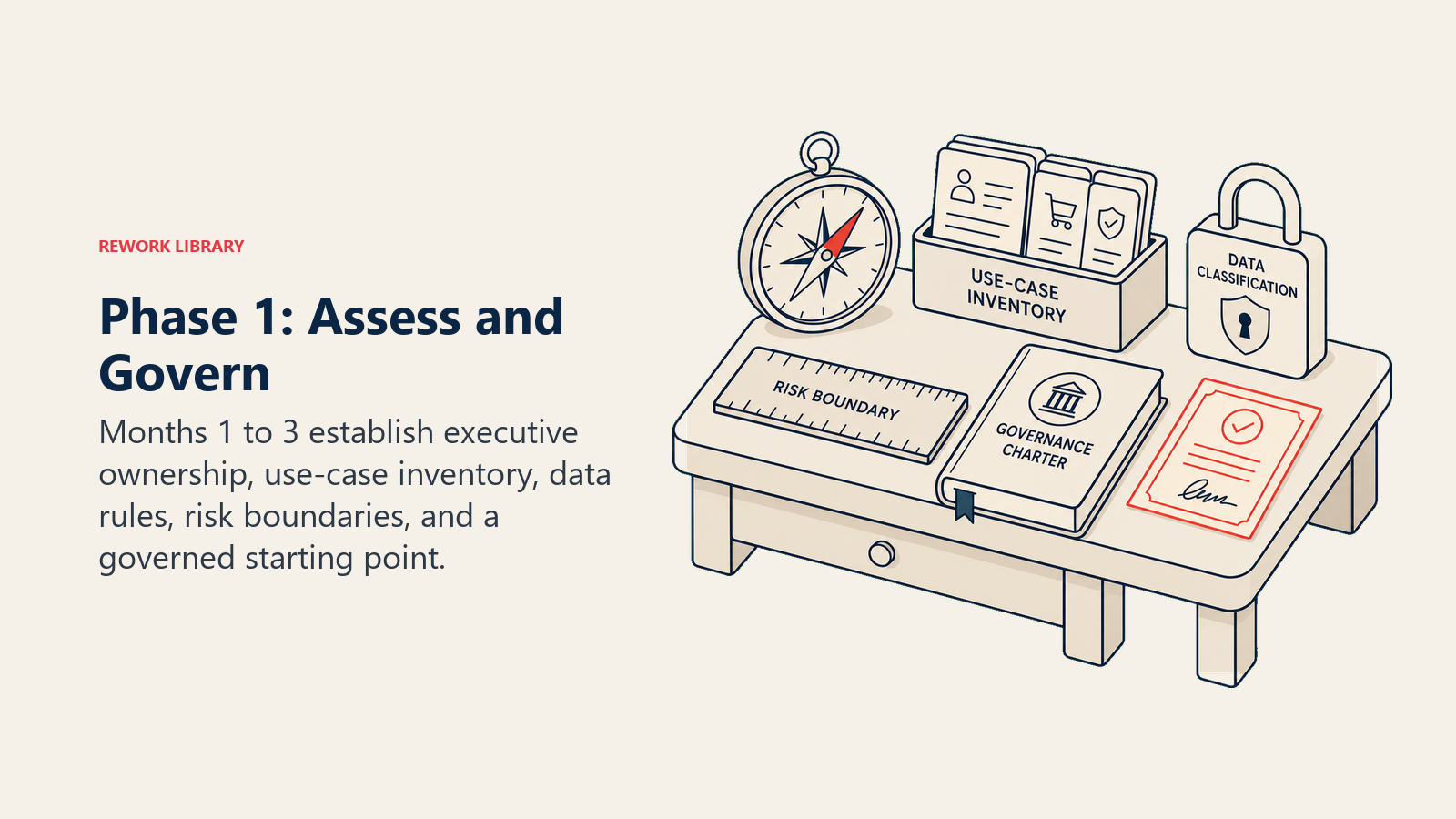
フェーズ1(1〜3ヶ月):評価とガバナンス
このフェーズは派手ではありません。AIプロダクトや目に見える能力を生み出しません。それなしでは他のすべてが失敗する基盤を生み出します。ほとんどのトランスフォーメーションプログラムはこのフェーズを省略または省略して実施します。それがほとんどのトランスフォーメーションプログラムが失敗する理由です。
タスク1.1:AIマチュリティ監査の委託
オーナー: CEOの直属報告者(最高AI・イノベーション責任者、CIO、またはトランスフォーメーションリード) 成果物: ビジネスユニットごとの現在のAIマチュリティステージ、データインフラ状態、既存のAIツール使用状況(承認済みおよび未承認)、現状と三つのターゲットユースケース要件とのギャップの書面による評価 成功基準: 監査完了、CEOおよびリーダーシップチームへのブリーフィング、各ビジネスユニットのステージ分類の文書化
監査はベンダーエンゲージメントではありません。内部評価です。今日誰が何のAIツールを使っているか?各ビジネスユニットはどんなデータをどんな状態で持っているか?データはどこで断片化、重複、またはアクセス不能になっているか?ビジネスモデルに対して最も高い価値のあるAIユースケースはどこか?
この監査は二つの不快な発見を表面化します。まず、従業員はすでに会社が承認していないAIツールを使っています。次に、データインフラにはCIO(最高情報責任者)が取締役会に報告した以上の問題があります。どちらも正常です。どちらも対処が必要です。現在のステージを評価するためのフレームワークについてはAIマチュリティの5ステージをご覧ください。
タスク1.2:AI活用ポリシーの策定
オーナー: CIOまたは法務部門長、CEOの承認を得て 成果物: すべての従業員に伝達された書面によるAI活用ポリシー。承認されたツール、データ取扱ルール、禁止される使用、説明責任の構造、質問のためのエスカレーションプロセスを含む 成功基準: ポリシーの公開、すべての従業員による受領確認、AI活用違反に対する明確なプロセス
ポリシーは網羅的である必要はありません。すべての従業員が現在持っている三つの問いに答える必要があります。仕事でChatGPTを使っていいか?何を貼り付けていいか?分からない場合はどうするか?
ポリシーなしでは、会社は誤用からの保護も意図的なガバナンスの基盤も持ちません。McKinseyの取締役会ガバナンス調査では、ほとんどの組織がAIが戦略にどう適合するかについて明確な見解をまだ持っておらず、ガバナンスの明確さなしでは他のトランスフォーメーションアクションは何も重要ではないことが分かっています。詳細なポリシー構造についてはAI活用ポリシーの構築でコンポーネントと一般的なギャップをカバーしています。
タスク1.3:上位三つのユースケースの特定
オーナー: CEO + ビジネスユニットリード 成果物: ビジネスインパクトと実現可能性でランク付けされた三つのユースケース。それぞれに、具体的なビジネス課題、測定可能なベースライン指標、必要なAI能力、成功した場合の推定ROI、データ準備状態の評価を含む 成功基準: ユースケースはパイロットを設計できるほど具体的。「AIで営業生産性を向上する」は不合格。「5万ドル以上のARRのアカウントに対するQBR準備時間を4時間から45分に削減し、担当者一人あたりアカウントごとに2.5時間を解放する」は合格。
選定基準:(1)課題に金額がついている、(2)AIが機能するために必要なデータが利用可能か3〜6ヶ月以内に利用可能にできる、(3)影響を受けるチームにこの問題を解決したいと思う管理者レベルのチャンピオンがいる。
タスク1.4:AI説明責任オーナーの任命
オーナー: CEO 成果物: 最高AI・イノベーション責任者、AIリード、AIトランスフォーメーションリード、または契約フラクショナルCAIO(最高AI責任者)として名指しされた個人。AI議題を推進するための明示的な権限と説明責任を持つ 成功基準: 役割が充填され、報告構造が明確で、最初の90日間の目標が合意されている
この人物はチームで最も技術的に高度な人物である必要はありません。クロスファンクショナルな説明責任を保ち、技術的なステークホルダーとビジネス的なステークホルダーの間を通訳し、オペレーションのプレッシャーによってトランスフォーメーションが後回しにされているときにCEOにエスカレーションできる必要があります。このオーナーなしでは、四半期目標がリーダーシップの注目を争うたびに議題は勢いを失います。
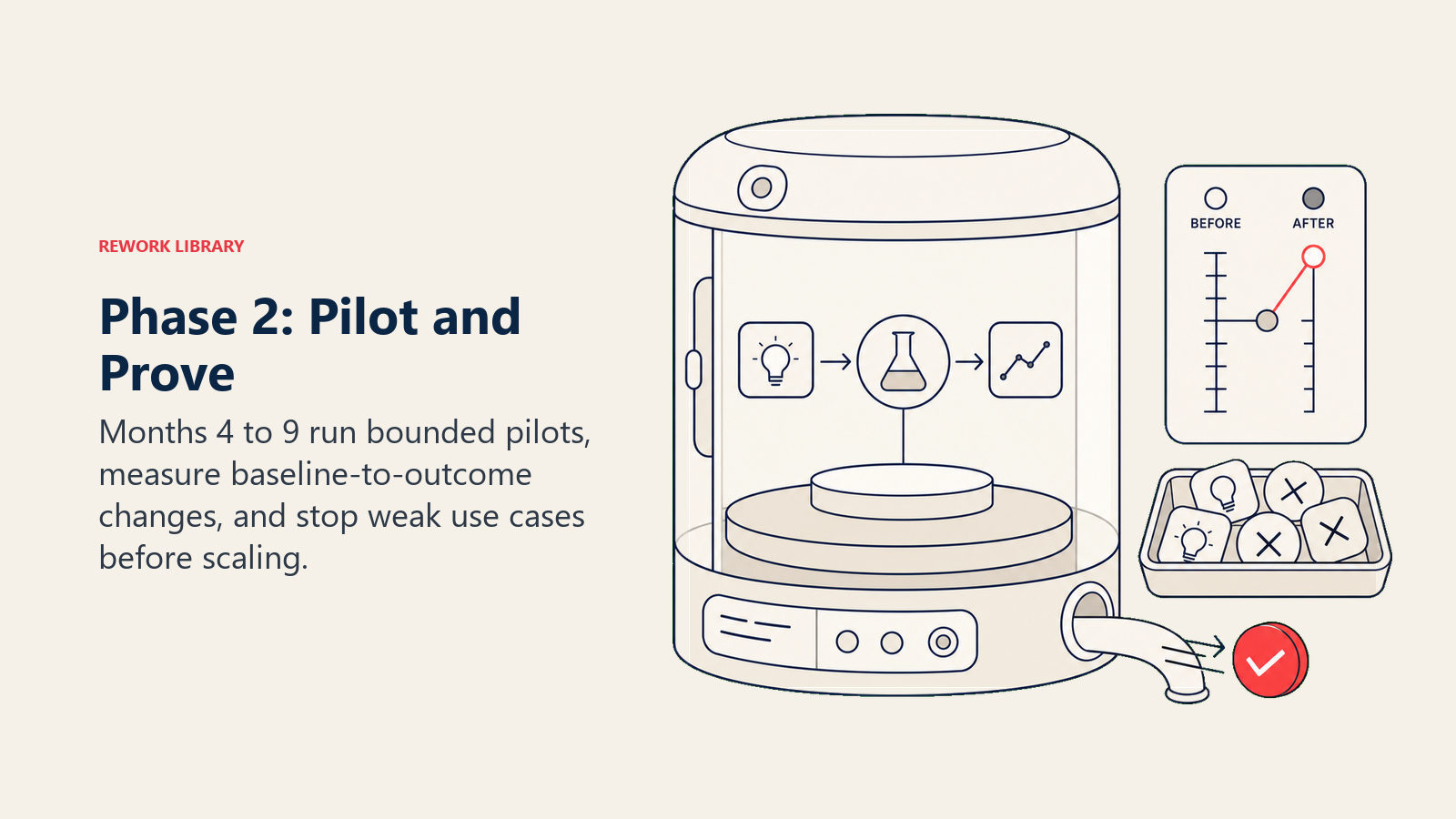
フェーズ2(4〜9ヶ月):パイロットと実証
このフェーズはスケーリングを正当化する証拠基盤を生み出します。明確な成功基準で実施された二、三の限定的なパイロットは、CFOが次の予算サイクルを承認するために必要なデータと、COO(最高執行責任者)がより広いワークフロー再設計にコミットするために必要なオペレーショナルな証拠を生み出します。
タスク2.1:明示的なROI仮説を持つ2〜3のパイロットの開始
オーナー: AI説明責任オーナー + ビジネスユニットリード パイロットごとの成果物: 課題の記述、パイロット開始前に収集されたベースライン、定義された範囲とタイムラインを持つパイロット設計、定量的ターゲットを持つ成功基準、4週目と8週目のチェックインのスケジュール 成功基準: 6ヶ月目までにすべての三つのパイロットが実施中、すべての三つに対してベースラインが収集されている
このタスクで最も重要なことはベースラインの収集です。パイロット開始前に現状を測定してください。AIが改善するはずの指標:今日それが何であるかを書き留めてください。これは明らかなことのように聞こえます。ほとんどのパイロットで省略されます。ベースラインなしではアウトカムを証明できず、アウトカムの証明なしでは次の投資フェーズを正当化できません。
タスク2.2:最優先ユースケースのデータインフラの構築
オーナー: CIOまたはデータエンジニアリングリード 成果物: 最優先パイロットのAI要件のためのクリーンでアクセス可能なデータレイヤー、文書化されたデータ品質基準とメンテナンスプロセスを持つ 成功基準: 優先パイロットのAIツールが入力の10%以上で手動修正なしにデータを正しくインジェストして分析できる
これはマチュリティ監査がギャップとして特定したインフラ投資です。オプションではありません。乱雑なデータで実施しようとするパイロットは一貫性のない結果を生み出し、AI産出物に問題を経験したビジネスユニットリーダーは「AIが機能しない」と結論付けます。データレイヤーへの投資が最初に必要だったのに。データ準備:ほとんどのAIプロジェクトが省略する前提条件がパイロット前のチェックリストを提供します。
タスク2.3:最初のコホートへのAIリテラシートレーニング
オーナー: CHRO(最高人事責任者)または学習・開発機能 成果物: 従業員の20%(優先:リーダーシップチーム+パイロットに直接影響を受けるチーム)が基礎的なAIリテラシートレーニングを完了 成功基準: リーダーシップチームがAIができることとできないことを説明でき、ACE Frameworkの語彙が社内会話で正しく使われており、パイロットチームが特定のAIツールにとって成功と失敗がどんな姿かを理解している
AIリテラシートレーニングは画一的なプログラムではありません。CEOはAIツールを使っている営業担当者とは異なる種類のリテラシーが必要です。経営幹部には概念的なモデルが必要です(AIが何について推論でき何についてできないか、ガバナンスの説明責任がどんな姿か、失敗モードは何か)。個人の貢献者には使用している特定のツールに関する実用的なトレーニングと、産出物がおかしく見えたときに何をするかが必要です。
タスク2.4:最初のガバナンスレビューの実施
オーナー: AI説明責任オーナー + 法務部門長 タイミング: 6ヶ月目 成果物: フェーズ1で確立されたポリシーに対するAIツール使用の評価、ポリシーのギャップや違反の特定、必要に応じてポリシーの更新、AI程序の状況に関する取締役会へのブリーフィング 成功基準: 本番にレビューなしの高リスクAI展開がない、ポリシーのギャップが文書化され対処されている
6ヶ月目は早期チェックです。トランスフォーメーションはまだパイロットモードです。しかし6ヶ月目のガバナンスレビューは、チームが承認されたパイロット範囲を超えて行動した場合、データ取扱がポリシーと一致していない場合、またはパイロットが誰も予期しなかったリスクの問いを提起する産出物を生み出している場合を発見します。
フェーズ3(10〜18ヶ月):スケールと統合
10ヶ月目までに証拠があるはずです。元のベースラインに対して測定された一、二つの機能したパイロット。その証拠がなければ、フェーズ3は始まりません。パイロットが測定可能な結果を生み出さなかった理由の振り返りを行い、何もスケールする前に根本原因を修正します。
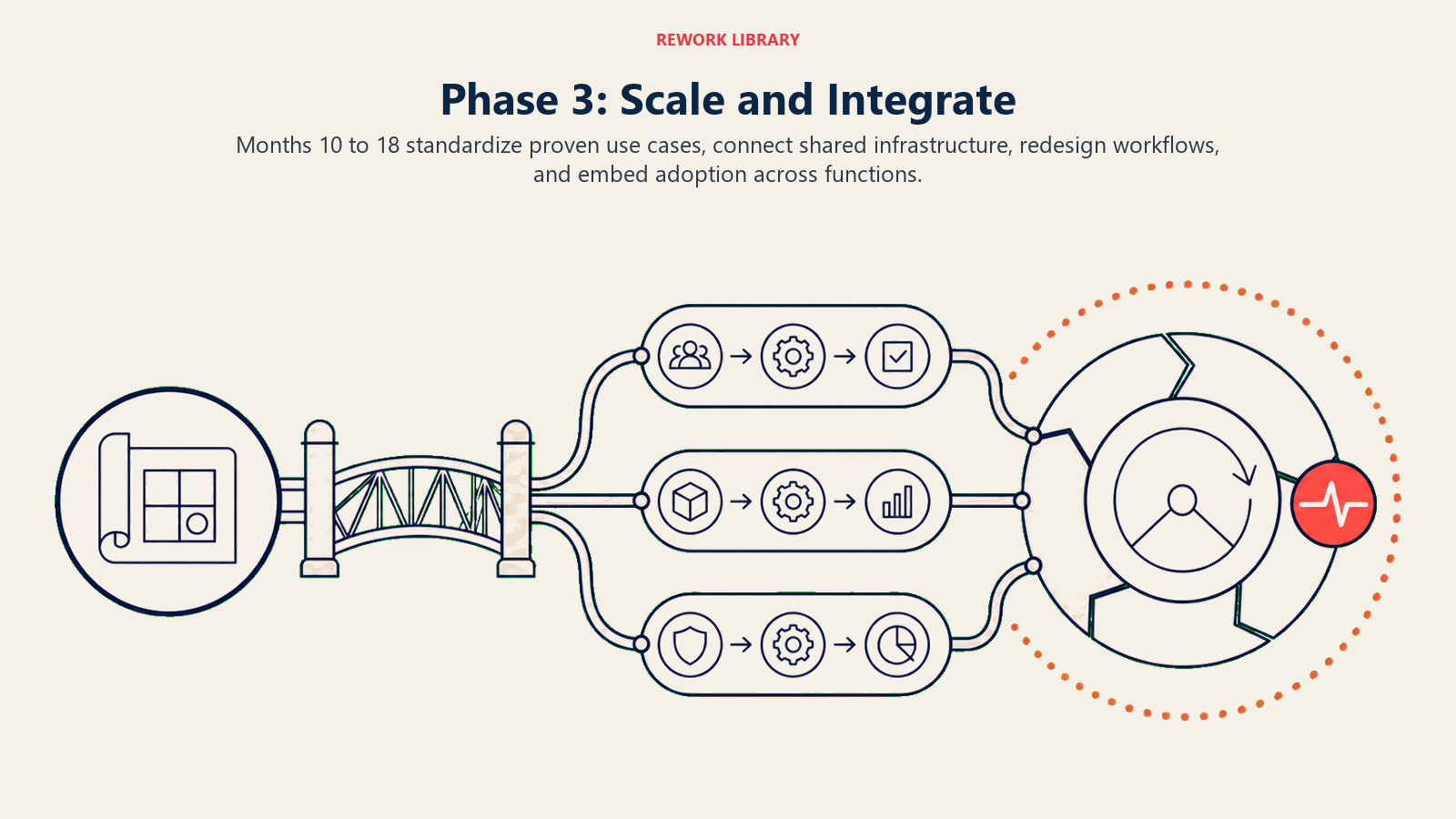
証拠があると仮定して、フェーズ3は証明から本番へと移行します。
タスク3.1:少なくとも一つのパイロットを完全な本番展開へ
オーナー: AI説明責任オーナー + COO 成果物: 一つのAI対応ワークフローが完全な影響チーム(パイロットサブセットではなく)に展開され、監視が整備され、SLAが定義され、システム障害時のロールバック計画がある 成功基準: チーム全員がシステムを使用し、パフォーマンス指標が毎週追跡され、フェーズ2で確立されたベースラインに対して測定可能な改善がある
本番展開はパイロットと一つの重要な点で異なります。COOが既存プロセスにAIツールを追加するだけでなく、ワークフローを再設計することへのコミットメントが必要です。変更されていないワークフローに後付けされたAIシステムは効率性を生み出します。再設計されたワークフローに組み込まれたAIシステムはチームが達成できることを変えます。この二つのアウトカムの違いが「AIが助けてくれた」と「AIがこの機能をトランスフォームした」の違いです。
タスク3.2:AIリテラシーを従業員の60%に拡大
オーナー: CHRO 成果物: 本番AI展開によってワークフローが影響を受けるすべてのチームへのAIリテラシートレーニング完了、さらにリーダーシップ近接の管理者と個人の貢献者の第二コホート 成功基準: 従業員調査で60%以上が会社の本番AIシステムが何をするか、AIの産出物がレビューを必要とする場合の自分の説明責任を正しく説明できる
リテラシーなしの展開は準備です。リテラシーなしの展開は採用失敗です。この二つのタスクはタイミングを近くする必要があります。
タスク3.3:AIガバナンスのオペレーティングモデルの確立
オーナー: AI説明責任オーナー + CIO 成果物: CoE(センター・オブ・エクセレンス)(集中型AIチーム)対組み込みモデル(ビジネスユニット内のAIリード)対フェデレーテッドモデル(CoE+組み込み)の決定。決定が文書化され、人員配置の含意が明確で、次年度の予算が開発されている 成功基準: 組織構造が決定され、役割が定義され、来年度AI予算提案が完了している
12〜15ヶ月目までに、企業はトランスフォーメーションプロジェクトチームではなく、AIのための恒久的なオペレーティング構造を必要とします。トランスフォーメーションプロジェクトには始まりと終わりがあります。AIツールを継続的に評価、展開、ガバナンスするためのオペレーショナルな筋肉は恒久的な組織能力である必要があります。
タスク3.4:マチュリティステージの再評価と次の地平線の設定
オーナー: CEO 成果物: AIマチュリティの5ステージモデルに対する更新されたマチュリティ評価、次のフェーズのための18ヶ月ロードマップ、トランスフォーメーションの進捗と次の投資サイクルに関する取締役会プレゼンテーション 成功基準: 取締役会が次の投資サイクルを承認し、CEOが会社が達成したステージとステージ3または4が何を必要とするかを明確に説明できる
これが18ヶ月の議題が継続的なプログラムになる瞬間です。最初の18ヶ月は基盤を構築します。18ヶ月以降はそれをスケールします。18ヶ月目の取締役会プレゼンテーションはCEOが受託者責任を示す場です。何を費やしたか、測定可能なリターンはどうか、次の投資サイクルのケースはどうかを示します。
CEOが個人的に所有するものと委任するものの違い
この区別が重要なのは、トランスフォーメーションプログラムが説明責任を曖昧にする場所だからです。
CEOが個人的に所有するもの:
- ビジネスケース:AIトランスフォーメーションが会社の競争ポジションにとって戦略的優先事項である理由
- マンデート:組織の緊迫感を設定し、四半期目標との衝突を乗り越えてそれを維持すること
- 予算:ライセンス契約に署名するだけでなく、投資の総合モデルを承認すること
- 取締役会への報告:6ヶ月目と18ヶ月目にトランスフォーメーションの進捗と投資ケースを取締役会に提示すること
- 説明責任オーナー:AIリードを採用または任命し、説明責任を持たせること
CEOはテクニカルアーキテクチャを理解する必要はありません。ツール選定会議に出席する必要はありません。何かCEOの注意を要するものが表面化しない限り、ガバナンスレビューに出席する必要はありません。これらは委任されます。
CIOへの委任:
- アーキテクチャとデータインフラの意思決定
- ベンダー評価と選定
- 統合エンジニアリング
- AIセキュリティとガバナンスツール
COOへの委任:
- 各本番展開のためのワークフロー再設計
- 採用トラッキングと報告
- 変革管理プログラムの実行
- パイロットの成功/失敗評価
CHROへの委任:
- AIリテラシートレーニングプログラムの設計と提供
- 影響を受けるチームとの役割進化に関する会話
- 従業員調査と採用指標
AI説明責任オーナーへの委任:
- 三つのフェーズすべてにわたるクロスファンクショナルな調整
- マイルストーントラッキングとCEOへのエスカレーション
- ポリシー更新とガバナンスレビューの実行
- ユースケース評価とパイロット設計
十分な資金のあるプログラムを殺す一般的な落とし穴
テクノロジーから始める。 フェーズ1が完了する前にツールを評価し、ベンダーを選定し、展開するチームは1〜6ヶ月を未評価の基盤の上に構築することに費やし、9ヶ月目に本番展開が失敗したときにガバナンスとデータインフラのギャップを発見します。
ガバナンスを省略する。 AI活用ポリシーは2ヶ月目には官僚主義のように感じられます。11ヶ月目のインシデント後には受託者責任のように感じられます。フェーズ2.1の前にフェーズ1.2を実施してください。インシデントが起きたとき、AIインシデント対応Playbookが存在すれば良かったと思うことになります。
曖昧なマイルストーン。 「AIユースケースを探索する」はマイルストーンではありません。「マチュリティ監査を委託し、[日付]までに完了し、CEOとリーダーシップチームに提供する」がマイルストーンです。曖昧なマイルストーンは、トランスフォーメーションプログラムが18ヶ月間漂流して何も測定可能なものを生み出さない方法です。
パイロット失敗プロトコルがない。 一部のパイロットは失敗します。それはプログラムの失敗ではありません。プログラムが正しく機能している証です。仮説をスケールする前にテストしています。パイロット開始前に明示的な失敗基準を設けてください(「8ヶ月目までにX改善が見られなければ終了する」)そしてそれを守ってください。
Rework分析: エンタープライズAI実装パターンに基づくと、6四半期AIケイデンスはQ3(パイロット)ではなくQ1/Q2の境界で最も頻繁に失敗します。組織はQ1でマチュリティ監査とAIポリシーを完了し、「パイロットは待てない」という理由でタスク2.2(データインフラ)を完了する前にQ2でパイロットを開始します。結果:パイロットが不完全なデータで実施され、一貫性のない産出物を生み出し、ライン管理者の信頼を失います。タスク2.2(データインフラ)を完了してからパイロットを開始する6〜8週間の遅延は、パイロットが再スタートを必要とせず一回目で成功するため、一貫してより速い正味のタイムラインを生み出します。
上記の18ヶ月の議題は出発点であり、完全なロードマップではありません。詳細は企業規模、業界、開始のマチュリティステージによって異なります。McKinseyのグローバルテック議題2026は、先進的なCIOがビジネスの進め方を変えるためのエージェント型自動化と、まったく新しい収益源を生み出すためのデータのプロダクト化に投資していることを確認しています。しかし構造は変わりません。評価とガバナンス、そしてパイロットと実証、そしてスケールと統合、そして説明責任モデル(CEOがマンデートとビジネスケースを所有し、他のすべては委任される)は、ほぼすべての真剣なトランスフォーメーションプログラムに転換されます。
この議題が必要とする投資のコストモデルはAIトランスフォーメーションの実際のコストにあります。マチュリティモデルで組織がどこに立っているかの診断はAIマチュリティの5ステージにあります。
よくある質問
AIトランスフォーメーションプログラムでCEOは最初に何をすべきですか?
最初の三ヶ月はツールの展開ではなく、評価とガバナンスに集中すべきです。CEOはビジネスユニット全体のAIマチュリティ監査を委託し、書面によるAI活用ポリシーを策定し、測定可能なベースラインを持つ二、三の高価値ユースケースを特定し、AI説明責任オーナーを任命すべきです。この基盤作業が4〜9ヶ月のパイロットの成否を決定します。
6四半期AIケイデンスとは何ですか?
6四半期AIケイデンスは18ヶ月にわたってAIトランスフォーメーションを順序付けるためのフレームワークです。第1四半期は評価とガバナンスをカバーします。第2四半期はインフラとリテラシーをカバーします。第3四半期はガバナンスレビューを伴うパイロットを実施します。第4四半期は結果を評価してスケールまたは中止の意思決定を行います。第5四半期は最初の本番ワークフローを展開してリテラシーを拡大します。第6四半期はオペレーティングモデルを組織化し、取締役会に次の投資サイクルのROIケースを提示します。各四半期の成果物は次の前提条件です。
CEOが個人的に所有するものと委任されるものは何ですか?
CEOが個人的に所有するもの:AIトランスフォーメーションが戦略的優先事項である理由についてのビジネスケース、マンデートと緊迫感、総投資予算の承認、6ヶ月目と18ヶ月目の取締役会への報告、AI説明責任オーナーの任命。アーキテクチャの意思決定、ベンダー選定、統合エンジニアリング、ワークフロー再設計、変革管理の実行、トレーニングプログラムの提供はすべてCIO、COO、CHRO、AI説明責任オーナーにそれぞれ委任されます。
AIパイロットはスケールまたは中止の意思決定の前にどれくらい実施すべきですか?
パイロットには、後ではなく開始前に定義された明示的な失敗基準が必要です。文書化されたベースラインに対して8ヶ月目までに測定可能な改善を示していなければ、終了してください。明確な成功基準と事前に収集されたベースラインを持つうまく設計されたパイロットは、通常60〜90日以内に方向性のある結果を示します。スケールの決定は定量的なアウトカムデータに基づくべきであり、定性的なフィードバックやステークホルダーの熱意に基づくべきではありません。
CEO主導のAIトランスフォーメーションの通常のROIタイムラインはどれくらいですか?
18ヶ月の議題構造に従うプログラムでは、完全な投資に対する損益分岐は通常12〜18ヶ月目に起きます。最初の測定可能なROIの証拠は7〜9ヶ月目に最初の成功したパイロットがベースラインに対して結果を示すときに現れます。取締役会レベルのROIケースは18ヶ月目に提示可能です。本番展開が稼働してアウトカムが定量化されたときです。ライセンスコストのみをモデル化したプログラムは4〜6ヶ月目に紙上のROIを示す可能性がありますが、プログラム総コストが見えてきたときに予算の驚きに直面します。
ほとんどのAIイニシアチブはCEOがローンチ時にマンデートを設定しても停滞するのはなぜですか?
最も一般的な原因はローンチ発表後の経営層関与の喪失です。McKinseyの調査では、CEOの継続的な関与があるプロジェクトは成功率68%ですが、6ヶ月以内にアクティブなC-suiteスポンサーシップを失ったものは11%です。トランスフォーメーションは4〜9ヶ月に一貫して四半期目標と衝突し、CEOがそれらの衝突を通じてマンデートを維持しなければ、オペレーショナルな優先事項が勝ちます。6ヶ月目のガバナンスレビューと18ヶ月目の取締役会プレゼンテーションにおけるCEOの存在は儀式的なものではありません。プログラムが後回しにされるのを防ぐ説明責任メカニズムです。
関連記事:
- なぜほとんどのAIトランスフォーメーションは失敗するのか:この議題が回避するように設計された五つの落とし穴
- AIトランスフォーメーション対デジタルトランスフォーメーション:前回のトランスフォーメーションのメンタルモデルが引き継がれない理由
- AIセールスオペレーターとは何か?4つのパターンが連携する:収益機能のためのフェーズ2パイロット選定がどんな様子かの実例
フェーズ概要
| フェーズ | 月 | 主要成果物 | CEOの個人的なタスク |
|---|---|---|---|
| 評価とガバナンス | 1〜3 | マチュリティ監査、AIポリシー、3つのユースケースのランク付け、AIリードの任命 | ポリシーの承認、ユースケースへの署名、AIリードの指名 |
| パイロットと実証 | 4〜9 | ベースラインを持つ2〜3のパイロット実施、優先ユースケースのデータインフラ、20%のAIリテラシー、ガバナンスレビュー | 6ヶ月目の取締役会ブリーフィング、インフラの予算承認、エスカレーション決定 |
| スケールと統合 | 10〜18 | 1以上の本番展開、60%のリテラシー、恒久的なオペレーティングモデル、次の地平線ロードマップ | 18ヶ月目の取締役会プレゼンテーション、次サイクル予算の承認、マチュリティステージの再評価 |

Co-Founder, Rework.com
On this page
- 6四半期AIケイデンス(6-Quarter AI Cadence)
- この議題が前提とすること
- フェーズ1(1〜3ヶ月):評価とガバナンス
- タスク1.1:AIマチュリティ監査の委託
- タスク1.2:AI活用ポリシーの策定
- タスク1.3:上位三つのユースケースの特定
- タスク1.4:AI説明責任オーナーの任命
- フェーズ2(4〜9ヶ月):パイロットと実証
- タスク2.1:明示的なROI仮説を持つ2〜3のパイロットの開始
- タスク2.2:最優先ユースケースのデータインフラの構築
- タスク2.3:最初のコホートへのAIリテラシートレーニング
- タスク2.4:最初のガバナンスレビューの実施
- フェーズ3(10〜18ヶ月):スケールと統合
- タスク3.1:少なくとも一つのパイロットを完全な本番展開へ
- タスク3.2:AIリテラシーを従業員の60%に拡大
- タスク3.3:AIガバナンスのオペレーティングモデルの確立
- タスク3.4:マチュリティステージの再評価と次の地平線の設定
- CEOが個人的に所有するものと委任するものの違い
- 十分な資金のあるプログラムを殺す一般的な落とし穴
- フェーズ概要