Bahasa Indonesia
Templat Deskripsi Pekerjaan Junior Scrum Master - Panduan 2026
Turn this article into takeaways for your work.


Each assistant summarizes the article only for you and suggests best practices for your work.
Apa yang Akan Anda Dapatkan dari Panduan Ini
- Deskripsi pekerjaan Junior Scrum Master lengkap dengan fokus fasilitasi Agile
- Tolok ukur gaji untuk peran Scrum Master tingkat pemula di lingkungan pengembangan perangkat lunak
- Pertanyaan wawancara yang mencakup metodologi Agile, keterampilan fasilitasi, dan servant leadership
- Kerangka penilaian keterampilan untuk mengevaluasi potensi Scrum Master pada kandidat junior
- Panduan jalur sertifikasi mencakup CSM, PSM, dan sertifikasi Agile coaching
- Rekomendasi pelatihan untuk mengembangkan keahlian fasilitasi dan Agile coaching
- Strategi perekrutan untuk menemukan talenta junior dengan pola pikir Agile dan potensi kepemimpinan
- Metrik kinerja dan kriteria evaluasi dinamika tim untuk kesuksesan Scrum Master
Ringkasan
Junior Scrum Master berperan sebagai fasilitator tingkat pemula untuk praktik Agile, mendukung tim pengembangan dalam menerapkan metodologi Scrum sambil mempelajari dasar-dasar servant leadership dan continuous improvement. Peran ini memadukan fasilitasi langsung dengan pengembangan profesional, sehingga cocok bagi individu yang baru memulai karier Agile coaching atau yang beralih dari peran pengembangan maupun koordinasi proyek.
Sorotan Utama
- Peran kepemimpinan Agile tingkat pemula dengan potensi berkembang menjadi posisi Senior Scrum Master
- Memfasilitasi daily standup, sprint planning, dan retrospective untuk tim pengembangan berskala kecil hingga menengah
- Mendukung product owner dalam manajemen backlog dan komunikasi dengan pemangku kepentingan
- Menghilangkan hambatan tim dan mempromosikan praktik terbaik Scrum
- Kisaran gaji rata-rata: $55.000 - $75.000 tergantung lokasi dan ukuran perusahaan
- Potensi pertumbuhan tinggi dengan jalur karier yang jelas menuju Senior Scrum Master atau Agile Coach
Mengapa Peran Ini Penting
Posisi Junior Scrum Master merupakan fondasi transformasi Agile yang efektif dalam organisasi. Seiring semakin banyak perusahaan mengadopsi metodologi Agile untuk meningkatkan penyampaian produk dan kolaborasi tim, Junior Scrum Master memainkan peran penting dalam memastikan tim memahami dan menerapkan praktik Scrum dengan benar. Posisi ini menjadi pintu masuk yang sangat baik ke bidang Agile coaching yang terus berkembang, sekaligus memberikan nilai langsung melalui peningkatan produktivitas dan komunikasi tim.
Junior Scrum Master menjembatani kesenjangan antara pengetahuan Agile teoretis dan implementasi praktis, membantu tim menavigasi tantangan dalam mengadopsi cara kerja baru sambil mengembangkan keahlian mereka sendiri dalam servant leadership dan praktik continuous improvement.
Templat Deskripsi Pekerjaan
Tentang Peran Ini
Kami mencari Junior Scrum Master yang termotivasi untuk bergabung dengan tim pengembangan Agile kami dan membantu memfasilitasi proses Scrum. Dalam peran ini, Anda akan bekerja sama dengan tim pengembangan, product owner, dan pemangku kepentingan untuk memastikan penerapan metodologi Scrum yang efektif. Anda akan memfasilitasi ceremony Scrum utama, membantu menghilangkan hambatan, dan mendukung tim kami dalam mencapai sprint goal sambil terus belajar dan mengembangkan keterampilan Agile coaching Anda.
Sebagai Junior Scrum Master, Anda akan bertanggung jawab membimbing satu atau dua tim pengembangan melalui perjalanan Scrum mereka, memastikan mereka memahami dan mengikuti prinsip Agile sambil menumbuhkan budaya kolaborasi, transparansi, dan continuous improvement. Posisi ini menawarkan peluang yang sangat baik untuk pertumbuhan profesional dan pengembangan keterampilan dalam lingkungan yang suportif.
Anda akan melapor langsung kepada Senior Scrum Master atau Agile Coach yang akan memberikan mentoring dan bimbingan saat Anda mengembangkan kemampuan fasilitasi dan coaching Anda. Peran ini sangat cocok bagi seseorang yang bersemangat tentang dinamika tim, perbaikan proses, dan membantu orang lain mencapai hasil kerja terbaik mereka.
Tanggung Jawab Utama
- Memfasilitasi ceremony Scrum termasuk daily standup, sprint planning, sprint review, dan retrospective untuk tim pengembangan yang ditugaskan
- Mendukung Product Owner dalam memelihara dan memprioritaskan product backlog, memastikan story terdefinisi dengan baik dan siap untuk dikembangkan
- Mengidentifikasi dan membantu menghilangkan hambatan yang menghalangi kemajuan tim, meningkatkan isu kompleks ke manajemen senior bila diperlukan
- Membimbing anggota tim mengenai praktik Scrum, prinsip Agile, dan metode kerja kolaboratif
- Melacak dan melaporkan metrik utama seperti velocity, burndown chart, dan kepuasan tim untuk mengidentifikasi peluang perbaikan
- Memfasilitasi komunikasi antara tim pengembangan, product owner, dan pemangku kepentingan untuk memastikan keselarasan dan transparansi
- Mendorong continuous improvement dengan mendorong eksperimen, mengumpulkan umpan balik, dan menerapkan peningkatan proses
- Memelihara artefak Scrum termasuk sprint backlog, burndown chart, dan team board, memastikan semuanya mencerminkan status terkini secara akurat
- Mendukung aktivitas perencanaan rilis dan mengoordinasikan ketergantungan antar tim bila diperlukan
- Berpartisipasi dalam komunitas praktik Scrum Master untuk berbagi pembelajaran dan mengembangkan keterampilan profesional
Persyaratan
Kualifikasi Wajib:
- Gelar sarjana di bidang Ilmu Komputer, Bisnis, atau bidang terkait, atau pengalaman praktis yang setara
- 1-2 tahun pengalaman bekerja di lingkungan Agile, baik sebagai anggota tim maupun dalam peran koordinasi
- Pemahaman dasar tentang kerangka Scrum dan prinsip Agile, dengan keinginan untuk memperdalam pengetahuan melalui praktik
- Keterampilan komunikasi yang kuat dengan kemampuan memfasilitasi rapat dan diskusi secara efektif
- Pola pikir pemecahan masalah dengan pengalaman mengidentifikasi isu dan mengusulkan solusi
- Pendekatan kolaboratif dalam bekerja dengan tim dan pemangku kepentingan yang beragam
- Keterampilan manajemen proyek dasar termasuk pelacakan tugas dan manajemen linimasa
- Kemahiran menggunakan alat Agile seperti Jira, Azure DevOps, atau platform manajemen proyek sejenis
Kualifikasi yang Diutamakan:
- Certified ScrumMaster (CSM) atau sertifikasi Scrum setara
- Pengalaman di pengembangan perangkat lunak atau latar belakang teknis yang membantu memahami proses pengembangan
- Pengalaman sebelumnya memfasilitasi rapat atau memimpin kelompok kecil dalam lingkungan profesional
- Pengetahuan tentang kerangka Agile tambahan seperti Kanban, SAFe, atau prinsip Lean
- Pemahaman dasar tentang siklus hidup pengembangan perangkat lunak dan konsep teknis
Yang Kami Tawarkan
- Gaji kompetitif berkisar antara $55.000 hingga $75.000 berdasarkan pengalaman dan kualifikasi
- Paket tunjangan komprehensif termasuk kesehatan, gigi, mata, dan perencanaan pensiun
- Peluang pengembangan profesional termasuk dukungan sertifikasi dan partisipasi konferensi
- Program mentoring dengan Agile coach dan Senior Scrum Master yang berpengalaman
- Pengaturan kerja fleksibel dengan opsi remote dan hybrid yang tersedia
- Jalur pengembangan karier dengan progres yang jelas menuju Senior Scrum Master dan Agile Coach
- Anggaran pembelajaran dan pengembangan untuk buku, kursus, dan pelatihan profesional
- Lingkungan kerja kolaboratif yang menjunjung tinggi pembelajaran berkelanjutan dan perbaikan
Variasi Konteks
Lingkungan Korporat
Di perusahaan besar, Junior Scrum Master biasanya mendukung transformasi Agile tingkat enterprise dengan kerangka kerja mapan seperti SAFe atau LeSS. Peran ini melibatkan struktur pelaporan yang lebih formal, persyaratan kepatuhan, dan koordinasi dengan berbagai kelompok pemangku kepentingan. Lingkungan korporat sering menyediakan program pelatihan ekstensif dan jalur karier yang jelas, sehingga ideal untuk mengembangkan keterampilan dasar Scrum Master dalam pengaturan yang terstruktur.
Lingkungan Startup
Startup menawarkan Junior Scrum Master kesempatan untuk mengerjakan banyak peran sekaligus dan berdampak langsung pada proses pengembangan produk. Peran ini dapat mencakup tanggung jawab di luar fasilitasi Scrum tradisional, seperti manajemen proyek, koordinasi pemangku kepentingan, atau bahkan aktivitas kepemilikan produk. Lingkungan yang serba cepat memberikan peluang pembelajaran yang dipercepat namun membutuhkan adaptabilitas dan pengembangan profesional yang mandiri.
Lingkungan Remote/Hybrid
Pengaturan kerja remote dan hybrid mengharuskan Junior Scrum Master unggul dalam fasilitasi virtual dan alat kolaborasi digital. Keberhasilan dalam konteks ini bergantung pada keterampilan komunikasi yang kuat, kemahiran menggunakan alat Agile daring, dan kemampuan menjaga keterlibatan tim di berbagai zona waktu dan lokasi. Lingkungan remote sering menekankan komunikasi asinkron dan membutuhkan pendekatan kreatif untuk membangun tim dan retrospective.
Pertimbangan Industri
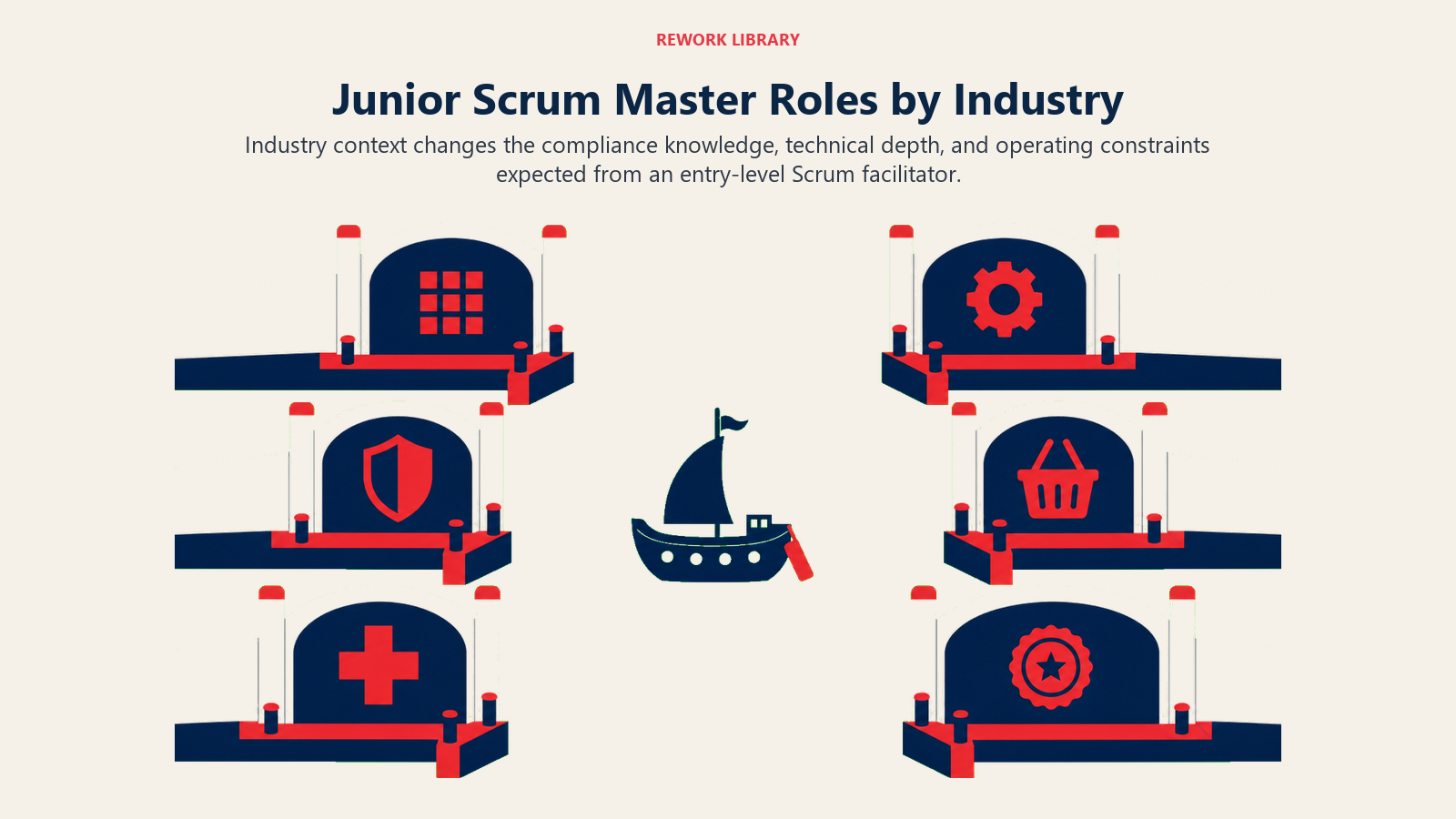
Konteks industri mengubah pengetahuan kepatuhan, kedalaman teknis, dan batasan operasional yang diharapkan dari seorang fasilitator Scrum tingkat pemula.
| Industri | Persyaratan Unik | Kebutuhan Kepatuhan |
|---|---|---|
| Teknologi/Perangkat Lunak | Pemahaman teknis mendalam, integrasi DevOps, praktik continuous deployment | Kepatuhan SOC 2, ISO 27001, GDPR |
| Layanan Keuangan | Kesadaran regulasi, manajemen risiko, pemeliharaan jejak audit | SOX, PCI DSS, persyaratan pelaporan regulasi |
| Kesehatan | Privasi data pasien, pemahaman alur kerja klinis, kepatuhan regulasi | HIPAA, regulasi FDA, protokol uji klinis |
| Manufaktur | Koordinasi rantai pasok, batasan produk fisik, persyaratan keselamatan | ISO 9001, lean manufacturing, kepatuhan keselamatan |
| E-commerce/Ritel | Fokus pengalaman pelanggan, perencanaan musiman, manajemen inventaris | Kepatuhan PCI, perlindungan konsumen, standar aksesibilitas |
| Pemerintahan/Pertahanan | Persyaratan izin keamanan, dokumentasi formal, proses pengadaan | FISMA, kerangka kerja NIST, regulasi akuisisi federal |
Panduan Kompensasi
Ringkasan Gaji Nasional
Gaji rata-rata nasional untuk Junior Scrum Master berkisar dari $55.000 hingga $75.000, dengan median sekitar $65.000. Kompensasi bervariasi secara signifikan berdasarkan lokasi, ukuran perusahaan, industri, dan kualifikasi individu.
Wilayah Metropolitan Utama
| Kota | Kisaran Gaji | Penyesuaian Biaya Hidup |
|---|---|---|
| San Francisco, CA | $75.000 - $95.000 | +25-30% di atas rata-rata nasional |
| New York, NY | $70.000 - $88.000 | +20-25% di atas rata-rata nasional |
| Seattle, WA | $68.000 - $85.000 | +15-20% di atas rata-rata nasional |
| Austin, TX | $62.000 - $78.000 | +10-15% di atas rata-rata nasional |
| Denver, CO | $60.000 - $76.000 | +5-10% di atas rata-rata nasional |
| Chicago, IL | $58.000 - $74.000 | +5-10% di atas rata-rata nasional |
| Atlanta, GA | $55.000 - $70.000 | Rata-rata nasional |
| Posisi Remote | $58.000 - $75.000 | Bervariasi tergantung kebijakan perusahaan |
Faktor yang Memengaruhi Kompensasi
Pendidikan dan Sertifikasi: Kandidat dengan sertifikasi Scrum (CSM, PSM I) atau gelar yang relevan biasanya memperoleh gaji 5-15% lebih tinggi. Latar belakang teknis atau gelar MBA dapat menambah nilai lebih.
Premi Industri: Perusahaan teknologi dan layanan keuangan sering membayar 10-20% di atas rata-rata, sementara organisasi nirlaba dapat menawarkan 10-15% di bawah tarif pasar namun memberikan tunjangan tambahan.
Ukuran Perusahaan: Perusahaan besar (1000+ karyawan) biasanya menawarkan gaji pokok lebih tinggi namun dengan kenaikan jabatan yang lebih lambat, sementara startup dapat menawarkan kompensasi ekuitas dan progres karier yang lebih cepat.
Data gaji dikumpulkan dari Glassdoor, PayScale, dan Robert Half Technology Salary Guide 2026
Pertanyaan Wawancara
Pertanyaan Teknis/Fungsional
Jelaskan ceremony utama dalam Scrum dan peran Anda dalam memfasilitasi masing-masing.
- Perhatikan pemahaman tentang daily standup, sprint planning, review, dan retrospective
- Nilai pengetahuan tentang tujuan ceremony dan tantangan umum
Bagaimana Anda akan membantu tim mengestimasi user story menggunakan story point?
- Evaluasi pemahaman tentang estimasi relatif dan teknik planning poker
- Perhatikan kesadaran akan tantangan estimasi dan pendekatan fasilitasi
Metrik apa yang akan Anda lacak untuk tim pengembangan, dan mengapa?
- Nilai pengetahuan tentang velocity, burndown chart, dan cycle time
- Perhatikan pemahaman tentang tujuan metrik dalam continuous improvement
Bagaimana Anda mengidentifikasi dan menghilangkan hambatan bagi tim Anda?
- Evaluasi pendekatan pemecahan masalah dan strategi eskalasi
- Perhatikan pemahaman tentang prinsip servant leadership
Jelaskan perbedaan antara Scrum Master dan Project Manager.
- Nilai pemahaman tentang servant leadership versus pendekatan command-and-control
- Perhatikan pengetahuan tentang prinsip Agile dan pemberdayaan tim
Bagaimana Anda menangani anggota tim yang terus-menerus melewatkan daily standup?
- Evaluasi pendekatan coaching dan keterampilan resolusi konflik
- Perhatikan pemahaman tentang dinamika tim dan akuntabilitas individu
Jelaskan bagaimana Anda akan memfasilitasi sprint retrospective.
- Nilai keterampilan fasilitasi dan pengetahuan tentang format retrospective
- Perhatikan fokus pada continuous improvement dan keterlibatan tim
Alat apa yang pernah Anda gunakan untuk manajemen proyek Agile, dan apa kelebihannya?
- Evaluasi pengalaman praktis dengan Jira, Azure DevOps, atau alat sejenis
- Perhatikan pemahaman tentang pemilihan alat berdasarkan kebutuhan tim
Pertanyaan Perilaku
Ceritakan pengalaman ketika Anda harus memfasilitasi percakapan sulit antar anggota tim.
- Nilai keterampilan resolusi konflik dan komunikasi menggunakan metode STAR
Jelaskan situasi ketika Anda harus mengubah pendekatan Anda saat sesuatu tidak berjalan lancar.
- Evaluasi fleksibilitas, pola pikir belajar, dan fokus continuous improvement
Berikan contoh saat Anda membantu tim mengatasi tantangan besar.
- Perhatikan kualitas servant leadership dan pendekatan pemecahan masalah
Ceritakan pengalaman ketika Anda menerima umpan balik yang mengubah cara Anda bekerja.
- Nilai pola pikir berkembang dan kemampuan mengintegrasikan umpan balik
Jelaskan situasi ketika Anda harus memengaruhi orang lain tanpa otoritas formal.
- Evaluasi keterampilan kepemimpinan dan kemampuan membangun konsensus
Bagikan contoh ketika Anda harus mempelajari sesuatu yang sepenuhnya baru dengan cepat.
- Perhatikan kelincahan belajar dan keterampilan pengembangan mandiri
Pertanyaan Kesesuaian Budaya
Apa yang memotivasi Anda dalam membantu tim bekerja lebih efektif?
- Nilai semangat untuk servant leadership dan pengembangan tim
Bagaimana Anda tetap mengikuti perkembangan praktik Agile dan tren industri?
- Evaluasi komitmen terhadap pembelajaran berkelanjutan dan pengembangan profesional
Apa arti servant leadership bagi Anda dalam praktiknya?
- Perhatikan pemahaman tentang filosofi Scrum Master dan pemberdayaan tim
Bagaimana Anda menangani situasi ketika pemangku kepentingan memiliki prioritas yang saling bertentangan?
- Nilai keterampilan diplomasi dan kemampuan memfasilitasi percakapan sulit
Tips Evaluasi: Kandidat yang kuat menunjukkan minat tulus terhadap dinamika tim, menunjukkan bukti pembelajaran berkelanjutan, dan mampu mengartikulasikan bagaimana prinsip Agile berlaku pada situasi dunia nyata. Perhatikan pola pikir berkembang dan pendekatan kolaboratif terhadap pemecahan masalah.
Tips Perekrutan
Panduan Sumber Kandidat Cepat
Platform Teratas untuk Perekrutan Junior Scrum Master:
- LinkedIn: Pencarian lanjutan untuk kata kunci Agile, Scrum, dan koordinasi proyek
- Indeed: Kumpulan kandidat besar dengan profesional Agile tingkat pemula
- Scrum Alliance: Papan lowongan komunitas dengan profesional bersertifikat
- Agile Alliance: Komunitas profesional dengan peluang jaringan
Komunitas dan Asosiasi Profesional:
- Meetup dan grup pengguna Agile lokal untuk jaringan dan pencarian kandidat
- Program sertifikasi Scrum.org dan Scrum Alliance untuk referral
- Pusat karier universitas dengan program bisnis dan ilmu komputer
Tips Optimasi Lowongan:
- Tekankan peluang pertumbuhan dan program mentoring
- Soroti pelatihan spesifik dan dukungan sertifikasi yang ditawarkan
- Sertakan informasi tentang kematangan Agile dan budaya tim
- Sebutkan fleksibilitas kerja remote jika tersedia
Tanda Bahaya yang Perlu Dihindari
Kurangnya Pola Pikir Kolaboratif: Kandidat yang berfokus terutama pada pencapaian individu daripada kesuksesan tim mungkin kesulitan dengan aspek servant leadership dari peran ini.
Pemikiran Kaku tentang Proses: Hindari kandidat yang memandang Scrum sebagai buku aturan yang ketat, bukan sebagai kerangka kerja yang membutuhkan adaptasi terhadap kebutuhan tim.
Keterampilan Komunikasi yang Buruk: Karena fasilitasi merupakan inti dari peran ini, kandidat yang kesulitan mengartikulasikan ide dengan jelas atau melibatkan orang lain secara efektif akan menghadapi tantangan.
Tidak Ada Minat pada Pembelajaran Berkelanjutan: Lanskap Agile berkembang dengan cepat, sehingga kandidat yang tidak menunjukkan rasa ingin tahu atau kesediaan mengembangkan keterampilan baru dapat cepat tertinggal.
Mentalitas Command-and-Control: Kandidat dengan latar belakang manajemen proyek yang kuat namun belum menerapkan prinsip servant leadership mungkin kesulitan dengan aspek coaching dari peran ini.
Ekspektasi Gaji yang Tidak Realistis: Waspadai kandidat yang mengharapkan kompensasi setara senior tanpa pengalaman atau nilai yang teruji sepadan.
Pertanyaan Umum untuk Pemberi Kerja
Apa perbedaan antara merekrut Junior Scrum Master versus mempromosikan dari dalam?
Perekrutan eksternal membawa perspektif segar dan pelatihan Agile formal, sementara promosi internal menawarkan pengetahuan mendalam tentang perusahaan dan hubungan yang sudah terjalin. Pertimbangkan kematangan Agile tim Anda saat ini dan apakah Anda membutuhkan keahlian dari luar atau kesinambungan budaya.
Berapa lama biasanya waktu yang dibutuhkan Junior Scrum Master untuk menjadi efektif?
Sebagian besar Junior Scrum Master dapat mulai memberikan nilai dalam 2-3 bulan, namun efektivitas penuh biasanya membutuhkan 6-12 bulan seiring mereka mengembangkan hubungan tim dan memperdalam pemahaman tentang proses serta tantangan spesifik Anda.
Haruskah kami mewajibkan sertifikasi Scrum untuk posisi tingkat junior?
Meskipun sertifikasi menunjukkan komitmen untuk belajar, pengalaman praktis dan pola pikir yang tepat lebih penting. Pertimbangkan untuk mendukung sertifikasi setelah perekrutan jika kandidat menunjukkan potensi kuat namun belum memiliki kredensial formal.
Ukuran tim seperti apa yang sesuai untuk Junior Scrum Master?
Junior Scrum Master bekerja paling baik dengan tim berukuran kecil hingga menengah (5-9 orang) atau dapat mendukung beberapa tim kecil dengan bimbingan dari Senior Scrum Master. Hindari menugaskan program berskala besar dan kompleks sampai mereka mengembangkan lebih banyak pengalaman.
Bagaimana kami mengukur kesuksesan seorang Junior Scrum Master?
Fokus pada skor kepuasan tim, peningkatan konsistensi velocity, pengurangan hambatan, dan kemajuan menuju sprint goal. Ukur juga pengembangan profesional mereka sendiri melalui progres sertifikasi dan umpan balik dari rekan kerja.
Pertanyaan yang Sering Diajukan untuk Pencari Kerja
Latar belakang apa yang terbaik untuk beralih ke peran Junior Scrum Master?
Pengembangan perangkat lunak, koordinasi proyek, analisis bisnis, dan peran kepemimpinan tim semuanya memberikan fondasi yang berharga. Kuncinya adalah memiliki pengalaman bekerja dengan tim dan pemahaman tentang proses pengembangan perangkat lunak, bahkan jika belum menggunakan Scrum secara formal.
Apakah saya perlu sertifikasi sebelum melamar posisi Junior Scrum Master?
Meskipun sertifikasi membantu menunjukkan komitmen, banyak pemberi kerja bersedia mendukung sertifikasi untuk kandidat yang tepat. Fokuslah menunjukkan pemahaman Anda tentang prinsip Agile dan pengalaman relevan dalam memfasilitasi tim atau mengelola proyek.
Bagaimana jenjang karier khas dari Junior Scrum Master?
Sebagian besar profesional maju menjadi Scrum Master (2-3 tahun), kemudian Senior Scrum Master atau Agile Coach (5-7 tahun). Sebagian beralih ke peran Product Owner atau pindah ke posisi manajemen yang memimpin inisiatif transformasi Agile.
Seberapa penting latar belakang teknis untuk peran Scrum Master?
Pemahaman teknis membantu kredibilitas dan penghapusan hambatan, namun tidak wajib. Keterampilan fasilitasi, komunikasi, dan coaching yang kuat lebih penting. Anda dapat mengembangkan pengetahuan teknis melalui kolaborasi dengan tim pengembangan.
Apa yang harus saya harapkan dalam hal keseimbangan kerja-hidup sebagai Junior Scrum Master?
Sebagian besar peran Scrum Master menawarkan keseimbangan kerja-hidup yang baik dengan jam kerja standar, karena ceremony dan interaksi tim berlangsung selama jam kerja reguler. Peluang kerja remote umum ditemukan, dan peran ini jarang membutuhkan lembur ekstensif.
Bagaimana saya menunjukkan keterampilan Scrum Master tanpa pengalaman formal?
Soroti pengalaman memfasilitasi rapat, mengoordinasikan proyek, menyelesaikan konflik, atau memimpin tim. Peluang menjadi sukarelawan, mengorganisir meetup, atau berkontribusi pada proyek open-source juga dapat menunjukkan keterampilan relevan dan pola pikir Agile.

Senior Customer Retention Strategist
On this page
- Ringkasan
- Sorotan Utama
- Mengapa Peran Ini Penting
- Templat Deskripsi Pekerjaan
- Tentang Peran Ini
- Tanggung Jawab Utama
- Persyaratan
- Yang Kami Tawarkan
- Variasi Konteks
- Lingkungan Korporat
- Lingkungan Startup
- Lingkungan Remote/Hybrid
- Pertimbangan Industri
- Panduan Kompensasi
- Ringkasan Gaji Nasional
- Wilayah Metropolitan Utama
- Faktor yang Memengaruhi Kompensasi
- Pertanyaan Wawancara
- Pertanyaan Teknis/Fungsional
- Pertanyaan Perilaku
- Pertanyaan Kesesuaian Budaya
- Tips Perekrutan
- Panduan Sumber Kandidat Cepat
- Tanda Bahaya yang Perlu Dihindari