Gemeinsam forecasen: Wie Marketing einen Platz bei der Revenue-Prognose verdient
Turn this article into takeaways for your work.


Each assistant summarizes the article only for you and suggests best practices for your work.
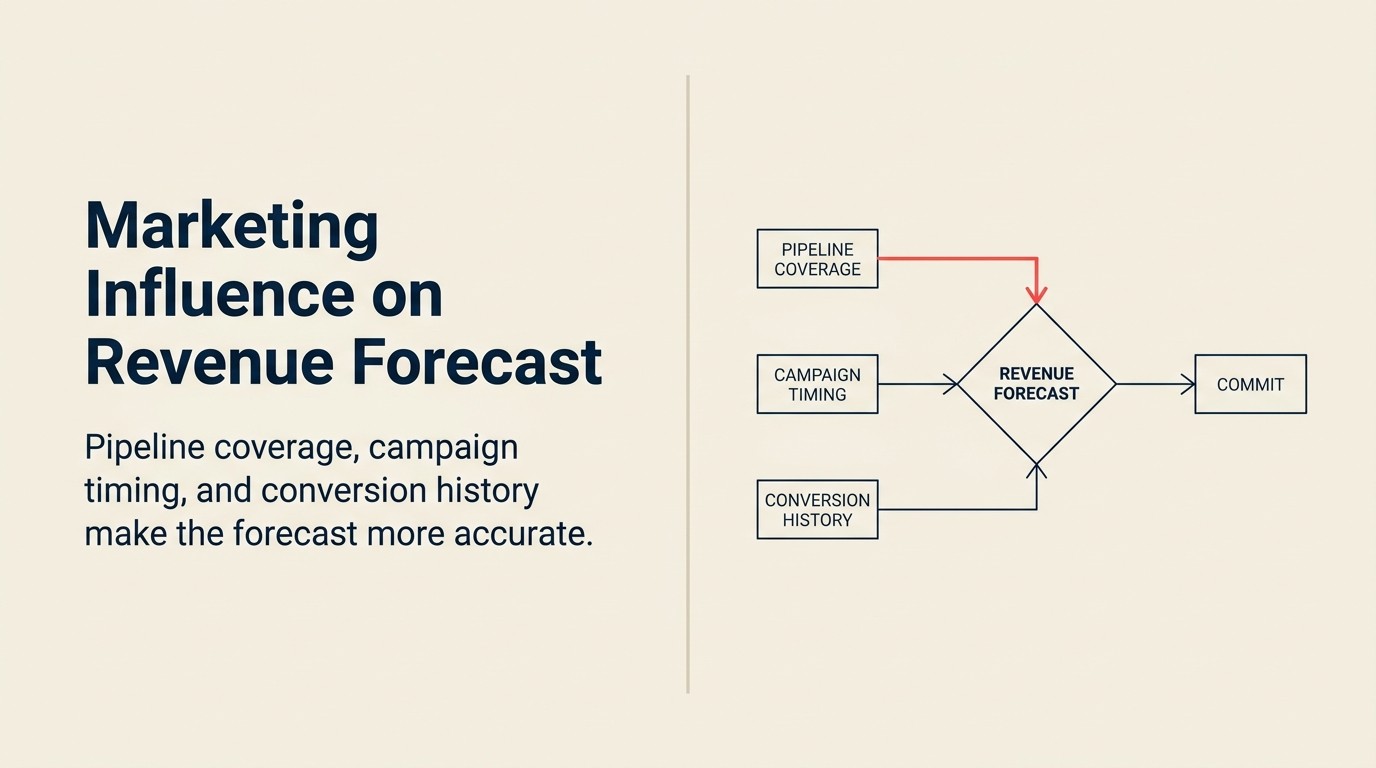
Die Prognose ist das Revier von Sales. Oder sie war es früher.
Bei einem 10-Personen-Unternehmen, bei dem Marketing ein paar E-Mails versendet und Sales die Deals abschließt, ist das noch ungefähr wahr. Aber in dem Moment, in dem Marketing Demand-Gen-Programme betreibt, die für 40-60 % der Pipeline-Generierung verantwortlich sind, wird die Prognose teilweise auch zur Verantwortung von Marketing, zumindest die Inputs dazu.
Der Haken ist "teilweise". Marketing besitzt die Prognosenummer nicht. Die bleibt beim CRO und der Sales-Organisation. Aber Marketing kann die Prognose entweder genauer machen oder sie ungenauer lassen, je nachdem, ob es zu Prognosegesprächen mit Daten oder mit Absichten erscheint. Gartner stellte fest, dass weniger als 50 % der Sales-Führungskräfte hohes Vertrauen in die eigene Prognosegenauigkeit haben, und diese Zahl spiegelt Teams wider, bei denen Marketing noch weitgehend abwesend vom Prozess ist.
"Wir veranstalten nächsten Monat ein Webinar" ist eine Absicht. "Basierend auf unseren letzten drei Webinaren erwarten wir 180 MQLs, die sich innerhalb von 45 Tagen in Pipeline bei einer Rate von 12 % umwandeln, und dabei etwa 400.000 € zur Coverage-Lücke beitragen." Das ist ein Beitrag zur Prognose.
Der Unterschied ist das, was Marketing einen echten Platz am Tisch verschafft.
Die Unterscheidung, die zählt: Einfluss vs. Eigentümerschaft
Marketings Verhältnis zur Prognose ist eines des Beitrags und Einflusses, nicht der Eigentümerschaft. In beide Richtungen falsch zu liegen, erzeugt Probleme.
Wenn Marketing versucht, die Prognosenummer zu besitzen oder mitzubesitzen, wird der CRO (zurecht) zurückdrängen. Sales-Reps, Manager und regionale Führungskräfte sind für ihre Zahlen in einer Weise verantwortlich, wie Marketing es nicht ist. Die Accountability-Struktur unterstützt keine gemeinsame Eigentümerschaft.
Aber wenn Marketing die Prognose als vollständig das Problem von Sales behandelt, verpassen sie die Gelegenheit, sie besser zu machen und die Art von Glaubwürdigkeit aufzubauen, die ihnen eine Stimme in Planungsgesprächen verschafft. Wenn Marketings Pipeline-Beitrag konsistent verfolgt, konsistent genau und konsistent in die richtigen Gespräche eingebracht wird, beginnt der CRO, Marketing Ops zu konsultieren, bevor die Prognose abgeschlossen wird, nicht danach.
Das Ziel ist, dass die Prognose Marketings Pipeline-Beitrag korrekt widerspiegelt, weil er die Zahl beeinflusst. Das ist der Grund, warum es beiden Teams wichtig ist.
Wichtige Fakten: Marketings Pipeline-Beitrag zur Prognose
- Unternehmen mit ausgerichtetem Marketing-Sales-Forecasting erreichen 24 % schnelleres Umsatzwachstum und 27 % schnelleres Gewinnwachstum, laut SiriusDecisions-Forschung.
- Sales-Teams, die historische Konversionsdaten aus Marketing-Programmen verwenden, prognostizieren 23 % genauer als diejenigen, die sich auf Bauchgefühl und Pipeline-Inspektion allein verlassen, laut McKinsey.
- Nur 24 % der Sales-Prognosen sind innerhalb von 5 % des tatsächlichen Ergebnisses genau, laut Gartner. Die wichtigsten genannten Lücken sind Pipeline-Coverage-Defizite und schlechter Marketing-zu-Sales-Datentransfer.
Was Marketing zu Prognosegesprächen beitragen kann
Das sind die vier Inputs, die Marketing beitragen kann, die die Prognosegenauigkeit tatsächlich verbessern. Keiner davon beinhaltet die Eigentümerschaft der Zahl oder das Debattieren von Attribution. Das sind Datenbeiträge zu einem gemeinsamen Problem.
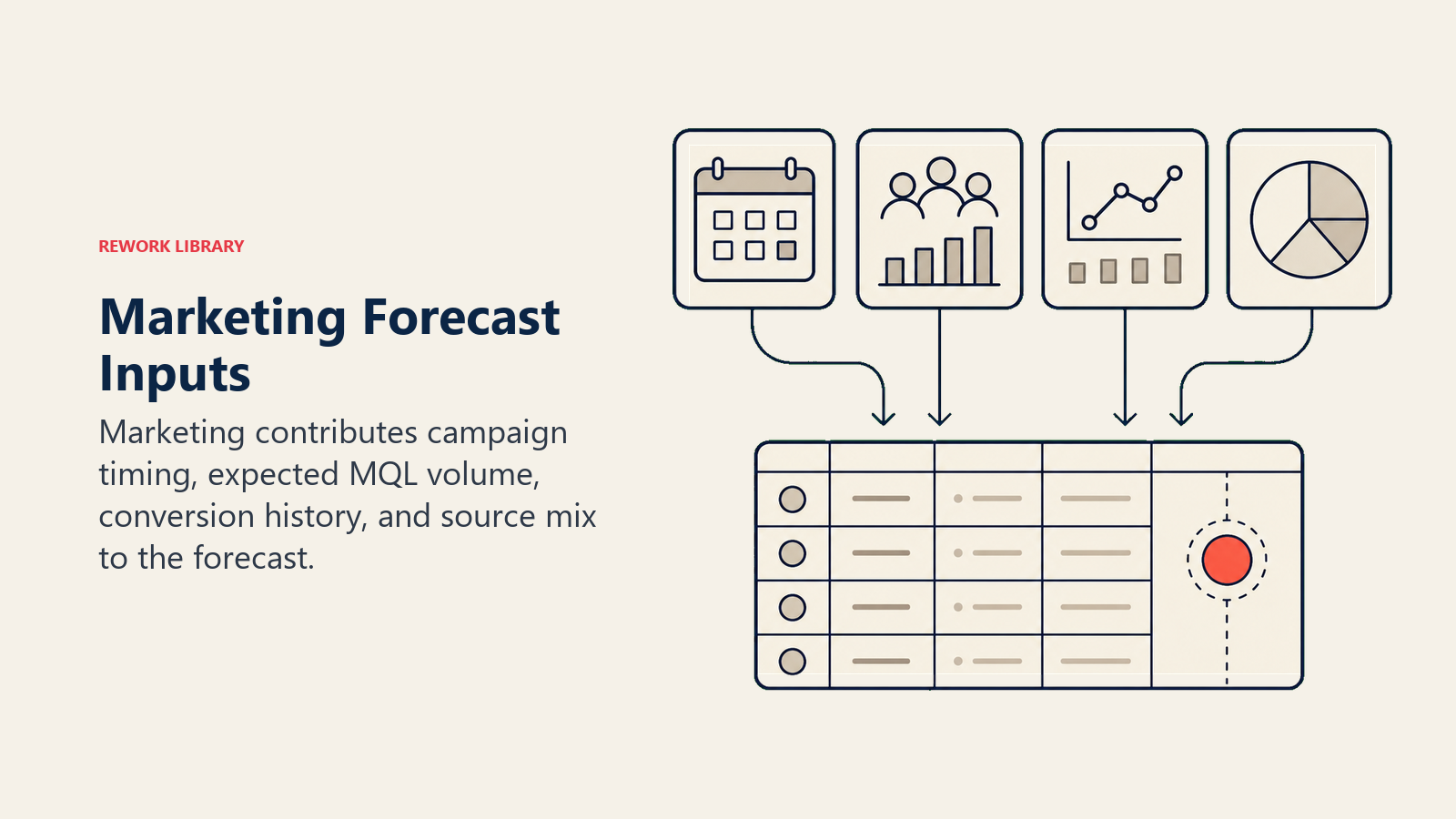 Kommender Kampagnen-Kalender und erwartetes MQL-Volumen (nächste 30/60/90 Tage). Sales muss wissen, was in der Pipeline kommt, nicht nur was jetzt dort ist. Wenn Marketing in Woche 3 ein Produkt-Webinar startet, sollte Sales wissen, dass es in Wochen 4-5 einen MQL-Spike geben wird. Wenn Marketings bester Demand-Gen-Monat September ist und die Prognose August bis Oktober abdeckt, spielt diese Verteilung eine Rolle.
Historische MQL-zu-Abschluss-Rate nach Segment. Wie zuverlässig ist der aktuelle Kohort von Marketing-generierten Leads, basierend auf der Geschichte? Wenn Enterprise-MQLs aus bezahlter Suche bei 8 % in 120 Tagen abschließen und die aktuelle Pipeline 50 von ihnen hat, kann Marketing eine Pipeline-Beitragsschätzung basierend auf dieser Konversionsgeschichte beitragen. Das ist nützlicher als "hier sind 50 neue MQLs."
Pipeline-Coverage-Lücke. Wenn Sales eine 4-fache Pipeline-Coverage benötigt, um Quota zu erreichen, und die aktuelle Pipeline bei 2,6-fach liegt, gibt es eine 1,4-fache Lücke. Marketings Aufgabe in diesem Gespräch ist es zu antworten: Wie viel von dieser Lücke kann Marketing im Prognosezeitraum füllen, durch welche Kanäle, basierend auf welchen historischen Konversionsdaten? Das ist eine Beitragsschätzung, kein Versprechen.
Konversionsgeschwindigkeit. Wie lange dauert es im Durchschnitt, bis ein Marketing-generierter MQL zu einem geschlossenen-gewonnenen Deal wird? Das ist enorm wichtig für das Prognosen-Timing. Wenn der durchschnittliche Marketing-generierte Deal 90 Tage zum Abschluss braucht und es bereits Tag 70 des Quartals ist, werden heute generierte MQLs dieses Quartal nicht schließen. Sales muss das wissen, wenn sie auf Pipeline-Coverage schauen.
Marketings Beitrag zur Prognose: Ein 3-Input-Framework
Benanntes Framework: Marketings 3-Input-Prognose-Beitrag Marketing verdient einen Platz bei Prognosegesprächen, indem es drei spezifische Inputs liefert, die Sales allein nicht generieren kann: (1) eine Coverage-Gap-Analyse (wie viel der Lücke zwischen aktueller Pipeline und Ziel-Coverage kann Marketing im Zeitraum füllen, basierend auf historischen MQL-zu-Opportunity-Raten); (2) Kampagnen-Timing-Signale (der 90-Tage-Vorwärtskalender der Programme mit erwarteten MQL-Volumenbereichen, damit Sales Pipeline-Erwartungen kalibrieren kann, bevor die Lücke entsteht); und (3) historische Konversionsgeschwindigkeit (wie lange Marketing-generierte MQLs zum Abschluss brauchen, segmentiert nach Segment und Kanal, damit die Prognose Timing-Realitäten berücksichtigt statt anzunehmen, dass alle Pipeline gleich bis Quartalsende schließbar sind). Ohne alle drei Inputs ist Marketings Prognosebeitrag eine Absicht, kein Datenpunkt.
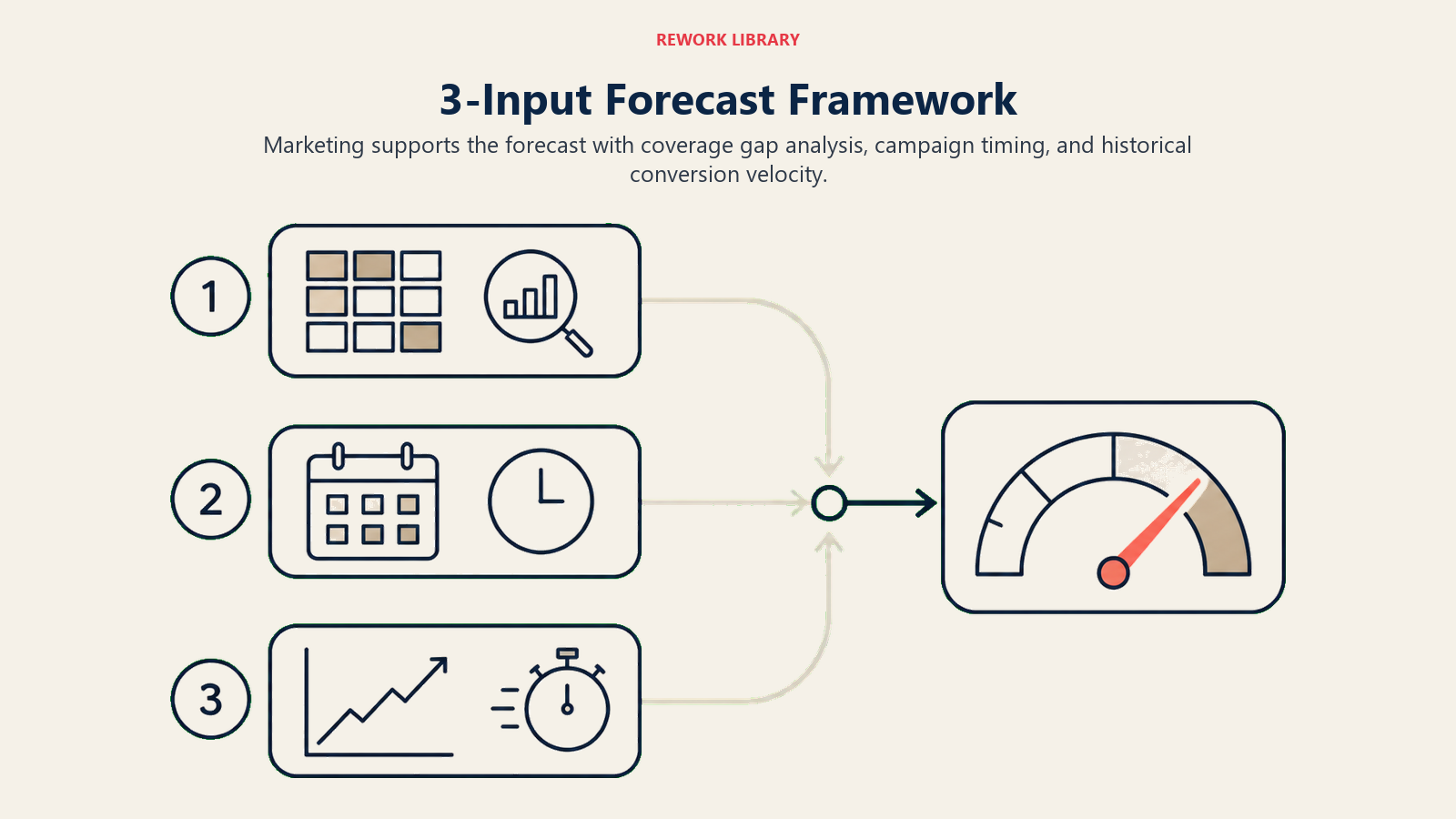 Dieses Framework hilft Marketing, ihre Programmaktivitäten in prognose-relevante Sprache zu übersetzen. Es ist eine einfache Berechnung, erfordert aber saubere historische Daten, um glaubwürdig zu sein.
Schritt 1: Die Coverage-Lücke identifizieren. Arbeiten Sie mit RevOps oder Sales Ops, um das aktuelle Pipeline-Coverage-Verhältnis und das Ziel (typischerweise 3-4-fache Quota) zu erhalten. Wenn Coverage bei 2,8-fach liegt und das Ziel 4-fach ist, beträgt die Lücke 1,2-fache Quota. Setzen Sie das in Euro um.
Schritt 2: Marketings erwarteten Pipeline-Beitrag für den Zeitraum berechnen. Unter Verwendung der letzten 4-6 Quartale Daten: durchschnittliches MQL-Volumen pro Monat × historische MQL-zu-Opportunity-Konversionsrate × durchschnittliche Deal-Größe für Marketing-generierte Opportunities. Das gibt Ihnen einen erwarteten Pipeline-Beitrag aus Marketing-Programmen.
Schritt 3: Einen Timing-Filter anwenden. Von der Pipeline, die Marketing in den nächsten 30-60-90 Tagen voraussichtlich generieren wird, welcher Prozentsatz wird bis Ende des Prognosezeitraums in einer abschließbaren Stufe sein? Das erfordert durchschnittliche Sales-Cycle-Daten aus dem CRM.
Schritt 4: Als Bereich präsentieren, nicht als Punktschätzung. Marketings Beitrag zur Prognose sollte als Bereich ausgedrückt werden: "basierend auf aktueller Programm-Performance und historischen Daten kann Marketing in den nächsten 60 Tagen 800.000-1,2 Millionen € neue Pipeline beitragen, mit etwa 15-20 % bis Quartalsende abschließbar." Ein Bereich signalisiert angemessene Unsicherheit. Eine präzise Zahl signalisiert falsche Präzision und verliert Glaubwürdigkeit, wenn sie falsch ist.
Das Output dieses Frameworks ist keine Prognose. Es ist eine Beitragsschätzung, die in die Sales-Prognose einfließt, hilft zu identifizieren, wo Coverage-Lücken existieren, und zeigt, dass Marketing über Pipeline in denselben Begriffen wie Sales nachdenkt. Die Mechanik, wie Sales seine vollständige Prognose aufbaut (gewichtete Pipeline, Stage-Wahrscheinlichkeiten, Commit-Tiers), wird in Prognose-Grundlagen behandelt. Marketings Aufgabe ist es, die Input-Daten zu liefern, nicht den Sales-Forecasting-Prozess zu replizieren.
Wie Marketing in Prognosediskussionen eingeladen wird
Einen echten Platz bei Prognosegesprächen zu bekommen, wird über Zeit verdient, nicht beansprucht. Das ist die Abfolge, die tatsächlich funktioniert:
 Schritt 1: Glaubwürdigkeit mit genauen historischen Konversionsdaten aufbauen. Das erste Mal, wenn Marketing in ein Prognosegespräch eintritt, haben sie normalerweise keine sauberen Konversionsdaten. Das CRM verfolgt sie entweder nicht mit der richtigen Granularität, oder die MAP-zu-CRM-Synchronisierung vermisst Touchpoints, oder niemand hat den Bericht aufgebaut. Reparieren Sie zuerst die Dateninfrastruktur. Sie können nicht glaubwürdig zur Prognose beitragen ohne 2-3 Quartale sauberer Konversionsgeschichte.
Schritt 2: Pipeline-Beitrag als Zahl präsentieren, nicht als Aktivität. "Wir starten eine Nurture-Kampagne" ist Aktivität. "Wir erwarten, dass dieses Programm basierend auf vergleichbaren Programmen 300.000 € an beeinflusster Pipeline über 90 Tage beiträgt" ist eine Beitragsschätzung. Kommen Sie mit der Zahl.
Schritt 3: MQL-Plan für den Prognosezeitraum zeigen, ausgerichtet auf Sales-Coverage-Bedarf. Berichten Sie nicht nur über die MQL-Performance des letzten Zeitraums. Kommen Sie zum Gespräch mit einer vorausschauenden Sicht: Hier ist, was Marketing in den nächsten 60-90 Tagen voraussichtlich generieren wird, hier ist der erwartete Pipeline-Beitrag, hier ist, wo er die Coverage-Lücke adressiert und wo nicht.
Schritt 4: Konsistent am gemeinsamen Pipeline-Review mit diesen vorbereiteten Daten teilnehmen. Der gemeinsame Pipeline-Review ist das Forum, in dem Marketings Pipeline-Beitrag überprüft und diskutiert wird. Konsistent mit vorbereiteten, genauen Daten zu erscheinen, ist es, was das Vertrauen aufbaut, das Marketing schließlich in das eigentliche Prognosegespräch bringt.
Was Marketing bei Prognosegesprächen NICHT tun sollte
Das sind die Züge, die Marketings Glaubwürdigkeit in Prognosediskussionen untergraben und CROs weniger geneigt machen, Marketing am Tisch zu haben.
Anerkennung für Deals beanspruchen, die bereits in der Pipeline waren, bevor ein Marketing-Touch stattfand. Wenn ein Deal durch eine Outbound-SDR-Sequenz eröffnet wurde und Marketings einzige Interaktion eine Folge-E-Mail zwei Wochen in den Sales-Prozess war, hat Marketing diesen Deal nicht generiert. Das zu beanspruchen wird das Vertrauen der Sales-Führung sofort untergraben.
MQL-Volumen ohne Konversionsraten-Kontext präsentieren. "Wir haben dieses Quartal 300 MQLs generiert" ist ohne Acceptance Rate und Konversionsrate bedeutungslos. Wenn 200 davon von Sales abgelehnt wurden, war der Nettobeitrag 100 MQLs, und das Sales-Team weiß das bereits. Die Bruttazahl zu präsentieren, sieht aus wie Marketing versteckt das Acceptance-Problem.
Pipeline-Coverage ohne historische Daten übersprechen. Wenn die letzten vier Quartale Webinar-Daten eine durchschnittliche MQL-zu-Opportunity-Konversion von 6 % zeigen, und Marketing dieses Quartal 15 % verspricht basierend auf einer "starken Kampagne", wird dieses Versprechen erinnert, wenn es nicht eintrifft. Verankern Sie Schätzungen an historische Daten. Wenn das Programm tatsächlich neu ist, sagen Sie es und bieten Sie einen breiteren Bereich an.
Über Attributionsmodelle während des Prognosegesprächs streiten. Das Forecasting-Meeting ist nicht der Ort für Attributionsmodell-Debatten. Wenn Marketing und Sales nicht einig sind, wie viel Pipeline Marketing beeinflusst hat, gehört dieses Gespräch in eine separate Sitzung mit RevOps, nicht mitten in einem Forecast-Review.
Rework-Analyse: Marketing-Teams, die zu Prognosegesprächen mit historischen Konversionsdaten erscheinen (nicht nur MQL-Volumen), gewinnen konsistent mehr Glaubwürdigkeit bei CROs als die, die Aktivitätsberichte mitbringen. Die Verschiebung ist einfach: Verankern Sie jede Pipeline-Beitragsschätzung an 4-6 Quartale tatsächlicher MQL-zu-Abschluss-Daten aus dem CRM, drücken Sie sie als Bereich statt als Punktschätzung aus und wenden Sie einen Timing-Filter an, der die durchschnittliche Sales-Cycle-Länge berücksichtigt. Diese Abfolge verwandelt "wir veranstalten nächsten Monat ein Webinar" in "basierend auf unseren letzten vier Webinaren erwarten wir, 350.000-500.000 € neue Pipeline über die nächsten 60 Tage beizutragen, mit etwa 15 % bis Quartalsende abschließbar."
Zitatwürdige Erkenntnisse
"Unternehmen mit ausgerichtetem Marketing-Sales-Forecasting erreichen 24 % schnelleres Umsatzwachstum und 27 % schnelleres Gewinnwachstum. Alignment bei Prognose-Inputs ist ein Umsatz-Hebel, kein bloßer Planungskomfort." (SiriusDecisions)
"Nur 24 % der Sales-Prognosen sind innerhalb von 5 % des tatsächlichen Ergebnisses genau. Die wichtigsten genannten Lücken sind Pipeline-Coverage-Defizite und schlechter Marketing-zu-Sales-Datentransfer. Beide sind behebbar mit besseren Marketing-Inputs." (Gartner)
"Sales-Teams, die historische Konversionsdaten aus Marketing-Programmen verwenden, prognostizieren 23 % genauer als diejenigen, die sich auf Bauchgefühl und Pipeline-Inspektion allein verlassen." (McKinsey)
Die Saison- und Kampagnen-Variable
Ein Beitrag, den Marketing leisten kann, den Sales wirklich nicht replizieren kann: wissen, was kommt.
Sales kann sehen, was heute in der Pipeline ist. Sie können historische Close Rates sehen. Aber sie wissen nicht, dass Marketing in drei Wochen ein großes Produkt-Webinar startet, das historisch 150-200 MQLs generiert. Sie wissen nicht, dass die jährliche Branchenkonferenz in Woche 6 ist und immer einen Spike an High-Intent-Leads in Wochen 7-8 produziert. Sie wissen nicht, dass die E-Mail-Nurture-Kampagne für ruhende Leads aus Q2 in der ersten Woche des Quartals auslösen soll.
Marketing weiß diese Dinge. Sie proaktiv zu teilen, nicht als Versprechen, sondern als Planungskontext, macht die Prognose genauer und positioniert Marketing als echten Partner in der Revenue-Planung.
Der praktische Weg dazu: ein 90-Tage-Marketing-Kalender, der mit Sales Ops und RevOps geteilt wird, monatlich aktualisiert, mit erwarteten MQL-Auswirkungsbereichen für jedes große Programm. Keine Garantie, nur ein Signal. Sales verwendet es, um Pipeline-Erwartungen zu kalibrieren. Wenn eine große Kampagne unterdurchschnittlich abschneidet, können beide Teams es früher sehen und anpassen.
Das ist teils Datenbeitrag, teils Informationsaustausch. Und es ist einer der am meisten ungenutzten Hebel im Marketing-Sales-Alignment.
Wenn Marketings Daten nicht mit der Sales-Prognose übereinstimmen
Manchmal zeigt Marketing starke Coverage-Daten (solide MQL-Pipeline, gute historische Konversion, Programme auf Kurs) und die Sales-Prognose sieht trotzdem dünn aus. Diese Diskrepanz lohnt es, zu untersuchen, anstatt sie zu übergehen.
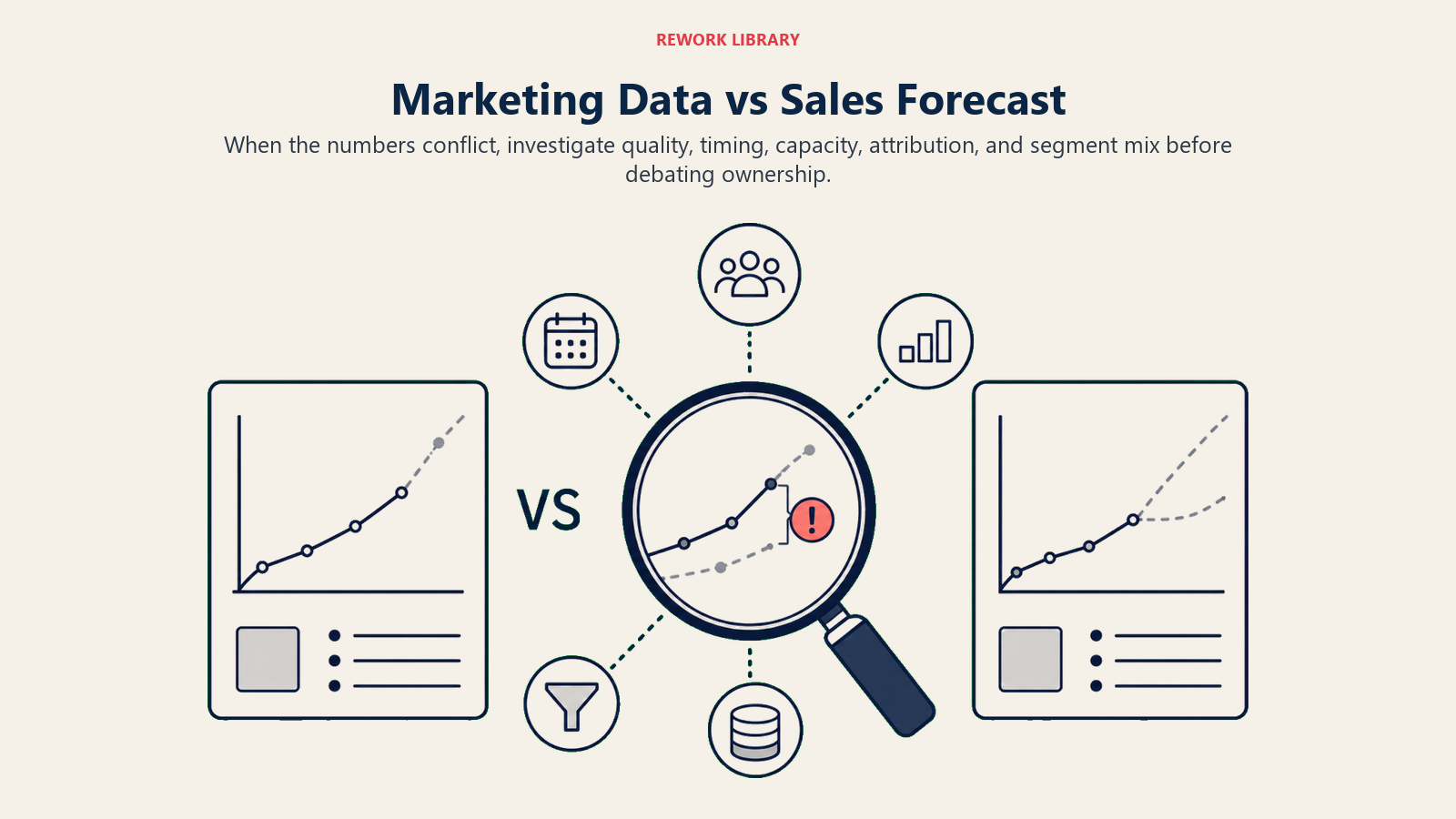 Die häufigsten Erklärungen:
Qualitätslücke. Marketings Pipeline-Beitrag sieht im Volumen stark aus, aber die Deals in der Pipeline aus Marketing-Programmen stagnieren oder verlieren bei einer höheren Rate als erwartet. Das zeigt sich als Pipeline-Velocity-Problem: MQLs konvertieren zu Opportunities, aber Opportunities konvertieren nicht zu Abschlüssen. Der Fix ist normalerweise ein Segmentierungs- oder Qualifizierungsproblem, das beide Teams gemeinsam angehen müssen.
Geschwindigkeitslücke. Marketings Pipeline wird eintreffen, aber nicht im Prognosezeitraum. Die in diesem Quartal generierten Leads werden bei aktueller Konversionsgeschwindigkeit erst nächstes Quartal schließen. Die Prognose ist nicht falsch bezüglich Qualität, sie ist falsch bezüglich Timing. Marketings Reaktion ist, Programme früher für zukünftige Quartale zu starten, nicht die Zahlen dieses Quartals aufzublähen.
Tracking-Lücke. Marketings Daten zeigen mehr beeinflusste Pipeline als das CRM zeigt, normalerweise weil die MAP-zu-CRM-Synchronisierung Touchpoints verliert. Das ist ein Systemproblem, kein Beitragsproblem. Der Fix ist ein Synchronisierungs-Audit mit Marketing Ops und RevOps. Aber es ist wichtig, das von einer echten Lücke in Marketings Beitrag zu unterscheiden.
Wenn Marketing und Sales mit denselben Daten zum Prognosegespräch kommen, auch wenn diese Daten eine Lücke zeigen, wird das Gespräch produktiv. Die nützliche Frage ist: Was tun wir gegen diesen Defizit? Diese Frage ist viel einfacher zu beantworten, wenn beide Teams auf dieselben Zahlen schauen. McKinseys Forschung zu datengetriebenem B2B-Commercial-Performance ist direkt dazu: Unternehmen, die datengesteuerte Wachstumsmaschinen einsetzen, berichten EBITDA-Verbesserungen von 15-25 %, aber nur wenn die Sales- und Marketing-Daten, die den Forecasting-Prozess speisen, integriert und nicht in Silos sind.
Häufig gestellte Fragen zu Gemeinsam forecasen
Besitzt Marketing die Revenue-Prognose?
Nein. Marketing trägt Inputs zur Prognose bei; es besitzt die Prognosenummer nicht. Der CRO und die Sales-Organisation sind für die Prognosenummer verantwortlich, weil sie für die Quota-Attainment verantwortlich sind. Marketings Rolle ist es, die Prognose genauer zu machen, indem es drei Dinge liefert, die Sales allein nicht generieren kann: historische Konversionsdaten, einen vorausschauenden Kampagnen-Kalender mit erwarteten MQL-Auswirkungen und eine Coverage-Gap-Analyse, die zeigt, wie viel Marketing im Prognosezeitraum realistischerweise füllen kann.
Wie sollte Marketing seinen Pipeline-Beitrag in einem Prognosegespräch framen?
Framen Sie es als Beitragsschätzung, ausgedrückt als Bereich, nicht als präzises Engagement. Eine glaubwürdige Formulierung: "Basierend auf den letzten vier Quartalen kann Marketing in den nächsten 60 Tagen 800.000 bis 1,2 Millionen € neue Pipeline beitragen, mit etwa 15 bis 20 % bis Quartalsende abschließbar, basierend auf unserem durchschnittlichen 90-Tage-Sales-Cycle für Marketing-generierte Deals." Ein Bereich signalisiert angemessene Unsicherheit. Eine präzise Zahl signalisiert falsche Präzision und verliert Glaubwürdigkeit, wenn sie zum ersten Mal falsch ist.
Wann ändert Marketings Input tatsächlich die Prognose?
Marketings Input ändert die Prognose, wenn er zwei Dinge liefert: vorausschauende Coverage-Daten (Programme, die in den nächsten 30 bis 60 Tagen starten und Pipeline hinzufügen) und eine glaubwürdige Konversionsschätzung basierend auf historischen Daten. Wenn Marketing mit "wir starten eine Kampagne" erscheint, aber ohne Konversionsgeschichte, kann der CRO es nicht verantwortungsvoll einbeziehen. Wenn Marketing mit vier Quartalen MQL-zu-Abschluss-Daten nach Segment und einem 90-Tage-Kampagnen-Kalender mit erwarteten Bereichen erscheint, ändern diese Daten, was im Prognosemodell steht.
Welche historischen Daten braucht Marketing, bevor es zur Prognose beitragen kann?
Mindestens zwei bis drei Quartale sauberer MQL-zu-Opportunity-Konversionsdaten nach Segment und Kanal, durchschnittliche Deal-Größe für Marketing-generierte Opportunities nach Segment und durchschnittliche Sales-Cycle-Länge für Marketing-generierte Deals. Diese Daten leben im CRM, weshalb das Reparieren der MAP-zu-CRM-Synchronisierung eine Voraussetzung für sinnvollen Prognose-Beitrag ist. Ohne saubere Konversionsgeschichte ist jede Pipeline-Beitragsschätzung eine als Zahl verkleidete Vermutung.
Wie gehen wir mit einem Quartal um, in dem Marketings Pipeline-Beitrag stark aussieht, die Prognose aber trotzdem dünn erscheint?
Untersuchen Sie die Lücke, bevor Sie ein Qualitätsproblem annehmen. Drei Root-Causes erscheinen am häufigsten: eine Qualitätslücke (MQLs konvertieren zu Opportunities, stagnieren aber vor dem Abschluss, ein Segmentierungs- oder Qualifizierungsproblem, das gemeinsame Analyse erfordert); eine Geschwindigkeitslücke (Marketings Pipeline wird eintreffen, aber nicht im Prognosezeitraum, d.h. das Problem ist Timing, nicht Qualität); und eine Tracking-Lücke (die MAP-zu-CRM-Synchronisierung verliert Touchpoints, lässt Marketings Beitrag in der MAP größer erscheinen als im CRM). Zu identifizieren, welche Lücke es ist, bestimmt den Fix.
Sollte Marketing an jedem Prognose-Anruf teilnehmen?
Nicht unbedingt an jedem Anruf, aber Marketing sollte beim gemeinsamen Pipeline-Review anwesend sein, in dem Prognose-Inputs diskutiert werden. Der Prognose-Anruf selbst (bei dem CRO, regionaler VP und Sales Ops Commit-Tiers und Risiken überprüfen) ist typischerweise ein Sales-Gespräch. Marketings Beitrag ist die Input-Schicht: die Pipeline-Coverage-Daten, die historischen Konversionsraten und der kommende Kampagnen-Kalender. Liefern Sie diese konsistent zum gemeinsamen Pipeline-Review, und die Daten fließen in die Prognose ein, ohne dass Marketing bei jedem geschlossenen Sales-Anruf dabei sein muss.
Mehr erfahren

Principal Solution Architect
On this page
- Die Unterscheidung, die zählt: Einfluss vs. Eigentümerschaft
- Was Marketing zu Prognosegesprächen beitragen kann
- Marketings Beitrag zur Prognose: Ein 3-Input-Framework
- Wie Marketing in Prognosediskussionen eingeladen wird
- Was Marketing bei Prognosegesprächen NICHT tun sollte
- Zitatwürdige Erkenntnisse
- Die Saison- und Kampagnen-Variable
- Wenn Marketings Daten nicht mit der Sales-Prognose übereinstimmen
- Mehr erfahren