RevOps als Alignment-Kleber: Warum Revenue Operations Smarketing wirklich funktionieren lässt
Turn this article into takeaways for your work.


Each assistant summarizes the article only for you and suggests best practices for your work.
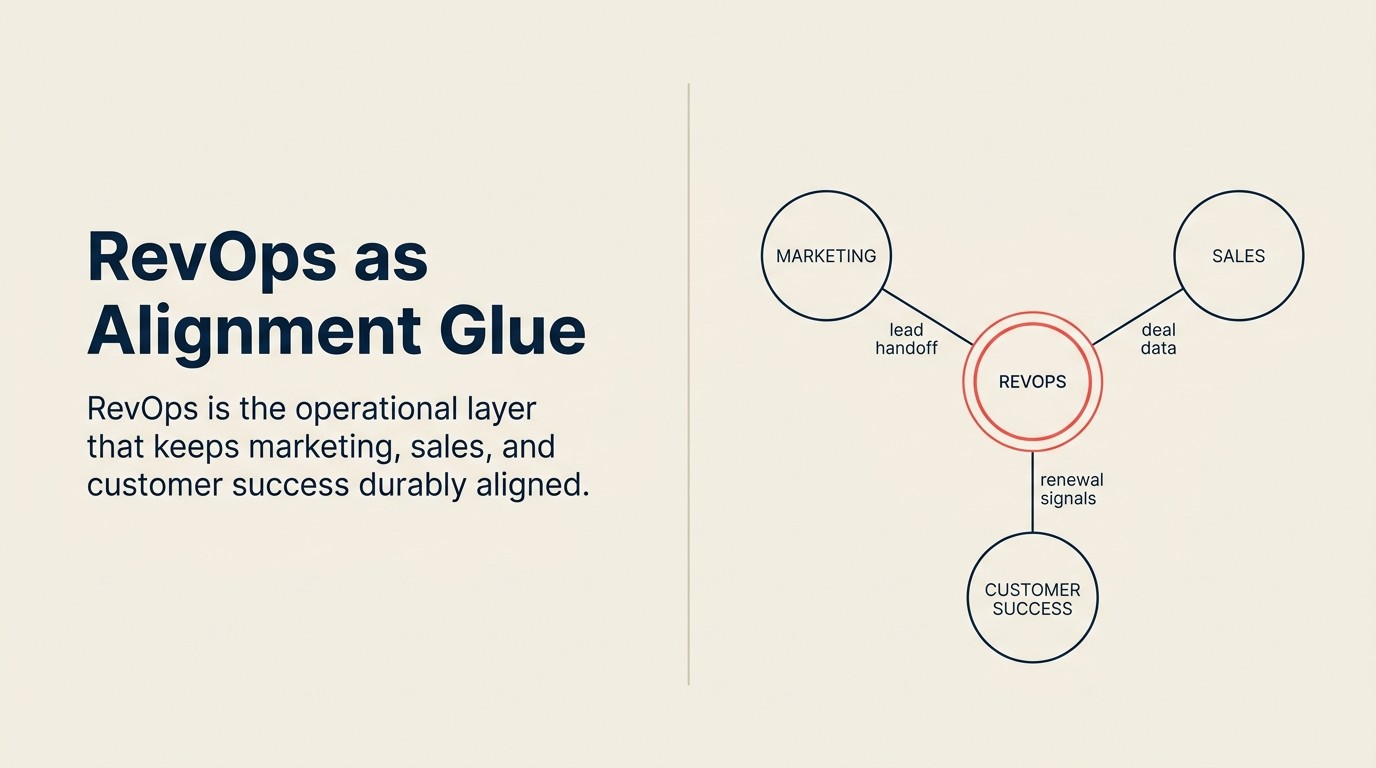
Marketing-Sales-Alignment-Initiativen scheitern mit vorhersehbarer Regelmäßigkeit. Nicht weil die beteiligten Personen nicht zusammenarbeiten wollen. Die meisten tun es. Nicht weil die Strategie falsch ist. Meistens ist sie es nicht. Sie scheitern, weil das Alignment in Meetings lebt und zwischen ihnen zerfällt.
Unternehmen mit einer dedizierten RevOps-Funktion wachsen laut Forresters Revenue Operations Survey und LeanData's State of Revenue Operations Report 2,4-mal schneller beim Umsatz als diejenigen, die auf isolierte Sales-, Marketing- und CS-Operationen setzen, und erzielen 36 % höhere Sales-Win-Rates. Diese Performance-Lücke lässt sich nicht durch Strategieunterschiede erklären, die Teams ohne RevOps haben oft vergleichbare Go-to-Market-Pläne. Sie lässt sich durch konsistente Ausführung erklären: RevOps-fähige Teams verlassen sich nicht darauf, dass Menschen daran denken, das Richtige zu tun.
Die beiden Teams einigen sich im Januar auf eine MQL-Definition. Bis März hat Scoring-Drift sie erodiert. Sie einigen sich in Q1 auf ein Handoff-SLA. Bis Q2 verfolgt niemand mehr die Compliance. Sie einigen sich darauf, dass beide Teams dasselbe Dashboard verwenden. Bis Q3 läuft Sales die Pipeline-Review aus dem CRM und Marketing berichtet aus dem MAP, und keine der beiden Zahlen stimmt überein.
Ohne einen operativen Eigentümer sind Vereinbarungen verbale Zusagen. RevOps ist das, was verbale Zusagen in durchgesetzte Prozesse umwandelt. Nicht durch das Hinzufügen von Bürokratie, sondern durch den Aufbau von Systemen, die Alignment zum Standard machen, nicht zur Ausnahme. Gartners RevOps-Leitfaden beschreibt Revenue Operations als ein End-to-End-Modell, das das Kundenengagement über Funktionen hinweg vereinheitlicht und Menschen, Prozesse und Technologie im gesamten Unternehmen integriert.
Wichtige Fakten: RevOps und Revenue-Alignment
- Unternehmen mit einer dedizierten RevOps-Funktion wachsen laut Forresters Revenue Operations Survey 2,4-mal schneller beim Umsatz als diejenigen, die auf isolierte Sales-, Marketing- und CS-Operationen setzen.
- Unternehmen mit RevOps erzielen laut LeanData's State of Revenue Operations Report 36 % höhere Sales-Win-Rates und 28 % höhere Account-Expansion-Revenue.
- 75 % der wachstumsstärksten Unternehmen setzen auf ein RevOps-Modell, gegenüber nur 37 % der durchschnittlich wachsenden Unternehmen, basierend auf Gartners 2024 B2B GTM Strategy Survey.
- Das primäre Ergebnis, das Unternehmen aus der RevOps-Implementierung nennen, ist „verbessertes Marketing-Sales-Alignment", genannt von 65 % der Befragten, vor Technologiekonsolidierung oder Kostensenkung, laut HubSpots RevOps Impact Study.
- Unternehmen ohne RevOps berichten, dass Marketing und Sales 68 % der Zeit verschiedene Datenquellen für Pipeline-Diskussionen verwenden, was Reibung erzeugt, die den Sales-Zyklus im Durchschnitt um 11 Tage verlängert, laut SiriusDecisions-Alignment-Forschung.
Was RevOps wirklich ist (und was nicht)
Beginnen wir hier, da „RevOps" locker verwendet wird auf Weisen, die Verwirrung darüber erzeugen, was die Funktion eigentlich tut und wer sie leiten sollte.
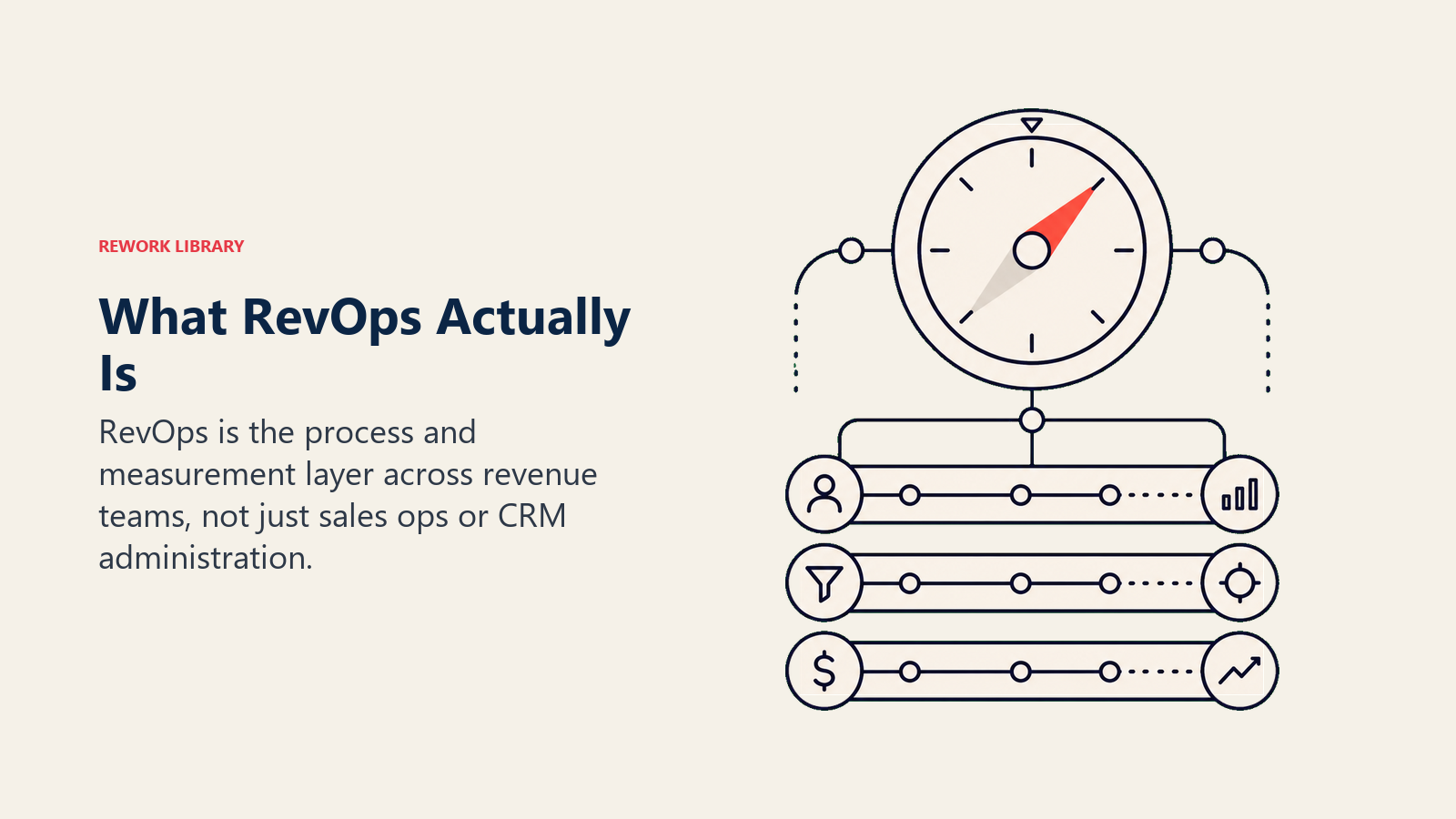
RevOps ist nicht Sales Ops mit einem neuen Titel. Sales Ops existiert, um das Sales-Team effektiver zu machen: Forecast-Genauigkeit, Territory-Design, Quota-Setting, Mitarbeiter-Produktivität. Diese Arbeit verschwindet nicht in einem RevOps-Modell. Sie wird nur zu einem Teil einer breiteren Funktion.
RevOps ist keine Technologierolle. CRM-Administration, MAP-Konfiguration und Tool-Beschaffung sind Aktivitäten, die RevOps möglicherweise ausführt oder überwacht. Aber wenn RevOps 80 % seiner Zeit mit IT-Tickets und Salesforce-Feldpflege verbringt, wird es untergenutzt. Der operative Wert liegt in Prozessdesign und Messung, nicht in Systemadministration. Forresters Revenue Operations-Forschung bietet ein praktisches Framework dafür, wie Teams auf verschiedenen Reifegraden die Funktion ausgestalten sollten.
RevOps ist der Eigentümer des Revenue-Systems: die Daten, Prozesse, Tools und Messungen, die den gesamten Kunden-Akquisitions- und Retentions-Lifecycle umfassen, vom ersten Marketing-Touchpoint über den abgeschlossenen Deal bis zum behaltenen Kunden.
Die drei Funktionen, die RevOps umspannt, sind Marketing Operations (die Infrastruktur, die Kampagnen messbar und Lead-Daten sauber macht), Sales Operations (die Prozesse, die Quota-tragende Mitarbeiter produktiver und Forecasting genauer machen) und Customer Success Operations (die Systeme, die Account-Health, Renewal-Timing und Expansion-Trigger verfolgen). In einer reifen Organisation berichten alle drei an eine zentralisierte RevOps-Funktion, nicht an ihre jeweiligen Team-Leads.
Diese Zentralisierung ist das, was RevOps zu einem Alignment-Mechanismus macht. Wenn Marketing Ops an den CMO und Sales Ops an den VP Sales berichtet, optimiert jede Funktion für die Metriken ihres eigenen Teams. Gartner prognostiziert, dass 75 % der wachstumsstärksten Unternehmen ein RevOps-Modell einsetzen werden, genau weil zentralisierte Operationen dieses Problem der isolierten Optimierung beseitigen. Wenn beide an RevOps berichten, ist das Optimierungsziel das gesamte Revenue-System, nicht das Dashboard eines einzelnen Teams.
Warum Alignment einen operativen Eigentümer braucht
Der Unterschied zwischen „wir haben vereinbart, uns abzustimmen" und „das System erfordert Alignment" ist der Unterschied zwischen dem Nichtvorhandensein von RevOps und dem Vorhandensein von RevOps.
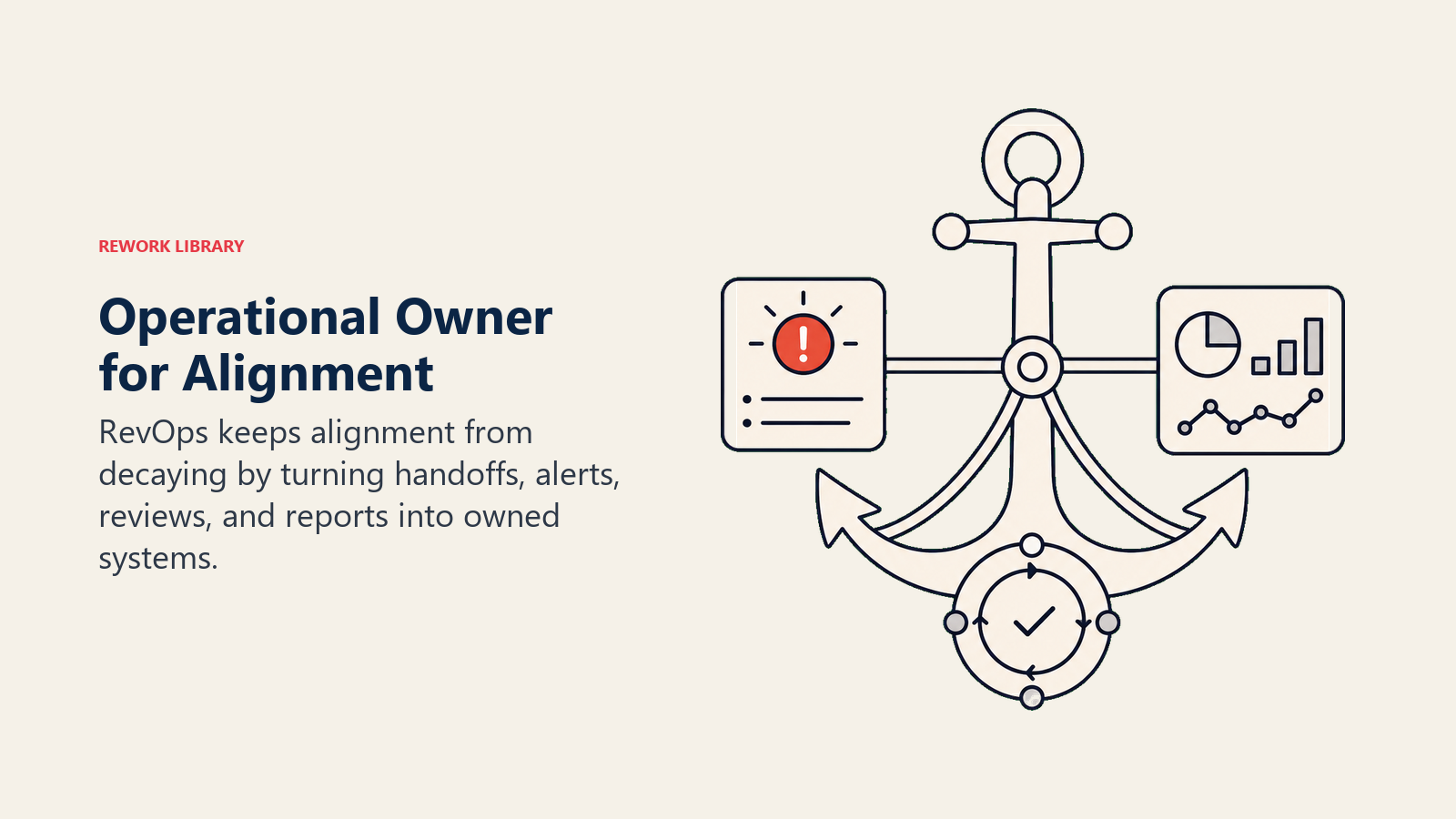
Ohne RevOps wird Alignment durch menschliche Anstrengung aufrechterhalten. Ein Demand-Gen-Lead und ein SDR-Manager vereinbaren, einen wöchentlichen Call abzuhalten. Sie tun es vier Wochen lang, dann reist eine Person, dann ist die andere mitten in einem Kampagnen-Launch, und der Call passiert drei Wochen lang nicht. Die Vereinbarung war real. Die Ausführung zerfiel.
Mit RevOps ist der Handoff-SLA keine verbale Vereinbarung. Es ist eine CRM-Automatisierung, die einen Alert auslöst, wenn ein Lead mehr als 24 Stunden lang im MQL-Status war, ohne Mitarbeiter-Aktivität. Der wöchentliche Lead-Quality-Call findet immer noch statt, aber RevOps liefert den Datenauszug, sodass keines der Teams 45 Minuten vor dem Meeting damit verbringt, die Zahlen zusammenzustellen. Das gemeinsame Dashboard ist kein Vorschlag. Es ist die Single Source of Truth, die RevOps besitzt und die beide Teams für Pipeline-Gespräche geschult sind zu nutzen.
Das ist kein Misstrauen. Es geht darum, Systeme zu entwerfen, die unter den normalen Bedingungen eines beschäftigten Go-to-Market-Teams funktionieren, wo Menschen hart arbeiten, Prioritäten sich verschieben und das Gedächtnis unzuverlässig ist. Das beste Alignment ist das, bei dem keines der Teams daran denken muss, etwas zu tun. Es passiert einfach, weil der Prozess es erfordert.
Die 5 Alignment-Hebel von RevOps
Das Framework der 5 Alignment-Hebel beschreibt die spezifischen operativen Mechanismen, durch die RevOps Marketing-Sales-Alignment von einer verbalen Verpflichtung in ein durchgesetztes System umwandelt. Jeder Hebel adressiert einen anderen Fehlermodus, der dazu führt, dass Alignment zwischen Meetings zerfällt.
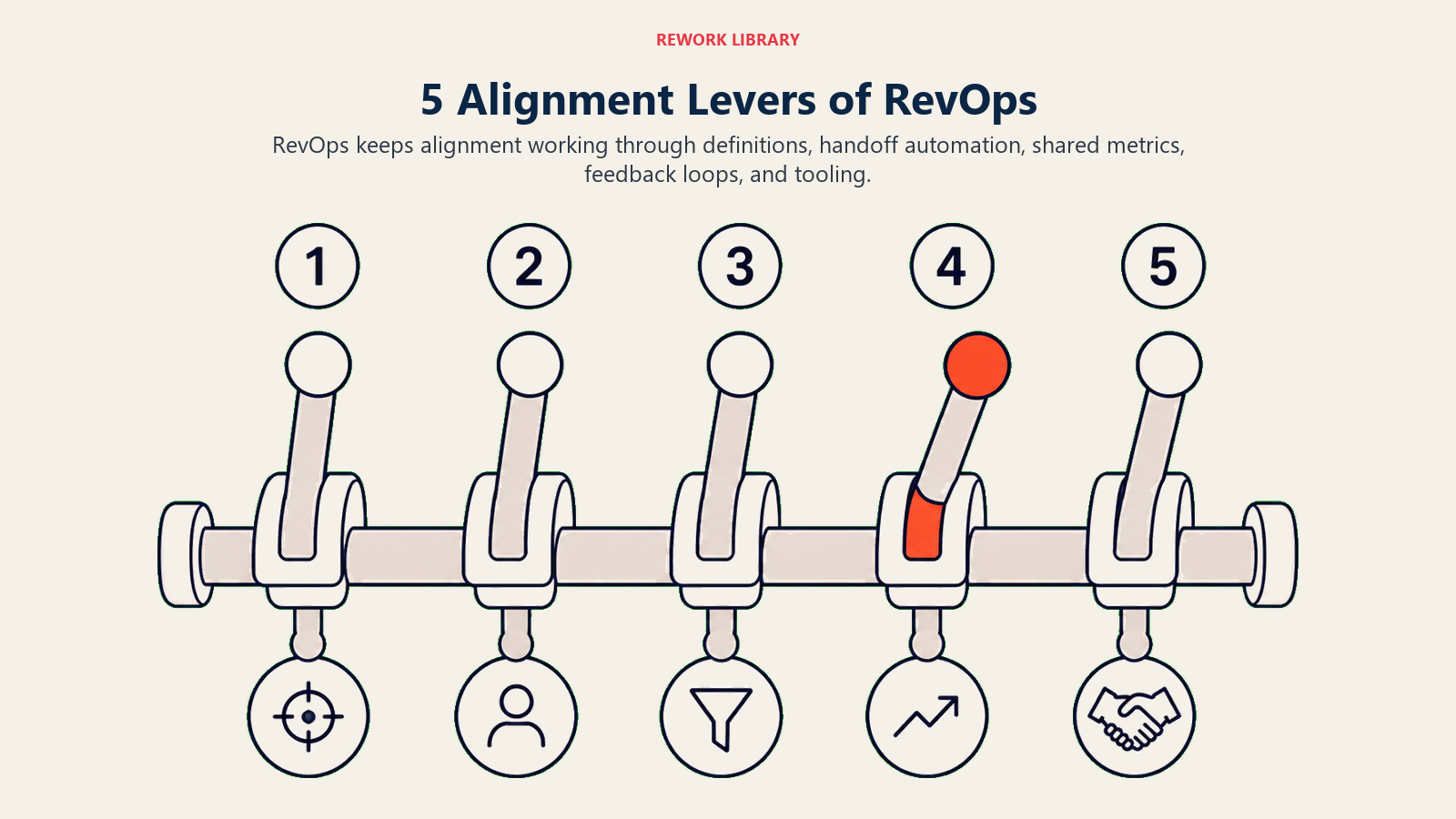
Hebel 1: Definitionen besitzen. MQL- und SQL-Definitionen sind keine Dokumente, sie sind operative Parameter, die in CRM-Feldern, Scoring-Regeln und Routing-Logik eingebettet sind. RevOps besitzt den Änderungsprozess: wenn Ablehnungsdaten signalisieren, dass die Definition gedriftet ist, zieht RevOps die Daten, modelliert den neuen Schwellenwert, koordiniert die Überprüfung, aktualisiert das System und kommuniziert die Änderung. Ohne diese Verantwortung verfallen Definitionen still.
Hebel 2: Übergabe automatisieren. SLA-Durchsetzung per Erinnerung scheitert unter normalen Betriebsbedingungen: Menschen reisen, Postfächer laufen über, Benachrichtigungen häufen sich an und werden ignoriert. RevOps ersetzt Erinnerungen durch Automatisierung, Leads, die die Reaktions-SLA verletzen, eskalieren automatisch als CRM-Tasks, nicht als Slack-Pings. Die SLA wird durch das System durchgesetzt, nicht durch menschliches Gedächtnis.
Hebel 3: Die gemeinsame Single Source of Truth aufbauen. Zwei Teams, die zwei Dashboards verwenden, können kein produktives Pipeline-Gespräch führen. RevOps baut und pflegt ein RevOps-eigenes Dashboard mit vereinbarten Definitionen für jede Metrik. Beide Teams werden geschult, es zu nutzen. Wenn Marketing Campaign-ROI präsentiert und Sales Pipeline präsentiert, schauen sie auf dieselben Zahlen.
Hebel 4: Die Routing-Schicht besitzen. Lead-Routing-Regeln müssen mit der aktuellen Go-to-Market-Strategie synchronisiert bleiben. Wenn ein neues Segment hinzugefügt wird, ein Mitarbeiter das Unternehmen verlässt oder sich der ICP ändert, aktualisiert RevOps das Routing, bevor der erste betroffene Lead ankommt. Routing-Fehler, Leads, die in der Schwebe bleiben, zum falschen Mitarbeiter gehen oder veraltern, sind die sichtbarsten Alignment-Brüche, und alle lassen sich auf Routing-Logik zurückführen, die aus dem Takt geraten ist.
Hebel 5: Datenqualität als laufende Operation pflegen. Attribution ist nur glaubwürdig, wenn die zugrundeliegenden Daten sauber sind. RevOps besitzt Feldvalidierungsregeln, periodische Deduplizierung, Integration-Health-Monitoring und Lead-Enrichment-Konfiguration. Ohne diese Schicht wird jede Attribution-Diskussion zu einer Debatte über Datenzuverlässigkeit, anstatt zu einer Entscheidung über Ausgaben.
Rework-Analyse: Die 5 Alignment-Hebel sind nicht unabhängig, sie verstärken sich gegenseitig. Teams, die nur Hebel 3 (gemeinsames Dashboard) implementieren, ohne Hebel 2 (Handoff-Automatisierung) oder Hebel 5 (Datenqualität), stellen fest, dass ihr gemeinsames Dashboard eine Quelle von Auseinandersetzungen statt einer Lösung wird, weil die zugrundeliegenden Daten inkonsistent sind. Die Hebel funktionieren, weil sie sowohl die verhaltensbedingten Ursachen von Misalignment (Menschen brauchen Erinnerungen, Definitionen driften) als auch die systemischen Ursachen (Daten sind unzuverlässig, Routing ist nicht synchron) adressieren. Alle fünf zu implementieren, auch auf minimalem anfänglichem Scope, ist das, was Alignment dauerhaft statt episodisch macht.
Fünf Wege, wie RevOps Alignment nachhaltig macht
Das sind die fünf spezifischen Mechanismen, durch die ein funktionierendes RevOps-Team Alignment von Aspiration in System umwandelt.
1. Besitzt die MQL/SQL-Definition und aktualisiert sie, wenn Metriken driften.
Die MQL-Definition ist kein Dokument. Sie ist ein operativer Parameter. Wenn das Scoring-Modell die falschen Leads befördert, wenn Ablehnungsraten steigen oder wenn sich der ICP nach einer Produktänderung entwickelt, muss der MQL-Schwellenwert angepasst werden. RevOps besitzt diesen Änderungsprozess: Ablehnungsdaten ziehen, den neuen Schwellenwert modellieren, die Überprüfung zwischen Marketing und Sales koordinieren, die CRM-Felder und Scoring-Regeln aktualisieren und die Änderung an die Mitarbeiter kommunizieren.
Ohne RevOps passieren MQL-Definitions-Änderungen ad hoc, meistens wenn ein CRO frustriert genug ist, ein cross-funktionales Meeting einzuberufen. Mit RevOps passieren sie auf einem quartalsweisen Review-Rhythmus, bevor Frustration der Katalysator wird. Der MQL-Ablehnungs-Feedback-Loop gibt RevOps die Daten, die es benötigt, um diese Überprüfung zum richtigen Zeitpunkt auszulösen.
2. Setzt Handoff-SLAs durch CRM-Automatisierung durch, nicht durch Erinnerungen.
Der Standardansatz zur SLA-Durchsetzung sind Erinnerungen: eine Slack-Benachrichtigung, wenn ein Lead 12 Stunden lang keine Aktivität hat, ein Manager-Alert nach 24 Stunden. Erinnerungen funktionieren, bis jeder aufgehört hat, sie zu lesen. Sie funktionieren, bis der Mitarbeiter in einem Meeting ist. Sie funktionieren, bis das Benachrichtigungsvolumen hoch genug ist, dass alle gelernt haben, sie zu ignorieren.
Automatisierung setzt SLAs anders durch. Wenn ein Lead den SLA-Schwellenwert ohne Aktivität überschreitet, eskaliert er automatisch zum Manager des Mitarbeiters, nicht als Benachrichtigung, sondern als zugewiesener Task. Oder er wird an den nächsten Mitarbeiter in der Round-Robin weitergeleitet. Oder er generiert einen CRM-Task, der auf dem Dashboard des Mitarbeiters erscheint, unabhängig davon, ob er Slack prüft. RevOps entwirft und pflegt diese Automatisierungen. Die SLA wird durch das System durchgesetzt, nicht durch menschliches Gedächtnis.
3. Baut und pflegt gemeinsame Dashboards, denen beide Teams vertrauen.
Vertrauen in Daten ist die Grundlage des Alignments. Wenn Marketing ein Attributionsmodell und Sales ein anderes verwendet, wird jeder Pipeline-Review zu einer Verhandlung darüber, welche Zahl richtig ist. Wenn beide Teams ein RevOps-gepflegtes Dashboard mit vereinbarten Definitionen für jede Metrik verwenden (was als Marketing-sourced Lead zählt, wann ein MQL zu einem SQL wird, was „Marketing-influenced Pipeline" bedeutet), verschiebt sich das Gespräch von „wessen Zahlen?" zu „was bedeuten die Zahlen?"
RevOps baut dieses Dashboard einmal, aktualisiert es bei Definitionsänderungen und pflegt es als Single Source of Truth für beide Teams. Das bedeutet nicht, dass eine Person für immer eine Tabelle pflegt. Es bedeutet, dass die Definitionen dokumentiert sind, die Datenquellen sauber sind und beide Teams geschult sind, dieselbe Ansicht zu nutzen. Die 8 gemeinsamen Dashboards für Revenue-Teams beschreibt, was jede Reporting-Schicht enthalten sollte.
4. Verwaltet Lead-Routing-Regeln, sodass kein Lead durch die Ritzen fällt.
Lead Routing ist operatives Alignment in seiner reinsten Form. Wer erhält den Lead? Wann? Auf Basis welcher Logik? Wenn Routing-Regeln von Marketing in einem Tool und Sales in einem anderen gepflegt werden, entstehen Inkonsistenzen. Leads bleiben in der Schwebe. Das Territory eines Mitarbeiters ändert sich, aber die Routing-Regel nicht. Ein ICP-Segment wird zum Targeting hinzugefügt, aber niemand aktualisiert das Routing, um es zu verarbeiten.
RevOps besitzt die Routing-Schicht als ein einziges System. Wenn der ICP auf eine neue Branche ausgedehnt wird, aktualisiert RevOps die Lead-Routing-Regeln im CRM, bevor Marketings erste Kampagne diese Branche erreicht. Wenn ein Mitarbeiter das Unternehmen verlässt, verteilt RevOps seine Leads weiter, bevor sie veralten. Die Routing-Logik ist immer synchron mit der aktuellen Go-to-Market-Strategie, weil eine Funktion beides besitzt.
5. Betreibt die Datenqualitätsschicht, die Attribution glaubwürdig macht.
Attribution ist nur glaubwürdig, wenn die zugrundeliegenden Daten sauber sind. Wenn 30 % Ihrer CRM-Kontaktdatensätze keine Lead-Quelle haben, kann Ihr Attributionsmodell Marketing nicht sagen, welche Kampagnen Umsatz generierten. Wenn Unternehmensnamen inkonsistent eingegeben werden, bricht account-basierte Attribution. Wenn die CRM-MAP-Synchronisierung ein defektes Feld-Mapping hat, fließen Kampagnendaten nicht zurück zu Kontaktdatensätzen.
RevOps besitzt Datenqualität als laufende operative Verantwortung: Feldvalidierungsregeln setzen, periodische Deduplizierung durchführen, Integration-Health überwachen und den Enrichment-Prozess für neue Leads definieren. Ohne diese Schicht produziert Closed-Loop-Reporting unzuverlässige Daten und Attribution-Diskussionen kollabieren zu Debatten über Methodik statt zu Entscheidungen über Ausgaben.
Das RevOps-Org-Modell bei verschiedenen Unternehmensgrößen
Struktur ist weniger wichtig als Eigentums-Klarheit. Aber so entwickelt sich RevOps typischerweise, wenn Unternehmen wachsen.
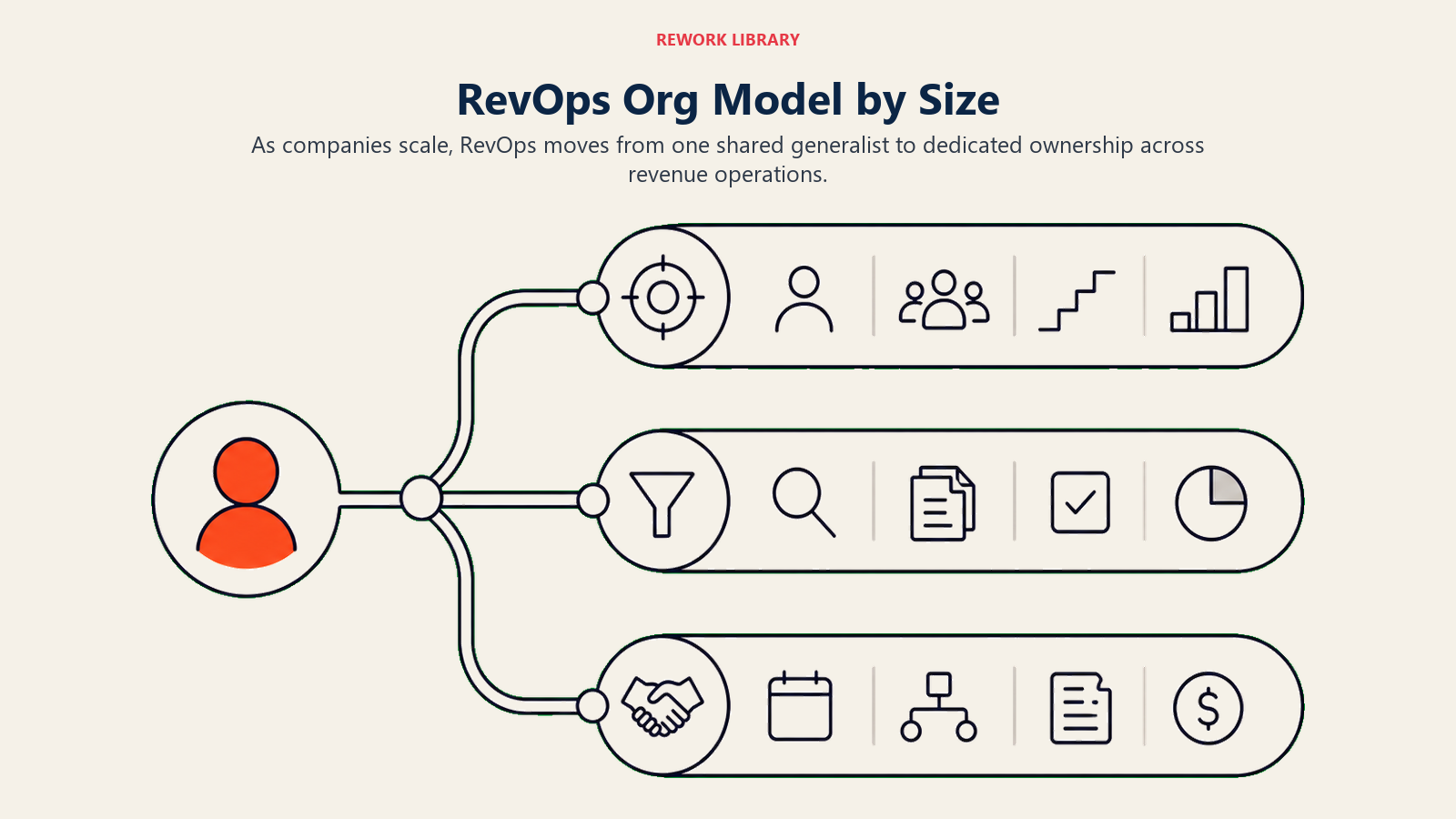
Unter 50 Mitarbeiter: Ein Ops-Generalist. Auf dieser Stufe können Sie sich keine Spezialisierung leisten. Eine Person, manchmal ein Sales Ops Manager oder ein Marketing Ops Manager mit erweitertem Mandat, besitzt in der Praxis alle drei Funktionen. Sie trägt den Marketing-Ops-Hut (Campaign-Tracking, MAP-Konfiguration, Lead Scoring), den Sales-Ops-Hut (CRM-Hygiene, Territory-Regeln, Forecast-Daten) und den CS-Ops-Hut (Renewal-Tracking, Health-Score-Setup) ohne den formalen Titel, der alle drei abdeckt.
Das Entscheidende auf dieser Stufe ist nicht die Struktur. Es ist klare Eigenverantwortung. Wer auch immer Ops besitzt, muss explizite Autorität haben, Prozessentscheidungen über alle drei Funktionen hinweg zu treffen. Wenn sie die Genehmigung sowohl des CMO als auch des VP Sales benötigen, bevor sie ein Feld im CRM ändern, kann die Funktion nicht schnell genug agieren, um nützlich zu sein.
Erste RevOps-Einstellung: jemanden, der damit umgehen kann, für mindestens 18 Monate die einzige Ops-Person zu sein, der SQL schreiben oder mit einem BI-Tool arbeiten kann, um eigene Daten zu ziehen, und der gesehen hat, wie eine funktionale CRM-MAP-Integration aussieht. Die Spezialistenkenntnisse kommen später.
50–200 Mitarbeiter: Dedizierter RevOps Manager. Auf dieser Stufe ist die Ops-Arbeit über Marketing, Sales und CS zu groß für einen Generalisten. Ein dedizierter RevOps Manager, der typischerweise an den CRO, VP Sales oder CFO berichtet, beginnt mit dem Aufbau der zentralisierten Funktion. Möglicherweise hat er einen Spezialisten, der ihm berichtet (typischerweise ein CRM-Administrator oder ein Marketing Ops Specialist, der den MAP handhabt).
Die Berichtslinie ist auf dieser Stufe wichtig. Wenn RevOps an den VP Sales berichtet, werden Marketing-Teams das Dashboard nicht vertrauen. Attributionsmodelle fühlen sich auf sales-sourced Pipeline ausgerichtet an. MQL-Definitionen fühlen sich auf Sales-Präferenzen kalibriert an. Ob die Arbeit tatsächlich voreingenommen ist oder nicht, die Wahrnehmung von Voreingenommenheit reicht aus, um das shared-data-Vertrauen zu brechen, das RevOps aufbauen soll. Fix: RevOps auf eine cross-funktionale Berichtslinie bringen.
200+ Mitarbeiter: RevOps-Team mit Spezialisten. Über 200 Mitarbeitern teilt sich die Funktion typischerweise in dedizierte Spezialisten auf: einen Marketing Ops Lead, einen Sales Ops Lead, einen CS Ops Lead und eine Data/Analytics-Funktion, alle an einen VP oder Head of RevOps berichtend. Der VP RevOps hält die cross-funktionale Perspektive und trifft Entscheidungen, wenn die drei Funktionen konkurrierende Prioritäten haben.
Auf dieser Größe besitzt RevOps typischerweise auch die Technologie-Stack-Überprüfung, das Vendor Management für CRM und MAP und das Umsatz-Forecast-Modell, das vom CRO für Board-Reporting verwendet wird. Forecasting Fundamentals bietet eine Grundlage in der Methodik, die RevOps auf dieser Stufe besitzen muss.
Was RevOps nicht besitzt
Die Leitplanken sind genauso wichtig wie das Mandat.
RevOps setzt keine Strategie. Es operationalisiert die Strategie, auf die sich Marketing und Sales geeinigt haben. Wenn der CMO und der VP Sales entscheiden, eine neue Branche anzusprechen, konfiguriert RevOps Routing, Scoring und Dashboards, um diese Strategie zu unterstützen. Aber RevOps entscheidet nicht, welche Branche anzusprechen ist oder welche Segmente zu pausieren sind. Das sind Strategieentscheidungen, die zu den Revenue-Leitern gehören.
RevOps besitzt nicht den ICP. Es setzt die ICP-Definition im System durch. Wenn CRO und CMO vereinbaren, dass Unternehmen mit weniger als 20 Mitarbeitern außerhalb des ICP liegen, aktualisiert RevOps das Scoring-Modell, um diesen Schwellenwert widerzuspiegeln. Aber die Entscheidung, wo die ICP-Grenze zu ziehen ist, gehört zu den Go-to-Market-Leitern, nicht zu Ops.
RevOps leitet nicht den wöchentlichen Lead-Quality-Call. Es liefert die Daten dafür. Der wöchentliche Lead-Quality-Call ist ein Marketing-Sales-Gespräch, das dem Demand-Gen-Lead gehört. RevOps liefert die Ablehnungsaufschlüsselung, die Akzeptanzrate und die Time-to-First-Touch-Metriken. Aber die Interpretation und die eine Änderung, die am Ende des Calls vereinbart wird, gehören den Marketing- und Sales-Teilnehmern.
Diese Leitplanken verhindern, dass RevOps zu weit greift und Ressentiments von den Teams erzeugt, die es unterstützt. In dem Moment, in dem RevOps als Strategie-Entscheidungsträger wahrgenommen wird, verliert es die Neutralität, die es als Alignment-Funktion effektiv macht.
Häufige RevOps-Anti-Patterns, die Alignment zerstören
RevOps berichtet nur an Sales. Wenn RevOps unter dem VP Sales angesiedelt ist, hören Marketing-Teams auf, den Dashboards zu vertrauen. Attributionsmodelle fühlen sich auf sales-sourced Pipeline ausgerichtet an. MQL-Definitionen fühlen sich auf Sales-Präferenzen kalibriert an. Ob die Arbeit tatsächlich voreingenommen ist oder nicht, die Wahrnehmung von Voreingenommenheit reicht aus, um das shared-data-Vertrauen zu brechen, das RevOps aufbauen soll. Fix: RevOps auf eine cross-funktionale Berichtslinie bringen.
75 % der wachstumsstärksten Unternehmen setzen auf ein RevOps-Modell, gegenüber nur 37 % der durchschnittlich wachsenden Unternehmen, basierend auf Gartners 2024 B2B GTM Strategy Survey, die Adoptionslücke weitet sich aus, da der Performance-Vorteil zentralisierter Revenue Operations in mehrjährigen Kohortendaten messbar wird.
RevOps-Team teilt sich nach Funktion auf. Einige Unternehmen haben ein Sales Ops-Team unter dem CRO und ein Marketing Ops-Team unter dem CMO und nennen es „RevOps." Aber das ist nicht RevOps. Es sind isolierte Ops mit einem gemeinsamen Label. HBRs Analyse von Marketing-Sales-Misalignment schätzt, dass die Lücke zwischen den beiden Funktionen Unternehmen mehr als 1 Billion Dollar jährlich kostet, eine Zahl, die genau durch die Art von isolierter Optimierung angetrieben wird, die dieses Anti-Pattern erzeugt. Die Alignment-Arbeit passiert an der Naht zwischen Teams, und wenn jedes Team seine eigene Ops-Funktion hat, die für seine eigenen Metriken optimiert, ist die Naht genau dort, wo Dinge brechen. Fix: In eine einzige Funktion mit cross-team-Sichtbarkeit und klarer Eigenverantwortung für gemeinsame Systeme zentralisieren.
RevOps wird zu einer Ticket-Queue. Wenn RevOps hauptsächlich reaktiv ist, Felder hinzufügen, die Mitarbeiter anfordern, Berichte ziehen, die Manager anfragen, Integrationen reparieren, wenn sie brechen, baut es nie das proaktive operative Fundament, das Alignment dauerhaft macht. Die Funktion verbringt ihre gesamte Kapazität auf Wartung und keine auf Prozessdesign. Fix: Mindestens 40 % der RevOps-Kapazität proaktiven Projekten widmen (SLA-Automatisierung, Dashboard-Entwicklung, Integration-Health-Monitoring) und nicht nur reaktiven Tickets.
Wie Sie erkennen, ob Ihr RevOps für Alignment funktioniert
Drei Tests, die kein RevOps-Reifegradmodell erfordern.
Sowohl Marketing als auch Sales verwenden dasselbe Dashboard für Pipeline-Gespräche. Wenn der VP Sales Pipeline dem CRO präsentiert, schauen sie auf dieselben Source-to-Close-Daten, die Marketing für Campaign-ROI verwendet. Niemand sagt „nun, unsere Zahlen zeigen...", weil es nur einen Satz von Zahlen gibt.
MQL-Ablehnungsgründe werden im CRM erfasst, nicht in E-Mails oder Slack. Wenn ein Mitarbeiter ein MQL ablehnt, wählt er einen Grund aus einem Dropdown aus. Der Grund ist im CRM. Marketing kann ihn in einem Bericht ziehen, ohne jemanden zu fragen. Wenn Ablehnungsdaten immer noch in Slack-Nachrichten und SDR-zu-Demand-Gen-E-Mails leben, ist das Alignment informell und fragil. Das ist genau das Problem, das der Win-Loss-Feedback-Prozess auf Deal-Ebene zu lösen darauf ausgelegt ist.
Lead Routing hat in 30 Tagen keine „Wo ist dieser Lead hingegangen?"-Frage ausgelöst. Wenn Routing-Regeln gut gepflegt sind, bleiben Leads nicht in der Schwebe. Mitarbeiter wissen, was sie zu erwarten haben. Marketing weiß, wohin ihre Leads gegangen sind. Wenn die letzte Routing-Frage mehr als einen Monat zurückliegt, funktioniert das System.
RevOps aufbauen, wenn Sie es noch nicht haben
Die meisten Mid-Market-Teams fügen RevOps später hinzu, als sie sollten. Wenn Sie aktuell ohne es operieren, hier ist ein Weg vorwärts.
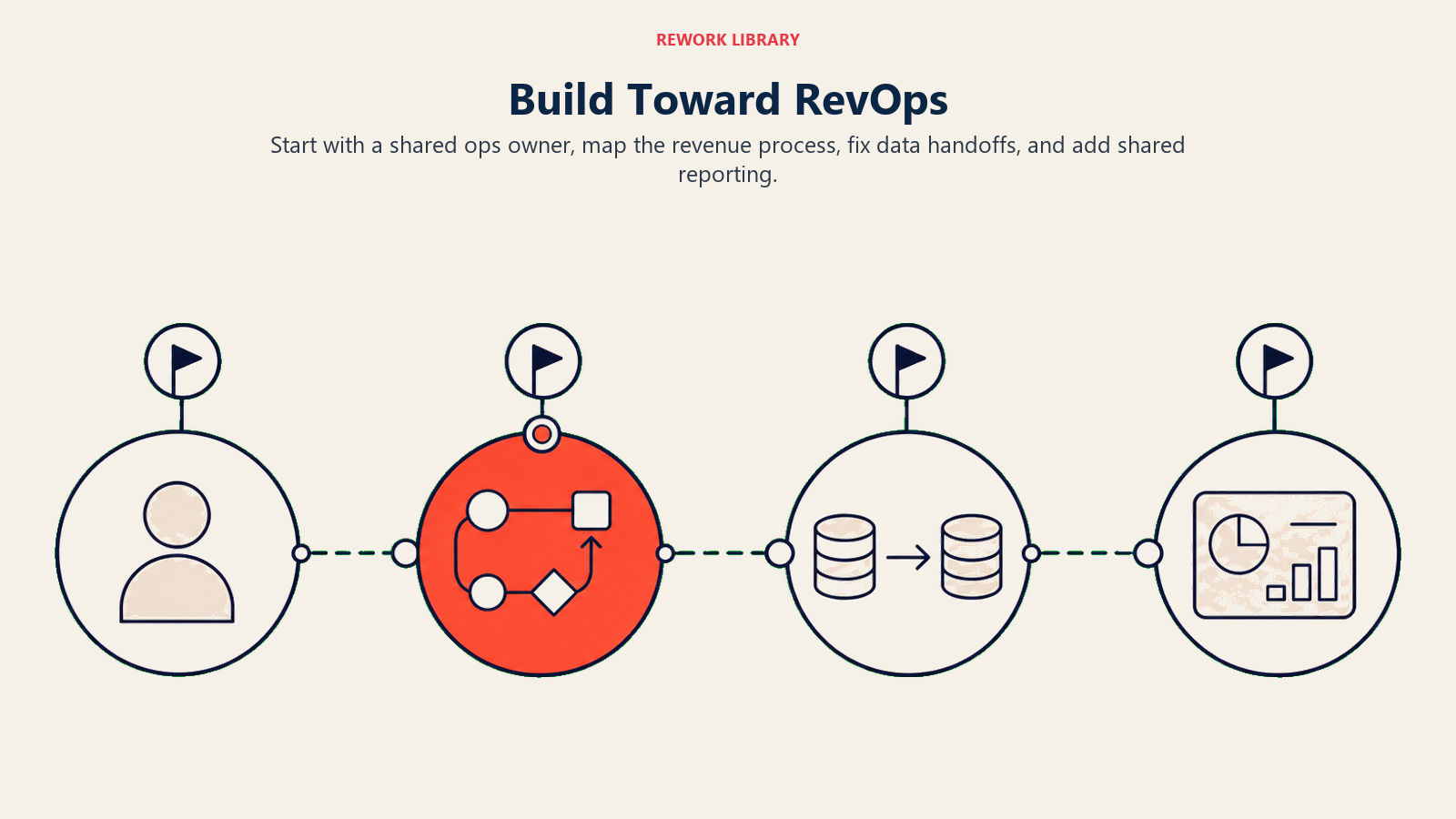
Phase 1: Einen gemeinsamen Ops-Eigentümer zuweisen. Auch wenn es eine Halbzeit-Verpflichtung von einer Marketing-Ops-Person ist, die jetzt auch Sales Ops abdeckt, Eigenverantwortung explizit zu machen ist der erste Schritt. Der gemeinsame Ops-Eigentümer nimmt am wöchentlichen Lead-Quality-Call teil, zieht den Ablehnungsbericht und pflegt die CRM-MAP-Integration. Das ist keine vollständige RevOps-Funktion. Es ist die Minimum-Viable-Alignment-Infrastruktur.
Phase 2: Den aktuellen Umsatzprozess dokumentieren. Kartieren Sie den vollständigen Lead-Lifecycle vom ersten Touchpoint bis zum abgeschlossenen Deal: welches System welche Stufe besitzt, welches Team für welche Übergabe verantwortlich ist, wo Daten von MAP zu CRM übergehen und wo Attribution erfasst wird. Die Lead-Distribution-Strategie ist ein guter Ort, um zuerst zu auditieren, dort führt Eigenverantwortungs-Mehrdeutigkeit am häufigsten dazu, dass Leads kalt werden. Diese Dokumentation offenbart die Lücken: die Übergaben, bei denen Daten verloren gehen, die Stufen, in denen niemand Eigenverantwortung definiert hat, die Integrationen, die auf dem Papier existieren, aber in der Praxis defekt sind.
Phase 3: Die drei größten Reibungspunkte identifizieren und besitzen. Versuchen Sie nicht, alles zu reparieren. Wählen Sie die drei Stellen, an denen Leads durch die Ritzen fallen, Attribution unzuverlässig ist oder Handoff-SLAs konsistent verfehlt werden. Reparieren Sie diese drei mit Prozessdesign und Automatisierung. Lassen Sie die Erfolge dokumentieren. Nutzen Sie sie, um den Fall für dediziertes RevOps-Headcount zu machen.
Der Weg zu vollständigem RevOps führt durch diese drei Phasen. Sie müssen keinen VP RevOps am ersten Tag einstellen. Sie müssen Eigenverantwortung etablieren, den aktuellen Zustand verstehen und die Lücken mit dem höchsten Impact reparieren. Dann von dort aus aufbauen.
Häufig gestellte Fragen
Was ist Revenue Operations (RevOps)?
Revenue Operations ist die zentralisierte Funktion, die die Daten, Prozesse, Tools und Messungen besitzt, die den gesamten Kunden-Lifecycle umfassen, vom ersten Marketing-Touchpoint über den abgeschlossenen Deal bis zum behaltenen und erweiterten Kunden. RevOps vereinheitlicht, was zuvor isolierte Ops-Teams waren (Marketing Ops, Sales Ops, Customer Success Ops) unter einem einzigen cross-funktionalen Mandat. Sein definierender Zweck ist es, Alignment zum Standard zu machen, nicht zur Ausnahme, indem Systeme gebaut werden, die Zusammenarbeit erzwingen, anstatt sich auf menschliches Gedächtnis und guten Willen zu verlassen.
Was macht RevOps täglich?
RevOps besitzt fünf operative Domänen: die MQL/SQL-Definition und ihre Aktualisierungen, Handoff-SLA-Automatisierung, gemeinsame Pipeline-Dashboards, Lead-Routing-Logik und Datenqualität über die CRM-MAP-Integration. Täglich bedeutet das: Ablehnungsdaten für den wöchentlichen Lead-Quality-Call ziehen, die CRM-MAP-Feld-Mappings pflegen, damit Attribution zuverlässig ist, Routing-Regeln aktualisieren, wenn sich die Go-to-Market-Strategie ändert, den quartalsweisen MQL-Schwellenwert-Review durchführen und die Dashboards aufbauen, die sowohl Marketing als auch Sales für Pipeline-Gespräche nutzen.
Wann sollte ein Unternehmen seine erste RevOps-Person einstellen?
Die meisten Teams stellen RevOps zu spät ein. Der typische Auslöser sind Misalignment-Schmerzen, Marketing und Sales stehen in offenem Konflikt über Lead-Qualität, Attribution-Zahlen stimmen nicht überein oder Pipeline-Forecasts sind konsistent falsch. Ein besserer Auslöser ist Skalierung: wenn Sie mehr als 150 MQLs pro Monat haben, ein dediziertes Sales-Team von vier oder mehr Mitarbeitern und ein Marketing-Team, das mehrere gleichzeitige Kampagnen durchführt, hat der Koordinationsaufwand bereits das überschritten, was informelles Alignment bewältigen kann. Zu diesem Zeitpunkt kostet das Warten auf eine Krise, um RevOps einzustellen, mehr als die Einstellung.
Wo sollte RevOps in der Org-Struktur berichten?
RevOps sollte an einen cross-funktionalen Revenue-Leader berichten, den CRO, COO oder CEO, nicht an den CMO oder VP Sales. Wenn RevOps an den VP Sales berichtet, hören Marketing-Teams auf, den Dashboards und Attributionsmodellen zu vertrauen (ob die Arbeit tatsächlich voreingenommen ist oder nicht, die Wahrnehmung von Voreingenommenheit bricht das shared-data-Vertrauen). Wenn es an den CMO berichtet, hat Sales dasselbe Problem umgekehrt. Die CRO- oder COO-Berichtslinie liefert die Neutralität, die RevOps als Alignment-Mechanismus anstatt als Erweiterung der Agenda eines Teams funktionieren lässt.
Was ist der Unterschied zwischen RevOps und Sales Ops?
Sales Ops existiert, um das Sales-Team effektiver zu machen: Forecast-Genauigkeit, Territory-Design, Quota-Setting, Mitarbeiter-Produktivitätsanalyse. RevOps enthält Sales Ops innerhalb eines breiteren Mandats, das auch Marketing Operations und Customer Success Operations abdeckt. Der strukturelle Unterschied ist Berichtslinie und Scope: Sales Ops berichtet an den Sales-Leiter und optimiert für die Metriken des Sales-Teams; RevOps berichtet an einen cross-funktionalen Leader und optimiert für das gesamte Revenue-System. In einem reifen RevOps-Modell wird Sales Ops zu einer spezialisierten Funktion innerhalb von RevOps, nicht zu einem separaten Team.
Was sind die ersten drei Einstellungen, um ein RevOps-Team aufzubauen?
Für Unternehmen, die von einem Ops-Generalisten zu einem kleinen Team skalieren, ist die Reihenfolge typischerweise: (1) ein Revenue Operations Manager oder Director, der Prozesse entwerfen kann und das cross-funktionale Mandat besitzt, diese Person setzt das Betriebsmodell für die Funktion; (2) ein CRM-Administrator oder Marketing Operations Specialist, der die technische Konfigurationsarbeit übernimmt (Feld-Wartung, Integration-Health, Datenqualität), die sonst die Kapazität des Managers auffressen würde; (3) ein Data Analyst oder BI Specialist, der die Reporting-Schicht besitzt und die gemeinsamen Dashboards aufbaut, die sowohl Marketing als auch Sales nutzen. Customer Success Operations Abdeckung als viertes hinzufügen, sobald die Marketing-Sales-Alignment-Infrastruktur stabil ist.
Wie erkennen Sie, ob Ihr RevOps funktioniert?
Drei Tests: Erstens nutzen sowohl Marketing als auch Sales dasselbe Dashboard für Pipeline-Gespräche, niemand sagt „nun, unsere Zahlen zeigen...", weil es nur einen Satz von Zahlen gibt. Zweitens werden MQL-Ablehnungsgründe im CRM als kategorisierte Daten erfasst, nicht in Slack-Nachrichten oder E-Mails. Drittens hat Lead Routing in mehr als 30 Tagen keine „Wo ist dieser Lead hingegangen?"-Frage generiert. Diese drei Tests erfordern kein RevOps-Reifegradmodell oder ein formelles Audit, sie sind in einem einzigen Pipeline-Review beobachtbar.
Was kostet RevOps im Verhältnis zu seinem Revenue-Impact?
Gartners Forschung zeigt, dass Unternehmen mit einer dedizierten RevOps-Funktion 2,4-mal schneller beim Umsatz wachsen als solche ohne, und der primäre ROI-Treiber, den Unternehmen nennen, ist nicht Technologiekonsolidierung oder Kostensenkung, es sind verbesserte Win Rates (36 % höher) und Account-Expansion-Revenue (28 % höher). Für ein Mid-Market-Unternehmen mit 10–50 Mio. USD ARR produziert ein dreiköpfiges RevOps-Team bei Gesamtkosten von 400.000–600.000 USD typischerweise innerhalb von 12–18 Monaten einen Revenue-Impact, der die Kosten übersteigt, primär durch reduzierte Pipeline-Lecks (Leads, die kalt werden, Routing-Fehler, SLA-Verletzungen) und verbesserten Campaign-ROI durch zuverlässige Attribution.
Mehr erfahren

Principal Solution Architect
On this page
- Was RevOps wirklich ist (und was nicht)
- Warum Alignment einen operativen Eigentümer braucht
- Die 5 Alignment-Hebel von RevOps
- Fünf Wege, wie RevOps Alignment nachhaltig macht
- Das RevOps-Org-Modell bei verschiedenen Unternehmensgrößen
- Was RevOps nicht besitzt
- Häufige RevOps-Anti-Patterns, die Alignment zerstören
- Wie Sie erkennen, ob Ihr RevOps für Alignment funktioniert
- RevOps aufbauen, wenn Sie es noch nicht haben
- Häufig gestellte Fragen
- Was ist Revenue Operations (RevOps)?
- Was macht RevOps täglich?
- Wann sollte ein Unternehmen seine erste RevOps-Person einstellen?
- Wo sollte RevOps in der Org-Struktur berichten?
- Was ist der Unterschied zwischen RevOps und Sales Ops?
- Was sind die ersten drei Einstellungen, um ein RevOps-Team aufzubauen?
- Wie erkennen Sie, ob Ihr RevOps funktioniert?
- Was kostet RevOps im Verhältnis zu seinem Revenue-Impact?
- Mehr erfahren