Joint Pipeline Review: Wie Marketing und Sales gemeinsam die Pipeline überprüfen
Turn this article into takeaways for your work.


Each assistant summarizes the article only for you and suggests best practices for your work.
Die meisten Pipeline-Reviews sind Sales-Meetings. Marketing bekommt danach eine E-Mail-Zusammenfassung oder eine Slack-Nachricht: „Gutes Quartal, Team." Marketing war nicht im Raum, als die Pipeline-Lücke identifiziert wurde. Marketing saß nicht am Tisch, als die Entscheidung fiel, für die nächsten sechs Wochen den Mid-Market zu priorisieren und Enterprise zurückzufahren.
Das ist kein Alignment. Das ist eine Briefung. Und das ist ein echter Unterschied.
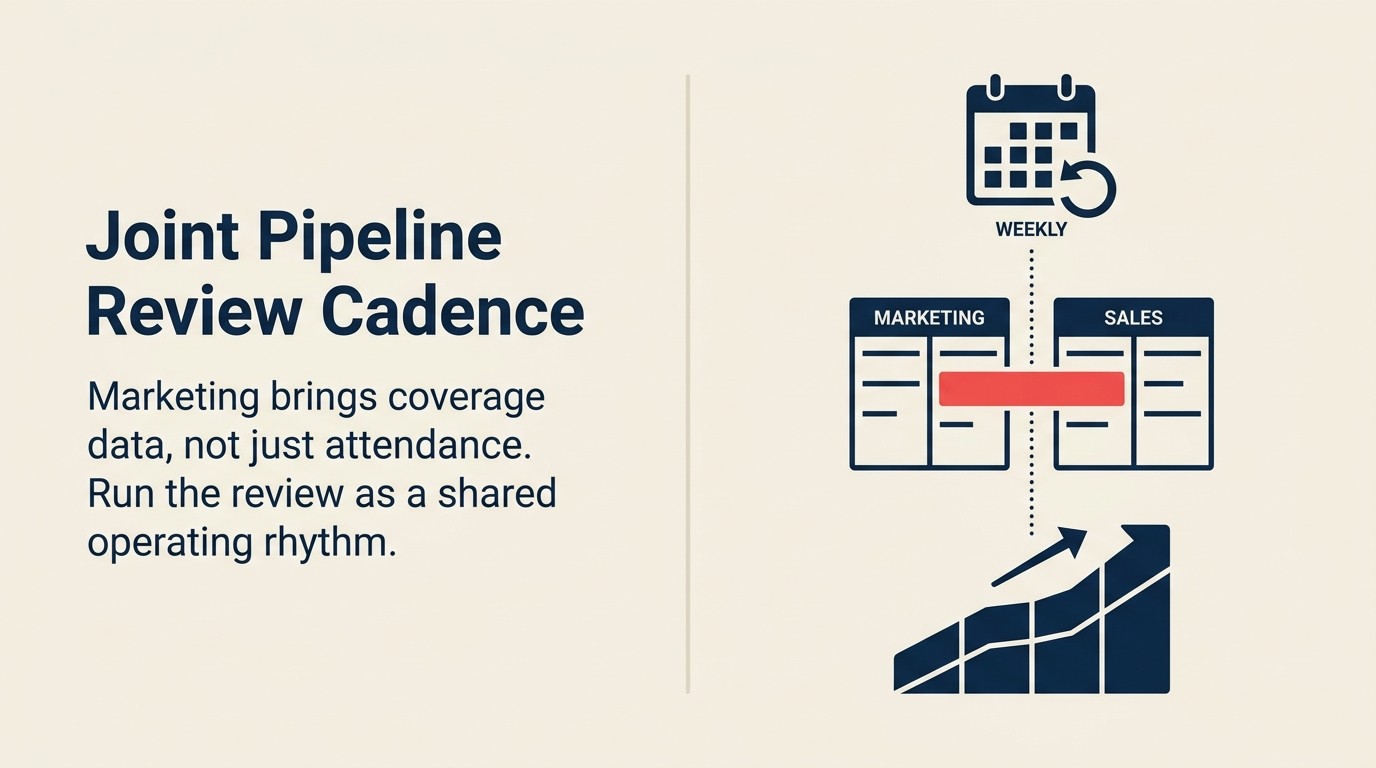
Ein Joint Pipeline Review ist so strukturiert, dass Marketing mit vorbereiteten Inputs kommt, für etwas im Meeting Verantwortung trägt und mit Action Items aus dem Meeting geht – nicht nur mit einer PDF der Slides. Sales führt das Meeting nicht allein. Beide Teams überprüfen die Pipeline gemeinsam und einigen sich auf die nächsten Schritte.
Das verändert, was das Meeting leistet. Und es verändert, wie Alignment im Alltag anfühlt.
Wichtige Fakten: Pipeline-Reviews und Revenue-Alignment
- Unternehmen, die regelmäßige Joint-Marketing-Sales-Pipeline-Reviews durchführen, berichten laut Aberdeen-Group-Forschung von 36 % höherer Kundenbindung und 38 % höheren Win-Raten als Unternehmen ohne Alignment-Prozesse.
- Sales-Teams verfehlen in 65 % der Fälle ihr Quota, teilweise aufgrund mangelnder Pipeline-Transparenz und ungenauer Prognosen. Eine gemeinsame Review-Kadenz adressiert beides direkt, so der Salesforce State of Sales Report.
- MQLs, die eine konsequente, strukturierte Sales-Follow-up erhalten, haben 9-mal höhere Conversion-Raten als solche ohne systematisches Review, laut Marketo-Daten.
- Organisationen mit klar definierten Lead-Handoff-Prozessen verzeichnen eine 106-prozentige Umsatzsteigerung gegenüber Teams mit fragmentierten Prozessen, so MarketingProfs.
- 73 % der Marketing-Leads werden nie zu Sales-Opportunities, weil weder Team regelmäßig genug Conversion-Daten gemeinsam überprüft, um die Unterbrechung zu identifizieren, so Marketing Sherpa.
Was ein Pipeline-Review „Joint" macht
Das Wort „joint" wird oft locker verwendet. In den meisten Organisationen bedeutet es, dass Marketing am Sales-Pipeline-Review teilnimmt und zuschaut. Das ist nicht gemeint.
Ein Pipeline-Review ist joint, wenn:
Marketing mit vorbereiteten Inputs kommt, nicht nur als Zuschauer. Das bedeutet MQL-Zahlen für den Zeitraum, Conversion-Raten nach Kanal oder Segment und einen Überblick über bevorstehende Programme, die in den nächsten 30–60 Tagen in die Pipeline einfließen werden. Marketing Ops sollte das vor dem Meeting vorbereiten, nicht während des Meetings.
Beide Teams für etwas im Meeting Rechenschaft ablegen. Sales ist verantwortlich für die Coverage Ratio, Stage-Verteilung und Velocity-Trends. Marketing ist verantwortlich für MQL-Volumen gegenüber dem Ziel, Akzeptanzrate und beeinflusste Pipeline. Kein Team beobachtet nur.
Das Output umfasst Action Items für beide Teams. Wenn das Meeting endet, sollte es eine kurze Liste mit nächsten Schritten geben – und einige davon gehören Marketing. Wenn nur Sales das Meeting mit To-dos verlässt, ist es immer noch ein Sales-Meeting mit Marketing-Beobachtern.
Zu einem wirklich gemeinsamen Review zu kommen, dauert einige Zyklen. Das erste Mal ist meist unangenehm, weil Marketing mit den falschen Metriken kommt. Das ist zu erwarten. Es ist ein Kalibrierungsprozess, keine einmalige Einrichtung. Gartner stellte fest, dass weniger als 50 % der Sales-Leader großes Vertrauen in ihre eigene Prognosegenauigkeit haben – eine Zahl, die sich nur verschlechtert, wenn Marketing-Inputs fehlen.
Empfohlene Kadenz nach Unternehmensphase
Die richtige Kadenz hängt stark davon ab, wie schnell sich Ihre Pipeline bewegt und wie viele Personen im Raum sein müssen. Ein 10-Personen-Startup und ein 200-Personen-Mid-Market-Unternehmen haben hier tatsächlich unterschiedliche Bedürfnisse.
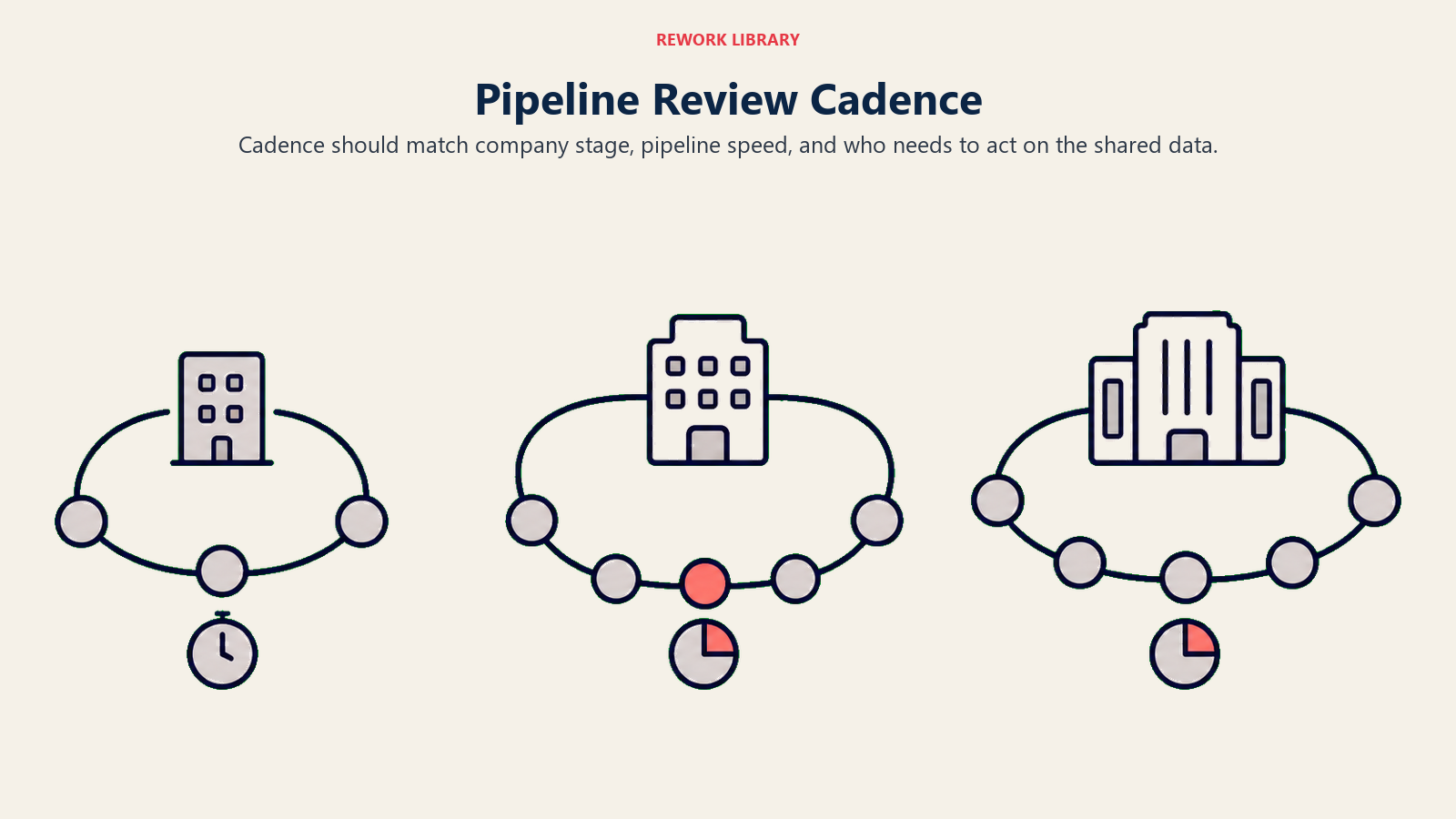
| Phase | ARR-Bereich | Kadenz | Dauer | Teilnehmende |
|---|---|---|---|---|
| Early | Unter 5 Mio. $ | Monatlich | 60 Minuten | Gesamtes Revenue-Team (Marketing, Sales, Gründer) |
| Growth | 5–50 Mio. $ | Zweiwöchentlich | 45 Minuten | Marketing-Lead + Sales-Lead + RevOps |
| Scale | 50 Mio. $ + | Wöchentlich (Sales) + zweiwöchentlich (Joint) | 30 Min. Sales / 45 Min. Joint | Sales Ops + Marketing Ops + VPs; quartalsweises Joint Deep-Dive mit Leadership |
In der frühen Phase ist Geschwindigkeit entscheidend. Alle sind nah genug an den Deals, dass ein monatlicher Überblick ausreichend Vorlaufzeit zum Anpassen bietet. Das Format kann informell sein, da das Team klein genug ist, um die Stimmung zu lesen und mid-Conversation umzuschwenken.
In der Growth-Phase ist ein zweiwöchentlicher Rhythmus in der Regel die richtige Kadenz, weil sich die Pipeline schnell genug verändert, um ihn zu rechtfertigen, und Marketing-Programme in einem Tempo laufen, bei dem regelmäßiges Review wichtig ist. Die kleinere Teilnehmerliste hält das Meeting fokussiert. Marketing-Lead und Sales-Lead müssen die richtigen Personen sein – nicht alle mit einer Meinung.
Bei Scale sollte das wöchentliche Sales-Pipeline-Review ein Sales-Operations-Meeting bleiben. Marketing zu jedem wöchentlichen Review hinzuzufügen, erzeugt Rauschen. Das zweiwöchentliche Joint Review zieht Marketing in einem Rhythmus hinein, der ihrem Programmzyklus entspricht, und das quartalsweise Joint Deep-Dive ist der Ort, wo beide Teams die strukturelle Analyse durchführen – nicht nur den Puls-Check. Gartners Sales-Forecasting-Leitfaden macht denselben Punkt: Führungskräfte bewerten Pipeline-Management und Forecasting durchgängig als den Bereich, in dem Sales Operations am wenigsten effektiv ist, und strukturierte Review-Kadenzen sind die praktischste Lösung.
Die 3-teilige Pipeline-Review-Agenda
Framework: Die 3-teilige Pipeline-Review-Agenda Ein Joint Pipeline Review ohne Struktur wird innerhalb von zwei oder drei Zyklen zu einer Sales-Briefing-Runde. Die 3-teilige Pipeline-Review-Agenda weist jedem Abschnitt eine klare Verantwortung zu: Teil 1 (Pipeline Health, verantwortet von Sales oder RevOps) stellt sicher, dass beide Teams von derselben Faktenbasis ausgehen; Teil 2 (Marketing Contribution, verantwortet von Marketing) ist der Punkt, an dem der Review wirklich gemeinsam wird; Teil 3 (Joint Actions, verantwortet von beiden) ist der Punkt, an dem das Meeting entweder Alignment produziert oder beweist, dass es eine Reporting-Übung war. Wenn Teil 3 regelmäßig übersprungen wird, weil Teile 1 und 2 zu lang dauern, kürzen Sie Teile 1 und 2 – eliminieren Sie nicht Teil 3.
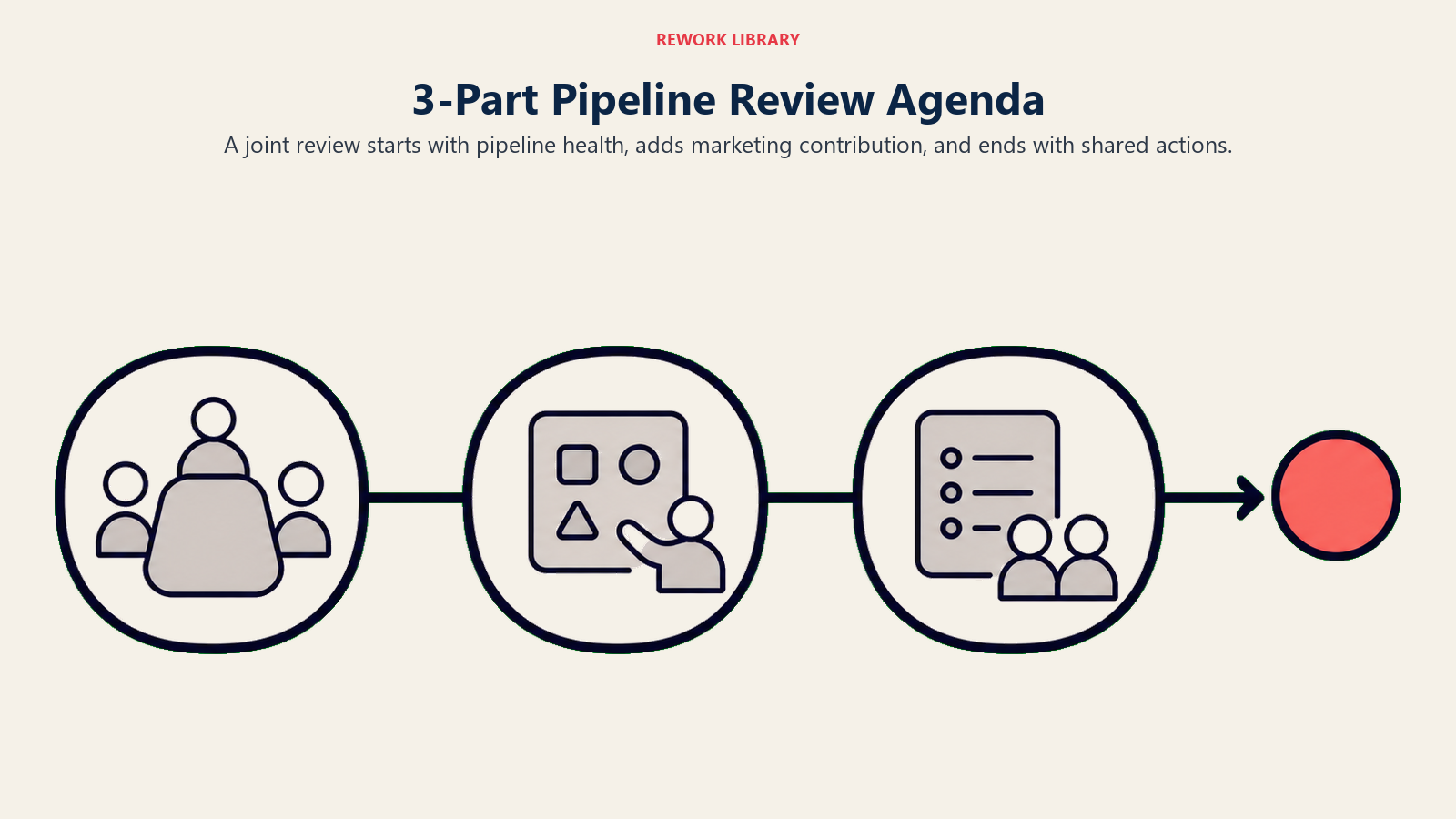
Die spezifische Agenda ist wichtiger, als die meisten Teams denken. Ohne Struktur driften Joint Pipeline Reviews dahin, dass ein Team präsentiert, während das andere wartet zu Wort zu kommen. Diese dreiteilige Vorlage hält beide Teams durchgehend engagiert und rechenschaftspflichtig.
Teil 1: Pipeline Health (15 Minuten)
Verantwortlich: Sales oder RevOps
Dies ist der faktische Zustand der Pipeline. Noch keine Interpretation, nur die Zahlen:
- Pipeline Coverage Ratio: aktueller Pipeline-Wert vs. Quota für den Zeitraum. Ziel ist typischerweise das 3- bis 4-fache.
- Stage-Verteilung: Wie viel Prozent der Pipeline befinden sich in jeder Stage, und wie vergleicht sich das mit dem letzten Zeitraum?
- Velocity nach Source: Wie schnell bewegen sich Deals von SQL zu Close, segmentiert nach Lead-Source?
- Deals at Risk: Alles, das länger in einer Stage steckt als die durchschnittliche Sales-Cycle-Dauer.
Das Ziel von Teil 1 ist sicherzustellen, dass beide Teams dieselbe Pipeline betrachten, bevor das Gespräch beginnt. Hier werden auch Diskrepanzen zwischen dem Pipeline-Bild von Marketing und dem von Sales aufgedeckt. Wenn Marketing dachte, es gäbe 80 Opportunities, und das CRM zeigt 55, lohnt es sich, das zu untersuchen, bevor man weitermacht. Sales-Teams, die regelmäßige Pipeline-Reviews als Standardkadenz durchführen, finden diese Diskrepanzen früher und lösen sie mit weniger Reibung.
Teil 2: Marketing Contribution Review (20 Minuten)
Verantwortlich: Marketing oder Marketing Ops
Hier wird der Review wirklich gemeinsam. Marketing präsentiert seine Sicht auf den Pipeline-Beitrag für den Zeitraum:
- MQL-Volumen vs. Ziel: Sind wir auf Kurs für das Quartal?
- MQL-to-SQL-Conversion-Rate nach Segment oder Kanal: Welche Sources funktionieren, welche nicht?
- Beeinflusste Pipeline: Deals in der aktuellen Pipeline, die mindestens einen Marketing-Touchpoint verzeichnen. Das ist anders als Marketing-Sourced. Beeinflusst bedeutet, dass Marketing Teil der Journey war, auch wenn Sales den Lead gesourced hat.
- Bevorstehende Programme: Was wird in den nächsten 30–60 Tagen gestartet, und wie ist der erwartete MQL-Impact?
Das Gespräch in Teil 2 sollte sich auf Qualitätssignale konzentrieren, nicht nur auf Volumen. Wenn das MQL-Volumen steigt, aber die Akzeptanzrate sinkt, verdient das mehr Zeit als das Feiern der Volumenzahl. Und wenn ein bestimmter Kanal (etwa Paid Search) MQLs produziert, die mit der doppelten Rate von Webinar-Leads konvertieren, sollten beide Teams das wissen.
Teil 3: Joint Actions (10 Minuten)
Verantwortlich: Beide Teams
Die letzten 10 Minuten sind für Entscheidungen und Verantwortlichkeit. Ein gemeinsames Action-Log (eine einfache Tabelle in Notion oder einem gemeinsamen Dokument) funktioniert hier gut. Typische Outputs:
- Marketing-Anpassungen: Pausieren eines Kanals mit niedriger Akzeptanzrate, Budget-Verschiebung zu einem hochkonvertierenden Segment, Aktualisierung einer Landing Page basierend auf einem Muster von Ablehnungsgründen.
- Sales-Follow-up-Items: Erneutes Engagieren stockender Deals, Akzeptanz oder Ablehnung einer Charge gehaltener MQLs mit dokumentierten Gründen, Vorbereitung deal-spezifischen Feedbacks an Marketing zu einem kürzlich verlorenen Deal.
- Offene Fragen: Alles, was vor der nächsten Session eine Datenuntersuchung erfordert, wie eine Diskrepanz in den Pipeline-Zahlen, die auf ein Synchronisierungsproblem zwischen MAP und CRM hindeutet.
Wenn keine Action Items aus Teil 3 entstehen, hat das Meeting nicht funktioniert. Das ist das Zeichen, dass noch immer eine Briefing-Runde stattfindet, kein Joint Review. Ein wöchentlicher Lead Quality Call hält den Action-Loop zwischen diesen größeren Reviews aufrecht.
Was Marketing zum Review mitbringt
Marketings Vorbereitung entscheidet darüber, ob der Review gemeinsam oder nur eine Anwesenheitsübung ist. Die Pre-Meeting-Checkliste:
MQL-Volumen vs. Ziel für den Zeitraum. Nicht nur eine Rohdaten-Zahl, sondern kontextualisiert gegen das Ziel. „Wir haben 120 MQLs gegen ein Ziel von 100 geliefert" bedeutet etwas anderes, wenn das Quartalsziel 600 ist und es bereits Woche 8 ist.
MQL-to-SQL-Conversion-Rate nach Segment oder Kanal. Die Akzeptanzrate aufgeschlüsselt, kein Misch-Durchschnitt, sondern nach Source getrennt, damit Sales und Marketing ein echtes Gespräch über das führen können, was funktioniert.
Beeinflusste Pipeline. Der Gesamtwert in Dollar offener Opportunities, die mindestens einen Marketing-Touchpoint haben. Hier wird die Attribution-Modell-Einigkeit wichtig. Wenn beide Teams unterschiedlicher Meinung darüber sind, was „Einfluss" bedeutet, wird diese Zahl Diskussionen produzieren, kein Alignment.
Bevorstehender Programmplan und erwarteter Lead-Impact. Eine 30/60/90-Tage-Vorschau auf Kampagnen, Events und Content-Releases, plus eine realistische Schätzung des MQL-Impacts basierend auf historischen Daten. Das ist kein Versprechen; es ist ein Signal, das Sales bei der Coverage-Planung hilft.
Was Sales zum Review mitbringt
Sales' Vorbereitung ist das Fundament des Reviews. Ohne genaue Pipeline-Daten von Sales kann Marketing nicht sinnvoll beitragen.
Pipeline Coverage Ratio. Gesamter Pipeline-Wert in den prognose-relevanten Stages dividiert durch Quota. Wenn die Coverage unter 3x liegt, sollte das Gespräch sofort beinhalten, was Marketing zur Behebung der Lücke tun kann und in welchem Zeitrahmen.
Stage-Conversion-Raten vs. Vorperiode. Bewegen sich Deals schneller oder langsamer durch den Funnel? Wenn die SQL-to-Demo-Conversion in dieser Periode gesunken ist, ist das entweder ein Lead-Qualitätssignal oder ein Sales-Prozesssignal – und herauszufinden, welches, erfordert beide Teams im Gespräch.
Ablehnungsrate und Top-Ablehnungsgründe. Welcher Prozentsatz der MQLs wurde abgelehnt, und was waren die häufigsten Gründe? Diese Daten sollten aus dem CRM kommen, nicht aus Anekdoten. Ohne systematisches Ablehnungsgrund-Logging wird das zu einer subjektiven Debatte.
Win/Loss-Signale aus kürzlich abgeschlossenen Deals. Was sagten Käufer in Deals, die kürzlich abgeschlossen wurden – gewonnen oder verloren? Welche Einwände kamen wiederholt? Welcher Content hat geholfen oder geschadet? Das sind qualitative Daten, die Marketing nicht aus Dashboard-Metriken gewinnen kann.
Das Gespräch, das meist nicht stattfindet
Die meisten Joint Pipeline Reviews behandeln die Zahlen. Die besseren gehen eine Ebene tiefer und führen Gespräche, die normalerweise übersprungen werden:
„Das sind die Segmente, in denen von Marketing gesourcte Deals schneller als der Durchschnitt abschließen. Was ist dort anders?" Wenn Paid-Search-Leads im Mid-Market-Segment 20 % schneller abschließen als Event-Leads, lohnt sich eine Untersuchung. Vielleicht ist das Intent-Signal stärker. Vielleicht ist die Sales-Motion besser kalibriert. Das Warum zu verstehen, verwandelt einen Datenpunkt in eine Strategie.
„Das sind Deals, bei denen Marketing null Touchpoints hatte. Ist das eine Tracking-Lücke oder eine Sequenzierungs-Lücke?" Wenn 30 % der Closed-Won-Deals keine Marketing-Attribution zeigen, ist entweder das Tracking defekt (Sync-Problem zwischen MAP und CRM) oder Marketing war tatsächlich nicht beteiligt (Sales hat sie vollständig gesourced). Beides ist nützlich zu wissen – aus unterschiedlichen Gründen.
„Dieser Deal ist beim Proposal stagniert. Das hat der Käufer gesagt. Was sagt das Marketing über eine Content-Lücke?" Sales hat direkten Zugang zur Sprache der Käufer, die Marketing selten hört. Ein Joint Pipeline Review ist eines der wenigen Foren, in denen diese Sprache in Echtzeit upstream fließen kann.
Häufige Fehlermodi
Joint Pipeline Reviews scheitern auf vorhersehbare Weise. Die Muster zu kennen, hilft, sie aufzuhalten, bevor sie dauerhaft werden.
Marketing präsentiert Vanity-Metriken statt Pipeline-Metriken. Wenn der Marketing-Slide Impressionen, E-Mail-Öffnungen und Social-Reach zeigt, wird Sales innerhalb von zwei Minuten abschalten. Diese Metriken verbinden sich nicht mit der Pipeline. Ersetzen Sie sie durch MQL-Volumen, Akzeptanzrate und beeinflusste Pipeline – Zahlen, mit denen Sales tatsächlich etwas anfangen kann.
Sales dominiert und Marketing hört auf, sich vorzubereiten. Wenn Sales Teil 1 übernimmt und zu lange braucht, wird Marketings Beitrag auf fünf Minuten gekürzt. Nach einigen solchen Zyklen hört Marketing auf, sich vorzubereiten, weil es weiß, dass es sowieso keine Zeit haben wird. Schützen Sie die Agenda, besonders Teil 2. Stellen Sie einen Timer, wenn nötig.
Keine Action Items verlassen das Meeting. Wenn das Meeting ohne eine kurze Action-Liste endet, war es eine Reporting-Übung. Der Joint Review ist nur dann wertvoll, wenn er Entscheidungen produziert. Wenn Teil 3 regelmäßig gestrichen wird, weil die ersten beiden Teile zu lang waren, kürzen Sie Teile 1 und 2 statt Teil 3 zu eliminieren.
Die Kadenz bricht auf quartalsweise zusammen, wenn es hektisch wird. Das ist der häufigste Fehlermodus. Wenn Q3 turbulent wird, schlägt jemand vor, das zweiwöchentliche Joint Review „vorerst" auszulassen. Einmal zweimal ausgelassen, erholt sich die Kadenz nie vollständig. Das quartalsweise Deep-Dive wird zum einzigen gemeinsamen Gespräch, und Alignment verschlechtert sich. Schützen Sie die Kadenz, auch wenn Meetings in hektischen Phasen gekürzt werden.
Rework-Analyse: In Joint Pipeline Reviews mit der 3-teiligen Agenda-Struktur berichten Marketing-Teams von einer messbaren Verschiebung in der Wahrnehmung durch Sales-Führungskräfte – von einer „Reporting-Funktion" zu einem „Planungspartner". Die Verschiebung geschieht, weil Teil 2 Marketing zwingt, mit pipeline-relevanten Daten aufzutauchen (MQL-Volumen vs. Ziel, Akzeptanzrate, beeinflusste Pipeline) statt mit Vanity-Metriken. Teams, die Teil 3 – das Joint Action Log – schützen und jedes Meeting damit beginnen, die Commitments der letzten Session zu überprüfen, verwandeln den Pipeline-Review von einem Status-Update in einen echten Accountability-Loop.
Quotable Nuggets
„Sales-Teams verfehlen in 65 % der Fälle ihr Quota, teilweise aufgrund mangelnder Pipeline-Transparenz. Eine Joint-Pipeline-Review-Kadenz, die Marketing-Contribution-Daten einbezieht, adressiert beide Probleme direkt." (Salesforce State of Sales)
„MQLs, die konsequentes, strukturiertes Sales-Follow-up erhalten, haben 9-mal höhere Conversion-Raten als solche ohne systematisches Review – die Kadenz ist der Multiplikator, nicht nur die Lead-Qualität." (Marketo)
„Organisationen mit klar definierten Lead-Handoff-Prozessen – formalisiert in einem Joint Pipeline Review – sehen eine 106-prozentige Umsatzsteigerung gegenüber Teams mit fragmentierten Prozessen." (MarketingProfs)
Den Review nachhaltig gestalten
Das strukturelle Setup entscheidet darüber, ob der Joint Review über mehrere Quartale hinweg gesund bleibt:
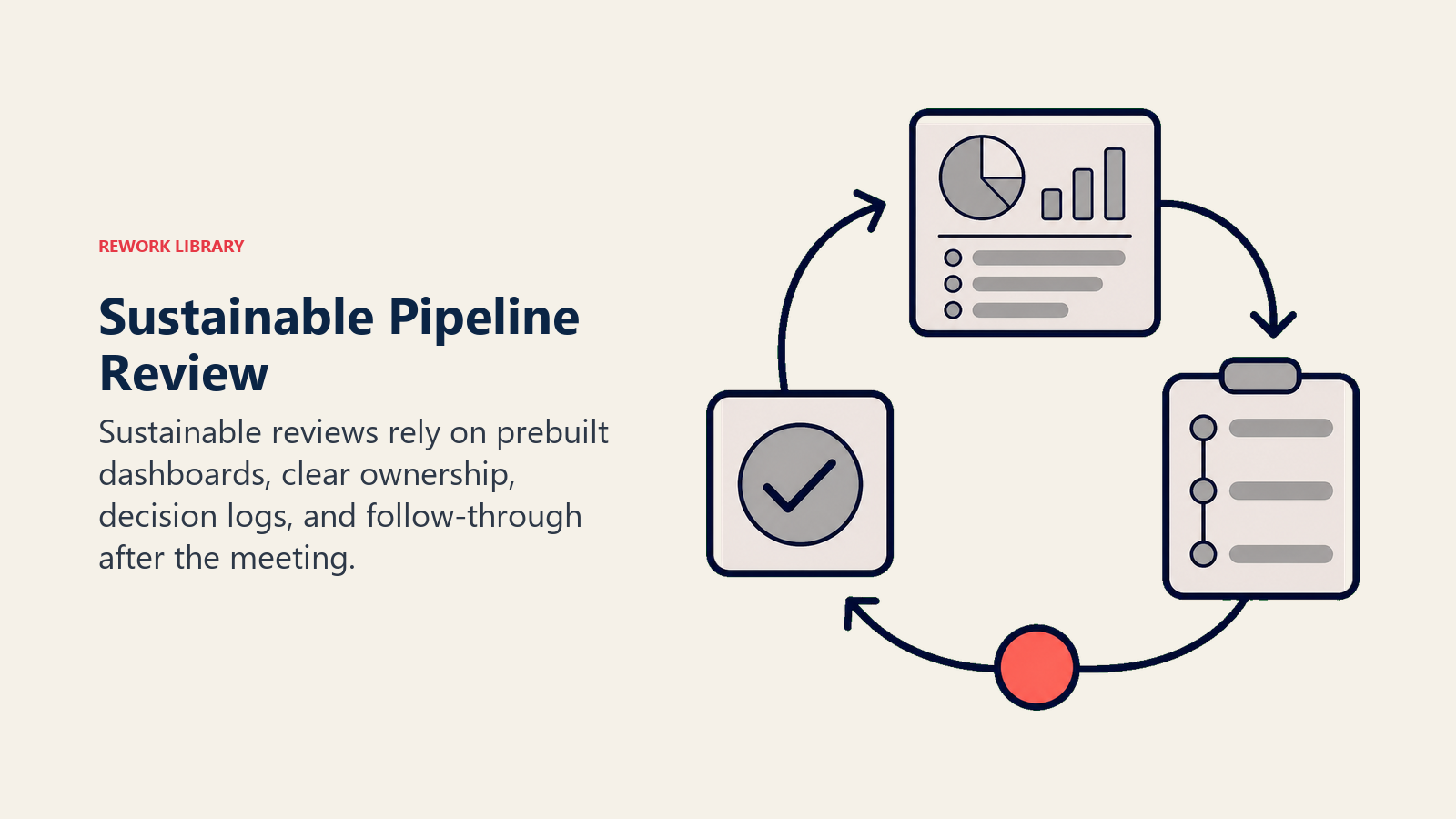
Ein gemeinsames Dashboard vor dem Meeting vorausfüllen. Kein Live-Data-Pull während des Reviews. Beide Teams sollten dieselben Zahlen einsehen können, bevor sie in den Raum (oder das virtuelle Äquivalent) kommen. RevOps besitzt das typischerweise: ein einziges Dashboard, das Pipeline Health, MQL-Contribution und Conversion-Raten an einem Ort zeigt. Die richtigen gemeinsamen Dashboards machen das automatisch.
Den Meeting-Owner jedes Quartal zwischen Marketing und Sales rotieren. Wenn Sales immer den Review leitet, ist Marketing immer Gast. Die rotierende Verantwortung sendet ein Signal über gemeinsame Rechenschaftspflicht, und praktisch bedeutet es, dass beide Seiten lernen, das Meeting gut zu leiten.
Ein laufendes Log gemeinsamer Actions führen und es in der nächsten Session überprüfen. Eine kurze Action-Liste, die nie überprüft wird, ist nur eine Liste. Beginnen Sie jeden Joint Review damit, zwei Minuten damit zu verbringen, was beim letzten Mal vereinbart wurde. Was wurde erledigt? Was wurde blockiert? Was hat sich verändert? Dieser Accountability-Loop ist das, was das Meeting zu einem echten Alignment-Mechanismus macht statt zu einem wiederkehrenden Status-Update.
Das Forecasting-Gespräch, das in diesen Reviews stattfindet, ist auch der Ort, an dem Marketing beginnt, echten Einfluss auf die Revenue-Planung zu gewinnen. Nicht dadurch, dass es das Forecast besitzt, sondern indem es Coverage-Daten beiträgt, die das Forecast genauer machen. Dieser Einfluss wird Meeting für Meeting, Quartal für Quartal aufgebaut – durch konsequente Vorbereitung und ehrliche Daten. McKinseys Forschung zur kommerziellen B2B-Performance zeigt, dass die leistungsstärksten Revenue-Teams eine gemeinsame kommerzielle Leistungssprache teilen – ein gemeinsames Dashboard, das CEO und Frontline auf dieselben Zahlen ausrichtet – und ein Joint Pipeline Review ist das Ritual, das diese Sprache lebendig hält.
Häufig gestellte Fragen
Wie oft sollten Marketing und Sales einen Joint Pipeline Review durchführen?
Die richtige Kadenz hängt von der Unternehmensphase ab. Frühphasen-Unternehmen (unter 5 Mio. \(ARR) sollten monatlich für etwa 60 Minuten mit dem gesamten Revenue-Team zusammenkommen. Wachstumsphasen-Unternehmen (5 bis 50 Mio.\) ARR) sollten zweiwöchentlich für 45 Minuten mit dem Marketing-Lead, Sales-Lead und RevOps zusammenkommen. Bei Scale (über 50 Mio. $ ARR) sollte ein wöchentliches Sales-only-Pipeline-Review und ein separates zweiwöchentliches Joint Review stattfinden, das Marketing einbezieht. Der häufigste Fehler ist, die Kadenz auf quartalsmäßig zu reduzieren, wenn es hektisch wird – einmal zweimal in Folge ausgelassen, erholt sich die Kadenz selten.
Wer sollte an einem Joint Pipeline Review teilnehmen?
Halten Sie die Teilnehmerliste so klein wie möglich, während beide Teams trotzdem Rechenschaft ablegen können. Mindestens: Marketing-Lead (oder Marketing Ops), Sales-Lead (oder Sales Manager) und ein RevOps-Vertreter, der die Daten verantwortet. VPs oder C-Level nur hinzufügen, wenn strukturelle Entscheidungen erforderlich sind – Ressourcenallokation, Programminvestition, Coverage-Strategie. Zu viele Teilnehmende verwandeln das Meeting in eine Status-Sendung. Das richtige Signal ist, dass jede Person im Raum ein Action Item aus Teil 3 mitnimmt.
Was bringt Marketing zu einem Joint Pipeline Review?
Marketing sollte vier vorbereitete Inputs mitbringen: MQL-Volumen vs. Ziel für den Zeitraum (nicht Rohvolumen, sondern kontextualisiert gegen das Quartalsziel); MQL-to-SQL-Conversion-Rate aufgeschlüsselt nach Kanal oder Segment (kein Misch-Durchschnitt); beeinflusste Pipeline in Dollar (offene Opportunities mit mindestens einem Marketing-Touchpoint); und eine 30/60/90-Tage-Vorschau auf bevorstehende Programme mit realistischen MQL-Impact-Schätzungen. Wenn Marketing stattdessen mit Impressionen, E-Mail-Öffnungsraten und Social-Reach erscheint, wird Sales innerhalb der ersten fünf Minuten abschalten.
Wie verhindern wir, dass Joint Pipeline Reviews wieder zu Sales-only-Meetings werden?
Schützen Sie Teil 2 der Agenda – Marketing Contribution Review – indem Sie einen harten Timer setzen und den Meeting-Owner jedes Quartal zwischen Marketing und Sales rotieren. Wenn Sales immer das Meeting leitet, ist Marketing immer Gast. Rotierende Verantwortung sendet ein strukturelles Signal über gemeinsame Rechenschaftspflicht. Außerdem: Wenn Marketing regelmäßig mit den falschen Metriken (Vanity-Daten statt Pipeline-Daten) erscheint, sprechen Sie das direkt nach der ersten oder zweiten Session an. Ein frühes Kalibrierungsgespräch verhindert monate
lange Frustration.
Welche Action Items sollten aus einem Joint Pipeline Review entstehen?
Typische Teil-3-Outputs fallen in drei Kategorien: Marketing-Anpassungen (Pausieren eines schwach performenden Kanals, Budget-Verschiebung zu einem hochkonvertierenden Segment, Content-Updates basierend auf Ablehnungsgrund-Mustern); Sales-Follow-up-Items (Erneutes Engagieren stockender Deals, Verarbeitung gehaltener MQLs mit dokumentierten Gründen, Feedback zu kürzlich verlorenen Deals); und offene Daten-Untersuchungen (Diskrepanzen in Pipeline-Zahlen, die auf ein Sync-Problem hindeuten, Attribution-Lücken, die ein System-Audit erfordern). Wenn das Meeting ohne eine kurze Action-Liste endet, bei der jeder Punkt einen benannten Verantwortlichen hat, war der Review eine Briefing-Runde. Planen Sie ihn mit geschütztem Teil 3 neu.
Was ist der häufigste Fehlermodus bei Joint Pipeline Reviews?
Die Kadenz bricht auf quartalsmäßig zusammen, wenn es hektisch wird. Teams überspringen das zweiwöchentliche Joint Review „nur für Q3" und stellen im Januar fest, dass sie seit August kein echtes gemeinsames Gespräch mehr hatten. Der zweithäufigste Fehlermodus ist, dass Marketing Vanity-Metriken (Impressionen, E-Mail-Öffnungen, Social-Reach) statt Pipeline-Metriken (MQL-Volumen vs. Ziel, Akzeptanzrate, beeinflusste Pipeline) präsentiert. Beide Fehlermodi haben dieselbe Grundursache: Marketing hat nicht verinnerlicht, dass es beim Review um die Pipeline geht, nicht um die Marketing-Performance. Fixieren Sie die Agenda. Fixieren Sie die Metriken. Schützen Sie die Kadenz.
Mehr erfahren

Principal Solution Architect
On this page
- Was ein Pipeline-Review „Joint" macht
- Empfohlene Kadenz nach Unternehmensphase
- Die 3-teilige Pipeline-Review-Agenda
- Teil 1: Pipeline Health (15 Minuten)
- Teil 2: Marketing Contribution Review (20 Minuten)
- Teil 3: Joint Actions (10 Minuten)
- Was Marketing zum Review mitbringt
- Was Sales zum Review mitbringt
- Das Gespräch, das meist nicht stattfindet
- Häufige Fehlermodi
- Quotable Nuggets
- Den Review nachhaltig gestalten
- Häufig gestellte Fragen
- Wie oft sollten Marketing und Sales einen Joint Pipeline Review durchführen?
- Wer sollte an einem Joint Pipeline Review teilnehmen?
- Was bringt Marketing zu einem Joint Pipeline Review?
- Wie verhindern wir, dass Joint Pipeline Reviews wieder zu Sales-only-Meetings werden?
- Welche Action Items sollten aus einem Joint Pipeline Review entstehen?
- Was ist der häufigste Fehlermodus bei Joint Pipeline Reviews?
- Mehr erfahren