MQL vs. SQL: Unterschiede und wie man beides definiert
Turn this article into takeaways for your work.


Each assistant summarizes the article only for you and suggests best practices for your work.
MQL vs. SQL ist eine der am häufigsten diskutierten Definitionen im B2B GTM-Bereich, und die meisten dieser Diskussionen entstehen, weil die beiden Begriffe nie formal vereinbart wurden. Wenn Marketing und Vertrieb über die Lead-Qualität streiten, ist die Lösung nicht bessere CRM-Hygiene oder ein neues Scoring-Tool. Es ist eine gemeinsame schriftliche Definition, hinter der beide Teams stehen.
Was ist ein MQL?
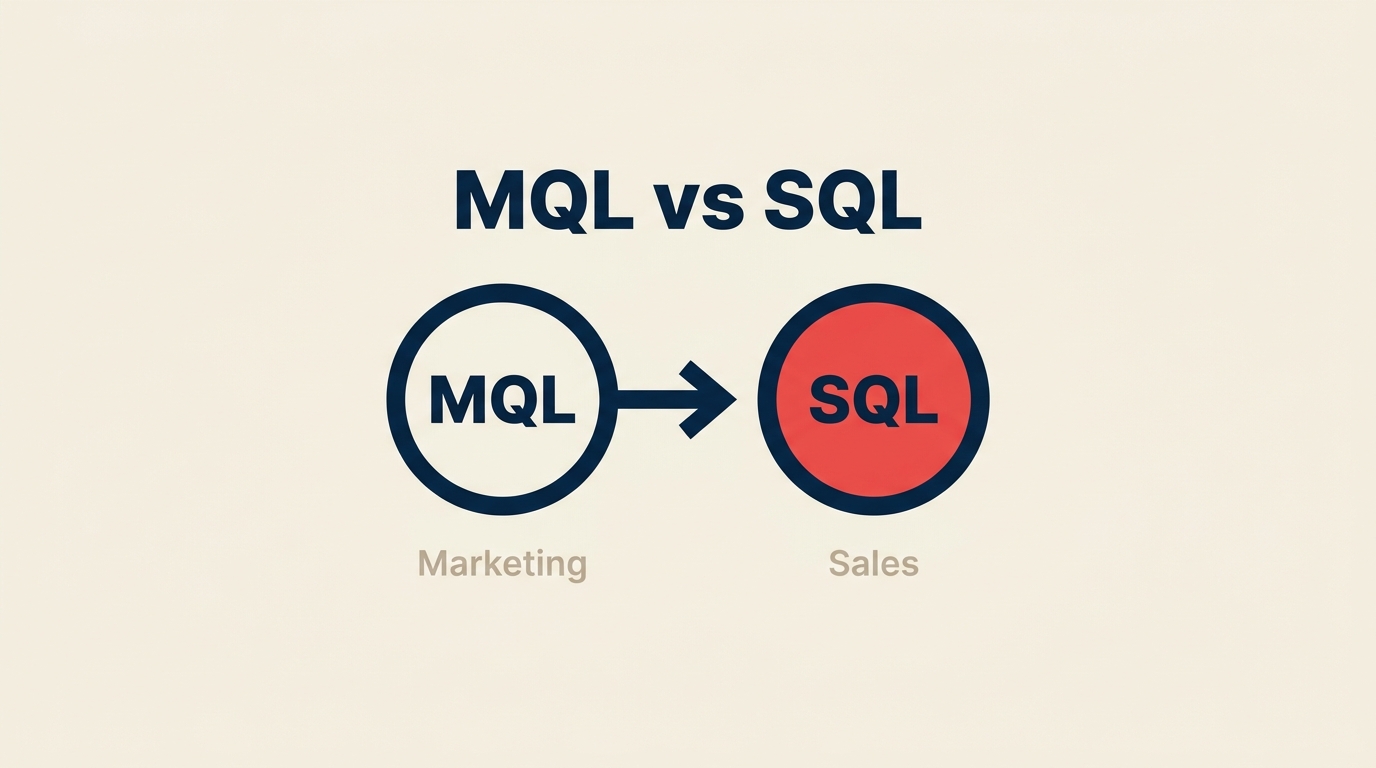
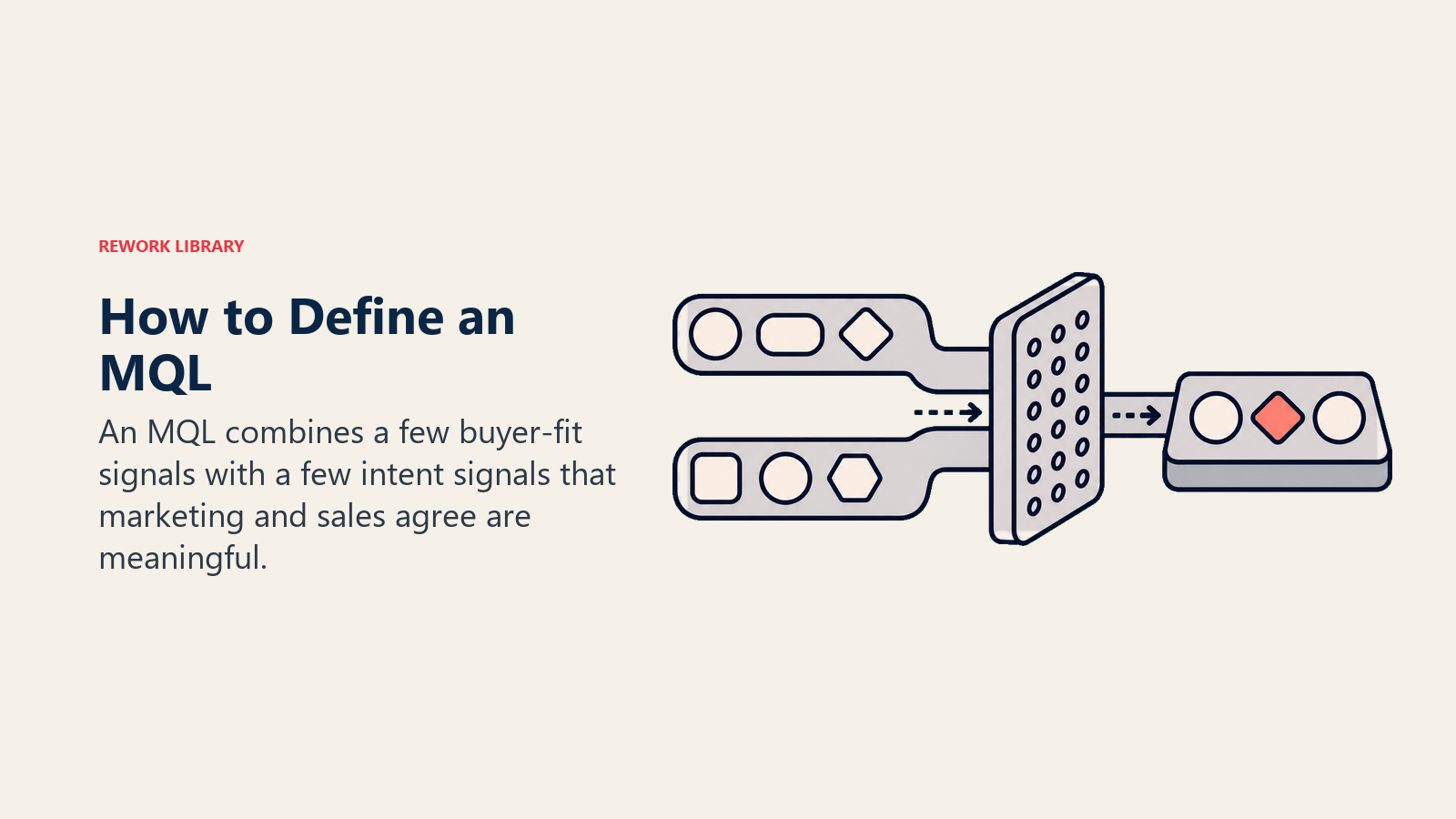
Ein Marketing Qualified Lead (MQL) ist ein Lead, der eine explizite Interessenschwelle überschritten hat, auf die sich das Marketing geeinigt hat, aber noch nicht vertriebsbereit ist. Die Schwelle ist typischerweise eine Kombination aus Käufer-Fit-Signalen (Unternehmensgröße, Branche, Berufsbezeichnung) und Verhaltensignalen (Seitenbesuche, Content-Downloads, Webinar-Teilnahme), die zusammen auf echte Kaufabsicht hindeuten.
Was ist ein SQL?
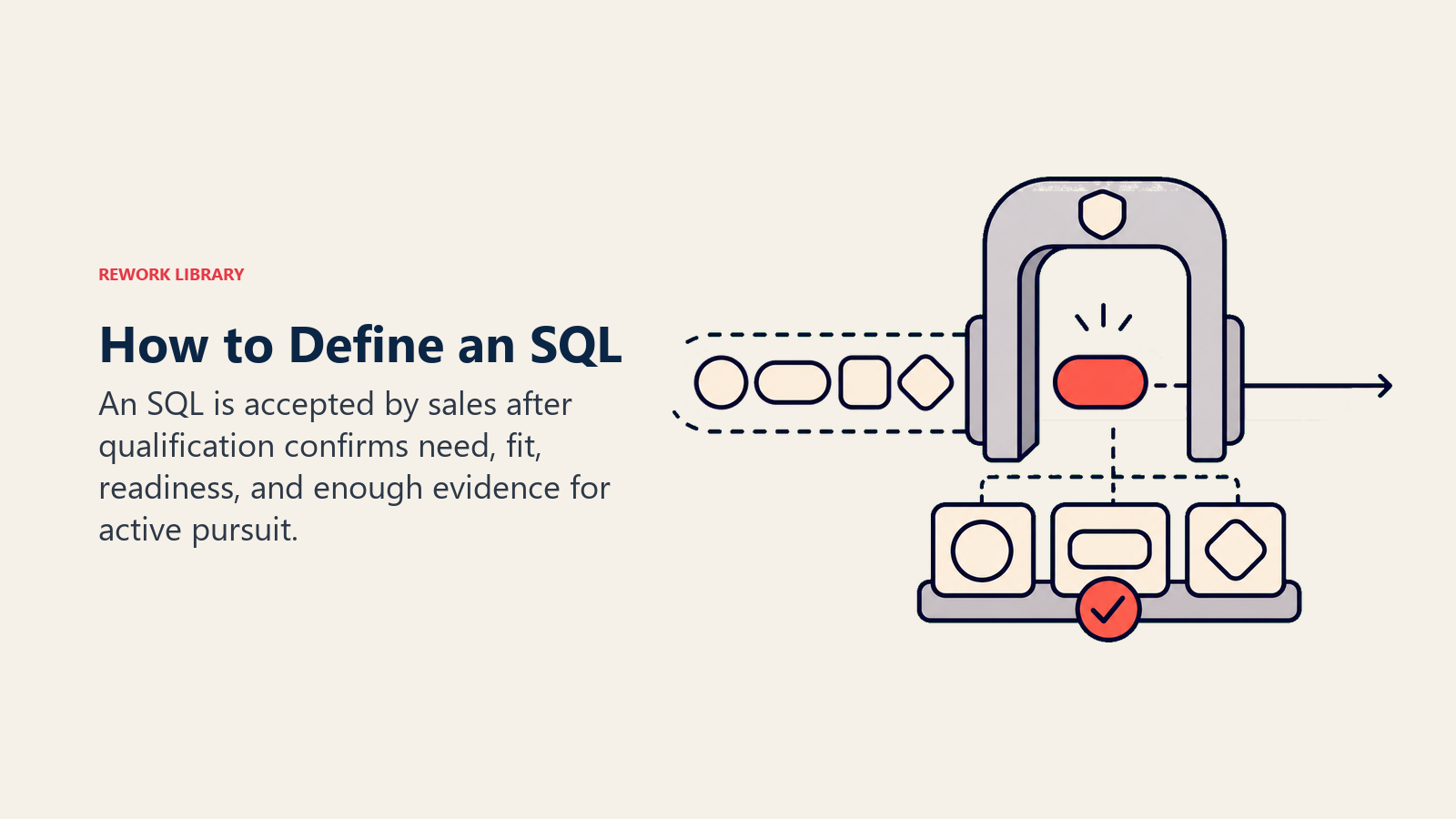
Ein Sales Qualified Lead (SQL) ist ein Lead, den ein Vertriebsmitarbeiter überprüft und als echten verfolgungswürdigen Interessenten akzeptiert hat. Das bedeutet, der Mitarbeiter glaubt, dass der Lead einen bestätigten Bedarf, Entscheidungsbefugnis und realistisches Timing für den Kauf hat. Das Schlüsselwort ist "akzeptiert": Ein SQL ist eine menschliche Beurteilung, keine bloße Punktzahl.
MQL vs. SQL auf einen Blick
| Dimension | MQL | SQL |
|---|---|---|
| Eigentümer | Marketing-Team | Vertriebs-Team |
| Signaltyp | Verhaltensbasiert + firmografischer Fit | Bestätigter Bedarf + Entscheidungsbefugnis + Timing |
| Wie er festgelegt wird | Scoring-Schwellenwert (Punkte oder Regeln) | Mitarbeiter-Überprüfung (BANT, MEDDIC oder gleichwertig) |
| Ausgelöste Aktion | Zur Überprüfung an Vertrieb weitergeleitet | Mitarbeiter öffnet aktive Verkaufschance |
| Primärer KPI | MQL-Volumen, MQL-zu-SQL-Rate | SQL-zu-Opportunity-Rate, Pipeline-Abdeckung |
| Häufiger Ablehnungsgrund | Falsches ICP, schwache Intent-Signale | Kein Budget, keine Entscheidungsbefugnis, falsches Timing |
Wichtige Fakten
Wichtige Fakten: MQL vs. SQL
- LinkedIns 2024 B2B Marketing Benchmark ergab, dass im Durchschnitt nur 25 bis 30 % der MQLs über B2B-Unternehmen hinweg zu SQLs konvertieren, wobei Teams im oberen Quartil 35 bis 40 % erreichen. (LinkedIn, 2024)
- Forresters B2B Revenue Waterfall bleibt das meistzitierte Framework für den MQL-SAL-SQL-Übergabefluss, wobei die SAL-Phase als entscheidendes Akzeptanz- und Ablehnungstor dient. (Forrester, 2023)
- Gartners 2024 CSO-Umfrage ergab, dass die Abstimmung von Vertrieb und Marketing bei Lead-Definitionen der wirkungsvollste einzelne Hebel zur Verbesserung der Pipeline-Konversionsraten ist. (Gartner, 2024)
Der Lead-Lebenszyklus: wo MQL und SQL hineinpassen
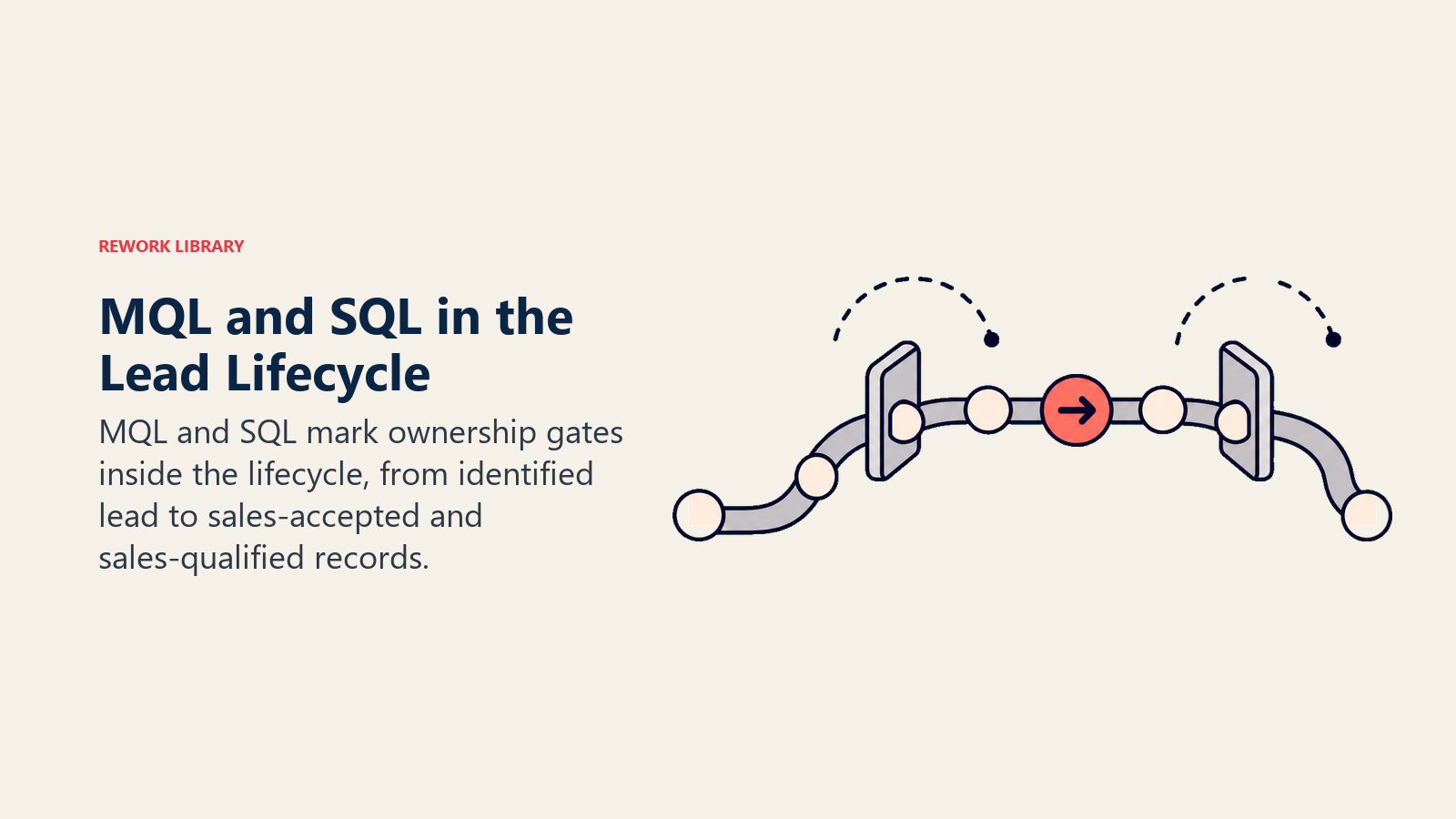
Lead-Lebenszyklusstadien durchlaufen typischerweise sieben Phasen. Zu verstehen, wo MQL und SQL in diesem Trichter sitzen, hilft beiden Teams zu begreifen, wer wofür zuständig ist.
- Besucher -- jemand, der auf Ihrer Website oder Ihrem Content landet, ohne identifiziert zu sein.
- Lead -- ein Besucher, der Kontaktdaten geteilt hat (Formularausfüllung, Veranstaltungsregistrierung usw.).
- MQL -- ein Lead, der den vereinbarten Interesse- und Fit-Schwellenwert erreicht hat; das Marketing leitet ihn an den Vertrieb weiter.
- SAL (Sales Accepted Lead, vom Vertrieb akzeptierter Lead) -- ein Lead, den ein Mitarbeiter überprüft und bestätigt hat. Die SAL-Phase ist die Übergabebestätigung: Der Mitarbeiter hat noch nicht mit ihm gearbeitet, hat aber bestätigt, dass es sich lohnt.
- SQL -- ein Lead, den der Mitarbeiter mit einem Discovery-Call oder strukturierten Kriterien (BANT, MEDDIC usw.) qualifiziert und als echten Interessenten akzeptiert hat.
- Verkaufschance -- ein SQL mit einem definierten Deal: Budget bestätigt, nächster Schritt vereinbart, Pipeline-Phase festgelegt.
- Kunde -- ein erfolgreich abgeschlossener Deal.
Die Lücke zwischen MQL und SQL ist der Ort, an dem die meisten Pipeline-Lecks entstehen. Ohne eine SAL-Phase wissen Sie nicht, ob das Problem in der Lead-Qualität (Marketing) oder im Nachfassen der Mitarbeiter (Vertrieb) liegt.
Wie man ein MQL definiert
Eine MQL-Definition, hinter der beide Teams stehen, muss gemeinsam erarbeitet werden, nicht vom Marketing vorgegeben. Hier ist ein fünfstufiger Ansatz:
Schritt 1: 2 bis 3 Käufer-Fit-Signale wählen
Wählen Sie die firmografischen oder demografischen Attribute, die Ihr ideales Kundenprofil (ICP) beschreiben. Gängige Optionen: Unternehmens-Umsatzbereich, Mitarbeiterzahl, Branchenvertical, Berufsbezeichnung oder Dienstalter, Geografie. Begrenzen Sie es auf drei, damit das Scoring nachvollziehbar bleibt.
Schritt 2: 2 bis 3 Intent-Signale wählen
Intent-Signale sind Verhaltensevents, die auf aktives Interesse hindeuten. Wählen Sie Events, die mit echter Kaufabsicht verbunden sind, nicht passiver Konsumption. Starke Signale: Preisseite besucht, Demo gebucht, mehr als 3 Produktseiten in 7 Tagen aufgerufen, Bottom-of-Funnel-Asset heruntergeladen. Schwache Signale: Newsletter geöffnet, Homepage einmal besucht.
Schritt 3: Einen Score-Schwellenwert festlegen
Weisen Sie Fit- und Intent-Signalen Punktwerte zu und legen Sie dann den Mindestscore fest, der den MQL-Status auslöst. Ein gängiges Modell: Fit-Score (0-50 Punkte) + Verhaltens-Score (0-50 Punkte) = 100-Punkte-Gesamt; MQL ab 60+. Testen Sie den Schwellenwert mit 3 Monaten historischer Daten, bevor er live geht. Wenn er mehr als 20 % Ihrer Leads als MQLs markiert, ist er zu locker.
Schritt 4: Den SLA mit dem Vertrieb vereinbaren
Ein MQL ohne Lead-Reaktionszeit-SLA ist nur eine Zahl in einer Datenbank. Der Vertrieb muss sich verpflichten, jeden MQL innerhalb eines definierten Zeitfensters zu überprüfen (typischerweise 24 Stunden für Inbound, 48 Stunden für Outbound-assistiert). Das Marketing muss sich verpflichten, MQL-Ablehnungen zu kennzeichnen und das Feedback zur Verbesserung des Lead-Scorings zu nutzen.
Schritt 5: Monatlich überprüfen
Lead-Scoring-Modelle werden veraltet. Käuferverhalten verändert sich, Ihr ICP entwickelt sich weiter, Kampagnen ändern sich. Erstellen Sie einen monatlichen Überprüfungsrhythmus, bei dem Marketing und Vertrieb die MQL-zu-SQL-Konversionsraten nach Quelle, Segment und Scoring-Band vergleichen. Schwellenwerte auf Basis von Daten anpassen, nicht nach Bauchgefühl.
Beispiel: Acme SaaS definiert ein MQL als: ICP-Fit-Score von 60 oder höher (Unternehmen mit 50-500 Mitarbeitern, SaaS- oder Tech-Branche, VP-Titel oder höher) UND mindestens eines von: Demo gebucht, Preisseite zweimal in 7 Tagen aufgerufen oder ROI-Rechner heruntergeladen.
Wie man ein SQL definiert
Eine SQL-Definition gibt dem Vertrieb ein konsistentes Tor, das er anwenden kann, bevor er einen Deal öffnet. Ohne sie qualifiziert jeder Mitarbeiter unterschiedlich, und die Pipeline-Abdeckung wird bedeutungslos.
Schritt 1: Ein Qualifizierungs-Framework wählen (BANT, MEDDIC usw.)
Lead-Qualifizierungs-Frameworks wie BANT (Budget, Authority, Need, Timeline) oder MEDDIC (Metrics, Economic Buyer, Decision Criteria, Decision Process, Identify Pain, Champion) geben Mitarbeitern eine konsistente Checkliste. Wählen Sie eines und schulen Sie es. BANT funktioniert gut für unkomplizierte transaktionale Verkäufe. MEDDIC passt zu komplexen Enterprise-Deals, bei denen mehrere Stakeholder das Ergebnis beeinflussen.
Schritt 2: Mindest-Fit-Kriterien festlegen
Nicht jedes BANT-Kästchen muss angekreuzt werden, aber einige sind nicht verhandelbar. Entscheiden Sie: Welchen minimalen ICP-Fit braucht ein Lead, um als SQL zu gelten? Typische Mindestanforderungen: Mitarbeiterzahl über einem bestimmten Minimum, Budget-Bereich, der Ihre Deal-Größe abdeckt, Entscheidungsträger oder starker Einflussnehmer im Kontakt.
Schritt 3: Mindest-Interesse-Kriterien festlegen
Interesse trennt einen qualifizierten Lead von einem qualifizierten Interessenten. Ein Lead, der zu Ihrem ICP passt, aber keinen aktiven Bedarf hat, rechtfertigt keinen offenen Deal. Mindest-Interesse-Kriterien können umfassen: hat bei der Discovery einen spezifischen Schmerzpunkt anerkannt, hat ein Projekt oder eine Initiative, die mit Ihrer Lösung verknüpft ist, hat einen Entscheidungszeitplan in den nächsten zwei Quartalen.
Schritt 4: Ablehnungsgründe dokumentieren
Jede abgelehnte SAL sollte einen strukturierten Ablehnungsgrund tragen. Häufige Kategorien: kein Budget, falsche Entscheidungsebene, kein aktiver Bedarf, schlechtes Timing, bereits bei einem Wettbewerber. Diese Daten fließen zurück zum Marketing, um Lead-Nurturing-Programme und ICP-Targeting zu verbessern.
Schritt 5: Einen 24-Stunden-SLA für Outreach festlegen
Sobald ein Lead SQL-Status erreicht, beginnt die Uhr zu laufen. Reaktionsgeschwindigkeit senkt Konversionsraten dramatisch. Bauen Sie den 24-Stunden-SLA in Ihren CRM-Workflow ein, sodass Mitarbeiter automatische Erinnerungen erhalten und Manager die Einhaltung überwachen können.
MQL-zu-SQL-Konversion: Was ist eine gute Rate?
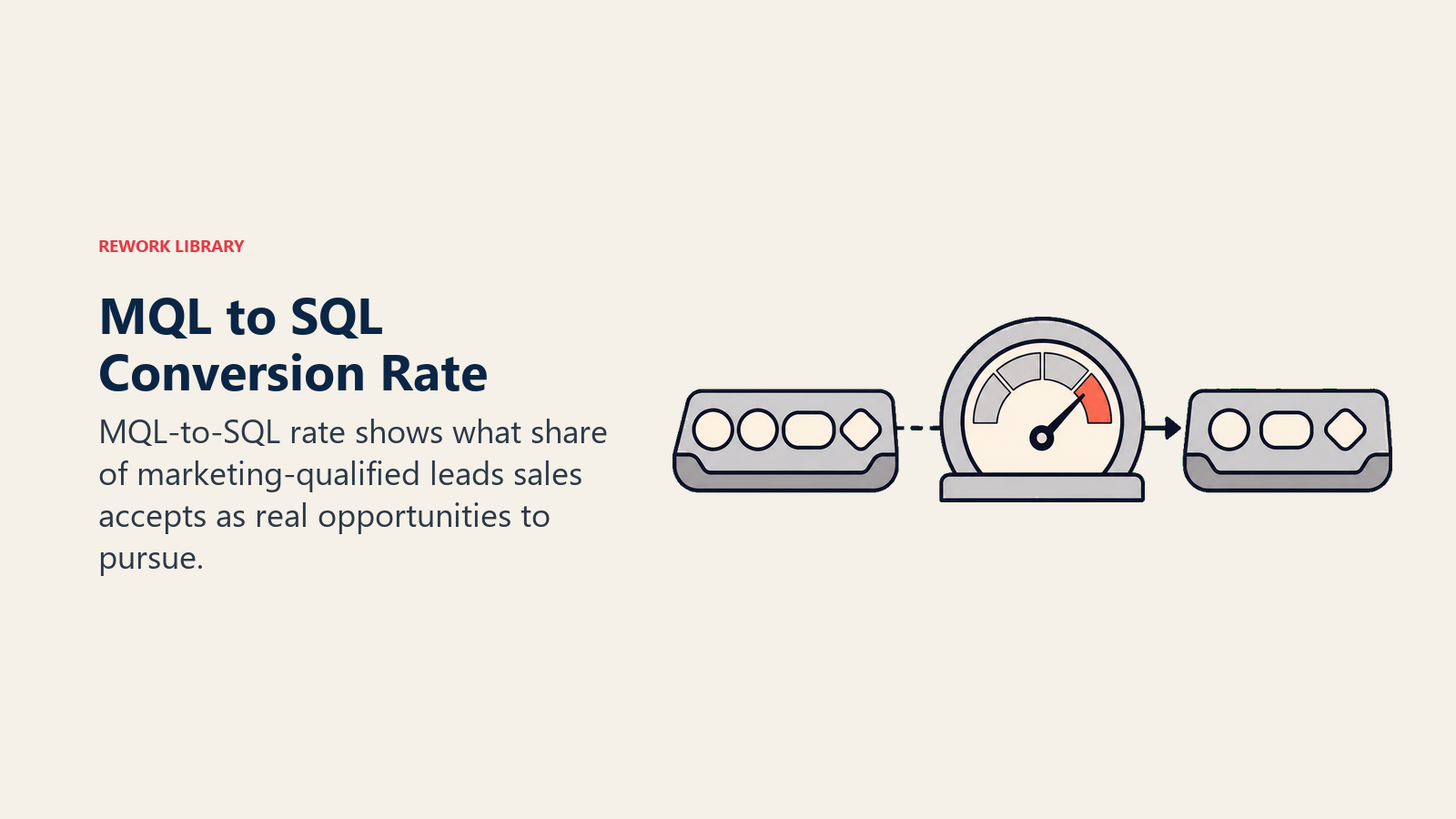
Die MQL-zu-SQL-Rate misst, welcher Prozentsatz der vom Marketing qualifizierten Leads tatsächlich vom Vertrieb akzeptiert wird.
MQL-zu-SQL-Rate = generierte SQLs / an Vertrieb übergebene MQLs
Branchen-Benchmarks für B2B SaaS:
- Oberes Quartil: 35-40 %
- Median: 25-30 %
- Unterdurchschnittlich: unter 15 %
Wenn Ihre Rate unter 15 % liegt, sind die häufigsten Ursachen: MQL-Schwellenwert zu niedrig gesetzt, schlechtes ICP-Targeting in Kampagnen oder kein Ablehnungs-Feedback-Loop vom Vertrieb zum Marketing. Wenn sie über 40 % liegt, prüfen Sie, ob die MQL-Hürde zu eng ist und Sie zu wenige Leads übersenden.
Eine niedrige MQL-zu-SQL-Rate ist fast immer ein gemeinsames Problem. Das Marketing generiert möglicherweise Volumen statt Qualität. Aber der Vertrieb kann auch Leads nach Belieben auswählen oder inkonsistente Kriterien anwenden. Der einzige Weg zur Diagnose ist, Ablehnungen nach Grund zu verfolgen und sie gemeinsam zu überprüfen.
Häufige MQL/SQL-Fehler
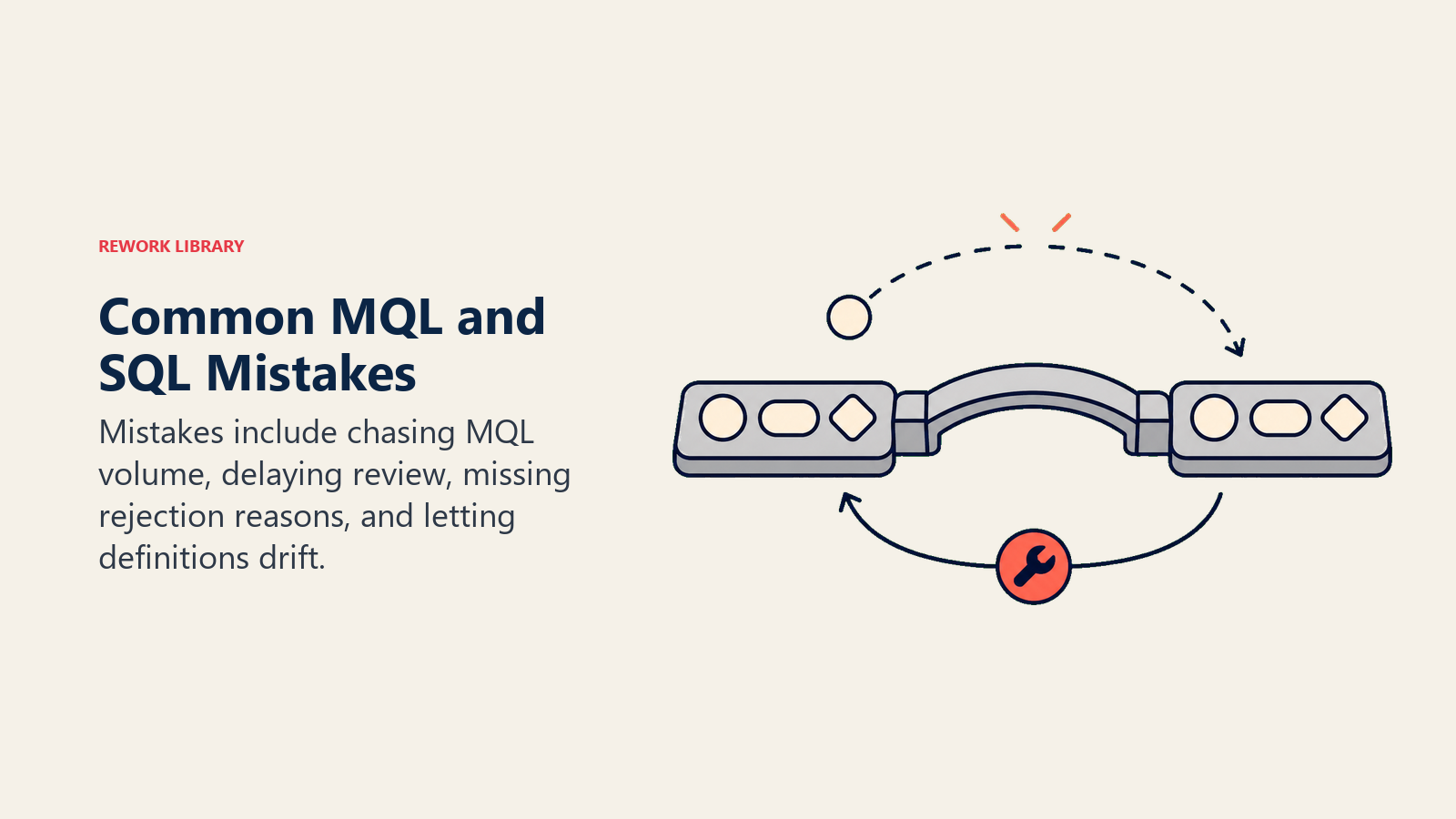
- Volumen über Qualität stellen. MQL-Zahlen aufzublähen, um eine Kennzahl zu erfüllen, lässt die SQL-Rate schlechter aussehen und untergräbt das Vertrauen des Vertriebs in Marketing-Leads.
- Kein SLA für MQL-Überprüfung. MQLs, die tagelang unüberprüft liegen, verlieren ihre Kaufabsicht. Ein Lead, der eine Demo gebucht hat und 72 Stunden lang keinen Anruf erhalten hat, ist bereits weitergezogen.
- Fehlender Ablehnungs-Feedback-Loop. Wenn der Vertrieb ein MQL nicht mit einem Grund-Code ablehnen kann, hat das Marketing kein Signal zur Verbesserung. Der Feedback-Loop ist das, was Lead-Management zu einem System statt zu einem Einwegförderband macht.
- Kein gemeinsames Dashboard. Das Marketing beobachtet MQL-Volumen. Der Vertrieb beobachtet die Pipeline. Ohne eine gemeinsame Ansicht, die MQL-zu-SQL-zu-Opportunity zeigt, sieht keines der beiden Teams das vollständige Bild.
- Scoring, das nie aktualisiert wird. Ein in Jahr eins erstelltes Scoring-Modell spiegelt das Käuferverhalten von Jahr eins wider. Wenn Sie es seitdem nicht angefasst haben, ist es mit ziemlicher Sicherheit falsch.
- Die SAL-Phase überspringen. Ohne eine formale Akzeptanz- und Ablehnungsübergabe können Sie nicht feststellen, ob Pipeline-Probleme ein Lead-Qualitätsproblem oder ein Vertriebsausführungsproblem sind.
Wie Marketing und Vertrieb sich bei Definitionen abstimmen sollten
Eine gemeinsame MQL/SQL-Definition zu erreichen, ist kein einmaliges Meeting. Es ist ein fortlaufender operativer Rhythmus. Hier ist, was tatsächlich funktioniert:
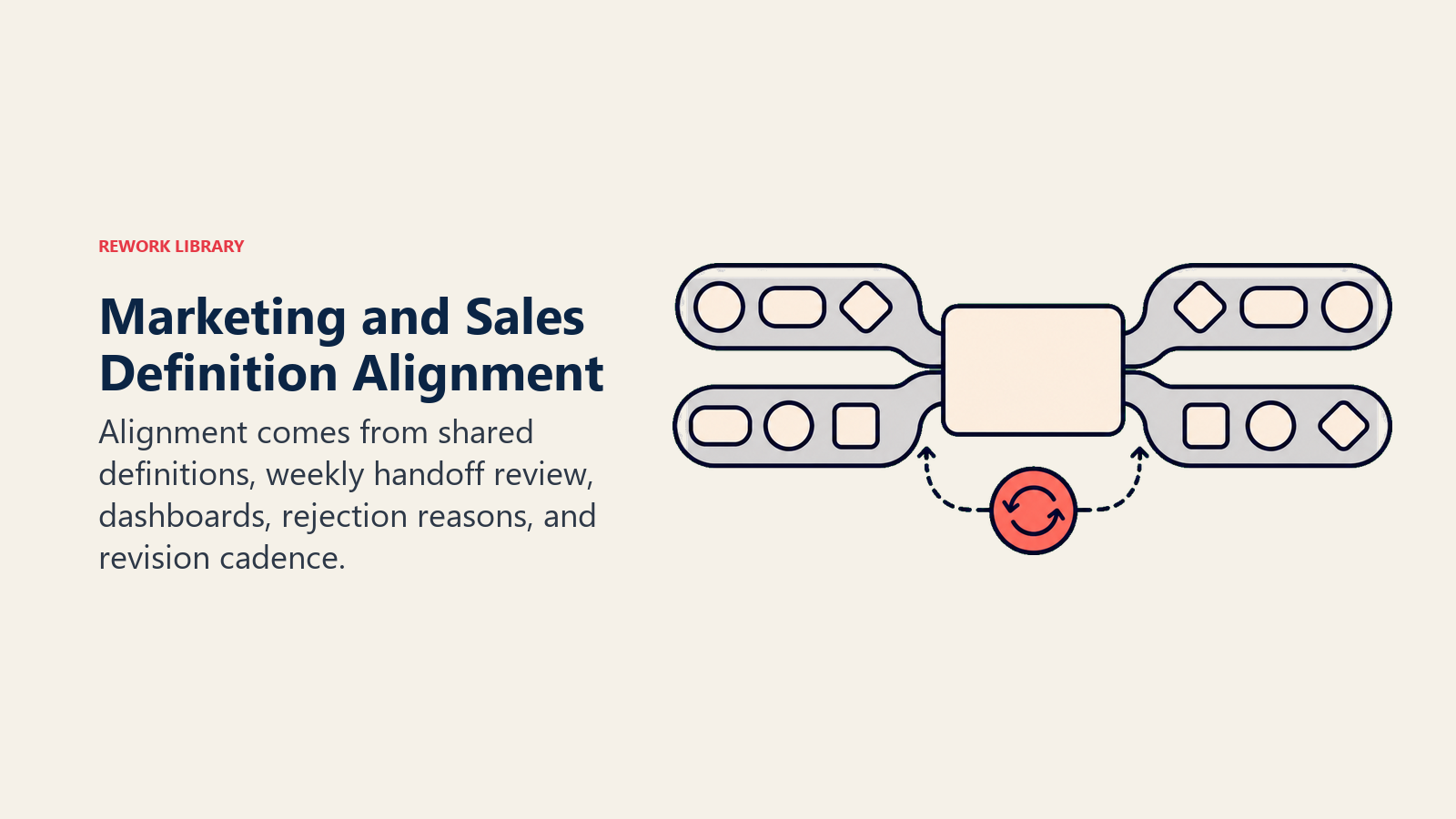
- Wöchentliches Übergabe-Review. Ein 30-minütiges festes Meeting, bei dem Marketing und Vertrieb die MQL-zu-SQL-Konversionen, Ablehnungen und Ablehnungsgründe der Vorwoche überprüfen. Auf Daten konzentrieren, nicht auf Schuldzuweisungen.
- Gemeinsames Dashboard. Beide Teams sollten dieselbe Trichteransicht sehen: erstellte MQLs, akzeptierte SALs, geöffnete SQLs, erstellte Verkaufschancen, erfolgreich abgeschlossene Deals. Damit erkennen Sie, wo Leads abfallen.
- SLA für Reaktionszeit. Schreiben Sie den MQL-Reaktions-SLA in den CRM-Workflow. Bauen Sie Eskalationswarnungen für Mitarbeiter ein, die das Fenster verpassen. Verfolgen Sie die Einhaltung als Sales-Operations-Kennzahl.
- Gemeinsame Ablehnungs-Taxonomie. Marketing und Vertrieb einigen sich vorab auf die Ablehnungsgrund-Codes. Das verhindert, dass Mitarbeiter vage Gründe wie "nicht gut geeignet" verwenden, mit denen das Marketing nichts anfangen kann.
- Vierteljährliches Re-Scoring. Ziehen Sie jeden Quartal die MQL-zu-SQL-Rate nach Scoring-Band und ICP-Segment. Passen Sie die Schwellenwerte an, um widerzuspiegeln, was tatsächlich konvertiert. So bleibt das Scoring im Laufe der Zeit korrekt.
Häufig gestellte Fragen zu MQL vs. SQL
Was ist der Unterschied zwischen einem MQL und einem SQL?
Ein MQL ist ein Lead, den das Marketing als einen vereinbarten Interesse- und Fit-Schwellenwert erreichend markiert hat. Ein SQL ist ein Lead, den der Vertrieb überprüft, qualifiziert und als echten Interessenten akzeptiert hat. Der MQL basiert auf automatisiertem Scoring. Der SQL ist eine menschliche Beurteilung eines Mitarbeiters.
Was ist eine gute MQL-zu-SQL-Konversionsrate?
Für B2B SaaS liegt der Median bei 25 bis 30 %. Teams im oberen Quartil erreichen 35 bis 40 %. Alles unter 15 % bedeutet normalerweise, dass der MQL-Schwellenwert zu locker ist, das ICP-Targeting schwach ist oder kein Ablehnungs-Feedback zurück zum Marketing gelangt. Alles über 40 % kann bedeuten, dass die MQL-Hürde zu eng ist und Sie zu wenige Leads an den Vertrieb senden.
Was ist ein SAL und wie passt er hinein?
Ein SAL (Sales Accepted Lead, vom Vertrieb akzeptierter Lead) ist die Phase zwischen MQL und SQL. Wenn ein Mitarbeiter ein MQL erhält, überprüft er es und akzeptiert es entweder (SAL) oder lehnt es mit einem Grund-Code ab. Die SAL-Phase macht die Übergabe überprüfbar und trennt Lead-Qualitätsprobleme von Vertriebsausführungsproblemen. Ohne sie haben Marketing und Vertrieb keine gemeinsamen Daten zur Diagnose von Konversionsausfällen.
Wer besitzt das MQL, und wer besitzt das SQL?
Das Marketing besitzt das MQL: Es definiert den Schwellenwert, führt das Scoring durch und ist für MQL-Volumen und MQL-zu-SQL-Rate verantwortlich. Der Vertrieb besitzt das SQL: Mitarbeiter legen die Qualifizierungskriterien fest (innerhalb des vereinbarten Frameworks), überprüfen eingehende MQLs und sind für die SQL-zu-Opportunity-Konversion verantwortlich. Die gemeinsame Eigentümerschaft des Übergabe-SLA liegt beim Revenue Operations-Team oder bei demjenigen, der das wöchentliche Abstimmungsmeeting leitet.
Wie unterscheidet sich ein SQL von einer Verkaufschance?
Ein SQL ist ein qualifizierter Lead, den der Vertrieb akzeptiert hat. Eine Verkaufschance ist ein Deal, der im CRM mit einer definierten Phase, erwartetem Wert und nächstem Schritt eröffnet wurde. Ein SQL wird zur Verkaufschance, wenn der Mitarbeiter das Budget bestätigt und einen formalen Deal-Datensatz eröffnet hat. Nicht jedes SQL wird zur Verkaufschance: Einige werden während der Discovery disqualifiziert, bevor je ein Deal eröffnet wird.
Die Übergabe zwischen Marketing und Vertrieb wird weiterhin Reibung erzeugen, solange MQL und SQL locker definiert bleiben. Beide Definitionen zu klären ist einer der wirkungsvollsten Schritte, die ein Revenue-Team unternehmen kann. Eine gemeinsame Definition, ein SLA, eine Ablehnungs-Taxonomie und ein wöchentlicher Überprüfungsrhythmus: das ist das gesamte System. Fangen Sie dort an, und das gegenseitige Schuldigwerden hört von selbst größtenteils auf.

Principal CRM Strategist
On this page
- Was ist ein MQL?
- Was ist ein SQL?
- MQL vs. SQL auf einen Blick
- Wichtige Fakten
- Der Lead-Lebenszyklus: wo MQL und SQL hineinpassen
- Wie man ein MQL definiert
- Schritt 1: 2 bis 3 Käufer-Fit-Signale wählen
- Schritt 2: 2 bis 3 Intent-Signale wählen
- Schritt 3: Einen Score-Schwellenwert festlegen
- Schritt 4: Den SLA mit dem Vertrieb vereinbaren
- Schritt 5: Monatlich überprüfen
- Wie man ein SQL definiert
- Schritt 1: Ein Qualifizierungs-Framework wählen (BANT, MEDDIC usw.)
- Schritt 2: Mindest-Fit-Kriterien festlegen
- Schritt 3: Mindest-Interesse-Kriterien festlegen
- Schritt 4: Ablehnungsgründe dokumentieren
- Schritt 5: Einen 24-Stunden-SLA für Outreach festlegen
- MQL-zu-SQL-Konversion: Was ist eine gute Rate?
- Häufige MQL/SQL-Fehler
- Wie Marketing und Vertrieb sich bei Definitionen abstimmen sollten