More in
Team-Produktivitäts-Playbook
Produktive 1:1s führen, auf die sich Mitarbeiter wirklich freuen
Apr. 18, 2026 · Currently reading
Focus Blocks auf Team-Ebene, nicht nur für Einzelpersonen
Apr. 18, 2026
Wöchentliche Status-Updates ohne Theatralik
Apr. 18, 2026
Projekt-Kickoffs, die Scope Creep verhindern
Apr. 18, 2026
Priorisierungs-Frameworks, die Ihr Team im Gedächtnis behält
Apr. 18, 2026
Verteilte Teams über 3+ Zeitzonen hinweg führen
Apr. 18, 2026
Kapazitätsplanung ohne Spreadsheets aus der Hölle
Apr. 18, 2026
Das Gespräch über Team-Normen, das Sie bisher vermieden haben
Apr. 18, 2026
Neue Teammitglieder in Ihre Arbeitsweise einführen
Apr. 18, 2026
Meeting-Audit: So schaffen Sie die Meetings ab, die Ihr Team hasst
Apr. 1, 2026
Produktive 1:1s führen, auf die Ihre Mitarbeiter sich wirklich freuen
Turn this article into takeaways for your work.


Each assistant summarizes the article only for you and suggests best practices for your work.
Fragen Sie einen Mitarbeiter, was er denkt, wenn eine 1:1-Einladung in seinem Kalender landet. Die ehrlichen Antworten kreisen um dasselbe Thema: Es ist ein Check-in zum Nutzen des Managers, es behandelt Dinge, die eine Slack-Nachricht gewesen sein könnten, und die 30 Minuten verschwinden, ohne dass sich tatsächlich etwas geändert hat.
Das ist kein Charakterfehler. Es ist ein strukturelles Problem. Die meisten 1:1s werden von Managern für Manager gestaltet. Die Agenda ist ein Projektstatus-Dump. Das Gespräch ist rückwärtsgerichtet. Und alles, was dem Mitarbeiter tatsächlich wichtig ist (eine schwierige Karrierefrage, eine aufkeimende Frustration, eine Fähigkeit, die er aufbauen möchte) wird in die letzten zwei Minuten gequetscht oder ganz übersprungen.
Die Lösung ist nicht kompliziert. Sie erfordert aber, dass der Manager etwas Kontraintuitives tut: die Agenda abzugeben. Es ist dasselbe Prinzip hinter einem guten Teamnormen-Gespräch: Der Manager legt offen, was tatsächlich wahr ist, statt was angenehm zu besprechen ist.
Warum die meisten 1:1s scheitern, bevor sie beginnen
Das Standard-1:1-Format geht so: Manager überprüft seine eigene Fragenliste, Mitarbeiter beantwortet sie, Meeting endet. Beide Seiten gehen technisch informiert, aber nichts wurde tatsächlich für die Person gelöst, die die Arbeit erledigt.
Es gibt drei spezifische Fehlermodi, die dieses Ergebnis produzieren.
Der Manager besitzt die Agenda. Wenn Sie die Agenda festlegen, verbringt der Mitarbeiter das Meeting damit, zu reagieren statt zu führen. Er beantwortet Ihre Fragen statt seine eigenen einzubringen. Das implizite Signal ist, dass Ihre Bedürfnisse der Punkt des Meetings sind.
Es driftet in Projektstatus. Status ist das Einfachste, worüber man sprechen kann. Es fühlt sich nützlich an, ohne echtes Gespräch zu erfordern. Aber Ihr Mitarbeiter kann ein Status-Update in fünf Minuten schreiben. Ein 30-minütiger wöchentlicher Slot ist zu teuer dafür.
Karriere und Wachstum kommen nie zur Sprache. Nicht weil Manager es nicht interessiert, sondern weil die ersten 25 Minuten von operativen Themen verbraucht werden und nie Zeit übrig bleibt. Mitarbeiter bemerken das. Es trägt zum "Mein Manager weiß nicht, was ich will"-Problem bei, das in Exit-Interviews auftaucht.
Remote- und hybrides Arbeiten hat das verschlimmert. Die informellen Berührungspunkte, die früher einen Teil der Beziehungslast getragen haben: einen Kaffee holen, am Schreibtisch vorbeikommen, ein Gespräch mithören. Das meiste davon ist jetzt weg. Das 1:1 ist oft der letzte regelmäßige menschliche Faden zwischen einem Manager und seinem direkten Mitarbeiter. Das ist viel Gewicht für ein Meeting, das seit der Büroära niemand neu gestaltet hat. Teams, die verteilte Kollegen über Zeitzonen hinweg managen, spüren diese Lücke am deutlichsten. Die Gallup-Studie zeigt konsequent, dass die Manager-Mitarbeiter-Beziehung der stärkste Prädiktor für Engagement ist, und hybrides Arbeiten hat es schwieriger gemacht, diese Beziehung aufrechtzuerhalten.
Das Kernprinzip: Mitarbeitergeführte Agenda
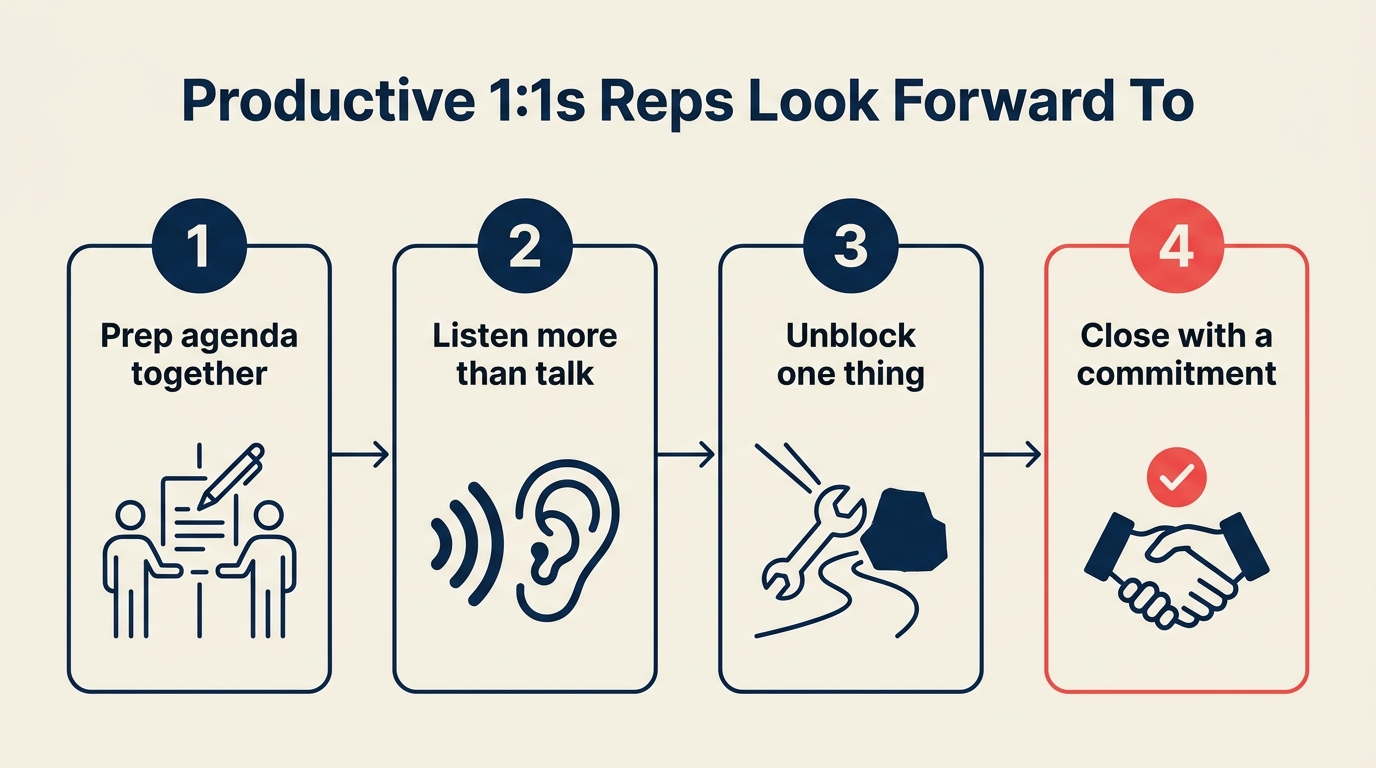
Der stärkste einzelne Hebel für die Qualität eines 1:1s ist der Wechsel, wer die Agenda vorbereitet. Nicht gemeinsam vorbereiten. Der Mitarbeiter besitzt sie.
Das klingt einfach. Es ist auch etwas unangenehm für Manager, die es gewohnt sind, Meetings zu leiten. Aber das Unbehagen ist es wert. Wenn Mitarbeiter die Agenda besitzen, passieren mehrere Dinge automatisch.
Sie beginnen, ihre Woche anders zu betrachten. Nicht nur auf Aufgaben zu reagieren, sondern darüber nachzudenken, wobei sie tatsächlich Hilfe brauchen. Blockaden werden früher identifiziert. Wachstumsfragen werden artikuliert. Das Gespräch verschiebt sich von "Wie liegen Sie bei X?" zu "Hier ist, womit ich mich beschäftige. Können Sie helfen?"
Es verändert auch die Dynamik. Das Meeting wird zu etwas, auf das sich der Mitarbeiter vorbereitet und von dem er profitiert. Das ist der Moment, in dem es aufhört, ein Kästchen zum Abhaken zu sein, und wirklich nützlich wird.
Einrichten: Das gemeinsame fortlaufende Dokument
Die operative Grundlage für ein mitarbeitergeführtes 1:1 ist ein gemeinsames fortlaufendes Dokument. Keine wöchentlich frische Vorlage. Ein einzelnes Dokument, zu dem beide während der Woche beitragen.
Richten Sie es mit drei Abschnitten ein:
Updates: Dinge, die der Mitarbeiter dem Manager mitteilen möchte. Könnte ein Erfolg sein, eine Vorwarnung, Kontext, der für eine bevorstehende Entscheidung relevant ist.
Blockaden: Dinge, bei denen der Mitarbeiter feststeckt und Hilfe braucht, um weiterzukommen. Der entscheidende Unterschied hier ist, dass dieser Abschnitt dem Mitarbeiter gehört, nicht dem Manager. Sie erstellen keine Liste von Bedenken, die er beantworten soll. Er bringt die spezifischen Dinge zur Oberfläche, die ihn verlangsamen.
Wachstum: Fragen zu Karriere, Fähigkeiten, Feedback oder allem Längerfristigen. Dieser Abschnitt wird am häufigsten vernachlässigt. Ihn in die Struktur einzubauen stellt sicher, dass er nicht verschwindet.
Beide Seiten können das Dokument zwischen Meetings asynchron ergänzen. Wenn Sie sich zusammensetzen, gibt es bereits Inhalt. Kein unbeholfenes "Also, wie läuft es?"-Opener nötig.
Ein praktischer Hinweis: Nutzen Sie das Tool, das Ihr Team bereits verwendet. Geteiltes Google Doc, Notion-Seite, Rework-Projekt. Es spielt keine Rolle. Was zählt, ist, dass es live, für beide Seiten sichtbar und regelmäßig aktualisiert ist. Wenn Sie auch wöchentliche Status-Updates für das breitere Team durchführen, ist das 1:1-Dokument ein guter Ort, um diesen Inhalt zu skizzieren, bevor er veröffentlicht wird.
Die 30-Minuten-Struktur
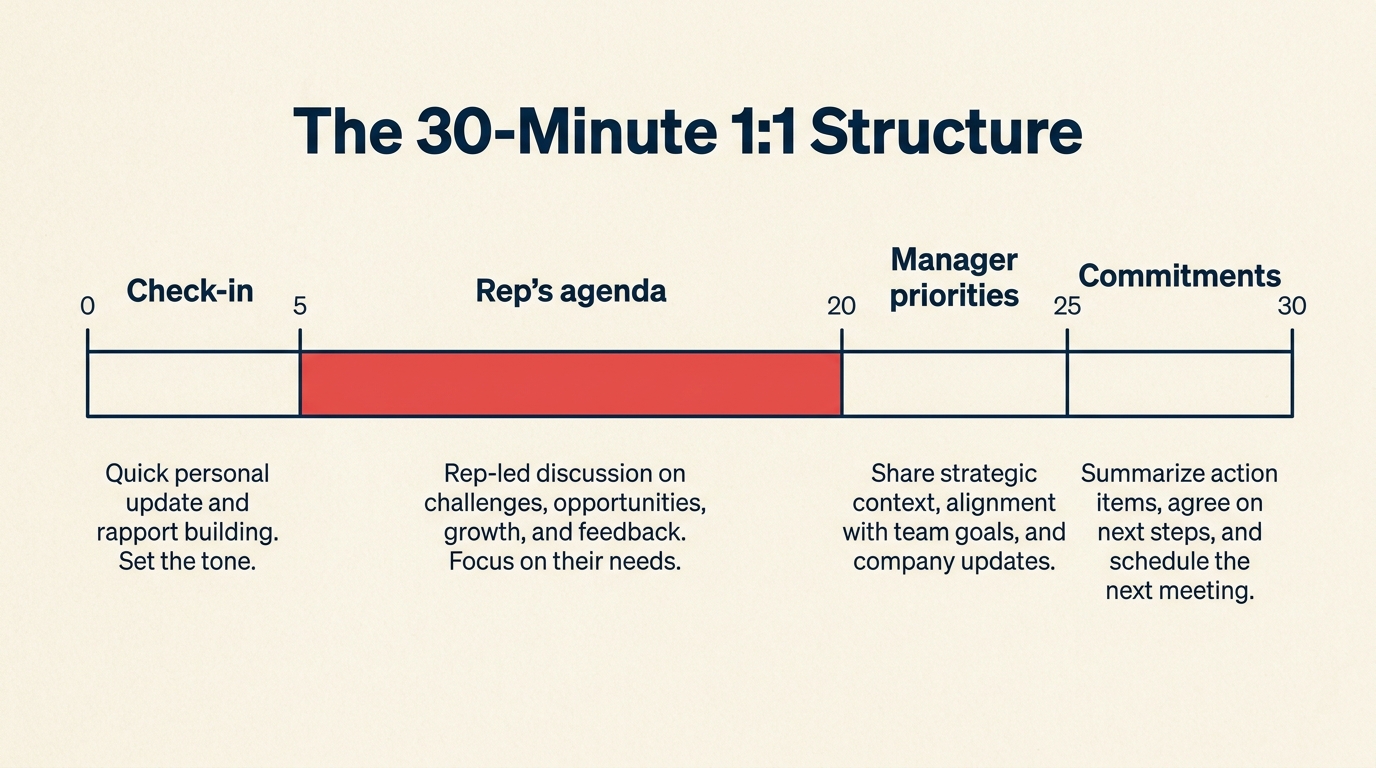
Sobald Sie das gemeinsame Dokument haben, läuft das Meeting selbst davon ab. Hier ist eine Zeitaufteilung, die gut für einen 30-Minuten-Slot funktioniert:
Minuten 0-15: Was der Mitarbeiter braucht. Er führt. Sie hören zu, stellen klärende Fragen und helfen, Blockaden zu lösen. Springen Sie nicht sofort zu Lösungen. Stellen Sie genug Fragen, um die Situation zu verstehen, bevor Sie etwas vorschlagen. Arbeiten Sie den Blockaden-Abschnitt durch. Notieren Sie getroffene Entscheidungen oder Commitments.
Minuten 15-25: Updates und Kontext. Kurzer Durchgang durch den Updates-Abschnitt. Manches davon kann schnell gehen. Nicht alles in Updates erfordert Diskussion. Der Mitarbeiter markiert, was Ihre Antwort braucht; der Rest informiert Sie nur.
Minuten 25-30: Manager-Fragen und Wachstum. Hier bringen Sie Ihre eigenen Fragen, aber halten Sie es kurz. Maximal ein bis zwei Dinge. Und rotieren Sie bei jedem Meeting mindestens eine Coaching-Frage in diesen Raum (dazu weiter unten). Wenn etwas im Wachstums-Abschnitt steht, priorisieren Sie es hier.
Diese Struktur ist nicht starr. Manche Meetings werden fast ausschließlich aus Blockaden bestehen. Andere werden hauptsächlich Wachstumsgespräche sein. Aber die Aufteilung als Standard zu haben verhindert das Muster, bei dem die ersten 28 Minuten Status-Updates sind und der Mitarbeiter das Meeting ohne gelöste Probleme verlässt.
Coaching-Fragen: Eine pro Meeting
Die Coaching-Frage ist eine kleine Praxis mit unverhältnismäßig großem Einfluss. Es ist eine einzelne offene Frage, die Sie zu jedem 1:1 mitbringen und den Mitarbeiter einlädt, zu reflektieren statt zu berichten. Die Harvard Business Review hat dokumentiert, wie Führungskräfte, die in 1:1s mehr Fragen stellen, mehr Vertrauen und bessere Informationen von ihren Teams erhalten als solche, die das Meeting damit verbringen, zu erklären.
Beispiele:
- "Was ist der schwierigste Teil Ihrer Arbeit gerade? Nicht der beschäftigtste Teil, sondern der, der sich wirklich schwer anfühlt?"
- "Gibt es eine Entscheidung, die Sie in letzter Zeit in Frage gestellt haben?"
- "Was ist eine Fähigkeit, die Sie in sechs Monaten besser beherrschen möchten?"
- "Wann waren Sie diese Woche am meisten im Flow?"
- "Gibt es etwas, das Sie sagen wollten, aber nicht gesagt haben?"
- "Was würde nächste Woche um 10 % besser machen als diese?"
- "Gibt es etwas, das ich tue, das Ihre Arbeit erschwert?"
- "Was ist ein Feedback, das Sie schon länger haben, aber nicht geäußert haben?"
- "Was ist das Wichtigste, an dem Sie gerade nicht arbeiten?"
- "Wenn Sie eine Sache an der Art, wie wir zusammenarbeiten, ändern könnten, was wäre das?"
Sie müssen nicht jedes Mal dieselbe Frage stellen. Erstellen Sie eine Liste von 15-20, durch die Sie rotieren. Das Ziel ist nicht, die perfekte Frage zu finden. Es ist, konsequent zu signalisieren, dass Sie am Mitarbeiter als ganzem Menschen interessiert sind, nicht nur als Aufgaben-Prozessor.
Manche dieser Fragen werden flach landen. Das ist in Ordnung. Der Mitarbeiter lernt, dass dieser Raum existiert und sicher ist. Das braucht einige Meetings, um sich zu etablieren.
Häufige Fehler, die Sie vermeiden sollten
Überspringen, wenn Sie beschäftigt sind. Die Wochen, in denen Sie sich zu beschäftigt für 1:1s fühlen, sind fast immer die Wochen, in denen Ihr Team sie am meisten braucht. Das Überspringen sendet das Signal, dass die Zeit und die Bedenken Ihres direkten Mitarbeiters optional sind. Wenn Sie wirklich einen Konflikt haben, verschieben Sie das Meeting auf dieselbe Woche statt es vollständig abzusagen.
Es zurück in Status driften lassen. Das wird passieren. In den ersten Wochen eines neuen Formats werden sowohl Sie als auch der Mitarbeiter auf alte Muster zurückgreifen. Es lohnt sich, den Wechsel explizit zu benennen: "Ich versuche, diese Zeit nützlicher für Sie zu machen. Lassen Sie uns also mit dem beginnen, was Sie zur Agenda mitgebracht haben, statt dass ich nach Projekten frage."
Karriere nie besprechen. Wenn der Wachstums-Abschnitt drei Wochen lang leer war, ist das ein Signal. Entweder fühlt sich der Mitarbeiter nicht sicher, es anzusprechen, oder er glaubt nicht, dass Sie helfen können. Fragen Sie direkt: "Mir ist aufgefallen, dass wir in letzter Zeit nicht viel Zeit mit Karrierefragen verbracht haben. Gibt es etwas, das ich wissen sollte?"
Das Dokument als Live-Status-Report behandeln. Das gemeinsame Dokument ist kein Projekt-Tracker. Es ist ein Gesprächsgerüst. Füllen Sie es nicht mit Projekt-Meilensteinen und Aufgabenlisten. Halten Sie es auf das fokussiert, was der Mitarbeiter besprechen muss, Blockaden, mit denen er konfrontiert ist, und Wachstumsfragen, mit denen er sich beschäftigt.
Das Dokument zusammen statt vorher lesen. Beide Seiten sollten das Dokument vor dem Meeting lesen, nicht während. Wenn Sie die ersten fünf Minuten eines 30-minütigen Meetings damit verbringen, aufzuholen, was im Dokument steht, haben Sie bereits 17 % Ihrer Zeit verschwendet.
Die 1:1-Vorlage
Hier ist die Struktur des gemeinsamen Dokuments in einem Format, das Sie direkt kopieren und verwenden können:
[Name] / [Manager-Name] 1:1, Fortlaufendes Dokument
Ergänzen Sie dieses Dokument während der Woche. Beide.
Updates (für Manager-Awareness)
Blockaden (Dinge, bei denen ich Hilfe brauche)
Wachstum / Karriere
Notizen vorheriger Meetings
[Datum]
- Besprochen:
- Getroffene Entscheidungen:
- Aktionen:
Führen Sie ein fortlaufendes Archiv früherer Meeting-Notizen im selben Dokument. Das ist wichtiger, als die meisten Manager erkennen. Es schafft eine Aufzeichnung dessen, was gesagt wurde, was versprochen wurde und was sich geändert hat. Es gibt Ihnen auch Material für Performance-Reviews, das tatsächlich in echten Gesprächen verankert ist, statt in der Erinnerung am Jahresende.
Messen, ob es funktioniert
Das Ziel eines besseren 1:1-Formats ist nicht, bei einer Feedback-Umfrage höher zu punkten. Es ist, operativ wichtige Ergebnisse zu erzielen.
Blockaden kommen früher an die Oberfläche. Wenn Ihr Team Probleme über das 1:1 eskaliert, bevor sie für alle sichtbar werden, funktioniert das Format. Die Frage, die Sie sich stellen sollten: Höre ich von Problemen, bevor sie zu Notfällen werden?
Mitarbeiter berichten, gehört zu werden. Das ist schwerer zu messen, aber nicht unmöglich. Fragen Sie bei Ihrem nächsten Skip-Level oder in einer Team-Umfrage direkt: "Fühlen sich Ihre 1:1s für Sie nützlich an?" Die Antworten werden Ihnen mehr sagen als Kalenderanalysen.
Karrieregespräche finden proaktiv statt. Wenn Sie wissen, wo jeder Ihrer direkten Mitarbeiter in 18 Monaten sein möchte, und Sie in den letzten 60 Tagen ein echtes Gespräch darüber geführt haben, funktioniert der Wachstums-Abschnitt.
Fluktuationssignale kommen früher. Desengagement zeigt sich in 1:1s, bevor es sich in Kündigungen zeigt: ruhigere Updates-Abschnitte, weniger angesprochene Blockaden (denn wozu?), leer gelassener Wachstums-Abschnitt. Ein gut geführtes 1:1 gibt Ihnen frühe Signale, auf die Sie tatsächlich reagieren können. Die McKinsey-Studie zur Mitarbeitererfahrung zeigt, dass mangelnde Karriereentwicklung und schlechte Beziehungen zu Managern zu den häufigsten Gründen gehören, warum Mitarbeiter kündigen, beides Dinge, die in 1:1s sichtbar werden, wenn sie gut geführt werden. Für weiteren Kontext darüber, wie KI neu definiert, was Engagement bei der Arbeit bedeutet, lohnt sich die Lektüre von die Rolle des Managers bei der KI-Workforce-Transformation.
1:1s mit teamweiten Systemen verbinden
Das 1:1 lebt nicht isoliert. Es funktioniert am besten, wenn es mit den anderen Betriebsrhythmen des Teams verbunden ist.
Bevor Sie Ihr 1:1-Format neu gestalten, lohnt es sich, eine Meeting-Überprüfung durchzuführen, um die gesamte Meeting-Last zu verstehen, die Ihr Team trägt. Ein besseres 1:1 hilft nicht viel, wenn das Team in anderen Meetings ertrinkt, die async sein könnten.
Der Blockaden-Abschnitt des 1:1 verbindet sich auch direkt mit Ihrer Team-Betriebsvereinbarung. Wenn Sie gemeinsame Normen dafür etabliert haben, wie Entscheidungen getroffen und Eskalationen gehandhabt werden, werden Blockaden einfacher zu kategorisieren und zu lösen. Beide Seiten wissen, was der Mitarbeiter unabhängig handhaben kann und was wirklich Manager-Beteiligung erfordert.
Wenn Ihr Team stark async kommuniziert, stellen Sie möglicherweise fest, dass einiges, was früher in 1:1s lebte, auf async verlagert werden kann, was die Meeting-Zeit für Dinge freigibt, die tatsächlich von Echtzeit-Gesprächen profitieren. Der async-Kommunikationsleitfaden beschreibt, wie diese Linie klar zu ziehen ist.
Der Wechsel, der alles verändert
Die Agenda abzugeben ist beim ersten Mal unbequem. Die meisten Mitarbeiter wurden nicht gebeten, ihr eigenes 1:1 zu besitzen. Manche werden die ersten Wochen mit leichten Agenden testen, ob Sie es ernst meinen. Bleiben Sie dabei.
Das Signal, das Sie durch diesen Wechsel senden, ist wichtiger als jedes einzelne Gespräch. Sie sagen Ihrem direkten Mitarbeiter: Ihre Zeit ist wichtig, Ihre Probleme sind wichtig, Ihr Wachstum ist wichtig, und dieser wöchentliche Slot ist für Sie. Nicht für mich. Das ist keine Kleinigkeit. Wenn "Mein Manager weiß nicht, was ich will" einer der häufigsten Treiber von Fluktuation ist, ist es die Arbeit, konsequent zu diesem Gespräch zu erscheinen.
Führen Sie das Format sechs Wochen lang durch, bevor Sie beurteilen, ob es funktioniert. Die ersten zwei Wochen brechen Gewohnheiten. Woche drei und vier etablieren das neue Muster. Bis Woche fünf und sechs werden Sie wissen, ob der Mitarbeiter es wirklich nutzt. Und wenn er es tut, werden Sie sich fragen, warum Sie es je anders gemacht haben. Die SHRM-Studie zur Manager-Effektivität zeigt, dass Manager, die strukturiertes Feedback erhalten und in Einzelgespräche investieren, messbar bessere Bindungsergebnisse erzielen als solche, die das nicht tun.
Weiterlesen: Das vollständige Team Productivity Playbook enthält weitere managerfokussierte Leitfäden zur Leitung effektiver, async-freundlicher Teams. Verwandte Artikel: neue Mitarbeiter in Ihre Arbeitsweise einführen, Retrospektiven durchführen, die zu Verhaltensänderungen führen und das KI-Team-Readiness-Assessment.

Principal Product Marketing Strategist
On this page
- Warum die meisten 1:1s scheitern, bevor sie beginnen
- Das Kernprinzip: Mitarbeitergeführte Agenda
- Einrichten: Das gemeinsame fortlaufende Dokument
- Die 30-Minuten-Struktur
- Coaching-Fragen: Eine pro Meeting
- Häufige Fehler, die Sie vermeiden sollten
- Die 1:1-Vorlage
- Updates (für Manager-Awareness)
- Blockaden (Dinge, bei denen ich Hilfe brauche)
- Wachstum / Karriere
- Messen, ob es funktioniert
- 1:1s mit teamweiten Systemen verbinden
- Der Wechsel, der alles verändert