More in
Team-Produktivitäts-Playbook
Produktive 1:1s führen, auf die sich Mitarbeiter wirklich freuen
Apr. 18, 2026
Focus Blocks auf Team-Ebene, nicht nur für Einzelpersonen
Apr. 18, 2026
Wöchentliche Status-Updates ohne Theatralik
Apr. 18, 2026
Projekt-Kickoffs, die Scope Creep verhindern
Apr. 18, 2026 · Currently reading
Priorisierungs-Frameworks, die Ihr Team im Gedächtnis behält
Apr. 18, 2026
Verteilte Teams über 3+ Zeitzonen hinweg führen
Apr. 18, 2026
Kapazitätsplanung ohne Spreadsheets aus der Hölle
Apr. 18, 2026
Das Gespräch über Team-Normen, das Sie bisher vermieden haben
Apr. 18, 2026
Neue Teammitglieder in Ihre Arbeitsweise einführen
Apr. 18, 2026
Meeting-Audit: So schaffen Sie die Meetings ab, die Ihr Team hasst
Apr. 1, 2026
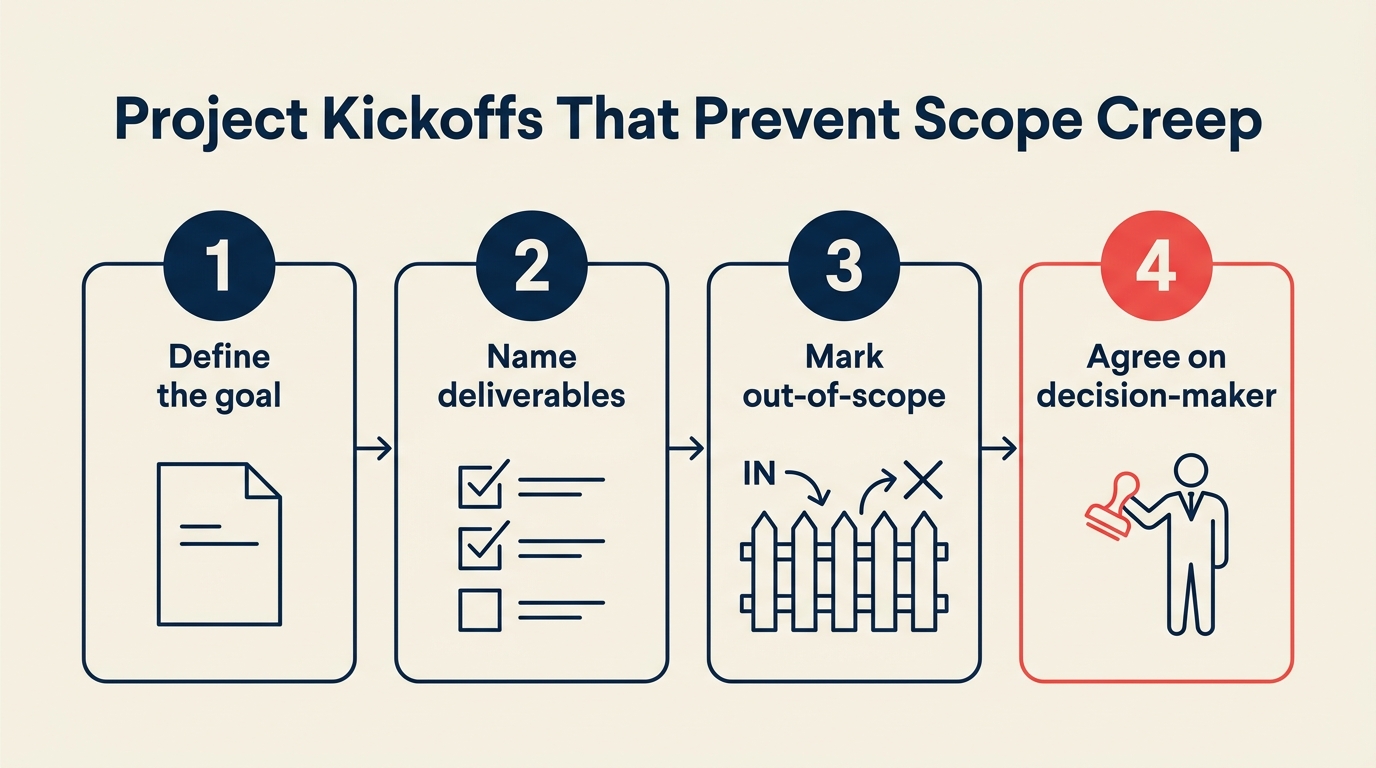
Projekt-Kickoffs, die Scope Creep verhindern
Turn this article into takeaways for your work.


Each assistant summarizes the article only for you and suggests best practices for your work.
Scope Creep hat den Ruf, ein Problem der Projektdurchführung zu sein. Das stimmt nicht. Es ist fast immer ein Problem der Projektdefinition. Die PMI's Pulse of the Profession-Studie zeigt, dass 52 % der Projekte von Scope Creep betroffen sind, wobei schlechtes Anforderungsmanagement bei der Projektinitiierung die am häufigsten genannte Ursache ist.
Wenn jemand ein Feature hinzufügt, das nicht im ursprünglichen Plan stand, oder ein Stakeholder eine "kleine Änderung" anfordert, die drei Wochen Arbeit neu schreibt, liegt das eigentliche Versagen am Anfang. Das Team hat begonnen zu bauen, bevor es sich geeinigt hatte, was es baut. Die Ziele waren vage genug, dass jeder die Lücken anders füllte. Niemand hat laut ausgesprochen, was das Projekt explizit nicht leisten würde.
Das Kickoff-Meeting ist Ihre einzige Gelegenheit, das zu verhindern. Die meisten Kickoffs scheitern daran, weil sie mit Aufgaben statt mit Alignment beginnen. Jemand teilt ein Projektboard, das Team teilt die Arbeit auf, und alle verlassen das Meeting in der Überzeugung, das Projekt zu verstehen, obwohl sie in Wirklichkeit nur ihren Teil verstehen. Das ist nicht dasselbe. Gutes Alignment beim Kickoff ist auch der beste Weg, die Focus Blocks des Teams später zu schützen: Wenn der Scope klar ist, sinken Unterbrechungen mitten im Projekt deutlich.
Ein strukturierter Kickoff dauert 60 Minuten. Ein strukturell solides Projekt vermeidet wochenlange Nacharbeit. Das ist der Tausch.
Warum die meisten Kickoffs ihr Ziel verfehlen
Es gibt drei vorhersehbare Fehlermuster bei Projekt-Kickoffs.
Ziele werden ohne Erfolgskriterien formuliert. "Ein besseres Onboarding-Erlebnis schaffen" klingt wie ein Ziel. Es ist aber keins. Es ist eine Richtung. Ohne messbare Erfolgskriterien (was bedeutet "besser", und woran erkennen wir, wann wir es erreicht haben) ist das Ziel eine leere Leinwand, auf die jeder Stakeholder etwas anderes malt.
Non-Goals werden übersprungen. Der Non-Goals-Abschnitt ist der unbequemste Teil jedes Kickoffs, weil er von jemandem verlangt, explizit zu sagen: "Das machen wir nicht." Das fühlt sich an wie Ambition einschränken. Aber das Fehlen einer Non-Goals-Liste bedeutet, dass jede Out-of-Scope-Anfrage, die mitten im Projekt eintrifft, von Grund auf neu verhandelt werden muss: spontan, unter Druck. Non-Goals schaffen einen vorab vereinbarten Rahmen für diese Gespräche. Ohne sie fangen Sie jedes Mal bei null an.
Niemand kann den DRI nennen. Verteilte Verantwortung ist die Standardeinstellung für kollaborative Projekte. Alle sind in einem diffusen Sinne "verantwortlich". Wenn aber eine Entscheidung getroffen werden muss und niemand klare Autorität hat, wird sie entweder nicht getroffen oder ans Management eskaliert, was alles verlangsamt und Abhängigkeiten in der falschen Richtung schafft. Jedes Projekt braucht eine einzige Directly Responsible Individual, die das Ergebnis verantwortet, auch wenn die Arbeit genuiner Zusammenarbeit entspringt.
Schnellere Release-Zyklen und bereichsübergreifende Teamstrukturen haben diese Fehlermuster teurer gemacht. Wenn ein Projekt vier Teams berührt und alle zwei Wochen geliefert wird, multipliziert sich Fehlausrichtung schnell. Die Kosten einer Fehlkommunikation in Woche eins sind kein Tag Nacharbeit. Es ist ein Sprint, der für vier Teams verloren geht. McKinsey-Forschung zur agilen Transformation zeigt, dass unklare Rollen und Verantwortlichkeiten in bereichsübergreifenden Teams zu den drei wichtigsten Prädiktoren für Projektverzögerungen gehören.
Vor dem Kickoff: das einseitige Projektbriefing
Das Wirkungsvollste, was Sie tun können, um ein Kickoff-Meeting zu verbessern, ist, 24 Stunden vorher ein einseitiges Projektbriefing zu versenden. Dieses Briefing zwingt Sie, das Projekt vor dem Meeting zu schärfen, zeigt Fehlausrichtungen frühzeitig auf (in asynchronen Kommentaren statt im Raum) und gibt dem Kickoff-Meeting einen gemeinsamen Ausgangspunkt statt einer leeren Seite.
Das Briefing sollte folgende Punkte umfassen:
Was wir bauen und warum. Maximal zwei oder drei Sätze. Wenn Sie es nicht in zwei oder drei Sätzen zusammenfassen können, ist das Projekt noch nicht gut genug definiert, um es zu starten.
Was Erfolg bedeutet. Konkrete, messbare Kriterien. Nicht "Nutzer werden eine bessere Erfahrung machen", sondern "die Aktivierungsrate neuer Nutzer steigt innerhalb von 60 Tagen nach dem Launch von 23 % auf 35 %".
Was dieses Projekt nicht beinhaltet. Die Non-Goals-Liste. Beginnen Sie mit dem, was explizit besprochen und als Out of Scope entschieden wurde. Fügen Sie alles hinzu, was nah genug ist, um Scope Creep anzuziehen.
Rahmenbedingungen. Deadline, Budget, Teamgröße, technische Abhängigkeiten, Compliance-Anforderungen. Rahmenbedingungen sind keine Hindernisse. Sie sind Parameter, innerhalb derer das Team gestalten muss.
Wer wofür verantwortlich ist. Ein Entwurf des RACI oder zumindest der Name des DRI und eine grobe Aufteilung der Verantwortlichkeiten.
Versenden Sie das Briefing 24 Stunden vor dem Meeting an alle Kickoff-Teilnehmer. Bitten Sie darum, vor dem Meeting schriftliche Kommentare zu hinterlassen. Wenn das Meeting beginnt, werden Sie das Briefing nicht entdecken. Sie werden es besprechen.
Die 60-Minuten-Kickoff-Agenda
Hier ist ein strukturierter Kickoff, der in 60 Minuten passt und alles Wesentliche abdeckt.
0-10 Minuten: Ziele und Erfolgskriterien. Gehen Sie gemeinsam durch die Zielsetzung und Erfolgskriterien des Briefings. Lesen Sie es nicht vor. Fragen Sie das Team: "Bildet das ab, was wir erreichen wollen? Fehlt etwas Wesentliches in diesem Rahmen?" Ziel ist es, Meinungsverschiedenheiten über die Richtung frühzeitig ans Licht zu bringen, nicht das Geschriebene zu bestätigen.
10-20 Minuten: Non-Goals. Lesen Sie die Non-Goals-Liste vor und fragen Sie: "Gibt es etwas, das wir ergänzen sollten?" Hier entstehen häufig die produktivsten Konflikte. Jemand wird sagen: "Ich dachte eigentlich, wir schließen X ein." Jetzt wissen Sie, dass die Projektdefinition expliziter sein muss, bevor die Arbeit beginnt.
20-35 Minuten: Rahmenbedingungen und Abhängigkeiten. Behandeln Sie Zeitplan, Budget, technische Abhängigkeiten und externe Einschränkungen. Benennen Sie für jede Abhängigkeit die Person oder das Team, das sie verantwortet, und einigen Sie sich darauf, wie die Abhängigkeit nachverfolgt wird. Abhängigkeiten, die beim Kickoff nicht benannt und übernommen werden, werden zu Blockern, die niemand kommen sah. Führen Sie vor diesem Abschnitt eine kurze Kapazitätsprüfung durch: Die tatsächliche Verfügbarkeit des Teams zu kennen, macht Zeitplangespräche fundiert statt aspirational.
35-50 Minuten: Verantwortlichkeiten und RACI. Gehen Sie den RACI oder den Verantwortungsrahmen durch. Für jeden wichtigen Arbeitsbereich oder jede Entscheidungskategorie: Wer erledigt die Arbeit (Responsible), wer verantwortet das Ergebnis (Accountable), wer muss vor Entscheidungen konsultiert werden, wer muss nach Entscheidungen informiert werden. Ziel ist nicht, einen erschöpfenden RACI mit 40 Zeilen zu erstellen. Es geht darum, die Frage "Wer trifft die Entscheidung?" für die wahrscheinlichsten Entscheidungen zu beantworten.
50-60 Minuten: Change Management. Vereinbaren Sie einen Change-Request-Prozess, bevor jemand einen Change Request stellt. Was passiert, wenn ein Stakeholder Scope ergänzen möchte? Wer bewertet das? Wer genehmigt es? Wie wird die Auswirkung auf Zeitplan und Ressourcen bewertet? Dieses Gespräch fühlt sich beim Kickoff verfrüht an. Es wird drei Wochen später dringend, wenn die erste Scope-Ergänzung eintrifft. Den Prozess vorab vereinbart zu haben, macht das Gespräch deutlich schneller und weniger politisch.
Die Non-Goals-Liste schreiben
Die Non-Goals-Liste verdient mehr Aufmerksamkeit, als sie gewöhnlich bekommt. So erstellen Sie eine nützliche.
Beginnen Sie damit, alles aufzulisten, was das Projekt plausiblerweise umfassen könnte, aber nicht wird. Denken Sie an:
- Features, die besprochen und explizit wegen des Scopes gestrichen wurden
- Angrenzende Probleme, die das Projekt aufzeigen, aber nicht lösen wird
- Zielgruppensegmente, die Out of Scope sind
- Technische Arbeiten, die auf eine spätere Phase verschoben werden
- Leistungs- oder Qualitätsstandards, die aspirational, aber nicht verbindlich sind
Ergänzen Sie dann alles aus den Adjacencies des Projektbriefings. Wenn Sie das Onboarding neu gestalten: Gestalten Sie auch die In-App-Tooltips neu? Die E-Mail-Sequenz? Das erste Sitzungserlebnis? Wenn nicht, sagen Sie es explizit.
Die Non-Goals-Liste schützt das Team vor dem häufigsten Muster von Scope Creep: der benachbarten Ergänzung, die klein erscheint ("können wir X gleich mitfixieren?"), aber kumulativ das Projekt auffrisst. Die Harvard Business Review zu Planungsfehlern stellt fest, dass Scope-Erweiterungen für die Mehrheit der Budgetüberschreitungen in bereichsübergreifenden Projekten verantwortlich sind und fast immer aus Unklarheit darüber entstehen, was das Projekt explizit nicht leisten sollte. Wenn die Anfrage eintrifft, zeigen Sie auf die Non-Goals-Liste und sagen: "Dieses Muster haben wir beim Kickoff besprochen und vereinbart, dass es für diese Phase Out of Scope ist. Wenn sich das geändert hat, müssen wir die Auswirkungen formell bewerten."
Das ist keine bürokratische Reaktion. Es ist eine zeitsparende.
RACI schnell erstellt
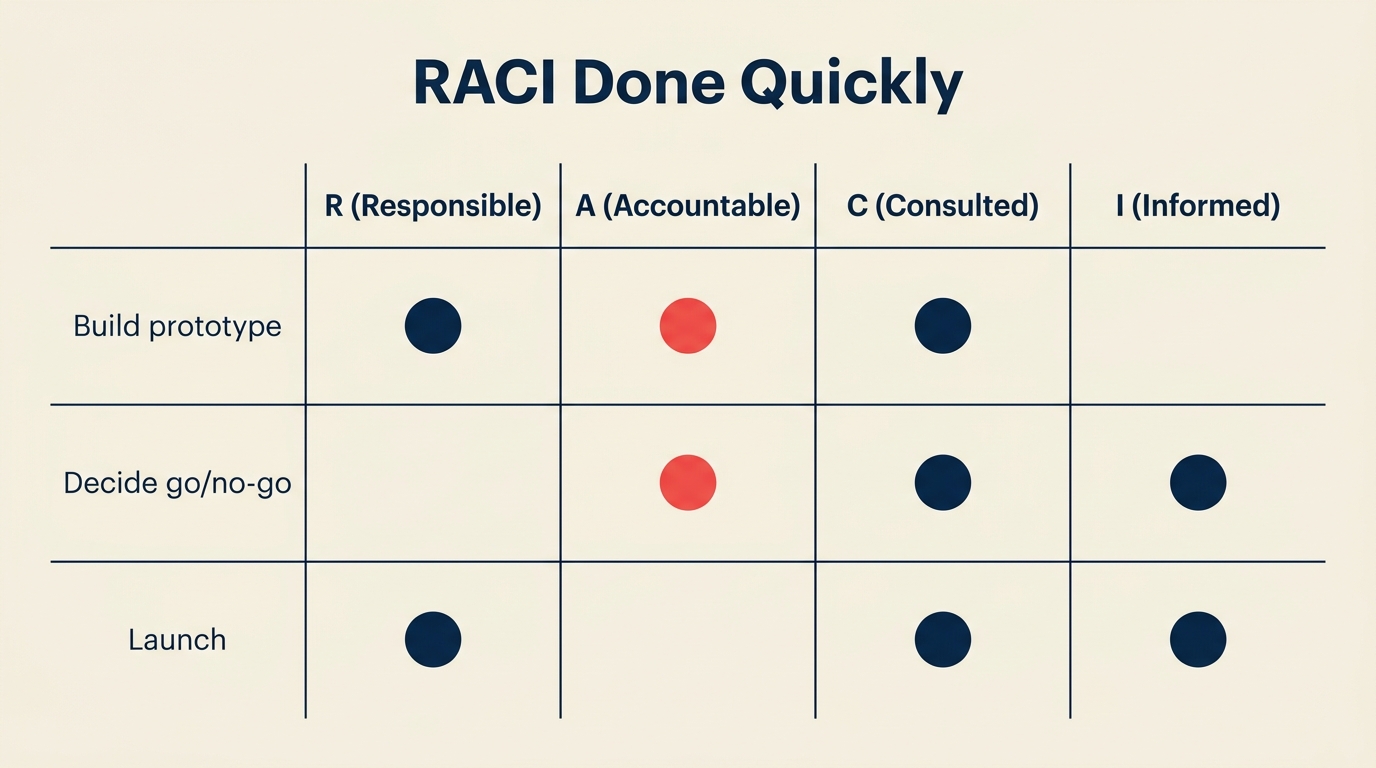
Ein vollständiger RACI für jede Aufgabe ist für die meisten Projekte übertrieben. Was Sie tatsächlich brauchen, sind Antworten auf diese Fragen:
Wer ist der DRI für dieses Projekt? Eine Person. Der DRI ist für das Ergebnis verantwortlich, verantwortet die Launch-Entscheidung und hat das letzte Wort bei Scope- und Prioritäts-Abwägungen. Das ist nicht der Projektmanager, der den Plan nachverfolgt. Es ist die Person, an deren Namen der Projekterfolg hängt.
Wer muss Designentscheidungen genehmigen? Definieren Sie den Design-Review-Prozess vorab.
Wer muss Scope-Änderungen genehmigen? Das ist direkt mit dem Change-Request-Prozess verknüpft.
Wer muss vor der Finalisierung der Richtung in [wichtigen Entscheidungskategorien] konsultiert werden? Bei den meisten Projekten gibt es 3-5 Entscheidungskategorien, in denen die falsche Wahl ohne Konsultation später politische oder operative Probleme schafft. Benennen Sie diese.
Wer muss über den Status informiert werden? Das ist mit Ihrer Praxis der Entscheidungsprotokolle verknüpft: eine Aufzeichnung, was entschieden wurde und warum, mit den richtigen Personen im Loop.
Verwenden Sie dieses vereinfachte Format für den Kickoff:
| Entscheidungskategorie | DRI | Muss konsultieren | Muss informieren |
|---|---|---|---|
| Scope-Ergänzungen | [Name] | [Stakeholder] | [Leadership] |
| UX-Richtung | [Name] | [Design Lead] | [Produktteam] |
| Technische Architektur | [Name] | [Tech Lead] | [Engineering] |
| Launch / Go-No-Go | [Name] | [Alle DRIs] | [Exec Sponsor] |
Das Kickoff-Protokoll
Jede Entscheidung, die beim Kickoff getroffen wird, sollte in einem gemeinsamen Kickoff-Protokoll dokumentiert werden. Nicht als Meeting-Notizen. Als Entscheidungsprotokoll. Der Unterschied ist wichtig. Das ist genau der Anwendungsfall, für den Entscheidungsprotokolle entwickelt wurden: eine durchsuchbare Aufzeichnung, was vereinbart wurde und warum, nicht nur, was besprochen wurde.
Meeting-Notizen erfassen, was besprochen wurde. Ein Entscheidungsprotokoll erfasst, was entschieden wurde und warum. Das Kickoff-Protokoll ist die maßgebliche Referenz für Scope-, Verantwortlichkeits- und Prozessentscheidungen, die vor Arbeitsbeginn getroffen wurden.
Jeder Eintrag sollte folgendes Format haben:
Entscheidung: Was vereinbart wurde. Begründung: Warum diese Entscheidung getroffen wurde (auch nur ein Satz). Datum: Wann sie getroffen wurde. Verantwortlicher: Wer die Entscheidung getroffen hat oder für wen sie gilt.
Wenn Scope Creep später im Projekt eintrifft, ist das Kickoff-Protokoll Ihr wichtigstes Instrument für das Gespräch. "Das haben wir beim Kickoff besprochen und X entschieden, weil Y" ist eine weit wirkungsvollere Formulierung als "Ich glaube, wir haben vereinbart...". Das Protokoll macht die Vereinbarung real, nicht erinnerungsbasiert.
Das Kickoff-Briefing-Template
Hier ist ein einseitiges Format, das Sie anpassen können:
Projektbriefing: [Projektname] 24 Stunden vor dem Kickoff versenden. Schriftliche Kommentare vor dem Meeting einsammeln.
Was wir bauen: [2-3 Sätze]
Warum das jetzt wichtig ist: [1-2 Sätze zum geschäftlichen Kontext]
Erfolgskriterien:
- [Konkretes, messbares Ergebnis 1]
- [Konkretes, messbares Ergebnis 2]
- [Konkretes, messbares Ergebnis 3]
Was dieses Projekt NICHT beinhaltet (Non-Goals):
- [Explizit Out-of-Scope-Punkt 1]
- [Explizit Out-of-Scope-Punkt 2]
- [Explizit Out-of-Scope-Punkt 3]
Rahmenbedingungen:
- Deadline: [Datum]
- Budget: [Betrag oder k. A.]
- Wichtige Abhängigkeiten: [Abhängigkeiten und Verantwortliche benennen]
- Bekannte technische / rechtliche / Compliance-Einschränkungen: [Liste]
Verantwortlichkeiten (Entwurf):
- DRI: [Name]
- Wichtige Verantwortlichkeiten: [Kurze Liste]
Change-Request-Prozess: [Wie Ergänzungen bewertet und genehmigt werden]
Häufige Fehler
Mit Aufgaben beginnen, bevor Ziele vereinbart sind. Das Kickoff mit dem Projektboard zu eröffnen und Tickets zu vergeben, ist der schnellste Weg, das Alignment zu überspringen, das wirklich zählt. Das Board kann bis zur zweiten Hälfte warten. Stellen Sie erst Alignment zu Zielen, Non-Goals und Verantwortlichkeiten her.
Vage Erfolgskriterien. "Nutzer lieben das neue Erlebnis" ist kein Erfolgskriterium. Es ist ein Wunsch. Erfolgskriterien sind konkret, messbar und zeitgebunden. Wenn Sie nicht beschreiben können, wie Sie messen wollen, ob das Projekt erfolgreich war, haben Sie die Projektdefinition noch nicht abgeschlossen.
Ein Team zuweisen, ohne einen DRI zu benennen. "Das Produktteam verantwortet das" ist keine Verantwortungszuweisung. Benennen Sie die Person. Wenn in Woche vier eine schwierige Entscheidung getroffen werden muss, kann "das Produktteam" sie nicht treffen. Der DRI kann es.
Den Change-Request-Prozess überspringen. Das fühlt sich beim Kickoff immer unnötig an. Es wird während des Projekts immer notwendig. Investieren Sie fünf Minuten beim Kickoff und sparen Sie Tage an Verhandlungen später.
Das Briefing nicht im Voraus verteilen. Ein Kickoff ohne vorab versendetes Briefing bedeutet, dass die ersten 20 Minuten damit verbracht werden, Menschen mit Informationen vertraut zu machen, die sie asynchron hätten verarbeiten können. Es bedeutet auch, dass Sie die asynchrone Kommentarphase verlieren, in der Menschen Meinungsverschiedenheiten benennen, bevor sie zu Konflikten im Raum werden.
Nach dem Kickoff: Verbindung zu Retrospektiven
Ein Kickoff ist eine Prognose darüber, wie das Projekt verlaufen wird. Die Retrospektive am Ende des Projekts ist der Ort, an dem Sie die Prognose mit der Realität vergleichen. Hat die Non-Goals-Liste gehalten? Hat die DRI-Struktur funktioniert? Waren die Erfolgskriterien richtig?
Die nützlichsten Retros sind die, bei denen das Team ein Kickoff-Dokument zum Vergleich hat. Ohne es ist die Retro ein Gespräch über Gefühle. Mit ihm ist es ein Gespräch über Entscheidungen, und Entscheidungen lassen sich verbessern.
Etablieren Sie die Gewohnheit, das Kickoff-Briefing bei der Retrospektive zu lesen. Es dauert drei Minuten und bringt bessere Erkenntnisse als jede andere einzelne Praxis.
Kickoff-Qualität messen
Der führende Indikator für einen guten Kickoff ist das Ausbleiben von Nachverhandlungen mitten im Projekt. Verfolgen Sie:
Scope-Ergänzungen pro Projekt. Wie oft hat das Team nach dem Kickoff formal Scope ergänzt? Verfolgen Sie das über mehrere Projekte hinweg. Mit zunehmender Kickoff-Qualität sollte diese Zahl sinken.
Nacharbeitsstunden. Stunden, die für Arbeiten aufgewendet wurden, die wiederholt werden mussten, weil sich die Richtung geändert hat oder die Anforderungen unklar waren. Auch diese Zahl sollte mit zunehmender Kickoff-Rigidität sinken.
Tage vom Kickoff bis zur ersten Lieferung. Ein klarer Kickoff reduziert typischerweise die durch Unklarheit verursachte Verzögerung zwischen "wir haben angefangen" und "wir haben etwas geliefert". Die Deloitte-Forschung zu leistungsstarken Teams zeigt, dass Teams mit strukturierten Projekt-Launch-Ritualen, einschließlich expliziter Non-Goals und RACI-Rahmen, ihren ersten Milestone 30 % schneller erreichen als Teams, die strukturierte Kickoffs überspringen. Wenn sich diese Kennzahl nicht verbessert, produziert der Kickoff möglicherweise Papierkram statt Alignment.
Das Ziel des Kickoffs ist ein Team, das mit denselben Annahmen zu bauen beginnt: was es baut, warum es das baut und was "fertig" bedeutet. Alles andere in dem Meeting ist Infrastruktur für dieses Ergebnis.
60 Minuten für diese Frage zu investieren, bevor eine einzige Zeile Code geschrieben oder ein Design begonnen wird, ist kein Overhead. Es ist die günstigste Versicherung, die Sie für die nächsten acht Wochen kaufen können.
Mehr erfahren: Erkunden Sie das vollständige Team Productivity Playbook für weitere Leitfäden zu Planung, Betrieb und Lieferung als Team. Verwandte Artikel: wöchentliche Status-Updates ohne Theater, neue Mitarbeiter in Ihre Arbeitsweise einführen und KI-Pilotprogramme durchführen.

Principal Product Marketing Strategist
On this page
- Warum die meisten Kickoffs ihr Ziel verfehlen
- Vor dem Kickoff: das einseitige Projektbriefing
- Die 60-Minuten-Kickoff-Agenda
- Die Non-Goals-Liste schreiben
- RACI schnell erstellt
- Das Kickoff-Protokoll
- Das Kickoff-Briefing-Template
- Häufige Fehler
- Nach dem Kickoff: Verbindung zu Retrospektiven
- Kickoff-Qualität messen