AI Copilots Nhúng Trong SaaS Product UI
Turn this article into takeaways for your work.


Each assistant summarizes the article only for you and suggests best practices for your work.
GitHub Copilot được sử dụng bởi các developers có nó mỗi ngày.
Notion AI được mở trong hầu hết mọi document session bởi users đã build nó vào writing process của họ.
Đây không phải là AI features mà mọi người nhớ để dùng. Đây là AI dệt vào workflow. User đang viết code, và code tự hoàn thành. User đang viết document, và đoạn văn tiếp tục. Không có quyết định để engage với AI. Nó đã có ở đó rồi.
Đó là embedded copilot pattern. Và đó là AI feature category có highest retention impact trong SaaS.
Copilot Trigger Matrix
Copilot Trigger Matrix là design framework để quyết định khi nào một embedded AI copilot activate. Matrix map hai dimensions: trigger type (explicit: user invoke AI có chủ ý vs. implicit: AI surface suggestions liên tục dựa trên context) và confidence level (high: AI có strong signal về user intent vs. moderate: AI có partial signal). High-confidence implicit triggers (GitHub Copilot line completion) là target state: zero friction, always present. High-confidence explicit triggers (Notion slash commands) hoạt động tốt cho richer capabilities nơi control phù hợp. Moderate-confidence implicit triggers tạo noise và train users bỏ qua suggestions. Moderate-confidence explicit triggers là safe starting point cho new AI features trước khi quality được validated.
Embedded AI copilots là gì
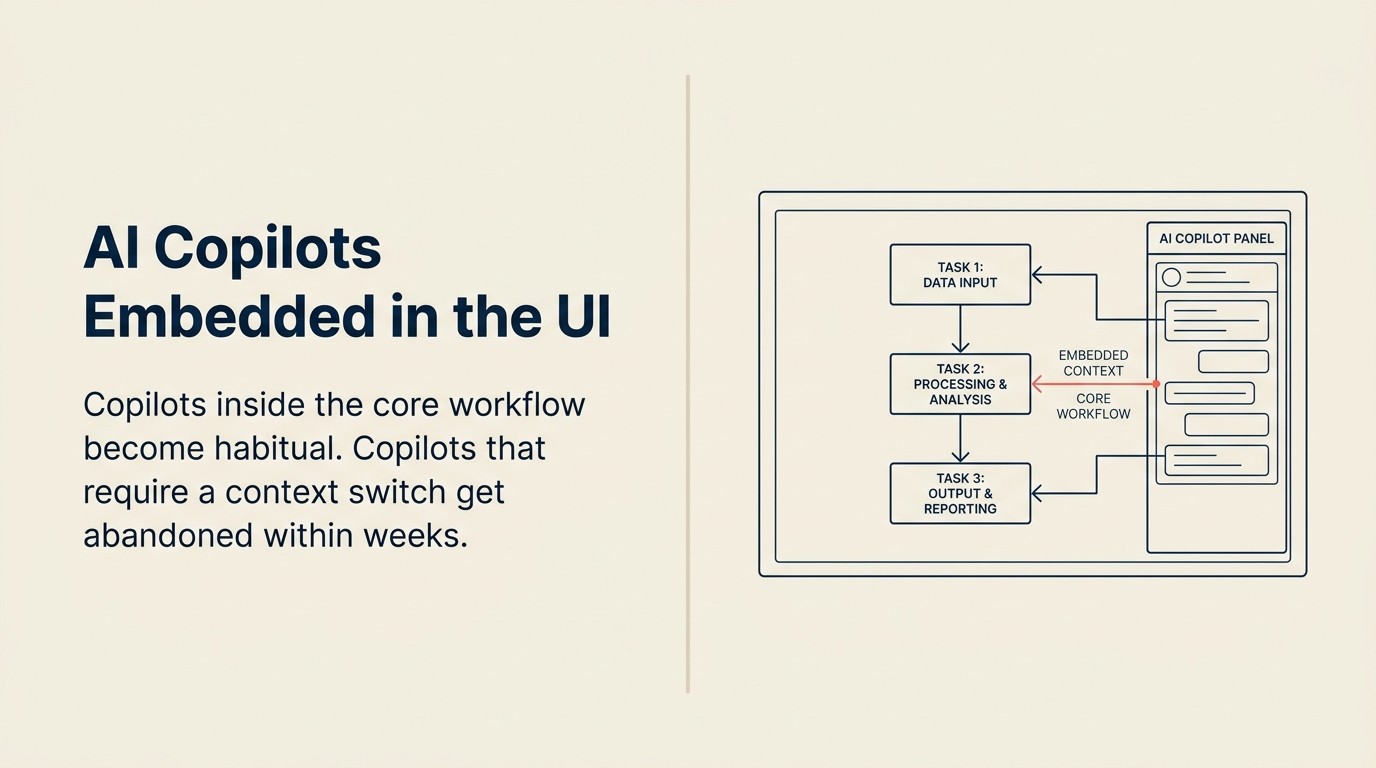
Embedded AI copilot sống bên trong primary workflow surface của product. Không phải trong sidebar mà users phải mở. Không phải trong separate AI panel float trên main interface. Không phải trong help widget nơi users đến để hỏi.
Workflow Copilot Pattern từ ACE Framework mô tả điều này chính xác: Ingest current context của user, Analyze intent của họ, Generate một suggestion, Execute nó với human approval, và lặp lại. Interaction xảy ra ở tốc độ của workflow vì AI đã ở trong workflow rồi.
Chatbot trong help widget không phải là copilot. Modal pop up khi bạn click "AI" trong navigation không phải là copilot. Copilot ngồi inline trong surface nơi công việc đang xảy ra và add suggestions in context, không yêu cầu user rời khỏi những gì họ đang làm để truy cập nó.
Sự khác biệt là friction. Embedded copilots không có. Bolt-on AI tools đòi hỏi context switch, đây là điểm mà hầu hết users ngừng dùng chúng.
Key Facts: Embedded AI Copilot Adoption
- GitHub Copilot đạt hơn 15 triệu users vào đầu 2025 và được dùng bởi 90% Fortune 100 companies; developers dùng Copilot hoàn thành tasks nhanh hơn 55% trong controlled tests (Second Talent, 2025)
- Microsoft 365 Copilot workplace adoption rate đứng ở 35.8%, với ít hơn 4 trong 10 employees có access thực sự dùng nó, minh họa khoảng cách giữa bolt-on AI và embedded AI chạy trong workflow không đòi hỏi context switch (ALM Corp, 2026)
- Bằng chứng từ nhiều product teams đặt suggestion acceptance rate threshold cho "cảm thấy hữu ích" là 70%; dưới đó users báo cáo copilot "gây cản trở," và trên đó users báo cáo nó "biết tôi đang nghĩ gì"
Tại sao embedding quan trọng cho retention
Habit formation trong software products theo một quy tắc đơn giản: hành vi càng dễ lặp lại, nó càng nhanh trở thành thói quen.
Embedded copilots giảm friction khi dùng AI xuống gần bằng không. User không phải quyết định mở AI. Không phải navigate đến một surface khác. Không phải nghĩ liệu đây có phải là thời điểm tốt để nhờ AI giúp không. AI đã có ở đó rồi, offering suggestions khi họ làm việc.
Điều đó thay đổi hoàn toàn engagement pattern. Với bolt-on AI tool, usage là intentional và episodic. Users đến AI khi họ quyết định cần giúp đỡ. Điều này tạo ra low-frequency pattern không bao giờ phát triển thành thói quen.
Với embedded copilot, usage là ambient và continuous. AI luôn chạy trong background. Users accept suggestions khi chúng hữu ích và ignore khi không. Theo thời gian, suggestions trở thành phần bình thường của workflow, và làm việc mà không có chúng bắt đầu cảm thấy chậm.
Đây là lý do retention impact của embedded copilots khác nhau về category so với sidebar AI hay modal AI. Không phải vì AI tốt hơn. Mà vì embedding giảm friction threshold cho habit formation. Stanford HAI AI Index 2025 chỉ ra AI nhất quán tăng productivity và có xu hướng narrow khoảng cách giữa low-skilled và high-skilled workers, đây chính xác là value proposition làm cho embedded copilots defensible với enterprise buyers quản lý diverse teams.
Các ví dụ có strong adoption
GitHub Copilot là benchmark cho embedded copilots. Nó ngồi inline trong code editor, chính xác nơi developers dành focused work time nhất. Khi developer gõ, Copilot generate completions trong gray text xuất hiện ngay trước cursor. Acceptance interaction là một keystroke (Tab). Rejection là không làm gì và tiếp tục gõ.
Design gần như frictionless. Không có modal. Không có panel. Không có interruption trong writing flow. Developers hoặc accept suggestions hoặc không, và trong cả hai trường hợp, họ tiếp tục viết. Thói quen hình thành vì interaction cost gần bằng không và value delivery là immediate.
Notion AI áp dụng logic tương tự cho writing. Nó sống trong document nơi user đang làm việc. Lệnh "/" surface AI options mà không rời document. Inline generation, inline rewriting, inline summarization. Users build Notion AI vào document workflow báo cáo rằng viết mà không có nó bắt đầu cảm thấy effortful, đây là dấu hiệu thói quen đã hình thành.
Linear AI embed trong issue creation và management. Khi developer tạo một issue, Linear AI có thể generate một structured issue từ freeform description, suggest relevant labels và assignees dựa trên project context, và enrich sparse issue text với additional detail. Workflow là issue management; AI assists inline trong workflow đó.
Stripe Sigma AI assist áp dụng copilot pattern cho data analysis. Primary workflow của Sigma là chạy SQL queries đối với Stripe transaction data. AI cho phép users mô tả họ muốn gì bằng plain English và generate SQL query cho họ, inline trong query interface. Non-technical users không thể viết SQL trước đây giờ có thể explore own data của họ. Embedding có nghĩa là AI có sẵn chính xác lúc user cần nó: khi họ đang ngồi tại query interface cố gắng tìm ra phải gõ gì.
Figma AI sống bên trong design canvas, nơi designers dành toàn bộ working session. Design variations, auto-layout suggestions, component naming, và alt text generation đều xảy ra inline không yêu cầu designers rời canvas.
Pattern trên tất cả năm ví dụ: AI nằm trong workflow surface, không phải bên cạnh nó. Insertion point là nơi primary work xảy ra. Interaction là low-friction, với simple accept/reject hoặc invoke commands. Nhưng failure patterns cũng nhất quán như vậy.
Những gì làm copilots thất bại
Failure patterns cho embedded copilots là nhất quán.
Modal-based AI làm interrupt workflow. Nút "AI Assist" mở full-screen modal, yêu cầu user fill prompt, và return kết quả phải copy-paste lại vào primary interface. Đây là bolt-on AI tool với tên gây hiểu lầm. Nó đòi hỏi 3 context switches mỗi lần dùng và nhanh chóng trở nên exhausting.
AI đòi hỏi explicit prompting cho mọi action. Nếu users phải invoke AI cho mỗi suggestion thay vì có suggestions surface contextually, friction đủ cao để usage drops xuống episodic. Copilot trở thành tool mọi người mở đôi khi, không phải persistent part của workflow.
Suggestions nhất quán kém chất lượng. Đây là failure mode quan trọng nhất. Nếu AI suggestions sai hoặc không hữu ích thường xuyên hơn là có ích, copilot train users bỏ qua nó. Và một khi users đã develop thói quen bỏ qua suggestions, reverse điều đó cực kỳ khó ngay cả sau khi quality cải thiện. SaaS AI failure modes ghi chép full pattern của trust erosion xảy ra khi embedded AI nhất quán underperform.
Quality threshold quan trọng. Bằng chứng từ một số product teams đặt acceptance rate threshold cho "cảm thấy hữu ích" khoảng 70 phần trăm. Dưới đó, users báo cáo copilot cảm thấy "gây cản trở." Trên 70 phần trăm acceptance, users thường báo cáo copilot "biết tôi đang nghĩ gì." Sự khác biệt giữa 60 và 75 phần trăm acceptance rate là sự khác biệt giữa một feature bị tắt và một feature trở thành thói quen.
"GitHub Copilot, Notion AI, Linear AI, và Figma AI đều share một structural characteristic: AI sống trong surface nơi primary work xảy ra. Không phải trong sidebar. Không phải trong modal. Không phải trong help widget. Sự khác biệt giữa 'đội của tôi dùng AI mỗi ngày' và 'đội của tôi đã thử AI một lần' gần như hoàn toàn là liệu AI có đòi hỏi context switch không." (Phân tích Rework, 2025)
"Một khi users đã develop thói quen bỏ qua AI suggestions vì quality thấp hơn threshold khi launch, reverse thói quen đó cực kỳ khó ngay cả sau khi quality cải thiện. Trust threshold cần vượt trước khi embed trong primary workflow, không phải sau. Chạy limited beta và measure acceptance rate trước khi broad embedding." (Phân tích Rework, 2025)
So Sánh Adoption Pattern: Embedded vs. Bolt-On AI
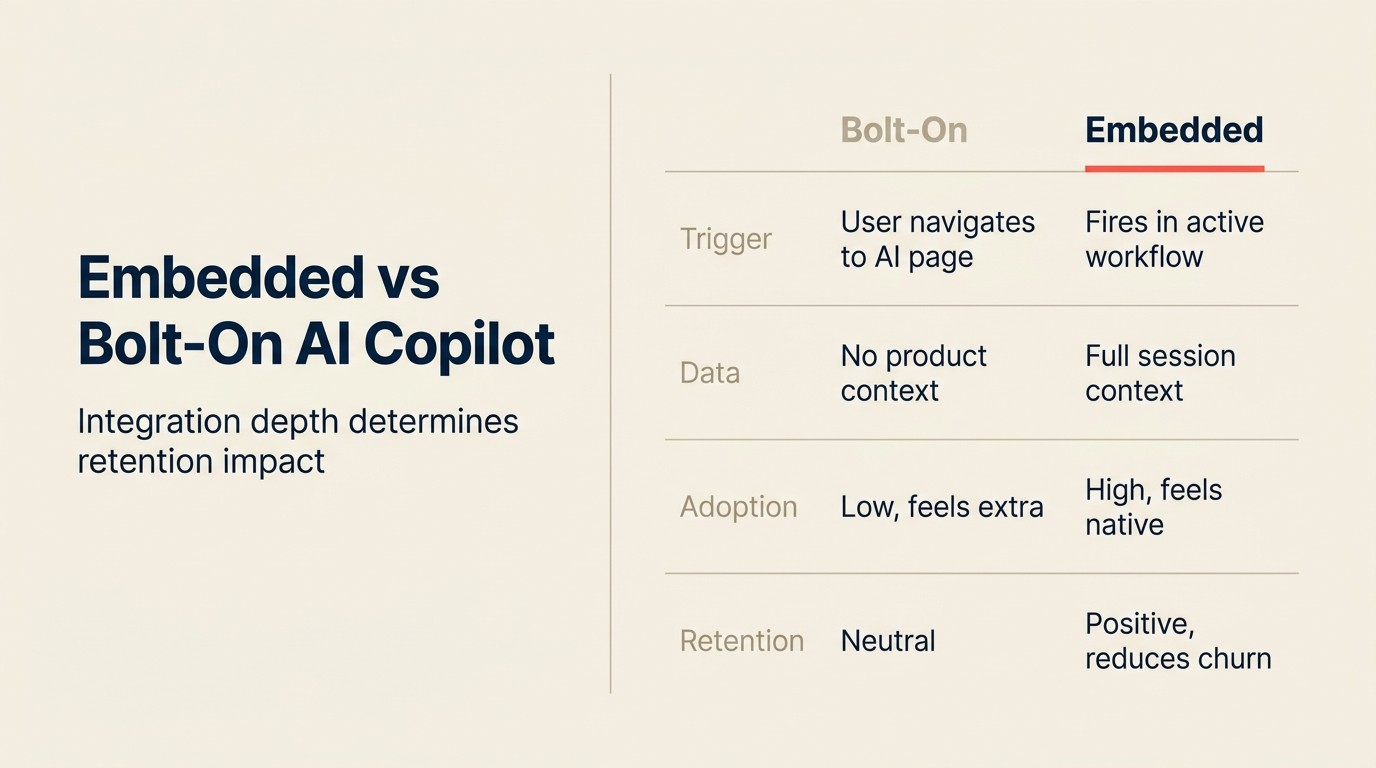
| Loại Copilot | Friction Level | WAU (weekly active users) 90 ngày điển hình | Acceptance Rate (khi engaged) | Habit Formation |
|---|---|---|---|---|
| Inline (GitHub Copilot pattern) | Gần bằng không | 70-85% active users | 55-75% | Hình thành trong 2-3 tuần |
| Slash command (Notion pattern) | Thấp | 45-65% active users | 50-70% | Hình thành trong 4-6 tuần |
| Context-aware sidebar | Trung bình | 25-40% active users | 40-60% | Episodic, không thành thói quen |
| Modal (separate AI panel) | Cao | 5-15% active users | Biến thiên nhiều | Hiếm khi hình thành |
Nguồn: McKinsey AI Software Development Research 2025, Stanford HAI AI Index 2025, GitHub Copilot adoption data 2025
Phân tích Rework: Microsoft 365 Copilot adoption rate (35.8%) so với GitHub Copilot adoption rate (80%+ daily use trong số active license holders) tiết lộ cùng một pattern theo chiều ngược lại. M365 Copilot được truy cập qua separate interface và đòi hỏi context switch trong hầu hết workflows. GitHub Copilot là inline trong code editor. Cả hai đều là world-class AI products từ well-resourced teams. Adoption gap là placement, không phải quality. Teams đánh giá embedded copilot designs nên dùng comparison này như adoption target benchmark trước khi commit vào trigger và placement strategy của họ.
Trigger design question
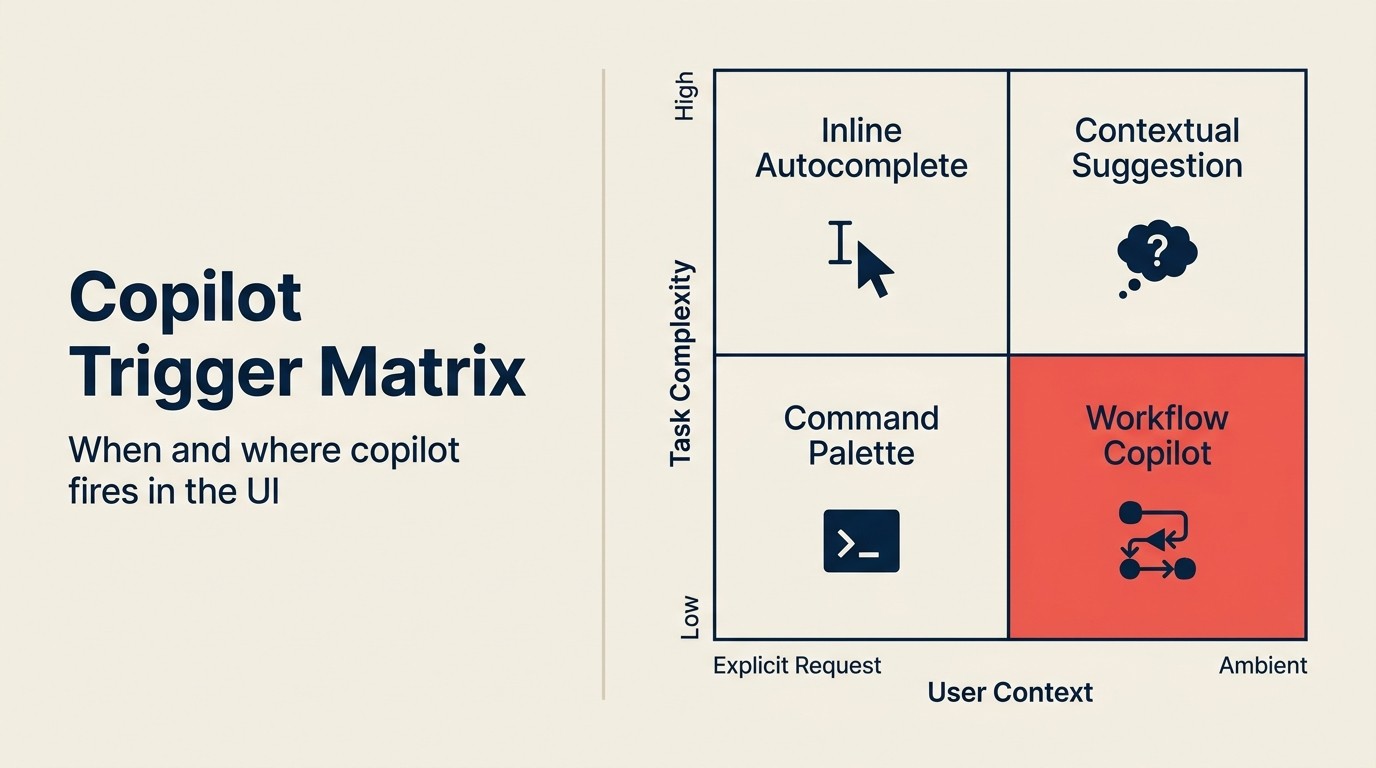
Một trong những core design decisions cho embedded copilots là khi nào AI activates. Có hai approaches: explicit và implicit.
Explicit triggers yêu cầu user invoke AI có chủ ý. Lệnh "/" trong document, keyboard shortcut trong code editor, right-click context menu option. User hỏi; AI phản hồi.
Explicit triggers an toàn hơn cho trust. Users biết chính xác khi nào AI tham gia. Không có ambient AI chạy trong background generating outputs họ không yêu cầu. Với products nơi user trust vào AI quality vẫn đang được establish, explicit triggers để users control interaction và build confidence từng bước.
Implicit triggers có AI surface suggestions liên tục dựa trên context, không cần user explicitly hỏi. GitHub Copilot là implicit: khi bạn gõ, suggestions xuất hiện. Bạn không yêu cầu suggestion; AI quyết định đây là thời điểm tốt để offer một cái.
Implicit triggers higher-value khi được trusted, vì AI đang làm việc thay mặt user liên tục, không chỉ khi user nghĩ đến việc hỏi. Nhưng implicit triggers tạo ra low-quality suggestions vào wrong moments cảm thấy intrusive và train users không trust system.
Lựa chọn phụ thuộc vào workflow và AI quality level. Với high-frequency, well-defined workflows nơi AI có strong signal về user intent, implicit triggers hoạt động. Với less structured workflows hoặc earlier-stage AI capabilities, explicit triggers an toàn hơn trong khi quality cải thiện.
Nhiều products dùng hybrid: implicit suggestions cho high-confidence moments, explicit invocation cho more complex hoặc ambiguous requests. Linear làm điều này: AI auto-suggest labels và assignees (implicit, high-confidence, low-cost to be wrong) trong khi đòi hỏi explicit invocation cho issue enrichment (lower confidence, higher-cost to be wrong).
Accuracy threshold cho embedding
Trước khi embed AI như persistent part của primary workflow surface, teams nên honestly assess liệu AI quality của họ có đạt ngưỡng mà embedding giúp ích hơn là gây hại không.
Key metric là suggestion acceptance rate: phần trăm AI suggestions nào user accept không cần modification?
Trên 70 phần trăm: copilot cảm thấy như collaborator. Users accept suggestions là hữu ích và bắt đầu expect chúng.
50 đến 70 phần trăm: copilot là tool users engage selectively. Không habitual, nhưng đủ hữu ích để giữ.
Dưới 50 phần trăm: copilot đang tạo ra nhiều noise hơn signal. Users develop pattern bỏ qua suggestions, rất khó reverse ngay cả sau khi quality cải thiện.
Chạy copilot trong limited beta trước khi broad embedding. Acceptance rate data cho bạn biết nên scale hay fix first.
Data flywheel
Embedded copilots generate một signal mà các AI features khác không có: direct user feedback trên mỗi suggestion.
Khi user accept một suggestion, đó là positive signal. Khi họ modify một suggestion trước khi accept, đó là partial signal với modification data chỉ ra họ thích gì. Khi họ reject một suggestion, đó là negative signal về specific output đó trong specific context đó.
Feedback loop này, chạy liên tục trên hàng nghìn users và hàng triệu suggestions, là training data. Product team có thể dùng nó để fine-tune model, improve retrieval context, hoặc identify specific failure modes để address. McKinsey research về AI software development mô tả continuous feedback cycle này là một trong những core differentiators của AI-embedded products so với feature-bolt-on approaches, với teams instrument feedback loops sớm compound improvements far faster.
Đây là data flywheel làm cho embedded copilots compound theo thời gian. Mỗi user interaction produce feedback. Feedback improve model. Better models produce higher acceptance rates. Higher acceptance rates drive more usage và more feedback. Cycle chạy liên tục miễn là users trong product.
Bolt-on AI tools không generate signal này ở cùng rate hoặc quality. Users mở AI panel một lần mỗi tuần và generate output hoặc dùng hoặc không, nhưng session-level data là sparse. Embedded copilots chạy trong mọi active session generate orders of magnitude nhiều feedback hơn, đó là lý do quality của chúng có thể improve nhanh hơn nhiều.
Telemetry infrastructure để capture data này cần được designed into embedding architecture từ đầu. Bạn đang capture những signals nào? Bạn đang label chúng như thế nào? Feedback loop lại vào model training hoặc fine-tuning pipeline như thế nào? Telemetry loops cho in-product AI bao quát chính xác cách instrument feedback architecture này trong thực tế.
Design patterns cho embedding
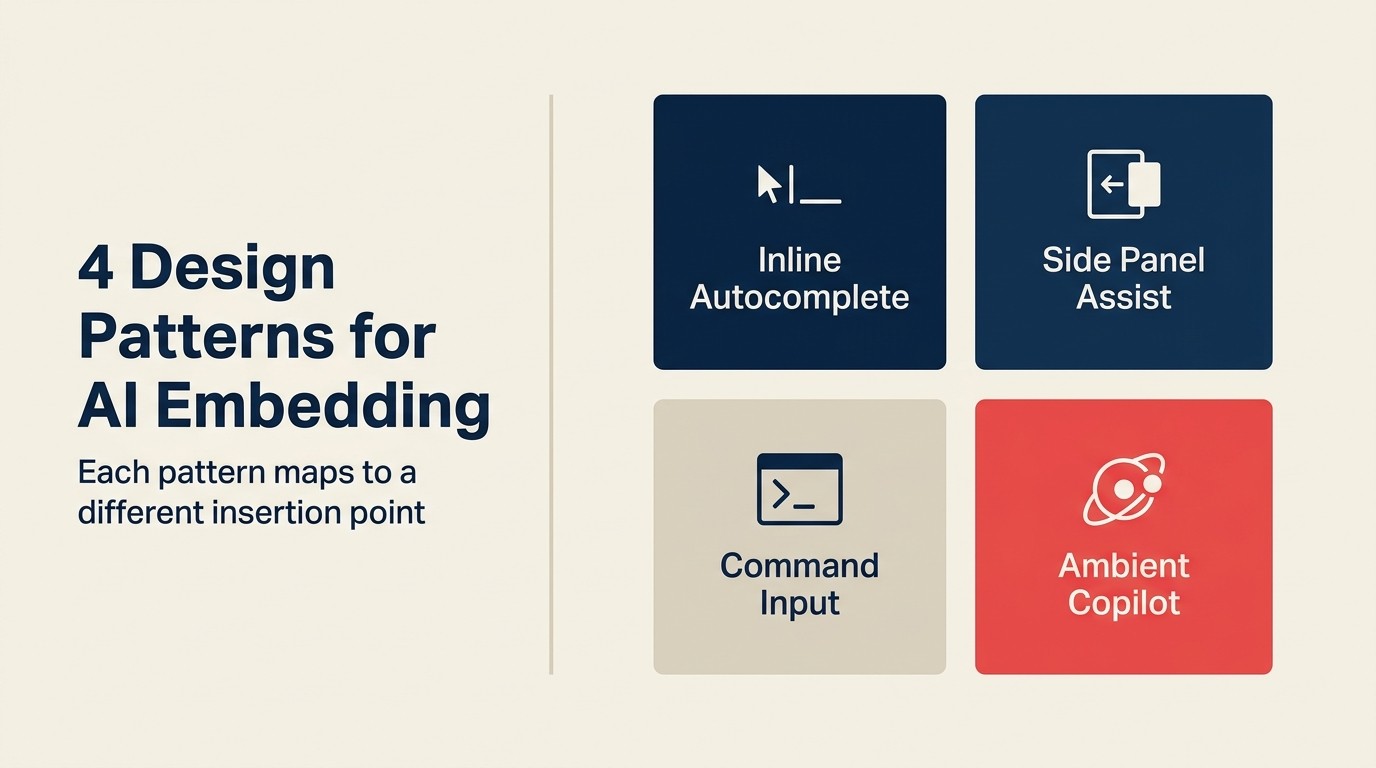
Có bốn established design patterns để embed AI copilots trong SaaS product UI:
Inline suggestion với ghost text. AI generate completion xuất hiện như gray, translucent text trước cursor. Accept bằng Tab, reject bằng cách tiếp tục gõ. Đây là GitHub Copilot pattern, optimized cho text và code composition workflows. Very low friction. Hoạt động tốt nhất khi suggestions ngắn và contextually obvious.
Slash command panel. Gõ "/" trong content surface mở command palette với AI options bên cạnh regular commands. Notion dùng điều này. User invoke AI in context không rời document, nhưng invocation là explicit. Tốt cho richer AI capabilities (generate, rewrite, summarize) nơi explicit control phù hợp.
Context-aware sidebar. Sidebar phản hồi với current selection hoặc location của user trong document với relevant AI suggestions. Sidebar là persistent nhưng unobtrusive. Hoạt động tốt cho more complex AI capabilities (document analysis, cross-reference lookup) benefit từ slightly larger UI surface.
Natural language command bar. Command palette nhận plain English instructions và route chúng đến appropriate AI capability. "Tạo issue cho login bug tôi vừa mô tả" hoặc "Tóm tắt ba meeting notes gần nhất thành action items." Cả Linear và Notion đều dùng pattern này như second-layer interaction cho more complex requests.
Pattern phù hợp phụ thuộc vào workflow frequency, output complexity, và user trust level khi launch. Nhưng chọn pattern là phần dễ hơn. Phần khó hơn là biết workflow nào cần embed.
Copilots đòi hỏi workflow thinking
Product teams build successful embedded copilots share một characteristic: họ nghĩ về workflow trước, sau đó quyết định AI fit vào như thế nào.
Câu hỏi không phải là "chúng ta nên add AI capability nào." Mà là "ở đâu trong workflow của user là friction cao nhất và thường xuyên nhất, và AI intervention nào sẽ giảm friction đó trực tiếp nhất?"
Bắt đầu với capability và tìm nơi để put nó tạo ra modal AI, sidebar AI, và features đòi hỏi context switching. Bắt đầu với workflow và hỏi nơi AI earn một chỗ trong đó tạo ra embedded copilots mà users quay lại hàng ngày.
Retention difference giữa hai approaches đó measurable và significant. AI features đòi hỏi users nhớ chúng tồn tại generate episodic usage ở best. AI embedded trong primary workflow surface generate daily habit làm cho product của bạn stickier hơn so với các alternatives.
Câu Hỏi Thường Gặp
Embedded AI copilot là gì?
Embedded AI copilot sống bên trong primary workflow surface của product, không phải trong sidebar, modal, hoặc separate help panel. Nó activates in context không yêu cầu user navigate đến nơi khác. GitHub Copilot generate code completions inline khi developer gõ là benchmark. Defining characteristic là zero friction: user không quyết định dùng AI, nó đã có ở đó khi họ làm việc.
Tại sao embedded copilots có higher retention impact hơn sidebar AI tools?
Habit formation trong software theo một quy tắc đơn giản: hành vi càng dễ lặp lại, nó càng nhanh trở thành thói quen. Embedded copilots giảm friction khi dùng AI xuống gần bằng không. Users không navigate đến AI. Họ accept hoặc ignore suggestions khi làm việc. Theo thời gian suggestions trở thành phần bình thường của workflow, và làm việc mà không có chúng bắt đầu cảm thấy chậm. Sidebar AI đòi hỏi intentional decision để engage, giữ usage episodic và ngăn habit formation.
Bạn nên target acceptance rate nào trước khi embed copilot trong primary workflow?
70% suggestion acceptance không cần modification là threshold phân biệt "cảm thấy như collaborator" với "tạo noise." Dưới 50% acceptance, users develop pattern bỏ qua suggestions rất khó reverse ngay cả sau khi quality cải thiện. Chạy limited beta và measure acceptance rate trước khi broad embedding. Nếu acceptance dưới 50%, fix AI quality, context, hoặc trigger placement trước khi expand.
Bốn design patterns cho embedded copilots là gì?
Inline suggestion với ghost text (GitHub Copilot pattern, tốt nhất cho text và code composition), slash command panel (Notion pattern, tốt nhất cho richer AI capabilities với explicit control), context-aware sidebar (tốt nhất cho complex capabilities benefit từ larger UI surface), và natural language command bar (tốt nhất cho multi-step requests). Pattern phù hợp phụ thuộc vào workflow frequency, output complexity, và user trust level khi launch.
Những gì khiến embedded copilots thất bại?
Ba failure patterns nhất quán. Modal-based AI interrupt workflow đòi hỏi 3+ context switches mỗi lần dùng. AI đòi hỏi explicit prompting cho mọi action giữ usage episodic. Suggestions nhất quán dưới quality threshold train users bỏ qua copilot, rất khó reverse ngay cả sau khi quality cải thiện. Pattern cuối cùng nguy hiểm nhất vì nó âm thầm erode trust trong product surface mà team coi là shipped và stable.
Data flywheel hoạt động như thế nào cho embedded copilots?
Mỗi user interaction với embedded copilot generate một signal: accepted suggestion, modified suggestion, rejected suggestion, manual completion không dùng suggestion. Những signals này, chạy trên hàng nghìn users và hàng triệu interactions, là training data improve model. Embedded copilots generate 50x nhiều feedback volume hơn bolt-on AI tools, đó là lý do quality của chúng compound nhanh hơn. Telemetry infrastructure để capture data này phải được designed in từ đầu.
Tìm hiểu thêm:
- Workflow Copilot Pattern: ACE Framework pattern định nghĩa embedded copilot interaction model
- AI Features là Product: Nơi Để Thêm Chúng: cách xác định right workflow surfaces cho copilot embedding
- Telemetry Loops cho In-Product AI: instrument data flywheel làm cho copilots improve theo thời gian
- AI Onboarding Flows Trong SaaS Products: cách copilot features kết nối với onboarding và activation
- SaaS AI Failure Modes: trust erosion patterns khi embedded AI nhất quán underperforms

Co-Founder, Rework.com
On this page
- Copilot Trigger Matrix
- Embedded AI copilots là gì
- Tại sao embedding quan trọng cho retention
- Các ví dụ có strong adoption
- Những gì làm copilots thất bại
- So Sánh Adoption Pattern: Embedded vs. Bolt-On AI
- Trigger design question
- Accuracy threshold cho embedding
- Data flywheel
- Design patterns cho embedding
- Copilots đòi hỏi workflow thinking