Best Recruitment Marketing Software in 2026: 15 Tools for Employer Brand and Candidate Pipeline
Turn this article into takeaways for your work.


Each assistant summarizes the article only for you and suggests best practices for your work.
Recruitment marketing software covers a wider job than an ATS: building a career site candidates actually want to visit, nurturing a private pipeline of passive talent before a role even opens, and getting job ads in front of the right people without overspending on the wrong boards. Phenom and Beamery lead this list for enterprise employer brand and talent-CRM depth. Teamtailor and Recruitee win for mid-market teams that want a great career site without an enterprise sales cycle. Gem, hireEZ, and SeekOut win for recruiters running active outbound sourcing. And Rework wins when the real gap is that hiring, HR records, and staff time live in three disconnected systems, not that the career page needs another redesign.
This guide ranks 15 recruitment marketing platforms for heads of talent acquisition, HR directors, and recruiting managers at companies from roughly 20 to several thousand employees. Evaluation criteria: what part of the recruitment-marketing job the tool actually solves (career site, CRM, sourcing, programmatic ads, or candidate engagement), pricing transparency, and fit by company size.
Key Facts
- A strong employer brand can cut recruiting costs by up to 43%, per LinkedIn Talent Solutions.
- An attractive employer brand can save an organization roughly $5,000 per hire across faster time to fill, lower cost per hire, and better retention, according to LinkedIn's own talent acquisition blog.
- Sourced candidates are nearly eight times more likely to be hired than inbound applicants, and 46% of sourced hires come from candidates already sitting in a company's CRM or ATS, per Gem's 2026 Recruiting Benchmarks Report.
- Job boards and general company marketing generate roughly 90% of all job applications but produce only about half of actual hires, according to the same Gem report.
- Cost-per-application and cost-per-hire both rose sharply in 2025 despite a softer labor market, based on an analysis of 302 million clicks and 27 million applications across nearly 1,200 employers, per Appcast's 10th Annual Recruitment Marketing Benchmark Report as covered by HR Dive.
Recruitment Marketing Tool Categories
"Recruitment marketing" isn't one product category. It's four or five overlapping ones, and the most common buying mistake on this list is shopping for the wrong one. Before the comparison tables, here's how the 15 tools below actually break down by what they solve.
| Category | What It Solves | Tools in This Guide |
|---|---|---|
| Talent Experience (TXM) suites | Career site, CRM, and AI matching in one enterprise platform | Phenom, Eightfold |
| Enterprise talent CRM | Segment and nurture passive candidate pools at scale | Beamery, Avature |
| Career site and employer brand | A public jobs page and brand storytelling that converts inbound traffic | Teamtailor, Recruitee |
| Recruitment marketing bundled with ATS | AI job ads and CRM-style pools alongside a full applicant tracking system | SmartRecruiters, iCIMS |
| Recruiter-led sourcing and outreach | Find, message, and re-engage passive candidates one campaign at a time | Gem, hireEZ, SeekOut |
| Conversational AI engagement | Chat and SMS screening and scheduling for high-volume roles | Paradox |
| Programmatic job advertising | Automated budget allocation across job boards | Appcast |
| SMB all-in-one hiring | Job distribution, AI sourcing, and screening in one affordable product | Workable |
| Unified hiring and HR platform | Career page and candidate pipeline folded into the same system as HR records | Rework |
Quick Comparison Table
| Tool | Best For | Starting Price | Key Strength | Key Limitation |
|---|---|---|---|---|
| Phenom | Enterprise employer brand and AI-matched career sites | Custom quote (no published figures) | Career site, CRM, and AI matching under one model | Lead-gated pricing, heavy implementation |
| Beamery | Enterprise talent CRM and lifecycle marketing | Custom quote (no pricing page at all) | Deepest talent-pool segmentation and nurture | No self-serve tier, built for large TA orgs |
| Eightfold | AI-driven talent intelligence and internal mobility | Custom quote (no published pricing) | Deep-learning matching across internal and external candidates | Opaque pricing, enterprise-only sales motion |
| SmartRecruiters | High-volume recruitment marketing bundled with an ATS | From $14,995/yr (Essential) | AI-generated job ads plus CRM-style talent pools | Entry floor rules out most sub-200-employee teams |
| Teamtailor | Career-site-led employer branding, inbound-heavy hiring | Custom quote (reported ~$300-400/mo entry) | Best-in-class career-site builder | Light on outbound sourcing and CRM depth |
| Rework | Career pages and hiring unified with HR records | Quote on request | Career module runs inside the same platform as HRIS and time tracking | Not a design-led branding studio or deep sourcing CRM |
| Avature | Enterprise CRM with fully custom workflows | Custom quote (reported avg. contract ~$465,000/yr) | Extreme configurability across TA, campus, and CRM use cases | High cost and implementation time |
| Gem | Recruiter-led sourcing outreach and rediscovery | From $130/mo (Startup Program, 1-10 FTE) | Deep ATS sync and rediscovery of past candidates | Startup pricing scales away fast past 30 employees |
| hireEZ | AI sourcing and multichannel outreach | $494/mo (Solo Recruiter) | AI candidate discovery across 45+ platforms | Enterprise tier is quote-only, configured per stack |
| SeekOut | Diversity-focused sourcing and talent intelligence | $149/mo annual (Recruit Core) | Deep candidate data plus DEI-focused search filters | Full-funnel tiers are custom quote only |
| Paradox | Conversational AI candidate engagement at high volume | Custom quote (no published pricing) | 24/7 chat and SMS screening and scheduling | Built for high volume, less suited to selective hiring |
| iCIMS | Enterprise recruitment marketing inside a full Talent Cloud | Custom quote (reported avg. ~$20,781/yr) | Marketing suite bundled with ATS, onboarding, analytics | Overkill and overpriced under 500 employees |
| Recruitee | Collaborative career pipeline for people-ops teams | No published price (reported, varies by source) | Clean collaborative UI, unlimited job slots | Light on CRM and nurture depth |
| Workable | SMB job distribution and AI-assisted sourcing | $299/mo (Standard, monthly) | Distribution to 200+ boards from one post | Pricing scales with headcount, not marketing depth |
| Appcast | Programmatic job-ad spend optimization | Custom quote (no published pricing) | Automated budget reallocation tuned to cost per applicant | Not a career site, CRM, or ATS on its own |
Stage Fit Matrix
| Tool | Under 50 | 50-200 | 200-1,000 | 1,000-5,000 | 5,000+ |
|---|---|---|---|---|---|
| Phenom | - | - | Possible | Strong fit | Strong fit |
| Beamery | - | - | Possible | Strong fit | Strong fit |
| Eightfold | - | - | - | Strong fit | Strong fit |
| SmartRecruiters | - | Possible | Strong fit | Strong fit | Possible |
| Teamtailor | Possible | Strong fit | Strong fit | Possible | - |
| Rework | Strong fit | Strong fit | Possible | - | - |
| Avature | - | - | Possible | Strong fit | Strong fit |
| Gem | Strong fit | Strong fit | Possible | - | - |
| hireEZ | Strong fit | Strong fit | Possible | - | - |
| SeekOut | Possible | Strong fit | Strong fit | Possible | - |
| Paradox | - | Possible | Strong fit | Strong fit | Strong fit |
| iCIMS | - | - | Possible | Strong fit | Strong fit |
| Recruitee | Strong fit | Strong fit | Possible | - | - |
| Workable | Strong fit | Strong fit | Possible | - | - |
| Appcast | - | Possible | Strong fit | Strong fit | Strong fit |
Sizing and Persona Table
| Tool | Ideal Company Size | Primary Buyer Persona |
|---|---|---|
| Phenom | 1,000-50,000+ employees | VP Talent Acquisition, Head of Talent Marketing |
| Beamery | 1,000-50,000+ employees | Global Head of Talent Acquisition, VP Sourcing |
| Eightfold | 2,000-50,000+ employees | CHRO, Head of Internal Mobility |
| SmartRecruiters | 200-5,000+ employees | VP Talent Acquisition, HRIS/SAP admin |
| Teamtailor | 50-500 employees | Head of Talent Acquisition, Employer Branding lead |
| Rework | 20-500 employees | COO, Head of People, founder-operator |
| Avature | 2,000-50,000+ employees | Global Head of TA, RPO or agency leadership |
| Gem | 20-1,000 employees | Recruiting or Sourcing Lead at a tech company |
| hireEZ | 1-200 employees | Individual recruiter, small sourcing team lead |
| SeekOut | 50-2,000 employees | Technical Recruiting Lead, DEI-focused TA leader |
| Paradox | 500-50,000+ employees (high-volume, frontline) | VP Talent Acquisition, Frontline Hiring Director |
| iCIMS | 500-10,000+ employees | CHRO, VP Talent Acquisition, TA Ops lead |
| Recruitee | 20-150 employees | HR Manager, People Ops lead |
| Workable | 10-200 employees | Founder, HR Manager, Office Manager doing hiring |
| Appcast | 200-10,000+ employees (real ad spend) | VP Talent Acquisition, Recruitment Marketing Manager |
1. Phenom: Career Sites, CRM, and AI Matching in One Talent Experience Suite
Phenom's category-defining bet is that career sites, candidate CRM, and AI matching shouldn't be three separate tools stitched together with an integration budget. The platform bundles a candidate-facing career site with AI-driven job matching, a recruiter CRM for nurturing talent pools, and an internal-mobility layer that resurfaces existing employees for open roles before a company posts externally, with Career Site, CRM, Hiring Manager, and Internal Mobility modules all bundled into one contract.
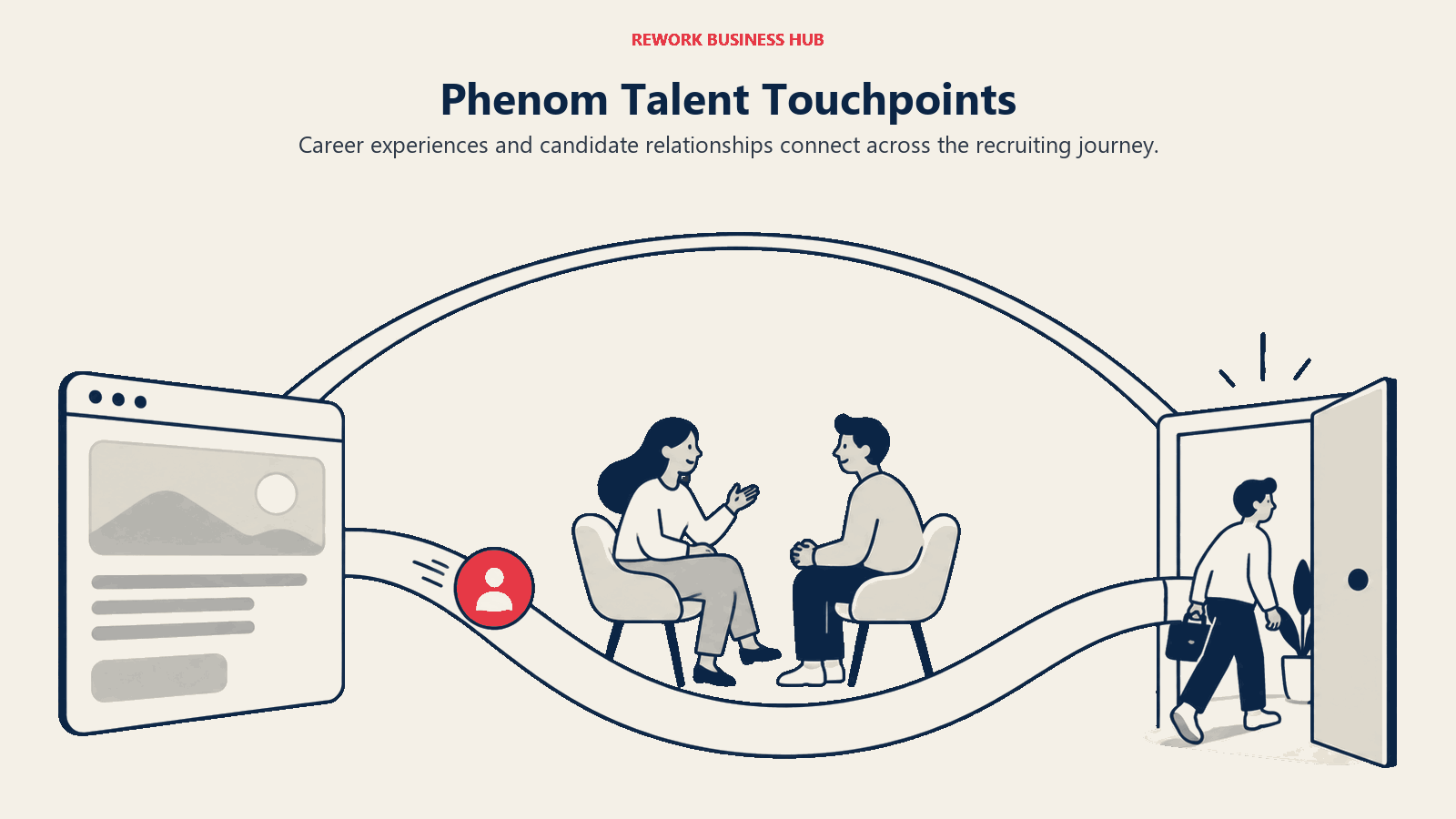
That breadth is the whole selling point for large, multi-brand employers running high volumes of both external and internal hiring: one AI model learns from every candidate interaction across career-site visits, chatbot conversations, and CRM outreach, then applies it everywhere at once.
The tradeoff is the sales motion and the price tag. Phenom's own pricing page (linked in its nav as "Phenom Pricing & RFP Requests") routes every visitor to a lead form asking to connect with "the right Phenom expert" rather than publishing a single figure, and implementation for a suite this broad typically runs months, not weeks.
| What you get | What you don't |
|---|---|
| Career site, CRM, and AI matching under one AI model | No published pricing anywhere, lead form only |
| Strong internal-mobility layer for large employers | Long implementation timeline for a suite this broad |
| Built for high-volume, multi-brand, multi-region hiring | Overkill for a single-brand team hiring under a few hundred roles a year |
| Deep automation across career site, CRM, and chat | Requires a dedicated TA-ops function to run well |
Pricing: Custom quote only. The pricing page routes to a lead form, not a rate card.
Best for: Large, multi-brand or multi-region employers running high-volume external and internal hiring who want one AI-driven platform across career site, CRM, and matching. If the modular contract is what stalls the deal, best Phenom alternatives works through the swaps module by module.
2. Beamery: The Deepest Talent CRM for Enterprise Talent Pools
Beamery's product philosophy is that a candidate relationship starts long before an application, sometimes years before, and that relationship should live in a CRM built for exactly that job rather than bolted onto an ATS as an afterthought. Its Talent Lifecycle Management platform segments talent pools by skill, source, and engagement history, then runs nurture campaigns (email, event invites, content) to keep passive candidates warm until a matching role opens.
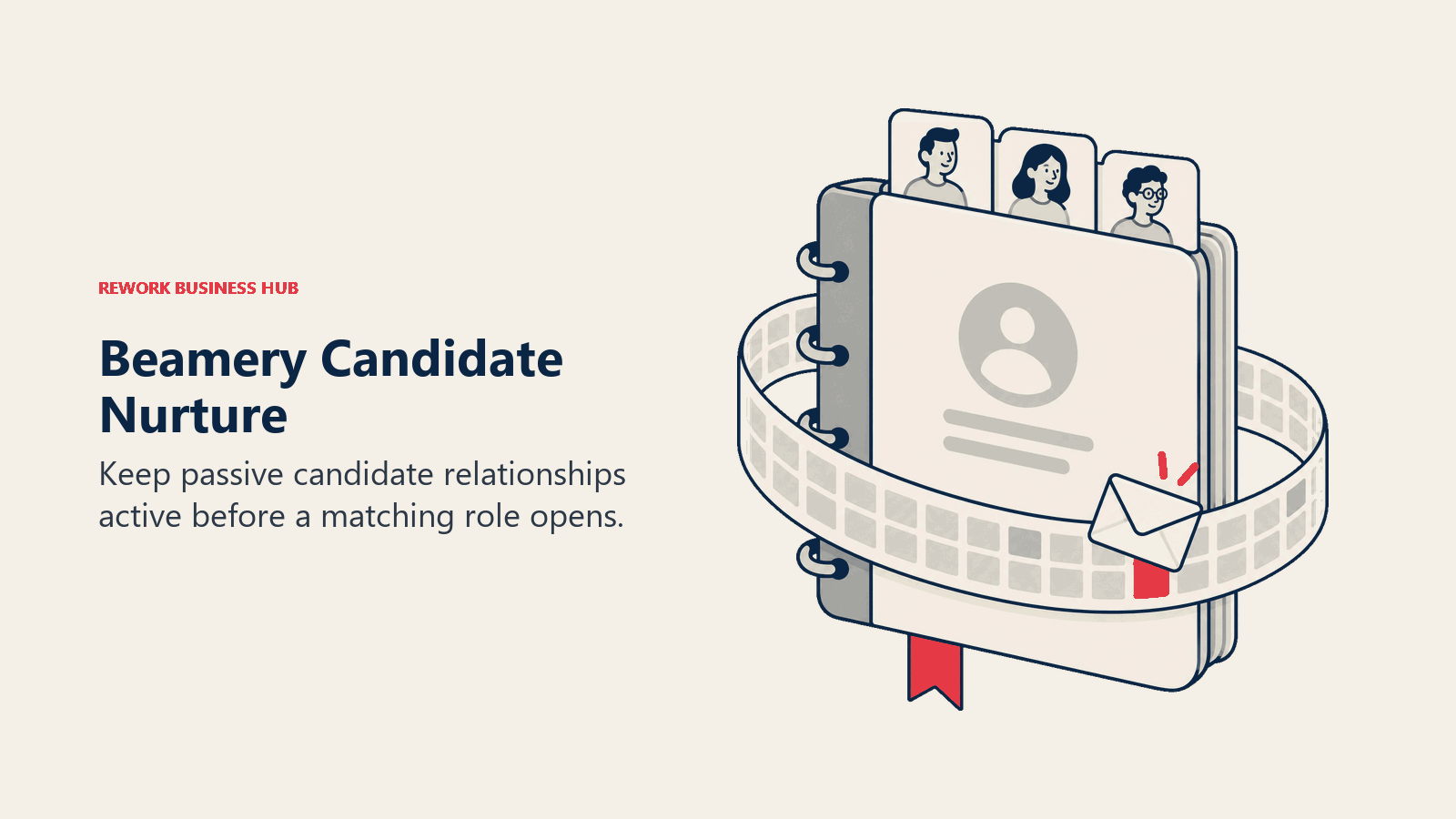
That depth shows up most clearly in enterprise sourcing teams managing tens of thousands of candidate relationships across multiple business units, where "who do we already know" is a genuinely hard question without a CRM built to answer it. Given that sourced candidates convert dramatically better than fresh inbound applicants (see the Key Facts above), a CRM this deep earns its keep fast at real volume.
Beamery publishes no pricing anywhere on its site. It has no pricing page, and there's no pricing link in nav or footer at all; every engagement starts with a demo and a sales conversation sized to your TA org.
| What you get | What you don't |
|---|---|
| Deep segmentation and nurture campaigns for passive talent pools | No pricing page at all, not even a lead form |
| Built for enterprise sourcing teams managing large candidate databases | No self-serve or SMB-sized tier |
| Strong reporting on source-to-hire and rediscovery rates | Requires real sourcing volume to justify the investment |
| Talent-pool segmentation by skill, source, and engagement | Not a career-site builder or an ATS on its own |
Pricing: Custom quote; Beamery has no public pricing page. Sales-led, sized to FTE count and module mix.
Best for: Enterprise talent acquisition teams (typically 1,000+ employees) running an active sourcing motion who need a dedicated CRM to segment and re-engage passive candidates at scale. Teams shopping away from that CRM depth should start with best Beamery alternatives.
3. Eightfold: AI Talent Intelligence Across Internal and External Candidates
Eightfold approaches this category from a different angle than most of this list: instead of building a better career site or a better CRM, it built a deep-learning talent intelligence engine that scores skill-based fit for internal employees and external candidates against the same model, then surfaces the best match for a role regardless of where that person currently sits. The internal-mobility angle is often the sleeper feature: for a large employer, filling a role from inside can be faster and cheaper than any external sourcing campaign, and Eightfold's model is built to surface that option first.
The AI-matching depth is a real differentiator for skills-based hiring specifically, since it looks past job titles and years of experience toward demonstrated capability signals. That said, Eightfold doesn't publish pricing anywhere, and there's no pricing link in its nav or footer at all: every deal starts with a demo request and gets sized to the organization.
| What you get | What you don't |
|---|---|
| Deep-learning skills matching across internal and external candidates | No pricing page or pricing link anywhere on the site |
| Strong internal-mobility discovery for large employers | Requires real data volume (many employees, many hires) to shine |
| Built for skills-based hiring over resume and title matching | Not a lightweight tool for a small or mid-market team |
| One AI model spanning career site, CRM, and workforce data | Enterprise-only sales motion, no self-serve entry |
Pricing: Custom quote; no published pricing and no pricing link in nav or footer. Request-demo only.
Best for: Large enterprises with a genuine internal-mobility program that want one AI model matching both internal employees and external candidates on skills, not titles.
4. SmartRecruiters: AI Job Ads and CRM-Style Talent Pools at Scale, Now Part of SAP
SmartRecruiters built its market position on recruitment marketing specifically, not just applicant tracking: AI-generated job ad copy, a candidate-facing experience built to feel like a consumer product rather than a form, and CRM-style talent pools that treat sourcing as an ongoing campaign instead of a one-off posting. High-volume employers get programmatic-style job ad distribution and structured onboarding bundled into the higher tiers.
The single fact every buyer needs straight heading into 2026: SAP completed its acquisition of SmartRecruiters on September 11, 2025, and is integrating it with the SuccessFactors HCM suite. SAP's own announcement confirms SmartRecruiters keeps operating as a standalone product, interoperable with SuccessFactors and other HR systems, not folded away. If you're already an SAP shop, that's a real reason to shortlist it.
The published Essential plan starts at $14,995, with no stated billing period on the page itself, which rules the product out for most companies under a couple hundred employees. Our best SmartRecruiters alternatives roundup covers where mid-market teams go when that floor is too high, and the best applicant tracking systems guide compares it on pure ATS fit.
| What you get | What you don't |
|---|---|
| AI-generated job ads and CRM-style talent pools | Essential starts at $14,995, no true SMB tier |
| High-volume, structured onboarding on higher tiers | Now owned by SAP, roadmap tied to SuccessFactors |
| 4,000+ organizations already on the platform | Higher tiers (Professional, High Volume, Complete) are quote-only |
| Recruitment-marketing features bundled with a full ATS | Overkill for selective, low-volume hiring |
Pricing: Essential from $14,995 (published, billing period unstated on the page); Professional, High Volume, and Complete are Request Pricing.
Best for: Mid-market to enterprise employers running high-volume hiring, or already on SAP or SuccessFactors, who want recruitment marketing bundled with a full ATS.
5. Teamtailor: Career Sites and Employer Branding First
Teamtailor treats the careers page as the actual product, not an afterthought bolted onto an ATS. Its built-in career-site builder lets a non-technical HR team ship a genuinely good-looking, on-brand jobs page fast, complete with employee stories and culture content, and the pipeline underneath handles scorecards and collaboration once applications land.
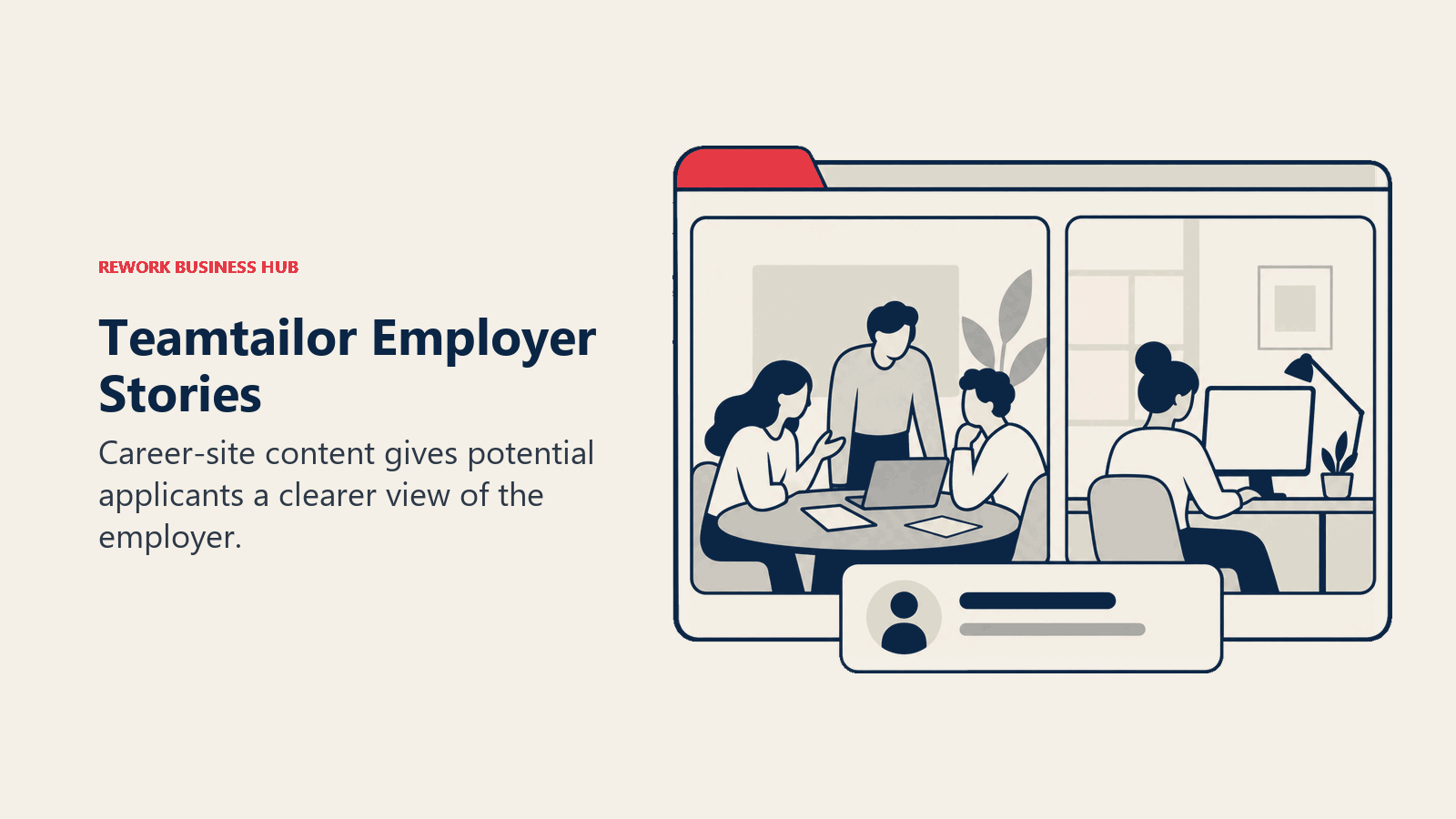
That focus makes Teamtailor the strongest pure employer-branding pick on this list for mid-market companies where candidate experience and brand perception materially affect who applies, not just how fast applications get processed. A strong employer brand isn't a soft metric either: it can cut recruiting costs by up to 43%, per LinkedIn Talent Solutions (cited above), which is exactly the lever a career-site-first tool like Teamtailor is built to pull.
The tradeoff is the flip side of the focus: Teamtailor isn't built for heavy outbound sourcing or CRM-style talent-pool nurture. Pricing is entirely quote-based (the pricing page is a form headed "Let us give you a quote," with zero plan names or figures), though third-party benchmarking from Vendr puts small-team entry around $300-400/month, climbing toward $1,500+/month for larger organizations.
| What you get | What you don't |
|---|---|
| Best-in-class career-site builder and employer-branding tools | Light on outbound sourcing and CRM depth |
| Unlimited job postings and unlimited users on every plan | No published pricing anywhere, quote-only |
| Over 250 features across the hiring workflow | Not built for high-volume or agency-style recruiting |
| Strong for brand-conscious, inbound-heavy hiring | Reported pricing climbs sharply at larger org sizes |
Pricing: Custom quote; no published figures (unlimited job postings and users on every plan, per Teamtailor's own pricing page). Reported ~$300-400/month entry, climbing to $1,500+/month at scale, per Vendr (reported).
Best for: Brand-conscious mid-market employers (roughly 50-500 employees) where career-site quality and candidate experience drive inbound applications. If the quote-only model is the sticking point, best Teamtailor alternatives lines up options that publish a rate card, and best career page software compares the career-site layer on its own terms.
6. Rework: Career Pages and Hiring Unified with HR Records
Rework's Career module is the recruitment-marketing-facing piece of a wider People product line that also includes E-Hiring (the ATS layer) and Interview (structured interview scheduling), all running inside the same platform as HRIS, time and attendance, and timesheets. The pitch isn't "another career-site builder with more features." It's that a branded jobs page, a candidate pipeline, and a new hire's HR record shouldn't need three separate logins and a CSV export between them.
For a mid-size company (roughly 20-500 employees) that has outgrown a spreadsheet-and-job-board approach to hiring but doesn't want to buy a standalone employer-branding platform, Career gives you a public jobs page tied directly to the same pipeline that Interview and E-Hiring run on, so a candidate's application, interview notes, and eventual offer all live in one data model.
Where Rework does not compete: there's no dedicated talent-CRM nurture engine like Gem's or Beamery's, no AI-matching layer like Eightfold's, and no programmatic ad-buying tools like Appcast's. If proactive candidate marketing, deep sourcing campaigns, or a highly designed employer-brand microsite is the core job, a specialist on this list will do more for you. Where Rework wins is the same place it always does: one platform instead of three, and a hire who's already an employee record on day one.
| What you get | What you don't |
|---|---|
| A branded career page tied to the same pipeline as Interview and E-Hiring | A dedicated talent-CRM nurture engine like Gem or Beamery |
| Candidate-to-employee record carryover, no re-entry into a separate HRIS | AI-driven candidate matching like Eightfold |
| HR, time & attendance, and timesheets in the same system as hiring | Programmatic job-ad budget optimization like Appcast |
| Packages, not per-user licenses, across the People line | A design-led employer-branding microsite builder |
Pricing: Quoted per organization. See rework.com/pricing for current details.
Best for: 20-500 person teams that want a career page and candidate pipeline running on the same platform as HR records, rather than a standalone recruitment marketing suite bolted onto a separate ATS.
Not ideal for: A design-led employer-branding studio, high-volume programmatic job advertising, or a team whose core need is a deep sourcing-led talent CRM.
7. Avature: Enterprise CRM Built to Be Configured, Not Boxed
Avature's positioning is unusual for this category: instead of a fixed product with fixed workflows, it's a highly configurable CRM platform that gets shaped into whatever an enterprise TA function needs, campus recruiting, executive search, contingent workforce marketplaces, or straightforward employer-brand career sites, all on the same underlying engine. Large, complex organizations (global manufacturers or multi-brand retailers running very different hiring motions across regions) are exactly who this configurability is built for.
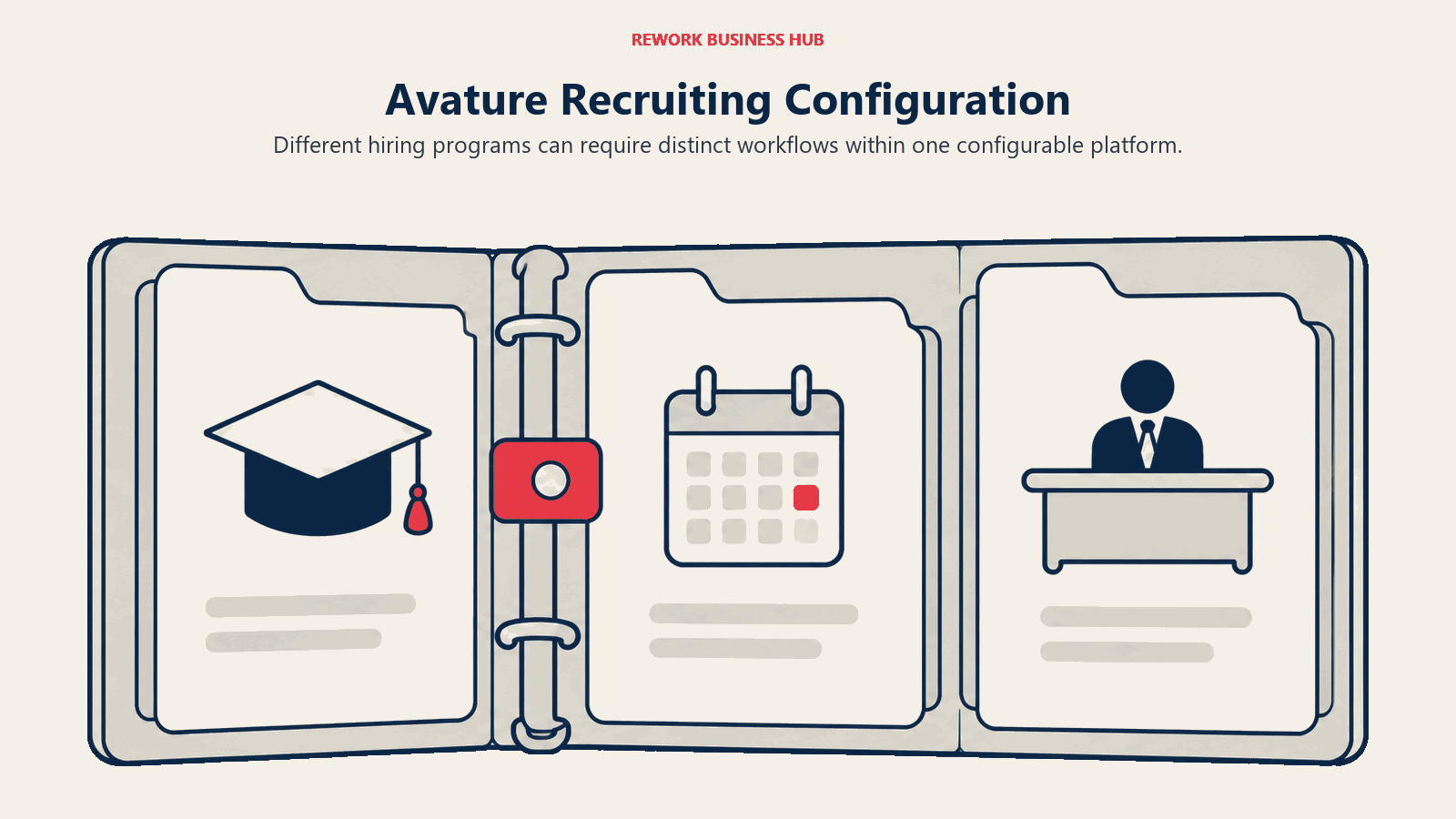
That flexibility is also the honest limitation. Avature isn't a tool you stand up in a week; implementation is a real project, typically run by a systems integrator or a dedicated Avature admin, and the platform rewards organizations with the internal capacity to configure and maintain it.
| What you get | What you don't |
|---|---|
| Fully configurable CRM across campus, contingent, and career-site use cases | No published pricing, no self-serve entry |
| Built for multi-region, multi-brand enterprise hiring | Reported average contract puts it out of reach for most mid-market teams |
| Handles hiring motions most tools treat as separate products | Real implementation project, not a quick rollout |
| Deep configurability instead of an opinionated workflow | Requires a dedicated admin or systems integrator |
Pricing: Custom quote; no pricing page exists. Reported average annual contract value ~$465,000, per Vendr (reported).
Best for: Large, complex enterprises running multiple distinct hiring motions (campus, contingent, executive, career-site) that need one configurable platform instead of several point solutions.
8. Gem: Recruiter-Led Sourcing Outreach and Pipeline Rediscovery
Gem's core insight, backed by its own 2026 Recruiting Benchmarks data, is that most of a company's best hires are already sitting somewhere in its own systems. Sourced candidates convert at nearly eight times the rate of inbound applicants, and 46% of sourced hires come from people already in a company's CRM or ATS, not net-new discoveries. Gem is built to make that rediscovery and outreach motion fast: it syncs with your existing ATS, tracks every candidate touchpoint across email and LinkedIn, and layers AI-assisted sequencing on top so a recruiter can run outreach campaigns instead of copy-pasting messages one at a time.
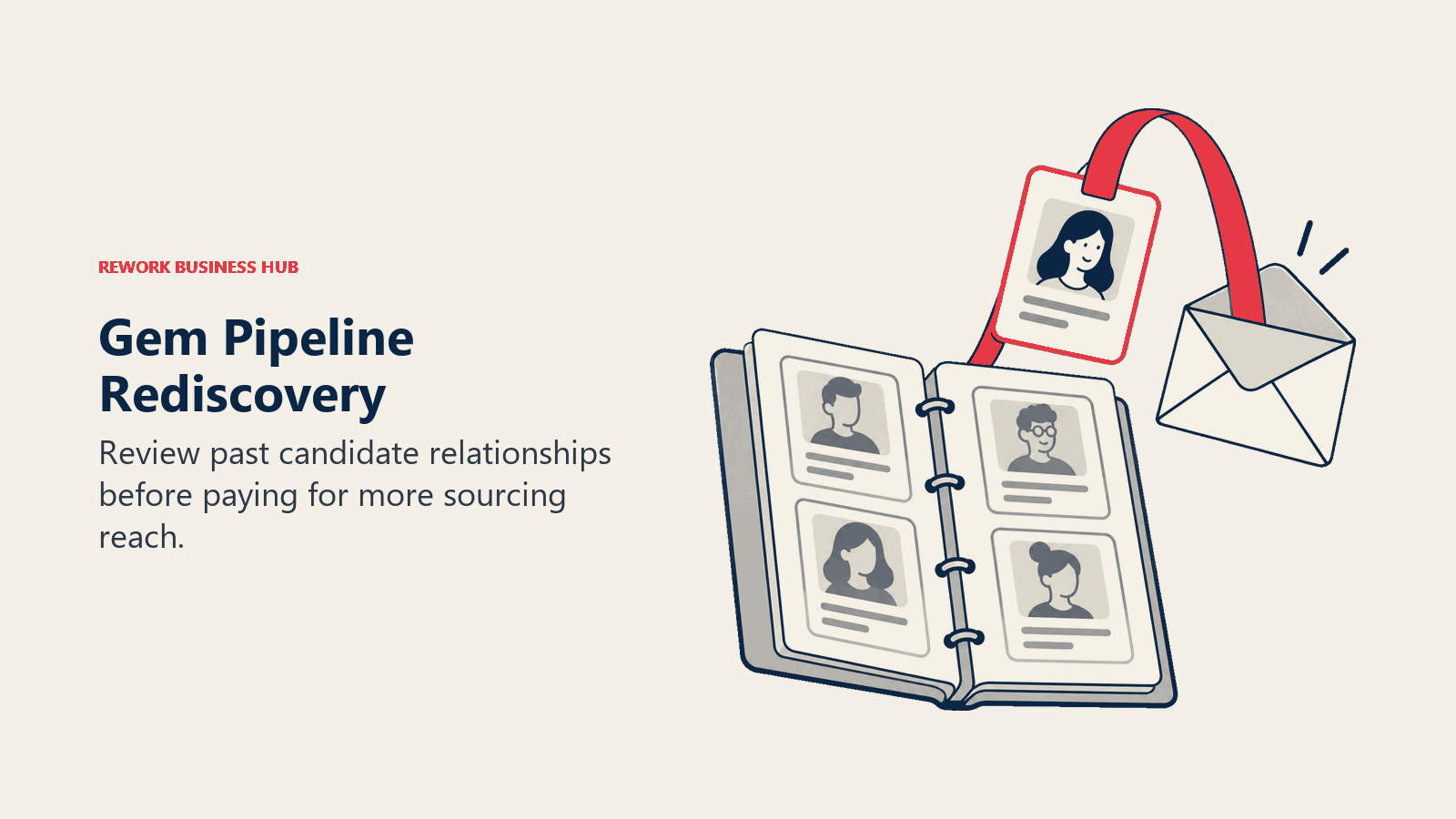
That focus on the recruiter's actual workflow, sourcing, outreach, and follow-up, rather than a full career-site or CRM replacement, is what makes Gem popular with in-house sourcing teams at fast-growing tech companies specifically. It plugs into your existing ATS rather than trying to replace it.
| What you get | What you don't |
|---|---|
| AI-assisted outreach sequencing synced to your ATS | Not a career-site builder or standalone ATS |
| Deep rediscovery of candidates already in your systems | Startup pricing scales away fast past 30 employees |
| Strong analytics on sourcing funnel and outreach performance | Enterprise pricing is custom, FTE-based |
| Built around the recruiter's actual daily workflow | Requires an existing ATS to sync into |
Pricing: Gem Startup Program (1-10 FTE): $130/month, billed yearly (list price $270, labeled "Yearly, 10% off"). Companies under 30 employees get six months free, then 50% off; 30-100 employees get reduced rates. Gem + Your ATS and Gem All-in-One are custom-priced on FTE count.
Best for: In-house sourcing teams, especially at venture-backed tech companies, that want AI-assisted outreach and rediscovery synced to an existing ATS rather than a full CRM replacement.
9. hireEZ: AI Sourcing Across 45+ Platforms
hireEZ's bet is breadth of reach: instead of building a CRM or a career site, it built an AI sourcing engine that pulls candidate data from more than 45 platforms (LinkedIn, GitHub, and niche technical communities among them), then layers outreach sequencing and search filters on top. For a recruiter whose bottleneck is finding qualified passive candidates in a specific, hard-to-search niche, that breadth of source coverage is the whole value proposition.
The product is genuinely built for the individual recruiter or small sourcing team rather than a whole TA org: the Solo Recruiter plan is priced and packaged for exactly one person running their own search-and-outreach motion, with a 7-day free trial to test sourcing quality before committing. Enterprise deployments are configured against whatever stack they're replacing rather than sold off a rate card.
| What you get | What you don't |
|---|---|
| AI sourcing across 45+ platforms and communities | Not a career-site or CRM-style nurture platform |
| Outreach sequencing and broad candidate search filters | Enterprise tier is quote-only, sized per stack |
| Solo Recruiter plan built for individual use, not a team rollout | Less useful without a genuinely hard-to-source niche |
| 7-day free trial to test sourcing quality first | Deeper integrations gated to the enterprise tier |
Pricing: Solo Recruiter $494/month (7-day free trial). Enterprise pricing is quoted, configured against the tools it replaces.
Best for: Individual recruiters or small sourcing teams hunting hard-to-find, niche technical or specialized candidates across many platforms at once.
10. SeekOut: Talent Intelligence and DEI-Focused Sourcing
SeekOut built its reputation on depth of candidate data: beyond standard resume and LinkedIn profile fields, it indexes patents, publications, GitHub contributions, and public data signals that help a recruiter judge fit for hard-to-fill technical and scientific roles. Search filters built specifically for diversity, equity, and inclusion goals, without relying on protected-class self-disclosure, are one of the more distinct features on this list.

That data depth makes SeekOut a strong fit for technical recruiting teams (engineering, life sciences, deep tech) where standard keyword search misses too many qualified candidates who don't use the exact right buzzwords in their headline. Recruit Core, the entry tier, is priced and published, with a 14-day free trial; the deeper Sourcing, Sourcing + Integration, and Full Recruiting Funnel tiers all move to custom annual billing as the platform adds outreach and funnel-management features on top of search.
| What you get | What you don't |
|---|---|
| Deep candidate data: patents, publications, GitHub, and more | Full-funnel tiers move to custom quote |
| DEI-focused search filters without relying on self-disclosure | Entry tier is search-focused, lighter on outreach |
| Strong fit for hard-to-fill technical and scientific roles | Not a career-site or employer-branding tool |
| Published entry pricing with a 14-day free trial | Less useful for high-volume, low-skill-specificity hiring |
Pricing: Recruit Core $149/month paid annually ($1,788/yr) or $179/month billed monthly (14-day free trial). Sourcing, Sourcing + Integration, and Full Recruiting Funnel tiers are custom, billed annually.
Best for: Technical recruiting teams (engineering, life sciences, deep tech) sourcing hard-to-find candidates where standard keyword search falls short, especially with active DEI goals.
11. Paradox: Conversational AI Screening and Scheduling at Volume
Paradox solves a different problem than most of this list: not "how do we build a better pipeline," but "how do we handle thousands of applicants for a few hundred frontline roles without a human reading every resume." Its conversational AI assistant, Olivia, runs candidate screening, interview scheduling, and follow-up over chat and SMS around the clock, in more than 100 languages, which is exactly the workload high-volume employers (retail, hospitality, healthcare staffing) can't handle with a traditional recruiter team.
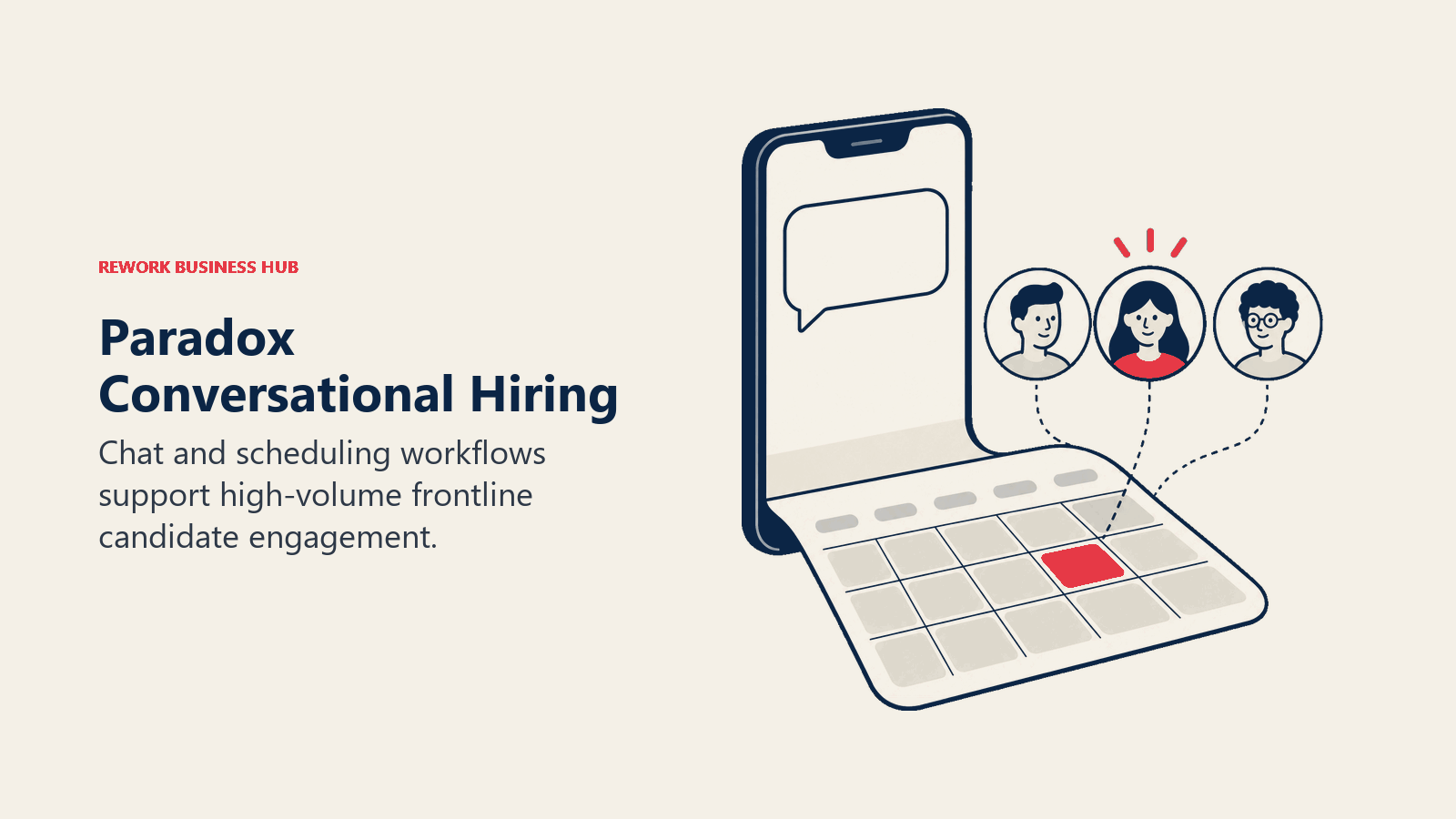
The bigger 2026 story here is ownership: Workday completed its acquisition of Paradox on October 1, 2025, folding it into a broader push into AI-powered talent acquisition alongside earlier acquisitions like HiredScore. For employers already running Workday HCM, that's a real integration signal to watch; for everyone else, Paradox still operates and sells as its own conversational AI product for now.
Paradox publishes no pricing, plan tiers, or figures anywhere on its site: every engagement starts with a demo request sized to hiring volume.
| What you get | What you don't |
|---|---|
| Around-the-clock conversational screening and scheduling over chat and SMS | No published pricing, plans, or figures anywhere |
| Built for very high-volume, frontline hiring | Less suited to selective, low-volume professional hiring |
| Now backed by Workday's HR data and AI investment | Deeper HCM integration story is still forming post-acquisition |
| Multi-language support out of the box | Not a career-site builder or talent CRM |
Pricing: Custom quote; no published pricing, tiers, or figures. Demo-request only.
Best for: High-volume, frontline employers (retail, hospitality, healthcare staffing) that need to screen and schedule thousands of applicants without a proportional recruiter headcount increase.
12. iCIMS: Recruitment Marketing Inside a Full Enterprise Talent Cloud
iCIMS bundles a recruitment-marketing layer, career-site tools, AI-sourced candidate matching, and programmatic-style job distribution inside its broader Talent Cloud, alongside the core ATS, onboarding, and workforce analytics. For a large enterprise that wants recruitment marketing and applicant tracking under one contract and one vendor relationship instead of stitching a specialist tool to a separate ATS, that bundling is the draw.
The honest reality for anyone outside genuine enterprise scale: iCIMS isn't built for you, and the marketing layer specifically only earns its cost once you're running enough hiring volume to need programmatic-style distribution in the first place. iCIMS publishes no pricing anywhere; buyer-side procurement data from Vendr puts the average annual contract around $20,781, with a range of $14,500 to $635,000 depending on module mix and company size, before implementation fees of $15,000-$25,000.
| What you get | What you don't |
|---|---|
| Recruitment marketing bundled with a full enterprise Talent Cloud | No published pricing anywhere |
| One vendor for career site, sourcing, ATS, and onboarding | Reported average contract ~$20,781/yr, ranging to $635,000 |
| Deep configurability across the full talent lifecycle | Implementation runs $15,000-$25,000 on top of licensing |
| Established enterprise support and partner ecosystem | Overkill for companies without real hiring volume |
Pricing: Custom quote; reported average annual contract ~$20,781 (range $14,500-$635,000), per Vendr (reported), plus $15,000-$25,000 implementation.
Best for: Enterprise employers with a dedicated TA operations team who want recruitment marketing bundled with ATS, onboarding, and analytics under one vendor. Our best iCIMS alternatives roundup covers where mid-market teams go instead.
13. Recruitee: Collaborative Career Pipeline for People-Ops Teams
Recruitee, now operating under parent brand Tellent, focuses on collaboration: hiring managers, interviewers, and recruiters work from one visual pipeline with structured scorecards, and unlimited job slots on every active plan remove one of the more common budget surprises on cheaper SMB tools. It isn't trying to be Beamery or Gem; it's trying to be the tool a people-ops-led team (where HR, not a dedicated recruiting function, owns hiring) can roll out without heavy training.
Recruitee stopped publishing prices on its Start, Advance, and Optimize plans. The plan FAQ confirms a minimum one-year commitment (with an option to pay monthly) and a 20% discount for paying annually. Third-party reports on Start-tier pricing vary meaningfully by source, from roughly €301/month up to $292/month, so treat any figure as reported, not vendor-confirmed, and get a live quote before budgeting.
| What you get | What you don't |
|---|---|
| Collaborative pipeline with structured scorecards | No published pricing anywhere, quote required |
| Unlimited job slots on every active plan | Minimum one-year commitment |
| Clean UI, fast rollout without heavy training | Sourcing and CRM depth well below Gem or Beamery |
| Strong fit for European and people-ops-led teams | Third-party pricing reports conflict meaningfully |
Pricing: No published price (Start, Advance, Optimize plans); one-year minimum commitment; third-party reports vary widely (roughly €301 to $292/month for Start), so treat as unconfirmed.
Best for: People-ops-led teams (roughly 20-150 employees) that want a collaborative, structured pipeline without heavy admin overhead. See best Recruitee alternatives for where teams go when the quote lands high.
14. Workable: AI Sourcing and Job Ad Distribution for SMBs
Workable's recruitment-marketing angle is distribution and AI sourcing bundled into a single SMB-friendly product: post once, and the job automatically distributes to 200+ job boards, while an AI sourcing agent proactively finds and pre-screens passive candidates against the role's requirements, credited on a pay-per-action basis on top of the plan price. For a founder or HR generalist without a dedicated sourcer, that automation genuinely replaces a meaningful chunk of manual outbound work.
Pricing scales by employee headcount band rather than recruiter seat, which keeps it simple for a small, growing team, and every tier carries a published, self-serve rate with a 20% discount for paying annually.
| What you get | What you don't |
|---|---|
| Job distribution to 200+ boards from a single post | Pricing scales with employee headcount, not marketing depth |
| AI sourcing agent finds and pre-screens passive candidates | AI credits run out and cost extra past the included allotment |
| Published, self-serve pricing with a 15-day free trial | Less workflow customization than Greenhouse or Ashby |
| Fast setup, minimal admin overhead | Not a talent CRM or career-site design tool |
Pricing: Standard $299/month or $3,588/year; Premier $599/month or $7,188/year; Enterprise $719/month or $8,628/year (1-20 employee band; pricing bands scale with headcount, 20% annual discount).
Best for: SMBs (roughly 10-200 employees) that want job distribution and AI sourcing bundled into one product without a dedicated recruiter or sourcing function. See best Workable alternatives for where teams go next.
15. Appcast: Programmatic Job Ad Spend, Optimized Automatically
Appcast solves a narrower, specific problem than everything else on this list: where should your job-ad budget actually go, across dozens of job boards and channels, to produce the most applications and hires per dollar. Its programmatic engine reallocates spend in near real time based on performance data (which board, which role, which region is converting), rather than a recruiter manually managing budget across a dozen separate job-board accounts.
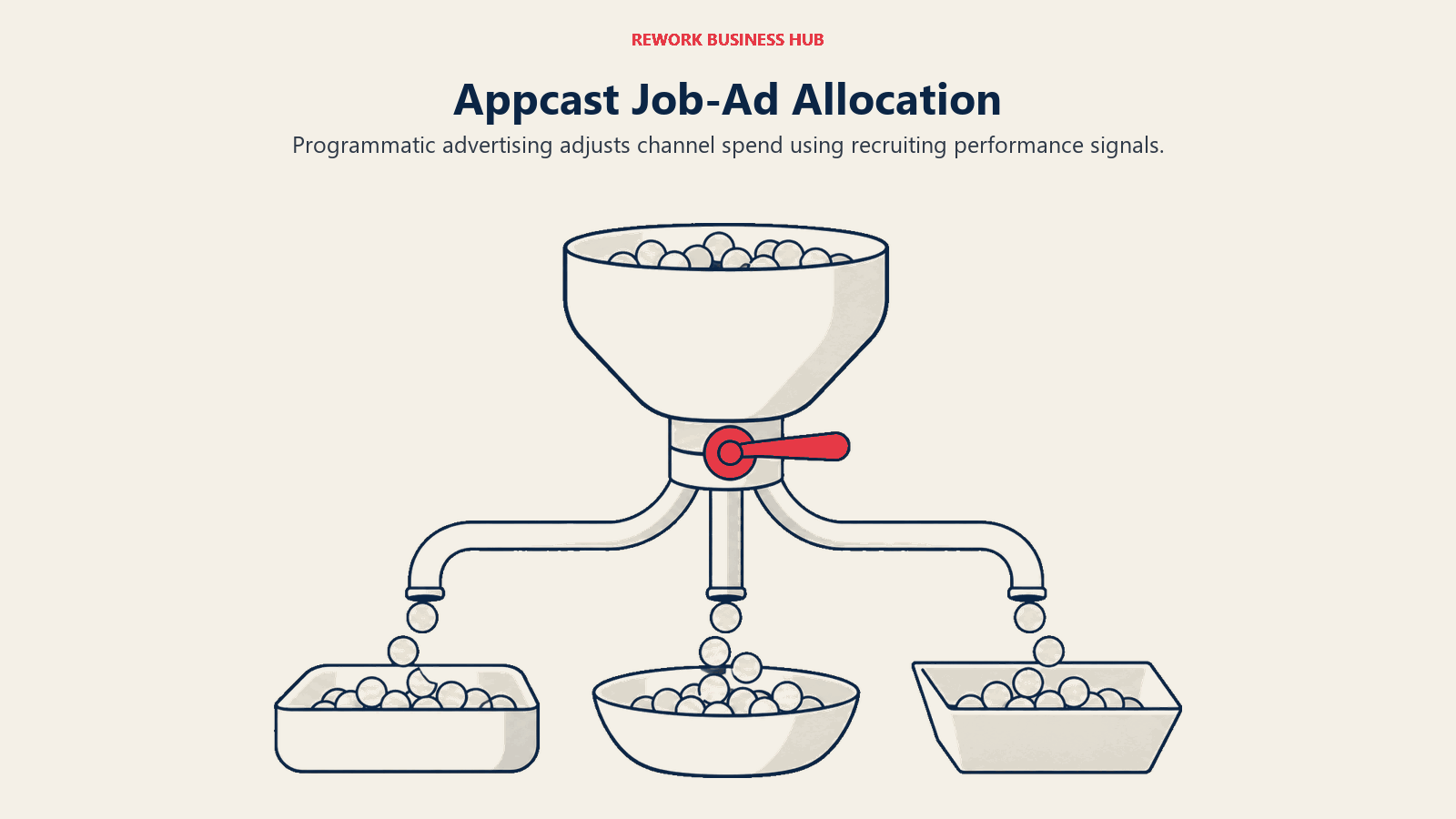
That focus is exactly why Appcast isn't a career-site builder, a CRM, or an ATS: it's a media-buying layer that sits on top of whatever career site and ATS you already run, and it earns its keep at real advertising volume specifically. Its own annual Recruitment Marketing Benchmark Report (10th edition, published February 2026, drawing on 302 million clicks and 27 million applications across nearly 1,200 employers) is one of the more cited data sources in this category, and the 2026 edition found that cost-per-application and cost-per-hire both rose sharply in 2025 even as the broader labor market softened.
Appcast publishes no pricing anywhere: there's no pricing page and no pricing link in its nav or footer, and every engagement starts with a demo request sized to ad spend volume.
| What you get | What you don't |
|---|---|
| Automated, real-time reallocation of job-ad budget | No published pricing anywhere, demo-request only |
| Sits on top of your existing career site and ATS | Not a career site, CRM, or ATS on its own |
| Backed by one of the largest annual benchmark datasets in the category | Only valuable at real job-ad spend volume |
| Performance data down to board, role, and region | Doesn't help with employer brand or candidate nurture |
Pricing: Custom quote; no published pricing, no pricing link in nav or footer. Demo-request only.
Best for: Employers with meaningful job-ad spend across multiple boards who want that budget automatically optimized rather than manually managed channel by channel.
How to Choose: Decision Framework
Most recruitment-marketing shortlists start with "we need a better career site" and end up buying a $400,000 enterprise CRM, or the reverse: a team with a genuine sourcing bottleneck buys a career-site tool and wonders why applications didn't improve. Before comparing screens, answer three questions.
- What's actually broken: the front door, or the pipeline behind it? If candidates aren't applying, the problem is usually the career site and employer brand (Teamtailor, Recruitee, Phenom). If applications are fine but the pipeline of passive, high-fit candidates is thin, the problem is sourcing and CRM depth (Gem, hireEZ, SeekOut, Beamery). Those are different budgets and different tools, and buying the wrong one is the single most common mistake on this list.
- How much hiring volume are you actually running? Programmatic job-ad tools like Appcast, and enterprise TXM suites like Phenom or Eightfold, only earn their cost once volume is real, hundreds or thousands of open roles a year, not a dozen. Below that, a published-pricing SMB tool like Teamtailor, Recruitee, or Workable does the job for a fraction of the spend.
- Where does a hire land the day they accept? If your career site, ATS, and HR system are three separate logins, someone is manually re-entering the same person three times. That's exactly the gap Rework's Career module closes by running inside the same platform as HRIS, time and attendance, and timesheets.
There's a fourth question worth adding given where sourcing has shifted: how much of your best pipeline is already inside your own systems? Sourced candidates convert at nearly eight times the rate of inbound applicants, and 46% of sourced hires come from people already sitting in a company's CRM or ATS, not new discoveries (per Gem's 2026 data, cited above). If your team has years of past applicants and outreach sitting cold in an ATS nobody re-mines, a rediscovery-focused tool like Gem earns its keep before you spend another dollar on job-ad distribution.
For the ATS side of this decision, not just the marketing layer, see how to choose recruiting software and best applicant tracking systems. If your team is hiring occasionally without a dedicated recruiter, best recruiting software for small business narrows the list considerably.
| If you need... | Pick... | Why |
|---|---|---|
| Enterprise career site, CRM, and AI matching in one | Phenom | Deepest Talent Experience suite, one AI model across every surface |
| Enterprise talent CRM without an ATS attached | Beamery | Strongest segmentation and nurture for large candidate databases |
| AI-driven internal and external talent matching | Eightfold | Deep-learning matching engine built for skills-based hiring |
| High-volume recruitment marketing bundled with an ATS | SmartRecruiters | AI job ads plus CRM-style pools alongside a full ATS |
| Best-in-class career site and employer brand | Teamtailor | Career-site builder is the actual product |
| Hiring folded into the same platform as HR records | Rework | Career module lives inside the People platform, not a separate login |
| Maximum configurability for a complex enterprise TA org | Avature | Fully custom CRM workflows across campus, contingent, and career-site |
| Recruiter-led sourcing outreach with ATS sync | Gem | Rediscovery and outreach sequencing built around the recruiter's workflow |
| AI sourcing across many niche channels | hireEZ | Candidate discovery across 45+ platforms and communities |
| DEI-focused sourcing and deep talent data | SeekOut | Search filters and data depth built for hard-to-fill technical roles |
| 24/7 candidate screening and scheduling at high volume | Paradox | Conversational AI, now backed by Workday |
| Recruitment marketing inside a full enterprise Talent Cloud | iCIMS | Bundled suite spanning marketing, ATS, onboarding, analytics |
| A collaborative career pipeline for a people-ops team | Recruitee | Clean UI, unlimited job slots, low admin overhead |
| SMB job distribution and AI sourcing in one product | Workable | Distribution to 200+ boards, published self-serve pricing |
| Smarter spend across job boards, not a new ATS | Appcast | Programmatic budget optimization layered on your existing stack |
Recruitment Marketing Buying Mistakes to Avoid
Most recruitment-marketing budgets don't fail because the software was bad. They fail because the team bought the wrong category of tool for the actual problem.

| Mistake | What It Looks Like | What to Do Instead |
|---|---|---|
| Buying a CRM to fix a career-site problem | Beamery gets purchased while the careers page itself still looks abandoned | Diagnose whether the drop-off happens before or after the application starts |
| Paying enterprise TXM prices for occasional hiring | A 150-person company signs a Phenom or Eightfold contract "to grow into it" | Match spend to current annual hiring volume, not a five-year plan |
| Treating employer brand as a one-time career-site redesign | A new career site ships, then gets ignored for two years | Budget for ongoing content, not just a launch project |
| Buying programmatic ad tech before the career site converts | Appcast drives more clicks to a career site candidates bounce from | Fix the landing experience before optimizing the ad spend that feeds it |
| Ignoring headcount vs FTE-based pricing traps | A fast-growing team gets a Workable or SmartRecruiters quote that jumps a tier overnight | Ask every vendor directly what triggers the next pricing band |
| Skipping the rediscovery check before buying new sourcing tools | A team buys hireEZ or SeekOut without first mining its own ATS for cold candidates | Audit what's already sitting in your CRM or ATS before paying for new sourcing reach |
Frequently Asked Questions about Recruitment Marketing Software
What is recruitment marketing software, and how is it different from an ATS?
An ATS tracks candidates through a hiring pipeline once they've applied. Recruitment marketing software covers everything upstream of that: the career site candidates land on, the talent CRM that nurtures passive candidates before a role opens, and the job-ad spend that gets a posting in front of the right people. Most companies eventually need both, and several tools on this list (SmartRecruiters, iCIMS, Workable) bundle recruitment marketing features directly into a full ATS.
What's the best recruitment marketing software for a small or mid-market team?
Teamtailor and Recruitee both give a mid-market team a strong career site and collaborative pipeline without an enterprise sales cycle, and Workable bundles AI sourcing and job-board distribution into one SMB-friendly, published price. For a company that also wants hiring folded into the same platform as HR records, Rework's Career module is worth a look too.
Is Beamery or Phenom better for enterprise employer branding?
Both fit large employers, but they lean in different directions. Beamery is CRM-first, built to segment and nurture huge candidate databases across a sourcing-heavy TA org. Phenom is broader, bundling a career site, CRM, and AI matching under one model, including strong internal-mobility discovery. Which one wins depends on whether your bigger gap is sourcing depth or a unified candidate experience across career site and chat.
What is programmatic job advertising, and do I need a tool like Appcast?
Programmatic job advertising automatically reallocates job-ad budget across job boards in near real time based on which board, role, and region is actually converting into applications and hires, instead of a recruiter manually managing a dozen separate job-board accounts. It only pays off at real advertising volume; a company running a handful of open roles a year doesn't need it yet.
Does Rework offer recruitment marketing tools, or just an ATS?
Rework's Career module gives you a branded career page tied to the same candidate pipeline as its E-Hiring and Interview modules, all running inside the same People platform as HRIS, time and attendance, and timesheets. It isn't a dedicated talent-CRM or programmatic ad-buying tool; teams with a deep sourcing or employer-brand-microsite need will find more depth in a specialist like Beamery, Phenom, or Teamtailor.
Is Paradox still an independent company after Workday acquired it?
Workday completed its acquisition of Paradox on October 1, 2025, and continues integrating it into a broader AI-powered talent acquisition push. Paradox's conversational AI product still operates and sells on its own for now, but expect deeper Workday HCM integration over time, especially for employers already running Workday.
Do I need both a talent CRM and an ATS?
If you run any active sourcing motion (proactively finding and nurturing passive candidates before a role opens), yes: an ATS tracks applicants after they apply, but it isn't built to segment and re-engage a database of thousands of past candidates and outreach threads. Nearly half of sourced hires come from candidates already sitting in a company's CRM or ATS, which is exactly the rediscovery job a tool like Gem, Beamery, or hireEZ is built to do.
What to Do Next
Narrow this to two tools before booking a demo: one that matches the actual problem you diagnosed (career site, CRM, sourcing, or programmatic spend), and one adjacent option as a stretch comparison. Pull your last 90 days of hiring data first, applications per role, source of your last 10 hires, cost per job-ad channel, so you're evaluating against your real numbers instead of a vendor's demo environment.
If the honest diagnosis is that hiring, HR records, and staff time live in three disconnected systems rather than any single recruitment-marketing gap, start with Rework and see what the Career module looks like unified with the rest of the People platform.

On this page
- Key Facts
- Recruitment Marketing Tool Categories
- Quick Comparison Table
- Stage Fit Matrix
- Sizing and Persona Table
- 1. Phenom: Career Sites, CRM, and AI Matching in One Talent Experience Suite
- 2. Beamery: The Deepest Talent CRM for Enterprise Talent Pools
- 3. Eightfold: AI Talent Intelligence Across Internal and External Candidates
- 4. SmartRecruiters: AI Job Ads and CRM-Style Talent Pools at Scale, Now Part of SAP
- 5. Teamtailor: Career Sites and Employer Branding First
- 6. Rework: Career Pages and Hiring Unified with HR Records
- 7. Avature: Enterprise CRM Built to Be Configured, Not Boxed
- 8. Gem: Recruiter-Led Sourcing Outreach and Pipeline Rediscovery
- 9. hireEZ: AI Sourcing Across 45+ Platforms
- 10. SeekOut: Talent Intelligence and DEI-Focused Sourcing
- 11. Paradox: Conversational AI Screening and Scheduling at Volume
- 12. iCIMS: Recruitment Marketing Inside a Full Enterprise Talent Cloud
- 13. Recruitee: Collaborative Career Pipeline for People-Ops Teams
- 14. Workable: AI Sourcing and Job Ad Distribution for SMBs
- 15. Appcast: Programmatic Job Ad Spend, Optimized Automatically
- How to Choose: Decision Framework
- Recruitment Marketing Buying Mistakes to Avoid
- What to Do Next