Best Sortly Alternatives in 2026: 12 Asset and Inventory Trackers
Turn this article into takeaways for your work.


Each assistant summarizes the article only for you and suggests best practices for your work.
Sortly is the easiest inventory app on the market to open and start using, and that ease of use is exactly why it's grown two completely different kinds of customers who are about to hate each other's recommendations. If you're tracking tools, IT hardware, AV kit, medical equipment or job-site gear that never leaves the building for a customer, you need check-in and check-out with a named custodian, maintenance schedules, depreciation and an audit trail an auditor would accept. Sortly gives you a photo, a folder and a low-stock alert, and it outgrows fast once someone asks "who has the drill right now" or "when was this last serviced."
If instead you started in Sortly because it was the fastest way to photograph and count physical stock, and you've since started actually selling that stock, you hit a different wall entirely: Sortly has no purchase orders, no sales orders, no invoicing and no way to turn a count into a transaction. That's not a missing feature you can work around. It's a different category of software. This guide keeps those two audiences separate the whole way through: EZOfficeInventory, Asset Panda, Snipe-IT, Cheqroom and itemit answer the asset-tracking half; Zoho Inventory, inFlow, Cin7 Core, Fishbowl, Odoo, Megaventory and Rework (at #6) answer the sales-stock half. Pick from the wrong half and you'll be back here in six months, just as frustrated as you are with Sortly today.
Which Sortly Buyer Are You
| If you mostly say... | You're the... | Start with |
|---|---|---|
| "Who has the drill/laptop/camera right now?" | Asset tracker (Buyer A) | EZOfficeInventory, Asset Panda, Snipe-IT, Cheqroom, itemit |
| "When does this need servicing or recalibrating?" | Asset tracker (Buyer A) | EZOfficeInventory, Cheqroom, itemit |
| "I need a paper trail for the auditor" | Asset tracker (Buyer A) | EZOfficeInventory, Asset Panda, itemit |
| "I just took an order and can't invoice it" | Sales stock seller (Buyer B) | Zoho Inventory, inFlow, Rework |
| "I need purchase orders and reorder points" | Sales stock seller (Buyer B) | Zoho Inventory, inFlow, Cin7 Core, Megaventory |
| "Stock, orders and my customer record should be one thing" | Sales stock seller (Buyer B) | Rework |
| "I actually build or assemble what I sell" | Sales stock seller, manufacturing edge case | Fishbowl, Odoo, or see Best Katana Alternatives |
Key Facts
- Equipment theft and loss costs mid-size operations (roughly $250M to $1B in revenue) an average of $13.2 million a year without asset tracking, and about a quarter of new equipment budgets goes toward replacing stolen or lost gear. (Samsara, 2026 State of Connected Operations Asset Theft and Loss Report)
- 46% of small and midsize enterprises still track physical assets on spreadsheets or paper, the same survey found. (Samsara / Wakefield Research)
- At more than a quarter of organizations without real-time asset visibility, staff spend over 10 hours a week hunting for missing equipment, roughly a full-time employee's year of searching. (Samsara / Wakefield Research)
- Inventory distortion, meaning stockouts plus overstock, cost retailers $1.77 trillion globally in 2025, about 6.5% of global retail sales. (IHL Group, Fixing Inventory Distortion)
- US e-commerce sales rose 9.8% year over year in Q1 2026 while total retail sales rose only 3.9%, so order counts are growing roughly two and a half times faster than revenue for anyone tracking stock to sell it. (U.S. Census Bureau, Quarterly Retail E-Commerce Sales)
Quick Comparison Table
| Tool | Which Sortly Buyer | Best For | Starting Price | Key Strength | Key Limitation |
|---|---|---|---|---|---|
| EZOfficeInventory (EZO) | Asset tracker | Multi-location asset-intensive orgs (construction, field service, IT) | No published price, quoted per organization | Full custody chain plus preventive maintenance and depreciation | No published starting figure to compare from |
| Asset Panda | Asset tracker | Regulated, highly configurable environments (government, healthcare, education) | No published price, quoted after a demo | No-code custom fields and workflows | Zero pricing transparency, not even a "from" figure |
| Snipe-IT | Asset tracker | IT teams hitting Sortly's item cap who want no per-seat ceiling | Free forever (self-hosted); $39.99/mo hosted | Unlimited users and unlimited assets on every hosted tier | Self-hosting needs someone to run a server |
| Cheqroom | Asset tracker | Media, production, universities and AV departments that reserve gear ahead | $184 per admin/mo billed annually | Unlimited regular users, priced only on admin seats | Cost scales fast if many people need admin rights |
| inFlow (Inventory and Stockroom) | Sales stock seller | Stockroom teams needing scan-in/scan-out tied to real orders | $99/mo billed annually (Stockroom) | The closest structural match to what Sortly buyers actually do daily | No free plan of any kind |
| Rework | Sales stock seller | Stock, orders, invoices and the customer record on one platform | Quote on request | One record across CRM, orders, inventory and invoicing | Not built for asset check-out or maintenance scheduling |
| Zoho Inventory | Sales stock seller | Cost-sensitive sellers who want a real free tier to start | Free; paid from $29/mo billed annually | Genuinely usable free plan, then cheap per-order scaling | Free tier caps at 50 orders a month |
| Odoo Inventory | Sales stock seller | Teams that want stock control free forever as one app | Free forever, unlimited users, as your first app | Zero cost until you add a second Odoo app | Per-user pricing the moment you add Sales or Accounting |
| itemit | Asset tracker | UK and Europe teams wanting built-in depreciation and RFID | £33.25/mo (£399/yr) | Automated depreciation plus QR, GPS and RFID in one plan | Priced in GBP, not USD |
| Megaventory | Sales stock seller | Small B2B distributors wanting one plan, no tier ladder | $135/mo, $121.50/mo billed annually | One plan with every module and integration included | Extra users cost $45/mo each |
| Fishbowl Inventory | Sales stock seller | QuickBooks-centric warehouses and manufacturers | $229/mo billed annually | Real manufacturing tier and deep QuickBooks ties | Manufacturing is not included on the Inventory tiers |
| Cin7 Core | Sales stock seller | Multi-channel sellers who've outgrown an SMB order cap | $349/mo | Deepest multi-channel and 3PL coverage at this price | Billing cycle (monthly vs annual) isn't stated on the page |
What Sortly Gets Right, and Why It Splits Into Two Different Walls
Sortly earns its reputation as the easiest inventory app to start with. You photograph an item, drop it in a folder, add a custom field or two, and you're tracking stock in an afternoon with zero training. For a school's AV cart, a contractor's tool crib or a small shop counting parts, that's genuinely the right amount of software, and the mobile app is built for people who have never used inventory software before.
The free plan is where the honest reading matters. It covers 1 user, 100 unique items, 2 active jobs and 1 custom field, with scanning limited to in-app only and no label creation at all. That's a real, usable allowance for one person cataloguing a small personal or single-location stock, but it is not a team plan and it was never meant to be one. Any comparison that implies Sortly's free tier works for a crew of three is describing a different product.
| Plan | Promotional | Regular | Seats | Unique items | Active jobs | Custom fields |
|---|---|---|---|---|---|---|
| Free | $0 | $0 | 1 | 100 | 2 | 1 |
| Advanced | $24/mo (50% off first year) | $49/mo | 2 | 500 | 5 | 5 |
| Ultra | $74/mo (50% off first year) | $149/mo | 5 | 2,000 | 10 | 10 |
| Premium | $149/mo (50% off first year) | $299/mo | 8 | 5,000 | 15 | 20 |
| Enterprise | Custom quote | Custom quote | 12+ | 10,000+ | Unlimited | Unlimited |
Advanced and up unlock QR label creation; Ultra and up add barcode label creation on top of QR. Every promotional price above applies for the first year only, so budget for the regular figure at renewal, not the number you signed up at.
Why Buyer A leaves: there's no custodianship model. Sortly tracks where an item is and how many you have. It does not track who currently has it, when they're due to return it, or what maintenance it needs before it goes back out. There's no check-in/check-out workflow with a signature or timestamp, no preventive maintenance schedule, no depreciation calculation and no audit trail built for a compliance review. That's precisely the gap Samsara and Wakefield Research measured in a 2026 survey of 1,500 financial executives: 71% of operations without dedicated asset tracking report equipment theft every quarter, and the average time to locate a missing asset once it's actually gone missing runs about 25 days. A photo and a folder count don't answer "who had it last."
Why Buyer B leaves: there's no sales order, ever. Sortly can tell you that you have 40 units of something. It cannot turn that 40 into an invoice, a packing slip or a reorder trigger tied to a supplier. There is no purchasing module, no customer record and no accounting sync. A seller who starts fulfilling real orders out of Sortly ends up re-keying every sale into a separate invoicing tool by hand, which is the exact double-entry problem inventory software is supposed to remove. Given that US e-commerce order volume grew 9.8% year over year in Q1 2026 against 3.9% growth in total retail sales (U.S. Census Bureau), that gap shows up fast for anyone actually selling.
For the wider category, Best Inventory Management Software in 2026 covers both halves at once, and How to Choose Inventory Management Software walks through the requirements-gathering step before you shortlist anything.
1. EZOfficeInventory (EZO): Full Custody Chain for Multi-Location Fleets
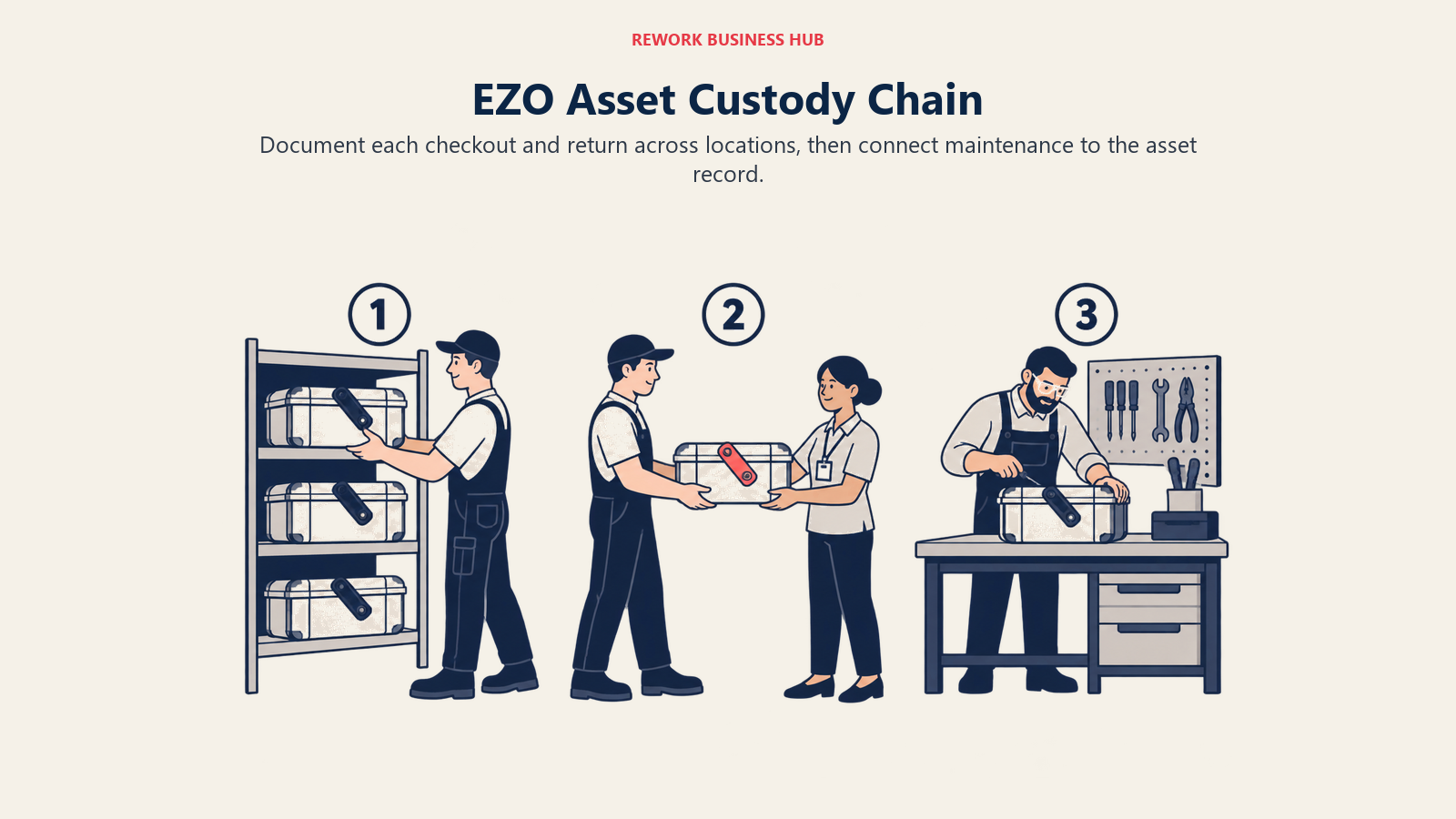
EZOfficeInventory is an enterprise asset management and CMMS platform built for organizations managing assets across more than one site. It covers the full lifecycle Sortly doesn't touch: barcode, QR and RFID scanning for multi-location visibility, structured check-in/check-out with a documented custody chain, preventive maintenance scheduling that converts field reports into work orders, depreciation tracking, and audit trails covering every movement and status change. Multi-tier approval routing and integrations with Zendesk, Jira, Okta, Azure AD and fleet-tracking tools round it out. EZO's own marketing cites reductions in equipment loss, faster request turnaround and less unplanned downtime, though those are vendor claims.
EZO publishes no dollar figures. Tiers are named Essential, Plus and Premium, and the vendor states price scales on user count, asset volume and feature set, with a trial or a sales consultation as the only route to a number.
| What you get | What you don't |
|---|---|
| Full check-in/check-out with a documented custody chain | A published price to compare without a sales call |
| Preventive maintenance tied to work orders | Any way to sell what you're tracking |
| Depreciation and audit trails built for a real review | Sortly's afternoon setup time |
| SSO and service-desk integrations for IT-heavy fleets | A self-serve trial you can quote a budget from |
Pricing: No published price. Quoted per organization based on users, asset volume and features; a demo or trial is the only route to a figure. Best for: Construction, field service, engineering and IT teams running assets across multiple sites who need custodianship, maintenance and depreciation in one system. Not ideal for: Anyone who needs a number today without a sales conversation, or anyone tracking stock to sell rather than assets to deploy.
2. Asset Panda: No-Code Configuration for Regulated Fleets
Asset Panda's pitch is configurability without a developer: custom fields, custom workflows and custom reports built through a no-code interface rather than a fixed data model. Under that flexibility sits the same core asset-management set as EZO: real-time location tracking, barcode/QR scanning, chain-of-custody documentation, checkout and check-in, automated inspection scheduling, repair logging, calibration management and depreciation tracking through the full asset lifecycle. A newer "UrsaAI" layer is pitched as automatically keeping records current as scans, transfers and check-outs happen. Asset Panda's own figures put it at 10,000-plus organizations tracking 50 million-plus assets across 67-plus countries, concentrated in government, K-12 and higher education, healthcare and biomedical, manufacturing, construction, transportation and energy utilities.
Like EZO, Asset Panda publishes no price of any kind on its site. There's no "from" figure, no tier price and no self-serve checkout; every prospect goes through a demo or a sales call to get a number.
| What you get | What you don't |
|---|---|
| No-code custom fields and workflows for regulated fleets | Any published price at all, not even a starting figure |
| Compliance-ready audit trails across the asset lifecycle | A self-serve signup flow |
| Broad industry coverage, especially public sector and healthcare | Sales-order or invoicing capability |
| Automated record-keeping via its UrsaAI layer | A quick way to compare cost against Sortly |
Pricing: No published price. Quoted after a demo or sales call; no tier names or figures are published anywhere on the site. Best for: Government, education and healthcare organizations that need heavily configurable custom fields and compliance-grade audit trails. Not ideal for: Buyers who want to shortlist on price before a sales conversation, or teams tracking sellable stock rather than deployed assets.
3. Snipe-IT: Free Forever If You Self-Host
Snipe-IT is the outlier on this list, and it's worth real attention because it directly answers the reader who hit Sortly's 100-item free-plan wall. The self-hosted, open-source version is genuinely free forever: you install it on your own server, own the full codebase (330-plus contributors, 12,000-plus commits over 13 years), and pay nothing beyond your own hosting and maintenance. It's built IT-first, with a REST API for custom integrations, LDAP support for enterprise directory sync, and security features including bcrypt hashing, brute-force prevention and 2FA. The vendor cites over 21 million assets tracked across roughly 5,950 customers.
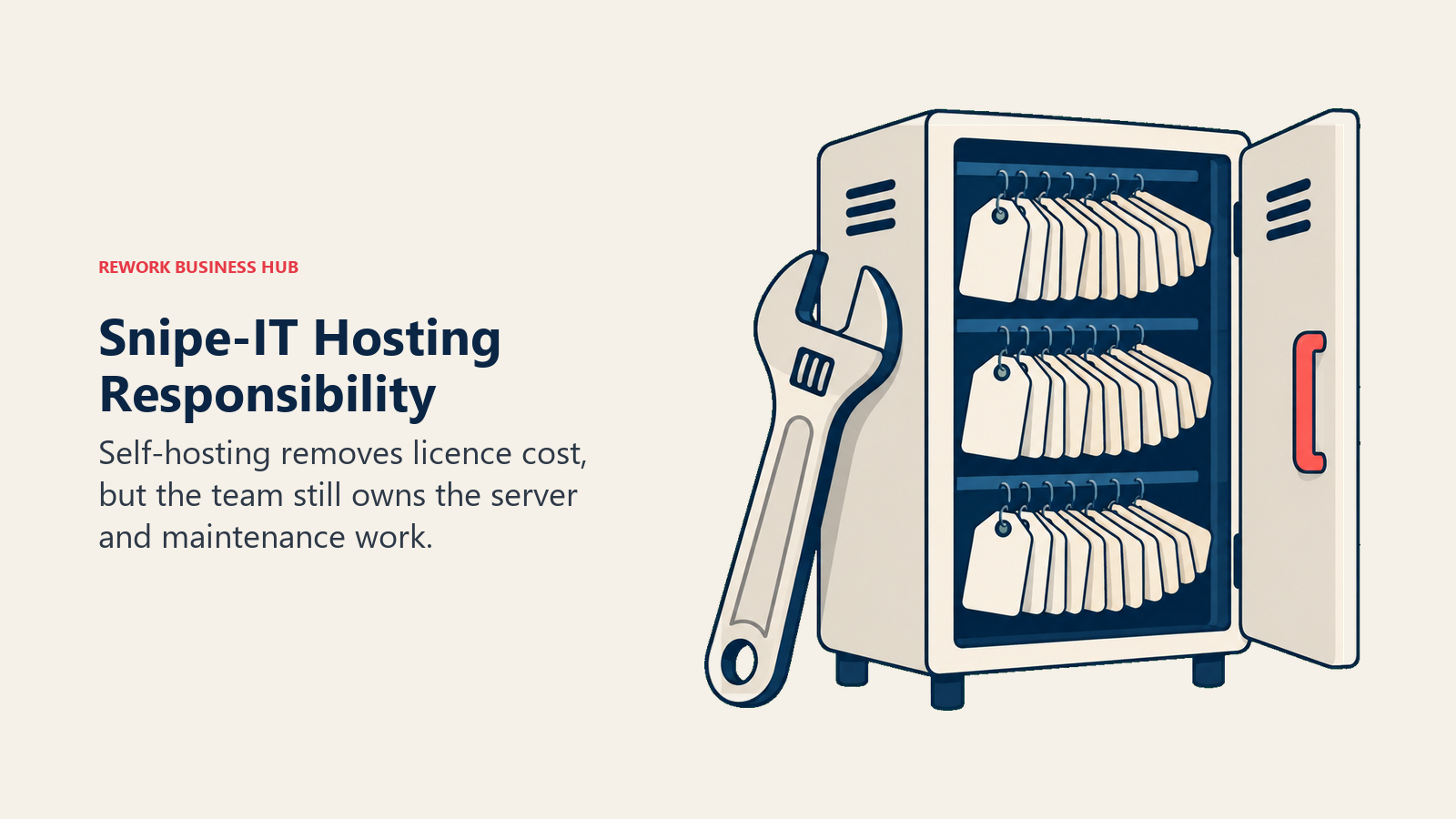
If you'd rather not run your own server, Snipe-IT also sells hosted plans, and the pricing shape here beats everything else on this list: Basic is $39.99/mo or $399.99/yr, Small Business is $99.99/mo or $999.99/yr, and Dedicated Small is $249.99/mo or $2,499.99/yr, with larger dedicated tiers around $5,000/yr and $7,500/yr available on request. Every hosted tier carries unlimited users AND unlimited assets, differing only on API rate limits and dedicated infrastructure. That's a real answer for a Sortly buyer who's hit the 100-item or 500-item cap and doesn't want to think about a seat count or an item count ever again.
| What you get | What you don't |
|---|---|
| Genuinely free forever if you self-host | A managed, zero-setup experience out of the box |
| Unlimited users and unlimited assets on every hosted tier | Check-in/check-out reservations the way Cheqroom does them |
| A transparent, long-running open-source codebase | Sales orders, invoicing or manufacturing of any kind |
| A flat hosted price with no per-seat or per-asset math | A polished no-code configuration layer like Asset Panda's |
Pricing: Self-hosted open source, free forever (you cover your own server and maintenance). Hosted: Basic $39.99/mo or $399.99/yr, Small Business $99.99/mo or $999.99/yr, Dedicated Small $249.99/mo or $2,499.99/yr, all with unlimited users and assets. Larger dedicated tiers roughly $5,000/yr and $7,500/yr on request. Best for: IT teams and technical organizations that want either a genuinely free self-hosted option or a flat hosted fee with no cap on users or assets, ever. Not ideal for: Non-technical teams unwilling to either self-host or trust a smaller hosted vendor, or anyone needing reservation scheduling or sales-order management.
4. Cheqroom: Reservation-First Ops, Priced Per Admin
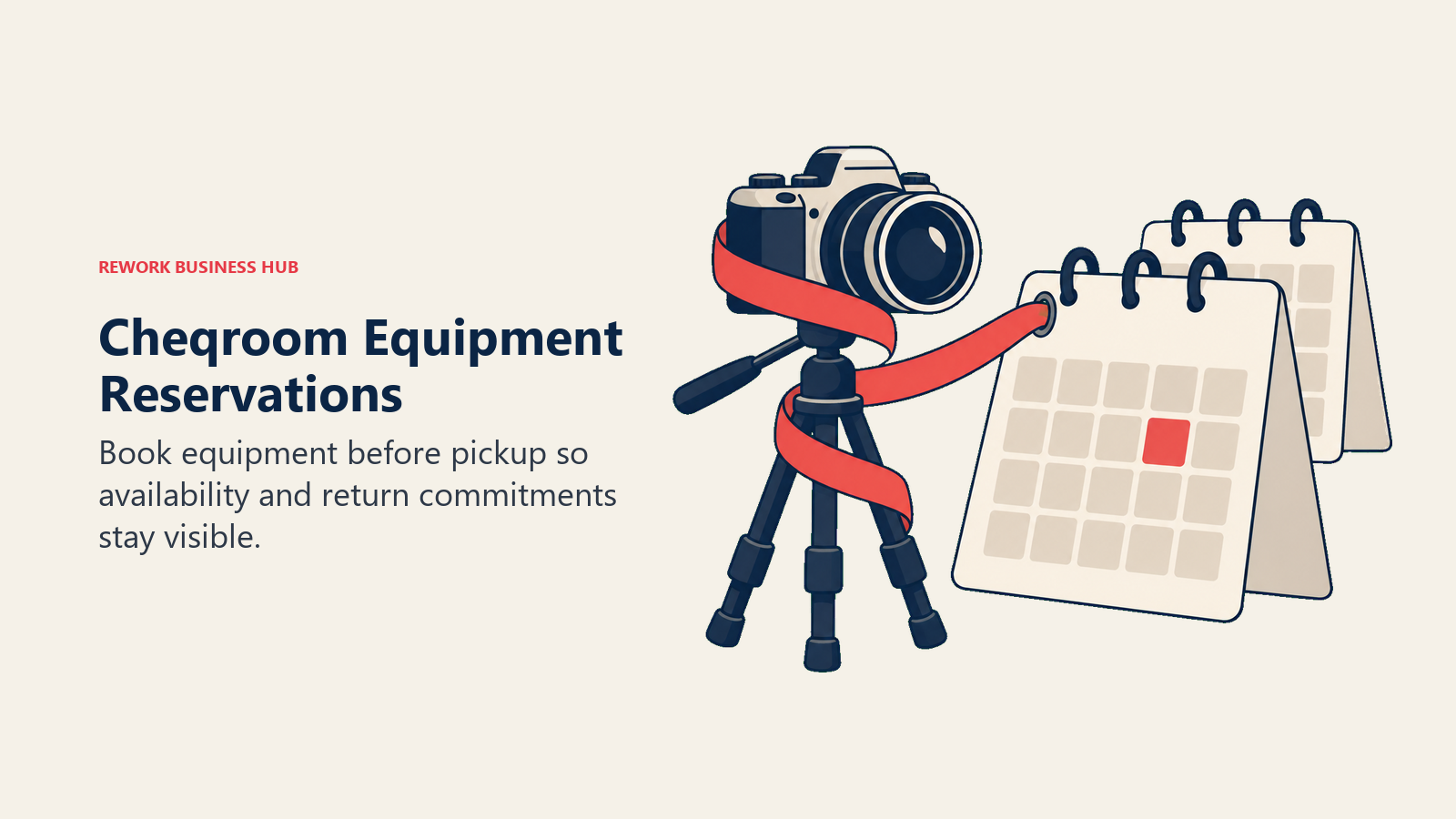
Cheqroom is built around reserving equipment in advance, not just tracking where it sits. You can see what's available before you book it, prevent double-booking with configurable access controls, and check gear in and out with a digital signature, QR scan, automatic audit trail and GPS location. Maintenance scheduling with automated reminders and real-time "who has what, when it's due back" visibility round out the platform. Cheqroom is strongest in media and entertainment production, higher education AV departments, government, construction, manufacturing and sports organizations, and its own figures put it at 1,400-plus organizations managing over $15 billion in equipment.
The pricing model is the thing to understand before you shortlist Cheqroom: it's priced per administrator, not per user. Core is $184 per admin/mo billed annually, Business is $275 per admin/mo billed annually, and Enterprise is $367 per admin/mo billed annually, with a custom Enterprise License Agreement above that. Every tier includes unlimited regular users and unlimited items, so a department with one admin and forty checkout users pays for one seat. Minimum administrator counts apply on each tier, and there's no free plan.
| What you get | What you don't |
|---|---|
| Unlimited regular users and unlimited items on every tier | A free plan or a monthly-only option |
| Advance reservations that prevent double-booking | Cheap scaling once several people need admin rights |
| GPS tracking plus a digital signature audit trail | Sales orders, purchasing or invoicing |
| Strong fit for production, AV and university departments | A published extra-admin rate below the tier price |
Pricing: Core $184 per admin/mo billed annually, Business $275 per admin/mo billed annually, Enterprise $367 per admin/mo billed annually, ELA custom. Priced per administrator with unlimited regular users and items; minimum admin counts apply; no free plan. Best for: Media production, universities and AV or events teams that reserve equipment ahead of time and can keep the admin headcount small. Not ideal for: Organizations that need many people with administrative access, since the per-admin math scales quickly, or anyone on a tight monthly budget with no annual commitment.
5. inFlow (Inventory and Stockroom): The Structural Match for a Scan-In, Scan-Out Team
inFlow actually sells two relevant products, and the second one is the one most competing roundups miss entirely. inFlow Inventory is a full order-management platform: purchase orders, sales orders, barcode scanning, pick-pack-ship and a separate inFlow Manufacturing line for BOMs and work orders. inFlow Stockroom is narrower and single-plan by design, built for warehouse and logistics teams who need the fastest possible way to scan stock in or out, described on the product page as "grab, scan, and go." That's structurally closer to what most Sortly buyers actually do all day (photograph or scan an item moving in or out) than any full ERP on this list, just with real stock movement records behind it instead of a folder.
inFlow Inventory prices as Entrepreneur $129/mo billed annually ($161/mo billed monthly, 2 users, 1,200 orders a year), Small Business $349/mo billed annually ($436/mo monthly, 5 users, 12,000 orders a year), Mid-Size $699/mo billed annually ($874/mo monthly, 10 users, unlimited orders) and Enterprise on request (25 users, unlimited orders). Extra users run $59, $49 or $39 a month depending on tier, and extra orders are $0.20 each. inFlow Manufacturing is a separate product starting at $179/mo billed annually. inFlow Stockroom is a single plan at $99/mo billed annually or $129/mo billed monthly, with extra locations at $5/mo each, and a one-time $499 onboarding fee is listed as optional on the Inventory line. inFlow is often described as "flat-rate, not per-seat," and that's only half true: each plan bundles a fixed number of users and a fixed order allowance, with published overage rates on both, so it's tier-based with included seats rather than immune to headcount.
| What you get | What you don't |
|---|---|
| A single-plan Stockroom product built for scan-in/scan-out | A free plan of any kind, on either product |
| Real purchase orders and sales orders once you need them | Truly flat pricing regardless of team size |
| Published overage rates instead of a hard wall | Asset custodianship or maintenance scheduling |
| A clear upgrade path from Stockroom into full Inventory | A price under $99/mo for anything beyond the free tier you left |
Pricing: inFlow Stockroom $99/mo billed annually, $129/mo billed monthly. inFlow Inventory Entrepreneur $129/mo billed annually, Small Business $349/mo billed annually, Mid-Size $699/mo billed annually, Enterprise on request. inFlow Manufacturing from $179/mo billed annually. One-time onboarding $499. Best for: Stockroom and warehouse teams who need fast scan-in/scan-out tied to real stock movement, and small sellers ready to move from counting items to managing orders. Not ideal for: Anyone wanting a free tier to start, or anyone tracking equipment custody rather than sellable stock. If inFlow becomes the shortlist rather than the sidestep, Best inFlow Inventory Alternatives covers what sits around it.
6. Rework: Stock, Orders, Invoices and Customers on One Platform
Rework's argument in this category is consolidation for sellers, not asset management. Its Inventory module sits on the same platform as Sales CRM, Commerce, Invoice and Work Ops, so the stock count, the sales order, the invoice and the customer record live in one system instead of a stock app plus a separate invoicing tool bridged by hand. That's the direct answer to the Buyer B complaint above: the moment a Sortly-tracked item becomes a sale, it's already sitting in the same record as the customer who bought it. Rework also runs a unified multi-channel inbox putting WhatsApp, Messenger, Instagram DM, TikTok, Zalo and web chat on one contact timeline, which matters if a meaningful share of your orders come in through a chat app rather than a storefront. For the CRM half of that pitch on its own, see Best CRM Software in 2026.
Be precise about who this is for, because it's easy to overreach here. Rework is not an asset-tracking or equipment-checkout system. There is no check-in/check-out custodianship workflow, no preventive maintenance scheduling, no depreciation schedule and no asset audit trail built for a compliance review, so a Buyer A reader should go straight to EZOfficeInventory, Asset Panda, Snipe-IT or Cheqroom instead. Rework is also not a manufacturing MRP (no multi-level BOMs, routings, production scheduling or shop-floor control) and not a warehouse management system (no bin-level slotting, wave picking or carrier rate shopping). It's built for the seller who wants stock, orders, invoicing and the customer relationship on one screen, not for the fleet manager who needs to know which drill is checked out.
Pricing for Rework Inventory is quoted per organization; see rework.com/pricing.
| What you get | What you don't |
|---|---|
| Stock, orders, invoices and the customer record on one platform | Check-in/check-out custodianship or maintenance scheduling |
| A unified inbox across WhatsApp, Messenger, Instagram, TikTok, Zalo, chat | Depreciation schedules or an asset audit trail |
| CRM and Work Ops beside inventory, not bolted on afterward | Multi-level BOMs, routings or shop-floor production scheduling |
| Seats come in blocks of 5 rather than one at a time | Bin-level slotting, wave picking or a published price today |
Pricing: Quote on request. Rework Inventory is quoted per organization; see rework.com/pricing. Best for: Mid-size sellers, roughly 10 to 200 people, who want stock and orders on the same record as the CRM pipeline and the customer conversation. Not ideal for: Anyone tracking equipment rather than sellable stock (go to Buyer A's list above instead), solo sellers, manufacturers needing MRP depth, or warehouses needing WMS-grade slotting.
7. Zoho Inventory: The Real Free Tier for Sellers on a Budget
Zoho Inventory is the most direct answer for a Sortly buyer whose complaint is "I need to actually sell what I count." It handles order management, multi-warehouse stock, serial and batch tracking, dropshipping and a customer portal, and if you already run Zoho Books or Zoho CRM, the pieces connect without a middleware bill. Unlike Sortly, the free plan here is genuinely order-capable, not just item-capable.
Zoho Inventory's free plan covers 1 user, 1 location and 50 orders a month at $0. Paid tiers, billed annually, run Standard $29/mo (3 users, 2 locations, 500 orders/month), Premium $79/mo (5 users, 4 locations, 3,000 orders/month), Plus $129/mo (10 users, 6 locations, 7,500 orders/month) and Enterprise $249/mo (10 users, 10 locations, 15,000 orders/month). Monthly-billed prices and extra-user rates aren't disclosed on the pricing page. The order cap, not the price, is what pushes most sellers up a tier: a seller doing 600 orders in a busy month is over the $29 tier's 500-order allowance regardless of team size. For the deeper dive on Zoho Inventory's pricing quirks, tier-name mismatches across regions, and the full alternatives field, see Best Zoho Inventory Alternatives, and for the fastest side-by-side against inFlow specifically, Zoho Inventory vs inFlow.
| What you get | What you don't |
|---|---|
| A genuinely order-capable free plan, not just an item counter | Manufacturing depth of any kind |
| Order management, multi-warehouse and dropshipping built in | A published monthly-billed rate or extra-user cost |
| Deep ties to Zoho Books and Zoho CRM if you're on that stack | Independence from the Zoho ecosystem |
| The cheapest paid entry point of any sales-side tool here | Headroom once your order volume actually grows |
Pricing: Free $0 (1 user, 50 orders/month). Standard $29/mo billed annually (500 orders), Premium $79/mo (3,000 orders), Plus $129/mo (7,500 orders), Enterprise $249/mo (15,000 orders). Best for: Cost-sensitive sellers who want a real free tier to start and cheap early paid tiers, especially teams already using other Zoho products. Not ideal for: Sellers who expect to blow past a few hundred orders a month quickly, or anyone who wants out of the Zoho ecosystem entirely.
8. Odoo Inventory: Free Forever as Your First App
Odoo Inventory makes an unusual promise and keeps it: "Free, forever, with unlimited users" as your first app, including hosting and support, with payment only required once you install a second application. For a team that just needs stock control, multi-warehouse transfers, barcode receiving, lot and serial tracking and reordering rules, that's a genuine zero-cost option with no user ceiling at all, which beats every paid tier on this list on price alone.
The honest caveat is the second app. Odoo Standard runs $7.25 per user per month billed yearly for the first 12 months, with the regular yearly rate at $7.79 per user per month; the discounted monthly-billed rate is $8.95 per user per month, and the regular monthly rate is $11.20. Odoo Custom runs $10.90 per user per month billed yearly (promotional) or $13.60 per user per month billed monthly (promotional), with regular rates of $13.60 yearly and $17.00 monthly. Custom adds Odoo.sh or on-premise hosting, Studio, multi-company support and external API access. Odoo renders its pricing dynamically by region, so confirm the figure for your own country before budgeting. For the ERP breadth question specifically, Best Odoo Alternatives is worth reading alongside this.
| What you get | What you don't |
|---|---|
| A genuinely free first app with unlimited users | A turnkey setup without configuration effort |
| Multi-warehouse, lot/serial, barcode and reorder rules | Free pricing the moment you add a second app |
| An upgrade path into full ERP without switching vendors | A single fixed price you can quote from memory |
| Self-hosting and open-source options | Asset check-out, custodianship or depreciation tools |
Pricing: Odoo Inventory free forever with unlimited users as your first app. Odoo Standard $7.25/user/mo billed yearly for the first year, $7.79/user/mo at the regular yearly rate ($8.95/user/mo is the discounted monthly-billed rate, not the undiscounted yearly one). Odoo Custom $10.90/user/mo billed yearly promotional, $13.60 regular yearly. Best for: Cost-sensitive sellers who need only stock control today and are comfortable configuring software, or who have a partner to do it. Not ideal for: Teams that will need three or four Odoo apps on day one; the free-first-app economics disappear immediately once you do.
9. itemit: UK-Priced Tracking With Depreciation Built In
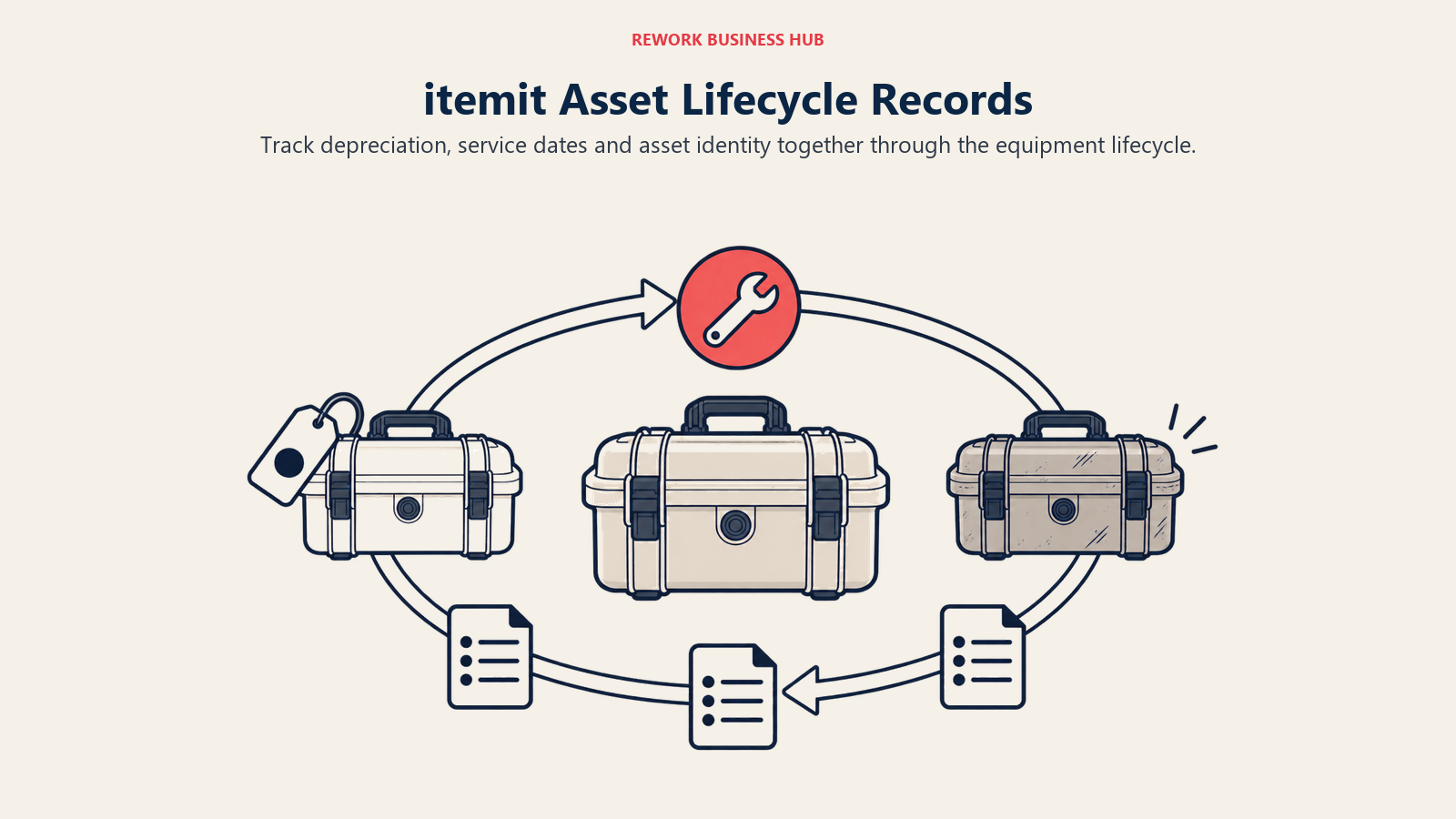
itemit is a cloud asset-tracking platform built around QR, barcode, GPS and RFID scanning, with digital profiles for every asset (photos, manuals, vendor details, custom fields), checkout and advance booking, collections and kitting for grouping related items, and issue reporting tied to maintenance scheduling. What sets it apart from EZO and Asset Panda is automated depreciation, calculated straight-line or declining-balance, built into the base product rather than treated as an add-on, alongside immutable audit trails and reminders for maintenance, warranty and compliance dates. itemit is UK-based, with client references including Anglian Water, the University of Cambridge and UK government bodies, and the vendor cites over 3,000 teams worldwide with 4.8-star ratings across major review sites. Industries served span construction, healthcare, education, government, manufacturing, facilities management, energy and utilities, logistics and media production.
Price in pounds, not dollars, and don't silently convert. Starter is £33.25/mo (£399/yr), covering up to 1,000 assets and up to 3 users. Pro is £133.25/mo (£1,599/yr), still 1,000 assets but unlimited users. Industrial is £249.92/mo (£2,999/yr), 2,000 assets and unlimited users. Add-ons include REST API access at £699/yr, a fixed RFID reader at £999/yr and Active Directory integration at £699/yr. There's no free plan, but a 14-day trial is available.
| What you get | What you don't |
|---|---|
| Automated depreciation built into the base plan | USD pricing, unless you convert it yourself |
| QR, barcode, GPS and RFID scanning in one product | A free plan; only a 14-day trial |
| Unlimited users on Pro and Industrial | Sales orders, invoicing or purchasing |
| Strong fit for UK/EU construction, healthcare and utilities | Coverage beyond 2,000 assets without a custom conversation |
Pricing: Starter £33.25/mo (£399/yr), 1,000 assets, 3 users. Pro £133.25/mo (£1,599/yr), 1,000 assets, unlimited users. Industrial £249.92/mo (£2,999/yr), 2,000 assets, unlimited users. No free plan; 14-day trial. Best for: UK and Europe-based construction, healthcare, education and utilities teams that want built-in depreciation and RFID hardware support. Not ideal for: US buyers who'd rather not budget in GBP, or anyone needing more than 2,000 assets without a custom Enterprise conversation.
10. Megaventory: One Plan, No Tier Ladder, Light Manufacturing
Megaventory is the quiet, sensible option if your real problem with Sortly is "I need purchasing and sales orders, not folders." It's one product, one plan, covering multi-location stock, purchasing, sales orders, work orders for light manufacturing, serial and batch tracking and a full API, and it publishes both a monthly and an annual price so you can compare it without a sales call.
Megaventory Pro is $135/mo, or $121.50/mo billed annually (a 10% discount), and includes 5 users, 50,000 transactions, 20,000 products, 20,000 clients, 20 locations, 1 company and 2 hours of training. Extra users cost $45/mo each up to 35 total, and extra transactions run $45/mo per additional 25,000 up to 200,000. API access, every application module and every integration are included at that one price, with Enterprise custom above those limits and a 15-day free trial with no credit card required.
| What you get | What you don't |
|---|---|
| One plan with every module and integration included | A free plan of any kind |
| Real purchasing and sales orders, unlike Sortly | Cheap seat expansion, at $45/mo per extra user |
| Both monthly and annual prices published up front | Deep multi-level manufacturing or MRP scheduling |
| Work orders for light assembly and production | Asset custodianship or maintenance scheduling |
Pricing: Megaventory Pro $135/mo, or $121.50/mo billed annually. Includes 5 users, 50,000 transactions, 20,000 products, 20 locations. Extra users $45/mo each up to 35. Extra transactions $45/mo per 25,000. Enterprise custom. Best for: Small B2B distributors, wholesalers and light-assembly workshops of 3 to 15 people who want one predictable plan and room to grow. Not ideal for: Very small sellers wanting to start free, or anyone needing asset check-out rather than sales orders.
11. Fishbowl Inventory: QuickBooks-Centric Warehouse and Manufacturing Depth
Fishbowl has been the default answer for QuickBooks-based businesses needing real warehouse and manufacturing capability for two decades, and its integration with QuickBooks and Xero remains the strongest reason to choose it. It's a heavier, more industrial product than Sortly or most sellers on this list, covering multi-location warehousing, barcode scanning, work orders and BOMs on the right tiers.
Fishbowl Inventory (cloud) prices at Essentials $229/mo billed annually (2 users), Growth $429/mo billed annually (5 users) and Scale $729/mo billed annually (10 users), and all three cover finished goods without manufacturing. Manufacturing and deeper warehouse capability live in a separate line, Fishbowl Advanced: Advanced Warehouse from $595/mo and Advanced Manufacturing from $675/mo, both priced by users and deployment for teams from 2 to 200-plus. Implementation is required on every plan and its cost isn't published. Manufacturing is genuinely absent from the Inventory tiers, so don't read $229/mo as buying production capability. See Best Fishbowl Alternatives if Fishbowl is your incumbent rather than your target.
| What you get | What you don't |
|---|---|
| The deepest QuickBooks and Xero integration in this category | Manufacturing on any Fishbowl Inventory tier |
| A real manufacturing tier through Fishbowl Advanced | An implementation-free purchase |
| Warehouse-grade barcode and multi-location handling | Asset custodianship or checkout workflows |
| Self-managed and flexible deployment options | Anything close to Sortly's or Zoho's entry price |
Pricing: Fishbowl Inventory Essentials $229/mo billed annually (2 users), Growth $429/mo billed annually (5 users), Scale $729/mo billed annually (10 users). Fishbowl Advanced Warehouse from $595/mo, Advanced Manufacturing from $675/mo, priced by users and deployment. Best for: QuickBooks-centric distributors and manufacturers of 5 to 50 people who need warehouse depth and are ready for a real implementation. Not ideal for: Small online sellers or anyone who just wants Sortly's ease of use with an order tacked on.
12. Cin7 Core: Multi-Channel Depth for Sellers Past the SMB Ceiling
Cin7 Core, formerly DEAR Systems, is the destination for a Sortly-turned-seller who has genuinely outgrown a lightweight tool rather than just wanting something different. It handles multi-channel selling, B2B portals, purchasing, light assembly, warehouse management and 3PL connections in one system, with e-commerce and marketplace coverage well beyond anything on the asset-tracking side of this list. Cin7 also sells Cin7 Omni, a separate, larger, quote-only platform for brands running wholesale and retail channels at scale.
Cin7's pricing page lists Cin7 Core Standard at $349/mo (5 users, 6,000 sales orders a year, 2 integrations), Cin7 Core Pro at $599/mo (10 users, 24,000 orders a year, 4 integrations) and Cin7 Core Advanced at $1,199/mo (15 users, 120,000 orders a year, 6 integrations). Worth stating plainly: the page prints "/month" without stating whether that's billed monthly or annually, and it doesn't publish an annual discount or an extra-user rate, so don't assume either way. Cin7 Omni is "Contact us for pricing," with 8 users and 5 integrations included. Best Cin7 Alternatives covers the field if Cin7 is already your incumbent.
| What you get | What you don't |
|---|---|
| Deep multi-channel, B2B and 3PL coverage | A stated monthly-versus-annual billing basis |
| Light assembly and production capability | A published extra-user rate |
| A published price for every Cin7 Core tier | A free or trial-priced tier |
| A clear upgrade path to Cin7 Omni at scale | Anything close to Sortly's or Zoho's entry price |
Pricing: Cin7 Core Standard $349/mo, Cin7 Core Pro $599/mo, Cin7 Core Advanced $1,199/mo. The pricing page prints "/month" without stating monthly versus annual billing. Cin7 Omni is quoted, not published. Best for: Multi-channel sellers of roughly 5 to 50 people who need marketplace, B2B and 3PL depth and have the volume to justify it. Not ideal for: Anyone whose only complaint about Sortly is the lack of order management at a small scale; Cin7 Core is a much bigger commitment than that problem needs.
Asset Tracker Pricing at a Glance
| Tool | Entry price | Billing basis | Users on entry plan | What's priced on |
|---|---|---|---|---|
| Sortly (incumbent) | $24/mo promo, $49/mo regular | Monthly or annual | 2 | Seats and items |
| Snipe-IT (self-hosted) | Free forever | N/A, self-hosted | Unlimited | Nothing; you run the server |
| Snipe-IT (hosted) | $39.99/mo or $399.99/yr | Monthly or annual | Unlimited | Flat fee, not seats or assets |
| itemit | £33.25/mo (£399/yr) | Monthly or annual | 3 | Seats and asset count |
| Cheqroom | $184/admin/mo | Billed annually | Unlimited (per admin) | Administrator seats only |
| EZOfficeInventory | No published price | Not disclosed | Not disclosed | Users, asset volume, features |
| Asset Panda | No published price | Not disclosed | Not disclosed | Not disclosed |
Snipe-IT's hosted tiers are the one entry in this whole article, asset side or sales side, that charges a flat fee for unlimited users and unlimited assets at the same time. Everything else caps one or both.
Sizing and Stage Fit
Match the tool to your operating reality, not to whichever page ranks first in search.
| Team size and situation | What's usually true | Best fits |
|---|---|---|
| 1 person, under 100 items, nothing sold | Personal or single-site tracking | Sortly Free, Snipe-IT self-hosted |
| 2 to 10 people, equipment or IT gear across one site | Needs check-out and a maintenance log | itemit, Snipe-IT hosted |
| Multi-site fleet, construction or field service | Needs custody chain across locations | EZOfficeInventory, Asset Panda |
| Reserves gear in advance (AV, production, universities) | Booking conflicts are the real pain | Cheqroom |
| 1 person to small team, under 500 orders a month | Just started actually selling what they track | Zoho Inventory Free or Standard, Odoo Inventory |
| Stockroom or warehouse team, scan-in/scan-out daily | Needs speed more than reporting depth | inFlow Stockroom |
| 3 to 15 people, B2B distribution | Purchasing and sales orders, light assembly | Megaventory, inFlow Inventory |
| 10 to 200 people, ops spread across CRM, orders, invoicing | Wants stock and the customer record on one platform | Rework |
| 5 to 50 people, QuickBooks-centric warehouse or manufacturer | Needs BOMs, work orders and QuickBooks ties | Fishbowl Inventory |
| 5 to 50 people, multi-channel and 3PL | High order volume across many channels | Cin7 Core |
How to Choose: Decision Framework
| If your problem is... | Pick |
|---|---|
| Who currently has the equipment, and when it's due back | EZOfficeInventory, Asset Panda or Cheqroom |
| Hitting Sortly's 100-item free cap and wanting unlimited seats and assets | Snipe-IT (self-hosted or hosted) |
| Needing depreciation calculated automatically | itemit |
| Booking equipment in advance without double-booking | Cheqroom |
| You just took a sale and have no way to invoice it | Zoho Inventory, inFlow or Rework |
| Wanting a free tier that actually manages orders | Zoho Inventory or Odoo Inventory |
| Scan-in/scan-out speed for a warehouse crew | inFlow Stockroom |
| Purchasing, sales orders and light assembly on one predictable plan | Megaventory |
| Stock, orders, invoicing and the customer record on one platform | Rework |
| QuickBooks or Xero at the center of your finance stack | Fishbowl Inventory |
| Multi-channel selling at real volume with 3PL connections | Cin7 Core |
| Actually manufacturing rather than reselling | Fishbowl Advanced, Odoo Manufacturing, or see Best Katana Alternatives |
What to Do Next
Answer one question honestly before you shortlist anything: does your team's daily complaint sound like "who has this right now" or "I can't invoice what I just sold"? That single sentence sorts you into the right half of this list faster than any feature comparison will, and picking from the wrong half is how a team ends up migrating twice in a year.
Then run a real two-week trial with your top two picks, using your own data rather than a demo catalogue. Asset trackers should load their actual equipment list, including anything currently checked out, and see whether the custody and maintenance workflow matches how their team actually works. Sellers should load a real month of orders and suppliers and see where the order cap, the missing integration or the invoicing gap shows up. If consolidating stock, orders and the customer record onto one platform matters more than inventory depth alone, put Rework on that shortlist alongside whichever specialist tool wins your trial.

Business Consultant
On this page
- Which Sortly Buyer Are You
- Key Facts
- Quick Comparison Table
- What Sortly Gets Right, and Why It Splits Into Two Different Walls
- 1. EZOfficeInventory (EZO): Full Custody Chain for Multi-Location Fleets
- 2. Asset Panda: No-Code Configuration for Regulated Fleets
- 3. Snipe-IT: Free Forever If You Self-Host
- 4. Cheqroom: Reservation-First Ops, Priced Per Admin
- 5. inFlow (Inventory and Stockroom): The Structural Match for a Scan-In, Scan-Out Team
- 6. Rework: Stock, Orders, Invoices and Customers on One Platform
- 7. Zoho Inventory: The Real Free Tier for Sellers on a Budget
- 8. Odoo Inventory: Free Forever as Your First App
- 9. itemit: UK-Priced Tracking With Depreciation Built In
- 10. Megaventory: One Plan, No Tier Ladder, Light Manufacturing
- 11. Fishbowl Inventory: QuickBooks-Centric Warehouse and Manufacturing Depth
- 12. Cin7 Core: Multi-Channel Depth for Sellers Past the SMB Ceiling
- Asset Tracker Pricing at a Glance
- Sizing and Stage Fit
- How to Choose: Decision Framework
- What to Do Next