Best AI Agents for SEO in 2026: 10 Agents for Rankings and AI Search Visibility
Turn this article into takeaways for your work.


Each assistant summarizes the article only for you and suggests best practices for your work.
OTTO SEO from Search Atlas leads for one agent that runs technical fixes, on-page changes, content, and link building on autopilot. Ahrefs's new Letaido leads for teams who want agent workflows built on SEO data they already trust. Alli AI leads for technical SEO agents that push a fix to a live page instead of filing a ticket and waiting on it. This guide covers 10 AI agents built specifically to do SEO work: you give each one a goal once, and it plans a sequence of steps, calls tools or data sources, and keeps working on its own schedule, not a tool that only produces output when a person opens it and prompts it for one thing at a time.
That distinction is the whole point of this guide. Plenty of software markets itself as an "AI SEO agent" in 2026 while it's really still a tool a person operates one prompt at a time, the pattern Gartner calls agent washing. If what you actually need is a tool that scores a draft or tracks AI citations while a person on your team does the work, see our best AI SEO tools and best AI visibility tools roundups instead. If you'd rather build your own agent than buy one, AI SEO Content Brief Agent is a vendor-neutral blueprint for exactly that. This guide is the third leg: real agent products you can put to work today, evaluated on whether they genuinely plan, act, and execute rather than just recommend.
Updated August 2026: What Changed
- Ahrefs entered the agent category directly. Letaido, a standalone agent workspace built by Ahrefs with native access to Ahrefs data, launched August 12, 2026.
- Pricing moved fast across this list. Alli AI dropped its old four-tier structure for a simpler two-tier one, and Nightwatch rebuilt its SEO agent (branded NightOwl) from a flat add-on into credit-based tiers bundled with every paid plan. Both changes are a reminder to re-verify pricing before you commit to anything in this category.
- The AI-search axis moved from monitoring to action. AthenaHQ and Scrunch AI both now ship agent layers that go beyond tracking citations: they analyze where a brand is losing visibility in AI answers and draft the content changes to close the gap, not just a dashboard that shows the gap exists. Best GEO Tools in 2026 sorts the monitoring platforms by whether they watch, diagnose or act.
- Google's scaled content policy didn't move, and that matters more now. As more of these agents can research, draft, and publish with a lighter human touch, the ceiling on how much unedited output you can point at your domain is still Google's to set, not the agent vendor's. More on that below.
Key Facts
- Only 16% of what companies call an "AI agent" in production actually plans, observes, and adapts on its own; most are fixed-sequence workflows wearing agent branding, per Menlo Ventures' State of Generative AI in the Enterprise.
- Marketing captured $660 million of enterprise AI spending in 2025, about 9% of the departmental total, driven by content generation and campaign optimization, per the same Menlo Ventures report.
- Gartner predicts over 40% of agentic AI projects will be canceled by the end of 2027, citing unclear business value and inadequate risk controls as the leading causes.
- 57% of organizations now have AI agents running in production, rising to 67% among enterprises with 10,000 or more employees, per LangChain's State of Agent Engineering survey.
- Ahrefs's study of roughly 14 billion webpages found that 96.55% of them get zero organic traffic from Google, the real argument for agents that fix and refresh existing pages instead of only producing new ones (Ahrefs).
- Only about 12% of URLs cited in AI answers also rank in Google's top 10 for the same query, so strong classic SEO does not reliably predict AI citation, per a separate Ahrefs analysis of AI-search overlap.
- AI referral traffic to websites grew roughly 700% over 2025, and visitors arriving from AI platforms convert at 4.4 times the rate of traditional organic traffic, per Semrush's AI SEO research.
What Actually Counts as an Agent Here
An AI tool assists a person: it scores a draft, drafts a brief, or flags an issue, and a human decides what happens next each time. An AI agent is different: you give it a goal once, and it plans which data to pull, which tools to call, and what order to do the work in (the plan-act-observe loop covered in what is an AI agent), then keeps working on its own schedule instead of waiting for a person to ask it to analyze one thing. Some of the agents below default to full autopilot on production changes; others stop at a drafted fix or a structured recommendation for a person to ship. Both count as agents here, because both chain multiple steps autonomously. What doesn't count is a tool that only moves when someone opens it and prompts it for a single output.
We started from a list of well-known "AI SEO" brands and checked each one against that bar. Several didn't clear it. Semrush and Ahrefs's core AI Toolkit and Brand Radar products, Clearscope, Frase, MarketMuse, and Rankability are all genuinely useful, and most are covered in depth in our best AI SEO tools and best AI tools for SEO content roundups, but as of August 2026 they remain human-operated tools a person prompts for each analysis, not agents that chain work on their own. We dropped them here rather than pad the list to a round number.
Quick Comparison Table
| Agent | Best For | Starting Price | Key Strength | Key Limitation |
|---|---|---|---|---|
| Search Atlas (OTTO SEO) | One agent running technical, on-page, content, and links | $99/mo (Starter) | Full-stack autopilot across the whole SEO job | Meaningful multi-project use needs Pro or Agency |
| Ahrefs Letaido | Agent workflows built on data you already trust | $99/mo (1 workspace) | Native Ahrefs data access; connects 15+ platforms | AI usage billed separately on top of the base fee |
| Alli AI | Technical fixes deployed live, not just flagged | $249/mo (Business) | Pushes title tags, meta, schema, and links to production | Meaningful site and page volume pushes cost up fast |
| Botify | Enterprise indexation and technical automation at scale | Custom (demo-gated) | PageWorkers and SmartIndex deploy and test changes autonomously | No public price; built for large, complex sites |
| AthenaHQ | Turning AI-search citation gaps into shipped content changes | Free (Essential); $295/mo (Starter) | Content optimization agent bundled from Starter up | Free tier has no agent; real use needs the paid tier |
| Scrunch AI | Structuring content specifically for AI agents and crawlers | $250/mo (Starter, annual) | Agent Experience Platform built for AI retrieval, not just tracking | Entry tier limits full multi-engine coverage |
| SEO.ai | One agent for research, writing, and publishing end to end | $149/mo (Single Site) | Full pipeline including backlinks and ad monitoring | Multi Site tier caps at 3 sites before custom pricing |
| SEObot | Hands-off weekly blog content for a small team | $49/mo (entry tier) | Keyword research through publishing with minimal input | Upper tiers not independently vendor-confirmed |
| Nightwatch (SEO Agent / NightOwl) | Audits and keyword research bundled with rank tracking | €79/mo (Starter) | Agent credits included in every paid plan | Surfaces suggestions; does not deploy fixes itself |
| Surfer SEO (Auto-Optimize) | Human-approved automation for teams not ready for autopilot | $49/mo (Discovery) | One-click execution inside a tool teams already use | Not autonomous; a person still triggers every run |
How to Choose an AI SEO Agent in 2026
Most teams buying into this category shop for the agent with the longest feature list before they've named the one job that's actually costing them time or rankings. Answer three questions first.
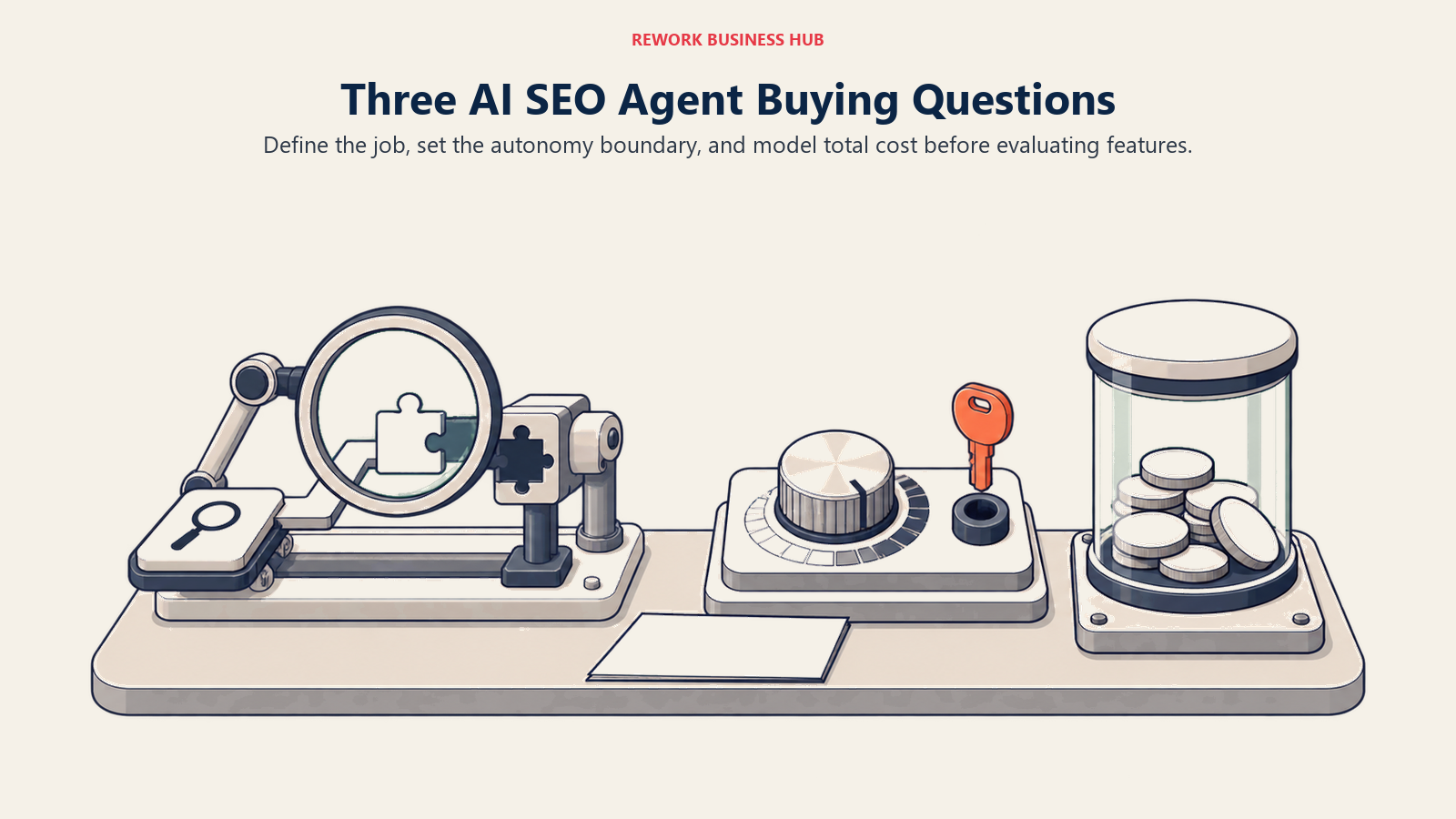
- What's the job you're actually automating? Shipping technical fixes without waiting on a dev ticket, researching and drafting content end to end, and catching AI-search visibility gaps before a competitor does are three different jobs with three different best fits.
- Do you want full autopilot, or an approval queue? Search Atlas and Alli AI can run unattended. Nightwatch and Surfer surface work for a person to approve. Neither is wrong, but pick based on how much you trust an agent touching a live page without a human in the loop yet.
- What does the headline price actually include? Several of these agents price by credit, workspace, or site rather than by seat, and AI usage is often billed on top of the base fee rather than bundled into it. Price out real usage before you compare a $49 entry tier against a $295 one, and see how to measure AI agent ROI before you commit to a full year.
Framework: By SEO Job to Be Done
| Job | What You Need | Best Fits |
|---|---|---|
| Technical fixes shipped without a dev ticket | Autonomous deployment, not just a flagged issue | Alli AI, Search Atlas (OTTO SEO), Botify |
| Keyword and gap research feeding a content plan | Autonomous research that turns into a plan | SEO.ai, SEObot, AthenaHQ |
| Internal linking at scale | Automated link insertion across many pages | Search Atlas (OTTO SEO), Botify, SEObot |
| Refreshing pages losing rankings or citations | Gap detection tied to a rewrite, not just a report | AthenaHQ, Scrunch AI |
| AI-search (AEO/GEO) citation gaps specifically | Content structured for how AI engines retrieve it | AthenaHQ, Scrunch AI |
| One agent, full pipeline, minimal setup | Research through publishing in a single product | SEO.ai, SEObot |
| Human-approved automation, not full autopilot | An approval queue instead of unattended execution | Surfer SEO, Nightwatch |
Sizing and Persona Table
| Agent | Ideal Team Size | Primary Buyer Persona |
|---|---|---|
| Search Atlas (OTTO SEO) | 1-200 employees | SEO Manager, Agency Owner, Growth Marketer |
| Ahrefs Letaido | 5-500 employees | SEO Director, Marketing Ops, Agency Lead |
| Alli AI | 5-200 employees (agency-heavy) | SEO Consultant, In-House SEO Lead |
| Botify | 500-10,000+ employees | VP SEO, Enterprise Marketing Director, Web Platform Lead |
| AthenaHQ | 20-500 employees | Head of Growth, SEO Director |
| Scrunch AI | 100-5,000+ employees | Enterprise Marketing Director, GEO Program Owner |
| SEO.ai | 1-50 employees | Founder, Solo Marketer, Small Business Owner |
| SEObot | 1-20 employees | Indie Founder, Solopreneur, Small SaaS Team |
| Nightwatch | 5-200 employees | SEO Manager, Agency Account Lead |
| Surfer SEO | 5-200 employees | SEO Manager, Content Lead |
1. Search Atlas (OTTO SEO): The Full-Stack Autopilot
OTTO SEO is the agent inside Search Atlas's platform, and it's the closest thing on this list to one agent running the whole SEO job at once. Point it at a site with Search Console and analytics connected, and it analyzes the site and competitors, then executes technical fixes, on-page updates, content changes, link building, press releases, and local SEO. It runs on autopilot by default, and teams that want a review step first can switch to an approval mode instead.
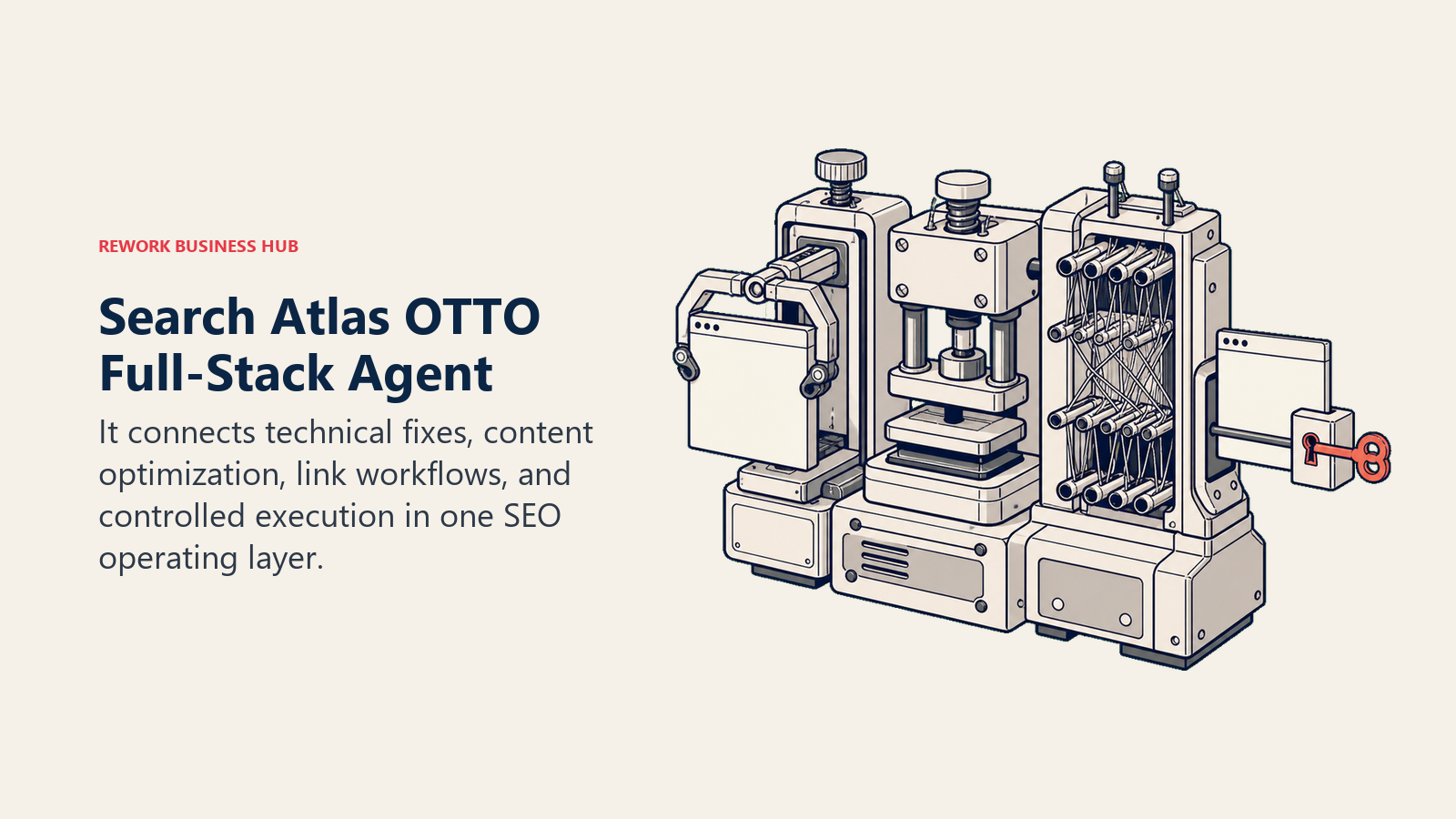
That breadth is the whole pitch: instead of stitching together a technical agent, a content agent, and a link-building tool, OTTO runs all three from one project. The tradeoff is that only one OTTO SEO project is included even at the entry tier, so teams managing several sites outgrow Starter fast, and the credit system spans AI visibility, content, SEO execution, and ads together, which takes some getting used to.
| What you get | What you don't |
|---|---|
| Technical fixes, content, and link building from one agent | Starter includes only 1 OTTO SEO project |
| Runs on full autopilot or an approval mode you choose | Credits are shared across AI, content, SEO, and ads |
| Full LLM coverage (ChatGPT, Gemini, AI Mode, Copilot, Perplexity) at Pro and up | White label and priority support need Pro or Agency |
Pricing: Starter $99/mo (1 project, 500 AI credits), Growth $199/mo (2 projects), Pro $399/mo (4 projects, full LLM coverage), Agency $999/mo (10 projects, unlimited keywords); credit top-ups run $0.038 per credit.
Best for: Agencies and in-house teams that want one agent covering technical, on-page, content, and link building instead of three separate subscriptions.
2. Ahrefs Letaido: An Agent Workspace Built on Data You Already Trust
Letaido answers a real gap: most SEO teams already trust Ahrefs's keyword and backlink data, but turning that data into a finished report, dashboard, or recurring workflow still took a person doing it by hand. Letaido is a standalone agent workspace, built by Ahrefs, where you hand an agent a multi-step job (a competitor content audit, a weekly ranking report, an ongoing site monitor) and it plans, researches, and builds the output on a schedule, continuing to run after you close the tab.
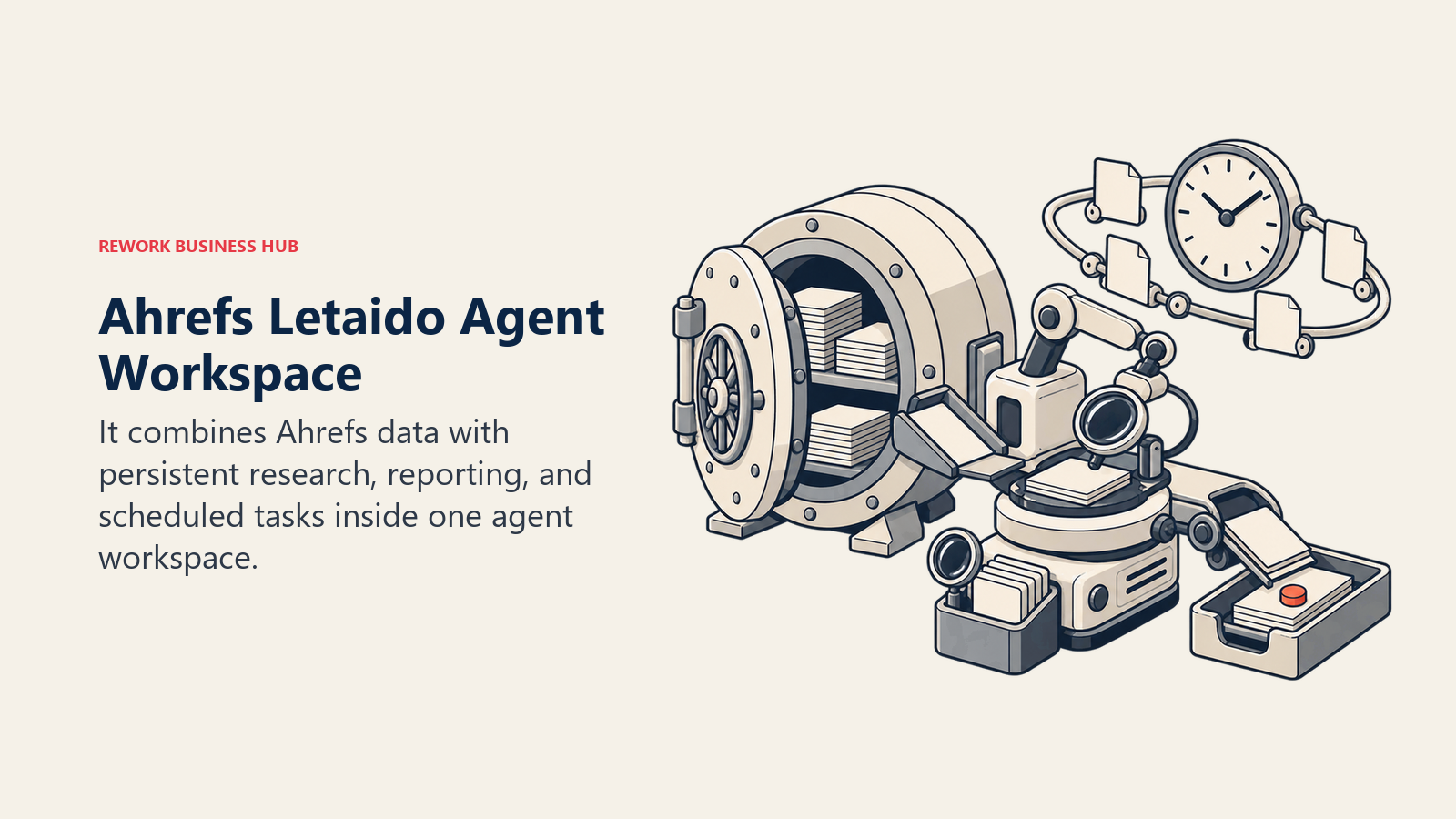
The native Ahrefs data connection is the differentiator: Ahrefs subscribers get it at no extra API cost, so the agent works from the same keyword and backlink numbers your team already trusts instead of a black-box data source. It launched August 12, 2026, so it's the newest agent on this list, and its library of prebuilt "skills" is still growing.
| What you get | What you don't |
|---|---|
| Native Ahrefs data access at no extra API cost for subscribers | Standalone product; still a new launch as of August 2026 |
| Unlimited users on the base workspace | AI usage billed separately, on top of the workspace fee |
| Connects to 15+ platforms (Slack, HubSpot, Notion, Semrush, more) | Additional workspaces needed for parallel large jobs |
Pricing: $99/mo for one workspace with unlimited users, additional workspaces from $29/mo each; AI usage billed separately at cost plus a markup. Ahrefs customers may qualify for a free trial month.
Best for: SEO and marketing teams already on Ahrefs who want recurring research, reporting, and monitoring handled by an agent instead of an analyst's Monday morning.
3. Alli AI: Technical Fixes Deployed Live, Not Just Flagged
Alli AI solves a frustration every in-house SEO knows: a tool tells you what's broken, and a developer ticket sits in the backlog for three weeks. Alli AI's agent identifies technical and on-page issues, title tags, meta descriptions, internal links, schema, and pushes the fix to the live site through a script, without waiting on an engineering sprint.
That's a meaningfully different risk profile than a tool that only recommends, which is exactly why it belongs on this list rather than the assistive-tools one. Its pricing restructured since mid-2026: the old four-tier lineup is gone, replaced by a simpler two-tier self-serve structure plus Enterprise.
| What you get | What you don't |
|---|---|
| Fixes deployed live automatically, not just recommended | Two self-serve tiers now instead of four; check current fit |
| Keyword tracking and competitive analysis included | Requires trust in an automated script touching live pages |
| Multi-site, multi-user support at both self-serve tiers | Meaningful site, page, or keyword volume pushes you to Agency |
Pricing: Business $249/mo (5 sites, 5 users, 500 keywords, 1,250 pages), Agency $499/mo (15 sites, 15 users, 2,000 keywords, 5,000 pages), billed monthly; annual billing runs $2,990/yr and $5,990/yr respectively. Enterprise is custom-quoted. A 10-day free trial is available on every tier.
Best for: In-house SEOs and agencies stuck waiting on slow dev teams who need on-page and technical fixes to ship without an engineering ticket.
4. Botify: Enterprise Indexation and Technical Automation at Scale
Botify built its reputation unifying crawl data, log files, and ranking data for enterprise sites, and in 2026 it extended that into agent territory: PageWorkers tests and deploys content and technical optimizations autonomously, SmartIndex and SmartLink automate cross-platform indexation and internal linking, and SpeedWorkers serves content to AI crawlers in under 300 milliseconds so agents like ChatGPT and Perplexity can actually retrieve it.
This is built for the scale where fixing pages one at a time across tens of thousands of URLs isn't viable, and where the real question is whether AI crawlers can see and retrieve your pages at all. It's priced and sold accordingly: Botify doesn't publish self-serve pricing anywhere on its site, and every engagement runs through a demo and a custom quote. Enterprise buyers taking this through a security review should also see our best enterprise AI agent platforms guide for the certifications and governance questions procurement will ask regardless of which agent you shortlist.
| What you get | What you don't |
|---|---|
| Autonomous testing and deployment of changes at enterprise scale | No public pricing; every deal is demo-gated and custom |
| SpeedWorkers optimizes for AI crawler retrieval, not just Googlebot | Overkill for sites under enterprise scale |
| Unifies crawl, log file, and ranking data other tools keep separate | Longer sales and implementation cycle than self-serve options |
Pricing: Not published; custom-quoted per engagement after a demo.
Best for: Enterprise sites with tens of thousands of URLs that need indexation and technical fixes automated at a scale no person can execute by hand.
5. AthenaHQ: Turning AI-Search Gaps Into Shipped Content Changes
AthenaHQ tracks how a brand shows up across ChatGPT, Claude, Perplexity, Google AI Overviews, and other engines, the same ground covered by the monitoring-focused tools in our best AI visibility tools roundup, and priced in detail in Best AEO Tools in 2026. What earns it a spot here instead is the content optimization agent bundled from the Starter tier up: rather than stopping at a dashboard showing you're losing share of voice, it works from AthenaHQ's own description of "self-learning content improvement" to help close the gap it just found.
Founded by veterans from Google Search and DeepMind, AthenaHQ frames the platform as "action on AI search" rather than measurement alone, which is the right frame for this list: a gap you can see but nobody owns the fix for isn't much better than not tracking it at all.
| What you get | What you don't |
|---|---|
| Content optimization agent included from Starter up | Free Essential tier has no agent, tracking only |
| Unlimited seats with role-based access on paid plans | Credit system needs monitoring so you don't run out mid-month |
| Direct CMS integrations (HubSpot, Framer, Shopify) | Advanced agent tier is custom-quoted at Enterprise |
Pricing: Essential free ($25 in credit), Starter $295/mo, Enterprise custom.
Best for: Marketing teams already tracking AI-search visibility who want the gaps it finds turned into a drafted fix instead of a line item on someone's backlog.
6. Scrunch AI: Structuring Content for AI Agents and Crawlers
Scrunch AI's Agent Experience Platform (AXP) takes a different angle than most of this list: instead of optimizing content for a person reading a results page, it structures and delivers a version of your site built for AI agents and crawlers to retrieve directly. Pair that with prompt-level visibility tracking and sentiment analysis, and Scrunch positions itself as monitoring plus the delivery layer, not monitoring alone.
That's a meaningfully different job than AthenaHQ's content-gap agent, and the two are worth comparing side by side if AI-search visibility is your primary driver rather than classic rankings. Scrunch's pricing restructured since mid-2026 too, now running Starter and Growth tiers with a real gap between monthly and annual billing.
| What you get | What you don't |
|---|---|
| Structures and delivers content specifically for AI agent retrieval | Entry tier limits full multi-engine coverage |
| Prompt-level tracking and sentiment analysis included | Built for enterprise budgets, not small teams |
| Clear annual discount (about 17%) over month-to-month billing | Additional seats billed separately at $25/mo each |
Best for: Enterprise marketing teams whose primary gap is AI-search visibility and want the delivery layer built in, not just a tracking dashboard.
7. SEO.ai: One Agent for Research, Writing, and Publishing
SEO.ai runs as a genuinely autonomous agent rather than a scored-draft tool: it researches, writes, optimizes, and publishes content on its own for each site and language it's pointed at, with a person choosing how much oversight to keep by approving before publish, saving to draft, or getting an email to review instead. Beyond content, it extends into backlink acquisition, ad management, and performance monitoring as one connected workflow rather than separate manual tasks.
The pricing is refreshingly simple for a category full of credit systems: two flat tiers based on how many sites or languages you're running, with no per-article metering to track.
| What you get | What you don't |
|---|---|
| Research through publishing runs as one autonomous workflow | Multi Site tier caps at 3 sites before custom pricing |
| Human review options without losing the autonomous default | Backlink acquisition and ad management add scope to manage |
| Flat per-site pricing instead of credit metering | 25% annual discount only, no lower usage-based entry point |
Pricing: Single Site $149/mo (one website, one language), Multi Site $299/mo (up to 3 websites or languages), both excluding VAT; a 25% discount applies on annual billing.
Best for: Small teams and solo marketers who want one agent to own research, writing, and publishing end to end without managing separate tools for each step.
8. SEObot: Hands-Off Weekly Blog Content for a Small Team
SEObot is built for the founder who wants SEO content moving without becoming the person who writes it. Point it at your site, and it researches your audience and keywords, builds a content plan, and publishes SEO-optimized articles on a weekly schedule, handling internal linking, image generation, and YouTube embeds along the way, with an anti-hallucination fact-checking pass and an optional approval step before anything goes live.
It's a genuinely autonomous pipeline, and the vendor reports real scale behind it (over 200,000 articles produced). The honest caveat: confirm current pricing with SEObot, and treat any number above its $49/month entry tier as reported rather than vendor-verified.
| What you get | What you don't |
|---|---|
| Fully automated research-to-publish pipeline on a weekly cadence | Only the entry tier is independently vendor-confirmed here |
| Internal linking and fact-checking built into the pipeline | Best suited to blog-style content, not technical fixes |
| Refund offered if you're not satisfied after the first article | 50+ languages supported, but quality will vary by language |
Pricing: $49/mo confirmed as the entry tier; independently reported (via Capterra and third-party comparison sites, not confirmed on SEObot's own pricing page) to scale to roughly $99/mo for 20 articles and $199/mo for 50 articles.
Best for: Indie founders and small SaaS teams who want a hands-off content agent and don't have a dedicated writer to brief every week.
9. Nightwatch (SEO Agent / NightOwl): Audits and Keyword Research Bundled With Rank Tracking
Nightwatch has run rank tracking since 2016, known for granular local tracking and raw HTML snapshots on every check. Its AI agent, marketed as NightOwl and labeled "SEO Agent" on the pricing page, runs continuously: AI-powered keyword research, technical audits for broken links and crawl errors, content suggestions based on top-performing pages, and competitor analysis, all layered onto the ranking history Nightwatch already tracks.
The honest limitation: NightOwl identifies and suggests, but based on Nightwatch's own description it doesn't deploy fixes to your site the way Alli AI or OTTO SEO does. Think of it as the research and audit half of the job, not the execution half, which is exactly why it pairs well with a fix-shipping agent rather than replacing one.
| What you get | What you don't |
|---|---|
| Agent credits bundled into every paid tier, not a separate SKU | Surfaces suggestions; doesn't push fixes to the live site |
| 13 years of rank history connected to the agent's suggestions | Credits are capped by tier (100 to 5,000/mo, unlimited at Enterprise) |
| Unlimited seats and white-label reporting even on entry tiers | Pricing shown in EUR; confirm your local currency before buying |
Best for: SEO teams that want continuous keyword research and technical audits tied to their existing rank-tracking history, then pair the output with a separate fix-shipping agent.
10. Surfer SEO (Auto-Optimize): Human-Approved Automation, Not Full Autopilot
Surfer earned its reputation as a content-scoring tool (see our best AI SEO tools roundup for that side of it), but its Content Audit workflow includes Auto-Optimize and Auto Internal Links features that cross into agent territory in a limited way: click one button, and Surfer applies scoring-driven changes or inserts internal links into a piece directly, instead of only telling you what to change.
It's honest to call this semi-autonomous rather than a full agent: a person still opens the audit and clicks the button, and nothing runs on a schedule in the background the way OTTO SEO or Letaido do. It earns a spot on this list anyway because it's the most realistic entry point for a team that already lives inside Surfer and isn't ready to hand a page over to full autopilot yet.
| What you get | What you don't |
|---|---|
| One-click execution inside a tool many content teams already use | Not autonomous; a person still triggers every run |
| Auto Internal Links applies suggestions without manual copy-paste | Full automation still needs Standard or Pro, not just Discovery |
| Lower switching cost if your team already has Surfer seats | AI Tracker for AI-search visibility is a separate $95/mo add-on |
Best for: Content teams already using Surfer who want a supervised first step into automation before trusting a full autopilot agent.
The Real Risk: Programmatic Content and Google's Scaled Content Policy
Several agents on this list, SEObot and SEO.ai especially, can research, draft, and publish articles with only a light human touch. That's the appeal and the risk in the same sentence. Google's own spam policy defines scaled content abuse as many pages generated "for the primary purpose of manipulating search rankings and not helping users," and it names "using generative AI tools or other similar tools to generate many pages without adding value for users" as a direct example, alongside scraping and synonymizing content at scale (Google Search Central).
None of that makes AI-assisted publishing itself a violation. The policy is about value, not authorship: a page an agent drafted that genuinely answers a searcher's question is treated the same as one a person wrote. The risk shows up when volume becomes the goal, dozens of thin, near-duplicate pages published on a schedule because the agent can, not because each one earns its place. Before you turn any of these agents to full autopilot on publishing, keep a human review gate on anything that ships without a person reading it first. And watch for the tell: if you can't say what specific question a new page answers that an existing page on your site doesn't, an agent that never gets tired isn't a fix for that problem. It's a faster way to create it.
AI SEO Agent Buying Mistakes to Avoid
These guardrails keep an SEO agent grounded, reversible, and matched to the work you actually need automated.
| Mistake | What It Looks Like | What to Do Instead |
|---|---|---|
| Trusting "agent" branding without checking | Buying a scored-draft tool because the landing page says "agent" | Confirm it plans and chains multi-step work on its own, not just a recommendation |
| Full autopilot on publishing from day one | Letting a content agent publish unsupervised at real volume | Keep a human review gate until you trust the output, and mind Google's scaled content policy |
| Deploying technical fixes with no rollback plan | Turning on an autonomous fix-shipping agent on a production site cold | Start in approval mode, confirm a handful of fixes, then expand to autopilot |
| Ignoring what the headline price excludes | Budgeting for the entry tier, then getting surprised by credit or AI-usage overages | Price out real monthly usage, not the number on the pricing page |
| Assuming one agent covers every job | Expecting a content agent to also ship technical fixes | Match the agent to the specific job in the framework table above |
| Skipping the Search Console or analytics connection | Running an agent on assumptions instead of your own ranking data | Connect real data first; an ungrounded agent is just guessing at scale |
| Not re-verifying pricing before you commit | Budgeting off a review site's numbers from last quarter | Check the vendor's own pricing page; two vendors on this list repriced in the last month |
| Treating AI-search visibility as separate from execution | Buying a GEO tracker and a content agent from two unrelated vendors | Consider whether an action-layer option (AthenaHQ, Scrunch AI) covers both |
Decision Framework
Start with the SEO job you need completed, then choose the agent family built for that operating boundary.
| If you need... | Pick... | Why |
|---|---|---|
| One agent running technical, content, and links together | Search Atlas (OTTO SEO) | Full-stack autopilot from a single project |
| Agent workflows built on SEO data you already trust | Ahrefs Letaido | Native Ahrefs access, standalone workspace, launched August 2026 |
| Technical fixes shipped live, not just flagged | Alli AI | Pushes changes through a script without a dev ticket |
| Enterprise-scale indexation and technical automation | Botify | PageWorkers and SmartIndex built for tens of thousands of URLs |
| AI-search citation gaps turned into a drafted fix | AthenaHQ | Content optimization agent bundled from Starter up |
| Content structured for AI agents and crawlers specifically | Scrunch AI | Agent Experience Platform built for AI retrieval |
| One agent for research, writing, and publishing | SEO.ai | Full pipeline including backlinks and ad monitoring |
| Hands-off weekly blog content for a small team | SEObot | Research-to-publish pipeline built for solo founders |
| Audits and keyword research tied to rank history | Nightwatch (NightOwl) | 13 years of ranking data behind every suggestion |
| Human-approved automation before full autopilot | Surfer SEO | One-click execution inside a tool your team already knows |
What to Do Next
Pick the one job that's actually costing you time or rankings right now, not the agent with the longest feature list, and run it for 30 days before committing to an annual plan. If technical debt is the bottleneck, trial Alli AI or Search Atlas's approval mode on a handful of pages first. If AI-search visibility is the gap, AthenaHQ and Scrunch AI both offer a way to see what they'd fix before you commit budget. If you're not sure an agent is the right layer yet, our best AI SEO tools roundup covers the assistive tools worth trying first, while AI SEO Content Brief Agent is there if building your own turns out to be the better fit than buying one. For the platform layer underneath any of these choices, best AI agent platforms is the right next read.

Principal Product Marketing Strategist
On this page
- Updated August 2026: What Changed
- Key Facts
- What Actually Counts as an Agent Here
- Quick Comparison Table
- How to Choose an AI SEO Agent in 2026
- Framework: By SEO Job to Be Done
- Sizing and Persona Table
- 1. Search Atlas (OTTO SEO): The Full-Stack Autopilot
- 2. Ahrefs Letaido: An Agent Workspace Built on Data You Already Trust
- 3. Alli AI: Technical Fixes Deployed Live, Not Just Flagged
- 4. Botify: Enterprise Indexation and Technical Automation at Scale
- 5. AthenaHQ: Turning AI-Search Gaps Into Shipped Content Changes
- 6. Scrunch AI: Structuring Content for AI Agents and Crawlers
- 7. SEO.ai: One Agent for Research, Writing, and Publishing
- 8. SEObot: Hands-Off Weekly Blog Content for a Small Team
- 9. Nightwatch (SEO Agent / NightOwl): Audits and Keyword Research Bundled With Rank Tracking
- 10. Surfer SEO (Auto-Optimize): Human-Approved Automation, Not Full Autopilot
- The Real Risk: Programmatic Content and Google's Scaled Content Policy
- AI SEO Agent Buying Mistakes to Avoid
- Decision Framework
- What to Do Next