11x vs Artisan: Which AI SDR Agent Fits Your Sales Team in 2026?
Turn this article into takeaways for your work.


Each assistant summarizes the article only for you and suggests best practices for your work.
You're probably a CRO, a VP of Sales, or a founder who has been told by the board that "we should have AI doing top-of-funnel by now." You've narrowed the field to the two names that come up first, 11x and Artisan, and neither one will give you a price until you've sat through a demo. That's the first thing these two have in common. The second is that both sell an autonomous agent that finds leads, writes outreach, handles replies and books meetings. After that, they diverge more than the marketing suggests.
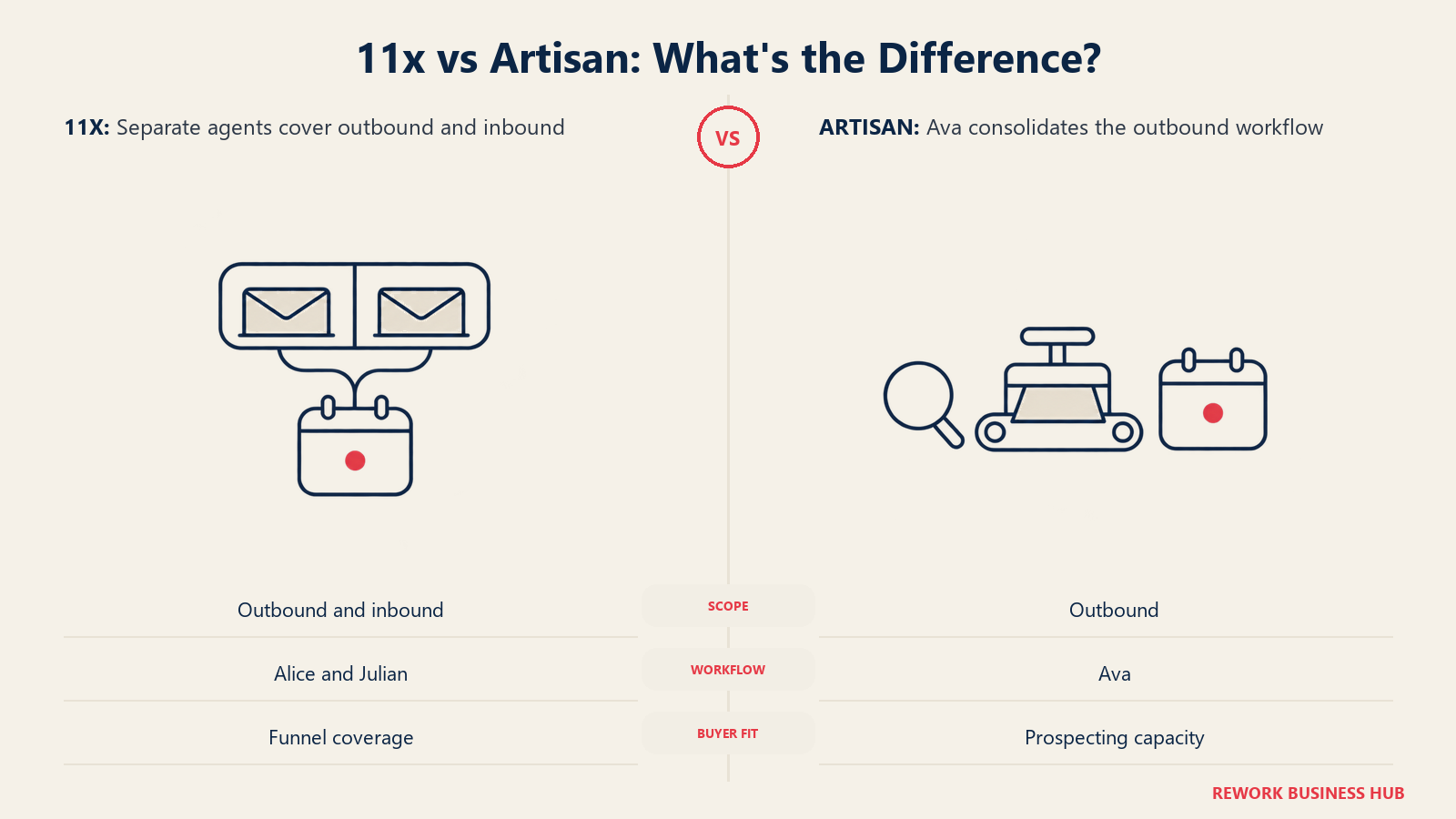
11x sells a small roster of named digital workers. Alice covers outbound and lifecycle plays. Julian covers inbound, with voice callbacks, website chat and routing. Artisan sells one headline product, Ava, an AI BDR, and sizes its plans around how many leads she contacts each month. So the real question isn't "which robot is smarter." It's whether you want to staff a revenue function with a roster of agents, including a phone-first inbound one, or buy a single outbound agent with a volume-based meter and a human-run dialer. This article walks through the differences that change a purchase decision, using what each vendor states on its own pages.
TL;DR
| 11x | Artisan | |
|---|---|---|
| Core idea | A roster of digital workers: Alice (outbound), Julian (inbound), plus a voice agent shown in demos | One autonomous AI BDR, Ava, covering research through booked meetings |
| Published pricing | None. Site routes to "Book a Demo" | None. Three plans, no dollar figures, "Talk to sales" |
| How the plan is sized | Pricing on request; confirm scope with the vendor | Lead volume, mailboxes and dialer seats on a credit model |
| Inbound handling | Yes. Julian handles callbacks, chat and live transfers | Not a stated focus; confirm with the vendor |
| Phone | AI phone agent plus a human dialer | AI dialer add-on where your reps make the calls; Ava handles email |
| Contact database | Real-time database described as 400M contacts | 250M+ verified B2B contacts |
| CRM sync | HubSpot, Salesforce, Pipedrive | Salesforce and HubSpot |
| Best for | Teams that want outbound and inbound voice from one vendor | Teams that want one outbound agent sized to lead volume |
| Weakest fit | Teams that need a price this week | Teams that need inbound conversion or an AI-run phone channel |
Key Facts
- 11x's outbound page describes a real-time company and lead database of 400M contacts and lists email, social, a power dialer and consented outbound calling among Alice's channels.
- Artisan's pricing page lists three plans: Team (about 2,500 leads contacted a month), Scale (about 6,000) and Enterprise (custom), with no dollar figures on any of them.
- Artisan says every plan includes 250M+ verified B2B contacts, Salesforce and HubSpot sync, autonomous replies and meeting booking, per its pricing page.
- Artisan announced Ava 2.0 on May 26, 2026, positioning her as an autonomous BDR for enterprise revenue teams with approval gates you can add at any step.
- 11x's security page states SOC 2 Type II certification, CASA Tier 3, and GDPR and CCPA alignment, with a detailed report available on request.
- 11x's inbound page says Julian can call back a form-fill lead within about a minute and route qualified buyers by territory, round-robin, named account or seniority.
What Each Tool Is Actually Built For
11x is built around the idea that a revenue team has several distinct jobs, and each one gets its own named agent. Alice handles outbound prospecting and lifecycle plays: lead generation, nurture, reactivation, closed-lost follow-up, and event registration, follow-up and no-show outreach. Julian handles the other direction, responding to inbound leads, engaging website visitors on pricing and product pages, qualifying them in conversation, and booking or transferring them to the right rep. A voice agent called Nina shows up in 11x's speed-to-lead demo.
Artisan is built around one job done end to end. Ava runs outbound from lead research through booked meetings, and Artisan's pitch is consolidation: data, enrichment, sequencing, a dialer and deliverability in one product so you don't stitch four tools together. The Ava 2.0 announcement frames her for enterprise revenue teams, with approval gates you place wherever you want a human to check the work.
That's a different shopping decision. With 11x you're deciding how much of the funnel to hand over. With Artisan you're deciding whether to hand over the outbound motion. If you want the field beyond these two, best AI agents for sales in 2026 compares 15 products across the full sales motion.
| 11x | Artisan | |
|---|---|---|
| Sweet-spot buyer | A sales leader who wants outbound and inbound handled by agents | A sales leader who wants the outbound motion automated and sized by volume |
| Who configures it | Your team defines playbooks and a knowledge base the agents draw on | Your team sets targeting, tone and approval gates |
| Typical first deployment | Alice on one outbound play, or Julian on inbound form fills | Ava on a defined segment, with approvals on |
| Primary buying trigger | Slow speed-to-lead or an SDR team that can't cover every lead | An outbound gap you want closed without adding headcount |
| Weakest fit | Small teams without an inbound motion or a quote budget | Teams whose real gap is inbound conversion |
Decision by Business Goal
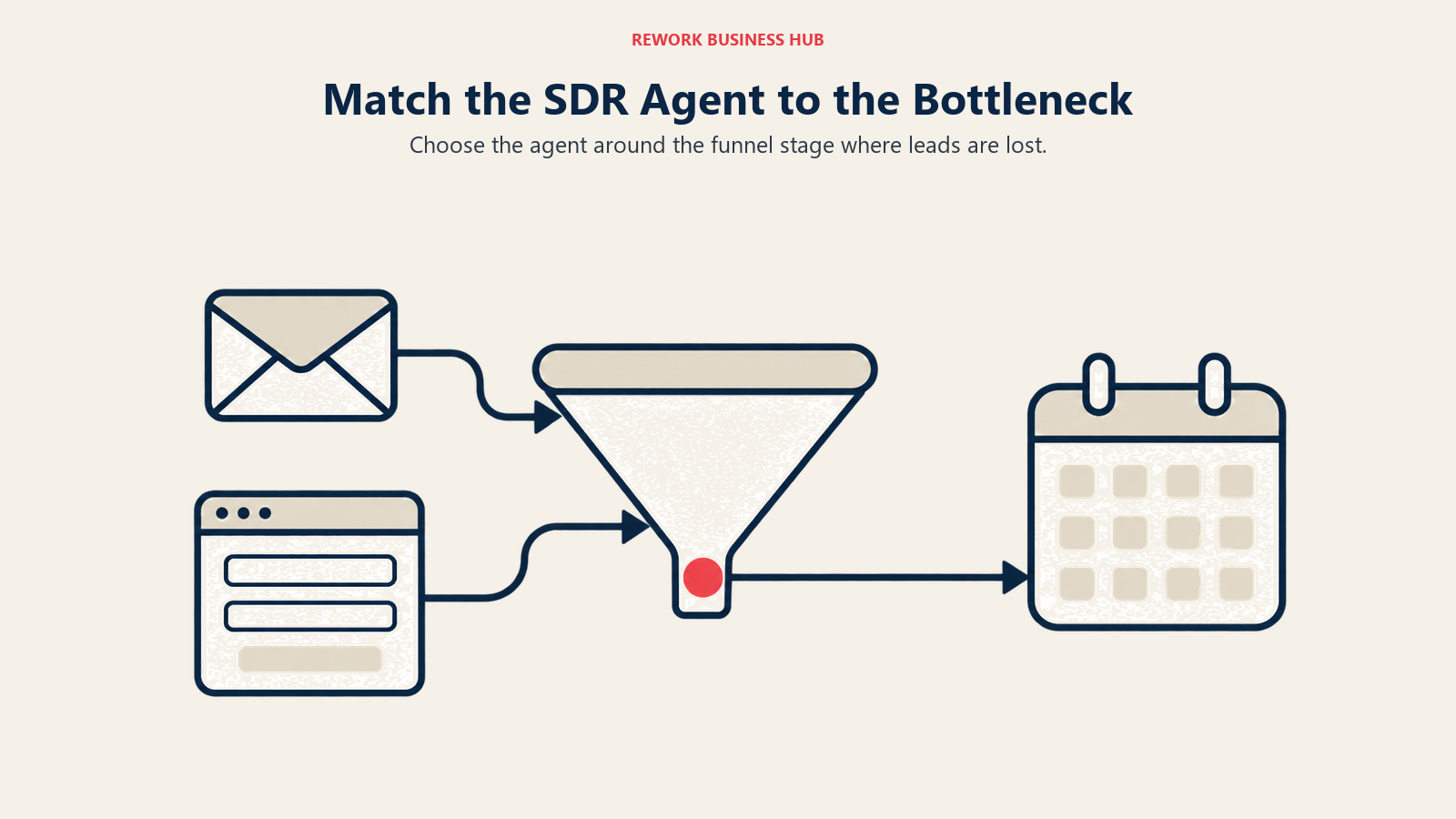
The right pick shifts with the question your board is actually asking. Here are the goal frames that come up most in these evaluations.
| Your goal | Lean toward | Why |
|---|---|---|
| Cut the time between a form fill and a conversation | 11x | Julian is built for callbacks within about a minute, chat and live transfer |
| Add outbound capacity without hiring SDRs | Either | Both sell autonomous outbound; Alice and Ava are the direct comparison |
| Keep a human in control of every message early on | Artisan | Approval gates at any step are central to the Ava 2.0 pitch |
| Run outbound, inbound and reactivation from one vendor | 11x | Alice and Julian cover both directions plus lifecycle plays |
| Get a defensible cost model before a sales call | Neither | Both quote only. Plan for a procurement cycle |
| Plan spend around a lead-volume meter | Artisan | Plans are sized by leads contacted, mailboxes and dialer seats |
If you're a CFO reading this, the useful framing is that neither vendor will let you compare on sticker price. You compare on scope: what the agent does, what volume it covers, and what happens at renewal.
Outbound Capability: Alice vs Ava
This is the closest like-for-like comparison, and it's where most buyers start.
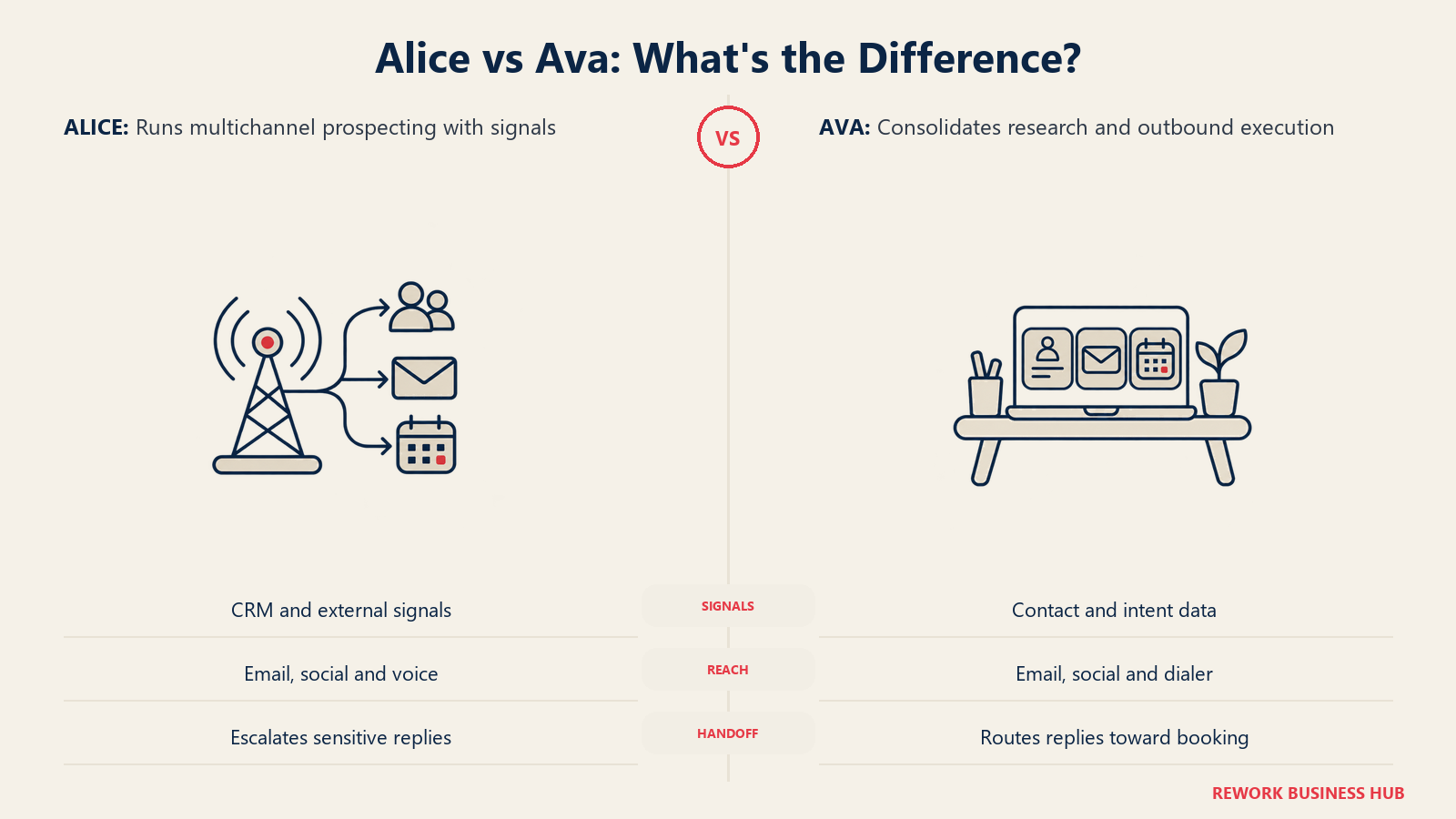
Alice, per 11x's outbound page, works from a real-time company and lead database described as 400M contacts, your own CRM leads, and third-party signals such as funding rounds, hiring spikes and job changes. She can also use website visitor tracking and G2 buying signals, and she researches live on the web, including news and 10-K filings. Outreach goes out over email and social, and the page also describes a power dialer and rep-led calls where research is prepared before the rep dials, plus consented outbound calling. It also mentions multilingual outreach, without listing specific languages.
Ava, per Artisan, works from a database of 250M+ verified B2B contacts and intent signals. Artisan describes her as handling lead research, one-to-one outreach, reply handling and meeting booking. On the pricing page, the FAQ is explicit about the phone: Ava handles email and your reps make the calls, and each call comes with a brief beforehand and a follow-up summary afterward. The dialer is an add-on priced per seat on the Team plan.
The practical difference: Alice's pitch leans toward multi-channel autonomy, with voice agents as a separate product line. Ava's pitch is an email-driven agent that feeds a human calling motion. If your SDRs are good on the phone and your problem is the research and email volume, Ava's shape matches. If you want the phone channel itself automated, 11x is the one that talks about it.
| Alice (11x) | Ava (Artisan) | |
|---|---|---|
| Lead research | Real-time database (400M contacts per the vendor), CRM data, signals, live web | 250M+ verified B2B contacts, intent signals |
| Email outreach | Yes | Yes |
| Social outreach | Yes, platforms not named on the page | Not specified; confirm with the vendor |
| Phone | Power dialer, consented outbound calling, voice agents as a separate product | AI dialer add-on; your reps make the calls |
| Reply handling | Smart Replies answer questions, handle common objections and escalate sensitive conversations | Autonomous replies and meeting booking on all plans |
| Languages | Multilingual outreach, no list given | Confirm with the vendor |
| Human approval step | Page does not describe a pre-send approval; confirm with the vendor | Approval gates at any step you choose |
For a wider view of tools that do the same job, see best AI agents for lead generation in 2026 and best AI agents for cold email in 2026.
Inbound, Voice and Speed to Lead
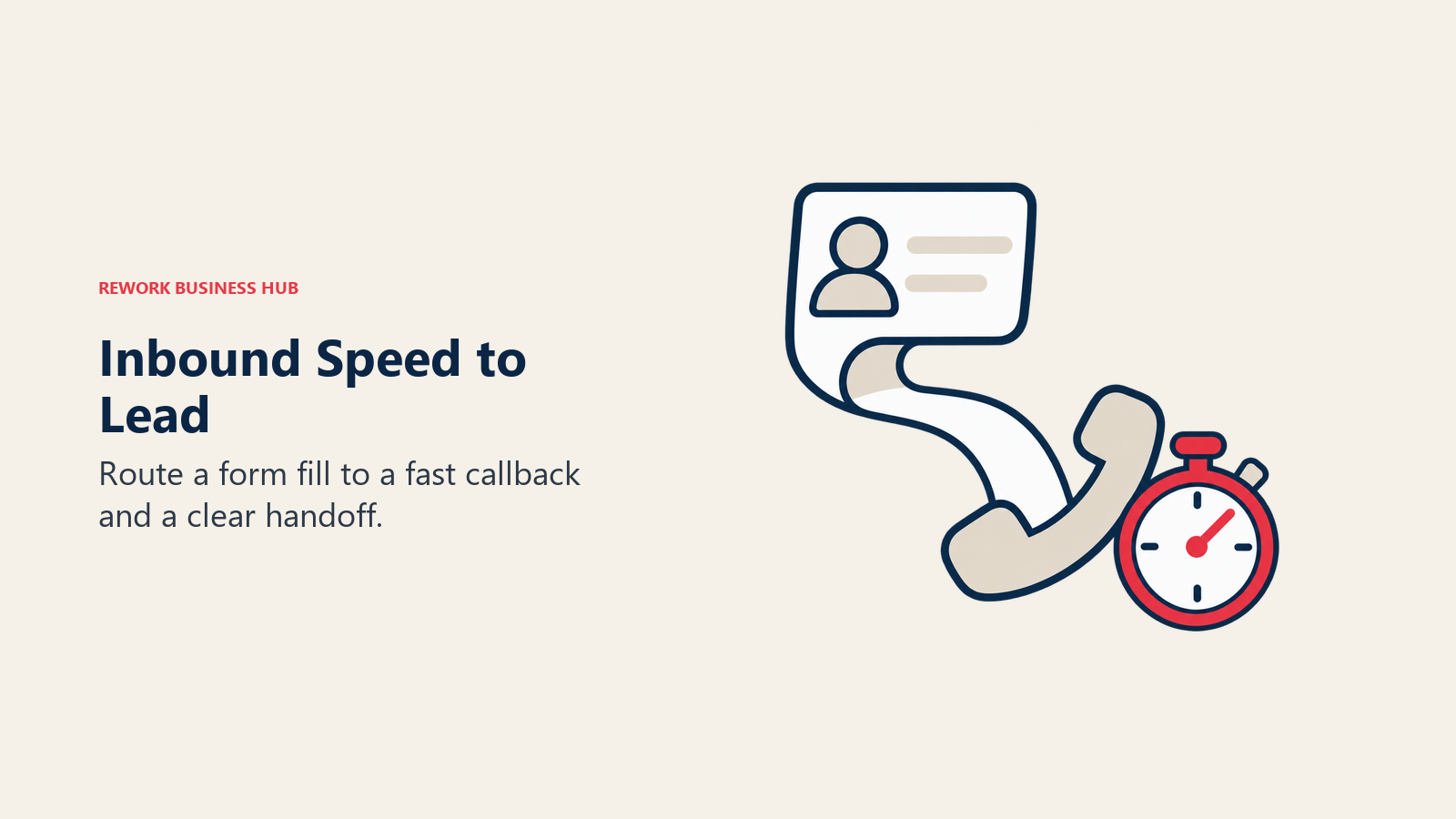
Here the two products stop overlapping. 11x has a whole product, Julian, for inbound. Its page says Julian can call back a form-fill lead within about a minute, engage website visitors proactively, qualify against timeline, use case, pain point, budget, team size and buying committee, score against your ICP, and route by territory, round-robin, named account or seniority. Voice, website chat, SMS, email and WhatsApp are the listed channels. Qualified buyers are booked onto a rep's calendar or transferred live, and the handoff includes the transcript, the qualification criteria and the why-now context.
Artisan's public pages don't describe an inbound product. Ava is positioned for outbound. That doesn't mean Artisan can't touch inbound leads, but it isn't what the company leads with, so confirm it in writing if inbound matters to you.
| 11x (Julian) | Artisan | |
|---|---|---|
| Inbound lead callback | Yes, within about a minute per the vendor | Not a stated focus |
| Website chat | Yes | Not stated |
| Lead qualification in conversation | Yes (timeline, use case, pain point, budget, team size, buying committee) | Not stated for inbound |
| Routing | Territory, round-robin, named account, seniority | Not stated |
| Handoff to a rep | Calendar booking or live transfer with transcript | Meeting booking on outbound |
| Router integration | Chili Piper listed | Not stated |
If speed to lead is your leakiest stage, this table decides the comparison before any other does.
Team and Role Fit
Match each tool to who will live with it every day.
| Role | 11x | Artisan |
|---|---|---|
| CRO / VP Sales | Gets a single vendor for outbound and inbound motions | Gets one agent and one volume-based meter to defend |
| Head of SDR / BDR | Alice and Julian change what the team does with its day: reviewing handoffs and live transfers | Ava shifts the team to calling and closing, with a brief before each call |
| RevOps | Owns playbooks, knowledge base, CRM mapping and routing rules | Owns targeting, approval gates, CRM sync and mailbox setup |
| CFO | Needs a written scope and term before comparing | Needs a written plan size (leads, mailboxes, dialer seats) before comparing |
| IT / Security | Reviews SOC 2 report on request | Reviews security controls; confirm certifications in writing |
Pricing at Real Team Sizes
Neither vendor publishes a dollar figure, so a seat-count table would be invented. What you can compare is how each one tells you the price will be built.
| 11x | Artisan | |
|---|---|---|
| Published price | Pricing on request. No prices on the site | Pricing on request. No dollar figures on the pricing page |
| What drives the quote | Which agents, which plays, which volume. Confirm with the vendor | Lead volume, mailboxes and dialer seats on a credit model |
| Plan names | Not published | Team, Scale, Enterprise |
| Volume reference points | Not published | Team about 2,500 leads contacted a month, Scale about 6,000 |
| Add-ons | Confirm with the vendor | AI dialer priced per seat on Team |
| 10, 25, 100 seat math | Not possible from public data | Not possible from public data |
Artisan states there are "no hidden line items," and describes credit volume and dialer seats as tuned to your pipeline. 11x says nothing about packaging on its site. Our own read of the category, covered in best 11x alternatives and best Artisan alternatives, is that the useful procurement move is to ask each vendor the same five questions in writing: what's in scope, what volume the quote covers, what happens when you exceed it, how long the term is, and what the exit looks like. Buyer-reported figures for this category circulate widely, but they are secondhand, so budget from a written quote.
Implementation and Change Management
| 11x | Artisan | |
|---|---|---|
| Setup inputs | Playbooks, knowledge base, CRM connection, mailbox and deliverability setup | Targeting, tone and CTA settings, CRM sync, mailboxes |
| Onboarding support | Confirm with the vendor | CSM support and onboarding on all plans; dedicated CSM and CRM setup on Scale; forward-deployed strategist on Enterprise |
| Deliverability | Mailbox health managed in-house, per the vendor | Deliverability is part of the consolidated stack |
| Training load for reps | Handling live transfers and reviewing agent handoffs | Using call briefs and follow-up summaries |
| Slowest part | Defining qualification and routing rules for Julian | Getting the lead segment and message guardrails right before scaling volume |
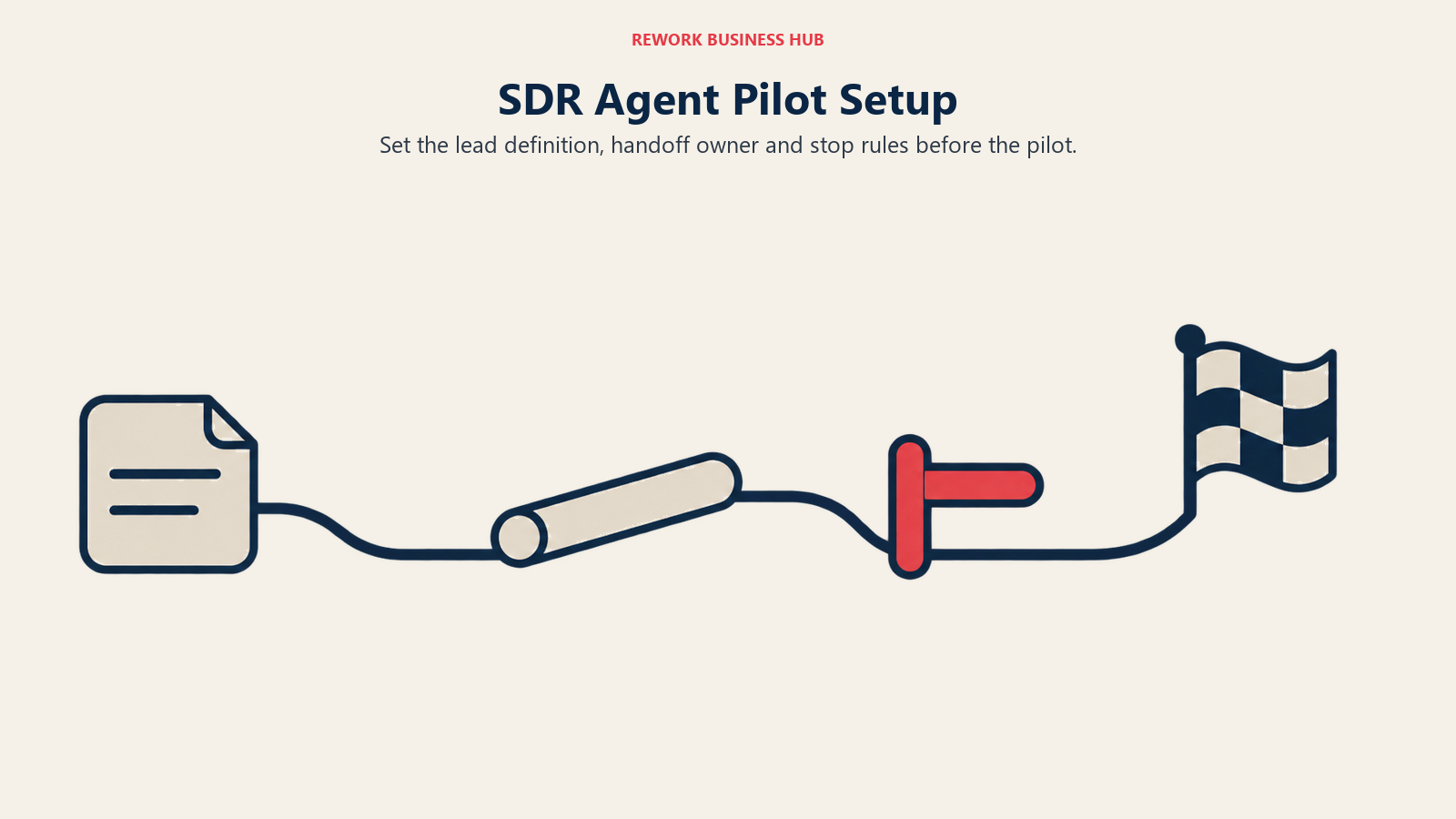
Whichever you choose, the slow part isn't the software. It's agreeing internally on who counts as a qualified lead, who owns a handoff, and when the agent must stop and hand to a person. Write those down before the pilot, not during it.
Risk, Governance and Data
Both vendors want enterprise buyers, and both will face the same questions in security review.
11x's security page states SOC 2 Type II certification covering security, availability, processing integrity, confidentiality and privacy, with annual audits and a detailed report on request. It also lists CASA Tier 3, GDPR alignment with data processing agreements for EU customers, CCPA policies, AWS hosting, TLS in transit and AES-256 at rest. The page doesn't give audit dates or certificate numbers, so ask for the report.
Artisan's pricing page says the Enterprise plan adds advanced security controls with audit logs. Its public pricing and product pages don't list certifications beyond that, so confirm SOC 2 status, SSO and data handling directly with the vendor before you sign.
| 11x | Artisan | |
|---|---|---|
| SOC 2 | Type II stated on the security page | Confirm with the vendor |
| Other attestations | CASA Tier 3, GDPR and CCPA statements | Confirm with the vendor |
| Audit logs | Confirm with the vendor | Enterprise plan |
| Human oversight | Escalation of sensitive conversations; unsubscribe requests honored automatically | Approval gates at steps you choose |
| Calling compliance | "Consented Outbound Calling" listed as a feature | Reps place calls through the dialer |
The governance point that matters most for outbound is the one neither security page settles: what the agent is allowed to say in your name. Run a sample of real messages past your legal and brand owners before volume goes up.
What Neither Pitch Tells You About Total Cost
A quote is only part of what an autonomous outbound agent costs you. Three other line items show up after you sign, and they're the same for both vendors.
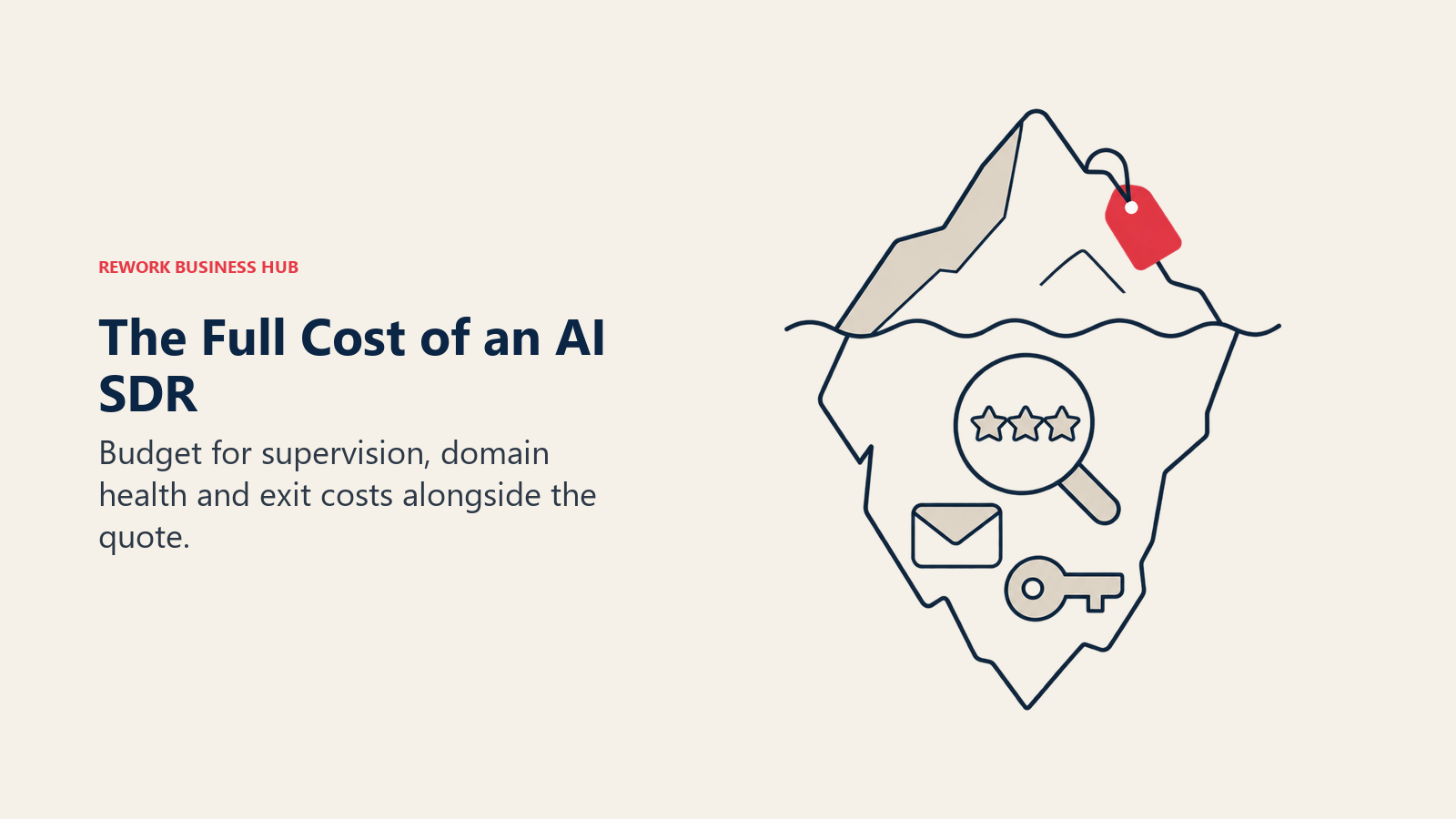
The first is the people who supervise the agent. Someone has to own the target list, review a sample of messages, handle the replies the agent escalates, and keep the CRM clean. Artisan's approval gates and 11x's escalation of sensitive conversations both exist because the agent will meet situations it shouldn't handle alone. Budget a named owner, probably a RevOps lead or a senior SDR, with a few hours a week. If nobody owns it, quality drifts and the first symptom is a spam complaint, not a dashboard alert.
The second is the cost of a bad week. Autonomous senders can burn a domain faster than a person can. Both vendors say they manage deliverability, 11x describing mailbox health as handled in-house and Artisan listing deliverability inside its consolidated stack. Ask each one what happens to your sending domains if complaint rates climb, whether you can pause sends yourself, and who pays to replace a damaged mailbox.
The third is exit cost. A quote-only contract with a long term and a volume commitment is hard to unwind if the pilot disappoints. Ask for the shortest term the vendor will give you for a first deployment, and ask what happens to your sequences, templates and call notes if you leave. Your CRM should remain the system of record in either case, which is why both vendors lead with CRM sync.
How to Run a Fair Side-by-Side Test
If you're able to pilot both, the comparison is only useful if the conditions match. Give each agent the same segment size, the same ideal customer definition, the same offer and the same approval settings. Split a list of comparable accounts at random rather than letting one vendor take the easy half.
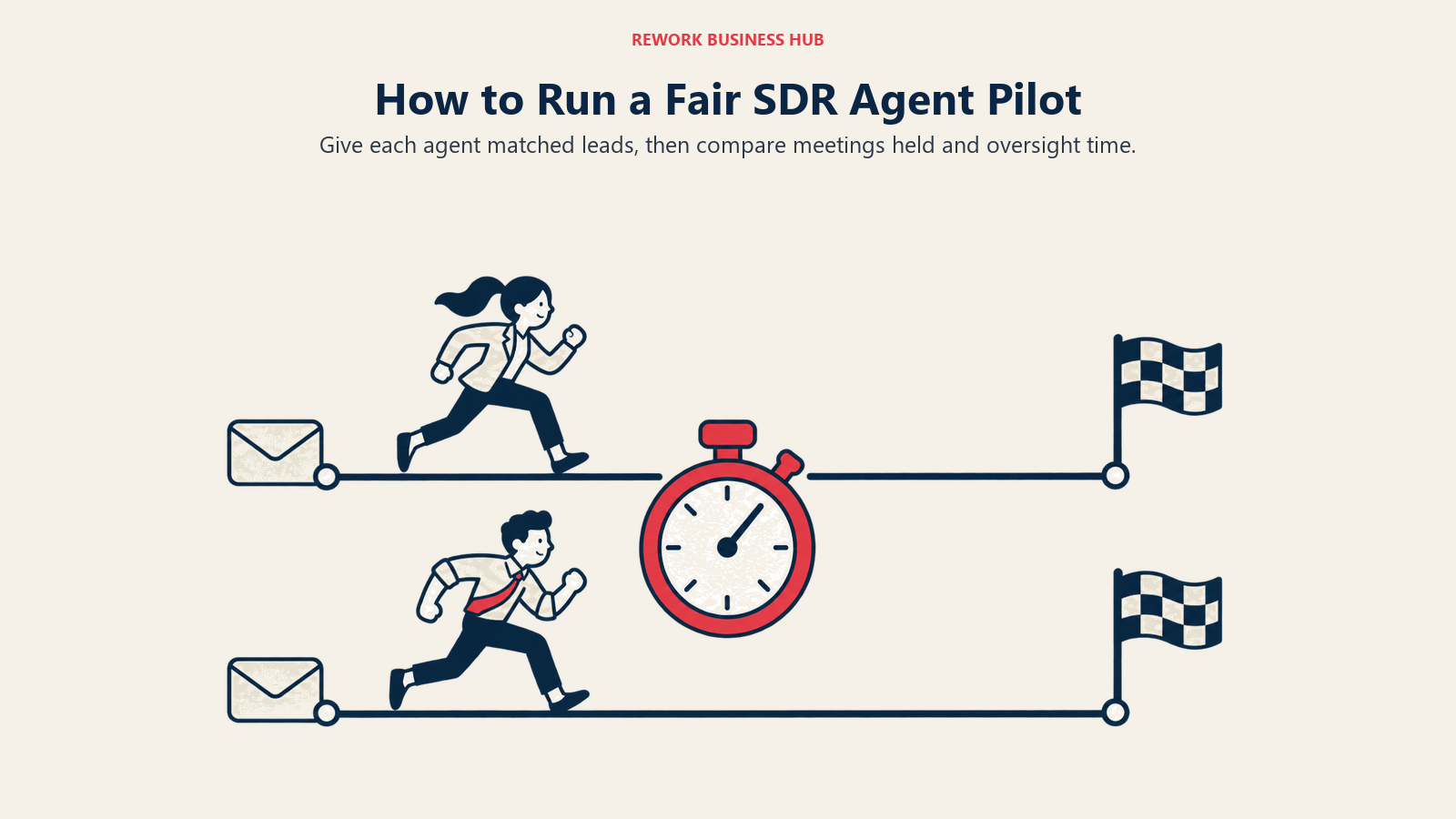
Measure the same outcomes for each: positive replies, qualified meetings held (not just booked), meetings that become pipeline, and the hours your team spent supervising. If you're testing 11x's inbound side, time the gap from form fill to first live conversation before and after. And keep a human-run control group on a similar list, so you have a baseline that isn't the agent's own report. A vendor dashboard will always look good. Your CRM is the referee.
| Test variable | Keep identical across both vendors |
|---|---|
| Account segment | Same size, industry and region, split at random |
| Offer and message guardrails | Same value proposition, banned phrases and call to action |
| Approvals | Same level of human review for the first two weeks |
| Success metrics | Positive replies, meetings held, pipeline created, supervision hours |
| Control group | A human-run list of similar accounts |
When 11x Is the Right Call
- You lose deals in the gap between a form fill and a first conversation, and you want an agent calling back in about a minute.
- You want outbound and inbound handled by one vendor, so qualification, routing and handoff follow the same rules.
- You want an AI-run phone channel, not just an AI that feeds your callers.
- Your funnel includes lifecycle plays like closed-lost follow-up, reactivation and event no-shows, and you want named agents running them.
- Your security reviewers want a stated SOC 2 Type II certification they can request a report for.
When Artisan Is the Right Call
- Your gap is outbound capacity, and your reps are already strong on the phone.
- You want plan size tied to lead volume, mailboxes and dialer seats, so the conversation with finance has a clear unit.
- You want approval gates at steps you choose while you build trust in the agent's messages.
- You want data, sequencing, a dialer and deliverability in one product instead of four contracts.
- You'd rather start with one agent and one segment than a roster of agents.
If Neither Fits
Some teams rule both out on price transparency alone. Others find that the real gap is a rep who needs better research, not an agent replacing the rep. If that's you, best 11x alternatives and best Artisan alternatives cover 12 options each, including products with published prices.
Decision Framework
| If you are... | Pick |
|---|---|
| Losing leads between form fill and first contact | 11x (Julian) |
| Automating outbound email at volume with reps on the phone | Artisan (Ava) |
| Wanting outbound, inbound and lifecycle plays from one vendor | 11x |
| Wanting approval gates built into the pitch from day one | Artisan |
| Needing a stated SOC 2 Type II to start security review | 11x (confirm the report) |
| Needing a published price before the first call | Neither; look at the alternatives guides |
| Unsure whether you need an agent or a better rep workflow | Pilot before you buy, see below |
What to Do Next
- Write the job down. One sentence: which funnel stage, which segment, which volume, which success metric. If you can't write it, you aren't ready to buy either product.
- Request the same written quote from both. Scope, volume, term, overage, exit. Compare the answers, not the demos.
- Pilot one segment for four to six weeks. Use a list of accounts you already know well, keep approvals on, and measure replies, qualified meetings and the rep time spent cleaning up after the agent.
- Review a sample of sent messages weekly. Pull 50 real messages, read them as a prospect would, and decide whether you'd put your name on them.
- Decide on evidence. If the pilot's meetings convert at the rate of your human-sourced ones, scale the volume. If not, you've learned that cheaply.

Co-Founder, Rework.com
On this page
- TL;DR
- Key Facts
- What Each Tool Is Actually Built For
- Decision by Business Goal
- Outbound Capability: Alice vs Ava
- Inbound, Voice and Speed to Lead
- Team and Role Fit
- Pricing at Real Team Sizes
- Implementation and Change Management
- Risk, Governance and Data
- What Neither Pitch Tells You About Total Cost
- How to Run a Fair Side-by-Side Test
- When 11x Is the Right Call
- When Artisan Is the Right Call
- If Neither Fits
- Decision Framework
- What to Do Next