Processo de Handoff de MQL para SQL: Como Equipes de Receita Movem Leads Sem Perdê-los
Turn this article into takeaways for your work.


Each assistant summarizes the article only for you and suggests best practices for your work.
Equipes de receita debatem muitas coisas: cobertura de Pipeline, qualidade de MQL, modelos de atribuição, metas de quota. Mas o problema mais caro na maioria dos relacionamentos entre marketing e vendas não é nenhum desses. É o que acontece nas 24 a 48 horas entre um lead se qualificar como MQL e um representante fazer o primeiro contato.
Leads se perdem. Ou chegam a vendas sem contexto. Ou representantes não registram os resultados, então marketing não tem visibilidade sobre o que aconteceu. Ou vendas ignora os leads em silêncio enquanto ainda espera que marketing preencha o Pipeline. Ou marketing considera um lead "entregue" assim que um campo do CRM muda, enquanto vendas o considera "recebido" apenas quando um representante o aceita ativamente.
Nenhuma dessas situações é má intenção. São lacunas de processo: lugares onde a responsabilidade não foi definida, onde o handoff não tinha protocolo, onde a prestação de contas não foi construída. O handoff é onde essas lacunas se tornam problemas de receita.
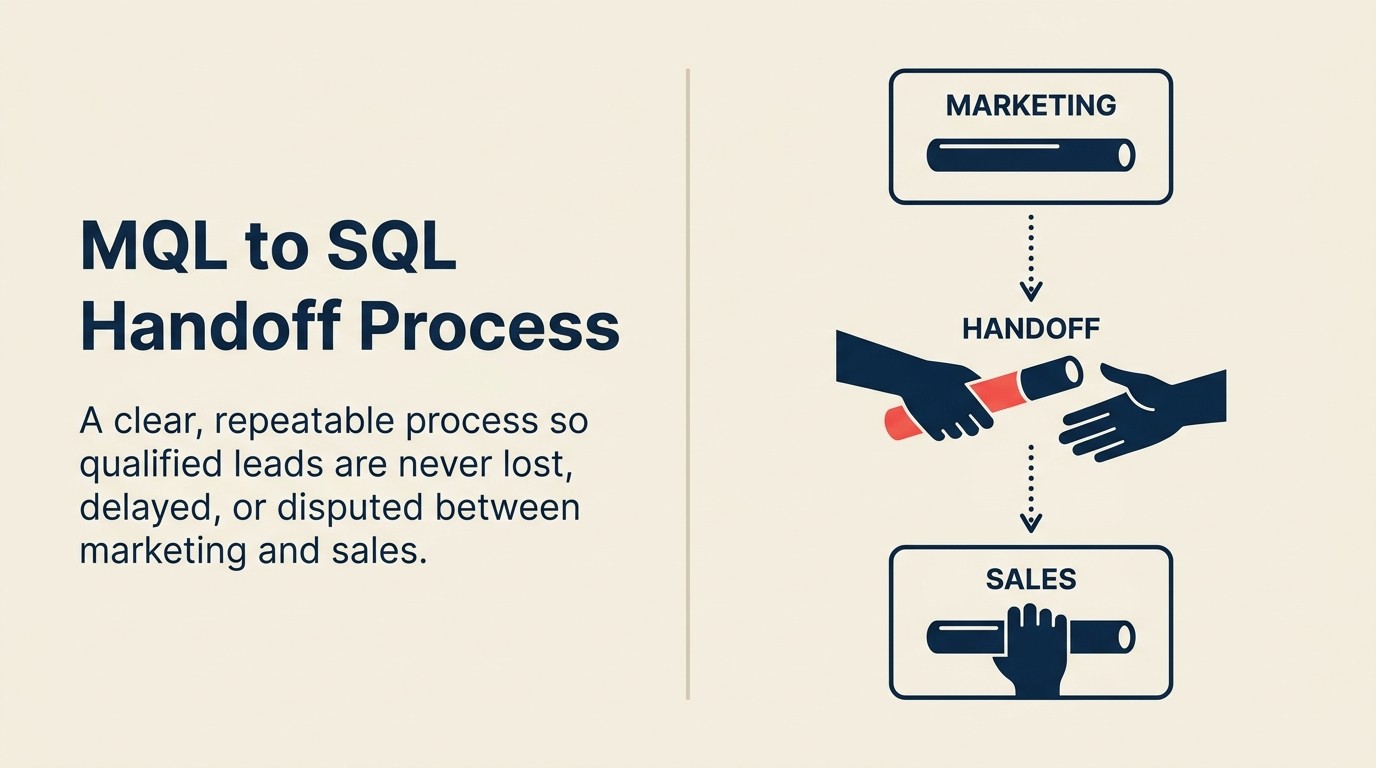
Um handoff limpo não é um clique de botão ou uma mudança de status. É uma sequência de ações, responsabilidades e confirmações que ambas as equipes concordaram antecipadamente.
O Que é um Handoff de Fato
A palavra "handoff" sugere uma transferência simples, uma parte entregando algo a outra. Mas na prática, um handoff de lead é um processo de múltiplas etapas com pelo menos cinco ações distintas, duas partes com responsabilidades diferentes e uma definição de "concluído" que a maioria das equipes nunca acorda explicitamente.
O lado de marketing no handoff:
- Verificar que o lead atende ao limite de MQL (score, sinal de intenção ou critérios de qualificação)
- Enriquecer o registro do lead com dados de contato completos e contexto da empresa
- Rotear o lead ao representante ou fila corretos
- Registrar o gatilho que causou a conversão de MQL (qual ação cruzou o limite)
O lado de vendas na aceitação:
- Confirmar o recebimento do lead dentro do SLA acordado
- Revisar o histórico de atividades e o contexto da empresa antes do primeiro contato
- Fazer a primeira tentativa de contato personalizado
- Registrar o resultado (aceito, contatado, rejeitado com motivo) de volta ao CRM
Como "concluído" se parece: O handoff está completo quando o lead foi reconhecido por um representante, uma tentativa de contato foi registrada e o resultado foi documentado. Um lead que foi passado mas nunca reconhecido não é um handoff concluído. Um lead que foi aceito mas nunca contatado não é um handoff concluído. Ambos os lados precisam fechar seu ciclo.
A maioria das disputas sobre qualidade de handoff surge de equipes usando definições diferentes de "concluído." Escreva sua definição. Concorde com ela. Consulte-a.
Fatos Relevantes: Eficiência do Handoff de MQL
- 25% do orçamento médio de marketing B2B é gasto gerando leads que vendas nunca faz follow-up, de acordo com a Forrester Research, e a maior parte desse desperdício ocorre na fronteira do handoff.
- Organizações com um SLA de handoff de lead definido têm taxas de conversão de MQL para oportunidade 36% mais altas em comparação com aquelas com processos informais ou não escritos (Demand Gen Report).
- Handoffs em buraco negro (onde leads são passados mas nunca reconhecidos ou rejeitados por vendas) correspondem a cerca de 40% do volume total de MQL em organizações desalinhadas (SiriusDecisions).
O Processo de Handoff em 5 Etapas
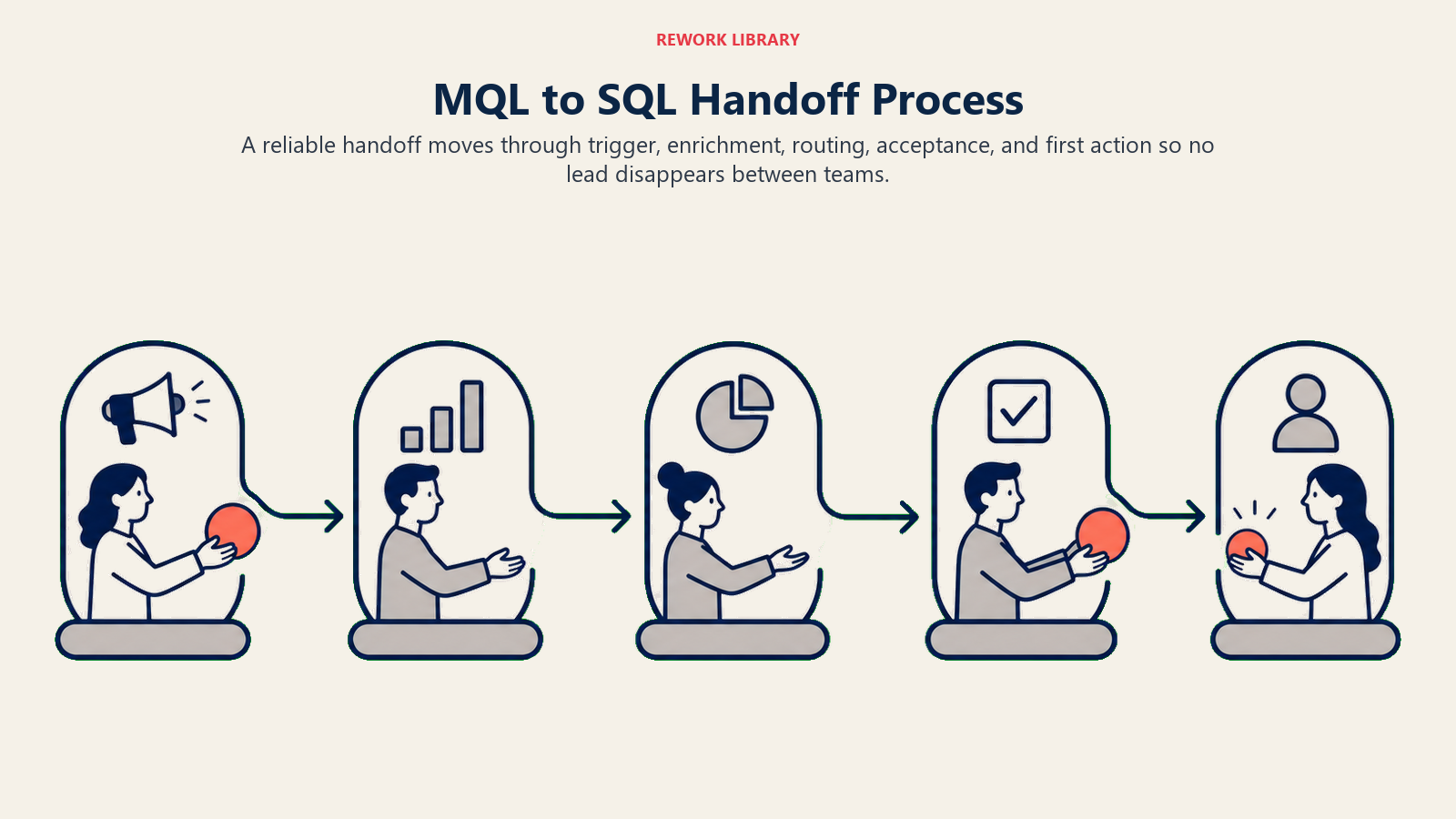
O Processo de Handoff em 5 Etapas é um framework estruturado para mover leads qualificados de marketing para vendas sem perda de informação, erros de roteamento ou lacunas de responsabilidade. As cinco etapas são: (1) Gatilho: o evento de conversão de MQL dispara com base em critérios inequívocos; (2) Passagem de Enriquecimento: marketing confirma a completude dos dados antes do roteamento; (3) Roteamento: o lead é atribuído ao representante correto usando lógica deliberada de território; (4) Janela de Aceitação: o representante confirma explicitamente o recebimento dentro do SLA acordado; (5) Primeiro Contato: o representante registra uma tentativa de contato personalizado com canal, timestamp e resultado. Um handoff só está "concluído" quando todas as cinco etapas têm uma ação registrada pela parte responsável.
Etapa 1: Gatilho
O evento de conversão de MQL dispara. Isso acontece quando um lead ultrapassa o limite de score acordado, envia um formulário de alta intenção (solicitação de demo, consulta de preços) ou é manualmente sinalizado por marketing como pronto para contato de vendas.
O gatilho deve ser inequívoco. Se o limite é "score ≥ 65", então qualquer lead com 65 ou mais dispara o handoff, não "aproximadamente 65" ou "65 a menos que o representante ache que a empresa é pequena demais". Discrição na etapa de gatilho introduz inconsistência que torna impossível medir o desempenho do handoff com precisão. Para equipes que ainda não definiram o que qualifica um lead, o framework de definição de MQL é o ponto de partida correto antes de configurar o gatilho.
Etapa 2: Passagem de Enriquecimento
Antes de o lead ser roteado a vendas, marketing ou uma etapa de enriquecimento automatizada confirma que o registro de contato está completo. Os campos obrigatórios variam por equipe, mas no mínimo: nome, sobrenome, e-mail comercial, nome da empresa, faixa de tamanho da empresa e o evento gatilho que causou a conversão de MQL.
Um lead com dados incompletos não está pronto para handoff. Um representante que recebe um lead com apenas um nome e um endereço de Gmail não pode fazer um contato significativo. Marketing é responsável pela completude dos dados antes que o relógio do SLA de vendas comece a correr.
Etapa 3: Roteamento
O lead é associado ao representante ou fila correta com base em território, segmento ou critérios de ICP. Não é uma escolha aleatória ou uma rodada padrão. O roteamento deve refletir uma lógica deliberada: qual representante tem este território, qual representante se especializa neste tamanho de empresa ou vertical, qual fila lida com o excesso. Sua estratégia de distribuição de leads deve alimentar diretamente a lógica de roteamento para que cada novo lead chegue ao representante mais adequado.
Erros de roteamento (leads indo ao representante errado, leads indo a uma fila não monitorada, leads parados em uma fila que ninguém verifica) estão entre as causas mais comuns de falha no handoff. Revise suas regras de roteamento trimestralmente em relação à sua estrutura atual de território e representantes.
Etapa 4: Janela de Aceitação
O representante designado confirma o recebimento do lead dentro do SLA acordado. Esta é uma ação discreta, não recebimento passivo. O representante deve confirmar: "Revisei este lead e estou aceitando-o para contato" ou "Estou rejeitando-o com este motivo documentado."
A janela de aceitação é onde a responsabilidade é estabelecida. Se representantes podem receber leads sem reconhecê-los, você não tem visibilidade sobre se o lead foi visto, revisado ou ignorado intencionalmente. Incorpore o requisito de confirmação ao seu fluxo de trabalho no CRM. Não dependa de os representantes fazerem isso voluntariamente.
Etapa 5: Primeiro Contato
O representante faz uma primeira tentativa de contato personalizada dentro do prazo acordado (veja o SLA de resposta de cinco minutos para leads de alta intenção). A tentativa é registrada no CRM com o canal usado, data e hora e resultado (contatado, deixou mensagem de voz, sem resposta, resposta automática recebida).
O registro não é opcional. Se a primeira tentativa de contato não estiver no CRM, ela não aconteceu para fins de medição e responsabilidade. Estes são os dados que alimentam os relatórios de ciclo fechado que marketing precisa para calibrar a qualidade dos leads ao longo do tempo.
O Que Marketing Deve Fornecer no Handoff
O registro do lead que chega a vendas deve responder a três perguntas que um representante precisa antes de fazer o primeiro contato: Por que este lead se qualificou? O que sabemos sobre a empresa? O que essa pessoa fez com nosso conteúdo e canais?
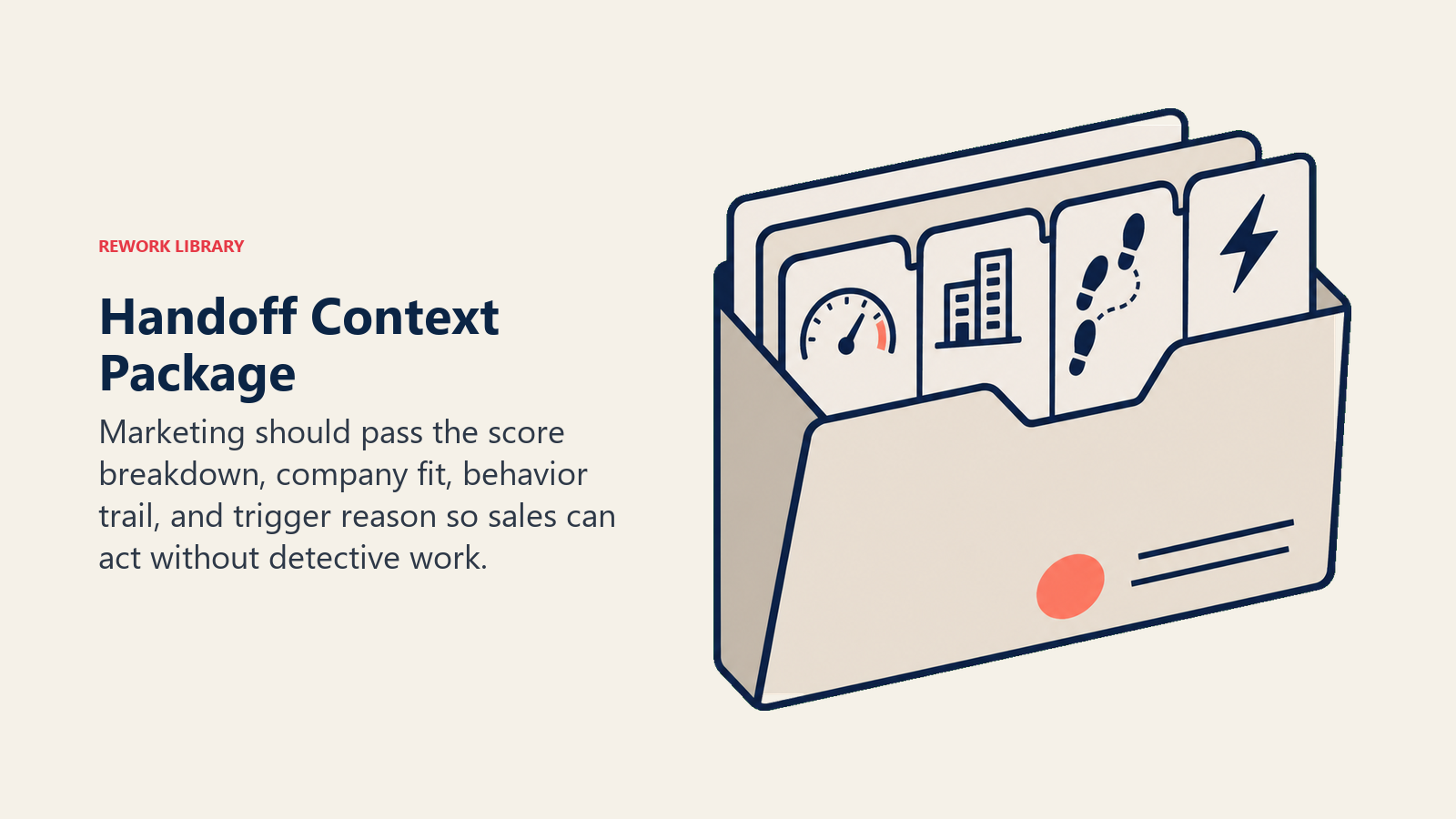
Detalhamento do lead score (fit + intenção + comportamento). Não passe apenas um número de score. Passe o detalhamento. Um score de 72 composto principalmente por atributos de fit (tamanho certo de empresa, setor certo, cargo certo) significa algo diferente de um 72 composto principalmente por sinais comportamentais (alto engajamento, múltiplas visitas a páginas, baixou o guia de preços). Vendas precisa saber a composição, não apenas o total. Esse detalhamento também ajuda os representantes a aplicar critérios de entrada de oportunidade corretamente: um score focado em fit pode qualificar para Pipeline, enquanto um score puramente comportamental precisa de mais discovery primeiro.
Histórico de atividades. Páginas visitadas, conteúdo baixado, e-mails abertos e clicados, eventos participados, conversas por chat, atividade em trial. Este é o contexto que transforma uma ligação fria em uma conversa relevante. "Vi que você estava vendo nossa página de preços enterprise na semana passada, então queria entender o que você está avaliando" é uma abertura diferente de "percebi que sua empresa está em nosso sistema."
Contexto da empresa. Setor, tamanho da empresa, receita estimada, stack tecnológico conhecido (pelo enriquecimento), notícias relevantes sobre a empresa (captação recente, mudanças de headcount, nova liderança). Este é o panorama firmográfico que o representante precisa para saber se este lead se encaixa no ICP e como enquadrar o contato.
Quaisquer interações diretas. Conversas por chat, solicitações de demo, participação em eventos, qualquer touchpoint onde o lead e sua equipe trocaram informações diretamente. Esses são ouro. O representante deve referenciá-los explicitamente no primeiro contato.
Este pacote de contexto pode ser montado a partir dos dados de atividade do MAP e de ferramentas de enriquecimento. Ele deve chegar no registro do CRM, não em uma mensagem separada no Slack ou por e-mail que se perde.
O Que Vendas Deve Fazer Após a Aceitação
Aceitar um lead não é o mesmo que trabalhar um lead. Defina explicitamente as obrigações pós-aceitação.

Pesquisa inicial (não contate às cegas). Antes do primeiro contato, o representante deve gastar 3 a 5 minutos no site e no perfil do LinkedIn da empresa. Não é uma pesquisa profunda. É o suficiente para entender o que a empresa faz, quem são e se o contexto fornecido por marketing é consistente com o que o representante pode ver. Um representante que liga para uma empresa de e-commerce de R$25M e diz "sei que você está no enterprise" porque os dados de enriquecimento estavam errados destrói a primeira impressão.
Primeiro contato personalizado dentro do SLA. O primeiro contato deve referenciar algo específico: uma peça de conteúdo que baixaram, o problema que mencionaram em um chat, o setor em que a empresa está. E-mails genéricos de "só queria entrar em contato" não são contatos iniciais aceitáveis para leads de handoff. Marketing forneceu o contexto. O representante é esperado que o use.
Registre o resultado: aceito, contatado, rejeitado com motivo. Cada lead precisa de uma disposição dentro da janela de SLA. Um de quatro resultados deve ser registrado: aceito e contatado, aceito e tentado (sem resposta), adiado com explicação (lead solicitou contato posterior) ou rejeitado com motivo documentado (dados ruins, pessoa errada, concorrente, fora do território). Ignorar em silêncio não é uma categoria.
O motivo de rejeição é especialmente importante. Quando marketing vê que 30% das rejeições citam "cargo errado", isso é um sinal para recalibrar o ICP ou o modelo de scoring. Quando vendas registra rejeições sem motivos, esse sinal desaparece.
Modos de Falha Comuns
A maioria das falhas de handoff segue padrões previsíveis. Conhecê-los permite que você construa a prevenção no design do processo.
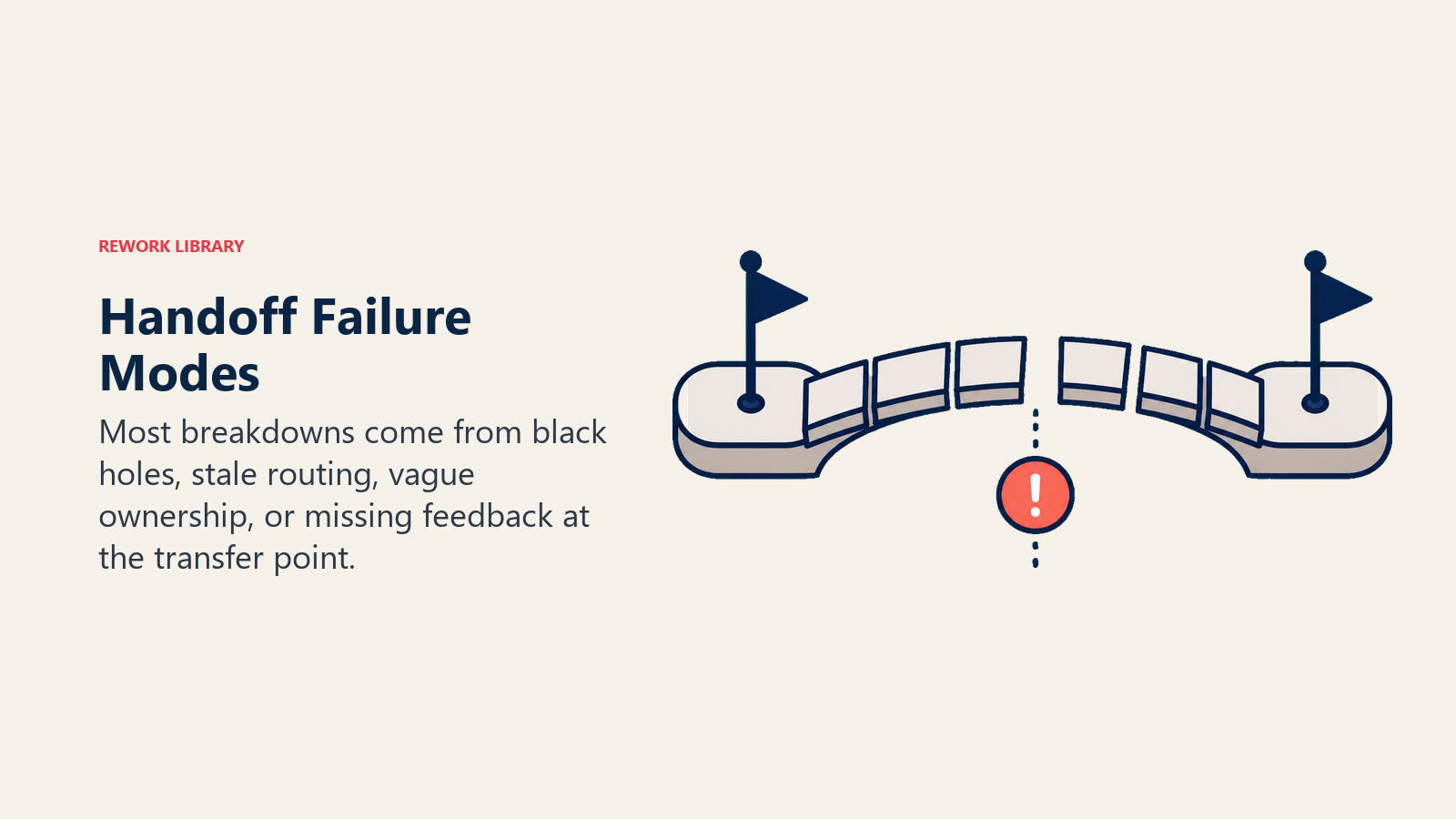
Handoffs em buraco negro. O lead é passado. Ninguém o reconhece. Ninguém o rejeita. Fica em uma fila ou na lista de um representante e envelhece sem contato. Este é o modo de falha mais caro. Desperdiça o custo de aquisição do lead e destrói silenciosamente a métrica de contribuição de Pipeline de marketing. Solução: exija confirmação explícita com um SLA delimitado no tempo, escalada automatizada se a confirmação não acontecer dentro de 2 horas.
Dados incompletos no handoff. O representante recebe um lead com um nome, um nome de empresa e um score. Sem histórico de atividades, sem enriquecimento, sem contexto de gatilho. Ele não sabe por que esse lead se qualificou. Liga às cegas. A ligação não vai bem. Rejeita o lead e culpa a qualidade de marketing. Solução: crie um checklist pré-voo (abaixo) que impeça o roteamento até que os requisitos de dados sejam atendidos.
Manipulação de score. Marketing infla scores para atingir a quota de MQL. Um lead com fit mínimo é empurrado acima do limite contando comportamentos de baixo sinal (aberturas de e-mail, uma única visita de página) como alta intenção. Vendas descobre esse padrão após algumas semanas de conversão ruim. Eles param de confiar na designação de MQL completamente. Solução: separe a medição do volume de MQL da lógica de limite. Quota de MQL não deve ser uma métrica de marketing que cria incentivo para manipular o modelo. O relatório da Forrester sobre quando bons modelos de scoring dão errado identifica o desalinhamento de incentivos como o principal driver do colapso de sistemas de scoring.
Rejeição silenciosa. O representante recebe o lead. Revisa. Decide que não vale a pena trabalhar. Não registra uma rejeição. Simplesmente não faz nada. O lead fica parado. Marketing acha que está em andamento. Não está. Solução: automatize a escalada para leads que chegam a 4+ horas sem atividade. Uma flag de sem-atividade no CRM expõe leads rejeitados silenciosamente para inspeção.
| Modo de Falha | Como Parece | Solução |
|---|---|---|
| Handoff em buraco negro | Lead passado, sem confirmação, sem contato | SLA com escalada automatizada |
| Dados incompletos | Representante contata sem contexto, conversão falha | Checklist pré-voo de dados |
| Manipulação de score | Alto volume de MQL, baixa conversão | Separe volume de MQL do controle de limite |
| Rejeição silenciosa | Lead ignorado sem registro | Auto-flag para leads sem atividade em 4 horas |
| Handoff tardio | Lead aceito dias após o gatilho de MQL | Inicie o relógio do SLA na conversão de MQL, não na aceitação do representante |
Requisitos de Ferramentas
O CRM é o sistema de registro para execução do handoff. O MAP é onde o gatilho dispara e o score fica. Esses dois sistemas precisam estar sincronizados.
O CRM deve capturar:
- Timestamp de conversão de MQL (quando o lead cruzou o limite?)
- Motivo do gatilho de MQL (score atingido, solicitação de demo, flag manual)
- Decisão de roteamento (qual representante foi designado, qual regra foi aplicada)
- Timestamp de aceitação do representante
- Timestamp, canal e resultado da primeira tentativa de contato
- Motivo de rejeição, se aplicável
O MAP mantém:
- Histórico de score e detalhamento por dimensão
- Histórico de atividades e linha do tempo comportamental
- Fonte do lead e atribuição de campanha
A lacuna de dados no handoff ocorre quando esses sistemas não estão sincronizados: o CRM mostra que um representante aceitou um lead, mas o MAP ainda o mostra como status de MQL, ou o score do MAP foi atualizado, mas o campo do CRM não refletiu a mudança. Audite a sincronização entre sistemas quando você implementar um novo processo de handoff. A maioria das lacunas de integração não é visível até que você procure por elas.
Checklist Pré-Voo do Handoff
Marketing deve confirmar estes itens antes de acionar o handoff para vendas. Se algum estiver faltando, o lead deve ir para uma fila de complementação de dados em vez de ser roteado a um representante.
- Endereço de e-mail comercial (sem Gmail, Yahoo ou Hotmail)
- Nome e sobrenome completos
- Nome da empresa preenchido
- Faixa de tamanho da empresa preenchida (ou enriquecimento tentado)
- Evento de gatilho de MQL registrado (qual ação cruzou o limite)
- Detalhamento do score do lead disponível (não apenas o score total)
- Histórico de atividades inclui pelo menos um sinal comportamental específico
- Regra de roteamento identificada (qual representante ou fila recebe este lead)
- Verificação de deduplicação de contato executada (sem registros duplicados)
Este checklist leva menos de um minuto para ser concluído em fluxos automatizados. Incorpore-o à lógica de gatilho do MAP para que a etapa de roteamento só dispare quando todos os campos estiverem satisfeitos.
Métricas Para Monitorar a Saúde do Handoff
Estas cinco métricas dizem se seu processo de handoff está funcionando. Revise-as semanalmente na chamada de qualidade de leads.
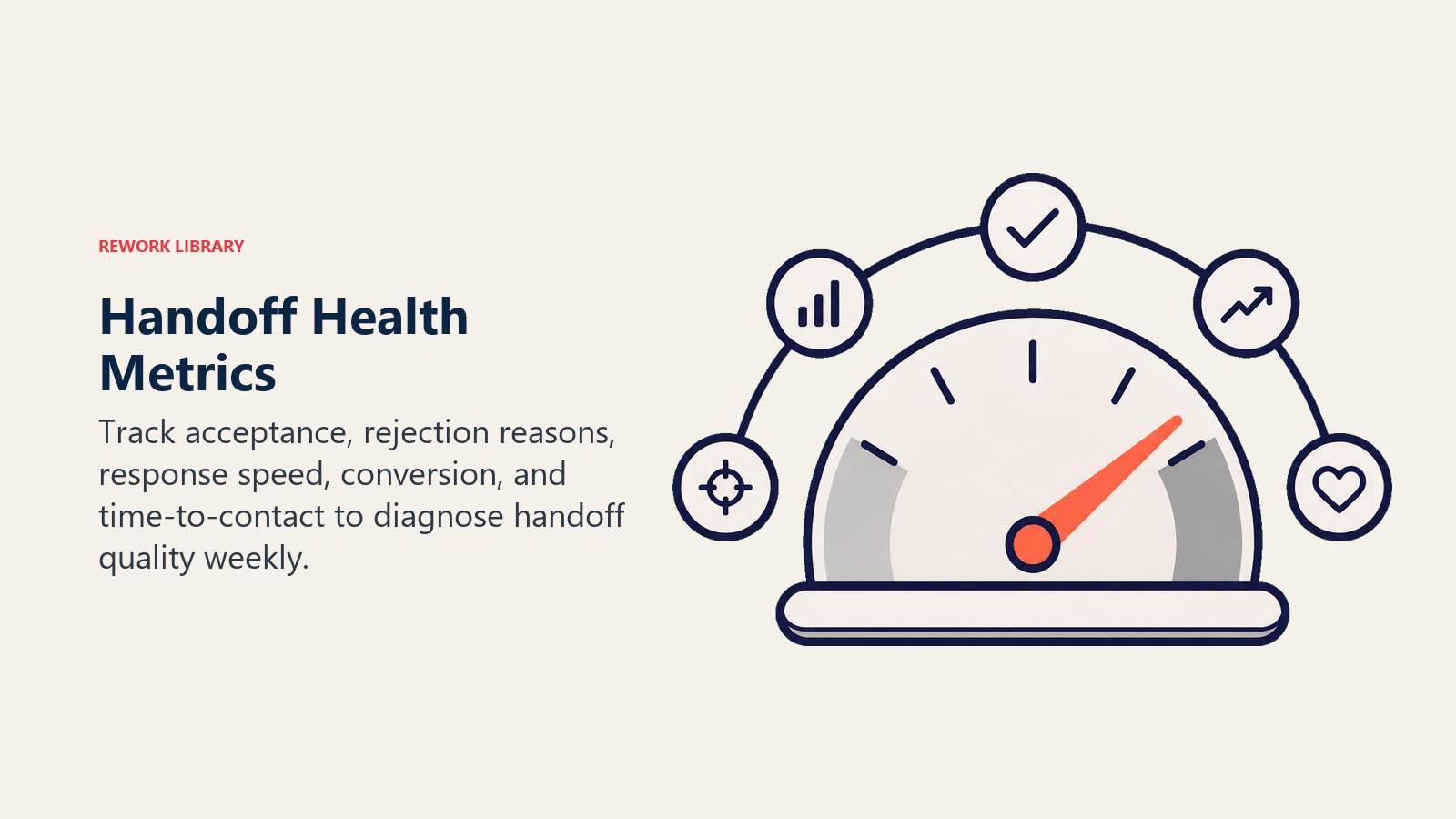
Taxa de aceitação de MQL. Percentual de MQLs que vendas aceita vs. rejeita. Meta: acima de 70%. Abaixo de 50% sinaliza que a definição de MQL não está alinhada com o que vendas considera pronto para venda.
Tempo até o primeiro contato. Tempo médio da conversão de MQL até a primeira tentativa de contato registrada. A meta depende do tipo de lead: solicitações de demo devem ser em menos de 5 minutos, leads padrão de limite de MQL em menos de 1 hora. Esta métrica revela atrasos de roteamento, lacunas de monitoramento de fila de representantes e adesão ao SLA.
Taxa de conversão de MQL para oportunidade. Percentual de MQLs aceitos que se tornam oportunidades no Pipeline. Esta é a métrica de output. Ela diz se o processo geral de handoff e qualificação está produzindo Pipeline real, não apenas atividade no CRM.
Taxa de rejeição por fonte. Quais fontes de lead têm as maiores taxas de rejeição? Leads de content syndication sendo rejeitados a 60% enquanto o inbound direto converte a 30% conta algo importante sobre quais canais valem o investimento.
Taxa de buraco negro. Percentual de MQLs sem atividade registrada dentro de 24 horas após a atribuição. Uma taxa de buraco negro acima de 10% indica um problema sistêmico com monitoramento de fila de representantes ou aplicação do SLA.
Como Corrigir um Processo de Handoff Quebrado
Se você herda um handoff quebrado com altas taxas de rejeição, baixa aceitação e disputas frequentes, faça o diagnóstico antes de prescrever.
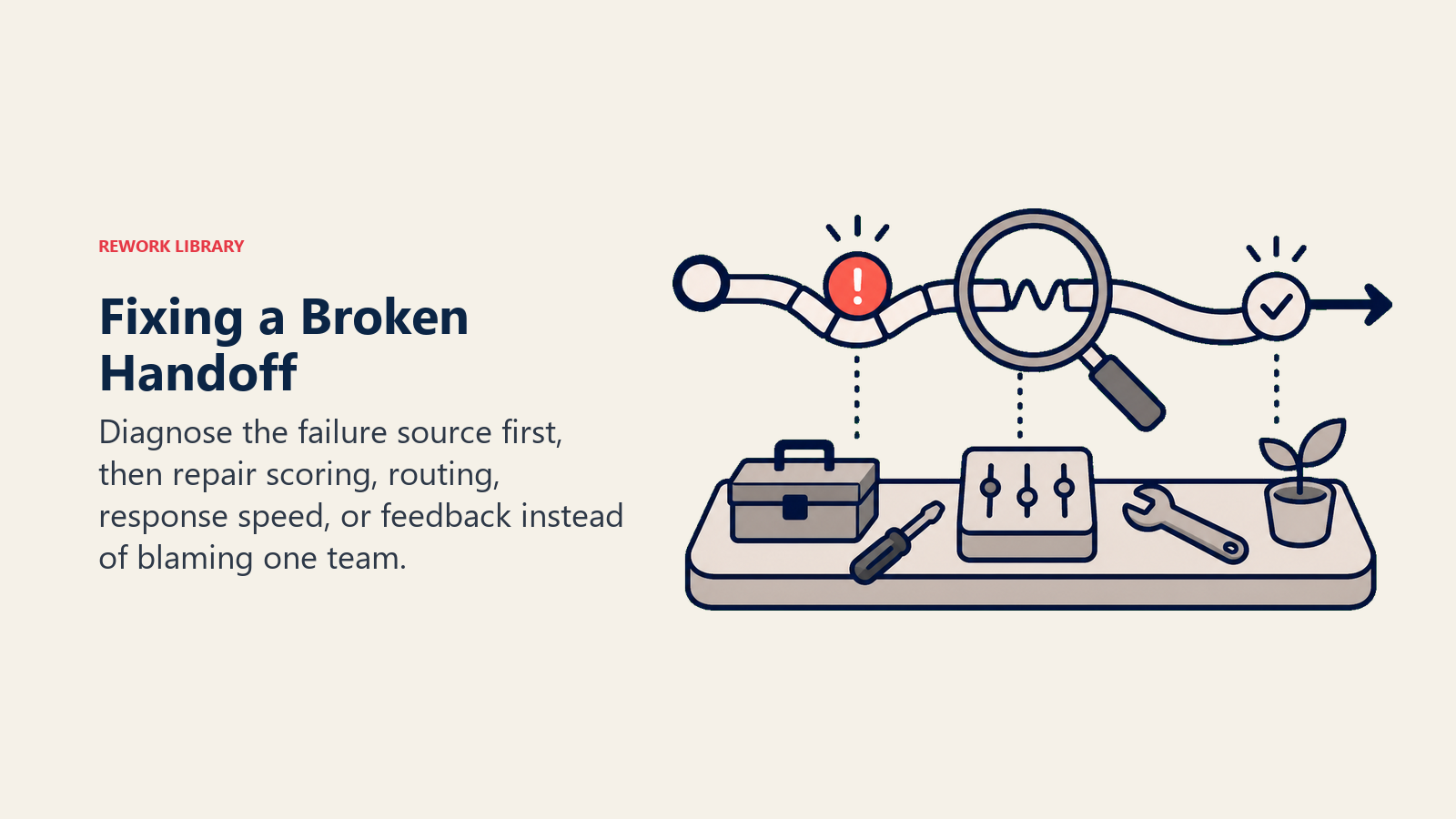
Pergunta 1: O problema de qualidade está no modelo de scoring ou no processo de handoff?
Analise a taxa de aceitação por faixa de score. Se leads com scores acima de 80 estão sendo rejeitados a 40%, o modelo pode estar obsoleto e não refletindo o ICP atual. Se leads com scores acima de 80 estão sendo aceitos mas não convertendo, o processo de roteamento ou follow-up é o problema. Esses precisam de correções diferentes.
Pergunta 2: Em qual das cinco etapas o problema está ocorrendo?
O enriquecimento da etapa 2 está incompleto (qualidade de dados)? O roteamento da etapa 3 está enviando leads a representantes errados (erros de regras de roteamento)? A aceitação da etapa 4 não está acontecendo (SLA não aplicado)? O primeiro contato da etapa 5 está sendo registrado mas é genérico (lacuna de treinamento do representante)? Você não pode corrigir o handoff sem saber qual etapa está falhando.
Pergunta 3: As duas equipes concordam com o que "concluído" significa?
Pergunte a marketing: "Quando um handoff está concluído?" Pergunte a vendas: "Quando você considera que um lead foi entregue a você?" Se as respostas forem diferentes, você encontrou a lacuna de governança. Documente a definição acordada. Revise-a juntos na próxima chamada de qualidade de leads.
Análise Rework: Com base no Processo de Handoff em 5 Etapas e benchmarks da indústria, equipes que implementam um SLA de handoff explícito com rastreamento automatizado de aceitação reduzem sua taxa de buraco negro de uma média do setor de ~40% para menos de 10% dentro de dois trimestres. Leads passados mas nunca reconhecidos caem drasticamente quando a responsabilidade da etapa 4 está em vigor: exigir aceitação explícita do representante em vez de recebimento passivo. Sem isso, os buracos negros são invisíveis até que uma revisão trimestral revele o problema. As ferramentas de gestão de Pipeline da Rework rastreiam timestamp de conversão de MQL, atribuição de roteamento, aceitação do representante e registro do primeiro contato em um único registro, dando a marketing e vendas visibilidade em tempo real sobre se o Processo de Handoff em 5 Etapas está sendo executado corretamente para cada lead. Veja rework.com/pricing para detalhes do plano atual.
Um Processo Que Ambas as Equipes Podem Defender
Um processo de handoff limpo não é um presente de marketing para vendas, nem uma exigência de vendas imposta ao marketing. É a infraestrutura que ambas as equipes precisam para saber se o sistema de receita está funcionando.
Marketing precisa dos dados de ciclo fechado (taxas de aceitação, motivos de rejeição, resultados de conversão) para calibrar o modelo de lead scoring e justificar decisões de orçamento. Vendas precisa do contexto, da precisão do roteamento e da estrutura de SLA para trabalhar leads com eficiência em vez de fazer sua própria qualificação do zero.
Quando ambas as equipes têm o que precisam do handoff, a conversa muda de "marketing nos mandou lixo" e "vendas não está trabalhando nossos leads" para "aqui estão os dados de conversão, o que o limite está nos dizendo e onde ajustamos?" Essa é a conversa que as equipes de receita precisam ter. A pesquisa da McKinsey sobre desempenho de vendas B2B identifica disciplina de qualificação mais rigorosa e alinhamento mais estreito de handoff entre as mudanças de maior alavancagem que uma equipe de receita pode fazer.
Comece com o checklist pré-voo. Defina suas cinco etapas. Estabeleça o SLA usando o modelo de SLA de marketing-vendas e documente os critérios de qualificação no modelo de acordo MQL-SQL. Meça as cinco métricas. O restante fica mais fácil a partir daí.
Perguntas Frequentes sobre o Processo de Handoff de MQL para SQL
O que é um handoff limpo de MQL para SQL?
Um handoff limpo é a conclusão bem-sucedida de todas as cinco etapas do Processo de Handoff em 5 Etapas: gatilho (evento de conversão de MQL inequívoco dispara), passagem de enriquecimento (marketing confirma a completude dos dados), roteamento (lead atribuído ao representante correto), janela de aceitação (representante confirma explicitamente o recebimento dentro do SLA) e primeiro contato (tentativa de contato personalizada registrada com timestamp e resultado). Um lead que foi passado mas nunca reconhecido não é um handoff limpo. Um lead que foi aceito mas nunca contatado não é um handoff limpo. Ambos os lados precisam fechar seu ciclo.
Quais são os modos de falha mais comuns no handoff de MQL?
Os quatro mais comuns são: (1) handoffs em buraco negro, em que leads são passados mas nunca reconhecidos ou rejeitados, correspondendo a ~40% do volume de MQL em organizações desalinhadas; (2) dados incompletos no handoff, em que o representante recebe um lead sem contexto de atividade ou enriquecimento, tornando o primeiro contato significativo impossível; (3) manipulação de score, em que marketing infla scores para atingir a quota de MQL, destruindo a confiança de vendas na designação de MQL; (4) rejeição silenciosa, em que o representante revisa o lead, decide que não vale a pena trabalhar e não faz nada sem registrar um motivo de rejeição. Cada um tem uma correção de processo específica; não são problemas de motivação.
O que marketing deve fornecer no handoff?
Marketing deve fornecer três coisas antes que o relógio do SLA de vendas comece: (1) detalhamento do lead score (composição de fit + intenção + comportamento, não apenas um score total), (2) histórico de atividades (páginas visitadas, conteúdo baixado, e-mails engajados, conversas por chat, atividade em trial: o contexto que transforma uma ligação fria em uma conversa relevante) e (3) contexto da empresa (setor, tamanho da empresa, receita estimada, stack tecnológico conhecido, notícias relevantes da empresa). Este pacote de contexto deve estar no registro do CRM, não em uma mensagem separada no Slack.
Como medir a saúde do handoff de MQL?
Monitore cinco métricas semanalmente: taxa de aceitação de MQL (meta: acima de 70%), tempo até o primeiro contato (meta: menos de 5 minutos para solicitações de demo, menos de 60 minutos para leads MQL padrão), taxa de conversão de MQL para oportunidade (a métrica de output), taxa de rejeição por fonte de lead (revela quais canais estão com baixo desempenho) e taxa de buraco negro (percentual de MQLs sem atividade registrada dentro de 24 horas após a atribuição, meta: abaixo de 10%).
O que é um handoff em buraco negro?
Um handoff em buraco negro é quando um lead é roteado a um representante e não recebe resposta: sem aceitação, sem rejeição, sem tentativa de contato, sem motivo registrado, e envelhece na fila sem nenhum registro do que aconteceu. A pesquisa da SiriusDecisions estima que handoffs em buraco negro correspondem a aproximadamente 40% do volume total de MQL em organizações de receita desalinhadas. A solução é uma automação de duas partes: um requisito de aceitação explícita dentro de um SLA delimitado no tempo e uma escalada automatizada que dispara quando um lead fica sem atividade por mais de 4 horas.
Quais dados vendas deve registrar após o primeiro contato?
Quatro campos: (1) timestamp e canal da primeira tentativa de contato (telefone, e-mail, mensagem direta), (2) resultado do primeiro contato (contatado, caixa postal, sem resposta, resposta automática recebida), (3) disposição do lead (aceito e contatado, adiado com explicação ou rejeitado com motivo documentado) e (4) motivo de rejeição se for rejeitado (pessoa errada, dados ruins, concorrente, fora do território, timing). O motivo de rejeição é especialmente importante: ele retorna a marketing como sinal para calibração do modelo de scoring. Rejeições silenciosas sem motivos registrados tornam o sistema de feedback de ciclo fechado cego.
Saiba Mais

Principal Solution Architect
On this page
- O Que é um Handoff de Fato
- O Processo de Handoff em 5 Etapas
- O Que Marketing Deve Fornecer no Handoff
- O Que Vendas Deve Fazer Após a Aceitação
- Modos de Falha Comuns
- Requisitos de Ferramentas
- Checklist Pré-Voo do Handoff
- Métricas Para Monitorar a Saúde do Handoff
- Como Corrigir um Processo de Handoff Quebrado
- Um Processo Que Ambas as Equipes Podem Defender
- Saiba Mais