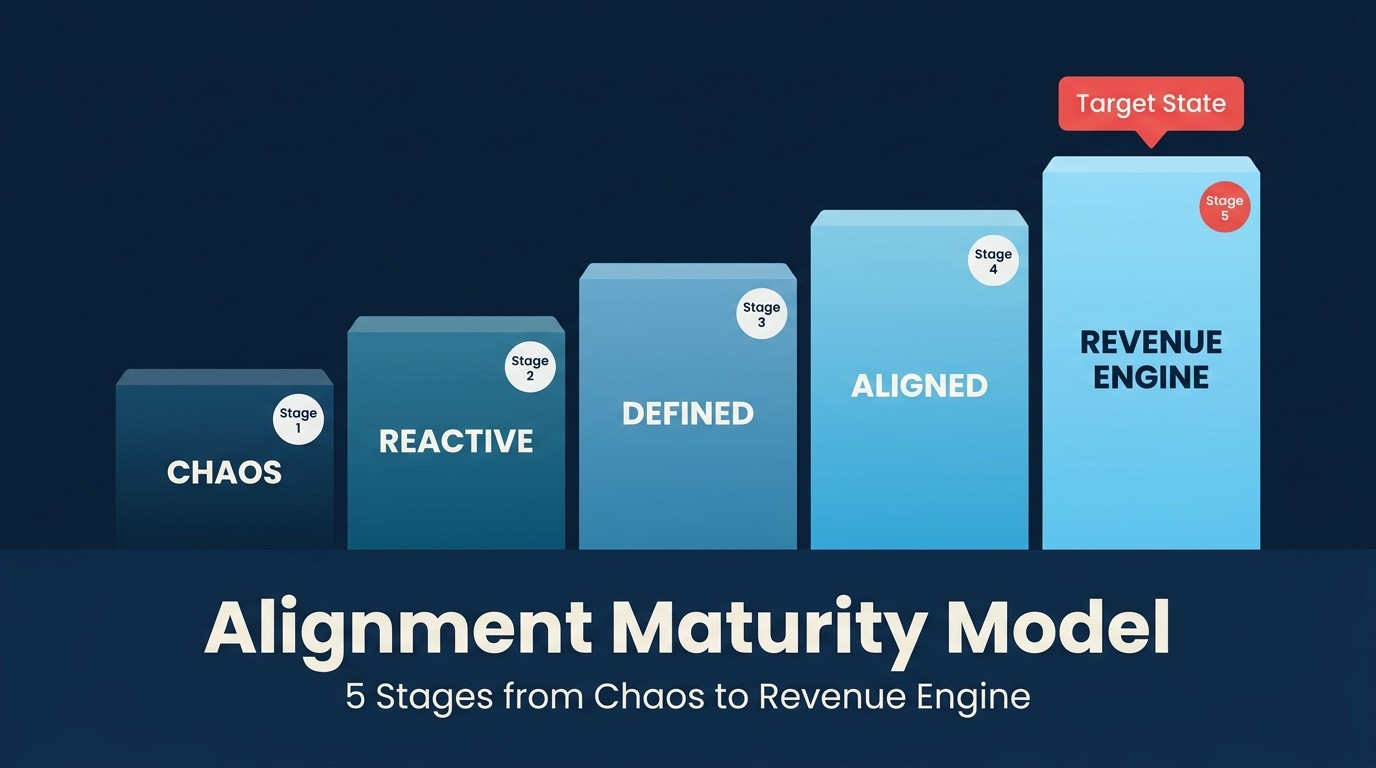
Modelo de Maturidade de Alinhamento Marketing-Vendas: 5 Estágios do Caos ao Motor de Receita
Turn this article into takeaways for your work.


Each assistant summarizes the article only for you and suggests best practices for your work.
"Precisamos de melhor alinhamento entre marketing e vendas."
Todo líder de receita já disse isso. Muito poucos sabem o que fazer a respeito. O problema é que "melhor alinhamento" é uma direção, não um destino. Não indica o que especificamente precisa mudar, em que ordem, ou como você saberá quando terá progredido.
Um modelo de maturidade resolve isso. Em vez de trabalhar rumo a uma vaga sensação de melhoria, você trabalha em direção a um estágio específico, com critérios definidos, uma condição clara de desbloqueio e um conjunto concreto de comportamentos que o distinguem do estágio anterior.
Este modelo tem cinco estágios. A maioria das empresas de médio porte está no Estágio 2. O Estágio 3 é o primeiro alvo realista para a maioria dos times de receita que leem este texto. Os Estágios 4 e 5 exigem infraestrutura que a maioria das empresas não precisa até crescer além de $50M em ARR. Se você quiser entender o custo do problema antes de decidir como resolvê-lo, o artigo sobre o custo do desalinhamento quantifica o vazamento de receita em cada estágio.
Aqui está o framework.
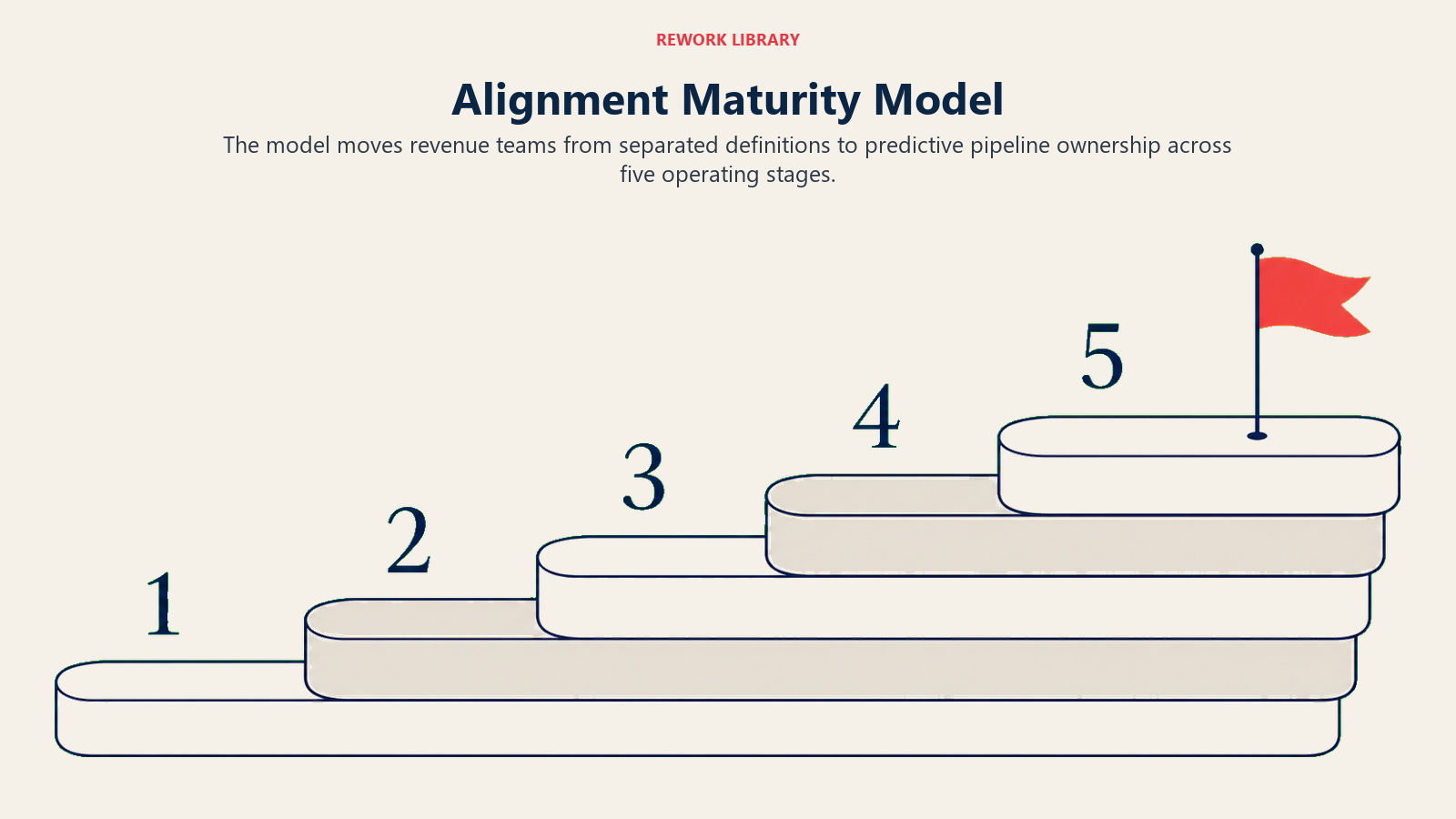
Os Cinco Estágios em Resumo
| Estágio | Nome | Descrição em Uma Frase |
|---|---|---|
| 1 | Separado | Sem definições compartilhadas, sem SLAs, ciclo de culpa ativo |
| 2 | Coordenado | Algum vocabulário compartilhado, acordos informais, colaboração ocasional |
| 3 | Integrado | SLAs formais, modelo de Funnel acordado, cadências conjuntas regulares |
| 4 | Otimizado | Feedback em loop fechado, ajustes baseados em dados, responsabilidade compartilhada |
| 5 | Preditivo | Previsão conjunta, propriedade compartilhada do Pipeline, alinhamento assistido por AI |
Dados-chave: Maturidade de Alinhamento e Resultados de Receita
- Empresas nos Estágios 4-5 geram 208% mais receita de marketing do que empresas nos Estágios 1-2, segundo o SiriusDecisions. Pesquisas do Gartner confirmam que organizações de vendas que alinham KPIs entre funções têm quase 3x mais chance de superar as metas de aquisição de novos clientes.
- Mover-se do Estágio 2 para o Estágio 3 produz uma melhora média de 15-20% na taxa de fechamento em 12 meses, com base em benchmarks do Aberdeen Group de 500 empresas B2B.
- 73% das empresas B2B estão no Estágio 1 ou Estágio 2 quando avaliadas por critérios formais de alinhamento, segundo o benchmark de Revenue Operations da Forrester, embora a maioria se autorreporte como Estágio 3 ou superior.
Citável: Empresas no nível mais alto de maturidade de alinhamento (Estágios 4-5 no modelo de cinco estágios) geram 208% mais receita de programas de marketing do que empresas nos Estágios 1-2, de acordo com pesquisa do SiriusDecisions sobre benchmarks de alinhamento B2B.
Estágio 1: Separado
Como é:
Marketing e vendas operam como funções totalmente independentes. Cada time tem sua própria definição de "qualificado." Marketing acompanha MQLs e campanhas. Vendas acompanha deals e taxas de fechamento. Ninguém olha os dois conjuntos de números juntos.
As transferências de Lead acontecem, mas são informais: uma notificação no CRM, talvez uma mensagem no Slack. Não há SLA de acompanhamento. Os representantes de vendas trabalham os Leads quando conseguem. Marketing assume que seu trabalho termina no envio do formulário.
Quando a receita fica abaixo do esperado, os dois times têm explicações que os exoneram. Marketing diz que os Leads estão sendo ignorados. Vendas diz que os Leads são de baixa qualidade. Ambos estão certos quanto ao sintoma. Nenhum tem dados para diagnosticar a causa raiz.
Indicadores-chave:
- Nenhum documento de ICP escrito e revisado pelos dois times
- Taxa de rejeição de MQL alta e não documentada
- Tempo médio de resposta ao Lead desconhecido ou superior a 48 horas
- Marketing não tem visibilidade sobre o que acontece com os Leads após a transferência
- Dados de win-loss ficam em vendas
Sinais de custo: CAC alto (de segmentação não otimizada), baixa conversão de MQL para SQL, longo tempo médio de resposta, frustração dos representantes com a qualidade dos Leads.
Condição de desbloqueio para o Estágio 2: Um documento de ICP escrito e assinado pelos líderes das duas funções. Só isso. Não tente resolver tudo de uma vez. O artigo sobre o framework de ICP compartilhado explica como construir esse documento a partir de dados de deals fechados-ganhos e churned.
Estágio 2: Coordenado
Como é:
Alguém começou a ter a conversa de alinhamento. Talvez um novo CMO ou CRO tenha insistido nisso. Talvez um trimestre perdido tenha forçado. Agora existe um documento de ICP compartilhado, não perfeito, mas acordado. Marketing e vendas fizeram pelo menos uma sessão juntos para definir os critérios de MQL.
Pode existir uma cadência de reuniões informal: uma sincronização mensal, um canal compartilhado no Slack, um documento no Notion que alguém atualiza ocasionalmente. As transferências de Lead estão melhor documentadas. Alguns representantes realmente confiam nos Leads que estão recebendo.
Mas tudo isso é mantido por relacionamentos individuais e boas intenções. O CMO e o CRO se dão bem, então as coisas funcionam. Quando qualquer um deles sai, o alinhamento se deteriora.
Indicadores-chave:
- ICP escrito existe, mas não foi atualizado há mais de 6 meses
- Definição de MQL está documentada, mas nem sempre aplicada de forma consistente
- Algum acompanhamento do tempo de resposta ao Lead, mas sem enforcement
- Razões de rejeição às vezes são capturadas, mas não analisadas sistematicamente
- Reunião conjunta acontece ocasionalmente
Sinais de custo: Melhor do que o Estágio 1, mas ainda com desperdício significativo de MQL. O alinhamento depende de quais indivíduos estão na sala, não de processos documentados.
Condição de desbloqueio para o Estágio 3: Um documento de SLA formal com compromissos específicos de ambos os lados (volume de Lead, critérios de qualidade do Lead, prazo de acompanhamento), revisado e atualizado trimestralmente. O template de SLA marketing-vendas é um ponto de partida pronto para uso.
Estágio 3: Integrado
Como é:
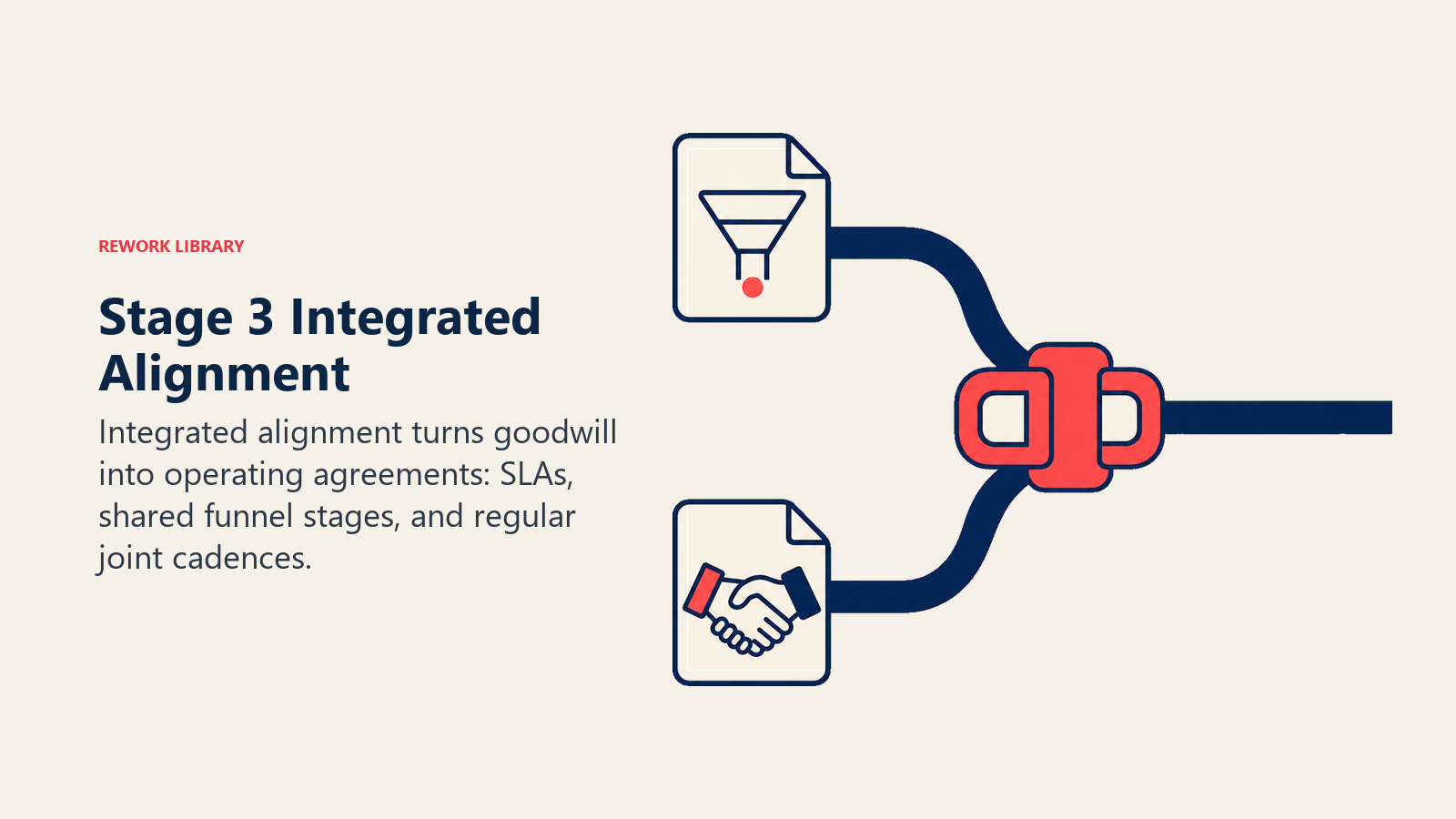 Este é o estágio crítico. É onde a maioria das empresas de médio porte deve visar primeiro, e onde a maior parte da alavancagem desta coleção vive.
No Estágio 3, o alinhamento é documentado e aplicado, não dependente de boa vontade. O SLA tem dentes: se a pontuação de qualidade dos Leads de marketing cair abaixo de um limite, há um processo de revisão. Se o tempo de acompanhamento de vendas exceder o SLA, esses dados são visíveis para as duas funções e há um caminho de escalonamento. Uma boa cadência de acompanhamento quando há um SLA em vigor significa uma janela documentada de primeiro contato e um caminho claro de escalonamento.
O modelo de Funnel é acordado. Os dois times sabem exatamente o que MQL, SQL e SAL significam, com critérios escritos para cada transição. O CRM reflete esses estágios com precisão. Marketing acompanha os Leads até a receita, não apenas até a transferência.
As reuniões conjuntas acontecem em uma cadência fixa. Ambas as funções participam. Ambas as funções são responsáveis pelo mesmo dashboard de receita.
Indicadores-chave:
- SLA formal com compromissos documentados de marketing e vendas
- Critérios de MQL revisados trimestralmente
- SLA de tempo de resposta ao Lead em vigor (por exemplo, resposta em 2 horas para solicitações de Demo inbound)
- Ambas as funções participam da revisão semanal de Pipeline
- Razões de rejeição são rastreadas e revisadas mensalmente
Falha comum neste estágio: Implementar processo do Estágio 3 sem as bases do Estágio 2. Times que constroem SLAs sem primeiro concordar com as definições acabam com SLAs que não podem ser aplicados porque não há entendimento compartilhado do que estão medindo.
Condição de desbloqueio para o Estágio 4: Um mecanismo estruturado de feedback em loop fechado, especificamente um processo documentado para que dados de resultados de vendas (razões de vitória, razões de perda, desempenho por segmento) fluam de volta para as decisões de segmentação e campanha de marketing pelo menos mensalmente.
Estágio 4: Otimizado
Como é:
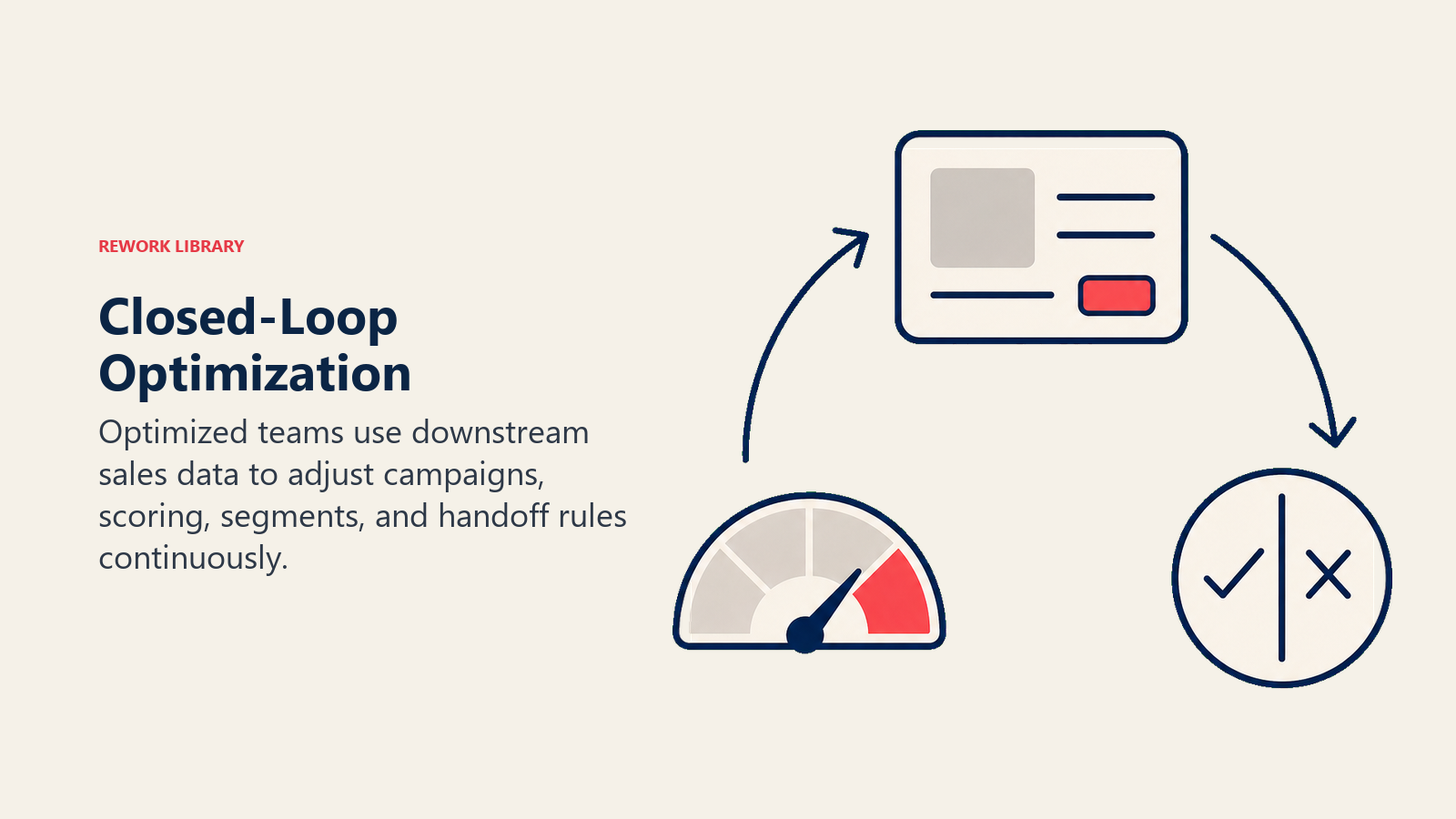 A diferença entre o Estágio 3 e o Estágio 4 é o feedback em loop fechado. No Estágio 3, os dois times estão executando planos acordados. No Estágio 4, os dois times estão aprendendo e se ajustando com base no que os dados mostram.
Marketing sabe quais segmentos convertem melhor no downstream, não porque vendas disse uma vez em uma reunião, mas porque os dados de atribuição são estruturados para mostrar isso. As decisões de campanha de marketing para o próximo trimestre são diretamente influenciadas pelos dados de win-loss de vendas do trimestre anterior. O CAC é rastreado por segmento, por canal e por persona, não apenas em agregado. A análise de cobertura de Pipeline é a perspectiva do lado de vendas que complementa a visão de atribuição de marketing neste estágio.
Os representantes de vendas veem suas próprias métricas de conversão por fonte de Lead e tipo de Lead. Eles conseguem identificar quais canais de marketing produzem Leads que valem a pena trabalhar. Essa informação alimenta de volta o planejamento de marketing.
Indicadores-chave:
- Revisão mensal de win-loss que inclui tomadores de decisão de marketing
- Modelo de atribuição em que marketing e vendas confiam (não apenas marketing)
- CAC rastreado por segmento e canal
- Alocação de orçamento de marketing muda trimestralmente com base em dados de conversão
- Vendas consegue identificar quais fontes de Lead produzem o melhor Pipeline
Sinais de custo: CAC cai à medida que o orçamento é realocado para segmentos que convertem. As taxas de fechamento melhoram à medida que a consistência de mensagem aumenta em todo o Funnel.
Falha comum neste estágio: Tentar pular para as ferramentas do Estágio 4 (software de atribuição, analytics avançado) sem os acordos do Estágio 3 em vigor. A tecnologia reflete a precisão dos dados subjacentes. Se as definições de estágio são aplicadas de forma inconsistente, o modelo de atribuição produz números que nenhum time confia.
Condição de desbloqueio para o Estágio 5: Participação em previsões conjuntas, com marketing contribuindo para projeções de Pipeline e receita ao lado de vendas e responsabilidade compartilhada pela previsão.
Estágio 5: Preditivo
Como é:
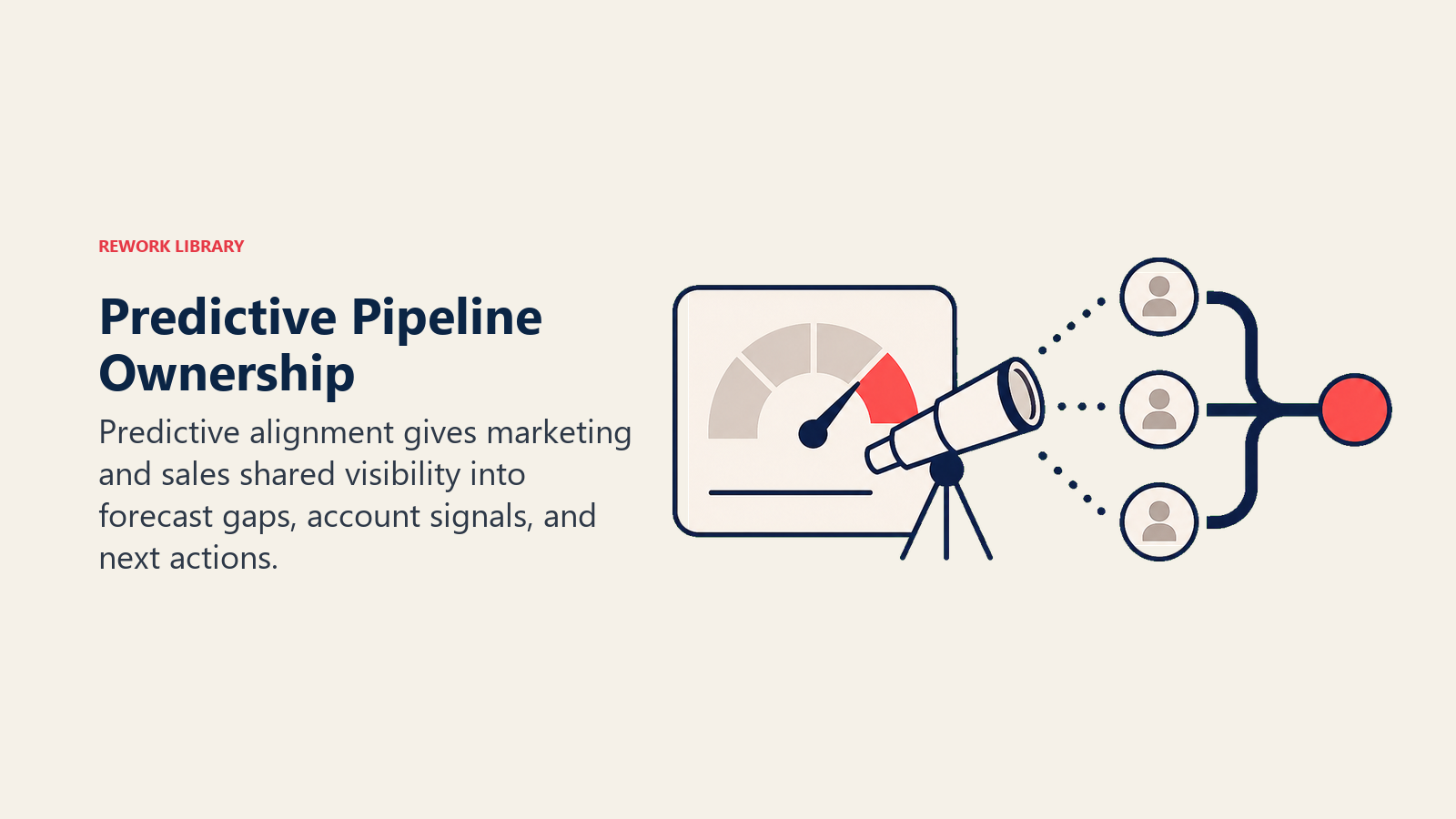 O Estágio 5 é o que as melhores organizações de receita descrevem quando dizem que marketing e vendas estão "totalmente alinhados." Ambas as funções tratam o Pipeline como um ativo conjunto, não uma transferência sequencial.
Marketing participa das chamadas de previsão. A pergunta não é "quantos MQLs geramos?" É "qual é a nossa contribuição de Pipeline para o número deste trimestre e o que precisamos fazer para fechar a lacuna?" As decisões de orçamento de marketing são tomadas com visibilidade prospectiva do Pipeline, não apenas com visão retroativa do volume de Leads.
Sinais em nível de conta de marketing (engajamento de conteúdo, exposição a anúncios, dados de intenção) alimentam a priorização de vendas. As estimativas de probabilidade e os prazos de deals de vendas alimentam de volta as decisões de nutrição de marketing. Os dados estão se movendo em ambas as direções continuamente.
No Estágio 5, o alinhamento é menos sobre acordos entre pessoas e mais sobre infraestrutura que mantém as duas funções coordenadas em nível de sistemas. Isso tipicamente requer RevOps dedicado.
Indicadores-chave:
- Marketing participa das revisões de previsão
- Número de receita compartilhado pelo qual tanto marketing quanto vendas são responsáveis
- Dados de intenção em nível de conta integrados à priorização de vendas
- Contribuição de Pipeline por canal de marketing rastreada e visível
- Função RevOps mantém o sistema compartilhado
O que isso exige: O Estágio 5 não é atingível apenas por alinhamento cultural. Requer infraestrutura de dados, integrações de sistemas e autoridade organizacional para que RevOps mantenha o processo. A maioria das empresas abaixo de $30M em ARR não precisa do Estágio 5 e não deve tentar construí-lo antes de ter o Estágio 3 sólido.
Autoavaliação: Em Qual Estágio Você Está?
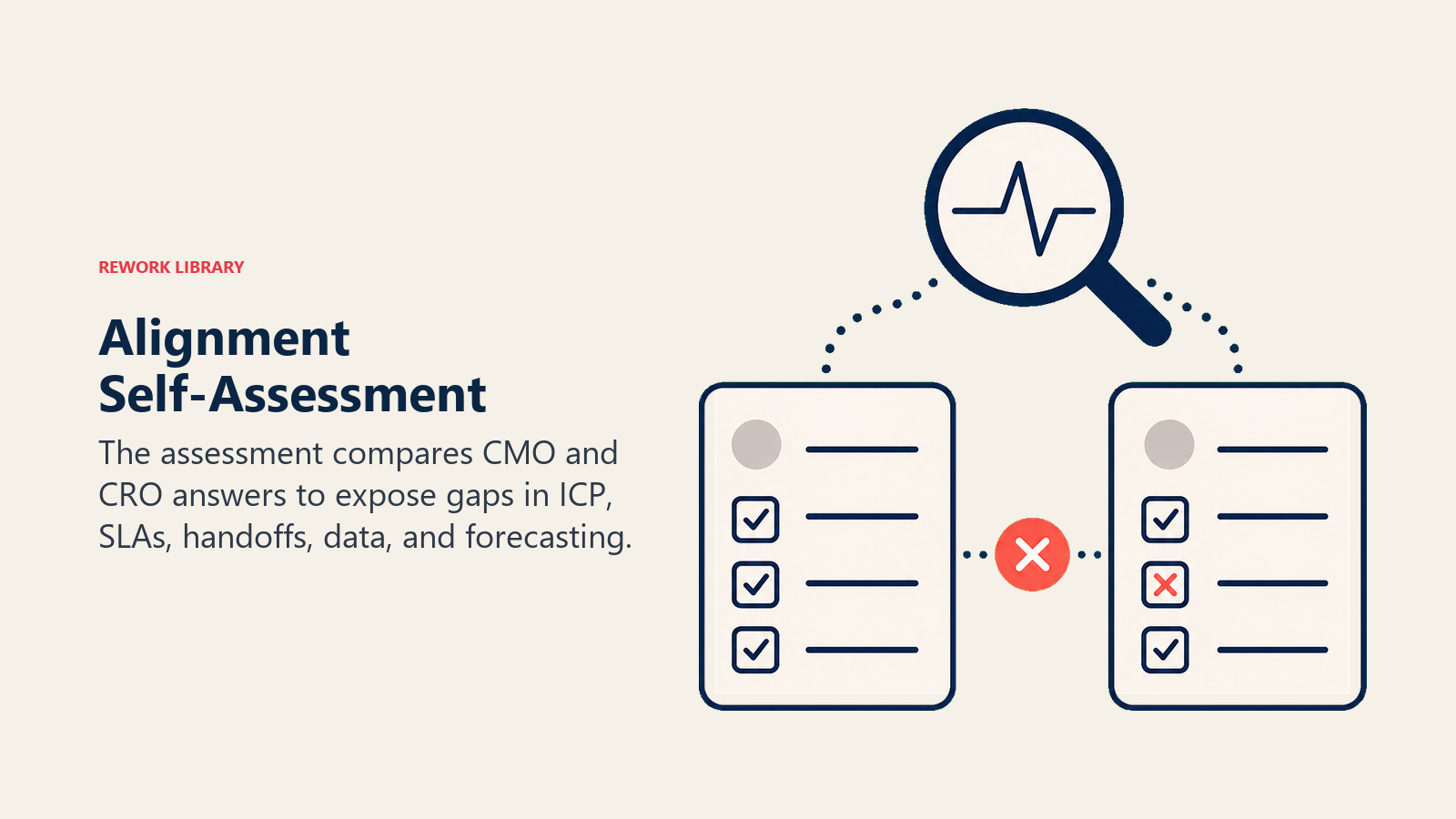
Responda estas oito perguntas honestamente. Cada uma mapeia para uma condição ou indicador específico de estágio. Peça para o CMO e o CRO responderem de forma independente. As diferenças nas respostas são em si mesmas diagnósticas.
 | # | Pergunta | Condição de Estágio |
|---|---|---|
| 1 | Seu ICP está escrito e acordado por marketing e vendas? | Base do Estágio 2 |
| 2 | Quando os líderes das duas funções revisaram o ICP juntos pela última vez (nos últimos 90 dias)? | Saúde do Estágio 2 |
| 3 | Existe um documento de SLA formal com compromissos de ambos os lados? | Condição do Estágio 3 |
| 4 | Qual é o seu tempo médio de resposta ao Lead, e há um SLA para isso? | Indicador do Estágio 3 |
| 5 | Marketing e vendas participam da mesma revisão de Pipeline em um cronograma fixo? | Indicador do Estágio 3 |
| 6 | Como os dados de win-loss de vendas chegam às decisões de campanha de marketing? | Condição do Estágio 4 |
| 7 | Marketing consegue identificar quais segmentos produziram os Leads de maior conversão no último trimestre? | Indicador do Estágio 4 |
| 8 | Marketing participa da previsão de Pipeline? | Indicador do Estágio 5 |
| # | Pergunta | Condição de Estágio |
|---|---|---|
| 1 | Seu ICP está escrito e acordado por marketing e vendas? | Base do Estágio 2 |
| 2 | Quando os líderes das duas funções revisaram o ICP juntos pela última vez (nos últimos 90 dias)? | Saúde do Estágio 2 |
| 3 | Existe um documento de SLA formal com compromissos de ambos os lados? | Condição do Estágio 3 |
| 4 | Qual é o seu tempo médio de resposta ao Lead, e há um SLA para isso? | Indicador do Estágio 3 |
| 5 | Marketing e vendas participam da mesma revisão de Pipeline em um cronograma fixo? | Indicador do Estágio 3 |
| 6 | Como os dados de win-loss de vendas chegam às decisões de campanha de marketing? | Condição do Estágio 4 |
| 7 | Marketing consegue identificar quais segmentos produziram os Leads de maior conversão no último trimestre? | Indicador do Estágio 4 |
| 8 | Marketing participa da previsão de Pipeline? | Indicador do Estágio 5 |
Interpretando sua pontuação:
- Não para as perguntas 1 ou 2: Estágio 1. Comece com uma sessão conjunta de ICP. Nada mais avança até que isso seja feito.
- Sim para 1-2, não para 3-5: Estágio 2. O único desbloqueio é um documento de SLA formal.
- Sim para 1-5, não para 6-7: Estágio 3. O caminho para o Estágio 4 é um processo estruturado de feedback em loop fechado.
- Sim para 1-7: Estágio 4. A prontidão para o Estágio 5 depende da escala de receita e da infraestrutura de RevOps.
Observação: 73% das empresas acreditam estar no Estágio 3 ou acima; quando avaliadas por esses critérios, a maioria está no Estágio 2. Use a resposta honesta, não a aspiracional.
Regras de Progressão de Estágio
O erro mais comum na melhoria do alinhamento é pular estágios. Times de receita que tentam implementar analytics do Estágio 4 antes de ter os acordos do Estágio 3 acabam com dashboards em que ninguém confia.
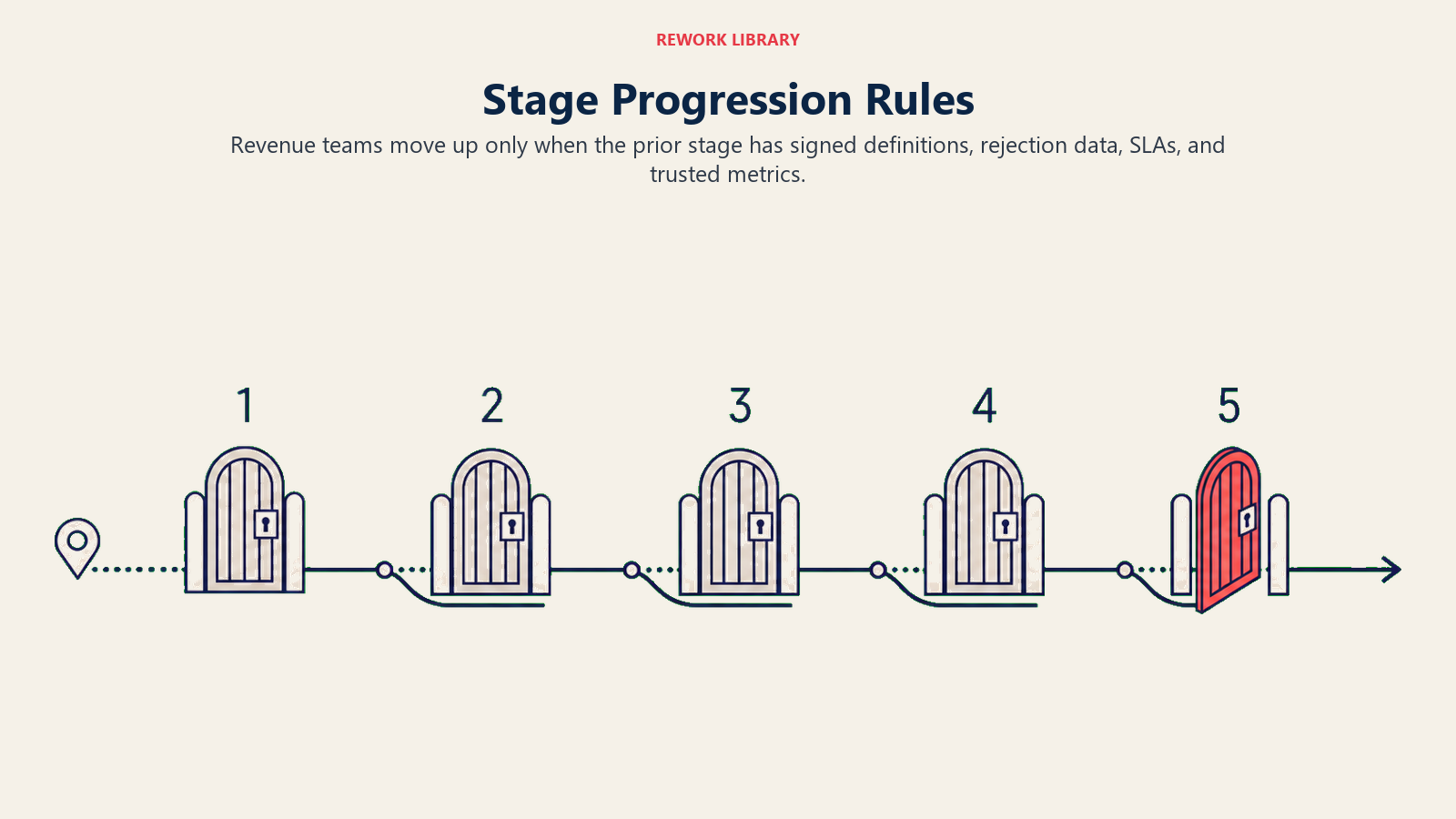 Aqui está o que você deve ter antes de progredir:
Antes do Estágio 2: No mínimo, uma sessão conjunta de ICP concluída com saída escrita. Ambos os líderes assinaram.
Antes do Estágio 3: Um documento de ICP funcionando no Estágio 2 (atualizado nos últimos 6 meses) e pelo menos um trimestre de dados de rejeição de MQL por razão. Você precisa de dados de rejeição antes de poder escrever um SLA baseado na realidade em vez de na aspiração.
Antes do Estágio 4: Um SLA do Estágio 3 funcionando que esteve em vigor por pelo menos um trimestre. O feedback em loop fechado requer dados que um sistema do Estágio 3 gera. Sem o Estágio 3, não há nada para fechar o loop.
Antes do Estágio 5: Atribuição do Estágio 4 em que ambos os times confiam. Marketing não pode contribuir para previsões se seus dados de Pipeline são contestados.
Essas regras não são obstáculos burocráticos. São requisitos de sequenciamento. Cada estágio é construído sobre a infraestrutura do anterior.
O Padrão de Falha Comum
Se parece com isso: um novo CRO entra em uma empresa de $20M ARR. Ele já viu RevOps funcionar em uma empresa anterior. Contrata um líder de RevOps na terceira semana. O líder de RevOps começa a construir dashboards de atribuição.
Seis meses depois, os dashboards estão bonitos. Ninguém os usa. Marketing não confia no modelo de atribuição porque a definição de MQL no CRM é aplicada de forma inconsistente. Vendas não confia nos dados de Pipeline porque os critérios de estágio foram configurados pelo administrador anterior e ninguém os atualizou.
O investimento em RevOps produziu infraestrutura em cima de uma base do Estágio 2. E as bases do Estágio 2 não suportam analytics do Estágio 4.
A solução não é abandonar o RevOps. É voltar e fechar as lacunas do Estágio 3: SLAs formais, critérios de estágio acordados, rastreamento de acompanhamento aplicado, antes que a camada de analytics possa funcionar corretamente.
Os 8 sinais de alerta de desalinhamento ajudam a identificar onde estão as lacunas dos Estágios 2 ou 3.
Análise Rework: Com base nos benchmarks do Aberdeen Group de 500 empresas B2B e no Revenue Operations Maturity Assessment da Forrester, a transição do Estágio 2 para o 3 produz o maior ROI por trimestre de qualquer investimento em alinhamento, tipicamente uma melhora de 15-20% na taxa de fechamento em 12 meses. A transição do Estágio 3 para o 4 (adicionando feedback em loop fechado) reduz o CAC em 30% em 18 meses, mas requer um trimestre completo de dados do Estágio 3 antes de poder ser executada corretamente. Nosso framework sugere que a condição de desbloqueio para cada estágio é o investimento de maior alavancagem disponível naquele estágio: o acordo de ICP no Estágio 1, o documento de SLA no Estágio 2 e o processo de feedback em loop fechado no Estágio 3. Tentar pular estágios produz infraestrutura que degenera em desconfiança.
O Que Fazer com Este Framework
Use-o como um GPS conjunto, não como uma avaliação de desempenho. Tanto o CMO quanto o CRO sentam com as perguntas de autoavaliação e as respondem separadamente, depois comparam as respostas. As diferenças nas respostas são em si mesmas diagnósticas: mostram onde as definições ou processos são entendidos de forma inconsistente.
Concordem sobre em qual estágio você está de fato (use a resposta mais honesta, não a otimista). Então identifique a única condição de desbloqueio para o próximo estágio. Coloque essa condição de desbloqueio no OKR ou no plano trimestral.
O Estágio 3 é o primeiro alvo que vale a pena perseguir explicitamente para a maioria dos times de receita de médio porte. É alcançável em um ou dois trimestres com o foco certo, e o impacto na receita (melhora nas taxas de fechamento, ciclos mais curtos, redução do CAC) é mensurável o suficiente para justificar o trabalho perante os líderes das duas funções.
Não tente ir do Estágio 1 ao Estágio 4 em um ano. Vá do Estágio 2 ao Estágio 3 em um trimestre. Depois avalie. Depois vá do Estágio 3 ao Estágio 4 nos próximos dois. Esse é o ritmo em que o alinhamento se multiplica em vez de entrar em colapso.
Perguntas Frequentes sobre o Modelo de Maturidade de Alinhamento Marketing-Vendas
O que é um modelo de maturidade de alinhamento marketing-vendas?
Um modelo de maturidade de alinhamento marketing-vendas é um framework de cinco estágios que define critérios observáveis para cada nível de alinhamento, de times totalmente separados sem definições compartilhadas até um motor de receita preditivo com previsões conjuntas e propriedade compartilhada do Pipeline. Ele substitui a diretiva vaga de "melhor alinhamento" por um destino específico, condições de desbloqueio definidas e um roadmap sequenciado.
Em qual estágio a maioria das empresas B2B está?
73% das empresas B2B estão no Estágio 1 ou Estágio 2 quando avaliadas por critérios formais de alinhamento, segundo o benchmark de Revenue Operations da Forrester, mesmo que a maioria se autorreporte como Estágio 3. A lacuna entre o estágio percebido e o real é causada por acordos informais que funcionam bem quando o time fundador está intacto, mas se degradam à medida que novos contratados entram e as definições divergem.
O que é necessário para passar do Estágio 2 para o Estágio 3?
A única condição de desbloqueio para o Estágio 3 é um documento de SLA formal com compromissos específicos de marketing e vendas: limites de volume de Lead, critérios de qualidade, prazo de acompanhamento e requisitos de documentação de rejeição. Antes de escrever o SLA, você precisa de pelo menos 60 dias de dados de rejeição de MQL por razão, para que o SLA reflita a realidade em vez da aspiração. Organizações com SLAs formais em vigor têm 65% mais probabilidade de obter ROI sólido dos seus programas de marketing, segundo o State of Inbound da HubSpot.
Quanto o avanço de um estágio de maturidade melhora os resultados de receita?
Mover-se do Estágio 2 para o Estágio 3 produz uma melhora média de 15-20% na taxa de fechamento em 12 meses, segundo benchmarks do Aberdeen Group de 500 empresas B2B. Mover-se do Estágio 3 para o Estágio 4, que adiciona feedback em loop fechado, reduz o CAC em média 30% em 18 meses. Empresas nos Estágios 4-5 geram 208% mais receita de marketing do que empresas nos Estágios 1-2, segundo o SiriusDecisions.
Quando uma empresa precisa do alinhamento do Estágio 5?
O Estágio 5, que abrange alinhamento preditivo com previsões conjuntas, dados de intenção em nível de conta e propriedade compartilhada do Pipeline, é tipicamente necessário após $30-50M de ARR, quando a coordenação informal tem muita superfície para gerenciar e quando CS se tornou um motor de receita significativo. A maioria das empresas abaixo de $30M de ARR deve visar o Estágio 3 como meta de curto prazo antes de investir em infraestrutura do Estágio 5.
Qual é o motivo mais comum para o fracasso de iniciativas de maturidade de alinhamento?
O fracasso mais comum é pular estágios. Um novo CRO entra, já viu RevOps funcionar em uma empresa anterior e contrata um líder de RevOps antes que o time tenha concordado em um ICP compartilhado. A infraestrutura de RevOps é construída em dados contestados e produz dashboards em que ninguém confia. A solução não é abandonar o RevOps. Volte e feche as lacunas dos Estágios 2-3 primeiro, depois deixe a infraestrutura funcionar corretamente em uma base limpa.
Saiba Mais

Principal Solution Architect