Buyer Persona vs Deal Persona: Por Que Marketing e Vendas Precisam de Mapas de Personagens Diferentes
Turn this article into takeaways for your work.


Each assistant summarizes the article only for you and suggests best practices for your work.
Marketing passou três meses construindo buyer personas detalhadas. Conduziram entrevistas, analisaram dados demográficos de formulários, vasculharam analytics de conteúdo. O resultado: um documento de cinco páginas com nomes, fotos de banco de imagens, pain points e formatos de conteúdo preferidos.
Vendas nunca leu.
Isso não é preguiça. A buyer persona que marketing construiu descreve a pessoa que encontra seu conteúdo e preenche um formulário. Mas na maioria dos deals B2B, especialmente em médio porte e enterprise, essa pessoa não é a que assina o contrato. A pessoa que assina aparece mais tarde, faz perguntas diferentes, se importa com resultados completamente diferentes e frequentemente não tem ideia do conteúdo que sua empresa produz.
Marketing construiu um mapa de personagem para uma pessoa. Vendas precisa de um mapa de personagem para outra pessoa. Os dois mapas estão corretos. O problema é quando apenas um existe, ou quando os times usam o mesmo documento para os dois propósitos e se perguntam por que não se encaixa. Para definições canônicas de buyer persona, deal persona, ICP e termos relacionados, veja o glossário de alinhamento marketing-vendas.
Dados-chave: Lacunas de Persona e Impacto no Pipeline
- Apenas 44% das decisões de compra B2B envolvem um único tomador de decisão, o que significa que mais da metade dos deals requer mapear e influenciar múltiplos stakeholders, segundo pesquisa de Jornada de Compra B2B do Gartner.
- Em deals acima de $25.000, uma média de 6,8 pessoas estão envolvidas na decisão de compra, segundo pesquisa de compradores B2B 2023 do Gartner.
- 58% dos compradores dizem que sentem que os fornecedores não entendem sua situação de negócio específica, segundo a Forrester. Essa lacuna frequentemente decorre de trabalho de persona desalinhado.
- Quando representantes têm acesso a materiais focados no comprador econômico (templates de business case, modelos de ROI, resumos executivos), as taxas de fechamento melhoram em 20–30% no estágio final, segundo pesquisa da Corporate Visions.
- Apenas 32% dos times de marketing B2B mantêm documentação de persona separada para o pesquisador em fase de awareness e o comprador econômico, segundo o SiriusDecisions, apesar de frequentemente serem pessoas diferentes.
Em deals B2B acima de $25.000, uma média de 6,8 pessoas estão envolvidas na decisão de compra, segundo pesquisa de compradores B2B 2023 do Gartner. Uma estratégia de persona construída em torno de um único personagem, o pesquisador que preenche o formulário, aborda uma dessas 6,8 pessoas e deixa as outras 5,8 sem uma abordagem de engajamento definida.
Quando representantes de vendas têm acesso a materiais focados no comprador econômico (templates de business case, modelos de ROI, resumos executivos), as taxas de fechamento melhoram em 20–30% no estágio final do deal, segundo pesquisa da Corporate Visions. Esse material quase nunca é produzido, porque o trabalho de persona de marketing é construído em torno do pesquisador em fase de awareness, não do detentor de orçamento em fase de aprovação.
Apenas 32% dos times de marketing B2B mantêm documentação de persona separada para o pesquisador em fase de awareness e o comprador econômico, segundo o SiriusDecisions. Os outros 68% usam um único documento de persona para os dois propósitos, é por isso que os times de vendas rotineiramente chamam o trabalho de persona de "não útil" mesmo quando a pesquisa subjacente é precisa.
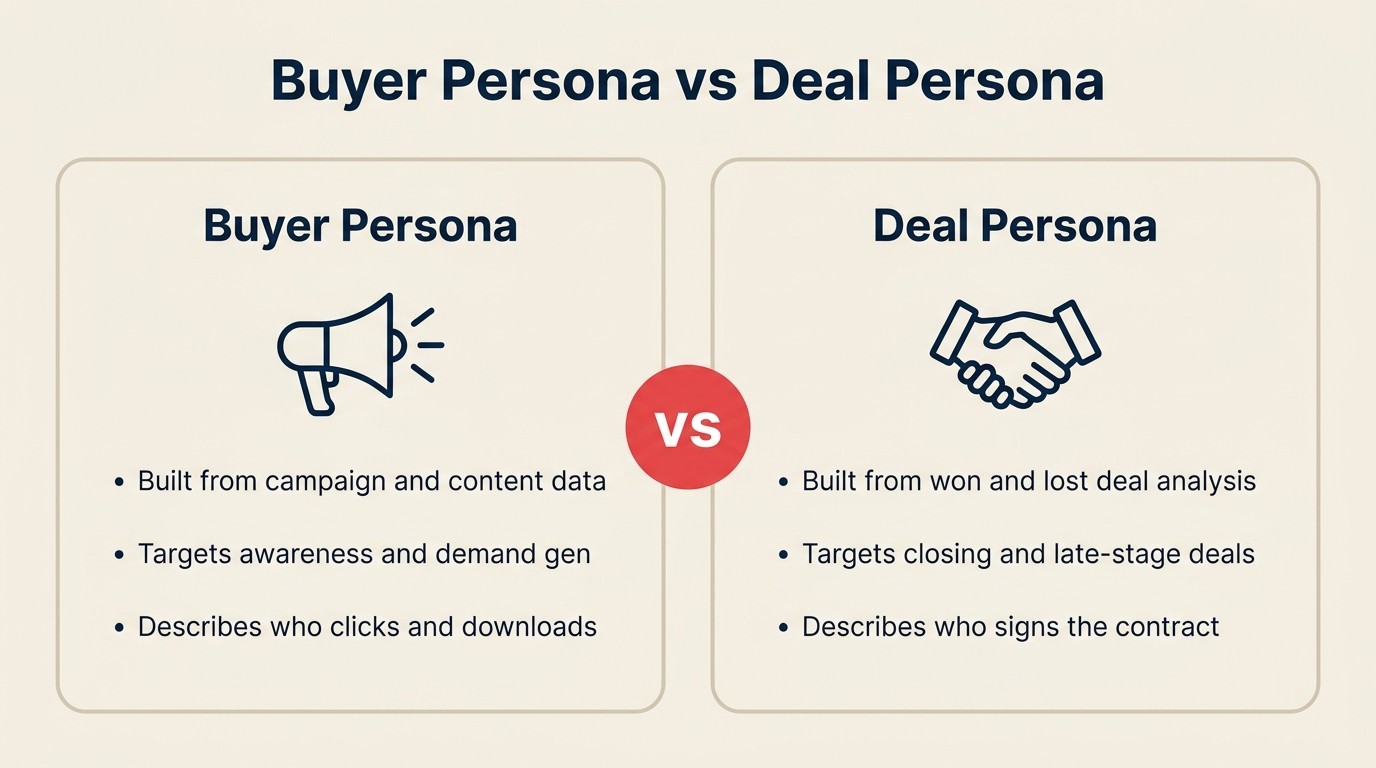
O Par Buyer-Deal Persona é o framework que dá a marketing e vendas mapas de personagens separados, mas vinculados, para dois propósitos diferentes: a buyer persona serve o targeting de awareness e consideração; a deal persona serve a qualificação e o fechamento. Os dois documentos fazem referência ao mesmo ICP. Nenhum é suficiente sozinho. O par funciona porque a buyer persona prevê quem vai entrar no Funnel, e a deal persona prevê quem precisa dizer sim para o deal fechar, duas perguntas diferentes com duas respostas diferentes.
A Distinção Central
A confusão entre buyer personas e deal personas é em grande parte estrutural. Ambas descrevem "para quem estamos vendendo," mas respondem a essa pergunta em momentos diferentes do Funnel.
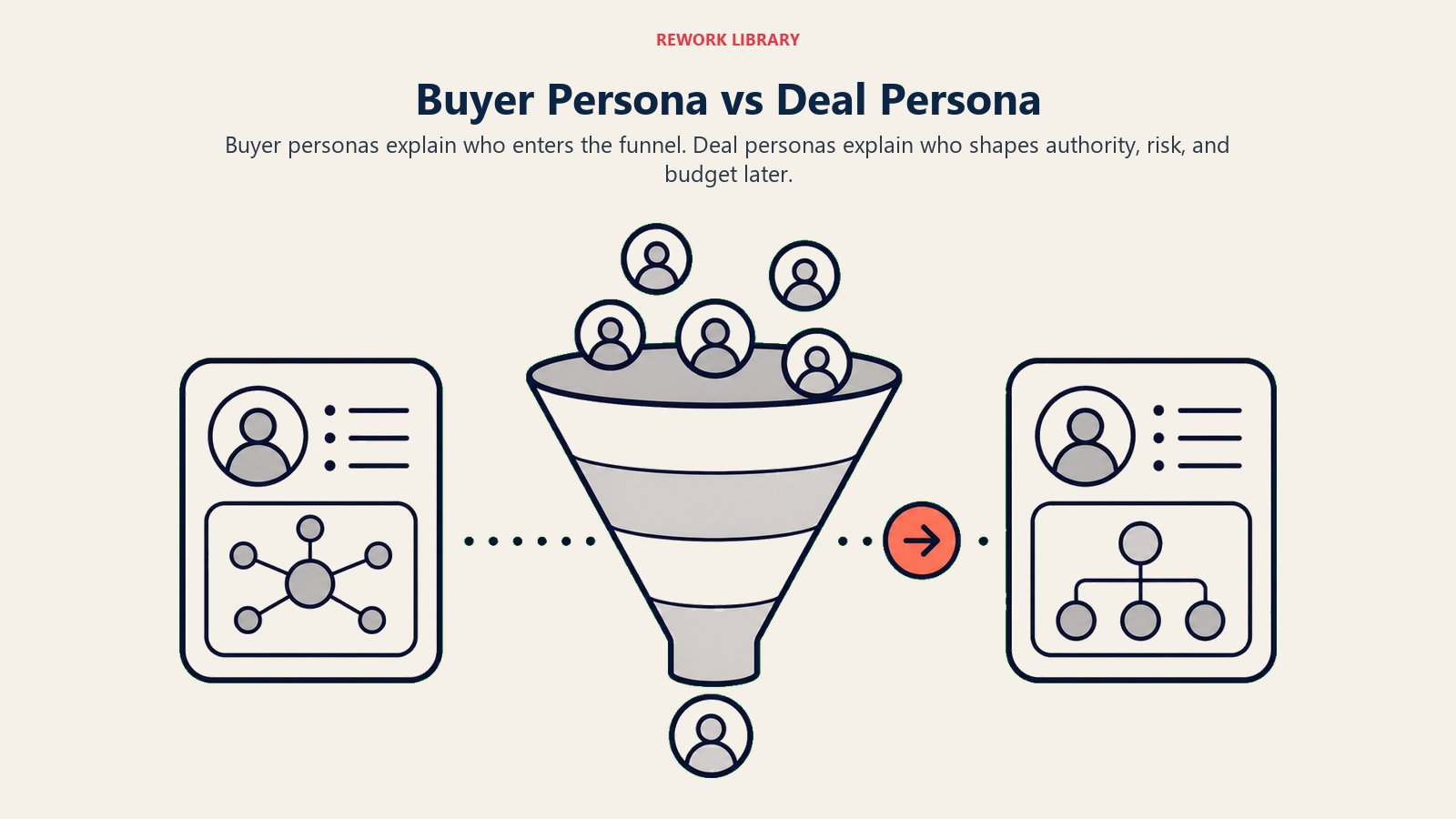
Buyer Persona: A pessoa que pesquisa, consome conteúdo e entra no Funnel. Essa pessoa inicia o contato. Encontrou seu post de blog, participou do seu webinar, baixou seu guia de comparação ou respondeu a uma sequência de outbound de SDR. Ela está se autoeducando sobre a categoria de problema e avaliando opções. É seu público de awareness e consideração.
Deal Persona: A pessoa (ou comitê) que tem autoridade de orçamento e dá a aprovação final. Ela pode entrar no deal tarde, nunca tendo consumido nenhum de seu conteúdo. Se importa com resultados de negócio, risco financeiro e fit organizacional, não com funcionalidades do produto ou educação sobre a categoria. Precisa ser vendida de forma diferente da pessoa que te pesquisou.
Em SMB e empresas em fase inicial, essas duas pessoas frequentemente são a mesma: o fundador ou CEO que te encontra, te avalia e assina o contrato. Marketing e vendas podem razoavelmente trabalhar a partir de uma única persona.
Em médio porte, a buyer persona (tipicamente um gerente ou diretor de nível de praticante) e a deal persona (um VP ou nível C com aprovação de orçamento) são frequentemente títulos diferentes. O champion que conduziu a avaliação e o executivo que aprovou o orçamento podem ter tido conversas muito diferentes com seu time.
Em enterprise, esses papéis podem se bifurcar dramaticamente. O comitê de compras pode incluir um champion de praticante, um avaliador técnico, um contato de procurement e um comprador econômico que nunca participou de uma única Demo. Mapeá-los todos, e saber qual persona marketing deve segmentar versus qual vendas deve alcançar, é como deals complexos se desbloqueiam. A pesquisa do Gartner sobre decisões de compra B2B constata que 74% dos times de compra experimentam conflito interno durante o processo de decisão, uma dinâmica que estratégias de persona única consistentemente subestimam.
Por Que a Lacuna Importa na Prática
Quando marketing e vendas trabalham a partir da mesma persona (geralmente a buyer persona), dois fracassos específicos acontecem.
Falha 1: O conteúdo de fundo de funil é construído para a pessoa errada.
Marketing produz excelente conteúdo para as fases de awareness e consideração: blogs educativos, relatórios de benchmark, guias de como fazer, conteúdo de comparação. Esse conteúdo fala com os pain points e as perguntas de pesquisa da buyer persona. Funciona para geração de demanda no topo do Funnel.
Mas o que o comprador econômico precisa antes de assinar? Um template de business case. Um modelo de ROI. Um resumo executivo que fala com os resultados do CFO. Uma avaliação de risco de uma página. Esse conteúdo quase nunca é produzido, porque marketing está construindo para o pesquisador, não para o aprovador. A lacuna de conteúdo de sales enablement vs. necessidades de campo é onde esse fracasso aparece com mais clareza.
Vendas acaba fazendo esse conteúdo sozinha, mal feita, às pressas, sob pressão de prazo. Ou os deals estagnaram porque o comprador econômico não tem o que precisa para justificar a compra internamente.
Falha 2: A transferência quebra porque os dois times têm protagonistas diferentes em mente.
Marketing passa um Lead e descreve a buyer persona: "Ela é uma Diretora de RevOps em uma empresa SaaS de 200 pessoas, baixou três peças de conteúdo, alta intenção." Vendas abre o CRM, liga para o Lead e rapidamente descobre que essa pessoa não tem autoridade de orçamento. Precisam chegar ao VP de Vendas. As informações de buyer persona são precisas e irrelevantes para fechar o deal. É por isso que o processo de transferência de MQL para SQL precisa incluir contexto de persona, não apenas dados de engajamento.
Essa desconexão corrói a confiança em ambas as direções. Marketing sente que vendas descarta seus Leads. Vendas sente que marketing não entende o que o movimento de vendas realmente requer. Os dois estão parcialmente certos.
Buyer Persona: O Que Marketing Precisa
Uma buyer persona construída para os propósitos de marketing deve capturar:
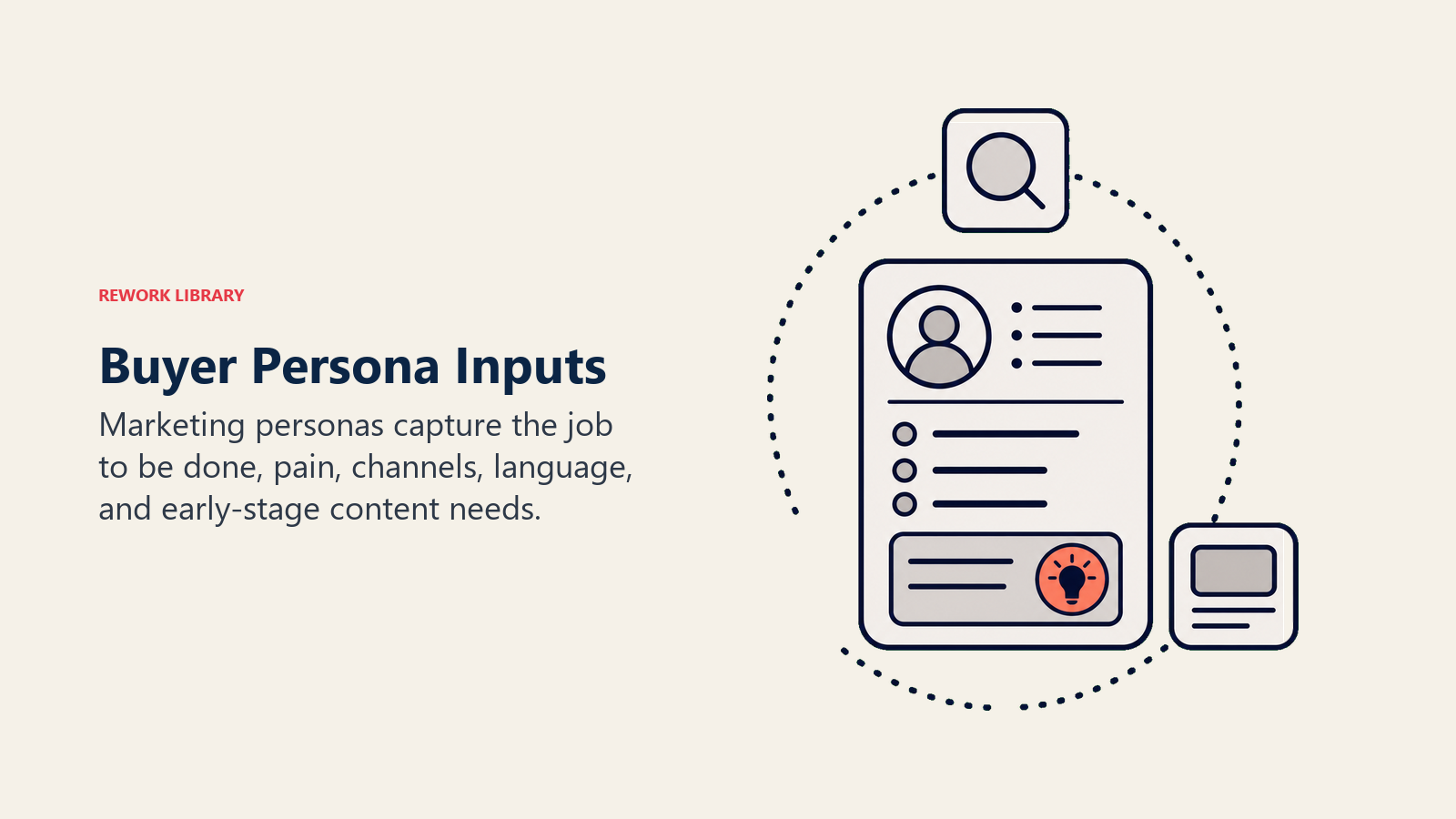
Função e trabalho a ser feito. De que essa pessoa é responsável no trabalho? Qual problema ela está tentando resolver que a trouxe ao seu conteúdo? O enquadramento de trabalho a ser feito é mais útil do que a descrição demográfica. A pesquisa da HBR sobre motivações de compradores B2B confirma que compradores que completam a maior parte de sua jornada no modo self-service formam preferências antes de falar com um representante, tornando o alinhamento de conteúdo em fase inicial crítico. Um VP de 42 anos e um gerente de 29 anos podem compartilhar o mesmo trabalho a ser feito se os dois gerenciam o mesmo problema operacional.
Canais de pesquisa e preferências de conteúdo. Onde essa pessoa encontra informação? LinkedIn, publicações do setor, sites de avaliação como G2, comunidades de pares, webinars? Por quanto tempo pesquisa antes de contatar um fornecedor? Prefere conteúdo técnico profundo ou frameworks em nível executivo?
Pain points que impulsionam a awareness. Qual problema fica ruim o suficiente para ela começar a procurar? Como é "ruim o suficiente": um trimestre perdido, uma nova contratação que expôs uma lacuna de processo, uma reunião de conselho que fez uma pergunta que ela não conseguia responder?
Linguagem e vocabulário que usa. As palavras que essa pessoa usa para descrever seu problema nem sempre são as palavras que o time de produto usa para descrever a solução. O conteúdo de marketing que usa o vocabulário do cliente converte melhor do que conteúdo escrito em terminologia de produto. Isso vem de entrevistas reais e gravações de chamadas de vendas, não de suposições.
Deal Persona: O Que Vendas Precisa
Uma deal persona construída para os propósitos de vendas captura um conjunto diferente de atributos:
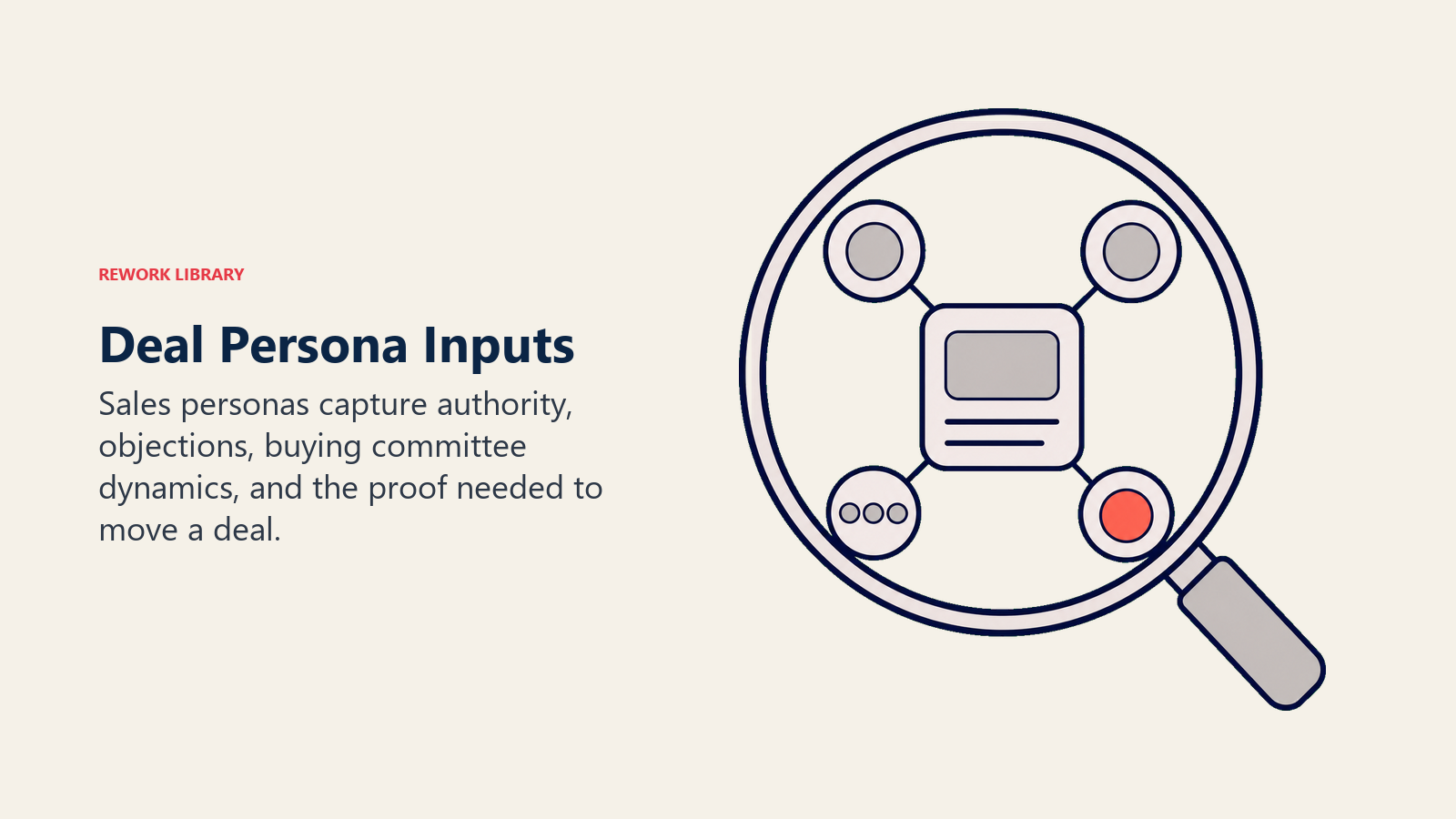
Título e nível de autoridade. Não um "VP" genérico, mas o padrão de título específico que indica autoridade de orçamento em empresas no seu ICP. Um VP de Vendas em uma empresa de 200 pessoas pode ter $30K de gastos discricionários; em uma empresa de 2.000 pessoas, qualquer coisa acima de $15K pode exigir a aprovação do CFO.
Propriedade de orçamento e processo de aprovação. Como essa pessoa obtém aprovação de orçamento? Quem precisa estar envolvido? Qual documentação ela precisa? Quanto tempo normalmente leva o processo de aprovação interno? Essa informação vem de debriefs de deals fechados-ganhos.
Resultados de negócio pelos quais é medida. Quais métricas determinam se essa pessoa teve um bom ano? Receita, headcount, redução de custos, retenção de clientes, eficiência operacional? Seu produto deve se conectar a esses resultados, não em termos abstratos, mas com uma linha clara dos outputs do produto para as métricas de desempenho deles. O alinhamento de stakeholders no estágio final depende de antecipar essas preocupações antes da reunião, não de descobri-las nela.
Tolerância a riscos e padrões de objeção. Quais preocupações esse tipo de comprador econômico tipicamente levanta? Segurança e conformidade? Risco de implementação? Gestão de mudança organizacional? Estabilidade do fornecedor? Conhecer as objeções previsíveis permite que vendas se prepare para elas em vez de reagir a elas.
Quem mais está na sala. No estágio de compra final, quem mais esse comprador econômico consulta? Como é a cadeia de aprovação interna? Isso mapeia o comitê de compras e identifica quem mais precisa ser influenciado antes que o deal possa fechar.
A Zona de Sobreposição: O Que os Dois Times Devem Compartilhar
Buyer e deal personas são documentos diferentes servindo a estágios diferentes, mas não são independentes. Os dois times precisam concordar em uma base compartilhada.
Fit de ICP no nível da empresa. Antes que qualquer trabalho de persona importe, a empresa deve se encaixar no ICP. Os dois times de marketing e vendas estão trabalhando dentro do mesmo perfil de empresa-alvo. Veja o Framework de ICP Compartilhado para como construir essa base compartilhada.
Contexto de setor e segmento. Os dois times precisam entender as dinâmicas do setor que afetam o comportamento de compra. Uma buyer persona em saúde opera sob pressões de conformidade que moldam tanto as preferências de conteúdo quanto os padrões de objeção do comprador econômico.
Sinais de prioridade estratégica. Quais condições organizacionais indicam que essa empresa está em uma janela de compra ativa? Ambos marketing (para targeting de campanha) e vendas (para qualificação) precisam reconhecer esses sinais: uma nova contratação executiva, uma rodada de financiamento recente, uma declaração pública sobre escalar operações.
Quando marketing passa um Lead, deve marcá-lo com o tipo de buyer persona identificado a partir dos dados do formulário e sinais comportamentais. Quando vendas conduz a discovery, atualiza o CRM com informações de deal persona: quem é o comprador econômico, qual é o seu papel, qual é o seu processo de aprovação. Os dois registros permanecem atualizados. Nenhum time precisa adivinhar.
Alinhando os Dois Mapas: Protocolo Prático de Transferência
A lacuna entre buyer persona e deal persona cria um problema específico de transferência: marketing descreve o contato, vendas precisa chegar a outra pessoa.
Um protocolo funcional para fazer a ponte:
Passo 1: Marketing marca o tipo de persona na entrada. Quando um Lead entra no Funnel, marque-o com a buyer persona que corresponde com base no cargo e no padrão de engajamento. "VP de RevOps, avaliação liderada por produto" ou "Diretora de Sales Ops, pesquisa de comparação de preços," quaisquer que sejam seus segmentos de buyer persona. Isso diz a vendas o que está recebendo e qual é provável que seja o enquadramento do contato.
Passo 2: Vendas documenta a deal persona na discovery. Durante a qualificação, o representante identifica o comprador econômico: quem tem autoridade final, o que o processo de aprovação requer, quanto tempo normalmente leva. Isso vai para o registro de oportunidade do CRM, não apenas nas notas do representante. O desenvolvimento de champion no comitê de compras frequentemente começa com a buyer persona, ela puxa o comprador econômico para dentro mais tarde.
Passo 3: Debrief compartilhado sobre qual buyer persona converteu e qual não. Trimestralmente, revise os dados de closed-won por tipo de buyer persona. Quais personas convertem para oportunidades com a maior taxa? Quais entram no Funnel mas nunca se tornam deals porque a deal persona não é acessível? Esses dados devem informar tanto o targeting de marketing quanto a estratégia de outbound de vendas. Faça uma verificação cruzada com seus estágios do ciclo de vida do Lead para ver onde a buyer persona cai em relação a onde a deal persona entra.
Venda para Comitê e o Deal de Múltiplas Personas
Em deals enterprise, você não está vendendo para uma pessoa. Está vendendo para um comitê de 4–8 pessoas que têm papéis diferentes, preocupações diferentes e influência diferente sobre a decisão final.
A buyer persona (champion/praticante) é geralmente a pessoa que te encontrou, conduziu a avaliação e quer que seu produto vença. Mas ela precisa trazer outras pessoas junto. Os sinais de compra do champion são frequentemente o primeiro indicador de que o comprador econômico está pronto para se engajar:
O avaliador técnico se importa com segurança, integração, complexidade de implementação e suporte. Ele não é o champion. É o gatekeeper que pode matar deals com um veredicto de "tecnicamente inviável."
O contato de procurement aparece tarde, se importa com termos de contrato, SLAs e risco do fornecedor. É orientado por processo, não por resultado. Precisa de uma conversa diferente da do champion.
O comprador econômico (CFO, VP de Finanças ou executivo sênior) precisa de ROI de business case, enquadramento de mitigação de risco e uma resposta clara a "o que acontece se isso não funcionar?" Ele não está avaliando funcionalidades. Está avaliando se essa decisão poderia prejudicar a empresa.
Stakeholders internos (outros times afetados pela implementação) podem ter poder de veto. Se seu produto muda como outros times trabalham, esses times precisam de representação na avaliação.
Mapear o comitê de compras cedo, entender quem são todas essas pessoas, com o que se importam e o que precisam para dizer sim, é uma das atividades de maior alavancagem em qualquer deal complexo. Vendas não consegue fazer esse mapeamento se marketing apenas lhes deu um único personagem.
Template de Uma Página para Cada Tipo de Persona
Os dois documentos de persona devem caber em uma única página. Se forem mais longos, não serão usados.
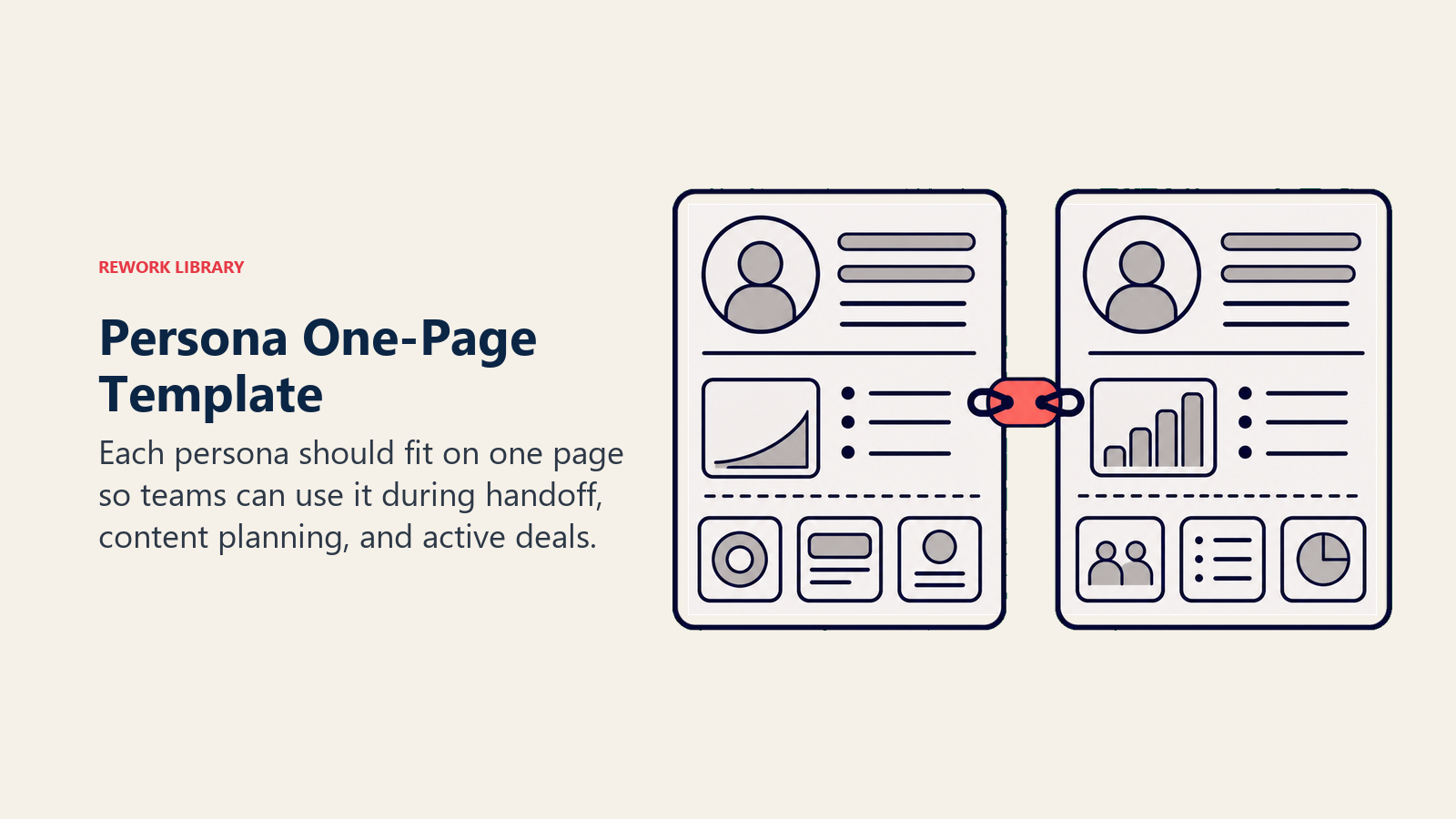
Buyer Persona em Uma Página:
- Nome/rótulo de arquétipo (ex., "Alex, RevOps Champion")
- Título e contexto de perfil da empresa
- Principal trabalho a ser feito
- Top 3 pain points que impulsionam a busca
- Canais de pesquisa e preferências de formato de conteúdo
- Vocabulário que usam para descrever o problema
- Como é "bom" nas fases de awareness e consideração
Deal Persona em Uma Página:
- Nome/rótulo de arquétipo (ex., "O VP que Aprova")
- Padrão de título e nível de autoridade por tamanho da empresa
- Propriedade de orçamento e processo de aprovação
- Top 3 resultados de negócio pelos quais é medido
- Objeções típicas de estágio de deal e preocupações de risco
- Quem mais está no comitê de compras no nível deles
- O que eles precisam ver para aprovar o deal
Os dois documentos devem listar os 2–3 tipos de buyer persona mais prováveis de levar a deals com seu comprador econômico, para que marketing saiba quais contatos em estágio inicial preveem Pipeline de alto valor.
Análise Rework: A Lacuna de Cobertura de Persona
A lacuna de persona mais comum que observamos em revisões de go-to-market B2B não é que as buyer personas sejam mal construídas, é que as deal personas não existem. Os times têm documentos de buyer persona. Não têm documentos de deal persona. O resultado: marketing produz conteúdo forte de awareness e consideração para o pesquisador (o champion) e nenhum conteúdo para o aprovador (o comprador econômico). Vendas acaba produzindo documentos de business case individuais sob pressão de prazo, ou os deals estagnaram quando o comprador econômico aparece tarde e não tem nada para avaliar. A solução é estruturalmente simples: construa um documento de deal persona de uma página para cada segmento principal de ICP usando dados de debriefs de deals fechados-ganhos. A pergunta não é "quem nos encontra?", você sabe isso a partir da buyer persona. A pergunta é "quem assina?", e essa resposta vive no histórico de deals fechados-ganhos do seu time de vendas.
Perguntas Frequentes
Qual é a diferença entre uma buyer persona e uma deal persona?
Uma buyer persona descreve a pessoa que pesquisa seu produto, consome conteúdo e entra no Funnel, tipicamente um champion em nível de praticante ou gerente. Uma deal persona descreve a pessoa com autoridade de orçamento e poder de aprovação final, tipicamente um VP, executivo de nível C ou CFO, dependendo do tamanho do deal. Em SMB, essas são frequentemente a mesma pessoa. Em médio porte e enterprise, são frequentemente títulos diferentes que entram no deal em estágios diferentes e precisam de conteúdo e conversas diferentes.
Quantas personas um time de receita B2B realmente precisa?
A maioria dos times B2B precisa de dois tipos de buyer persona (representando os principais pontos de entrada no Funnel) e um a dois tipos de deal persona por segmento de ICP (representando o comprador econômico típico em empresas de tamanhos diferentes). Mais de quatro personas no total geralmente sinaliza expansão de escopo, os documentos se multiplicam, mas nenhum é usado de forma consistente. Comece com a buyer persona de maior volume e a deal persona mais comum para o seu ICP central. Adicione personas apenas quando os dados de closed-won mostrem um padrão distinto que não é coberto pelos documentos existentes.
Qual é a diferença entre uma persona e um ICP?
Um ICP (Ideal Customer Profile) é no nível da empresa, descreve a organização que é o fit certo para o seu produto com base em atributos firmográficos, tecnográficos e comportamentais. Uma persona é no nível de contato, descreve o indivíduo que interage com seu time em um estágio específico do Funnel. O ICP é a condição de entrada: a empresa deve se qualificar antes que o targeting de persona importe. Tanto as buyer quanto as deal personas descrevem indivíduos que operam dentro de empresas que se qualificam para o ICP.
Por que os times de vendas frequentemente ignoram os documentos de buyer persona?
Os times de vendas ignoram os documentos de buyer persona porque buyer personas são construídas para responder perguntas de marketing (quem devemos segmentar no topo do Funnel?) não perguntas de vendas (quem preciso que diga sim?). O champion que preenche um formulário é descrito com precisão pela buyer persona. Mas o comprador econômico que não estava no Funnel até a quarta semana do ciclo de deal, cujas objeções vão matar o deal, não está descrito em lugar algum na documentação de marketing. Quando vendas diz "o trabalho de persona não é útil," geralmente estão certos pelo motivo errado: a persona existe, mas a deal persona não.
Como as informações de persona devem ser transferidas de marketing para vendas?
Quando um Lead entra no Funnel, marketing deve marcar o registro no CRM com o tipo de buyer persona (com base em cargo e padrão de engajamento). Quando um representante conduz a discovery, deve atualizar o registro de oportunidade com informações de deal persona: quem é o comprador econômico, qual é o processo de aprovação, quais métricas de resultado de negócio orientam a decisão deles. Essa documentação bidirecional mantém os dois tipos de persona atualizados e evita que a transferência dependa de um push unidirecional de contexto apenas de marketing.
Que conteúdo deve ser construído especificamente para a deal persona?
O conteúdo de deal persona serve ao estágio de aprovação final: templates de business case, calculadoras de ROI, análises de custo total de propriedade, resumos executivos de uma página e guias de tratamento de objeções para as preocupações específicas que os compradores econômicos levantam (segurança e conformidade, risco de implementação, gestão de mudança organizacional, estabilidade do fornecedor). Esse conteúdo quase nunca é produzido por marketing sem alinhamento explícito na definição de deal persona, porque a estratégia de conteúdo padrão de marketing otimiza para as fases de awareness e consideração que a buyer persona representa.
Saiba Mais

Principal Solution Architect
On this page
- A Distinção Central
- Por Que a Lacuna Importa na Prática
- Buyer Persona: O Que Marketing Precisa
- Deal Persona: O Que Vendas Precisa
- A Zona de Sobreposição: O Que os Dois Times Devem Compartilhar
- Alinhando os Dois Mapas: Protocolo Prático de Transferência
- Venda para Comitê e o Deal de Múltiplas Personas
- Template de Uma Página para Cada Tipo de Persona
- Perguntas Frequentes
- Qual é a diferença entre uma buyer persona e uma deal persona?
- Quantas personas um time de receita B2B realmente precisa?
- Qual é a diferença entre uma persona e um ICP?
- Por que os times de vendas frequentemente ignoram os documentos de buyer persona?
- Como as informações de persona devem ser transferidas de marketing para vendas?
- Que conteúdo deve ser construído especificamente para a deal persona?
- Saiba Mais