BANT vs. MEDDIC vs. CHAMP: Escolhendo o Framework de Qualificação Certo para o Seu Time
Turn this article into takeaways for your work.


Each assistant summarizes the article only for you and suggests best practices for your work.
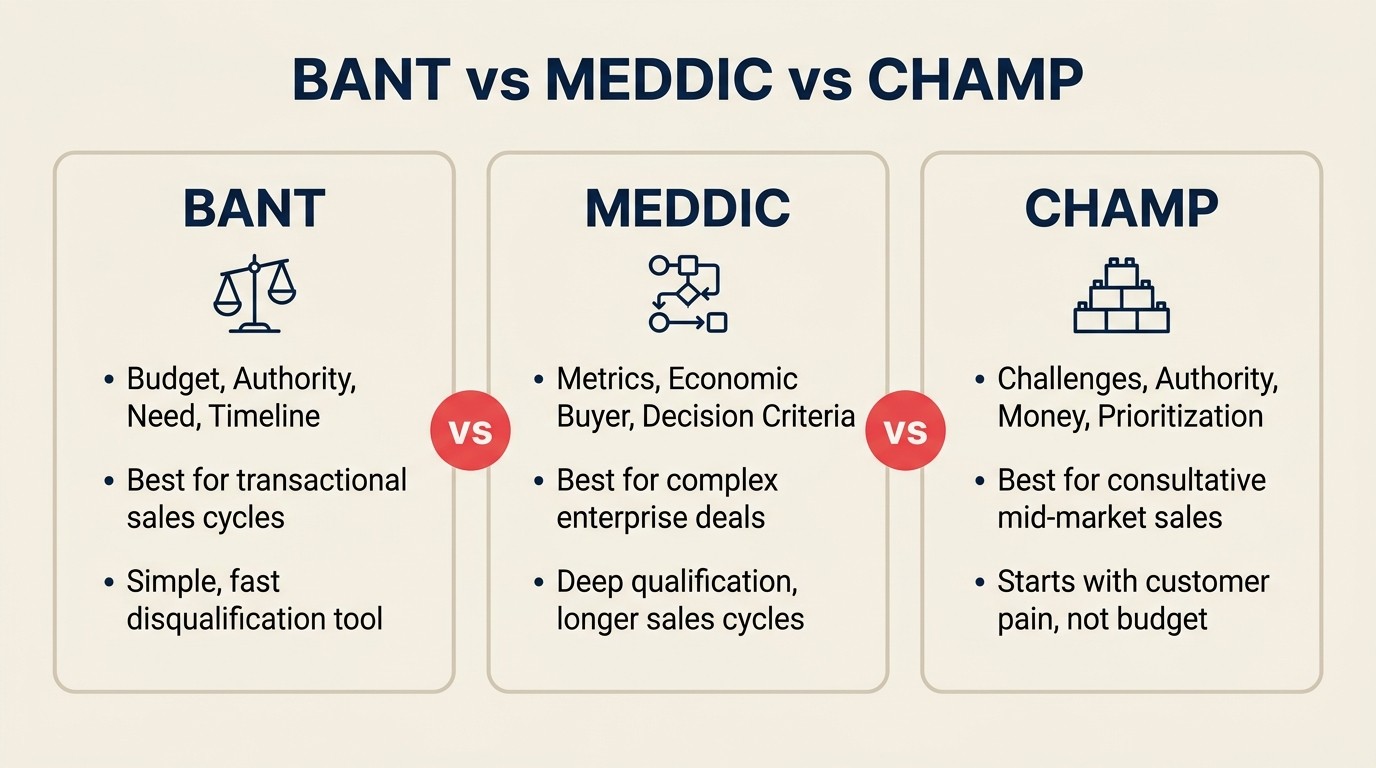
A conversa sempre começa da mesma forma: "Precisamos melhorar nossa qualificação. Devemos usar BANT ou MEDDIC?"
Então alguém na reunião menciona CHAMP. Depois alguém pergunta sobre MEDDPICC. Então o VP de Vendas diz que usou ANUM na última empresa. E uma hora depois, ninguém decidiu nada.
Aqui está a resposta honesta: os três frameworks funcionam. Nenhum deles funciona para toda situação. E o framework de qualificação que seu time usa de forma consistente vale mais do que o teoricamente superior que seguem 30% do tempo.
Este artigo oferece uma comparação clara em seis dimensões, um guia de decisão para escolher o framework certo para o seu movimento e orientação prática sobre abordagens híbridas, porque a maioria dos times maduros não usa um único framework exclusivamente.
Por Que os Frameworks de Qualificação Importam para o Alinhamento
A definição de qualificação de vendas do Gartner observa que, embora BANT tenha sido historicamente o padrão dominante, 73% das empresas agora usam definições mais soltas ou adaptadas. Isso significa que "qualificado" significa coisas diferentes para times diferentes, a menos que ambos os lados tenham concordado explicitamente no mesmo framework.
Quando marketing e vendas usam modelos mentais diferentes de "qualificado," a transferência quebra de uma forma específica: marketing passa Leads com base em um padrão, vendas os avalia com base em um padrão diferente e nenhum time entende por que o outro está insatisfeito.
Marketing pode estar filtrando sinais de BANT (orçamento confirmado, autoridade confirmada) antes de chamar um Lead de pronto para SQL. Vendas pode estar avaliando com critérios de MEDDIC (comprador econômico identificado, processo de decisão mapeado) e achando a transferência incompleta. Ambos estão tecnicamente certos. Ambos os padrões são válidos. Mas são padrões diferentes aplicados em estágios diferentes, e se nunca foram explicitamente alinhados, cada transferência produzirá atrito. Revise o glossário de alinhamento marketing-vendas para estabelecer vocabulário compartilhado antes de se comprometer com um framework: as definições de SQL e MQL precisam corresponder aos critérios de qualificação que você adotar.
Escolher uma linguagem de qualificação compartilhada é uma decisão de marketing e vendas, não apenas de vendas. O framework determina quais dados de pré-vendas são valiosos capturar (quais campos de formulário perguntar, quais sinais comportamentais pontuar) e o que vendas buscará ao receber um Lead.
Vamos analisar cada framework honestamente.
Dados-chave: Adoção de Framework de Qualificação e Desempenho
- Apenas 46% dos representantes de vendas B2B relatam usar um framework de qualificação formal de forma consistente, segundo a pesquisa State of Sales da Salesforce. A maioria da qualificação ainda é baseada na intuição do representante.
- Times usando qualificação baseada em MEDDIC veem um aumento médio de 30% nas taxas de fechamento em comparação com times que usam qualificação ad hoc, segundo pesquisa publicada pela MEDDIC Academy.
- BANT continua sendo o framework mais amplamente adotado em vendas B2B, usado por 63% das empresas com processo de qualificação formal, apesar de ter sido desenvolvido pela IBM na década de 1950, segundo dados da Richardson Sales Performance.
BANT: O Framework Clássico
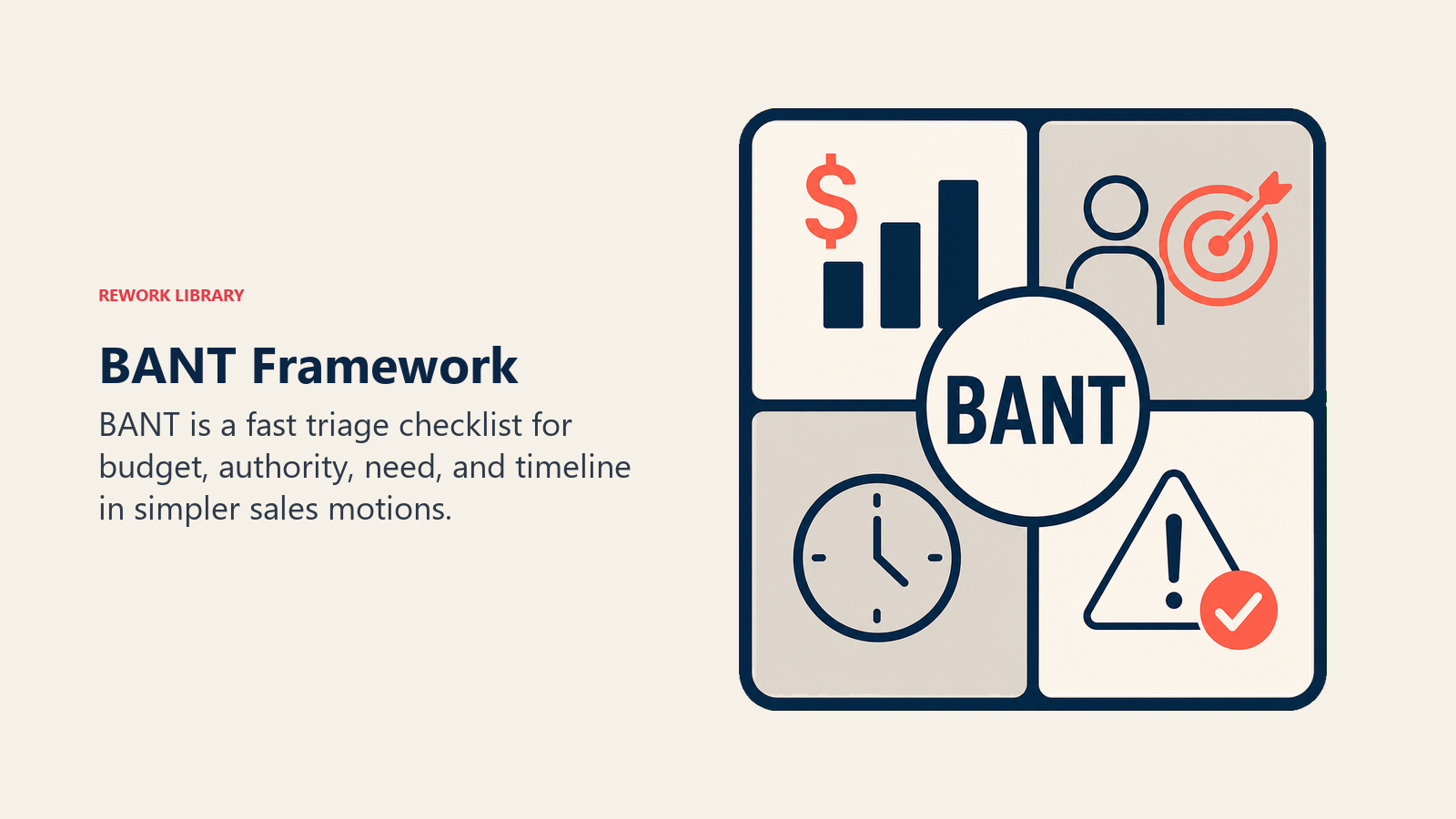
BANT foi desenvolvido pela IBM na década de 1950 como uma forma estruturada de qualificar prospects durante uma chamada de vendas. Significa Budget, Authority, Need, Timeline (Orçamento, Autoridade, Necessidade, Cronograma). O artigo da Wikipedia sobre prospects qualificados traça as origens do BANT e explica por que continua sendo o framework mais amplamente adotado em vendas B2B apesar de sua idade. Para um guia de implementação completo, o artigo sobre o framework BANT na coleção de gestão de Pipeline cobre como aplicá-lo na prática.
O que cada elemento significa:
Budget (Orçamento): O prospect tem recursos financeiros para comprar? Há um orçamento alocado ou disponível para esse tipo de solução?
Authority (Autoridade): A pessoa com quem você está falando é o tomador de decisão? Ou precisará da aprovação de outra pessoa?
Need (Necessidade): Ele tem um problema genuíno que seu produto resolve? Esse problema é uma prioridade?
Timeline (Cronograma): Quando planejam tomar uma decisão ou implementação? Há urgência impulsionando a avaliação?
Onde BANT funciona bem:
- Deals transacionais com ciclos de vendas curtos (30-60 dias)
- SMB onde uma única pessoa frequentemente detém autoridade de orçamento e tomada de decisão
- Produtos de baixo ACV onde a confirmação de orçamento é direta
- Leads inbound onde a qualificação explícita é possível no início da primeira chamada
- Ambientes de vendas de alto volume onde representantes precisam de um framework rápido de sim/não
Onde BANT falha:
- Deals enterprise com múltiplos stakeholders onde nenhuma pessoa detém todos os quatro critérios
- Soluções complexas onde a "necessidade" não é óbvia para o prospect (ele pode ainda não perceber que tem o problema)
- Compras B2B modernas onde os champions impulsionam a avaliação, mas os compradores econômicos controlam o orçamento e são apresentados mais tarde
- Conversas em fase inicial onde orçamento e cronograma são genuinamente desconhecidos e perguntar sobre eles diretamente mata o rapport
O problema oculto do BANT: os compradores frequentemente não sabem seu próprio orçamento. "Você tem orçamento para isso?" é uma pergunta que a maioria dos prospects ou não consegue responder honestamente em uma primeira conversa ou vai desviar. Um VP de Operações explorando uma nova solução pode ainda não ter tido uma conversa de orçamento com o CFO. Ele está avaliando se o caso de ROI existe antes de fazer esse pedido. BANT trata o orçamento como binário (tem ou não tem) quando frequentemente é condicional à construção primeiro do business case.
Isso não torna o BANT errado. Torna-o mais adequado para situações onde a confirmação de orçamento é razoável no início: deals transacionais, de baixa complexidade e com um único tomador de decisão. Nesses ambientes, é rápido, prático e eficaz. Mas quando os deals ficam mais complexos, as quatro perguntas do BANT deixam de cobrir terreno suficiente.
MEDDIC / MEDDPICC: O Framework Enterprise
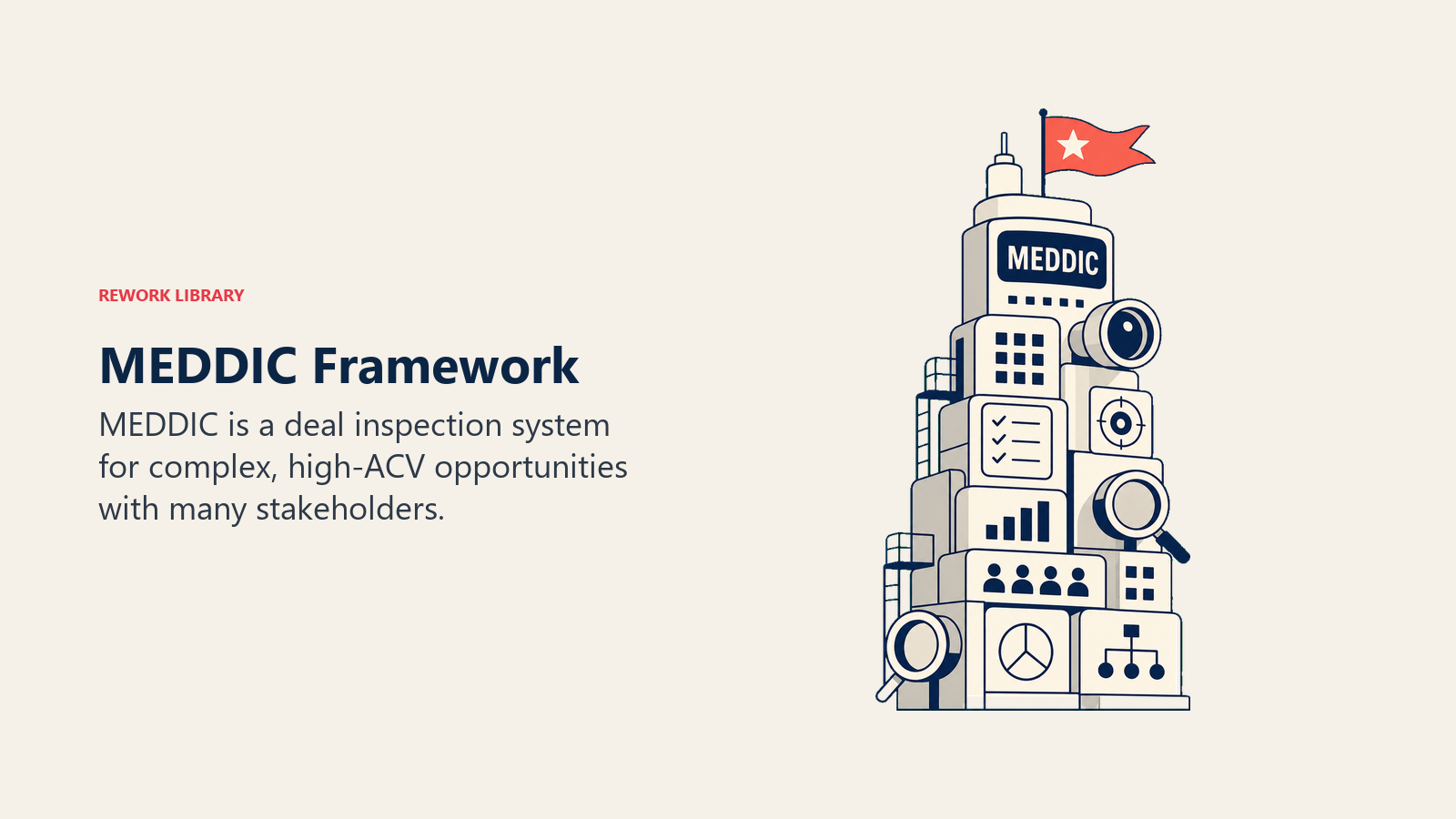
MEDDIC surgiu da PTC na década de 1990, refinado pelo movimento enterprise da Salesforce, e se tornou o framework de qualificação dominante para vendas B2B complexas de alto ACV. O guia do Gartner sobre como usar o framework BANT coloca a escolha entre BANT vs. MEDDIC em termos práticos: BANT é uma ferramenta de triagem de Lead, enquanto MEDDIC é um framework de inspeção de deal. Essa distinção importa para decidir qual aplicar em qual estágio. O artigo sobre o framework MEDDIC cobre as perguntas completas de discovery e a abordagem de implementação no CRM para cada elemento.
O que cada elemento significa:
Metrics (Métricas): Quais resultados de negócio quantificáveis o prospect alcançará ao resolver este problema? Não "nosso produto economiza tempo," mas "seu time reduzirá as horas de relatório manual de 40/semana para 5/semana, economizando $180K anualmente."
Economic Buyer (Comprador Econômico): Quem controla o orçamento e aprova a compra? Você o conheceu? Tem acesso?
Decision Criteria (Critérios de Decisão): Quais requisitos uma solução deve atender para ser selecionada? Como são priorizados? Como é "vencer" para o comitê de compras?
Decision Process (Processo de Decisão): Como a decisão será tomada? Quem está envolvido? Quais são as etapas de aprovação, requisitos de procurement, revisões de segurança?
Identify Pain (Identificar Dor): Qual é o custo de não resolver este problema? O que acontece se eles não fizerem nada ou ficarem com o status quo?
Champion (Champion): Há alguém dentro da organização compradora que quer que sua solução vença, tem influência interna e vai advocar por você em salas onde você não está?
A extensão PICC (MEDDPICC): Paper Process (Processo de Papel): Quais são os requisitos legais, de procurement e contratuais? Quanto tempo o processo de papel tipicamente leva nessa organização? Competition (Concorrência): Quem mais eles estão avaliando? Qual é a posição competitiva?
Onde MEDDIC funciona bem:
- Deals enterprise com ciclos de 6-18 meses e ACV acima de $50K
- Decisões com múltiplos stakeholders envolvendo procurement, jurídico, finanças e avaliação técnica
- Soluções complexas onde a documentação de ROI é parte da venda
- Empresas onde o coaching de vendas importa: MEDDIC dá aos gestores uma linguagem comum para diagnosticar por que deals estagnaram
Onde MEDDIC é excessivo:
- SMB e médio porte inferior onde as decisões se movem em 30-90 dias
- Movimentos de baixo toque ou PLG onde os compradores se qualificam sozinhos
- Inbound de alta velocidade onde a discovery detalhada não é prática na fase de qualificação
- Times com recursos limitados de treinamento (MEDDIC tem uma curva de aprendizado íngreme)
Por que MEDDIC é melhor para diagnosticar deals estagnados: O benefício mais subvalorizado do MEDDIC não é melhor qualificação inicial. É ter uma linguagem consistente para revisões de Pipeline. Quando um deal estagna, um time treinado em MEDDIC pode diagnosticar: "Não temos o comprador econômico engajado. Não conhecemos o processo de papel. O champion não tem sido responsivo por duas semanas." Isso é acionável. "O deal está estagnado" não é. Veja as revisões de Pipeline para como os critérios de MEDDIC se mapeiam para a inspeção de deal na cadência de revisão semanal. E o desenvolvimento de champion cobre como construir e manter advogados internos após identificá-los.
CHAMP: O Caminho do Meio Moderno
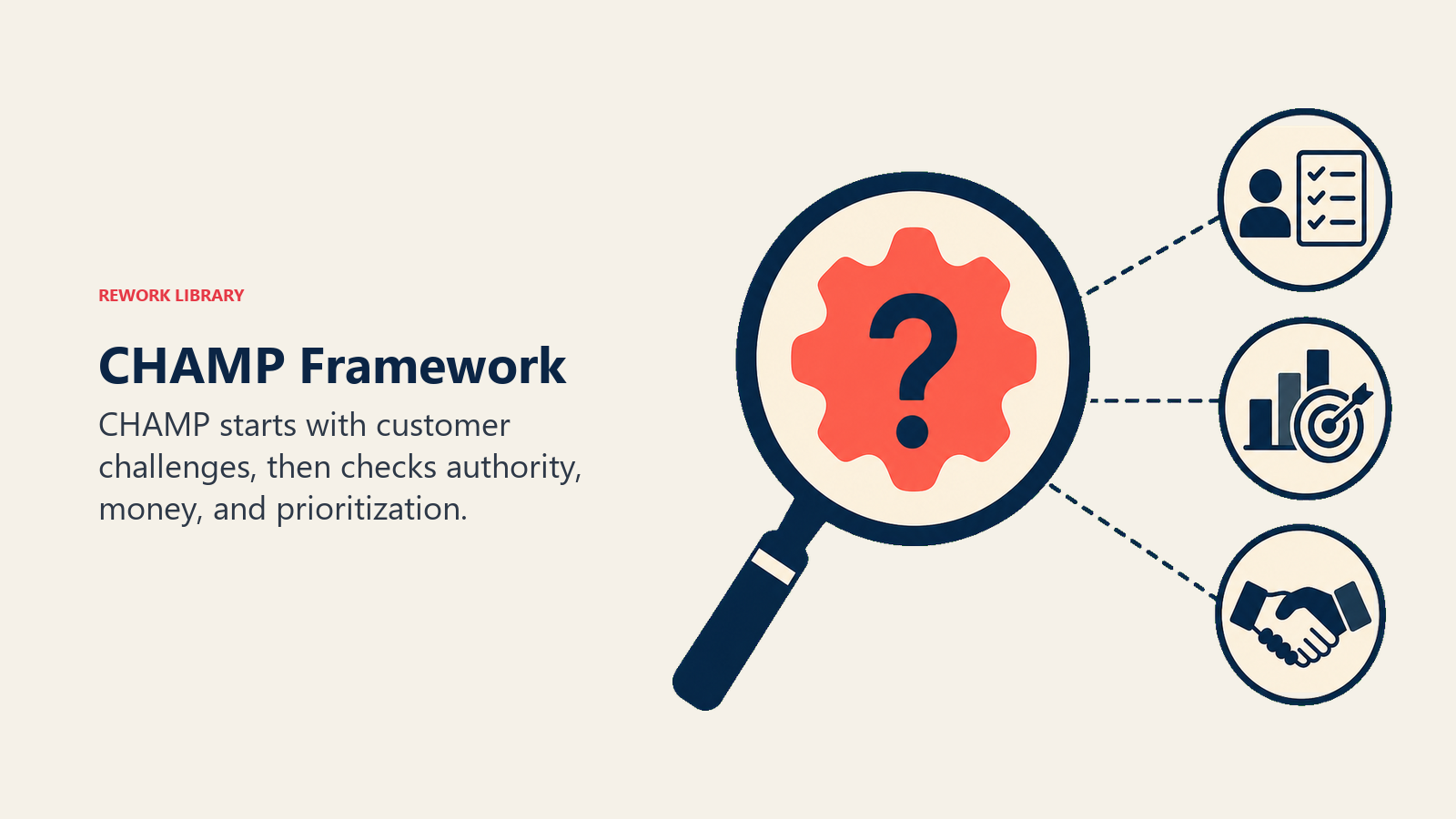
CHAMP foi desenvolvido como uma crítica ao ponto de partida do BANT. Significa Challenges, Authority, Money, Prioritization (Desafios, Autoridade, Dinheiro, Priorização). O artigo sobre o framework CHAMP na coleção de gestão de Pipeline explica como conduzir conversas de discovery com foco em desafios na prática.
O que cada elemento significa:
Challenges (Desafios): Quais desafios de negócio específicos eles enfrentam? Comece com a dor, não com o orçamento. O insight central do CHAMP é que entender o desafio é o que garante o direito de ter a conversa de dinheiro.
Authority (Autoridade): Igual ao BANT: esta pessoa é tomadora de decisão, ou precisa trazer outra pessoa?
Money (Dinheiro): Faixa de orçamento e fonte, abordada como uma conversa de resolução de problemas ("Que recursos você considerou para resolver isso?") em vez de uma condição de qualificação binária.
Prioritization (Priorização): Quão urgente é este desafio em relação a outras prioridades? CHAMP substitui o "Timeline" do BANT (quando você vai decidir?) por uma pergunta mais significativa: Este problema é importante o suficiente para agir, ou ficará na fila?
O insight do CHAMP: Comece com o desafio, não com o orçamento. Perguntar "você tem orçamento?" nos primeiros 10 minutos de uma conversa de vendas coloca os prospects na defensiva. Sinaliza que você está qualificando se eles valem seu tempo antes de demonstrar qualquer valor. CHAMP inverte isso: entenda o desafio primeiro, então a conversa de dinheiro é uma consequência natural de se eles querem resolvê-lo.
Onde CHAMP se encaixa:
- Vendas consultivas de médio porte onde relacionamento e confiança importam no início
- Deals onde a discovery de dor é genuinamente valiosa para o comprador (ele pode não ter articulado totalmente o problema)
- Times que acham que a abordagem de orçamento-primeiro do BANT cria atrito com os compradores
- Organizações com inbound de alta qualidade onde a venda por relacionamento é o diferencial
Comparação de Frameworks Lado a Lado
A Matriz de Seleção BANT-MEDDIC-CHAMP
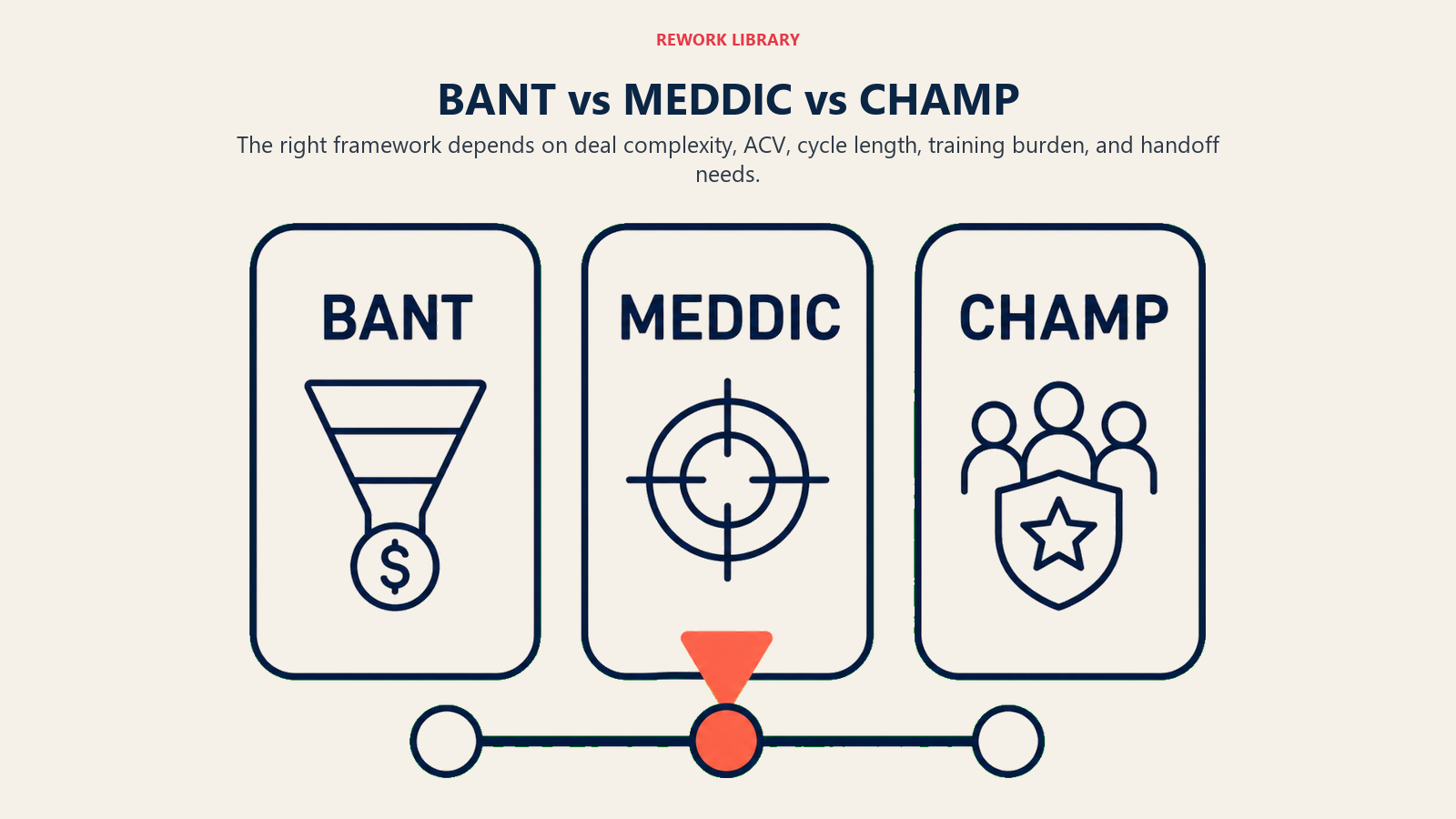
A Matriz de Seleção BANT-MEDDIC-CHAMP mapeia os três frameworks de qualificação B2B mais amplamente adotados em seis dimensões de decisão: complexidade do deal, ACV, duração do ciclo, investimento em treinamento, overhead de implementação no CRM e alinhamento de pré-transferência de marketing. Foi projetada para ser usada como ferramenta de decisão, não como ranking, porque os três frameworks funcionam no seu caso de uso pretendido. O framework errado escolhido para o movimento errado cria overhead sem melhorar as taxas de fechamento.
| Dimensão | BANT | MEDDIC | CHAMP |
|---|---|---|---|
| Origem | IBM, anos 1950 | PTC / Salesforce, anos 1990 | Desenvolvido como crítica ao BANT, anos 2010 |
| Acrônimo do framework | Budget, Authority, Need, Timeline | Metrics, Economic Buyer, Decision Criteria, Decision Process, Identify Pain, Champion | Challenges, Authority, Money, Prioritization |
| Complexidade do deal | Baixa: tomador de decisão único, transacional | Alta: múltiplos stakeholders, processo de compra complexo | Média: 2-4 stakeholders, consultivo |
| Faixa de ACV ideal | Menos de $10K | Mais de $50K | $10K-$75K |
| Ciclo de vendas típico | 2-8 semanas | 3-18 meses | 6 semanas / 6 meses |
| Dados capturados | Orçamento, autoridade, necessidade, cronograma | Métricas, champion, comprador econômico, processo completo de decisão, dor, concorrência | Desafios, autoridade, orçamento, urgência/prioridade |
| Carga de treinamento | Baixa: 4 variáveis, intuitivo | Alta: 6-8 elementos, requer coaching em métricas/desenvolvimento de champion | Média: 4 elementos, mas "Desafios" requer habilidade de discovery |
| Implementação no CRM | Simples: 4 campos | Complexa: requer objetos personalizados ou notas detalhadas | Simples: 4 campos, similar ao BANT |
| Alinhamento de marketing pré-transferência | Fácil: mapear campos de formulário diretamente para sinais de Budget, Authority, Need, Timeline | Requer que marketing capture sinais de dor alinhados com métricas e dados de desafio | Ajuste natural para marketing de conteúdo baseado em dor; perguntas de formulário centradas em desafio |
| Identificação de champion | Não abordada | Central para o framework (Champion = elemento dedicado) | Não abordada formalmente |
| Timing da conversa de orçamento | Primeiro (arrisca rapport com compradores sem noção de orçamento) | Tarde (após métricas e dor estabelecidas) | Após discovery de desafio (ganho, não exigido) |
| Impacto na taxa de fechamento | Padrão para caso de uso | +30% vs. qualificação ad hoc em enterprise (pesquisa MEDDIC Academy) | Dados independentes limitados; performa vs. BANT em médio porte consultivo |
| Taxa de adoção | 63% das empresas com processo de qualificação formal (Richardson Sales Performance) | Framework principal em SaaS enterprise | Adotado como substituto do BANT em médio porte e organizações consultivas |
| Melhor para | Inbound de alto volume, SMB, ciclos transacionais rápidos | Enterprise, complexo, alto ACV, múltiplos stakeholders | Médio porte, consultivo, liderado por relacionamento, discovery com foco em dor |
| Armadilha comum | Orçamento-primeiro cria atrito inicial; compradores frequentemente não conseguem confirmar orçamento na primeira chamada | Curva de aprendizado íngreme; teatro de MEDDIC (campos preenchidos sem qualificação genuína) | Elemento "Desafios" requer fortes habilidades de discovery que muitos representantes não têm |
Citável: Times usando qualificação baseada em MEDDIC veem um aumento médio de 30% nas taxas de fechamento em comparação com times que usam qualificação ad hoc, segundo pesquisa publicada pela MEDDIC Academy. Esse resultado só vale quando o framework é genuinamente aplicado, não quando os campos do CRM são preenchidos com suposições plausíveis.
Citável: Organizações onde marketing e vendas usam a mesma linguagem de qualificação relatam 67% maior taxa de fechamento a partir do estágio de MQL, segundo pesquisa do demand unit waterfall do SiriusDecisions. Isso torna a decisão de alinhamento do framework uma escolha de marketing e vendas, não apenas de vendas.
Combinando Framework ao Movimento
Use este guia de decisão para restringir com base no que mais importa para seu negócio.
Passo 1: Qual é o seu ACV médio?
- Menos de $10K → BANT ou CHAMP simplificado
- $10K-$50K → CHAMP ou MEDDIC (versão mais leve)
- Mais de $50K → MEDDIC ou MEDDPICC
Passo 2: Quantos stakeholders estão tipicamente envolvidos em uma decisão?
- 1-2 pessoas → BANT ou CHAMP
- 3-5 pessoas → CHAMP ou MEDDIC
- 5+ pessoas → MEDDIC/MEDDPICC
Passo 3: Quão importante é a identificação de champion para a sua taxa de fechamento?
- Champions raramente determinam resultados → BANT ou CHAMP
- Ter um advogado interno é crítico → MEDDIC (Champion é explícito)
Passo 4: Seu ciclo de vendas requer documentação formal de ROI?
- Não → BANT ou CHAMP
- Sim → MEDDIC (elemento Metrics impulsiona isso)
Passo 5: Qual é a capacidade do seu time para treinamento e coaching?
- Limitada → BANT (mais rápido para adotar)
- Moderada → CHAMP
- Forte → MEDDIC
Se você respondeu "MEDDIC" consistentemente mas é uma empresa focada em SMB com um ciclo de vendas médio de 45 dias, reconsidere. O overhead de aplicar um framework enterprise a deals transacionais diminui a velocidade sem melhorar a qualidade.
Abordagens Híbridas
A maioria dos times de receita maduros não usa um único framework exclusivamente. Usam diferentes frameworks em diferentes estágios.
Híbrido comum: BANT para triagem de inbound, MEDDIC para oportunidades ativas.
Este é provavelmente o híbrido mais prático para empresas de médio porte. Veja como funciona:
Estágio 1: Triagem de inbound (BDR/SDR usando BANT). Quando um Lead entra, o primeiro objetivo de qualificação é rápido: isso vale uma chamada de discovery? BANT dá aos BDRs uma lista rápida: essa empresa parece ter orçamento, autoridade e uma necessidade real em um cronograma razoável? Se sim, agende a discovery. Se não, roteie para nutrição ou desqualifique.
BANT neste estágio não requer orçamento confirmado. Requer orçamento provável. "Tamanho e setor da empresa sugerem que isso está dentro da faixa de orçamento" é suficiente. O objetivo é triagem, não qualificação completa.
Estágio 2: Discovery e criação de oportunidade (AE usando MEDDIC). Uma vez que uma chamada de discovery acontece, o objetivo muda de triagem para entendimento. Agora você quer saber: Quem é o comprador econômico? Quais são os resultados mensuráveis que eles se importam? Um champion está se desenvolvendo? Como funciona o processo de decisão deles?
MEDDIC dá aos AEs a estrutura para fazer essas perguntas naturalmente ao longo de uma ou mais chamadas de discovery sem parecer um interrogatório.
Estágio 3: Gestão ativa de oportunidades (MEDDIC ao longo). As revisões de deal usam critérios de MEDDIC para identificar o que está faltando. "Temos métricas, dor e um champion, mas não engajamos o comprador econômico e não sabemos o processo de decisão." Esse é um diagnóstico claro, não um vago "estamos trabalhando nisso."
Outro híbrido: CHAMP para inbound, MEDDIC para expansão enterprise. Para empresas vendendo tanto para SMB/médio porte inbound quanto para enterprise, CHAMP é um ajuste natural para o primeiro (focado em relacionamento, priorizando dor) e MEDDIC para o segundo (complexo, múltiplos stakeholders).
Alinhando a Qualificação de Marketing ao Framework
O framework que vendas usa deve influenciar o que marketing captura antes da transferência.
Se vendas usa BANT: Marketing deve coletar faixa de orçamento, título do tomador de decisão, necessidade explícita (problema ou objetivo descrito) e cronograma nos formulários. Ou pontuar comportamentos que implicam esses elementos: visitas à página de preços implicam seriedade de orçamento, título C-level implica autoridade. O framework de definição de MQL mostra como codificar esses sinais alinhados ao BANT nos critérios de MQL que marketing aplica antes da transferência.
Se vendas usa MEDDIC: Marketing não consegue capturar Champion ou Processo de Decisão. Esses requerem uma conversa de vendas. Mas marketing pode capturar sinais de dor alinhados com métricas: "Qual é o seu maior desafio com [categoria]?" "Que resultado você está tentando alcançar?" Isso pré-popula os elementos Metrics e Identify Pain antes da chamada de discovery. Um modelo de joint lead scoring pode operacionalizar isso ponderando fortemente interações com conteúdo de sinais de dor.
Se vendas usa CHAMP: O conteúdo de marketing em si deve ser centrado em desafios: lidere com problemas, não com funcionalidades. As perguntas dos formulários devem revelar o desafio: "O que está te levando a procurar soluções agora?" E a pontuação deve ponderar fortemente sinais de intenção alinhados com desafios (visitar uma página de problema, baixar um guia de pain points).
Qualquer que seja o framework escolhido, marketing e vendas devem concordar em quais elementos do framework marketing pode pré-popular de forma significativa e quais requerem uma conversa de vendas. Esse limite é onde os critérios de definição e aceitação de SQL devem ser definidos.
Análise Rework: O híbrido mais prático para empresas B2B de médio porte é BANT para triagem de inbound (estágio de BDR/SDR) e MEDDIC para gestão ativa de oportunidades (estágio de AE). BANT na triagem não requer orçamento confirmado: requer orçamento provável com base em sinais de tamanho e cargo da empresa. MEDDIC no estágio de oportunidade dá aos gestores uma linguagem consistente para revisões de Pipeline. O framework de qualificação que seu time usa e os campos do CRM que os dois times preenchem devem ser acordados antes que a definição de SQL seja escrita, porque o que vendas precisa na aceitação determina o que marketing deve capturar antes da transferência.
Armadilhas de Implementação
A pesquisa da HBR sobre o novo imperativo de vendas B2B descobriu que as organizações de vendas mais eficazes não apenas adotam frameworks de qualificação. Elas constroem primeiro uma compreensão compartilhada da jornada de compra do cliente, depois usam frameworks para rastrear o progresso em relação a ela. Essa é a diferença entre teatro de framework e qualificação genuína.
Teatro de framework. Os representantes preenchem os campos do CRM exigidos pelo framework sem genuinamente qualificar contra eles. O campo de comprador econômico diz "João Silva," mas ninguém falou com João Silva, e o representante está supondo que ele é o comprador econômico com base no cargo. O campo está preenchido; a qualificação é falsa.
Solução: Exija especificidade. "Comprador econômico" no Salesforce não deve aceitar apenas um nome. Exija evidência: "Já se reuniu com o representante," "Reunião agendada" ou "O champion descreveu sua autoridade." Respostas vagas sinalizam teatro.
Representantes falsificando respostas. Quando a pressão de quota é alta, representantes avançam deals que sabem ser fracos. Os campos de MEDDIC são preenchidos com dados plausíveis, mas imprecisos, porque um deal MEDDIC incompleto não avançará na revisão de Pipeline.
Solução: As revisões de Pipeline devem desafiar os campos, não apenas lê-los. "Você tem o comprador econômico listado como a CFO. Quando você falou com ela pela última vez? O que ela disse sobre a decisão?" Isso muda de marcar caixas para testar se a qualificação é real.
Campos do CRM que ninguém preenche. Um framework é tão útil quanto os dados que gera. Se o seu CRM tem 12 campos de qualificação personalizados de uma implementação de MEDDIC e metade deles está em branco em 80% das oportunidades, o framework não está sendo usado.
Solução: Comece com menos campos de maior qualidade. Três campos preenchidos com precisão superam doze campos preenchidos de forma descuidada. Escolha os 3-4 elementos de MEDDIC mais diagnósticos para seus deals (frequentemente Metrics, Economic Buyer e Champion) e aplique esses antes de adicionar o conjunto completo.
Mudando frameworks com muita frequência. Toda vez que você muda de framework de qualificação, o time passa por uma queda de produtividade enquanto aprende a nova linguagem e retreina seus instintos. Se seu time adotou MEDDIC há 18 meses e ainda é inconsistente, a resposta geralmente é melhor coaching e enforcement, não mudar para CHAMP.
O Resumo
BANT, MEDDIC e CHAMP resolvem problemas diferentes.
BANT é uma ferramenta de triagem para ambientes rápidos e de baixa complexidade. É simples, treinável e eficaz para o que foi projetado. Não o descarte por ser antigo. É antigo porque funciona no seu caso de uso.
MEDDIC é um framework de gestão de deal tanto quanto de qualificação. Seu valor nas revisões de Pipeline e conversas de coaching é tão alto quanto seu valor na discovery. Se você está construindo um movimento de vendas enterprise, não há nada melhor.
CHAMP é um substituto do BANT para times que acham que a qualificação com orçamento-primeiro cria atrito. Seu ponto de partida (desafio antes do dinheiro) é genuinamente melhor para vendas lideradas por relacionamento.
O melhor framework é o que seu time usa de forma consistente. Um sistema de qualificação perfeitamente projetado que os representantes ignoram não produz resultados. Um framework simples e bem treinado que os representantes aplicam em todo deal produz resultados.
Escolha o framework que se encaixa no seu movimento. Treine-o a sério. Aplique-o nas revisões de Pipeline. E alinhe marketing para capturar os dados pré-vendas que o fazem funcionar.
Saiba Mais

Principal Solution Architect
On this page
- Por Que os Frameworks de Qualificação Importam para o Alinhamento
- BANT: O Framework Clássico
- MEDDIC / MEDDPICC: O Framework Enterprise
- CHAMP: O Caminho do Meio Moderno
- Comparação de Frameworks Lado a Lado
- Combinando Framework ao Movimento
- Abordagens Híbridas
- Alinhando a Qualificação de Marketing ao Framework
- Armadilhas de Implementação
- O Resumo
- Saiba Mais