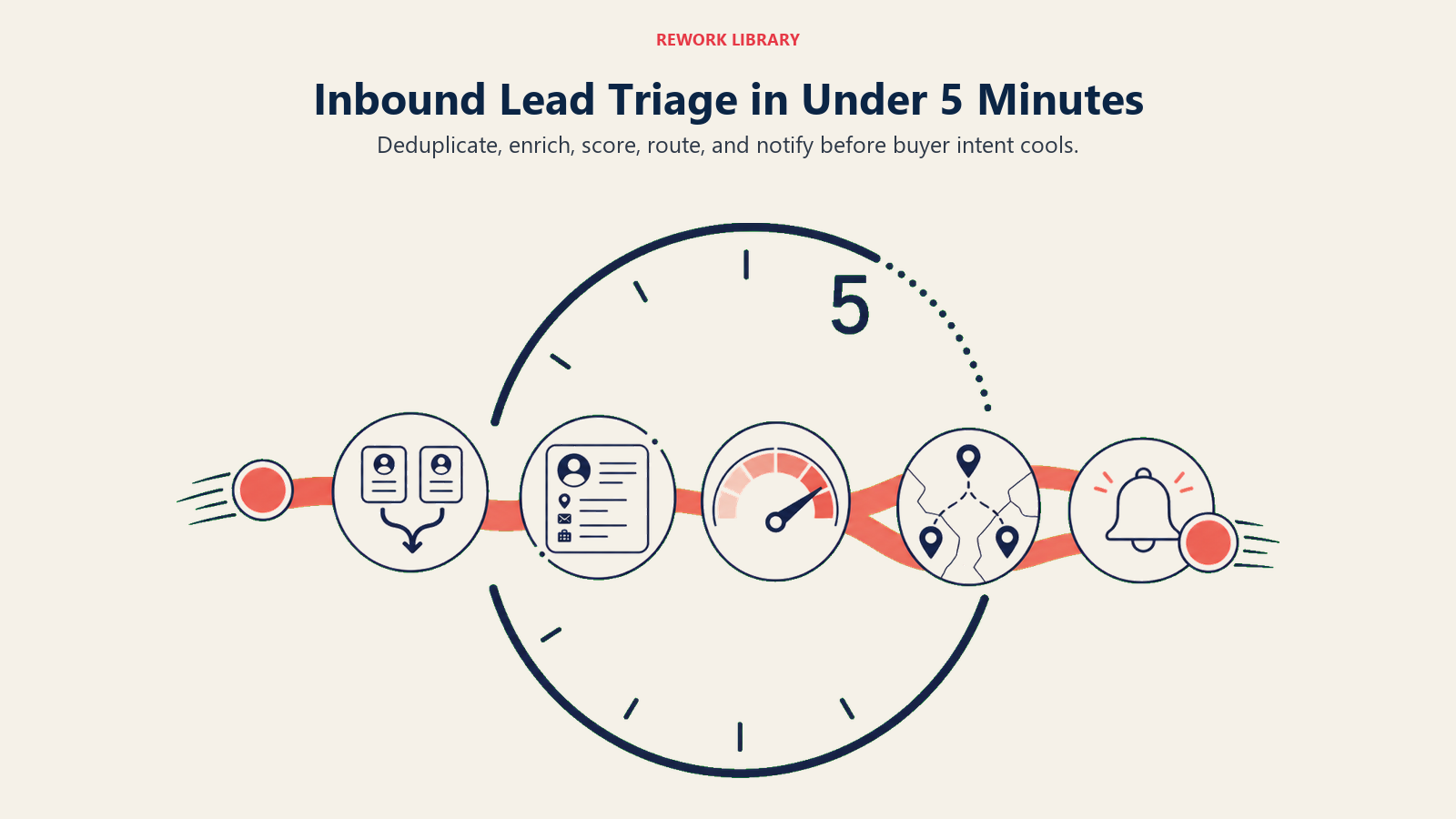
Triagem de Leads Inbound em Escala: O Pipeline Sub-5-Minutos
Turn this article into takeaways for your work.


Each assistant summarizes the article only for you and suggests best practices for your work.
Um comprador qualificado preenche seu formulário de solicitação de demo às 23h04 de uma terça-feira. Ele está comparando dois fornecedores. Ele enviou seu formulário primeiro.
Sem triagem com AI: ele recebe um e-mail de follow-up às 9h12 da quarta-feira de um Business Development Representative (BDR) que dá uma olhada rápida na solicitação entre outras duas tarefas. Dez horas passaram. O fornecedor concorrente, que roda triagem automatizada, tinha um Sales Development Representative (SDR) ligando às 23h07 e um convite de calendário enviado às 23h20.
Você não perdeu aquele deal por causa de preço ou produto. Você o perdeu por causa do tempo de resposta.
Com baixo volume inbound, um processo de triagem manual funciona. Alguém verifica os formulários enviados, deduplica contra o Customer Relationship Management (CRM), pesquisa a empresa, atribui uma prioridade e roteia para o rep certo. Isso leva de 10 a 30 minutos por lead e exige atenção concentrada.
Com 50+ leads inbound por dia, a triagem manual é o gargalo. E esse gargalo se agrava: o backlog cresce mais rápido do que a equipe consegue limpar, os tempos de resposta se estendem, as taxas de contato caem e as taxas de conversão se deterioram de formas difíceis de atribuir ao processo.
O que "triagem" significa em sales operations
Triagem não é apenas priorização. No contexto clínico, triagem significa avaliação antes do tratamento. Em sales operations, o equivalente é: antes de um rep tocar um lead, o registro precisa ser avaliado e preparado. Essa cadeia de avaliação tem quatro etapas, e todas precisam acontecer antes da ação humana.
Deduplicação: Essa pessoa já está no CRM? Ela já preencheu antes? Essa empresa já é de propriedade de outro rep?
Enriquecimento: O que sabemos sobre essa empresa além do que foi preenchido no formulário? Tamanho, receita, setor, tech stack, funding recente, contatos de tomadores de decisão. Esta é a capacidade AI Ingest na prática: puxando dados estruturados e não estruturados de múltiplas fontes para um único registro utilizável.
Scoring: Dado tudo o que sabemos sobre essa pessoa e empresa, quão qualificado é esse lead? Qual é o fit com nosso Ideal Customer Profile (ICP) e o buying intent atual?
Roteamento: Qual rep deve receber esse lead dada sua especialização, capacidade atual e território?
Cada etapa tem sua própria lógica e seus próprios modos de falha potenciais. Um pipeline de triagem que pula o enriquecimento produz scoring sem dados completos. Um pipeline que pula o dedup cria registros duplicados que dividem a atenção do rep e corrompem seus relatórios de atribuição. Um pipeline que roteia sem verificar a capacidade cria o problema de desequilíbrio de carga de trabalho.
Dados Relevantes: Triagem de Leads Inbound
- Empresas que tentaram contatar leads dentro de uma hora do envio do formulário tinham quase 7 vezes mais probabilidade de ter uma conversa significativa do que aquelas que esperaram mais (Harvard Business Review, 2011)
- A empresa B2B média responde a leads inbound em 42 horas; um pipeline de triagem com AI entrega o mesmo lead para um rep com contexto de enriquecimento completo em menos de 5 minutos
- Com 50+ leads inbound por dia, a triagem manual cria um backlog que cresce mais rápido do que a equipe consegue limpar, fazendo com que os tempos de resposta se estendam e as taxas de conversão se deteriorem de formas difíceis de atribuir ao processo
A High-Volume Triage Pyramid
The High-Volume Triage Pyramid descreve o modelo de roteamento de três tiers usado quando o volume inbound excede a capacidade de resposta humana de uma equipe. O Tier 1 (os 20% superiores por pontuação combinada de fit e intent) recebe roteamento humano com SLA: rep notificado em 5 minutos, ligação direta em 15. O Tier 2 (os 50% intermediários) entra em uma sequência automatizada personalizada por AI em 5 minutos, com revisão do rep em 24 horas. O Tier 3 (os 30% inferiores) entra em sequências de nurture de longo prazo sem envolvimento de rep até que mostrem sinais de reengajamento. Durante picos de campanha, aplicar a estrutura piramidal previne o modo de falha comum onde tentar lidar manualmente com cada lead faz com que equipes humanas percam os compradores Tier 1 enquanto processam contatos Tier 3.
O pipeline de triagem, passo a passo
Aqui está a cadeia completa de triagem, do envio do formulário à notificação do rep:
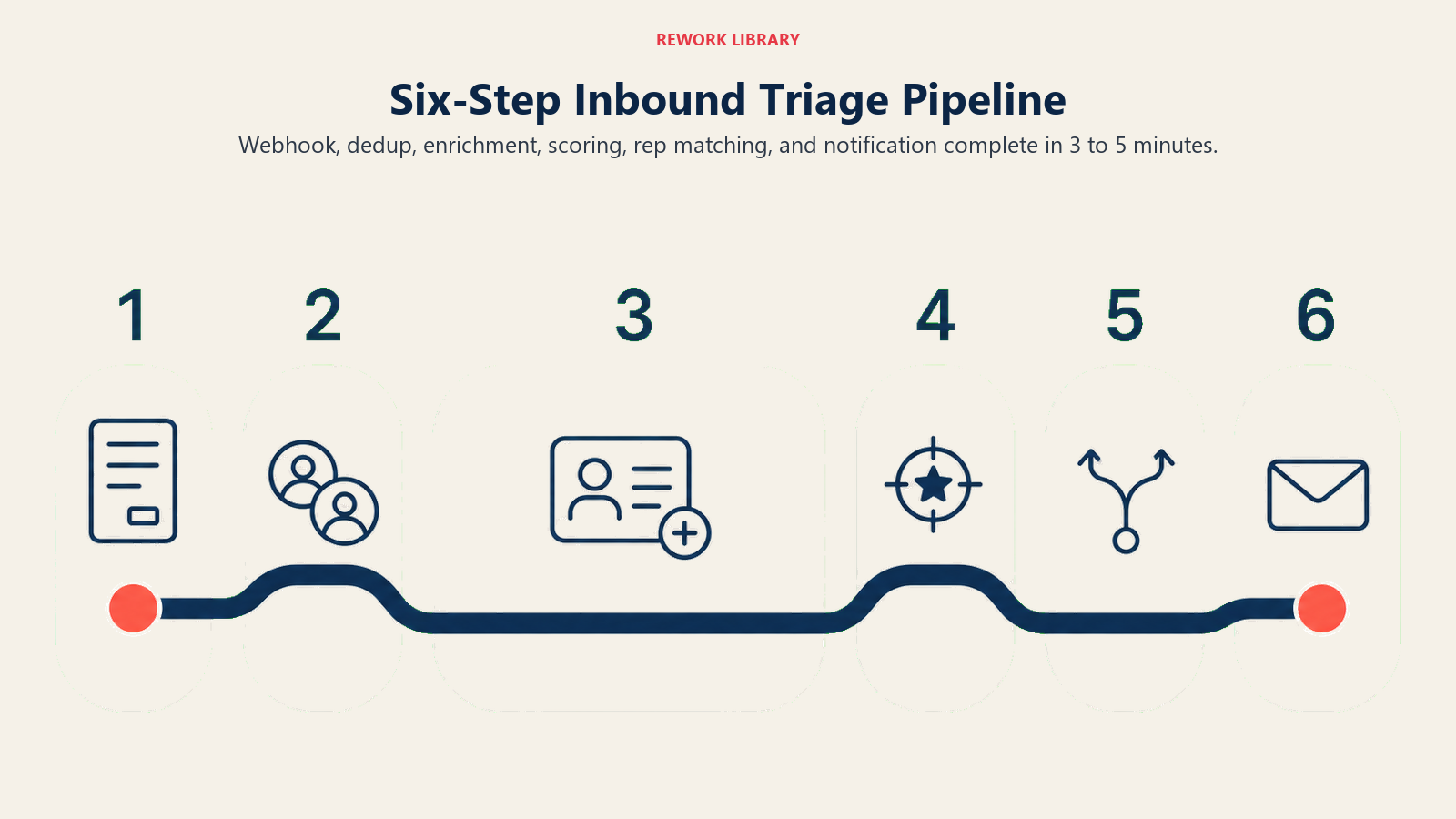
Etapa 1: Envio do formulário dispara webhook (0 a 5 segundos) O envio do formulário aciona um evento para o seu CRM ou middleware de triagem. Isso deve ser quase instantâneo. Atraso nessa etapa é geralmente um problema técnico: processamento lento de webhook, latência do provedor de formulário ou rate limiting do CRM. Se o envio do formulário para a criação do registro no CRM levar mais de 30 segundos, investigue.
Etapa 2: Verificação de deduplicação (5 a 30 segundos) O sistema verifica o e-mail enviado em relação aos contatos existentes do CRM. Ele também realiza uma verificação no nível do domínio em relação às contas existentes. Se o e-mail corresponde a um contato existente, o sistema roteia para o rep proprietário ou dispara uma notificação de atividade de conta em vez de criar um novo lead. Se não houver correspondência, um novo registro de lead é criado.
Etapa 3: Enriquecimento de dados (30 segundos a 2 minutos) O novo registro dispara uma chamada de API de enriquecimento para Apollo, ZoomInfo ou Clearbit. O processo de enriquecimento preenche campos de empresa (tamanho, setor, faixa de receita, tech stack, URL do LinkedIn) e campos de contato (cargo, senioridade, perfil do LinkedIn) que não estavam no envio do formulário. Isso leva de 30 a 120 segundos dependendo do tempo de resposta de API do provedor de enriquecimento.
Etapa 4: Scoring de intent e fit (menos de 30 segundos) Com dados enriquecidos, o modelo de lead scoring é executado. Isso produz uma pontuação de fit (o quanto essa empresa corresponde ao nosso ICP?) e uma pontuação de intent (ela está mostrando sinais de compra, via dados de third-party intent se integrados?). A pontuação combinada determina em qual tier de roteamento esse lead se enquadra: alta prioridade (direto para Account Executive (AE) ou SDR sênior), padrão (fila normal de SDR) ou nurture (sequência automatizada de baixo contato).
Etapa 5: Match de território e rep (menos de 15 segundos) Os dados da empresa do lead disparam uma verificação de território. O tier de scoring filtra o pool de reps disponíveis. O scoring de capacidade do modelo de balanceamento de carga de trabalho identifica qual rep com match tem disponibilidade.
Etapa 6: Atribuição e notificação (menos de 5 segundos) O lead é atribuído ao rep selecionado no CRM. O rep recebe uma notificação push em seu dispositivo móvel e um alerta in-app no CRM. Para leads de alta prioridade, a notificação inclui um briefing de 3 linhas dos dados de enriquecimento: nome da empresa, tamanho, cargo e por que ela pontuou alto. O rep pode clicar diretamente no registro a partir da notificação.
Tempo total decorrido do envio do formulário à notificação do rep: 3 a 5 minutos para um pipeline bem ajustado com tempos de resposta de API padrão.
Casos extremos de deduplicação
A lógica de dedup é onde os pipelines de triagem mais frequentemente falham silenciosamente. Estes são os casos extremos que precisam de tratamento explícito:
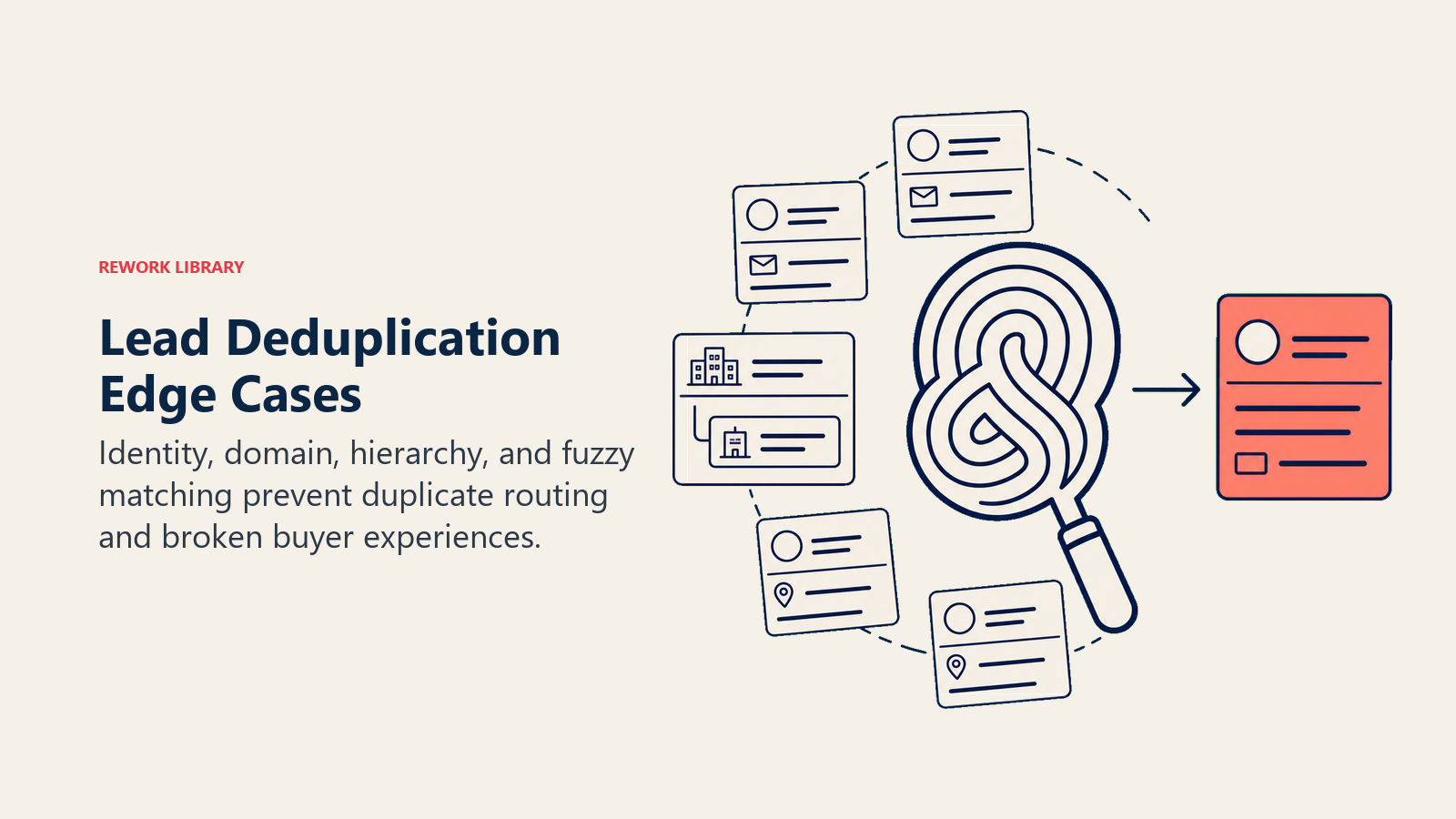
| Caso extremo | Problema | Tratamento |
|---|---|---|
| Mesma pessoa preenche duas vezes (sessões diferentes) | Dois registros criados, ambos roteados para reps | O dedup de e-mail captura isso se o e-mail corresponder. Se a segunda submissão usar um alias de e-mail diferente, pode criar um duplicado. Solução: dedup no nível de domínio como verificação secundária |
| E-mail corporativo vs. pessoal da mesma pessoa | Dois contatos criados para uma pessoa | Match primário em e-mail, match secundário em nome + domínio da empresa. Sinalize para revisão do rep se incerto |
| Relacionamento pai-subsidiária | Lead de subsidiária roteado para proprietário errado (AE da conta pai vs. rep da subsidiária) | Requer dados de hierarquia de conta no CRM. Apollo e ZoomInfo oferecem mapeamento pai-subsidiária, mas precisa ser configurado explicitamente |
| Endereços de e-mail com variante de erro de digitação | john.smth@empresa.com vs. john.smith@empresa.com | Match fuzzy em e-mail (distância de Levenshtein 1 a 2) com confirmação de nome antes de mesclar registros |
| Cliente existente de uma divisão diferente preenche | Tratado como novo lead, perde contexto de cliente | O match de conta no nível de domínio deve capturar isso; rotear para Customer Success (CS) ou AE de conta em vez de SDR |
| Formulário preenchido por investidor ou contato de imprensa | Pontua alto em dados firmográficos (empresa grande) mas não é um comprador | Difícil de automatizar completamente; filtragem por cargo ajuda (investidor, jornalista, analista) |
Falhas de dedup não apenas criam registros ruins. Elas criam um problema de credibilidade: quando um prospect que preencheu três formulários recebe ligações de três reps diferentes se apresentando como se fosse a primeira vez, esse é um sinal direto de que suas operações estão fragmentadas. Este é o tipo de falha abordado em modos de falha: quando o AI sales ops sai pela culatra.
Enriquecimento no fluxo de triagem
A etapa de enriquecimento determina o quanto seu modelo de scoring sabe sobre o lead antes de rodar. Leads subnenriquecidos produzem pontuações não confiáveis. O trade-off é custo e latência.
Apollo.io: Boa cobertura em empresas de pequeno a médio porte. Resposta de API em tempo real. Melhor para equipes que precisam de enriquecimento amplo a um custo razoável. Limites nas chamadas de API nos tiers inferiores podem criar latência se você estiver enriquecendo todos os leads em tempo real.
ZoomInfo: O dataset firmográfico mais profundo, particularmente para empresas enterprise. Cobre org charts, headcount por departamento, adoção de tecnologia e dados de intent. Custo maior, mas melhor precisão de cobertura na escala enterprise.
Clearbit (agora HubSpot Enrichment): API limpa, resposta rápida, boa no enriquecimento em nível de contato (cargo, LinkedIn). Mais fraco em empresas menores. Agora parte do HubSpot, então mais valioso se você estiver naquele ecossistema.
Para a maioria das equipes de Revenue Operations (RevOps) de médio porte, uma abordagem de enriquecimento em dois níveis funciona: Apollo para contato e informações básicas de empresa, com ZoomInfo como sobreposição para contas acima de um limiar de tamanho.
O que enriquecer na triagem vs. mais tarde: Enriqueça o conjunto mínimo viável na triagem para habilitar scoring e roteamento. A pesquisa completa de conta (mapeamento de org chart, profundidade de tech stack, identificação de tomadores de decisão) pode rodar de forma assíncrona após o rep ser atribuído, entregue como um briefing pré-ligação dentro de 15 a 30 minutos da atribuição.
O SLA sub-5-minutos
Por que 5 minutos importam? A base de pesquisa está bem estabelecida em sales operations: leads contatados dentro de 5 minutos do envio convertem a taxas materialmente mais altas do que os contatados 30+ minutos depois. Um estudo da Harvard Business Review descobriu que empresas que tentaram contatar leads dentro de uma hora tinham quase 7 vezes mais probabilidade de ter uma conversa significativa do que as que esperaram mais.
O mecanismo não é misterioso. Um prospect que acabou de enviar um formulário de demo tem seu produto em mente. Ele está em modo de avaliação ativa. Cada minuto que ele espera por uma resposta é um minuto que ele pode visitar o site de um concorrente, se distrair ou decidir que a decisão pode esperar. A rapidez sinaliza profissionalismo e constrói a impressão implícita de que sua empresa está em cima de suas operações.
Para instrumentar o SLA sub-5-minutos:
Meça tempo-para-primeira-ação, não tempo-para-contato: Tempo para contato mede quando um rep faz uma ligação. Tempo para primeira ação mede quando qualquer engajamento ocorreu (notificação de atribuição para o rep, e-mail de confirmação automatizado para o prospect ou link de agendamento Chili Piper enviado). A métrica de primeira ação é o que você pode controlar sistematicamente.
Defina limites de SLA por tier de lead: Leads de alta prioridade têm um SLA de 5 minutos para notificação do rep. Leads padrão têm um SLA de 60 minutos. Leads de nurture entram em sequências automatizadas sem pressão de SLA.
Alerte sobre violação de SLA, não apenas reporte: Se um lead de alta prioridade não teve o primeiro engajamento do rep em 10 minutos, o sistema deve alertar o gestor de SDR. O lag de relatório significa que as violações de SLA são tratadas com um dia de atraso.
Tratamento de overflow
Nenhum sistema de triagem está completo sem lógica de overflow. O que acontece quando a equipe não consegue absorver o volume inbound?
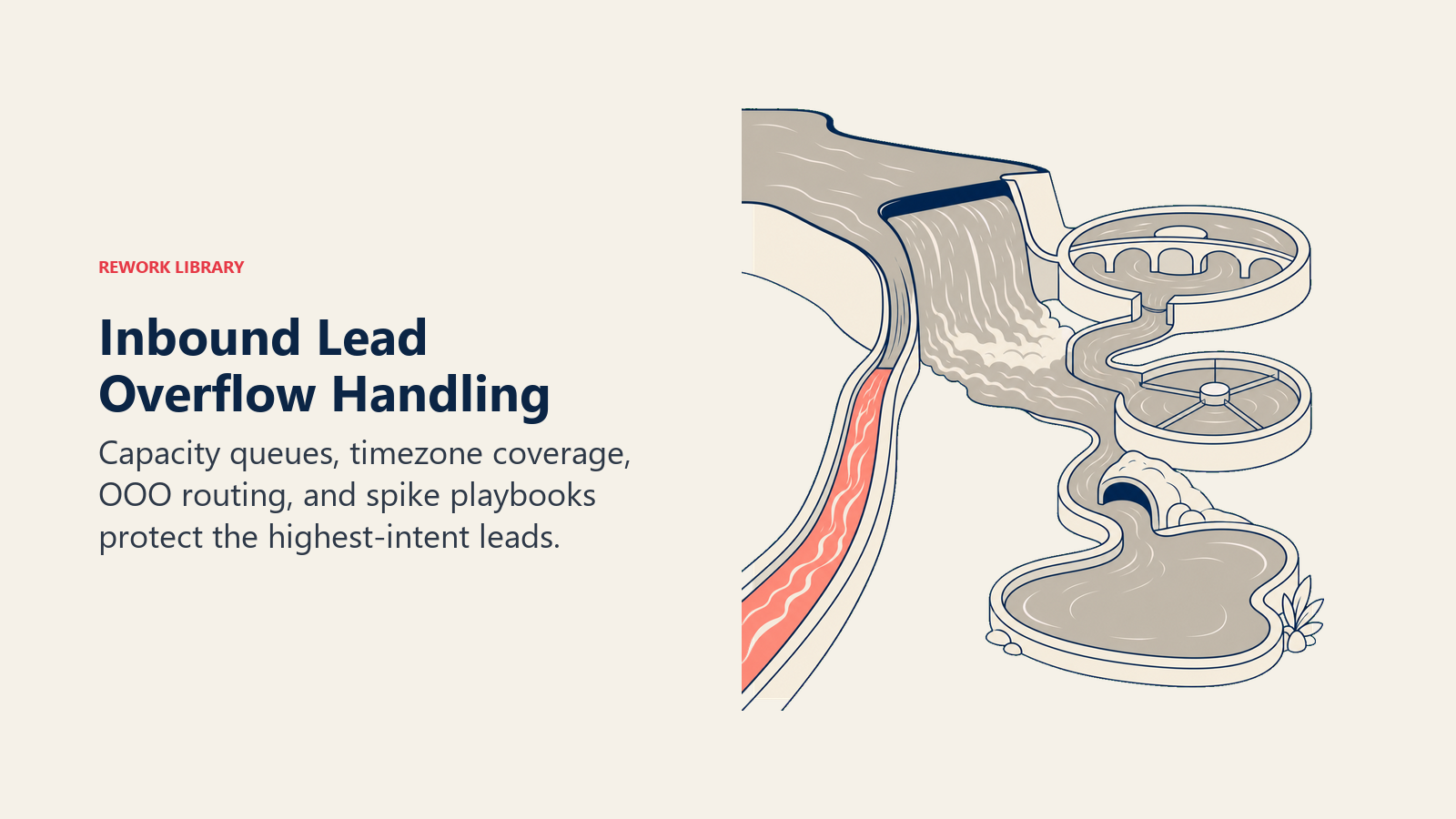
Todos os reps no limite (cap diário de volume atingido): Novos leads entram em uma fila de prioridade. Os caps de capacidade são resetados toda manhã. O gestor de SDR recebe um alerta quando a profundidade da fila excede um limiar, o que pode sinalizar a necessidade de ajustar a capacidade da equipe ou temporariamente aumentar os caps.
Leads fora do fuso horário: Um lead enviado às 23h nos EUA deve ser roteado para um rep que pode se engajar em 5 minutos. Se sua equipe dos EUA estiver offline, as opções são: rotear para um rep da APAC se você tiver cobertura, enviar automaticamente um link de agendamento Chili Piper para que o prospect possa se autoagendar, ou colocar na fila para o primeiro rep disponível com um e-mail de confirmação enviado com antecedência ("Obrigado pela sua solicitação, você ouvirá de nós dentro de 24 horas").
Rep em PTO ou OOO: O roteamento de OOO deve ser pré-configurado. A maioria dos CRMs e ferramentas de roteamento suporta uma flag de OOO que temporariamente remove um rep do pool de roteamento. Leads atribuídos a reps em OOO são reatribuídos a um rep de backup ou a um rep de cobertura designado pelo gestor.
Pico de demanda (lançamento de campanha, anúncio de produto): Quando o volume inbound dispara 3 a 5 vezes a taxa normal, mesmo um pipeline de triagem com AI bem ajustado não consegue rotear tudo para humanos dentro do SLA. Pré-defina um playbook de alto volume: os 20% superiores por pontuação recebem roteamento humano com SLA, os 80% restantes entram imediatamente em uma sequência automatizada personalizada por AI, com revisão do rep em 24 horas.
Como o Execute do ACE se parece na prática
A cadeia de triagem termina no Execute: a AI atribui o lead, atualiza o CRM, envia a notificação ao rep e potencialmente dispara um e-mail automatizado de primeiro contato ou link de agendamento para o prospect. Esta é a fronteira onde uma ação de generate (pontuar o lead, selecionar o rep) se torna uma ação de execute com consequências reais.
O Execute na triagem é geralmente de menor risco do que o Execute em ações de deal em estágios mais avançados porque a desvantagem de um erro de roteamento é gerenciável: reatribua o lead. Mas erros de dedup no Execute (dois reps ligando para o mesmo prospect) são constrangedores e mais difíceis de desfazer. É por isso que a lógica de dedup, a etapa antes do Execute, precisa ser a parte mais cuidadosamente testada do pipeline.
Análise Rework: O benchmark de SLA sub-5-minutos é tecnicamente alcançável, mas as equipes que vemos atingindo-o consistentemente resolveram duas coisas que a maioria das implementações perde: elas medem tempo-para-primeira-ação (notificação ao rep ou primeiro contato automatizado) em vez de tempo-para-primeira-ligação (que pode ser horas depois), e têm playbooks de overflow pré-construídos para leads fora do fuso horário e picos de demanda. Sem lógica de overflow, um SLA de 5 minutos é uma promessa para horário comercial normal que quebra na primeira vez que um lead de alto intent é enviado às 23h ou uma campanha gera 5 vezes o volume diário usual em uma única manhã.
O resumo honesto
A triagem inbound em escala não é um recurso de luxo para empresas processando 500 leads por dia. Com 50+ leads inbound por dia, a triagem manual se torna o gargalo que silenciosamente corrói a taxa de conversão sem uma linha clara de atribuição.
O pipeline de triagem (webhook, dedup, enriquecimento, scoring, roteamento) pode colocar um lead qualificado diante do rep certo com contexto de enriquecimento completo em menos de 5 minutos. Isso é mais rápido do que um rep consegue pesquisar manualmente a empresa no LinkedIn. E roda às 23h, nos fins de semana, durante picos de campanha e sem um gestor tomando decisões a partir de uma caixa de entrada lotada.
Erros comuns no AI lead scoring cobre o que dá errado quando a etapa de scoring falha, que é a parte mais frágil da cadeia.
Perguntas Frequentes
O que é triagem de leads inbound em escala?
Triagem de leads inbound em escala é o processo automatizado de pegar um envio de formulário bruto e prepará-lo para contato do rep em menos de 5 minutos, sem intervenção humana. A cadeia de quatro etapas é: deduplicação em relação aos registros existentes do CRM, enriquecimento de dados de fontes de terceiros, scoring de fit e intent, e roteamento de rep baseado em especialização e capacidade atual. Essa cadeia substitui o processo manual de avaliação de 10 a 30 minutos por lead que se torna insustentável com 50+ leads inbound diários.
Por que responder a um lead em 5 minutos importa?
Um prospect que acabou de enviar um formulário de demo tem seu produto em mente e está em modo de avaliação ativa. A pesquisa da HBR descobriu que empresas que contatavam leads dentro de uma hora tinham quase 7 vezes mais probabilidade de ter uma conversa significativa do que as que esperavam mais. Cada minuto adicional aumenta a probabilidade de que o prospect visite o site de um concorrente, se autodesqualifique para a decisão ou simplesmente perca a urgência que o levou a enviar o formulário. Concorrentes rodando triagem automatizada podem ter um rep no telefone em 3 a 5 minutos; a triagem manual tipicamente entrega a ligação 2 a 10 horas depois.
Quais são as quatro etapas de um pipeline de triagem inbound automatizado?
As quatro etapas são: (1) deduplicação, verificando se essa pessoa ou empresa já existe no CRM e evitando a criação de registros duplicados; (2) enriquecimento de dados, puxando tamanho da empresa, setor, tech stack e cargo de contato do Apollo, ZoomInfo ou Clearbit para preencher lacunas no envio do formulário; (3) scoring de fit e intent, rodando o registro enriquecido pelo modelo de lead scoring para determinar o tier de roteamento; e (4) match e notificação do rep, selecionando o rep mais disponível com base em especialização e capacidade e entregando um alerta com um briefing de contexto.
Quais são os modos de falha de deduplicação mais comuns na triagem de leads?
As cinco falhas de dedup mais comuns são: mesma pessoa enviando de dois endereços de e-mail diferentes (capturar requer dedup no nível de domínio como verificação secundária), incompatibilidades de relacionamento pai-subsidiária (lead de subsidiária roteado para proprietário de conta errado), endereços de e-mail com variante de erro de digitação (match fuzzy com confirmação de nome ajuda), clientes existentes de uma divisão diferente tratados como novos leads (o match de conta no nível de domínio deve capturar e rotear para CS ou AE) e investidores ou contatos de imprensa pontuando alto em dados firmográficos mas não sendo compradores (filtragem por cargo ajuda, mas não é perfeita).
O que é a High-Volume Triage Pyramid?
A High-Volume Triage Pyramid é um modelo de roteamento de três tiers para períodos em que o volume inbound excede a capacidade de resposta humana. Os 20% superiores por pontuação combinada de fit e intent recebem roteamento humano direto com o SLA de 5 minutos. Os 50% intermediários entram imediatamente em uma sequência automatizada personalizada por AI, com revisão do rep em 24 horas. Os 30% inferiores entram em sequências de nurture de longo prazo sem envolvimento de rep a menos que reengajem. Aplicar essa estrutura durante picos de campanha previne equipes de perderem compradores de alto intent enquanto processam manualmente contatos de baixo fit.
Como uma empresa deve lidar com leads inbound enviados fora do horário comercial?
Pré-defina três opções para leads fora do horário: roteie para equipes da APAC ou europeias se você tiver cobertura no fuso horário apropriado; envie automaticamente um link de agendamento Chili Piper ou Calendly para que o prospect possa se autoagendar; ou coloque na fila para o primeiro rep disponível com um e-mail de confirmação enviado com antecedência definindo expectativas de follow-up no mesmo dia útil. O e-mail de confirmação é importante: ele sinaliza profissionalismo e diz ao prospect que sua solicitação foi recebida, evitando que ele se inscreva novamente com um fornecedor concorrente antes de sua equipe abrir.
Qual é a diferença entre medir tempo-para-primeira-ação e tempo-para-primeira-ligação?
Tempo-para-primeira-ligação mede quando um rep faz uma ligação de outbound. Tempo-para-primeira-ação mede quando qualquer engajamento ocorre: notificação do rep em menos de 5 minutos, e-mail de confirmação automatizado para o prospect ou link de agendamento enviado. Tempo-para-primeira-ação é a métrica controlável para governança de SLA, porque a ligação do rep depende da disponibilidade do rep. O tempo-para-primeira-ação para um lead enviado às 23h pode ser inferior a 5 minutos com tratamento automatizado de overflow.
Saiba Mais
- AI Lead Scoring Além de Modelos Baseados em Regras
- Roteamento Automatizado de Leads: Round Robin vs. AI
- Balanceamento de Carga de Trabalho de SDR com Roteamento Baseado em AI
- Erros Comuns no AI Lead Scoring
- Modos de Falha: Quando o AI Sales Ops Sai pela Culatra
- Scoring e Routing: Triagem de AI em Escala
- Ingest: Como a AI Recebe os Dados do Seu Negócio

Co-Founder, Rework.com