Roteamento Automatizado de Leads: Round Robin vs. Atribuição por AI
Turn this article into takeaways for your work.


Each assistant summarizes the article only for you and suggests best practices for your work.
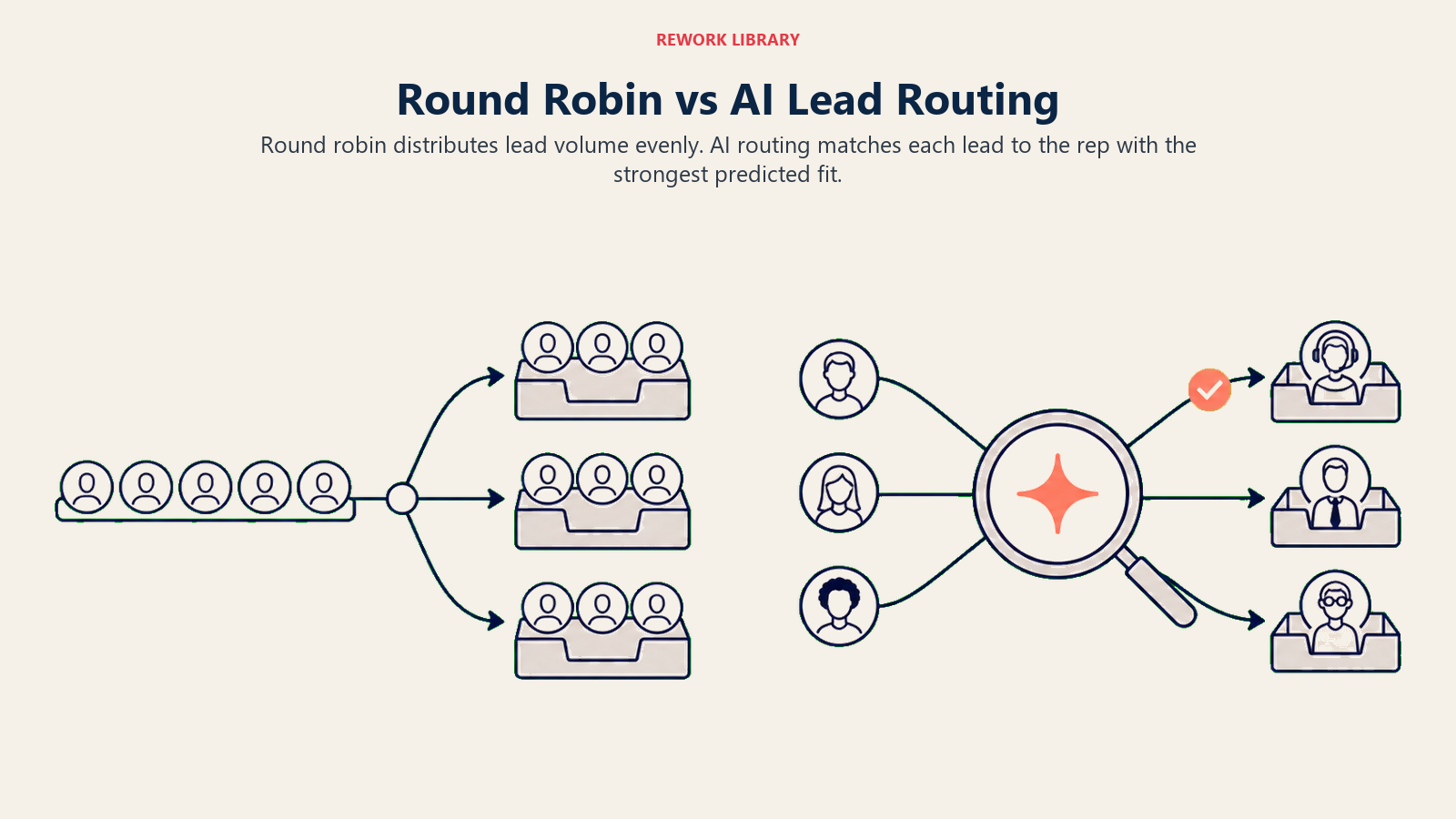
O round robin parece justo. Cada rep recebe uma fatia igual. Sem favoritismo, sem política. A fila avança e a próxima pessoa na lista recebe o próximo lead.
Mas justo e ótimo não são a mesma coisa. Quando um AE (Account Executive) enterprise recebe um deal de PME de $1.800, ou um rep interno recebe um inbound da Fortune 500 que deveria ir direto para uma equipe de contas nomeadas, você não está apenas desperdiçando talento. Está perdendo taxa de conversão. O lead acaba com alguém que tem o contexto errado, a autoridade errada para oferecer o deal certo e provavelmente o fuso horário errado.
Este artigo compara round robin, baseado em território e roteamento orientado por AI de frente a frente. Ele fornece aos operadores de RevOps um framework de decisão para escolher o modelo certo no estágio de maturidade certo, não um pitch para o roteamento por AI como uma atualização universal.
Como o round robin funciona e quando é a escolha certa
O roteamento round robin distribui leads sequencialmente por uma fila. O Rep 1 recebe o Lead 1. O Rep 2 recebe o Lead 2. Quando você chega ao fim da lista, volta ao Rep 1. As variações incluem round robin ponderado por capacidade (reps com menos oportunidades abertas recebem a próxima atribuição) e lógica baseada em skip (rotear em torno de reps que estão fora do escritório).
O round robin é a escolha certa em três situações.
Leads de valor genuinamente igual. Se todo inbound de uma campanha ou canal específico representa um tamanho de deal e uma motion de vendas comparáveis, não há otimização a fazer. A distribuição igual é a resposta correta.
Equipes novas sem histórico de performance. O roteamento orientado por AI precisa de dados de performance em nível de rep para fazer previsões de correspondência. Uma equipe que lançou há três meses não tem histórico suficiente de ganho/perda por rep por tipo de deal para um modelo aprender. O round robin evita o problema de cold start.
Requisitos impulsionados por conformidade. Algumas organizações precisam demonstrar que a distribuição de leads é não-discriminatória e auditável. O round robin é trivialmente auditável: cada rep recebe o mesmo número em uma sequência fixa. O roteamento por AI, se não consegue explicar por que correspondeu um lead a um rep em vez de outro, pode falhar nesse requisito de auditoria.
Key Facts: Impacto do Roteamento de Leads
- A pesquisa da Forrester identifica consistentemente o alinhamento de roteamento de leads entre marketing e vendas como um dos principais desbloqueadores de previsibilidade de receita, sendo a incompatibilidade um dos três principais modos de falha de RevOps
- Melhorias de roteamento orientado por AI de 15-30% nas taxas de conexão e conversão são alcançáveis uma vez que uma equipe acumula 12+ meses de dados de resultados em nível de rep por tipo de deal
- Equipes que encaminham inbound enterprise a AEs sênior em 90 segundos (versus a média do setor de 42 horas) capturam a maioria da vantagem de conversão nessa categoria de lead
Como o roteamento orientado por AI funciona
O roteamento orientado por AI executa o padrão de Scoring + Routing do ACE Framework: Ingerir o registro de lead de entrada, Analisar os atributos do lead e correspondê-los com os perfis dos reps, Prever a melhor correspondência usando uma combinação de fatores, e Executar a atribuição.
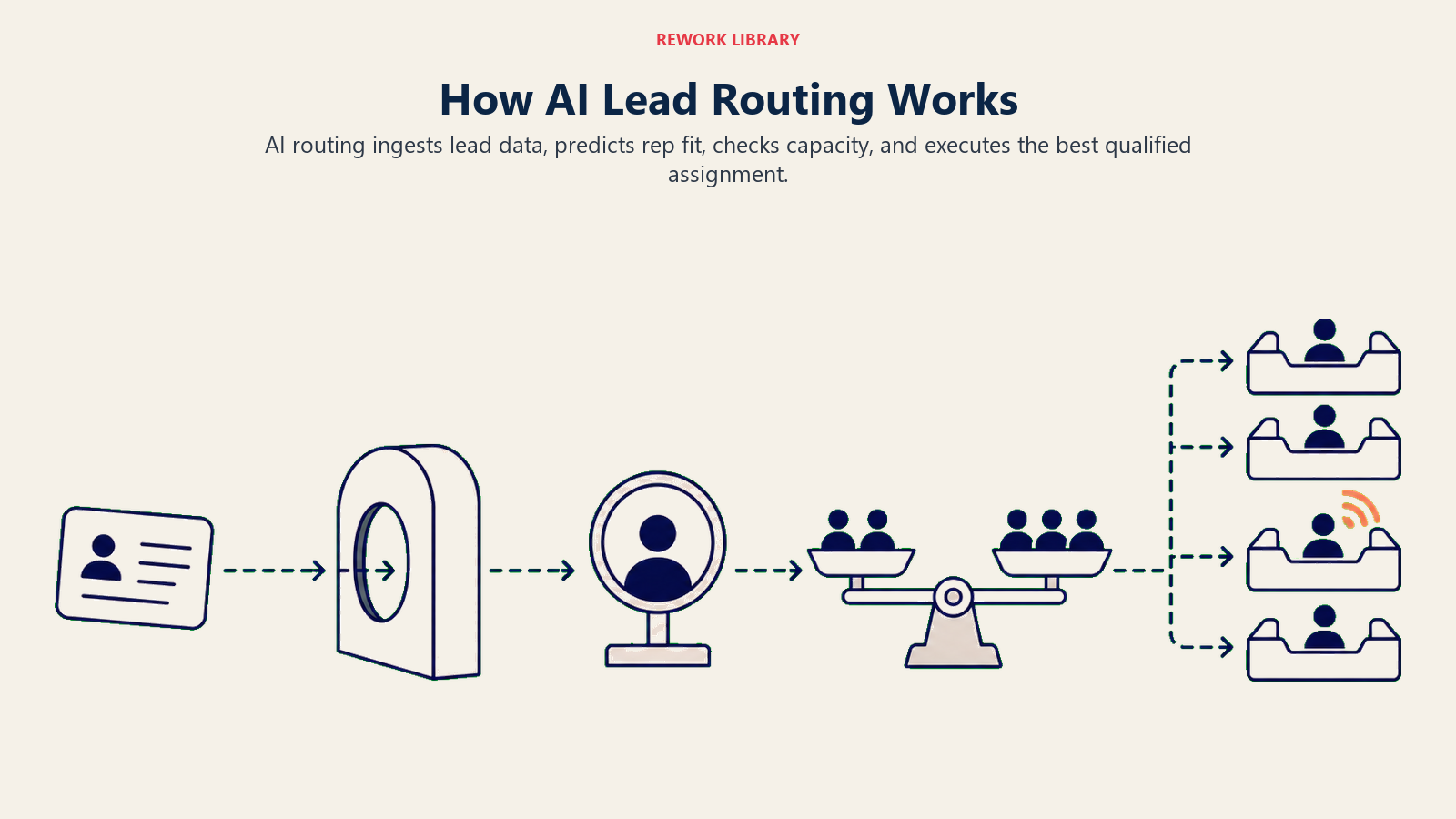
O cálculo de "melhor correspondência" usa mais sinais do que o round robin é capaz de considerar:
- Especialização vertical do rep. Um lead de uma empresa de SaaS de saúde provavelmente deve ir ao rep que fechou deals de saúde, não para quem está próximo na fila.
- Histórico de tamanho de deal. As taxas de ganho variam significativamente por tamanho de deal por rep. Um rep que fecha 35% dos deals na faixa de $10K-$50K, mas apenas 12% acima de $100K, raramente deve receber inbound enterprise.
- Território geográfico. O roteamento de território é um precursor baseado em regras do roteamento por AI, mas a AI pode aplicá-lo dinamicamente junto com outros sinais em vez de como uma substituição rígida.
- Carga de trabalho atual. Enviar cinco leads a um rep que tem 40 oportunidades abertas enquanto um colega tem 12 é previsivelmente ruim para os leads que vão ao rep sobrecarregado.
- Histórico de tempo para primeira resposta. Alguns reps respondem em 5 minutos; outros têm uma média de 3 horas. Para leads inbound, a velocidade de resposta é um grande fator de conversão. Encaminhar a um respondedor lento quando um rápido está disponível custa conversões.
- Taxa de ganho passada em perfis de deal similares. O sinal mais forte. Se o Rep A ganhou 8 dos últimos 20 deals que se encaixam em um perfil específico e o Rep B ganhou 2, esse é um input de roteamento significativo.
Ferramentas como Chili Piper, LeanData e Distribution Engine aplicam combinações desses sinais. O Salesforce Lightning inclui regras de roteamento que podem incorporar campos personalizados e lógica baseada em fórmulas. A camada de roteamento do Rework CRM permite que as equipes de RevOps definam critérios de correspondência diretamente vinculados a atributos de performance do rep sem desenvolvimento personalizado no Salesforce.
A Hierarquia de Inteligência de Roteamento
A Hierarquia de Inteligência de Roteamento descreve o modelo de maturidade de cinco estágios para atribuição automatizada de leads: (1) Round Robin, distribuição sequencial igual sem otimização; (2) Regras de Território e Linha de Produto, atribuições categóricas rígidas por segmento; (3) Distribuição Ponderada por Capacidade, roteamento ciente de carga de trabalho que previne acúmulo; (4) Scoring de Correspondência por AI, atribuição baseada em taxa de ganho usando dados históricos de resultados por rep; e (5) Reatribuição Dinâmica, realocação em tempo real quando o rep atribuído não se engaja dentro de uma janela de threshold. Cada estágio requer infraestrutura de dados progressivamente mais avançada. Equipes que pulam os estágios 2 e 3 e vão diretamente para o estágio 4 tipicamente produzem modelos de roteamento por AI que não são materialmente melhores que o round robin, porque carecem da qualidade de dados de resultado que o modelo precisa.
Os sinais de roteamento que a AI usa: uma lista de referência
Quando você está construindo ou avaliando uma configuração de roteamento por AI, essas são as categorias de sinais que mais importam, aproximadamente em ordem de valor preditivo:
- Taxa de ganho histórica em deals com perfis firmográficos similares (setor, tamanho da empresa, faixa de valor do deal)
- Volume de pipeline aberto atual por rep (sinal de capacidade)
- Tempo médio para primeira resposta por rep
- Especialização em linha de produto ou solução (reps que fecharam deals para uma linha de produto específica)
- Território geográfico ou sobreposição de fuso horário com o prospect
- Histórico de propriedade de conta (esta empresa já foi trabalhada antes, e por quem?)
- Capacidade de idioma ou mercado regional (leads internacionais)
- Correspondência de senioridade (um contato VP de nível enterprise pode precisar de um AE sênior, não de um SDR)
Comparando os dois modelos
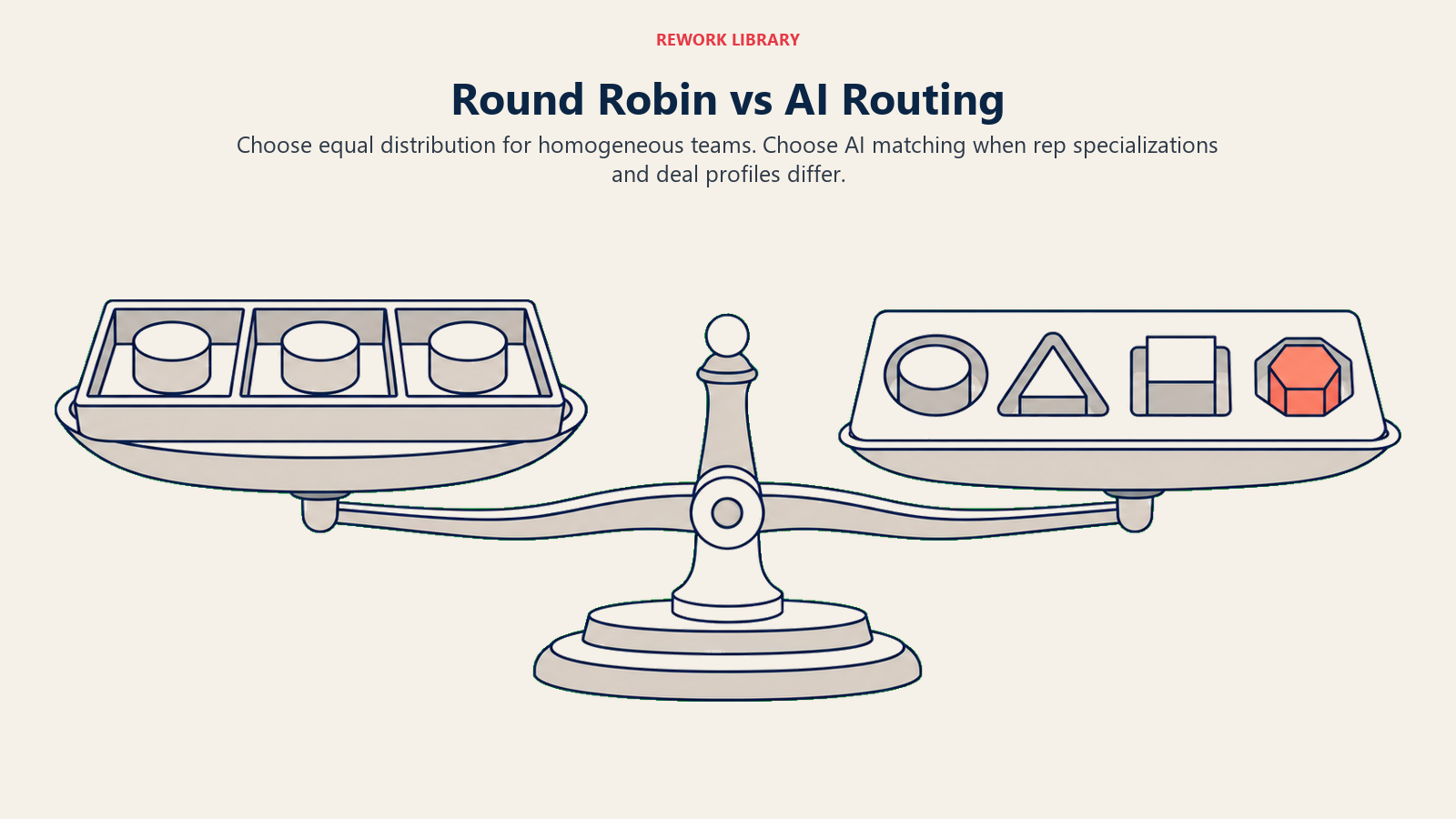
A diferença prática entre o round robin e o roteamento por AI não é justiça versus injustiça; é se a atribuição otimiza para volume igual ou para probabilidade de conversão.
| Dimensão | Round Robin | Orientado por AI |
|---|---|---|
| Requisito de dados | Nenhum | Mínimo de 6-12 meses de dados de resultado em nível de rep |
| Complexidade de configuração | Baixa (fila + regras de skip) | Médio-alta (configuração de sinal, dados de perfil de rep, calibração do modelo) |
| Percepção de justiça | Alta (distribuição igual é visível e simples) | Requer comunicação; os melhores performers recebem mais leads, o que pode criar atrito |
| Potencial de otimização | Nenhum | Significativo uma vez que os dados amadurecem (melhoria de 15-30% nas taxas de conexão e conversão, dependendo do tamanho da equipe) |
| Melhor para tipos de deal | Pools de leads homogêneos | Pools de leads heterogêneos onde o fit rep-deal varia |
| Auditabilidade | Simples | Requer documentação de lógica de roteamento e auditorias regulares |
| Lida com variação de carga de trabalho | Apenas com variante ponderada por capacidade | Nativamente, como fator de roteamento primário |
| Tamanho ideal de equipe | 1-10 reps com perfis similares | 10+ reps com especializações diferenciadas |
Balanceamento de carga de trabalho como input de roteamento
Um descuido comum: sistemas de roteamento que otimizam para fit rep-lead mas ignoram a capacidade do rep. Você pode construir um algoritmo de correspondência perfeito e ainda criar uma situação de acúmulo de leads onde seus reps mais bem correspondidos estão enterrados em 60+ deals ativos enquanto reps mais novos estão subutilizados.
O balanceamento de carga de trabalho pertence à lógica de roteamento junto com a qualidade da correspondência. As implementações mais eficazes ponderam esses dois sinais juntos: um peso de 70% na qualidade da correspondência, 30% na capacidade, ajustável com base na homogeneidade do pool de reps.
Balanceamento de carga de trabalho de SDR com roteamento orientado por AI cobre o lado da capacidade em profundidade, incluindo como definir thresholds de capacidade e o que fazer quando toda a sua equipe está na capacidade durante um pico de demanda.
A objeção de justiça e como lidar com ela
"O roteamento por AI favorece os melhores performers." Essa é a objeção mais comum que as equipes de RevOps enfrentam ao propor uma atualização de roteamento por AI, e não está errada como preocupação.
Se o seu modelo de roteamento é puramente otimizado para taxa de ganho sem pisos ou restrições, ele enviará a maioria dos leads qualificados para os 20% de melhores reps. Com o tempo, isso se multiplica: os melhores performers recebem mais leads, constroem mais experiência com tipos específicos de deals e a lacuna se amplia. Os reps de nível médio nunca recebem o volume de leads para se desenvolver.
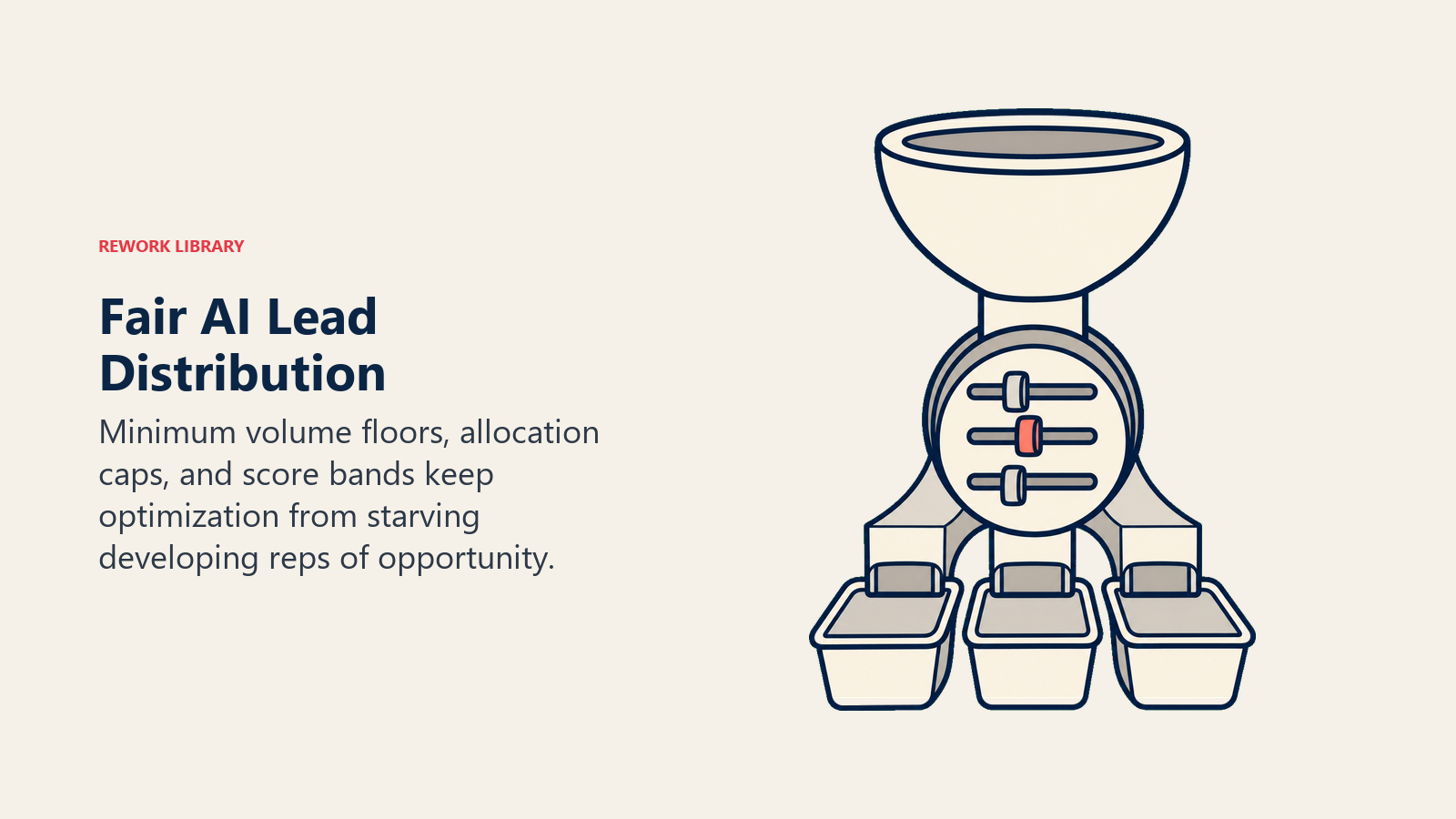
A solução são restrições de threshold e pisos de volume mínimo:
- Piso de volume mínimo: cada rep recebe pelo menos X leads por semana, independentemente do score de correspondência de AI, a menos que o pipeline deles já esteja cheio
- Cap na alocação de melhores performers: nenhum rep recebe mais de Y% do volume total de leads em um determinado período
- Roteamento por faixa de score: leads pontuando na faixa superior vão para os reps com melhor correspondência; leads em faixas de score mais baixas se distribuem mais amplamente para fins de desenvolvimento
Isso preserva a otimização para o seu inbound mais valioso enquanto evita o problema de concentração que destrói os pipelines de desenvolvimento de reps. Documente essas restrições explicitamente na sua política de governança de roteamento para que os reps entendam a lógica. Depois comunique antes do lançamento, não após a primeira reclamação.
Configuração e governança
As regras de roteamento são decisões de política, não apenas configurações técnicas. Alguém precisa ser responsável por elas. As responsabilidades:
Quem define as regras de roteamento: RevOps é dono da arquitetura, mas a liderança de Vendas precisa aprovar os critérios, especialmente qualquer coisa que aloque mais leads a reps ou territórios específicos.
Com que frequência revisar: Mensalmente no mínimo durante os primeiros seis meses após a implementação. Trimestralmente uma vez estabilizado. Acione uma revisão fora do ciclo sempre que você mudar o ICP, adicionar uma nova linha de produto ou mudar significativamente sua motion de vendas.
Como é uma auditoria de roteamento: Puxe os últimos 90 dias de dados de roteamento. Meça leads atribuídos por rep, taxa de conexão por rep em leads atribuídos e taxa de fechamento por rep em leads atribuídos. Se os leads roteados por AI não estão superando a distribuição equivalente ao round robin em taxa de conexão e fechamento, o modelo não está justificando sua complexidade.
O caminho de implementação: roteamento como modelo de maturidade
A sofisticação do roteamento deve crescer com seus dados. Um erro comum é tentar pular diretamente para o roteamento por AI antes de ter a infraestrutura de dados para suportá-lo.
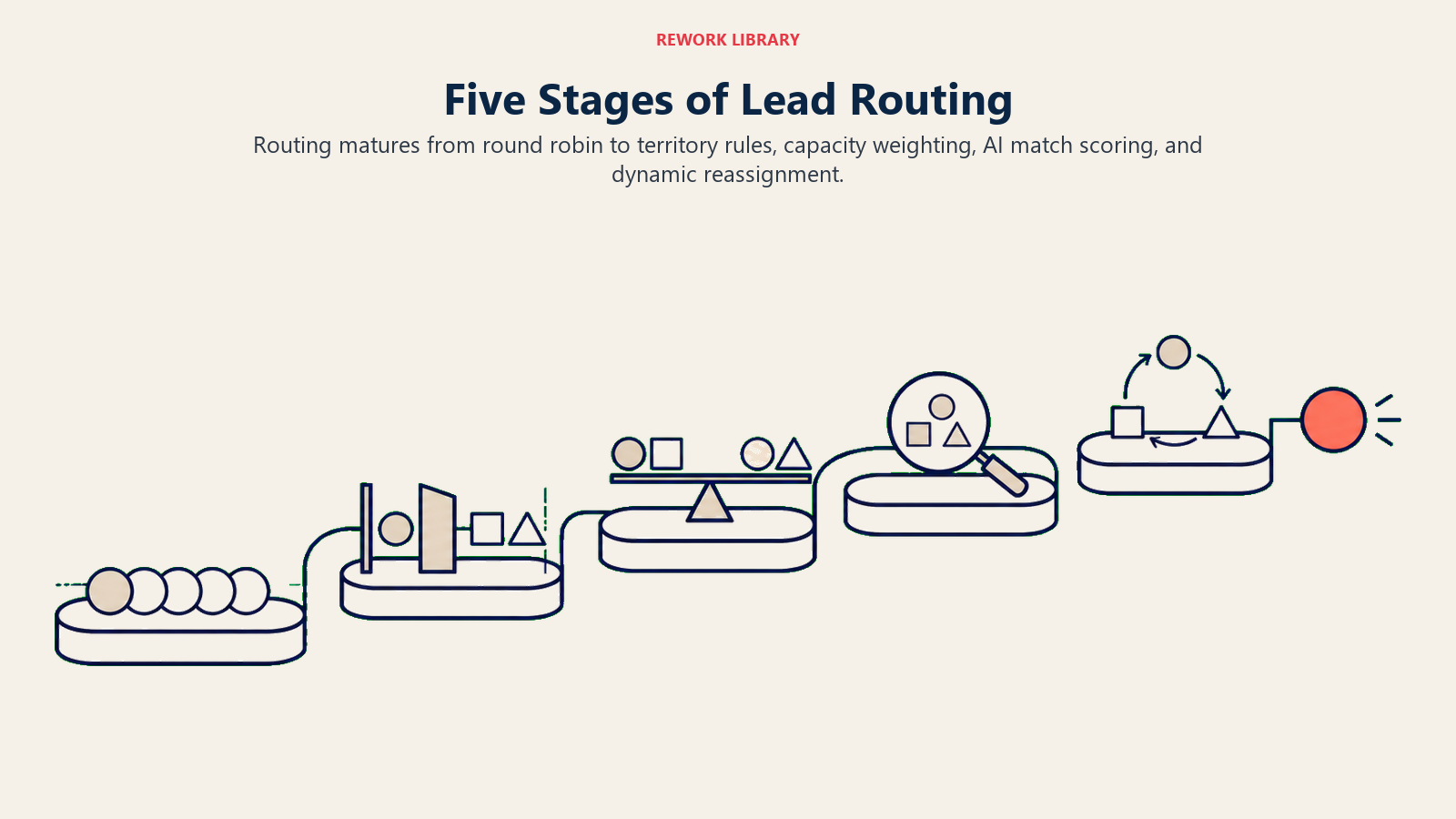
Estágio 1: Round robin. Distribuição igual com lógica de skip para reps fora do escritório. Isso é adequado para a maioria das equipes com menos de 10 reps ou em estágios iniciais. O objetivo nessa fase é construir os dados de resultado que você precisará mais tarde: registrar consistentemente ganho/perda em cada deal, rastrear qual rep era dono de qual deal, registrar o tempo para resposta.
Estágio 2: Regras de território e linha de produto. Adicionar regras rígidas: leads enterprise vão para reps enterprise, PME para PME, específicos de linha de produto para especialistas. Isso é manual mas significativo. Você pode implementar isso na maioria dos CRMs sem uma ferramenta de roteamento. Aborda as incompatibilidades de roteamento mais caras.
Estágio 3: Distribuição ponderada por capacidade. Adicionar consciência de carga de trabalho. Rotear leads para longe de reps na capacidade antes de rotear para a próxima pessoa na sequência. Requer um sistema que rastreie a contagem de pipeline aberto e possa se ajustar em tempo real.
Estágio 4: Scoring de correspondência por AI. Adicionar scoring de correspondência baseado em taxa de ganho uma vez que você tem 12+ meses de dados de resultado por rep por tipo de deal. É aqui que as ferramentas de roteamento dedicadas (LeanData, Chili Piper, Distribution Engine) justificam seu custo.
Estágio 5: Reatribuição dinâmica. As equipes mais avançadas executam roteamento por AI que também monitora leads pós-atribuição e os reatribui se o rep original não se engajar dentro de um threshold. Isso requer integração entre a ferramenta de roteamento, rastreamento de atividade do CRM e um workflow de reatribuição.
Triagem de leads inbound em escala cobre o que acontece quando você adiciona sequenciamento automatizado em cima do roteamento para leads que não recebem atenção do rep dentro de uma janela definida.
Notas de fornecedores
Chili Piper: Forte em roteamento de agendamento de reuniões (round robin com consciência de disponibilidade). Seu produto Distro lida com atribuição de lead para rep com regras de território e propriedade mais algum apoio de AI. Melhor para equipes onde a velocidade de agendamento é o principal alavancador de conversão.
Distribution Engine: Roteamento nativo do Salesforce com lógica condicional, caps de carga de trabalho e ponderação baseada em performance. Configuração mais complexa mas altamente configurável para estruturas de território complexas.
Salesforce Lightning Flow: Pode implementar lógica de roteamento sofisticada sem uma ferramenta separada se você já está profundamente no Salesforce. Requer recursos de desenvolvimento do Salesforce. Sem scoring de AI out of the box, mas se integra com o Einstein para roteamento baseado em score.
Rework CRM: Regras de roteamento vinculadas a atributos e histórico de performance do rep, sem exigir personalização do Salesforce. Mais adequado para equipes de RevOps de mercado médio que querem roteamento assistido por AI sem uma ferramenta de roteamento dedicada ou um backlog de admin do Salesforce.
LeanData: Roteamento de nível enterprise com correspondência de propriedade de conta completa, atribuição multi-touch e scoring de correspondência por AI. A opção mais forte para roteamento enterprise complexo com muitas sobreposições de território.
Rework Analysis: A objeção de justiça é real e é subestimada na maioria das implementações de roteamento por AI. Vimos equipes de RevOps configurar roteamento puro otimizado para taxa de ganho, assistir seus três melhores reps começarem a receber 60% de todo o inbound e depois enfrentar uma revolta dos reps em 90 dias. A correção não é técnica. É política: definir um piso mínimo de volume por rep, cap na alocação dos melhores performers em uma porcentagem definida e comunicar a lógica de roteamento para a equipe antes do lançamento. Os reps aceitam o roteamento ponderado por performance quando entendem como funciona e veem um caminho para receber mais leads conforme seus próprios números melhoram. Eles o rejeitam quando parece arbitrário ou politicamente motivado.
O resumo honesto
Round robin não é um modo de falha. É um padrão sensato para pools de leads homogêneos e para equipes que ainda não acumularam os dados de resultado que tornam o roteamento por AI útil.
O roteamento por AI é um multiplicador, não um substituto para o julgamento. Requer dados de resultado limpos, governança contínua e restrições de justiça para funcionar bem. Sem esses inputs, o roteamento por AI produzirá atribuições que soam confiantes mas não são materialmente melhores do que o que o round robin teria feito.
A progressão do round robin para o roteamento por AI é um modelo de maturidade, não um interruptor binário. A maioria das equipes se beneficia de passar algum tempo nos estágios 2 e 3 antes de investir no estágio 4. A infraestrutura de dados que você constrói nos estágios anteriores é o que faz o estágio 4 funcionar. Pule-a e você tem uma camada de AI construída sobre uma fundação instável.
Perguntas Frequentes
O que é roteamento automatizado de leads?
O roteamento automatizado de leads é o processo de atribuir leads de entrada a representantes de vendas usando regras predefinidas ou modelos de AI, sem intervenção manual. Determina qual rep recebe qual lead com base em fatores como território, tamanho do deal, especialização do rep, carga de trabalho e taxas de ganho históricas. O objetivo é corresponder cada lead ao rep com maior probabilidade de convertê-lo, o mais rápido possível após a chegada do lead.
Como o roteamento orientado por AI é diferente do roteamento round robin?
O round robin distribui leads sequencialmente em partes iguais independentemente das características do lead ou dos pontos fortes do rep. O roteamento orientado por AI corresponde cada lead ao rep com a maior probabilidade de ganho prevista com base em resultados históricos, carga de trabalho atual, especialização vertical e histórico de tamanho de deal. A troca é complexidade: o roteamento por AI requer 12+ meses de dados de resultado limpos em nível de rep para funcionar bem, enquanto o round robin não precisa de dados históricos.
Quando uma equipe de vendas deve usar round robin em vez de roteamento por AI?
O round robin é a escolha certa em três situações: a equipe tem menos de 10 reps sem especializações diferenciadas, a equipe tem menos de 12 meses e não tem dados de resultado suficientes para modelagem por AI, ou o pool de leads é suficientemente homogêneo para que cada rep tenha probabilidade de conversão igual. Tentar implementar roteamento por AI antes dessas condições serem atendidas tipicamente produz atribuições assistidas por AI que não são melhores que o round robin.
Que melhoria de performance o roteamento por AI pode entregar sobre o round robin?
Equipes com 12+ meses de dados de resultado limpos por rep e especializações diferenciadas tipicamente veem melhorias de 15-30% nas taxas de conexão e conversão a partir do roteamento orientado por AI. A melhoria é maior quando o pool de leads é heterogêneo (diferentes tamanhos de deal, setores e complexidades) e os reps têm taxas de ganho significativamente diferentes por tipo de deal. Pools de leads homogêneos com reps similares mostram melhoria mínima.
Como você aborda a preocupação de justiça com o roteamento por AI?
Três restrições de política evitam que o roteamento por AI crie concentração desigual de leads: um piso de volume mínimo (cada rep recebe pelo menos X leads por semana independentemente do score de AI), um cap na alocação de melhores performers (nenhum rep recebe mais de Y% do volume total de leads) e roteamento por faixa de score (apenas leads pontuados no topo vão para os reps com melhor correspondência; leads de score mais baixo se distribuem mais amplamente para desenvolvimento do rep). Essas restrições devem ser documentadas e comunicadas aos reps antes do lançamento.
Quais dados são necessários antes de implementar o roteamento por AI de leads?
Os requisitos mínimos são 12 meses de dados de resultado em nível de rep com labels consistentes de ganho/perda, atributos claros de perfil de rep (especialização vertical, histórico de tamanho de deal, tempo médio de resposta) e visibilidade atual do pipeline por rep para balanceamento de carga de trabalho. Modelos de roteamento construídos em menos de 12 meses de dados ou resultados rotulados de forma inconsistente produzem atribuições não melhores que o round robin ponderado.
O que é reatribuição dinâmica de leads?
A reatribuição dinâmica é uma capacidade de roteamento de estágio 5 onde o sistema monitora leads atribuídos pós-atribuição e os reatribui automaticamente se o rep original não se engajar dentro de uma janela definida (tipicamente 1-4 horas para leads de alto score). Requer integração entre a ferramenta de roteamento, rastreamento de atividade do CRM e um workflow de reatribuição. É a atualização de roteamento de maior ROI para equipes com muito inbound porque elimina o modo de falha de "lead quente fica frio enquanto espera por um rep ocupado".
Saiba Mais
- AI Lead Scoring Além dos Modelos Baseados em Regras
- Reatribuição de Tier de Conta em Tempo Real com AI
- Balanceamento de Carga de Trabalho de SDR com Roteamento por AI
- Triagem de Leads Inbound em Escala
- Modos de Falha: Quando AI Sales Ops Sai pela Culatra
- Scoring e Routing: Triagem de AI em Escala
- Prontidão de Dados para AI

Co-Founder, Rework.com
On this page
- Como o round robin funciona e quando é a escolha certa
- Como o roteamento orientado por AI funciona
- A Hierarquia de Inteligência de Roteamento
- Os sinais de roteamento que a AI usa: uma lista de referência
- Comparando os dois modelos
- Balanceamento de carga de trabalho como input de roteamento
- A objeção de justiça e como lidar com ela
- Configuração e governança
- O caminho de implementação: roteamento como modelo de maturidade
- Notas de fornecedores
- O resumo honesto
- Saiba Mais