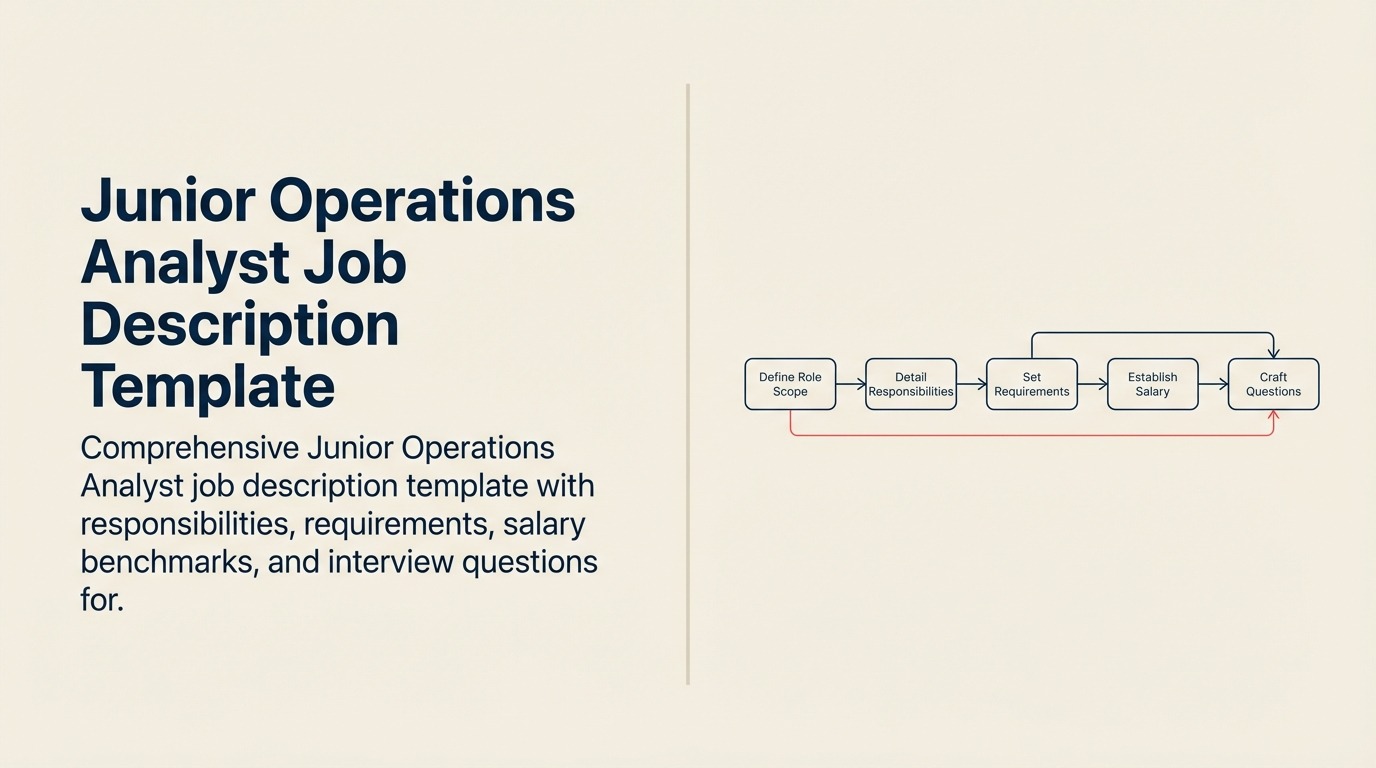
Templat Penerangan Jawatan Penganalisis Operasi Junior - Panduan 2026
Turn this article into takeaways for your work.


Each assistant summarizes the article only for you and suggests best practices for your work.
Apa yang Anda Akan Peroleh Daripada Panduan Ini
- Penerangan jawatan Penganalisis Operasi Junior yang lengkap, dioptimumkan untuk pengambilan pekerja di peringkat permulaan
- Penanda aras gaji untuk penganalisis junior merentas industri dan pasaran geografi
- Soalan temu duga yang memberi tumpuan kepada pemikiran analitikal, penambahbaikan proses, dan kemahiran data
- Variasi khusus industri untuk sektor pembuatan, penjagaan kesihatan, peruncitan, dan perkhidmatan
- Strategi pengambilan pekerja untuk mengenal pasti bakat analitikal berpotensi tinggi di peringkat permulaan
- Rangka kerja penilaian kemahiran untuk menilai keupayaan analitikal dan penyelesaian masalah
- Metrik prestasi dan panduan laluan pertumbuhan untuk pembangunan penganalisis junior
- Pertimbangan kerja jarak jauh untuk pasukan operasi yang tersebar dan kerjasama data
Seorang Penganalisis Operasi Junior berfungsi sebagai tulang belakang analitikal bagi kecekapan organisasi, memberi tumpuan kepada pandangan berasaskan data untuk mengoptimumkan proses perniagaan dan menyokong kecemerlangan operasi. Jawatan peringkat permulaan ini menggabungkan kemahiran analitikal dengan ketajaman perniagaan untuk mengenal pasti peluang penambahbaikan dan mencapai hasil yang boleh diukur merentas pelbagai jabatan.
Perkara Utama
- Peranan analitikal peringkat permulaan dengan potensi pertumbuhan yang ketara dalam operasi
- Tumpuan kepada penambahbaikan proses, analisis data, dan kecekapan operasi
- Bekerjasama dengan pasukan merentas fungsi untuk menyelesaikan cabaran perniagaan yang kompleks
- Bekerja dengan alat analitis moden dan platform kecerdasan perniagaan
- Menyumbang kepada pembuatan keputusan strategik melalui pandangan data
- Julat gaji purata: $45,000 - $65,000 setahun
Mengapa Peranan Ini Penting
Penganalisis Operasi Junior memainkan peranan penting dalam operasi perniagaan moden dengan mengubah data mentah menjadi pandangan yang boleh diambil tindakan. Anda akan bertanggungjawab untuk mengenal pasti ketidakcekapan, mencadangkan penambahbaikan proses, dan menyokong pembuatan keputusan berasaskan data di seluruh organisasi. Jawatan ini menawarkan pendedahan yang sangat baik kepada pelbagai fungsi perniagaan dan menyediakan asas yang kukuh untuk kemajuan kerjaya dalam operasi, analitis, atau strategi perniagaan.
Kerja anda memberi kesan langsung kepada keuntungan bersih syarikat dengan memperkemas proses, mengurangkan kos, dan meningkatkan prestasi operasi secara keseluruhan. Memandangkan perniagaan semakin bergantung kepada data untuk membuat keputusan, kemahiran analitikal anda menjadi penting untuk mengekalkan kelebihan daya saing dan kecemerlangan operasi.
Templat Penerangan Jawatan Utama
Tentang Peranan Ini
Kami sedang mencari seorang Penganalisis Operasi Junior yang teliti untuk menyertai pasukan operasi kami dan menyokong misi kami untuk penambahbaikan berterusan dan kecemerlangan operasi. Dalam peranan ini, anda akan menganalisis proses perniagaan, mengenal pasti peluang pengoptimuman, dan memberikan cadangan berasaskan data untuk meningkatkan kecekapan dan prestasi merentas pelbagai jabatan.
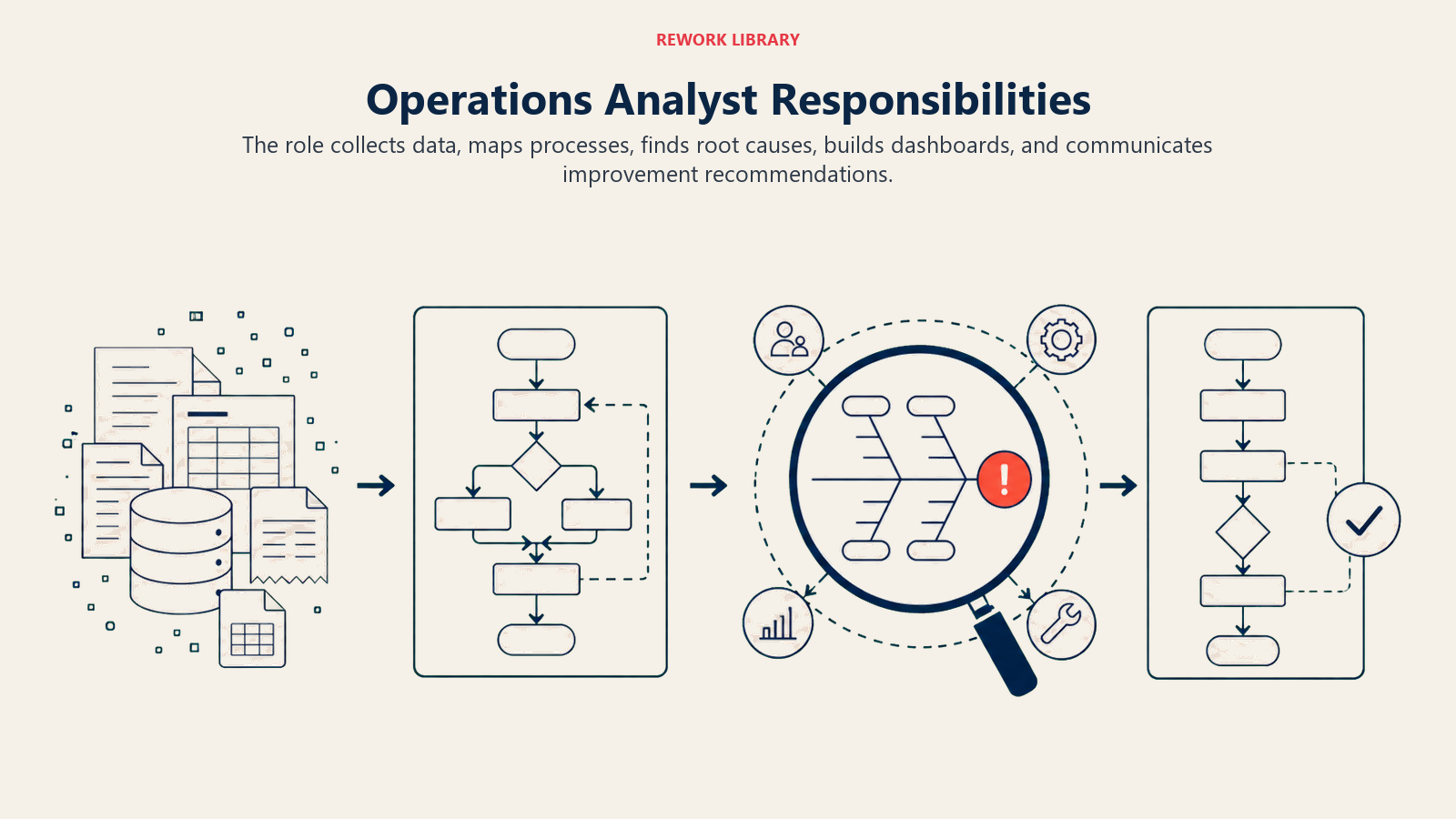
Sebagai seorang Penganalisis Operasi Junior, anda akan bekerja rapat dengan penganalisis kanan dan pengurus jabatan untuk mengumpul, menganalisis, dan mentafsir data operasi. Anda akan menyediakan laporan, dashboard, dan pembentangan yang menyampaikan pandangan kepada pihak berkepentingan di pelbagai peringkat organisasi. Jawatan ini menawarkan peluang yang sangat baik untuk pembangunan profesional dan pendedahan kepada pelbagai operasi perniagaan.
Calon yang ideal akan menunjukkan pemikiran analitikal yang kukuh, ketelitian terhadap perincian, dan kemahiran komunikasi yang berkesan. Anda akan berkembang maju dalam persekitaran kolaboratif di mana pandangan anda menyumbang kepada pembuatan keputusan strategik dan penambahbaikan operasi yang mencapai hasil perniagaan yang boleh diukur.
Tanggungjawab Utama
- Mengumpul, menganalisis, dan mentafsir data operasi daripada pelbagai sumber dan sistem
- Menyediakan laporan, dashboard, dan visualisasi yang komprehensif untuk menyampaikan penemuan
- Mengenal pasti ketidakcekapan proses dan mencadangkan strategi penambahbaikan
- Memantau petunjuk prestasi utama (KPI) dan metrik operasi
- Menyokong projek merentas fungsi dengan analisis data dan pemetaan proses
- Membantu membangunkan dan mengekalkan prosedur operasi standard
- Menjalankan analisis punca masalah untuk isu operasi dan jurang prestasi
- Menyediakan pembentangan untuk mesyuarat pengurusan dan pihak berkepentingan
- Bekerjasama dengan pasukan IT untuk menambah baik proses pengumpulan data dan pelaporan
- Menyertai inisiatif penambahbaikan proses dan projek pengurusan perubahan
Keperluan
Kelayakan Wajib
- Ijazah Sarjana Muda dalam Perniagaan, Ekonomi, Kejuruteraan, Matematik, atau bidang berkaitan
- 0-2 tahun pengalaman dalam analisis, operasi, atau fungsi perniagaan berkaitan
- Mahir dalam Microsoft Excel, termasuk fungsi lanjutan dan jadual pangsi
- Kemahiran analitikal dan penyelesaian masalah yang kukuh dengan ketelitian terhadap perincian
- Kemahiran komunikasi bertulis dan lisan yang cemerlang
- Pemahaman asas tentang proses dan operasi perniagaan
- Keupayaan untuk bekerja secara berdikari dan menguruskan pelbagai projek secara serentak
- Biasa dengan alat visualisasi data (Tableau, Power BI, atau yang serupa)
Kelayakan Tambahan yang Diingini
- Pengalaman dengan SQL atau pertanyaan pangkalan data
- Pengetahuan tentang analisis statistik dan metodologi penambahbaikan proses
- Biasa dengan sistem ERP (SAP, Oracle, atau yang serupa)
- Pemahaman tentang prinsip Lean Six Sigma
- Pengalaman latihan industri atau kerjasama sebelum ini dalam operasi atau analitis
Apa yang Kami Tawarkan
- Julat gaji yang kompetitif: $45,000 - $65,000 berdasarkan pengalaman dan lokasi
- Insurans kesihatan, pergigian, dan penglihatan yang komprehensif
- Pelan persaraan 401(k) dengan padanan caruman syarikat
- Peluang pembangunan profesional dan program latihan
- Susunan kerja yang fleksibel dan pilihan kerja jarak jauh
- Persekitaran pasukan yang kolaboratif dengan peluang bimbingan
Variasi Konteks
Persekitaran Korporat
Dalam persekitaran korporat yang besar, Penganalisis Operasi Junior biasanya bekerja dalam rangka kerja yang telah ditetapkan dan proses yang piawai. Anda akan mempunyai akses kepada sistem data dan sumber yang komprehensif, dengan struktur pelaporan yang jelas dan laluan perkembangan kerjaya yang jelas ditetapkan. Peranan ini menekankan pematuhan, tadbir urus, dan penyelesaian yang boleh diskalakan.
Persekitaran Syarikat Pemula
Persekitaran syarikat pemula menawarkan tanggungjawab yang lebih luas dan kesan langsung terhadap operasi perniagaan. Anda mungkin perlu memikul pelbagai peranan, bekerja pada projek yang pelbagai daripada reka bentuk proses hingga analisis strategik. Peranan ini memerlukan keupayaan menyesuaikan diri dan pemikiran keusahawanan, dengan peluang untuk membentuk rangka kerja operasi dari awal.
Kerja Jarak Jauh/Hibrid
Penganalisis Operasi Junior yang bekerja secara jarak jauh menggunakan alat analitis berasaskan awan dan platform kerjasama maya. Kemahiran pengurusan diri yang kukuh dan komunikasi proaktif menjadi penting. Peranan ini mungkin melibatkan lebih banyak dokumentasi bertulis dan sesi semakan berstruktur dengan ahli pasukan dan pihak berkepentingan.
Pertimbangan Industri
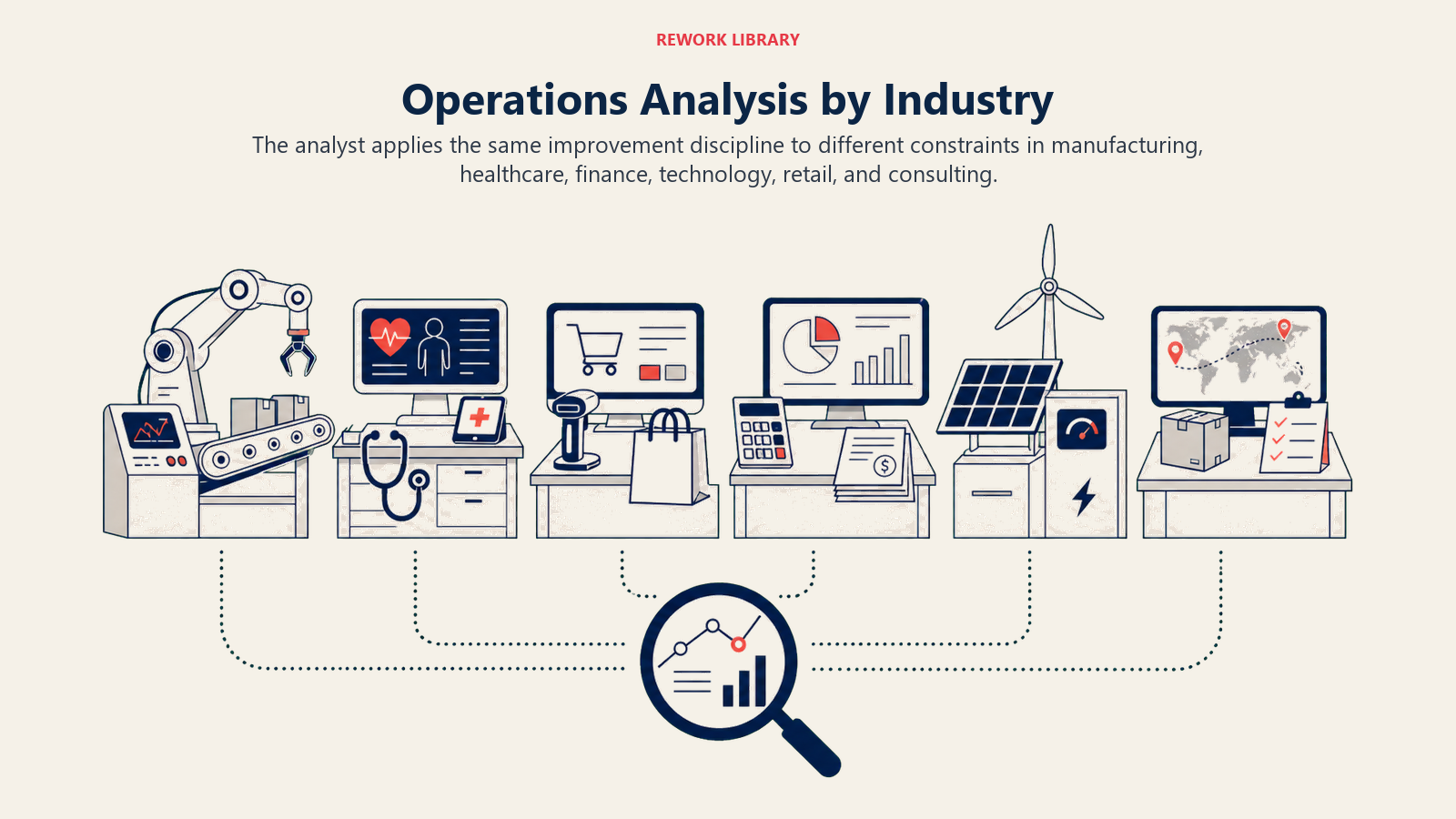
| Industri | Keperluan Unik | Bidang Tumpuan Utama |
|---|---|---|
| Pembuatan | Pemahaman tentang rantaian bekalan, metrik pengeluaran, proses kawalan kualiti | Pengoptimuman inventori, kecekapan pengeluaran, pengurangan kos |
| Penjagaan Kesihatan | Pengetahuan tentang pematuhan peraturan, aliran pesakit, operasi klinikal | Penambahbaikan proses, peruntukan sumber, metrik kualiti |
| Perkhidmatan Kewangan | Biasa dengan keperluan peraturan, pengurusan risiko, pematuhan | Analisis risiko, pemantauan prestasi, pelaporan peraturan |
| Teknologi | Pemahaman tentang kitaran pembangunan perisian, metrik produk, analitis pengguna | Prestasi produk, kecekapan operasi, metrik pertumbuhan |
| Peruncitan | Pengetahuan tentang pengurusan inventori, analitis pelanggan, trend bermusim | Analisis jualan, pengoptimuman inventori, pandangan pelanggan |
| Perundingan | Kemahiran berhadapan pelanggan, pengurusan projek, pendedahan pelbagai industri | Penyelesaian pelanggan, pengoptimuman proses, amalan terbaik |
Nota: Sesetengah industri mungkin memerlukan sijil khusus atau program latihan tertentu.
Panduan Pampasan
Maklumat Gaji
Purata gaji kebangsaan untuk Penganalisis Operasi Junior adalah antara $45,000 hingga $65,000 setahun, dengan variasi berdasarkan lokasi, industri, dan saiz syarikat. Jawatan peringkat permulaan biasanya bermula sekitar $45,000, manakala calon dengan pengalaman berkaitan atau kemahiran khusus mungkin boleh memperoleh gaji permulaan yang lebih tinggi.
| Kawasan Metro | Julat Gaji | Pelarasan Kos Sara Hidup |
|---|---|---|
| San Francisco, CA | $55,000 - $75,000 | +25% melebihi purata kebangsaan |
| New York, NY | $50,000 - $70,000 | +15% melebihi purata kebangsaan |
| Seattle, WA | $48,000 - $68,000 | +10% melebihi purata kebangsaan |
| Chicago, IL | $45,000 - $62,000 | Purata kebangsaan |
| Austin, TX | $44,000 - $60,000 | -5% di bawah purata kebangsaan |
| Atlanta, GA | $42,000 - $58,000 | -8% di bawah purata kebangsaan |
| Denver, CO | $46,000 - $64,000 | +5% melebihi purata kebangsaan |
| Remote | $40,000 - $60,000 | Berbeza mengikut lokasi syarikat |
Faktor yang mempengaruhi pampasan termasuk latar belakang pendidikan, pengalaman latihan industri yang berkaitan, kemahiran teknikal (terutamanya dalam alat analitis), dan pengkhususan industri.
Data gaji berdasarkan penyelidikan pasaran 2026 daripada papan kerja utama dan tinjauan pampasan.
Soalan Temu Duga
Soalan Teknikal/Fungsian
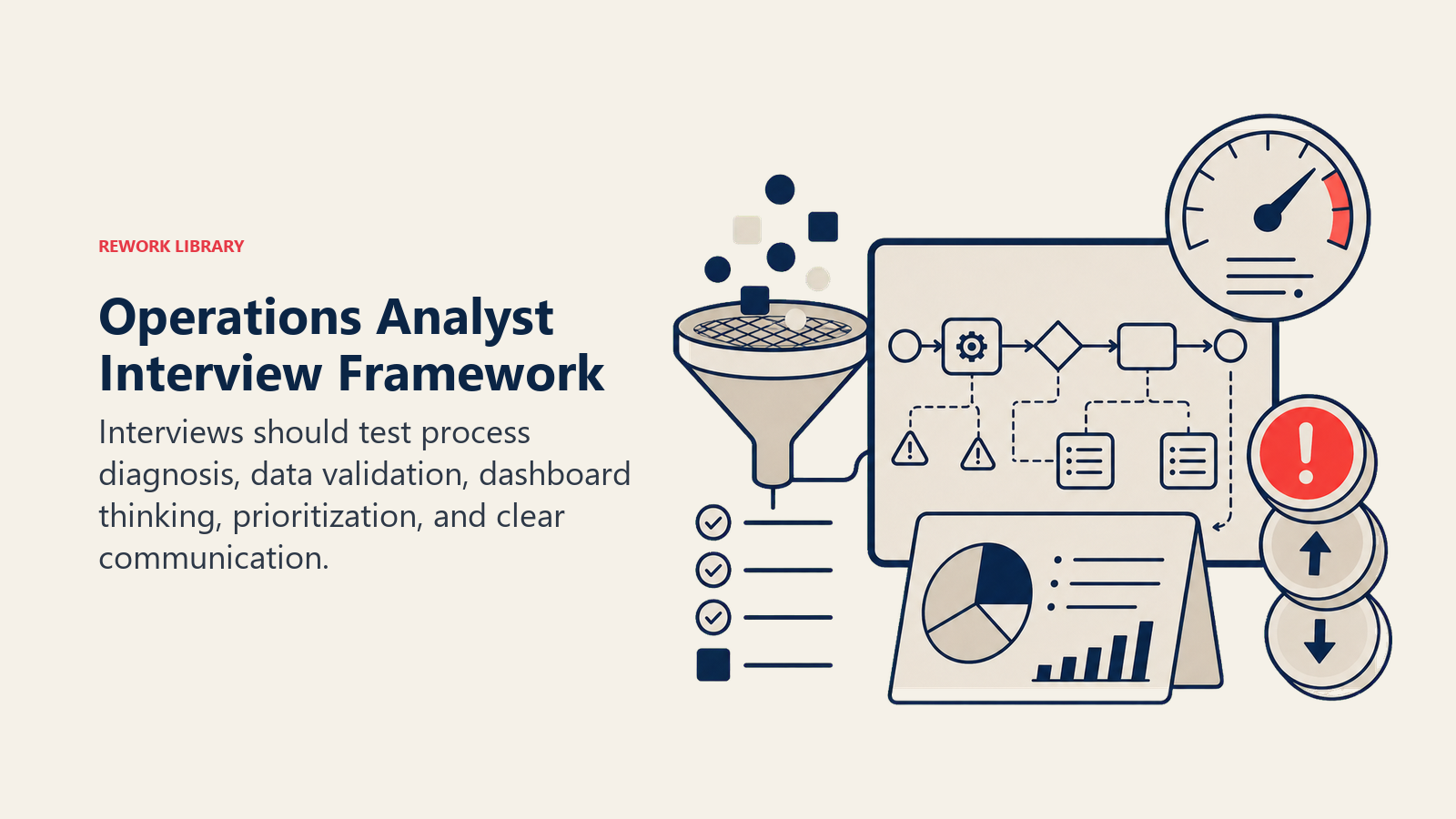
- Terangkan langkah demi langkah bagaimana anda akan menganalisis satu proses yang mengalami isu kecekapan.
- Bagaimanakah anda akan mengenal pasti punca peningkatan 15% dalam kos operasi?
- Terangkan pendekatan anda untuk mencipta dashboard bagi menjejaki petunjuk prestasi utama.
- Bagaimanakah anda akan mengendalikan situasi apabila anda menemui ketidakkonsistenan data dalam analisis anda?
- Terangkan bagaimana anda akan mengutamakan pelbagai peluang penambahbaikan proses.
- Apakah langkah yang akan anda ambil untuk mengesahkan ketepatan penemuan analitikal anda?
- Bagaimanakah anda akan menyampaikan penemuan analitikal yang kompleks kepada pihak berkepentingan yang bukan teknikal?
- Terangkan pengalaman anda dengan visualisasi data dan alat yang anda gemari.
Soalan Tingkah Laku
- Ceritakan satu ketika anda mengenal pasti masalah yang terlepas pandang oleh orang lain.
- Terangkan satu situasi di mana anda perlu bekerja dengan data yang tidak lengkap atau tidak sempurna.
- Berikan satu contoh apabila anda perlu menerangkan konsep teknikal kepada khalayak yang bukan teknikal.
- Ceritakan satu ketika anda perlu menguruskan pelbagai keutamaan yang bersaing.
- Terangkan satu situasi di mana anda perlu bekerjasama dengan jabatan yang berbeza untuk mencapai satu matlamat.
Soalan Kesesuaian Budaya
- Bagaimanakah anda kekal terkini dengan trend industri dan amalan terbaik dalam operasi?
- Apakah yang memotivasikan anda untuk bekerja dalam operasi dan penambahbaikan proses?
- Bagaimanakah anda mengendalikan situasi apabila cadangan anda tidak diterima dengan segera?
- Terangkan persekitaran kerja ideal dan dinamik pasukan anda.
Tip penilaian untuk soalan Teknikal: Cari pemikiran berstruktur dan pendekatan penyelesaian masalah yang praktikal. Untuk soalan Tingkah Laku: Nilai pemikiran analitikal dan kemahiran komunikasi. Untuk Kesesuaian Budaya: Nilai sikap pembelajaran berterusan dan kemahiran kerjasama.
Petua Pengambilan Pekerja
Panduan Pantas Mencari Calon
- LinkedIn: Sasarkan graduan terbaru daripada program perniagaan, kejuruteraan, dan analitis
- Pusat Kerjaya Universiti: Bekerjasama dengan sekolah perniagaan dan program kejuruteraan
- Persatuan Profesional: Institute for Operations Research and Management Sciences (INFORMS)
- Papan Kerja: Indeed, Glassdoor, dan laman kerja analitis khusus
Tanda Amaran untuk Dielakkan
- Kekurangan rasa ingin tahu analitikal atau contoh penyelesaian masalah semasa temu duga
- Ketidakupayaan menerangkan konsep teknikal dalam istilah yang mudah
- Ketelitian yang lemah terhadap perincian dalam resume atau bahan permohonan
- Pengalaman yang terhad dengan alat analisis data atau keengganan untuk belajar
- Kesukaran bekerja dalam persekitaran berpasukan atau kerjasama merentas fungsi
- Jangkaan gaji yang tidak realistik untuk jawatan peringkat permulaan
Untuk Majikan: Mengambil Penganalisis Operasi Junior
Apakah perbezaan antara Penganalisis Operasi Junior dan Penganalisis Perniagaan?
Penganalisis Operasi Junior memberi tumpuan khusus kepada proses operasi, kecekapan, dan metrik prestasi, manakala Penganalisis Perniagaan biasanya bekerja pada keperluan perniagaan yang lebih luas dan pelaksanaan sistem. Penganalisis Operasi lebih khusus dalam penambahbaikan proses dan data operasi.
Berapa lamakah biasanya diperlukan untuk melatih seorang Penganalisis Operasi Junior?
Kebanyakan Penganalisis Operasi Junior menjadi produktif dalam masa 3-6 bulan, bergantung kepada kerumitan industri dan sumber latihan yang tersedia. Kecekapan penuh biasanya berkembang dalam masa 12-18 bulan dengan bimbingan dan peluang pembangunan yang sewajarnya.
Apakah kemahiran insaniah yang paling penting untuk peranan ini?
Pemikiran kritikal, kemahiran komunikasi, ketelitian terhadap perincian, dan sikap kolaboratif adalah penting. Keupayaan menterjemahkan pandangan data kepada cadangan perniagaan amat bernilai.
Patutkah kami mengambil seseorang dengan pengalaman industri atau kemahiran analitikal yang kukuh?
Kemahiran analitikal yang kukuh biasanya lebih bernilai berbanding pengalaman industri untuk jawatan peringkat junior. Pengetahuan industri boleh diajar dengan lebih mudah berbanding pemikiran analitikal asas dan keupayaan penyelesaian masalah.
Untuk Pencari Kerja: Kerjaya Penganalisis Operasi Junior
Apakah peluang perkembangan kerjaya yang wujud untuk Penganalisis Operasi Junior?
Laluan kerjaya termasuk Penganalisis Operasi Kanan, Pengurus Operasi, Pengurus Proses Perniagaan, atau pengkhususan dalam bidang seperti rantaian bekalan, kualiti, atau kecerdasan perniagaan. Ramai juga beralih kepada peranan perundingan atau strategi.
Apakah kemahiran teknikal yang perlu saya bangunkan untuk menonjol sebagai calon?
Berikan tumpuan kepada kemahiran Excel yang lanjutan, SQL untuk pertanyaan pangkalan data, alat visualisasi data (Tableau, Power BI), dan analisis statistik asas. Pemahaman tentang sistem ERP dan metodologi penambahbaikan proses juga bernilai.
Bagaimanakah saya boleh mendapatkan pengalaman yang berkaitan tanpa jawatan sepenuh masa?
Pertimbangkan latihan industri, program kerjasama, kerja sukarela dengan organisasi bukan untung yang memerlukan penambahbaikan proses, projek peribadi menganalisis data yang tersedia secara awam, atau kursus dalam talian dengan projek praktikal.
Bagaimanakah keseimbangan kerja-kehidupan yang tipikal untuk Penganalisis Operasi Junior?
Kebanyakan jawatan menawarkan keseimbangan kerja-kehidupan yang baik dengan waktu perniagaan standard. Walau bagaimanapun, semasa tarikh akhir projek atau inisiatif penambahbaikan proses, beberapa jam tambahan mungkin diperlukan. Pilihan kerja jarak jauh dan fleksibel semakin biasa.
Betapa pentingkah pengetahuan khusus industri untuk mendapatkan pekerjaan?
Walaupun berguna, pengetahuan industri kurang kritikal berbanding kemahiran analitikal yang kukuh dan keupayaan belajar. Ramai majikan lebih suka calon yang boleh membawa perspektif baharu dan sanggup mempelajari proses khusus industri.

Senior Customer Retention Strategist
On this page
- Perkara Utama
- Mengapa Peranan Ini Penting
- Templat Penerangan Jawatan Utama
- Tentang Peranan Ini
- Tanggungjawab Utama
- Keperluan
- Apa yang Kami Tawarkan
- Variasi Konteks
- Persekitaran Korporat
- Persekitaran Syarikat Pemula
- Kerja Jarak Jauh/Hibrid
- Pertimbangan Industri
- Panduan Pampasan
- Maklumat Gaji
- Soalan Temu Duga
- Soalan Teknikal/Fungsian
- Soalan Tingkah Laku
- Soalan Kesesuaian Budaya
- Petua Pengambilan Pekerja
- Panduan Pantas Mencari Calon
- Tanda Amaran untuk Dielakkan