Mengapa ROI AI Sukar Dibuktikan: Dan Apa yang Perlu Dilakukan
 Tiada siapa dalam pembentangan vendor menyebutkan bahawa membuktikan pulangan pelaburan (ROI) AI akan sukar begini.
Turn this article into takeaways for your work.


Each assistant summarizes the article only for you and suggests best practices for your work.
Demo itu bersih. Kajian kes itu meyakinkan. Pulangan yang dijangkakan dikira dalam spreadsheet yang dibina oleh jurutera jualan vendor semasa panggilan penemuan. "Anda mempunyai 50 wakil, masing-masing menjimatkan 2 jam seminggu, kadar purata $55 sejam. Itu $285,000 setahun. Alat itu berharga $180,000. ROI dalam 7.6 bulan."
Lembaga pengarah Anda meluluskan pelaburan. Anda menerapkan alat itu. Enam bulan kemudian, perintis sedang berjalan dan ketua pegawai kewangan (CFO) meminta laporan ROI.
Anda melihat apa yang Anda ada. Masa yang dijimatkan, mungkin. Kepuasan pekerja dengan alat, umumnya positif. Beberapa anekdot daripada wakil yang mengatakan aliran kerja mereka lebih baik. Pengurus kejayaan pelanggan vendor menawarkan bantuan untuk menulis kajian kes.
Tetapi nombor kukuh, perbandingan sebelum dan selepas yang jelas yang menunjukkan pelaburan itu membayar balik pada kadar yang dijanjikan dalam spreadsheet, tidak ada. Saluran kerja meningkat, tetapi begitu juga pasaran. Kadar kemenangan bertambah baik, tetapi Anda juga mengambil tiga wakil kanan. Anda menjimatkan jam, tetapi Anda tidak dapat menunjukkan jam itu pergi ke mana-mana yang mengubah penyata untung rugi (P&L).
Anda tidak bersendirian dalam hal ini. Dan Anda tidak melakukannya dengan salah.
Ini adalah bahagian yang paling sukar dalam transformasi AI. Bukan teknologi. Bukan pengurusan perubahan. Pengukuran.
Pendirian jujur ACE Framework tentang ROI AI
ACE Framework adalah eksplisit tentang hal ini. Dokumentasi tadbir urus Tahap 5 menyatakannya secara langsung: kebanyakan perintis AI tidak membuktikan ROI dengan jelas. Bingkaikan ini sebagai bahagian yang paling sukar dalam transformasi AI, bukan yang paling mudah.
Fakta Utama: Jurang Pengukuran ROI AI
- Hanya 39% organisasi melaporkan impak EBIT (pendapatan sebelum faedah dan cukai) peringkat perusahaan daripada penerapan AI, walaupun pelaburan AI perusahaan global mencapai $644 bilion pada 2025. (McKinsey / Gartner)
- Bahagian syarikat yang meninggalkan sebahagian besar projek AI mereka melompat kepada 42% pada 2025, naik daripada 17% tahun sebelumnya, dengan ROI yang tidak jelas dan jumlah kos yang disebutkan sebagai sebab utama. (Master of Code)
- Kebanyakan organisasi memerlukan dua hingga empat tahun untuk merealisasikan pulangan daripada kes penggunaan AI yang tipikal, corak yang Deloitte sebut sebagai "AI J-curve." (Deloitte)
Ini penting kerana bingkai alternatif ada di mana-mana. Kajian kes vendor membuktikan ROI dengan jelas, kerana ia ditulis oleh vendor. Ucapan utama persidangan membuktikan ROI dengan jelas, kerana penceramah memilih contoh yang berjaya. Artikel kerangka yang menjanjikan "begini cara mengira ROI AI Anda dalam 5 langkah" melicinkan masalah struktural yang menjadikan lima langkah tersebut tidak boleh dipercayai dalam amalan.
Masalah struktural itu adalah nyata. Dan menamainya adalah permulaan untuk melakukan sesuatu tentangnya.
Sebab 1: Masalah asas
ROI memerlukan perbandingan sebelum dan selepas. Kebanyakan organisasi tidak merakam "sebelum" sebelum mereka bermula.
Pada masa mana-mana ingin menunjukkan ROI, tempoh pra-AI telah berlalu. Anda tidak boleh kembali dan mengukur kadar kemenangan wakil Anda sebelum alat bantuan jualan AI diterapkan, kerana Anda tidak terfikir untuk menjejak metrik spesifik itu sebelum penerapan. Anda mempunyai nombor agregat, tetapi bukan data segmen bersih yang diperlukan untuk perbandingan yang boleh dipertahankan.
Hasilnya: Anda mengukur prestasi semasa berbanding apa sahaja rasa umum prestasi sebelumnya. Itu bukan asas. Itu adalah tanggapan.
Penyelidikan MIT Sloan Management Review tentang mengukur nilai projek AI mendapati bahawa saintis data menilai KPI perniagaan seperti ROI dan hasil sebagai metrik yang paling penting, namun metrik teknikal adalah yang paling kerap diukur, tepat kerana asas perniagaan tidak ditetapkan sebelum penerapan.
Dan tanpa asas sebenar, sebarang penambahbaikan yang diperhatikan adalah tidak jelas. Mungkin AI membantu. Mungkin pasaran bertambah baik. Mungkin VP Jualan baharu Anda mengubah proses dengan cara yang lebih penting. Anda tidak tahu kerana Anda tidak mempunyai keadaan pra-AI yang dirakam.
Ini bukan kegagalan pelaksanaan. Ia adalah masalah struktural dalam cara organisasi menerapkan AI. Kerja pengukuran perlu berlaku sebelum penerapan, bukan selepasnya. Dan kebanyakan organisasi tidak mula memikirkan pengukuran sehingga ada yang meminta laporan ROI berbulan-bulan kemudian.
Sebab 2: Masalah pengatributan
AI tidak pernah diterapkan secara terpencil. Apabila Anda memperkenalkan alat AI, Anda juga mengemas kini proses Anda, melatih pasukan Anda untuk menggunakan alat tersebut, dan sering menjalankan penerapan bersama inisiatif lain. Pelbagai perkara berubah secara serentak, dan memisahkan sumbangan AI daripada segala-galanya yang lain adalah benar-benar sukar.
Pertimbangkan senario penerapan sebenar: S2, Anda menerapkan alat penilaian lead AI. Dalam suku yang sama, Anda juga mengambil dua AE kanan, pasukan pemasaran Anda melancarkan kempen baharu yang menjana 30% lebih banyak lead masuk, dan pasukan produk Anda menghantar ciri utama yang diminta pelanggan. Saluran kerja Anda berkembang 22% dalam S3.
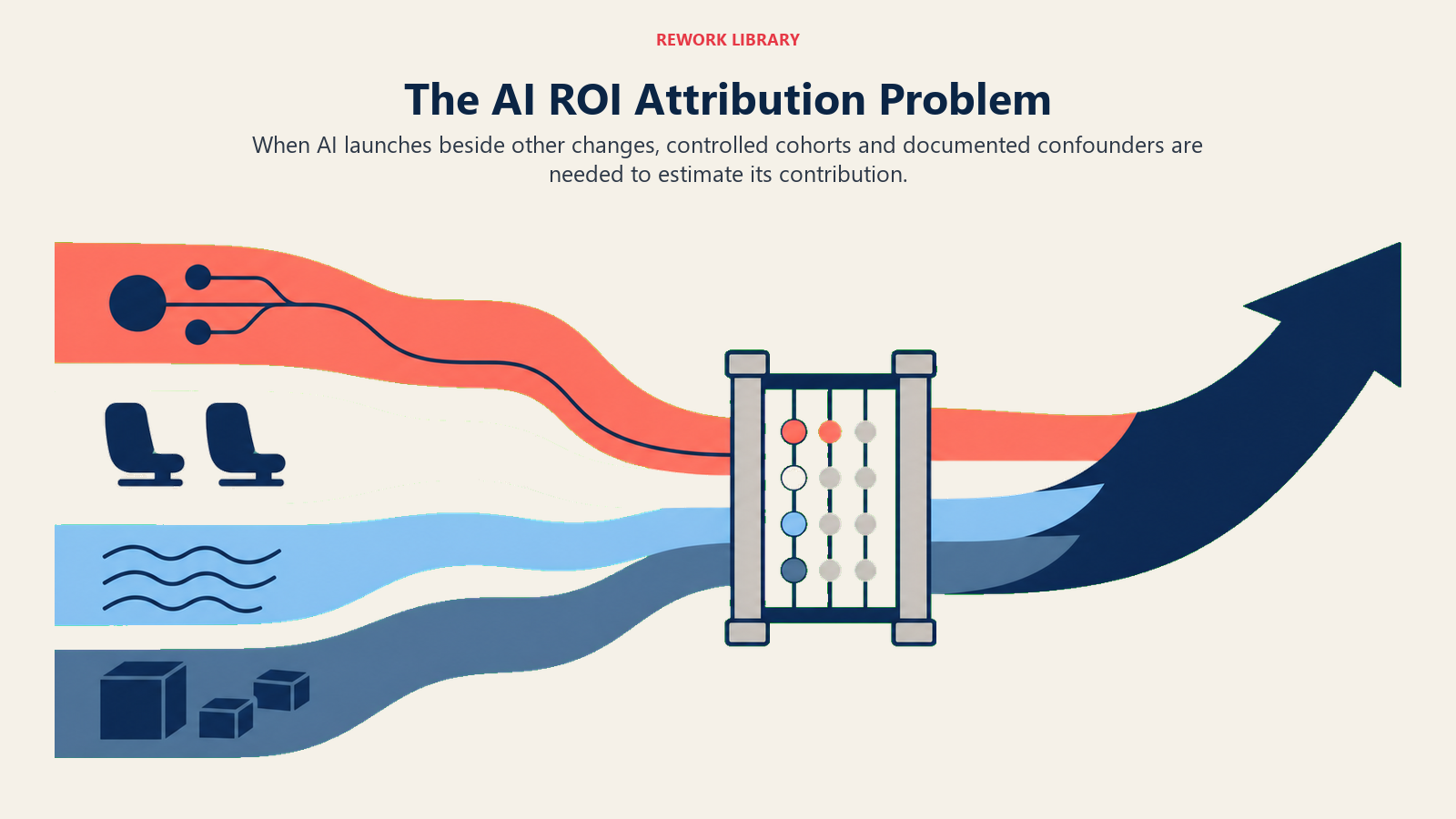
Berapa banyak daripada 22% itu datang daripada penilaian lead AI?
Tiada jawapan yang bersih. Jawapan jujur adalah dalam julat: "Kami percaya AI menyumbang antara 5% dan 12% peningkatan, berdasarkan analisis berikut." Analisis itu perlu mengawal pemboleh ubah pengeliruan, dan kawalan itu tidak sempurna.
Tinjauan MIT Sloan/BCG pada 2019 mendapati 7 daripada 10 syarikat melaporkan tiada nilai daripada pelaburan AI mereka, dengan penulis mengaitkannya secara langsung dengan ketiadaan penerapan produksi dan ketiadaan metodologi pengatributan yang ketat.
Tetapi kebanyakan laporan ROI AI tidak melakukan analisis tersebut. Mereka menunjukkan sebelum dan selepas, melangkau kerja pengatributan, dan menunjukkan AI menyebabkan penambahbaikan. CFO yang berpengalaman melihatnya dengan serta-merta. Lembaga pengarah bertanya soalan yang Anda tidak ada jawapannya.
Kesukaran pengatributan adalah struktural. Satu-satunya cara untuk mengurangkannya adalah eksperimen terkawal, di mana sesetengah pengguna mendapat AI dan sesetengah tidak, dengan kohort yang dipadankan dan tempoh masa yang sama. Eksperimen itu sukar dijalankan dalam praktik, kerana tiada sesiapa mahu berada dalam kumpulan kawalan, dan kebolehbandingan wilayah tidak pernah sempurna.
Tetapi eksperimen terkawal yang tidak sempurna pun lebih baik daripada sebelum-dan-selepas tanpa kawalan. Usaha untuk menjalankannya berbaloi bagi sebarang pelaburan AI yang signifikan.
Sebab 3: Masalah kelambatan
Manfaat AI sering muncul enam hingga lapan belas bulan selepas penerapan, bukan enam minggu.
Minggu dan bulan pertama penerapan AI adalah tempoh pembelajaran. Pengguna sedang memikirkan cara menggunakan alat itu. Integrasi aliran kerja adalah kasar. Penggunaan tidak sekata. Metrik awal mencerminkan keluk pembelajaran, bukan nilai keadaan mantap.
Manfaat keadaan mantap, apabila pengguna telah mengintegrasikan alat sepenuhnya ke dalam aliran kerja mereka dan menggunakannya untuk tugas-tugas berpengaruh tinggi, sering tidak muncul sehingga separuh kedua tahun pertama, atau permulaan tahun kedua.
Tetapi kebanyakan pelaporan ROI AI berlaku dalam dua hingga tiga bulan pertama, kerana itulah apabila lembaga pengarah mahukan kemas kini status dan CFO ingin tahu sama ada pelaburan berfungsi. Tetingkap pengukuran salah untuk fenomena yang sedang diukur.
Ini mewujudkan mod kegagalan tertentu: perintis kelihatan mengecewakan pada awalnya, kepimpinan kehilangan keyakinan, alat itu kurang digunakan atau dikurangkan keutamaan, manfaat keadaan mantap tidak pernah terealisasi kerana organisasi menyerah sebelum mencapainya. AI "tidak berfungsi," tetapi apa yang sebenarnya berlaku ialah pengukuran ROI berlaku terlalu awal.
Masalah kelambatan tidak bermakna Anda harus menolak untuk melaporkan apa-apa dalam 90 hari pertama. Ia bermakna Anda harus melaporkan apa yang sesuai untuk jadual waktu: metrik penggunaan, petunjuk utama awal, maklum balas pengguna kualitatif, dan data masa yang dijimatkan di mana ia kelihatan. Dan Anda harus menetapkan jangkaan yang jelas dari awal bahawa metrik impak hasil dan peningkatan kualiti memerlukan 6 hingga 18 bulan untuk bermakna.
Sebab 4: Masalah metrik yang salah
Kebanyakan organisasi mengukur apa yang mudah diukur berbanding apa yang penting.
Jam yang dijimatkan mudah diukur. Sama ada jam itu diterjemahkan kepada output perniagaan tambahan adalah jauh lebih sukar. Sentimen tinjauan pekerja ("Saya suka alat ini") mudah dikumpulkan. Sama ada ia berkorelasi dengan peningkatan prestasi tidak diketahui.
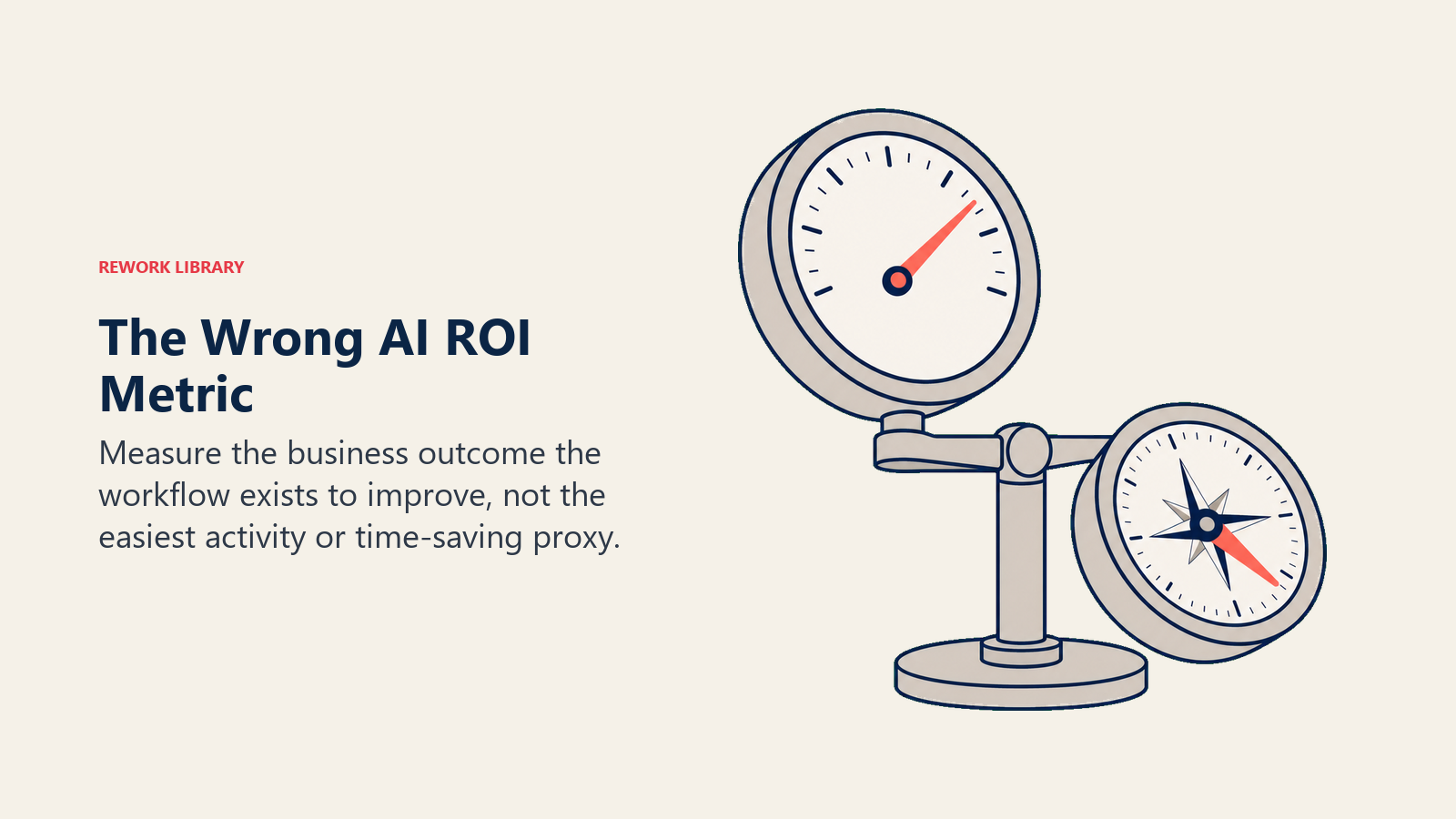
Masalah metrik yang salah mempunyai corak tertentu: pasukan menerapkan AI, cepat mencari metrik yang menunjukkan penambahbaikan, dan melaporkan metrik tersebut sebagai ROI. Metrik itu nyata. Tetapi ia bukan metrik yang penting untuk perniagaan.
AI yang mengurangkan masa-untuk-mengambil-pekerja sebanyak 30% kelihatan seperti keputusan HR yang kukuh. Tetapi jika calon yang diambil melalui proses yang dibantu AI mempunyai pengekalan 12 bulan yang lebih rendah, metrik yang salah (masa-untuk-mengambil) menyembunyikan metrik yang betul (kualiti pengambilan). Pengiraan ROI adalah terbalik.
AI yang meningkatkan kelajuan penyelesaian tiket sokongan sebanyak 25% kelihatan seperti keputusan kejayaan pelanggan yang kukuh. Tetapi jika kepuasan pelanggan menurun kerana pelanggan merasakan respons AI tidak bersifat peribadi atau tidak tepat, metrik yang salah itu menutup metrik yang betul.
Pembetulannya adalah mentakrifkan metrik yang betul sebelum penerapan, bukan selepas. Metrik yang betul adalah yang digunakan perniagaan untuk menilai kejayaan proses yang sedang diperbaiki. Untuk jualan, itu ialah kadar kemenangan dan halaju saluran kerja. Untuk sokongan, itu ialah skor kepuasan pelanggan dan kos setiap penyelesaian. Untuk HR, itu ialah kualiti pengambilan dan masa-untuk-produktiviti. Kemudian ambil asas bagi metrik tersebut sebelum penerapan. Kerangka 5 Dimensi ROI AI adalah alat yang paling praktikal untuk menentukan metrik mana yang perlu diambil asas merentas masa yang dijimatkan, pengurangan kos, kualiti, hasil, dan dimensi risiko secara serentak.
Ini memerlukan disiplin pengukuran yang kebanyakan organisasi tidak miliki pada masa penerapan, kerana mereka tertumpu pada pelaksanaan. Membina infrastruktur pengukuran sama pentingnya dengan membina infrastruktur penerapan. Kebanyakan organisasi tidak menganggapnya begitu.
Sebab 5: Masalah kos tersembunyi
AI menelan kos lebih daripada bayaran lesen.
Setiap penerapan AI mempunyai kos yang tidak muncul dalam kontrak vendor:
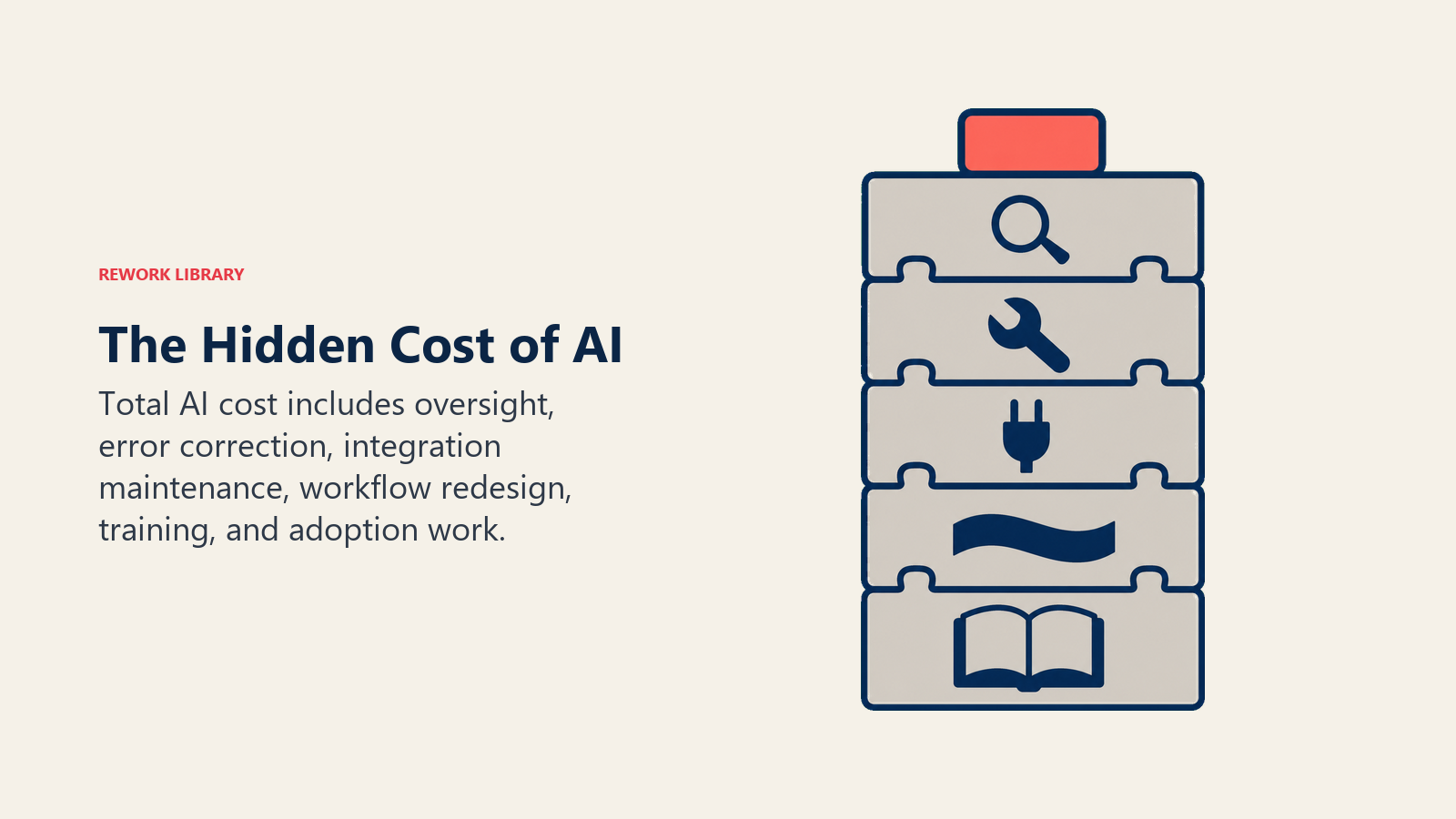
Masa pengawasan. Seseorang perlu memantau output AI untuk kualiti. Seseorang perlu menyemak kes tepi. Seseorang perlu memutuskan sama ada AI berkelakuan seperti yang dijangkakan. Ini adalah buruh sebenar, dan dalam kebanyakan penerapan ia tidak dijejak dan tidak dikira.
Pembetulan ralat. Sistem AI membuat kesilapan. Apabila AI membuat kesilapan dalam aliran kerja yang penting, manusia membetulkannya. Pembetulan itu mengambil masa. Kos masa pembetulan ralat jarang dimasukkan dalam model ROI, walaupun ia boleh mempengaruhi penjimatan masa bersih secara material.
Integrasi dan penyelenggaraan. Kos penerapan awal biasanya dianggarkan. Penyelenggaraan integrasi berterusan, penalaan prompt, kemas kini model yang mengubah tingkah laku, perubahan saluran paip data, biasanya tidak. Kos ini terkumpul sepanjang hayat penerapan. Penyelidikan MIT Sloan tentang kos tersembunyi pelaksanaan AI mendapati output yang dijana AI dalam persekitaran teknikal boleh mewujudkan hutang penyelenggaraan yang tergabung yang jarang muncul dalam model ROI awal.
Reka bentuk semula aliran kerja. Menerapkan AI ke dalam aliran kerja sedia ada sering memerlukan mereka bentuk semula aliran kerja. Reka bentuk semula itu mengambil masa. Kos masa itu termasuk dalam pengiraan pelaburan.
Latihan dan penggunaan. Mendapatkan pekerja untuk benar-benar menggunakan alat itu, dan menggunakannya dengan baik, memerlukan usaha berterusan. Latihan awal dianggarkan. Bimbingan, pengupayaan, dan pemantauan penggunaan yang berlaku sepanjang berbulan-bulan sering tidak.
Pengiraan ROI sebenar termasuk semua ini. Spreadsheet ROI yang dibina oleh jurutera jualan vendor semasa panggilan penemuan tidak memasukkannya. Itu bukan penipuan; ia hanya perbezaan antara dokumen jualan dan model kewangan. Model ROI dalaman Anda perlu menambahnya.
Sebab 6: Masalah manfaat tidak ketara
Beberapa manfaat AI yang paling signifikan adalah benar-benar sukar untuk dikuantifikasikan.
Keputusan yang lebih baik. Apabila AI memberikan wakil jualan Anda konteks yang lebih baik sebelum panggilan, kualiti soalan penemuan mereka meningkat. Itu membawa kepada kelayakan yang lebih baik, yang membawa kepada lebih sedikit sumber yang dibazirkan pada urusan berkemungkinan rendah, yang membawa kepada hasil perniagaan yang lebih baik. Rantai sebab-akibat adalah nyata. Nombor pada setiap pautan adalah kabur.
Kepuasan pekerja yang lebih tinggi. Pekerja yang menghabiskan kurang masa pada kerja membosankan, pertimbangan rendah melaporkan kepuasan kerja yang lebih tinggi. Kepuasan yang lebih tinggi berkorelasi dengan pergantian yang lebih rendah. Pergantian yang lebih rendah mempunyai penjimatan kos yang dikuantifikasikan dalam pengambilan dan latihan. Tetapi rantai dari "AI menjimatkan masa pentadbiran" kepada "pergantian menurun" berjalan melalui beberapa faktor pengeliruan dan mengambil masa bertahun-tahun untuk kelihatan.
Pengetahuan organisasi yang lebih baik. AI yang merakam dan membuat boleh diakses pengetahuan institusi pekerja berpengalaman mewujudkan nilai organisasi yang berkekalan. Bagaimana Anda memberikan nombor untuk itu sebelum Anda melihat manfaatnya?
Manfaat ini adalah nyata. Ia bukan rekaan atau tuntutan pemasaran. Tetapi ia menentang perbandingan sebelum dan selepas yang bersih yang diperlukan kewangan untuk meluluskan pelaburan berterusan. Melayan mereka seolah-olah mereka tidak nyata kerana sukar untuk dikuantifikasikan adalah salah. Melayan mereka sebagai ROI tanpa kuantifikasi juga salah.
Pendekatan jujur: terangkan dengan jelas, jelaskan mengapa ia bernilai, dan komitmen untuk mencari metrik proksi di mana ada. "Kepuasan pekerja dengan kerja mereka" boleh diukur dengan tinjauan penglibatan gaya Gallup. "Kadar pergantian dalam peranan yang dibantu AI" boleh dijejak dari masa ke masa. "Penangkapan pengetahuan" boleh diproksikan melalui masa-untuk-kecekapan bagi pekerja baharu yang mengakses bahan onboarding yang dikurasi AI.
Anda tidak akan dapat mengkuantifikasikan semuanya. Tetapi mengkuantifikasikan sebahagian daripadanya lebih baik daripada membesar-besarkan tuntutan atau tidak memasukkannya langsung.
Sebab 7: Bias pengesahan
Kepimpinan mahu AI berfungsi. Itu bukan cacat karakter. Ia adalah bias manusia yang boleh diramal dalam mana-mana program pelaburan.
Apabila pasukan kepimpinan telah mempertaruhkan kredibiliti pada inisiatif AI, meluluskan belanjawan yang signifikan, menyampaikan pelaburan kepada lembaga pengarah, dan secara terbuka memperjuangkan program itu, mereka bermotivasi untuk mencari bukti bahawa ia berfungsi. Perbualan CFO tentang Belanjawan AI mengesyorkan mitigasi struktural: komitmen kepada metrik kejayaan secara bertulis, sebelum keputusan kelihatan, supaya bingkai ditetapkan sebelum bias pengesahan bermula.
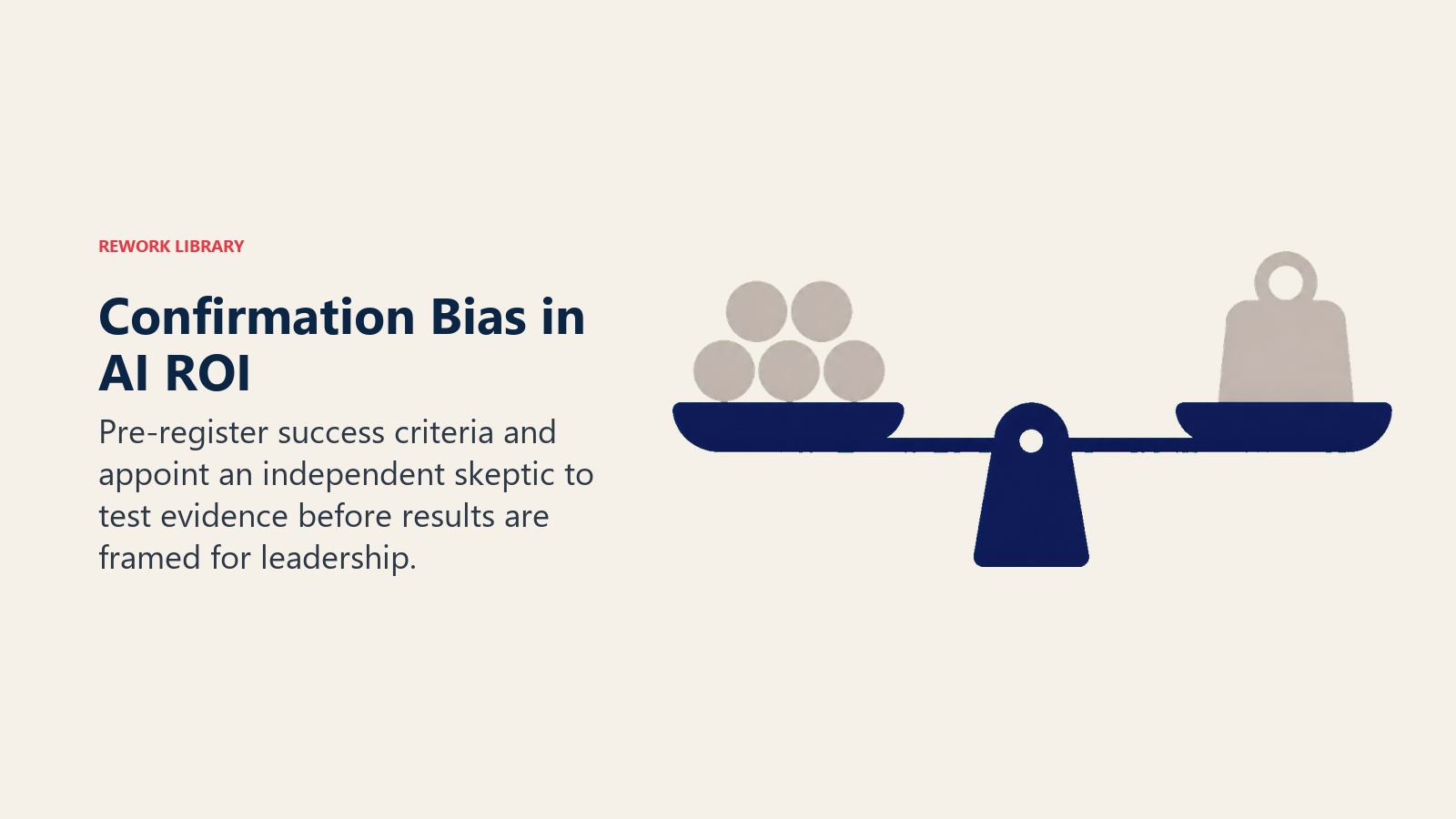
Bias pengesahan beroperasi pada setiap peringkat pengukuran ROI AI. Metrik yang dipilih cenderung kepada yang menunjukkan penambahbaikan. Tetingkap masa yang dipilih cenderung kepada yang menunjukkan keputusan terbaik. Pemboleh ubah pengeliruan cenderung ditinggalkan daripada perbandingan. Keputusan negatif, keputusan AI yang ternyata salah, alat yang tidak diterima pakai, masalah kualiti yang muncul, cenderung dikurangkan beratnya.
Tiada satu pun daripada ini adalah penipuan yang disengajakan. Ia adalah kecenderungan manusia biasa untuk melihat apa yang kita mahu lihat.
Mitigasi itu adalah struktural: lantik seseorang yang tugasnya adalah mencari bukti AI tidak berfungsi. Ini mungkin pejabat CFO, fungsi audit dalaman, atau skeptik yang dilantik dalam pasukan transformasi. Tugas mereka adalah untuk secara aktif mencari bukti kegagalan, bukan bukti kejayaan. Jika mereka tidak dapat menemuinya, Anda mempunyai asas yang lebih kukuh untuk laporan positif. Jika mereka menemuinya, Anda mempelajari sesuatu yang penting.
Program AI yang mempunyai seseorang yang secara aktif menguji tuntutan ROI-nya adalah lebih boleh dipercayai daripada yang tidak. Lembaga pengarah perasan perbezaannya.
7 Jurang Pengatributan ROI
7 Jurang Pengatributan ROI adalah kerangka diagnostik untuk memahami mengapa bukti ROI AI gagal. Setiap jurang adalah masalah struktural dalam reka bentuk pengukuran, bukan kegagalan teknologi: (1) asas pra-penerapan yang hilang, (2) pencemaran pemboleh ubah serentak, (3) masa pengukuran yang terlepas daripada keluk ROI, (4) pemilihan metrik yang salah, (5) pengecualian kos tersembunyi, (6) pengembangan manfaat tidak ketara, dan (7) bias pengesahan dalam tafsiran keputusan. Menangani ketujuh-tujuhnya sebelum penerapan adalah asas kes ROI AI yang boleh dipercayai.
Petikan: "Penyelidikan MIT Sloan dan BCG mendapati 7 daripada 10 syarikat melaporkan tiada nilai daripada pelaburan AI mereka, dengan punca utama dikesan terus kepada ketiadaan penerapan pengeluaran dan ketiadaan kaedah pengatributan yang ketat, bukan kepada had teknologi AI."
Petikan: "Spreadsheet vendor yang dibina semasa panggilan penemuan tidak memasukkan masa pengawasan, pembetulan ralat, penyelenggaraan integrasi, reka bentuk semula aliran kerja, atau kos latihan berterusan. Jurang antara spreadsheet itu dan ROI sebenar bukan kegagalan AI. Ia adalah kegagalan pemodelan kos."
Petikan: "Hanya 5.5% organisasi melaporkan lebih daripada 5% EBIT yang boleh dikaitkan kepada AI, bermakna mana-mana ahli lembaga pengarah yang telah mengikuti penyelidikan State of AI McKinsey sudah mengetahui janji vendor adalah melambung-lambung sebelum Anda masuk ke bilik." (McKinsey)
Petikan: "Organisasi yang membina keupayaan pengukuran AI sebenar melakukannya secara perlahan, tidak sempurna, dan jujur. Mereka melaporkan apa yang boleh mereka buktikan. Mereka menandai apa yang tidak boleh mereka buktikan. Kejujuran intelektual itu lebih boleh dipercayai dengan lembaga pengarah yang canggih berbanding mana-mana spreadsheet vendor."
Petikan: "Melantik seseorang yang tugasnya adalah mencari bukti AI tidak berfungsi bukan pesimisme. Ia adalah pemeriksaan struktural yang menjadikan keputusan ROI positif boleh dipercayai apabila ia muncul."
| Jurang Pengatributan | Apa yang Salah | Pencegahan |
|---|---|---|
| Asas yang hilang | Tiada penanda aras pra-AI untuk dibandingkan | Rakam semua metrik 2-4 minggu sebelum beroperasi |
| Pemboleh ubah serentak | Perubahan lain mengaburkan sumbangan AI | Jalankan eksperimen A/B terkawal atau dokumentasikan semua faktor pengeliruan |
| Masa pengukuran | Pelaporan pada minggu ke-8 apabila ROI muncul pada bulan ke-12 | Tetapkan titik semak 6 bulan dan 18 bulan dari awal |
| Metrik yang salah | Melaporkan masa-untuk-mengambil apabila kualiti-pengambilan penting | Takrifkan metrik kejayaan terlebih dahulu dengan kelulusan kepimpinan |
| Kos tersembunyi | Bayaran lesen sahaja; mengecualikan pengawasan, penyelenggaraan, reka bentuk semula | Bina model kos penuh sebelum kelulusan |
| Pengembangan tidak ketara | Mendakwa manfaat yang tidak dikuantifikasikan sebagai ROI keras | Gunakan metrik proksi; tandakan apa yang dianggarkan vs. diukur |
| Bias pengesahan | Memilih metrik yang menunjukkan penambahbaikan selepas fakta | Pra-daftarkan kriteria kejayaan; lantik skeptik yang dilantik |
Analisis Rework: Berdasarkan corak penerapan AI perusahaan, organisasi yang pra-mendaftarkan metrik kejayaan secara bertulis sebelum penerapan, dan menugaskan skeptik yang dilantik untuk menguji tuntutan ROI, melaporkan keyakinan lembaga pengarah yang lebih tinggi dengan ketara dalam program AI mereka, walaupun apabila ROI yang diukur lebih rendah daripada unjuran vendor. Kredibiliti lembaga pengarah datang daripada disiplin pengukuran, bukan nombor yang optimistik.
Inilah bahagian yang paling sukar dalam transformasi AI
Biarkan itu meresap. Bukan pemilihan teknologi. Bukan pengurusan perubahan. Bukan persediaan data. Pengukuran.
Setiap bahagian lain transformasi AI mempunyai vendor, perunding, kerangka, dan buku panduan. Vendor teknologi membantu Anda melaksanakan. Perunding pengurusan perubahan membantu Anda menggunakan. Kerangka tadbir urus memberitahu Anda apa yang perlu diperintah. Tetapi tiada model ROI sesiapa pun merakam kerumitan penuh apa yang berlaku apabila sistem AI berinteraksi dengan perniagaan sebenar dari masa ke masa.
Kebanyakan C-suite yang telah melalui kitaran perintis AI mengetahui hal ini. Mereka yang mendakwa ROI mudah sama ada mempunyai keadaan pengukuran yang luar biasa bersih, berada pada peringkat kematangan AI di mana infrastruktur pengukuran sudah wujud, atau menceritakan versi pilihan kisah itu.
Organisasi yang membina keupayaan pengukuran AI sebenar melakukannya secara perlahan, tidak sempurna, dan jujur. Mereka melaporkan apa yang boleh mereka buktikan. Mereka menandai apa yang tidak boleh mereka buktikan. Mereka membina infrastruktur asas sebelum penerapan seterusnya. Mereka menjalankan eksperimen terkawal yang boleh mereka jalankan pada penerapan terakhir.
Dan mereka memberitahu lembaga pengarah bahawa membuktikan ROI AI adalah sukar, bukan kerana AI tidak berfungsi, tetapi kerana pengukuran adalah sukar. Jenis kejujuran intelektual itu lebih boleh dipercayai dengan lembaga pengarah yang canggih berbanding mana-mana spreadsheet vendor.
Disiplin ROI 5 langkah
Disiplin di bawah mengubah ROI AI daripada tuntutan produktiviti yang kabur menjadi tabiat pengukuran yang boleh dipertahankan oleh kepimpinan dari semasa ke semasa.
Memandangkan semua hal di atas, inilah yang sebenarnya berfungsi untuk membina pengukuran ROI AI yang boleh dipertahankan.
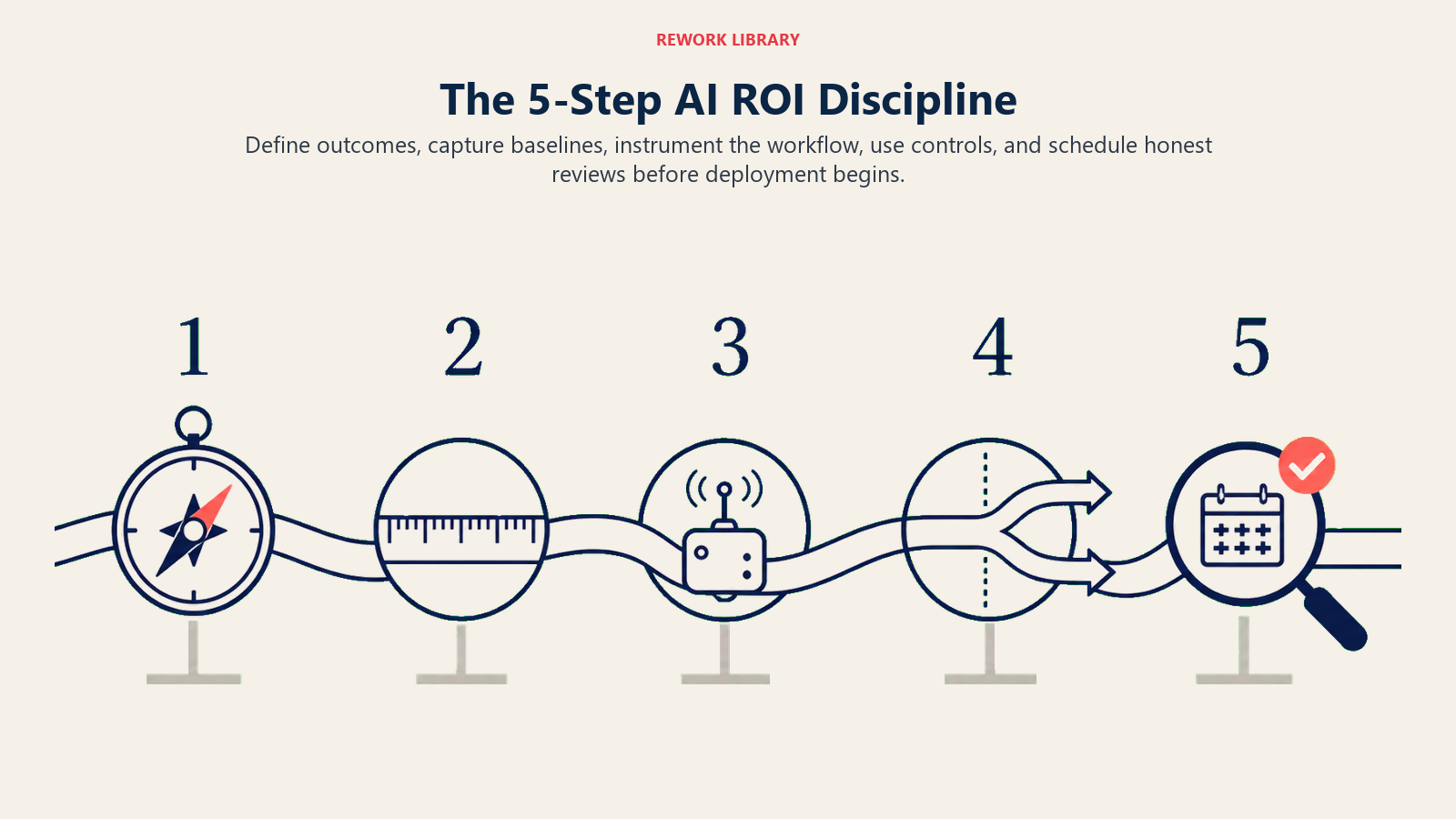
Langkah 1: Mengambil asas sebelum Anda bermula. Sebelum menerapkan mana-mana inisiatif AI, rakam keadaan semasa metrik yang Anda rancang untuk diukur. Kadar kemenangan, purata masa pengendalian, skor kepuasan pelanggan, kadar ralat, kos setiap penyelesaian, apa sahaja yang relevan. Gunakan kaedah yang sama yang akan Anda gunakan selepas penerapan. Lakukan ini dua hingga empat minggu sebelum beroperasi, bukan pada pagi Anda memasang suis.
Langkah 2: Takrifkan metrik kejayaan terlebih dahulu. Bersetuju tentang metrik mana yang akan digunakan untuk menilai inisiatif sebelum keputusan diketahui. Artikel Mengukur ROI Corak AI menyediakan templat metrik peringkat corak yang dipetakan terus kepada kriteria kejayaan yang telah dipersetujui. Ini menghapuskan bias pemilihan tentang mengukur apa sahaja yang kelihatan baik. Tulis kriteria kejayaan dalam dokumen yang diluluskan oleh kepimpinan. Inilah metrik yang akan Anda laporkan, tanpa mengira arah pergerakannya.
Langkah 3: Ukur pada 6 bulan dan 18 bulan. Pengukuran awal (60 hingga 90 hari pertama) merakam penggunaan dan petunjuk utama. Pengukuran jangka sederhana (6 bulan) menunjukkan sama ada keluk pembelajaran meratakan dan sama ada isyarat awal ditukarkan kepada hasil. Pengukuran jangka panjang (18 bulan) merakam nilai keadaan mantap. Setiap titik semak menceritakan bahagian cerita yang berbeza.
Langkah 4: Laporkan dengan jujur tentang apa yang Anda boleh dan tidak boleh atributkan. Bezakan antara "kami memerhati peningkatan ini" dan "kami percaya AI menyebabkan peningkatan ini." Tunjukkan kaedah pengatributan. Dokumentasikan faktor pengeliruan. Bentangkan julat anggaran dan bukannya ketepatan palsu. "AI menyumbang antara 8% dan 15% daripada peningkatan kadar kemenangan, berdasarkan perbandingan terkawal" lebih boleh dipercayai daripada "AI meningkatkan kadar kemenangan sebanyak 11%."
Langkah 5: Masukkan kos penuh. Bayaran lesen, masa pengawasan, pembetulan ralat, penyelenggaraan integrasi, reka bentuk semula aliran kerja, latihan. Semuanya. Bentangkan model kos penuh dan julat manfaat yang dianggarkan dengan jujur. Hasilnya mungkin ROI yang lebih sempit berbanding yang dijanjikan vendor. Nombor yang lebih sempit itu adalah nombor yang sebenar.
Analogi pelaburan infrastruktur
Sesetengah pelaburan AI tidak membuktikan ROI dalam erti kata tradisional. Dan itu adalah pendirian yang boleh dipertahankan.
Penghijrahan awan tidak menunjukkan ROI yang bersih apabila organisasi melaluinya. Hujah untuk berpindah ke AWS atau Azure bukan "inilah pengiraan bayar balik 18 bulan." Ia adalah "ini adalah infrastruktur yang diperlukan perniagaan untuk beroperasi pada skala moden." Kebanyakan organisasi membuat pelaburan dan mencari cara untuk membenarkannya sebagai infrastruktur, bukan sebagai projek dengan ROI yang boleh diukur.
Peralihan kepada tumpukan SaaS moden juga tidak menunjukkan ROI yang bersih. Berpindah daripada premis kepada Salesforce, Workday, atau ServiceNow memerlukan kos penghijrahan, kos latihan, dan bertahun-tahun gangguan sebelum keuntungan produktiviti terealisasi. Kewangan meluluskan pelaburan tersebut sebagai infrastruktur strategik.
Sesetengah pelaburan AI termasuk dalam kategori yang sama. Organisasi yang membina infrastruktur data, lapisan integrasi aliran kerja, dan keupayaan tadbir urus untuk beroperasi AI pada skala adalah membuat pelaburan infrastruktur. ROI bukan pada infrastruktur. Ia adalah pada keupayaan yang infrastruktur itu bolehkan. Kerangka Keputusan Bina vs. Beli vs. Integrasikan berguna di sini: pelaburan infrastruktur dipetakan kepada laluan "integrasikan" dalam model keputusan, di mana jumlah kos pemilikan (TCO) tiga tahun kelihatan sangat berbeza daripada kos Tahun 1 sahaja.
Ini bukan helah untuk mana-mana pelaburan AI yang tidak dapat membuktikan ROI. Ia adalah kategori yang sah untuk jenis pelaburan tertentu: kerja asas yang menjadikan pelaburan AI masa depan bernilai secara boleh diukur. Tetapi ia hendaklah dibentangkan sebagaimana adanya. "Ini adalah infrastruktur, dan kami berkomitmen untuk mengukur ROI pada kes penggunaan yang didayakannya sepanjang tiga tahun akan datang" adalah jujur. "Percayalah kami, ini akan membalik balik, kami hanya tidak boleh menunjukkannya lagi" adalah tidak.
Kejujuran membina kredibiliti lembaga pengarah
Terdapat sebab praktikal untuk bersikap jujur tentang kesukaran ROI melebihi integriti intelektual.
Apabila Anda memberitahu lembaga pengarah bahawa ROI AI adalah sukar untuk dibuktikan, dan kemudian menunjukkan kepada mereka kaedah pengukuran yang ketat dengan kaveat yang sesuai, Anda telah menunjukkan kecekapan. Anda tahu apa yang Anda tidak tahu. Anda telah memikirkan pengatributan dengan teliti. Anda mempunyai rancangan untuk memperbaiki pengukuran dari masa ke masa.
Bandingkan dengan pembentangan yang mendakwa ROI mudah dan bersih. Ahli lembaga pengarah yang canggih yang telah membaca laporan McKinsey yang sama yang Anda baca tahu bahawa kebanyakan tuntutan ROI AI adalah melambung-lambung. Penyelidikan State of AI McKinsey mendapati hanya kira-kira 5.5% organisasi melaporkan lebih daripada 5% EBIT yang boleh dikaitkan kepada AI, bermakna lembaga pengarah hampir pasti telah melihat jurang antara janji vendor dan keputusan yang diberikan sebelum Anda masuk ke bilik. Jika pembentangan Anda kelihatan seperti spreadsheet vendor daripada analisis kewangan yang jujur, Anda telah kehilangan kredibiliti.
Kejujuran intelektual dalam pelaporan ROI AI bukan kelemahan. Ia adalah perkara yang menjadikan semua yang Anda katakan boleh dipercayai.
Baca 5 Dimensi ROI AI untuk kerangka pengukuran lengkap merentas semua lima kategori. Baca Masa Dijimatkan vs. Impak Hasil untuk cabaran khusus menukarkan penjimatan masa kepada kes perniagaan. Baca Perbualan CFO tentang Belanjawan AI untuk cara membawa bingkai jujur ini ke dalam rundingan belanjawan tanpa kehilangan hujah. Dan lihat ROI mengikut Keupayaan ACE untuk bagaimana setiap keupayaan ACE (Ingest, Analyze, Predict, Generate, Execute) membawa kesukaran pengukuran yang berbeza dan jadual ROI yang berbeza.
Anda mungkin tidak boleh membuktikan sepenuhnya ROI AI Anda sekarang. Kebanyakan organisasi dalam kedudukan Anda tidak dapat melakukannya. Itu bukan alasan untuk berhenti mengukur atau berhenti melabur. Ia adalah alasan untuk membina infrastruktur pengukuran yang akan membolehkan Anda membuktikannya, secara tidak sempurna tetapi jujur, dari masa ke masa.
5 Peringkat Kematangan AI menunjukkan rupa "infrastruktur pengukuran" pada setiap peringkat, supaya Anda tahu apa yang sedang dibina. Dan Mengapa Kebanyakan Transformasi AI Gagal merangkumi corak yang lebih luas tentang keputusan yang membawa kepada jurang ROI sejak awal.
Soalan Lazim
Mengapa ROI AI sukar untuk dibuktikan?
ROI AI secara struktural sukar untuk dibuktikan kerana tujuh jurang pengatributan yang berbeza melemahkan kebanyakan percubaan pengukuran: asas pra-penerapan yang hilang, pencemaran pemboleh ubah serentak, masa pengukuran yang terlepas daripada keluk ROI, pemilihan metrik yang salah, pengecualian kos tersembunyi, pengembangan manfaat tidak ketara, dan bias pengesahan. Tiada satu pun daripada ini adalah masalah teknologi. Ia adalah masalah reka bentuk pengukuran yang mesti ditangani sebelum penerapan bermula.
Berapa peratus syarikat yang sebenarnya melihat ROI daripada AI?
Hanya 39% organisasi melaporkan impak EBIT peringkat perusahaan daripada penerapan AI, menurut penyelidikan State of AI McKinsey. Data Deloitte menunjukkan hanya 5.5% melaporkan lebih daripada 5% EBIT yang boleh dikaitkan kepada AI. Bahagian syarikat yang meninggalkan sebahagian besar projek AI melonjak daripada 17% pada 2024 kepada 42% pada 2025, dengan ROI yang tidak jelas dan jumlah kos disebutkan sebagai sebab utama.
Apakah AI J-curve?
AI J-curve menggambarkan jadual tipikal pulangan pelaburan AI: pelaburan awal dalam data, infrastruktur, dan pembangunan model mewujudkan beban kos awal sebelum nilai yang boleh diukur mula terealisasi. Kebanyakan organisasi memerlukan dua hingga empat tahun untuk merealisasikan pulangan daripada kes penggunaan AI yang tipikal, menurut penyelidikan Deloitte, jauh lebih lama daripada 7-12 bulan yang dijangkakan untuk kebanyakan pelaburan teknologi.
Apakah masalah asas dalam ROI AI?
Masalah asas adalah kegagalan untuk merakam metrik pra-penerapan sebelum alat AI beroperasi. Pada masa pasukan ingin menunjukkan ROI, tempoh pra-AI telah berlalu dan tidak boleh dibina semula. Tanpa asas sebenar, sebarang penambahbaikan yang diperhatikan selepas penerapan adalah tidak jelas: ia boleh mencerminkan sumbangan AI, peningkatan pasaran, impak pengambilan baharu, atau proses yang berubah. Penyelidikan MIT Sloan mengesahkan ini mengapa metrik teknikal mendominasi pelaporan AI sementara KPI perniagaan seperti ROI jarang diukur.
Kos tersembunyi apa yang biasanya diabaikan ROI AI?
Penerapan AI secara rutin mengecualikan masa pengawasan, buruh pembetulan ralat, penyelenggaraan integrasi, penalaan prompt apabila model dikemas kini, reka bentuk semula aliran kerja, dan kos latihan serta penggunaan berterusan. Spreadsheet vendor yang dibina semasa proses jualan hanya merangkumi bayaran lesen. Kos penuh penerapan AI biasanya 40-70% lebih tinggi daripada nilai kontrak sahaja.
Bagaimana ROI AI hendaklah dikaitkan apabila pelbagai pemboleh ubah berubah serentak?
Pendekatan minimum yang boleh dipercayai adalah eksperimen terkawal: sesetengah pengguna menerima alat AI, yang lain berfungsi sebagai kumpulan kawalan, dengan kohort yang dipadankan dan tempoh masa yang sama. Perbezaan hasil antara kumpulan adalah anggaran terbaik sumbangan AI. Jika eksperimen terkawal tidak boleh dilaksanakan, dokumentasikan semua faktor pengeliruan secara eksplisit dan bentangkan anggaran julat dengan alasan. Pengatributan separa yang dinyatakan dengan jujur lebih boleh dipercayai daripada tuntutan sebelum dan selepas yang tidak dibezakan.
Apakah peranan skeptik yang dilantik dalam pelaporan ROI AI?
Skeptik yang dilantik adalah seseorang yang tugasnya eksplisit adalah mencari bukti AI tidak berfungsi, berbanding bukti bahawa ia berfungsi. Pemeriksaan struktural ini mengatasi bias pengesahan, yang menyebabkan kepimpinan memilih metrik yang memihak, mengabaikan keputusan negatif, dan mengaitkan penambahbaikan kepada AI tanpa kawalan yang mencukupi. Jika skeptik yang dilantik tidak dapat menemui bukti kegagalan, laporan ROI positif membawa kredibiliti yang jauh lebih tinggi dengan lembaga pengarah.
Adakah boleh dipertahankan untuk membentangkan AI sebagai pelaburan infrastruktur tanpa nombor ROI yang jelas?
Ya, untuk kategori pelaburan asas tertentu: infrastruktur data, lapisan integrasi aliran kerja, dan keupayaan tadbir urus yang membolehkan kes penggunaan AI masa depan. Bingkai yang boleh dipertahankan adalah: "Ini adalah infrastruktur. Kami berkomitmen untuk mengukur ROI pada kes penggunaan yang didayakannya sepanjang tiga tahun akan datang." Ini berbeza daripada "percayalah kami, ia akan membalik balik." Ia memerlukan komitmen pengukuran masa depan yang spesifik yang dilampirkan kepada kelulusan pelaburan infrastruktur.

Co-Founder, Rework.com
On this page
- Pendirian jujur ACE Framework tentang ROI AI
- Sebab 1: Masalah asas
- Sebab 2: Masalah pengatributan
- Sebab 3: Masalah kelambatan
- Sebab 4: Masalah metrik yang salah
- Sebab 5: Masalah kos tersembunyi
- Sebab 6: Masalah manfaat tidak ketara
- Sebab 7: Bias pengesahan
- 7 Jurang Pengatributan ROI
- Inilah bahagian yang paling sukar dalam transformasi AI
- Disiplin ROI 5 langkah
- Analogi pelaburan infrastruktur
- Kejujuran membina kredibiliti lembaga pengarah