Menyampaikan Perubahan AI kepada Pekerja: Rangka Kerja COO dan CHRO

Turn this article into takeaways for your work.


Each assistant summarizes the article only for you and suggests best practices for your work.
Pelancaran AI telah dirancangkan. Teknologi sudah sedia. Belanjawan diluluskan. Rakan pelaksanaan terlibat. Garis masa dikunci.
Perkara terakhir yang difikirkan oleh kebanyakan ketua transformasi ialah cara memberitahu pasukan.
Kemudian khabar angin Slack bermula. "Adakah mereka menggantikan lantai sokongan pelanggan?" "Adakah anda dengar kita mendapat sesuatu yang berkaitan AI?" "Saya dengar daripada seseorang dalam kewangan bahawa pekerjaan kita sedang diautomasikan." Dua minggu sebelum go-live, tiga daripada pemain terbaik anda mengemas kini profil LinkedIn mereka secara senyap. Seorang menyerahkan notis pada minggu pelancaran.
Teknologinya berfungsi. Pelancarannya gagal.
Ini bukan hipotetikal. Kajian 2023 oleh Salesforce mendapati 57% pekerja mengatakan mereka tidak menerima latihan yang mencukupi tentang alat AI di tempat kerja. Bahagian teknologi kebanyakan program AI mendapat 80% perhatian perancangan. Bahagian manusia mendapat selebihnya, jika ada. Ketidakseimbangan itulah mengapa kebanyakan transformasi AI gagal pada penggunaan, bukan pada pelaksanaan.
Memahami ACE Framework (Ingest, Analyze, Predict, Generate, Execute) membantu ketua komunikasi menerangkan apa yang AI sebenarnya lakukan dalam setiap aliran kerja, yang menjadikan mesej impak fungsi jauh lebih spesifik dan boleh dipercayai berbanding bahasa AI generik.
Artikel ini memberi anda rangka kerja komunikasi berstruktur untuk penggunaan AI: bila hendak berkomunikasi, apa yang hendak dikatakan, saluran mana yang digunakan, dan apa yang akan salah jika anda melangkau langkah-langkah.
4 Mod Kegagalan Komunikasi
Fakta Utama: Jurang Komunikasi AI
- 44% pekerja melaporkan AI sudah digunakan di tempat kerja mereka, namun hanya 22% mengatakan kepimpinan telah menjelaskan bagaimana ia akan diterapkan. (Gallup)
- Kepercayaan pekerja terhadap AI generatif yang disediakan syarikat jatuh 31% antara Mei dan Julai 2025 dalam organisasi di mana pengurus tidak dapat menjawab soalan pekerja tentang AI dengan kredibel. (HBR)
- 57% pekerja mengatakan mereka tidak menerima latihan yang mencukupi tentang alat AI di tempat kerja. (Salesforce)
Sebelum mereka bentuk pendekatan yang betul, ada baiknya mengenali rupa pendekatan yang salah. Mereka lebih biasa daripada yang anda sangka, dan semua boleh dielakkan.
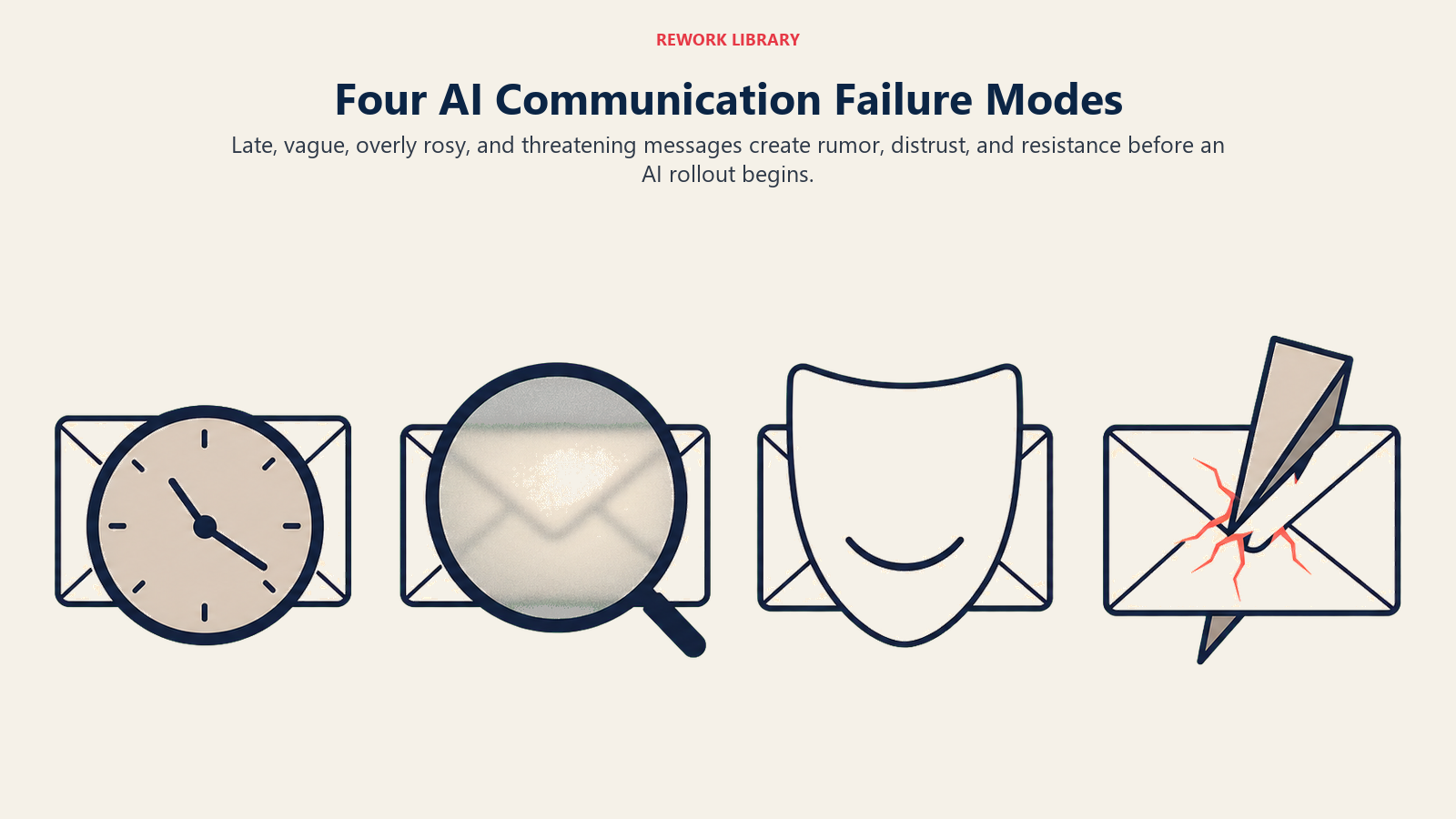
Mod kegagalan 1: Terlambat. Pekerja mendapati alat AI baru sudah aktif kerana ia muncul dalam aliran kerja mereka, atau mereka mendengar tentangnya daripada seseorang di luar syarikat, atau wakil vendor menyebutnya dalam perbualan. Kerosakan dari pelancaran mengejut bukan hanya kejutan. Ia adalah isyarat bahawa kepimpinan tidak menganggap pekerja layak dimaklumkan. Isyarat itu bertahan lama selepas pelancaran selesai.
Mod kegagalan 2: Terlalu kabur. "Kami sedang meneroka peluang AI untuk meningkatkan operasi kami." Ini tidak menyampaikan apa-apa, memberi isyarat bahawa kepimpinan tidak mempunyai pelan, dan membakar spekulasi. Mesej kabur lebih teruk daripada tiada mesej kerana ia secara aktif mengelirukan tentang keadaan persediaan.
Mod kegagalan 3: Terlalu optimistik. "Ini hanya akan membantu anda. Tiada pekerjaan yang berisiko. Semua orang akan mempunyai lebih banyak masa untuk kerja yang menarik." Pekerja yang pernah melalui pelancaran teknologi sebelum ini tidak akan mempercayainya. Apabila pembingkaian optimistik ternyata sebahagiannya salah (dan hampir selalu demikian), kerosakan kepercayaan berganda. Pekerja tidak mengharapkan kesempurnaan. Mereka mengharapkan kejujuran.
Mod kegagalan 4: Terlalu mengancam. Pengumuman yang mengikat penggunaan AI kepada metrik prestasi, semakan headcount, atau penanda aras produktiviti sebelum pekerja mempunyai masa untuk melatih dan menyesuaikan diri. Ini mewujudkan respons pematuhan, bukan respons penggunaan. Orang akan menggunakan alat untuk memenuhi metrik penjejakan sambil melakukan kerja sebenar dengan cara lama.
Benang yang sama merentasi keempat-empatnya: kepimpinan berkomunikasi untuk mengurus kebimbangan organisasi, bukan kebimbangan pekerja. Penyelidikan Harvard Business Review (HBR) mendapati bahawa walaupun 96% eksekutif merasakan desakan untuk menggabungkan AI, lebih daripada dua pertiga pekerja meja tidak mencuba AI di tempat kerja, dengan 93% tidak mempercayainya sepenuhnya. Penyelesaiannya adalah mereka bentuk komunikasi yang berpusatkan pengalaman praktikal pekerja, bukan objektif mesej organisasi.
Tetingkap Pengumuman
Bila hendak mengumumkan bukan keputusan pertimbangan. Penyelidikan tentang pengurusan perubahan teknologi adalah konsisten: umumkan sebelum penggunaan, bukan selepas, dan berikan masa yang cukup untuk pekerja menyerap perubahan sebelum ia mendarat dalam aliran kerja mereka.
Tetingkap sasaran adalah 4 hingga 6 minggu sebelum go-live. Ini bukan sewenang-wenangnya.
Empat minggu cukup lama untuk pekerja memproses berita, bertanya soalan, dan mendapat kejelasan sebelum alat itu muncul dalam aliran kerja mereka. Cukup lama untuk latihan dijadualkan dan dimulakan. Cukup lama untuk kilang khabar angin menenangkan selepas pengumuman awal.
Enam minggu adalah kira-kira tepi luar. Melepasi itu, jurang antara pengumuman dan go-live mewujudkan kegelisahannya sendiri. "Bila ini sebenarnya berlaku?" menjadi sumbernya sendiri ketidakpastian.
Tetingkap pengumuman penting kerana pekerja yang mengetahui perubahan AI pada hari yang sama alat itu go-live mengalami perubahan sebagai sesuatu yang dilakukan kepada mereka. Pekerja yang mengetahui 4 hingga 6 minggu lebih awal mengalaminya sebagai sesuatu yang mereka diajak masuk.
Perbezaan pembingkaian itu membentuk tingkah laku penggunaan selama berbulan-bulan selepas pelancaran.
Struktur 3-Mesej
Tidak semua komunikasi AI adalah mesej yang sama. Satu e-mel all-hands yang cuba merangkumi strategi, impak peranan, dan arahan latihan akan mengatasi beberapa khalayak dan kurang memaklumkan yang lain. Struktur yang betul adalah tiga mesej yang berbeza, masing-masing dengan tujuan, khalayak, dan saluran yang spesifik.
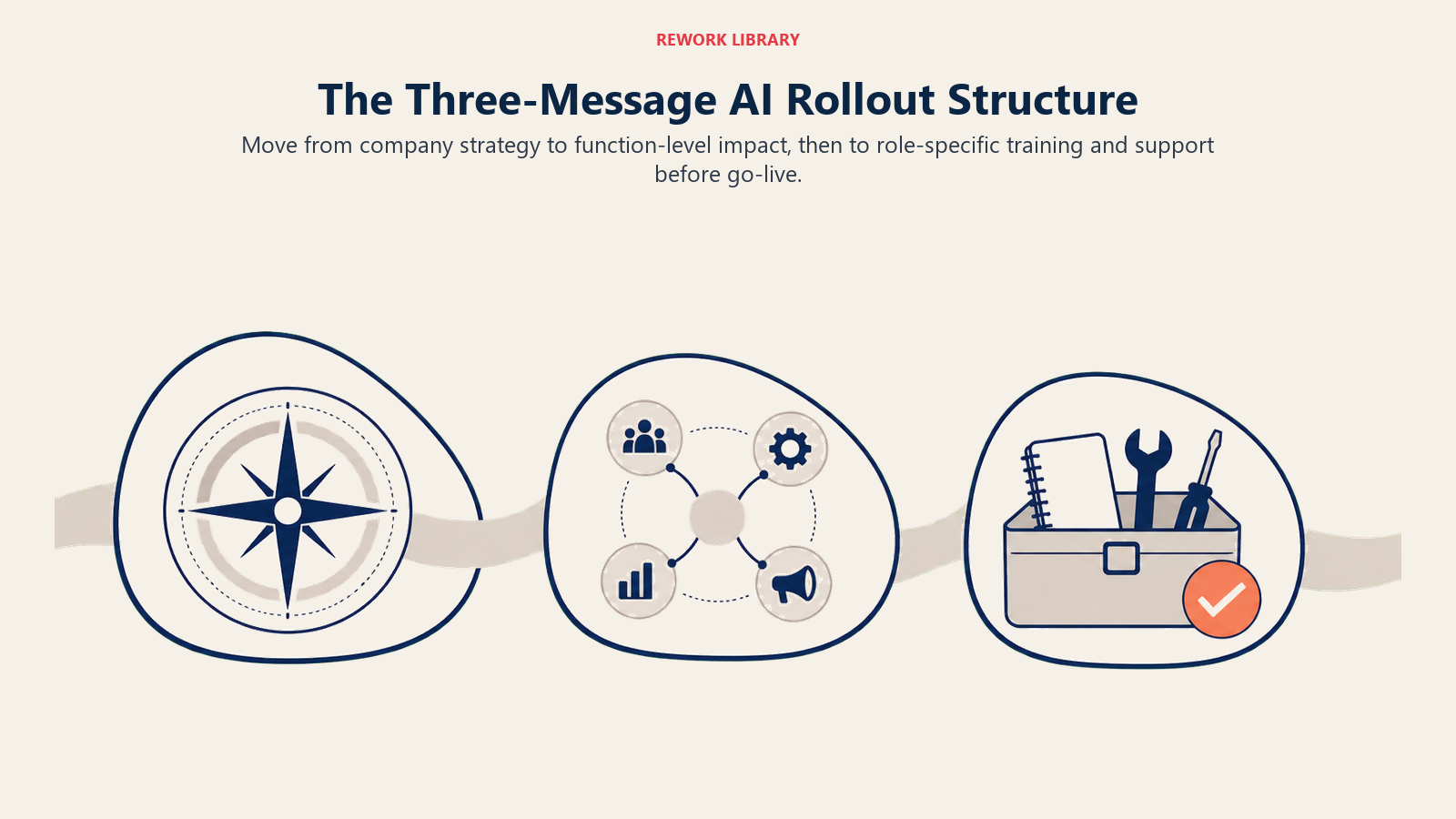
Mesej 1: Strategik (Mengapa kami melakukan ini)
Mesej ini menjawab soalan yang akan ditanya setiap pekerja secara senyap: "Mengapa syarikat melakukan ini, dan apa maksudnya untuk masa depan saya di sini?"
Ia harus merangkumi:
- Masalah atau peluang perniagaan yang ditangani oleh penggunaan AI ini
- Mengapa sekarang (konteks pasaran, tekanan persaingan, keperluan operasi)
- Apakah komitmen eksplisit syarikat kepada pekerja dalam peralihan ini (latihan, sokongan penggunaan semula, garis masa evolusi peranan)
- Rupa kejayaan dari perspektif syarikat
Mesej ini dimiliki oleh ketua pegawai eksekutif (CEO) atau ketua pegawai operasi (COO), bukan oleh pasukan AI atau IT. Kanan penyampai memberi isyarat keseriusan komitmen. Jika VP Teknologi menyampaikan pengumuman strategik, mesej tersirat adalah bahawa ini adalah projek IT. Jika CEO menyampaikannya, mesej tersirat adalah bahawa ini adalah keutamaan seluruh syarikat. Artikel Ketakutan Penggantian: Topik yang Tidak Selesa merangkumi cara memilih postur yang jujur dan betul sebelum mesej strategik ditulis, kerana postur menentukan sama ada mesej mendarat sebagai kepimpinan atau sebagai spin.
Saluran: mesyuarat all-hands syarikat atau video all-hands segerak. Bukan e-mel. Mesej ini perlu disampaikan secara langsung supaya pekerja dapat mendaftar komitmen kehadiran kepimpinan dan mendengar nada, bukan hanya teks.
Mesej 2: Fungsi (Apa yang berubah untuk pasukan anda)
Mesej ini adalah khusus peranan dan khusus pasukan. Ia menjawab: "Baiklah, tetapi apa yang sebenarnya berubah untuk saya?"
Ia harus merangkumi:
- Aliran kerja atau alat khusus mana yang berubah dalam pasukan ini
- Apa yang kekal sama
- Latihan apa yang tersedia dan diperlukan
- Siapa yang dihubungi dengan soalan khusus peranan
- Garis masa untuk pelancaran pasukan khusus
Mesej ini tidak boleh datang dari kepimpinan pusat. Ia mesti datang dari pengurus langsung, kerana hanya pengurus yang mengetahui konteks aliran kerja khusus untuk pasukan mereka. Komunikasi pusat yang mengatakan "AI akan mengubah cara pasukan sokongan mengendalikan penghalaan tiket" tidak bermakna apa-apa kepada wakil sokongan yang perlu tahu sama ada mereka masih yang menyemak bendera atau sama ada penghalaan berlaku secara automatik.
Saluran: sesi pasukan yang dipimpin pengurus. Ini harus menjadi perbincangan, bukan pembentangan. Pengurus harus dilengkapi dengan panduan soal-jawab, tetapi formatnya harus membolehkan pekerja menanya soalan khusus tentang kerja khusus mereka.
Mesej 3: Operasi (Cara menggunakannya)
Ini adalah mesej latihan. Ia merangkumi cara alat berfungsi, kes penggunaan yang diluluskan, asas polisi (data apa yang boleh dimasukkan, output mana yang memerlukan semakan manusia, siapa yang meluluskan kes tepi), dan di mana mendapat bantuan.
Saluran: sesi latihan formal, dokumentasi, dan waktu pejabat susulan. Mesej ini kurang emosional dan lebih prosedural, jadi ia boleh disampaikan oleh pasukan pelaksanaan AI atau latihan yang dipimpin vendor.
Kesilapan adalah menyampaikan Mesej 3 sebelum Mesej 1. Apabila pekerja menerima maklumat cara-penggunaan sebelum mereka menerima mengapa dan apa-yang-berubah-untuk-saya, mereka mengalami latihan sebagai persediaan pematuhan untuk sesuatu yang dikenakan kepada mereka.
Pelan Komunikasi AI 4-Fasa
Pelan Komunikasi AI 4-Fasa menstrukturkan komunikasi pelancaran AI sebagai empat fasa berturutan berbanding pengumuman tunggal: Fasa 1 (Pengumuman strategik, peringkat CEO, 4-6 minggu pra-pelancaran, melalui all-hands), Fasa 2 (Taklimat fungsi, dipimpin pengurus, khusus pasukan, format perbincangan), Fasa 3 (Latihan operasi, khusus alat, format cara-penggunaan), dan Fasa 4 (Irama berterusan, kemas kini penggunaan bulanan dan semakan evolusi peranan suku tahunan). Setiap fasa mempunyai pemilik, format, dan kebergantungan masa yang berbeza. Melangkau Fasa 1 dan 2 dan pergi terus ke Fasa 3 adalah kesilapan yang paling biasa, menghasilkan respons pematuhan berbanding respons penggunaan.
Petikan: "Hanya 22% pekerja yang syarikat mereka sudah menggunakan AI mengatakan kepimpinan telah menjelaskan bagaimana ia akan diterapkan. Yang 78% lagi tidak menunggu secara pasif. Mereka mengisi kesunyian itu dengan tafsiran kes terburuk mereka." (Gallup)
Petikan: "Kepercayaan pekerja terhadap AI generatif yang disediakan syarikat jatuh 31% dalam organisasi di mana pengurus tidak dapat menjawab soalan pekerja dengan kredibel. Persediaan pengurus adalah pelaburan komunikasi leverage tunggal tertinggi dalam pelancaran AI." (HBR)
Petikan: "Pekerja yang mengetahui perubahan AI 4-6 minggu sebelum go-live mengalami perubahan sebagai sesuatu yang mereka diajak masuk. Pekerja yang mengetahui pada hari alat muncul dalam aliran kerja mereka mengalaminya sebagai sesuatu yang dilakukan kepada mereka. Perbezaan pembingkaian itu membentuk tingkah laku penggunaan selama berbulan-bulan."
| Fasa | Pemilik | Masa | Saluran | Tujuan |
|---|---|---|---|---|
| 1. Strategik | CEO / COO | 4-6 minggu pra-pelancaran | All-hands langsung | Mengapa kami melakukan ini, komitmen kepada pekerja |
| 2. Fungsi | Pengurus langsung | 2-3 minggu pra-pelancaran | Sesi perbincangan pasukan | Apa yang berubah untuk pasukan khusus ini |
| 3. Operasi | Pasukan AI / vendor | 1-2 minggu pra-pelancaran | Sesi latihan | Cara menggunakannya, polisi, kes penggunaan yang diluluskan |
| 4. Berterusan | Pengurus + pasukan AI | Bulanan / suku tahunan | Mesyuarat pasukan + kemas kini | Penggunaan, evolusi peranan, gelung maklum balas |
Analisis Rework: Berdasarkan corak program komunikasi AI, organisasi yang menyampaikan keempat-empat fasa secara berturutan secara konsisten mencapai kadar penggunaan 90 hari yang lebih tinggi berbanding yang bermula pada Fasa 3. Fasa strategik dan fungsi bukan "baik untuk ada" kerja awal. Ia adalah prasyarat untuk pekerja bersedia secara psikologi untuk menyerap latihan operasi.
Pengupayaan Pengurus: Langkah Paling Penting yang Tiada Siapa Lakukan
Struktur 3-mesej berfungsi apabila mesej tengah benar-benar disampaikan dengan baik. Dan itu bergantung sepenuhnya kepada pengurus.
Pengurus adalah nod komunikasi leverage tunggal tertinggi dalam pelancaran AI. Mereka menjawab soalan yang tidak dapat dijangka kepimpinan. Mereka menterjemah mesej strategik kepada realiti khusus kumpulan kerja. Mereka adalah orang yang dipercayai pekerja untuk memberitahu mereka kebenaran tentang keselamatan kerja. Dan mereka hampir selalu merupakan penyampai yang paling kurang bersedia dalam program AI. Penyelidikan HBR 2025 tentang membina kepercayaan pekerja dalam AI mendapati kepercayaan terhadap AI generatif yang disediakan syarikat jatuh 31% antara Mei dan Julai 2025 dalam organisasi di mana pengurus tidak dapat menjawab soalan pekerja dengan kredibel, menunjuk langsung kepada persediaan pengurus sebagai tuas kepercayaan.
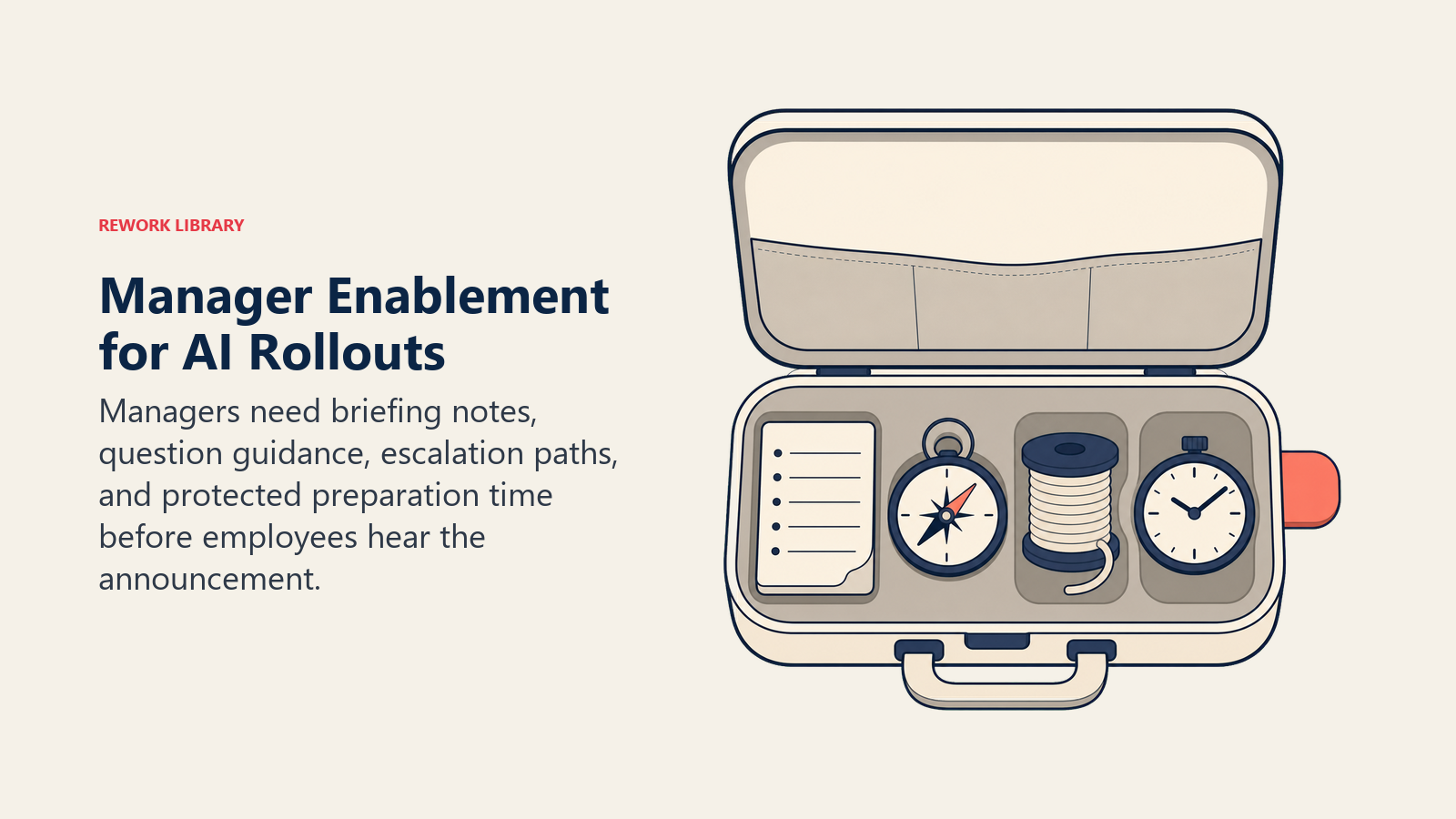
Apa yang diperlukan pengurus untuk menyampaikan Mesej 2 dengan berkesan:
Panduan soal-jawab. Skrip sebenar untuk soalan yang sukar: "Adakah pekerjaan saya akan hilang?" "Adakah prestasi saya akan diukur berbanding penanda aras berbantuan AI?" "Bagaimana jika saya tidak mahir dengan teknologi?" Soalan-soalan itu boleh diramalkan. Jawapan perlu disediakan, jujur, dan konsisten merentasi pengurus. Artikel Evolusi Peranan AI: Apa yang Berubah untuk Siapa memberi pengurus jawapan khusus fungsi yang mereka perlukan untuk setiap pasukan, berbanding bergantung pada mesej generik yang tidak menangani apa yang sebenarnya dipedulikan oleh wakil atau penganalisis di hadapan mereka.
Kebenaran eksplisit untuk berkata "Saya tidak tahu." Tiada yang menghancurkan kepercayaan pekerja lebih cepat daripada pengurus yang jelas tidak mengetahui jawapannya tetapi tidak mahu mengakuinya. Pengurus memerlukan pembinaan kemahiran yang mengakui had maklumat yang ada dan memberi mereka bahasa untuk ketidakpastian: "Inilah yang saya tahu. Inilah yang belum ada jawapannya. Inilah bila kita akan tahu lebih banyak."
Akses kepada orang yang mengetahui. Pengurus yang mendengar soalan yang tidak dapat dijawab memerlukan laluan eskalasi yang jelas. Siapa yang mereka e-mel? Siapa yang mereka jadualkan masa untuk mendapat jawapan sebelum kembali kepada pasukan?
Masa persediaan. Pengurus harus menerima kandungan Mesej 1 sekurang-kurangnya 5 hari perniagaan sebelum pengumuman all-hands, supaya mereka mempunyai masa untuk menyerapnya dan bersedia untuk soalan susulan sebelum pekerja bertanya.
Jika anda melakukan satu perkara secara berbeza selepas membaca artikel ini, jadilah ini: jalankan sesi persediaan pengurus sebelum pengumuman all-hands. Bawa pengurus melalui mesej-mesej, munculkan soalan yang sukar, dan pastikan mereka dapat menjawab 10 soalan teratas dengan cara yang jujur dan konsisten.
Pelancaran Dalaman Copilot Microsoft
Pelancaran Copilot untuk Microsoft 365 oleh Microsoft kepada tenaga kerja dalamannya pada 2023 menawarkan kajian kes yang berguna. Microsoft menjalankan perintis dalaman yang meluas dengan ribuan pekerja sebelum pelancaran yang lebih luas, mengumpulkan data penggunaan, titik geseran, dan maklum balas yang membentuk produk dan strategi komunikasi.
Keputusan komunikasi utama dalam pelancaran dalaman: taklimat pengurus berstruktur sebelum pengumuman pekerja, dokumentasi eksplisit tentang apa yang bukan Copilot (bukan alat pemantauan prestasi, bukan alat penilaian penggantian), dan mekanisme maklum balas berbilang saluran yang memberi pekerja cara untuk mengemukakan masalah tanpa melalui saluran formal.
Apa yang pelancaran tidak capai dengan sempurna: komunikasi impak khusus peranan adalah tidak sekata. Pasukan dengan aliran kerja yang sangat berstruktur (undang-undang, kewangan, kejuruteraan) mempunyai jawapan yang lebih jelas kepada "apa yang berubah untuk saya" berbanding pasukan dengan corak kerja yang lebih pelbagai. Pengajaran: kekhususan fungsi dalam Mesej 2 memerlukan kerja yang eksplisit untuk dibangunkan, dan ia tidak boleh diasumsikan daripada templat komunikasi pusat.
Irama Komunikasi Berterusan
Pelancaran AI bukan pengumuman sekali sahaja. Komunikasi awal mewujudkan kontrak dengan pekerja tentang cara anda akan berkomunikasi ke hadapan. Melanggar kontrak itu adalah apa yang menyebabkan keruntuhan penggunaan pertengahan pelancaran.
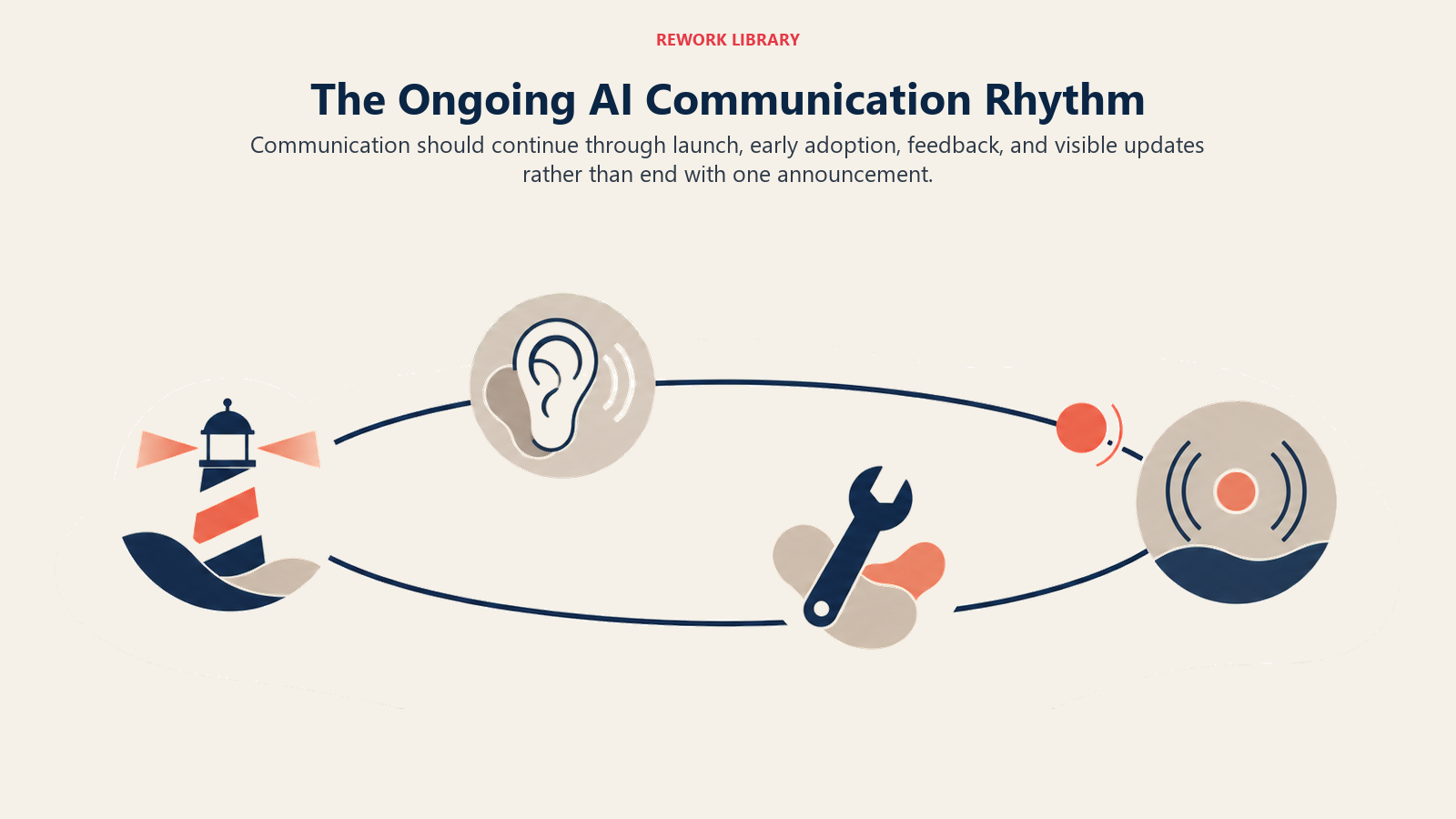
Irama berterusan yang berfungsi:
Kemas kini penggunaan bulanan. Apa yang digunakan? Apa geseran yang dialami pasukan? Apa yang berubah dalam 30 hari akan datang? Ini tidak perlu formal. Pengurus dalam mesyuarat pasukan yang merangkumi penggunaan AI selama 10 minit sudah mencukupi, jika ia berlaku secara konsisten.
Semakan evolusi peranan suku tahunan. Tiga bulan kemudian, apa yang sebenarnya berubah tentang cara kerja dilakukan? Kemahiran apa yang digunakan lebih banyak? Apakah jawapan jujur kepada soalan yang ditanya pekerja pada minggu pertama: "Adakah peranan saya berubah?" Perbualan ini memerlukan kejujuran tentang hasil, bukan hanya jaminan tentang niat. Evolusi Peranan AI: Apa yang Berubah untuk Siapa memberi anda butiran khusus fungsi yang menjadikan semakan suku tahunan ini konkrit berbanding kemas kini kemajuan yang kabur.
Saluran maklum balas terbuka. Bukan tinjauan kepuasan. Saluran sebenar di mana pekerja boleh melaporkan: AI membuat kesilapan di sini, aliran kerja ini menimbulkan masalah, saya mempunyai idea tentang cara ini boleh berfungsi lebih baik. Saluran perlu dipantau dan kelihatan ditindaki.
Apa yang perlu dielakkan dalam irama berterusan: metrik yang mengukur penggunaan AI tanpa mengukur hasil. Pasukan yang ditekan untuk menghantar output berbantuan AI akan menemukan cara untuk memenuhi metrik tanpa benar-benar menggunakan alat itu. Metrik penggunaan berfungsi apabila ia dipasangkan dengan metrik hasil, bukan apabila digunakan sebagai tekanan prestasi.
Tingkah Laku yang Perlu Dielakkan
Senarai pendek tingkah laku komunikasi khusus yang secara boleh dipercayai menjejaskan program penggunaan AI, walaupun teknologinya kukuh:
Pelancaran mengejut. Sebarang kes di mana pekerja menemui alat AI yang secara aktif membentuk aliran kerja mereka sebelum sebarang komunikasi berlaku. Ini termasuk pengguna perintis yang dibawa masuk sebagai "pengamal awal" tanpa diberitahu apa yang mereka uji dan mengapa.
Bahasa eksekutif yang memanggil AI "transformatif" tanpa butiran. Perkataan transformasi dalam konteks komunikasi pekerja dianggap sebagai amaran. Jika anda perlu menggunakan pembingkaian itu, pasangkannya dengan butiran peringkat peranan tertentu sejurus selepas.
Metrik penggunaan yang menghukum manusia. "Menjelang S2, semua respons menghadap pelanggan mesti berbantuan AI" sebagai metrik prestasi sebelum latihan selesai. Ini mewujudkan tingkah laku permainan, bukan tingkah laku penggunaan.
Komunikasi sekali sahaja tanpa tindakan susulan. Mesyuarat pengumuman diikuti dengan kesunyian. Pekerja mentafsir kesunyian sebagai pengesahan bahawa pelan masih dalam keadaan tidak menentu, atau bahawa ada sesuatu yang tidak diberitahu kepada mereka.
Menganggap komunikasi AI sebagai komunikasi IT. Menghala pengumuman melalui pasukan teknologi atau fungsi pengurusan perubahan anda memberi isyarat kepada pekerja bahawa ini adalah projek teknologi, bukan perubahan perniagaan. Kepimpinan perniagaan perlu memiliki mesej.
Mendapatkannya Betul
Penggunaan AI hidup atau mati atas kualiti program komunikasi. Teknologinya adalah bahagian yang mudah. Artikel Literasi AI: Kemahiran Tempat Kerja Baru memberi anda struktur latihan yang menjadikan mesej cara-penggunaan operasi sesuatu yang pekerja benar-benar serap, berbanding sesi sekali sahaja yang mereka lupakan pada bulan kedua.
Manusia lebih sukar. Pekerja yang tidak mempercayai pelancaran AI sebelum ia bermula akan menemukan cara untuk mengelaknya, menggunakannya terlalu sedikit, atau menyalahkannya atas masalah yang mempunyai punca lain. Pekerja yang berasa dimaklumkan, dihormati, dan disokong dalam peralihan akan secara aktif membantu anda menemukan masalah dan meningkatkan penggunaan.
Rangka kerja di sini tidak rumit. Umumkan lebih awal. Sampaikan tiga mesej yang berbeza melalui tiga saluran yang berbeza. Lengkapkan pengurus sebelum all-hands. Bina irama berterusan yang menganggap komunikasi sebagai tanggungjawab yang berterusan, bukan acara pelancaran.
Untuk bahagian manusia kerja ini, bacaan berguna seterusnya adalah Ketakutan Penggantian: Topik yang Tidak Selesa dan Literasi AI: Kemahiran Tempat Kerja Baru. Kebanyakan soalan yang ditanya pekerja dalam sesi pengumuman strategik tentang keselamatan kerja menunjuk langsung kepada dua topik tersebut. Dan Mengapa Kebanyakan Transformasi AI Gagal merangkumi corak yang lebih luas tentang mengapa bahagian manusia cenderung kurang sumber dalam program AI.
Soalan Lazim
Bila anda harus mengumumkan pelancaran AI kepada pekerja?
Umumkan 4-6 minggu sebelum go-live. Empat minggu memberi pekerja masa yang cukup untuk memproses berita, bertanya soalan, dan memulakan latihan sebelum alat itu muncul dalam aliran kerja mereka. Enam minggu adalah tepi luar, melepasi itu jurang mewujudkan kegelisahan "bila ini sebenarnya berlaku?" tersendiri. Pekerja yang mengetahui tentang perubahan AI sebelum penggunaan mengalaminya sebagai diajak masuk keputusan. Pekerja yang mengetahui pada hari pelancaran mengalaminya sebagai sesuatu yang dilakukan kepada mereka.
Apakah empat mod kegagalan komunikasi AI?
Empat mod kegagalan adalah: Terlambat (pekerja mendapati alat sudah aktif), Terlalu kabur ("kami sedang meneroka peluang AI"), Terlalu optimistik ("tiada pekerjaan yang berisiko, semua orang akan mempunyai lebih banyak masa untuk kerja yang menarik"), dan Terlalu mengancam (penggunaan dikaitkan dengan metrik prestasi sebelum latihan selesai). Semua empat mempunyai punca yang sama: kepimpinan berkomunikasi untuk mengurus kebimbangan organisasi berbanding kebimbangan pekerja.
Apakah struktur komunikasi 3-mesej untuk pelancaran AI?
Tiga mesej adalah: Mesej 1 (Strategik, disampaikan oleh CEO/COO di all-hands langsung, merangkumi mengapa syarikat melakukan ini dan komitmen kepada pekerja), Mesej 2 (Fungsi, disampaikan oleh pengurus langsung dalam perbincangan pasukan, merangkumi apa yang berubah secara khusus untuk pasukan ini), dan Mesej 3 (Operasi, disampaikan oleh pasukan AI atau vendor dalam sesi latihan, merangkumi cara menggunakan alat). Menyampaikan Mesej 3 sebelum Mesej 1 dan 2 menghasilkan tingkah laku pematuhan, bukan tingkah laku penggunaan.
Mengapa persediaan pengurus adalah langkah paling penting dalam komunikasi pelancaran AI?
57% pekerja tidak menerima latihan yang mencukupi tentang alat AI di tempat kerja, dan kepercayaan terhadap AI yang disediakan syarikat jatuh 31% dalam organisasi di mana pengurus tidak dapat menjawab soalan pekerja. Pengurus adalah antara muka antara pengumuman strategik dan pengalaman harian pekerja. Memberi pengurus panduan soal-jawab, kebenaran eksplisit untuk berkata "saya tidak tahu," dan akses kepada laluan eskalasi sebelum pengumuman all-hands mencegah kegagalan kepercayaan yang paling merosakkan dalam pelancaran AI.
Apakah yang perlu mengandungi dokumen FAQ AI?
FAQ AI yang menghadap pekerja (soalan lazim) harus secara langsung menangani soalan yang sebenarnya ditanya oleh pekerja: Adakah akan ada pemberhentian kerja? Adakah prestasi saya dijejaki oleh AI? Data apa yang boleh saya masukkan ke dalam alat AI? Apa yang berlaku jika AI membuat kesilapan yang saya hantar kepada pelanggan? FAQ harus dikemas kini apabila keadaan berubah, disiarkan di suatu tempat yang boleh diakses bila-bila masa (pekerja memproses kebimbangan ini pada waktu malam), dan ditulis untuk memberi jawapan separa yang jujur berbanding bukan-jawapan yang menenangkan.
Bagaimana rupa irama komunikasi berterusan untuk AI?
Kemas kini penggunaan bulanan merangkumi apa yang digunakan, geseran yang dialami pasukan, dan apa yang berubah dalam 30 hari akan datang. Semakan evolusi peranan suku tahunan memberi jawapan jujur kepada apa yang sebenarnya berubah tentang cara kerja dilakukan dan kemahiran yang digunakan lebih banyak. Saluran maklum balas terbuka membolehkan pekerja melaporkan ralat AI, masalah aliran kerja, dan idea penambahbaikan. Irama berterusan menganggap komunikasi AI sebagai tanggungjawab yang berterusan, bukan acara pelancaran yang berakhir selepas minggu go-live.

Co-Founder, Rework.com
On this page
- 4 Mod Kegagalan Komunikasi
- Tetingkap Pengumuman
- Struktur 3-Mesej
- Mesej 1: Strategik (Mengapa kami melakukan ini)
- Mesej 2: Fungsi (Apa yang berubah untuk pasukan anda)
- Mesej 3: Operasi (Cara menggunakannya)
- Pelan Komunikasi AI 4-Fasa
- Pengupayaan Pengurus: Langkah Paling Penting yang Tiada Siapa Lakukan
- Pelancaran Dalaman Copilot Microsoft
- Irama Komunikasi Berterusan
- Tingkah Laku yang Perlu Dielakkan
- Mendapatkannya Betul