AI Content Operator: Menskalakan Kandungan SEO untuk SaaS Tanpa Tenggelam dalam Output Biasa-biasa
Turn this article into takeaways for your work.


Each assistant summarizes the article only for you and suggests best practices for your work.
Syarikat SaaS dengan carian organik yang kukuh mempunyai kelebihan struktur. CAC (Customer Acquisition Cost) yang lebih rendah, kitaran jualan yang lebih pendek, dan pipeline yang berganda dari semasa ke semasa dan bukannya memerlukan perbelanjaan berterusan untuk dikekalkan. Syarikat PLG (product-led growth) yang mendapat kedudukan untuk kategori masalah terasnya mendapat pendaftaran pada $8-15 setiap percubaan berbanding $80-150 untuk pemerolehan berbayar. Ekonominya cukup berbeza sehingga dua syarikat yang sebaliknya sama boleh mempunyai tempoh bayaran balik CAC yang berbeza dua tahun. Penanda aras SaaS OpenView mengesahkan bahawa syarikat PLG menjana 1.7x lebih banyak keuntungan kasar setiap dolar perbelanjaan jualan dan pemasaran, dengan kandungan organik menjadi pemacu utama kecekapan tersebut. Ini adalah salah satu sebab struktur SaaS ialah pengadopsi AI paling pantas.
Tetapi menerbitkan pada jumlah yang diperlukan untuk menang dalam carian organik adalah mahal jika Anda melakukannya dengan cara lama. Penulis kandungan kanan dengan pengetahuan SEO berharga $80-120K setahun. Mereka secara realistik boleh menghasilkan dua hingga tiga artikel yang dikaji dengan baik setiap minggu. Untuk memiliki kluster kandungan seratus artikel, Anda melihat 18-24 bulan output seorang orang, dengan mengandaikan tiada yang disemak semula dan setiap artikel berjaya pada draf pertama.
Corak AI Content Operator mengubah angka-angka tersebut. Bukan dengan menghapuskan keperluan untuk pertimbangan editorial yang kukuh, tetapi dengan menghapuskan kekangan yang mendahuluinya.
Apa yang AI Content Operator sebenarnya lakukan
Dalam Rangka Kerja ACE, AI Content Operator adalah ejen Tahap 3 yang dibina daripada empat corak yang bekerja secara berurutan:
- Generative Research untuk pembikinan idea topik dan pengeluaran draf awal
- RAG Assistant untuk pematuhan panduan gaya dan mengasaskan output AI dalam pengetahuan produk sebenar
- Meeting Intelligence untuk menukar perbualan pakar bidang dan temu bual pelanggan kepada bahan artikel
- Workflow Copilot untuk kitaran sunting-ke-terbit: metadata SEO, penautan dalaman, baris gilir pengedaran
Fakta Utama: AI Content Operator untuk SEO SaaS
- 68% perniagaan melaporkan peningkatan ROI pemasaran kandungan selepas mengintegrasikan AI ke dalam aliran kerja SEO dan kandungan mereka, dengan kempen AI memberikan kos pemerolehan 29% lebih rendah berbanding pengeluaran kandungan tradisional (Typeface Content Marketing Statistics, 2025)
- AI Overviews kini muncul dalam kira-kira 47% hasil carian Google, menyebabkan kadar klik-laluan untuk halaman berkedudukan tinggi jatuh 34.5% apabila AI Overviews hadir, menjadikan kandungan pakar berkualiti tinggi yang menjawab soalan khusus lebih penting daripada sebelumnya untuk trafik organik SaaS (The Digital Bloom, 2025)
- Program kandungan B2B SaaS dengan pelaburan berterusan 3-tahun melaporkan purata ROI 844%, dengan SEO khususnya mengembalikan $22 setiap $1 yang dibelanjakan, berganda selama tempoh tersebut (averi.ai B2B SaaS Content Marketing Benchmarks, 2025)
Urutannya penting. Generative Research tanpa RAG (Retrieval-Augmented Generation) menghasilkan kandungan yang fasih tetapi generik. Khalayak SaaS adalah pembaca pakar. Mereka bekerja dalam domain yang Anda tulis tentang setiap hari. Mereka boleh segera mengesan apabila artikel mengulangi pengetahuan internet awam berbanding menawarkan perspektif yang datang dari kedalaman produk sebenar. Lapisan RAG itulah yang membuat perbezaan.
Produk sebenar yang menggunakan corak ini termasuk Writer.com (penguatkuasaan jenama dan panduan gaya pada skala), Typeface (aliran kerja kandungan perusahaan dengan latihan jenama), dan Copy.ai (pipeline pengeluaran kandungan). Sistem kandungan Rework sendiri dibina atas seni bina yang serupa.
Persamaan Halaju Kandungan
Persamaan Halaju Kandungan menggambarkan ekonomi output AI Content Operator: (Briefing topik yang dihasilkan) x (kelajuan draf AI) / (jam editor setiap artikel yang diterbitkan) = artikel yang boleh diterbitkan setiap bulan. AI Content Operator meningkatkan ketiga-tiga pembolehubah secara serentak. Generative Research memampatkan langkah penciptaan briefing dari hari kepada jam. Draf AI mengurangkan masa draf pertama dari 3-4 jam kepada 30-45 minit. Pematuhan gaya yang dibantu RAG mengurangkan masa semakan editor dengan mengekalkan suara jenama dan terminologi produk yang konsisten. Untuk syarikat SaaS PLG, kadar output sasaran adalah 16+ artikel setiap bulan (ambang di mana trafik organik berkembang 3.5x lebih cepat berbanding penerbit yang tidak konsisten). Di bawah ambang itu, kandungan adalah latihan jenama. Di atasnya, kandungan menjadi aset pemerolehan yang berganda.
| Peringkat Pengeluaran | Garis Masa Tradisional | Garis Masa Dibantu AI | Keuntungan Kecekapan |
|---|---|---|---|
| Penyelidikan kata kunci dan briefing | 2 hari | 2-4 jam | 5-8x lebih cepat |
| Draf pertama (1,500 patah perkataan) | 3-4 jam | 30-45 minit | 5-6x lebih cepat |
| Semakan dan semakan editorial | 2-3 jam | 1-1.5 jam | 2x lebih cepat |
| Metadata SEO dan pautan dalaman | 1-2 jam | 15-30 minit | 4x lebih cepat |
| Jumlah masa kitaran | 2-3 minggu | 48-72 jam | 5-7x lebih cepat |
Sumber: penanda aras kandungan SaaS averi.ai, Clearscope, data pengeluaran Writer.com (2024-2025)
Masalah kandungan SaaS: pembaca pakar tidak memaafkan output generik
Berikut adalah ketegangan jujur dalam kandungan AI untuk SaaS. Kualiti yang sama yang menjadikan model bahasa berguna untuk menggubal (pengetahuan luas, bahasa fasih, output cepat) juga menjadikan output lalai mereka tidak meyakinkan kepada khalayak B2B teknikal.
Pengurus pemasaran di syarikat SaaS yang membaca artikel tentang pelaksanaan CRM tidak memerlukan nasihat umum. Mereka memerlukan panduan khusus, boleh dipercayai, dan berpendapat yang menunjukkan penulis memahami konteks khusus mereka. Mereka boleh tahu dalam dua perenggan sama ada penulis itu sebenarnya telah melaksanakan CRM di syarikat 200 orang atau hanya meringkaskan apa itu CRM.
Itulah sebabnya corak RAG Assistant adalah komponen paling penting dalam tindanan kandungan SaaS. Apabila AI Anda menggubal dari korpus yang merangkumi dokumentasi produk sebenar Anda, transkrip temu bual pelanggan Anda, pangkalan pengetahuan dalaman Anda, dan kandungan pesaing Anda, output mencerminkan kepakaran domain yang sebenar. Apabila ia menggubal dari data latihan internet generik sahaja, Anda mendapat jenis artikel yang mendapat kedudukan selama tiga bulan dan kemudian terkena penalti dalam kemas kini kandungan yang berguna. Analisis Forrester tentang kandungan B2B pada 2026 menyatakan bahawa sembilan daripada sepuluh pembeli B2B kini menggunakan alatan AI untuk menyelidik vendor sebelum hubungan pertama, menjadikan kredibiliti kandungan sebagai faktor penjanaan pipeline langsung, bukan hanya isyarat jenama.
Implikasi praktikal: korpus RAG adalah sama pentingnya dengan model bahasa. Sebelum Anda melabur dalam alatan kandungan AI, laburkan dalam membina bahan sumber yang AI akan tarik darinya. Itu bermakna mengekalkan dokumentasi produk yang terkini, mengekalkan perpustakaan transkrip temu bual pelanggan yang teratur, dan mendokumentasikan panduan gaya editorial Anda dengan kekhususan yang mencukupi supaya AI boleh mengikutinya.
Pembikinan idea topik pada skala SaaS
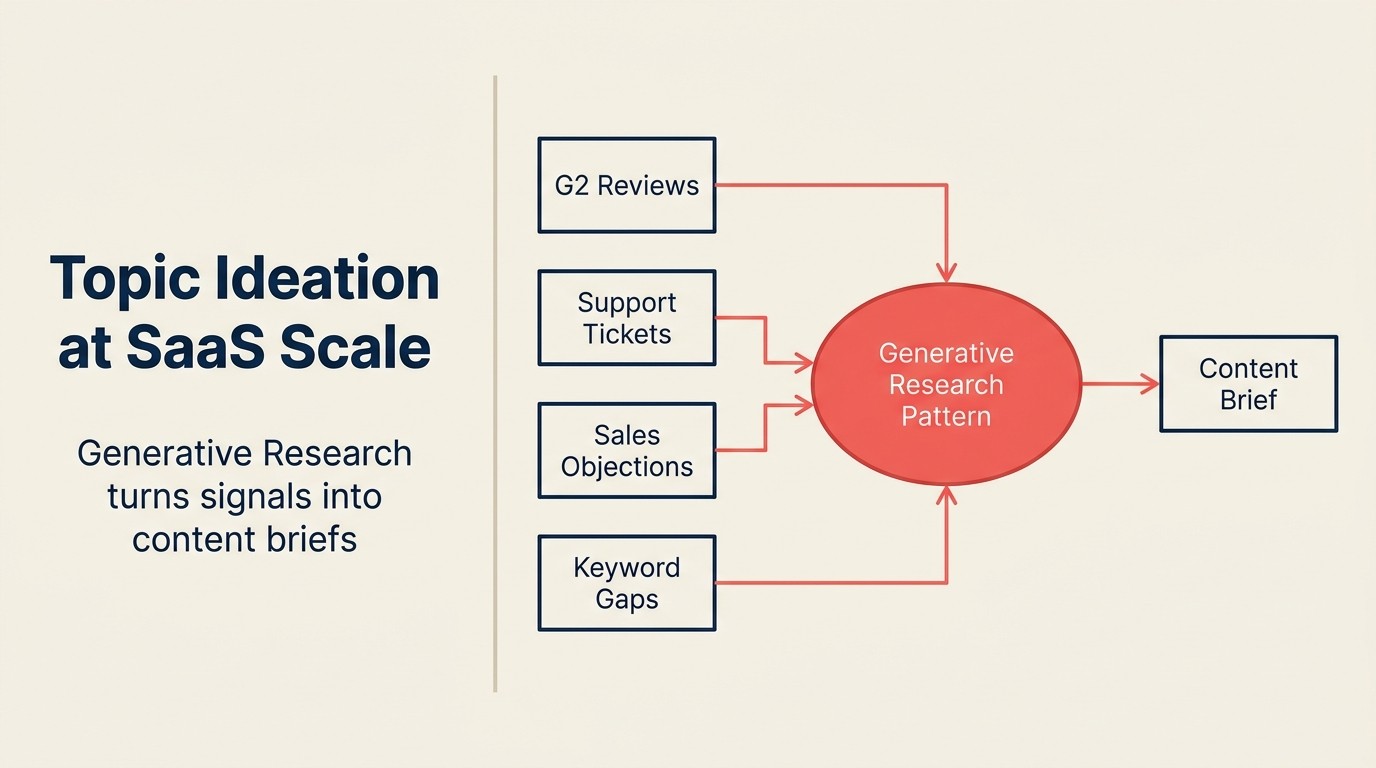
Peringkat pertama aliran kerja AI Content Operator adalah mengenal pasti apa yang perlu ditulis. Untuk syarikat SaaS, peta kandungan agak boleh diramalkan dalam strukturnya:
- Kandungan peringkat ciri: Apa yang produk Anda lakukan, dan bagaimana seseorang menggunakannya?
- Kandungan peringkat masalah: Masalah apa yang produk Anda selesaikan, dan bagaimana rupa setiap masalah?
- Kandungan perbandingan: Bagaimana produk Anda dibandingkan dengan alternatif yang dipertimbangkan pembeli?
- Kandungan cara-melakukan: Untuk setiap kes penggunaan yang produk Anda bolehkan, apakah pelaksanaan langkah demi langkah?
- Kandungan trend: Apa yang berubah dalam industri yang menjadikan produk Anda relevan sekarang?
Corak AI Content Operator mempercepatkan penyelidikan kata kunci dan analisis jurang kandungan dalam struktur ini. Ahrefs dan Semrush memaparkan kata kunci mana yang pesaing Anda mendapat kedudukan tetapi Anda tidak. Clearscope dan MarketMuse mengenal pasti topik dan subtopik mana yang artikel berkedudukan dalam kategori Anda rangkumi, supaya artikel Anda boleh memadankan atau melebihi liputan tersebut. Frase mengautomasi penjanaan briefing kandungan daripada hasil carian.
Apa yang sebelumnya mengambil masa dua hari penyelidikan kata kunci dan penulisan briefing manual kini mengambil beberapa jam. Outputnya adalah kalendar kandungan yang diprioritaskan dengan briefing yang sedia untuk digubah, berasaskan data permintaan carian sebenar.
Syarikat SaaS yang pasukan kandungannya beralih kepada pengeluaran yang dibantu AI melaporkan pengurangan masa-dari-briefing-ke-draf 40-60%. Untuk pasukan kandungan dengan pembakaran bulanan $50K, itu adalah pengurangan kos-setiap-artikel-yang-diterbitkan dari $400-800 setiap bahagian kepada $150-300, sambil mengekalkan pengawasan editorial.
Untuk syarikat SaaS PLG dengan laluan penukaran layan diri, keutamaan kandungan adalah jelas: mendapat kedudukan untuk setiap masalah yang membawa seseorang untuk mencari alatan seperti milik Anda. Corong pendaftaran bermula di Google, bukan di halaman utama Anda.
Pengubahan dengan Generative Research: kekangan beralih
Setelah Anda mempunyai briefing, corak Generative Research mengambil alih. AI mengambil sasaran kata kunci, briefing kandungan, korpus RAG, dan sebarang bahan sumber yang relevan (nota pakar bidang, petikan pelanggan, analisis pesaing) dan menghasilkan draf pertama yang berstruktur.
Matematik masa berubah secara ketara. Draf pertama 1,500 patah perkataan yang mengambil masa penulis tiga hingga empat jam untuk dihasilkan mengambil masa tiga puluh hingga empat puluh lima minit dengan bantuan AI: dua puluh minit untuk menyemak bahan sumber, sepuluh minit untuk meminta dan mengkonfigurasi draf, lima belas minit untuk menyemak output dan menandai kawasan semakan. Draf belum boleh diterbitkan lagi. Tetapi ia adalah titik permulaan sebenar, bukan halaman kosong.
Di sinilah dakwaan "kekangan beralih dari penulisan kepada penyuntingan" menjadi konkrit. Sebelum AI, operasi kandungan dengan tiga penulis boleh menerbitkan enam hingga lapan artikel seminggu pada tahap kualiti yang munasabah. Dengan draf yang dibantu AI, tiga penulis yang sama kini boleh menyunting dan meluluskan sepuluh hingga lima belas draf seminggu. Daya tampung hampir berganda. Tetapi hanya jika editor cukup baik untuk menangkap apa yang AI silap dan cukup cepat untuk memproses jumlah tersebut.
Nisbah yang berfungsi di syarikat SaaS PLG dengan tindanan kandungan AI adalah lebih kurang satu editor untuk setiap tiga hingga lima bahagian yang digubal AI setiap minggu, bergantung pada kerumitan teknikal. Editor yang mengurus sepuluh artikel yang digubal AI setiap minggu melakukan kerja yang berbeza secara asas daripada penulis yang menghasilkan dua artikel dari awal. Kemahiran yang diperlukan adalah berbeza: naluri semakan fakta yang lebih tajam, pertimbangan kualiti yang lebih cepat, pemahaman yang lebih kukuh tentang apa yang menjadikan artikel boleh dipercayai kepada pembaca pakar.
Pematuhan panduan gaya dengan RAG Assistant
Ini adalah komponen yang kebanyakan pasukan langkau dan kemudian menyesal.
Cadangan nilai teras Writer.com adalah bahawa ia melatih pada suara jenama dan perbendaharaan kata produk khusus Anda, kemudian menguatkuasakan ini semasa penjanaan. Setiap bahagian yang digubal AI yang melalui Writer mengeluarkan kandungan yang kedengaran seperti syarikat Anda dan bukannya kandungan internet generik.
Corak RAG Assistant yang mendasari ini berfungsi dengan mengekalkan korpus pengambilan yang merangkumi panduan gaya Anda, glosari produk Anda, pemposisian syarikat Anda, dan sampel kandungan berprestasi terbaik Anda. Apabila AI menggubal, ia mendapatkan semula panduan gaya yang relevan dan menerapkannya. Apabila editor menyemak, mereka menyemak untuk ketepatan dan wawasan dan bukannya membaiki bahasa di luar jenama sepanjang masa.
Untuk syarikat SaaS di mana berbilang lini produk, ciri, dan kes penggunaan mempunyai konvensyen penamaan khusus, ini sangat bernilai. "AI-powered" vs. "AI-assisted" vs. "AI-native" kedengaran seperti semantik sehingga pasukan jualan Anda menggunakan tiga istilah berbeza dalam panggilan pelanggan dan kandungan Anda menggunakan yang keempat.
Kos persediaan adalah nyata: membina dan mengekalkan korpus RAG memerlukan pemilikan editorial yang berterusan. Tetapi bayaran baliknya adalah kandungan yang sebenarnya kedengaran seperti Anda pada sepuluh kali ganda jumlah output.
Temu bual pakar bidang sebagai bahan artikel
Beberapa kandungan SaaS yang paling boleh dipercayai datang dari pakar bidang dalaman: pengurus produk yang membina sesuatu ciri, ketua CS yang telah melihat setiap corak pelaksanaan pelanggan, jurutera yang memahami seni bina dengan mendalam. Kandungan ini mahal untuk dihasilkan kerana masa pakar bidang adalah mahal dan menukar perbualan teknikal kepada artikel yang boleh diterbitkan secara tradisinya memerlukan penulis teknikal yang mahir dan tiga hingga lima jam komunikasi bolak-balik.
Corak Meeting Intelligence mengubah nisbah ini. Temu bual berdurasi tiga puluh minit yang direkodkan dengan pakar bidang, diproses melalui Ingest (transkripsi) dan Analyze (pengekstrakan tema, pengenalpastian wawasan utama), menghasilkan rangka draf dan set petikan langsung yang membentuk rangka artikel yang boleh dipercayai. AI tidak menemu bual pakar bidang. Anda yang melakukannya. Tetapi output mesyuarat menjadi bahan artikel secara automatik dan bukannya duduk dalam fail transkrip yang tidak ada yang membacanya.
Hasilnya dalam amalan: masa pakar bidang turun dari tiga jam lebih setiap artikel kepada tiga puluh hingga empat puluh lima minit. Pakar bidang bercakap, Anda meminta, AI menyusun. Editor menyemak dan menerbitkan. Artikel membawa kepakaran dalaman yang tulen dan bukannya mensintesis pengetahuan yang tersedia secara awam.
Ini adalah salah satu keupayaan yang paling kurang digunakan dalam operasi kandungan SaaS. Syarikat yang membina aliran kerja ini menghasilkan kandungan yang pesaing tidak mudah meniru kerana ia mengandungi pengetahuan yang tidak tersedia secara awam.
Aliran kerja penerbitan: dari draf kepada tersedia dalam bawah 48 jam
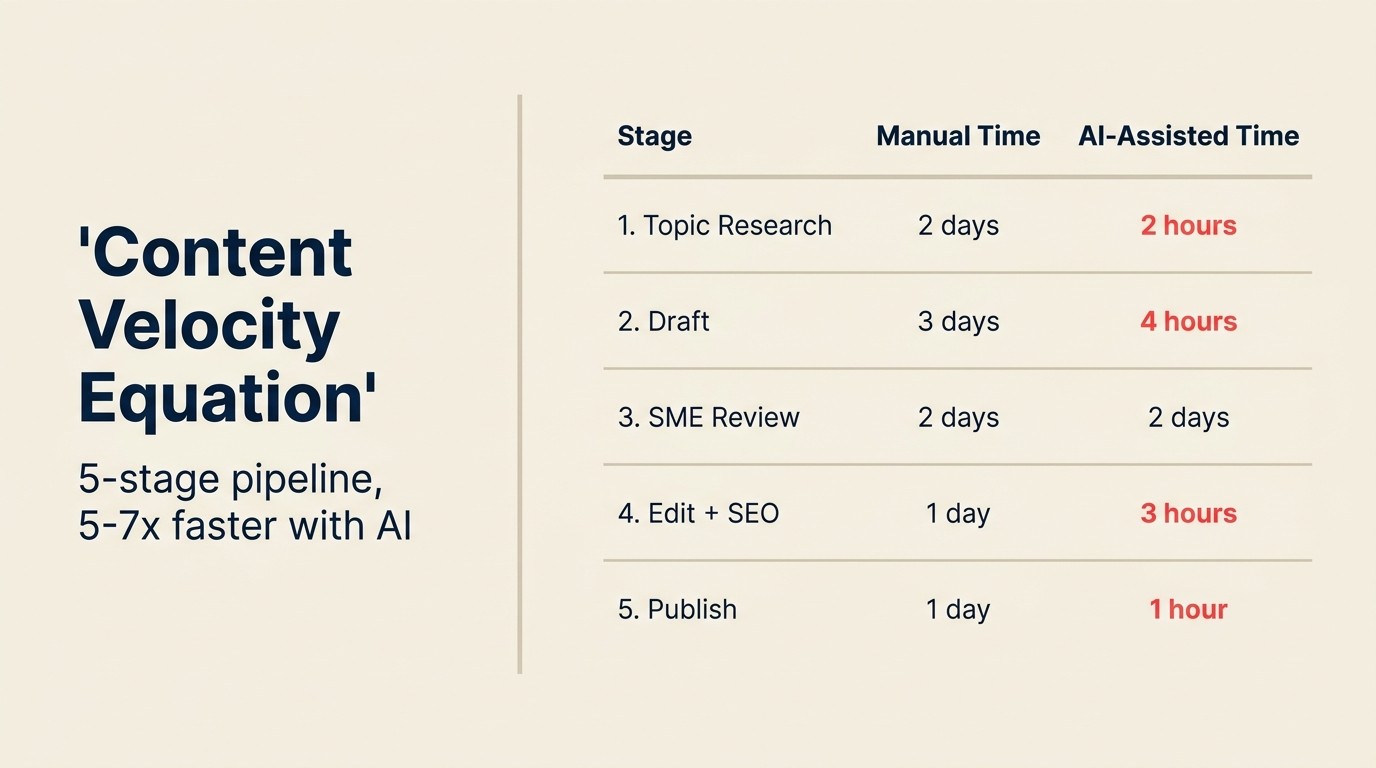
Tanpa bantuan AI, aliran kerja kandungan SaaS tipikal kelihatan seperti ini: briefing dicipta (hari pertama), penulis ditugaskan (hari kedua atau ketiga), draf dihantar (hari ketujuh hingga kesepuluh), semakan editorial (hari kedua belas), pengoptimuman SEO (hari ketiga belas), semakan dalaman (hari keempat belas), terbit (hari kelima belas hingga dua puluh).
Dua hingga tiga minggu, dengan pelbagai penyerahan dan pertukaran konteks pada setiap peringkat.
Dengan aliran kerja AI Content Operator: briefing dicipta dan draf AI dijana (hari pertama), editor menyemak dan menyemak semula (hari kedua), metadata SEO dan penautan dalaman dikendalikan oleh Workflow Copilot (hari kedua), terbit (hari kedua atau ketiga).
Corak Workflow Copilot mengendalikan bahagian mekanikal penerbitan yang menghabiskan masa editorial: menjana penerangan meta, mengenal pasti peluang penautan dalaman merentasi perpustakaan kandungan Anda, memformat untuk CMS Anda, baris gilir pengedaran ke surat berita dan saluran sosial Anda. Alatan seperti Clearscope menjalankan pemarkahan SEO terhadap draf sebelum terbit, supaya editor boleh melihat di mana liputan topikal nipis dan mengisi jurang sebelum artikel tersedia.
Metrik kos-setiap-bahagian-yang-diterbitkan adalah tempat ekonomi menjadi jelas. Untuk syarikat SaaS tipikal yang menjalankan operasi kandungan tradisional, kos-setiap-artikel-yang-diterbitkan (termasuk masa penulis, masa editorial, semakan SEO, dan penerbitan) berjalan $400-800 setiap bahagian untuk kandungan kerumitan pertengahan. Dengan aliran kerja AI Content Operator, itu turun kepada $150-300 setiap bahagian. Siling kualiti lebih rendah (kandungan yang dibantu AI jarang menandingi kandungan jangka panjang yang ditulis manusia terbaik), tetapi lantai kualiti lebih tinggi (semakan editorial menangkap kegagalan AI terburuk). Untuk kandungan jumlah tinggi, kerumitan pertengahan yang memacu kebanyakan pipeline organik, itu adalah pertukaran yang betul.
Metrik yang menunjukkan aliran kerja berfungsi
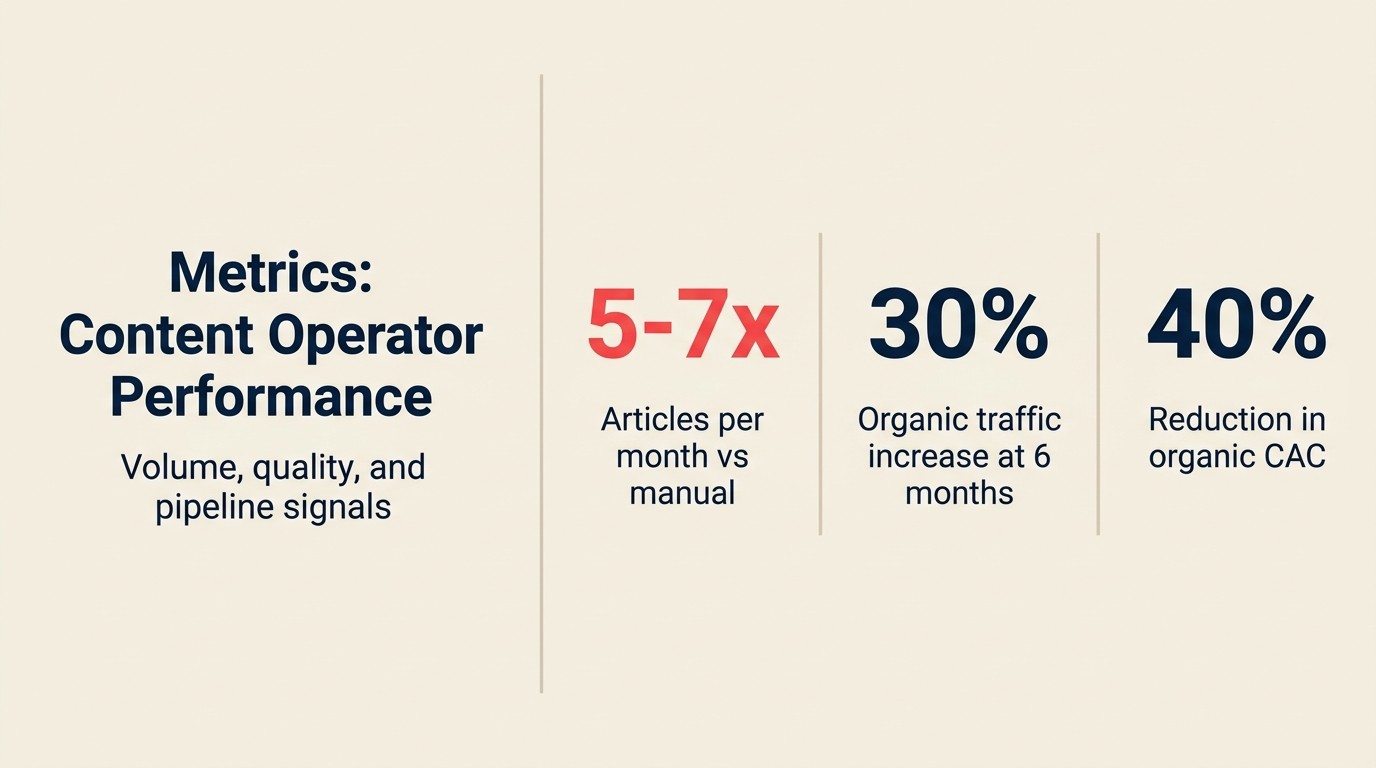
Tiga nombor untuk dipantau apabila menjalankan aliran kerja AI Content Operator di syarikat SaaS:
Pipeline yang dikaitkan organik sebagai peratusan jumlah pipeline. Jejaki perjanjian mana yang menyentuh kandungan organik sebelum menandatangani. Jika angka itu di bawah 20% untuk syarikat yang dipimpin produk, kandungan tidak menjangkau pembeli pada peringkat yang betul. Penyelidikan Gartner tentang perjalanan pembelian B2B menunjukkan pembeli hanya menghabiskan 17% jumlah masa pembelian mereka untuk berjumpa dengan vendor, bermakna kandungan yang membentuk pemikiran mereka sebelum perbualan tersebut adalah penentu komersial.
Halaju kandungan vs. pertumbuhan trafik organik. Anda patut dapat membuat hubungan lag: artikel yang diterbitkan hari ini muncul dalam hasil carian dalam tiga hingga enam bulan. Jika Anda menerbitkan dua puluh artikel setiap bulan dan melihat trafik organik berkembang pada 15-20% setiap suku tahun, enjin kandungan-ke-trafik sedang berfungsi. Jika halaju tinggi tetapi trafik tidak berkembang, kualiti atau sasaran topikal tidak betul.
Kadar pendaftaran percubaan setiap seribu lawatan organik. Untuk SaaS PLG, ini adalah metrik utara. Kandungan yang mendorong trafik tetapi bukan percubaan adalah kandungan jenama, bukan kandungan pemerolehan. Aliran kerja AI Content Operator patut dioptimumkan untuk metrik ini: artikel yang menyasarkan kata kunci berhasrat tinggi, dengan CTA yang kukuh, dan laluan penukaran yang memudahkan untuk memulakan percubaan dari artikel itu sendiri.
Gelung maklum balas produk-ke-SEO
Satu kelebihan yang syarikat SaaS PLG miliki yang kedai kandungan tulen tidak ada: setiap pelancaran ciri produk adalah peluang kandungan.
Apabila Anda menghantar ciri baharu, Anda tahu tepat apa yang dilakukannya, siapa yang memintanya, dan masalah apa yang diselesaikannya. Itu adalah briefing. AI Content Operator mengambil briefing tersebut dan menghasilkan kandungan tentang ciri itu sebelum pesaing boleh menjejasnya dari log perubahan Anda. Pasukan produk Anda adalah sumber paling boleh dipercayai untuk kandungan tersebut, dan corak Meeting Intelligence menjadikannya murah untuk menangkap pengetahuan mereka.
Untuk syarikat PLG, gelung maklum balas adalah ketat: ciri dihantar, kandungan tersedia, pengguna menemui ciri melalui carian, mengaktifkannya, dan menukar kepada berbayar. AI Content Operator menjadikan gelung ini lebih cepat untuk dijalankan dan lebih murah untuk dikekalkan.
Trafik AI dari sumber seperti rujukan ChatGPT mendorong 12.1% lebih banyak pendaftaran untuk Ahrefs walaupun hanya mewakili 0.5% daripada jumlah pelawat, dan syarikat B2B SaaS melaporkan kadar penukaran 6x hingga 27x lebih tinggi dari trafik yang dirujuk AI berbanding carian tradisional. Ini bermakna kandungan kedalaman pakar yang direka bentuk untuk dipetik oleh sistem carian AI bukan sahaja permainan SEO, ia adalah permainan penukaran.
Analisis Rework: Syarikat SaaS yang mendapat ROI kandungan tertinggi pada 2025-2026 bukan mereka yang menghasilkan jumlah terbanyak. Mereka adalah yang menghasilkan kandungan yang sistem carian AI pilih untuk dipetik. Dengan AI Overviews yang muncul dalam 47% hasil carian Google dan mengurangkan kadar klik-laluan sebanyak 34.5% untuk kata kunci yang terjejas, strategi menang beralih dari "mendapat kedudukan di kedudukan pertama" kepada "menjadi sumber yang ringkasan AI petik." Itu memerlukan kandungan kedalaman pakar dengan dakwaan khusus, rangka kerja yang dinamai, dan statistik yang boleh dipetik, bukan lebih banyak kandungan bergaya senarai yang sama. Aliran kerja AI Content Operator perlu diselaraskan secara eksplisit untuk AEO (Answer Engine Optimization), bukan hanya SEO tradisional, untuk menangkap trafik dalam era carian AI.
Itulah sebabnya AI Content Operator adalah pelaburan pemerolehan leveraj tunggal tertinggi untuk syarikat SaaS PLG. Ini bukan hanya tentang menghasilkan kandungan. Ini tentang menukar setiap keputusan produk menjadi aset pemerolehan organik lebih cepat daripada yang pesaing Anda boleh bertindak balas.
Untuk konteks penjanaan permintaan yang lebih luas, AI Marketer untuk Penjanaan Permintaan SaaS merangkumi tindanan corak AI Marketer penuh, termasuk ABM, ramalan prestasi kempen, dan pendekatan permintaan khusus PLG.
Soalan Lazim
Apakah AI Content Operator untuk SaaS?
AI Content Operator adalah ejen Tahap 3 Rangka Kerja ACE yang dibina daripada empat corak: Generative Research (pembikinan idea topik dan pengeluaran draf pertama), RAG Assistant (pematuhan panduan gaya dan pengasasan dalam pengetahuan produk sebenar), Meeting Intelligence (menukar temu bual pakar bidang dan panggilan pelanggan kepada bahan artikel), dan Workflow Copilot (mengendalikan metadata SEO, penautan dalaman, dan penerbitan CMS). Bersama-sama ini memampatkan kitaran kandungan dari 2-3 minggu kepada 48-72 jam sambil mengekalkan standard kualiti editorial.
Apakah Persamaan Halaju Kandungan?
Persamaan Halaju Kandungan adalah formula ekonomi output untuk kandungan yang dibantu AI: (briefing yang dihasilkan) x (kelajuan draf AI) / (jam editor setiap artikel) = artikel yang boleh diterbitkan setiap bulan. AI Content Operator meningkatkan ketiga-tiga pembolehubah: Generative Research memampatkan penciptaan briefing dari hari kepada jam, draf AI mengurangkan masa draf pertama dari 3-4 jam kepada 30-45 minit, dan pematuhan gaya yang dibantu RAG mengurangkan masa semakan editorial. Ambang sasaran adalah 16+ artikel setiap bulan, titik di mana trafik organik berkembang 3.5x lebih cepat berbanding penerbit yang tidak konsisten.
Bagaimana kandungan AI berprestasi berbanding keperluan kualiti Google pada 2026?
AI Overviews kini muncul dalam 47% hasil carian Google, mengurangkan kadar klik-laluan untuk halaman berkedudukan tinggi sebanyak 34.5% apabila hadir. Implikasinya: kandungan perlu direka bentuk untuk petikan AI (kedalaman pakar, dakwaan khusus, rangka kerja yang dinamai, statistik yang boleh dipetik) dan bukannya hanya kedudukan tradisional. Syarikat B2B SaaS melaporkan kadar penukaran 6x hingga 27x lebih tinggi dari trafik yang dirujuk AI berbanding carian tradisional. Trafik AI mendorong 12.1% lebih banyak pendaftaran untuk Ahrefs walaupun hanya mewakili 0.5% daripada jumlah pelawat. Strategi menang pada 2025-2026 adalah AEO (Answer Engine Optimization) bersama SEO tradisional.
Mengapa RAG Assistant adalah komponen paling penting dalam tindanan kandungan SaaS?
Khalayak SaaS adalah pembaca pakar yang boleh mengesan pengetahuan internet generik dalam dua perenggan. RAG Assistant mengasaskan draf AI dalam dokumentasi produk sebenar Anda, transkrip temu bual pelanggan, dan panduan gaya editorial, menghasilkan kandungan yang mencerminkan kepakaran domain yang tulen dan bukannya ringkasan yang tersedia secara awam. Tanpa RAG, draf AI adalah fasih tetapi tidak meyakinkan kepada pembaca B2B teknikal. Dengan RAG, output diasaskan dalam pengetahuan produk yang pesaing tidak mudah meniru.
Apakah ROI kandungan yang patut dijangka oleh syarikat SaaS?
Program kandungan B2B SaaS dengan pelaburan berterusan 3-tahun melaporkan purata ROI 844%, dengan SEO mengembalikan $22 setiap $1 yang dibelanjakan selama tempoh tersebut. Pengeluaran kandungan yang dibantu AI mengurangkan kos-setiap-artikel-yang-diterbitkan dari $400-800 kepada $150-300 sambil mengekalkan pengawasan editorial. 68% perniagaan melaporkan peningkatan ROI pemasaran kandungan selepas mengintegrasikan AI ke dalam aliran kerja mereka. Kesan berganda bermakna kandungan yang diterbitkan pada bulan pertama terus menjana trafik organik dan percubaan pada bulan ke-12, ke-24, dan ke-36.
Bagaimana temu bual pakar bidang menjana kandungan melalui AI Content Operator?
Corak Meeting Intelligence memproses temu bual pakar bidang berdurasi 30 minit yang direkodkan melalui Ingest (transkripsi) dan Analyze (pengekstrakan tema dan pengenalpastian wawasan utama), menghasilkan rangka draf dan petikan langsung yang membentuk rangka artikel yang boleh diterbitkan. Masa pakar bidang turun dari 3+ jam setiap artikel kepada 30-45 minit. Artikel membawa kepakaran dalaman yang tulen dan bukannya mensintesis pengetahuan yang tersedia secara awam, menjadikannya kandungan yang pesaing tidak mudah meniru kerana ia mengandungi pengetahuan yang tidak tersedia secara awam.
Berkaitan:

Co-Founder, Rework.com
On this page
- Apa yang AI Content Operator sebenarnya lakukan
- Persamaan Halaju Kandungan
- Masalah kandungan SaaS: pembaca pakar tidak memaafkan output generik
- Pembikinan idea topik pada skala SaaS
- Pengubahan dengan Generative Research: kekangan beralih
- Pematuhan panduan gaya dengan RAG Assistant
- Temu bual pakar bidang sebagai bahan artikel
- Aliran kerja penerbitan: dari draf kepada tersedia dalam bawah 48 jam
- Metrik yang menunjukkan aliran kerja berfungsi
- Gelung maklum balas produk-ke-SEO