PLG vs. 営業主導 SaaS: 異なる AI スタック

Turn this article into takeaways for your work.


Each assistant summarizes the article only for you and suggests best practices for your work.
Product-led growth(PLG)企業を変革するのと同じ AI ツールが、営業主導の企業にとっては邪魔になることがあります。逆も然りです。
これはツールの品質の問題ではありません。データの可用性の問題です。すべての AI エージェントはデータで動きます。持っているデータは顧客がプロダクトを発見し、試し、購入する方法の直接的な結果です。PLG と営業主導の SaaS 企業はデータスペクトルの両端に位置しており、根本的に異なる AI スタックが必要で、異なるエージェントから最初に ROI を得ます。これはなぜ SaaS が最高速度の AI 導入者なのかという全体的な論点と密接に関連しています。
シーケンスを正しく設定すれば、AI 投資は複利的に積み重なります。間違えると、まだ存在しないデータで機能させようとするか、すでに持っているデータの中の明らかな機会を見逃すことになり、数か月を無駄にします。
PLG が AI 環境として異なる点
Product-led growth モーションでは、プロダクトが会話の前に来ます。ユーザーはサインアップし、アクティベートし、多くの場合、営業担当者がディールに触れることなく転換します。AI の観点から見た PLG の決定的な特徴は、これが生み出すものです。人間とのインタラクションが始まる前に、数百万件の構造化された行動イベントが存在します。
重要なデータ: PLG vs. 営業主導 SaaS
- PLG 企業は営業主導の競合より収益成長率が 50% 高く、営業とマーケティングへの支出が 39% 少なく、AI を考慮する前の構造的なユニットエコノミクスの優位性を生み出しています(ProductLed Benchmarks、2025年)
- Product Qualified Lead(PQL)は Marketing Qualified Lead(MQL)の 5〜10% に対して 25〜30% の転換率を実現しており、人口統計ターゲティングではなく行動シグナルの品質だけに起因する 3 倍の転換差があります(Optifai PLG Guide、2025年)
- $50M ARR 以上の B2B SaaS 企業の 91% が PLG 戦略を実装しており、そのうち 91% がさらなる PLG 投資を計画しています(ChartMogul SaaS GTM Report、2025年)
Notion ユーザーがワークスペースを開始すると、プロダクトは把握しています。サインアップした時刻、最初のアクション、開いたテンプレート、最初のセッションでアクティベートした機能、コラボレーターを招待したタイミング、2 日目、7 日目、30 日目のログインの有無。そのユーザーが転換プロンプトに到達する頃には、Notion は数十〜数百の個別のイベントから構築された行動プロファイルを持っています。
このデータは製造できません。プロダクト自体がエントリーポイントであるために初めて存在するデータです。Figma は営業担当者が誰とも話す前に、チームが最もよく使うデザイン機能を把握しています。Linear はどのエンジニアリングチームが AI 優先化を使っているか対手動のバックログ管理を把握しています。Stripe はサポートチケットを開く前に PCI コンプライアンスサポートが必要な顧客を予測する支払い失敗パターンを把握しています。
これが PLG 企業の不公平な AI 優位性です。OpenView の PLG 調査では、PLG 企業は従来の SaaS 企業と比較して営業とプロダクト支出の 1 ドルあたり 1.7 倍の粗利益を生み出しており、その格差は AI がより豊富なデータ層の上に展開されるとさらに広がることが記録されています。
無料トライアルプロダクトは平均してサインアップの 17% を有料アカウントに転換しますが、フリーミアムプロダクトは 5% しか転換しません。行動スコアリングを使って高意向ユーザーを特定する PLG 企業は無料トライアルの転換率を 25% 以上に引き上げます。この 8 パーセントポイントの差はほぼ完全にプロダクトテレメトリーをスコアリングモデルに提供することに起因しています。そして、それを最も活用する AI エージェントは営業主導企業を最もよく提供するエージェントとは同じではありません。
PLG の AI 優先事項: データがすでにある場所
PLG 企業にとって、最も豊富な AI 機会はプロダクト内と営業前にあります。データはすでにあります。問いはそれを活用しているかどうかです。
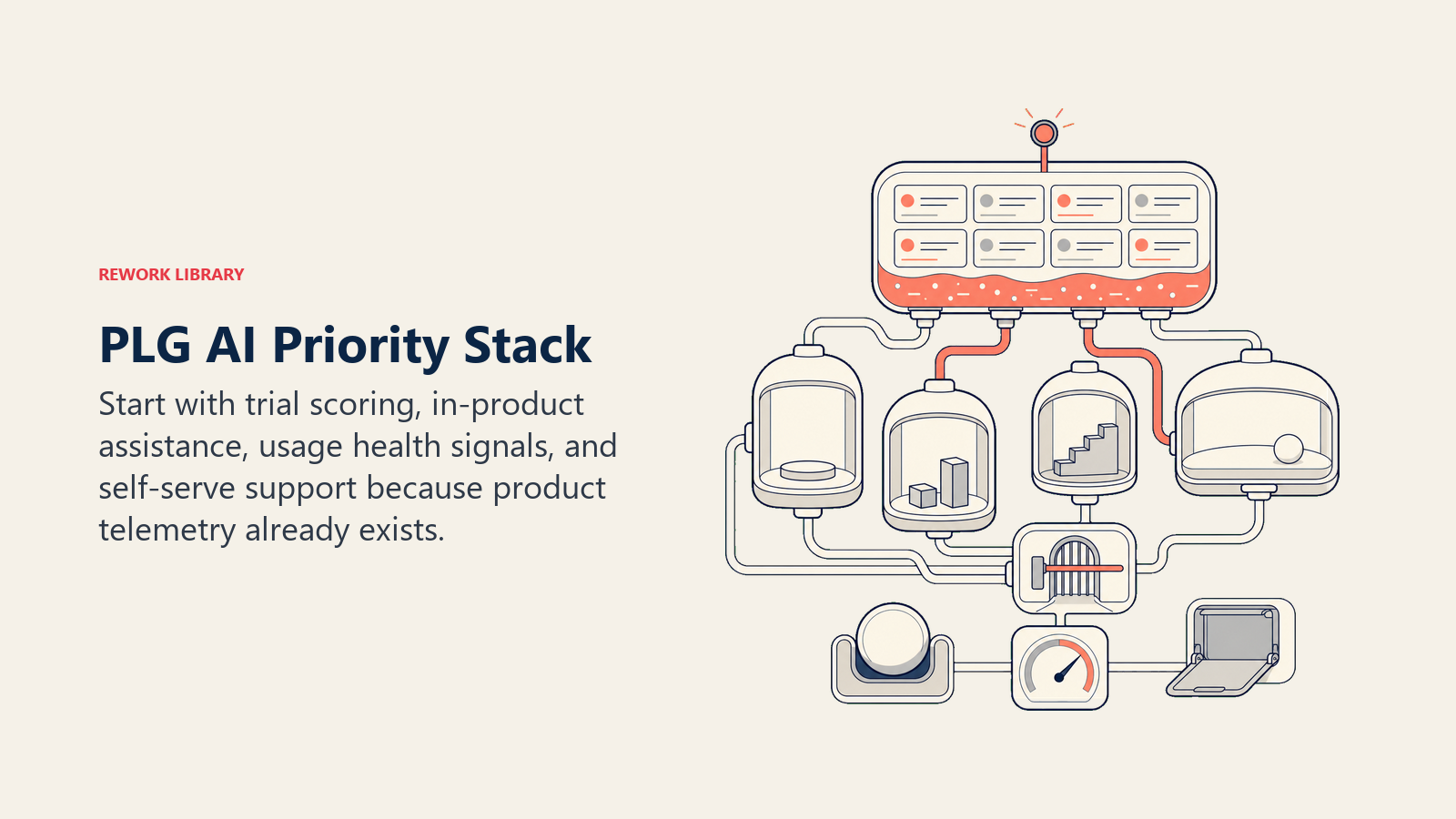
トライアル転換インテリジェンスは PLG 特有の AI ユースケースで、非 PLG 企業には実現できません。プロダクトテレメトリーに基づいた Scoring and Routing モデルは、無料トライアルの 3 日目には、どのユーザーが転換する可能性が高いかを特定できます。詳しくは SaaS トライアルから有料への転換のための AI をご参照ください。シグナルは行動的です。最初のワークフローを完了したか?チームメンバーを招待したか?過去のコホートデータで継続と最も相関する機能を使用したか?モデルは入ってくるトライアルユーザーを継続的に評価し、最も転換する可能性の高いユーザーを営業またはグロースチームに提示します。
Linear はこれを実践しています。チームの使用パターンが過去の有料顧客の転換シグネチャと一致すると、グロースチームはダッシュボードで確認でき、自動化されたプロダクト内のナッジまたは個人的なアウトリーチをトリガーできます。これはトライアルが終わる前に起きます。従来のリードスコアリングはプロダクトデータを持っていないため、このユースケースには対応できません。
プロダクト内 AI 機能は PLG においてより重要です。プロダクト体験が顧客体験だからです。PLG 企業がプロダクト自体に AI コパイロット、スマートサジェスト、自動化されたテンプレートを組み込むと、価値実現時間が短縮され、機能の導入率が向上し、ユーザーのアクティブな状態が維持されます。Notion AI は明らかな例です。別のダッシュボードではなく、ドキュメント体験に織り込まれています。この設計哲学は AI デプロイへの PLG ネイティブなアプローチです。
使用量からの健全性スコアリングは、AI CSM(Customer Success Manager)機能を大規模に適用するものです。5,000 の有料チームを抱える PLG 企業では、人間の CSM がすべてのアカウントを監視することはできません。毎日の使用パターンを監視する Anomaly Agent は、更新の前に何週間も前からエンゲージメントが低下しているアカウントをフラグします。詳しくはSaaS 顧客向け AI 健全性スコアリングをご参照ください。人間の CSM は AI がフラグしたアカウントに集中し、スプレッドシートを手動でチェックするのではありません。
セルフサービスサポートは、AI Support Agent によって PLG で不均衡に価値があります。セルフサービスプロダクトを選んだユーザーはセルフサービスサポート体験を求めているからです。PLG プロダクトでのサポートチケットの 50% を偏向させる Intercom Fin はコスト削減だけではありません。体験の整合性です。
このために作られる AI トレーニングのためのプロダクトテレメトリーの優位性は、単にデータを持つことよりも深いものです。最初から適切なデータ構造を持つことについてです。ほとんどの非 SaaS 業界はまだそこに到達していません。
営業主導 AI の優先事項: 異なるデータ、異なるスタック
営業主導モーションでは、プロダクトは会話の後に来ます。エンタープライズバイヤーはセルフアクティベートしません。担当者がディスカバリーを行い、ビジネスケースを構築し、調達を管理し、数週間または数か月にわたって複数の関係者を通じてディールを進めます。プロダクトは多くの場合、営業サイクル中に限定的な POC スコープでデプロイされます。
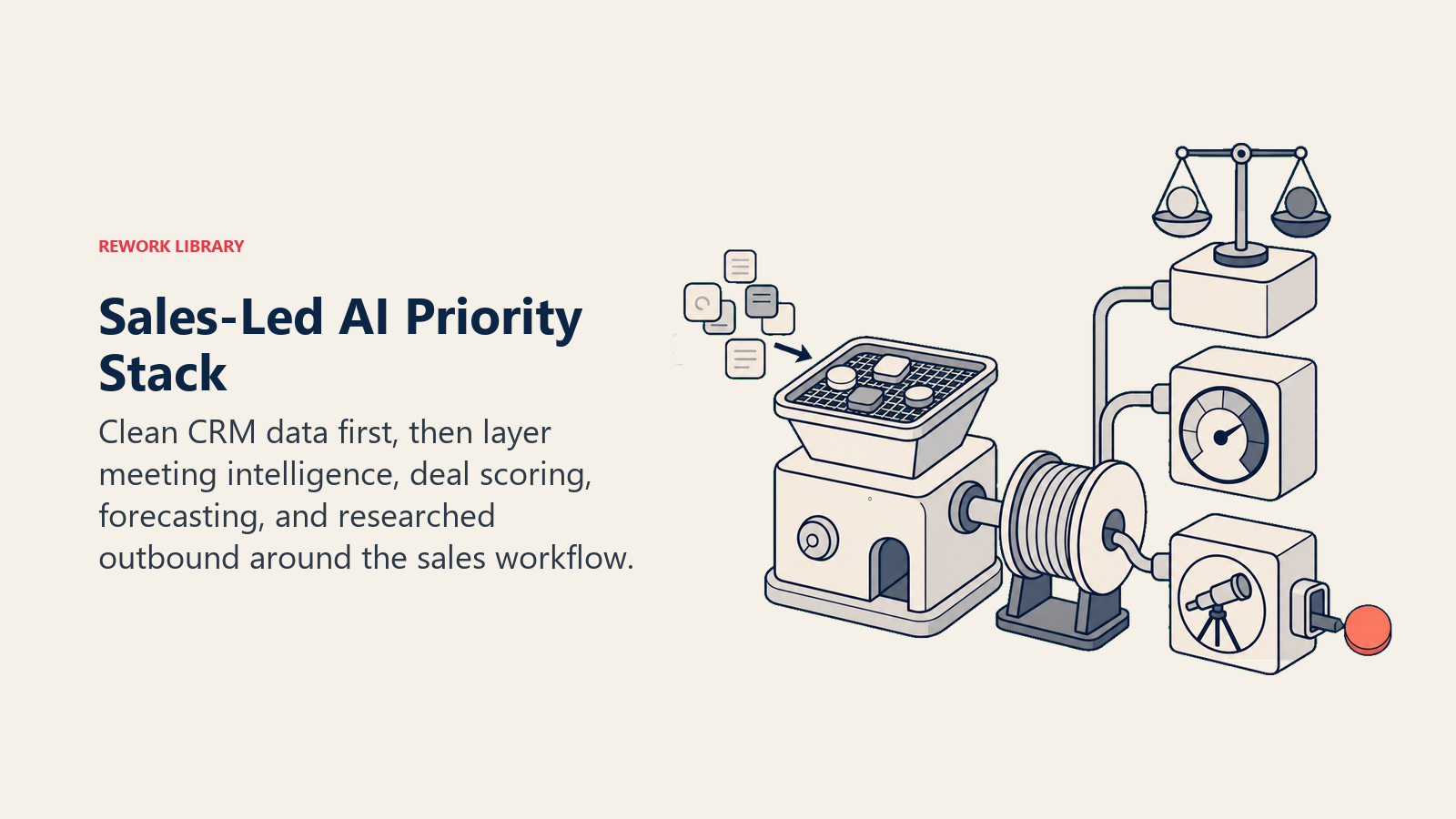
AI の観点から見た営業主導 SaaS の決定的な特徴: プロダクトイベントではなく、会話が主要なデータソースです。コール録音、メールスレッド、CRM アクティビティログ、ディールステージの進行がシグナルの存在する場所です。
これにより AI の優先スタックが逆転します。
AI Sales Operator は営業主導企業の最初の投資です。営業主導モーションですでに存在するデータで動作するからです。コール録音、CRM レコード、メールスレッド、アカウント履歴。Meeting Intelligence(Gong、Clari Copilot)は担当者がすでに生成しているコール音声を取り込みます。Scoring+Routing はすでに CRM にある過去の勝ち負けデータでトレーニングします。Generative Research はすでに利用可能な公開ファームグラフィックデータから取得します。
AI Sales Operator は営業主導のコンテキストで価値を提供するためにプロダクトテレメトリーを必要としません。これが純粋な PLG 企業よりもこのモーションで速く回収できる理由です。
パイプライン予測は、ディールサイズが大きく、サイクルが長いため、営業主導企業での影響力の高い AI ユースケースです。6 週目に静止した $150K のエンタープライズディールは、$100/月のセルフサービス Churn とは異なるリスクです。Clari の AI パイプラインインテリジェンスと Salesforce Einstein のディールスコアリングはまさにこのために設計されています。エンゲージメントパターンに基づいてディールアクティビティを監視し、クローズ確率を予測します。
大規模なアウトバウンドは、営業モーションがサインアップではなくアウトリーチから始まるため、営業主導では重要です。AI 生成のアウトリーチリサーチ(Generative Research パターン)を使用する SDR チームは、手動では不可能なボリュームでパーソナライズできます。Apollo、Clay、Outreach AI はこのユースケースに対応しています。目的はそれ自体のための自動化ではありません。各アウトリーチをよりコンテキスト的に関連性が高くして応答率を改善することです。
CRM のデータ品質は前提条件です。 これは営業主導企業が一貫して作業量を過小評価するところです。CRM データで動作する AI エージェントは CRM データの質と同じです。ディールステージの 40% が間違っており、コンタクトレコードが欠落し、アクティビティログが不完全な CRM レコードでトレーニングされた Scoring+Routing モデルは、信頼性の低いスコアを生成します。AI を採用する営業主導企業は、AI 投資が回収できる前にほぼ常に CRM のデータ品質改善プロジェクトを必要とします。McKinsey の B2B 営業における AI の分析は、データ品質を営業主導組織での AI スケールの最大のハードルとして特定しています。データ準備状況は多くの AI プロジェクトがスキップする前提条件です。プロダクトイベントログからデータが来る PLG 企業は、手動の CRM 入力に比べてこれらの問題が少ないです。
Rework Sales AI はある程度これに設計で対処しています。クリーンなデータを必要とするパターンに最適化された CRM 構造を AI エージェントの周りに構築しており、後付けで適応するのではありません。
CRM のデータ品質フェーズをスキップして汚れたデータに直接 AI スコアリングをデプロイする営業主導企業は、最初の 90 日間で失望する結果を一貫して報告し、AI が自分たちのモーションで「機能しない」と誤って結論付けます。AI は正しく機能しています。悪いデータから学習しており、これはデータの問題であって AI の問題ではありません。
Rework 分析: PLG と営業主導 SaaS の AI デプロイを比較すると、最も一貫したパターンは 6 か月のタイムラインの乖離です。PLG 企業は 2〜3 週目に最初の意味のある AI シグナルを得ます。プロダクトテレメトリーはすでに流れているからです。営業主導企業は通常、信頼性の高い AI アウトプットを得る前に 1〜2 か月目を CRM のデータ品質改善に費やします。これは PLG 企業が最終的に優位に立つことを意味しませんが、営業主導チームはデータクリーンアップをツールと同様に明示的に予算化する必要があることを意味します。クリーンアップフェーズを計画しない企業は誤った期待を設定し、公平にテストされる前に AI プログラムを放棄します。
PLG/営業主導 AI スプリット
PLG/営業主導 AI スプリットは、Product-led と営業主導の SaaS 企業の AI スタックアーキテクチャの根本的な違いを説明するものです。PLG 企業はすべてのユーザーインタラクションから受動的に収集された豊富なプロダクト行動テレメトリーの上に AI をデプロイします。営業主導企業は構造化された会話データの上に AI をデプロイします。コール録音、CRM アクティビティログ、メールスレッドです。これらは互換性のあるデータソースではありません。PLG に最適化された AI ツール(プロダクトエンゲージメントシグナルをスコアリングするよう訓練されたもの)をアクティビティデータが希薄な営業主導の CRM に展開すると、シグナルではなくノイズが生成されます。正しいアプローチは最初に主要な成長モーションを特定し、次に基礎データ要件が実際に持っているデータと一致する AI エージェントを選択することです。
ハイブリッドモデル: PLG からエンタープライズへ
シリーズ B 以降のほとんどの SaaS 企業は、実際には両方のモーションを同時に運用しています。Figma は PLG のバイラリティで成長しましたが、今では数百万ドルのディールを処理するエンタープライズ営業チームを持っています。Slack はセルフサービスの個人チームからエンタープライズ調達へ移行しました。Linear は独立した開発者チームとファンドスタートアップのエンジニアリング組織の両方にサービスを提供しています。McKinsey の product-led sales に関する調査によると、SaaS バイヤーの 65% がセルフサービスと営業サポートの両方の体験を好み、ハイブリッドモデルは戦略的な選択ではなく商業的な必要性となっています。
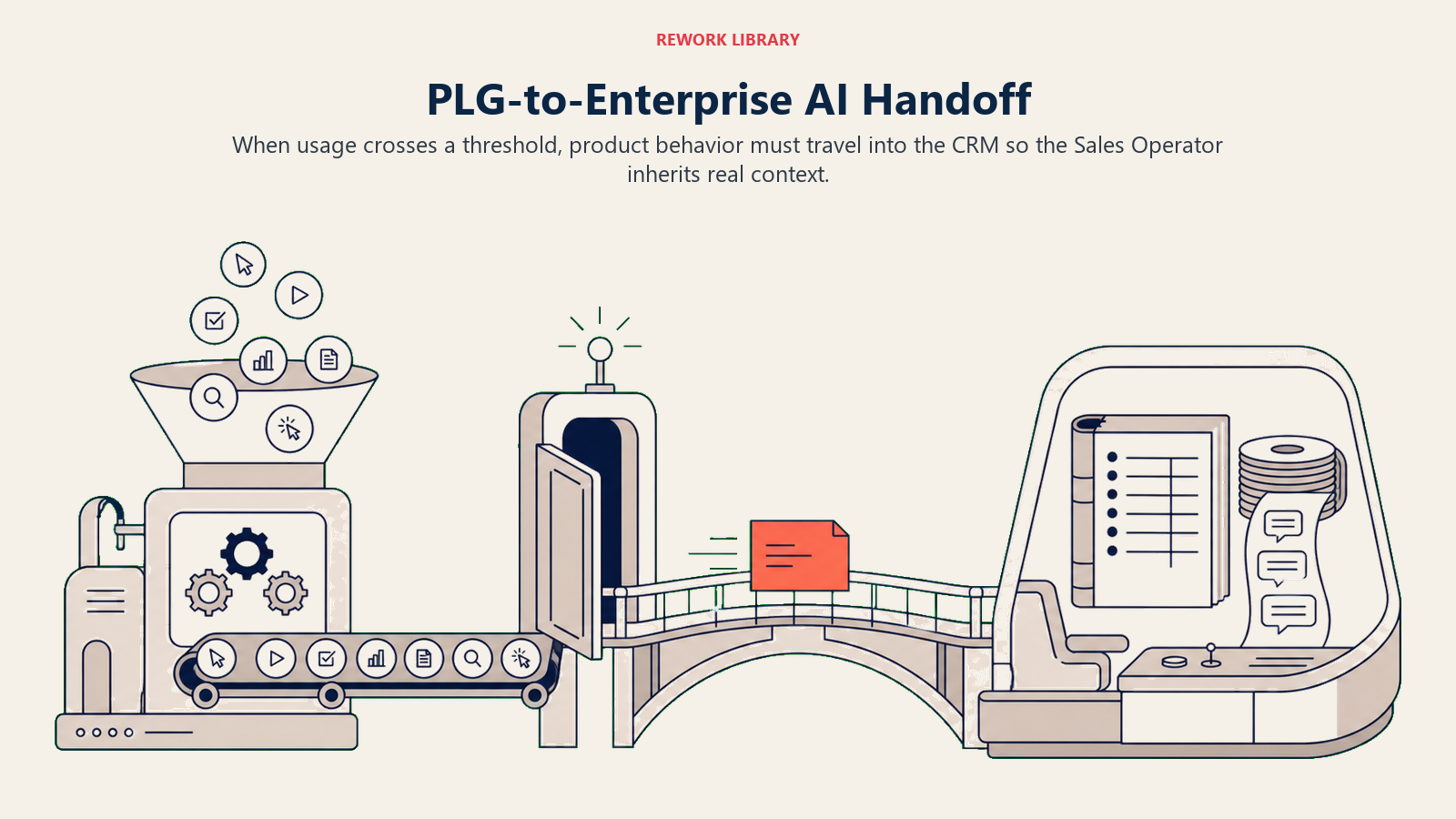
ハイブリッドモデルは特定の AI の課題を生み出します。異なるデータソース、異なるエージェント、異なる成功指標が、同じ企業内に存在します。
ほとんどのハイブリッド SaaS 企業が使う実用的なアプローチはセグメント化されたスタックです。PLG 側のビジネスはプロダクトテレメトリー駆動の健全性スコアリング、トライアル転換インテリジェンス、セルフサービスサポートを実行します。エンタープライズ側はミーティングインテリジェンス、ディールスコアリング、パイプライン予測を備えた完全な AI Sales Operator スタックを実行します。
統合ポイントはハンドオフです。PLG ユーザーのチームが営業タッチをトリガーするサイズまたは使用量閾値に達すると、AI Sales Operator がアウトリーチのコンテキストとしてプロダクト行動履歴を受け取るべきです。このハンドオフは 2 つのスタックを分離して構築した企業ではほとんどきれいに機能しません。正しく行うチームはプロダクトテレメトリーを CRM に組み込み、Sales Operator が人口統計のシグナルだけでなく行動シグナルも持てるようにします。
ツール比較: PLG vs. 営業主導
ツールの分かれ方はデータの分かれ方に従います。PLGスタックはプロダクトイベントから始まり、営業主導スタックはCRMと会話データから始まります。
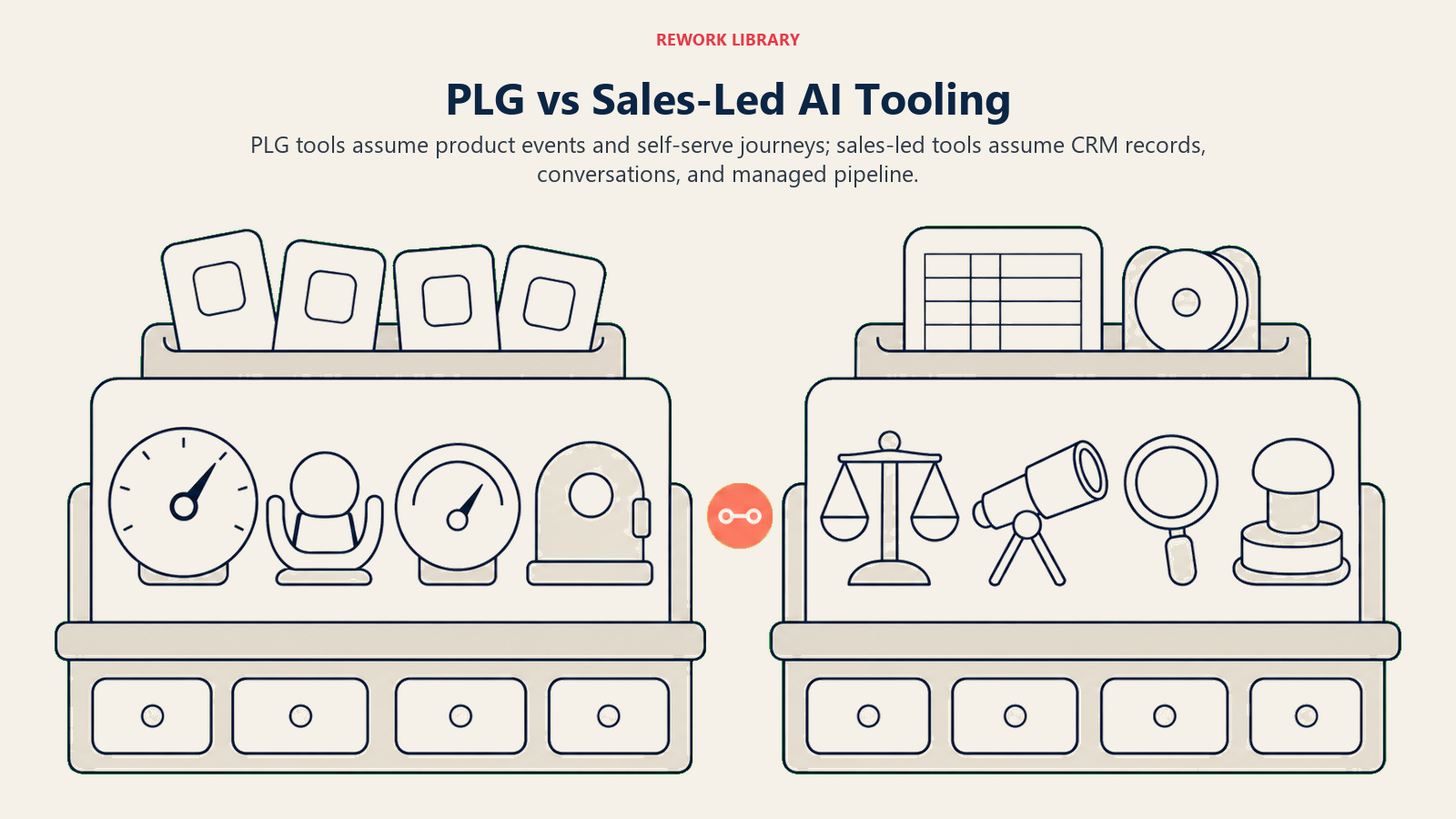
| 機能 | PLG 優先ツール | 営業主導優先ツール |
|---|---|---|
| トライアル/転換スコアリング | Amplitude、Mixpanel + ML レイヤー、Segment | Salesforce Einstein、HubSpot Predictive |
| プロダクト内 AI 機能 | Notion AI、Linear AI、Figma AI(組み込み) | 該当なし |
| 健全性スコアリング | Gainsight PX、Pendo AI | Gainsight CS、ChurnZero |
| サポート偏向 | Intercom Fin、Zendesk AI | Zendesk AI、Forethought |
| 営業インテリジェンス | 限定的(プロダクトシグナルからグロースチームへ) | Gong、Clari、Rework Sales AI |
| アウトバウンドリサーチ | 主要なモーションではない | Clay、Apollo AI、Outreach AI |
| コンテンツ/SEO | Writer.com、HubSpot AI | Copy.ai、Writer.com |
| パイプライン予測 | あまり関連しない | Clari、Salesforce Einstein |
最も重要なのは左側の列です。PLG 優先ツールはすべてトレーニング入力として行動イベントデータを前提としています。営業主導ツールは CRM レコードと会話データを前提としています。それらを混在させると、アクティビティデータが希薄な営業主導 CRM に PLG 健全性スコアリングツールを適用すると、シグナルではなくノイズが生成されます。
データの意味: 誰が先行しているか
プロダクトテレメトリは、より整っていて、より密度が高く、営業担当者が入力する項目への依存が小さいため、PLG企業は多くの場合、先行してスタートします。
PLG 企業は構造的なデータ優位性を持って AI プロジェクトを開始します。プロダクトイベントログは機械生成され、タイムスタンプが付けられ、スキーマが一貫しています。営業担当者の規律や CRM のデータ品質慣行に依存しません。3 年前に設立された PLG 企業は、プロダクトに触れたすべてのユーザーの行動データを初日から持っています。
営業主導企業は AI 投資が回収できる前にデータ品質に投資する必要があります。シーケンスは、まず CRM のクリーンアップ、次に Scoring+Routing と Meeting Intelligence、そしてより高度なパイプラインと Expansion AI です。
これは営業主導企業が永久に遅れを取ることを意味しません。AI プログラムの最初の 6 か月が異なって見えることを意味します。PLG チームは 1 か月目にトライアル転換スコアリングをデプロイします。営業主導チームは 1 か月目に CRM データ品質を監査し、2 か月目に基本的な Meeting Intelligence をデプロイし、3〜4 か月目に本格的なリードスコアリングに移ります。回収タイムラインは異なりますが、最終的な結果は異なりません。
GTM モーションを最初に決定する
AI 投資のシーケンスは GTM(go-to-market)モーションからほぼ機械的に導かれます。
主要な成長モーションが PLG の場合: プロダクトテレメトリーに基づいたトライアル転換インテリジェンス(Scoring+Routing)から始め、セルフサービス偏向のために AI Support Agent に投資し、使用量テレメトリーからの健全性スコアリングを追加しましょう。SEO 主導の獲得のための AI Content Operator はセルフサービスモーションを自然に補完します。
主要な成長モーションが営業主導の場合: まず CRM データ品質を監査し、次に担当者の即時の生産性向上のために Meeting Intelligence(Gong またはそれ相当)をデプロイし、データがクリーンになったら Scoring+Routing を追加し、アウトバウンドパーソナライゼーションのために Generative Research に投資しましょう。
ハイブリッドの場合: セグメントごとにセグメント化されたスタックを実行し、PLG シグナルから Sales Operator へのハンドオフに投資しましょう。このハンドオフはほとんどのハイブリッド企業が価値を流出させる場所です。
4 つのエージェント自体は GTM モーションに関わらず同じです。変わるのは、どのデータがそれらを供給するか、最初にどれをデプロイするか、最初の 90 日間での成功がどのように見えるかです。
よくある質問
PLG と営業主導 SaaS の AI スタックの主な違いは何ですか?
核心的な違いは各 AI エージェントの基礎となるトレーニングデータです。PLG 企業はプロダクト行動テレメトリーに AI をデプロイします。機能クリック、ワークフロー完了、セッション頻度、すべてのユーザーインタラクションから受動的に生成されるアクティベーションマイルストーンです。営業主導企業は会話データに AI をデプロイします。コール録音、CRM アクティビティログ、メールスレッド、ディールステージの進行です。これらのデータソースは互換性がありません。アクティビティデータが希薄な営業主導の CRM に PLG 最適化の AI ツールを適用すると、信頼性の低いアウトプットが生成されます。
PLG 企業が最初に投資すべき AI エージェントは何ですか?
プロダクトテレメトリーに基づいたトライアル転換インテリジェンスです。行動シグナルに基づいた Scoring and Routing モデルは、無料トライアルの 3 日目には、どのユーザーが高い転換確率を持つかを特定できます。行動スコアリングを使って的を絞ったアウトリーチをトリガーする無料トライアルプロダクトは、行動スコアリングなしの 17% に対して転換率を 25% 以上に引き上げます。グロースチーム(またはハイブリッドモデルでの AI Sales Operator)はトライアルが期限切れになる前に高意向ユーザーへのアウトリーチを優先します。
Product Qualified Lead(PQL)とは何ですか?なぜ AI に重要なのですか?
PQL はインプロダクトの行動が有料に転換した顧客の過去パターンと一致するトライアルまたは無料ユーザーです。PQL は Marketing Qualified Lead(MQL)の 5〜10% に対して 25〜30% の転換率を実現しており、人口統計ターゲティングではなく行動シグナルの品質だけに起因する 3 倍の差があります。AI は PQL 特定をスケーラブルにします。グロースチームが手動でダッシュボードをレビューする代わりに、Scoring+Routing モデルはすべてのトライアルユーザーを PQL 基準に対して継続的に評価し、最も高い転換確率を持つものを自動的に提示します。
営業主導 SaaS 企業が AI デプロイ前に CRM のデータ品質改善を必要とするのはなぜですか?
営業主導企業向けの AI スコアリングモデルは CRM データでトレーニングします。ディールステージ、コンタクトレコード、アクティビティログ、勝ち負けラベルです。ディールステージの 40% が不正確またはアクティビティログが不完全な場合、モデルは悪いデータから学習して信頼性の低いスコアを生成します。McKinsey は営業主導組織での AI スケールの最大のハードルとしてデータ品質を特定しています。正しいシーケンスは CRM のデータ品質改善まず、次に Meeting Intelligence、次に Scoring+Routing、次に Expansion AI です。
ハイブリッドの PLG からエンタープライズへの企業はどのように 2 つの異なる AI スタックを管理しますか?
ほとんどのハイブリッド SaaS 企業はセグメント化されたスタックを実行します。PLG 側はプロダクトテレメトリー駆動の健全性スコアリング、トライアル転換インテリジェンス、セルフサービスサポートを使用します。エンタープライズ側はミーティングインテリジェンスとパイプライン予測を含む完全な AI Sales Operator を実行します。重要な統合ポイントはハンドオフです。PLG ユーザーのチームが営業タッチをトリガーする使用量閾値に達したとき、Sales Operator がコンテキストとしてプロダクト行動履歴を受け取るべきです。2 つのスタックを分離して構築した企業はこのハンドオフで価値を流出させます。
AI モデルトレーニングにおいて PLG 企業が持つデータ優位性は何ですか?
PLG 企業は初日からすべてのユーザーアクションをカバーする機械生成のスキーマ一貫したイベントデータで AI プロジェクトを開始します。営業主導企業は完全性が営業担当者の規律に依存する CRM レコードを持っています。OpenView の PLG 調査によると、PLG 企業は営業とプロダクト支出の 1 ドルあたり 1.7 倍の粗利益を生み出しており、より豊富なデータセットの上に AI が重なると、その優位性はさらに広がります。PLG 企業は数週間で最初の AI モデルを立ち上げます。営業主導企業は通常、最初に数か月のデータクリーンアップが必要です。
関連記事:
