Klasifikasi Data untuk Akses AI: Kerangka 4 Tingkat untuk CIO

Turn this article into takeaways for your work.


Each assistant summarizes the article only for you and suggests best practices for your work.
Insiden governance AI yang paling umum bukan halusinasi. Itu adalah karyawan yang menempelkan personally identifiable information (PII) pelanggan, kontrak rahasia, atau data keuangan internal ke alat AI publik. Ini terjadi setiap hari di perusahaan tanpa kebijakan klasifikasi data untuk AI.
Bukan karena karyawan ceroboh. Karena tidak ada yang memberi tahu mereka aturannya. Dan aturan yang mereka miliki, kebijakan klasifikasi data dari audit SOC 2, tidak ditulis untuk AI.
Artikel ini memberi Anda kerangka klasifikasi data 4 tingkat khusus AI: kategori data mana yang dapat masuk ke tingkat alat AI mana, cara memetakannya ke lanskap vendor, seperti apa lantai hukum di bawah GDPR Article 22, dan cara menegakkannya tanpa membuat AI tidak dapat digunakan. Ini adalah pendamping dari Membangun Kebijakan Penggunaan AI Anda, di mana kerangka ini dioperasionalisasikan.
Mengapa kebijakan klasifikasi data Anda yang sudah ada tidak cukup
Key Facts: Celah Governance Data AI
- 43% organisasi menyebut kualitas dan kesiapan data sebagai hambatan utama mereka terhadap keberhasilan AI, tetapi kebijakan klasifikasi data sebagian besar organisasi ditulis sebelum sistem AI ada dan tidak menangani tiga jalur eksposur khusus AI (Informatica, 2025)
- GDPR Article 22 berlaku untuk sistem AI yang membuat keputusan otomatis konsekuensial tentang individu (kredit, rekrutmen, akses layanan), dan tindakan penegakan untuk pelanggaran GDPR sekarang rata-rata puluhan juta euro untuk pelanggaran skala enterprise di seluruh EU (EU Data Protection Board, 2025)
- Alat AI tier konsumen (ChatGPT gratis, akun Claude.ai pribadi) tidak memiliki data processing agreements formal, artinya data yang ditempelkan ke dalamnya tidak memiliki perlindungan kontraktual terhadap penggunaan pelatihan atau retensi; diperkirakan 78% karyawan menggunakan alat tersebut untuk pekerjaan tanpa menyadari ketentuan ini (Microsoft, 2024)
Sebagian besar perusahaan dengan kematangan governance apapun memiliki kebijakan klasifikasi data. Itu datang dari audit SOC 2 atau sertifikasi ISO 27001. Ini mendefinisikan tingkat seperti Public, Internal, Confidential, dan Restricted. Karyawan seharusnya menangani setiap tingkat dengan tepat.
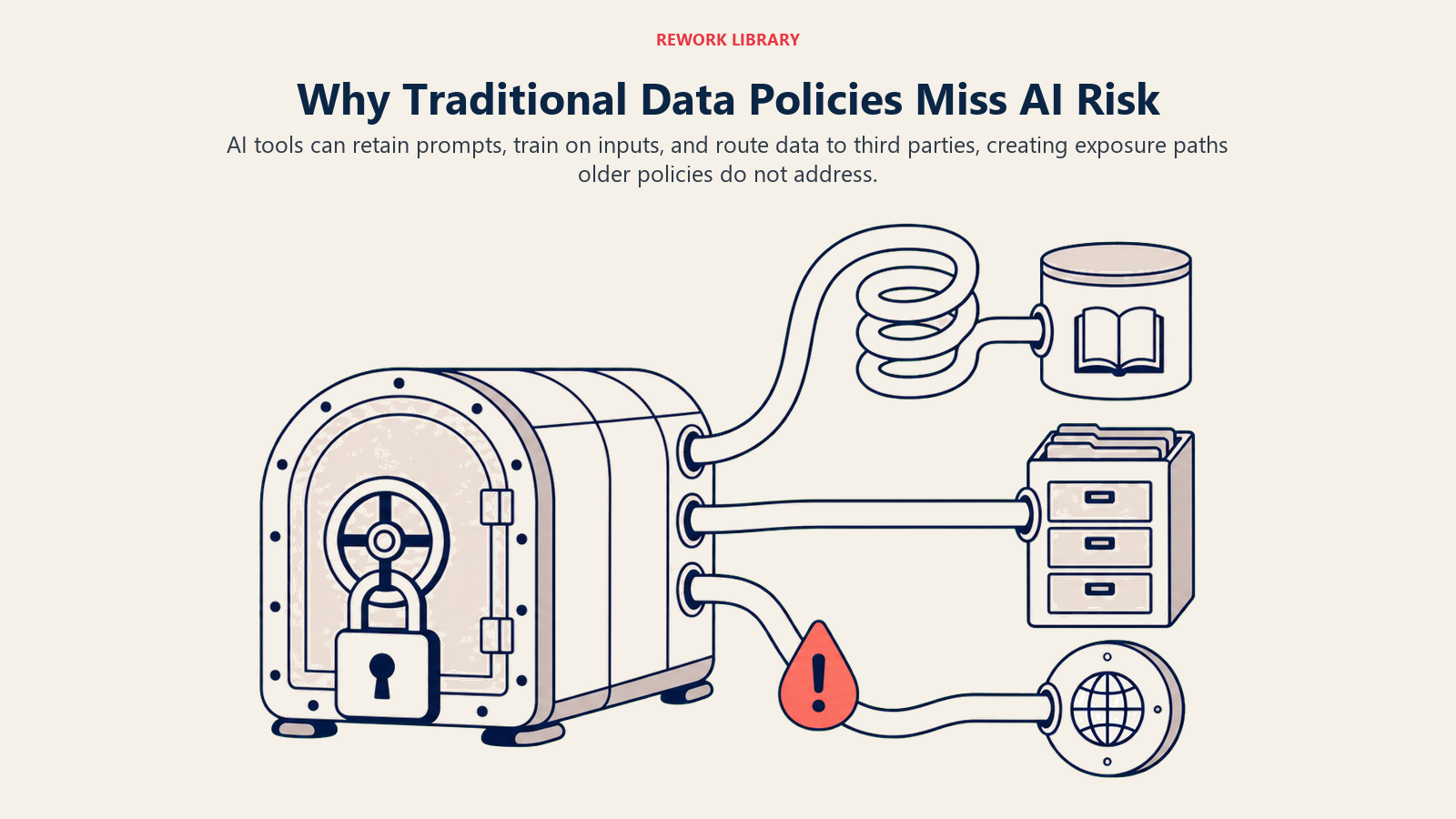
Namun kebijakan tersebut dirancang untuk model ancaman yang berbeda. Mereka mengasumsikan data tetap dalam sistem yang Anda kendalikan, dibagikan dengan manusia di dalam atau di luar organisasi, dilindungi oleh kontrol akses dan enkripsi.
Sistem AI mengubah model ancaman dengan tiga cara spesifik yang tidak ditangani oleh sebagian besar kebijakan yang ada. NIST SP 800-60 adalah standar federal untuk pemetaan tipe informasi ke kategori keamanan, dan memberikan kerangka fondasi untuk klasifikasi data, tetapi mendahului sistem AI modern dan perlu diperluas untuk memperhitungkan jalur eksposur khusus AI.
Pelatihan pada input. Alat AI tier konsumen, dan beberapa enterprise dengan pengaturan default, mungkin menggunakan input Anda untuk melatih atau fine-tuning model mereka. Jika seorang karyawan menempelkan dokumen strategi rahasia ke akun ChatGPT publik, konten tersebut mungkin menjadi bagian dari data pelatihan model, dapat diakses dalam bentuk fragmen oleh siapapun yang mengajukan pertanyaan yang tepat. Klasifikasi data tradisional mengasumsikan Anda melindungi dari akses yang tidak sah. Pelatihan-pada-input AI menciptakan jenis eksposur yang berbeda: data Anda menjadi bagian dari model itu sendiri. Inilah juga sebabnya hak kekayaan intelektual dan hak cipta pada output AI merupakan isu governance yang berdekatan.
Retensi dan pengambilan prompt. Banyak alat AI menyimpan riwayat percakapan. Beberapa membuatnya dapat diakses oleh pengguna lain atau vendor untuk tinjauan kualitas. Sales rep yang menempelkan diskusi anggaran prospek ke alat AI untuk membuat proposal mungkin meninggalkan percakapan tersebut dapat diakses dalam sistem vendor tanpa batas.
Perutean model pihak ketiga. Banyak alat produktivitas AI tidak menjalankan model mereka sendiri. Mereka merutekan prompt Anda ke OpenAI, Anthropic, atau Google di backend. Pertanyaan governance bukan hanya tentang alat AI yang Anda lihat. Ini tentang setiap model provider dalam rantai.
Kebijakan klasifikasi data Anda yang ada mungkin mengatakan "Data Rahasia harus dienkripsi saat istirahat dan dalam transit." Itu benar tetapi tidak cukup. Tidak ada yang dikatakan tentang apakah data Rahasia dapat dikirim ke model provider pihak ketiga dengan atau tanpa data processing agreement (DPA). Kebijakan khusus AI mengisi celah itu.
"Kebijakan klasifikasi data Anda yang ada mengasumsikan data tetap dalam sistem yang Anda kendalikan. AI mengubah asumsi itu dengan tiga cara: alat mungkin melatih pada input Anda, ia menyimpan riwayat percakapan, dan mungkin merutekan prompt ke model provider pihak ketiga yang tidak Anda tinjaui. Kebijakan yang mengatakan 'Data Rahasia harus dienkripsi saat istirahat dan dalam transit' tidak menangani satu pun dari tiga risiko ini." (Rework)
Skema Akses Data AI 4 Tingkat
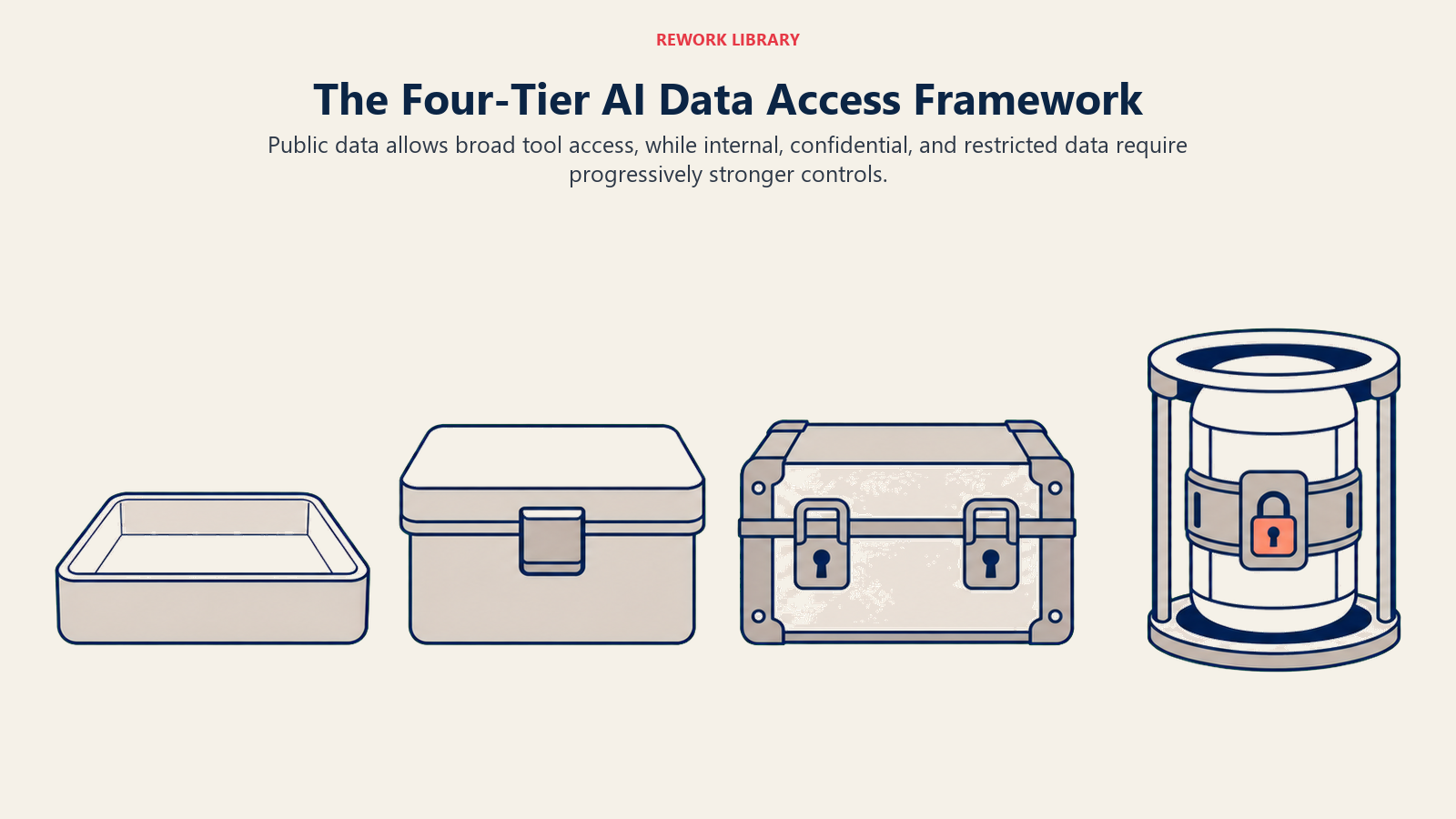
Kerangka klasifikasi terstruktur yang dirancang khusus untuk keputusan akses alat AI, memperluas klasifikasi data tradisional untuk memperhitungkan jalur eksposur khusus AI (pelatihan pada input, retensi prompt, perutean model pihak ketiga). Tingkat 1 (Public): data yang sudah publik, diizinkan di alat yang disetujui apapun. Tingkat 2 (Internal): data operasional rutin, diizinkan di alat AI enterprise dengan DPA yang ditandatangani dan komitmen no-training. Tingkat 3 (Confidential): PII pelanggan, data keuangan, kontrak, dan IP, hanya membutuhkan deployment AI private cloud atau on-premise. Tingkat 4 (Restricted): data HIPAA, GLBA, biometrik, dan litigation-hold, tidak ada AI eksternal tanpa persetujuan hukum eksplisit dan komitmen kontraktual tertulis. Skema ini memetakan tingkat data ke kategori alat, memungkinkan karyawan membuat keputusan akses AI yang benar tanpa berkonsultasi dengan dokumen kebijakan pada setiap interaksi.
Kerangka klasifikasi data AI 4 tingkat
Kerangka ini dirancang untuk menjawab satu pertanyaan praktis: dapatkah data ini masuk ke alat AI itu?
Tingkat 1: Public
Definisi: Data yang sudah publik, atau yang tidak akan memiliki dampak bisnis yang berarti jika dipublikasikan.
Contoh:
- Konten dari website publik, blog, dan materi pemasaran Anda
- Informasi pesaing yang dipublikasikan (dari website publik, siaran pers, pengajuan publik mereka)
- Pengetahuan bisnis dan industri umum yang tidak spesifik untuk perusahaan Anda
- Panduan regulasi dan dokumen standar publik
- Konten dari basis pengetahuan publik, Wikipedia, penelitian publik
Izin alat AI: Alat AI yang disetujui apapun, termasuk alat tier konsumen dan alat tanpa DPA formal, dapat memproses data Tingkat 1.
Siklus audit: Tidak diperlukan audit spesifik. Data Tingkat 1 menurut definisi tidak memiliki sensitivitas untuk dilindungi.
Catatan: Publik tidak berarti "taruhan rendah untuk tugas tersebut." Tim pemasaran yang menggunakan siaran pers pesaing publik sebagai input untuk analisis kompetitif menggunakan data Tingkat 1 meskipun output bisnis penting. Klasifikasinya tentang data input, bukan kepentingan strategis pekerjaan.
Tingkat 2: Internal
Definisi: Data yang tidak publik tetapi akan memiliki dampak bisnis yang terbatas jika diungkapkan. Mencakup sebagian besar data operasional rutin, dokumentasi proses internal, dan komunikasi bisnis non-sensitif.
Contoh:
- Dokumentasi proses internal dan prosedur operasi standar
- Catatan rapat dari rapat internal rutin (tanpa konten strategis atau keuangan)
- Komunikasi karyawan non-sensitif
- Data manajemen proyek internal tanpa konten keuangan atau strategis
- Deskripsi roadmap produk umum yang tidak mencakup detail kompetitif-sensitif
- Data pelanggan yang diagregasi dan dianonimkan tanpa identifikasi individu
Izin alat AI: Data Tingkat 2 dapat diproses oleh alat AI tier enterprise yang memiliki:
- Data Processing Agreement (DPA) yang ditandatangani dengan perusahaan
- Komitmen no-training-on-input dalam enterprise agreement
- Sertifikasi SOC 2 Type II atau setara
Alat yang memenuhi kriteria ini termasuk OpenAI Enterprise, Anthropic Claude for Business, Microsoft 365 Copilot (dalam boundary compliance M365 Anda), dan Google Workspace dengan Gemini for Workspace.
Alat tier konsumen (ChatGPT gratis, akun Claude.ai pribadi, akun Google Bard pribadi) tidak disetujui untuk data Tingkat 2.
Siklus audit: Tinjauan kuartalan enterprise tool agreement untuk mengkonfirmasi persyaratan DPA tetap berlaku dan komitmen no-training masih efektif.
Tingkat 3: Confidential
Definisi: Data yang eksposurnya akan menyebabkan kerugian bisnis, hukum, atau reputasi yang material. Membutuhkan perlindungan tertinggi untuk sebagian besar operasi bisnis.
Contoh:
- PII pelanggan (nama, alamat email, nomor telepon, alamat) dalam bentuk yang dapat diidentifikasi apapun
- Data penggunaan pelanggan, riwayat transaksi, dan detail akun
- Kontrak yang ditandatangani dan perjanjian hukum
- Proyeksi keuangan, perkiraan, dan hasil yang belum dirilis
- Materi terkait M&A (daftar target, ketentuan deal, due diligence)
- Kekayaan intelektual, algoritma proprietary, dan kode sumber yang mengandung logika sensitif
- Data pribadi karyawan (catatan HR, evaluasi kinerja, kompensasi)
- Komunikasi yang dilindungi attorney-client privilege
- Materi dewan direksi dan dokumen strategis tingkat dewan
Izin alat AI: Data Tingkat 3 membutuhkan salah satu:
- Deployment AI private cloud dengan organisasi Anda sebagai satu-satunya tenant, dan data yang tidak pernah meninggalkan lingkungan Anda
- Deployment AI on-premise yang berjalan di infrastruktur Anda sendiri
- Alat AI enterprise dengan jaminan data residency eksplisit, model serving yang terisolasi, dan komitmen kontraktual bahwa data tidak pernah digunakan untuk pelatihan atau dapat diakses oleh staf vendor
Pada 2026, sebagian besar alat AI enterprise komersial (termasuk OpenAI Enterprise, Anthropic Claude for Business, dan Microsoft Copilot) tidak sesuai untuk data Tingkat 3 secara default. Beberapa menawarkan opsi deployment pribadi dengan biaya tambahan. Verifikasi dengan konfigurasi vendor spesifik Anda.
Siklus audit: Tinjauan bulanan tentang karyawan mana yang telah memproses data Tingkat 3 melalui workflow AI apapun, dengan pelaporan pengecualian untuk data Tingkat 3 yang masuk ke alat yang disetujui Tingkat 2.
Catatan GDPR: PII pelanggan di Tingkat 3 tunduk pada persyaratan pengambilan keputusan otomatis GDPR Article 22 ketika AI membuat keputusan konsekuensial tentang individu. Lihat bagian Lantai Hukum di bawah.
Tingkat 4: Restricted
Definisi: Data yang eksposurnya akan menciptakan konsekuensi hukum, keuangan, atau keselamatan yang parah. Membutuhkan tinjauan hukum dan keamanan eksplisit sebelum penggunaan AI apapun.
Contoh:
- Data medis dan kesehatan yang dicakup oleh HIPAA (Health Insurance Portability and Accountability Act: catatan pasien, riwayat pengobatan, data klinis)
- Data keuangan yang diatur yang dicakup oleh GLBA (Gramm-Leach-Bliley Act) atau regulasi perbankan (keputusan pinjaman, data kredit, catatan keuangan tingkat akun yang tunduk pada pengawasan regulasi)
- Data yang dicakup oleh regulasi sektoral spesifik dengan pembatasan AI eksplisit (data anak-anak di bawah COPPA, catatan pendidikan tertentu di bawah FERPA)
- Rahasia negara dan data yang relevan dengan keamanan nasional (relevan untuk kontraktor pemerintah)
- Data di bawah litigation hold aktif atau tunduk pada perintah pengadilan
- Pengidentifikasi biometrik (sidik jari, data pengenalan wajah, voiceprint)
Izin alat AI: Tidak ada alat AI eksternal, termasuk alat tier enterprise, yang dapat memproses data Tingkat 4 tanpa persetujuan tertulis eksplisit dari CISO dan penasihat hukum, komitmen kontraktual spesifik dari vendor mengenai penanganan data, dan dokumentasi mengapa tidak ada pendekatan alternatif yang layak.
Dalam kebanyakan kasus, jawaban yang tepat untuk data Tingkat 4 adalah AI on-premise tanpa transmisi data eksternal. Untuk industri yang diatur, konsultasikan penasihat compliance Anda sebelum penggunaan AI apapun dengan data Tingkat 4.
Siklus audit: Penggunaan AI Tingkat 4 apapun membutuhkan tinjauan dan dokumentasi kasus per kasus. Tidak ada workflow AI Tingkat 4 "rutin" yang beroperasi pada audit terjadwal; setiap instance adalah pengecualian.
Memetakan tingkat data ke lanskap vendor
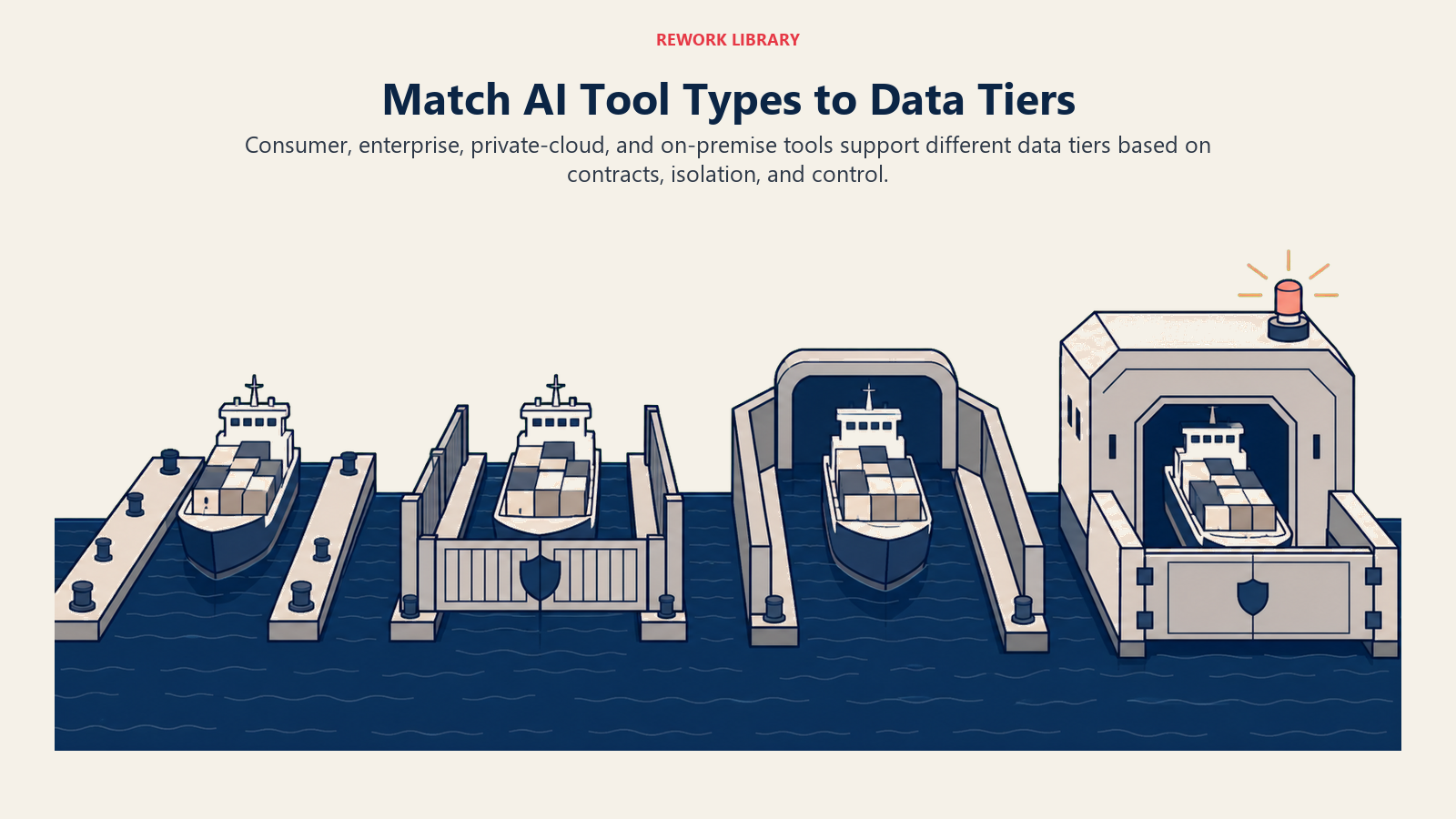
Tabel ini memetakan tingkat data ke kategori alat. Gunakan sebagai decision tree dalam kebijakan penggunaan AI Anda.
| Kategori Alat | Contoh | Tingkat 1 | Tingkat 2 | Tingkat 3 | Tingkat 4 |
|---|---|---|---|---|---|
| AI Konsumen (tanpa DPA) | ChatGPT gratis, Claude.ai pribadi, Gemini pribadi | Diizinkan | Tidak Diizinkan | Tidak Diizinkan | Tidak Diizinkan |
| AI Enterprise (DPA + SOC 2) | OpenAI Enterprise, Anthropic Claude for Business, Google Workspace + Gemini, Microsoft 365 Copilot | Diizinkan | Diizinkan | Tidak Diizinkan (default) | Tidak Diizinkan |
| AI Private cloud (single-tenant) | Azure OpenAI Service (deployment pribadi), AWS Bedrock (terisolasi), GCP Vertex AI (terisolasi) | Diizinkan | Diizinkan | Diizinkan (dengan tinjauan konfigurasi) | Tinjauan kasus per kasus |
| AI On-premise | Llama, Mistral, atau model yang di-fine-tune yang di-deploy secara lokal di perangkat keras perusahaan | Diizinkan | Diizinkan | Diizinkan | Diizinkan (dengan tinjauan hukum) |
Header kolom adalah tingkat data. Nilai sel menunjukkan apakah kategori alat tersebut dapat memproses tingkat data tersebut. Baca tabel sebagai: "Dapatkah saya menggunakan kategori alat ini untuk data di tingkat ini?"
Catatan tentang konfigurasi "private cloud". Beberapa vendor AI enterprise menawarkan opsi deployment pribadi atau terisolasi di mana data Anda tetap di lingkungan yang khusus, pemanggilan model tidak pernah meninggalkan region cloud Anda, dan tim operasi vendor tidak memiliki akses ke data Anda. Konfigurasi ini mahal dan kompleks secara operasional, tetapi mereka adalah jembatan antara alat tier enterprise dan deployment on-premise untuk data Tingkat 3. Jika vendor Anda menawarkan ini, dapatkan komitmen kontraktual spesifik (SLA data residency, komitmen no-ops-access, akses log audit) secara tertulis sebelum memperlakukannya sebagai yang disetujui Tingkat 3.
Lantai hukum: GDPR Article 22 dan AI
Untuk perusahaan yang beroperasi di atau melayani Uni Eropa, GDPR Article 22 menetapkan minimum hukum untuk pengambilan keputusan berbasis AI yang melibatkan data pribadi.
Apa yang dikatakan Article 22. GDPR Article 22 memberi subjek data hak untuk tidak tunduk pada keputusan berdasarkan pemrosesan otomatis semata yang menghasilkan efek hukum atau serupa yang signifikan. "Semata otomatis" berarti tidak ada tinjauan manusia yang bermakna. "Efek hukum atau serupa yang signifikan" mencakup keputusan kredit, keputusan perekrutan, akses ke layanan, dan outcome konsekuensial serupa.
Apa artinya untuk workflow AI. Jika AI Anda membuat keputusan konsekuensial tentang seseorang (skor kredit, rekomendasi rekrutmen, penugasan tingkat layanan pelanggan, lead score yang menentukan siapa yang dihubungi) dan keputusan itu dibuat tanpa tinjauan manusia yang bermakna, Anda memiliki masalah GDPR Article 22 untuk subjek data EU.
Postur compliance praktis. Workflow AI Predict atau Execute apapun yang membuat keputusan konsekuensial tentang individu yang dapat diidentifikasi membutuhkan:
- Langkah tinjauan human-in-the-loop yang benar-benar bermakna (bukan karet cap)
- Dasar yang terdokumentasi untuk pemrosesan (kepentingan sah atau persetujuan eksplisit)
- Mekanisme bagi individu untuk meminta tinjauan manusia dan menantang hasilnya
Ini bukan persyaratan khusus AI. Ini berlaku untuk pengambilan keputusan otomatis apapun tentang orang. Namun AI telah secara dramatis meningkatkan volume dan kecanggihan keputusan otomatis yang dibuat perusahaan, yang berarti kepatuhan GDPR Article 22 sekarang menjadi kekhawatiran governance aktif bagi perusahaan yang melakukan pekerjaan AI signifikan dengan data pelanggan atau karyawan.
CCPA (California). California Consumer Privacy Act memberi konsumen hak atas pengambilan keputusan otomatis yang melibatkan informasi pribadi mereka. Perusahaan yang tunduk pada CCPA harus memastikan workflow AI yang melibatkan konsumen California mencakup mekanisme pengungkapan dan opt-out yang sesuai dengan Peraturan CCPA yang berlaku Maret 2025.
HIPAA. Pemrosesan AI apapun atas protected health information (PHI) membutuhkan Business Associate Agreement (BAA) dengan vendor AI. PHI adalah Tingkat 4 secara default. Jika vendor Anda tidak dapat menandatangani BAA, PHI tidak dapat masuk ke alat mereka.
GLBA. Lembaga keuangan yang tunduk pada Gramm-Leach-Bliley Act harus memastikan alat AI yang memproses informasi keuangan pelanggan memenuhi persyaratan Safeguards Rule untuk melindungi data pelanggan.
Penegakan praktis: membuatnya bekerja tanpa membuatnya menyakitkan
Kerangka klasifikasi gagal bukan karena dirancang dengan buruk tetapi karena mustahil untuk diikuti dalam praktik. Berikut cara membuat yang ini benar-benar berhasil.
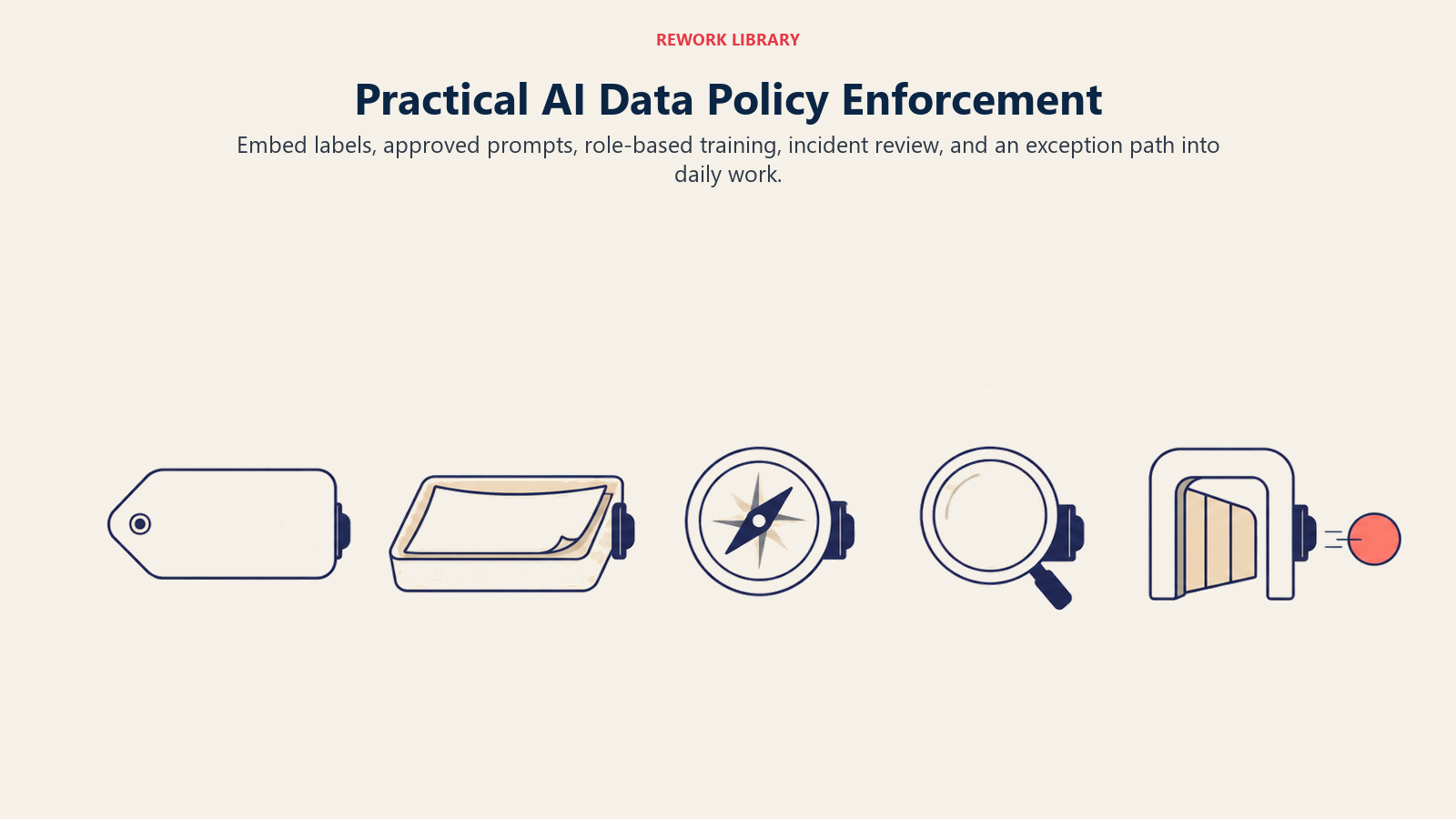
Beri label data di sumbernya. Integrasikan label tingkat ke dalam sistem tempat data berada. Perpustakaan dokumen SharePoint dengan label sensitivitas. Bidang CRM yang ditandai berdasarkan tingkat data. Sistem manajemen kontrak dengan metadata klasifikasi. Ketika data diberi label di tempat ia berada, karyawan tidak perlu mengingat aturan klasifikasi. Alat memberi tahu mereka.
Template prompt yang menegakkan klasifikasi. Untuk tim yang banyak menggunakan alat AI, sediakan template prompt yang disetujui yang mengklasifikasikan input sebelumnya. Template tim sales untuk pembuatan draft proposal yang mengatakan "Masukkan hanya informasi internal tentang perusahaan Anda di sini" mengingatkan pengguna tentang tingkat yang sesuai tanpa mengharuskan mereka berkonsultasi dengan dokumen kebijakan di tengah tugas.
Pelatihan yang berlabuh pada contoh nyata. Pelatihan klasifikasi yang memberi karyawan skenario aktual dari pekerjaan mereka lebih efektif daripada aturan abstrak. "Ketika Anda menempelkan kontrak pelanggan ini ke drafting assistant, itu adalah data Tingkat 3, yang berarti alat AI kontrak harus menjadi deployment on-premise kami, bukan ChatGPT Enterprise." Konkret mengalahkan abstrak.
Tinjauan pola insiden. Sebagian besar pelanggaran klasifikasi tidak disengaja. Mereka adalah hasil karyawan yang tidak tahu atau tidak memikirkan aturan pada momen yang relevan. Tinjau pola insiden secara kuartalan: tipe data apa yang pergi ke mana, di mana pelanggaran mengelompok, apakah tim atau alat spesifik memiliki risiko lebih tinggi. Gunakan pola untuk menyempurnakan pelatihan, bukan hanya untuk menetapkan kesalahan.
Penanganan pengecualian. Terkadang use case Tingkat 3 muncul yang memiliki kebutuhan bisnis yang sah dan dapat ditangani dengan opsi deployment pribadi vendor. Bangun proses pengecualian: permintaan, tinjauan CISO, verifikasi komitmen kontraktual spesifik, persetujuan dengan batas waktu. Memiliki jalur pengecualian formal mencegah tim baik terblokir atau bertindak sendiri.
Mengaudit kepatuhan
Catat apa yang masuk. Alat AI enterprise dengan DPA harus menyediakan log audit prompt input dan karyawan yang mengirimnya. Aktifkan ini. Tinjau log secara kuartalan untuk konten Tingkat 3 atau Tingkat 4 dalam alat yang tidak disetujui untuk tingkat tersebut.
Spot check peran berisiko tinggi. Peran yang secara rutin menangani data Tingkat 3 atau Tingkat 4 (keuangan, hukum, HR, sales dengan akses kontrak besar) memerlukan pemantauan yang lebih ketat. Spot check kuartalan yang meninjau log penggunaan alat AI terhadap aturan tingkat data.
Analisis incident reporting. Setiap insiden AI yang dilaporkan harus dinilai untuk implikasi klasifikasi data. Apakah insiden disebabkan oleh data Tingkat 3 dalam alat Tingkat 2? Itu adalah celah penegakan klasifikasi. Apakah disebabkan oleh penggunaan alat yang tidak disetujui? Itu adalah celah shadow AI. Kategorikan insiden untuk mengidentifikasi masalah sistemik vs. kesalahan satu kali.
Tinjauan penuh tahunan. Tipe data berubah seiring evolusi bisnis. Sumber data baru ditambahkan. Persyaratan regulasi bergeser. Tinjau seluruh daftar penugasan tingkat setiap tahun untuk memastikan klasifikasi masih cocok dengan data bisnis saat ini dan persyaratan regulasi saat ini.
Klasifikasi memberi tahu Anda data apa yang dapat pergi ke mana. Namun masalah yang lebih sulit adalah mengetahui apa yang harus dilakukan ketika workflow AI menyentuh data yang diklasifikasikan dan sesuatu berjalan salah, yang merupakan pertanyaan yang harus dijawab terlebih dahulu oleh proses approval gate dan vendor review.
Analisis Rework: Berdasarkan pola insiden governance data AI, pelanggaran paling sering adalah data Tingkat 3 (PII pelanggan, kontrak, proyeksi keuangan) yang diproses dalam alat yang disetujui Tingkat 2 (ChatGPT Enterprise, Claude for Business), bukan dalam alat tier konsumen. Ini terjadi karena karyawan dengan benar menghindari alat konsumen tetapi tidak menyadari alat tier enterprise mereka tidak disetujui untuk data Tingkat 3 dalam konfigurasi defaultnya. Data Tingkat 3 membutuhkan deployment private cloud (dengan komitmen kontraktual spesifik) atau AI on-premise. Tabel pendaratan vendor dalam artikel ini dirancang secara khusus untuk membuat batas Tingkat 2/Tingkat 3 terlihat daripada mengasumsikan karyawan akan membaca tulisan kecil dalam enterprise agreement.
Apa yang dibaca selanjutnya
Baca: Membangun Kebijakan Penggunaan AI Anda untuk struktur kebijakan 6 bagian yang mengoperasionalisasikan kerangka klasifikasi ini.
Baca: AI Approval Gates dan Vendor Review untuk checklist evaluasi vendor yang menentukan tingkat alat mana yang dimasuki produk AI baru.
Baca: AI Risk Register: Apa yang Perlu Dilacak untuk bagaimana pelanggaran klasifikasi data masuk ke pelacakan risiko AI yang lebih luas.
Baca: 7 Tipe Data yang Menggerakkan AI Bisnis untuk memahami tipe data apa yang memberi makan kemampuan AI dan tipe mana yang membawa persyaratan governance tertinggi.
Pertanyaan yang Sering Diajukan
Apa itu 4-Tier AI Data Access Scheme?
4-Tier AI Data Access Scheme adalah kerangka klasifikasi yang dirancang khusus untuk keputusan akses alat AI. Tingkat 1 (Public) mengizinkan alat yang disetujui apapun. Tingkat 2 (Internal) mengizinkan alat AI enterprise dengan DPA yang ditandatangani dan komitmen no-training. Tingkat 3 (Confidential, termasuk PII pelanggan, kontrak, dan data keuangan) hanya membutuhkan deployment AI private cloud atau on-premise. Tingkat 4 (Restricted, termasuk data HIPAA, GLBA, dan biometrik) membutuhkan persetujuan hukum eksplisit untuk pemrosesan AI apapun. Skema ini menjawab pertanyaan praktis: dapatkah data ini masuk ke alat AI itu?
Mengapa kebijakan klasifikasi data standar tidak mencakup AI?
Kebijakan klasifikasi data standar mengasumsikan data tetap dalam sistem yang Anda kendalikan, dilindungi oleh kontrol akses dan enkripsi. Sistem AI mengubah model ancaman dengan tiga cara: mereka mungkin melatih pada input Anda (membuat data Anda menjadi bagian dari model), mereka menyimpan riwayat percakapan (menciptakan persistensi di luar sesi), dan banyak yang merutekan prompt ke model provider pihak ketiga yang tidak Anda tinjaui. Kebijakan yang ditulis untuk penanganan data tradisional tidak menangani satu pun dari tiga jalur eksposur khusus AI ini.
Data apa yang diklasifikasikan sebagai Tingkat 3 (Confidential) untuk tujuan akses AI?
Tingkat 3 mencakup: PII pelanggan (nama, alamat email, nomor telepon) dalam bentuk yang dapat diidentifikasi apapun, data transaksi dan penggunaan pelanggan, kontrak yang ditandatangani dan perjanjian hukum, proyeksi keuangan dan hasil yang belum dirilis, materi M&A, kekayaan intelektual dan kode sumber dengan logika sensitif, data pribadi karyawan, komunikasi yang dilindungi attorney-client privilege, dan dokumen strategis tingkat dewan. Sebagian besar alat AI enterprise umum termasuk OpenAI Enterprise dan Anthropic Claude for Business TIDAK disetujui untuk data Tingkat 3 dalam konfigurasi defaultnya.
Dapatkah alat AI enterprise seperti ChatGPT Enterprise memproses data pelanggan?
Secara default, OpenAI Enterprise dan Anthropic Claude for Business sesuai untuk data Tingkat 2 (Internal): mereka memiliki DPA yang ditandatangani dan komitmen no-training. Mereka TIDAK sesuai untuk data Tingkat 3 (Confidential) termasuk PII pelanggan dalam konfigurasi enterprise standar mereka. Data Tingkat 3 membutuhkan deployment private cloud (dengan komitmen kontraktual spesifik: SLA data residency, komitmen no-operations-access) atau AI on-premise. Beberapa vendor menawarkan konfigurasi pribadi ini dengan biaya tambahan; verifikasi persyaratan kontraktual spesifik sebelum memperlakukannya sebagai yang disetujui Tingkat 3.
Apa persyaratan GDPR Article 22 untuk AI?
GDPR Article 22 memberi subjek data EU hak untuk tidak tunduk pada keputusan berdasarkan pemrosesan otomatis semata yang menghasilkan efek hukum atau serupa yang signifikan. Jika AI Anda membuat keputusan konsekuensial tentang individu EU (penilaian kredit, rekomendasi rekrutmen, penugasan tingkat layanan) tanpa tinjauan manusia yang bermakna, Anda memiliki masalah kepatuhan GDPR Article 22. Persyaratan praktisnya adalah langkah tinjauan human-in-the-loop yang benar-benar bermakna, dasar hukum yang terdokumentasi untuk pemrosesan, dan mekanisme bagi individu untuk meminta tinjauan manusia dan menantang hasilnya.
Lihat juga:
- Audit Trails untuk AI Execute Actions: persyaratan logging untuk workflow AI berkemampuan Execute yang menangani data yang diklasifikasikan
- Kesiapan Data: Prasyarat yang Dilewatkan Sebagian Besar Proyek AI: memahami kualitas data sebelum aturan akses AI dapat diterapkan

Co-Founder, Rework.com
On this page
- Mengapa kebijakan klasifikasi data Anda yang sudah ada tidak cukup
- Skema Akses Data AI 4 Tingkat
- Kerangka klasifikasi data AI 4 tingkat
- Tingkat 1: Public
- Tingkat 2: Internal
- Tingkat 3: Confidential
- Tingkat 4: Restricted
- Memetakan tingkat data ke lanskap vendor
- Lantai hukum: GDPR Article 22 dan AI
- Penegakan praktis: membuatnya bekerja tanpa membuatnya menyakitkan
- Mengaudit kepatuhan
- Apa yang dibaca selanjutnya