More in
Playbook de Productividad del Equipo
Cómo Llevar un 1:1 Productivo que sus Colaboradores Esperen con Ganas
abr. 18, 2026
Bloques de Enfoque a Nivel de Equipo, No Solo Individual
abr. 18, 2026
Actualizaciones de Estado Semanales sin el Teatro Innecesario
abr. 18, 2026
Kickoffs de Proyecto que Previenen el Scope Creep
abr. 18, 2026
Marcos de Priorización que su Equipo Recordará
abr. 18, 2026
Gestión de Equipos Distribuidos en Más de 3 Zonas Horarias
abr. 18, 2026
Planificación de Capacidad sin Hojas de Cálculo Interminables
abr. 18, 2026
La Conversación sobre Normas del Equipo que Usted Ha Estado Evitando
abr. 18, 2026 · Currently reading
Onboarding de Nuevos Miembros del Equipo a su Forma de Trabajar
abr. 18, 2026
Auditoría de Reuniones: Cómo Eliminar las Reuniones que su Equipo Detesta
abr. 1, 2026
La Conversación sobre Normas del Equipo que Ha Estado Evitando
Turn this article into takeaways for your work.


Each assistant summarizes the article only for you and suggests best practices for your work.
Cada equipo tiene normas. Reglas sobre cómo se comunican las personas, cuándo se espera que estén disponibles, cómo se manejan los conflictos y qué significa ser un buen compañero de equipo. Pero la mayoría de esas reglas nunca se acordaron. Surgieron de comportamientos tempranos, de las preferencias del miembro del equipo más asertivo, de hábitos heredados que nadie pensó en cuestionar.
Y ahora son invisibles. El equipo opera según ellas sin que nadie pueda nombrarlas. Los nuevos miembros heredan confusión en lugar de claridad. La fricción se acumula en lugares que nadie quiere tocar. Y el manager que puede ver el problema evita nombrarlo porque hacerlo se siente como armar un problema innecesario.
Ese cálculo casi siempre es equivocado. Nombrar lo tácito es menos incómodo que gestionar sus consecuencias. Un equipo que tiene una conversación estructurada sobre cómo trabaja junto es más resiliente que uno que nunca la ha tenido.
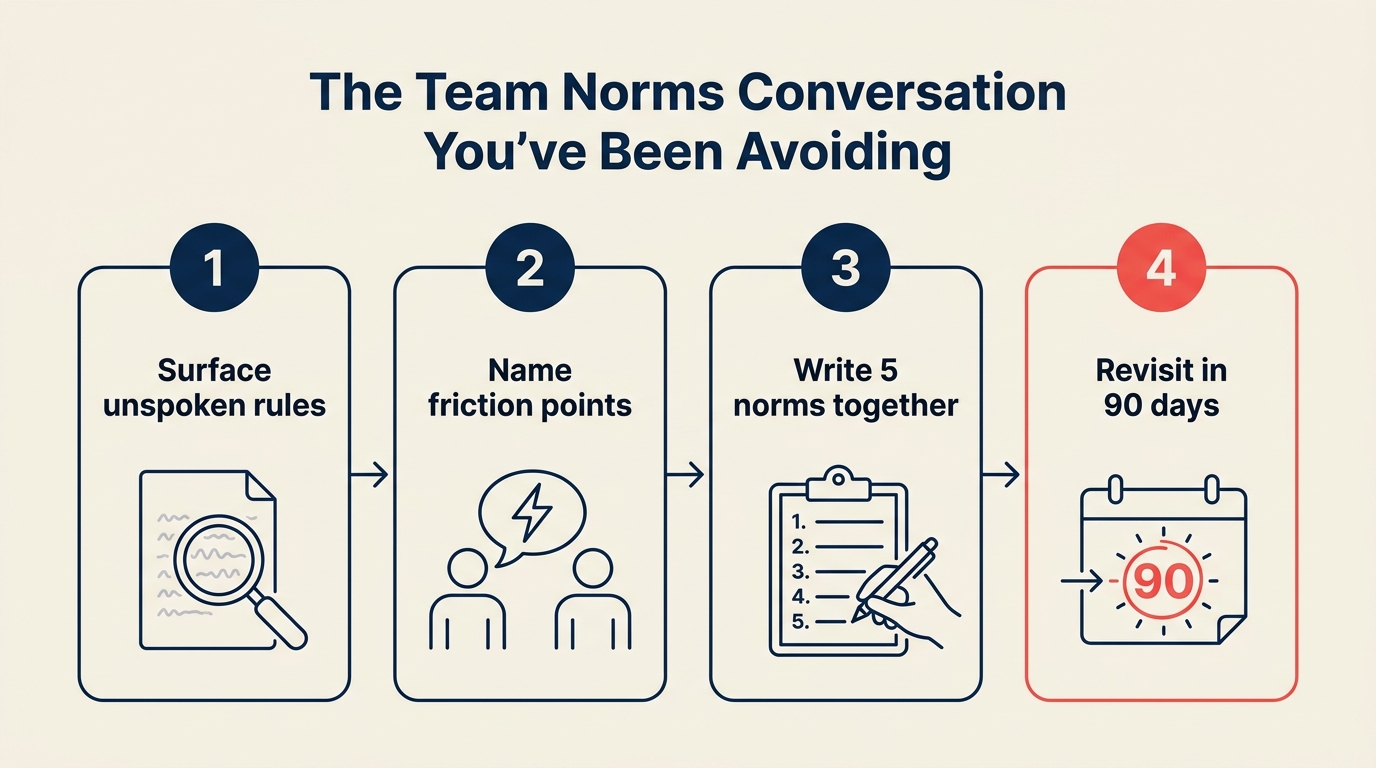
Esta guía le proporciona un formato para llevar esa conversación: estructurado, de bajo riesgo y genuinamente útil.
Por Qué los Equipos Evitan Esta Conversación
La resistencia a las conversaciones sobre normas del equipo generalmente proviene de uno de tres lugares.
Se siente presuntuoso. "El equipo está bien. ¿Por qué crear un problema?" La mayoría de los equipos que tienen disfunciones reales de normas están funcionando lo suficientemente bien como para que el problema no sea visible hasta que se acumula. Para cuando el manager decide que vale la pena abordarlo, la disfunción suele ser lo suficientemente grave como para que la conversación debería haber ocurrido meses antes.
Se siente como una intervención cultural. Los talleres de team building, los ejercicios de valores y los retiros culturales han creado una categoría de conversación que se siente pesada y performativa. Una conversación sobre normas se asocia con esta categoría. Pero no tiene que serlo. Enmarcada como una sesión de acuerdo de trabajo (práctica, operativa, enfocada en cómo el equipo realmente trabaja) es simplemente una reunión de planificación.
El manager no quiere ir primero. La vulnerabilidad es necesaria para que esta conversación sea real, y el manager es quien necesita modelarla. Si el manager plantea las preguntas desde una posición de tener todas las respuestas, el equipo responde con respuestas gestionadas. Si el manager lidera con sus propias reflexiones genuinas ("aquí hay una norma que he notado que tengo y que nunca he compartido explícitamente con ustedes"), la conversación se abre de manera diferente.
El trabajo híbrido y distribuido hizo que las normas implícitas fueran más costosas. En un equipo co-localizado, los nuevos miembros pueden observar la cultura y absorber gradualmente las reglas tácitas. En un equipo distribuido, esos mecanismos de absorción no existen. Los nuevos empleados quedan a la deriva, adivinando, muchas veces equivocándose, y pasando semanas o meses en una confusión innecesaria. La investigación de Gartner sobre el rendimiento de la fuerza laboral híbrida encontró que los equipos híbridos sin documentación cultural explícita experimentan un 40% más de rotación en etapas tempranas que aquellos con acuerdos de funcionamiento del equipo formales. La conversación sobre normas debe diseñarse en lugar de descubrirse. Esto aplica con especial fuerza a los equipos distribuidos en múltiples zonas horarias, donde la calibración informal que ocurre en las oficinas compartidas simplemente no existe.
Qué Es (y No Es) una Conversación sobre Normas
Una conversación sobre normas del equipo es una sesión estructurada en la que el equipo saca a la superficie los acuerdos implícitos bajo los que ya opera, y luego convierte los que vale la pena conservar en compromisos explícitos.
No es:
- Una sesión de terapia o ejercicio de procesamiento emocional
- Un foro para quejas
- Una declaración cultural top-down del manager
- Un evento único
Es:
- Una sesión de trabajo que produce un documento compartido
- Una conversación sobre cómo opera el equipo, no sobre cómo se siente el equipo
- Responsabilidad del manager iniciarla, pero trabajo del equipo completarla
- Un acuerdo vivo que se revisa y actualiza
La diferencia entre una sesión de acuerdo de trabajo y una intervención cultural es principalmente el encuadre. "Vamos a trabajar en nuestro acuerdo de funcionamiento del equipo" llega diferente que "vamos a hablar sobre cómo han ido las cosas y si hay problemas". La misma conversación, pero con una temperatura de sala completamente diferente.
Las Cuatro Categorías a Cubrir
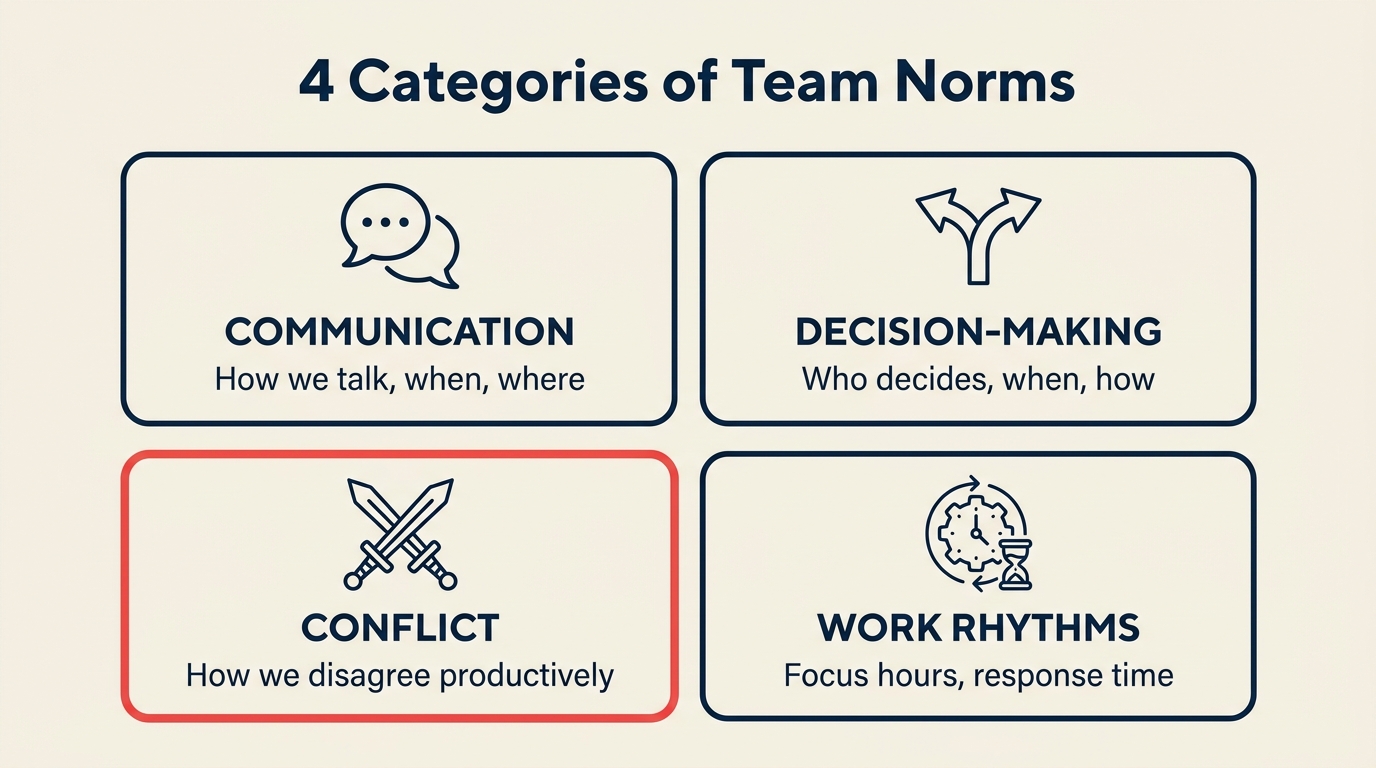
Una conversación útil sobre normas del equipo cubre cuatro áreas. Estas se mapean a los lugares donde las normas tácitas causan más daño:
Cómo nos comunicamos. Esto cubre la elección de canales, las expectativas de tiempo de respuesta, cómo se anuncian las decisiones y cómo se comparte la información con el equipo versus solo con el manager. La mayoría de los equipos tiene normas implícitas muy fuertes aquí que nadie ha articulado. "No enviamos mensajes de Slack después de las 7 p.m." es una norma que puede existir, pero a menos que se haya nombrado, alguien que se une al equipo desde una cultura diferente la violará y no entenderá por qué recibió una respuesta fría a la mañana siguiente.
Cómo tomamos decisiones. ¿Quién tiene autoridad para tomar decisiones sobre qué? ¿Cuándo necesita el manager ser consultado versus informado? ¿Cuál es el valor predeterminado cuando no hay un tomador de decisiones claro? ¿Cuándo es correcto hacer push back versus ceder? Los equipos sin respuestas compartidas a estas preguntas gastan una enorme energía en fricción de decisiones que podría evitarse. La investigación de MIT Sloan Management Review sobre toma de decisiones organizacionales estima que los derechos de decisión poco claros le cuestan a las organizaciones un promedio del 20% de la capacidad productiva anual a través de aprobaciones redundantes, escalaciones y reversiones de decisiones tomadas sin la autoridad adecuada.
Cómo manejamos los conflictos. ¿Cómo debe un miembro del equipo plantear una preocupación con un colega? ¿Está bien estar en desacuerdo en Slack o esa conversación necesita pasar a una llamada? ¿Cuándo algo se convierte en una conversación con el manager versus una conversación entre pares? ¿Hay una cultura de Feedback directo o todo se suaviza? Los equipos que no han hablado de esto suelen manejar los conflictos de la manera que parece culturalmente más segura, que generalmente significa evitarlos hasta que se convierten en un problema real.
Cómo protegemos el tiempo de los demás. ¿Qué cuenta como una interrupción urgente versus una solicitud de "cuando tengas un momento"? ¿Está bien agregar a alguien a una reunión sin consultarle primero? ¿Cómo se manejan los cambios de horario de último momento? ¿Cuál es la norma del equipo respecto a los mensajes de fin de semana? Las normas de protección del tiempo suelen ser las más invisibles porque se sienten demasiado pequeñas para plantearlas, hasta que alguien las viola consistentemente y se acumula el resentimiento. Estas mismas normas rigen los focus blocks del equipo, y los focus blocks solo funcionan si el acuerdo de protección del tiempo existe primero.
El Formato: Primero Async, Luego en Vivo
La conversación sobre normas más efectiva se desarrolla en dos fases: escritura async primero, luego una discusión en vivo de los temas clave.
Fase 1: Escritura async (4-7 días antes de la sesión en vivo)
Envíe al equipo una encuesta o documento con 10-12 preguntas escritas, dos o tres por categoría. Pida a cada persona que responda de forma individual y por escrito antes de la sesión en vivo.
Ejemplos de preguntas:
Cómo nos comunicamos:
- "¿Qué canales de comunicación deberían revisarse diariamente? ¿Cuál es el tiempo de respuesta esperado para cada uno?"
- "¿Cuándo algo debería ser una reunión versus un mensaje? ¿Dónde está la línea para usted?"
- "Cuando tiene una preocupación sobre un proyecto o una dirección, ¿cómo prefiere plantearla?"
Cómo tomamos decisiones:
- "¿Cuándo puede cada uno de nosotros tomar una decisión de forma independiente versus necesitar involucrar a otros?"
- "¿Qué debería ocurrir cuando dos miembros del equipo están en desacuerdo sobre una dirección?"
- "¿Cuándo está bien avanzar sin el 100% de consenso?"
Cómo manejamos los conflictos:
- "Si tiene un problema con la forma en que trabaja un compañero, ¿cómo prefiere abordarlo?"
- "¿Hay un momento en que NO está bien dar Feedback directo a un colega? ¿Cuál es la línea?"
- "¿Cuándo debería alguien llevar un conflicto entre pares al manager versus resolverlo directamente?"
Cómo protegemos el tiempo de los demás:
- "¿Cuál es la protección más importante que desea para su tiempo de trabajo concentrado?"
- "¿Cuál es una forma común en que las personas se interrumpen entre sí sin intención y que deberíamos nombrar?"
- "¿Cuál es su expectativa respecto a mensajes y llamadas fuera del horario laboral?"
Las respuestas escritas hacen dos cosas importantes. Sacan a la superficie los desacuerdos antes de la sesión en vivo (puede ver en las respuestas dónde el equipo tiene supuestos muy diferentes) y aseguran que todos participen, incluidos los miembros que tienden a quedarse en silencio en entornos grupales.
Fase 2: Sesión en vivo (45-60 minutos)
No lea las respuestas de la encuesta en voz alta. Antes de la sesión, revíselas usted mismo e identifique los 3-5 temas donde hay mayor divergencia o puntos de vista más arraigados. Esos son su agenda de discusión.
Conduzca la sesión en vivo en torno a esos temas:
(5 minutos) Enmarque la sesión: "Estamos aquí para convertir los acuerdos implícitos en explícitos. Nada de lo que alguien diga hoy está mal. Estamos sacando a la superficie lo que ya existe y decidiendo juntos qué conservar."
(30-35 minutos) Trabaje los 3-5 temas clave. Para cada uno: comparta el rango de respuestas, nombre la divergencia ("algunas personas dijeron X y otras dijeron Y") y pida al equipo que acuerde una norma. Documente la norma acordada en tiempo real.
(10 minutos) Revisión rápida de los temas donde hubo consenso fuerte (estos pueden anotarse sin mucha discusión).
(5-10 minutos) Acuerde cómo se documentarán las normas, dónde vivirán y cuándo se revisarán nuevamente.
La sesión en vivo es donde ocurre la conversación, pero funciona porque la fase async ya hizo la mayor parte del trabajo intelectual.
El Manager Va Primero
Lo más importante que hace el manager en este proceso es modelar la vulnerabilidad antes de pedírsela a los demás. La investigación de Harvard Business Review sobre seguridad psicológica muestra que los equipos donde los líderes comparten explícitamente sus propias normas, sesgos y estilos de trabajo antes de pedir aportaciones del equipo generan significativamente mayor candor en los ejercicios de equipo, y que la auto-revelación del manager es el factor predictivo más importante de si los miembros del equipo responden con honestidad.
Antes de que salga la encuesta async, comparta sus propias normas por escrito. No como un modelo de respuesta. Como una divulgación personal genuina. "Aquí hay tres cosas que he notado que implícitamente espero y que nunca he dicho explícitamente. Las comparto porque este ejercicio solo funciona si estoy dispuesto a ser tan honesto como les estoy pidiendo que sean."
Algunos ejemplos de normas del manager que vale la pena nombrar explícitamente:
- "No leo Slack después de las 7 p.m. y no espero que ustedes me respondan después de esa hora."
- "Prefiero el Feedback directo sobre mi gestión. Prefiero escucharlo de ustedes que enterarme a través de una encuesta."
- "Cuando digo 'hágame saber sus opiniones', realmente lo digo. Quiero desacuerdo, no consenso."
- "A veces tomo decisiones rápidamente sin una consulta completa. Si eso está afectando su trabajo, quiero saberlo."
Estas no son debilidades. Son información que hace al equipo más efectivo. Compartirlas primero establece el tono para el resto del proceso.
Capturando los Acuerdos
El resultado de la sesión sobre normas es un documento compartido, generalmente parte de su acuerdo de funcionamiento del equipo, que captura las normas acordadas en lenguaje claro.
No lo embellezca. El lenguaje claro y específico es mejor que el lenguaje aspiracional. "Respondemos los mensajes directos de Slack dentro de las 4 horas laborales" es más útil que "Practicamos una comunicación respetuosa y oportuna."
Formatee cada norma como una declaración simple:
- Nosotros [comportamiento] porque [breve justificación, opcional].
- Ejemplos de esto en la práctica: [1-2 escenarios concretos].
La justificación y los ejemplos son opcionales pero útiles, especialmente para normas que pueden parecer arbitrarias para alguien que no estuvo en la conversación. Un nuevo miembro del equipo que lee "no programamos reuniones en la última hora del día laboral sin 24 horas de anticipación" entiende mejor la norma cuando hay una breve oración de contexto.
La Revisión Trimestral
Un documento de normas del equipo que no se revisa se convierte en un artefacto histórico en lugar de un acuerdo vivo. Establezca una revisión trimestral recurrente (30 minutos, no una sesión completa) con un único propósito: ¿estas normas siguen siendo correctas, o alguna de ellas necesita cambiar?
La revisión trimestral también es donde se agregan nuevas normas. Un hábito de trabajo del equipo que emergió en el último trimestre puede valer la pena formalizarlo. Una norma que está generando fricción puede valer la pena revisarla.
El formato de la revisión es simple:
- Lea cada norma en voz alta.
- Pregunte: "¿Esta norma todavía nos sirve? ¿Debería conservarse, modificarse o eliminarse?"
- Agregue las nuevas normas que surgieron desde la última revisión.
- Actualice el documento.
Eso es todo. Treinta minutos, trimestralmente. El documento se mantiene actualizado y el equipo continúa siendo su dueño.
Errores Comunes
Convertirlo en un evento único. Una conversación sobre normas del equipo que ocurre una vez y no se vuelve a revisar es un ejercicio de documentación, no un cambio cultural. El valor viene de la práctica continua: las revisiones trimestrales, las referencias durante el onboarding, la capacidad de señalar el documento cuando se viola una norma.
Dejar que las voces más ruidosas dominen. El formato async primero ayuda aquí, pero no es suficiente por sí solo. En la sesión en vivo, llame activamente a las personas que aún no han contribuido. Los miembros del equipo que se retienen en entornos grupales suelen tener las perspectivas más útiles, y su silencio significa que las normas documentadas reflejan solo las voces más asertivas.
Escribir acuerdos que nadie vuelve a consultar. El documento de normas vive o muere según dónde vive y cómo se usa. Si está en una carpeta compartida que nadie abre después de la sesión inicial, no es un documento de trabajo. Colóquelo en algún lugar que el equipo realmente visite: la parte superior de su Notion de equipo, el post fijado en su canal de Slack, la primera página del documento de onboarding.
Tratar las violaciones como fallos morales. Cuando alguien actúa en contra de una norma establecida del equipo, la primera conversación es de curiosidad, no de acusación. "Noté que ocurrió X. ¿Hubo alguna razón para eso, o la norma no está clara?" La mayoría de las violaciones son olvido, malentendido o una señal de que la norma necesita actualizarse. Reserve el marco disciplinario para los patrones que persisten después de una comunicación clara.
Conexión con los Sistemas Operativos del Equipo
La conversación sobre normas del equipo es el precursor del acuerdo de funcionamiento del equipo, o un subconjunto de él si ya lo ha construido. El acuerdo de funcionamiento cubre las decisiones de proceso (cómo ejecutamos reuniones, cómo tomamos decisiones, cómo hacemos seguimiento del trabajo); la conversación sobre normas cubre los acuerdos culturales e interpersonales (cómo tratamos el tiempo de los demás, cómo manejamos los conflictos, cómo nos comunicamos).
Cuando está incorporando nuevos miembros del equipo a las formas de trabajo, el documento de normas es un recurso de primera consulta. "Así es como trabaja este equipo" es más útil cuando está escrito, no cuando se transmite a través de la observación informal.
Y sus retrospectivas son donde las violaciones de normas y los patrones emergentes salen a la superficie. Si la retrospectiva sigue produciendo el mismo Feedback ("la comunicación no fue clara este Sprint", "tuvimos demasiadas reuniones de último momento"), esa es una señal de que la conversación sobre normas necesita revisar esas áreas.
El Documento Supera a la Conversación
Aquí está la clave sobre las normas del equipo: la conversación en sí no es el valor duradero. El documento lo es. La conversación produce la alineación y el compromiso. Pero el documento es lo que protege esa alineación con el tiempo, cuando los miembros del equipo cambian, cuando el manager cambia, cuando el contexto del equipo cambia.
Un equipo con un documento de normas bien mantenido tiene una respuesta explícita a "¿cómo trabaja este equipo?" Un equipo sin él tiene mil interpretaciones individuales de las mismas reglas tácitas, algunas de las cuales son directamente contradictorias. La investigación de Tendencias de Capital Humano de Deloitte encuentra que los equipos con acuerdos culturales documentados incorporan nuevos miembros un 25-30% más rápido y reportan puntuaciones de satisfacción del equipo un 18% más altas en el hito de los 6 meses que los equipos con transmisión cultural solo informal.
Nombre las normas. Escríbalas. Revíselas. Ese es el trabajo.
Sepa más: Explore el Playbook completo de Productividad del Equipo para más guías sobre la construcción de equipos con acuerdos de trabajo explícitos, funcionales y adaptativos. Lecturas relacionadas: guía de comunicación asíncrona, marcos de priorización que su equipo recordará, y cómo la IA está cambiando la estructura organizacional en empresas medianas.

Principal Product Marketing Strategist
On this page
- Por Qué los Equipos Evitan Esta Conversación
- Qué Es (y No Es) una Conversación sobre Normas
- Las Cuatro Categorías a Cubrir
- El Formato: Primero Async, Luego en Vivo
- El Manager Va Primero
- Capturando los Acuerdos
- La Revisión Trimestral
- Errores Comunes
- Conexión con los Sistemas Operativos del Equipo
- El Documento Supera a la Conversación