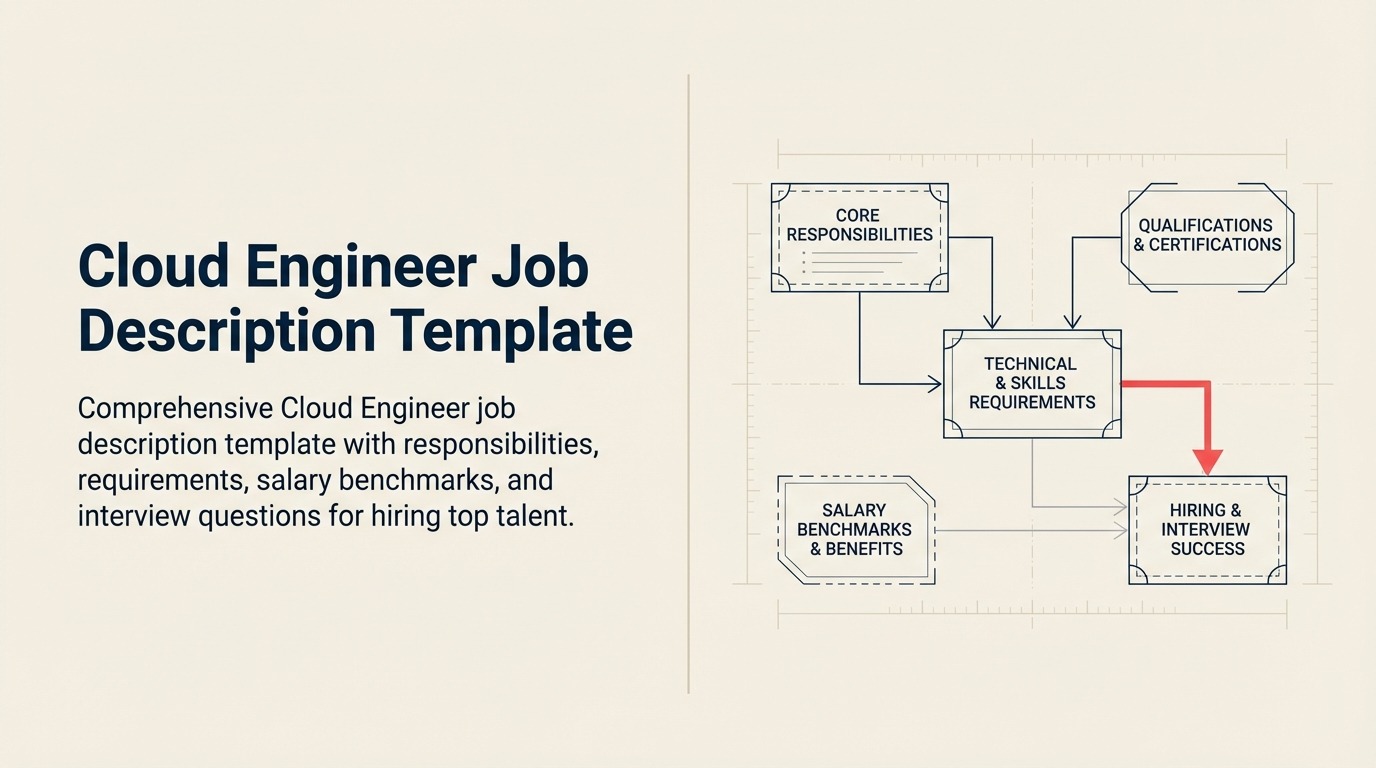
Cloud Engineer Stellenbeschreibung (2026): KI-Skills, Aufgaben & Einstellungsleitfaden
Turn this article into takeaways for your work.


Each assistant summarizes the article only for you and suggests best practices for your work.
Was Sie aus diesem Leitfaden mitnehmen
- Einsatzbereite Stellenbeschreibungsvorlage für Cloud-Engineering-Rollen
- Vollständige Gehaltsbenchmarks für die wichtigsten Metropolregionen (Spanne $85K-$140K)
- Branchenspezifische Varianten für Gesundheitswesen, Finanzwesen, Fertigung und mehr
- 17+ Interviewfragen zu fachlichen, verhaltensbasierten und kulturellen Aspekten
- Sourcing-Strategien und Warnsignale, die bei der Einstellung von Cloud Engineers zu vermeiden sind
- Kontextvarianten für Unternehmens-, Startup- und Remote-Umgebungen
- Karrierewege und Möglichkeiten zur beruflichen Weiterentwicklung
Ein Cloud Engineer entwirft, implementiert und verwaltet Cloud-Infrastrukturlösungen, die es Unternehmen ermöglichen, die Skalierbarkeit, Zuverlässigkeit und Kosteneffizienz von Cloud Computing zu nutzen. Diese Rolle verbindet technische Expertise in Cloud-Plattformen mit ausgeprägten Problemlösungsfähigkeiten, um Lösungen zu entwickeln, die den Geschäftsanforderungen entsprechen und dabei Sicherheit, Leistung und operative Exzellenz gewährleisten.
Warum diese Rolle wichtig ist
Cloud Engineers halten die Infrastruktur am Laufen, doch 2026 bedeutet das, eine Infrastruktur zu betreiben, die zunehmend KI-Workloads, Inferenz-Endpunkte und ML-Pipelines neben traditionellem Compute umfasst. Die Rolle hat sich erweitert, nicht verkleinert.
KI-Tools und -Agenten haben die repetitivsten Teile des Cloud-Betriebs übernommen: routinemäßige Drift-Erkennung, Warnmeldungen zur Kostenoptimierung und standardisierte Auto-Remediation. Was dadurch frei wird, ist nicht Personal, sondern Engineering-Zeit. Cloud Engineers, die KI-Tools einsetzen, verbringen weniger Zeit mit der Jagd nach vorhersehbaren Warnmeldungen und mehr Zeit mit der Gestaltung der Automatisierungs-Frameworks und Governance-Richtlinien, die das Gesamtsystem zuverlässiger machen.
Unternehmen, die in KI-versierte Cloud Engineers investieren, agieren schneller, erkennen Regressionen früher und bauen Infrastrukturen auf, die skalieren können, ohne dass die Personalstärke proportional mitwachsen muss. Das Urteilsvermögen des Engineers, zu wissen, wann eine automatisierte Remediation sicher ist, wann eine Architekturänderung ein verstecktes Risiko birgt, wann ein Kostenvorschlag ein Latenz-SLA verletzen würde, ist das, was KI-gestützten Betrieb tatsächlich funktionieren lässt.
KI-Skills & Tools für Cloud Engineers im Jahr 2026
KI-Kompetenz ist für Cloud Engineers zu einer Kernkompetenz geworden, nicht zu einem Bonus. Diese Tools reduzieren manuellen Aufwand, beschleunigen die Fehlerbehebung und ermöglichen es Engineers, auf einem höheren Niveau zu arbeiten.
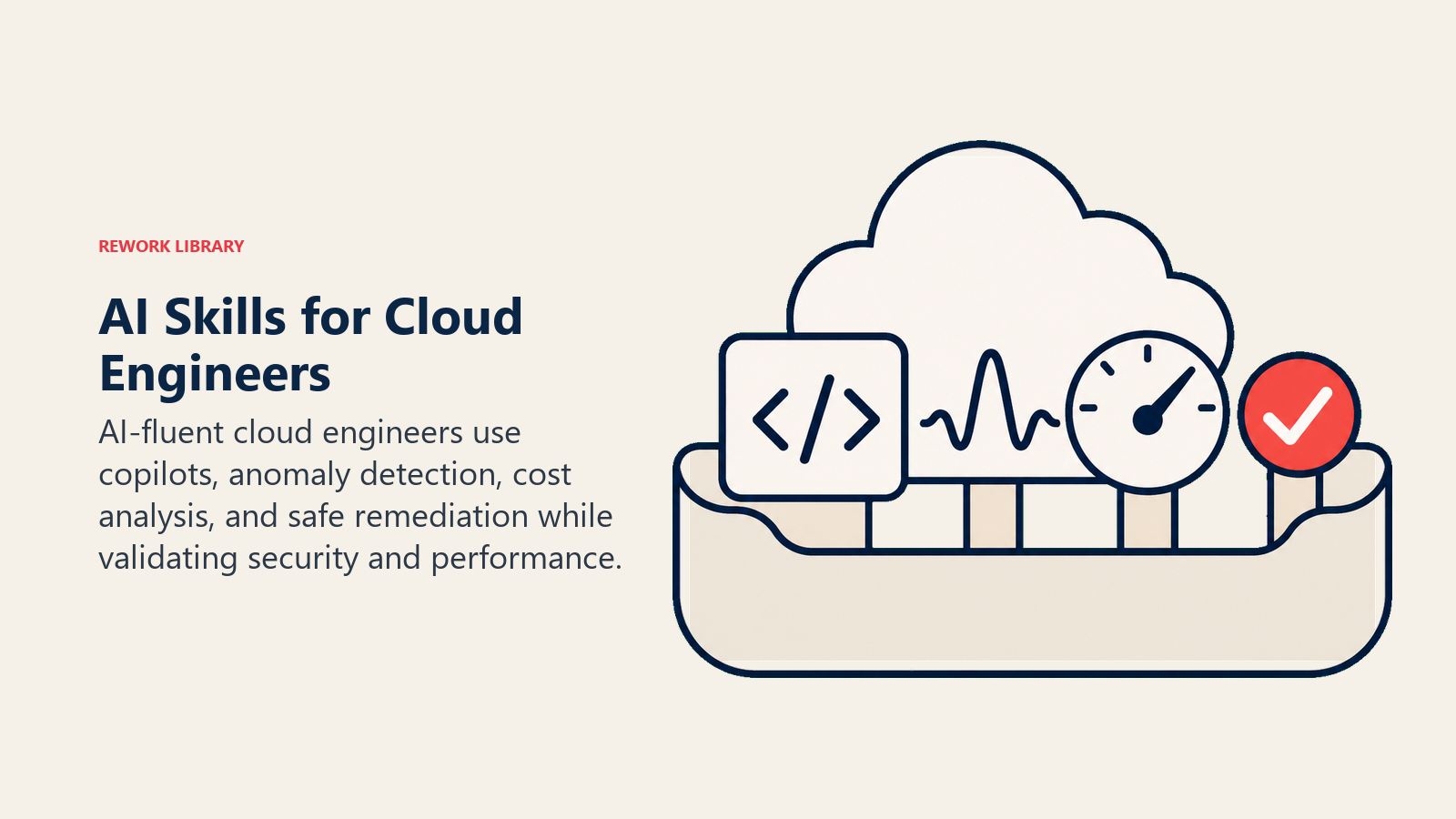
- Claude und ChatGPT für IaC und Runbooks: generieren Terraform-Modul-Stubs, CloudFormation-Templates und Troubleshooting-Runbooks als Ausgangspunkt, die anschließend geprüft und angepasst werden, schneller als von Grund auf zu schreiben und konsistenter als sich auf stillschweigendes Wissen zu verlassen.
- GitHub Copilot und Amazon CodeWhisperer für Skripting: KI-Code-Vervollständigung beschleunigt Automatisierungsarbeiten in Python, Bash und PowerShell; erfahrene Engineers nutzen sie, um Boilerplate schneller zu erledigen und sich auf die Logik zu konzentrieren, die tatsächlich zählt.
- AWS Cost Explorer AI und Spot.io für Kostenoptimierung: KI-gestützte Rightsizing-Empfehlungen verkürzen den manuellen Analyseaufwand bei Kostenprüfungen; Engineers validieren die Vorschläge anhand der Leistungsanforderungen, bevor sie handeln.
- KI-gestütztes Monitoring (CloudWatch Anomaly Detection, Datadog AI, Dynatrace Davis): trainieren Anomalie-Baselines, reduzieren Alert-Rauschen und liefern frühere Warnungen bei Leistungsverschlechterungen, als es statische Schwellenwert-Alerts können.
- KI-Agenten für standardmäßige Drift-Remediation: konfigurieren Agenten so, dass sie bekannt sichere Richtlinienverstöße automatisch beheben (z. B. fehlende Tags, öffentlich zugängliche S3-Bucket-Flags), damit Engineers nur die Fälle bearbeiten, die Urteilsvermögen erfordern.
- Prompt Engineering für Engineering-Workflows: erstellen wiederverwendbare Prompt-Vorlagen für Incident-Runbooks, Architektur-Review-Checklisten und Deployment-Dokumentation, damit das Team konsistente Dokumentation liefert, ohne zusätzlichen manuellen Aufwand.
- Marktkontext: Die Nachfrage nach KI-versierten Cloud-Rollen ist im Jahresvergleich um rund 144 % gestiegen, wobei KI-kompetente Engineers gegenüber Kollegen ohne KI-Kenntnisse einen Gehaltsaufschlag von schätzungsweise ~56 % erzielen (LinkedIn Workforce Report, 2025).
Zusammenarbeit mit KI-Agenten
Die effektivsten Cloud Engineers im Jahr 2026 behandeln KI-Agenten wie Junior-Teammitglieder: fähig, klar definierte, wiederholbare Aufgaben zu übernehmen, aber auf klare Anweisungen und menschliche Aufsicht angewiesen, sobald Risiko oder Mehrdeutigkeit im Spiel sind.
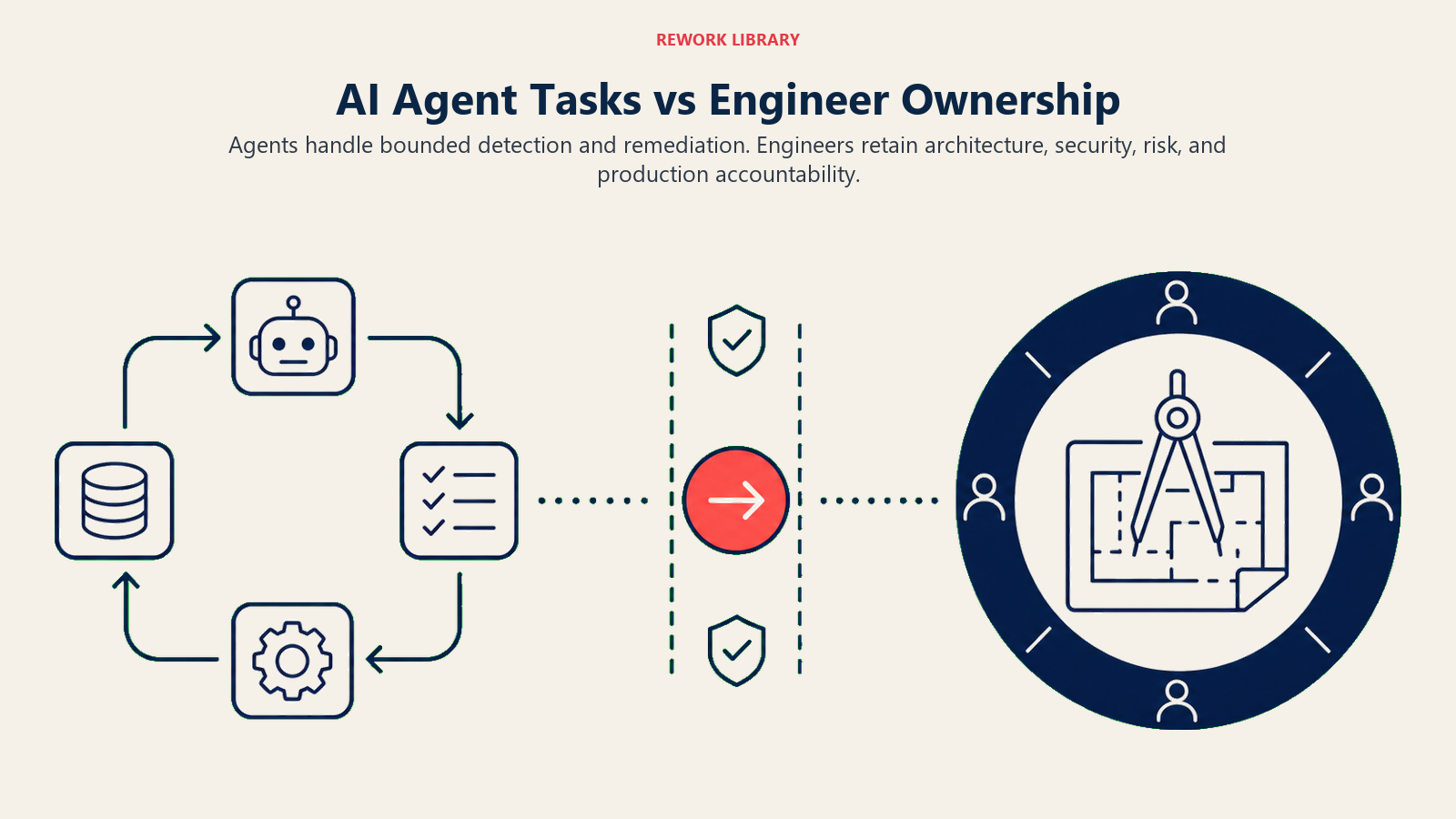
Was Agenten übernehmen:
- Kontinuierliche Drift-Erkennung: Kennzeichnung von Ressourcen, die vom gewünschten Zustand im IaC abgewichen sind
- Auto-Remediation standardmäßiger Richtlinienverstöße (fehlende Tags, ungenutzte Security-Group-Regeln, überprovisionierte Instanzen innerhalb definierter Parameter)
- Kostenoptimierungsvorschläge (Rightsizing) auf Basis von Auslastungskennzahlen
- Erstellung erster Entwürfe von Deployment-Runbooks und Change-Tickets aus Infrastruktur-Diffs
- Alarmierung bei Anomalien bei Ausgaben, Latenz oder Fehlerraten, bevor sie eskalieren
Was der Cloud Engineer verantwortet:
- Architekturänderungen und Entscheidungen, die andere Teams oder Systeme betreffen
- Sicherheitsausnahmen und Entscheidungen zu kontoübergreifendem Zugriff, jede Entscheidung, bei der die Risikofläche nicht vollständig bekannt ist
- Beurteilung, ob die Remediation-Empfehlung eines Agenten im jeweiligen Kontext sicher ist
- Beziehungen zu Entwicklungsteams: Verständnis dafür, was deren Anwendungen tatsächlich von der Infrastruktur benötigen
- Ursachenanalyse, wenn ein Vorfall neuartig ist oder mehrere Systeme betrifft
- Entscheidung, wann ein Agent, der fehlerhafte Empfehlungen liefert, überstimmt, angepasst oder neu trainiert werden muss
Die Übergabelinie: Hat die Aufgabe eine klare Definition von „erledigt" und ist ein Fehlschlag reversibel, kann ein Agent sie übernehmen. Erfordert die Aufgabe das Verständnis von Kontext, den der Agent nicht sehen kann, Teamdynamik, bevorstehende Releases, latente technische Schulden, übernimmt der Engineer die Führung und der Agent unterstützt.
Primäre Vorlage für die Stellenbeschreibung
Über die Rolle
Wir suchen einen erfahrenen Cloud Engineer, der unser Infrastrukturteam verstärkt und unsere Cloud-Strategie vorantreibt. Sie sind verantwortlich für das Design, die Implementierung und die Pflege cloudbasierter Lösungen, die das Wachstum und die operative Exzellenz unseres Unternehmens unterstützen. Diese Rolle erfordert eine Kombination aus technischer Expertise, strategischem Denken und Teamfähigkeit, um effektiv mit Entwicklungsteams, Sicherheitsexperten und Unternehmens-Stakeholdern zusammenzuarbeiten.
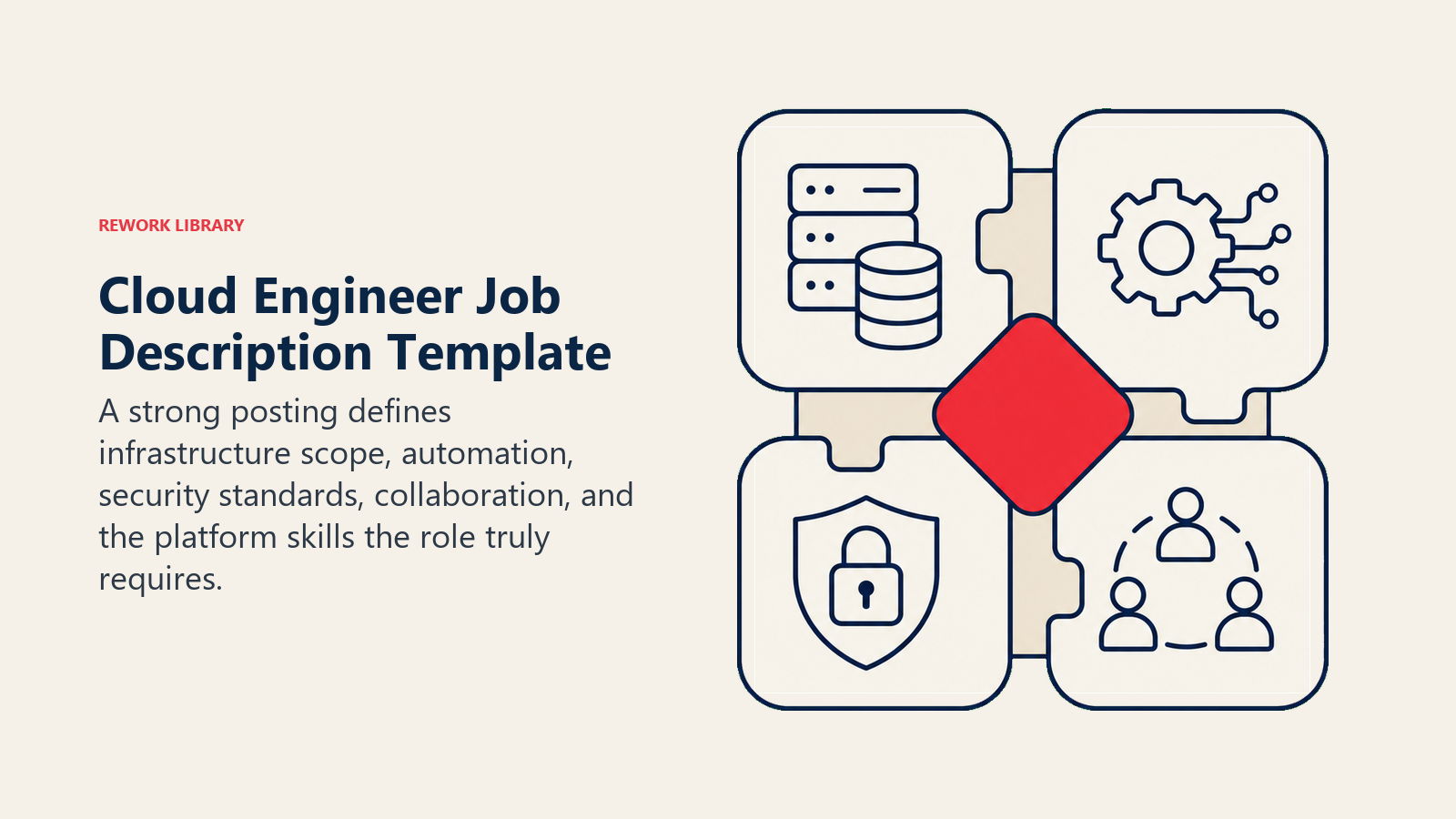
Als Cloud Engineer entwerfen Sie skalierbare Infrastrukturlösungen, implementieren Automatisierungs-Frameworks und gewährleisten die Zuverlässigkeit und Sicherheit unserer Cloud-Umgebungen. Sie spielen eine entscheidende Rolle bei unseren Digitalisierungsinitiativen und sorgen gleichzeitig für Kostenoptimierung und operative Effizienz.
Sie berichten an den Cloud Architecture Manager und arbeiten eng mit DevOps-Teams, Softwareentwicklern und Cybersecurity-Spezialisten zusammen, um robuste, skalierbare Lösungen zu liefern, die sowohl technischen als auch geschäftlichen Anforderungen gerecht werden.
Hauptaufgaben
Cloud-Infrastrukturdesign: Entwurf und Implementierung skalierbarer, sicherer und kosteneffizienter Cloud-Lösungen unter Anwendung von Best Practices der Branche und Infrastructure-as-Code-Prinzipien
Plattformmanagement: Bereitstellung, Konfiguration und Pflege von Cloud-Diensten über mehrere Plattformen hinweg, einschließlich Compute-Instanzen, Speichersystemen, Netzwerkkomponenten und Managed Services
Automatisierungsentwicklung: Erstellung und Pflege von Infrastruktur-Automatisierungsskripten, CI/CD-Pipelines und Deployment-Workflows zur Optimierung des Betriebs und Reduzierung manueller Eingriffe
Sicherheitsimplementierung: Umsetzung von Best Practices für Cloud-Sicherheit, einschließlich Identity- und Access-Management, Netzwerksicherheit, Verschlüsselung und Compliance-Überwachung
Leistungsoptimierung: Überwachung der Systemleistung, Identifikation von Engpässen und Optimierung der Ressourcennutzung, um optimale Anwendungsleistung und Kosteneffizienz sicherzustellen
Disaster-Recovery-Planung: Entwurf und Implementierung von Backup-Strategien, Disaster-Recovery-Verfahren und Business-Continuity-Plänen zur Sicherstellung der Systemresilienz
Kostenmanagement: Überwachung der Cloud-Ausgaben, Umsetzung von Kostenoptimierungsstrategien und Bereitstellung von Empfehlungen zur Ressourcenoptimierung und Budgetplanung
Dokumentation und Standards: Pflege umfassender Dokumentation zu Infrastrukturdesigns, Verfahren und Best Practices sowie Etablierung und Durchsetzung von Cloud-Governance-Standards
Zusammenarbeit und Unterstützung: Enge Zusammenarbeit mit Entwicklungsteams, um Anwendungsanforderungen zu verstehen und technische Beratung zu Cloud-Architekturentscheidungen zu bieten
Kontinuierliche Verbesserung: Auf dem Laufenden bleiben über neue Cloud-Technologien, Bewertung neuer Dienste und Empfehlung von Verbesserungen für bestehende Infrastruktur und Prozesse
Anforderungen
Zwingende Qualifikationen:
- Bachelorabschluss in Informatik, Informationstechnologie oder einem verwandten Fach, oder gleichwertige praktische Erfahrung
- 3+ Jahre Erfahrung im Cloud Computing mit praktischer Expertise in mindestens einer großen Cloud-Plattform (AWS, Azure oder GCP)
- Fundierte Kenntnisse in Infrastructure-as-Code-Tools wie Terraform, CloudFormation oder ARM-Templates
- Erfahrung mit Containerisierungstechnologien wie Docker und Kubernetes
- Solides Verständnis von Netzwerkkonzepten, einschließlich VPCs, Subnetzen, Load Balancern und DNS
- Kenntnisse in Skriptsprachen wie Python, Bash oder PowerShell für Automatisierungsaufgaben
- Erfahrung mit CI/CD-Tools und -Praktiken, einschließlich Jenkins, GitLab CI oder Azure DevOps
- Kenntnisse der Cloud-Sicherheitsprinzipien und Umsetzung von Sicherheits-Best-Practices
- Sicherer Umgang mit KI-Tools (Copilot, Claude, ChatGPT oder vergleichbar) zur Unterstützung beim Skripting, zur Runbook-Erstellung und zur Fehlerbehebung; in der Lage, KI-Ausgaben zu prüfen und zu validieren, bevor sie auf Produktionssysteme angewendet werden
Wünschenswerte Qualifikationen:
- Cloud-Zertifizierungen wie AWS Solutions Architect, Azure Solutions Architect oder Google Cloud Professional Cloud Architect
- Erfahrung mit Monitoring- und Logging-Tools wie CloudWatch, Azure Monitor oder Google Cloud Operations, einschließlich KI-gestützter Anomalieerkennungsfunktionen
- Kenntnisse in Konfigurationsmanagement-Tools wie Ansible, Chef oder Puppet
- Erfahrung mit Serverless Computing und Microservices-Architekturen
- Verständnis von Datenbanktechnologien, einschließlich SQL- und NoSQL-Lösungen
- Erfahrung in der Konfiguration von KI-Agenten für Standard-Betriebsaufgaben (Drift-Erkennung, Kostenoptimierung, Auto-Remediation) innerhalb eines definierten Freigabeworkflows
- Vertrautheit mit KI/ML-Cloud-Diensten (AWS Bedrock, Azure OpenAI, Vertex AI) für Infrastrukturdesign mit Modell-Inferenz-Workloads
Was wir bieten
- Wettbewerbsfähiges Gehalt: $95.000 - $125.000 jährlich, je nach Erfahrung und Qualifikation
- Umfassende Sozialleistungen: Kranken-, Zahn- und Sehversicherung mit vom Unternehmen getragenen Beiträgen
- Berufliche Weiterentwicklung: Jährliches Weiterbildungsbudget von $3.000 für Zertifizierungen, Schulungen und Konferenzen
- Flexible Arbeitsmodelle: Hybrides Arbeitsmodell mit der Option auf bis zu 3 Tage Remote-Arbeit pro Woche
- Beteiligungsprogramm: Aktienoptionsprogramm für alle Vollzeitmitarbeitenden
- Großzügiger Urlaubsanspruch: 20 Tage bezahlter Urlaub plus 10 Feiertage und 5 persönliche Tage
- Technologiezuschuss: Jährliche Zulage von $1.500 für Homeoffice-Ausstattung und Technologie
- Karriereentwicklung: Klare Aufstiegswege mit Mentoring- und Führungskräfteentwicklungsprogrammen
Kontextvarianten
Unternehmensumfeld: Große Unternehmen erfordern in der Regel umfassende Compliance-Kenntnisse, Multi-Region-Deployments und die Integration mit Altsystemen. Schwerpunkt liegt auf Governance, Sicherheits-Frameworks und Kostenmanagement über mehrere Geschäftsbereiche hinweg. Erfahrung mit Enterprise-Vereinbarungen und Vendor-Management wird wertvoll.
Startup-Umfeld: Schnelllebiges Umfeld mit Fokus auf zügiges Deployment, Kostenoptimierung und Skalierbarkeitsplanung. Größere Autonomie bei Technologiewahl und Architekturentscheidungen. Schwerpunkt auf dem Aufbau einer grundlegenden Infrastruktur, die mit dem Unternehmenswachstum skalieren kann. Erfahrung mit begrenzten Ressourcen und Mehrfachverantwortung ist von Vorteil.
Remote-/Hybrid-Umfeld: Starker Fokus auf Kommunikationsfähigkeiten, Dokumentationspraktiken und kollaborative Tools. Erfahrung mit der Koordination verteilter Teams und asynchronen Arbeitsmustern. Eigenmotivation und Zeitmanagement werden entscheidend für den Erfolg in Remote-Cloud-Engineering-Rollen.
Branchenspezifische Überlegungen
Compliance-, Verfügbarkeits-, Kosten- und Integrationsprioritäten variieren je nach Branche und operativem Risiko.
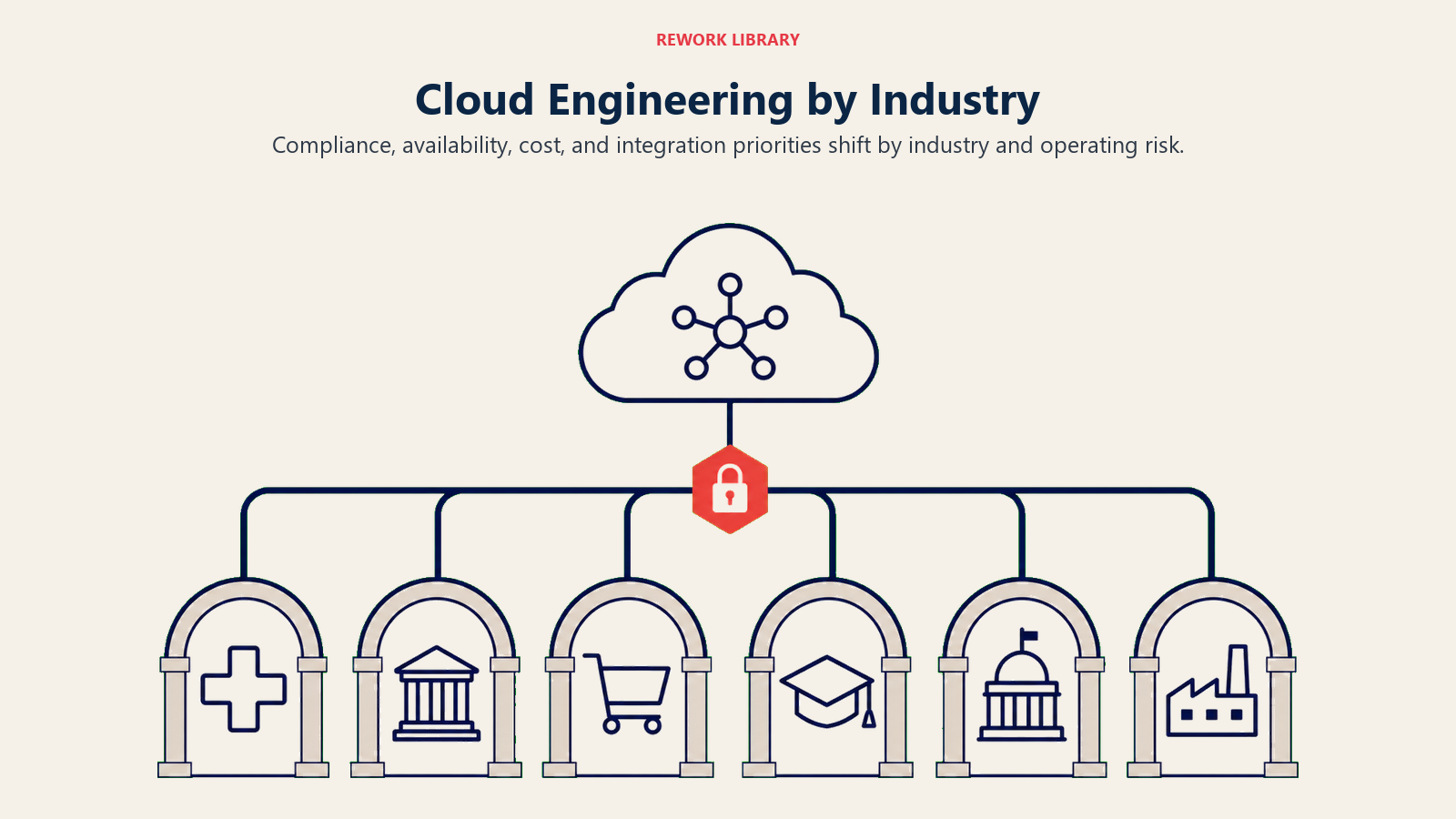
| Branche | Besondere Anforderungen | Wichtige Überlegungen |
|---|---|---|
| Gesundheitswesen | HIPAA-Compliance, Datenverschlüsselung, Audit-Trails | Starker Fokus auf Sicherheit, Data Governance und regulatorische Compliance |
| Finanzdienstleistungen | PCI DSS, SOX-Compliance, hohe Verfügbarkeit | Schwerpunkt auf Sicherheit, Disaster Recovery und regulatorischen Rahmenbedingungen |
| E-Commerce | Hohe Skalierbarkeit, CDN-Optimierung, Zahlungsabwicklung | Fokus auf Leistung, globale Verteilung und Kostenoptimierung |
| Bildung | FERPA-Compliance, Budgetbeschränkungen, saisonale Skalierung | Balance zwischen Kosteneffizienz und Leistung in Spitzenzeiten |
| Behörden | FedRAMP-Autorisierung, strenge Sicherheitsanforderungen | Spezialisierte Compliance-Kenntnisse und Sicherheitsüberprüfung können erforderlich sein |
| Fertigung | IoT-Integration, OT/IT-Konvergenz, Industrieprotokolle | Verständnis von Betriebstechnologie (OT) und Edge-Computing-Anforderungen |
Vergütungsleitfaden
Gehaltsinformationen Basierend auf Marktdaten aus 2026 liegen die Gehälter von Cloud Engineers in der Regel zwischen $85.000 und $140.000 jährlich, mit Schwankungen je nach Erfahrungsstufe, Standort und Branche. Die Rolle zeigt starkes Verdienstpotenzial mit klaren Aufstiegsmöglichkeiten.
| Location | Entry Level | Mid-Level | Senior Level |
|---|---|---|---|
| San Francisco, CA | $105.000 - $130.000 | $130.000 - $160.000 | $160.000 - $200.000 |
| New York, NY | $95.000 - $120.000 | $120.000 - $150.000 | $150.000 - $185.000 |
| Seattle, WA | $90.000 - $115.000 | $115.000 - $145.000 | $145.000 - $180.000 |
| Austin, TX | $85.000 - $110.000 | $110.000 - $135.000 | $135.000 - $165.000 |
| Chicago, IL | $80.000 - $105.000 | $105.000 - $130.000 | $130.000 - $160.000 |
| Denver, CO | $85.000 - $110.000 | $110.000 - $135.000 | $135.000 - $165.000 |
| Atlanta, GA | $75.000 - $100.000 | $100.000 - $125.000 | $125.000 - $155.000 |
| Remote (USA) | $80.000 - $110.000 | $110.000 - $140.000 | $140.000 - $175.000 |
Faktoren, die die Vergütung beeinflussen:
- Cloud-Plattform-Zertifizierungen können das Gehalt um 10-20 % erhöhen
- Spezialisierte Kenntnisse in Sicherheit oder Automatisierung erzielen Gehaltsprämien
- Branchenerfahrung in regulierten Sektoren bietet in der Regel eine höhere Vergütung
- KI-Kompetenz entwickelt sich zu einem eigenständigen Vergütungsfaktor; Stellen, die explizit Erfahrung mit KI-Tools erfordern, werden zu deutlich höheren Sätzen ausgeschrieben als vergleichbare Stellen ohne diese Anforderung
KI-Kompetenz nach Erfahrungsstufe:
Einsteiger-Engineers nutzen KI-Tools täglich, Copilot zum Skripten, ChatGPT/Claude für Runbook-Entwürfe und Fehlerbehebung, und können beurteilen, ob die Ausgabe korrekt ist, bevor sie sie einsetzen.
Engineers auf mittlerem Niveau erstellen Prompt-Vorlagen und Automatisierungs-Workflows für ihr Team, integrieren KI-gestützte Monitoring- und Kostentools in den Standardbetrieb und konfigurieren Agenten für routinemäßige Remediation-Aufgaben innerhalb definierter Leitplanken.
Senior Engineers gestalten das KI-gestützte Betriebsmodell: welche Agenten autonom arbeiten, welche eine menschliche Freigabe benötigen, wie Agenten-Ausgaben geprüft werden und wie das Team sein Tooling weiterentwickelt, sobald sich die KI-Fähigkeiten ändern. Zudem bewerten sie KI/ML-Infrastrukturanforderungen, wenn Entwicklungsteams Model-Serving-Workloads bereitstellen müssen.
Gehaltsspannen sind richtungsweisende Benchmarks. Überprüfen Sie aktuelle Sätze anhand aktiver Stellenanzeigen, KI-Kompetenz-Prämien verändern die Cloud-Vergütung schneller, als jährliche Erhebungszyklen erfassen können.
Interviewfragen
Fachliche Fragen
- Beschreiben Sie Ihren Ansatz für den Entwurf einer hochverfügbaren, multiregionalen Cloud-Architektur für eine Webanwendung. Bewerten Sie: Verständnis von Availability Zones, Load Balancing und Disaster Recovery
Wie würden Sie Infrastructure-as-Code für ein komplexes, mehrstufiges Anwendungs-Deployment implementieren? Prüfen Sie: Kenntnisse von IaC-Tools, Versionskontrolle und Deployment-Strategien
Beschreiben Sie Ihren Prozess zur Fehlerbehebung bei einem Leistungsproblem in einer Cloud-Umgebung. Achten Sie auf: Systematisches Vorgehen, Kenntnisse von Monitoring-Tools und Problemlösungsmethodik
Erklären Sie die Unterschiede zwischen verschiedenen Cloud-Speicheroptionen und wann Sie welche einsetzen würden. Bewerten Sie: Verständnis von Speichertypen, Leistungsmerkmalen und Kostenauswirkungen
Wie gehen Sie bei der Cloud-Kostenoptimierung vor, ohne Leistung und Zuverlässigkeit zu beeinträchtigen? Prüfen Sie: Erfahrung im Kostenmanagement, Ressourcenoptimierungsstrategien und Geschäftsverständnis
Beschreiben Sie Ihre Erfahrung mit Container-Orchestrierung und wie Sie diese in der Cloud implementieren würden. Achten Sie auf: Kubernetes-Kenntnisse, Container-Management und Verständnis von Skalierbarkeit
Welche Strategien nutzen Sie, um Cloud-Sicherheit und Compliance zu gewährleisten? Bewerten Sie: Sicherheits-Best-Practices, Compliance-Frameworks und Risikomanagement
Wie würden Sie eine CI/CD-Pipeline für cloud-native Anwendungen entwerfen? Prüfen Sie: DevOps-Integration, Automatisierungstools und Deployment-Strategien
Verhaltensbasierte Fragen
Erzählen Sie von einer Situation, in der Sie ein kritisches System in die Cloud migrieren mussten. Welche Herausforderungen gab es und wie haben Sie diese gemeistert? Achten Sie auf: Projektmanagementfähigkeiten, Risikominderung und Stakeholder-Kommunikation
Beschreiben Sie eine Situation, in der Sie schnell eine neue Cloud-Technologie erlernen mussten, um einen Projekttermin einzuhalten. Prüfen Sie: Lernfähigkeit, Anpassungsfähigkeit und Eigenmotivation
Nennen Sie ein Beispiel dafür, wie Sie mit Entwicklungsteams zusammengearbeitet haben, um die Anwendungsleistung in der Cloud zu optimieren. Bewerten Sie: Funktionsübergreifende Zusammenarbeit, Kommunikationsfähigkeiten und technische Führungsstärke
Erzählen Sie von einer Situation, in der Sie eine bedeutende Möglichkeit zur Kostenoptimierung erkannt und umgesetzt haben. Achten Sie auf: Geschäftssinn, analytisches Denken und Erfolgsmessung
Beschreiben Sie ein anspruchsvolles technisches Problem, das Sie gelöst haben, und wie Sie dabei vorgegangen sind. Prüfen Sie: Problemlösungsmethodik, Beharrlichkeit und technische Tiefe
Fragen zur kulturellen Passung
Wie bleiben Sie bei den sich schnell entwickelnden Cloud-Technologien und Best Practices auf dem Laufenden? Achten Sie auf: Kontinuierliche Lernbereitschaft, berufliche Weiterentwicklung und Branchenengagement
Beschreiben Sie Ihre ideale Arbeitsbeziehung zu Entwicklungs- und Operations-Teams. Bewerten Sie: Kollaborationsstil, Kommunikationspräferenzen und Teamdynamik
Wie gehen Sie mit der Arbeit in einem schnelllebigen Umfeld mit konkurrierenden Prioritäten um? Prüfen Sie: Zeitmanagement, Umgang mit Stress und Priorisierungsfähigkeiten
Was motiviert Sie am meisten an der Arbeit im Cloud Engineering? Achten Sie auf: Leidenschaft für Technologie, Übereinstimmung mit den Rollenanforderungen und langfristiges Interesse
Einstellungstipps
Kurzer Sourcing-Leitfaden
Top-Plattformen für Cloud Engineers:
- LinkedIn: Am effektivsten für erfahrene Fachkräfte mit Cloud-Zertifizierungen
- GitHub: Prüfung von Beiträgen zu Infrastructure-as-Code-Projekten und Open-Source-Tools
- Stack Overflow Jobs: Ansprache von Entwicklern, die in Cloud-Infrastruktur-Rollen wechseln
- AngelList: Hervorragend geeignet für Startup-Umgebungen und cloud-native Unternehmen
Fachliche Communities:
- AWS User Groups und Meetups in großen Metropolregionen
- Veranstaltungen und Konferenzen der Cloud Native Computing Foundation (CNCF)
- DevOps- und Site-Reliability-Engineering-(SRE)-Communities
- Plattformspezifische Lerngruppen und Foren für Zertifizierungen
Tipps zur Optimierung der Stellenanzeige:
- Heben Sie die spezifischen Cloud-Plattformen und Tools hervor, die in Ihrem Unternehmen eingesetzt werden
- Betonen Sie Lern- und Zertifizierungsmöglichkeiten in der Stellenbeschreibung
- Nehmen Sie Informationen zu Cloud-Architektur und modernen Infrastrukturpraktiken auf
- Erwähnen Sie Flexibilität bei Remote-Arbeit und Unterstützung für die berufliche Weiterentwicklung
Zu vermeidende Warnsignale
- Zertifizierung ohne praktische Erfahrung - Achten Sie auf praktische Umsetzungserfahrung, die über das Bestehen von Prüfungen hinausgeht
- Tunnelblick auf eine einzelne Plattform - Kandidaten sollten Anpassungsfähigkeit über verschiedene Cloud-Anbieter hinweg zeigen
- Fehlende Automatisierungsmentalität - Manuelle Prozesse deuten auf veraltete Ansätze im Cloud-Management hin
- Kein Verständnis für Kostenauswirkungen - Cloud Engineers müssen Leistung und finanzielle Effizienz in Einklang bringen
- Schwache Kommunikationsfähigkeiten - Die Rolle erfordert umfangreiche Zusammenarbeit mit technischen und nicht-technischen Stakeholdern
- Widerstand gegen kontinuierliches Lernen - Cloud-Technologien entwickeln sich schnell weiter und erfordern fortlaufende Kompetenzentwicklung
Häufige Fragen für Arbeitgeber
Was ist der Unterschied zwischen einem Cloud Engineer und einem DevOps Engineer?
Cloud Engineers konzentrieren sich speziell auf das Design und die Verwaltung von Cloud-Infrastruktur, während DevOps Engineers in der Regel breitere Verantwortlichkeiten haben, einschließlich CI/CD, Anwendungsbereitstellung und der Zusammenarbeit zwischen Entwicklung und Betrieb. Es gibt erhebliche Überschneidungen, aber Cloud Engineers sind auf Cloud-Plattform-Expertise spezialisiert.
Sollten wir spezifische Cloud-Zertifizierungen für diese Rolle voraussetzen?
Zertifizierungen belegen zwar Wissen, doch praktische Erfahrung sollte gegenüber Nachweisen priorisiert werden. Zertifizierungen sind wertvoll, sollten aber nicht das primäre Einstellungskriterium sein. Erwägen Sie, Unterstützung für Zertifizierungen als Teil der Rolle anzubieten.
Wie wichtig ist Multi-Cloud-Erfahrung im Vergleich zu tiefer Expertise auf einer einzelnen Plattform?
Das hängt von der Strategie Ihres Unternehmens ab. Die meisten Unternehmen profitieren mehr von tiefer Expertise in ihrer primären Cloud-Plattform, aber Multi-Cloud-Kenntnisse werden für größere Unternehmen oder solche, die Vendor-Lock-in vermeiden möchten, wertvoll.
Wie sieht der typische Karriereweg für Cloud Engineers aus?
Gängige Wege führen zu Cloud Architect, Site Reliability Engineer, DevOps Lead oder Cloud Consultant. Manche wechseln in Führungsrollen wie Cloud Engineering Manager oder Technical Program Manager.
Häufige Fragen für Bewerber
Was ist die wichtigste Fähigkeit, die man als Cloud Engineer entwickeln sollte?
Infrastructure-as-Code ist grundlegend - Lernen Sie Terraform oder CloudFormation gründlich. Kombinieren Sie dies mit soliden Skripting-Kenntnissen und einem tiefen Verständnis mindestens einer großen Cloud-Plattform.
Wie kann ich von traditioneller IT zu Cloud Engineering wechseln?
Beginnen Sie mit einer Schulung zu Cloud-Grundlagen, sammeln Sie praktische Erfahrung mit Free-Tier-Konten, streben Sie Einstiegszertifizierungen an und tragen Sie zu Open-Source-Infrastrukturprojekten bei, um ein Portfolio aufzubauen.
Ist es besser, sich auf eine Cloud-Plattform zu spezialisieren oder mehrere zu lernen?
Beherrschen Sie zunächst eine Plattform gründlich, bevor Sie sich erweitern. Tiefe Expertise in einer Plattform ist wertvoller als oberflächliches Wissen über mehrere Plattformen.
Welche Programmiersprachen sollte ich für Cloud Engineering lernen?
Python ist am vielseitigsten für Automatisierung und Skripting. Bash/PowerShell für Systemadministration und YAML für Konfigurationsmanagement. Go wird bei cloud-nativen Tools zunehmend beliebter.
Wie viel Programmieraufwand ist mit Cloud-Engineering-Rollen verbunden?
Erheblicher Skripting- und Automatisierungsaufwand, aber weniger Anwendungsentwicklung als in Software-Engineering-Rollen. Der Fokus liegt auf Infrastrukturcode, Deployment-Skripten und Konfigurationsmanagement statt auf Feature-Entwicklung.

Senior Customer Retention Strategist
On this page
- Warum diese Rolle wichtig ist
- KI-Skills & Tools für Cloud Engineers im Jahr 2026
- Zusammenarbeit mit KI-Agenten
- Primäre Vorlage für die Stellenbeschreibung
- Über die Rolle
- Hauptaufgaben
- Anforderungen
- Was wir bieten
- Kontextvarianten
- Branchenspezifische Überlegungen
- Vergütungsleitfaden
- Interviewfragen
- Fachliche Fragen
- Verhaltensbasierte Fragen
- Fragen zur kulturellen Passung
- Einstellungstipps
- Kurzer Sourcing-Leitfaden
- Zu vermeidende Warnsignale