AI Sales Operator für B2B-SaaS-Pipeline

Turn this article into takeaways for your work.


Each assistant summarizes the article only for you and suggests best practices for your work.
Die meisten B2B-SaaS-Unternehmen haben ein spezifisches Problem mit Inbound, das rein sales-led Unternehmen nicht haben. Hunderte von Anmeldungen kommen wöchentlich aus Free Trials, Content-Downloads, product-led Akquise und bezahlten Kampagnen. Die große Mehrheit sind keine Käufer. Ein bestimmter Prozentsatz sind genau das richtige ICP (Ideal Customer Profile). Und das Vertriebsteam hat kein zuverlässiges System, den Unterschied zu erkennen, bevor es Menschenzeit ausgibt.
Was passiert also? Mitarbeiter arbeiten entweder jede Anmeldung durch (erschöpfend, ineffektiv, hohe Fluktuation) oder sie cherry-picken nach Unternehmensnamensbekanntheit (verfehlt die meisten der besten Accounts). Keiner der Ansätze skaliert.
Der AI Sales Operator für B2B SaaS behebt das auf Architekturebene. Es ist keine Scoring-Tabelle oder eine Lead-Zuteilungsregel. Es ist der Vier-Pattern-ACE-Framework-Agent, zusammengebaut, um die Signalverarbeitung zu übernehmen, die Menschen beim Volumen, das SaaS Inbound generiert, nicht leisten können.
Was der AI Sales Operator im SaaS-Kontext ist
Der AI Sales Operator ist ein ACE-Framework-Level-3-Agent: vier verbundene Patterns, die Kontext teilen und in Sequenz arbeiten, um den kognitiven Overhead des Vertriebsbetriebs zu übernehmen.
- Scoring+Routing: Welche Leads verdienen menschliche Aufmerksamkeit, und welcher Mitarbeiter bekommt sie
- Meeting Intelligence: Was in Gesprächen passiert ist, was als nächstes passieren muss
- Generative Research: Was der Mitarbeiter wissen muss, bevor er mit einem Account spricht
- Workflow Copilot: Das alles in Aktionen, Entwürfe und CRM-Updates umwandeln
Key Facts: AI Sales Operator für SaaS
- KI-unterstützte SDRs (Sales Development Representatives), die innerhalb von vier Stunden nach der Trial-Aktivierung Kontakt aufnehmen, konvertieren zu 34,1 %, verglichen mit 13,6 % für reine E-Mail-Automatisierungssequenzen -- ein 2,5-facher Unterschied, der durch Timing und Verhaltenskontext getrieben wird (Growleads B2B SaaS Data, 2025)
- PQL (Product Qualified Lead)-basiertes Scoring mit Produkt-Verhaltenssignalen konvertiert mit 25-30 % gegenüber 5-10 % für MQL (Marketing Qualified Lead)-basierte Ansätze -- eine 3-fache Verbesserung, die nur bestehende Produkttelemetrie und ein Scoring-Modell erfordert (Optifai PLG Guide, 2025)
- KI-native PLG-Unternehmen mit über 100 Millionen USD ARR erreichen eine Trial-to-Paid-Konversion von 56 %, verglichen mit 32 % für traditionelle SaaS-Modelle -- eine 24-Prozentpunkte-Lücke, die auf die Qualität der Verhaltenssignale in der Scoring-Schicht zurückzuführen ist (ProductLed Benchmarks, 2025)
Im generischen B2B-Vertriebskontext trainiert Scoring+Routing hauptsächlich auf firmografischen Daten und CRM-Historie. Im SaaS-Kontext fügt es eine dritte Signalquelle hinzu, die alles ändert: Produkttelemetrie. OpenViews PLG-Benchmarks dokumentieren, wie Product Qualified Leads, die auf In-Produkt-Verhaltensdaten aufgebaut sind, konsequent höhere Konversionsraten erzielen als nur Marketing Qualified Leads. Und diese Ergänzung macht die SaaS-Version des AI Sales Operator bedeutsam leistungsstärker als sein generisches Äquivalent.
Pattern 1: Scoring+Routing im SaaS-Umfeld
Scoring und Routing im SaaS-Vertrieb verbessern sich, wenn Produktverhalten zusammen mit firmografischen und CRM-Signalen bewertet wird.
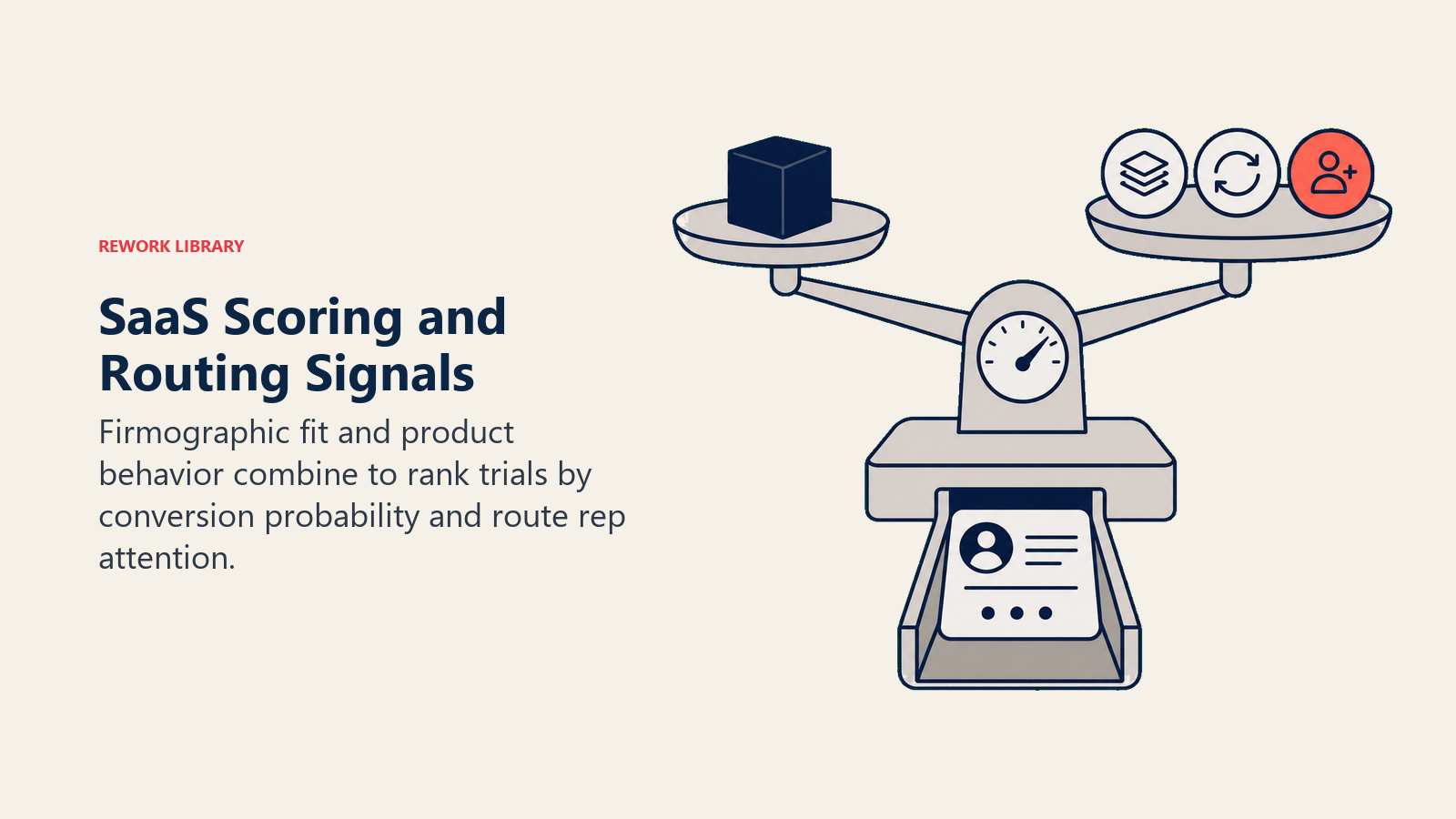
Der Unterschied zwischen generischem Lead-Scoring und SaaS-Lead-Scoring ist die Produktsignal-Schicht.
Generisches Lead-Scoring sagt: Wenn das Unternehmen 200-500 Mitarbeiter hat, in einer Zielbranche tätig ist und der Kontakt VP oder darüber ist, bewerten Sie hoch. Das ist ein firmografisches Modell. Es ist besser als nichts, aber es bewertet nach dem Aussehen eines Leads, nicht nach dem, was er getan hat.
SaaS-Scoring fügt Verhaltenssignale aus dem Produkt selbst hinzu:
Trial-Aktivierungsevents: Hat die neue Anmeldung den wichtigsten Aktivierungsmeilenstein innerhalb der ersten drei Sessions abgeschlossen? In den meisten SaaS-Produkten gibt es eine oder zwei Aktionen, die stark mit Konversion korrelieren. Das Scoring-Modell sollte diese stark gewichten. Ein Trial-Nutzer, der seinen ersten Workflow erstellt und eine Integration verbunden hat, ist ein anderer Lead als einer, der sich einmal eingeloggt hat.
Pricing-Page-Besuche: Eine Anmeldung, die in ihrer ersten Woche die Pricing-Seite dreimal besucht hat, zeigt Käufer-Intent. Dieses Signal befindet sich in Ihrer Web-Analytics. Es sollte in Ihrem Scoring-Modell sein.
Feature-Explorations-Tiefe: Ein Trial-Nutzer, der drei oder mehr Kernfeatures aktiviert hat, ist stärker investiert als einer, der nur die Getting-Started-Vorlage verwendet. Tiefe der Nutzung sagt Konversion voraus.
Return-Visit-Frequenz: Anmeldungen, die in ihrer ersten Woche täglich einloggen, konvertieren mit 3x bis 5x der Rate von Anmeldungen, die sich einmal eingeloggt haben. Tägliche aktive Nutzung im Testzeitraum ist ein starker Konversionsprediktor. Das ist dieselbe Verhaltenslogik hinter KI für SaaS Trial-to-Paid-Konversion.
Kollaborationssignale: Ein Teammitglied während des Trials einzuladen, ist eines der stärksten SaaS-Konversionssignale, die verfügbar sind. Ein Nutzer, der sein Team hineingebracht hat, ist kein Solo-Evaluierer mehr. Er hat interne Stakeholder geschaffen.
Scoring+Routing, trainiert auf diesem kombinierten Signalset (firmografisch plus Produkt-Verhaltens-), produziert eine materiell bessere Priorisierung als firmografisch allein. Madkudu und Clearbit Reveal bauen beide produktsignalbewusste Scoring-Modelle. Rework Sales AI nimmt Trial-Aktivierungs- und Produktevents direkt neben CRM-Daten auf für einen einheitlichen Score.
Das Routing-Output ist das, was der Mitarbeiter tatsächlich sieht: eine priorisierte Liste von Anmeldungen, die menschliches Outreach rechtfertigen, geordnet nach Konversionswahrscheinlichkeit, mit den Schlüsselsignalen, die den Score getrieben haben. Die 80 % der Anmeldungen, die unter dem Schwellenwert bewerten, bekommen keine Menschenzeit. Sie erhalten automatisierte Nurture-Sequenzen, bis sie entweder wieder engagieren oder wegfallen.
Die zu verfolgende Kennzahl: Trial-to-Demo-Konversionsrate. Branchenbenchmarks für B2B SaaS setzen den durchschnittlichen Trial-to-Demo-Wert auf 3 bis 8 % aller Trial-Anmeldungen. Teams, die produktsignalbewusstes Scoring betreiben, sehen typischerweise 12 bis 20 %, weil sie menschliche Anstrengung auf die Leads konzentrieren, die bereits Käuferverhalten zeigten. Forresters B2B-Prognosen 2025 zeigen, dass mehr als die Hälfte der großen B2B-Käufe über digitale Self-Service-Kanäle fließen wird, was bedeutet, dass das Konversionsfenster vom Trial-Verhalten zum human-assisted Close sowohl kürzer als auch datenireichhalter ist als traditionelle Vertriebsfunnels.
Pattern 2: Meeting Intelligence im SaaS-Umfeld
Meeting Intelligence im SaaS-Kontext bedeutet, Ihre Discovery Calls und Demos nach den spezifischen Einwänden und Signalen zu durchsuchen, die für SaaS-Vertriebszyklen einzigartig sind.
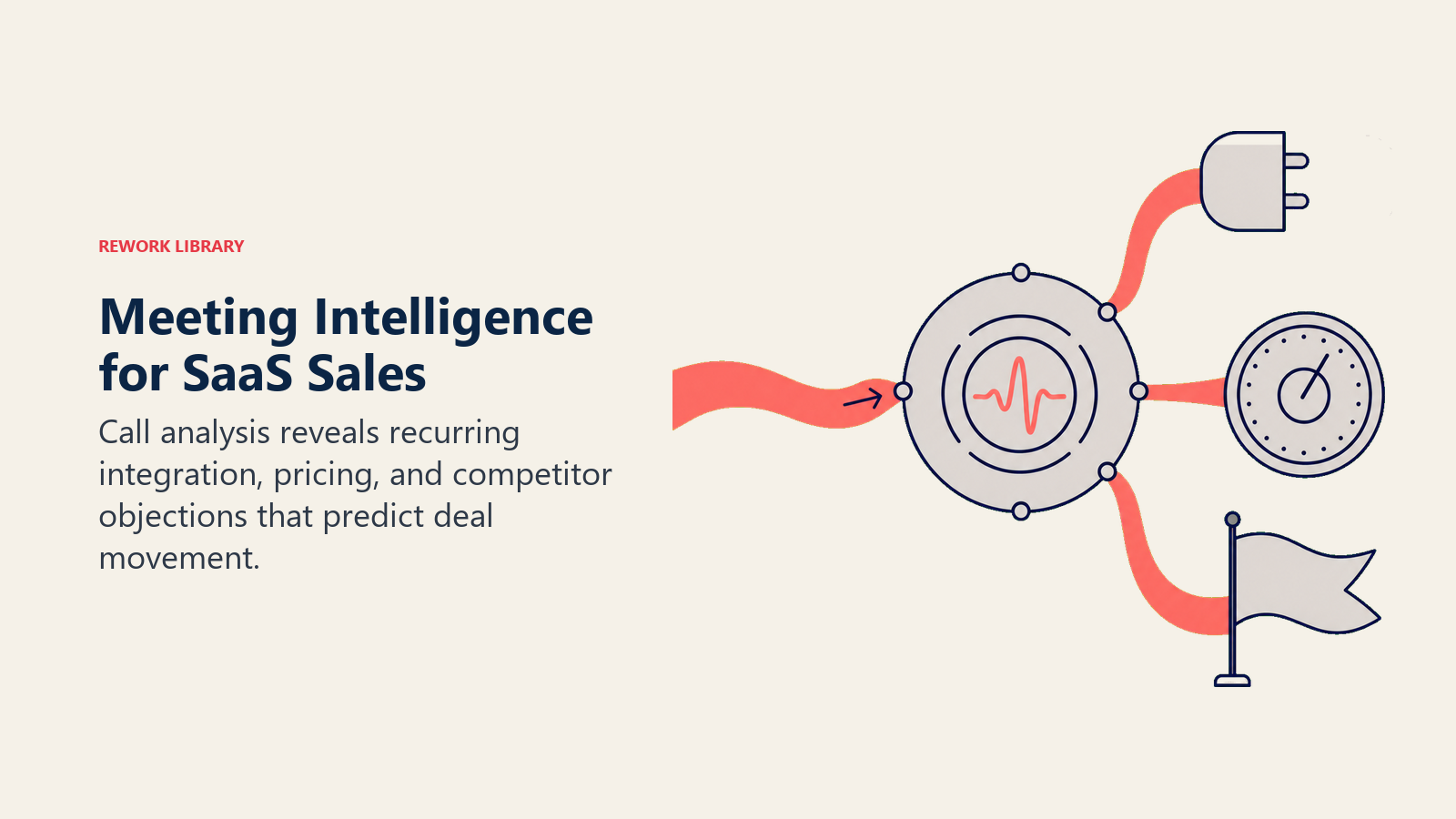
SaaS-Vertriebszyklen haben einen spezifischen Einwand-Fingerabdruck:
Das Integrations-Anliegen: "Wie funktioniert das mit unserem aktuellen Stack?" kommt in fast jedem Discovery Call auf. Meeting Intelligence sollte Integrationseinwände nach dem spezifisch genannten Tool kategorisieren und taggen. Wenn "Salesforce-Integration" oder "HubSpot-Kompatibilität" in 40 % Ihrer Discovery Calls auftauchen, ist das gleichzeitig ein Produktsignal, ein Sales-Enablement-Signal und ein Marketing-Signal.
Die Preismodell-Frage: SaaS-Käufer haben normalerweise mehrere Preismodelle gesehen. "Ist das pro Nutzer, pro Workspace oder pro Feature?" zeigt an, dass sie Optionen vergleichen. Wenn diese Frage auftaucht, markiert Meeting Intelligence sie als Kaufsignal.
Die "Wir sind mit unserem aktuellen Stack zufrieden"-Abweisung: Das ist die häufigste Frühphasen-Ablehnung im SaaS-Vertrieb. Meeting Intelligence sollte analysieren, wie Mitarbeiter auf diesen Einwand reagieren, und identifizieren, welche Antwortmuster mit Deals korrelieren, die vorankommen, gegenüber solchen, die sterben.
Gong ist der Standard für Meeting Intelligence im SaaS-Vertrieb. Clari Copilot und Chorus (jetzt ZoomInfo Sales) erfüllen dieselbe Funktion. Der spezifische Wert in SaaS ist die Einwandmuster-Analyse über die gesamte Call-Bibliothek. Eine Gong-Bibliothek mit 500 aufgezeichneten Calls zeigt, welche Wettbewerbserwähnungen zunehmen, welche Integrationsanliegen am häufigsten sind und welche Mitarbeiter-Talk-Patterns Deals vorhersagen, die schließen. McKinseys Forschung zu generativer KI im B2B-Vertrieb zeigt, dass KI-gestützte Gesprächsanalyse Vertriebsteams ermöglicht, systematisch zu lernen, welche Verhaltensweisen Erfolge in der gesamten Organisation antreiben -- nicht nur bei Top-Performern.
Die Coaching-Anwendung: Mitarbeiter, die konsequent Deals verlieren, bei denen "Preismodell-Verwirrung" spät im Zyklus auftaucht, haben ein anderes Problem als Mitarbeiter, die Deals an einen bestimmten Wettbewerber verlieren. Meeting Intelligence lässt einen VP of Sales den Unterschied sehen und unterschiedlich coachen.
Pattern 3: Generative Research im SaaS-Umfeld
Account-Recherche für Enterprise-SaaS-Deals unterscheidet sich von Account-Recherche für traditionelles B2B. Die relevanten Signale beinhalten den Tech-Stack, nicht nur das Org-Chart.
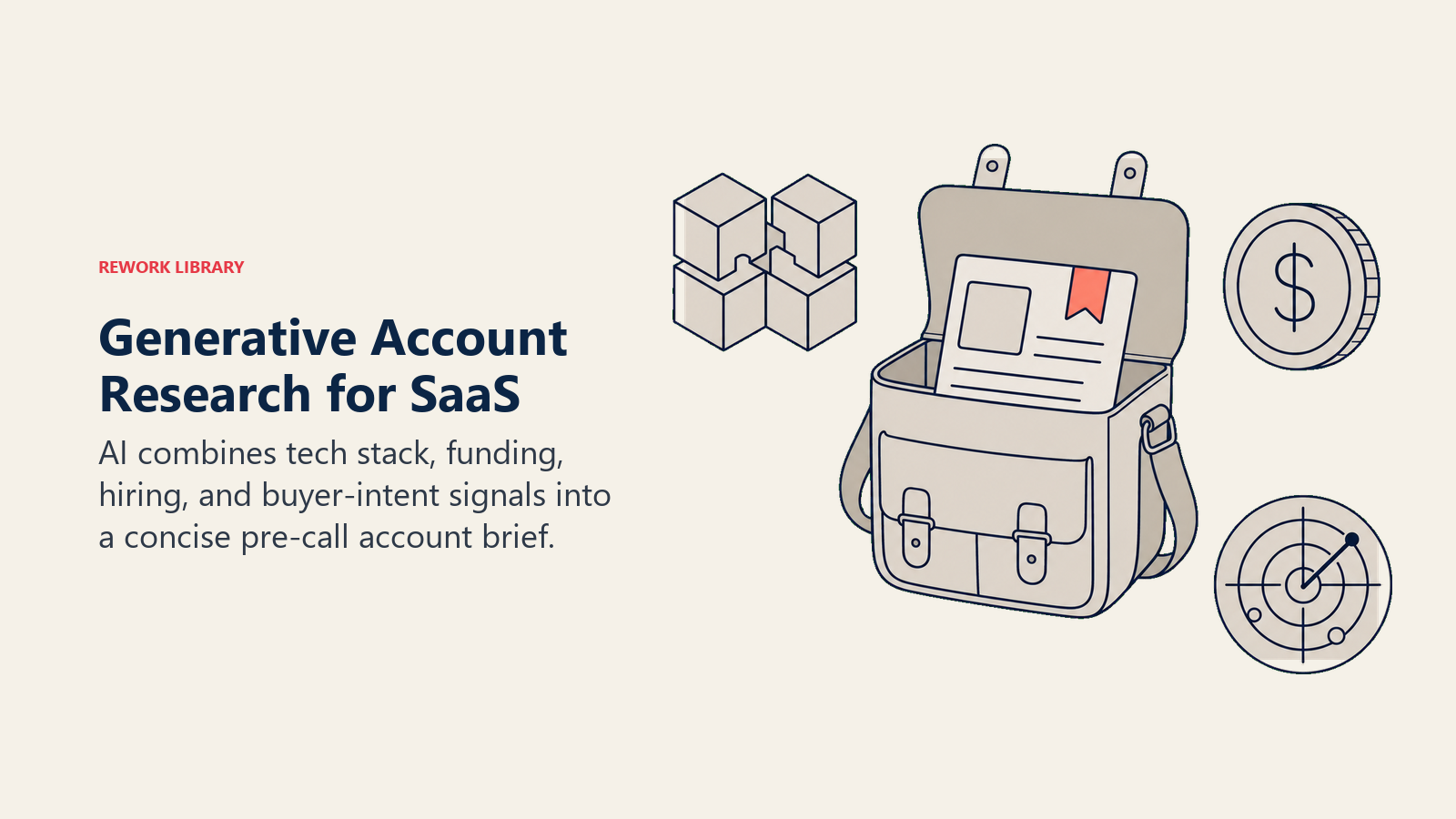
Tech-Stack-Recherche: BuiltWith und G2s Technologiesignale sagen Ihnen, welche Software ein Prospect betreibt. Für einen SaaS-Integrationsansatz ändert das Wissen, dass ein Prospect Salesforce und HubSpot betreibt, bevor Ihr erster Anruf stattfindet, das Gespräch vollständig. Generative Research sollte Tech-Stack-Daten automatisch als Teil jedes Account-Briefs abrufen.
Finanzierungssignale: Ein Unternehmen, das vor drei Monaten eine Series B abgeschlossen hat, hat eine andere Kaufhaltung als ein Unternehmen, das vor 18 Monaten Kapital aufgenommen hat und seitdem nichts angekündigt hat. Aktuelle Finanzierungsrunden sind ein Kaufbereitschaftssignal. Ein Account-Brief, der die Finanzierungshistorie und Rundengröße enthält, gibt dem Mitarbeiter Kontext für das Wirtschaftsgespräch.
Stellenanzeigen-Analyse: Ein Unternehmen, das für RevOps-Rollen einstellt, baut Vertriebsinfrastruktur auf, was bedeutet, dass es wahrscheinlich CRM und Vertriebstools evaluiert. Ein Unternehmen mit acht offenen Engineering-Rollen skaliert möglicherweise ein technisches Produkt, das API-Integrations-Support benötigt. Stellenanzeigen sind ein führender Indikator für Kaufbedürfnisse.
G2-Aktivität: Wenn ein Unternehmen kürzlich Produkte in Ihrer Kategorie auf G2 bewertet hat, evaluieren sie aktiv. Dieses Signal ist über Intent-Data-Provider verfügbar und sollte in den Account-Brief geroutet werden.
Rework Sales AI erstellt diese Account-Briefs automatisch innerhalb des CRM und zeigt Tech-Stack-, Finanzierungs- und Intent-Signale neben der CRM-Aktivitätshistorie und Produkt-Verhaltensdaten an. Das Ergebnis: Ein Mitarbeiter geht in einen Discovery Call mit einem Zwei-Absatz-Account-Brief, der null manuelle Recherchezeit erforderte.
Pattern 4: Workflow Copilot im SaaS-Umfeld
Der Workflow Copilot schließt die Schleife zwischen Recherche und Aktion. In SaaS sind die wertvollsten Copilot-Outputs die, die an die natürlichen Wendepunkte eines SaaS-Vertriebszyklus gebunden sind:
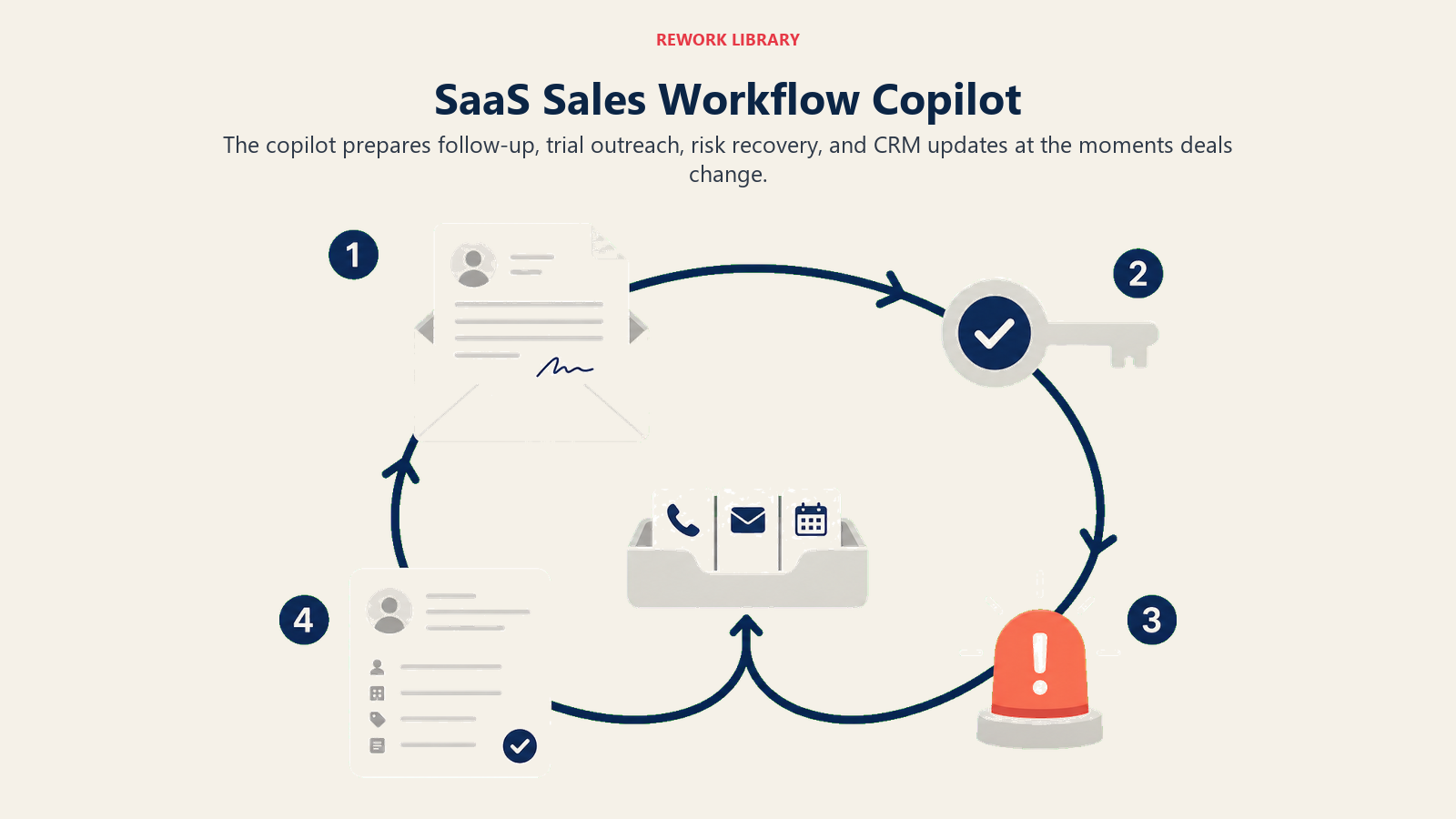
Post-Demo-Follow-up-Entwürfe: Der Moment mit dem höchsten Hebel in einem SaaS-Vertriebszyklus sind die 24 Stunden nach einer Demo. Der Prospect ist am engagiertesten. Die Notizen des Mitarbeiters sind am frischesten. Ein Workflow Copilot, der eine personalisierte Follow-up-E-Mail generiert, die auf die spezifischen Pain Points eingeht, die in der Demo besprochen wurden, die Integration enthält, nach der der Prospect gefragt hat, und eine Next-Step-Aufgabe mit einem Fälligkeitsdatum erstellt, beseitigt die Reibung, die Deals nach positiven Demos kalt werden lässt.
Trial-Start-Sequenzen: Wenn ein hoch bewerteter Prospect einen Trial startet, sollte der Workflow Copilot automatisch die richtige Sequenz auslösen. Keine generische Trial-Nurture-E-Mail. Ein personalisiertes Outreach, das auf die bereits sichtbaren Produktsignale verweist ("Ich sehe, dass Sie das Reporting-Modul aktiviert haben, was genau dort ist, wo Teams wie Ihres normalerweise beginnen") kombiniert mit einem Angebot, einen kurzen Anruf durchzuführen.
Deal-Risiko-Warnungen: Wenn ein Deal, der Fortschritte machte, still wird (keine E-Mail-Antworten, keine Produkt-Logins, kein Anruf in 14 Tagen), entwirft der Workflow Copilot eine Re-Engagement-Nachricht und erstellt eine Aufgabe für den Mitarbeiter. Der Mitarbeiter überprüft den Entwurf, passt den Ton an und sendet. Der Deal fällt nicht durch administrative Vernachlässigung.
CRM-Updates aus Call-Notizen: Nachdem Meeting Intelligence einen Anruf verarbeitet hat, aktualisiert der Workflow Copilot den CRM-Deal-Datensatz mit der Call-Zusammenfassung, identifizierten Pain Points, Einwänden und nächsten Schritten. Keine manuelle Eingabe. Das CRM bleibt aktuell, weil die KI die Datenarbeit erledigt.
Rework Sales AI ist darauf ausgelegt, alle vier dieser Workflow-Copilot-Outputs innerhalb eines einzigen CRM auszuführen. Die Sales Engine beginnt bei $69/Monat bei jährlicher Abrechnung mit 5 Vertriebs-Seats inklusive und eignet sich damit für Early-Stage-SaaS-Teams mit kleinen Vertriebsteams; ein 10-köpfiges Team in der Standard Edition zahlt $90/Monat bei jährlicher Abrechnung ($1,080/Jahr), und die Advanced Edition ergänzt Agent Flows, SSO und Audit-Logs. Aktuelle Details finden Sie unter rework.com/pricing. Die Alternative ist, Gong plus Clari plus Outreach plus ein CRM separat zu betreiben, mit Integrationsaufwand bei jedem Handoff.
Der SaaS-Sales-Operator-Stack
Der SaaS-Sales-Operator-Stack ist die B2B-SaaS-spezifische Konfiguration des Vier-Pattern-AI-Sales-Operator, bei der Scoring+Routing firmografische und Produkttelemetrie-Signale kombiniert, anstatt Firmografien allein. Der wesentliche Unterschied zu einem generischen Sales Operator ist die Produktsignal-Schicht: Trial-Aktivierungsevents, Pricing-Page-Verhalten, Feature-Explorations-Tiefe, Return-Visit-Frequenz und Kollaborationssignale speisen alle das Scoring-Modell. Das erlaubt dem Stack, Intent-starke Accounts innerhalb von 72 Stunden nach der Anmeldung zu identifizieren, bevor der Mitarbeiter einen einzigen Kontakt hergestellt hat. Meeting Intelligence, Generative Research und Workflow Copilot arbeiten dann in Sequenz und verwenden den Score als Kontext. Das Ergebnis: 80 % der Anmeldungen erfordern nie Menschenzeit, und die 20 %, die es tun, erhalten Outreach von einem Mitarbeiter, der bereits weiß, welche Produktverhaltensweisen sie gezeigt haben.
| Signal-Typ | Was es misst | Konversionsprediktor |
|---|---|---|
| Trial-Aktivierungsmeilenstein | Ersten Workflow abgeschlossen | 3x höhere Konversion gegenüber Nicht-Aktivierern |
| Pricing-Page-Besuche (3+) | Aktiver Käufer-Intent | Top 15 % der Intent-starken Signale |
| Return-Visit an Tag zwei | Produktgewohnheitsbildung | Korreliert mit bezahlter Konversion |
| Team-Einladung während Trial | Interne Stakeholder-Schaffung | Stärkstes einzelnes PLG-Konversionssignal |
| Feature-Explorations-Tiefe (3+ Features) | Tiefes Produktengagement | 2-3x höhere Konversion |
Quelle: ProductLed, Userpilot, Mixpanel, OpenView PLG Benchmarks (2024-2025)
SaaS-spezifische zu verfolgende Metriken
Trial-to-Demo-Konversionsrate: Der Prozentsatz aller Trial-Anmeldungen, die eine Demo mit einem Mitarbeiter buchen. Baseline: 3 bis 8 % unassistiert. Mit produktsignalbewusstem Scoring: 12 bis 20 %. Das Verfolgen davon sagt Ihnen, ob die Scoring+Routing-Schicht funktioniert.
Zeit von der Anmeldung zum ersten Gespräch: Wie lange dauert es vom Start eines hoch bewerteten Trials bis zu einem Gespräch des Mitarbeiters mit dem Nutzer? Das misst die Routing-Geschwindigkeit. Leads, die hoch bewerten, sollten innerhalb von 24 Stunden Outreach erhalten. Verzögerungen von 3 bis 5 Tagen bedeuten, dass das Routing nicht funktioniert oder Mitarbeiter die Warteschlange nicht priorisieren.
Pipeline-Velocity: Wie viele Tage verbringt der durchschnittliche Deal in jeder Phase? Meeting Intelligence hilft, zu identifizieren, welche Phasen den meisten Drop-off haben, und Workflow Copilot reduziert die "went quiet"-Deals, die in der Proposals-Phase stagnieren.
B2B-SaaS-Teams, die produktsignalbewusstes Scoring betreiben, sehen typischerweise Trial-to-Demo-Konversionsraten von 12-20 %, verglichen mit der Branchenbaseline von 3-8 % für unassistierten Inbound. Diese Konversionslücke -- 4x bis 6x mehr Demos aus demselben Anmeldungsvolumen -- ist der primäre ROI-Treiber für die Scoring+Routing-Investition, weil jede inkrementelle Demo, die konvertiert, CAC darstellt, der eliminiert wurde.
CAC Payback Period: In welchem Monat nach dem Abschluss werden die Ökonomien des Kundenakquisition positiv? Die Auswirkung des AI Sales Operator zeigt sich hier, weil schnellere Pipeline-Velocity und höhere Close Rates bedeuten, dass Sie Kunden zu niedrigeren Gesamtkosten akquirieren. Wenn diese Zahl von 14 Monaten auf 10 Monate sinkt, ist der Effizienzgewinn sich potenzierend. Das ist eine der wichtigsten Verschiebungen, die in wie KI das SaaS-Betriebsmodell neu gestaltet beschrieben werden.
Der häufige Fehler: Alle Anmeldungen als Leads behandeln
Die häufigste Fehlanwendung des AI Sales Operator in SaaS besteht darin, ihn zu verwenden, um jede Anmeldung schneller zu bearbeiten. Das Ziel ist nicht, mehr Menschen zu kontaktieren. Es ist, die richtigen Menschen zu kontaktieren und keine Zeit mit dem Rest zu verschwenden.
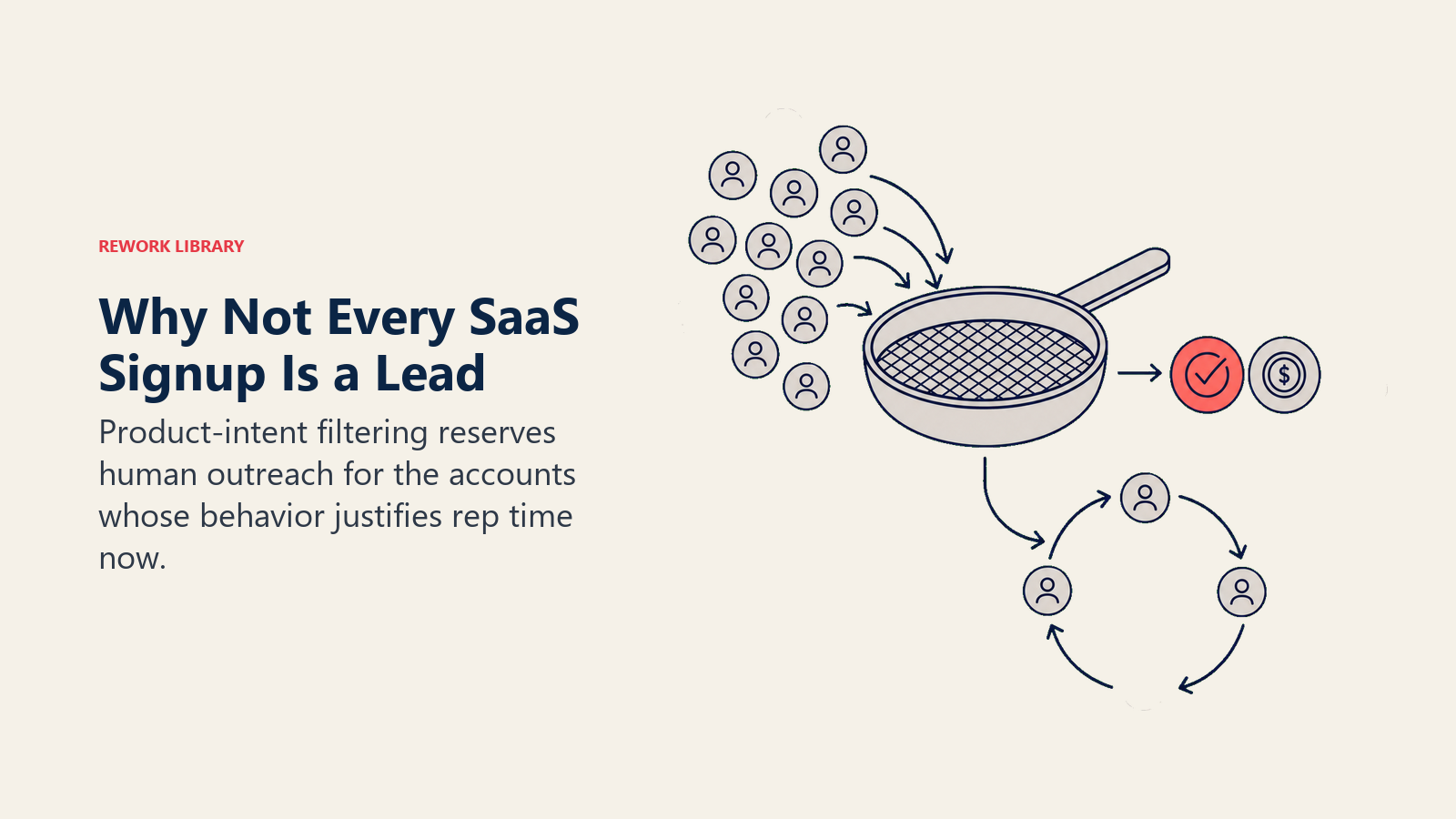
Ein SaaS-Produkt mit 1.000 neuen Anmeldungen pro Woche, das ohne KI eine 3-prozentige Demo-Konversion generiert, hat 30 lebensfähige Demos pro Woche. Mit produktsignal-Scoring, das die Top 15 % der Anmeldungen als hohe Priorität identifiziert, haben Sie 150 hochwertige Leads zum Fokussieren. Die 50 Demos, die aus diesen 150 Kontakten entstehen, werden mit einer höheren Rate schließen als die 30 Demos aus dem ungefilterten Ansatz.
Die wichtigste Funktion des AI Sales Operator ist nicht, es einfacher zu machen, jeden zu erreichen. Es ist, deutlich zu machen, dass 80 % Ihres Inbounds im Moment keine menschliche Berührung brauchen, und die Menschen auf die 20 % zu konzentrieren, bei denen die Wahrscheinlichkeitsmathematik die Zeit rechtfertigt.
Diese Disziplin -- das 80/20-Filtering vor menschlicher Anstrengung -- ist das, was SaaS-Vertriebsteams, die effizient skalieren, von Teams unterscheidet, die sich mit der Verfolgung von unqualifiziertem Volumen ausbrennen.
Rework-Analyse: Das am meisten unterschätzte SaaS-Vertriebssignal ist die Team-Einladung während des Trials. Nutzer, die während des Free Trials ein Teammitglied einladen, haben interne Stakeholder geschaffen, bevor ein Vertriebsmitarbeiter mit ihnen gesprochen hat. Diese strukturelle Tatsache ändert das gesamte Verkaufsgespräch: Sie bestätigen nicht mehr eine Einzelentscheidung, sondern eine Entscheidung, in die bereits mehrere Menschen investiert sind. SaaS-Teams, die Team-Einladungen als erstklassiges Scoring-Signal verfolgen, finden konsequent, dass es der einzeln am höchsten prädiktive Konversionsindikator ist, den sie haben. Dennoch gewichten die meisten Scoring-Modelle es niedriger als Unternehmensgröße oder Berufsbezeichnung, weil das die Signale sind, die Mitarbeiter schon immer zu nutzen wussten. Das KI-Scoring-Modell sollte das Verhaltenssignal höher gewichten.
Die Daten sind bereits da
Die meisten B2B-SaaS-Teams verfügen bereits über die Rohzutaten für einen Sales Operator; die Lücke liegt meist in Integration und gemeinsamem Kontext.
Für B2B-SaaS-Teams mit irgendwelchen Inbound-Bewegungen ist der AI Sales Operator der erste Agent, der deployt werden soll. Die Daten existieren: Produkttelemetrie, CRM-Datensätze, Call-Aufzeichnungen, E-Mail-Threads. Die Muster sind in historischen Konversionsdaten vorhanden. Sie zahlen bereits für Gong oder ein CRM mit Call-Aufzeichnung. Die Frage ist, ob diese Tools zu einer Architektur zusammengebaut sind, die Kontext teilt, oder ob sie in separaten Dashboards sitzen, zwischen denen Mitarbeiter manuell wechseln.
Das vollständige Vier-Agenten-Bild für SaaS erklärt, wie der Sales Operator neben den CS-, Support- und Content-Agenten passt. Aber wenn Sie auf einen Agenten beschränkt sind und Ihr primäres Problem darin besteht, eingehende Trials bei niedriger Effizienzrate zu konvertieren, beginnen Sie hier. Der ROI zeigt sich innerhalb der ersten 30 Tage bei der Trial-to-Demo-Konversion.
Häufig gestellte Fragen
Was ist der AI Sales Operator für B2B SaaS?
Der AI Sales Operator für B2B SaaS ist der Vier-Pattern-ACE-Framework-Agent, der speziell für SaaS-Inbound konfiguriert ist, bei dem Scoring+Routing firmografische Daten mit Produkt-Verhaltenssignalen (Trial-Aktivierung, Pricing-Page-Besuche, Feature-Tiefe, Team-Einladungen) kombiniert, statt Firmografien allein. Das ist der SaaS-Sales-Operator-Stack: ein System, das Intent-starke Accounts innerhalb von 72 Stunden nach der Anmeldung identifiziert, sie an den richtigen Mitarbeiter routet, einen Account-Brief über Generative Research vorbereitet und Follow-up über Workflow Copilot automatisiert, während die 80 % der Anmeldungen herausgefiltert werden, die keine Menschenzeit rechtfertigen.
Wie unterscheidet sich das SaaS-Lead-Scoring vom generischen B2B-Lead-Scoring?
Generisches B2B-Scoring verwendet firmografische Signale: Unternehmensgröße, Branche, Titel. SaaS-Scoring fügt Produkt-Verhaltenssignale hinzu: Hat der Trial-Nutzer den Aktivierungsmeilenstein abgeschlossen? Hat er die Pricing-Seite dreimal oder mehr besucht? Hat er ein Teammitglied eingeladen? Diese Verhaltenssignale sind sofort nach der Anmeldung verfügbar, bevor jeglicher Vertriebskontakt stattfindet. PQL-basiertes Scoring mit Produktsignalen konvertiert mit 25-30 % gegenüber 5-10 % für MQL-basierte Ansätze -- eine 3-fache Verbesserung, die vollständig auf die Qualität des Verhaltenssignals zurückzuführen ist.
Was ist das stärkste einzelne Konversionssignal für SaaS-Trials?
Team-Einladungen während des Trials. Nutzer, die ein Teammitglied einladen, haben interne Stakeholder geschaffen, bevor ein Vertriebsmitarbeiter mit ihnen gesprochen hat. Diese strukturelle Tatsache ändert das gesamte Verkaufsgespräch: Der Mitarbeiter bestätigt eine Entscheidung, in die mehrere Menschen bereits investiert sind, anstatt einen Solo-Evaluierer zu überzeugen. Die meisten Scoring-Modelle gewichten dieses Signal niedriger als Berufsbezeichnung oder Unternehmensgröße, weil das vertraute Demografien sind. Das KI-Scoring-Modell sollte Verhaltenssignale höher gewichten.
Welche Trial-to-Demo-Konversionsrate sollte ein B2B-SaaS-Team anstreben?
Branchenbaseline für unassistierten B2B-SaaS-Inbound ist 3-8 % Trial-to-Demo-Konversion. Teams, die produktsignalbewusstes Scoring betreiben, sehen typischerweise 12-20 %. KI-native PLG-Unternehmen über 100 Millionen USD ARR erreichen eine Trial-to-Paid-Konversion von 56 % gegenüber 32 % für traditionelle SaaS-Modelle. Die Lücke auf jeder Stufe ist auf die Qualität der Verhaltenssignale in der Scoring-Schicht zurückzuführen. Teams sollten Trial-to-Demo als primäre Scoring+Routing-Kennzahl verfolgen und innerhalb der ersten 30 Tage nach dem Deployment eine Verbesserung erwarten.
Wie funktioniert Meeting Intelligence speziell im SaaS-Vertrieb?
In SaaS erfasst Meeting Intelligence (Gong, Clari Copilot, Chorus) einen spezifischen Einwand-Fingerabdruck: Integrationsanliegen ("Wie funktioniert das mit Salesforce?"), Preismodell-Fragen ("Ist das pro Nutzer oder pro Workspace?") und Wettbewerbsverschiebungsmuster. Gong-Bibliotheken mit 500+ aufgezeichneten Calls zeigen, welche Wettbewerbserwähnungen zunehmen, welche Integrationsanliegen am häufigsten auftreten und welche Mitarbeiter-Antwortmuster Deals vorhersagen, die schließen. Der Coaching-Wert: VPs of Sales können systematische Muster bei allen Mitarbeitern sehen, anstatt nur Coaching basierend auf den Calls, die sie persönlich beobachten.
Wie schnell sollte ein SaaS-Mitarbeiter auf einen hoch bewerteten Trial reagieren?
Innerhalb von vier Stunden. KI-unterstützte SDRs, die Intent-starke Trial-Aktivatoren innerhalb von vier Stunden kontaktieren, konvertieren zu 34,1 %, verglichen mit 13,6 % für Teams, die sich auf reine E-Mail-Automatisierungssequenzen verlassen -- ein 2,5-facher Unterschied. Hoch bewertete Trials, die 3-5 Tage auf Mitarbeiterkontakt warten, verlieren erhebliches Intent-Signal. Der Routing-Output von Scoring+Routing sollte eine Echtzeit-Mitarbeiterbenachrichtigung erstellen, kein morgendliches Dashboard-Review.
Was tut ein Workflow Copilot speziell in SaaS-Vertriebszyklen?
Der Workflow Copilot übernimmt die vier Momente mit dem höchsten Hebel in einem SaaS-Vertriebszyklus: Post-Demo-Follow-up-Entwürfe (personalisiert auf die in der Anrufbesprechung diskutierten Pain Points), Trial-Start-Sequenzen (automatisch ausgelöst, wenn ein hoch bewerteter Trial aktiviert), Deal-Risiko-Warnungen (wenn ein vorankommender Deal für 14+ Tage still wird) und CRM-Updates aus Call-Notizen (automatisches Befüllen des Deal-Datensatzes aus Meeting-Intelligence-Output). Zusammen eliminieren diese die administrative Reibung, die SaaS-Deals nach positiven Demos kalt werden lässt.
Verwandte Artikel:

Co-Founder, Rework.com
On this page
- Was der AI Sales Operator im SaaS-Kontext ist
- Pattern 1: Scoring+Routing im SaaS-Umfeld
- Pattern 2: Meeting Intelligence im SaaS-Umfeld
- Pattern 3: Generative Research im SaaS-Umfeld
- Pattern 4: Workflow Copilot im SaaS-Umfeld
- Der SaaS-Sales-Operator-Stack
- SaaS-spezifische zu verfolgende Metriken
- Der häufige Fehler: Alle Anmeldungen als Leads behandeln
- Die Daten sind bereits da